Lies my narcissists told me.

lies_honesty

I was told many lies about myself while growing up within my my FOO (family of origin). I have no doubt this had everything to do with my developing Borderline Personality Disorder (BPD), Avoidant Personality Disorder (AvPD), and lifelong severe anxiety.

Why personality disorders are so difficult to cure.
Personality disorders (PD’s) are formed very early in life, normally before the age of six–which is the reason they are so hard to cure. Because the child’s personality is still in a malleable state (meaning it hasn’t fully formed) until around age 5, PD’s become an integral part of the personality and therefore can be extremely difficult to eradicate because they were formed so early the child doesn’t believe it’s a problem, just the way things are. Their misery seems normal to them. They know nothing else.

Of course some PD’s are more amenable to treatment than others, and sufferers of some PD’s, such as Avoidant, Dependent, and sometimes Borderline, are much more likely to seek treatment than those with, say, ASPD (antisocial personality disorder), NPD (narcissism), or Schizoid PD.

Lies I was told growing up.

sensitive_people
As the family Scapegoat (and occasional Golden Child which I’ll explain later in this article), here are some of the lies I was told while I was growing up:

“You’re too sensitive!” — This one’s the Big Kahuna for many of us ACONs, especially if we’re also HSPs (highly sensitive people) by nature. “You’re too sensitive” isn’t so much a lie as it is a verbal twisting of a wonderful gift and ability to see the Truth into something…more resembling an embarrassing defect. Narcissistic lies sometimes appear in the form of turning something good into something shameful and bad, and vice versa.

“You have no sense of humor.” (see above)

“You don’t really want that.” (the parent is telling the child what they really think–this will just cause confusion and identity issues for the child)

“No one wants to know how you feel.” (so we learn to swallow our pain and lock up our emotions)

“You cry too much.” (I had to unlearn this–unfortunately I unlearned it too well and now find it difficult to cry even when I know I need to)

“You don’t know what you’re talking about.” (invalidation and devaluation)

“You know you don’t really think that.” (massive mindfuckery)

“You don’t really want to join the swim team. You know you don’t like competition.” (see above–the real message here being “you are a weak, pathetic, scared loser” to really drive the message home)

“You’re too fat/heavy/even ‘obese’ (I was never more than 120 lbs at 5’4” as a teenager)

“They don’t like you because you’re always so unpleasant to be around.” (Real nice)

“You never smile and it makes your face look unpleasant.” (Fake Narc smiles look even more ‘unpleasant’)

“You read too much.” (okay…would it be better if I snorted Smarties instead or went around throwing rocks through the neighbors’ windows?)

“You know you’re not really good at that.” (whenever I wanted to try something I hadn’t tried before)

“You know you can’t do that, let me do it.” (I wanted to wash the dishes when I was 6)

“You’re too idealistic” (mmmkay…and that’s a bad thing?)

Because I was raised as an only child (I had half-siblings who did not live with us), I also served as the Golden Child. So I also heard lies like,

“They’re just jealous of you because you’re prettier than they are.” (even as a first grader, I knew this was bullshit).
child_on_pedestal

“They’re just jealous of you because you’re smarter than they are.” (my grades weren’t much above average, in spite of having a high IQ)

“You are more talented than they are.”

“We have better genes than those other people.” (Narc genes?)

“You come from a better family than your friends do.” (I call bullshit on that.)

You were the best dancer in the school play.” (I have two left feet and even my dog would have known that was an outrageous lie).

It doesn’t stop when you go No Contact.

flying_monkeys

These are some of the lies told about me by my mother to her sycophants (the ones I’m aware of):

“She’s a loser just like her ex-husband” (Nice.)

“She always makes such terrible choices.” (True, but there were extenuating circumstances at those times she would never understand)

“If only she had done what I told her.” (If only I had had the courage to take a few risks-I am extremely risk-averse)

“If only she had listened to me.” (Again, if only I had taken a few risks and not been so afraid of my own shadow)

“She’s a nothing.” (I guess that’s why people tend to always talk over me, look through me, and never hear what I have to say in group or social settings–where I FEEL like a nothing)

“She was ruined by her ex” (this is a half-truth…but RUINED? Really? Let’s tone down the hyperbole, shall we?)

“She will always be poor.” (and the poor are always with us, right?)

“She will never achieve anything.”

“She can never stick with anything.” (This has actually been true but has gotten a lot better)

“She has mental problems.”

“She is sick in the head.”

Ad nauseam…

Conflicting messages as Scapegoat/Golden Child

ConflictingMessages

Black-and-white thinking (idealizing/devaluing) and outrageous contradictions prevailed in my FOO.
As both Scapegoat and Golden Child, I was receiving two sets of messages (sometimes both at the same time), such as, “You know you don’t really want that, because you’re too sensitive, you hate competition and you are smarter than they are.”
I think you get the idea.

Being raised with conflicting sets of messages and being treated as beloved/rejected child at once was incredibly crazymaking.

Borderline Personality Disorder (or even narcissism!) and Avoidant Personality Disorder (I have both BPD and AvPD) both seem like logical, almost sane reactions to having been raised with two conflicting sets of messages–I was either all bad or all good, with no in between.

And finally, it doesn’t end there. Raised by narcissists, I married one even worse. A narcissist so malignant he made my parents look like empathic light beings in comparison. I was trained to be Supply and was WAY too good a student. If awards were given for Learning How to Be Narcissistic Supply, I would have been valedictorian.

Lies my psychopathic narcissist ex-husband told me.
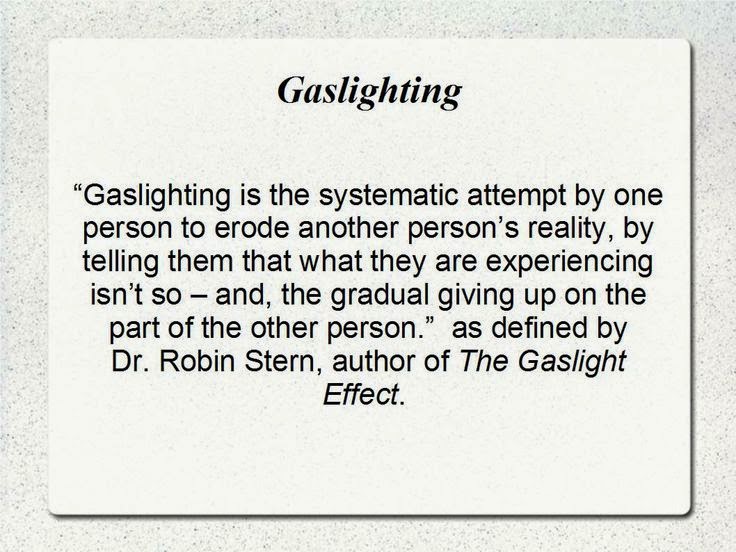
gaslighting

Following are the lies my malignant narcissist sperm donor told me about myself and also told all the flying monkeys he had succeeded in turning against me (some of who included my friends) over 28 years. This led to my PTSD and clinical depression (where I had to be hospitalized for suicidal ideation). Most of these were projections of his own character flaws onto me.

“You are selfish/self-centered.”

“You always overreact to everything.”

“You never listen to me”

“You don’t care about me or my problems.”

“You have no empathy for me.”

“You are narcissistic.”

“You are becoming just like one of them” (he was referring to Republicans, who he hates)

“Oh, so now you’re living the high life?” (when I took in a roommate while he was homeless)

“You are a b**ch, c*nt, Tw*t, whore.”

“You are stupid.”

“You have no common sense.”

“You’re insane.”

“There’s something wrong with you.”

“You’re just like your family–all crazy.”

…as well as a constant barrage of hateful sarcasm at my expense, whether there were people present or not. If I objected to this mean spirited “humor,” I was told–WHAT ELSE???–I was “too sensitive” or “have no sense of humor.”

Because of having grown up in the midst of a labyrinthine web of lies, and then marrying into another one, I have always valued Truth. That’s why I put a premium on complete honesty, at least in my writing.
Not that I don’t ever lie–we all do, it’s part of the human condition. But I am very aware of dishonesty when I see it and won’t hesitate to call it out in others.
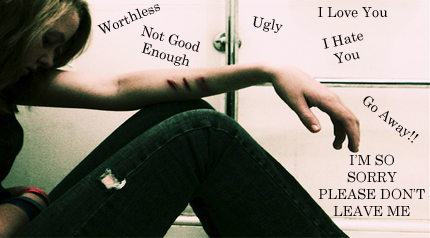
What my fear of rejection makes me do

borderline_pd

Time for a true confession.

I’ve been focusing a bit less on narcissism because the topic itself is somewhat of a trigger for me right now.

But I’ve recently decided to write openly about my BPD, which (along with Aspergers) is often misdiagnosed as narcissism.

Besides the envy and pride I’ve previously mentioned as my worst narcissistic traits, there is one other thing that has sometimes made me wonder if I might really be a narcissist.

Whenever any male in a position of authority has tried to tell me the truth about myself (like a therapist or teacher), I want to attack them. When I was much younger (teens and 20s) this manifested as rage attacks (as it did with my therapist during my 20’s). Today it’s more likely to be expressed as sarcasm, snarkiness, or just…silence. All of this is very narcissistic of me and makes me want to cringe in the corner when I think about it. Because knowingly hurting someone goes against the bigger, better part of me, a person who is kind and compassionate and hates to see anyone suffering or hurt.

I used to torment my therapist back in the 1980s. He didn’t know the intense feelings I had for him. I wouldn’t give him the satisfaction. If you’ve ever watched the ’90s Nickelodeon cartoon “Hey Arnold,” you will remember how cruel Helga always was to Arnold, but secretly she mooned over him.

helga_arnold

My therapist must have hated me. I LIKED tormenting him. He sat there week after week taking it like a trouper. If he was angry or upset, he never showed it. Most likely my strong feelings and verbal attacks were a form of transference. Maybe I experience a form of transference toward any male in an authority position who mirrors me.

I finally told that therapist I was quitting. Why? Because of my fear he was so tired of my mindfucking him that he’d tell me he couldn’t be my therapist anymore. I knew I wasn’t cured, but I left anyway. Sure, I was having trouble handling my infatuation, but now I know it was really all about hurting him before he could hurt me. How stupid of me, since he was probably more than happy to see the back of me.

hateyou_leaveme

I’ve really been thinking a lot lately about my BPD and the unpleasant ways it sometimes manifests itself. The behaviors are narcissistic, and they don’t happen all the time, or with most people (thank God for that!) But the reason they exist at all is because as a Borderline, I live in mortal terror of being rejected or abandoned, and certain men in authority who tell me truths about myself may represent my father, who I was afraid would reject me (even though he wasn’t really the problem at all).

Sometimes I do wonder if I may be a narcissist.

But I know I’m not because it makes no sense. Real narcissists don’t have a conscience or empathy. They can’t be happy for you or sad for you and I can be. If I do something wrong–even if I derive some kind of sick pleasure during the time I’m engaged in it–afterwards I feel terrible. I just want to run and hide.

I’m working on these behaviors, using an old workbook I got in 1996, because lately I’ve been thinking about possibly dating again. I’m getting over my fear of finding myself with another narc, because I feel like I know enough to read them now, to see the red flags and know when to run if I must–but I also don’t want to drive a nice guy away due to my “I hate you….don’t leave me” Borderline tendencies.

There’s so much apologizing I would like to do to so many people. I know that’s not possible but I wish it were.

I know I’m changing for the better, but a lot of bad and painful emotions are coming to the surface in the process of discovering who I am, because I’m feeling again. I think my PTSD is almost healed, and that’s a great thing, but mixed in with all the nice, loving, tender emotions are some not so nice ones too. Like a maggot crawling on the petals of a rose.

I never said I was perfect.

#25 – Who Was The First Borderline? – From Cavemen and Dinosaurs to Creationism and the FSM

A very funny look at how BPD might have made it into the gene pool. Who was the culprit? Cavemen? Apes? Dinosaurs? Single celled organisms? Can creationism and a “young earth” explain BPD better than evolution and its “old earth”? Or is BPD it simply a construct invented by mental health professionals to label a group of people with a certain subset of psychiatric behaviors that aren’t particularly adaptive.
A great read!

bpdtransformation's avatarBPD Transformation

Where did BPD come from, and how was it passed down to modern humans? This is one of the more vexing questions of our age. For an answer, we must turn to the all-knowing wisdom of American psychiatry, which proclaims:

Grandparent1

“BPD is strongly inherited.” This seems like an answer to where BPD comes from. But is it? According to psychiatry, BPD is mostly in the genes. But how could this dreaded disease have originally developed? It didn’t magically appear out of thin air. This begs the question:  From whom was BPD first inherited? Who – or what – was the real “first borderline”?

In this essay, I will take psychiatry’s thinking to its logical conclusion. If BPD is “inherited”, we should be able to track down the ultimate source of this nefarious malady…

View original post 2,653 more words

I hate my BPD.

bpd_crazy

Sometimes my BPD rears its ugly head. It comes off as narcissism to people who don’t understand. I don’t always understand it either, and because impulsivity is a factor, when I act out in Borderline ways, I’m not even always aware at the time I’m doing it. Sometimes it doesn’t become clear to me until it’s pointed out to me later, and then I’m all, “Oh my God, what have I done?”
Then I beat myself up with guilt and shame, which is what I did today.

Even though I learned tools for handling my BPD when I was hospitalized (for Bipolar II) in 1996 and have found those tools helpful, sometimes it’s not enough and my BPD gets the best of me. I’ve been accused of being narcissistic before. I know I’m not a narcissist, but I can understand why some people might think so.

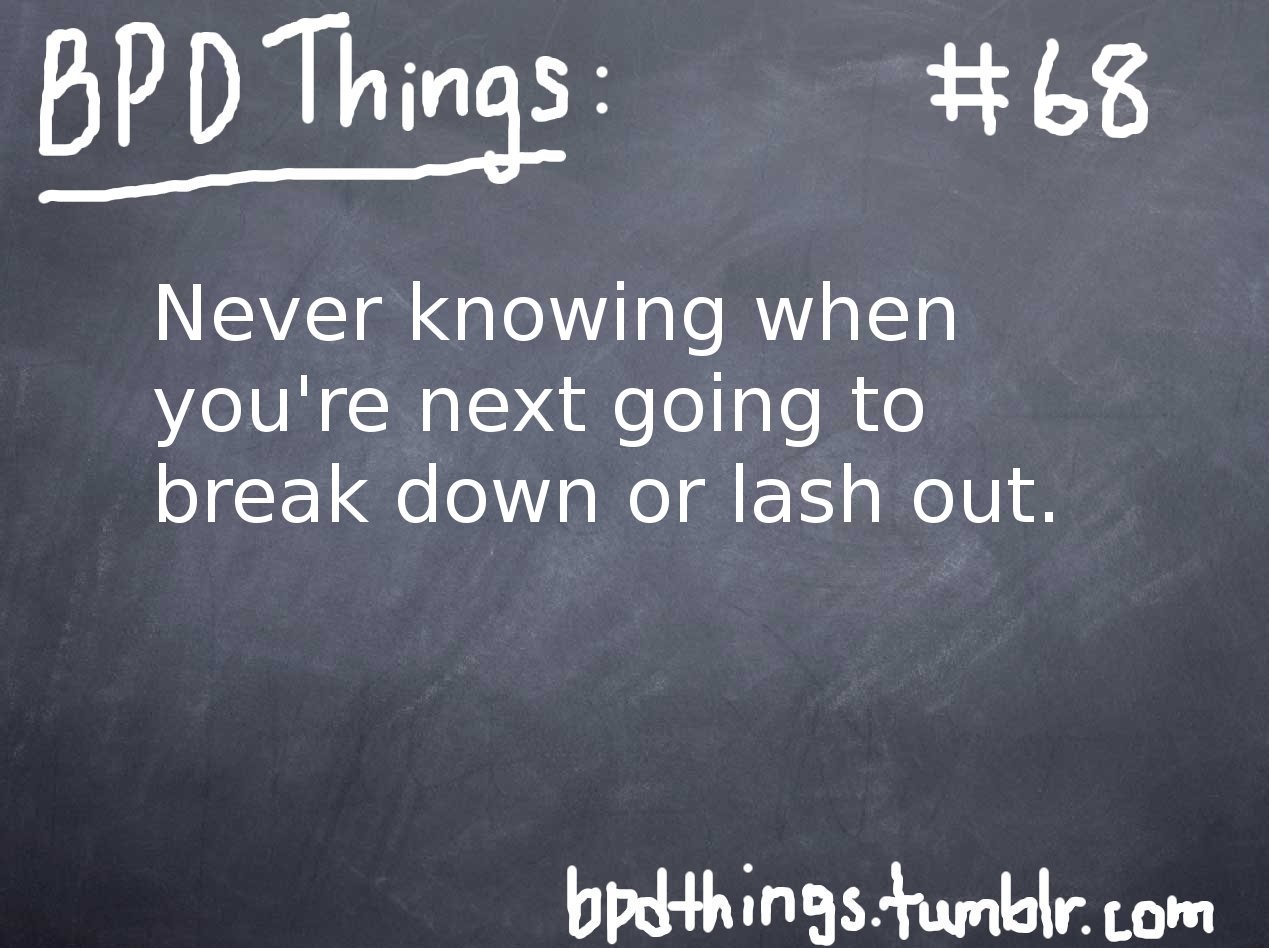
bpd_things

God, I really hate this disorder. Out of all my disorders, it’s the worst one. It trips me up so often and destroys friendships and makes people think they can’t trust me. Then it’s very hard to convince them I never had ill intentions, but acted impulsively out of whatever emotion at the moment was driving my behavior.

I think blogging was the first step in my recovery from narcissistic abuse, but I’ve reached a place where a lot of emotional garbage that was buried and frozen because of my PTSD is coming up to the surface and it HURTS A LOT. I just wanted to cry all day. I didn’t but I wanted to.

I will still blog of course (I don’t plan to ever stop either), but my BPD is showing more and I think all the weird emotions I’m feeling that I can’t understand are becoming too much for me to handle alone anymore. It was suggested to me that I really need to seek counseling at this point. I know there are free or low cost mental health services in my area I could look into.

I hate my BPD. I wish it would just go away and stay away forever. It’s caused me and people I cared about so much misery. It’s destroyed so many friendships. I don’t want this anymore. I can live with my Aspergers and even enjoy it, but being a Borderline really sucks. 😦
Just one more way my FOO fucked me over…

My character flaws.

not_there_yet

Just because I write a blog that sometimes gives advice to others about Narcissistic Personality Disorder and other mental disorders such as Aspergers, doesn’t mean I don’t still have a long way to go in recovery myself.

Blogging and prayer have helped immensely in raising my self esteem and general outlook on life, but it’s important to stay humble too. I’m not anyone’s “guru” even though I may have good ideas from time to time. So lest anyone think I’m tooting my own horn or purporting to be some kind of expert, here’s a list of my character flaws that sometimes get in the way of recovery.

Aspergers/Avoidant Personality Disorder (AvPD) Flaws:

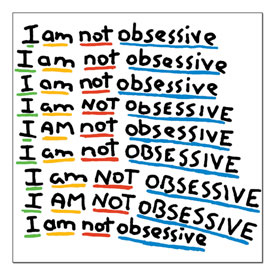
notobsessive

1. Shyness in social situations that comes off to some as aloofness, coldness or sometimes stupidity (when combined with my Aspie tendency to be “out of it” sometimes).

2. Awkwardness in social situations — doing or saying the wrong thing at the wrong time; occasional social gaffes that make me look obtuse or clueless.

3. Obsessiveness.

4. Narrow focus on one or two interests at a time. I dislike interruptions from the real world that interrupt my focus and force me to engage with the world.

5. Sometimes instead of not talking at all, I talk too much.

6. I avoid people. I prefer being alone (or with my pets) to being with other people.

7. I am a creature of habit and dislike interruptions from my routines.

8. I don’t like “surprises” or things being sprung on me at the last minute, where I don’t have a chance to prepare for them.

9. I get freaked out and overwhelmed by too much input from the world at one time. I can’t stand chaos, loud people, too much going on at once, or too many people around me outside of formal settings like a classroom or meeting. When I feel like too much is coming at me at once, I shut down and tune out–or get annoyed and angry.

10. Tendency to like to put everything in categories, or as some like to say, in “little boxes.” This leads to a tendency to label people and like labels.

11. General weirdness. This is probably a good thing.

Borderline Personality Disorder (BPD)/ PTSD Flaws:

all-or-nothing

These have been getting a lot better and I have learned some valuable tools in dealing with the symptoms in myself that have become second nature now, but it’s hard to be cured of this disorder and I still have some Borderline traits:

1. Tendency to either idealize or devalue people.

2. Hypersensitivity to criticism, jokes at my expense, or rejection.

3. Snap judgments about people before I truly get to know them.

4. Black and white thinking. Things and people are either all good or all bad.

5. Insecurity and worry about being liked (even though I avoid people). Try to figure that one out.

6. When angry, I can sometimes get so enraged I lose common sense and just want to do something to even the score without thinking about the consequences. Healthy fearfulness goes out the window and I act out in anger. Fortunately this happens a LOT less often than it used to; actually it’s pretty rare these days.

7. Rapid mood swings. This goes hand in hand with being bipolar too (that’s in remission). This too has been getting a lot better.

8. Paranoia and hypervigilance. I have a hard time trusting anyone.

9. Envy.

10. Excessive worry. Someone once told me, it’s useless to worry about things because if the bad thing does happen, then you’ve experienced it twice, and if it doesn’t happen, you’ve wasted energy on worrying. Wise words.

11. Fear of taking risks. This too has been getting a lot better, but in the offline world, I still have a long way to go.

15. Defensiveness.

16. Excessive guilt and shame. Easily embarrassed.

Other flaws.

smoking

1. Smoking. (I’ve cut down to less than a pack a day though)

2. A diet that doesn’t include enough fresh fruits and veggies.

3. Laziness.

4. Procrastination.

5. Self-sabotage (this has gotten a lot better).

6. Excessive worry about my adult kids. Overprotectiveness.

7. Beating myself up.

8. Beating myself up for having character flaws.

character_flaws

All in all I’m far from perfect, but I think my flaws probably make me more interesting too.

Maybe we throw around the N label too freely.

Hand with pointing fingerletter_N

I’ve written about this before, but I think it’s something important we ACONs need to remember that can save us and others untold heartache.

We need to be careful about labeling someone a narcissist until we have gotten to know them well enough to be sure. I think ACONs and other victims of abuse are sometimes very quick to label people narcissists who may actually have some other, less malignant disorder such as Borderline Personality Disorder, OCD (some people with OCD can seem very cold), Histrionic Personality Disorder, or even Aspergers (Aspies are often accused of being unempathic just because they don’t express their emotions very well). Some conditions are easily confused with NPD because the behaviors shown may be similar.

Narcissists are actually a small minority of the population, but when you’re a codependent, high empathy type of person, they can seem to be everywhere because we attract them like flies to honey. That being said, the times we live in and a society that rewards narcissistic behavior have probably made NPD more common than it used to be.

Whenever we do pin the N label on someone, it’s our own subjective opinion. In most cases, the person in question probably does have NPD (we are all adults here and it isn’t that hard to see the red flags), but remember it’s an informal diagnosis, not a bona fide diagnosis made by a mental health professional.

Why does it hurt?

heart_hurts

I found out something today that isn’t a given, but gives me a lot of hope. It’s a joyful thing if it’s true. It’s something I want so much to happen.

So why does this information make my heart hurt and make me feel like crying?

Is it because I want so badly for it to be true (and it may not be and I might be disappointed), or is it because I’m not used to my heart being so open and my deepest emotions being as accessible to me as they are becoming?

I guess the closest I can come to describing this emotion is feeling deeply touched and hopeful at the same time. I wonder if this weird sadness is unique to me or if others have experienced what I’m talking about. It’s very hard to explain. I don’t know if I’m explaining it well because there really aren’t any words to describe it.

Borderlines, like people with NPD, can’t always access their true emotions easily (even though we don’t wear masks and it’s much easier for us to admit we need help and actually be helped). These wonderful but weirdly sad feelings have been happening a lot lately. Like something bad is melting away. Sometimes it’s a bit scary but I wouldn’t trade it for the emotional zombie I used to be in a million years.

I think what’s happened is I’ve let go of my fear and that’s changing me inside.

He still lives in my dreams: the story of my abortion.

childs_dream

Although I’m becoming Catholic in less than two weeks, my views on abortion are still more or less pro-choice, depending on the situation (such as rape or incest), but this post isn’t about my political or moral stance on abortion. It’s about something much closer to my heart than my views on political/religious issues.

It’s about the abortion I had in July of 1998, right at the 12th week, which is the deadline for first trimester, uncomplicated abortions.

I made my first confession tonight in preparation for receiving the sacraments of Communion and Confirmation at the Easter mass. A few days ago, Father C. told me to think about what I wanted to talk about in confession. Even though my abortion and infidelity while I was still married to my narcissist are in the distant past now, those were the things I wanted most to confess, because lately both have been weighing on my mind heavily, especially the abortion.

I won’t get into the whole sordid and sad story of my marriage to Michael, as it’s already been written about under “My Story” (links to that are in the header), but the short version is he was a terrible malignant narcissist in every way imaginable–abusive mentally, emotionally and sometimes physically (when he was drinking). I was miserable during the last years of our marriage and wasn’t in the best of mental health, having been hospitalized twice during the late 1990s for major depression and PTSD.

Michael had his own sins to contend with (but he probably never will because of his narcissism), but I was no saint either. As a Borderline–and at that time not yet knowing how to monitor and control my borderline tendencies (I learned those tools during my first psychiatric hospitalization in 1996)–I tended to act out in impulsive, dramatic and inadvertently selfish ways.

As my husband’s primary source of narcissistic supply and his #1 victim, I was frantic, scared, frustrated, depressed and lonely, and longed for love, tenderness and physical affection. I didn’t want to hurt anyone, but simply didn’t think of the needs of others, even my own two children, when there was something I wanted to do, like get together with a new lover. In a person with BPD, this self-centeredness is due more to obliviousness to the feelings of others rather than not caring how they feel. Borderlines also have abandonment issues–that is their greatest fear. I was already emotionally abandoned by my narc husband and had always felt abandoned by my parents, and I longed for connection and affection.

I never made a conscious decision to have an affair, but it happened because I didn’t resist the temptation and once underway, I felt that this illicit relationship was something I needed.

At the hotel where I worked as a banquet server, I met a maintenance man there I’ll call Ryan. He was about 8 years younger than me. We got to be friends and talked a lot during our breaks. I felt very comfortable with him. I found out he was also a deejay at the hotel where we both worked. At many of the events and parties I served, Ryan spun discs when it was time for the guests to dance. At those times I’d go up and join him at the booth where he sat, and we’d talk while the guests danced and the music played.

Soon our friendship developed a sexual element. We realized we were both attracted to each other, though love was never part of the equation.

lovers

Michael and I had not had sex (after the love-bombing honeymoon phase of our relationship was over, I would not say what we did together in bed was making love) for several months by the time I met Ryan. About a month after we first met, in April 1998, he invited me to his house and we spent the entire night with our bodies wrapped around each other in his bed. We made love several times that night.

I called my kids and Michael but I didn’t go home that night. I made up some lie about staying with a girlfriend whose mother was ill. I was getting almost as good as Michael with the lying.

Ryan and I continued to see each other when we could. I was already neglecting my children who needed their mother, not to mention leaving them alone with their narc father. I still feel bad about that to this day and try to make it up by being overprotective now when they’re in their 20s and over-protectiveness is the last thing they need or want.

In August or September of that year I realized I’d missed my period and took a home pregnancy test one afternoon when I was home alone. It was positive.

I panicked. It wasn’t my husband’s child because the last time we’d had sex was months before I became pregnant. There was no way I could tell him I was carrying another man’s child–I couldn’t even imagine the abuse that would be inflicted on him or her. He was already abusive to his flesh and blood son, and he had told me he didn’t want any more children. I knew that if I went through with the pregnancy and had the child, both the child and I would be punished and I couldn’t allow that to happen.

I thought about adoption, but again, I would be subject to Michael’s abuse during the pregnancy especially once I started to show, as it would be a constant reminder to him I was pregnant with another man’s child. Then there was the matter of giving up the baby when it was born. I had no idea how I would explain to people how I could give up mine and Michael’s third child (I wouldn’t have dared tell anyone the child was not his).

I couldn’t decide what to do. But I had to make a decision quick–because I was closing in on 11 weeks and after the 12th week, you enter the second trimester and abortion becomes far more dangerous and medically complicated, not to mention more emotionally harrowing.

I have always been iffy about abortion, but at the time, I really didn’t see any other option. So I picked up the phone and called the local abortion clinic. They didn’t have an appointment for a week, which meant I would be right at 12 weeks–almost three months pregnant. I thought my belly was already showing a hint of a bump.

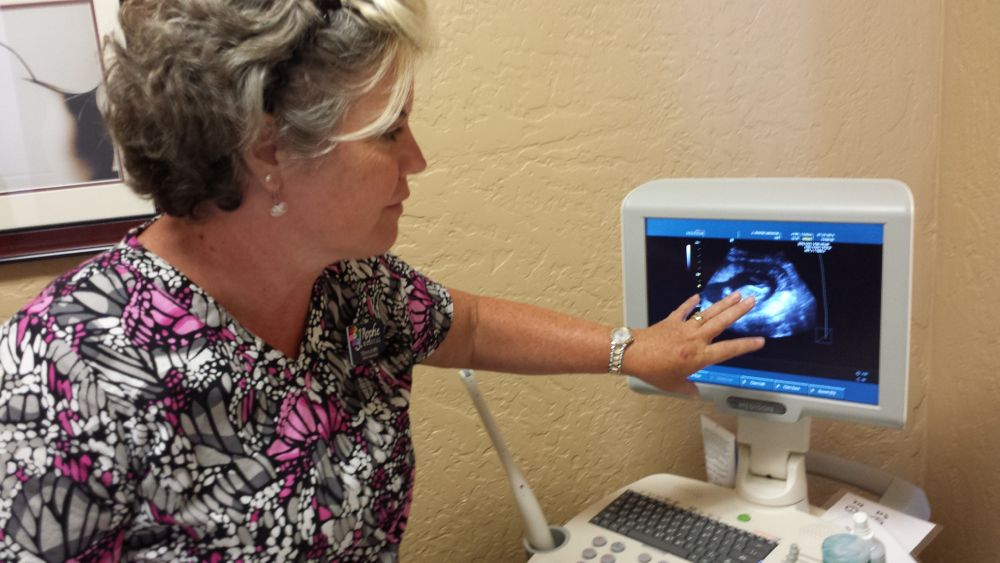
When the day came, I sat down with a nurse who was very friendly and sympathetic. She told me they had to take an ultrasound so they would know the location of the fetus in my womb before going in to remove it.

After the ultrasound, I surprised myself by asking the nurse if I could see it. She looked at me oddly, then shrugged and turned the screen facing me. I saw my baby there, glowing blue-white and floating in what looked like the darkness of space. I could see the little spine through the thin fetal skin, and it was perfect–it looked like a string of tiny seed pearls. I felt hot tears burn behind my eyelids but I didn’t cry. I swallowed hard and asked if she could tell the sex.

ultrasound

She looked at me sympathetically and then looked back at the screen to study it. She told me it was early, but she believed it was male. I just nodded and thought about that. My third child would have been a boy.

“Are you sure you still want to go through with this?” she asked, placing a soft motherly hand on my forearm.
“Yes,” I said.

The procedure itself wasn’t that awful. I was put in a twilight sleep and could barely tell what was going on. It wasn’t until afterwards, when Ryan was driving me home, that I suddenly began to feel sick. I ordered Ryan to pull over, stumbled out of the car, and threw up into the weeds by the side of the road. Even after my stomach emptied itself, I kept dry heaving. I was bleeding (which is normal) and crying from the pain. Ryan was concerned and came over to me (we were still friends after all this). I screamed at him to go away and leave me alone. Total borderline on my part.

At the time, even though I felt guilty about what I did, it didn’t bother me too much. I thought I had done the only thing I could have done. It wasn’t that I didn’t want this child, but that I couldn’t. The only future I could see for him was a childhood filled with abuse and pain meted out by his stepfather, my husband. He would punish me by punishing my child.

I didn’t think terminating that pregnancy bothered me that much, but on some level it must have, because every May, the month he would have been born, I find myself wishing him a happy birthday and telling him how sorry I am. I have done this every year since May of 2000.

In my dreams, I have watched him grow up into the almost 16 year old he would be right now. I always see him at the age he would have been at the time of the dream and he is always running away, fading into dream-space. I keep losing track of him. He always ignores my presence. I’m just some strange woman to him.

Even though this boy grew inside my body for three months, it weighs heavily on my heart that I don’t know him either. I don’t know one thing about him. I don’t know what he likes or dislikes, or what his interests or hobbies are. I don’t know what his personality is like. In my dreams he never talks to me, even if I try to talk to him. He always runs or turns away or dissolves into the dream space. One thing I can tell is that he is hurt and angry. He doesn’t know I’m his mother, but he does know he was inflicted with the ultimate betrayal–not having been allowed to have a life. I know instinctively his hurt and anger is because of this.

gate

There is a metaphysical wall I can never get past. I cannot know his spirit. I know what he looks like, or would have looked like because he always looks like the same person in my dreams. He changes because he’s growing up in dream-time but his face is always the same. He looks like a male version of me when I was young but his hair is much darker than mine.

I never gave him a name. Although I know God has forgiven me, I still regret never having been a mother to this boy, this third child who would have been my two older children’s little brother.

He lives on in my dreams. Maybe one day I will see him in heaven and he will have forgiven me.

“Coming out” about my BPD

Hand of a child opening a cupboard door

On November 22, 2014, I wrote an article about my daughter Molly (not her real name), who I suspected of having NPD due to having been used as a flying monkey by her father for many years. I prayed it was “just” BPD.

Last month she was evaluated and her Axis II diagnosis was Borderline Personality Disorder (BPD). While BPD is a Cluster B disorder and shares a number of traits with narcissism, it’s more amenable to treatment because a Borderline does have a conscience and the ability to feel empathy–but their tendency to fly off the handle, their insecurity/neediness, and propensity to engage in self destructive activities that sometimes hurt others masks the fact they really aren’t bad people. My daughter actually has a huge heart and cries when she sees someone suffering or in pain, so it fits that NPD wasn’t her diagnosis. Still, I’m relieved she’s been officially cleared of it.

I was diagnosed with BPD myself in 1996. I have been hesitant to call attention to it on this blog or talk about it much, because of its close association with NPD and other “character disorders” like ASPD. At the time I was diagnosed I was in an inpatient psychiatric setting, where I was also diagnosed with Bipolar I (major depression with fewer or no manic episodes), generalized anxiety, PTSD, Avoidant PD (I didn’t know you could have two PD’s at once back then), and substance/alcohol abuse. At the time I was not diagnosed with Aspergers (that was much later, and I was self diagnosed at first).

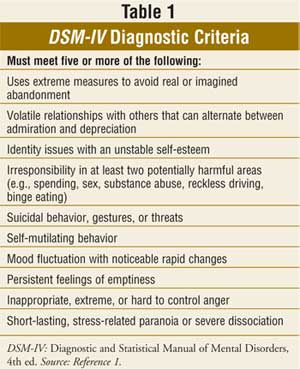
I definitely had all the traits of a borderline, but in the hospital and in outpatient therapy following my stay, I learned ways to control my BPD traits, such as my tendency to fly off the handle easily, act impulsively without thinking how it would harm others, idealize/devalue people (black or white thinking), abuse drugs and alcohol, and generally coming off as being very self centered and oblivious to the needs of others.

DSM_borderline
Click to enlarge.

For a time back in the early 1980s I even test drove narcissism, but as an essentially empathic person who suffers from a lot of guilt and shame, and has no desire to hurt others, narcissism didn’t work for me, and I am so grateful for that (even though I became a codependent doormat instead).

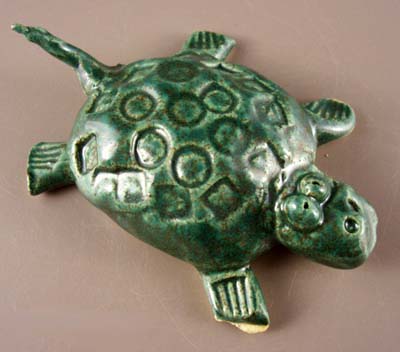
In therapy, I remember a method we were taught called “turtling”–which basically means to imagine yourself as a turtle when you feel yourself about to act/react in Borderline, impulsive, or self destructive ways. Turtling calls for enough insight to recognize your feelings prior to acting on them. You imagine going inside your shell to think about things before you act. I remember in the hospital we made “turtle” totems to keep as reminders to always think before we acted and ask ourselves why we felt the way we did. I still have the little clay turtle I made. I remember also being given a workbook for people with BPD with many helpful exercises and activities to help us recognize and control our behavior. It did help me a lot.

clay_turtle

Today I don’t think I display many BPD traits, but I don’t think I’m cured either. When I’m very depressed, frightened or angry, those BPD traits pop back up like unwanted pimples. I still remember the lessons from my therapy and still look at my little turtle or a picture of a turtle to remind myself to go inside myself and not react until I think things through and process my feelings.

Because this is a blog for survivors of narcissistic abuse and many (if not most) survivors think of narcissists as demons or monsters, I was hesitant to talk about my BPD much, because it’s a Cluster B disorder and is so close to NPD in many ways. The disorders are easily confused with each other. A person with full blown BPD can seem very much like one with NPD, but for the Borderline, the motive behind their unpredictable and sometimes destructive behavior is fear of abandonment and insecurity. For the narc, it’s for obtaining supply. Some people seem to think of people with BPD as almost as bad as narcissists. Some of them are.

So that’s why I’ve been reluctant to talk about this. But again, from Day One I committed to honesty and I hope I won’t be judged too harshly for “coming out” as a person with BPD.

borderline
Borderline personality disorder.

My daughter, I’m happy to say, knows almost as much about narcissism as I do now, and has been reading my blog. She came across the above article where I speculated she might have NPD and she was so worried about that it made her cry. We had a long discussion about that. Since then, she has been improving a lot and says my blog has helped HER! She says she’s proud of me for having the courage to start this blog. And I have to say, I’m just as proud of her. Here’s my article describing how healing and emotional that talk we had was. I think we will both be just fine.

My next article, which I will write later today, will be about how malignant narcissists can transform a good person into an evil one. They can infect you with their illness. That’s another reason why they’re so dangerous.

My daughter is officially BPD, not NPD!

BPD

So, my daughter finally agreed to see a psychiatrist and took a battery of tests and interviews in his office.

She got her her official diagnosis. She has a number of mental issues but I am so thankful NPD isn’t one of them. She’s Borderline, as I suspected, not that that’s any bowl of blackberry/cherry compote either.

She is agreeing to see a therapist, probably because the psychiatrist recommended it to her instead of me (and she also told me he was “hot”!) 😀 I bet probably has something to do why she agreed to it.

I asked the psychiatrist who did the evaluation to write out his findings IN ENGLISH instead of Doctorese. He had his receptionist write out the results for me; here they are.

AXIS I: 296.89 Bipolar Disorder II, 300.02 Generalized Anxiety Disorder
AXIS II: 301.83 Borderline Personality Disorder
AXIS III: 292.2 Cannabis Related Disorder, 291.9 Alcohol Related Disorder NOS, 305.10 Nicotine Dependence, ICD-9 493.3 Asthma, Unspecified
AXIS IV: 309.81 Post-traumatic Stress Disorder, v62.2 Occupational Problem,v62.81 Relational Problem NOS

Not great dx’s, but I’m glad because of all these disorders, even BPD, have a better prognosis and are more amenable to therapy than any form of Narcissistic Personality Disorder. That doesn’t diminish the seriousness of a few of the disorders she does have, though. Hopefully she sticks with her therapist this time.

It’s creepy how close the code for BPD (301.83) is to NPD (301.81). But they’re just billing codes so it probably doesn’t mean much.