Closure.

closure

Closure can open new doors, even as one door is closing for good. There are so many other doors we can’t even imagine. Doors that may be right in front of us but we can’t see until we accept that the old door will never open again.

Sometimes just apologizing to someone can lighten your emotional load and bring closure to an uncertain or painful situation.

I had been struggling with severe guilt and shame over some things I said to someone whose views I respect. I never had ill intentions or alternative motives but this individual reacted in (what I thought was) an extreme way to my obliviousness and insensitivity.

While this individual has still chosen to no longer be friends, I respect their views about that and I think that decision is for the best.

For my part, I just feel so much better now that I apologized and had the opportunity to thank them for their friendship when it was needed. It’s no longer necessary, and because I reached out in sincerity and humility, I feel like I can finally move on. I feel so much lighter and freer than I did before I reached out. There has been closure, and that’s always a good thing.

10 habits of highly psychopathic people.

10-habits-of-highly-psychopathic-people

Narcissists with Aspergers?

lonely_guy

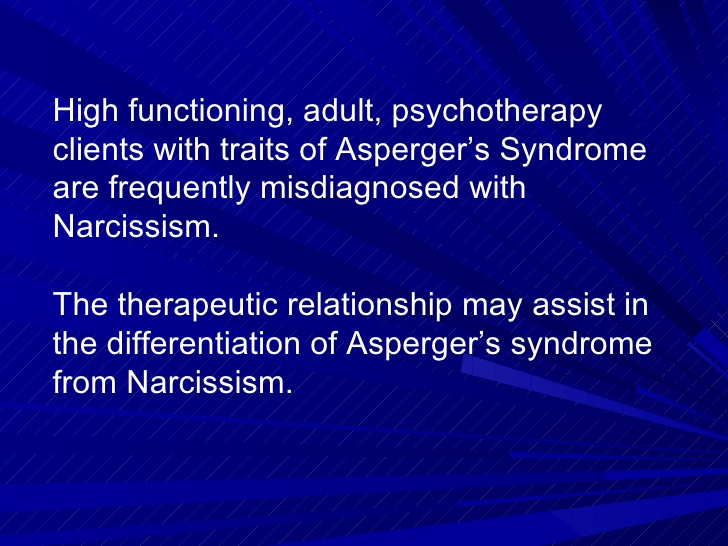
There’s been much written about the relationship between Aspergers syndrome and narcissism, mostly about the way they are often confused with each other (or misdiagnosed as the other disorder) due to the belief that people with Aspergers lack empathy (which is not true). I wrote about this false belief in my article, “People with Autism Do Not Lack Empathy!”

People with Aspergers may SEEM unempathic, because they are not always very good at expressing emotions or knowing how to react when other people share their emotions with them. But an Aspie’s lack of appropriate social reaction to the emotions of others doesn’t mean they can’t FEEL the emotions around them. In fact, some may feel other’s emotions MORE keenly than neurotypicals, and they can be easily overwhelmed, which may cause them to withdraw from the situation and partly account for why they may seem less engaged emotionally or uncaring about the feelings of others.

aspie_misdiagnosis

Narcissism as an Autism Spectrum Disorder?

question2

Psychology Today had an interesting article comparing narcissism to high functioning autism (Aspergers) and at least one psychologist thinks they may be the same disorder!:

Khalid A. Mansour (the British Arab psychiatrist), has proposed in an article in the Pan Arab Journal of Psychiatry (link is external) that narcissistic personality may merit classification as an autistic spectrum disorder.

Dr. Mansour writes, “There is now significant level of agreement that emotional processing problems like: lack of empathy, poor self-awareness, self-centredness, poor reciprocation of emotion, poor ability to maintain emotional relationships, anxiety and anger outbursts are more or less central features of autism (10, 50,51).”

Interesting. When I first read the above paragraph, I though Dr. Mansour was writing about severe narcissism. His description fits both narcissism and autistic spectrum disorders. Hmmm.

Dr. Mansour similarly quotes from the ICM-10 listing these features of autism:

–Self-centeredness; inappropriate to developmental level and cultural expectations
–Poor self-awareness, poor ability to develop remorse or learn from mistakes
–Poor empathy or appreciation of others feelings
–Poor ability to reciprocate emotions.
–Hostile dependency on safe relations.
–Failure to develop emotional relationships appropriate to developmental level and social norms
–Treating people as objects or preferring objects over them
Again, this list certainly sounds a lot like narcissism.

Dr. Monsour concludes: “… it is noticeable that people with NPD, do not show a major degree of functioning problems in stress free environment or when they are supported (except that they are perceived as “not pleasant characters” to deal with). However under stress and without support they can become quite dysfunctional in a way not far from what we usually see in Asperger’s syndrome. “

I don’t buy it. This is the opinion of one psychiatrist. While it’s true that on the surface these two disorders may appear similar, the mechanism behind the behaviors are vastly different–in fact, almost the opposite. For the narcissist, their lack of empathy and failure to engage the emotions of others is due to their inability to feel the emotions of those around them, but they can FAKE empathy fairly well, even if they choose not to. If they are trying to obtain supply, they can be pretty good at it. Their social skills are not the problem–their inability to feel other’s emotions are. They are like actors in a play. In contrast, a person with Aspergers or high functioning autism DOES feel the emotions of others around them strongly, but lacks the social skills necessary to be able to convey this to others effectively. Unlike the narcissist, people with Aspergers are very bad actors.

But the question was, can Aspergers and narcissism occur together?

aspie_narcissist

But we’re talking here about comorbidity. The question I’ve raised is whether Aspergers and Narcissism can be comorbid with each other–that is, can someone have BOTH disorders?

The answer appears to be yes. I found this on Yahoo Answers, from a man who claims to be both a high functioning autistic AND a sociopath:

[…] people with Asperger’s can be sociopaths and or narcissists as well. “CO-MORBID” is the medical term used to describe a disability or group of disabilities that exist another disability in a single individual at the same time. It is possible to be autistic and have cerebral palsy or have aspergers and diabetes. Likewise it is also possible to have both Aspergers and mental disorders including sociopath and narcissism. Asperger’s does not exist in a bubble that protects it from co-morbid disabilities and mental defects.

I have High Functioning Autism and I also have antisocial tendencies I must always keep properly managed. I see my psychiatrist regularly. I take my medications as needed and I have trained myself to always be mindful of my darker instincts to insure they do not express themselves in disastrous ways. I have high functioniong autism but; thanks to early intervention by family, doctors and others I was made keenly aware of my antisocial ways and taught how to manage them in ways that kept everyone safe. It is the single most difficult thing I do in life to keep my antisocial ways well managed but; having seen the monster I become when enraged is motivation enough to keep me always vigilant.

There’s no reason why the disorders couldn’t exist together. Personally, I’ve never known anyone with both disorders, but that doesn’t mean they don’t exist. Using a fictional example, I’m going to speculate here what the behavior of a narcissist with Aspergers might be like.

The Case of Mark F.

Depressed Forty Year Old Man Drinking Alone

Mark F. always had trouble making friends. In grammar school he was bullied due to his inability to fit in with others or show empathy. He was socially awkward and never seemed to know the right thing to do or say. Mark not only was unable to show appropriate reactions in social situations, but rather than suffer in silence and wonder why others didn’t understand or like him (as most Aspies do), he didn’t care about the feelings of those around him. He was easily hurt by the bullying, but reacted in rage due to these narcissistic injuries to himself. He’d lash out at those who injured him and didn’t care if he hurt someone else.

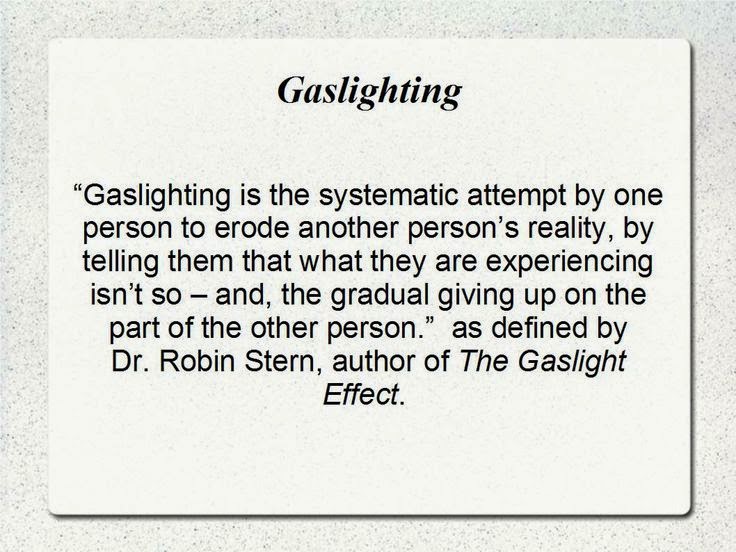
As Mark grew older, he had difficulty keeping a job, not only because of his inappropriate, almost schizoid affect that was very offputting to those around him, but also because he deliberately caused pain to others with his frequent insensitive insults. Due to his Aspergers, Mark lacked the social skills to be able to effectively use the more subtle narcissistic “tools” such as gaslighting or triangulation against others, but he was very good at blame-shifting and projecting his character defects onto those around him. Lacking the social skills to know what behaviors were appropriate, he’d “go off” on those in authority, and was frequently fired from his jobs for insubordination, gossiping openly about his coworkers, missing work due to debilitating hangovers (more about this in the next paragraph), and starting fights.

Mark never married. Though good looking, due to his poor social skills and openly hostile attitude (he was unable to mask his anger, resentment and envy of others), his dates never developed into relationships. No woman would stay with him longer than a few weeks. He had no friends and resorted to frequent drinking to cope with his loneliness.

As you might imagine, Mark was miserable. He constantly felt victimized. He was frequently depressed and wondered why he couldn’t get others to cooperate with his need to use them for supply. In his frustration and envy of all those around him for their “better social skills,” Mark tried to self-medicate by drinking heavily and his frequent drunkenness only served to exacerbate his rages and cause his work attendance to be poor.

Having both disorders would be a recipe for extreme misery. Mark’s behavior is just one way narcissism comorbid with Aspergers could manifest itself. An effective narcissist must possess good social skills to be able to charm others into trusting them and to use their “bag of tricks” in an effective way, and therefore an Aspie with narcissism wouldn’t be particularly dangerous, just very unlikeable. Therefore, I don’t think it would be probable that an Aspie could be a “malignant narcissist” but they certainly could be suffering from NPD. A person with both disorders would have zero charm and therefore not have many opportunities to use others the way a narcissist with good social skills could. My feeling is substance abuse would be a huge problem for such a person, in their attempt to make life more bearable. For those not resorting to substance abuse or alcoholism, severe depression or even suicidal ideation could result.

Amazing untitled photograph.

I don’t know what to call this amazing photograph my son took from a hotel in Atlanta last night where he’s staying for a convention.

perspective_levels

Click to enlarge.

Lies my narcissists told me.

lies_honesty

I was told many lies about myself while growing up within my my FOO (family of origin). I have no doubt this had everything to do with my developing Borderline Personality Disorder (BPD), Avoidant Personality Disorder (AvPD), and lifelong severe anxiety.

Why personality disorders are so difficult to cure.
Personality disorders (PD’s) are formed very early in life, normally before the age of six–which is the reason they are so hard to cure. Because the child’s personality is still in a malleable state (meaning it hasn’t fully formed) until around age 5, PD’s become an integral part of the personality and therefore can be extremely difficult to eradicate because they were formed so early the child doesn’t believe it’s a problem, just the way things are. Their misery seems normal to them. They know nothing else.

Of course some PD’s are more amenable to treatment than others, and sufferers of some PD’s, such as Avoidant, Dependent, and sometimes Borderline, are much more likely to seek treatment than those with, say, ASPD (antisocial personality disorder), NPD (narcissism), or Schizoid PD.

Lies I was told growing up.

sensitive_people
As the family Scapegoat (and occasional Golden Child which I’ll explain later in this article), here are some of the lies I was told while I was growing up:

“You’re too sensitive!” — This one’s the Big Kahuna for many of us ACONs, especially if we’re also HSPs (highly sensitive people) by nature. “You’re too sensitive” isn’t so much a lie as it is a verbal twisting of a wonderful gift and ability to see the Truth into something…more resembling an embarrassing defect. Narcissistic lies sometimes appear in the form of turning something good into something shameful and bad, and vice versa.

“You have no sense of humor.” (see above)

“You don’t really want that.” (the parent is telling the child what they really think–this will just cause confusion and identity issues for the child)

“No one wants to know how you feel.” (so we learn to swallow our pain and lock up our emotions)

“You cry too much.” (I had to unlearn this–unfortunately I unlearned it too well and now find it difficult to cry even when I know I need to)

“You don’t know what you’re talking about.” (invalidation and devaluation)

“You know you don’t really think that.” (massive mindfuckery)

“You don’t really want to join the swim team. You know you don’t like competition.” (see above–the real message here being “you are a weak, pathetic, scared loser” to really drive the message home)

“You’re too fat/heavy/even ‘obese’ (I was never more than 120 lbs at 5’4” as a teenager)

“They don’t like you because you’re always so unpleasant to be around.” (Real nice)

“You never smile and it makes your face look unpleasant.” (Fake Narc smiles look even more ‘unpleasant’)

“You read too much.” (okay…would it be better if I snorted Smarties instead or went around throwing rocks through the neighbors’ windows?)

“You know you’re not really good at that.” (whenever I wanted to try something I hadn’t tried before)

“You know you can’t do that, let me do it.” (I wanted to wash the dishes when I was 6)

“You’re too idealistic” (mmmkay…and that’s a bad thing?)

Because I was raised as an only child (I had half-siblings who did not live with us), I also served as the Golden Child. So I also heard lies like,

“They’re just jealous of you because you’re prettier than they are.” (even as a first grader, I knew this was bullshit).

child_on_pedestal

“They’re just jealous of you because you’re smarter than they are.” (my grades weren’t much above average, in spite of having a high IQ)

“You are more talented than they are.”

“We have better genes than those other people.” (Narc genes?)

“You come from a better family than your friends do.” (I call bullshit on that.)

You were the best dancer in the school play.” (I have two left feet and even my dog would have known that was an outrageous lie).

It doesn’t stop when you go No Contact.

flying_monkeys

These are some of the lies told about me by my mother to her sycophants (the ones I’m aware of):

“She’s a loser just like her ex-husband” (Nice.)

“She always makes such terrible choices.” (True, but there were extenuating circumstances at those times she would never understand)

“If only she had done what I told her.” (If only I had had the courage to take a few risks-I am extremely risk-averse)

“If only she had listened to me.” (Again, if only I had taken a few risks and not been so afraid of my own shadow)

“She’s a nothing.” (I guess that’s why people tend to always talk over me, look through me, and never hear what I have to say in group or social settings–where I FEEL like a nothing)

“She was ruined by her ex” (this is a half-truth…but RUINED? Really? Let’s tone down the hyperbole, shall we?)

“She will always be poor.” (and the poor are always with us, right?)

“She will never achieve anything.”

“She can never stick with anything.” (This has actually been true but has gotten a lot better)

“She has mental problems.”

“She is sick in the head.”

Ad nauseam…

Conflicting messages as Scapegoat/Golden Child

ConflictingMessages

Black-and-white thinking (idealizing/devaluing) and outrageous contradictions prevailed in my FOO.
As both Scapegoat and Golden Child, I was receiving two sets of messages (sometimes both at the same time), such as, “You know you don’t really want that, because you’re too sensitive, you hate competition and you are smarter than they are.”
I think you get the idea.

Being raised with conflicting sets of messages and being treated as beloved/rejected child at once was incredibly crazymaking.

Borderline Personality Disorder (or even narcissism!) and Avoidant Personality Disorder (I have both BPD and AvPD) both seem like logical, almost sane reactions to having been raised with two conflicting sets of messages–I was either all bad or all good, with no in between.

And finally, it doesn’t end there. Raised by narcissists, I married one even worse. A narcissist so malignant he made my parents look like empathic light beings in comparison. I was trained to be Supply and was WAY too good a student. If awards were given for Learning How to Be Narcissistic Supply, I would have been valedictorian.

Lies my psychopathic narcissist ex-husband told me.

gaslighting

Following are the lies my malignant narcissist sperm donor told me about myself and also told all the flying monkeys he had succeeded in turning against me (some of who included my friends) over 28 years. This led to my PTSD and clinical depression (where I had to be hospitalized for suicidal ideation). Most of these were projections of his own character flaws onto me.

“You are selfish/self-centered.”

“You always overreact to everything.”

“You never listen to me”

“You don’t care about me or my problems.”

“You have no empathy for me.”

“You are narcissistic.”

“You are becoming just like one of them” (he was referring to Republicans, who he hates)

“Oh, so now you’re living the high life?” (when I took in a roommate while he was homeless)

“You are a b**ch, c*nt, Tw*t, whore.”

“You are stupid.”

“You have no common sense.”

“You’re insane.”

“There’s something wrong with you.”

“You’re just like your family–all crazy.”

…as well as a constant barrage of hateful sarcasm at my expense, whether there were people present or not. If I objected to this mean spirited “humor,” I was told–WHAT ELSE???–I was “too sensitive” or “have no sense of humor.”

Because of having grown up in the midst of a labyrinthine web of lies, and then marrying into another one, I have always valued Truth. That’s why I put a premium on complete honesty, at least in my writing.
Not that I don’t ever lie–we all do, it’s part of the human condition. But I am very aware of dishonesty when I see it and won’t hesitate to call it out in others.

Anyone need a totaled Honda Accord?

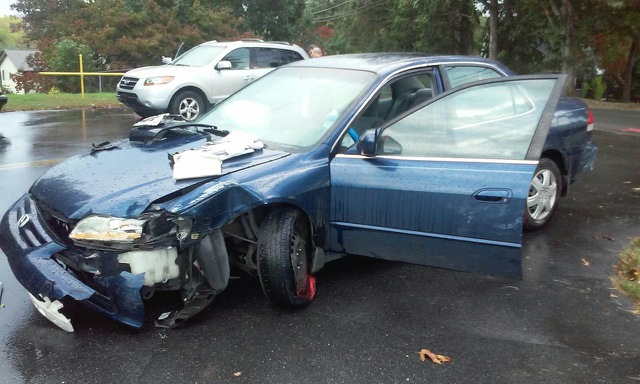
Some of you may remember my daughter’s car accident back in October. She was fine (thank goodness), but sadly, her car was not.

Today she posted this “ad” on the Facebook page NC Vehicles, which is a serious page for people trying to sell or buy vehicles.

The Ad:
Very nice 2002 Honda Accord for sale! 137k miles automatic, 4 door, power windows and locks, slight body damage but easily repairable with a little duct tape and super glue! Will take $6800 obo or will trade for a boat. For another $25 I will throw in a magnet from Joes Crab Shack I found on the floorboard when I bought it. This is a great deal, people!

deadcar
She posted this photo of the totaled car.

Here are some of the comments. Her replies are in bold.

Is that the tire under the door ?

It will buff out

Yes, that would be the tire underneath the door. It has minor body damage as you can see, but nothing that can’t be fixed.

Yeah it can be fixed upon a closer look lol

Yeah I got into a very minor accident which caused the airbags to deploy as well but without them you don’t need to worry about them not deploying next time, which is definitely a plus.

So do we have a deal Jerry? You’ll be missing out!!!

What engine is in this one?

Thanks but ill have to pass on this great deal im all out of duct tape and glue lol

I don’t know that much about cars but it does have a big hunk of metal under the hood which appears to make it run…so I assume that’s the engine…but it is a v6. I do know that much.

Damn well I’m sure it’ll go fast thank you for your interest tho!

Airbag came out its totaled ill give you a dollar for it u can keep your magnet

I can’t go lower than $6799.99…but that’s a great deal lower than the original $6800 I must say. And the magnet is so cool! You can put it on your refrigerator and I’m sure it’s got a story behind it. Maybe it was bought on a vacation. And has traveled a great distance.

Come on guys fixed it really would be a nice car

Yes it’s a hell of a deal! Won’t find nothin better I swear!

The car is totaled its not worth anything but for the motor or transmission

Lol at the people who don’t get it

Right? Like wow. Obviously it’s a joke.

Lol i like the magnet

But back to business! $6799.95 is the absolute lowest I will go and will even throw in the magnet for free! How fun! The front door does not close anymore due to the front end damage but you can just take it off and it’ll kinda be like an off roading adventure!

I am only selling this valuable Honda because the horn will not stop blaring since the accident and my neighbors have threatened to shoot it. I have considered finding the wire and unplugging it but then I remember the times I forgot where I’ve parked my car and what a nuisance it was so I like to know where it is at all times.

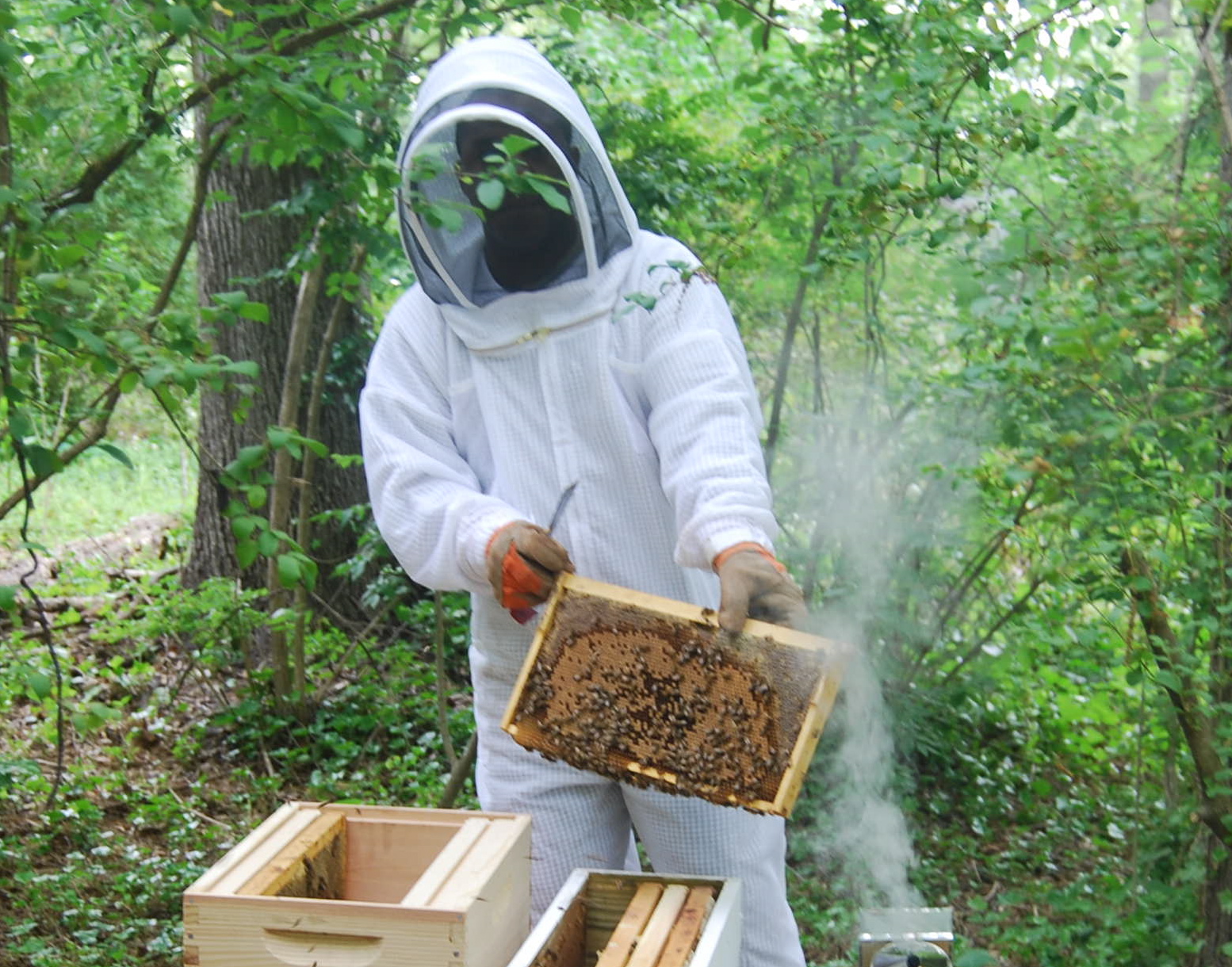
If you consider coming by to look at it, I would wear a beekeepers outfit only because there is now a wasp nest under the front passanger seat. You can have them for free as well.

beekeeper

The Accord is not available for sale. At least she’s laughing about it now.
I told her she should start her own humor blog.

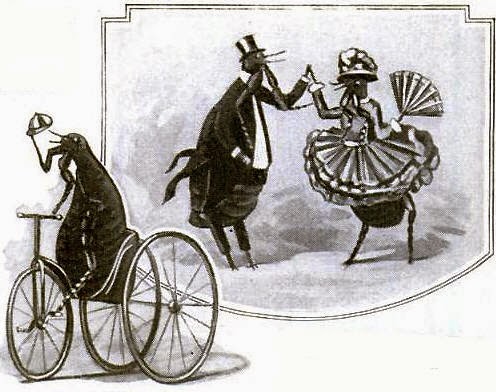
The “fleas” of narcissism and being Aspie.

fleas (1)

Fivehundredpoundpeep just posted this article yesterday, expanding on yesterday’s post about fleas acquired from narcissists who abused us, but this one from the perspective of an Aspergers sufferer who was horrifically abused and devalued by her sociopathic mother, MN sister, and other decidedly unpleasant relatives.

The Fleas of Narcissism
By Fivehundredpoundpeep

I have read about fleas of narcissism before. Lucky Otter talked about fleas recently too. These are the things you can end up with from being raised in a narcissistic household. These would include learned behaviors and reactions they taught you during your childhood.

One thing I want to add here, is that if you are worried about being a narcissist, while some children of narcissists become a narcissist like them, you often are NOT! Narcissists do not worry about it, the very idea that they may be disordered is way beyond them. They would never in a million years admit anything is wrong with them. My mother in one pissed off email fest actually wrote, “**** thinks I am disordered!” by then I had laid it out and wrote to her that she was a narcissist and had no empathy, though I came to the sociopath conclusions later on.

One fleeting thought someone raised in sick sociopathic households can have, is “Am I anything like them?”. One can have this feeling of, “Has the evil infected me?” Being raised with no love, I wonder how I was able to love people and I do. I knew by a very early age I did not want to be like my parents. For Aspies, justice is very important, it is hard to explain, some see Aspies as being little minion “rule-followers” but it’s different then that, we want to follow what is “right” over wrong. My conscience was very different then their’s. One thing that would happen to me is my parents would slap me for being “too sensitive”. I was told constantly to “harden up”! Today as a 40 something, I know telling a ten year old crying Aspie, “You can’t cope!”, is pretty sick.

I struggle with my own worries about evil then. All Christians do and have to battle against the sins they may commit. God is merciful and there to forgive once one repents but I have worried about falling away under my crushing poverty and losing trust in God. Even crazy bad health problems one’s thoughts can go into despair, instead of prayer. The concept of conscience was not taught in my family or acting according to one’s conscience. I was different. I felt guilt.

However I struggled with a few fleas from being raised in my family. My family all had violent tempers, with screaming, yelling and throwing things and using foul language. They do not censor their tempers. Even Mini-Me has a bad temper and I saw her screaming at her kids a few times.

I can struggle with a bad temper though I have learned to temper it somewhat and try to keep the yelling to myself as much as possible within the confines of my apartment. I would never touch anyone, but when angry I can yell loud.

Long ago I learned to walk away from people while yelling, to keep the damage more minimal. The other day, I started yelling about a door being locked in my face, and hopefully no one heard me. I said one irritated low volume thing with no cussing they did hear, and then thought inside, “I better cool it”. Aspie melt-downs can complicate this, sometimes an Aspie is not mad but just anxious. I know I am not perfect and well, everything is a work in progress.

My family does not feel guilt over their tempers, they think it is okay to rant and rave and cuss the room blue. I was always embarrassed to eat out with my father because he would tell the wait-staff off over every little thing and even would yell. I had visions of goobers hitting our food back in the kitchen. You know something is wrong when the neighbors are calling the police constantly over your family’s screaming and yelling and they show up and because of your father’s position do absolutely nothing while a poorer guy would be getting dragged off to jail.

This is an area where I definitely had to learn NOT to be like my family and to keep it in check.

Other ACONs may struggle with taking criticism–I am okay with criticism that is meant for improvement but not for the mean kind.

One rarer flea I can get is if I am around people I can tell do not like me or don’t understand Aspies or have personality traits like my parents is I can get very sarcastic and will go into “fight or flight” mode inside. I will go into Aspie blunt mode and not “cloak” for the neurotypicals and throw caution to the wind. However this can be dangerous around narcs and other personality disordered types who can manipulate things to turn my emotions against me. Aspies have to remember blunt honesty isn’t always the best social mode. Around narcs of course, silence and disappearing is safer.

I found myself in a “fight or flight” mode in my stomach and having some of my fleas come out too often when I was around certain personalities. Sometimes it is not even something that a particular person is doing or any personality disorder but a clashing of values and world view.

This is one thing ACONs should always pay attention to when it comes to dealing with the world. Pay attention to how you FEEL around certain parties. These are feelings I am learning to pay attention to. Not everyone is a narc but we have to learn to control our fleas around personalities who may trigger us or we may differ with. I know there are neurotypicals out there who have no capability to understand me. Of course we have to be mindful of the personality disordered who may be out to hurt us too. During the early stages of no contact we can be more sensitive too as we wake up to new ways of doing and acting coming out of fog.

Others may have a hardened view towards the world. I know I did for a short time. My parents would scream at me for being “too sensitive” and I had that weird abuse where they denied me the protection and treatment owed a young girl where I was treated more like a boy. I was told to harden up and not to have feelings. My feelings angered them. They failed in this change of me, but there was some fleas left over.

An ACON going through this one can get feelings like “Everyone is out to get me.”, “I’m not going to be a sucker”. I had this in my 20s to an extent expecting that everyone was going to screw me over. One roommate even asked me, “Why do you have to act like such a tough girl?” Get hit enough times and you are always ducking and this is not a good way to deal with the world. When I lived in the ghetto, I did grow somewhat harder and when I escaped to a small rural town, had to adjust my entire stance towards the world. I didn’t need to walk around in defense mode all the time even if I had to learn balancing this one, self protection balanced with openness. I actually had to learn and experience that there were good, kind and loving people in the world which defines many of my friends.

One thing I had to do after becoming a Christian in my thirties, was I did use the Christian people I met as role models. I would pick older women, and some I still have on my social website, and would observe how they treated people. These were women with loving families and who gave to the community and treated people fairly and kindly. While I did Aspies are more apt to do this, in choosing mentors. My best jobs when I was young, I always had a mentor. I don’t think this is a bad thing to do. I was doing it at an older age then most, but choosing positive role models when you have had negative ones for far too long is a good thing and I think a sign of healing.

So fleas can be overcome, you just have to be aware of them.

How does Aspergers Syndrome differ from Non-Verbal Learning Disability (NVLD)?

aspergers_kid

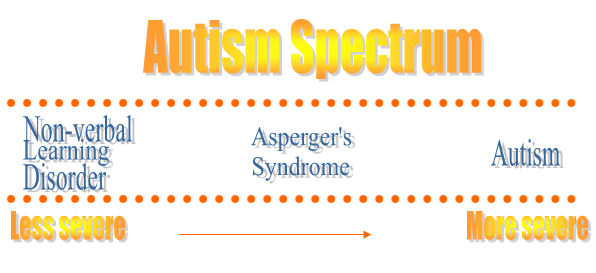
I never heard of Non-Verbal Learning Disability (NVLD) until last night, when I was reading Nyssa’s Bio (on her blog Nyssa’s Hobbit Hole), where she said she suffered from NVLD, which is very similar to Aspergers Disorder but not quite the same thing. Some mental health professionals believe NVLD is actually part of the autism spectrum, higher functioning even than Aspergers. Aspergers itself could be thought of as a social learning disability.

autism-spectrum

I decided to find out more about what this disorder and what the differences are, and I came across this well written article, and decided it belonged here too.

Aspergers Disorder and Non-Verbal Learning Disabilities:
How Are These Two Disorders Related to Each Other?

http://www.aane.org/asperger_resources/articles/miscellaneous/asperger_nonverbal_learning.html

By Dr. David Dinklage

There is clearly a great deal of overlap between Aspergers Disorder (AD) and Nonverbal Learning Disabilities (NVLD), so much so that it is possible that the symptoms of each describe the same group of children from different perspectives—AD from either a psychiatric/behavioral perspective, and NVLDneuropsychological perspective. The specific conventions of these diagnoses may lead to a somewhat different group of children meeting diagnostic criteria, but it is not clear that this reflects something “true” in nature. That is, it may only be convention that separates these two groups.

One is reminded of the story of the six blind men who were asked to describe an elephant. Each man grabbed a different part of the creature (the snake-like trunk vs. the tree-like leg) and gave an accurate description from his own particular perspective—but each man thought the others were completely mistaken!

Studies conducted by the Yale Child-Study Group suggest that up to 80% of children who meet the criteria for AD also have NVLD. While there are no studies on overlap in the other direction, most likely children with the more severe forms of NVLD also have AD. Children from both groups are socially awkward and pay over-attention to detail and parts, while missing main themes or underlying principles. However, by convention, the two groups differ in the range of severity. Professionals reserve an AD diagnosis for children with more severe social impairment and behavioral rigidity; some symptoms may overlap with high functioning autism. There are degrees of severity within AD but not to the extent that is acceptable in diagnosing NVLD. These degrees can range from extreme autistic behavior to cases where the social difficulties are very subtle and the academic/cognitive difficulties are more prominent.

Here is a brief outline of the diagnostic criteria for AD and the pattern of neuropsychological finings in NVLD. While the overlap is apparent, the emphasis is different because criteria for NVLD focuses on academic issues as well as specific test findings and is not purely descriptive. This also results in different means of making the diagnosis (testing or observing).

Aspergers Disorder (AD) is characterized by:

A. Qualitative impairment in social interaction

–Failure to use non-verbal social skills (i.e. eye contact, gestures, body posture, facial expressions)
–Developmentally inappropriate peer relationships
–Lack of spontaneous sharing of enjoyment and interests with other people
–Lack of social and emotional reciprocity

B. Restricted, repetitive and stereotyped patterns of behavior, interests, and activities.

-Preoccupation that is overly intense and narrow
–Inflexible adherence to non-functional or peripheral routines
–Stereotyped or repetitive motor movements
–Persistent preoccupation with parts of objects

C. These problems taken together (A plus B) result in significant challenges in the lives of people with AD as they attempt to live in a neurotypical world and meet the expectations of others.

D. There is no general language delay.

E. There is no severe global cognitive impairment.

Non-Verbal Learning Disability (NVLD)

A. NVLD can be conceptualized as an imbalance in thinking skills—intact linear, detail oriented, automatic processing with impaired appreciation of the big picture, gestalt or underlying theme.

B. It is not nearly as common as language-based learning disabilities, but this may be a phenomenon created by environmental demands (i.e. our societal demands for precision skills in reading assure that even the most subtle language-based LD cases are identified)

C. Typically social/psychiatric concerns are raised before academic problems are identified.

D. While the overlap is not complete, NVLD children may meet the criteria for Pervasive Developmental Disorder Not Otherwise Specified (PDD NOS), Aspergers Disorder, or Schizotypal Personality.

Neuropsychological Profile (NVLD):

–Full range of IQ
–Visual spatial deficits are most pronounced: poor appreciation of gestalt, poor appreciation of body in space, sometimes left side inattention/neglect, may have highly developed but ritualized drawing skills that are extremely detail oriented.
–Rote linguistic skills are normal (i.e. repetition, naming, fluency, syntactic comprehension), but pragmatic use of language is impaired: weak grasp of inference, little content, disorganized narrative despite good vocabulary and grammar. Rote recall of a story may be good, but the main point missed. Rhythm, volume, and prosody of speech are often disturbed.
–Motor and sensory findings are common: usually poor fine and gross motor coordination, left side worse than right.
–Attention is usually reported to be impaired and testing supports this, but the affect is desultory as opposed to distractingly impulsive, as in ADHD. It is as if people with NVLD do not know what to attend to, but once focused, can sustain attention to detail. The distinction between figure and ground is disturbed, resulting in attention errors.

Academics:

–Difficulties are often picked up late because decoding and spelling may be quite strong.
–Inferential reading comprehension is weak relative to decoding and spelling skills.
–Math is often the first academic subject to be viewed as problematic. Spatial and conceptual aspects of mathematics are a problem; math facts may be readily mastered. I.e., a student may know the answer to a simple multiplication problem, but not understand what multiplication is.
–Due to spatial and fine motor problems, handwriting is usually poor.
–Organization skills are weak, particularly in written work.

Social/emotional issues:

–Peer relations are typically the greatest area of impairment; may play with much older or younger children than with same age peers where they must manage give and take.
–They often lack basic social skills; may stand too close, stare inappropriately or not make eye contact, have marked lack of concern over appearance, be oblivious to other’s reactions, change topics idiosyncratically.
–Children with NVLD are seen as “odd” children who “just don’t get it” socially They may do better with adults, where they act dependent and immature, but may not be seen as “odd.”
–They may show poorly modulated affect, not matched to verbal content.
–Lack of empathy and social judgment may shield them from fully experiencing the hurt of peer rejection, while the same factors increase the likelihood of being rejected.
–History of unusual thinking can often be obtained: rituals, stereotypic behaviors, rigid routines, and magical/bizarre beliefs.

pervasive_developmental_disorders

Assessment of NVLD Compared with Assessment of AD

NVLD should be diagnosed in the context of a comprehensive neuropsychological evaluation. It is not simply a matter of Performance IQ being less than Verbal IQ, since there may be many reasons for such a discrepancy besides NVLD. Furthermore, NVLD can be present even if no discrepancies between strong verbal ability and poor performance show up on the Weschler Intelligence Scale for Children (WISC-III). One does not need to have every characteristic of NVLD in dramatic form for the diagnosis to be helpful in delineating the pattern of strength and weaknesses.

NVLD can be complicated by an array of psychiatric and social/familial problems, so it is important to assess the whole child-world system, not just the cognitive status.
AD is best diagnosed from a detailed history, school reports, and observing the child. As parents vary in how they report symptoms, one good marker is whether or not the child had engaged in symbolic play as a toddler. Children with AD tend not to play with toys as the “thing” they represent. For example, they may collect fire trucks but not play “fire.” Parents may also report that their children use language instrumentally, rather than using it to trade ideas. The children do not seem to consider that the “other” may have different ideas.

Because AD is diagnosed descriptively, one does not need neuropsychological testing to diagnose it. However, since there is so much overlap between AD and NVLD, neuropsychological testing is strongly recommended. Testing will identify any specific interference with academic functioning, and confirm imbalances in thinking skills that may have been observed.

In my practice I have seen a number of children with AD who would not meet the criteria for NVLD in any existing research studies. If these children had participated in the Yale study mentioned earlier in this article, they would probably have been in the 20% of the AD children who did not meet the NVLD criteria. It is possible that the AD children in that 20% may have had very high visual spatial scores, thus masking their over-attention to detail in problem solving. For example, they may have scored very high on the Block Design subtest of the IQ measure (using colored blocks to match a pattern given to them) with little or no appreciation of the gestalt. Their considerable skill and speed at analyzing detail would have allowed them to use this inefficient strategy effectively. With these very bright children, it may be that the tests are not sufficiently sensitive to discern a pattern of NVLD. On the other hand, some children with AD show diffuse difficulties in the language and attention domain, but may not exhibit the pronounced discrepancies associated with NVLD. Nonetheless, they may still struggle with the cognitive difficulties of NVLD. Conversely, a child meeting the criteria for NVLD, may not meet the criteria for AD, even though subtle characteristics of the disorder may be present.

A case example best illustrates how children who clearly have NVLD may not meet the criteria for AD as it is presently understood. I evaluated an eighth grade girl whose parents were concerned about her math performance. She had above average overall ability, but a 24-point discrepancy between her verbal and visual spatial skills on the IQ measure. On the neuropsychological measures, she clearly had the pattern of visual spatial deficits, left sided motor slowing, and poor math ability, while language skills were intact. She did not have any problems with inferential comprehension in reading. One would not even have considered Aspergers Disorder. She had had many good friends through elementary school and felt herself to be part of her peer group. Symbolic play development had been normal and she exhibited no repetitive behaviors. This is unusual in NVLD as well, but since much of the criteria for this neuropsychological diagnosis is cognitive and test-based, it was determined that she met enough of the criteria for a diagnosis of NVLD. I commented in the report that, unlike this girl, most children with NVLD have more social problems, tend to miss the point in social interactions, and have trouble in content areas in school because of inferential reading comprehension problems.

The parents came back to me when she was a senior. She was now isolated from her peers, who complained that she was too literal. Now she was struggling in literature and social studies; her papers tended to be more like lists and less integrated than those of her peers. I don’t believe she was developing a new disorder. She had a classic NVLD, but it was relatively subtle and it required more high-powered peer and academic demands to highlight her social perception and inferential reasoning weaknesses, much the same way that some mildly dyslexic individuals compensate reasonably well and go unnoticed until they flunk out of their first year of college. Given her history of good social adjustment, one would still never diagnose her with AD. One has to wonder whether her neurcognitive functioning indicated AD, but in a much milder form.

Asperger’s Disorder was not originally thought of as having a continuum of severity that included these subtle forms, whereas NVLD did not start with the assumption of more extreme difficulties. As information about AD becomes more widely circulated more and more subtle cases are being identified and the culture is, in some manner, changing the original “intention” of the category. While that may dilute the meaning of the diagnosis, it will more accurately reflect the variety of developmental presentations in nature. As humans, we naturally want to categorize. The complex relationship between NVLD and AD may be an example of categorizing how too rigidly can confuse, rather than clarify, our thinking.

Dr. David Dinklage is Director of Neuropsychology at Cambridge Hospital, and has a private practice in Belmont.

Notes of first therapy session with Sam V., male, 43, diagnosed with Narcissistic Personality Disorder (NPD)

samvak3

The following is about ten years old, I think. I’m not going to editorialize this further, but let the therapist’s words speak for themselves. (I do not know who the therapist was). Pretty interesting stuff and a vivid picture of how NPD can manifest itself in one person, in this case a well known author who writes about his own disorder. Sam Vaknin suffers from the cerebral form of narcissism; the other type is somatic.

Notes of first therapy session with Sam V., male, 43, diagnosed with Narcissistic Personality Disorder (NPD)
http://www.narcissistic-abuse.com/personalitydisorders65.html

Sam presents with anhedonia (failure to enjoy or find pleasure in anything) and dysphoria bordering on depression. He complains of inability to tolerate people’s stupidity and selfishness in a variety of settings. He admits that as a result of his “intellectual superiority” he is not well placed to interact with others or even to understand them and what they are going through. He is a recluse and fears that he is being mocked and ridiculed behind his back as a misfit and a freak. Throughout the first session, he frequently compares himself to a machine, a computer, or a member of an alien and advanced race, and talks about himself in the third person singular.

Life, bemoans Sam, has dealt him a bad hand. He is consistently and repeatedly victimized by his clients, for instance. They take credit for his ideas and leverage them to promote themselves, but then fail to re-hire him as a consultant. He seems to attract hostility and animosity incommensurate with his good and generous deeds. He even describes being stalked by two or three vicious women whom he had spurned, he claims, not without pride in his own implied irresistibility. Yes, he is abrasive and contemptuous of others at times but only in the interests of “tough love.” He is never obnoxious or gratuitously offensive.

Sam is convinced that people envy him and are “out to get him” (persecutory delusions). He feels that his work (he is also a writer) is not appreciated because of its elitist nature (high-brow vocabulary and such). He refuses to “dumb down”. Instead, he is on a mission to educate his readers and clients and “bring them up to his level.” When he describes his day, it becomes clear that he is desultory, indolent, and lacks self-discipline and regular working habits. He is fiercely independent (to the point of being counter-dependent – click on this link: http://samvak.tripod.com/faq66.html ) and highly values his self-imputed “brutal honesty” and “original, non-herd, outside the box” thinking.

He is married but sexually inactive. Sex bores him and he regards it as a “low-level” activity practiced by “empty-headed” folk. He has better uses for his limited time. He is aware of his own mortality and conscious of his intellectual legacy. Hence his sense of entitlement. He never goes through established channels. Instead, he uses his connections to secure anything from medical care to car repair. He expects to be treated by the best but is reluctant to buy their services, holding himself to be their equal in his own field of activity. He gives little or no thought to the needs, wishes, fears, hopes, priorities, and choices of his nearest and dearest. He is startled and hurt when they become assertive and exercise their personal autonomy (for instance, by setting boundaries).

Sam is disarmingly self-aware and readily lists his weaknesses and faults – but only in order to preempt real scrutiny or to fish for compliments. He constantly brags about his achievements but feels deprived (“I deserve more, much more than that”). When any of his assertions or assumptions is challenged he condescendingly tries to prove his case. If he fails to convert his interlocutor, he sulks and even rages. He tends to idealize everyone or devalue them: people are either clever and good or stupid and malicious. But, everyone is a potential foe.

Sam is very hypervigilant and anxious. He expects the worst and feels vindicated and superior when he is punished (“martyred and victimized”). Sam rarely assumes total responsibility for his actions or accepts their consequences. He has an external locus of control and his defenses are alloplastic. In other words: he blames the world for his failures, defeats, and “bad luck”. This “cosmic conspiracy” against him is why his grandiose projects keep flopping and why he is so frustrated.

Catching FLEAS from narcissists and abusers. (reblogged from Nyssa’s Hobbit Hole)

flea_cartoon

When I was Googling “fleas and narcissists” for the previous article, I learned something new. It’s also something I very much have been needing to know, due to my worries lately about my own narcissistic behaviors.

The article, reposted from Nyssa’s Hobbit Hole, decribes the way a long-term relationship with a narcissist can lead to a condition in their victims called FLEAS. I have never heard this term used before, but apparently it’s part of the narcissistic abuse lexicon, and refers to the bad or narcissistic behaviors ACONs and other abuse survivors have picked up from the narcissists who influenced or raised them. These behaviors, unlike those of a true narcissist, can be unlearned. Here is the article in its entirety.

Catching FLEAS from Narcissists and Abusers
By Nyssa (“Clarissa Harlowe,” pseudonym)

fleas_cartoon

I have caught my own FLEAS while dealing with Tracy.

Sometimes, we who have been targeted by the abuses of a narcissist, wonder if we, too, are now narcissists. It can be catching, especially if we are raised by narcs.

But the recovery community uses the term “fleas” to describe our own harmful behaviors, picked up from the narcs, but which do not mean we ourselves are narcs. The trick is to figure out whether you are a narc yourself, or just have “fleas” which you can kill off with a good flea bath.

As posted in FLEAS – Bad Behavior Patterns and Habits Picked Up from Living or Dealing with a Narcissist by Daughters of Narcissistic Mothers:

Now, you may not have NPD (Narcissistic Personality Disorder). Some children of Narcissists do, and some don’t. Let’s say you don’t, but you were raised by someone who did/does. Therefore you have some issues that can take the shape of NPD – like a shadow or a snow angel, or even an echo.

You’ll have some issues in the same sorts of areas that Narcissism occupies, because you picked up these fleas FROM a Narcissist.

…..But you don’t have NPD.

What you have is the shadow – “maladaptive behaviors”, as psychologists call them, the unhelpful patterns you have been taught, and which you have had to resort all your life.

And they are glued in, most often, by the shame you have been made to carry.

What you have is nicknamed “FLEAS.” They’re the bad behavior patterns and habits we picked up from living with a nutcase who had total and unhealthy control over us. They are the pain and guilt and crazy patterns we had to take on as children in order to just survive. And they’re completely un-learnable. (Meaning, you can un-learn them!)

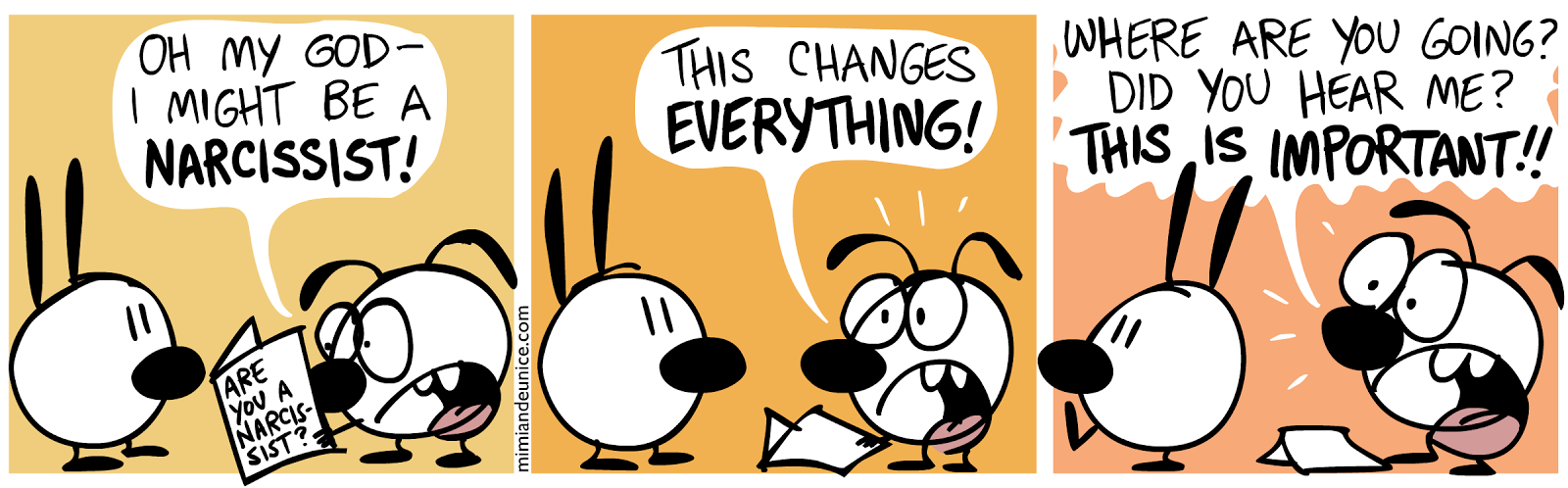
One of the most common issues that newbies demonstrate is a tremendous fear that they themselves have NPD.

It’s a perfectly understandable fear. All human beings do Narcissistic things, and when DoNM’s who don’t have NPD recognize and acknowledge their own self-centered behaviors, they sometimes worry that they have NPD.

They feel guilty about possibly having hurt someone’s feelings, been self-centered, etc., and they panic. It can really be upsetting, even terrifying. And they beat themselves up mercilessly for it – because that’s what they’ve been taught to do.

You’ll notice that I said, “Daughters of Narcissistic Mothers who don’t have NPD”…

In order for someone to recognize, acknowledge and feel guilty about their own Narcissistic behaviors, they first have to have a level of empathy and sense of emotional responsibility that Narcissists, by definition, do not possess.


On the DoNM forum, the usual response to such a person is, ‘If you’re that worried about the impact of your behavior on others, and you’re willing to publicly share your fear of being NPD, trust us — you don’t have NPD… you just have FLEAS.’ “

fleas_book

Violet writes in Am I a Narcissist, Too? All About Fleas:

We can pick up fleas anywhere. I have seen things on FaceBook, people saying really hurtful, mean things about LGBT people, about people of colour, about the poor and disadvantaged, about women, and they are absolutely shameless about it.

Some of these people are narcissists, but others have picked up fleas from narcissistic politicians, pastors, or other authority figures they either revere or fear. Taken out of that environment and shown how their words and attitudes actually hurt other living, breathing human beings, some of these people will feel shame for what they said and the hurt they caused.

Others will not, and they will rationalize and justify what they said, even blame their victims for their hurt (I have actually seen someone say that feeling hurt by the words of a bully is a choice, that you can choose not to be hurt and therefore what the bullies say and do is OK!) : these people are most likely narcissists.
I’ve seen versions of this as well. For example, statements that we choose to be offended by others; that we can simply stop being offended. Or, “I’m not responsible for your emotions.”

There are different ways people mean this, however. The first was said in the context of, Yes, what they said is offensive, but you can choose your own reactions–thereby not giving the offender power over you.

The second, I’ve seen used as an excuse to do whatever you want, because it’s the other person’s fault if they’re offended. It was said by Richard to me, after I told him he was doing some things that hurt me. I forget what they were, just that it was close to the time we broke off the friendship, and that he basically took the responsibility for my being hurt off his shoulders, putting it on mine. ???!!!


I’ve seen it in other places as well, the excuse that if we hurt somebody, it’s their fault for being hurt. That’s very narcissistic, and goes against everything my husband and I were taught growing up. It’s yet another sign that I’ve pegged Richard correctly as a narcissist.

If you’ve hurt and offended someone, the very least you can do is apologize for hurting them, even if you don’t feel your action was wrong in and of itself. You can listen to how you can avoid hurting that person again.

Sure there are times when that person was offended by an innocent action which should not be offensive (ie, offended by a gay man kissing his partner in public, or offended by an introvert who means well but is quiet, or offended by a woman breastfeeding her baby at the mall).

But oftentimes, the offensive act could simply be avoided next time.

Tracy, too, as I saw time and again, would justify whatever she did, even though it hurt others. She hurt Todd, so she justified it as his fault. She hurt me, so to this day she justifies her actions as “nothing wrong” and talks like my being hurt is somehow “childish.”

Even Richard told me back in February 2008, Good luck getting an apology out of her, because she rarely apologizes to anyone, thinking whatever she does is justified. I don’t have the e-mail in front of me and don’t recall if I kept it, but I still remember it.

(I remember thinking when I got it, “I don’t want to deal with that woman anymore!” This was the first time I seriously thought about breaking off the friendship.)

She used Richard’s past abuses of the children to justify her own abuses of the children (I have an e-mail proving this). Which means she’s like this to everybody: me, Todd, even Richard. And this is one of the signs of a narcissist, according to the above.

There is more good stuff in that blog post, explaining how we can tell if we’re narcissists or have just picked up some “fleas”–and how to eradicate those fleas.

devil

From the website Out of the Fog (Fear, Obligation, Guilt):

Fleas – When a non-personality-disordered individual (Non-PD) begins imitating or emulating some of the disordered behavior of a loved one or family member with a personality disorder this is sometimes referred to as “getting fleas”….

Sometimes, when a person has been exposed to an abusive situation for a sustained period, they will look for ways to escape – and sometimes they will experiment or resort to behaviors which are not characteristic but serve as a mechanism to demonstrate their anger.

These behaviors are often destructive and counter-productive and rarely get the abuse victim what they want. These behaviors usually result in regret, shame and apologies from the abuse victim towards their perpetrator. Some perpetrators may seize on such incidents as justification for their own abusive behavior or as a diversion from it….

However, most Non-PD’s are more accustomed to “keeping the peace” than being aggressors and most of us are not comfortable or accomplished in winning arguments or fights.

We will often back down or feel remorse after lashing out. We may begin to compare our behavior to that of the person with the personality disorder and wonder if we are the ones who have “the” problem.

It is common for Non-PD’s to begin to question if they are the one who suffers from a personality disorder. It is also common for Non-PD’s to greatly fear retribution after an angry outburst and engage in a manipulative campaign, similar to hoovering to try to deflect consequences or payback.

Narcissist

To read the rest of this post, please see the rest of Nyssa’s article here.

For more about how Narcissists can give you FLEAS, read this article, “The Shocking Truth: Staying with a Narcissist can Give You Fleas” from Let Me Reach with Kim Saeed.

That’s enough about fleas and FLEAS for one night. I’m getting itchy.