If you were scapegoated by your family, two things can happen. You can become a narcissist yourself (narcissism being an elaborate defense mechanism to avoid further hurt and abuse) or you will internalize the early message that you’re worthless, defective and have no rights. I’m going to talk about the second scenario because that’s what this video is about and it’s what happened to me.
As a scapegoat, you are trained to live in fear. You become afraid to defend yourself, express your opinions, or demand fair treatment. This attitude of worthlessness, fear and shame is carried into adult life. Other people can immediately sense you are a pushover and a magnet for abuse, rejection, and bullying, and you become a target for abuse by others well into adult life.
You can become a lifelong victim unless you find a way to break the pattern. It’s difficult to unlearn, because it was established so early in life by the narcissistic parent.
Golden children, who more closely resemble the narcissistic parent or provide them with narcissistic supply (adulation), are more likely than scapegoats to become narcissists themselves. They will often become the aging narcissistic parent’s flying monkeys against the scapegoated adult child, continuing the family pattern of abuse.
Scapegoated children are the family shock absorbers. They are the children who have been assigned to absorb and internalize the narcissistic parents’ rage and to mirror back what has been projected onto them.
This is exactly what happened to me. Although because I was an only child I sometimes served the Golden Child role, for the most part I was the scapegoat. My Aspergers and high sensitivity made me even more perfect for that role.
Today I’m the black sheep and the “loser” of my family. I’m never included in family functions because of my poverty and the fact I’m “different” than the rest of them. Although they disapprove of me, I really became exactly what they needed me to be. My becoming a “loser” ensured they would always be winners.
I’ve been disinherited because they believe I’m undeserving, a shameful blemish on the family’s “good name,” further guaranteeing I will always remain poor and therefore powerless–unless I hit the lottery (which I don’t play) or write a book, which I plan to do. The irony of all that is the book may very well be one that exposes the people who raised me for what they really are.
I’ve always been a risk-averse, avoidant underachiever. My dealings with others have suffered because of my fear of the judgment of other people. I was often bullied as a child and teenager.
I married a narcissistic man and continued to live with him and allow his abuse even years after we were divorced.
Although as an adult I’m no longer bullied (and am Very Low Contact with my ex), people still try to push me around, treat me like a mental defective, leave me out of conversations, overlook me for promotions or raises at work, or just talk over or look through me as if I’m not there at all. When I say something, people act like they don’t hear me. It’s very hard for me to make friends or fight back when I need to because I was trained from an early age to be so very afraid of everyone. I’m the proverbial shrinking Violet and wallflower–the kind of woman my mother used to mock for being so “insipid.” I seem to have the opposite of charisma.
For many years I walked around as if ashamed to be alive. I carried shame with me like a heavy burden that affected the way I spoke, the way I related, the way I thought (all the negative self-talk and self-hate), even the way I moved and carried myself. I embarrassed myself.
Since I started writing, I’ve learned that I wasn’t put on earth as an example to others of how not to be (I actually used to believe this), but that God gave me these challenges and this life to teach me valuable things about myself–but that waking up to who God meant for me to be was going to be hard, painful work. I don’t live in self-pity: my narcissists have been my teachers.
One day I dream that people offline will know who I really am. That I have a personality. That I’m funny and intelligent. That I have opinions of my own, and that I am actually good at things. But more than anything else, that I have a finely tuned bullshit detector–a gift unintentionally bequeathed to me by my narcissists, and it’s a gift more priceless than any amount of money I may have inherited.
The following video will explain why what narcissistic parents do to their own offspring is nothing less than soul murder. Unfortunately, the original video I had posted here (which I preferred) was the best one to illustrate the way being scapegoated as a child tends to continue well into adult life, with the grown adult child now unconsciously projecting a “kick me” sort of vibe in relationships, friendships, on the job, and everywhere else, and then they wonder why they continue to feel victimized everywhere they go. It’s hard to break the pattern, but it can be done. Here’s a different video with the same general message as the first, although the first one (which was removed) was much better, in my opinion.
A furry (“Spazz Fox”) dressed in his fursuit for his three year old son for the first time. The boy’s reaction is priceless. Making people happy is what fursuiting is really all about.
It’s the end of April and it might as well be early March. It’s cold enough I had to turn on the heat and wear a coat when I went out earlier.
I came home and put on my toe socks and burrowed under some blankets because I thought I was going to freeze to death.
Alright, maybe I’m exaggerating, but only a little!
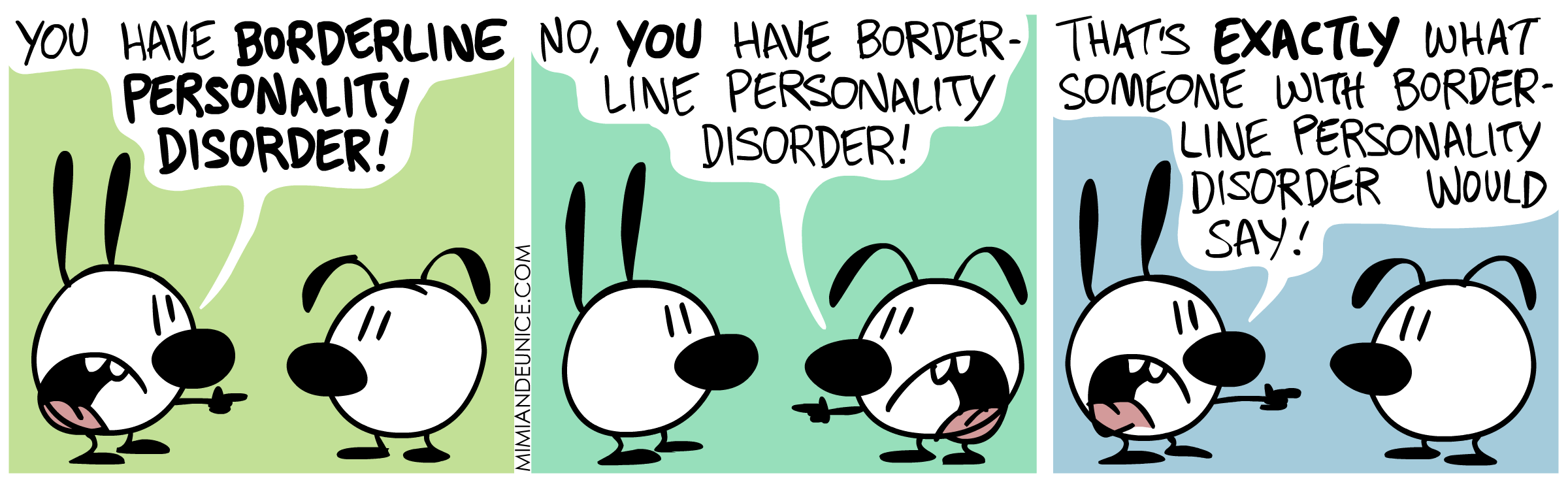
Articles like this one make me want to rage. The author, Doug Bartholomew, a licensed social worker, believes that people with Borderline Personality Disorder (BPD) are pretty much the same as people with Narcissistic Personality Disorder (NPD). He even goes so far as to say BPD’s, along with NPDs, fit the criteria for M. Scott Peck’s “People of the Lie.”
Wait just one second. Peck’s People of the Lie don’t even include all narcissists–his definition describes those with Antisocial Personality Disorder and malignant narcissism (there’s a huge difference even between MN’s and garden variety narcissists–a malignant narcissist has ill will toward others and decided antisocial traits while a “benign” narcissist isn’t necessarily ill-intentioned but is just self centered and doesn’t care about your feelings). Peck never said all manipulative people (people with one of the four Cluster B personality disorders) were by nature evil, but evil people is what his book is about.
At the same time I understand where Bartholomew is coming from. On the surface, people with BPD can be manipulative and even resort to some of the same unpleasant tactics and mind-games (gaslighting, etc.) that narcissists like to play. They can appear to lack empathy, because they get so caught up in their own drama that they can literally forget that others exist. They can be demanding, high maintenance and prone to irrational rages (just like narcs) but are far more likely than narcs to turn their rage inward and become self-destructive or even suicidal.
Not much to do with this article, but I couldn’t resist.
Borderlines also usually regret their acting-out and selfish or manipulative behaviors when the crisis has passed or their bad behavior is called out to them. They may be self-centered and impulsive but are not lacking remorse or the ability to feel shame and guilt. The problem with Borderlines is they tend to act as they feel at the moment without thinking things through. They can get so caught up in their own fear of abandonment that they almost literally forget that you have feelings too. However, after the fact Borderlines usually will feel remorseful and ashamed of their behavior, and on top of that, realize that their offputting behavior may cause others to do what they fear the most–abandon them.
Bartholomew also states that all Cluster B disorders are characterized by a lack of empathy:
The overwhelmingly most commonly mentioned behavior or trait associated with all the Cluster B Personality Disorders is a lack of empathy or compassion. They seem unmoved by the effect their behavior has on their loved ones other than what is necessary to keep their loved ones engaged and around. It is as if they were tone deaf or color blind to the feelings and experiences of others.
While it’s true that people with NPD and ASPD are characterized by a lack of empathy, I disagree that this is true of people with BPD. I think this is a gross overgeneralization.
Borderlines can feel empathy, but due to their impulsiveness and fear of abandonment, they can act in selfish, defensive, and manipulative ways that may hurt others (but they hurt themselves even more so). However, unlike malignant narcissists and people with ASPD, Borderlines do not set out to hurt others and they do care how others feel. Unfortunately their good judgment is clouded by their disorder which makes it difficult or impossible for them to regulate their emotions. That’s why they act so impulsively and often fail to think things through before they act out. It’s also why their relationships tend to be stormy and short-lived.
A person with BPD does not wear a mask or have a “false self” like someone with NPD–but their fear of abandonment can cause them to knowingly or unknowingly push others away. Their ambivalence in relationships can be very confusing to others–they can seem to adore you one moment, and then hate you the next. They can seem needy and rejecting by turns. When others grow tired of this crazymaking and confusing “I hate you, don’t leave me” behavior and finally leave them, the Borderline genuinely doesn’t understand what they have done to drive the other person away, and so they become even more fearful of being abandoned. Their behavior is maladaptive because it tends to cause the very thing they are trying so desperately to avoid.
While the two disorders, both being part of the Cluster B group of personality disorders, do have overlapping symptoms and are often confused with each other and/or misdiagnosed as the other disorder (with males being far more likely to be diagnosed with NPD and females with BPD), this author, unlike Bartholomew, understands that both the motives and mechanics of the disorders are quite distinct from each other:
[…]both BPD and NPD deal with conflict in a way that is unhealthy to themselves and those around them. It’s the expression of the anger that results from the conflict that is different.
In her article “Blame-Storms and Rage Attacks,” Randi Kreger, co-author of Walking on Eggshells, points out the difference in how those with BPD and NPD express anger. While those with Borderline Personality Disorder may fly into a rage and push people away, they will often calm down, feel shame for their reaction, and promise never to do it again.
“Unless they’re in treatment, the underlying issues don’t go away. Some conventional [borderlines] do not get angry at all, but hold it in or express it inwardly through self-harm,” says Kreger.
“The anger of narcissists, on the other hand, can be more demeaning,” she continues. “Their criticism evolves from their conviction that others don’t meet their lofty standards — or worse, aren’t letting them get their own way.”
1. You will never be bored because of all the drama they provide!
2. They can be a lot of fun when they’re reeling you in.
3. They can hone your spelling skills! I probably wouldn’t know how to spell narccisistnarssistnarcisist narcissist if I wasn’t so inspired to write about them all the time.
4. They generated renewed interest in old movie classics like “Gaslight” and “The Wizard of Oz.”
5. You should be flattered they have chosen you to be their source of supply.
6. If they didn’t exist, those of us who write about them would have to find something else to blog about.
7. They test our anger management skills!
8. They are always full of surprises!
9. Their delusions can be hilarious.
And finally (on a more serious note):
10. They can teach you things about yourself (once you have disconnected). In fact, they can be our greatest teachers we ever had (if they haven’t destroyed our souls first).
Alaina, a frequent commenter on this blog, said she almost named her blog “I Write So My Head Won’t Explode” but decided it was too stupid to be a blog name.
I think it’s great. So great I decided to write an article with that name. It’s great because it’s the truth. If I didn’t have this blog and wasn’t able to write every day about the good, the bad, and the ugly, I think I would have gone insane by now.
Writers are by nature people with issues. We have mental problems. That’s why we write. If we didn’t write, we’d be drinking, drugging, sleeping all day or stuffing our faces with junk food, or engaging in any number of other unhealthy and self-destructive activities. I know I did until I started writing.
If you can write, you are blessed. If you enjoy and are good at any creative endeavor (writing, art, acting, singing, dancing, etc.) that can add something useful, entertaining, educational or beautiful to the world and at the same time provide an outlet for your deepest, most painful or confusing emotions, for the love of God, use your God-given gift.
Writing is my safety valve. It’s something I love doing that isn’t going to destroy my mind or my body. But it’s a discipline too. Sometimes I have to force myself to write, even when I don’t want to. I’m always glad I did.
As ACONs and survivors of narcissistic abuse, we also have a calling and a responsibility to educate others about what we have experienced. Nothing happens for no reason. We were given the lives we were given as an education so we could help others. Part of our responsibility as narcissism bloggers is exposing the N’s of the world who have nothing but ill will for other human beings–and we do that through writing.
Since my daughter moved out Tuesday night, I’ve been more depressed than usual. In fact, I haven’t been this depressed in over a year. It’s not so much because she’s not here(though I do miss her), but that she lied to me when she was leaving. I confronted her about the lie yesterday–she told me her grandfather had sent her birthday money in a card, when he actually did not because I called him and asked–and she explained it was a bluff because she thought maybe I had stolen it and was possibly trying to get money out of me (playing on my “guilt” for having “stolen” it).
I felt betrayed and hurt by her lack of trust in me as well as her lying to me in such a mean spirited way. It’s been bothering me since it happened. It made me worry that she may really be a narcissist and not a borderline at all. I started thinking maybe she was diagnosed with BPD so her insurance would pay for her treatment (I don’t think NPD is covered by most insurance companies). I really don’t want my daughter to have NPD. It’s a painful and horrible thing to face–that your own kid who you love more than anything in the universe, may be a narc. I’d rather believe she has BPD. Maybe that’s all it is. I hope.
Yesterday I didn’t even go to work, I was so depressed about all this. I lay in bed sleeping most of the day instead, which is what I do when I’m depressed. Of course that just made me feel even worse. I didn’t want to write, I just wanted to sleep and feel sorry for myself.
But I also felt like pressure was building up in my head and that if I didn’t write, my brain might explode. So I forced myself to write, and I did feel a lot better–I no longer feel stressed to the point that I think I have to wear a head truss to to keep it in one piece.
I haven’t mentioned it, but for the past few weeks, I no longer seem to have the option to switch to the old WordPress editor. I’ve been forced to use the “beep beep boop” new editor, which I can’t stand. I’m really afraid WP might make the old stats page disappear too, which shows far more information and is easier to use (in my opinion) than the “new and improved” stats page.
Why does WP keep dumbing down the blogging experience, and taking away features that improve that experience for its users? I don’t know one person who prefers the “new and improved” versions of the editor and stats page.
What gives, WordPress?
I also noticed the StumbleUpon share button is no longer available. Why?
ETA: I finally found out what you must do to get to the Classic (old) editor.
Go to WP-Admin page.
Click on Posts–add New.
Too bad there’s no “switch to Classic editor” option anymore.
Apparently WP is dead set on forcing this “beep beep boop” editor on us in spite of an OVERWHELMING number of people disliking it.
Here is a screenshot of the poll asking what editor people preferred. Wow!
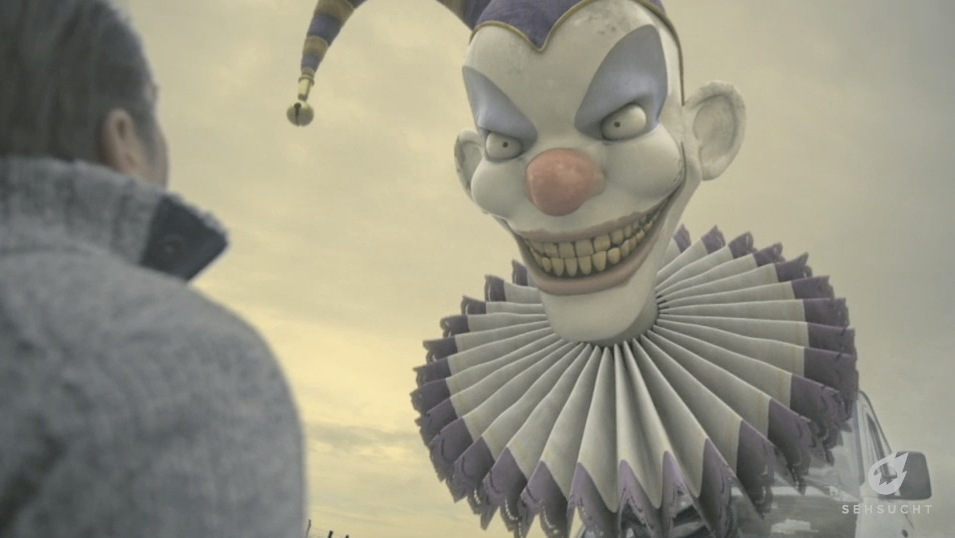
I really needed a laugh today. I was looking through old posts and saw this, and it had the same effect on me it did the first time. I think I found the perfect photo for this too, which is as funny as the search term that inspired it.












 Lucky Otters Haven