What a narcissistic parent sounds like.

I’m sure a lot of victims of narcissist parents will be able to relate to this graphic example of how a mother with obviously high spectrum NPD abuses, mocks, and scapegoats her daughter. Warning: these videos may be triggering.

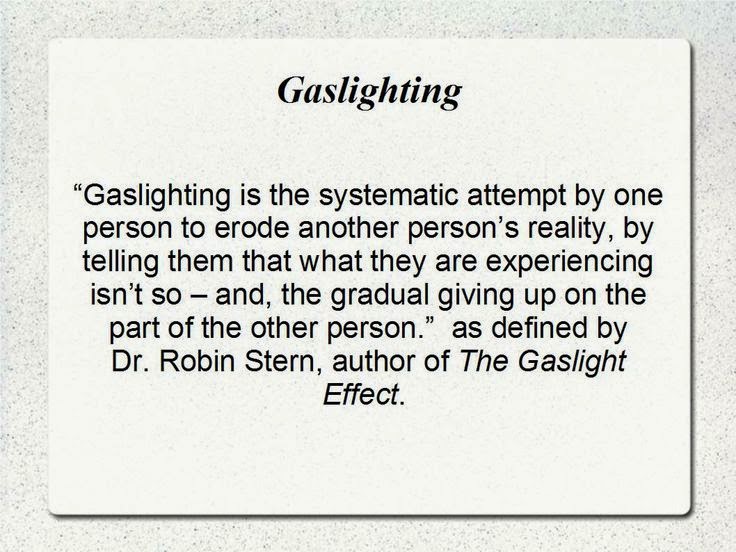
In watching this, you can graphically see how a malignant narcissist operates, by exhausting the victim to the point that eventually the victim “loses it” (which the daughter here did not do) and then the narcissist can sit back and tell everyone how “crazy” or “irrational” the victim is. It’s an insidious kind of gaslighting.

luckyotter's avatarLucky Otters Haven

Here are two Youtube videos that graphically show exactly how a mother with a bad case of NPD (malignant narcissism) operates. These videos are entertaining in a scary and disturbing way, like watching a train wreck.

Pay close attention to what the mother says–she uses every trick in the narcissist’s book of tricks: blame, insults, changing the subject, interrupting, raging, mocking, “talking over”, gaslighting, projecting, invading boundaries, not taking responsibility, showing no empathy, and just about every other “tool” the narcissist uses to get their own way or avoid taking responsibility for their behavior and actions. Notice how childish the overall effect is–the mother sounds like a four year old having a temper tantrum.

The daughter who made the videos is trying hard to get her mother to listen, but her words seem to fall on deaf ears. She might as well be talking to a wall, for all the…

View original post 3 more words

Malignant narcissists practice black magic.

Witchcraft

This is a really powerful video by Smakintosh of Gospel Underground, who was the scapegoat and “black sheep” of his own family but because of that, is also the only one in his family who can see the truth about what their agenda really is.

I love listening to him speak, because you can tell he really feels what he is saying. He does because he’s lived it.

If your entire family has turned against you, it’s probably because one or sometimes two malignant narcissists have used cunning and deception to gaslight you and project their own evil onto you, while making themselves seem blameless and sometimes even getting others to believe YOU are the abuser and THEY are the victim. It’s a kind of sleight of hand or black magic they practice, even if they’re not aware they’re practicing it, that puts others under a powerful spell and holds them in thrall to the narcissist who has targeted you.

You may also have come to believe their lies that you are stupid, crazy, a loser, evil, abusive, or anything else that’s been projected onto you. You were the sacrificial lamb in their rite of deception.

You have been targeted because you–unlike the other non-targeted family members (or other members of a group) who are either flying monkeys or enable the narcissist–possess the ability to see the truth through the narcissist’s lies. They hate and fear that and that’s why they hate and fear you. They must diminish you and make you look bad and they are very skilled at convincing others what they say is true and you are the liar and sometimes even the abuser. They are very good at turning people against you so no one will believe you.

If someone is the black sheep of their family, or has been scapegoated or disowned, suspect a malignant narcissist in the background who’s succeeded in turning everyone against them.

The movie “Mommie Dearest” tells the story of how Joan Crawford targeted her daughter Christina and abused her for years, because Christina was able to see the empty void underneath her mother’s glamorous, “perfect” image. Ultimately, she was left out of the will and not in contact with anyone in the family except her brother Christopher (who was also scapegoated). At some point I’ll be writing up a review of the film.

The same sort of deception can be used to turn an entire community or even a nation against what is right and good, by just one or two evil people and their flying monkeys. Hitler’s Germany is a perfect example.

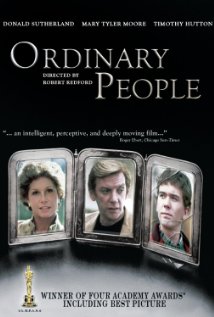
“Ordinary People”: a case study in malignant narcissism.

ordinary_people

I remember when I first saw this 1980 Academy Award winning movie being quite triggered by it, because the main character, Beth Jarrett (played convincingly by Mary Tyler Moore) reminded me so much of my mother, all the way down to her impatient, flippant mannerisms, fake cheerfulness, and clipped speech. And at the time I felt very much like the teenage son, Conrad (Timothy Hutton), who was clearly suffering from a severe case of PTSD and depression, which no doubt had its roots in his mother’s emotional abuse and coldness.

“Ordinary People” (directed by Robert Redford) is about an upper middle class family from the Chicago suburbs, but the individuals involved are certainly not ordinary–or at least you hope they aren’t. Moore’s Beth Jarrett is a high-spectrum malignant narcissist who cares only about her social position and status and the appearance of having “the perfect family” and “the perfect life.” She is always perfectly dressed and coiffed, and can pour on the fake charm whenever she is trying to impress their friends and colleagues. Beth’s husband Calvin (Donald Sutherland) provides his family with their affluent lifestyle and is a good man who cares deeply for his family but is codependent to his narcissistic wife, who makes endless demands on him to keep up the image of perfection, and you can see from his demeanor it’s destroying him.

Their son, Conrad, is his mother’s scapegoat, and while she never actually says so, it’s clear that she blames him for the accidental boating death of her Golden Child, Buck (shown only in flashbacks). Conrad was with Buck at the time of the accident, and suffers from survivor’s guilt in addition to PTSD which was probably caused by his mother’s horrific treatment of him as well as his guilt over the accident, because he was unable to save his older brother’s life. The movie begins just after Conrad has been released from the hospital after a suicide attempt. I think there is more to Beth’s hatred of her child than her belief he is to blame for Buck’s accident. I think she hates him because he sees the truth about her, and calls her out on it. He is sensitive and able to see through her mask of perfection to the monstrous narcissist she actually is, and she can’t handle that.

From the very beginning, we can tell Beth despises her depressed remaining child. Her attitude toward Conrad is dismissive and impatient, and she makes no attempt to understand and appears to have no empathy for the emotional turmoil he’s in. She always puts her own needs ahead of her son and husband, and berates Calvin for attempting to understand his son’s pain. There’s not one moment where she shows the slightest shred of sympathy or love for him, and yet on the surface, no one would call her abusive, because of the mask of normality she always wears. Here’s a scene where Conrad attempts to talk to his mother about why they never had a pet–you can see how disconnected Beth is from Conrad’s (or her own) emotions, and Conrad’s hurt comes out as rage.

There’s a heartbreaking scene where the grandparents are present and Calvin is taking pictures. When he asks Beth to pose with her son, she glibly changes the subject to avoid having to SAY she doesn’t want her picture taken with him, but her disgust is obvious. Calvin insists, and Beth smiles with gritted teeth as she coldly stands next to her son. Conrad, who is sensitive, picks up on his mother’s hatred but tries to smile anyway. Beth, still smiling her fake smile, demands that Calvin give her the camera so she doesn’t have to have her picture taken with Conrad, but Calvin keeps insisting. Conrad, fed up and hurt, loses his temper and screams “Give her the goddamn camera!” It’s scenes like this that so brilliantly depict the subtle emotional abuse a malignant narcissist mother inflicts on her most sensitive child.

The camera scene.

Conrad begins seeing a psychiatrist, Dr. Berger (Judd Hirsch) who begins to get Conrad to open up about his feelings and show his anger. He also begins to date a girl he met in band practice (Elizabeth McGovern), who is upbeat yet understanding and helps bring Conrad out of his shell.

Calvin and his mother seem to be constantly arguing. Calvin tries to referree, but can’t seem to appeal to his wife’s loving nature, because she apparently has none. After one of these arguments, Conrad calls out his mother for never having visited him in the hospital, adding that “You would have visited Buck if he was in the hospital,” to which Beth retorts, “Buck never would have been in the hospital!” This is a clear implication of the higher esteem she held her older son in, who she believed would never have “gone crazy” and had to be hospitalized. Unlike Conrad, Buck would have enhanced, rather than diminished, the image she had of having the perfect life and perfect family.

Beth’s evil really comes out when they go on vacation to Texas to visit with some of Calvin’s colleagues. While golfing, Beth sweetly suggests to Calvin they go on another vacation–which would be during Christmas. Calvin agrees, but suggests they should bring Calvin along with them because he might enjoy the trip. To this, Beth flies into a narcissistic rage and loudly berates her husband for always trying to include Conrad in everything. During this rage, she projects her own anger and selfishness onto her husband, who unsuccessfully tries to stand up to her. Later in this clip, there’s a chilling scene after Conrad’s parents return home and Conrad tries to give Beth a hug. Beth’s face stays cold and hard and you can feel the hatred and disgust she has for her child while she barely returns his embrace at all.

The golf scene and “the cold hug.”

Conrad finds out his friend Karen from the hospital (Dinah Manoff) has committed suicide. Frantic, he makes an emergency appointment with Dr. Berger, and shows up in his office in a broken state. He rages and then sobs uncontrollably and everything comes pouring out: the whole story about the night Buck died and how he blamed himself, his mother’s hatred for him, and how he was never good enough. Dr. Berger listens and holds him like a parent would a child, and finally Conrad begins to calm down.

Gradually, Calvin becomes more aware of his wife’s malignant narcissism and is beginning to doubt her ability to love anyone but herself. One night Beth finds him crying alone and asks him why he is crying. Calvin asks Beth if she really loves him and she gives him a non-answer, saying “I feel the way I’ve always felt about you.” Calvin admits he is not sure he loves her anymore. He’s beginning to see the soulless monster she really is. Early in the morning, Beth leaves for good, not saying goodbye to her husband or son, leaving them to fend for themselves and try to pick up the shattered pieces of their lives together. No doubt both are much better off this way.

Calvin’s realization and confrontation with Beth.

This is one of the most convincing and well acted movies about the havoc a malignant narcissist mother can wreak on her family I have ever seen, and 35 years later, it still hits home because of the uncanny similarities I see to my own mother (who was not as outwardly rejecting or quite as malignant as Beth Jarrett). Every one of the 9 DSM indicators of Narcissistic Personality Disorder is evident in Beth. If anyone is interested in studying the myriad ways a malignant narcissist inflicts their abuse and scapegoats their children, this movie is the best case study I can think of, outside of having to deal with one yourself. Of course, not all malignant narcissists are upper middle class like Beth is, but even though the specific words and actions may differ from one social class to the next, the manipulations and abuse are always the same.

This trailer shows other scenes of the way Beth emotionally abuses, gaslights,projects, and triangulates against her surviving son.

Crybaby.

kid_crying

WARNING: THIS ARTICLE MAY BE TRIGGERING.
I spent the first 13 years of my life almost constantly crying. I was a perpetually squalling cranky baby, a screaming tantrum-throwing toddler, a tearful preschooler, and a school child prone to attacks of uncontrolled crying in public places and embarrassing situations. During my teen years, my crying was downgraded to near-constant sulking and negativity. Tears came mostly when I was angry or frustrated by the time puberty hit. Rage frequently accompanied the tears, or maybe it worked the other way around.

I had the curse of the blonde and fair skinned, so my emotions showed on my face in neon reds and pinks against the white background of my skin. I blushed easily and that was embarrassing enough. I could feel the blood rising up my neck like a sudden wave of heat and my ears would start to burn. My bullies picked on my tendency to blush and would deliberately embarrass or humiliate me to see my ghostly pale face turn as red as a fire engine. If it went on long enough, my lips would start to quiver and there would be tears, and that’s what they were really waiting for–to see me cry.

The crying was awful. I wasn’t a pretty crier; in fact I was ugly when I cried. My skin would turn into a mottled red and pink that looked like a bad case of rosacea, my nose ran like a faucet and turned so red it was nearly purple, and my eyelids turned bright red too and swelled up as if they were bee-stung. It would take hours for these facial giveaways of my pathetic vulnerability to finally disappear.

I had a great deal of difficulty controlling all the intense and confusing emotions that seemed to crash over me like tidal waves when I least expected it. These feelings were just too big for me to handle, and I was so easily overwhelmed by them and had trouble soothing myself (this is an early indicator of BPD and other disorders like PTSD). Whenever I cried I thought I would never stop. No one could calm me down. My emotions were a force of nature too powerful to be tamed. When I wasn’t crying, I felt a constant dull ache in my chest (heart area) and congestion in my throat. Even that early, I knew crying would relieve the tightness and pain, but the crying was like vomiting and sometimes as painful because the intense waves of emotion plowed through me like an out of control bulldozer.

Raised by a narcissistic mother and enabling (possibly low spectrum or covert narcissist) dad, I became the the family scapegoat (made even more crazymaking by the fact that as an “only” in their marriage, I also sometimes served as Golden Child). I was either held on a pedestal that far exceeded my actual abilities/beauty/intelligence/whatever, but most of the time I WAS NEVER GOOD ENOUGH FOR THEM. I questioned myself and everything I did; it seemed I could do nothing right. I wasn’t allowed to do things for myself or speak my mind. I felt awkward and defective in my family and everywhere else too.

Not long after I started elementary school the bullying started. I was the class crybaby and kids always target the kid who cries the most or seems the most vulnerable. I had no defenses at all; I had never been taught any and lacked the confidence to stand up for myself. Things got especially bad in 3rd – 5th grades. During 4th grade, I was followed home every day by a group of kids who laughed and jeered at the way I walked and imitated my walk, as my tears welled and threatened to overflow (no wonder I hate mimes). The bullies would call out to me and sometimes even throw things to get my attention, but I wouldn’t turn around. I just kept on walking. I knew I couldn’t let them see the tears streaming down my face because that would make everything so much worse.

My third grade teacher, Mrs. Morse, was a psychopath with arms like Jello who always wore sleeveless dresses, so whenever she wrote on the board, all that quivering, pale freckled flab hanging from her bare arm made me want to throw up, but I still couldn’t take my eyes off it. It was mesmerizing in a horrible way, like a car accident.

Mrs. Morse knew how sensitive and scared of everything I was. She knew I was bullied by most of the other kids. But she had no empathy for my plight. She was a sadistic bitch straight from the pit of hell. She deliberately called on me whenever I was daydreaming, which was often (no kids got diagnosed with Aspergers back in those days and the idea of “attachment disorders” that lead to later personality disorders was an afterthought in those days), then she would make me stand in the front of the room and answer a question or solve a math problem while she glowered at me like wolf about to pounce and kill their prey. She never did this to the other kids, who were allowed to answer questions from their seat. She deliberately tried to humiliate me, because she knew she would get a reaction.

meanteacher

One time I couldn’t solve the math problem on the board (which was my worst subject), and she berated and belittled me in front of the class.
“You never pay attention. You’re always daydreaming. Do you have a mental problem?”
The class laughed.
My tongue was in knots and I felt the blood drain from my face. I felt tears burning the backs of my eyelids like acid.
I swallowed hard and tried with all my might not to let a tear loose but they started to flow anyway. I hung my head in shame and rubbed away the tears with my grubby fists as I turned away toward the wall. My narrow back and bony shoulders heaved with silent sobs.
That was exactly the moment this sadistic malignant narcissist who passed for a teacher was waiting for.
“Look everyone! Lauren is crying! Look at the tears! Cry, cry, cry, baby.”
The class burst into screams and hoots of laughter.
“Cry, baby, cry!”
I stood there in front of the class, staring at the floor, snot mingling with my tears, and longed to melt into those scuffed green-gray linoleum tiles, and never return.
In today’s anti-bullying environment, this “teacher” would have been fired for that shit. She might have even lost her teaching license. That kind of thing isn’t put up with anymore.

white_rabbit

Later that year, there was a similar blackboard incident. This time, I was stood in front of the room and told I looked like an albino rabbit when I cried. (I actually did, due to my fairness and my slight overbite.) I was mortified as this unbelievable cruel bitch encouraged the entire class to laugh at my pain and humiliation. I ran out of the room and fled to the library sobbing. The librarian was a sweet and very young woman (probably just out of college) who actually liked me and knew about my love for books. That library was my refuse and the librarian was my friend who understood me. This time, she saw me rushing in like that and held her arms out to me as I crashed into her and sobbed into her warm fragrant neck. We stayed like that for a long time, until Mrs. Morse (accompanied by one of her 9 year old flunkies) came marching in looking for me. Mrs. Morse grabbed me roughly by the arm and marched me back to the pits of hell she called a classroom. Sadly, I looked back at my librarian angel and saw the wetness on her face and her sad little wave.
She knew, and I knew she knew. I’ve never forgotten her. Sometimes in my fantasies I still see her waving at me with that sad tearful smile, and that image gives me comfort and strength.

I think my years of uncontrollable emotional displays came to an end when I was 15. They had already been abating somewhat, replaced with rage and anger, but I had trouble controlling my anger and constant dark moods, even though I wasn’t crying as much. I started to drink and do self-destructive things. I started “talking tough” but inside I still felt anything but.

The year before, when I was 14, my parents divorced and I was taken to live with my mother in the city. She loved it; I hated it back then. We fought all the time, mostly because of her self involvement. My grades slipped and I never did my homework. I was depressed all the time and cared about nothing. When I cried (which was still often) I usually did it alone. The other kids at school didn’t like me. I was never invited to parties, always last picked for softball. I felt intimidated and shy all the time, but I still tried hard to make friends–a little too hard. I fit into no clique (I have never fit into any clique) but there was a group of girls low in the high school pecking order consisting of the geeks and quiet, studious girls. They seemed welcoming enough at first. I saw their small (or more likely, polite) displays of acceptance and wanted so badly to believe they actually LIKED me that I guess I started following them around like a needy puppy.

charlie_brown_linus

I noticed after awhile they avoided me too, and my “birthday corsage” box was proof of my unpopularity, because it was not signed by all the girls and when it was signed, it was just a name. No long flowery messages, no in-jokes, no high-school risque comments, no “you are such a great friend” or “Love ya, Lauren. XXXXOOOOOO” Just…signatures and an occasional terse “Happy Birthday.”

My fears were confirmed later that day. After weeks of avoiding me, the group of nerdy girls approached me and told me they wanted to take me out to a restaurant for my birthday after school. Wanting so much for them to like me I remember grinning like a fool and nodding like the needy puppy I was. Inside I was a little suspicious, but dammit, I wanted to believe them! Maybe their ignoring me had just been my overactive, “oversensitive” imagination after all, and they really did care. Why else would they want to spend time with me on my birthday?

At the restaurant I was picking up a certain tension. The girls kept looking at each other worriedly and wouldn’t look me in the eye. As I ate, I watched their anxious faces. Something was up, and it wasn’t good. I felt like I was going to throw up. I spoke to no one.

Finally, Harriet, the leader of that clique told me she needed to talk to me–privately. I felt like I was on my way to the principal’s office for some transgression. My heart pounded in my throat and I felt tears burn the backs of my eyelids, but I didn’t cry. I bit my lip until it bled and tried to just breathe through my terror.

Outside, she smiled at me sympathetically. Then went on to tell me the real reason they had planned to take me to lunch was because they didn’t want me to hang around with them anymore and didn’t have the opportunity to tell me at school. She actually got tears in her eyes when she said this, and then told me she hoped my feelings hadn’t been hurt. Um…hello? But all I could do was stand there staring at her as if I was cognitively challenged. For the first time ever, I felt emotionally numb. I didn’t realize at the time that would soon become my new way of coping with my pain.

nobody_loves_you

I was traumatized by that rejection. I spent the next two days in bed. I felt sick and couldn’t go to school. I told no one what happened because the shame was too great. I didn’t cry; I couldn’t anymore. I just wanted to sleep forever and maybe die.

After that I couldn’t cry anymore. At least not in most situations that call for it. I had and still have trouble accessing my emotions. It was too scary to let them out, because when I did, bad things happened. It scares me to realize I might have easily become a narcissist, splitting off from all soft emotions, even empathy and guilt. Many narcissists started life this way too, without natural defenses.

I know now whenever I feel that painful tightness in my chest and throat, that means I need to cry. I’m not afraid of it anymore. I want to retrieve my long-ago ability to feel intensely connected to my emotions, because used properly, being an HSP is a gift and a blessing. The big difference will be that I’ll be able to let emotions pass through me freely and be able to express them without shame and without allowing them to overwhelm me or control me.

The “saintly” narcissist.

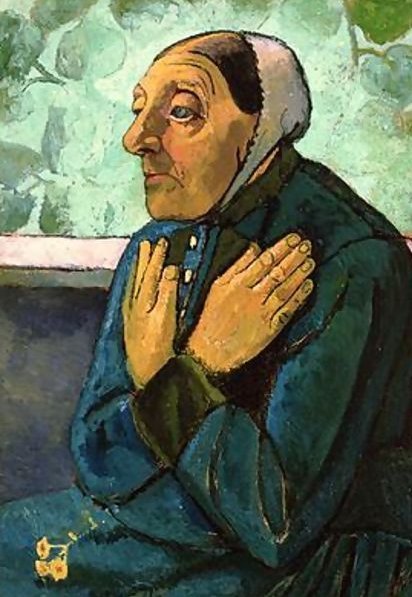
old-peasant-woman-by-paukla-modersohn-becker-1905
Old Peasant Woman by Paula Modersohn-Becker

Not all narcissists are aggressive. Some are covert, and some use their “goodness” as a weapon. This type of narcissist is usually a woman, often a mother. You know the drill: guilt tripping, “look at everything I’ve done for you,” “look what a wonderful person I am” (implying that you are not), ad nauseam.

I found this letter from a narcissistic mother on an NPD forum. It was an email sent by the forum member’s mother just before she went No Contact. If you read between the lines, this “nice” letter is actually very toxic. The names included in the letter (other family members) have been removed. I think ____ is a Golden Child sister. The recipient is the scapegoat.

Dear ___

I have never said that I expect you & _____ to pay my credit card after I’m gone.

Don’t know where you get all the wrong information. I want to make it clear to you that I say nice things about _____ to my friends as I talk about how good she is to me, never rags on me, we have so much fun together, like the same things, she finds time to spend with me, she has a kind heart and I love her very, very much!!!

You are my daughter and I love you too, but I don’t like how you have treated me all these years, you go out of your way to find fault with, always looking for things to be angry with.

Hope my friends tell all the nice things I say about you. How I appreciate how generous you have been. Paying for a 3 day cruise, buying a camera, cell phone and paying for it for 2 years, AND MOST OF ALL PAYING FOR THE ADOPTION of little _____.

These are some of the nice things you have done and I appreciate it very much.

You can’t say that you haven’t talked badly about me to your friends and family. Be honest now – I know for a fact you have said things about me, shame on you.

Why at the end of my life are you causing stress on your 85 year mother. If I had a 85 year Mother still alive, living alone, you can bet I would be caring and loving to my mother, but that’s me, not you.

Guess you will be happy when I am gone. You will get your wish some day.

The answers to my email about being embarrassed is a piece of CAKE!!!

You think you are always right and you are so wrong!! Oh well that’s (recipient’s name) for you.

Mom (the only Mom you will ever have)

old_woman_finger

So what do we have here? A nice letter from a sick, dying mother to her beloved daughter? No. We have several other things going on here though. So I’m going to pick this email apart and show you.

1. I have never said that I expect you & _____ to pay my credit card after I’m gone.

Very possibly gaslighting the recipient–denial that she ever asked her and her sister to pay her credit card.

2. Don’t know where you get all the wrong information.

Invalidation and possible gaslighting.

3. I want to make it clear to you that I say nice things about _____ to my friends as I talk about how good she is to me, never rags on me, we have so much fun together, like the same things, she finds time to spend with me, she has a kind heart and I love her very, very much!!!

Implying that the sibling is a better daughter than the recipient. Guilt-tripping.

4. You are my daughter and I love you too, but I don’t like how you have treated me all these years, you go out of your way to find fault with, always looking for things to be angry with.

Generalizing, gaslighting, probable projection of her own traits onto her daughter.

5. Hope my friends tell all the nice things I say about you. How I appreciate how generous you have been. Paying for a 3 day cruise, buying a camera, cell phone and paying for it for 2 years, AND MOST OF ALL PAYING FOR THE ADOPTION of little _____.
These are some of the nice things you have done and I appreciate it very much.

Now we have a little love-bombing or hoovering going on. This is a common ploy in covert narcissists like this woman to retain their source of supply. She is probably lying about telling her friends “nice things” about her daughter though, and she is also lying about “appreciating it.” Narcissists don’t appreciate anything.

6. You can’t say that you haven’t talked badly about me to your friends and family. Be honest now – I know for a fact you have said things about me, shame on you.

Back to the guilt-tripping and the shaming. The adult recipient is also being infantilized, another type of invalidation.

7. Why at the end of my life are you causing stress on your 85 year mother. If I had a 85 year Mother still alive, living alone, you can bet I would be caring and loving to my mother, but that’s me, not you.

Guess you will be happy when I am gone. You will get your wish some day.

She is basically telling her daughter, if I die it is all your fault. Major guilt tripping, which seems to be this mother’s primary M.O. to get what she wants.

8. The answers to my email about being embarrassed is a piece of CAKE!!!

I’m not sure what this means or what it’s referring to.

9. You think you are always right and you are so wrong!! Oh well that’s (recipient’s name) for you.

Projection and put downs.

10. Mom (the only Mom you will ever have)

Blatant guilt tripping. With a mother like this, thank your lucky stars she’s the only one.

My son’s father turned from a loving dad into a monster.

ian_9months
My son at about 9 months. His dad doted on him then.

Turning on a child who was initially loved and doted on is not unusual for malignant narcissist parents. If the child proves to be sensitive, highly intelligent, or can see through the parent’s agenda, they may find themselves suddenly turned into scapegoats. Betrayal of a child means nothing to a narcissistic parent. The child was never a child even before the betrayal, just supply.

My son (who I’ve been calling Ethan on this blog but that is not his real name) was born in October 1991 and initially was very much wanted by his father. During his infancy his father appeared to love him very much and it wasn’t unusual to find my beautiful little boy snuggled up against his dad’s chest. Though Michael (also not his real name) was showing signs of the abuser he would soon become, the abuse was directed at me, and didn’t happen often enough in those days that I was that concerned.

By the time Ethan was 3 or 4 he was showing signs of being a highly sensitive (and very creative) child. He cried frequently and was given to tantrums when he sensed discord, anger or chaos around him. He was always very sensitive to his environment and didn’t react well to everyone and he hated change. He still remembers himself as being an extremely nervous child, but those nerves were due to his high sensitivity. I was much the same way when I was his age. I could always identify with my son.

I remember when he was two, when we were moving from New Jersey to North Carolina. Because we didn’t have a lot of money for a long distance mover, we moved most of our stuff (except large pieces of furniture) in a U-Haul and a car over five separate trips. During the time the house was being slowly emptied, Ethan began to act very strange. He stopped eating, looked pale and his eyes looked too big for his face. He hadn’t really started talking much yet, but did this strange “parroting”–he’d repeat “Hi Mommy! Hi Daddy!” over and over, in a strange high pitched voice. It was creepy. His doctor said not to worry, but he just wasn’t himself. Then it finally dawned on me: a very young child sees things disappearing and doesn’t understand why (he hadn’t come on the moving trips to see where the things were going). His two year old mind deduced that eventually his parents and baby sister would disappear too, leaving him alone, so the nervous parroting of “Hi Mommy, Hi Daddy,” was to make sure we were still there and weren’t going to leave him. To a sensitive child like Ethan who hated change as much as he did, watching the things in his environment disappear must have been traumatic for him. I asked him about this recently and he still remembers it. He told me my suspicions had been correct. He was afraid we would disappear!

ian_age3
Third birthday. He received a cake with a blue toy car on it.

Michael saw this high sensitivity as soon as it became apparent, and suddenly his affection toward his son came to a screeching halt. He began to pick on and belittle him, calling him names such as stupid, idiot, “faggy,” pussy, baby, and loser. As young as Ethan was, I could see how his self esteem was already taking a beating. Soon he became nervous and awkward around his father but of course this just fed the abuse.

Soon Michael began to physically abuse Ethan, spanking him almost every day just for being who he was. Whenever I criticized or questioned Michael about why he was treating Ethan this way, he just said he was trying to “toughen him up.” (this from a man who called himself a feminist–go figure that one out!) I told him his aggressive behaviors toward Ethan to “man him up” were not working because Ethan wasn’t built that way, and besides they were very unloving. I told him I was afraid Ethan would think his father hated him, but of course my concerns were dismissed and I was called wrong, stupid or crazy. We had many fights about this, but the abuse never stopped. In fact it kept growing worse.

Michael constantly made fun of Ethan, imitating his speech, his walk, his awkwardness. Ethan was bullied at school for a time, just as I was, and my heart broke for him. I loved my son so much, and couldn’t bear to see the way his father treated him.

ian_age8
Ethan at about age 8, around the time his father destroyed his car collection.

The incident that I remember with the most anguish occurred when Ethan was about 8. He had a collection of about 15 or 20 collectible cars his grandfather had given him over several years and Ethan was very proud of them. He displayed them on a 5-tiered shelf in his room. One evening Michael came raging into his room for one reason or another (he was often drunk and some of his rages seemed to be caused by nothing) and knocked over the stand, sending all the beautiful and expensive replicas crashing to the floor. All of them were destroyed beyond repair. Ethan burst into tears and begged him to stop, but Michael was relentless and began pounding on him, calling him a stupid faggot crybaby, and demanding to know why he couldn’t “man up.” I was in the room at the time, desperately trying to push him away from Ethan but to no avail, because Michael was much stronger than me, and by then I was myself afraid of his rages.

This incident haunts me to this day. It’s hard for me to think of it without my heart breaking, because of how painful it was to see my brilliant, creative, sensitive little boy’s car collection destroyed for absolutely no reason at all — and my son’s self esteem taking such a beating from the man who had once seemed to love him so much during his first few years.

Fortunately, Ethan was always much stronger than he seemed, and smart too. He chose to live with me after we divorced instead of his father. Kung Fu lessons paid for by my father (which he stuck with for 3 years and got as far as brown belt) and an Outward Bound expedition for his 8th grade trip began to change him and help him rebuild his self esteem.

ian_age15
Age 15.

He came out as gay at age 17, and since then has become a happy and well liked young man with many interests and talents who is making good choices in life. (He also chose to live hundreds of miles away from the family but I can’t say I blame him for that). While it’s sad he lives so far away, I’m happy that he’s happy now and that after everything he went through, he may be the most mentally stable member of the immediate family. He is the only one of us who doesn’t appear to have a personality disorder.

ian_age23
Today at age 23, living on the Gulf Coast of Florida.

Not all children who were turned on and scapegoated by a malignant narcissist parent were so lucky. Many were psychologically destroyed or even killed. Ethan was one of the lucky ones.

See also:
My Son Didn’t Escape Unscathed: https://luckyottershaven.com/2015/05/11/my-son-didnt-escape-unscathed/
My MN Ex’s Weird Attitude to His Son: https://luckyottershaven.com/2015/02/24/my-mn-exs-weird-attitude-to-his-son/

Why family scapegoats become lifelong victims.

If you were scapegoated by your family, two things can happen. You can become a narcissist yourself (narcissism being an elaborate defense mechanism to avoid further hurt and abuse) or you will internalize the early message that you’re worthless, defective and have no rights. I’m going to talk about the second scenario because that’s what this video is about and it’s what happened to me.

As a scapegoat, you are trained to live in fear. You become afraid to defend yourself, express your opinions, or demand fair treatment. This attitude of worthlessness, fear and shame is carried into adult life. Other people can immediately sense you are a pushover and a magnet for abuse, rejection, and bullying, and you become a target for abuse by others well into adult life.

You can become a lifelong victim unless you find a way to break the pattern. It’s difficult to unlearn, because it was established so early in life by the narcissistic parent.

Golden children, who more closely resemble the narcissistic parent or provide them with narcissistic supply (adulation), are more likely than scapegoats to become narcissists themselves. They will often become the aging narcissistic parent’s flying monkeys against the scapegoated adult child, continuing the family pattern of abuse.

Scapegoated children are the family shock absorbers. They are the children who have been assigned to absorb and internalize the narcissistic parents’ rage and to mirror back what has been projected onto them.

scapegoat_child

This is exactly what happened to me. Although because I was an only child I sometimes served the Golden Child role, for the most part I was the scapegoat. My Aspergers and high sensitivity made me even more perfect for that role.

Today I’m the black sheep and the “loser” of my family. I’m never included in family functions because of my poverty and the fact I’m “different” than the rest of them. Although they disapprove of me, I really became exactly what they needed me to be. My becoming a “loser” ensured they would always be winners.

I’ve been disinherited because they believe I’m undeserving, a shameful blemish on the family’s “good name,” further guaranteeing I will always remain poor and therefore powerless–unless I hit the lottery (which I don’t play) or write a book, which I plan to do. The irony of all that is the book may very well be one that exposes the people who raised me for what they really are.

I’ve always been a risk-averse, avoidant underachiever. My dealings with others have suffered because of my fear of the judgment of other people. I was often bullied as a child and teenager.

I married a narcissistic man and continued to live with him and allow his abuse even years after we were divorced.

Although as an adult I’m no longer bullied (and am Very Low Contact with my ex), people still try to push me around, treat me like a mental defective, leave me out of conversations, overlook me for promotions or raises at work, or just talk over or look through me as if I’m not there at all. When I say something, people act like they don’t hear me. It’s very hard for me to make friends or fight back when I need to because I was trained from an early age to be so very afraid of everyone. I’m the proverbial shrinking Violet and wallflower–the kind of woman my mother used to mock for being so “insipid.” I seem to have the opposite of charisma.

For many years I walked around as if ashamed to be alive. I carried shame with me like a heavy burden that affected the way I spoke, the way I related, the way I thought (all the negative self-talk and self-hate), even the way I moved and carried myself. I embarrassed myself.

Since I started writing, I’ve learned that I wasn’t put on earth as an example to others of how not to be (I actually used to believe this), but that God gave me these challenges and this life to teach me valuable things about myself–but that waking up to who God meant for me to be was going to be hard, painful work. I don’t live in self-pity: my narcissists have been my teachers.

One day I dream that people offline will know who I really am. That I have a personality. That I’m funny and intelligent. That I have opinions of my own, and that I am actually good at things. But more than anything else, that I have a finely tuned bullshit detector–a gift unintentionally bequeathed to me by my narcissists, and it’s a gift more priceless than any amount of money I may have inherited.

The following video will explain why what narcissistic parents do to their own offspring is nothing less than soul murder. Unfortunately, the original video I had posted here (which I preferred) was the best one to illustrate the way being scapegoated as a child tends to continue well into adult life, with the grown adult child now unconsciously projecting a “kick me” sort of vibe in relationships, friendships, on the job, and everywhere else, and then they wonder why they continue to feel victimized everywhere they go.     It’s hard to break the pattern, but it can be done.    Here’s a different video with the same general message as the first, although the first one (which was removed) was much better, in my opinion.

Why being a Golden Child isn’t so golden.

golden_cage

I was raised as an only child–the second marriage for both my parents–in a narcissistic family. Only children are in an especially vulnerable position in narcissistic families, because they must serve as all things to one or both parents.

In families with several children, one child (usually the most sensitive) is normally chosen to be the scapegoat–to serve as the family trash can for all the narcissistic rage of the parents. Another child, usually the one most closely resembling the narcissistic parent or the one who best serves the parent’s need for narcissistic supply, may become the Golden Child–in other words, the parent’s favorite. The Scapegoat is always wrong, bad, stupid, crazy, a “problem,” etc. The Golden Child can do no wrong. Misdeeds are overlooked or projected onto the scapegoat. Golden Children may become the narcissistic parent’s flying monkeys and are even sometimes given the “honor” of helping with the abuse against the scapegoat.

I’m reminded of a book I read some years ago called “A Child Called It,” written by Dave Pelzer, who not only recovered from the horrific abuse inflicted on him from ages 4-12 by his psychopathic mother (who had been loving up until that point) and brothers (who served as her “helpers”) once he was removed from the family and placed in a foster home, he actually seemed to become stronger because of it. Today he is an author, motivational speaker, and activist against child abuse. Dave was the scapegoat of his family, and I think his mother turned against him when she realized he was the most sensitive child and probably the most intelligent one too.

But what happens when there is only one child in the family? Well, I think that child becomes both a scapegoat and a Golden Child. If I had grown up with siblings (I have older half-siblings but I wasn’t raised with them), I’m almost certain I would have been the family scapegoat. But my parents (I am including both here, even though I don’t believe my father is a true narcissist, because they worked as a “team”–he was codependent and under my mother’s thrall) needed a Golden Child too who would serve their need to show a child off as a prized possession, a status symbol of sorts: the physical proof of how superior they believed their genes to be compared to everyone else.

Being both scapegoat and Golden Child is even more crazymaking than being just a scapegoat, because you never know where you stand. You constantly feel off balance and anxious, never knowing if something you said or did will be rewarded, ignored, or punished. Life feels chaotic and unformed. You feel like you’re playing a game you never wanted to play, a game where you were never taught the rules, and most of the time you don’t even know WHAT game you’re playing, but you’re expected to play like an expert anyway.

confused_kid

There was no consistency in the way I was disciplined or the things I was disciplined for. I was punished often (for infractions that were usually fairly minor or even nonexistent–I was a “good kid” who was terrified of angering my parents until my teens), but that wasn’t the worst thing. The worst thing was that the next time, I might actually be rewarded for the same infraction!

I was often punished for things I couldn’t help. Acting “spooky” was one of them. As a fearful, sensitive Aspie child, there were times I would retreat inside myself when I was feeling very anxious or when there was too much ‘input’ from the world, and this enraged my MN mother, who would berate or punish me for this behavior. I had no idea what I had done or how to stop being “spooky.” It just happened. I think it enraged her because it was during those times I went “inside” that she could no longer reach me with her abuse.

Even though most of the time I was treated as if my feelings didn’t matter, I was often told how pretty, smart and talented I was. It’s my belief I was no more of any of these things than any other kid my age, but I was told I was “special.” To my young mind, “special” meant “different”–and most children, myself included, dread being different from their peers.

When I was bullied at school, the reason my parents gave me was that the other kids were just jealous because of my “superior” looks, intelligence, or talent. I was also told our genes were better than other people’s, and our family was of a higher socioeconomic status than my friends’ families. I know now this was complete bullshit, but it’s the lie I was being fed while I was growing up. I think these “compliments” were intended to isolate me from my peers even further, so I’d just be “theirs.” I never felt empowered by the “praise” I got, because of the way it made me feel somehow defective and different from other kids. In addition, I felt like I could never live up to the pedestal my parents put me on at those times. I was right–and as an adult, I am looked down on by my family as actually defective.

left_out_kid

The most crazymaking thing of all was the times I’d be complimented and diminished at the same time. One of the most common ways I’d be demeaned was being told how “sensitive” I was. This was never meant to be a compliment; it was meant as a way to let me know how weak I was. Sometimes I was told I couldn’t or shouldn’t do things because of a combination of my “good” and “bad” qualities. For example, when I was about 10, I wanted to join the swim team. I remember exactly what my mother’s reaction was to this. She always liked to tell me what I was thinking, which is another way narcissists make us doubt our own reality and question our instincts. She said:
“You wouldn’t like being on the swim team because you’re too sensitive and you don’t like competition, and you’re too smart to be on a team with those people anyway.”
Huh?
Left-handed compliment much? She always sandwiched her praise this way–between insults like a shit sandwich. This was just another way I was constantly thrown off balance and this led to my becoming an extremely anxious child and later, an extremely anxious adult.

In general, my family treated me like I was a huge burden and didn’t really want me around, so the praise I got as a sometimes Golden Child made no sense and to my sensitive child’s mind, never felt sincere. Even at a very young age, I knew I was being lied to. I knew I wasn’t loved the same way other children were loved, even though my parents constantly mouthed the words like some sort of tic.

Lies my narcissists told me.

lies_honesty

I was told many lies about myself while growing up within my my FOO (family of origin). I have no doubt this had everything to do with my developing Borderline Personality Disorder (BPD), Avoidant Personality Disorder (AvPD), and lifelong severe anxiety.

Why personality disorders are so difficult to cure.
Personality disorders (PD’s) are formed very early in life, normally before the age of six–which is the reason they are so hard to cure. Because the child’s personality is still in a malleable state (meaning it hasn’t fully formed) until around age 5, PD’s become an integral part of the personality and therefore can be extremely difficult to eradicate because they were formed so early the child doesn’t believe it’s a problem, just the way things are. Their misery seems normal to them. They know nothing else.

Of course some PD’s are more amenable to treatment than others, and sufferers of some PD’s, such as Avoidant, Dependent, and sometimes Borderline, are much more likely to seek treatment than those with, say, ASPD (antisocial personality disorder), NPD (narcissism), or Schizoid PD.

Lies I was told growing up.

sensitive_people
As the family Scapegoat (and occasional Golden Child which I’ll explain later in this article), here are some of the lies I was told while I was growing up:

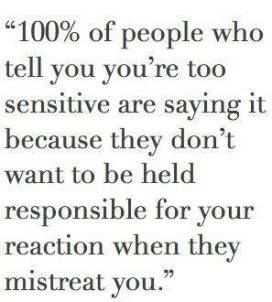
“You’re too sensitive!” — This one’s the Big Kahuna for many of us ACONs, especially if we’re also HSPs (highly sensitive people) by nature. “You’re too sensitive” isn’t so much a lie as it is a verbal twisting of a wonderful gift and ability to see the Truth into something…more resembling an embarrassing defect. Narcissistic lies sometimes appear in the form of turning something good into something shameful and bad, and vice versa.

“You have no sense of humor.” (see above)

“You don’t really want that.” (the parent is telling the child what they really think–this will just cause confusion and identity issues for the child)

“No one wants to know how you feel.” (so we learn to swallow our pain and lock up our emotions)

“You cry too much.” (I had to unlearn this–unfortunately I unlearned it too well and now find it difficult to cry even when I know I need to)

“You don’t know what you’re talking about.” (invalidation and devaluation)

“You know you don’t really think that.” (massive mindfuckery)

“You don’t really want to join the swim team. You know you don’t like competition.” (see above–the real message here being “you are a weak, pathetic, scared loser” to really drive the message home)

“You’re too fat/heavy/even ‘obese’ (I was never more than 120 lbs at 5’4” as a teenager)

“They don’t like you because you’re always so unpleasant to be around.” (Real nice)

“You never smile and it makes your face look unpleasant.” (Fake Narc smiles look even more ‘unpleasant’)

“You read too much.” (okay…would it be better if I snorted Smarties instead or went around throwing rocks through the neighbors’ windows?)

“You know you’re not really good at that.” (whenever I wanted to try something I hadn’t tried before)

“You know you can’t do that, let me do it.” (I wanted to wash the dishes when I was 6)

“You’re too idealistic” (mmmkay…and that’s a bad thing?)

Because I was raised as an only child (I had half-siblings who did not live with us), I also served as the Golden Child. So I also heard lies like,

“They’re just jealous of you because you’re prettier than they are.” (even as a first grader, I knew this was bullshit).

child_on_pedestal

“They’re just jealous of you because you’re smarter than they are.” (my grades weren’t much above average, in spite of having a high IQ)

“You are more talented than they are.”

“We have better genes than those other people.” (Narc genes?)

“You come from a better family than your friends do.” (I call bullshit on that.)

You were the best dancer in the school play.” (I have two left feet and even my dog would have known that was an outrageous lie).

It doesn’t stop when you go No Contact.

flying_monkeys

These are some of the lies told about me by my mother to her sycophants (the ones I’m aware of):

“She’s a loser just like her ex-husband” (Nice.)

“She always makes such terrible choices.” (True, but there were extenuating circumstances at those times she would never understand)

“If only she had done what I told her.” (If only I had had the courage to take a few risks-I am extremely risk-averse)

“If only she had listened to me.” (Again, if only I had taken a few risks and not been so afraid of my own shadow)

“She’s a nothing.” (I guess that’s why people tend to always talk over me, look through me, and never hear what I have to say in group or social settings–where I FEEL like a nothing)

“She was ruined by her ex” (this is a half-truth…but RUINED? Really? Let’s tone down the hyperbole, shall we?)

“She will always be poor.” (and the poor are always with us, right?)

“She will never achieve anything.”

“She can never stick with anything.” (This has actually been true but has gotten a lot better)

“She has mental problems.”

“She is sick in the head.”

Ad nauseam…

Conflicting messages as Scapegoat/Golden Child

ConflictingMessages

Black-and-white thinking (idealizing/devaluing) and outrageous contradictions prevailed in my FOO.
As both Scapegoat and Golden Child, I was receiving two sets of messages (sometimes both at the same time), such as, “You know you don’t really want that, because you’re too sensitive, you hate competition and you are smarter than they are.”
I think you get the idea.

Being raised with conflicting sets of messages and being treated as beloved/rejected child at once was incredibly crazymaking.

Borderline Personality Disorder (or even narcissism!) and Avoidant Personality Disorder (I have both BPD and AvPD) both seem like logical, almost sane reactions to having been raised with two conflicting sets of messages–I was either all bad or all good, with no in between.

And finally, it doesn’t end there. Raised by narcissists, I married one even worse. A narcissist so malignant he made my parents look like empathic light beings in comparison. I was trained to be Supply and was WAY too good a student. If awards were given for Learning How to Be Narcissistic Supply, I would have been valedictorian.

Lies my psychopathic narcissist ex-husband told me.

gaslighting

Following are the lies my malignant narcissist sperm donor told me about myself and also told all the flying monkeys he had succeeded in turning against me (some of who included my friends) over 28 years. This led to my PTSD and clinical depression (where I had to be hospitalized for suicidal ideation). Most of these were projections of his own character flaws onto me.

“You are selfish/self-centered.”

“You always overreact to everything.”

“You never listen to me”

“You don’t care about me or my problems.”

“You have no empathy for me.”

“You are narcissistic.”

“You are becoming just like one of them” (he was referring to Republicans, who he hates)

“Oh, so now you’re living the high life?” (when I took in a roommate while he was homeless)

“You are a b**ch, c*nt, Tw*t, whore.”

“You are stupid.”

“You have no common sense.”

“You’re insane.”

“There’s something wrong with you.”

“You’re just like your family–all crazy.”

…as well as a constant barrage of hateful sarcasm at my expense, whether there were people present or not. If I objected to this mean spirited “humor,” I was told–WHAT ELSE???–I was “too sensitive” or “have no sense of humor.”

Because of having grown up in the midst of a labyrinthine web of lies, and then marrying into another one, I have always valued Truth. That’s why I put a premium on complete honesty, at least in my writing.
Not that I don’t ever lie–we all do, it’s part of the human condition. But I am very aware of dishonesty when I see it and won’t hesitate to call it out in others.

Narcissist parents demonize their own children.

narc_mother_littlegirl

Most parents like to tell cute and funny stories about when their children were young, or brag about their school accomplishments or tell sweet stories that show their child in a flattering or loving light. They are also proud of their children when they’re kind and nice to others. That’s the way things should be.

Not for narcissistic parents though.

Narcissists who “erase” memories of their children.
Some narcissistic parents don’t like to talk about their children at all. It’s as if they erase any memories of their offspring’s childhoods and don’t want to be reminded of it. It’s weird. My malignant cerebral narcissist sperm donor used to get bored and annoyed if I talked about the children when they were young. Inexplicably, he couldn’t stand it and became annoyed when I wanted to put some of their baby and early school pictures around the house. (He didn’t like that I displayed our wedding photos either).

He isn’t interested in his son’s accomplishments, even though Ethan (not his real name) has recently been asked to join a semi-professional urban dance crew and has been told he is a shoo-in for the finals at the next dance competition he will be performing in next month. Ethan is seriously considering auditioning for the TV show “So You Think You Can Dance” in about a year or two, when he gets just a little better. He’s completely self taught and has never had a dance lesson and yet people are always impressed by his dancing skills.

I am so proud of my son but his father could care less. I thought maybe it was because he thought dancing was “too gay” (because my son is gay or possibly bisexual–he recently told me he may have some interest in women) but he acts the same way about all of Ethan’s other accomplishments too. It’s almost as if he wants to erase him from his mind, even though he insists he loves him.

And when they “brag” about you, watch out.

too_sensitive

My mother, also a malignant narcissist (of the somatic rather than cerebral type), loves to talk about me as a child. But her “bragging” is never about the things a normal parents would brag to their friends and relatives about. It’s never about how smart I was or what a good student I was, or what a good painter or writer I was, or how kind and generous or big-hearted or animal loving I was. Instead, she tells stories that illustrate the many ways I was “too sensitive” or how much I cried as a little girl. When she talks about me, she always brings up the most embarrassing stories, like how afraid I was of thunderstorms and how I used to run into the closet in terror (I like thunderstorms now) or how “hysterical” (she loves to use that word about me as a child) I used to get when I was frustrated or scared of something (I was afraid of many things but loved a lot of things too).

Whenever she talks about me to people, she makes me sound like there was something wrong with me (there was–I was an Aspie child with attachment issues–but surely there were good things too she could choose to talk about instead of what a pitiful, awkward, oversensitive crybaby I was). She loves to tell everyone the still-embarrassing story of my first period and how happy I was when I shouted the big news from the bathroom, because I had always been “so hysterical” and panic stricken because I was slower to hit puberty than most other girls my age (I was 13 and really not far behind at all–and I never got “hysterical” or “panic stricken” the way she insists).

I no longer hear these stories because I no longer have much contact with her, but I’m sure she still tells her friends and extended family (who she has isolated from me and turned some of them into flying monkeys against me) and they still all have a good laugh about “poor, over-sensitive, ‘hysterical’ little Lauren.” I know they also laugh about what a “loser” I am today, because I’m not wealthy like most of the family is and don’t have a great number of impressive professional accomplishments. Of course, that’s all due to my “poor choices” and not to the fact my self esteem was all but obliterated during childhood and adolescence, not only by my family but also by the bullies I often had to deal with at school.

Fivehundredpoundpeep posted an article today about the way her psychopathic MN mother (who was much worse than mine if that can be believed) and the rest of the family gave her a poem for her college graduation. Instead of it being a sincere congratulations or about how loved she was and how proud of her they were, it was a “humorous” ode to how afraid of crickets she was as a little girl. Notwithstanding the fact this poem had absolutely nothing to do with Peep’s college graduation, its real intention was to embarrass her and make her feel self conscious. It was a poem that could have easily ruined an otherwise joyous occasion.

The navy blue dress.

fat_lady
What my mother saw whenever she looked at me. (Just for the record, I think this big lady is stunning.)

My mother always loved to point out my faults–even imaginary ones she had projected onto me–in public. I’ll never forget the birthday party I had one year as a teenager. My mother had invited several of her friends to the apartment and some of my friends were there too. When it came time to open the gifts, she made sure hers was the first one I opened.

In the fancily wrapped box was a rather conservative, navy blue sleeveless dress. It was a nice dress I suppose, had I been about 40. She made me go try it on and then have me come out into the living room where everyone was sitting to model it. I obeyed because what else could I do, and she scared the living shit out of me.

Now, I was not overweight. At 5’4″, 120-125 lbs was about the right weight for my frame. But my backside was a little on the big side (not Kim Kardashian big, but still pretty round) and my mother was constantly calling attention to it. It made me very self conscious and due to this (as well as my desire to rebel against the way she’d dressed me like a doll when I was younger), I had taken to wearing baggy, masculine clothes that hid my curves. She was convinced I was “fat” and was always threatening to send me away to weight loss camp. As a somatic narcissist, she was obsessed with her own weight, physical appearance, and health. She seemed to judge other people by the way they looked instead of their personal qualities. Almost every day she called attention to how much weight I was putting on, or reminding me not to have seconds because of my “weight issues.” I become incredibly self conscious about my body as a result. It’s a miracle I didn’t develop an eating disorder.

weight-loss

Getting back to the birthday party and my “modeling session” in front of all the guests, after I modeled it, she announced that the dress’s dark color and style was flattering for someone with “Lauren’s little weight problem.”

You could have heard a pin drop in that room. I think everyone was shocked at her callous and embarrassing remarks. As for myself, I was so mortified I ran out of the room crying, which of course was a huge mistake because that gave my mother ammunition to remind everyone once again about how sensitive I was (and she didn’t mean this in a complimentary way). She was always making jokes at my expense and then when I didn’t laugh or if I looked hurt, it was always “Lauren is just being over-sensitive again” or “Lauren has no sense of humor.” I’ve heard this is quite a common accusation narc parents use against the child they have chosen to be their scapegoat. They hate sensitivity and love to turn it into a bad thing because it takes the responsibility for their cruel behavior off of them and puts the blame onto the child.

This is the sort of “flattery” a scapegoated child can get from a parent who is a malignant narcissist. There are times I feel guilty that I don’t feel more love for my mother than I do, but when I think of all the years she demeaned me and put me down, always going out of her way to make me feel small and worthless, I don’t feel so guilty about my ambivalent feelings toward her.

I don’t hate my mother. Instead, I pity her for being so shallow and never having known who her true self might have been. She’s an intelligent woman but you would never know it because she never was interested in ideas or the life of the mind. Her eyes glaze over if you try to engage her in any “deep” topics. She reads pulp novels and fashion magazines, never anything scholarly or educational.

She has now lost her beauty due to age (and too many facelifts) and she is all too aware it. Knowing she has lost her physical beauty–the one thing that gave her an identity of sorts–has turned her bitter and angry in her old age.