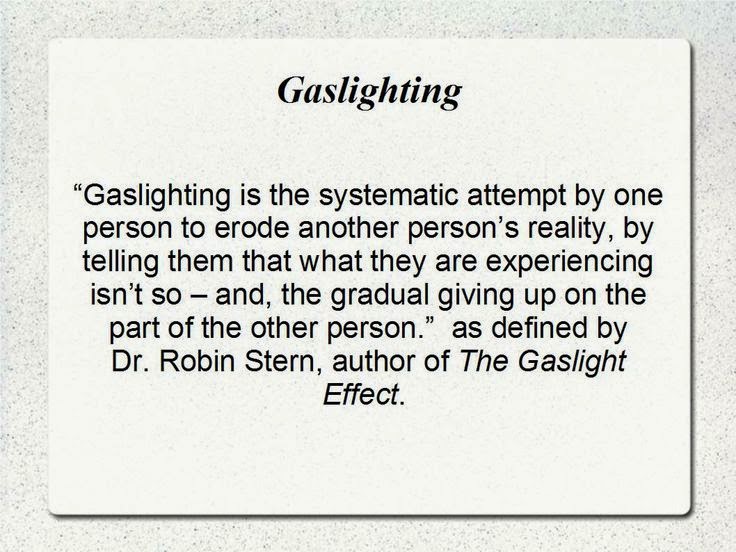
Why family scapegoats become lifelong victims.

I thought it seemed like a good time to post this again.

luckyotter's avatarLucky Otters Haven

I just watched a video that really hit home for me.

If you were scapegoated by your family, two things can happen. You can become a narcissist yourself (narcissism being an elaborate defense mechanism to avoid further hurt and abuse) or you will internalize the early message that you’re worthless, defective and have no rights. I’m going to talk about the second scenario because that’s what this video is about and it’s what happened to me.

As a scapegoat, you are trained to live in fear. You become afraid to defend yourself, express your opinions, or demand fair treatment. This attitude of worthlessness, fear and shame is carried into adult life. Other people can immediately sense you are a pushover and a magnet for abuse, rejection, and bullying, and you become a target for abuse by others well into adult life.

You can become a lifelong victim unless you find…

View original post 665 more words

“Have you bonded with your narcissist today?”

This made me laugh so hard I just have to share it.
It sure would be nice if narcissists were all required to wear a button warning you they have NPD.

“Embracing the legacy of familial narcissism. Have you bonded with your narcissist today?”

Bonding with your narcissistic parent

Be patient. It may take a minute for the picture to load.

Being discovered online by your narcissists.

Woman using tablet outdoor.

Back during the winter, I made the mistake by sharing an article on a social media platform that several members of my family use, including my narcissistic mother.

It came to my attention (through my son) that they did in fact find my blog and it was being read. I was horrified, but I was fortunate because not a word about it was ever said to me. Oh, I’m sure they talk amongst themselves about what a horrible person I am to have a blog where I talk about my family the way I do, but it’s not as if they weren’t already saying mean things about me behind my back anyway. I know they probably still read this blog, but I no longer care. In fact, sometimes I think it may be a good thing for them to see in print was I was always too afraid to say.

Another blogger I know has a far worse family than mine. The psychological abuse this woman suffered, especially at the hands of her MN mother and sister, was so extreme that the stories she tells about them would be hard to believe if I didn’t know they were true. Her family REALLY hates her, and her sociopathic mother has turned every member of the extended family against this woman.

She just wrote a blog post about getting several ugly and hateful anonymous messages, after she too made an error where she might have “leaked” the fact she has a blog about her narcissistic family. Based on what she has said about them, I think these people are extremely dangerous, far more dangerous than my family ever was. So even though this woman and I are no longer friends (that’s another story I won’t get into here), I am worried for her. So I’m asking for your prayers and positive thoughts that nothing untoward happens if it’s true that her family found her blog. These people are incredibly toxic.

I don’t care who reads this blog.

Back in February, my parents discovered this blog, despite my using a fake name. At first I was horrified, and then decided to write a letter to them and post it here in an attempt to defuse what I thought could be an…awkward situation.

Of course nothing happened. It’s not like my family (my mother in particular) has much to do with me anyway. I don’t use anyone’s real names so I can’t be sued. The worst that could happen would be…(drum roll please) SHE MIGHT SAY BAD THINGS ABOUT ME. 😮
Woo.

My FOO was already saying bad things about me anyway. After awhile of being afraid to post things about them, I started to again. I figured why the f*ck not.

It occurred to me maybe they were supposed to find it. Maybe it was God’s will. Maybe reading about how I felt for a change might even be GOOD for them. It’s certainly been good for me to get it out of my system–and has had the added benefit of opening up doors I thought were locked forever or never knew were there at all.

They look down on me because I never became “successful.” Well, I may yet become successful–not quite the way they had hoped though.

Writing about narcissism (and mental disorders caused by abuse) is my calling. It’s what I was born to do. I’ve never been more passionate about anything, ever. The life I was given was the best education I could have ever hoped for and has led to this.

Now my psychopathic ex knows I have a blog about narcissism too. He is trying to find it. He probably will. It’s not that hard to find. Apparently one of my kids told him and he’s worried that I might be writing about him.

iftheshoefits

The reason we became adult victims: what can be done?

victim_badge

The other day, I posted an article about the insidious way narcissistic parents can turn scapegoated children into lifelong victims. I was thinking more about this matter today (because I was feeling victimized at work) and I think I understand what happened to us to make us such easy targets for victimization and why we are usually shown so little respect by others.

First, there is nothing wrong with you. You are not mentally deficient, defective, worthless, or unlikeable. You deserve respect as much as anyone else does. You are no less valuable than anyone else. Later in this article I’ll explain what it is about us that makes us get treated like this so often and why.

There are ways to tell if you’re an adult victim. The abuse we get is more insidious than the treatment we got from our parents or childhood peers. As adults, we are not likely to be straight-up bullied the way children and teenagers are because most adults have learned it’s not okay to bully others. Instead, the abuse manifests as a lack of respect and being treated as if we don’t exist or don’t matter.

How to tell if you’re a victimized adult.

depressed_woman

1. You find it difficult to make friends.

2. You are always overlooked for promotions or raises in the workplace, no matter how well you do your job. You may also be overlooked for special privileges when they are given out. If you ask why, no one ever seems to know how to answer you.

3. People leave you out of social events like parties or casual get-togethers.

4. If you were a scapegoated child (and most likely you were if you are victimized as an adult), even your FOO (family of origin) probably leaves you out of family events such as weddings, births, and reunions. You were probably disowned or written out of the will. You are the “black sheep” of your narcissistic family.

5. People talk over you or act like you are not there.

6. If you speak, people act like they didn’t hear you or ignore what you just said.

7. You are treated like a piece of furniture. People tend to physically push you aside, invade your personal space, or act like you are in the way. In a small group of people, they may shift their positions so you become shunted to the side or back so you don’t have a place in the circle. It isn’t really hostile; it’s as if they literally don’t see you.

8. People tend to treat you in a condescending manner, as if you are mentally defective.

9. People like to “mess” with you or make jokes at your expense.

10. In a work environment, even your co-workers may be more critical of you than they would be with others–even if your work is fine. You may notice people try to boss you around who have no real right to.

11. People may treat you as if you annoy them.

It is not your imagination that you are treated this way. You are not just being paranoid or over-sensitive (though people will tell you this). You really are being treated like this, and it’s because as children, we were trained that we were nothing and that we did not matter. We internalize these messages and carry an attitude of being undeserving of fair treatment into adulthood. People treat us the way we regard ourselves. If we think we are nothing, we will be treated like we are nothing, even by non-narcissists.

How being an adult victim can further damage us.

sad_and_lonely

Being scapegoated by narcissistic parents is child abuse, and is thoroughly evil. It can destroy a person for a lifetime. The victimization we continue to get as adults is also very damaging, and exacerbates our already dismal self esteem. Here are the ways being a victimized adult can make you feel.

1. You feel like you have no place in the world.

2. You feel unloved by everyone.

3. You believe you have no value.

4. You feel isolated and apart from the normal world.

5. You fear you may actually be stupid, incompetent or annoying.

6. You are prone to deep depressions and extreme anxiety, especially when having to deal with other people.

7. You feel envious of others for being treated with more respect than you are.

8. You feel envious of others for having loving families who care about them.

9. You feel envious of others for having friends and an active social life.

10. You feel like you are constantly having to apologize.

11. You feel like life is unfair and the world is a hostile and unfriendly place.

12. In many situations you feel like you’re on the outside looking in.

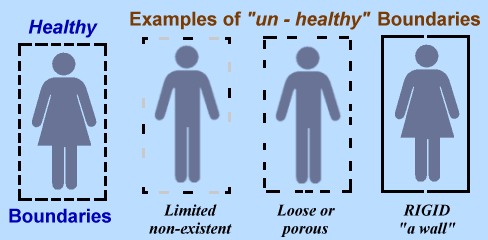
It comes down to boundaries. As adult victims, we don’t have any, or have very weak boundaries. We never established boundaries when we were young because we were (1) never trained to do so; and (2) because our early boundaries were constantly being violated.

People can sense when a person has very weak or non-existent boundaries. That’s why we continue to attract narcissists as friends, lovers and spouses. Narcissists know easy prey when they see it.

Why personal boundaries are so important.

do_not_cross

Even among non-narcissistic people people, we are seen as prey because we appear to lack boundaries. Even near-strangers are constantly stepping over the line and treating us with disrespect, even if their behavior isn’t outright abusive. It’s as if most people have an invisible line drawn around them that must not be crossed. People “see” this line–or sense it–and will respect it. But if you never established boundaries or they were destroyed by your narcissistic family, there is no invisible line drawn around you, and people will constantly step over it, because they believe it’s okay for them to do so.

The solution seems easy enough–just establish some boundaries and tell people when they are violating them. But this is much easier said than done. Most of us have such low self esteem we are terrified of letting others know it is not okay to treat you this way. We are terrified of being criticized or told we are just being “too sensitive” or paranoid. We see other people standing up to those who violate their boundaries without repercussions, but we fear that if WE do it, we will be attacked or criticized, because we were trained to believe this.

unhealthy_boundaries

The sad news is that it isn’t incorrect to believe you will be attacked or criticized or told you are overreacting if you try to stand up for yourself. That’s because people don’t like change. If people have become used to you as a mousy, fearful person with no personal boundaries, they are not going to like it much should you suddenly point out that you have some. But it doesn’t mean you are worthless and it also doesn’t mean you must forever continue to submit to this kind of treatment.

In any group, there is usually one scapegoated (or disrespected) person, and that person is the one who is seen as having the weakest boundaries (and is probably also the most sensitive, which is why we were chosen by our families to be scapegoats in the first place). Unfortunately the human condition dictates that even for normal (non-narcissistic) people, there is going to be a pecking order. This system can be observed in most animals and even some birds, like chickens. People–and animals–feel more comfortable when there is one person around they can pile on. If you suddenly announce they may not pile on you anymore, they are not going to be happy about it and will probably take out their frustration on you. It isn’t fair, but it seems to be in our human nature.

Can anything be done?

boundaries_quote

Yes, but it may be necessary for you to start over in a new place or a new job if this is happening to you. You will need to make it clear from the very beginning that you are to be treated with respect. This means the very first time you observe one of the above behaviors directed toward you, you must nip that in the bud and let the person know it is not okay to treat you like this. Doing this will be one of the hardest things you will ever have to do, because we are so afraid to speak up for ourselves. But if we have not been established yet as a victim or at the bottom of the pecking order, letting others know (nicely, of course) that we will not tolerate this sort of behavior should help. Once your boundaries are made clear to others, you will be treated more like a human being and less like a worthless piece of furniture.

If you cannot start over (and many of us can’t, because our lifetime problems with boundaries and self esteem have made it impossible for us to be able to earn the kind of living that would enable us to move elsewhere or leave a job), then you will need to go ahead and try to speak up for yourself anyway, and risk the fallout. If you find this impossible to do, then you will need to find a support system or a group that does not know you the way you are. You can join a church group, attend group therapy, or take a class. Or you can find supportive people online. For those of us who are introverted, like myself, this may be the most effective way to have a voice and be treated the way you want to be treated: like a human being worthy of respect.

my_personal_area

Keep telling yourself every day that you are not worthless or defective, because you are not. There is nothing wrong with you! Your only problem is that the family that raised you did not respect or love you the way they should have–not because you aren’t deserving of love or respect because every child is–but because as narcissists, they could not. You served a role for them as the family scapegoat.

A good therapist–or keeping a journal or a blog–can be a good way to help you deal with your past, the family that destroyed your sense of self esteem and boundaries, and help you overcome your fears and begin to act more like a person who is to be treated like everyone else.

You are worth it.

Why being a Golden Child isn’t so golden.

golden_cage

I was raised as an only child–the second marriage for both my parents–in a narcissistic family. Only children are in an especially vulnerable position in narcissistic families, because they must serve as all things to one or both parents.

In families with several children, one child (usually the most sensitive) is normally chosen to be the scapegoat–to serve as the family trash can for all the narcissistic rage of the parents. Another child, usually the one most closely resembling the narcissistic parent or the one who best serves the parent’s need for narcissistic supply, may become the Golden Child–in other words, the parent’s favorite. The Scapegoat is always wrong, bad, stupid, crazy, a “problem,” etc. The Golden Child can do no wrong. Misdeeds are overlooked or projected onto the scapegoat. Golden Children may become the narcissistic parent’s flying monkeys and are even sometimes given the “honor” of helping with the abuse against the scapegoat.

I’m reminded of a book I read some years ago called “A Child Called It,” written by Dave Pelzer, who not only recovered from the horrific abuse inflicted on him from ages 4-12 by his psychopathic mother (who had been loving up until that point) and brothers (who served as her “helpers”) once he was removed from the family and placed in a foster home, he actually seemed to become stronger because of it. Today he is an author, motivational speaker, and activist against child abuse. Dave was the scapegoat of his family, and I think his mother turned against him when she realized he was the most sensitive child and probably the most intelligent one too.

But what happens when there is only one child in the family? Well, I think that child becomes both a scapegoat and a Golden Child. If I had grown up with siblings (I have older half-siblings but I wasn’t raised with them), I’m almost certain I would have been the family scapegoat. But my parents (I am including both here, even though I don’t believe my father is a true narcissist, because they worked as a “team”–he was codependent and under my mother’s thrall) needed a Golden Child too who would serve their need to show a child off as a prized possession, a status symbol of sorts: the physical proof of how superior they believed their genes to be compared to everyone else.

Being both scapegoat and Golden Child is even more crazymaking than being just a scapegoat, because you never know where you stand. You constantly feel off balance and anxious, never knowing if something you said or did will be rewarded, ignored, or punished. Life feels chaotic and unformed. You feel like you’re playing a game you never wanted to play, a game where you were never taught the rules, and most of the time you don’t even know WHAT game you’re playing, but you’re expected to play like an expert anyway.

confused_kid

There was no consistency in the way I was disciplined or the things I was disciplined for. I was punished often (for infractions that were usually fairly minor or even nonexistent–I was a “good kid” who was terrified of angering my parents until my teens), but that wasn’t the worst thing. The worst thing was that the next time, I might actually be rewarded for the same infraction!

I was often punished for things I couldn’t help. Acting “spooky” was one of them. As a fearful, sensitive Aspie child, there were times I would retreat inside myself when I was feeling very anxious or when there was too much ‘input’ from the world, and this enraged my MN mother, who would berate or punish me for this behavior. I had no idea what I had done or how to stop being “spooky.” It just happened. I think it enraged her because it was during those times I went “inside” that she could no longer reach me with her abuse.

Even though most of the time I was treated as if my feelings didn’t matter, I was often told how pretty, smart and talented I was. It’s my belief I was no more of any of these things than any other kid my age, but I was told I was “special.” To my young mind, “special” meant “different”–and most children, myself included, dread being different from their peers.

When I was bullied at school, the reason my parents gave me was that the other kids were just jealous because of my “superior” looks, intelligence, or talent. I was also told our genes were better than other people’s, and our family was of a higher socioeconomic status than my friends’ families. I know now this was complete bullshit, but it’s the lie I was being fed while I was growing up. I think these “compliments” were intended to isolate me from my peers even further, so I’d just be “theirs.” I never felt empowered by the “praise” I got, because of the way it made me feel somehow defective and different from other kids. In addition, I felt like I could never live up to the pedestal my parents put me on at those times. I was right–and as an adult, I am looked down on by my family as actually defective.

left_out_kid

The most crazymaking thing of all was the times I’d be complimented and diminished at the same time. One of the most common ways I’d be demeaned was being told how “sensitive” I was. This was never meant to be a compliment; it was meant as a way to let me know how weak I was. Sometimes I was told I couldn’t or shouldn’t do things because of a combination of my “good” and “bad” qualities. For example, when I was about 10, I wanted to join the swim team. I remember exactly what my mother’s reaction was to this. She always liked to tell me what I was thinking, which is another way narcissists make us doubt our own reality and question our instincts. She said:
“You wouldn’t like being on the swim team because you’re too sensitive and you don’t like competition, and you’re too smart to be on a team with those people anyway.”
Huh?
Left-handed compliment much? She always sandwiched her praise this way–between insults like a shit sandwich. This was just another way I was constantly thrown off balance and this led to my becoming an extremely anxious child and later, an extremely anxious adult.

In general, my family treated me like I was a huge burden and didn’t really want me around, so the praise I got as a sometimes Golden Child made no sense and to my sensitive child’s mind, never felt sincere. Even at a very young age, I knew I was being lied to. I knew I wasn’t loved the same way other children were loved, even though my parents constantly mouthed the words like some sort of tic.

Lies my narcissists told me.

lies_honesty

I was told many lies about myself while growing up within my my FOO (family of origin). I have no doubt this had everything to do with my developing Borderline Personality Disorder (BPD), Avoidant Personality Disorder (AvPD), and lifelong severe anxiety.

Why personality disorders are so difficult to cure.
Personality disorders (PD’s) are formed very early in life, normally before the age of six–which is the reason they are so hard to cure. Because the child’s personality is still in a malleable state (meaning it hasn’t fully formed) until around age 5, PD’s become an integral part of the personality and therefore can be extremely difficult to eradicate because they were formed so early the child doesn’t believe it’s a problem, just the way things are. Their misery seems normal to them. They know nothing else.

Of course some PD’s are more amenable to treatment than others, and sufferers of some PD’s, such as Avoidant, Dependent, and sometimes Borderline, are much more likely to seek treatment than those with, say, ASPD (antisocial personality disorder), NPD (narcissism), or Schizoid PD.

Lies I was told growing up.

sensitive_people
As the family Scapegoat (and occasional Golden Child which I’ll explain later in this article), here are some of the lies I was told while I was growing up:

“You’re too sensitive!” — This one’s the Big Kahuna for many of us ACONs, especially if we’re also HSPs (highly sensitive people) by nature. “You’re too sensitive” isn’t so much a lie as it is a verbal twisting of a wonderful gift and ability to see the Truth into something…more resembling an embarrassing defect. Narcissistic lies sometimes appear in the form of turning something good into something shameful and bad, and vice versa.

“You have no sense of humor.” (see above)

“You don’t really want that.” (the parent is telling the child what they really think–this will just cause confusion and identity issues for the child)

“No one wants to know how you feel.” (so we learn to swallow our pain and lock up our emotions)

“You cry too much.” (I had to unlearn this–unfortunately I unlearned it too well and now find it difficult to cry even when I know I need to)

“You don’t know what you’re talking about.” (invalidation and devaluation)

“You know you don’t really think that.” (massive mindfuckery)

“You don’t really want to join the swim team. You know you don’t like competition.” (see above–the real message here being “you are a weak, pathetic, scared loser” to really drive the message home)

“You’re too fat/heavy/even ‘obese’ (I was never more than 120 lbs at 5’4” as a teenager)

“They don’t like you because you’re always so unpleasant to be around.” (Real nice)

“You never smile and it makes your face look unpleasant.” (Fake Narc smiles look even more ‘unpleasant’)

“You read too much.” (okay…would it be better if I snorted Smarties instead or went around throwing rocks through the neighbors’ windows?)

“You know you’re not really good at that.” (whenever I wanted to try something I hadn’t tried before)

“You know you can’t do that, let me do it.” (I wanted to wash the dishes when I was 6)

“You’re too idealistic” (mmmkay…and that’s a bad thing?)

Because I was raised as an only child (I had half-siblings who did not live with us), I also served as the Golden Child. So I also heard lies like,

“They’re just jealous of you because you’re prettier than they are.” (even as a first grader, I knew this was bullshit).

child_on_pedestal

“They’re just jealous of you because you’re smarter than they are.” (my grades weren’t much above average, in spite of having a high IQ)

“You are more talented than they are.”

“We have better genes than those other people.” (Narc genes?)

“You come from a better family than your friends do.” (I call bullshit on that.)

You were the best dancer in the school play.” (I have two left feet and even my dog would have known that was an outrageous lie).

It doesn’t stop when you go No Contact.

flying_monkeys

These are some of the lies told about me by my mother to her sycophants (the ones I’m aware of):

“She’s a loser just like her ex-husband” (Nice.)

“She always makes such terrible choices.” (True, but there were extenuating circumstances at those times she would never understand)

“If only she had done what I told her.” (If only I had had the courage to take a few risks-I am extremely risk-averse)

“If only she had listened to me.” (Again, if only I had taken a few risks and not been so afraid of my own shadow)

“She’s a nothing.” (I guess that’s why people tend to always talk over me, look through me, and never hear what I have to say in group or social settings–where I FEEL like a nothing)

“She was ruined by her ex” (this is a half-truth…but RUINED? Really? Let’s tone down the hyperbole, shall we?)

“She will always be poor.” (and the poor are always with us, right?)

“She will never achieve anything.”

“She can never stick with anything.” (This has actually been true but has gotten a lot better)

“She has mental problems.”

“She is sick in the head.”

Ad nauseam…

Conflicting messages as Scapegoat/Golden Child

ConflictingMessages

Black-and-white thinking (idealizing/devaluing) and outrageous contradictions prevailed in my FOO.
As both Scapegoat and Golden Child, I was receiving two sets of messages (sometimes both at the same time), such as, “You know you don’t really want that, because you’re too sensitive, you hate competition and you are smarter than they are.”
I think you get the idea.

Being raised with conflicting sets of messages and being treated as beloved/rejected child at once was incredibly crazymaking.

Borderline Personality Disorder (or even narcissism!) and Avoidant Personality Disorder (I have both BPD and AvPD) both seem like logical, almost sane reactions to having been raised with two conflicting sets of messages–I was either all bad or all good, with no in between.

And finally, it doesn’t end there. Raised by narcissists, I married one even worse. A narcissist so malignant he made my parents look like empathic light beings in comparison. I was trained to be Supply and was WAY too good a student. If awards were given for Learning How to Be Narcissistic Supply, I would have been valedictorian.

Lies my psychopathic narcissist ex-husband told me.

gaslighting

Following are the lies my malignant narcissist sperm donor told me about myself and also told all the flying monkeys he had succeeded in turning against me (some of who included my friends) over 28 years. This led to my PTSD and clinical depression (where I had to be hospitalized for suicidal ideation). Most of these were projections of his own character flaws onto me.

“You are selfish/self-centered.”

“You always overreact to everything.”

“You never listen to me”

“You don’t care about me or my problems.”

“You have no empathy for me.”

“You are narcissistic.”

“You are becoming just like one of them” (he was referring to Republicans, who he hates)

“Oh, so now you’re living the high life?” (when I took in a roommate while he was homeless)

“You are a b**ch, c*nt, Tw*t, whore.”

“You are stupid.”

“You have no common sense.”

“You’re insane.”

“There’s something wrong with you.”

“You’re just like your family–all crazy.”

…as well as a constant barrage of hateful sarcasm at my expense, whether there were people present or not. If I objected to this mean spirited “humor,” I was told–WHAT ELSE???–I was “too sensitive” or “have no sense of humor.”

Because of having grown up in the midst of a labyrinthine web of lies, and then marrying into another one, I have always valued Truth. That’s why I put a premium on complete honesty, at least in my writing.
Not that I don’t ever lie–we all do, it’s part of the human condition. But I am very aware of dishonesty when I see it and won’t hesitate to call it out in others.
I just get so tired of it…

rejected_child

I just read this blog post “I Would Be Begging for Help if it were Me” by Fivehundredpoundpeep. I highly recommend it to all ACONs. However, I won’t lie–her well written article triggered me, and the following may be the most emotional post I ever wrote.
This actually started as a reply on her blog, but I decided to turn it into an article because it’s very much on my mind. Tears are not far away.

The mother she describes in her article sounds EXACTLY like mine–the tone, choice of words, attitude, everything. Criticism under the guise of “help.” Dismissal in the name of love. With mine it’s always “positive thinking:”
“If you were not so negative, things would come more easily to you.”
“If you were more pleasant to be around, you would be able to make the connections to help you advance in a career.”
“You never were the competitive type.”
And always, always, “You’re too sensitive.”

Well, excuse me, Mommie Dearest, you’re too damn insensitive. You may not know it, but my high sensitivity, much as it may annoy you, is going to OUT you one day as the MALIGNANT NARCISSIST you always were, and will save my sanity. Be afraid. Be very afraid.

And then you dare to tell me how much you love me in the next line? Prove it.

She used to send me corny memes and hackneyed sayings about always being sunny and cheerful, and accepting things the way they are. Scooping all these memes together and throwing them in the blender, here’s the pureed form of the message she was giving me:
“You are a failure and will never get anywhere in this world because you’re not a fun person, you never smile, you’re always negative, but you should accept things as they are and be happy with your lousy lot, because you don’t deserve any better.

That’s what she was really saying. She’s one of what I call “the positive thinking nazis.” Actually both my parents are. There’s nothing wrong with positive thinking, of course, and it’s something we should all strive to do. But my FOO took it too far. They used it as a way to sugarcoat and deny real issues. It was like putting a Band-aid on a cancerous lesion so it didn’t have to be seen. If it didn’t have to be seen, it would go away. That was the sort of narcissistic magical thinking and insanity I had to deal with.
They used it as a way to deny responsibility. That’s the most glaring thing wrong with the positive thinking movement, when taken to ridiculous extremes. The denial of reality and rejection of responsibility.

Of course if I ever confronted my mother about this (which I never did, not directly anyway, since I was a teenager), she’d either fly into a narcissistic rage or vehemently deny it.

staring_at_wall
My mother still has the power to make me feel this way. That’s why we’re estranged.

Seriously, that’s the only kind of “help” I have ever gotten from my MN egg donor since I grew up. But I can’t be rejected anymore because I don’t ask her for a thing anymore. I could be lying in a gutter with a broken leg and no home and no way to get to the hospital, and she’d probably tell me I was just being too negative and drawing in my own bad fortune. I would rather lie there and bleed to death than beg her to help.

My whole FOO are huge proponents of the postmodern narcissistic grandiose fantasy of “you create your own reality. If you fail, it’s no one’s fault but your own. Pick yourself up by your bootstraps and suck it up.” It’s The Cliff’s Notes version of Ayn Rand’s objectivism. No compassion. No empathy. No love. Only judgment, gaslighting, subtle put downs, no loyalty, and thinly veiled hatred. And unfair and untrue accusations of my acting “entitled” because at my age, of course I should not be needing any help. But I’ve never asked them for much anyway. They think I asked for too much. All I ever wanted was love. No their conditional fake excuse for love.

It made me furious to the point of wanting to smash my fist into a brick wall when well-meaning people who may have heard about my financial problems or need of emotional support, said to me something like, “Honey, don’t you have a family you can turn to?” Or “Surely your family will help you out of this jam.” Sometimes it still happens, though I tell no one IRL my troubles. But I don’t want to hear what they have to say: all these people assume that just because their own families will help them or give them a hand up when they’re down on their luck or just need a non-judgmental listening ear or a soft shoulder to cry on, then the same must be true of my family too. It’s just what everyone does for own flesh and blood, right?

crying_chld

These fortunate people with loving families may be well meaning but they assume because theirs will help them and give them unconditional love, that the same holds true for people like us. They simply can’t or won’t believe there are some parents who actually HATE THEIR CHILDREN.

I get so tired of it. So very tired of it. That’s why I tell no one my problems anymore except on my blog. I never ask my parents for help, ever, and never will again. Especially not my mother. But I won’t need to. I’m still poor but I’m surviving, even thriving now–but not because of any of their heartless and judgmental “advice.”

I’m getting better because I have the ability to reach out to my real family–this amazing community of people who have such similar stories–through a skill I’ve recently rediscovered and is the tool to my healing: my writing.
I don’t need to be my mother’s scapegoat anymore.

Why do I feel so guilty?

guilt2

For my daughter’s 21st birthday she was informed a trust fund was being set up in her name by her grandfather (my father) but she would not be able to access it until she showed more maturity and interest in attending college. My daughter, feeling it was unfair that her brother got to access his right away (because he has made better choices and had “proven” himself) found a way to access the money anyway. Apparently there was some loophole she found out about (I have no idea how) where she could override the stipulations put on the fund. It wasn’t illegal what she did, but was probably unethical.

While I understood her feeling like she was being treated unfairly, at the same time I understood my father’s concerns and agreed with him she wasn’t mature enough to handle such a large sum of cash and it would have been better to wait until she was older.

We were right. She wasn’t ready to handle it. Within less than two months, almost all the money was gone and she can’t even really say what happened to it. My father’s wife (my “evil stepmother”) is impossible to deal with–cold, condescending and intimidating (although she does take good care of my dad). She is a narcissist who scares both me and my children to the point we are all hesitant to call my father. She acts as a kind of gatekeeper and talking to him means going through her first, so none of us ever call him, although we’d like to. She also intercepts any mail or email that is sent to him. Nothing gets to him unless it goes through her first.

Anyway, after Molly accessed the funds, my stepmother was so livid that she wrote me a letter letting me know she would never speak to my daughter again. I think her rage was not only due to my daughter’s dishonesty (anger which I can understand), but also because, as a narcissist, she hated knowing she’d been “outsmarted” by an upstart kid. My stepmother has always taken great pride in thinking she knows more than everyone else.

It’s incredibly sad that this malignant, heartless woman has managed to separate me and my children from my father (and their grandfather) through her intimidating, condescending words of judgment and disapproval. But that’s what narcissists do–they divide and conquer. Unfortunately this sort of thing is nothing new in my family: my entire family is splintered and fractured like a broken platter, with factions of relatives not speaking to or intensely disliking other relatives due to the rampant narcissism that runs like a cancer throughout the bloodline.

A few of us, such as my son, yearn for unity and healing in the family. My son, very touchingly, recently expressed to me his wish to initiate a huge family reunion one day when he can afford to do that. I didn’t want to tell him this would probably never work, since even if everyone attended (which everyone would not), the drama would be as thick as tar. He is so naive sometimes! But he has also made contact with some distant cousins that even I barely know through social media and is now good Facebook friends with one of them. I commend and admire him for this.

This morning I received an email from my father, which I’ll paraphrase. First of all he thanked me for my Thanksgiving wishes (I didn’t dare call him because I’d have to deal with his wife, so I just sent him an email). Next, he told me I would be receiving a check in the mail soon (I have no idea for how much). That made me wonder if he is about to pass on (no one in the family informs me of such things). After all, he is in his 80s and suffers from worsening Parkinson’s disease and is almost completely physically disabled. He also has had heart issues. His wife is his full time caretaker and narcissist or not, he would be in a nursing home without her. Although his mind appears to be intact, he sometimes has trouble translating his thoughts into coherent words, and he physically he is completely dependent on her.

Frankly, I was gobsmacked I would be getting anything at all. Although I believe he does love me in his own way, I was under the impression I was being totally cut out of any will (due mostly to his wife’s influence and her ability to turn others against me, the same way my real mother does).

But the next part of his email made me feel like I’d been punched in the stomach. In it, he said my daughter (his granddaughter) is a slimey, sneaky liar and will never change. He said his wife wants nothing to do with her (which I already knew but makes me wonder if he feels the same). While I already knew how my stepmother felt about my daughter, seeing the child I love described this way hurt me A LOT. I can understand their anger toward her, (and I myself have often wondered if she is a narcissist herself but I don’t think so) but seeing these words in print was not only horrible but also, inexplicably, made me feel overcome with guilt and shame. Sure, I wasn’t a perfect parent (and sometimes a pretty lousy one), but I tried my best. Her father is an MN and I believe he really did a number on her mentally. But I still feel guilty as if her behavior is MY FAULT. I feel a shame so deep I didn’t even answer his email — I simply didn’t know what to say.

Since my divorce, I’ve been in terrible financial straits. I work extremely hard and hate living like this, but due to my Aspergers, PTSD, and pervasive self esteem issues that keep me from being able to “pull myself up by my bootstraps,” I constantly struggle to just keep the bills paid, never mind having any disposable income to do the sorts of things that normal, middle class people do. So the news I will be receiving money that might relieve some of these problems should make me happy. *

But it doesn’t. It’s not because I don’t think I “deserve” an inheritance or gift, but because of how ashamed these two make me feel as a human being: ashamed for having a daughter who has “wronged” them and keeps getting in trouble and never seems to learn from her mistakes (although I think that is changing), as well as for other mistakes I have made that were unacceptable to them (such as allowing my MN ex-husband to move back in with me for 7 years, until I finally gained the courage to kick the malignant jackass to the curb last year). They are extremely judgmental people and judge me and my daughter harshly for our poor choices, but I have not gotten much credit for anything I’ve ever done right.

It’s very complicated and I can’t even talk about my feelings in a coherent way. I feel like I’m in some kind of emotional labyrinth I can never escape. It’s all so confusing. I feel so guilty right now and I don’t even know why. I long to call or write my father and ask him about his health (because I do love him and care very much) but am terrified of my stepmother’s interception and harsh judgment and how profoundly he’s been influenced by her. He may pass away soon, but I’m afraid I might not even be informed when that happens. Somehow, I feel like I’ve been bought off…maybe I am wrong. I can only hope.

But on the bright side, at least I can reassure myself that feeling this much guilt and shame means I have a conscience and am not a narc. Because sometimes I think I inherited the family disorder too.

guilt

I really need to stop caring so much what my FOO thinks of me. It really doesn’t matter, does it? I just need to approve of myself.

* This really didn’t belong in this article because of its focus, but I want to use the money (or some of it) to take classes in web design, CSS, SEO and how to blog professionally. I would love to be able to quit my day job to be able to write full time.

Followup: The email I wrote back to my father.

My family tree of narcissism

dna

NPD is an inherited disorder (as well as acquired). It runs in families. Here is how it shows up in my family (immediate family shown only, as I do not know my extended family too well, thanks to my MN mother’s manipulations to keep me from them).

People raised in NPD families also have an unfortunate tendency to marry or enter into relationships with other people with NPD, and my family tree definitely shows this tendency.

My NPD Family Tree

Paternal grandparents: Grandmother (no NPD); Grandfather (possible NPD) —-> Father (low spectrum NPD); 1 other son (no NPD)

Maternal grandparents: Grandmother (possible NPD); Grandfather (possible NPD) —-> Mother (MN=malignant narcissist); 3 other children (unknown if any of them have NPD)

My mother: MN; my father: low spectrum NPD and enabler —–> 5 children from 2 marriages each (1 deceased): my mother’s oldest daughter is her most loyal flying monkey and probably NPD; I don’t think my other half-siblings have the disorder (they were raised with at least one non-NPD parent); I was the only scapegoat and have Avoidant PD, which is the polar opposite of NPD.

Me (no NPD); Michael (NPD, possibly MN) ——>; 2 children: son Ethan (scapegoat and non-NPD); daughter Molly (NPD, probably not MN)

Michael’s immediate family:
Mother (MN); father (non-NPD but an enabler and absent much of his childhood) —–> Michael (NPD, possibly MN); 1 sister (non-NPD but abused by her NPD husband)