Marriage counseling is another weapon a narcissist can use against you.

marriage_counseling1

If you’re still with your narcissist, you may be tempted to insist they attend marriage or family counseling with you. It’s a common error to believe and hope the counselor or family therapist can help the narcissist understand your point of view and, seeing the light, stop their abuse of you or the children.

This is a mistake. Don’t do it. Don’t drag a narcissist to a marriage counselor or family therapist. I have my own horror story about this, and I’ve heard many similar stories to mine.

My ex, “Michael” (not his real name) and I had not been getting along for some time. I won’t go into the details in this article, because I’ve documented his abuse elsewhere in this blog. Whenever a malignant narcissist (in his case, full-blown ASPD!) pairs up with a Borderline or a low spectrum covert narcissist (I believe I am both), the Borderline or covert N is almost always going to be in the supplicating, codependent, people-pleasing victim role. They will be gaslighted, projected onto, triangulated against, given the silent treatment, insulted, used, taken advantage of, stolen from, lied to, and possibly physically abused as well. A Borderline will rage and lose their composure under such treatment, while a covert N will try to “fight back” using more underhanded means such as passive aggression or the silent treatment. If you’re not disordered, staying around someone who’s doing those things to you long enough, you can actually become a narcissist yourself, or at least pick up a lot of narcissistic traits as well as severe PTSD.

Enraged by Michael’s constant insults, disrespect, and gaslighting using the children as flying monkeys, I’d react by giving him the silent treatment or make sarcastic remarks. Neither of these weak weapons made a dent in the impenetrable armor of this professional malignant narcissist, and the abuse just escalated. As a BPD, another thing I’d do was rage. I’d hold in my anger for days, and finally explode into a mighty dish-smashing, profanity spewing temper tantrum. Of course it was then that Michael told everyone–including our young children–that I was an insane c__t and bitch who should be locked up and the key thrown away.

Sure, we were both disordered, but in that relationship I was definitely the victim. I remember a couple of friends even told me on meeting him that they got “bad vibes” and thought there was something “evil” about him and to be very careful.

At one point I suggested we see a marriage counselor. At first Michael resisted, but he finally relented when a friend of his told him he should go just to get me to STFU. So he agreed to go, on the condition that HE got to pick the therapist we’d be seeing. The therapist he chose was a woman and she did seem very nice. I actually felt comfortable with her, which surprised me.

One of the issues we’d been having was the volume at which Michael played his music. He listened to music I did not enjoy–mostly death metal, thrash, and riot girl punk/metal (this was in the late 1990s). Now I’m an eclectic and open minded music lover, but those particular genres acted like assault weapons on my ears. He also liked to blast this noise late at night when the kids and I were trying to sleep. But whenever I asked him to turn the music down, he’d tell me to shut up and deliberately increase the volume.

So this was one of the topics that came up in marriage counseling. I was the one who brought it up. Michael always seemed calm and reasonable on the surface (he had a lot of charm back in those days which he never showed me when we were alone together) while I always seemed stressed, on edge, a raw nerve about to snap like a violin string (this was in fact the case–his manipulations and cruelty to both me and the kids were systematically driving me insane). After I told the therapist about how loud he played his music whenever we were trying to sleep and refused to turn it down when asked, Michael turned on the charm, smiling and in a very reasonable and calm tone of voice explaining to her that I was a “control freak” and hated music in general. He told her I never let him play anything, even during the day, which was a lie.

The therapist turned to me and told me I needed to stop trying to control my husband and allow him to pursue his interests. I looked over at Michael, wearing his most smug, self-satisfied grin. I wanted to walk over and smack him hard upside the head. I started to shake with rage. I couldn’t hide my frustration and anger the way he could. It took everything I had not to throw something at him or throttle him. I looked down at my clenched fists and my knuckles were so white their bones seemed to have popped through my skin.

marriage_counseling

Back in those days, my BPD symptoms were in full force, and so to the therapist, I probably did seem a little crazy. Michael, in contrast, had the composure of an attorney (I always used to tell him he should have been a lawyer because he always won every argument).

Other things came up too. But it always came back to the same thing–that I was trying to control HIM and he was just a reasonable man confused by my emotional instability and craziness. Michael had that therapist wrapped around his little finger. Once I tried to explain to her the way he acted in our sessions was not the way he acted at home, that he wasn’t showing her his cruel, callous and disrespectful nature. Of course he called me a liar, telling the therapist I had “mental issues.” Once again I got scolded by the therapist for trying to control him and making up stories to make him seem worse than he was. She asked me if I had delusions often.

Finally, sick of the two of them ganging up on me and blaming me for everything wrong in our marriage, I walked out in the middle of a session, which only convinced that therapist I wasn’t “serious about counseling” and should seek psychotherapy for myself (this is what Michael told me later).

I’ve heard this sort of thing happening to so many victims of narcissistic abuse. They go to marriage or family counseling, thinking it might help, and instead, the therapist gets turned into a flying monkey siding with the abuser and joining in the gaslighting and projection against the abused.

Malignant narcissists and psychopaths like Michael are good at convincing people they are perfectly sane and they will lie very convincingly. The real victim, probably suffering from PTSD and high stress levels, is more likely to “lose it” or act out, making it seem as if they are the one causing the problems with the relationship.

Based on this experience and those I’ve heard from others, I don’t recommend marriage counseling if your spouse or partner is a narcissist. But if you do decide to try it, make sure YOU choose the therapist, and pick one who has a background in Cluster B personality disorders and has a working knowledge of the way narcissists operate.

Even better, if it’s at all possible, lose the narc who’s making your life such a hell.

For more on this subject, please read my article, Narcs Who Use Therapy to Gaslight Their Victims.

For another blatant example of the type of gaslighting my ex liked to use against me (and get his way at the same time), see my article How My ASPD Control Freak Ex Used a Dog to Gaslight Me


What a narcissistic parent sounds like.

I’m sure a lot of victims of narcissist parents will be able to relate to this graphic example of how a mother with obviously high spectrum NPD abuses, mocks, and scapegoats her daughter. Warning: these videos may be triggering.

In watching this, you can graphically see how a malignant narcissist operates, by exhausting the victim to the point that eventually the victim “loses it” (which the daughter here did not do) and then the narcissist can sit back and tell everyone how “crazy” or “irrational” the victim is. It’s an insidious kind of gaslighting.

luckyotter's avatarLucky Otters Haven

Here are two Youtube videos that graphically show exactly how a mother with a bad case of NPD (malignant narcissism) operates. These videos are entertaining in a scary and disturbing way, like watching a train wreck.

Pay close attention to what the mother says–she uses every trick in the narcissist’s book of tricks: blame, insults, changing the subject, interrupting, raging, mocking, “talking over”, gaslighting, projecting, invading boundaries, not taking responsibility, showing no empathy, and just about every other “tool” the narcissist uses to get their own way or avoid taking responsibility for their behavior and actions. Notice how childish the overall effect is–the mother sounds like a four year old having a temper tantrum.

The daughter who made the videos is trying hard to get her mother to listen, but her words seem to fall on deaf ears. She might as well be talking to a wall, for all the…

View original post 3 more words

An upsetting memory.

little_booklets

I remembered something today. Little by little my mind is pulling up ancient memories from dark and forgotten corners as I move further along in my recovery. This one almost knocked me over.

For years…YEARS!…I couldn’t write. This past year and a half has been the first time in my life I haven’t in under the thrall of a high spectrum (malignant) narcissist, and it wasn’t until I freed myself from them that my words began to come back.

As a child I wrote all the time. I drew pictures too. I remember my father bringing home these little blank stapled booklets in different colors with lined paper in them. There were about 50 of them, tied up in rubber bands. I used to write little stories and illustrate them. I could spend hours doing this.

I always blame my mother for everything. I act as if my father (who was codependent, and probably either covert N or borderline) had nothing to do with my disorders. I always saw him as a victim too. But he colluded with my mother; both were abusers. I remember one day when I was 7 or 8, I came home from school, and as I did every day, I went to my desk and opened the drawer to start writing my little stories. I noticed some of my finished booklets were gone. Panicking, I looked everywhere for them, and couldn’t find them. They were very personal to me, like diaries. They were for my eyes only (my Avoidant traits had already set in) . I was very upset but couldn’t tell my parents because then they’d be looking for them and they’d KNOW.

I looked all over the house for them, and finally found them in my father’s filing cabinet in a folder with my name on it. I was horrified. He stole my private creations from me! I felt so violated. My boundaries had been viciously invaded. I remember stealing them back and destroying them. I couldn’t even bring myself to look at them anymore. There was too much shame.
It was as if I wanted to annihilate myself…my true self.

After that I seemed to lose interest in drawing, although I continued to write. But my passion for even that was gone. I didn’t say anything to my dad about him stealing those booklets because to do so would be to invite critique and shame. I knew instinctively he liked them (otherwise he wouldn’t have taken them from me), but I didn’t even want to hear anything good about them. The stuff in them was just too personal. I felt like I’d been raped.

jung_quote

I wrote a novel in 2003. No one wanted to publish it. It sucked. I still have it but it’s embarrassing to read because of how bad it is. I know why though; at that time, still under the thrall of my ex, I was trying too hard to be “a writer,” to make an impression, instead of being authentic.

And now…I’ve done a 180 from when I’d hide my little illustrated books and was so horrified when they were discovered: deliberately posting the most personal stuff imaginable for total strangers all over the Internet to see (under an assumed name, of course). It’s like I’m trying to redeem my shame, somehow. It’s very hard to explain.

After being in my abusive marriage, I thought I’d lost all my ability to do anything at all. I’d sit down and try to write something, and….I couldn’t do it. I even thought I’d lost my intelligence. I was marking time until death. I felt stupid, dead. But I didn’t care either…or thought I didn’t care. I couldn’t feel anything at all. All my emotions were gone.

I was wrong, so wrong about all that.

How I became a Cluster B basketcase.

left-out_child

I had some new insights today on the genesis of my disorders. Not actual new memories, but insights on memories I already had that I know now led to my covert narcissism and BPD. I can pinpoint the exact events that turned me into a borderline, and later on, a covert narcissist.

I’ve been a borderline since about age 4 (in a young child incipient personality disorders are known as attachment disorders). A few weeks ago, following my trip down the rabbit hole, I mentioned having remembered that someone told me something when I was 4 years old that was significant in the development of my BPD.

I still don’t remember what was said, or who said it, but somehow I know I began to be sexually abused at that age. By who or in what context, I can’t tell you because I don’t actually remember. I just know I was.

That’s when things began to get weird for me. I have a vague, dreamlike recollection of sitting on the short flight of carpeted stairs of our split-level house in New Jersey, watching my parents (who were probably drunk) dancing in the living room. They were doing the Cha Cha Cha, a dance popular at that time. I remember feeling unreasoning (and probably Oedipal) jealousy at that moment, because my father was ignoring me, even though I was calling to him to dance with me too. I believe that’s when my hatred toward my mother began. Instead of reassuring me or including me in the moment with them, I was simply ignored and impatiently told to go back to bed.

I don’t remember what happened after that, but I began to have terrible nightmares, and sometimes would wake up screaming. Sometimes after I woke, the dreamlike, dissociated state would continue. I remember hearing, ghostlike, the theme from the TV show “The Mickey Mouse Club” playing somewhere–although it was 3 in the morning and in those days, it wasn’t possible for anyone to have recorded the show and play it somewhere later. I got out of my bed to find out where the music was coming from, but the house was completely dark and everyone was asleep. It was very eerie. I also remember one morning, having gotten out of bed for breakfast, seeing tiny colored sparkly objects that looked like glitter, falling everywhere around me. No one else seemed to see them. I asked my parents if they saw the falling glitter and they looked at me like I was crazy. There was something else that happened around that time that was equally strange, but I can’t recall now what it was. It’s not far from my conscious awareness though. I think I’ll remember soon. I might remember what was said to me and who said it too–because I know it was important.

I started doing things like banging my head against the wall in the family room, because it felt good to me for some reason. My mother would tell me to stop but I’d keep doing it, because I couldn’t stop. It seemed to relieve some kind of congestion inside my head. I don’t know–I tried it recently just to see if it still felt good, and it didn’t at all. It hurt! I also began to develop strange ticks and habits like pulling my hair and sucking on it. My mother started keeping my fine hair short because “I was ruining my hair” by doing that.

I began to get a taste of rejection in kindergarten. I always felt somehow different from the other children, but couldn’t figure out why. Not different in a good way, but in a defective one. I’d already internalized the conflicting golden child/scapegoat messages given to me by my parents, who expected me to serve both roles because I was their only child. No wonder I longed for a younger sibling! This alternating, unpredictable and crazymaking golden child/scapegoat treatment exacerbated my BPD (which I think already existed) and set the stage for covert narcissism–unworthiness and inferiority (beaten into me by being their scapegoat) that overlaid grandiosity and a sense of being better or more “special” than other kids because my parents sometimes told me I was when they weren’t punishing me. I didn’t know who I was. When people told me to “just be yourself,” I had no idea what they meant. Who was I? I couldn’t live up to their lofty idea of the perfect little girl they wanted me to be or thought I was; but it also made no sense when they wouldn’t allow me to try new things or make decisions on my own, always saying things like, “you can’t do that,” or “you know you don’t want that.”

Their punishments were severe and I became a fearful child, and feared rejection wherever I was. How could anyone like a child that was so bad, but at the same time, was supposed to be this perfect princess but could never live up to being one? I was so confused and felt so apart from others. I remember when I wasn’t crying (I wrote a article about what a huge crybaby I was), I was nervously asking the other kids at school if they liked me. Was that my true self or a newly minted false self asking them that? I’m not sure, but I think it was a last ditch attempt of my true self to get reassurance, love and acceptance, because I sure didn’t get it at home.

I was an unpopular, oversensitive child and everyone always told me how sensitive I was too. I remember being mortified and embarrassed by this but had no idea what to do about it. my mother used it against me too, calling me out for my “hypersensitivity” in front of other people, or making excuses for her hurtful comments by blaming me for “always taking things the wrong way.”

I started to try to hide my emotions but wasn’t very good at it, and the other kids could always see right through that transparent mask I tried to wear. I was intelligent, and my grades were okay, but my teachers always told my parents that I was an underachiever and a daydreamer and of course “too sensitive.” They also wrote on my report cards things like, “Lauren is intellectually brilliant and very creative, but she is an underachiever. She could be doing so much better if she applied herself. She also has problems socializing appropriately with the other children.”

And I did. I never fit in anywhere. I got bullied throughout my elementary and most of my high school years. It didn’t help any that we moved three times within my first 8 years of school, requiring me to start two new schools in the middle of the year (actually, the second school was due to my having been bullied so badly my parents were forced to have me change schools). I used to be chased home by bullies everyday and was never invited to parties or after school activities that weren’t teacher- or parent-planned.

I did manage to always have one or two close girlfriends so I’d sometimes get a respite when a sleepover was scheduled. But for some reason, my mother wouldn’t allow me to go on sleepovers very much. She didn’t like the idea of me doing things on my own without her. It got so bad that around the age of 11 or 12, I got very upset one night because she had failed to come in to the bathroom to wash my hair while I sat in the tub. I felt like I couldn’t handle something like washing my hair on my own, and more than that, I felt…rejected and forgotten! I remember going downstairs crying and asking my mother to tell me she still loved me, just because she had failed to come in to wash my hair. I don’t think I got that reassurance. At the time I still went out of my way to make friends. But I was too friendly and clingy too, so although at the time my debilitating shyness hadn’t set in and I made new friends fairly easily, I didn’t keep them for long. I was already demanding too much from them, I guess.

My parents divorced when I was 14, and I moved to New York with my mother. I already blamed her for their divorce, and already had pegged her as a narcissist, although I didn’t have a word for it then. I remember telling her how “empty” and “shallow” she was. This would make her rage. But under my anger was terror. She scared me on some deep gut level and she seemed to hate me. Even as an adult, I’d always revert back to being a child in her presence. She was drinking heavily, and I began to drink too. She didn’t try to stop me. She had a string of lovers that came and went, and to get to the kitchen or bathroom, I’d have to walk through the living room where she and some boyfriend were sleeping. One of her lovers used to love to make fun of me with her. I remember sitting at the dinner table with the two of them laughing at my worries, speech, the way I looked, and anything else they could pick on. I remember running away from the table in tears more times than I can count. I was left alone in the house often, which I actually liked because it meant I didn’t have to deal with her or her nasty boyfriend, and I’d cook my own dinner, usually a TV dinner or frozen pizza. Inside, I secretly worried that this woman who seemed to always want me by her side when I was younger (and be her mini-me) didn’t seem to want me around at all anymore. I wondered what I had done wrong to make her stop loving me. Now I know she never had.
I was a depressed, sullen, underachieving teenager who lived in a fantasy world inside my head because I was learning to hate people.

At age 15, I was rejected by a group of girls that I described in “Crybaby.” That was devastating to me, and I spent several days literally sick in bed after that. I don’t remember if I cried. I think I might have already stopped being able to cry easily, but I felt like I wanted to die. I remember making a promise to myself I would never again reach out to anyone in friendship and that I’d have to hide my emotions from that day on.
I think this was the beginning of my narcissism–my false self was born. Up until then, I’d displayed borderline attitudes and behaviors (as they would appear in a child), but after this event I became increasingly aloof and tried to pretend I didn’t care what anyone thought of me.

I began to act up more at home too, and outwardly rebel. My mother and I got into huge drunken screaming matches that would end with her either passed out on the floor drunk, or with us both throwing things at each other. One night, unable to control my rage, I grabbed a kitchen knife out of the drawer in the kitchen and went after her with it. She was drunk. I held it in front of her to scare her but did nothing, then dropped it and told her I was sorry when I realized what I’d done.

That was the night she kicked me out. I was 17. I went to live with my father for a time before entering a girls’ residential facility for a year that treated adolescents with emotional or behavioral problems.

But even though I can’t say I blame her for kicking me out since I probably scared her to death with the knife incident, being kicked out by my own mother was traumatic. I took this as proof she never loved me, because threatening her with the knife had been a desperate cry for help, to be validated. Even though I can understand why she didn’t want me around anymore, the hurt from her total rejection of me (she didn’t speak to me for another three months after that night) stayed with me and ate away at me for years. I believe this incident–being literally tossed out of the house by my own mother before I reached 18–was what solidified my narcissism and when my false self became a permanent fixture.

I became colder and more aloof. I stopped being able to access my true feelings, except for rage and fear. I could no longer meet people easily. To get too close to anyone meant I’d be rejected, or made fun of. Occasionally I’d explode into a BPD rage, but mostly I kept my emotions inside–so far inside I couldn’t even feel them much anymore. The only exceptions were the times I fell in love. My crushes were intense, insane, overpowering; they were a force of nature. My emotions would be all over the place, and I’d be completely obsessed with some boy I imagined would make me happy for the rest of my life. I couldn’t seem to live without a boy who could reflect me and act as a mirror. I was attractive and seemed to find dates easily, and I had a way of getting boys to fall in love with me (I had the slightly pitiful yet charming waif act down to a science). I think I’d become very manipulative in these relationships. Eventually these relationships would end, and I’d be miserable until the next one came along. When I wasn’t dating, I had intense unrequited crushes and lived in my fantasies of happily ever after. I think I might have been showing histrionic PD traits too, although my narcissism is actually the cerebral type. I was never that interested in sex for some reason.

Without a relationship to validate me and prove that I existed, I felt empty inside. Without a relationship, I was nothing. I had no real interests and any type of hobby I did pick up, I’d eventually drop. I couldn’t stick with anything, and began abusing alcohol and later, drugs. These were the only other things that seemed to temporarily fill the vast black hole I felt inside. I still had no idea who I was or what I was here for.

This was longer than I intended, but it’s pretty clear now when my BPD and narcissism began. My BPD began at age 4 due to some type of sexual abuse and something that was said to me. As for my cNPD, it didn’t happen overnight. It gradually developed in me between the ages of 14 and 17. What solidified it were two things–being rejected by a group of girls who had seemed to like me; and the final boot by my mother. My BPD always lay beneath the narcissism, ready to erupt at the worst possible times.

Fear breeds narcissism; the antidote is vulnerability.

I think this article applies to anyone trying to heal from any personality disorder, PTSD, or the fallout of narcissistic abuse, so I’m posting it here too.

Why family scapegoats become lifelong victims.

I thought it seemed like a good time to post this again.

luckyotter's avatarLucky Otters Haven

I just watched a video that really hit home for me.

If you were scapegoated by your family, two things can happen. You can become a narcissist yourself (narcissism being an elaborate defense mechanism to avoid further hurt and abuse) or you will internalize the early message that you’re worthless, defective and have no rights. I’m going to talk about the second scenario because that’s what this video is about and it’s what happened to me.

As a scapegoat, you are trained to live in fear. You become afraid to defend yourself, express your opinions, or demand fair treatment. This attitude of worthlessness, fear and shame is carried into adult life. Other people can immediately sense you are a pushover and a magnet for abuse, rejection, and bullying, and you become a target for abuse by others well into adult life.

You can become a lifelong victim unless you find…

View original post 665 more words

Malignant narcissists practice black magic.

Witchcraft

This is a really powerful video by Smakintosh of Gospel Underground, who was the scapegoat and “black sheep” of his own family but because of that, is also the only one in his family who can see the truth about what their agenda really is.

I love listening to him speak, because you can tell he really feels what he is saying. He does because he’s lived it.

If your entire family has turned against you, it’s probably because one or sometimes two malignant narcissists have used cunning and deception to gaslight you and project their own evil onto you, while making themselves seem blameless and sometimes even getting others to believe YOU are the abuser and THEY are the victim. It’s a kind of sleight of hand or black magic they practice, even if they’re not aware they’re practicing it, that puts others under a powerful spell and holds them in thrall to the narcissist who has targeted you.

You may also have come to believe their lies that you are stupid, crazy, a loser, evil, abusive, or anything else that’s been projected onto you. You were the sacrificial lamb in their rite of deception.

You have been targeted because you–unlike the other non-targeted family members (or other members of a group) who are either flying monkeys or enable the narcissist–possess the ability to see the truth through the narcissist’s lies. They hate and fear that and that’s why they hate and fear you. They must diminish you and make you look bad and they are very skilled at convincing others what they say is true and you are the liar and sometimes even the abuser. They are very good at turning people against you so no one will believe you.

If someone is the black sheep of their family, or has been scapegoated or disowned, suspect a malignant narcissist in the background who’s succeeded in turning everyone against them.

The movie “Mommie Dearest” tells the story of how Joan Crawford targeted her daughter Christina and abused her for years, because Christina was able to see the empty void underneath her mother’s glamorous, “perfect” image. Ultimately, she was left out of the will and not in contact with anyone in the family except her brother Christopher (who was also scapegoated). At some point I’ll be writing up a review of the film.

The same sort of deception can be used to turn an entire community or even a nation against what is right and good, by just one or two evil people and their flying monkeys. Hitler’s Germany is a perfect example.

“An Open Letter to My Abusive Husband”

divorcing_abusive_husband

A very courageous woman named Samantha wrote this “open letter” to her abusive, narcissistic husband which appears on her blog The Narcissist’s Wife, which I recommend for anyone trying to divorce or leave a narcissist.

Her “open letter” had me on the edge of my seat because it’s so triggering and fits right in with the article I just posted about “Daniel.” Narcissists all follow the same rulebook: Idealization and promising you the world, followed by The Devaluation and finally straight up abuse.

I am only posting the first part; to read the whole article there is a link to read the rest on her blog.

An Open Letter To My Abusive Husband…
By Samantha Matthews / July 22, 2015

Things were bad right from the start, but I was too young and naive to see it. That’s why you picked me, isn’t it? I was so trusting, and innocent. I had no idea you were broken, no idea our relationship wasn’t normal. I believed you when you told me I was messing up, and I didn’t question you. You could control me, keep me at arms length, and enjoy all the effort I gave into making our “relationship” a success.

And then, one day, I started to notice. Notice how controlling you are, how you turned everything I had issues with back on me, and how you never admitted you were wrong. I notice how you never listened to me on anything, and would later tell me the same truth after you heard it from another source. I noticed how you discounted my opinions and called me a hypochondriac whenever I felt sick. I noticed how you kept me separate from your friends and your social life, and resisted any efforts on my part to make couple friends we could hang out with together.

I noticed how you left me to grieve my grandfathers death alone, and didn’t give me so much as a hug. I noticed how you hid my engagement ring and let me search frantically for an hour before you told me you had it, and how you thought that was funny even though I was in tears.

I noticed how you lied to your friends, your boss, and your family, easily and without a good reason, just because you didn’t feel like doing something. I noticed when you told me about the drugs you did for the entire time we were dating/engaged, how you changed when you stopped doing them. I noticed that I never even knew you had been lying to me then. And how you thought that that revelation shouldn’t change a single thing in our marriage.

I noticed when you complained about how boring the hospital is while I was recovering from having our first child and pushed me to rush us home, and how you discounted all my pain and discomfort during my second pregnancy even while I was working 6 days a week at our business and taking care of a four year old.

I noticed how you never helped me in our business, even as you yelled and raged at me for how poorly things were being run (in your opinion) and how I needed to do more at the shop. I noticed how even when you committed to doing something, I ended up being the one to take care of it. And I noticed how you took and took and took money without contributing at all. To the extent that we ended up having to close the doors. I noticed how you blamed me for that too.

I noticed how you have discounted, dismissed, and mocked all of my accomplishments over the last 13 years. How you tell me the things I’ve done don’t count because they weren’t as good as what someone else did. You tell me I don’t follow through with anything, but you sabotage my efforts and make me feel horrible, and then throw it in my face if I do anything different than what you would do.

I notice how you talk about people behind their backs and say horrible, judgmental things about them. And I checked your phone, I saw how you say those same things about me too. How you mock me and only refer to me as the wife, as though I am not anything more. I notice how you put me down in public and deliberately humiliate me in front of our friends, in order to tell a story or try and make yourself look good.

Read the rest of her article here:
http://www.narcissistswife.com/an-open-letter-to-my-abusive-husband/

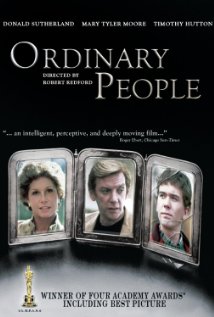
“Ordinary People”: a case study in malignant narcissism.

ordinary_people

I remember when I first saw this 1980 Academy Award winning movie being quite triggered by it, because the main character, Beth Jarrett (played convincingly by Mary Tyler Moore) reminded me so much of my mother, all the way down to her impatient, flippant mannerisms, fake cheerfulness, and clipped speech. And at the time I felt very much like the teenage son, Conrad (Timothy Hutton), who was clearly suffering from a severe case of PTSD and depression, which no doubt had its roots in his mother’s emotional abuse and coldness.

“Ordinary People” (directed by Robert Redford) is about an upper middle class family from the Chicago suburbs, but the individuals involved are certainly not ordinary–or at least you hope they aren’t. Moore’s Beth Jarrett is a high-spectrum malignant narcissist who cares only about her social position and status and the appearance of having “the perfect family” and “the perfect life.” She is always perfectly dressed and coiffed, and can pour on the fake charm whenever she is trying to impress their friends and colleagues. Beth’s husband Calvin (Donald Sutherland) provides his family with their affluent lifestyle and is a good man who cares deeply for his family but is codependent to his narcissistic wife, who makes endless demands on him to keep up the image of perfection, and you can see from his demeanor it’s destroying him.

Their son, Conrad, is his mother’s scapegoat, and while she never actually says so, it’s clear that she blames him for the accidental boating death of her Golden Child, Buck (shown only in flashbacks). Conrad was with Buck at the time of the accident, and suffers from survivor’s guilt in addition to PTSD which was probably caused by his mother’s horrific treatment of him as well as his guilt over the accident, because he was unable to save his older brother’s life. The movie begins just after Conrad has been released from the hospital after a suicide attempt. I think there is more to Beth’s hatred of her child than her belief he is to blame for Buck’s accident. I think she hates him because he sees the truth about her, and calls her out on it. He is sensitive and able to see through her mask of perfection to the monstrous narcissist she actually is, and she can’t handle that.

From the very beginning, we can tell Beth despises her depressed remaining child. Her attitude toward Conrad is dismissive and impatient, and she makes no attempt to understand and appears to have no empathy for the emotional turmoil he’s in. She always puts her own needs ahead of her son and husband, and berates Calvin for attempting to understand his son’s pain. There’s not one moment where she shows the slightest shred of sympathy or love for him, and yet on the surface, no one would call her abusive, because of the mask of normality she always wears. Here’s a scene where Conrad attempts to talk to his mother about why they never had a pet–you can see how disconnected Beth is from Conrad’s (or her own) emotions, and Conrad’s hurt comes out as rage.

There’s a heartbreaking scene where the grandparents are present and Calvin is taking pictures. When he asks Beth to pose with her son, she glibly changes the subject to avoid having to SAY she doesn’t want her picture taken with him, but her disgust is obvious. Calvin insists, and Beth smiles with gritted teeth as she coldly stands next to her son. Conrad, who is sensitive, picks up on his mother’s hatred but tries to smile anyway. Beth, still smiling her fake smile, demands that Calvin give her the camera so she doesn’t have to have her picture taken with Conrad, but Calvin keeps insisting. Conrad, fed up and hurt, loses his temper and screams “Give her the goddamn camera!” It’s scenes like this that so brilliantly depict the subtle emotional abuse a malignant narcissist mother inflicts on her most sensitive child.

The camera scene.

Conrad begins seeing a psychiatrist, Dr. Berger (Judd Hirsch) who begins to get Conrad to open up about his feelings and show his anger. He also begins to date a girl he met in band practice (Elizabeth McGovern), who is upbeat yet understanding and helps bring Conrad out of his shell.

Calvin and his mother seem to be constantly arguing. Calvin tries to referree, but can’t seem to appeal to his wife’s loving nature, because she apparently has none. After one of these arguments, Conrad calls out his mother for never having visited him in the hospital, adding that “You would have visited Buck if he was in the hospital,” to which Beth retorts, “Buck never would have been in the hospital!” This is a clear implication of the higher esteem she held her older son in, who she believed would never have “gone crazy” and had to be hospitalized. Unlike Conrad, Buck would have enhanced, rather than diminished, the image she had of having the perfect life and perfect family.

Beth’s evil really comes out when they go on vacation to Texas to visit with some of Calvin’s colleagues. While golfing, Beth sweetly suggests to Calvin they go on another vacation–which would be during Christmas. Calvin agrees, but suggests they should bring Calvin along with them because he might enjoy the trip. To this, Beth flies into a narcissistic rage and loudly berates her husband for always trying to include Conrad in everything. During this rage, she projects her own anger and selfishness onto her husband, who unsuccessfully tries to stand up to her. Later in this clip, there’s a chilling scene after Conrad’s parents return home and Conrad tries to give Beth a hug. Beth’s face stays cold and hard and you can feel the hatred and disgust she has for her child while she barely returns his embrace at all.

The golf scene and “the cold hug.”

Conrad finds out his friend Karen from the hospital (Dinah Manoff) has committed suicide. Frantic, he makes an emergency appointment with Dr. Berger, and shows up in his office in a broken state. He rages and then sobs uncontrollably and everything comes pouring out: the whole story about the night Buck died and how he blamed himself, his mother’s hatred for him, and how he was never good enough. Dr. Berger listens and holds him like a parent would a child, and finally Conrad begins to calm down.

Gradually, Calvin becomes more aware of his wife’s malignant narcissism and is beginning to doubt her ability to love anyone but herself. One night Beth finds him crying alone and asks him why he is crying. Calvin asks Beth if she really loves him and she gives him a non-answer, saying “I feel the way I’ve always felt about you.” Calvin admits he is not sure he loves her anymore. He’s beginning to see the soulless monster she really is. Early in the morning, Beth leaves for good, not saying goodbye to her husband or son, leaving them to fend for themselves and try to pick up the shattered pieces of their lives together. No doubt both are much better off this way.

Calvin’s realization and confrontation with Beth.

This is one of the most convincing and well acted movies about the havoc a malignant narcissist mother can wreak on her family I have ever seen, and 35 years later, it still hits home because of the uncanny similarities I see to my own mother (who was not as outwardly rejecting or quite as malignant as Beth Jarrett). Every one of the 9 DSM indicators of Narcissistic Personality Disorder is evident in Beth. If anyone is interested in studying the myriad ways a malignant narcissist inflicts their abuse and scapegoats their children, this movie is the best case study I can think of, outside of having to deal with one yourself. Of course, not all malignant narcissists are upper middle class like Beth is, but even though the specific words and actions may differ from one social class to the next, the manipulations and abuse are always the same.

This trailer shows other scenes of the way Beth emotionally abuses, gaslights,projects, and triangulates against her surviving son.

Crazy ride.

Giving up is conceding that things will never get better, and that is just not true. Ups and downs are a constant in life, and I’ve been belted into that roller coaster a thousand times.
–Aimee Mullins via http://www.brainyquote.com/quotes/

To ride or not to ride.

roller-coaster-2

Roll back down the track about 11 months. September 2014. That was the day something in my brain finally connected right and I got the idea to start a blog about narcissistic personality disorder.
I had no idea what I was in for. Not even close.
I didn’t have the foggiest idea what sort of roller coaster ride starting a blog about narcissism would become.
It would become the most life-changing ride of my life.

I had no real plan to start a blog. Occasionally I’d have the fleeting thought like “oh, maybe I should start a blog sometime…” but these thoughts were passing and vague, like puffs of cigarette smoke passing over my head. And they went nowhere. Instead, they dissolved in the sea of my uncertainty and inability to make any sort of decision: “Oh, but no one would read my blog,” I’d remind myself. “I’m so boring and have no interests and so what would I blog about anyway? How boring my life is?” So these passing ideas were just sort of pipe dreams. They had no spine or any substance at all. They dissolved away like smoke and vapor and dreams. So I wasn’t seriously considering blogging until the day I finally did.

In February 2014 I’d kicked out my narcissist ex who was living on my couch and making my life a living hell. For about two months I walked around kind of numb and rudderless. I had no idea what I was doing or where I was going and I was scared but sort of excited too. Mostly I was just trying to find my bearings and stay grounded. It could be frustrating. I just wasn’t used to making decisions or doing things on my own, without the narc’s “help.”

In about April or May I started reading a lot about Narcissistic Personality Disorder. I first reread “People of the Lie,” the only book about malignant narcissism I owned at the time (now I have a whole library of such books). I began to read George K. Simon’s “Manipulative People” blog. That was the very first blog about character-disordered people I ever read. I posted a few times, tentatively, but never got too involved, because soon I found other blogs and started reading and sometimes posting on those too.

One day in September 2014 (the 10th to be exact) I was poking around online and on a whim decided I wanted to start a blog. The idea came out of nowhere. In retrospect I think it was God giving me a nudge because I was ready. But ready for what? I had no idea where such a thing would take me–all I knew was I needed to tell my story and in doing so try to sort through all my confused and bewildering feelings. I attempted to start my blog on Blogger, but it kept wanting me to use my real name because it’s run by Google and connected to it, and using my real name on the type of blog I was going to do was out of the question. I had heard WordPress was hard, but decided to give it a shot.

Ascending the track, eyes ahead, heart in mouth.

ascending_coaster

WordPress wasn’t hard. The learning curve was about three days, and after that I felt like I knew what I was doing. At first writing was a bit of a chore, and I didn’t write every day. As time went on, and I started to explore narcissism more deeply and do more reading (by this time I had ordered two of Dr. Simon’s books–“In Sheeps Clothing” and “Character Disturbance”), I found my fascination increasing. I was also beginning to change and my confidence was starting to rise out of the toilet. People told me I seemed somehow “different.” For the first time in my life, I felt like I was doing something that made me feel passionate and that could possibly be of use to others too.

Since then, many things have happened in my blogging journey. I’ve learned more about myself and my narcissists than I ever dreamed possible, and I also found faith in God during the process. I believe with all my heart that God gave me the life He did to lead me to where I am now, writing about my experiences as a victim of narcissistic abuse and learning as much as I can, so I can pass along what I know to others who are in similar situations.

On top of the world–but don’t look down.

roller_coaster3

There have been incredibly heady, exciting times–sudden spikes in popularity, an article going viral for the first time, certain well-known people in the field of narcissism who found and helped promote my blog and its articles, suddenly having so many new friends, getting comments and emails from people who told me my words gave them hope or the courage to leave their narcissist, or even in one case, saved their life. It was surreal the first time I found one of my articles at the top of page 1 of Google, or got reblogged by someone whose blog gets many more hits than my own. As an added bonus, I found out my traffic was sufficient to run some ads, and from that I’ve been able to make some pocket money. Making money never has been and never will be my purpose for doing this, but I’m not going to lie and tell you it isn’t sort of nice to have an additional $20-$30 dollars a month for doing something I love to do. Maybe someday I can parlay this into a career, especially if I write a book (which I plan to start doing fairly soon, when I have some time and think of a topic for a book I’d want to write). It might even be fiction, only using what I know now about myself and the scourge of narcissism as a sort of matrix that holds the skin of the story together.

Hurtling back to earth.

descending_coaster

It hasn’t all been a joyride either. There have been painful and disappointing times too–my first hater and troll comments, people accusing me of having dishonest motives or being a narcissist myself (or at least a narc-enabler), the loss of several people I thought were friends along the way (for various reasons), finding unflattering comments about this blog on other blogs, finding out I’d unintentionally hurt a few people I cared about; other friends disappearing into the black hole of cyberspace, writing highly personal articles that scared me to post so much I felt sick before finally taking that deep breath and posting them anyway (and I’ve never regretted doing so), being emotionally triggered by someone else’s sad story or just from digging so deep into my own psyche or past; chronic worrying that maybe I’m too narcissistic; and having periods of self-doubt and depression when I wonder if I’m good enough to be doing this at all or if it even really means anything.

Exhilaration and sadness.

jfallon_kevinhart

But on the whole, the ride–like a rollercoaster–has been incredibly fun. The downs just mean you’re going up again, and the overall feeling of blogging about narcissism (and related mental health subjects) has been exhilarating, empowering, and the most enjoyable and creative activity I’ve ever undertaken–and best of all, I’ve actually stuck with it. In the past, I would get interested in things, but never stick with them for very long, especially once the going got rough or I realized how much blood, sweat and tears it would require.

But blogging about narcissism, as emotionally triggering and difficult as it can be at times, is a labor of love and the more I do it, the more I want to keep doing it. Unlike every other interest and hobby I’ve had, I haven’t lost interest in it.

Writing about narcissism (and my own disorders) is incredibly emotional, sometimes painful, and a LOT of hard work. There have been times I found myself in tears after writing a particularly emotional article, especially if it involved a painful experience from my own past, and for me being able to release emotion is a great thing because for so long most of my emotions were bottled up.

The Healing Power of Creativity.

crazy_coaster

Blogging is also very creative. One of the only things I rarely ever doubted about myself was that I had the ability to write. Creative writing was always something I was good at and did for fun. As a 7 and 8 year old, my father brought home these tiny little leatherette-covered notebooks with the covers in bright primary colors. The tiny pages had miniature lines for writing which was good because at that age, I still couldn’t write in a straight line (the slope was always downward: was that foreshadowing what was still to come?) On the cover they had a single word like “Memorandum” in embossed golden letters. They were given to me in stacks of rubber bands. There must have been 50 of them. In those little books I wrote lots of little illustrated stories. I always used colored markers and pencils, never crayons because they left too big a mark on the tiny pages. I don’t know what happened to those little books but I wish I still had them.

Even my parents–who rarely had anything both good and true to say about me (I was both scapegoat and golden child in their marriage)–both admitted I could write really well. I worked in medical journalism when I got out of college and wrote some freelance book reviews and did some proofreading and freelance editing, but after having children and moving to another state, I gave all that up. And when I did write, it was always for someone else or for money, never for the love of doing it.

Also by then I was in my disastrous marriage to a psychopathic malignant narcissist, and all the good and healthy things about myself (which didn’t seem to be many) began to gradually and insidiously slip away. I became a near zombie. I thought I forgot how to write. In 2003 I wrote a novel (a very bad one, it turned out) and I had my mother read it (she was probably the worst person for me to have read it) and she told me it sucked, which it did. I was trying to write like Pat Conroy, an author I was very much into at the time.

I reread it two years ago and cringed while reading it. It was full of florid, purple prose, cliched phrases and cliched, one dimensional (is that a cliche?) characters. The one sex scene was embarrassingly bad (I will not go into detail about that here!) I felt sick after reading this amateurish piece of badly written sentimental trash and it was everything I could do to reread even a page of it. That’s how embarrassed by it I was. It was so bad that a Harlequin romance would seem like Tolstoy in comparison.

In what universe had I ever thought that piece of Pat Conroy wannabe-garbage was good enough to send out to publishers and agents (who all rejected it)–or have my constantly-critical mother read it? The novel is still sitting in a cardboard box in the back of my closet, its pages becoming brittle and yellow with time, but for some reason I can’t bring myself to throw it away. It’s a reminder of a time where I couldn’t write because I was too divorced from my own emotions. A person who is dead can’t write–and I was like a walking dead person, trying to write about emotions I couldn’t access.

So after that I imagined I was a terrible writer after all, and never really had that much ability. Writing this blog has reassured me that my ability to write never went away and in fact it’s improved over the months I’ve been writing this blog. So blogging is increasing my self esteem that way too. I think the abilities God gave us are one of his greatest gifts, and those of us who have a talent in one or more of the arts (performing, literary or visual) are especially blessed, because we have the means to communicate feelings to the world, not just ideas, facts, or thoughts (not that those aren’t valuable too).

I call blogging my self-therapy because that’s what it is. It’s also my creative outlet right now. I can’t get over all the positive changes I see in myself (and that others have noticed too), including an increased ability to be in touch with my true emotions, having a relationship with God after having been agnostic most of my life, a much more positive attitude than I used to have, better health, and retrieved memories and revelations about what my painful and difficult life has really meant (news flash to myself: I was not born to be an example to others of what a “loser” looks like).

I don’t want to get off this ride.

dont_wanna_getoff
Queen’s University engineering student David Chesney rides the 28- metre-long rollercoaster he made.

All these discoveries are so unbelievably exciting and validating they far surpass the pain I’ve sometimes experienced on this sometimes terrifying ride into the unknown. Sometimes I feel like I’m exploring a new galaxy, and finding wonders every day, both great and small–and horrors too, but the horrors are usually cast by my own shadow and prove in the end to be harmless.

I would never have believed the most amazing journey of my life would take place without my ever having to leave my house.

There’s something about a roller coaster that triggers strong feelings, maybe because most of us associate them with childhood. They’re inherently cinematic; the very shape of a coaster, all hills and valleys and sickening helices, evokes a human emotional response.
–Diablo Cody

via http://www.brainyquote.com/quotes

roller-coaster