Wolves in sheep’s clothing.

wolvesinsheeps

I wrote an article about this issue a while back, but I decided it was time to write about it again because I have seen this sort of thing happen so many times online, including within the ACON community. It’s a real problem for those of us recovering from narcissistic abuse. We are fragile and it’s so hard for us to trust anyone anymore, but we want so much to trust people who have been through similar experiences and connect with them.

The sad news is that you just can’t trust everybody you meet online.

If you’re a member of the narcissistic abuse community and participate in social media groups, blogs or forums intended to help or inform victims of narcissistic abuse, remember you are engaging with a lot of hurting and damaged people. There are people in this community who may themselves have been so damaged by their abusers they developed narcissistic ways of relating to others.

Narcissism is contagious, just like a disease. If a person was raised by narcissists or were in a close relationship with one for any length of time, they can pick up what’s known in the ACON community as “fleas”–narcissistic behaviors that stick to them the way fleas stick to a dog. If the fleas stay around long enough or become severe enough, it’s possible to actually become a narcissist!

Most narcissists aren’t aware they are narcissists. In the narcissistic abuse/ACON communities, there are narcissists who you would think are anything but. Don’t be duped into thinking just because someone’s a victim of abuse and hates their narcs (and narcs in general) with the white hot heat of a thousand suns, that automatically means they aren’t one. They probably don’t even know they are.

Some people who seem holier than thou may have developed full blown narcissism. They appear to be sheep, even though they are actually wolves. Unfortunately it’s hard to tell until you cross them or disagree with them.

Narcissists project onto others traits they hate in themselves. Just because a person was abused and professes to hate narcissists does not mean they are free of their own narcissism, which they deny in themselves but project onto those they disagree with.

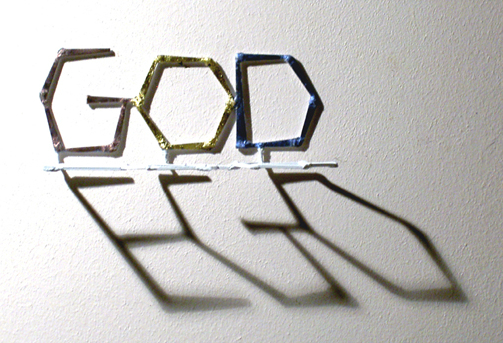
In particular, be very careful around anyone who uses religion to intimidate or abuse you or attacks your beliefs. There are many religious people in the ACON community who have turned to Christ after their abuse, and of course there’s nothing wrong with that. But if someone is intolerant of your religious beliefs (or lack thereof) or calls yours a “false religion,” that’s a huge red flag, in my opinion.
god_ego

There are unfortunately people even in this community who either pretend to be victims to exploit people they see as “weak” (I think there aren’t too many of those though, and the ones that are are usually on social media such as Facebook) or actually are victims, but have become narcissistic due to the abuse they endured. (because I am not qualified to diagnose anyone, I cannot say they actually have NPD).

But there are red flags you can be on the lookout for:

— They act “holier than thou” and use religion as an excuse to treat others badly or judge those they disagree with.
— They never seem to get any better.
— They think there is something wrong with you because you are growing and no longer wish to hang onto your rage.
— If they see someone is changing or letting go of anger, they accuse them of betrayal or worse (if they’re religious) say they are being influenced by Satan. Pathological envy? I don’t know. Maybe.
— They use personal information they were given privately against the person they are targeting. They may even state this private information in public against your wishes. Be careful what you tell people unless you know them very well.
— They attack and smear those they disagree with.
— They overreact to slights or criticism.
— They overreact to opinions they don’t agree with. You are not allowed to have a differing opinion.
— They are self righteous and never apologize.
— They talk a lot about empathy but don’t seem to really have any.
— They show no remorse for their hurtful actions.
— They ban or attack people who defend those they disagree with.
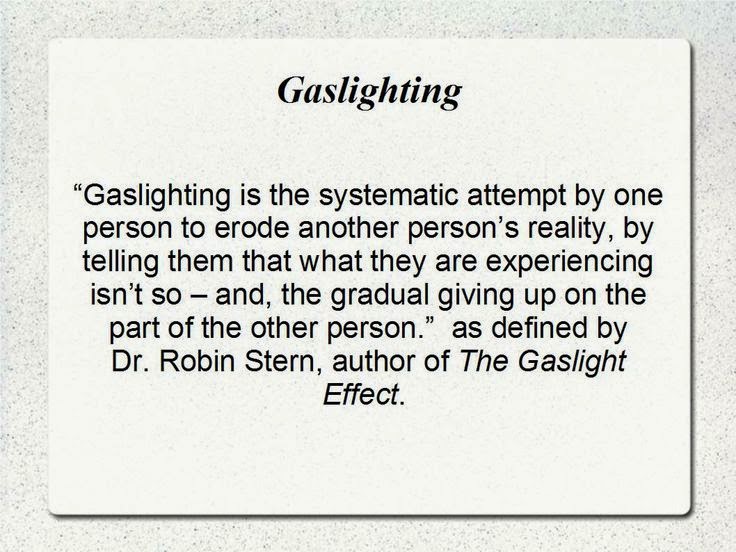
— They misquote you, twist your words, and accuse you of saying things you never said. That is gaslighting.
— They are quick to call people they disagree with narcissists or at least make obvious hints to that effect.
— They will introduce a hurtful criticism or a projection of their own narcissism onto you with a phrase such as, “I don’t mean to hurt you, but…” Bullshit they don’t mean to hurt you.
— If you object to this online abuse, they might tell you in a condescending or smarmy way that they are “only trying to help” or are “praying for you.”

level-headed

A non-narcissistic person will not do these things. Yes, they may disagree with you. Disagreement is normal and is to be expected. I certainly don’t expect everyone to agree with everything I write. I’m well aware some of my opinions are controversial and even unpopular. That knowledge won’t stop me from posting them though. But I welcome dissenting opinions, because that can make a discussion more interesting than if everyone agrees with me all the time. There is nothing wrong with a good, healthy debate. I could even learn something from you, and I’ve admitted when I’ve been wrong. Hey, I’m not perfect and never will be.

If there are disagreements, as there will be, a non-narcissist will just say they disagree with you, state their case, and possibly give their reasons why they disagree with you. If they feel especially strongly about an issue, they could stop following you or decide your blog is not one they wish to read or participate in anymore. All of that is fine. It happens. You shouldn’t take it personally if someone is so offended by something you wrote they stop following you or stop commenting. But it should stop there. A normal person will simply move on and not bother with you anymore. A non-narcissist is not going to start a smear campaign against you, talk down to you as if you’re beneath them, call your religion a “false religion,” tell you you’re influenced by the devil, call YOU a narcissist, twist what you said into something you did not say, misrepresent you, or publicly bring up a personal issue you talked to them about in private just to embarrass you.

All of us can behave narcissistically when triggered. I understand that. I do it myself. If you tell someone who has attacked you in a narcissistic way because they were angry, hurt or triggered that their actions upset you, a non-narcissist will be chastened and will apologize or try to make amends in some way. If the person fails to do that, even after they are told how much their actions have hurt you, suspect a narcissist. They don’t have empathy for how you feel. You are not a person to them. They don’t care. You are wrong, they are right, and that’s that.

judgement

The insidious thing about narcissism is it’s those you would least suspect of being narcissists who in fact may be. Sometimes the Internet can feel like a minefield, and you have to be so careful where you step to avoid detonation.

Something happened to me several months ago that was a real wake up call and made me realize how careful we have to be when engaging with people online. There as a woman on Facebook who talked about her relationship with her husband, a man she said was a malignant narcissist. She said she had found a way to make her relationship with him work. Intrigued but skeptical, I sent her a private message asking what she had found out. I also sent her a friend request.

She did not accept my friend request (saying she did not know me well enough) but sent me back a strange private message that said, “I have been wanting to talk to you.” Instead of being alarmed, I was intrigued.

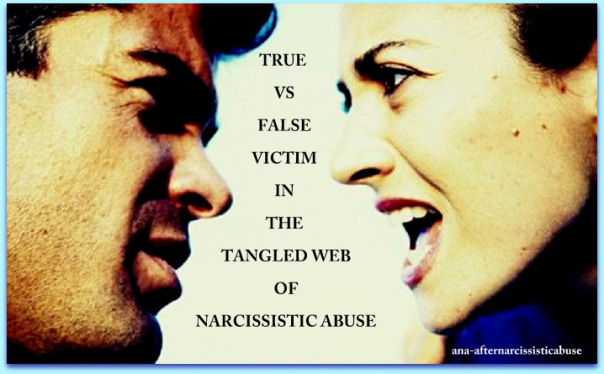
We talked about her “malignant narcissist” husband and the way she “handled” him. The woman’s Facebook posts were always so heartwarming, effusively proclaiming the deep love she had for her husband. She constantly posted pictures of herself with him, along with comments about how much she loved him. I looked at the photos of this guy on her timeline, looking for anything in his face or eyes that would indicate malignant narcissism (they usually have a hard or cold look, or dead, flat eyes). I didn’t see it. If anything, I thought the guy looked weak and even a little scared. In fact, his face and body language screamed codependent. The woman always wore a huge smile, but something in those photos suggested a predator “possessing” their prey. Yes, she was larger than he, but there seemed to be a look on her face that said, “he’s mine. I can do what I want with him.”
victim_abuser

I should have smelled a rat. Instead, I thought, “what a wonderful woman, who loves her husband that much in spite of his disorder.” We had several more conversations. Eventually I told her too much about myself. I told her about my psychopathic ex-husband, and how much I envied her for being able to “make things work” with her husband, but that what she did would have never worked for me because my ex was a psychopath and didn’t have enough self awareness to be able to “work with me” on controlling his narcissistic and abusive behaviors.

Shortly after divulging my own situation, I received a puzzling and upsetting private message from her. I won’t quote it here, because it was too long and I no longer have it anyway. It was a very nasty message. In a condescending, insulting way, she had the gall to let me know that my ex couldn’t have been a psychopath (really? did she know him personally?) She said, “I don’t mean to hurt you or anything, but frankly, there is something about you that is a little “off.” That hurt a lot, but was also a huge red flag. She continued, saying that she suspected I was actually the narcissist in our relationship. Oh, really? Was she a fly on the wall during our marriage? Did she have some God-like omnicience to be able to “know” all this about a person she barely knew? Then she ended her long diatribe saying that “prayer is not going to help you” and “I am trying to help you see the truth about yourself.” It was one of the nastiest messages I’ve ever received, and it was sent under the guise of “being helpful.” I could have received more “help” from a serpent.

monsters-nietzsche

The next day I got two private messages from two of my Facebook friends informing me this woman had PM’d them and told them that I was crazy and to stay away from me. The bitch was gaslighting me and triangulating against me, attempting to turn my friends into flying monkeys! I promptly blocked this woman and later found out she had done this to several other women who she envied for one reason or another. It dawned on me that she had been projecting her own malignant narcissism onto her husband, who I am sure was the real victim in their relationship. It explained the possessive, predatory way she had posed with him in their photos. It explained everything.

I want way too much to trust people in this community because so many people have experienced the same type of abuse that I have, some less so and some more. It’s natural to feel like you’ve found a haven of like-minded people who are your friends by default because of their similar stories. You simply don’t want to believe there may be wolves in sheep’s clothing lurking within the community who may have suffered devastating abuse but have actually turned to narcissism as a way to cope with what happened to them. When you realize this, it can come as a shock and you feel so horribly betrayed. You begin to wonder if anyone can be trusted.

Yes, there are people you can trust but online, as in any other community, you have to be careful. Don’t assume someone isn’t a narcissist just because they are anti-narcissist, have a blog for survivors of abuse, or have a sad abuse story of their own. That doesn’t really mean anything. Use the person’s actions and behavior–and your own intuition–as your guide. If someone makes you feel like you always have to be careful what you say around them, if they intimidate you or make you feel like you’re walking on eggshells, proceed with extreme caution. Even if they’ve shown no narcissistic behaviors (yet), be watchful and vigilant. Don’t ever give personal information to anyone you don’t know extremely well.

The Internet is a wonderful resource for abuse survivors, but remember there are wolves in sheep’s clothing online too. Please be careful.


My codependent “marriage” to a narcissistic boss.

boss

In late 2004, I was hired as a cashier at a local convenience store. My boss, John, was a flamboyantly gay man around my age who seemed fond of me at first. He was friendly and likeable in a way that didn’t intimidate me (because of my social phobia and severe shyness).  We often worked alone together, and because he spent most of the time talking my ear off, I wasn’t required to add much to the conversation. I was his captive audience when we weren’t serving customers. John was bright and I found his one-sided monologues interesting if sometimes a little strange.

I’d hear everything about John’s exciting life, from his four Shar-Pei’s antics (he was a huge dog lover) to his once-a-month visits to the spa for regular colonic irrigations–he discussed these publicly, in the most intimate detail, even with customers–as if he was talking about what he had for breakfast. Although John was intelligent, he was definitely a somatic narcissist, obsessed with his internal health and what he put into his body. He never ate anything unnatural. He was a devout vegan who never touched most of the snack food we carried.
Kathy was his assistant manager for the first two years I worked there. Kathy was not the most emotionally stable person around, and was dealing with the fallout from an abusive marriage to a psychopath. That made her a perfect target for John’s abuse. He overloaded her with work, and yelled at her for the slightest mistakes, sometimes with customers watching. He seemed to enjoy humiliating her. He wasn’t known for his patience, and would scream at her if she was slow to catch onto something or failed to do something right, and I can’t count the number of times he had poor Kathy in tears. Kathy used to tell me in private how much she wanted to quit and how much of an emotional toll John’s rants were taking on her. I sympathized but was caught in the middle–because when Kathy wasn’t there, I heard all about how “stupid” and “incompetent” John thought Kathy was. He also said he thought she was stealing. But I didn’t want to get on John’s bad side and just listened to him complain, never sure if he was telling the truth or not.

John apparently didn’t think too highly of me either. Kathy told me once he would never promote me because I was too “scatterbrained” and “stupid.” John thought all women were stupid. I could tell from his conversations that he regarded all women, starting with his mother, as mentally deficient.

Kathy finally quit and John ranted on about how she betrayed him. He told me she would never find another job and how lucky she was to have worked for him. By this time, I’d been working at the store for about two years and asked him if he would allow me to take Kathy’s place as assistant manager. I was told he’d “think it over” but a few days later he called me into his office and told me he’d decided to promote a young cashier (Kevin) who worked in the store instead. Because John was a misogynist, I knew he had a lot of misgivings about promoting another woman, but he did make me “paperwork specialist” which meant sometimes opening the store and counting the money in the safe, as well as making deposits at the bank. It was really an “assistant-assistant manager” position and paid about a dollar more an hour.

About six months later Kevin moved to the eastern part of the state and left. John was desperate and there was no other male he could promote to assistant manager this time, so I got the job by default. He knew I already was doing everything the assistant manager would do, and would not have to be trained in much.

I turned out to be good at the job, and he often told me so–but I also became the new “Kathy” and handy target for John’s abuse, criticisms, and frequent rages. I always felt like I was walking on eggshells with John, and found I preferred it when he wasn’t there to watch my every move and point out everything I was doing wrong. I felt like I could breathe on days he wasn’t there. I was now in Kathy’s position and took the brunt of John’s hatred toward women. More than once he screamed at me in front of customers, and I remember the humiliation of that and the pitying looks I received from them. I never cried though, just stood there and took it. I would not give him the satisfaction of letting him see me cry the way Kathy did, because her tears only served to escalate John’s abuse.

angry_boss

Getting no reaction from me frustrated John and once he even raged at me because “I didn’t react enough.” He took my poker face as a sign of disrespect and told me so. His insults became more personal, no doubt to try to get a reaction. By this time, my daughter was having behavioral problems in school and I was sometimes called by the school to come pick her up. This caused my attendance to become spotty. Instead of kindly telling me to find some way to reconcile my problems with my daughter with my having to leave early so often, he told me I was a “rotten mother.” As if that had anything to do with my job performance? He also told me he wasn’t surprised I was divorced, because he bet I was “hell to live with.” I didn’t realize at the time he was projecting all his own character defects and narcissism onto me. I felt hurt by these insults. I tried to talk to him about how much it hurt me, but having no empathy, he turned a deaf ear and never apologized for his abusive comments.

In 2009, John took a month’s vacation time and left me in complete charge. I still enjoyed John’s entertaining monologues, but the stress of never knowing if I’d get the “nice John” or the “mean John” was wearing me down emotionally and making me dread coming to work. I discovered I liked the feeling of being in charge of the store, I liked being free from John’s mood swings and rages, and I was doing a good job. I learned how to place the weekly orders, open the store every morning and count the drawers and the safe, change prices on the computer and in the registers, review applications, and keep track of lottery and food stamp sales. I didn’t like delegating work to other employees and tended to try to do everything myself, but slowly I learned that I had to delegate some work or I’d go nuts. Of course running a store has its downside too, and I’d be required to fill in if someone called in sick or didn’t show up. Also, because of the problems I had with my daughter, when I had to leave I’d have to put another employee in charge and I used to worry that they’d mess things up.

When John returned, the vendors and customers told John what a good job I’d done, and this probably exacerbated John’s abusive behavior. He also didn’t like the fact the main office preferred dealing with me to dealing with him. A “stupid woman” was stealing his show and he decided to punish me.

John was also making plans to move to another, bigger store with higher traffic. He knew that I wanted his job after he left and kept promising me the job would be mine.

But one day he brought in an old colleague of his from a store he’d worked in several years earlier. She was an older woman–older than me–and from Day One she treated me like I was a piece of trash left on the floor. She didn’t even try to be friendly–and to make matters worse, I was asked to train her in everything I was doing. John never told me he planned to make her the new manager, just told me to train her and not ask questions. The woman was slow to catch on to the new computerized equipment, and kept making mistakes when filling the safe. The vendors didn’t like her, nor did the other employees. I had no idea what was going on, but I knew it couldn’t be good. John treated this woman with respect he’d never shown to me or Kathy–probably because she was older than he was.

Mean_woman

Shortly after John brought this woman in, another employee told me John was telling everyone I was “crazy” and “losing my mind” and he would probably have to demote or fire me. He was triangulating and gaslighting against me, but I didn’t know it was called that back then, so I began to question my sanity. He told me directly to my face I had terrible kids who didn’t know how to behave and that if I was a “good mother” I would know how to discipline them properly. What gave him the idea he had any right to criticize my parenting skills–and what did that have to do with my performance of my job?

After another month or so, when John felt this woman was sufficiently trained, he started taking away some of my responsibilities. I knew I was skating on very thin ice and started to look for another job. I hated being bossed around by this hateful woman I myself had trained, and stopped hiding my displeasure. She told John I had a “bad attitude” and everyone else began to believe her too. In fact, I WAS developing a bad attitude. Having my mind played with like a toy for five years was taking its toll and everyone noticed. I felt like a naughty child with mean parents. I’d been devalued and soon would be discarded.

One day in April 2009 I came into work and noticed the weird looks I was getting from a couple of other employees and even a few customers. For a couple of hours, John ignored me completely. My “replacement” was being nicer to me than usual. Something strange was up.

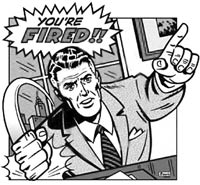
So I wasn’t surprised when, during a slow moment, John called both me and his new protege into his office and closed the door. He told me he was letting me go due to my poor attendance, bad attitude, and the fact “no one liked me” (I know that was a huge lie). My replacement sat there with a self-satisfied smirk on her face and I wanted to reach over and slap it off. He was actually nice about all this though, and promised me a good reference for a future job.

youre-fired

I never did use him as a reference. I didn’t trust him enough.

My five year experience working for John reminded me of an abusive, codependent marriage. The atmosphere in the store was exactly like that of a highly dysfunctional family.

John needed me and sometimes was kind, especially if he knew he’d gone overboard with the abuse and was afraid he’d lose me. He even told me on some occasions how dependent he was on me and how he hoped I’d never leave. On those days he would spoil me–treating me to lunch, allowing me to buy things in the store on credit, or telling me what a great job I was doing. For my birthday one year he bought me a huge bouquet of flowers and treated me to a nice lunch.

But all this manipulative niceness flew in the face of his abuse. I knew his “Jekyll” phases wouldn’t last and soon he’d become “Mr. Hyde” again. He insulted me about everything from my “bad parenting skills” to my “bad attitude” and “lack of social skills.” He even told me I was gaining too much weight when he noticed I was eating a lot of the snack food out of stress. Once he even told me he suspected I was stealing, saying that “assistant managers are the ones you always have to watch out for, because they know how to hide what they steal.” What? I never knew what to expect with John; he kept me walking on pins and needles. Five years of the stress of dealing with John’s unpredictable mood swings and rages was more than enough, and rather than be upset at having been fired, I left the store feeling like I’d been released from prison.

Eight fun games narcissists like to play (and one they can’t play).

not_fun

Here are eight games that are lots of fun for one of the players: the narcissist who initiates them. And like the overgrown babies they are, if you refuse to play or appear to be winning their game, they will pout, whine or throw a tantrum until you concede or let them win. This is a humorous yet serious look at the many games narcissists like to play, from the website The Narcissistic Life. Don’t play these games. Let them sulk and whine all by their widdle selves. Take the ball and go home.

Games Narcissists Play
Written by Alexander Burgemeester

Narcissists are masters at playing mind games. They play to win and take no prisoners. They are poor losers and if they don’t win they will often react in a fit of rage and stomp away like a little child. The only way for the other person to win is to not play. You really have to be “on top of your game” to avoid them though. Here are some of the more common games that narcissists play:

#1 Ping-Pong:

ping_pong

When a person begins to understand how a narcissist works, he or she realizes that it’s a bit like playing ping-pong. Anytime a narcissist has to self-reflect about anything, they will immediately throw the ball back to the person they consider their opponent. Narcissists will always throw the ball back to the other person. They do this in the expectation that they won’t have to take responsibility for their behavior. Narcissists hope that by not taking responsibility for their own actions (by using blaming, shaming, projection, denial, etc.) their partner will do what they have always done-forgive the narcissist, make excuses for the narcissist’s behavior, claim the narcissist couldn’t help himself because he was having a bad day, and so on.

The narcissist is a moving target and you are always on the firing line. To get away from them (or expose them), you always have to keep an eye on the ball i.e., their actions and motives for playing their games with you. You have to stop wanting to play.

You can stop catching the ball and put it back in the narcissist’s court by setting boundaries and making him aware of his actions. He then realizes he has no one to play with anymore. He will either drop the person like a hot potato, try to punish the person, or run away.

#2 Gotcha!

gotcha

The narcissist can be a master of phony empathy. He appears to take you in, appears to understand what you are experiencing, and appears to genuinely be able to put himself in your shoes. These acts cause you to let your guard down; just when you think there is a genuine give-and-take in your relationship, he pulls a fast one on you-a “gotcha”- most often when you’re at a low point. He will suddenly tell you about his extraordinary new career move, a luxurious trip that he’s taking, or a huge shift in financial status that will make you feel even more diminished. Narcissists perfectly execute an unexpected psychological pounce; their purpose is to grind you down, to humiliate you, and make you feel small and inferior.

[My addition to this:  Covert narcissists like to play the mirror image to this game: when you’re doing well, have good news, and are in a great mood, they’ll be a Debbie Downer and tell you all about how depressed they are or about how they never get any breaks or all the awful things that have happened to them.  Or they might “caution” you about why you shouldn’t be too happy–the intention is to ruin your mood].

#3 Crazy Eights:

crazy_8s

This is a favorite game of narcissists…YOU are called crazy anytime you try to confront them, bring up past issues or behaviors, or expose them when they’re doing something appalling. The game goes like this: you are told that you have an overly active imagination, you don’t know what you’re talking about, they have no idea what you’re talking about, or that you’re simply making things up to cause problems. They’ll tell you that it’s obvious that you are the one who is crazy (and tell you that everyone around you agrees with them about you being crazy).

They will claim not to remember even unforgettable events, flatly deny they ever happened, and will never entertain the possibility that they might have forgotten. This is an extremely aggressive and infuriating tactic called “gaslighting”, a common technique used by abusers of all kinds. Your perceptions of reality are continually undermined so that you end up without any confidence in your own intuition, memory, or reasoning.

#4 Death by a Thousand Cuts:

whale_bullies

This is a really fun game that all narcissists like to play! It involves destroying your soul, your ego, your accomplishments and any belief system you have that does not agree with their beliefs. The way the game is won is for them to try to turn everything about you, and everything you do, into a complete failure. Extra points are given when they can take all the credit for anything good that has ever happened and put it all in their own pot. Double points are earned when they manage to put all blame for anything bad onto the other player.

#5 Twenty-One:

adult-children

In this popular game, you’re not allowed to ever reach the emotional age of 21. Even if you are 50 years old, you will still be treated like a child (a stupid child, a bad child, a silly child, etc.). You don’t get to have face cards and if you do get an ace, it’s only worth one point.

#6 The King/Queen Game:

royals
Artwork by Mike Reed

The most important part to remember about this game is that no one can know the rules except the king or queen. Either the king or queen gets to make up rules as they go along; they don’t have to tell the other players the new rules and they can change the rules whenever it suits them. They are the king or queen and, therefore, always win the game. You can be penalized for breaking the rules, even if they chose not to tell you the rules.

#7 Cat and Mouse:

cat_mouse

This is a kind of competitive patience (solitaire) game for two players. It is also known as Spite and Malice. The cards are arranged from low to high with the Kings being wild. Suits (the normal order of things and\or common societal rules) are irrelevant in the game. The game ends when someone wins by playing the last card of their “pay-off” pile. The game can also end if the players run out of cards, in which case the result is a draw.

Cat and Mouse (or Spite and Malice) is a perfect game for a narcissist because it is actually a form of solitaire, it requires “one upmanship”, and involves pulling out “better” cards to beat the opponent.
It involves a “payoff” and for the narcissist, that usually means hurting you somehow. They keep track of real or imaginary things you do, have done, or might do. This is their “pile” and they will pull a card from it and use it against you whenever possible.

#8 Liars Poker:

liars_poker

Individuals with narcissistic personality disorder (NPD) play this game fantastically. They are accomplished liars. Their complete persona and their entire world are totally based in lies. Their positive attributes and alleged actions are all made up in order to get other people to give them their fix of narcissistic supply-praise, adulation and accolades.

#9 Keep Away:

narc_repellant

This is a game that you, yourself, must learn to play. It is important to recognize that the narcissist will never acknowledge that any games are being played; it is up to you to stop playing. To do this, you need to stop bringing up past events/behaviors because you will always be told you’re wrong, they are right, and that you need help. Don’t try to get them to acknowledge or take responsibility for their words or actions because they will always say they didn’t do it or it never happened.

If you are in a relationship, you can walk away from the toxic narcissist in your life. If your boss is an abusive narcissist, you can find another job. You can walk away from your parents, too, if they are abusive.
If you choose to stay, one way to stop playing their game is to not respond to jabs, barbs, pleas, put-downs etc. It is difficult to stop, but perhaps thinking of it this way will help: if you’re playing a game of catch with a ball, the only way to stop the game is to not catch the ball when thrown or not pick up the ball and throw it back. It is possible to stop playing games with a narcissist but just be prepared for an onslaught of negativity, accusations and histrionics. Ignore inciting words, do not respond back to inciting words, hang up the phone (with proper notice such as “I’ve got something I need to do “-not slamming it down) or leave the location where he is at. There are many ways for you to refuse to catch the ball or put the ball down and not throw it back. This is the game of “Keep Away”-you stay away, walk away, and refuse to play.

Reference:
http://postcardstoanarcissist.wordpress.com/games-narcissist-play/

Lies my narcissists told me.

lies_honesty

I was told many lies about myself while growing up within my my FOO (family of origin). I have no doubt this had everything to do with my developing Borderline Personality Disorder (BPD), Avoidant Personality Disorder (AvPD), and lifelong severe anxiety.

Why personality disorders are so difficult to cure.
Personality disorders (PD’s) are formed very early in life, normally before the age of six–which is the reason they are so hard to cure. Because the child’s personality is still in a malleable state (meaning it hasn’t fully formed) until around age 5, PD’s become an integral part of the personality and therefore can be extremely difficult to eradicate because they were formed so early the child doesn’t believe it’s a problem, just the way things are. Their misery seems normal to them. They know nothing else.

Of course some PD’s are more amenable to treatment than others, and sufferers of some PD’s, such as Avoidant, Dependent, and sometimes Borderline, are much more likely to seek treatment than those with, say, ASPD (antisocial personality disorder), NPD (narcissism), or Schizoid PD.

Lies I was told growing up.

sensitive_people
As the family Scapegoat (and occasional Golden Child which I’ll explain later in this article), here are some of the lies I was told while I was growing up:

“You’re too sensitive!” — This one’s the Big Kahuna for many of us ACONs, especially if we’re also HSPs (highly sensitive people) by nature. “You’re too sensitive” isn’t so much a lie as it is a verbal twisting of a wonderful gift and ability to see the Truth into something…more resembling an embarrassing defect. Narcissistic lies sometimes appear in the form of turning something good into something shameful and bad, and vice versa.

“You have no sense of humor.” (see above)

“You don’t really want that.” (the parent is telling the child what they really think–this will just cause confusion and identity issues for the child)

“No one wants to know how you feel.” (so we learn to swallow our pain and lock up our emotions)

“You cry too much.” (I had to unlearn this–unfortunately I unlearned it too well and now find it difficult to cry even when I know I need to)

“You don’t know what you’re talking about.” (invalidation and devaluation)

“You know you don’t really think that.” (massive mindfuckery)

“You don’t really want to join the swim team. You know you don’t like competition.” (see above–the real message here being “you are a weak, pathetic, scared loser” to really drive the message home)

“You’re too fat/heavy/even ‘obese’ (I was never more than 120 lbs at 5’4” as a teenager)

“They don’t like you because you’re always so unpleasant to be around.” (Real nice)

“You never smile and it makes your face look unpleasant.” (Fake Narc smiles look even more ‘unpleasant’)

“You read too much.” (okay…would it be better if I snorted Smarties instead or went around throwing rocks through the neighbors’ windows?)

“You know you’re not really good at that.” (whenever I wanted to try something I hadn’t tried before)

“You know you can’t do that, let me do it.” (I wanted to wash the dishes when I was 6)

“You’re too idealistic” (mmmkay…and that’s a bad thing?)

Because I was raised as an only child (I had half-siblings who did not live with us), I also served as the Golden Child. So I also heard lies like,

“They’re just jealous of you because you’re prettier than they are.” (even as a first grader, I knew this was bullshit).

child_on_pedestal

“They’re just jealous of you because you’re smarter than they are.” (my grades weren’t much above average, in spite of having a high IQ)

“You are more talented than they are.”

“We have better genes than those other people.” (Narc genes?)

“You come from a better family than your friends do.” (I call bullshit on that.)

You were the best dancer in the school play.” (I have two left feet and even my dog would have known that was an outrageous lie).

It doesn’t stop when you go No Contact.

flying_monkeys

These are some of the lies told about me by my mother to her sycophants (the ones I’m aware of):

“She’s a loser just like her ex-husband” (Nice.)

“She always makes such terrible choices.” (True, but there were extenuating circumstances at those times she would never understand)

“If only she had done what I told her.” (If only I had had the courage to take a few risks-I am extremely risk-averse)

“If only she had listened to me.” (Again, if only I had taken a few risks and not been so afraid of my own shadow)

“She’s a nothing.” (I guess that’s why people tend to always talk over me, look through me, and never hear what I have to say in group or social settings–where I FEEL like a nothing)

“She was ruined by her ex” (this is a half-truth…but RUINED? Really? Let’s tone down the hyperbole, shall we?)

“She will always be poor.” (and the poor are always with us, right?)

“She will never achieve anything.”

“She can never stick with anything.” (This has actually been true but has gotten a lot better)

“She has mental problems.”

“She is sick in the head.”

Ad nauseam…

Conflicting messages as Scapegoat/Golden Child

ConflictingMessages

Black-and-white thinking (idealizing/devaluing) and outrageous contradictions prevailed in my FOO.
As both Scapegoat and Golden Child, I was receiving two sets of messages (sometimes both at the same time), such as, “You know you don’t really want that, because you’re too sensitive, you hate competition and you are smarter than they are.”
I think you get the idea.

Being raised with conflicting sets of messages and being treated as beloved/rejected child at once was incredibly crazymaking.

Borderline Personality Disorder (or even narcissism!) and Avoidant Personality Disorder (I have both BPD and AvPD) both seem like logical, almost sane reactions to having been raised with two conflicting sets of messages–I was either all bad or all good, with no in between.

And finally, it doesn’t end there. Raised by narcissists, I married one even worse. A narcissist so malignant he made my parents look like empathic light beings in comparison. I was trained to be Supply and was WAY too good a student. If awards were given for Learning How to Be Narcissistic Supply, I would have been valedictorian.

Lies my psychopathic narcissist ex-husband told me.

gaslighting

Following are the lies my malignant narcissist sperm donor told me about myself and also told all the flying monkeys he had succeeded in turning against me (some of who included my friends) over 28 years. This led to my PTSD and clinical depression (where I had to be hospitalized for suicidal ideation). Most of these were projections of his own character flaws onto me.

“You are selfish/self-centered.”

“You always overreact to everything.”

“You never listen to me”

“You don’t care about me or my problems.”

“You have no empathy for me.”

“You are narcissistic.”

“You are becoming just like one of them” (he was referring to Republicans, who he hates)

“Oh, so now you’re living the high life?” (when I took in a roommate while he was homeless)

“You are a b**ch, c*nt, Tw*t, whore.”

“You are stupid.”

“You have no common sense.”

“You’re insane.”

“There’s something wrong with you.”

“You’re just like your family–all crazy.”

…as well as a constant barrage of hateful sarcasm at my expense, whether there were people present or not. If I objected to this mean spirited “humor,” I was told–WHAT ELSE???–I was “too sensitive” or “have no sense of humor.”

Because of having grown up in the midst of a labyrinthine web of lies, and then marrying into another one, I have always valued Truth. That’s why I put a premium on complete honesty, at least in my writing.
Not that I don’t ever lie–we all do, it’s part of the human condition. But I am very aware of dishonesty when I see it and won’t hesitate to call it out in others.

The real reason highly sensitive people get bullied.

authenticity

I had an “Aha” moment today.

The reason highly sensitive people get bullied so often isn’t because of our sensitivity. It’s because of the dismally low self esteem that tends to go along with being that sensitive, especially if we were victimized by malignant narcissists and bullies when young.

Narcissists envy and fear high sensitivity.

narcissist_face

Narcissists hate high sensitivity in others for two reasons: 1. They envy it because it’s something they can’t have or may have lost as children and it’s a sign of an authentic person, which is something they aren’t but wish they were; and 2. they fear it, because they know this quality makes it possible for to zero in on the emptiness hiding under the narcissist’s guise.

Their hatred and fear is expressed through love bombing followed by bullying and other forms of abuse meant to weaken the HSP. An HSP’s fragile ego can be destroyed or greatly diminished after years of bullying and abuse.

Sharon: an HSP who carried a can of Narc Repellent.

narc_repellent

I was thinking about a woman I used to know named Sharon.  She was an empathic young woman who felt everything so deeply–but mostly joy and love.  She’s exquisitely sensitive but is also self confident (she was raised by very loving parents). She is comfortable enough with herself to show her vulnerability openly, allowing herself the liberty to feel all her emotions as well as share the emotions of her friends.

You might think Sharon is a magnet for bullies, but she’s not.  She makes friends easily because she has such a loving and positive presence and and people feel like she cares about them, and she likes herself too (without being at all narcissistic). They are right.

Narcissists avoid Sharon like the plague. Why? They would probably love to get their hooks into her if they could, but Sharon’s confidence in herself and easygoing comfort around all kinds of people scares them right off. While still being emotionally vulnerable, Sharon is invulnerable to narcissists because they sense her strength. She’s indestructible and they know it. As a result Sharon is never victimized and tends to attract other loving people as her friends, people who just want to be around her because she’s a lot of fun but can also cry with you if that’s what you need.

If you’re a highly sensitive adult whose self esteem has been destroyed by narcissistic abuse or a sensitive kid who has become insecure and fearful because of bullying, your high sensitivity will be expressed very differently than someone like Sharon.

Sensitive children do get tested by school bullies, and it’s harder to not let that damage your self image when you’re so young, especially if your parents are also bullies and have already done a number on your self esteem. But for an adult, most people will admire emotional openness and vulnerability or at least respect it–as long as they also know you respect and love yourself. People can sense when you’re comfortable in your own skin and narcs will stay far away, because they’re only attracted to codependent types who are unsure of themselves or their place in the world.

Being highly sensitive: a curse or a blessing?

blessing

A sensitive person who hates herself will tend to act in ways that attract mean people and bullies to them. They are unsure of themselves, fearful, easily depressed or discouraged, easily hurt, easily frustrated, paranoid, hypervigilant, and insecure. They are afraid of everything, and like ravenous wolves, narcissists can smell their fear. They see this–not the underlying sensitivity–as weakness, and they will horn in on such a person for narcissistic supply or bullying because they’re an easy mark who will be too afraid to call them out on their abuse.

Things are very different for a sensitive person with high self esteem. Such a person will be appreciative, insightful, observant, compassionate, forgiving (but not stupidly forgiving), affectionate, creative, a good listener, empathetic, and with a well developed (but never mean or sarcastic) sense of humor. They are not fearful and they know their place in the world. They have a clear sense of their own boundaries (and those of others) and know how to enforce them if they think they’re being violated. They attract people like themselves as friends and lovers and these relationships tend to be self-reinforcing for both parties.

Narcissists know a strong HSP is powerful and dangerous to them.

scare_narcs

Malignant narcissists stay away from self-confident HSPs, because they know they’re much stronger than they are. They know they’re dealing with an authentic person who is happy with themselves and with life, while they are anything but. They know a confident HSP (not the same thing as narcissism) has a laser-like ability to see through their mask without fear and won’t hesitate to call them out when it’s necessary. To a malignant narcissist, a self-confident HSP is a very dangerous and powerful person. That’s why they work so hard to destroy our self confidence and make us hate and doubt ourselves. If we’re crippled by abuse, they can still get what they need from us (supply), without running the risk of having any damage done to them.

As my confidence has grown over these past two years, I’m noticing a transformation of my lifelong high sensitivity from something that made me feel weak and helpless for most of my life into something that makes me feel strong and authentic. I know now that this “curse” and “weakness” I was born with is really a blessing and a strength. I just needed to develop enough confidence to be able to use it effectively.

Learning to love your high sensitivity.

dancing

Here’ a few things I have learned.

1. If you have a talent or skill in one of the arts, use it to express what you’re really feeling. Painting, singing, dancing, writing, poetry–can all be ways we can release our deepest emotions in a “safe” way that’s socially acceptable. Don’t hold anything back when creating art, performing or writing. Allow yourself to be vulnerable even if it feels weird and awkward at first.

2. If you don’t have an artistic talent, take up a hobby that speaks to you or get involved in a sport such as running or take a martial arts class, which can build confidence. Activities that center you and build both inner and outer strength, such as yoga, can be helpful too.

3. Always be 100% honest about your emotions. If you’re very shy or fearful, write down your thoughts and feelings in a private journal. Don’t worry about the quality of writing–that’s all just gravy. The main point is to get your feelings down on paper. Seeing your thoughts on paper (or a computer screen) will give you clarity. If you choose to blog publicly instead, you will gain confidence from expressing your most private feelings to the whole world and from the feedback from others you will get. It can be very scary to publicly post something you wouldn’t tell your next door neighbor (as I have now twice this week!), but believe me, it’s worth it. You’ll be amazed at how much doing such a thing will increase your confidence and sense of inner strength. At first you’ll feel like you’re running around naked in public, but you’ll be amazed by the sense of freedom and liberation running around naked can give you! 🙂

4. Every day, try to do one nice thing for someone other than yourself. If you’re really ambitious, you can try volunteer work to help the poor, homeless, children, animals, or anyone more vulnerable or less fortunate than yourself. In doing so, you will feel like you have a purpose, and that you can help others. Knowing you have made someone happier will raise your self esteem.

5. Listen to music whenever you can.  It’s second only to writing and blogging in my healing journey.

6. Surround yourself with positive people (not the same thing as positive-thinking nazis, who are often narcissists themselves) but authentic, happy people who accept you for who you are and don’t judge you.

7. Get narcissists away from you. No Contact is best, but is not always possible. If you can’t separate from your narcissist, read as much about their disorder as you can, and read about PTSD and complex PTSD and the devastating effects these character disordered people can have on the rest of us. Read books about highly sensitive people. Elaine Aron’s The Highly Sensitive Person is probably the best known (and an excellent book) but there are other books about HSPs too. Write down your feelings in a journal your narcissist cannot access.

8. Try prayer. It does work.

My brilliant friends also have Aspergers

Gale Molinari http://www.galesmind.com just wrote an amazing article about her Aspie friends, where she points out the ways Aspergers has made these two women even better friends to her than they might otherwise be.

It’s so wonderful to see someone write about the positive aspects of Aspergers and how this “mental disorder” gives its “victims” a depth and understanding and focus neurotypicals do not have.

There is a growing community of people with Aspergers who have started an “Aspie rights” movement who’s aim is to get Aspergers removed from the DSM and psychiatric and medical literature as a mental illness and also lobbies for it to stop being considered a handicap, disability, or even a form of mental retardation (which its more severe forms are often confused with). Aspies are not retarded. They also lobby for a more Aspie-friendly world, where for instance, instead of a face to face interview for a job, another kind of application system, such as a Instant Message interview or a written essay can better serve an Aspie applicant and show a potential employer their true talents.

Many if not most Aspies have brilliant minds and high intellectual capacity but can do little or even nothing with their minds because in order to get ahead in the western world (things apparently are easier for Aspies in places like Japan, which doesn’t rely on social gregariousness and aggression), a person must have great social skills and the ability to “think on their feet,” “network” and “schmooze” with higher ups–and always know the right thing to say at the right time.

Aspies have difficulty doing these things, and can come off as awkward, weird, lacking affect, painfully shy, lacking empathy (see my rant about THAT!), or even “slow,” so they are often overlooked for promotions or higher level work. Many people assume because they don’t communicate well verbally and sometimes seem lost in their own world, that they are stupid. But that is just one big fat lie.

Even low functioning people with autism –the ones who have to be institutionalized and cannot care for themselves (and are what most people still think of when they think of autism)–are probably extremely intelligent–but have focused ALL their attention and thinking on ONE OR TWO THINGS. They may be focusing so intensely on their topic of fascination and encyclopedic knowledge (the so-called “idiot savant” phenomenon) to the point they literally are not living in the physical world and must be cared for by others.

Higher functioning people with autism (Aspies) still tend to focus intensely on things and can become obsessed (to a point neurotypicals find weird or unhealthy) with whatever fascinates them. They hate to be interrupted by outside things or people when mentally engaged in their interests or hobbies. But since their autism is much less severe, they can still attend to the outside world if they must. But they aren’t very good at it and prefer not to.

Most Aspies were also bullied as children due to their differences and lack of ability to socialize the way others do (and their high sensitivity), and may have been bullied by their own families (especially if, as I did, they had one or more narcissistic parents or siblings) and frequent bullying can destroy any self esteem a child with Aspergers may have, making things even harder for them when they try to get a foothold in the professional world as adults. Studies have shown that high self confidence is a far better indicator of adult success in life than high intelligence is. Ever wonder why your boss is stupider than you are? Maybe he just likes himself more than you like yourself. This is why narcissists (except the needy type, who thrive on pity and handouts) usually do so well in the working world (though they fail miserably on the relationship/family front).

But I digress.

Some of the most brilliant people in history have had Aspergers (Einstein himself) and were thought to be unintelligent as children because of their slowness in learning social skills. Einstein didn’t talk until he was 3 and his teachers thought he was retarded. Anyway, my point is, because of the Internet (on which Aspies thrive–more so than in the physical world; see my article “Aspies Rule the Internet”), Aspergers is slowly losing its status as a mental illness and being recognized as a variation, much like LGBT was considered a mental illness as recently as 1973, but now hardly anyone thinks of it that way anymore, even people who are opposed to it.

Read on!

Gale A. Molinari's avatargalesmind

Aspergers girl

Aspergers another form of autism is not well understood. Because people with Aspergers can have trouble communicating they can be assumed to be unintelligent and strange. The exact opposite is true. Because of social media I have had the pleasure of meeting two wonderfully talented women that also happen to have Aspergers. One on Word Press who has been a mentor and great supporter, the other a fabulously talented kind young lady on Facebook. Because of the nature of social media they can be more comfortable and are really able to portray themselves as they truly are without the shadow of preconceived ideas.
asperger bullies
Some of these ideas are hateful, harmful and untrue and also damaging to the psyche.

Aspergers In Adults

Here is a website among many explaining Aspergers syndrome. While Aspies (as they refer to themselves) may have challenges they also excel in other things that take intense concentration…

View original post 113 more words

Can we please end this flame war?

flamewars

I hate flame wars but it looks like Seeing Plural is not going to bury the hatchet and agree to disagree which is what I would prefer.

He/she wrote a trollish, abusive post about me today and won’t let go of his/her grudge against me and the fact I have not removed my NPD joke page. I have explained over and over again why the joke page is there, and have already removed the offending article about DID (MPD). I have apologized for posting an article about DID with misinformation. I don’t know what more I can do. I just want to put this ugly flame war to rest.

hatersgonnahate

I would just let this whole thing pass and let them hate, but I simply can’t because of the vitriol in their comments about me today as well as their nasty remark about my commenters and supporters (thank you everyone! ❤ )

In their latest article bashing me and my blog, I found this highly offensive (and wrong) assumption about me:

But, I as a protector need to get something out there, mostly in response to the incredibly ugly comments of support that this woman with borderline abusive ideals has garnered over the past few days. [borderline abusive ideals?]

For just a tiny bit of background, I want to point out that Bennett is more than twice our age, and is a white cishetero Christian who appears to be more or less able-bodied and is functioning well enough to keep and take care of her children. As opposed to our Latino origin, trans presentation, queer background, and mostly-satanistic or agnostic system who can’t, most days, function enough to leave the house. Bennett is on the winning side of social power structure here.

Excuse me? Winning side of what social structure? I may be white, able bodied, and Christian (non-fundamentalist though and do not interpret the Bible literally) but I am also a supporter of gay rights (my son is gay) and I highly resent this accusation of racism on my part. I also don’t give a damn if someone is agnostic (I used to be myself) or atheist or any other religion.

Most importantly, I am hardly winning in the “social structure.” In fact the “social structure” is something I feel like I have to do battle with every day of my life. I live near or at the poverty level, and have a low paying job that allows me to live paycheck to paycheck and no more. I do not own my own home, I drive an old car, and have very little disposable income. So I would like to know where this person gets this ridiculous idea I am on the winning side of the social structure?

I wish this person would stop visiting this blog if they hate it and me so much. My advice: stop make nasty assumptions about me unless you actually know me, because obviously you do not know anything about me, my ideals, or what I believe in.

This blogger is a bully. I have said nothing so personal and offensive against them as they have against me.

I apologize for the negativity in this post. I want this to remain a positive experience for people who come here, not a place for flame wars. But bullies who make personally offensive remarks against me and my followers deserve to be called out.

I am now letting this drop.

Proverbs Chapter 9

Even though I don’t read the Bible anywhere near as much as this prison inmate, there is so much wisdom in these Proverbs which have turned this blogger’s life around. Steven has a wonderful message here about bullying, a pervasive and evil thing which hurts the wrongdoer as much as their targets. Follow Steven’s blog to be inspired. Although in prison, he seems to have a full life.

Am I that annoying or am I just paranoid?

paranoidmind

There are days I feel like I have to apologize for my existence. Today was one of those days.

The woman I was teamed up with today to clean houses is someone I’m used to working with. We don’t have a whole lot in common, but normally we get along well enough and we work well together. I know what to expect and she doesn’t have to check my work because she knows I know what I’m doing.

She usually drives (because my car is very old and is starting to have transmission problems, which I refuse to worry about right now) which is fine by me, but that also means I’m forced to listen to the music she wants to listen to, which means Christian contemporary music all day, whenever we work together. The music isn’t so bad really, but it can get annoying after a while, when every song played starts to feel like a sermon. Give me some Nirvana, give me some U2, Rolling Stones, or Jimi; hell, even Lady Gaga will do. Or play some damned country. But it ain’t gonna happen, not with her.

Now that it’s the Overhyped Season of Greed and False Cheer again, she’s switched over to one of the pop stations, which plays Christmas music 24/7, starting the day after Thanksgiving. Bleccchhh. While there are a few carols I have nostalgic childhood memories of, as a whole I can’t stand Christmas music. If I hear “Jingle Bell Rock” one more time, I think I’m going to put my head through the dashboard. Especially because she SINGS ALONG to it. That, along with “Little Drummer Boy” are my two least favorite Christmas songs EVER, but for some reason I can’t possibly begin to fathom, they play those two ALL THE TIME. It’s pure torment. Shoot me please.

makeitstop

So anyway, we get along alright even though we’re never going to be Thelma and Louise together. But today I thought I was getting on her nerves. I have no idea what I did or said, but she wasn’t speaking to me and snapped my head off if I asked her the most innocuous question or even said anything at all. After several hours of this treatment (and being silent right back), I finally couldn’t take it anymore. I had a little hissy fit.

“You haven’t spoken to me all day,” I fired at her. “It’s obvious you’re mad about something. I have no idea what I said to make you act so angry, but whatever it was, I’m sorry.”
I was apologizing for nothing at all really, because as far as I knew, I hadn’t done or said anything wrong, but I just wanted this to be over with. I hate it when people are angry with me, I hate it when I just imagine they are angry with me. Because as an Aspie, I can’t tell the difference.

Still she said nothing. She just harrumphed and kept on working as if I wasn’t there.
I didn’t say another word about it, because I sensed that would annoy her more, but I still felt sulky and wounded so back in the car, I pretended to sleep.
After another hour or so, my work partner suddenly became friendly again. She said she was tired. So that’s all it was, I guess. Another day ruined by my stupid paranoia and hypervigilance.

everyonehatesme

WELL, WHY COULDN’T SHE JUST HAVE SAID SO BEFORE? She KNOWS about my disorder, she KNOWS I can’t read social cues, and she could have at least TOLD me she was tired this morning. That would have prevented hours of interpersonal tension, and my stupid paranoia and babyish hissy fit over nothing could have been avoided. But that’s not how she is.

This sort of thing happens to me so often. If people don’t think I’m stupid, they think I’m annoying. Sometimes they think I’m both. Or at least that’s what I think they think. They probably don’t think that nearly as often as I think they do. But I worry about it.

I have a related problem right now that’s probably just my hypervigilance but I’m not sure, and that uncertainty is what’s driving me crazy.

I have a friend in the narcissistic abuse community, a woman I seem to have a lot in common with. Our backgrounds are so similar it’s downright scary. We started e-mailing each other, but she never replied back to the last email I sent her, which was quite long. It’s been four days and every time I check my inbox, there’s nothing new there from her. After two days of no reply, I sent a friendly reminder asking simply if she got my email. I didn’t want to appear too concerned, but I was.

Another day passed. I emailed her again, asking if she was getting my emails. Maybe they’re going in her spam folder. But that little disapproving, judging voice that lives inside my head and I wish would go away was saying, no, no! It must have been something you said in your last email, something that made her not want to be your friend anymore.

I went back and analyzed my email, trying to pinpoint what it was I must have said to make her avoid me. It could have been anything. Or nothing. I’ve been ruminating over it and worrying myself almost sick over it. Again, why do I care so much? It’s not like I don’t have other friends in this community, other people who read my blog and like what I have to say.

There is probably a perfectly reasonable answer for her silence–maybe she’s been busy, maybe she’s been sick (she does have health issues), maybe she can’t access her email, maybe she’s just lazy about replying to emails (like I can sometimes be). But of course, it’s never the reasonable, mundane, logical explanation I look for; it’s always something terrible and dire, it’s always because of something I did to upset them and make them hate me. It’s always because I’m such an annoying person they want nothing to do with me. My hypervigilance and paranoia is crazymaking and even…well, narcissistic. Why do I torment myself like this? It’s stupid.

nomail

A few people (almost always neurotypicals who don’t get me) have actually told me I’m annoying. No doubt my annoyingness is due to my tendency to interject comments at inappropriate times during my rare pathetic attempts to appear “normal” in social settings–or making some other embarrassing social gaffe due to my high-functioning autism.

I analyze and brood about people’s reactions to me way, WAY too much. I’m hypervigilant and paranoid. Maybe I’m not really coming off as annoying and stupid to others as I believe others think I am. I am my own worst enemy sometimes.

I care too much about what people are thinking about me. But why does it even matter? Are these people I want to be best friends with? Do I really want to attend a backyard barbeque at their McMansion with a bunch of their friends and relatives I have nothing in common with except the fact we’re all of the human species? Would I pay any of these people $100 apiece to like me? NO, I WOULD NOT. So why do I CARE so much what others are thinking about me? Why do I care if they think I’m annoying? Or stupid? Or weird? Or fat? Or ugly? Why do I want to be approved of? AM I A FUCKING NARCISSIST?

Probably not, but I was raised by a family of N’s and as the scapegoat, I WAS NEVER GOOD ENOUGH FOR THEM. I questioned myself and everything I did; it seemed I could do nothing right. I felt awkward and defective even in my own family. My parents were bullies, especially my mother. Later I was bullied at school too, especially in the 3rd – 5th grades. I remember during 4th grade, I was followed home every day by a group of kids who laughed and jeered at the way I walked and imitated my walk, as my tears welled and threatened to overflow (no wonder I hate mimes). The bullies would call out to me and sometimes even throw things to get my attention, but I wouldn’t turn around. I just kept on walking. I knew I couldn’t let them see me cry because that would make everything so much worse.

My third grade teacher, Mrs. Morse, was a psychopath with arms like Jello who always wore sleeveless dresses, so whenever she wrote on the board, all that quivering, pale freckled flab hanging from her bare arm made me want to throw up, but I still couldn’t take my eyes off it. It was mesmerizing in a horrible way, like a car accident.

Mrs. Morse knew how sensitive and scared of everything I was. She knew I was bullied by most of the other kids. But she had no empathy for my plight. She was a sadistic bitch from hell. She deliberately called on me whenever I was daydreaming, which was often (no kids got diagnosed with Aspergers back in those days) and always made me stand in the front of the room and answer a question or solve a math problem. She never did this to the other kids, who were allowed to answer from their seat.

meanteacher

One time I couldn’t solve the math problem on the board (which was my worst subject), and she berated and belittled me in front of the class.
“You never pay attention. You’re always daydreaming. Do you have a mental problem?”
The class laughed.
My tongue was in knots and I felt the blood drain from my face. I felt tears burning the backs of my eyelids like acid.
I swallowed hard and tried with all my might not to let a tear loose but they started to flow anyway. I hung my head in shame and rubbed away the tears with my grubby fists as I turned away toward the wall. My narrow back and bony shoulders heaved with silent sobs.
That was exactly the moment this sadistic malignant narcissist who passed for a teacher was waiting for.
“Look everyone! Lauren is crying! Look at the tears! Cry, cry, cry, baby.”
The class burst into screams and hoots of laughter.
“Cry, baby, cry!”
I stood there in front of the class, staring at the floor, snot mingling with my tears, and longed to melt into those scuffed green-gray linoleum tiles, and never return.
In today’s anti-bullying environment, this “teacher” would have been fired for that shit. She might have even lost her teaching license. That kind of thing isn’t put up with anymore.

Not too many years after this, I stopped being able to cry. I stopped being able to talk to people. I stopped being able to feel much of anything.

I still worry that people won’t like me, even though I’ve learned to hide my sensitivity pretty well. Too well, in fact. It’s hard for me to show my true feelings, but lately I’ve been opening up, getting better at it. I need to start feeling confident enough in myself, that other people’s opinions of me won’t make or break my day.

dontlikeme

Two kinds of stealth trolls

stealthtroll

In two earlier posts I wrote about online bullies and trolls (not exactly the same thing, but close enough). I won’t explain here how they differ and are the same (you can read the articles which I’ve posted links at the end of this article), but I neglected to mention stealth trolls. Stealth trolls seem benign, but can wreak havoc on web forums and social media. I will describe two types of stealth trolls. There are probably others.

The Concern Troll

concerntrolls

The Urban Dictionary defines a concern troll as:

A person who posts on a blog thread, in the guise of “concern,” to disrupt dialogue or undermine morale by pointing out that posters and/or the site may be getting themselves in trouble, usually with an authority or power. They point out problems that don’t really exist. The intent is to derail, stifle, control, the dialogue. It is viewed as insincere and condescending.

A concern troll on a progressive blog might write, “I don’t think it’s wise to say things like that because you might get in trouble with the government.” Or, “This controversy is making your side look disorganized.

The concern troll’s M.O. is stealth. They appear harmless. In the guise of “concern,” the troll infiltrates the website, seeming helpful, but their true intention is not to help, but to disrupt the community, dialogue or morale on the site. They probably know little if anything about the subject matter and their complaints are of a general nature. Their “concern” makes them feel superior. Concern trolls are probably narcissistic or even psychopathic, and their self-righteous “concern” makes them feel superior. Any attempt to pin them down and explain their “concerns” in greater detail or a request to explain the topic being discussed will usually cause them to disappear, but they’re likely to reappear under a “sockpuppet” account (another handle). The sockpuppet may be more aggressive in their trolling behavior and may even bully individual members or make openly hostile remarks about the site or its subject matter. A troll’s goal is to destroy the online community in the usual manner: by making its members leave the site.

The Triangulator.

triangleman

This is a dangerous troll who who pits people against each other by sending private messages containing lies about another user. It’s an online form of the triangulating that psychopaths and narcissists do. They are almost always found on social media and forums. I’ll give a hypothetical example of what a Triangulator does. Let’s say Lisa and Brian are online friends. The Triangulator (let’s call him John) befriends both Lisa and Brian. One day John sends Lisa a PM saying Brian told him that Brian thinks she’s dumb (he never said this). Lisa gets mad and sends Brian a PM saying her feelings are hurt that he went behind her back and told John she was dumb. Brian says he never told John he thought she was dumb, and he doesn’t think she’s dumb anyway. Lisa isn’t sure who to believe, so the trust between her and Brian is compromised. John then sends Brian a PM telling him Lisa thinks Brian acts like a know it all (she never said this). When Brian talks to Lisa and she tells him she never said this, he isn’t sure who to believe and the trust between them is compromised. The Triangulator can destroy a friendship this way, and that’s exactly what he wants to accomplish. By using this tactic, Triangulators can totally break down communication on a site and cause regular users to defect.

Don’t feed the trolls.

Trolls are simply narcissists who derive pleasure upsetting and destroying a healthy online community. If you can’t ban them yourself, the best way to deal with a troll is to report them to the admin or if that isn’t possible, ignore them.

Earlier articles about online bullies and trolls:
Internet Psychopaths: the difference between Trolls and Bullies
Internet Trolls are Psychopaths