New static page: Healing NPD

narcissus3_mythman

I realized I have so many articles about or that reference healing techniques for people suffering from NPD that I decided to devise an easier way for people to find these articles by creating a sort of “Table of Contents” listing them.

The possibility that NPD could be healed in some cases (I don’t think malignant narcissists or psychopaths/sociopaths can be healed) is important to me because I would love for everyone, even narcissists to be able to realize their full human potential they were born with.

It also sure would be a nicer world for the rest of us to live in if somehow NPD could be exterminated from our planet, wouldn’t it?

A Narcissist in Therapy (Kohut’s Self Psychology Model)

Healing Narcissism: Stephen’s Story

Narcissism and Chakra Healing

Attitudinal Healing: A Cure for Narcissism?

Free Association: Thoughts on Gratitude, Pride and Healing

On Narcissists Who Want to be Cured

Can Sam Vaknin be Cured of NPD? Or is That Pie in the Sky?

Do Narcissists Cry? (see the part about lucid dreaming as a possible tool in therapy)

Could “Reparenting” Actually Cure a Narcissist?

Comment from a Narcissist Who Wants Help

I’m making this a permanent page in the header which will make it much easier to find these articles.

If you’re a narcissist who wants help and don’t want to post on this blog, please feel free to email me (see “Contact Me” in the header) and I may be able to help you find resources and point you in the right direction to get help.

A narcissist in therapy (Kohut’s Self Psychology Model)

heinz_kohut
Heinz Kohut, psychoanalyst and pioneer in treating people with NPD

The following is a pretty fascinating scholarly article from one of Sam Vaknin’s sites about a patient named Michael who underwent psychotherapy (using Heinz Kohut’s Self Psychology Model) for his NPD.

Being as interested as I am in possible healing and therapy methods for people with NPD, this article was right up my alley. For a scholarly article, it’s not a difficult read.

Psychotherapy with a Narcissistic Patient Using Kohut’s Self Psychology Model
Jamie McLean, MD, corresponding author

Abstract

According to Kohut’s self psychology model, narcissistic psychopathology is a result of parental lack of empathy during development. Consequently, the individual does not develop full capacity to regulate self esteem. The narcissistic adult, according to Kohut’s concepts, vacillates between an irrational overestimation of the self and irrational feelings of inferiority, and relies on others to regulate his self esteem and give him a sense of value. In treatment, Kohut recommends helping the patient develop these missing functions. Kohut proposes that the therapist should empathically experience the world from the patient’s point of view (temporary indwelling) so that the patient feels understood. Interpretations are used when they can help the patient understand his sometimes intense feelings about any empathic failure on the part of the therapist, and understand why he (the patient) needs to restore solidity and comfort after being injured by any failed empathic (self object) ties. As insight develops, the patient begins to understand why he might experience these apparently small empathic failures so deeply.
In this article, therapy with a narcissistic patient is approached from the point of view of Kohut’s self psychology theory, and the successes and problems that were encountered with this approach are described and discussed.

Read the rest of the article here.
https://groups.yahoo.com/neo/groups/toxicrelationships/conversations/messages/3640

Narcissist parents demonize their own children.

narc_mother_littlegirl

Most parents like to tell cute and funny stories about when their children were young, or brag about their school accomplishments or tell sweet stories that show their child in a flattering or loving light. They are also proud of their children when they’re kind and nice to others. That’s the way things should be.

Not for narcissistic parents though.

Narcissists who “erase” memories of their children.
Some narcissistic parents don’t like to talk about their children at all. It’s as if they erase any memories of their offspring’s childhoods and don’t want to be reminded of it. It’s weird. My malignant cerebral narcissist sperm donor used to get bored and annoyed if I talked about the children when they were young. Inexplicably, he couldn’t stand it and became annoyed when I wanted to put some of their baby and early school pictures around the house. (He didn’t like that I displayed our wedding photos either).

He isn’t interested in his son’s accomplishments, even though Ethan (not his real name) has recently been asked to join a semi-professional urban dance crew and has been told he is a shoo-in for the finals at the next dance competition he will be performing in next month. Ethan is seriously considering auditioning for the TV show “So You Think You Can Dance” in about a year or two, when he gets just a little better. He’s completely self taught and has never had a dance lesson and yet people are always impressed by his dancing skills.

I am so proud of my son but his father could care less. I thought maybe it was because he thought dancing was “too gay” (because my son is gay or possibly bisexual–he recently told me he may have some interest in women) but he acts the same way about all of Ethan’s other accomplishments too. It’s almost as if he wants to erase him from his mind, even though he insists he loves him.

And when they “brag” about you, watch out.
too_sensitive

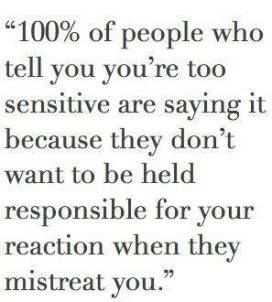
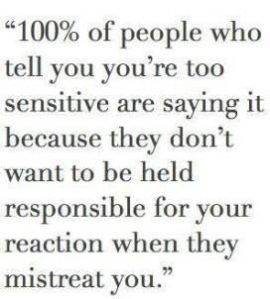
My mother, also a malignant narcissist (of the somatic rather than cerebral type), loves to talk about me as a child. But her “bragging” is never about the things a normal parents would brag to their friends and relatives about. It’s never about how smart I was or what a good student I was, or what a good painter or writer I was, or how kind and generous or big-hearted or animal loving I was. Instead, she tells stories that illustrate the many ways I was “too sensitive” or how much I cried as a little girl. When she talks about me, she always brings up the most embarrassing stories, like how afraid I was of thunderstorms and how I used to run into the closet in terror (I like thunderstorms now) or how “hysterical” (she loves to use that word about me as a child) I used to get when I was frustrated or scared of something (I was afraid of many things but loved a lot of things too).

Whenever she talks about me to people, she makes me sound like there was something wrong with me (there was–I was an Aspie child with attachment issues–but surely there were good things too she could choose to talk about instead of what a pitiful, awkward, oversensitive crybaby I was). She loves to tell everyone the still-embarrassing story of my first period and how happy I was when I shouted the big news from the bathroom, because I had always been “so hysterical” and panic stricken because I was slower to hit puberty than most other girls my age (I was 13 and really not far behind at all–and I never got “hysterical” or “panic stricken” the way she insists).

I no longer hear these stories because I no longer have much contact with her, but I’m sure she still tells her friends and extended family (who she has isolated from me and turned some of them into flying monkeys against me) and they still all have a good laugh about “poor, over-sensitive, ‘hysterical’ little Lauren.” I know they also laugh about what a “loser” I am today, because I’m not wealthy like most of the family is and don’t have a great number of impressive professional accomplishments. Of course, that’s all due to my “poor choices” and not to the fact my self esteem was all but obliterated during childhood and adolescence, not only by my family but also by the bullies I often had to deal with at school.

Fivehundredpoundpeep posted an article today about the way her psychopathic MN mother (who was much worse than mine if that can be believed) and the rest of the family gave her a poem for her college graduation. Instead of it being a sincere congratulations or about how loved she was and how proud of her they were, it was a “humorous” ode to how afraid of crickets she was as a little girl. Notwithstanding the fact this poem had absolutely nothing to do with Peep’s college graduation, its real intention was to embarrass her and make her feel self conscious. It was a poem that could have easily ruined an otherwise joyous occasion.

The navy blue dress.

fat_lady
What my mother saw whenever she looked at me. (Just for the record, I think this big lady is stunning.)

My mother always loved to point out my faults–even imaginary ones she had projected onto me–in public. I’ll never forget the birthday party I had one year as a teenager. My mother had invited several of her friends to the apartment and some of my friends were there too. When it came time to open the gifts, she made sure hers was the first one I opened.

In the fancily wrapped box was a rather conservative, navy blue sleeveless dress. It was a nice dress I suppose, had I been about 40. She made me go try it on and then have me come out into the living room where everyone was sitting to model it. I obeyed because what else could I do, and she scared the living shit out of me.

Now, I was not overweight. At 5’4″, 120-125 lbs was about the right weight for my frame. But my backside was a little on the big side (not Kim Kardashian big, but still pretty round) and my mother was constantly calling attention to it. It made me very self conscious and due to this (as well as my desire to rebel against the way she’d dressed me like a doll when I was younger), I had taken to wearing baggy, masculine clothes that hid my curves. She was convinced I was “fat” and was always threatening to send me away to weight loss camp. As a somatic narcissist, she was obsessed with her own weight, physical appearance, and health. She seemed to judge other people by the way they looked instead of their personal qualities. Almost every day she called attention to how much weight I was putting on, or reminding me not to have seconds because of my “weight issues.” I become incredibly self conscious about my body as a result. It’s a miracle I didn’t develop an eating disorder.

weight-loss

Getting back to the birthday party and my “modeling session” in front of all the guests, after I modeled it, she announced that the dress’s dark color and style was flattering for someone with “Lauren’s little weight problem.”

You could have heard a pin drop in that room. I think everyone was shocked at her callous and embarrassing remarks. As for myself, I was so mortified I ran out of the room crying, which of course was a huge mistake because that gave my mother ammunition to remind everyone once again about how sensitive I was (and she didn’t mean this in a complimentary way). She was always making jokes at my expense and then when I didn’t laugh or if I looked hurt, it was always “Lauren is just being over-sensitive again” or “Lauren has no sense of humor.” I’ve heard this is quite a common accusation narc parents use against the child they have chosen to be their scapegoat. They hate sensitivity and love to turn it into a bad thing because it takes the responsibility for their cruel behavior off of them and puts the blame onto the child.

This is the sort of “flattery” a scapegoated child can get from a parent who is a malignant narcissist. There are times I feel guilty that I don’t feel more love for my mother than I do, but when I think of all the years she demeaned me and put me down, always going out of her way to make me feel small and worthless, I don’t feel so guilty about my ambivalent feelings toward her.

I don’t hate my mother. Instead, I pity her for being so shallow and never having known who her true self might have been. She’s an intelligent woman but you would never know it because she never was interested in ideas or the life of the mind. Her eyes glaze over if you try to engage her in any “deep” topics. She reads pulp novels and fashion magazines, never anything scholarly or educational.

She has now lost her beauty due to age (and too many facelifts) and she is all too aware it. Knowing she has lost her physical beauty–the one thing that gave her an identity of sorts–has turned her bitter and angry in her old age.


Breaking out the flip flops.

11057218_10206719397931415_8305745178542553174_n

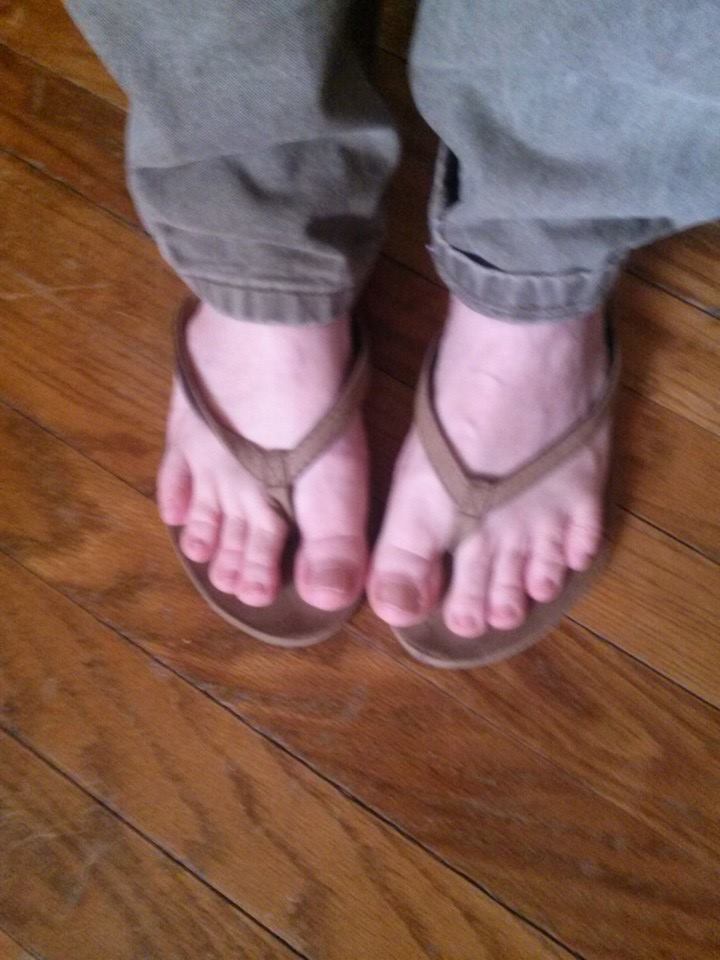
It was so warm today I put these on when I got home. 🙂

The progression of spring: March 15th

I love watching everything come back to life starting around this time of year. I’ve never appreciated these changes so much until this year, however.

Because last Sunday (March 8th) I decided to post a few photos of some trees in my neighborhood that were starting to show the “fall” colors of early spring in their buds and branches before the chlorophyll kicks in (see my post “Winter Into Spring”), I decided to make “The Progression of Spring” a regular weekly feature until things look like summer again, probably around the end of May.

The first photo shows the exact same location as last week but there are a few changes: the grass is a LOT greener than last week (this happened almost overnight), and the trees look fuller and a few are beginning to bloom. The second photo was taken right by my house.

spring_3-15b

spring_3-15

Both these photos make it hard to believe it’s technically still winter.

“Coming out” about my BPD

Hand of a child opening a cupboard door

On November 22, 2014, I wrote an article about my daughter Molly (not her real name), who I suspected of having NPD due to having been used as a flying monkey by her father for many years. I prayed it was “just” BPD.

Last month she was evaluated and her Axis II diagnosis was Borderline Personality Disorder (BPD). While BPD is a Cluster B disorder and shares a number of traits with narcissism, it’s more amenable to treatment because a Borderline does have a conscience and the ability to feel empathy–but their tendency to fly off the handle, their insecurity/neediness, and propensity to engage in self destructive activities that sometimes hurt others masks the fact they really aren’t bad people. My daughter actually has a huge heart and cries when she sees someone suffering or in pain, so it fits that NPD wasn’t her diagnosis. Still, I’m relieved she’s been officially cleared of it.

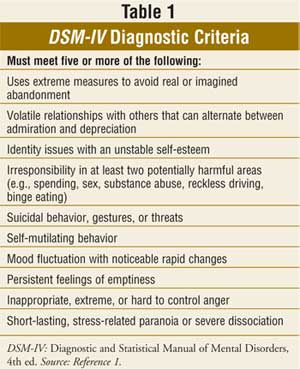
I was diagnosed with BPD myself in 1996. I have been hesitant to call attention to it on this blog or talk about it much, because of its close association with NPD and other “character disorders” like ASPD. At the time I was diagnosed I was in an inpatient psychiatric setting, where I was also diagnosed with Bipolar I (major depression with fewer or no manic episodes), generalized anxiety, PTSD, Avoidant PD (I didn’t know you could have two PD’s at once back then), and substance/alcohol abuse. At the time I was not diagnosed with Aspergers (that was much later, and I was self diagnosed at first).

I definitely had all the traits of a borderline, but in the hospital and in outpatient therapy following my stay, I learned ways to control my BPD traits, such as my tendency to fly off the handle easily, act impulsively without thinking how it would harm others, idealize/devalue people (black or white thinking), abuse drugs and alcohol, and generally coming off as being very self centered and oblivious to the needs of others.

DSM_borderline
Click to enlarge.

For a time back in the early 1980s I even test drove narcissism, but as an essentially empathic person who suffers from a lot of guilt and shame, and has no desire to hurt others, narcissism didn’t work for me, and I am so grateful for that (even though I became a codependent doormat instead).

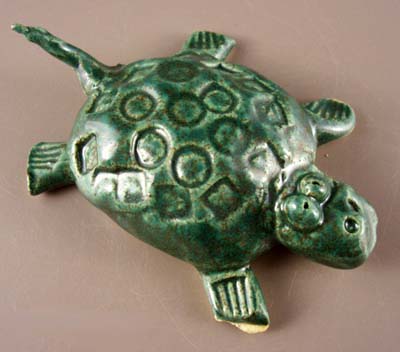
In therapy, I remember a method we were taught called “turtling”–which basically means to imagine yourself as a turtle when you feel yourself about to act/react in Borderline, impulsive, or self destructive ways. Turtling calls for enough insight to recognize your feelings prior to acting on them. You imagine going inside your shell to think about things before you act. I remember in the hospital we made “turtle” totems to keep as reminders to always think before we acted and ask ourselves why we felt the way we did. I still have the little clay turtle I made. I remember also being given a workbook for people with BPD with many helpful exercises and activities to help us recognize and control our behavior. It did help me a lot.

clay_turtle

Today I don’t think I display many BPD traits, but I don’t think I’m cured either. When I’m very depressed, frightened or angry, those BPD traits pop back up like unwanted pimples. I still remember the lessons from my therapy and still look at my little turtle or a picture of a turtle to remind myself to go inside myself and not react until I think things through and process my feelings.

Because this is a blog for survivors of narcissistic abuse and many (if not most) survivors think of narcissists as demons or monsters, I was hesitant to talk about my BPD much, because it’s a Cluster B disorder and is so close to NPD in many ways. The disorders are easily confused with each other. A person with full blown BPD can seem very much like one with NPD, but for the Borderline, the motive behind their unpredictable and sometimes destructive behavior is fear of abandonment and insecurity. For the narc, it’s for obtaining supply. Some people seem to think of people with BPD as almost as bad as narcissists. Some of them are.

So that’s why I’ve been reluctant to talk about this. But again, from Day One I committed to honesty and I hope I won’t be judged too harshly for “coming out” as a person with BPD.

borderline
Borderline personality disorder.

My daughter, I’m happy to say, knows almost as much about narcissism as I do now, and has been reading my blog. She came across the above article where I speculated she might have NPD and she was so worried about that it made her cry. We had a long discussion about that. Since then, she has been improving a lot and says my blog has helped HER! She says she’s proud of me for having the courage to start this blog. And I have to say, I’m just as proud of her. Here’s my article describing how healing and emotional that talk we had was. I think we will both be just fine.

My next article, which I will write later today, will be about how malignant narcissists can transform a good person into an evil one. They can infect you with their illness. That’s another reason why they’re so dangerous.

Do cats feel empathy?

grey_kitty

I don’t care what some religious people say–I believe animals have souls. How can you look into the face of your dog or cat and not just KNOW it’s there?

But this is not a religious or philosophical discussion of whether animals have souls or not. It’s also not about dogs (who definitely have a form of empathy, the way I see it).

This is a little story that shows that cats may have empathy, at least some cats.

A woman whose house I clean (I’ll call her Judy) had a beautiful shorthaired gray cat named Dusty. Dusty was 14 and by the way he moved, you could tell he was getting up there in years.

A month ago, Judy described the way Dusty always sits on her lap when she’s reading or looking out the window. Dusty has given her a lot of comfort since her husband of over 30 years died right around the holidays. Since the day she lost her husband, Dusty has always been right there, sitting on her lap, and sleeping curled up next to her at night.

She told me an incredible story. One day Judy was crying hard because she was missing her husband so much. Dusty came over to her, gently placed his paw on her face, and she looked up to see him gazing at her sadly. She told me Dusty’s eyes looked full of tears. According to scientific evidence, humans are the only known species (except elephants and possibly some apes) able to shed emotional tears. But I’m not so sure. I swear I used to see my dog Daisy get tears in her eyes when she was punished and knew she’d been naughty, and I’ve seen this in other dogs too. But cats? It could be–or maybe Dusty is just a very special cat.

Judy cried into Dusty’s fur for a little while, and Dusty just sat there in her lap while she stroked him. When she was done crying, he looked up at her and then, amazingly, licked the tears from her face.
Dusty felt Judy’s sadness and knew exactly what she needed.

Last week I went back to Judy’s house I noticed Dusty wasn’t there and I asked her about him. She started to tear up and gave me the sad news. Dusty had to be put to sleep because he had developed kidney disease.

I felt awful. I didn’t know what to say, so I just quietly said, “I’m sorry.”
Dusty gave a lot of comfort to Judy in her time of loneliness and grief. Now she must move on.

Dusty certainly seemed to have empathy. I do wonder if intelligent animals like dogs and cats can feel empathy for their loved ones. I think they can and I think this story proves it.

For further reading, here is an interesting article about empathy in animals, that concludes they can feel it. Dogs in particular can be empathic, but it’s been seen in other animals as well, even chickens.

Babycat got back her looks!

I have posted about Babycat before. She’s my daughter’s favorite of our 5 kitties, and is a very affectionate and sweet cat. In my first post about her, I talked about her alopecia and possible skin allergies (probably due to the horrible case of fleas we had last summer). She wasn’t looking quite like herself, and her beautiful mane was gone and her fur was patchy.

Then she went through quite an ordeal when my daughter took her to live with her shortlived psychopathic ex, Paul. He made it very difficult for us to get her back, and placed her life in danger.

Babycat has been back with us for a few months and she looks so pretty again. all her fur has grown back. I also switched her from a diet of all dry food to canned food once a day, and I think that helps too.
Here are some photos I took of her this morning.

babycat4

babycat5

babycat6
That’s Dexter standing there in the doorway. 🙂
One of the coolest things about Babycat (and one of the cutest too) is the fluffy and soft jet black toe tufts between her toes. She doesn’t mind at all when I massage her toe tufts.

Listen to one of my favorite 90s songs.

I posted about this song before in this post about 1990s nostalgia.

I’m posting it again because it’s another song that’s been very inspirational to me in my journey and always reminds me to appreciate the moment, the day I am presently occupying.
Every day can be a great day!

I’m adding this to my page of songs that have inspired me or helped in my healing journey (which is found in the header).

Spam troubles.

spam_blocker

I use Akismet, the spam blocker WordPress offers, and it’s an excellent tool. I get so much spam I don’t know what I’d do without it.

You have the option of setting it up to either automatically delete all spam so you do nothing, or to send it to a special “spam folder” for later review/deletion.

I opted for the second, because sometimes Akismet makes mistakes. I have had legitimate comments wind up in my spam folder, as well as spam that somehow never got flagged as spam and wound up in my regular comments folder waiting to be approved.

Legitimate comments that wind up as “spam” usually contain links–I think the limit is two. If your comment includes more than two links, Akismet thinks it’s spam and I have to manually unspam it. But for some reason, one lady’s comments always go to my spam folder even though they contain no links at all!

It’s a pain having to manually go through my spam messages every day because sometimes there are hundreds, but it would be worse to have legitimate comments automatically deleted so I’ll continue to manually review all spam before I send it to the Trash.