Chronic rage is a trap, not a trophy.

rage2

If we are survivors of narcissistic abuse, we are all at different stages of our recovery. If we are just coming out of a relationship with a narcissist or in the process of going No Contact (which is the best gift we can give ourselves), it’s natural to feel anger and even hatred toward our abusers. Our anger overrides the fear they instilled in us and makes it possible for us to take the actions necessary to disconnect from them.

When I started this blog, I too was extremely angry at my narcissists, particularly my psychopathic ex. As an ACON, I railed on about my parents too, particularly my MN mother. Early posts of mine on this blog have a much more bitter and angry tone than my more recent posts, some of which attempt to understand why my narcissists did what they did to me and about what makes narcissists tick in general. I don’t regret making those early, angry posts, because that’s where I was at emotionally on this recovery journey. I NEEDED to feel that anger and hate. It served a survival purpose. But anger is a survival emotion and is meant to be temporary, not become a psychological and spiritual forever-home.

I am no longer in a situation where I am in close contact with malignant narcissists, and I was finding that holding onto all that rage was turning me bitter. When a person is filled with rage, the body’s cortisone levels rise and blood pressure rises. These are physiological changes that make “fight or flight” possible. But over prolonged periods of time, being in such a physiological state is bad for you and can lead to physical illness.

Besides being unhealthy for the body, holding onto rage way past its expiration date makes it impossible to move forward to a place of real healing. If you feel rage all the time, you simply cannot move forward. It blocks you from opening your heart to all the good things that life can offer. Frankly, I was just becoming bored with it. There had to be something better beyond it–and there is!

I see this unwillingness or inability to let go of chronic rage and hatred in many survivors of narcissistic abuse, especially ACONs who were raised by narcissistic parents. Of course it’s perfectly understandable to feel an almost overwhelming sense of injustice and betrayal when you realize your own parents didn’t love you and in fact probably hated you and set you up to fail in life. It’s understandable to hate the people who were supposed to nurture you and give you the tools you needed to have a happy life but instead attempted to murder your soul. I get it, I really do. I felt that way about my mother for many years.
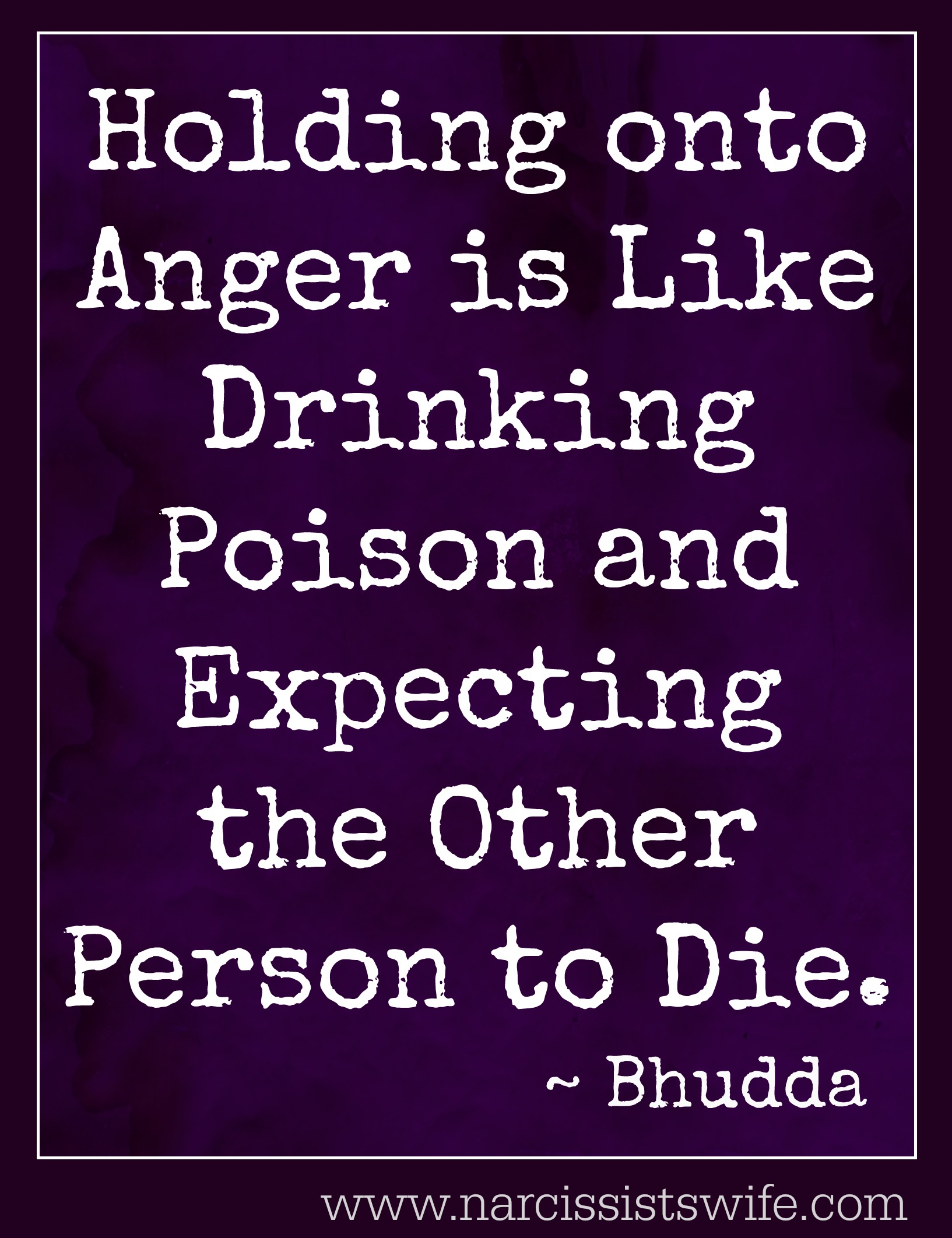
Anger-Bhudda

Some of these chronically angry abuse survivors have embraced a mentality of perpetual victimhood, using their rage as a sort of trophy “proving” how abused they were. They can’t or won’t let go of their rage because it makes them feel vindicated. I remember reading a comment from one angry ACON who said if he/she were to let go of their bitterness and hatred, they would have let their abusers “win.” But this person is wrong. Because paradoxically, remaining stuck in misery, rage and hatred is making it impossible for this person to heal and live a happy life, and isn’t being miserable exactly what their narcs want? Holding onto rage and wallowing in all the ways they victimized us vindicates the narcissist, not the victim. If our rage destroys or kills us (because eventually it can), the narcissists will be throwing a party to celebrate.

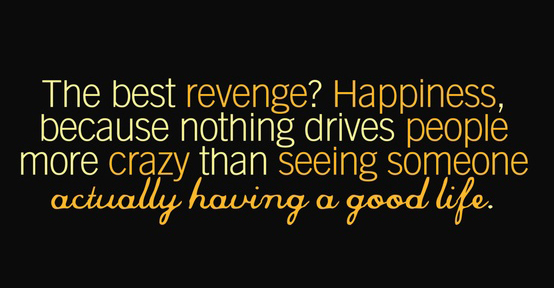
I think the best revenge is to live well. If a victim of abuse moves into a place of peace where healing is possible and can learn to become happy and even successful in life and stop using their victimhood as a kind of trophy, their narcissists will HATE that! Nothing enrages an abuser more than seeing their victims become happy and successful (and not bitter or angry). So how does healing ourselves and letting go of our “trophies” of rage and hate let the narcs win? It doesn’t. In fact, WE win and THEY lose.

But if I were to say this to them (and I have), I would be accused of “victim blaming” and even “narc hugging.” They would say my blog is “dangerous” to abuse survivors (and they have!) They would accuse me of having no empathy for their plight and am in fact taking the side of those who abused them! None of that is true. They just don’t get it. They think that because I’m suggesting they move away from their hatred, this means I’m blaming them for their misery and making excuses for the narcissists who abused them. This is a dangerous and tragic misunderstanding because they can’t even see the way they have been turned against themselves by their own narcissists! They can’t allow themselves to ever feel happy or let go of the bitterness that continues to hold them hostage to their narcissists even after they’ve gone No Contact.

Narcissism is the “gift” that keeps on giving if you let it. You can’t be happy if your default setting is rage. All that rage will eventually destroy your body AND your soul. In fact, living in a state of perpetual rage can turn a person narcissistic themselves. It’s a fact–I have seen it happen and it’s a horrible and scary thing to witness.

monsters-nietzsche

I read a post on Constant Supply: The Narcissist’s Wife about the very same thing I’m talking about here, and their post is what inspired me to write this article. I’d been wanting to write about this, but due to the nasty pile-on I experienced from several ACON bloggers a few weeks back due to an article I posted suggesting we stop hating on all narcissists (the message of which was taken WAY out of context–in no way did I EVER suggest we condone what narcs do or engage with them in any way), I’ve been reluctant to post any more articles even touching on this touchy matter.

Reading this blogger’s article gave me the courage to express my feelings about this apparently controversial issue. I’m prepared to be attacked again, but at least I know what to expect now and can arm myself accordingly. While the blogger I mentioned in the previous paragraph does talk about “forgiving” her narcissist, I wouldn’t go that far myself. I don’t ‘forgive’ my narcissists for the way they held me back all my life and nearly destroyed me, but I no longer choose to hate them either. My attitude about them is that they simply do. not. exist. They are no longer an important part of my life and I refuse to give them any more space in my brain than they deserve. Don’t forget that narcissists crave attention–ANY attention–and that includes negative as well as positive attention. To act as if the narcs don’t even exist is what they hate and fear more than anything in the universe.

Living well and healing yourself without reacting to our narcissists either negatively or positively is the sweetest revenge possible. The narcs will hate you for it.
living_well

We are all at different points of our recovery journey, and those who seem stuck in the “rage” setting (which is normal and necessary early in recovery) and have thereby not been able to move forward to real healing should not pass judgment on those who may be farther along the road and have reached a place where holding onto all that hatred was becoming burdensome and harmful.

I chose to jettison all that negative baggage to make my progress along the rocky road of recovery easier, and I have seen many others do it too, and actually become happy people. I hope and pray eventually ALL abuse survivors can reach a point when they realize holding onto their baggage is self-destructive and is holding them back from true healing–and is keeping them trapped in their own identity as “victims.”

I’m prepared to be disagreed with for posting this, but frankly I don’t care. If you are one of those who choose to hang onto your chronic rage, that’s your choice, and I respect that choice. I have no right to judge you or condemn you for doing so. But I don’t think it’s helpful or healthy. Hopefully, some people who have this problem might be able to take away something positive from this article and be able to extricate themselves from the quicksand of rage and continue to move along the road to recovery.

Please also see my article, Why Unrelenting, Chronic Rage is So Toxic.

The Narcautism spectrum!

So. Why not take the idea described in my last article to even more absurd extremes. Yes, it’s the Narcautism Spectrum!

This invaluable tool for study was tweeted to me by a blogger, Don “Dr.” Depresso, who was inspired to send it to me because of the article I posted earlier tonight.

All kidding aside, the chart does make sense, but I’m trying to figure out how “malignant narcissism” is where it is on the chart. I think it refers to the fact that MN’s have a high level of cognitive (“cold”) empathy–they KNOW how you feel, and use it against you. It looks like the “intersection” would be where non-narcissistic neurotypicals (most people) would be. The Schizoid is a complete droid–no empathy (either warm or cold) and no social skills.

Narcissism and autism–they go together, like rama lamma lamma ka dinga da dinga dong.

grease

Manic Chart: Narcautism Spectrum
Narcautism Spectrum = intersection of narcissism and autism spectra, shown across two dimensions of empathy. Low affective empathy (not caring how people feel) is related to narcissism, while low cognitive empathy (not knowing how people feel) is related to autism. Chart not drawn to scale.

The idea to draw this chart came from reading the article “Do You Think of Narcissism as an Autistic Spectrum Disorder?” in Psychology Today.

Thx 4 reading,
Dr. Depresso

narcautism_spectrum
http://dondepresso.rujic.net/post/116940034025/manic-chart-narcautism-spectrum

Don Depresso, you rock my world!

musician54

What’s up with this crazy idea that narcissism and Aspergers are the same thing?

aspie_narcissist

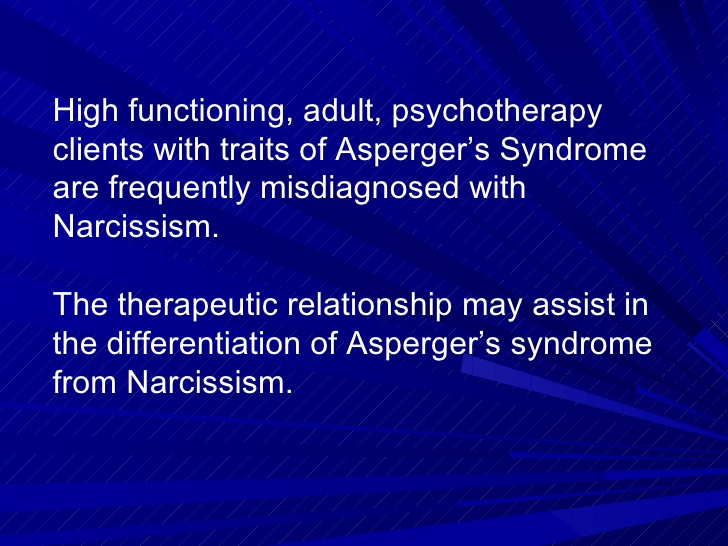
As a person with Aspergers who has been a victim of narcissists all my life, the difference seems pretty clear to me, but to some people, including mental health professionals, high-functioning autism (Aspergers) and narcissism are seen as the same disorder!

A thread on Wrong Planet, a forum for people with autism and Aspergers (a high functioning form of autism) discusses the confusion, with people on both sides of the Aspergers=Narcissism fence. Cited there is an article from Psychology Today, which quotes Sam Vaknin who believes narcissism is an autism spectrum disorder! The British psychiatrist Dr. Khalid A. Mansour concurs.

Clearly, some people don’t understand much about high functioning autism/Aspergers. Yes, I believe it’s possible for a person to be both a narcissist AND on the autism spectrum (an example might be Mark Zuckerberg, creator of Facebook, especially as he was portrayed in the movie “The Social Network“), but they are two vastly different disorders.

Appearances are only skin deep.

aspergers_narcissism

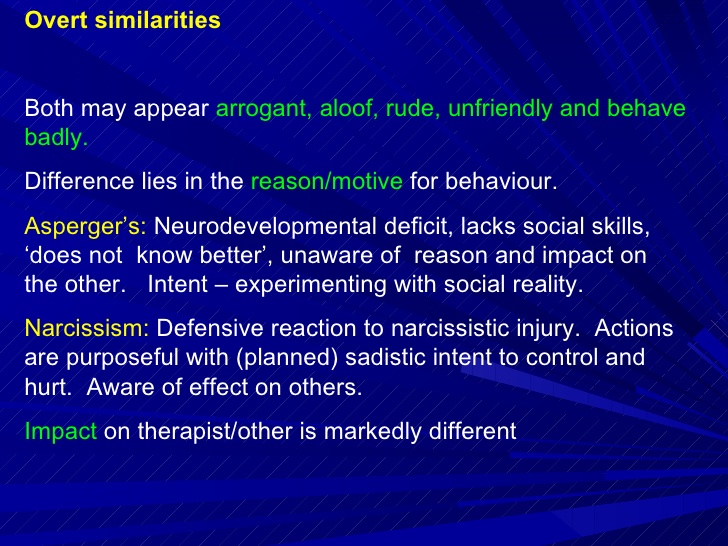
I understand where the confusion comes from. On the surface, the two disorders can appear similar. People on the autism spectrum may seem as if they lack empathy because they do not express their emotions well, which of course includes showing empathy. They also sometimes blurt out inappropriate or hurtful things, not because they mean to, but because they honestly don’t know any better: they have great difficulty reading social cues. They can appear selfish and sometimes get angry or upset when their routines are interrupted or they are forced to pull themselves away from their solitary pursuits to engage with others. They can also violate the boundaries of others. All of these surface behaviors may look a lot like narcissism.

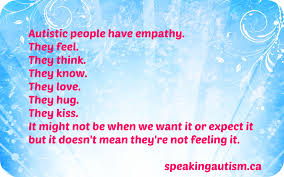
But appearances are only skin deep, and this is where any similarity ends. Lack of empathy seems to be the most commonly mentioned “characteristic” of both Aspies and narcissists. But in actuality, as far as empathy is concerned, a person with autism/Aspergers is the polar opposite of a narcissist. A narcissist cannot feel empathy, but can act as if they do. They are good actors and can fake emotion they do not feel. They can lie well; Aspies cannot lie or lie very badly. People with Aspergers and high functioning autism are great at picking up the emotions of others around them and are even sometimes overwhelmed by other people’s emotions (which sometimes makes them withdraw and that can make them seem like they lack empathy). They can be bad at expressing empathy because of their inability to read social cues or know what to say and do. Therefore, Aspies can feel empathy but often act as if they do not.

autism

Narcissists can say hurtful or damaging things because (a) they don’t care how you feel; or (b) because they want to hurt you. People with autism/Aspergers say hurtful things too sometimes, but it’s never intentional and they do care how you feel. If they are told they said something hurtful, most autists/Aspies are consumed with guilt and will sincerely apologize. They blurt things out because they sometimes do not know it’s not appropriate to do so.

Aspies and autists hate to have their comforting routines interrupted because repetition is something that grounds and relaxes them. A low functioning person with autism will sometimes perform repetitive movements or repeat a phrase over and over. This is how they cope with too much stimuli coming in. If they are interrupted, a low-functioning autist may fly into a rage or have a temper tantrum. Disengaging and switching gears is impossible for them.

At the higher end of the spectrum, an Aspie or high functioning autist may not repeat the same word or action over and over, but they have their hobbies and obsessions which they pursue with a single-minded intensity. They tend to hyper-focus on whatever interests them. If they are interrupted from whatever their mind is focused on, they may snap at you or become very annoyed. They can switch gears if they must but they hate doing it.

A narcissist may also snap or become annoyed, but not because they have difficulty switching gears but because they are just plain selfish and don’t want to do something that might please someone else besides themselves. Think of the narcissistic husband playing a video game. His wife comes into the room and asks for some help opening a stuck window. The husband flies into a rage and tells her he’s busy and to do it herself. It’s not because he’s that engrossed in the game or even cares about it that much, it’s because he doesn’t want to put himself out for his wife. For an Aspie or autist, the game engages all of their senses and their mind is extremely focused. They simply can’t pull away from it.

aspie_misdiagnosis

A person with autism or Aspergers can and do violate the boundaries of others. Again, this is because they can’t read social cues well enough to know when they are violating someone else’s boundaries. A narcissist knows full well when they are violating boundaries, but they simply do not care.

A forum member on Wrong Planet sums up the confusion this way:

To me it’s as absurd as comparing the small narcissistic child recklessly driving a car, to a person trying to cross the street in a wheelchair, and saying they have a lot in common because they both have a set of wheels.

I think mental health professionals and others who believe narcissism and Aspergers are on the same spectrum need to dig a lot deeper before they make such sweeping generalizations. They are not the same disorder at all and are certainly not on the same spectrum. Aspergers/high functioning autism is a neurodevelopmental deficit and really a type of learning disability; narcissism is a moral deficit.

For further reading, please see my article, People with Autism Do Not Lack Empathy!
Also see The Spectrums of Autism and Narcissism.

“Don’t Cry Out Loud”

If you were a survivor of a narcissistic family (or were otherwise a victim of narcissistic abuse), as I was, you were probably told your emotions were not okay. Instead you were told to stuff them and hide the way you really felt from the world. Unfortunately that’s the same philosophy modern society holds in general, and of course narcissists stuff all their feelings all the time, except rage. It can get so bad you reach a point where you tell yourself you’re bad for even having feelings or being upset when someone hurts you.

Several months back, I wrote an article about the way some proponents of positive thinking use it as a way to deny their own true feelings or use it to invalidate the emotions of others. Used this way, positive thinking can become a form of abuse or self-abuse. Of course, there’s nothing wrong with being a positive person, but there’s something very off about someone who walks around wearing a fake smile pasted on all the time and insists we must always do the same. Ironically, these “positive thinking nazis” instill a sense of guilt and shame.

Here’s an article from a Christian-oriented blog that describes how damaging stuffing our emotions is and what we can do about it.

Don’t Cry Out Loud

stuart_smalley
Stuart Smalley.

Back in the early ’90s, “Saturday Night Live” did a mock self-help show called “Daily Affirmation With Stuart Smalley.” Stuart Smalley was a spoof on individuals who were obsessed with 12-step programs and who had become addicted to the act of going to therapy. Smalley ended each show by looking into a mirror and saying, “I’m good enough, I’m smart enough, and doggone it, people like me!” The skit was hilarious because Smalley was the personification of vanity, self-indulgence and narcissism — traits often used to describe our culture.

To counteract our self-absorbed culture, many Christians have gone the opposite direction. Worm Theology is based on Psalm 22:6: “I am a worm, and not a man…” or the line in the Isaac Watts hymn “Alas! and Did My Saviour Bleed,” which says, “Would He devote that sacred head for such a worm as I?” Worm Theology is a belief within Christianity that a feeling of worthlessness and expression of low self-esteem means God is more likely to show mercy and compassion.

Instead of debating the merits of this belief system, I want to focus on what I see as a natural consequence to a low view of self in our Christian culture today: a lack of self-compassion. Sadly, I even noticed this in my own house last night with my 14-year-old daughter.

My family recently relocated from Northwest Arkansas to Colorado Springs. No cross-country move is ever easy, but it’s been especially hard on my daughter Maddy. Last night I lay on the floor of Maddy’s room as she cried about feeling like no one really understands her feelings. It broke my heart to hear how alone she feels — that no one understands what she is going through. Thus, she felt that she has no one to share how she really feels. In the end, she ultimately got tough with herself and expressed that she should be over these feelings, that her feelings were wrong and that she was stupid for getting so emotional.

I so wanted to jump in and correct her, “Your feelings are not stupid!” but I didn’t. I wanted to tell her that God cares about her emotions (which He does), but I refrained. I was tempted to recue her by telling her that I care (which I do), but I stopped myself. What an insensitive father, some might think. I didn’t jump in to rescue my daughter because I want her to learn something that most Christian adults don’t get: Their feelings matter!


Beautiful song with a destructive message.

But sadly, for so many people, their emotions usually don’t matter. I watch time and again, when counseling with people, that they constantly judge, belittle, criticize, demean, minimize and marginalize their emotions. It’s like there’s this Christian belief that we must never wallow in our emotions. It’s like people are afraid they’ll become self-indulgent or vain (like Stuart Smalley) if they have compassion around their feelings. They believe self-criticism is what keeps them in line. Most people have gotten it wrong because our culture says being hard on your self is the way to be. It’s like the ’70s song by Melissa Manchester that had the lyrics, “Don’t cry out loud. Just keep it inside and learn how to hide your feelings.” Listen to some of the messages that are out there about our emotions:

Real men don’t cry.
You’re just being a drama queen.
Play through the pain.
It’s just that time of the month.
You shouldn’t feel that way!
That’s not how you really feel!
Why do you get so emotional?

Both men and women have learned these messages well, and the tragic consequence is that most people have no idea how to validate their own emotions. Since birth, most of us have had our feelings so massively invalidated that we don’t know how to care for our emotions. Instead of valuing our feelings as a great source of information, we stuff them, ignore them or judge them away. Thus, the hope for our relationships is that we will find that perfect someone who will finally care about and validate how we feel. Although we don’t do it, the fantasy is that our friend, significant other or spouse will value our emotions. Great plan, right?

I believe one of the greatest gifts we can give our self is the gift of compassion. When we are upset, frustrated, fearful or hurting (like Maddy) we should be the first one in line to care about how we feel. Why should I expect someone else to care about my heart and emotions if I don’t do that job first and foremost? The question we should be asking ourselves is do we treat our self as well as we treat our friends and family? We are often gentle, kind, compassionate and empathic with others. However, a new research study on self-compassion found that people who find it easy to support and understand others, it turns out, often score surprisingly low on self-compassion tests, berating themselves for negative emotions and perceived failures like being overweight or not exercising. The research suggests that giving us a break and validating our feelings and imperfections may be the first step toward better health. People who score high on tests of self-compassion have less depression and anxiety, and tend to be happier and more optimistic.

The more you seal yourself from your emotions, the more isolated and disconnected you feel. While you can suppress and repress your feelings, you cannot get rid of them. You always bury emotions alive. At some point they will always come out, but then they usually come exploding out like a volcanic eruption. The only way to make peace with our emotions is to value them, face them, explore them, understand them and then take them to the Lord. “Cast all your anxiety on him because he cares for you” (1 Peter 5:7). Suppression takes an incredible amount of energy — energy which is constantly being tapped to maintain a wall of protection around your heart.

The bottom line is that your emotions are incredibly valuable. Not in a way that suggests we should all indulge in emotional bliss, holding hands while singing “Kumbaya” like Stuart Smalley. Give yourself the gift of compassion around your feelings — after all, your emotions are the voice of the heart.

What do you do when you are fearful, frustrated, upset or hurting? Are you good at self-compassion, or do you stuff, ignore and judge your feelings?

Don’t Cry Out Loud

The Perfect Narcissist.

In order to be diagnosed with Narcissistic Personality Disorder (NPD) a person must meet at least five of the nine criteria specified in the DSM. Most narcissists do not meet all 9.

Brian Blackwell, a young man who murdered both his parents and then callously left their bodies behind to take a trip to New York City with his girlfriend, met all 9 criteria. Here is his story.

Extroverts vs. Introverts.

extroverts_chart
Click on chart to enlarge.

I think I fall somewhere between “shy” and “introvert.” The “obnoxious” category seems to refer to most narcissists. Whew, guess that clears me.

Narcissists use political correctness to control.

political_correctness3

Political correctness has never been more in vogue than it is right now, and our society has also never been more narcissistic than it is right now. As Americans, we worship narcissistic celebrities, narcissistic politicans, narcissistic sports stars, and narcissistic CEOs. And the more narcissistic they are, the higher a pedestal we seem to place them on. It’s all about the clothes, the glitz, the glamour, the money, the bling, the presentation, the package, the trappings of success. Even many of the poor don’t vote for the soft-spoken candidate who will increase the minimum wage and food stamps or provide job training; no, instead they vote for the garrulous, rich CEO who bails out the banks instead of the homeless. Why? Because the overbearing, rich CEO is perceived as being on the winning team, and they want to be on the winning team too.

As a nation, we are so deluded. We live in a big dysfunctional family, with the narcissistic “parents” running the government and the corporations, and held up as role models, while the vulnerable–the homeless, the poor, the sick, the old, and the disabled–are held responsible for their own lot, and told they are to blame for it, even if their circumstances are completely beyond their control, which they usually are. The vulnerable in our society are the scapegoat children that everyone has permission to kick when they’re already down, because the narcissistic Powers That Be tell them it’s okay. We live in a seriously empathy-deprived society.

It’s a huge irony that at the same time we worship the material over the spiritual, the rich and callous over the poor and kind, the corporation over the individual, the aggressive and ruthless over the empathetic and cooperative, that we insist on something called “political correctness.” This ties in closely with a concept we call “zero tolerance.” It’s gotten so extreme that if we tap our child on the rear-end in Wal-Mart, we could be charged with child abuse. If a young boy draws a picture of a gun, they could go to jail. Not long ago, there was a case of an autistic ten year old who was accused of making terrorist threats because he wrote “bone thrat” on a wall.

political-correctness

We have euphemisms for everything. We have to watch everything we say for fear of offending some or another group of people. Political correctness, we are told, exists so we don’t hurt someone’s feelings or insult a group of people, whether they be of a certain nationality, race, have a particular disability or mental illness, or sexual preference. But I don’t think that’s the real reason for political correctness. I think the real reason is control. If we have to watch everything we say and walk around on eggshells for fear of offending someone, then we become anxious and fearful. That’s the way the narcissistic Powers That Be want us: scared to death and easily controlled. Zero tolerance is another way they can control us.

The same is true on the personal level too. When I think of most of the narcissists I know, almost every one of them insists on political correctness in some form or another. They make sure you always say the right thing at the right time. They are constantly warning you that you could insult someone if you don’t (as if they care). If I call someone “mentally retarded,” not meaning any harm by it, but just using that phrase because it’s the one I’m used to and the one I was raised with, a narcissist will rudely interrupt and tell me I should have used “cognitively challenged” instead. I can be talking about Cherokee Indians, and the narcissist will interrupt and say I should have said “Cherokee Native Americans,” even though that phrase is awkward as hell. I can’t talk about someone being “fat,” I have to use “larger framed person” or something equally ridiculous-sounding. If it’s a female narcissist with feminist leanings I’m talking to, I can’t use the word “girl” for a young woman without getting chastised, even though “girl” is a lot easier to say than “young woman.” Most everyone knows I don’t say “girl” to diminish the female gender or somehow compare her unfavorably with men, it’s just easier and sounds less awkward. I’m used to it. But the narcissist will interrupt and tell me that I was insulting my own gender my using that word. Hell, you can’t even say “Merry Christmas” anymore. You see, it’s all about the package, the presentation, the image: the narcissist is not listening to the message behind my words or really hearing a word of what I’m saying; they are using my choice of words to diminish and instill in me a sense of shame. They do this to instill fear so they can thereby exert control over you.

politicalcorrectness2

But they don’t practice what they preach. Narcissists aren’t politically correct themselves. Being PC doesn’t apply to them. They talk the talk but don’t walk the walk. They’re allowed to say the most hurtful and insulting and diminishing things to everyone else–you are fat, a cow, a pig, crazy, stupid, insane, a bitch, a whore, and so on. If the target of these slurs objects they are chastised for that: “Take responsibility for your own feelings” or “stop being so sensitive.” They take no responsibility for their own hurtful words and actions.

Narcissists have no empathy so when they tell you to be “PC” to avoid hurting someone, do you think they really care? Of course they don’t. When they tell you to be “PC” what they are really saying is “use the words I tell you to use so I can make you fear my wrath so I can exert control over you like the spineless puppet I have designated you to be.”

What she says…what she really means.

narc_mother_glossary

Here’s a humorous narc-speak dictionary from Daughters of Narcissistic Mothers. This is so true! Of course some of these phrases could be used by any narcissist who has their hooks in you, not just your mother, and can be “translated” the same way.

The Narcissistic Mother Dictionary

1. “I love you.”

Narcissistic-mother-ese:
I want to manipulate you.

You’re showing signs of breaking away and I want to suck you back in.

I’ve heard people say this and it seems to get a good reaction.

I command you to love me.

2. “Don’t ever feel like you HAVE to come see me for my birthday.”

Narcissistic Mother-ese:
If you don’t make the 650 mile pilgrimage to celebrate me, I promise I will do something to make you pay dearly.

3. “Go do something constructive.”

Narcissistic Mother-ese:
Be gone, I have no interest in my own children.

4. “You were an ‘accident.'”

Narcissistic Mother-ese:
You are only here because homicide would get me jail time, and I thought you’d be a better slave, so I didn’t opt for adoption.

5. “You go have yourself a good cry!”

Narcissistic Mother-ese:
I resent your emotions, but at least I can use them to hurt you.

6. “I never said that!”
“I have no idea what you’re talking about!”

Narcissistic Mother-ese:
Damned if I’m going to admit it.

Yes I said that but it doesn’t work in the conversation right now.

I know I said it but it’s so much fun to f*** with your head until you don’t know what is true and you think you really are crazy! Yeah me!!!

7. “It’s been a long time since I talked to you and I just called to see how you were doing.”

Narcissistic Mother-ese:
I am running low on my Narcissistic Supply and need another fix.

I don’t care how you’re doing; I really just want to talk about me.

8. “You just aren’t remembering correctly.”

Narcissistic Mother-ese:
My version of events shows me in a better light, so that’s the official version.

narcissist_mothers_victim

9. “You never do anything for me!”

Narcissistic Mother-ese:
I know you’ve done a lot for me in the past, but that was then and it no longer counts. What have you done for me today?

10. “It’s time this stops.”

Narcissistic Mother-ese:
None of my ploys have worked to pull you back so now I will treat you like a child.

11. “I miss you.”

Narcissistic Mother-ese:
I miss having control over you.

I’m lacking my Narcissistic Supply – please provide it pronto.

12. “Who have you been talking to? Who have you been in therapy with? what book did you read? etc, etc, etc….”

Narcissistic Mother-ese:
I’m not getting the usual emotional response from you and you are too dim-witted to have figured out how to shut me down on your own.

13. “Your brother and sister-in-law took us out to dinner last night. We had such a nice time – I don’t think we have ever been treated that well.”

Narcissistic Mother-ese:
You had better step up your game.

14. “I’m so proud of you”.

Narcissistic Mother-ese:
You have made me feel good and/or *I* feel good because of you.

I can take credit for that accomplishment.

15. “Why are you wasting your time on something so silly and that takes you away from your family?”

Narcissistic Mother-ese:
Why are you wasting your time on something so silly and that takes you away from me?

16. “I want to help you with your kids.”

Narcissistic Mother-ese:
I plan to interfere in the upbringing of your children by spoiling them, disciplining them differently to your way, and ignoring your decisions and wishes regarding them. I will not acknowledge your position and rights as the mother of these children. I may even steal them from you.

17. “Your father and I think …”

Narcissistic Mother-ese:
I think …

18. “So how are you?”

Narcissistic Mother-ese:
I’d better ask, but don’t worry I won’t really be listening. Or as soon as you say a trigger word, which reminds me of something else, I’ll interrupt and be off again!

I’m running out of things to boast to my friends about, so please come up with some accomplishments.

19. “I’m so sorry your beloved 14-year old dog died.”

Narcissistic Mother-ese:
Sigh … I’d better at least mention it, and let you talk for one, maybe two, sentences about your upset and grief, and then I can talk about myself again.

20. “You were very difficult to raise.”
“You were always my problem child.”

Narcissistic Mother-ese:
You resisted my attempts to violate your boundaries, abuse you and humiliate you.

21. “It’s so sad. I feel so sorry for them.”

Narcissistic Mother-ese:
It’s so exciting! I love being this close to tragedies!

22. “I’m sorry.”

Narcissistic Mother-ese:
I will, on rare occasion, say the words but never change my behaviour.

Sigh, I’ll say it if it’ll stop you moaning, but don’t worry, I don’t mean it.

23. “Let’s just let go of the past.”
“Let’s just draw a line under it and get back to normal.”

Narcissistic Mother-ese:
Let’s pretend everything is ok and I’m not a nightmare of a mother so I can continue to torture you and get my Narcissistic Supply.

Let me play my narcissist’s game of never being held accountable for my behaviour.

24. “Your sister-in-law is such a great cook! Simply amazing!”

Narcissistic Mother-ese:
I want to take away any pleasure or pride you have in your own cooking skills.

25. “I just want you to love me.”

Narcissistic Mother-ese:
All I really want is for you give me my Narcissistic Supply.

26. “What’s wrong with you today? What is your problem?”

Narcissistic Mother-ese:
I’m pissed that you are denying me my much needed Narcissistic Supply. Damn you!

27. “Honestly, nothing ever pleases you, does it? Sigh.”

Narcissistic Mother-ese:
You have to let me treat you exactly as I please, without ever complaining.

28. “I was only trying to help!”

Narcissistic Mother-ese:
I demand the freedom to interfere in your life any time I want. That is my right!

joan_crawford

29. “What happened to the nice girl I once knew?”

Narcissistic Mother-ese:
Why are you no longer the easily manipulated and uncomplaining-of-abuse girl I raised you to be?

30. “After all I’ve done for you! You’ve never appreciated me!”

Narcissistic Mother-ese:
Wah wah wah I have violated your boundaries most of your life but even so I resent the hell out of your standing your ground and refusing to allow me to interfere, manipulate and control you.

31. “Why are you treating me so badly? What have I done wrong?”

Narcissistic Mother-ese:
I have the right to interfere in your life and abuse you without any consequences.

32. “Because I’m the Mama, that’s why!”

Narcissistic Mother-ese:
You are really just a child, after all. I’ll never acknowledge that you are now an adult.

33. “I want to give you this because I love you.”

Narcissistic Mother-ese:
It’s really because you will then be beholden to me and this gives me great leverage to milk you for Narcissistic Supply.

34. “You’re always looking for insult.”
“You are so easily offended.”
“I have to walk on eggshells around you.”
“You’re over-sensitive.”

Narcissistic Mother-ese:
I will not be held accountable for my actions and behaviours!

35. “I never want to be a burden to you.”

Narcissistic Mother-ese:
I will over-run your life and suck the life force from you and your children.

36. “Have you lost some weight?”

Narcissistic Mother-ese:
I am so glad that I brought that sticky bun with me on this visit.

37. “You take me the wrong way.”

Narcissistic Mother-ese:
I will invalidate your feelings as I have done your whole life.

38. “You’re such a good cook!”
“You’re such a good mother!”

Narcissistic Mother-ese:
You got that from me!

39. “You don’t respect me!”

Narcissistic Mother-ese:
You won’t let me abuse you.

40. “You won’t forgive me!”

Narcissistic Mother-ese:
You won’t let me away with what I did, nor let me continue to trample all over you.

I expect forgiveness with no apology and no intention of doing differently in future.

41. “You need more time to think about it.”
“Well, have a think about it and get back to me.”

Narcissistic Mother-ese:
I am not accepting your decision/opinion. Keep thinking until you come to the correct conclusion.

42. “I was just joking even if I did say and do that, which I didn’t.”

Narcissistic Mother-ese:
I did say/do it, and I did mean it, but damned if I’m going to acknowledge that.

43. “You just won’t admit when you’re wrong.”

Narcissistic Mother-ese:
You defended yourself from my lies!

44. “Here’s a gift.”

Narcissistic Mother-ese:
Here is something, very likely something I have no more use for, that I am officially giving to you. But it is still mine, and therefore I get to say, forever more, what you do with it. And woebetide you don’t appreciate it enough, over and over.

Narcissists who love animals and their mothers.

dr_evil_cat

I’ve noticed something strange about some narcissists that I’ve never seen mentioned anywhere else. Some narcissists, though lacking empathy for other people, seem to have it in spades for animals. Even some psychopathic malignant narcissists are actually very good with non-human creatures. My ex is one of these. He cried like a baby when our dog, Daisy, died of a massive stroke in early 2013. He was always very kind to her and the cats. He used to be beside himself with worry when one of them got sick. The animals seemed to trust him and even preferred him to me! In spite of being No Contact (really, very low contact) with him, I completely trusted him when I had to recently rehome two cats and a dog, all whom I cared about very much (the pets are now staying with my daughter).

But that’s the only time you would ever see him be genuinely kind. Any “kindness” he showed other people was meant to be either manipulative or to impress.

A commenter on another post, discussing her psychopathic ex-lover who is still actively gaslighting her and generally being psychologically abusive, had this to say about him:

The guy I know loves cats. Many of the photographs he sent me have him in photos with kittens in his hands. The photos make him look very loving. Because you would think that any man that relates to cats and kittens in photos would be loving, gentle and harmless.
[…] His nickname for me was Kitty Kat.

This phenomenon is actually pretty common. It surprises me it’s almost never discussed.
So here is the conclusion I come to about why some narcissists can genuinely feel empathy for animals. The problem isn’t that the narcissist lacks empathy per se, but that they have shut off their capacity to feel empathy for other humans. They may feel it for an animal (or maybe for some, a lesser or non-mammalian animal because dogs and cats may be seen as “too human.”). Here are two surprisingly touching essays Sam Vaknin wrote about his relationship with a goldfish and a snail. The reason some narcissists have normal or even excessive levels of empathy for animals is because animals are “safer” to feel empathy for than other humans, who they have come to hate and devalue due to abuse they suffered at the hands of their parents.

Of course this doesn’t apply to all narcissists or people with an antisocial personality. We have all read of cases of serial killers and other sadistic criminals who spent their childhoods tormenting all living creatures, even the lowly ants and spiders of the world. But only some are like this. Most are probably indifferent to animals.

Mama’s boys.

mother_tattoo

I have also seen a related phenomenon that’s even more strange than the affinity some narcs have with animals. Some psychopaths and malignant narcissists (almost always male) who seem to live to abuse or even torment other people, at the same time seem to genuinely love their own mothers and even feel protective of them. You hear about serial killers who worshipped their mothers (but hate all other women), even though the mothers were almost always abusive to them. The movie “Psycho” illustrates this in Norman Bates’ relationship with his dead mother. Obviously the exceptions these psychopaths make for their mothers are rooted in severe codependency to the point most people see their relationships with them as “sick,” but it’s still an indicator of a more vulnerable, codependent side of themselves they show to no one else.

For both the seriously character disordered who love animals (because they’re safer to love than people) and those who love their mothers (because they have unhealthy codependency with them), it’s as if little piece of their true self somehow remains split off and immune from their otherwise impenetrable wall of narcissism.

Would a narcissist who lost their memory “forget” how to be a narc?

Memory-Loss

I saw this posted on Psychforums in the NPD forum:

I’ve long thought what might happen if an N suffered complete lose of memory. Would he remember he was narcissistic? There is a novel in which this happened. Ursula Brangwen in D H Lawrence’s “The Rainbow” falls gravely ill and recovers as a near as damn it normal person.

I know it’s a weird question but it’s interesting. I’ve read that sometimes people who suffer head trauma (without severe brain damage or damage to only a small part of the brain) that produces complete amnesia occasionally display dramatic personality changes when they awaken–even to the point of seeming to have a completely different type of personality than they did originally. It’s as if they are forced to use a different part of the brain and form a new personality — and new brain connections — from scratch.

In most cases, language and other basic life skills are left intact, but I have read of rare cases where even though the brain is left largely undamaged, the person must literally “grow up” and relearn basic skills. This learning usually happens at a much faster rate than it would for an actual child growing up, because the individual already has the brain of an adult.

Think of the System Restore function on your computer. Your computer gets a virus or has some other serious issue. You set the computer back to an earlier date before the problem started. Yes, you lose important files and other saved information (which can be replaced later) but the problem is gone. It’s the same concept — a traumatic brain injury that results in amnesia could work like “system restore” for a narcissistic brain. You could also erase the hard drive and re-install it. (That would be analogous to a more severe injury where the narcissist would have to start out again as a virtual infant–and receive the sort of nurturing they never got when they were a real infant.)

In either case, is it possible that a narc who suffered complete amnesia and could remember nothing of their past, might “wake up” with the capacity to learn empathy and become a non-narcissist?

If so, it gives new meaning to the idea that the best cure for a narcissist is a kick in the head.