Why family scapegoats become lifelong victims.

If you were scapegoated by your family, two things can happen. You can become a narcissist yourself (narcissism being an elaborate defense mechanism to avoid further hurt and abuse) or you will internalize the early message that you’re worthless, defective and have no rights. I’m going to talk about the second scenario because that’s what this video is about and it’s what happened to me.

As a scapegoat, you are trained to live in fear. You become afraid to defend yourself, express your opinions, or demand fair treatment. This attitude of worthlessness, fear and shame is carried into adult life. Other people can immediately sense you are a pushover and a magnet for abuse, rejection, and bullying, and you become a target for abuse by others well into adult life.

You can become a lifelong victim unless you find a way to break the pattern. It’s difficult to unlearn, because it was established so early in life by the narcissistic parent.

Golden children, who more closely resemble the narcissistic parent or provide them with narcissistic supply (adulation), are more likely than scapegoats to become narcissists themselves. They will often become the aging narcissistic parent’s flying monkeys against the scapegoated adult child, continuing the family pattern of abuse.

Scapegoated children are the family shock absorbers. They are the children who have been assigned to absorb and internalize the narcissistic parents’ rage and to mirror back what has been projected onto them.

scapegoat_child

This is exactly what happened to me. Although because I was an only child I sometimes served the Golden Child role, for the most part I was the scapegoat. My Aspergers and high sensitivity made me even more perfect for that role.

Today I’m the black sheep and the “loser” of my family. I’m never included in family functions because of my poverty and the fact I’m “different” than the rest of them. Although they disapprove of me, I really became exactly what they needed me to be. My becoming a “loser” ensured they would always be winners.

I’ve been disinherited because they believe I’m undeserving, a shameful blemish on the family’s “good name,” further guaranteeing I will always remain poor and therefore powerless–unless I hit the lottery (which I don’t play) or write a book, which I plan to do. The irony of all that is the book may very well be one that exposes the people who raised me for what they really are.

I’ve always been a risk-averse, avoidant underachiever. My dealings with others have suffered because of my fear of the judgment of other people. I was often bullied as a child and teenager.

I married a narcissistic man and continued to live with him and allow his abuse even years after we were divorced.

Although as an adult I’m no longer bullied (and am Very Low Contact with my ex), people still try to push me around, treat me like a mental defective, leave me out of conversations, overlook me for promotions or raises at work, or just talk over or look through me as if I’m not there at all. When I say something, people act like they don’t hear me. It’s very hard for me to make friends or fight back when I need to because I was trained from an early age to be so very afraid of everyone. I’m the proverbial shrinking Violet and wallflower–the kind of woman my mother used to mock for being so “insipid.” I seem to have the opposite of charisma.

For many years I walked around as if ashamed to be alive. I carried shame with me like a heavy burden that affected the way I spoke, the way I related, the way I thought (all the negative self-talk and self-hate), even the way I moved and carried myself. I embarrassed myself.

Since I started writing, I’ve learned that I wasn’t put on earth as an example to others of how not to be (I actually used to believe this), but that God gave me these challenges and this life to teach me valuable things about myself–but that waking up to who God meant for me to be was going to be hard, painful work. I don’t live in self-pity: my narcissists have been my teachers.

One day I dream that people offline will know who I really am. That I have a personality. That I’m funny and intelligent. That I have opinions of my own, and that I am actually good at things. But more than anything else, that I have a finely tuned bullshit detector–a gift unintentionally bequeathed to me by my narcissists, and it’s a gift more priceless than any amount of money I may have inherited.

The following video will explain why what narcissistic parents do to their own offspring is nothing less than soul murder. Unfortunately, the original video I had posted here (which I preferred) was the best one to illustrate the way being scapegoated as a child tends to continue well into adult life, with the grown adult child now unconsciously projecting a “kick me” sort of vibe in relationships, friendships, on the job, and everywhere else, and then they wonder why they continue to feel victimized everywhere they go.     It’s hard to break the pattern, but it can be done.    Here’s a different video with the same general message as the first, although the first one (which was removed) was much better, in my opinion.

Why being a Golden Child isn’t so golden.

golden_cage

I was raised as an only child–the second marriage for both my parents–in a narcissistic family. Only children are in an especially vulnerable position in narcissistic families, because they must serve as all things to one or both parents.

In families with several children, one child (usually the most sensitive) is normally chosen to be the scapegoat–to serve as the family trash can for all the narcissistic rage of the parents. Another child, usually the one most closely resembling the narcissistic parent or the one who best serves the parent’s need for narcissistic supply, may become the Golden Child–in other words, the parent’s favorite. The Scapegoat is always wrong, bad, stupid, crazy, a “problem,” etc. The Golden Child can do no wrong. Misdeeds are overlooked or projected onto the scapegoat. Golden Children may become the narcissistic parent’s flying monkeys and are even sometimes given the “honor” of helping with the abuse against the scapegoat.

I’m reminded of a book I read some years ago called “A Child Called It,” written by Dave Pelzer, who not only recovered from the horrific abuse inflicted on him from ages 4-12 by his psychopathic mother (who had been loving up until that point) and brothers (who served as her “helpers”) once he was removed from the family and placed in a foster home, he actually seemed to become stronger because of it. Today he is an author, motivational speaker, and activist against child abuse. Dave was the scapegoat of his family, and I think his mother turned against him when she realized he was the most sensitive child and probably the most intelligent one too.

But what happens when there is only one child in the family? Well, I think that child becomes both a scapegoat and a Golden Child. If I had grown up with siblings (I have older half-siblings but I wasn’t raised with them), I’m almost certain I would have been the family scapegoat. But my parents (I am including both here, even though I don’t believe my father is a true narcissist, because they worked as a “team”–he was codependent and under my mother’s thrall) needed a Golden Child too who would serve their need to show a child off as a prized possession, a status symbol of sorts: the physical proof of how superior they believed their genes to be compared to everyone else.

Being both scapegoat and Golden Child is even more crazymaking than being just a scapegoat, because you never know where you stand. You constantly feel off balance and anxious, never knowing if something you said or did will be rewarded, ignored, or punished. Life feels chaotic and unformed. You feel like you’re playing a game you never wanted to play, a game where you were never taught the rules, and most of the time you don’t even know WHAT game you’re playing, but you’re expected to play like an expert anyway.

confused_kid

There was no consistency in the way I was disciplined or the things I was disciplined for. I was punished often (for infractions that were usually fairly minor or even nonexistent–I was a “good kid” who was terrified of angering my parents until my teens), but that wasn’t the worst thing. The worst thing was that the next time, I might actually be rewarded for the same infraction!

I was often punished for things I couldn’t help. Acting “spooky” was one of them. As a fearful, sensitive Aspie child, there were times I would retreat inside myself when I was feeling very anxious or when there was too much ‘input’ from the world, and this enraged my MN mother, who would berate or punish me for this behavior. I had no idea what I had done or how to stop being “spooky.” It just happened. I think it enraged her because it was during those times I went “inside” that she could no longer reach me with her abuse.

Even though most of the time I was treated as if my feelings didn’t matter, I was often told how pretty, smart and talented I was. It’s my belief I was no more of any of these things than any other kid my age, but I was told I was “special.” To my young mind, “special” meant “different”–and most children, myself included, dread being different from their peers.

When I was bullied at school, the reason my parents gave me was that the other kids were just jealous because of my “superior” looks, intelligence, or talent. I was also told our genes were better than other people’s, and our family was of a higher socioeconomic status than my friends’ families. I know now this was complete bullshit, but it’s the lie I was being fed while I was growing up. I think these “compliments” were intended to isolate me from my peers even further, so I’d just be “theirs.” I never felt empowered by the “praise” I got, because of the way it made me feel somehow defective and different from other kids. In addition, I felt like I could never live up to the pedestal my parents put me on at those times. I was right–and as an adult, I am looked down on by my family as actually defective.

left_out_kid

The most crazymaking thing of all was the times I’d be complimented and diminished at the same time. One of the most common ways I’d be demeaned was being told how “sensitive” I was. This was never meant to be a compliment; it was meant as a way to let me know how weak I was. Sometimes I was told I couldn’t or shouldn’t do things because of a combination of my “good” and “bad” qualities. For example, when I was about 10, I wanted to join the swim team. I remember exactly what my mother’s reaction was to this. She always liked to tell me what I was thinking, which is another way narcissists make us doubt our own reality and question our instincts. She said:
“You wouldn’t like being on the swim team because you’re too sensitive and you don’t like competition, and you’re too smart to be on a team with those people anyway.”
Huh?
Left-handed compliment much? She always sandwiched her praise this way–between insults like a shit sandwich. This was just another way I was constantly thrown off balance and this led to my becoming an extremely anxious child and later, an extremely anxious adult.

In general, my family treated me like I was a huge burden and didn’t really want me around, so the praise I got as a sometimes Golden Child made no sense and to my sensitive child’s mind, never felt sincere. Even at a very young age, I knew I was being lied to. I knew I wasn’t loved the same way other children were loved, even though my parents constantly mouthed the words like some sort of tic.

Have You Ever Been Hurt by a Psychiatrist? (Guest Post by Alaina Holt-Adams)

WARNING: The following may be triggering for many abuse victims. This article is especially harrowing because a therapist is supposed to help us cope and heal from trauma already endured, not add even more trauma. This is one of the most disturbing stories of an abusive psychiatrist I’ve ever read. And this psychopathic monster’s abuse was inflicted on a child of fifteen.

Unfortunately, malignant narcissists, psychopaths and sociopaths are attracted to the mental health field because it gives them an easy way to take advantage or further abuse the hurting, the vulnerable, the abused, and even children. Be very careful when choosing a therapist. Sometime soon, I’ll be researching this topic in more depth and write an article about red flags to look out for.

The author has been so afraid to come out about this experience she asked me to let her write it as a guest post here rather than put it on her own blog. I am more than happy to do that, because I think her story can help expose the abuses that still go on in the mental health field and it may be of help to others.

Have You Ever Been HURT By A Psychiatrist?
By Alaina Holt-Adams

DrMonster500 (1)
I found this photo through an online memorial site. A single comment is posted under the picture. It says: “This man was my biological father, but I never got to know him. He didn’t want me and I never saw him. RIP.” The comment is signed: “Anonymous.” *

Out of respect for this monster’s adult child, I will refer to him as “Dr. Smith,” which was not his real name.

Handsome fellow, wasn’t he? Tall, dark, and aristocratic. Going by the date printed on this photo (which I cropped off because it was printed next to his name), Dr. Smith was in his late twenties when this picture was taken. He looked basically the same when I knew him twenty years later, with just a touch of gray at his temples to lend an air of wise sophistication, in sync with the leather elbow patches and carved pipes that were all the rage for image-conscious psychiatrists in the late 1960s.

His deep, softly hypnotic voice and sympathetic manner were even more compelling than his Rock Hudson good looks. With soulful gray eyes that seemed to read your innermost thoughts, everything about him said: “I Care Deeply About You And Your Problems.”

But everything about him was a lie.

If anyone ever fit the description of a charming, successful, suave sociopath, this man certainly did. He almost killed me — literally, almost murdered me. I believe he gave me the drug overdose on purpose, because I had told a nurse about the “good doctor” sexually abusing me.

Of course, I wasn’t believed. I was only fifteen and I was a mental patient. Later I was told that many other patients had accused this man of raping them, male patients as well as female. But he kept getting away with it because he was a “great and wonderful doctor” and “above reproach.”

The truth about this evil man finally came to light the last time he raped me, the night when he almost murdered me. A nurse told me later that she had heard me “screaming bloody murder” inside his office. She had tried to open the door but it was locked. She said the doctor told her through the door that I was in a deep hypnotic state, reliving a terrible trauma.

Hypnosis was his specialty. At first, all he used to put me under was a swinging pocket watch. He switched to giving me an injected drug to “enhance” the hypnosis, after I pushed his hands away when he tried to molest me. As the drug took effect, I became too weak to fight him off. That was when he would molest me. Probably because of the drugs he gave me, I have only vague, partial memories of the rapes.

That last time, as he was slowly injecting an amber-colored liquid into the vein inside my left arm, the doctor told me: “If you ever again tell anyone about what I’m doing, I will stick you in a hole so far you will never see the light of day again.”

Suddenly my chest hurt. I mean, it really HURT! I felt like a giant hand was squeezing my heart. I clutched at my chest and told Dr. Smith that my heart was hurting. He let go of the syringe and took my pulse… then he quickly injected all of the remaining drug into my vein.

The pain in my chest seemed to explode at that point. The pain was bigger than I was, bigger than the room we were in, bigger than the whole hospital. When I could not take the pain any longer, I passed out. What the doctor was doing to my body lying spread-eagled on the floor of his office, I could not see or feel.

After it was over, he woke me and told me to go back to the ward. I stood and almost fell over. “Kiss me goodbye,” he commanded. I shook my head no. “You will never be well until you stop repressing what you really want,” he said. That was the last time I saw him.

I felt like I was floating as I walked out of his office and across the street to my ward. I had the eerie sensation of only being in the top half of my body. My legs were moving up and down, taking one step after another, but my feet and legs did not feel like they belonged to me anymore. They were like the legs of a puppet and I was making them move by pulling a string.
As I walked onto the ward, my body crumpled to the floor. I seemed to be floating in the air, looking down at myself. The two nurses on duty rushed out of their office. They knelt beside my body. I was floating above them, looking at the back of their heads. I heard one of them say, “Her lips are blue.” Then the other nurse said, “I can’t find a pulse!”

Suddenly — Z*A*P! — I was back inside my body. I sat up with a jolt. I felt very dizzy.

The nurses helped me to my feet, then walked me back and forth, holding me upright between them. Hours seemed to go by as they walked me from one end of the ward to the other. While we walked, they chatted with each other the way friends do, talking about their lives, their children, and their husbands.

Finally my head cleared enough that I could speak. I asked if I could go to the bathroom. It was hard for me to talk, my mouth felt like it was full of cotton.

One of the nurses helped me into the bathroom, while the other went back to the office. The nurse stood beside me and watched as I pulled down my underwear. It was obvious from the condition of my underpants that I had been raped. She went out into the hall and called the other nurse to come and look at my underwear.

They must have reported everything to the police. Two male detectives in suits came to the hospital the next day and questioned me. I never saw Dr. Smith again. I don’t know if he was arrested or if he lost his license or what happened to him.

I do know that he committed suicide the following year.

To this day, any time I am given an injection by anyone, for any reason — by a dentist, a nurse, male or female, it doesn’t matter who gives me the shot or why I’m getting it or where it is being given — every time, I flash back to this. And I feel like I am being murdered all over again.

Years after this happened, even after I knew he was dead, when I tried to tell this story I would hear Dr. Smith’s hypnotic voice inside my head: “If you ever again tell anyone about what I’m doing, I will stick you in a hole so far you will never see the light of day again.”

Even today, more than four decades after his death, I am struggling with whether or not I should post this. Telling the truth about what this evil man did to me isn’t going to kill me…. right? I am NOT going to end up “in a hole so far that I will never see the light of day again” — am I?

Intellectually, I know that Dr. Smith’s hypnotic threat has no power over me today. But my heart is pounding while I’m writing this.

His anonymous child who never got to know him was lucky. And I am lucky, and deeply grateful, for those two nurses who saved my life.

BUT… unbelievably… several hospital staff people, including another psychiatrist, actually BLAMED ME, a fifteen-year-old in-patient, for “luring the good doctor with my sexuality” and “ruining the life of a wonderful man.”

I will (try to) write about that in a future post.
~ ~ ~

PS: In case anyone reading this wonders why a lonely, love-starved, hormonal 15-year-old would push away the hands of such a handsome man when he was touching me inappropriately, the whole truth is that I was flattered and excited the first time he rubbed my arms and shoulders and lightly ran his hands down the front of my dress when I was under hypnosis. Although Dr. Smith was older than my parents, he looked much younger, and he was also single (divorced) at the time. I was young and needy and naive enough to believe that the Cinderella fairy tale was true — that a handsome charming Prince could fall deeply in love with a poor little nobody, at first sight. When Dr. Smith first touched me, on the outside of my clothes, I actually thought he was doing it because he was falling in love with me. I was so starved for love and attention that I did not try to stop him, then.

But shortly after this, Dr. Smith was gone on vacation and a nurse said he had gotten married and was on his honeymoon. When he returned to work, he brought his beautiful bride to the ward one day. My heart was crushed then, as I realized that he did not love me and he was not planning to “rescue” me from the hell of the mental institution. I was raised in a very strict religion, so sex with a married man was a huge no-no. That was why I pushed his hands away when he tried to touch my genitals, and I told a nurse about what the doctor was doing. But even before he married his second wife, I never in any way “enticed” him. I was very shy and inhibited, and he was my doctor, more than three times my age. The thought of enticing him never occurred to me.

BUT — even if I had allowed him to have sex with me — which I did not — with him being my doctor and me being a mental patient, him in his late forties and me only fifteen years old — under those circumstances, it would have still been RAPE, regardless.

Rape is never about love or even about sex — it is all about evil power and control, as his almost-murder of me ultimately proved.

And psychiatrists and medical doctors and therapists are not gods. Some of them aren’t even human.

alaina_holtadams
The author of this post, Alaina Holt-Adams, has a blog here at WordPress, Surviving Complex PTSD. You must be signed in to view it.

* There was one other photo Alaina sent me to use, but it has a trigger warning and I was unable to open it. I will see what I can do.

Lies my narcissists told me.

lies_honesty

I was told many lies about myself while growing up within my my FOO (family of origin). I have no doubt this had everything to do with my developing Borderline Personality Disorder (BPD), Avoidant Personality Disorder (AvPD), and lifelong severe anxiety.

Why personality disorders are so difficult to cure.
Personality disorders (PD’s) are formed very early in life, normally before the age of six–which is the reason they are so hard to cure. Because the child’s personality is still in a malleable state (meaning it hasn’t fully formed) until around age 5, PD’s become an integral part of the personality and therefore can be extremely difficult to eradicate because they were formed so early the child doesn’t believe it’s a problem, just the way things are. Their misery seems normal to them. They know nothing else.

Of course some PD’s are more amenable to treatment than others, and sufferers of some PD’s, such as Avoidant, Dependent, and sometimes Borderline, are much more likely to seek treatment than those with, say, ASPD (antisocial personality disorder), NPD (narcissism), or Schizoid PD.

Lies I was told growing up.

sensitive_people
As the family Scapegoat (and occasional Golden Child which I’ll explain later in this article), here are some of the lies I was told while I was growing up:

“You’re too sensitive!” — This one’s the Big Kahuna for many of us ACONs, especially if we’re also HSPs (highly sensitive people) by nature. “You’re too sensitive” isn’t so much a lie as it is a verbal twisting of a wonderful gift and ability to see the Truth into something…more resembling an embarrassing defect. Narcissistic lies sometimes appear in the form of turning something good into something shameful and bad, and vice versa.

“You have no sense of humor.” (see above)

“You don’t really want that.” (the parent is telling the child what they really think–this will just cause confusion and identity issues for the child)

“No one wants to know how you feel.” (so we learn to swallow our pain and lock up our emotions)

“You cry too much.” (I had to unlearn this–unfortunately I unlearned it too well and now find it difficult to cry even when I know I need to)

“You don’t know what you’re talking about.” (invalidation and devaluation)

“You know you don’t really think that.” (massive mindfuckery)

“You don’t really want to join the swim team. You know you don’t like competition.” (see above–the real message here being “you are a weak, pathetic, scared loser” to really drive the message home)

“You’re too fat/heavy/even ‘obese’ (I was never more than 120 lbs at 5’4” as a teenager)

“They don’t like you because you’re always so unpleasant to be around.” (Real nice)

“You never smile and it makes your face look unpleasant.” (Fake Narc smiles look even more ‘unpleasant’)

“You read too much.” (okay…would it be better if I snorted Smarties instead or went around throwing rocks through the neighbors’ windows?)

“You know you’re not really good at that.” (whenever I wanted to try something I hadn’t tried before)

“You know you can’t do that, let me do it.” (I wanted to wash the dishes when I was 6)

“You’re too idealistic” (mmmkay…and that’s a bad thing?)

Because I was raised as an only child (I had half-siblings who did not live with us), I also served as the Golden Child. So I also heard lies like,

“They’re just jealous of you because you’re prettier than they are.” (even as a first grader, I knew this was bullshit).

child_on_pedestal

“They’re just jealous of you because you’re smarter than they are.” (my grades weren’t much above average, in spite of having a high IQ)

“You are more talented than they are.”

“We have better genes than those other people.” (Narc genes?)

“You come from a better family than your friends do.” (I call bullshit on that.)

You were the best dancer in the school play.” (I have two left feet and even my dog would have known that was an outrageous lie).

It doesn’t stop when you go No Contact.

flying_monkeys

These are some of the lies told about me by my mother to her sycophants (the ones I’m aware of):

“She’s a loser just like her ex-husband” (Nice.)

“She always makes such terrible choices.” (True, but there were extenuating circumstances at those times she would never understand)

“If only she had done what I told her.” (If only I had had the courage to take a few risks-I am extremely risk-averse)

“If only she had listened to me.” (Again, if only I had taken a few risks and not been so afraid of my own shadow)

“She’s a nothing.” (I guess that’s why people tend to always talk over me, look through me, and never hear what I have to say in group or social settings–where I FEEL like a nothing)

“She was ruined by her ex” (this is a half-truth…but RUINED? Really? Let’s tone down the hyperbole, shall we?)

“She will always be poor.” (and the poor are always with us, right?)

“She will never achieve anything.”

“She can never stick with anything.” (This has actually been true but has gotten a lot better)

“She has mental problems.”

“She is sick in the head.”

Ad nauseam…

Conflicting messages as Scapegoat/Golden Child

ConflictingMessages

Black-and-white thinking (idealizing/devaluing) and outrageous contradictions prevailed in my FOO.
As both Scapegoat and Golden Child, I was receiving two sets of messages (sometimes both at the same time), such as, “You know you don’t really want that, because you’re too sensitive, you hate competition and you are smarter than they are.”
I think you get the idea.

Being raised with conflicting sets of messages and being treated as beloved/rejected child at once was incredibly crazymaking.

Borderline Personality Disorder (or even narcissism!) and Avoidant Personality Disorder (I have both BPD and AvPD) both seem like logical, almost sane reactions to having been raised with two conflicting sets of messages–I was either all bad or all good, with no in between.

And finally, it doesn’t end there. Raised by narcissists, I married one even worse. A narcissist so malignant he made my parents look like empathic light beings in comparison. I was trained to be Supply and was WAY too good a student. If awards were given for Learning How to Be Narcissistic Supply, I would have been valedictorian.

Lies my psychopathic narcissist ex-husband told me.

gaslighting

Following are the lies my malignant narcissist sperm donor told me about myself and also told all the flying monkeys he had succeeded in turning against me (some of who included my friends) over 28 years. This led to my PTSD and clinical depression (where I had to be hospitalized for suicidal ideation). Most of these were projections of his own character flaws onto me.

“You are selfish/self-centered.”

“You always overreact to everything.”

“You never listen to me”

“You don’t care about me or my problems.”

“You have no empathy for me.”

“You are narcissistic.”

“You are becoming just like one of them” (he was referring to Republicans, who he hates)

“Oh, so now you’re living the high life?” (when I took in a roommate while he was homeless)

“You are a b**ch, c*nt, Tw*t, whore.”

“You are stupid.”

“You have no common sense.”

“You’re insane.”

“There’s something wrong with you.”

“You’re just like your family–all crazy.”

…as well as a constant barrage of hateful sarcasm at my expense, whether there were people present or not. If I objected to this mean spirited “humor,” I was told–WHAT ELSE???–I was “too sensitive” or “have no sense of humor.”

Because of having grown up in the midst of a labyrinthine web of lies, and then marrying into another one, I have always valued Truth. That’s why I put a premium on complete honesty, at least in my writing.
Not that I don’t ever lie–we all do, it’s part of the human condition. But I am very aware of dishonesty when I see it and won’t hesitate to call it out in others.

Dr. Phil: Mothers who hate their own children.

In this full episode, Dr. Phil interviews two malignant narcissist mothers who admit they hate their own children (both daughters). For those of us with normal feelings of love for our children, these mothers’ attitudes and behaviors are beyond comprehension.

The first mother is a narcissist who is embarrassed by her daughter’s autism. She whines that “I don’t deserve this.” She wanted to have a “normal” daughter.

The second mother has murderous feelings toward her daughter. She seems quite psychopathic.

ETA: Unfortunately, Youtube removed the video I had posted. The only one I could find only shows the second mother.

He still lives in my dreams: the story of my abortion.

childs_dream

Although I’m becoming Catholic in less than two weeks, my views on abortion are still more or less pro-choice, depending on the situation (such as rape or incest), but this post isn’t about my political or moral stance on abortion. It’s about something much closer to my heart than my views on political/religious issues.

It’s about the abortion I had in July of 1998, right at the 12th week, which is the deadline for first trimester, uncomplicated abortions.

I made my first confession tonight in preparation for receiving the sacraments of Communion and Confirmation at the Easter mass. A few days ago, Father C. told me to think about what I wanted to talk about in confession. Even though my abortion and infidelity while I was still married to my narcissist are in the distant past now, those were the things I wanted most to confess, because lately both have been weighing on my mind heavily, especially the abortion.

I won’t get into the whole sordid and sad story of my marriage to Michael, as it’s already been written about under “My Story” (links to that are in the header), but the short version is he was a terrible malignant narcissist in every way imaginable–abusive mentally, emotionally and sometimes physically (when he was drinking). I was miserable during the last years of our marriage and wasn’t in the best of mental health, having been hospitalized twice during the late 1990s for major depression and PTSD.

Michael had his own sins to contend with (but he probably never will because of his narcissism), but I was no saint either. As a Borderline–and at that time not yet knowing how to monitor and control my borderline tendencies (I learned those tools during my first psychiatric hospitalization in 1996)–I tended to act out in impulsive, dramatic and inadvertently selfish ways.

As my husband’s primary source of narcissistic supply and his #1 victim, I was frantic, scared, frustrated, depressed and lonely, and longed for love, tenderness and physical affection. I didn’t want to hurt anyone, but simply didn’t think of the needs of others, even my own two children, when there was something I wanted to do, like get together with a new lover. In a person with BPD, this self-centeredness is due more to obliviousness to the feelings of others rather than not caring how they feel. Borderlines also have abandonment issues–that is their greatest fear. I was already emotionally abandoned by my narc husband and had always felt abandoned by my parents, and I longed for connection and affection.

I never made a conscious decision to have an affair, but it happened because I didn’t resist the temptation and once underway, I felt that this illicit relationship was something I needed.

At the hotel where I worked as a banquet server, I met a maintenance man there I’ll call Ryan. He was about 8 years younger than me. We got to be friends and talked a lot during our breaks. I felt very comfortable with him. I found out he was also a deejay at the hotel where we both worked. At many of the events and parties I served, Ryan spun discs when it was time for the guests to dance. At those times I’d go up and join him at the booth where he sat, and we’d talk while the guests danced and the music played.

Soon our friendship developed a sexual element. We realized we were both attracted to each other, though love was never part of the equation.

lovers

Michael and I had not had sex (after the love-bombing honeymoon phase of our relationship was over, I would not say what we did together in bed was making love) for several months by the time I met Ryan. About a month after we first met, in April 1998, he invited me to his house and we spent the entire night with our bodies wrapped around each other in his bed. We made love several times that night.

I called my kids and Michael but I didn’t go home that night. I made up some lie about staying with a girlfriend whose mother was ill. I was getting almost as good as Michael with the lying.

Ryan and I continued to see each other when we could. I was already neglecting my children who needed their mother, not to mention leaving them alone with their narc father. I still feel bad about that to this day and try to make it up by being overprotective now when they’re in their 20s and over-protectiveness is the last thing they need or want.

In August or September of that year I realized I’d missed my period and took a home pregnancy test one afternoon when I was home alone. It was positive.

I panicked. It wasn’t my husband’s child because the last time we’d had sex was months before I became pregnant. There was no way I could tell him I was carrying another man’s child–I couldn’t even imagine the abuse that would be inflicted on him or her. He was already abusive to his flesh and blood son, and he had told me he didn’t want any more children. I knew that if I went through with the pregnancy and had the child, both the child and I would be punished and I couldn’t allow that to happen.

I thought about adoption, but again, I would be subject to Michael’s abuse during the pregnancy especially once I started to show, as it would be a constant reminder to him I was pregnant with another man’s child. Then there was the matter of giving up the baby when it was born. I had no idea how I would explain to people how I could give up mine and Michael’s third child (I wouldn’t have dared tell anyone the child was not his).

I couldn’t decide what to do. But I had to make a decision quick–because I was closing in on 11 weeks and after the 12th week, you enter the second trimester and abortion becomes far more dangerous and medically complicated, not to mention more emotionally harrowing.

I have always been iffy about abortion, but at the time, I really didn’t see any other option. So I picked up the phone and called the local abortion clinic. They didn’t have an appointment for a week, which meant I would be right at 12 weeks–almost three months pregnant. I thought my belly was already showing a hint of a bump.

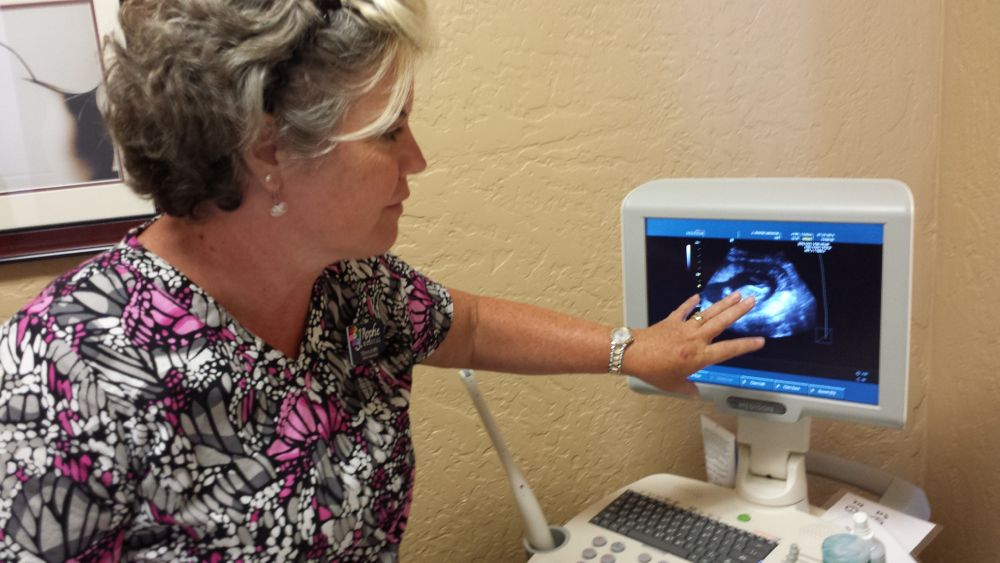
When the day came, I sat down with a nurse who was very friendly and sympathetic. She told me they had to take an ultrasound so they would know the location of the fetus in my womb before going in to remove it.

After the ultrasound, I surprised myself by asking the nurse if I could see it. She looked at me oddly, then shrugged and turned the screen facing me. I saw my baby there, glowing blue-white and floating in what looked like the darkness of space. I could see the little spine through the thin fetal skin, and it was perfect–it looked like a string of tiny seed pearls. I felt hot tears burn behind my eyelids but I didn’t cry. I swallowed hard and asked if she could tell the sex.

ultrasound

She looked at me sympathetically and then looked back at the screen to study it. She told me it was early, but she believed it was male. I just nodded and thought about that. My third child would have been a boy.

“Are you sure you still want to go through with this?” she asked, placing a soft motherly hand on my forearm.
“Yes,” I said.

The procedure itself wasn’t that awful. I was put in a twilight sleep and could barely tell what was going on. It wasn’t until afterwards, when Ryan was driving me home, that I suddenly began to feel sick. I ordered Ryan to pull over, stumbled out of the car, and threw up into the weeds by the side of the road. Even after my stomach emptied itself, I kept dry heaving. I was bleeding (which is normal) and crying from the pain. Ryan was concerned and came over to me (we were still friends after all this). I screamed at him to go away and leave me alone. Total borderline on my part.

At the time, even though I felt guilty about what I did, it didn’t bother me too much. I thought I had done the only thing I could have done. It wasn’t that I didn’t want this child, but that I couldn’t. The only future I could see for him was a childhood filled with abuse and pain meted out by his stepfather, my husband. He would punish me by punishing my child.

I didn’t think terminating that pregnancy bothered me that much, but on some level it must have, because every May, the month he would have been born, I find myself wishing him a happy birthday and telling him how sorry I am. I have done this every year since May of 2000.

In my dreams, I have watched him grow up into the almost 16 year old he would be right now. I always see him at the age he would have been at the time of the dream and he is always running away, fading into dream-space. I keep losing track of him. He always ignores my presence. I’m just some strange woman to him.

Even though this boy grew inside my body for three months, it weighs heavily on my heart that I don’t know him either. I don’t know one thing about him. I don’t know what he likes or dislikes, or what his interests or hobbies are. I don’t know what his personality is like. In my dreams he never talks to me, even if I try to talk to him. He always runs or turns away or dissolves into the dream space. One thing I can tell is that he is hurt and angry. He doesn’t know I’m his mother, but he does know he was inflicted with the ultimate betrayal–not having been allowed to have a life. I know instinctively his hurt and anger is because of this.

gate

There is a metaphysical wall I can never get past. I cannot know his spirit. I know what he looks like, or would have looked like because he always looks like the same person in my dreams. He changes because he’s growing up in dream-time but his face is always the same. He looks like a male version of me when I was young but his hair is much darker than mine.

I never gave him a name. Although I know God has forgiven me, I still regret never having been a mother to this boy, this third child who would have been my two older children’s little brother.

He lives on in my dreams. Maybe one day I will see him in heaven and he will have forgiven me.

Narcissist parents demonize their own children.

narc_mother_littlegirl

Most parents like to tell cute and funny stories about when their children were young, or brag about their school accomplishments or tell sweet stories that show their child in a flattering or loving light. They are also proud of their children when they’re kind and nice to others. That’s the way things should be.

Not for narcissistic parents though.

Narcissists who “erase” memories of their children.
Some narcissistic parents don’t like to talk about their children at all. It’s as if they erase any memories of their offspring’s childhoods and don’t want to be reminded of it. It’s weird. My malignant cerebral narcissist sperm donor used to get bored and annoyed if I talked about the children when they were young. Inexplicably, he couldn’t stand it and became annoyed when I wanted to put some of their baby and early school pictures around the house. (He didn’t like that I displayed our wedding photos either).

He isn’t interested in his son’s accomplishments, even though Ethan (not his real name) has recently been asked to join a semi-professional urban dance crew and has been told he is a shoo-in for the finals at the next dance competition he will be performing in next month. Ethan is seriously considering auditioning for the TV show “So You Think You Can Dance” in about a year or two, when he gets just a little better. He’s completely self taught and has never had a dance lesson and yet people are always impressed by his dancing skills.

I am so proud of my son but his father could care less. I thought maybe it was because he thought dancing was “too gay” (because my son is gay or possibly bisexual–he recently told me he may have some interest in women) but he acts the same way about all of Ethan’s other accomplishments too. It’s almost as if he wants to erase him from his mind, even though he insists he loves him.

And when they “brag” about you, watch out.

too_sensitive

My mother, also a malignant narcissist (of the somatic rather than cerebral type), loves to talk about me as a child. But her “bragging” is never about the things a normal parents would brag to their friends and relatives about. It’s never about how smart I was or what a good student I was, or what a good painter or writer I was, or how kind and generous or big-hearted or animal loving I was. Instead, she tells stories that illustrate the many ways I was “too sensitive” or how much I cried as a little girl. When she talks about me, she always brings up the most embarrassing stories, like how afraid I was of thunderstorms and how I used to run into the closet in terror (I like thunderstorms now) or how “hysterical” (she loves to use that word about me as a child) I used to get when I was frustrated or scared of something (I was afraid of many things but loved a lot of things too).

Whenever she talks about me to people, she makes me sound like there was something wrong with me (there was–I was an Aspie child with attachment issues–but surely there were good things too she could choose to talk about instead of what a pitiful, awkward, oversensitive crybaby I was). She loves to tell everyone the still-embarrassing story of my first period and how happy I was when I shouted the big news from the bathroom, because I had always been “so hysterical” and panic stricken because I was slower to hit puberty than most other girls my age (I was 13 and really not far behind at all–and I never got “hysterical” or “panic stricken” the way she insists).

I no longer hear these stories because I no longer have much contact with her, but I’m sure she still tells her friends and extended family (who she has isolated from me and turned some of them into flying monkeys against me) and they still all have a good laugh about “poor, over-sensitive, ‘hysterical’ little Lauren.” I know they also laugh about what a “loser” I am today, because I’m not wealthy like most of the family is and don’t have a great number of impressive professional accomplishments. Of course, that’s all due to my “poor choices” and not to the fact my self esteem was all but obliterated during childhood and adolescence, not only by my family but also by the bullies I often had to deal with at school.

Fivehundredpoundpeep posted an article today about the way her psychopathic MN mother (who was much worse than mine if that can be believed) and the rest of the family gave her a poem for her college graduation. Instead of it being a sincere congratulations or about how loved she was and how proud of her they were, it was a “humorous” ode to how afraid of crickets she was as a little girl. Notwithstanding the fact this poem had absolutely nothing to do with Peep’s college graduation, its real intention was to embarrass her and make her feel self conscious. It was a poem that could have easily ruined an otherwise joyous occasion.

The navy blue dress.

fat_lady
What my mother saw whenever she looked at me. (Just for the record, I think this big lady is stunning.)

My mother always loved to point out my faults–even imaginary ones she had projected onto me–in public. I’ll never forget the birthday party I had one year as a teenager. My mother had invited several of her friends to the apartment and some of my friends were there too. When it came time to open the gifts, she made sure hers was the first one I opened.

In the fancily wrapped box was a rather conservative, navy blue sleeveless dress. It was a nice dress I suppose, had I been about 40. She made me go try it on and then have me come out into the living room where everyone was sitting to model it. I obeyed because what else could I do, and she scared the living shit out of me.

Now, I was not overweight. At 5’4″, 120-125 lbs was about the right weight for my frame. But my backside was a little on the big side (not Kim Kardashian big, but still pretty round) and my mother was constantly calling attention to it. It made me very self conscious and due to this (as well as my desire to rebel against the way she’d dressed me like a doll when I was younger), I had taken to wearing baggy, masculine clothes that hid my curves. She was convinced I was “fat” and was always threatening to send me away to weight loss camp. As a somatic narcissist, she was obsessed with her own weight, physical appearance, and health. She seemed to judge other people by the way they looked instead of their personal qualities. Almost every day she called attention to how much weight I was putting on, or reminding me not to have seconds because of my “weight issues.” I become incredibly self conscious about my body as a result. It’s a miracle I didn’t develop an eating disorder.

weight-loss

Getting back to the birthday party and my “modeling session” in front of all the guests, after I modeled it, she announced that the dress’s dark color and style was flattering for someone with “Lauren’s little weight problem.”

You could have heard a pin drop in that room. I think everyone was shocked at her callous and embarrassing remarks. As for myself, I was so mortified I ran out of the room crying, which of course was a huge mistake because that gave my mother ammunition to remind everyone once again about how sensitive I was (and she didn’t mean this in a complimentary way). She was always making jokes at my expense and then when I didn’t laugh or if I looked hurt, it was always “Lauren is just being over-sensitive again” or “Lauren has no sense of humor.” I’ve heard this is quite a common accusation narc parents use against the child they have chosen to be their scapegoat. They hate sensitivity and love to turn it into a bad thing because it takes the responsibility for their cruel behavior off of them and puts the blame onto the child.

This is the sort of “flattery” a scapegoated child can get from a parent who is a malignant narcissist. There are times I feel guilty that I don’t feel more love for my mother than I do, but when I think of all the years she demeaned me and put me down, always going out of her way to make me feel small and worthless, I don’t feel so guilty about my ambivalent feelings toward her.

I don’t hate my mother. Instead, I pity her for being so shallow and never having known who her true self might have been. She’s an intelligent woman but you would never know it because she never was interested in ideas or the life of the mind. Her eyes glaze over if you try to engage her in any “deep” topics. She reads pulp novels and fashion magazines, never anything scholarly or educational.

She has now lost her beauty due to age (and too many facelifts) and she is all too aware it. Knowing she has lost her physical beauty–the one thing that gave her an identity of sorts–has turned her bitter and angry in her old age.

Healing Narcissism: “Stephen’s” story.

who_am_I

Disclaimer:
I am not a licensed mental health professional and as such, have done no studies or surveys to find out if the healing regime I am going to propose here would actually work on people with NPD. I have no guarantee such a therapy regime would work, but I feel like I’ve done enough reading about the disorder (NPD in particular), both from Internet material written by a number of people, and books by professionals who specialize in this disorder, to outline a possible therapy regime I feel might give sufferers of NPD (as well as BPD and other disorders of the self, and even PTSD) who want to get better some hope of doing so. This is not a therapy I “made up,” since I am not qualified to do so, much less diagnose anyone with any disorder. Instead, it’s an almagamation of several different therapies–drawn from both from traditional insight psychotherapy and alternative therapies proposed by both people who suffer from this disorder or are involved in alternative medicine and spiritual therapy.

For several months I have been reading everything I can about healing Narcissistic Personality Disorder, because as a victim of narcissistic abuse who has cared for and loved people who are narcissists, I have a vested interest in the possibility there may be hope for some of them. I also think our world would be a much nicer and safer place for the rest of us to live in if narcissists could be cured of their disorder!

In my readings, both on the Internet and from books about healing NPD (I just received a copy of James Masterson’s book “The Emerging Self,” recommended to me by fellow blogger BPDTransformation. Although I have not had time to read the book, I have skimmed through it and can already see that its premise of the narcissist getting in touch with their true self and confronting and releasing long buried true emotions of sadness and fear is not much different than therapies others have proposed for NPD).

Overview of Some NPD Healing and Treatment Techniques.
Following are some brief descriptions of some therapies that have already been proposed to heal or treat the symptoms of people with NPD. A few come from traditional psychotherapy disciplines; others are more alternative/experimental.

Cognitive-Behavioral Training/Therapy (CBT)

CBT

Currently, the only psychiatrically sanctioned and accepted “therapy” for NPD is Cognitive-Behavioral Training (CBT). CBT is useful and may help some narcissists who are not psychopathic or sociopathic learn to control and monitor some of their more antisocial and hurtful behaviors. It has been used with some success on prison inmates who want to change their behaviors, children with ODD and CD (Oppositional Defiant Disorder and Conduct Disorder) such as 6 year old Beth Thomas, who might have become a psychopath had she not had early intervention that intercepted her early antisocial behaviors and murderous impulses toward her brother and parents; as well as other people with NPD or BPD who are insightful and willing enough to want to change the way they act and stop hurting others.

The problem with CBT is it does not really cure the narcissist (unless done at a very early age, like Beth Thomas). CBT doesn’t address traumatic childhood issues or make the narcissist shed their protective masks or get in touch with the painful emotions that caused them to choose narcissism in the first place. It’s really just a band-aid and probably helps those who must deal with the narcissist more than it helps the patient. The narcissist remains a narcissist, and must constantly monitor their behaviors or be reminded by others to do so. The more positive behaviors never become internalized because the narcissist has not really changed from the inside.

That being said, I believe CBT is a valuable component in the type of therapy I am going to describe, but must be undertaken once the NPD patient has gone through a complete emotional catharsis resulting in the release of painful emotions stemming from childhood (or whenever they “chose” to become a narcissist to protect themselves). I’ll describe how this can be used later in this article.

Narcissists adopted their False Self to survive.
I hold to the probably rather unpopular belief that people with NPD started life as Highly Sensitive People (HSPs) or possibly even empaths. Sam Vaknin’s journal entries, especially his descriptions of himself as a sensitive and generous child who cried when his malignant narcissist mother was upset (I cannot find the link for that right now but will look for it), as well as writings and journals by other NPD sufferers on message boards and forums have made this evident.

It came as a surprise to realize this, because Narcissists (as opposed to those suffering from Antisocial Personality Disorder (ASPD), who really are hopeless and can never get better) seem like the most insensitive and cruel people on the planet. But their obnoxious and cruel behaviors stem from the False Self, not their true one, which hasn’t died, but is atrophied and in hiding. The False Self was constructed as an elaborate defense mechanism to protect the child from further hurt and abuse. Most people with NPD were abused or neglected as children, and being more sensitive than other children, the only way they could survive further hurt and abuse was to construct a False Self which makes them appear big and bad when deep inside, they still feel utterly worthless, despised and vulnerable.

crying_is_okay

One thing I noticed in all these therapies (not including CBT, of course), is the key to healing is emotional catharsis. Crying–not the usual narcissistic manipulative crying–but deep and honest crying resulting from releasing past pain, grief and fear–is an absolute necessity if any healing is to occur. Of course crying is key in any psychodynamic therapy for any disorder that can be healed by such means, not just NPD. As the False Self breaks down and the True Self begins to emerge, painful emotions from the past will start to be released. This is necessary and healthy. In fact, healing from NPD (or many other mental disorders) isn’t possible without it.

The following are some techniques used for actually healing NPD rather than treating its symptoms. It’s probably prudent to keep in mind their efficacy is iffy at best. If a narcissist is neither insightful nor willing, none of these therapies will work. Insight and willingness to change are necessary and must come from the narcissist him or herself. As I’ve described before, the willingness to heal is a cost-benefit analysis. If the narcissist has benefited from their narcissism, they may not think going through all the emotional work required to heal from NPD is worth it.

1. Attitudinal Healing.

attitudinal_healing

Tony Brown was a self-professed narcissist who decided he no longer wanted to be one. He believed narcissism stemmed from fear. (He’s probably right). He healed himself using a 12-point (not the same as a 12-step program) technique of replacing thoughts of fear with thoughts of love. He called this therapy Attitudinal Healing. Eventually, he says, these thoughts of love and empathy become internalized and the patient begins to remember past hurtful incidents that turned them into narcissists. During this process, the patient finds themselves crying a lot as they remember things long forgotten and the many ways they have hurt their loved ones. AH is kind of a New Age technique, but his followers swear it has worked for them. Tony Brown died in 2008 of natural causes, just after he was cured. His forum, HealNPD, is no longer active, but you can read his material about AH there and posts by others who were undergoing AH to heal themselves of narcissism.

Criticisms of AH: There’s some skepticism because there have been no studies or empirical evidence for AH’s efficacy, and some believe thought-replacing isn’t deep psychology and therefore can’t access the true self.

2. Reparenting.

remothering

“Reparenting” is a term used by Sam Vaknin for his theories of healing NPD, but the techniques involved are not his alone and partly derive from New Age therapy practices and traditional psychodynamic therapy and Freudian psychoanalysis. Reparenting requires an initial accidental or intentional removal of all the narcissist’s sources of narcissistic supply, which sets into motion a “narcissistic crisis” (a time during which the narcissist’s defenses and masks break down). This is the only time a narcissist may present themselves for treatment. At that point, the therapist offers only “cold empathy,” which means giving the narcissist acknowledgment and the “mirroring” they missed out n as children, without offering approval, criticism, sympathy for the narcissist’s plight, or any other means of narcissistic supply. The narcissist’s frustration and anger with the therapist (transference) for only mirroring them but not giving them the supply they want (validation or approval) results first in rage, then dissolves into emotional catharsis and release of negative and painful emotions associated with childhood abuse and neglect.

Criticisms of Reparenting: Intensive therapy like this could not practically work unless the narcissist was in a closely supervised setting, such a a rehab center or hospital, because of the strong possibility that even a willing narcissist, when undergoing such painful cathartic emotions, would suddenly leave therapy and go back to their old ways. I personally don’t believe such a therapy would work permanently unless combined or followed up with behavioral training such as CBT to retrain the conscience and internalize it into the psyche.

3. M. Scott Peck: “Remothering” and physical touch.

woman-holding-newborn

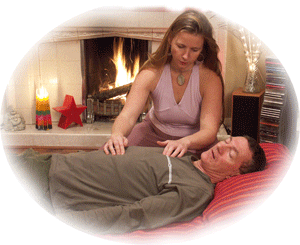
Dr. M. Scott Peck proposed a technique similar to reparenting called “remothering” in his book “People of the Lie: The Hope for Healing Human Evil.” Peck doesn’t go into great detail about re-mothering a patient in his book (and in fact doesn’t discuss treatment much at all outside of exorcism), but in his description of his malignantly narcissistic patient Charlene, he expresses his regret that he had not offered her unconditional love and support (not the same as narcissistic supply) and actually physically holding her as a mother would a baby, instead of allowing her to manipulate and torment him and making him continue to pander to her need for narcissistic supply.

Criticisms of “remothering”/physical holding: Peck’s briefly expressed ideas of holding (in a nonsexual way) and nurturing such a patient as a loving mother would are similar to reparenting, but would require the narcissist to be willing to allow themselves to become vulnerable enough to undergo such a treatment, which is unlikely unless they were undergoing a severe narcissistic crisis and utterly desperate. There’s also the problem that physically touching/holding a patient could lead to accusations of sexual abuse, or sexual feelings between the patient and therapist (which is a common but questionable outcome of transference/countertransference).

The problems of possible legal allegations of sexual abuse/harassment are addressed here, and there is a consent form in some states a patient can fill out to give permission for limited touching in therapy sessions to occur.

4. M. Scott Peck: Exorcism.

exorcism

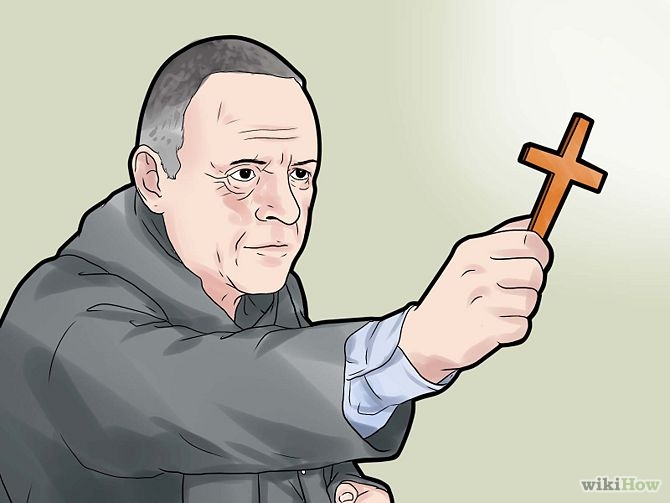
Peck, a born-again Christian, believes that many cases of narcissism are a result of a malignant entity entering the body of the patient, at the time they made the choice to become a narcissist, whether in childhood or later in life.

In some cases, where the possession by an evil entity is not complete (that is, a patient with narcissistic tendencies who is not psychopathic or malignant), a patient can be healed through the centuries old religious rite of exorcism, formerly only sanctioned by the Catholic Church, and even then, was only approved in extreme cases that were approved by the Pope. Peck believes any highly trained psychotherapist with a strong faith in God (not necessarily Christian) and with strong unconditional love for their patient can successfully perform an exorcism on a patient who is willing and properly prepared ahead of time. Peck writes about exorcism in both “People of the Lie” and goes into more detail about the two exorcisms he successfully performed in his later 2005 book, “Glimpses of the Devil.”

Criticisms of Exorcism: Besides its obvious medieval and superstitious connotations, exorcism can be physically, mentally and spiritually dangerous for both the therapist and patient. Death is a possible result. There should be others in the room during the exorcism if additional hands are needed to control the patient undergoing the rite. But because I believe NPD is as much a spiritual disorder as it is a mental one, I don’t think exorcism should be dismissed as a possible healing technique in extreme cases where other therapies have not worked.

5. Dr. James F. Masterson: Psychodynamic Treatment of Narcissistic Disorders of the Self.

closet_narcissism

I have not yet read his book “The Emerging Self” (I just received it in the mail) but from what I have seen, the therapy is psychodynamic (as opposed to merely behavioral) and requires the patient to confront and purge past hurts and undergo catharsis. Narcissism and “closet narcissism” are not the only disorders addressed in his book; he also addresses similar disorders such as BPD which can be healed using the same or similar techniques.

From Wikipedia:

Masterson’s subtypes (exhibitionist and closet)
In 1993, James F. Masterson proposed two categories for pathological narcissism, exhibitionist and closet.[40] Both fail to adequately develop an age- and phase- appropriate self because of defects in the quality of psychological nurturing provided, usually by the mother. The exhibitionist narcissist is the one described in DSM-IV and differs from the closet narcissist in several important ways.

The closet narcissist is more likely to be described as having a deflated, inadequate self-perception and greater awareness of emptiness within. The exhibitionist narcissist would be described as having an inflated, grandiose self-perception with little or no conscious awareness of the emptiness within. Such a person would assume that this condition was normal and that others were just like them. [Masterson’s definition of the closet narcissist sounds more similar to the “covert” narcissist or “inverted” narcissist Sam Vaknin discusses on his website].

The closet narcissist seeks constant approval from others and appears similar to the borderline in the need to please others. The exhibitionist narcissist seeks perfect admiration all the time from others.

Criticism of Masterson’s techniques of treating NPD: I cannot offer any criticisms as I have not read his book yet.

6. Rebirthing.

rebirthing_session
Rebirthing session.

Rebirthing is a controversial New Age healing technique that involves deep and circular breathing. It has been proposed as an alternative healing therapy for people suffering from NPD and many other mental disorders, as well as for healthy individuals who just want to get more in touch with their spiritual nature. It’s supposed to improved the mental, emotional and spiritual well-being of anyone who decides to undergo this process. During the rebirthing process, the patient will begin to remember painful emotional incidents long forgotten and crying is common, but is usually followed up by laughter and a feeling of spiritual lightness.

Criticisms of Rebirthing: The type of deep breathing rebirthing requires can lead to hyperventilation and a feeling of being high (from intaking too much oxygen) or having left the physical body. In some cases it can freak out the patient or even cause a psychotic break, much like hallucinogenic drugs can. Because it’s an experimental, alternative therapy given by practitioners not schooled in traditional psychotherapy, there is no proof of its efficacy or empirical studies showing it actually works.

Skepticism among mental health professionals.
pIt must be said, that most professionals are highly skeptical about the possibility of healing (rather than just treating) NPD and feel that because they suffer less than their victims (or at least seem to), that it’s best to treat the victims for the PTSD, anxiety, depression and other disorders their narcissist has caused in them.

I won’t argue with this, but as I’ve said before, I don’t think narcissists, at least those with both the insight and willingness to change (which probably means the non-malignant, non-psychopathic types) are as hopeless as most mental health experts claim.

So I’m going to propose a healing regime here using a hypothetical man named Stephen that comprises elements of ALL of the above techniques (except rebirthing and exorcism due to their highly controversial nature), as well as CBT for helping to retrain the conscience.

There are a few prerequisites necessary for successful healing of NPD:

1. The narcissist must have insight into their disorder and know they have NPD and see how it damages their minds and souls. But insight alone isn’t enough.

2. The narcissist must have willingness to change from the inside–and that means a willingness to undergo intense emotional pain as their True Self begins to emerge and their masks break down. You can have insight without willingness, but not willingness without insight. Both must be present for change to occur.

3. The narcissist undergoing such treatment would be best treated in a highly supervised, even residential setting such as a hospital or rehab center, where their natural tendency to revert back to their old ways of behaving could be intercepted by trained professionals. This is especially necessary during the crisis period where their painful emotions may cause them to want to quit therapy or leave. They could sign a waiver prior to treatment that such attempts to escape would be intercepted or not allowed, and the patient brought back to treatment.

4. The narcissist is probably already undergoing a narcissistic crisis where they have lost all sources of narcissistic supply or a major one, such as a divorce, loss of a fortune or career, death of someone who was a source of supply, serious illness or incarceration. Having lost their sources of supply, the narcissist is already in a vulnerable state and if they are going to present themselves for help, this will be the time.

I am going to describe a hypothetical successful therapy used on a fictional man named Stephen who is afflicted with mid-spectrum (non-malignant) NPD, using a combination of the above techniques I think could be successful for some narcissists in a highly supervised and intensive setting.

STEPHEN’S STORY

'It's all about YOU, isn't it? YOUR hopes! YOUR wants! YOUR needs!'

1. The Master of the Universe has a Narcissistic Crisis
Stephen was a 45 year old successful owner of a video game company. He was married to a meek and quiet but intelligent woman named Lisa who elected to stay at home with their only child Cayden, who was two years old. They lived in a large home they built themselves, and owned two late model SUVs. Stephen could afford to take his wife and son on several vacations a year. To outsiders, they seemed like the picture perfect family.

But all was not well behind closed doors. Lisa was threatening to leave Stephen and take Cayden with her because of Stephen’s constant gaslighting, projecting, blaming her for their child’s excessive crying and misbehavior, and most recently, isolating Lisa from her former college friends and even her family. Lisa was so depressed that often she had no energy to take care of her son and Cayden was left to his own devices, at first crying and demanding attention from Lisa, but finally withdrawing into a quiet, withdrawn, almost autistic world of his own.

Lisa wanted to take Cayden to a psychiatrist, but when she proposed this to Stephen, he flew into a rage and accused her of calling him a bad father. He told her that if she was a better wife and mother, Cayden wouldn’t be having these problems. He also told her that taking Cayden to a therapist was something only a weak person would do. Cayden would just need to learn to “man up,” in Stephen’s words.

Lisa became increasingly depressed and one day she attempted suicide. Her suicide attempt landed her in the psychiatric ward, and Cayden’s care fell on Stephen’s shoulders. He resented his fatherly duties to Cayden, and grew increasingly impatient with him, and Cayden’s behavior grew worse. He resented having to leave work early or not come in to attend to one of Cayden’s many needs when his nanny would call saying there was a problem with his son.

sad-mother-child

One day Stephen was called into his boss’s office and confronted with his poor attendance and sloppy work. Cayden’s needs were not a concern to management. Stephen was told he needed to find some other arrangements or he would be let go. Stephen panicked. His high flying job and the money he made were the only things in his life he cared about. He hated to admit it, but Cayden was nothing but a burden. He had never really wanted a child at all due to all the responsibility.

Stephen’s problems continued. He had no choice but to keep leaving work when his son was sick or when the daycare center called saying he was throwing another one of his uncontrollable tantrums. Stephens’s boss summoned him once more and let him know he was being let go.

Stephen was devastated and began to feel hate toward his son for making him lose his job. He sat at home dejectedly staring at the TV or computer screen but felt so deflated he didn’t bother looking for another job. Cayden screamed and threw tantrums and Stephen, overwhelmed and filled with resentment for Cayden, began to physically abuse him.

A week later, Lisa was released from the hospital and announced she no longer loved Stephen and was taking Cayden with her to live with her parents. Stephen flew into a narcissistic rage and tied to stop Lisa from leaving, but there was no stopping her. She grabbed Cayden, tossed some of their things hastily in some bags, and took off for her mother’s. It was then she noticed the bruises on Cayden’s body and decided to press child abuse charges against Stephen.

Stephen was eventually arrested for child abuse. Now he had a police record and was probably unemployable, except perhaps in some sort of consulting role. He had lost his wife, his job, his child, and now his freedom.

2. Self-awareness and willingness.

Vector illustration of a man lock up in prison

In prison, Stephen broke down and cried almost nonstop. He made no friends because of his emotional instability. So he spent time by himself, reading books in the prison’s library about mental disorders and realized he suffered from Narcissistic Personality Disorder. At first he tried to deny this to himself, but in his heart he knew it was true. He also realized this disorder was the cause of all his problems. He didn’t feel remorse, exactly, but knew he needed to do something about it. Some of the prison staff took pity on Stephen and referred him to a psychologist who specialized in character disorders, NPD in particular. Stephen was desperate to change his ways and willingly entered an experimental but intensive therapy for people suffering from NPD and other character disorders like BPD. Although the therapist was a licensed Ph.D, he was open to incorporating alternative techniques in his regime.

3. Cold empathy.

narc_rage
Narcissistic rage.

Stephen started therapy (which he was taken to from the prison) with a litany of complaints about his failures and how no one understood him. He talked about his dickhead of a boss, his emotionally disturbed and annoying son, and his bitch of a wife who betrayed him. Stephen took no responsibility for his own contributions to his downfall. He demanded sympathy and often resorted to rages and tears during his sessions. Rather than sympathize or offer emotional support, Stephen’s therapist listened quietly to his litany of woes, only nodding here and there or asking questions when he needed to know something pertinent.

Stephen became enraged by his therapist’s supposed lack of caring and sympathy, and began to attack his therapist, calling him a charlatan, incompetent, and an idiot. He threatened to leave, but knew the prison wouldn’t allow him to quit, so his abuse escalated. Projecting his own feelings of rage and other emotions onto the therapist is a process called transference in the psychiatric community (the opposite, the therapist’s projections of their own emotions onto the patient is called countertransference and is nearly as common).

One day he became so enraged he physically attacked his therapist. An officer was called in to intervene, and together, they got Stephen to calm down. Stephen, defeated, slumped in his chair and dissolved into convulsive sobs. The guard stood nearby, and the therapist quietly waited for Stephen to finish crying.

4. Stephen’s True Self begins to Emerge.

OLYMPUS DIGITAL CAMERA

After several more intense sessions like these, Stephen reluctantly began to talk about his mother, who had abused him as a child. He tearfully discussed the time she held his hands on the hot stove to teach him a lesson, and the time she locked him in a closet for two days for refusal to eat the vegetables on his plate. After releasing him, she made him eat the half-rotted vegetables from a plate on the floor along with the family dogs. Stephen recalled being a good kid until he was about 5 or 6, and always very sensitive to his mother’s moods. He wanted to please her, but never could seem to accomplish that. No matter what he tried–bringing her flowers he picked from the garden (which he’d be punished for), or hugging her (where he’d be pushed away), she always rejected him or punished him. At first he talked about these incidents in a matter of fact, almost flippant way, but after about three more sessions, he began to choke up and tears began to run down his face.

But these tears were different than the ones he used to shed to get his way or manipulate his sources of supply. These tears felt different and came from a deeper, more honest place. He was embarrassed about the uncontrollable crying he could not seem to stop. He tried to hide these tears but his therapist told him they were healing him, melting away his False Self, and to let them come. So reluctantly at first, Stephen did. He told his therapist his “heart hurt” and then he broke into wracking sobs and buried his face in his hands. This was the breakthrough needed to move to the the Reparenting/remothering level.

In some difficult cases where he patient is having trouble bringing emotions to the surface or recalling past events, hypnotherapy could be useful in helping the patient recall painful childhood experiences.

5. Reparenting Stephen’s Lost Self.

inner_child

When Stephen broke down into convulsive sobbing of honest grief for the mother love he never received, and his intense fear of her as a child, his therapist knew he was no longer being manipulated and these were honest emotions from Stephen’s lost self. So the therapist came over and sat down next to him, and encouraged Stephen to cry on his shoulder. If the therapist is an empath, I think that’s an enormous advantage, for I feel that for this type of therapy to have the most success, the therapist must be able to share and feel the patient’s emotions–even if that means crying or grieving along with them. This may also make the patient feel less alone and more comfortable if they are not feeling their emotions alone.

Stephen, in his infantile, vulnerable state, didn’t hesitate to let his tears flow and allow himself to be held, and they stayed like this for a long time. The therapist was careful to stay quiet during this event, and limited himself to stroking Stephen’s head and back and holding him gently as a mother would hold a child. He did not offer judgment, congratulations or explanations. He simply let Stephen release all that pent-up emotion that had been hiding inside him for decades. And felt along with the child that still lived inside Stephen and longed to be able to live a normal, happy life in the world instead of forever hidden away behind Stephen’s disintegrating False Self.

Stephen felt comforted and nurtured. He told his therapist he wished his own parents had held him like that. His father never had either, because he had died in an accident when Stephen was only a baby.

Several more sessions passed like this. In each session Stephen remembered other things that had happened to him as a child. He remembered how sensitive he had been and how he felt hurt by everything. He remembered how much his mother hated it whenever he cried. He remembered being bullied by other kids in school and always running away in terror.

And then he remembered when he had to make a choice. That choice changed the trajectory of his entire life and transformed him from a highly sensitive little boy into a heartless and cold narcissist.

6. The Choice.

monsters-nietzsche

Stephen recalled a dare when he was 8 years old. A group of boys who had bullied him dared him to set a paper bag of dried dog poop on another boy’s rickety wooden front porch and set it on fire. The boys promised him that if he did this, they would no longer bully him and they would be his friend and protect him against any further bullying. Stephen knew that doing this could set the other boy’s house on fire and at first he protested, explaining what could happen. At this point he still had a conscience. But the boys threatened him and told him if he didn’t do it, their bullying would become worse and they would kill his pet rabbit. Stephen believed them, so against his will, he complied.

They set out after dark for the targeted house. The boys watched from the darkened yard as Stephen lit the paper bag on fire and hesitantly walked up the front stairs of the boy’s porch and set it next to a dead potted plant. The deed done, all the boys ran away before anyone saw them. Stephen looked back in time to see the flames ignite the plant, and quickly start to spread over the railings of the rickety old wooden porch. He felt awful and considered going to the police, but he didn’t dare. He went to bed that night and had terrible nightmares.

bullied_child

The targeted boy’s house burned down and he, his baby sister, and his mother had to be taken to the hospital to be treated for smoke inhalation. Soon after, the family moved away, never to be seen again. No charges were pressed because no one knew who the culprit was.

7. Becoming a Narcissist.

narcissism_childhood

To protect himself from his unbearable feelings of guilt and shame, Stephen shut off his painful emotions of guilt and conscience. From then on, the group of bullies accepted him as one of them, and they continued to engage in tormenting other children and even petty crimes.

Almost immediately after the incident, Stephen’s personality changed. Due to his choice to disobey his own conscience, he was becoming evil. He became a narcissist to protect himself from any further painful feelings. It was all just too unbearable.

Stephen confessed not only this, but also the way he used and manipulated others for his own gain, how he obtained his high level job dishonestly by faking qualifications on his resume, the way he emotionally abused his codependent wife who was so easily manipulated, and the abusive way he treated his own son Cayden. He cried and cried some more, and in return, his therapist held him without speaking, only projecting unconditional love and acceptance.

8. Return to Humanity.

freedom_man

Within a few more weeks, Stephen felt like a different person. He had become a model prisoner, and also found God during his incarceration. He was asked by the chaplain to speak to prisoners after the Sunday services, and Stephen used his own story to help and motivate other prisoners. He proved to be a good public speaker, and took courses in psychology and motivational speaking. He started to write a book about his experiences.

Stephen’s therapy was followed up with an intensive outpatient CBT program, to help him internalize the lessons he had learned about right versus wrong, and further help him develop his fledgling conscience.

When finally released from prison after two years, Stephen found employment as a counselor for prisoners and became a professional motivational speaker. He published his book, which became a best seller. He was asked to appear on TV shows and interviews to promote his new book and offered hope to thousands. Soon he met and married a psychology professor and today they have three children, who he loves very much. He would never dream of abusing them. He’s a very involved father and admits he’s happier than he’s ever been.

Recently he met up with his prison therapist, and the therapist noticed Stephen’s eyes and whole face looked different. He looked younger and happier, but more tellingly, in place of the cold, dead eyes of the narcissist he used to be, Stephen’s eyes sparkled with love and joy. His smile, instead of a sneer, was genuine and happy.

“Mom, you make me sick!”

I like watching true crime videos, and I thought this one was interesting. Kathy Bush was the Perfect Mother and an activist for health care reform. She is also a malignant narcissist who deliberately kept her young daughter Jennifer seriously ill in order to garner attention for herself from the medical establishment. This type of child abuse is known as Munchausen syndrome by proxy.

Here’s how Wikipedia defines Munchausen syndrome:

Munchausen syndrome, is a psychiatric factitious disorder wherein those affected feign disease, illness, or psychological trauma to draw attention, sympathy, or reassurance to themselves. It is also sometimes known as hospital addiction syndrome, thick chart syndrome, or hospital hopper syndrome. True Munchausen syndrome fits within the subclass of factitious disorder with predominantly physical signs and symptoms, but they also have a history of recurrent hospitalization, travelling, and dramatic, untrue, and extremely improbable tales of their past experiences.

Munchausen syndrome by proxy is when a parent, usually a mother, deliberately makes their child ill to obtain attention and sympathy. They often become overinvolved in the child’s treatment procedures but their intent to is have control over the treatments so they can be sabotaged. It’s common for a mother who victimizes their child this way to be knowledgeable about medical procedures and protocol. They may have worked in medical professions such as nursing.

For Kathy, not only did she gain attention and plenty of sympathy from her entire community, it also provided a way for her to lobby for health care reform and get noticed by none other than Hilary Clinton, who took sympathy on Kathy and Jennifer as well.

Pay close attention to Kathy during her interviews. Although she tries to feign emotion and manages to even make herself cry, notice how dead looking her eyes are and how her words seem rehearsed, as if she’s reading from a script. Creepy!

By the time she reached her teens, Jennifer decided she wanted nothing to do with the calculating, narcissistic mother who almost killed her.

This comment under the video was interesting:

ASPD and malignant narcissism. Son’s are probably GC (golden child) while daughter is SG (scapegoat child). Reading through transcripts about her and reports from neighbors, friends, family etc, she had a pattern for years. It suggested histrionic behaviors as well as constant gaslighting (rewriting history to be in HER favor). It also suggested she regarded herself as the consummate victim and had a grandiose sense of self importance. Lastly, other things listed also described her as having a pathological desire to be admired and praised and would take credit for other peoples accomplishments. Invalidating others while justifying herself also seemed to on the menu as well.

Grandiose and “vulnerable” narcissists: how do they differ?

beggar_king
Both the beggar and the king could be narcissists with a different M.O.

An interesting article in Psychology Today explains the difference between grandiose (invulnerable) narcissists, and “vulnerable” narcissists. Either can be somatic or cerebral, and either can also be malignant or non-malignant.

The two kinds of narcissists can seem very different on the surface:

Grandiose narcissists can seem emotionally cold, convinced of their achievements or success, and rarely if ever talk about their fears or their problems. They can be very quick to judge others though. On the surface they seem strong and tough. You won’t see them show emotions other than rage or pride, and if they are ever sad or fearful, you will never see that side of them. Like all narcissists, they are never happy,but they can “act” happy if they need to. And like all narcissists, they are incapable of love but may be able to put on a show of “falling in love” to obtain a new source of narcissistic supply.

Grandiose narcissists are the CEOs, politicians, narcissistic celebrities and others who have achieved a high level of success. Those who haven’t achieved success will stop at nothing to rise to the top, even if it means destroying their competition in the process. They are ruthless predators. Our current society glorifies the traits of the grandiose narcissist and doesn’t seem to bemoan what they don’t have: the ability to show emotion and feel love or empathy. Grandiose narcissists don’t care what others think of them.

Vulnerable narcissists, rather than brag about their achievements and never showing their feelings, are given to bouts of self pity, and use emotions (like crying, whining, demanding, or sulking) to manipulate others into giving them what they want. They are less likely to be materially successful, and may be dependent on others for their survival. In fact, they may seem to take a kind of perverse pride in their failures and hard luck. Vulnerable narcissists are the emotional and financial vampires who will suck your funds dry and constantly demand attention and comfort for their many problems. They are high-maintenance “drama queens.” They seem to have no self esteem. They will wear down their sources of supply with their constant demands and mind games. Both types of narcissists will shamelessly manipulate others to have their way.

…narcissists feel emotions like vulnerability, sadness, empathy and compassion in a shallow way, if at all, and cover them up with rage, blame, manipulation and disdain for others. This coping mechanism has a heavy price: they don’t feel secure enough to relax and really feel happiness and joy, although they may have fleeting moments of those emotions.

Vulnerable narcissists tend to swing back and forth between acting superior and feeling hurt; may become self-destructive when their vulnerabilities are pointed out; they may accuse their spouse or significant other of having affairs and being unfaithful, and may resort to spying on their partner or constantly asking for reassurance. They also have a pattern of looking for the “perfect mate” and then demand constant reassurance they are loved and valued.

Grandiose narcissists have much in common with people with Antisocial Personality Disorder; while vulnerable narcissists have more in common with people who have Borderline Personality Disorder. Both of these disorders, along with NPD and Histrionic Personality Disorder, comprise the Cluster B (dramatic) personality disorders in the Diagnostic and Statistical Manual of Mental Disorders (DSM). It can be very difficult to distinguish those who have NPD from those suffering from one of the other two disorders.

Grandiose narcissists were more likely to have been spoiled as children and treated like a little king or queen by their families; vulnerable narcissists are much more likely to have been abused or neglected as children.

But both types are still narcissists, so they still have many things in common under the surface, especially their sense of entitlement, lack of empathy and inability to feel joy.

According to the Psychology Today article, the main difference between vulnerable narcissists and and invulnerable narcissists is in the way they feel:

With their fragile self-esteem, vulnerable narcissists experience helplessness, anxiety, and depression when people don’t treat them as they desire.

They feel shamed and humiliated by negative feedback or when others challenge their superior self-image. They also experience anxiousness, bitterness, dissatisfaction, and disempowerment.

They suffer from many BPD-like emotions, like feelings of emptiness and inadequacy. Others find them sensitive and emotional; preoccupied with fears of rejection and abandonment. They are touchy, quick to be offended, and easily provoked.

A vulnerable narcissist may seem “nice” at first, but their constant demands will wear you out and they will never ask you how your day was or how you feel. They don’t care. Vulnerable narcissists may seem sensitive but they are only sensitive about themselves and how others feel about them; they are oblivious (or just don’t care) if you are suffering or have been hurt or need to talk. They are unable to give love in return for the love they demand. They cannot feel joy or ever appreciate anything. They are vampires who will keep taking until you have nothing left to give–or leave.

Earlier I said both types of narcissists can be somatic or cerebral. My guess is that women, who are more likely to be somatic narcissists, are also more likely to be the “vulnerable” type of narcissist. Acting needy and helpless are traits that are still found more socially acceptable in females than in males. That being said, I’ve known several males of the vulnerable type and some of them are cerebrals. My ex-husband is a great example of a “vulnerable” cerebral narcissist.

I also think it’s possible to be both types at once, swinging back and forth between acting invulnerable/grandiose and vulnerable/helpless. Their dramatic mood swings would probably make this hybrid type of narcissist easily misdiagnosed as suffering from the manic-depressive form of Bipolar Disorder.

A narcissist can also be vulnerable in one area of their life and grandiose in another. The high achieving company president who never seems ruffled and terrifies his underlings may go home to his wife and demand attention and sympathy from her, and sulk or whine if he doesn’t get it. The snobbish, perfectly groomed and physically fit trophy wife may fall apart and act helpless and needy if forced to look for a job.