Why family scapegoats become lifelong victims.

I thought it seemed like a good time to post this again.

luckyotter's avatarLucky Otters Haven

I just watched a video that really hit home for me.

If you were scapegoated by your family, two things can happen. You can become a narcissist yourself (narcissism being an elaborate defense mechanism to avoid further hurt and abuse) or you will internalize the early message that you’re worthless, defective and have no rights. I’m going to talk about the second scenario because that’s what this video is about and it’s what happened to me.

As a scapegoat, you are trained to live in fear. You become afraid to defend yourself, express your opinions, or demand fair treatment. This attitude of worthlessness, fear and shame is carried into adult life. Other people can immediately sense you are a pushover and a magnet for abuse, rejection, and bullying, and you become a target for abuse by others well into adult life.

You can become a lifelong victim unless you find…

View original post 664 more words

When the “fleas” of narcissism go too far.

flea

Narcissists infect people, just like a disease. They have the uncanny ability of turning people into one of them, if you’re around them long enough. That’s why, whenever it’s possible, No Contact is always the best course of action. You cannot change a narcissist or reform them. What will happen instead is you will start to take on narcissistic behaviors yourself.

Narcissists are body-snatchers and will snatch yours and before you know it, you can become one of them. It may be the only personality disorder that’s contagious. Hanging around one too long is very dangerous to your self esteem, your identity, and even your soul. It’s more dangerous than making your escape, even if you don’t have a dollar to your name.

If you were raised by them, you may have a serious problem. Many (though not all) children of narcissists become narcissists or borderlines themselves. Because narcissistic parents can’t form proper bonds with their children and either use them as supply or scapegoats, children of narcissists more likely than not develop severe attachment disorders in childhood, and attachment disorders can easily become NPD, either covert or overt, somatic or cerebral. If the child is a little luckier, she or he can develop BPD, PTSD and many other disorders that make adult life difficult.

flea_cartoon

Overt/classic/grandiose narcissism (the type that best fits the criteria in the current DSM) develops most often in golden children who were held on a pedestal and could do no wrong, or were terribly spoiled, or it can develop in child who served as the parent’s flying monkey. It can also develop in a scapegoat who wants to prove their narcissistic parents wrong. Overt narcissists are usually extroverts who are good at playing the role of a confident, aggressive leader and many of them become financially and professionally successful. They are good at maintaining their mask for as long as they need to.

Covert/vulnerable narcissism usually develops in a scapegoated child who cloaks their grandiosity in an outer cloak of deference and humility, usually as a way to avoid punishment for acting too arrogant or aggressive while growing up. It can also develop in a child who is sometimes a scapegoat and sometimes a golden child. In a way, they are worse off than an overt narcissist, because they have a double layer of masks (false selves): the grandiose mask that hides the undeveloped, atrophied true self within, and a meek, shy and deferent outer mask that cloaks their grandiosity and sense of entitlement. That’s why a covert narcissist can be easily pushed around or bullied by others, but underneath their seemingly nice, quiet image there is seething envy and anger that isn’t expressed unless they are pushed to the limit and explode in rage. Their rage and envy is also likely to come out in passive-aggressive ways. Yet a covert narcissist is easier to cure because (a) they are far more likely to want help; and (b) their lives are miserable and their brand of narcissism isn’t adaptive in today’s world.

BPD is more common in women and some female covert narcissists may actually be diagnosed with BPD, because the disorders can seem so much alike and women aren’t diagnosed with NPD as often as men are. BPD probably develops most often when there is ambiguous attachment to the mother during early childhood and the child is inconsistently rewarded and punished. They learn early that people and life are unpredictable and no one can be trusted. They fear abandonment because they were never able to tell if their parent would love them or push them away. BPD also is correlated with early sexual abuse.

Fleas of narcissism are deadly because with prolonged exposure, they can cause permanent infestation. If it’s at all possible, cut off any narcissist in your life or avoid them as much as possible. Watch for red flags so you can escape before it’s too late because escaping once they “have” you is far more difficult and can be dangerous.

If you were raised by narcissists, no matter how damaged you are, if you didn’t become a narcissist yourself, consider yourself extremely lucky. There is hope for you to eventually be able to live a normal, happy life. If you’re a non-malignant narcissist, there may still be hope but the road to becoming a normal and happy person is going to be longer and harder.

Chicken soup for abuse survivors.

I love Delusion Dispeller’s videos. Follow her on Youtube.
This is so inspiring and I love the butterfly she wears on her cheek.

The reason we became adult victims: what can be done?

victim_badge

The other day, I posted an article about the insidious way narcissistic parents can turn scapegoated children into lifelong victims. I was thinking more about this matter today (because I was feeling victimized at work) and I think I understand what happened to us to make us such easy targets for victimization and why we are usually shown so little respect by others.

First, there is nothing wrong with you. You are not mentally deficient, defective, worthless, or unlikeable. You deserve respect as much as anyone else does. You are no less valuable than anyone else. Later in this article I’ll explain what it is about us that makes us get treated like this so often and why.

There are ways to tell if you’re an adult victim. The abuse we get is more insidious than the treatment we got from our parents or childhood peers. As adults, we are not likely to be straight-up bullied the way children and teenagers are because most adults have learned it’s not okay to bully others. Instead, the abuse manifests as a lack of respect and being treated as if we don’t exist or don’t matter.

How to tell if you’re a victimized adult.

depressed_woman

1. You find it difficult to make friends.

2. You are always overlooked for promotions or raises in the workplace, no matter how well you do your job. You may also be overlooked for special privileges when they are given out. If you ask why, no one ever seems to know how to answer you.

3. People leave you out of social events like parties or casual get-togethers.

4. If you were a scapegoated child (and most likely you were if you are victimized as an adult), even your FOO (family of origin) probably leaves you out of family events such as weddings, births, and reunions. You were probably disowned or written out of the will. You are the “black sheep” of your narcissistic family.

5. People talk over you or act like you are not there.

6. If you speak, people act like they didn’t hear you or ignore what you just said.

7. You are treated like a piece of furniture. People tend to physically push you aside, invade your personal space, or act like you are in the way. In a small group of people, they may shift their positions so you become shunted to the side or back so you don’t have a place in the circle. It isn’t really hostile; it’s as if they literally don’t see you.

8. People tend to treat you in a condescending manner, as if you are mentally defective.

9. People like to “mess” with you or make jokes at your expense.

10. In a work environment, even your co-workers may be more critical of you than they would be with others–even if your work is fine. You may notice people try to boss you around who have no real right to.

11. People may treat you as if you annoy them.

It is not your imagination that you are treated this way. You are not just being paranoid or over-sensitive (though people will tell you this). You really are being treated like this, and it’s because as children, we were trained that we were nothing and that we did not matter. We internalize these messages and carry an attitude of being undeserving of fair treatment into adulthood. People treat us the way we regard ourselves. If we think we are nothing, we will be treated like we are nothing, even by non-narcissists.

How being an adult victim can further damage us.

sad_and_lonely

Being scapegoated by narcissistic parents is child abuse, and is thoroughly evil. It can destroy a person for a lifetime. The victimization we continue to get as adults is also very damaging, and exacerbates our already dismal self esteem. Here are the ways being a victimized adult can make you feel.

1. You feel like you have no place in the world.

2. You feel unloved by everyone.

3. You believe you have no value.

4. You feel isolated and apart from the normal world.

5. You fear you may actually be stupid, incompetent or annoying.

6. You are prone to deep depressions and extreme anxiety, especially when having to deal with other people.

7. You feel envious of others for being treated with more respect than you are.

8. You feel envious of others for having loving families who care about them.

9. You feel envious of others for having friends and an active social life.

10. You feel like you are constantly having to apologize.

11. You feel like life is unfair and the world is a hostile and unfriendly place.

12. In many situations you feel like you’re on the outside looking in.

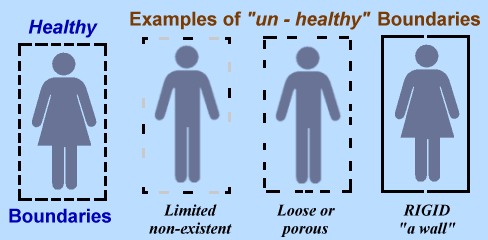
It comes down to boundaries. As adult victims, we don’t have any, or have very weak boundaries. We never established boundaries when we were young because we were (1) never trained to do so; and (2) because our early boundaries were constantly being violated.

People can sense when a person has very weak or non-existent boundaries. That’s why we continue to attract narcissists as friends, lovers and spouses. Narcissists know easy prey when they see it.

Why personal boundaries are so important.

do_not_cross

Even among non-narcissistic people people, we are seen as prey because we appear to lack boundaries. Even near-strangers are constantly stepping over the line and treating us with disrespect, even if their behavior isn’t outright abusive. It’s as if most people have an invisible line drawn around them that must not be crossed. People “see” this line–or sense it–and will respect it. But if you never established boundaries or they were destroyed by your narcissistic family, there is no invisible line drawn around you, and people will constantly step over it, because they believe it’s okay for them to do so.

The solution seems easy enough–just establish some boundaries and tell people when they are violating them. But this is much easier said than done. Most of us have such low self esteem we are terrified of letting others know it is not okay to treat you this way. We are terrified of being criticized or told we are just being “too sensitive” or paranoid. We see other people standing up to those who violate their boundaries without repercussions, but we fear that if WE do it, we will be attacked or criticized, because we were trained to believe this.

unhealthy_boundaries

The sad news is that it isn’t incorrect to believe you will be attacked or criticized or told you are overreacting if you try to stand up for yourself. That’s because people don’t like change. If people have become used to you as a mousy, fearful person with no personal boundaries, they are not going to like it much should you suddenly point out that you have some. But it doesn’t mean you are worthless and it also doesn’t mean you must forever continue to submit to this kind of treatment.

In any group, there is usually one scapegoated (or disrespected) person, and that person is the one who is seen as having the weakest boundaries (and is probably also the most sensitive, which is why we were chosen by our families to be scapegoats in the first place). Unfortunately the human condition dictates that even for normal (non-narcissistic) people, there is going to be a pecking order. This system can be observed in most animals and even some birds, like chickens. People–and animals–feel more comfortable when there is one person around they can pile on. If you suddenly announce they may not pile on you anymore, they are not going to be happy about it and will probably take out their frustration on you. It isn’t fair, but it seems to be in our human nature.

Can anything be done?

boundaries_quote

Yes, but it may be necessary for you to start over in a new place or a new job if this is happening to you. You will need to make it clear from the very beginning that you are to be treated with respect. This means the very first time you observe one of the above behaviors directed toward you, you must nip that in the bud and let the person know it is not okay to treat you like this. Doing this will be one of the hardest things you will ever have to do, because we are so afraid to speak up for ourselves. But if we have not been established yet as a victim or at the bottom of the pecking order, letting others know (nicely, of course) that we will not tolerate this sort of behavior should help. Once your boundaries are made clear to others, you will be treated more like a human being and less like a worthless piece of furniture.

If you cannot start over (and many of us can’t, because our lifetime problems with boundaries and self esteem have made it impossible for us to be able to earn the kind of living that would enable us to move elsewhere or leave a job), then you will need to go ahead and try to speak up for yourself anyway, and risk the fallout. If you find this impossible to do, then you will need to find a support system or a group that does not know you the way you are. You can join a church group, attend group therapy, or take a class. Or you can find supportive people online. For those of us who are introverted, like myself, this may be the most effective way to have a voice and be treated the way you want to be treated: like a human being worthy of respect.

my_personal_area

Keep telling yourself every day that you are not worthless or defective, because you are not. There is nothing wrong with you! Your only problem is that the family that raised you did not respect or love you the way they should have–not because you aren’t deserving of love or respect because every child is–but because as narcissists, they could not. You served a role for them as the family scapegoat.

A good therapist–or keeping a journal or a blog–can be a good way to help you deal with your past, the family that destroyed your sense of self esteem and boundaries, and help you overcome your fears and begin to act more like a person who is to be treated like everyone else.

You are worth it.

Why family scapegoats become lifelong victims.

If you were scapegoated by your family, two things can happen. You can become a narcissist yourself (narcissism being an elaborate defense mechanism to avoid further hurt and abuse) or you will internalize the early message that you’re worthless, defective and have no rights. I’m going to talk about the second scenario because that’s what this video is about and it’s what happened to me.

As a scapegoat, you are trained to live in fear. You become afraid to defend yourself, express your opinions, or demand fair treatment. This attitude of worthlessness, fear and shame is carried into adult life. Other people can immediately sense you are a pushover and a magnet for abuse, rejection, and bullying, and you become a target for abuse by others well into adult life.

You can become a lifelong victim unless you find a way to break the pattern. It’s difficult to unlearn, because it was established so early in life by the narcissistic parent.

Golden children, who more closely resemble the narcissistic parent or provide them with narcissistic supply (adulation), are more likely than scapegoats to become narcissists themselves. They will often become the aging narcissistic parent’s flying monkeys against the scapegoated adult child, continuing the family pattern of abuse.

Scapegoated children are the family shock absorbers. They are the children who have been assigned to absorb and internalize the narcissistic parents’ rage and to mirror back what has been projected onto them.

scapegoat_child

This is exactly what happened to me. Although because I was an only child I sometimes served the Golden Child role, for the most part I was the scapegoat. My Aspergers and high sensitivity made me even more perfect for that role.

Today I’m the black sheep and the “loser” of my family. I’m never included in family functions because of my poverty and the fact I’m “different” than the rest of them. Although they disapprove of me, I really became exactly what they needed me to be. My becoming a “loser” ensured they would always be winners.

I’ve been disinherited because they believe I’m undeserving, a shameful blemish on the family’s “good name,” further guaranteeing I will always remain poor and therefore powerless–unless I hit the lottery (which I don’t play) or write a book, which I plan to do. The irony of all that is the book may very well be one that exposes the people who raised me for what they really are.

I’ve always been a risk-averse, avoidant underachiever. My dealings with others have suffered because of my fear of the judgment of other people. I was often bullied as a child and teenager.

I married a narcissistic man and continued to live with him and allow his abuse even years after we were divorced.

Although as an adult I’m no longer bullied (and am Very Low Contact with my ex), people still try to push me around, treat me like a mental defective, leave me out of conversations, overlook me for promotions or raises at work, or just talk over or look through me as if I’m not there at all. When I say something, people act like they don’t hear me. It’s very hard for me to make friends or fight back when I need to because I was trained from an early age to be so very afraid of everyone. I’m the proverbial shrinking Violet and wallflower–the kind of woman my mother used to mock for being so “insipid.” I seem to have the opposite of charisma.

For many years I walked around as if ashamed to be alive. I carried shame with me like a heavy burden that affected the way I spoke, the way I related, the way I thought (all the negative self-talk and self-hate), even the way I moved and carried myself. I embarrassed myself.

Since I started writing, I’ve learned that I wasn’t put on earth as an example to others of how not to be (I actually used to believe this), but that God gave me these challenges and this life to teach me valuable things about myself–but that waking up to who God meant for me to be was going to be hard, painful work. I don’t live in self-pity: my narcissists have been my teachers.

One day I dream that people offline will know who I really am. That I have a personality. That I’m funny and intelligent. That I have opinions of my own, and that I am actually good at things. But more than anything else, that I have a finely tuned bullshit detector–a gift unintentionally bequeathed to me by my narcissists, and it’s a gift more priceless than any amount of money I may have inherited.

The following video will explain why what narcissistic parents do to their own offspring is nothing less than soul murder. Unfortunately, the original video I had posted here (which I preferred) was the best one to illustrate the way being scapegoated as a child tends to continue well into adult life, with the grown adult child now unconsciously projecting a “kick me” sort of vibe in relationships, friendships, on the job, and everywhere else, and then they wonder why they continue to feel victimized everywhere they go.     It’s hard to break the pattern, but it can be done.    Here’s a different video with the same general message as the first, although the first one (which was removed) was much better, in my opinion.

What a narcissistic parent sounds like.

Here are two Youtube videos that graphically show exactly how a mother with a bad case of NPD (malignant narcissism) operates. These videos are entertaining in a scary and disturbing way, like watching a train wreck.

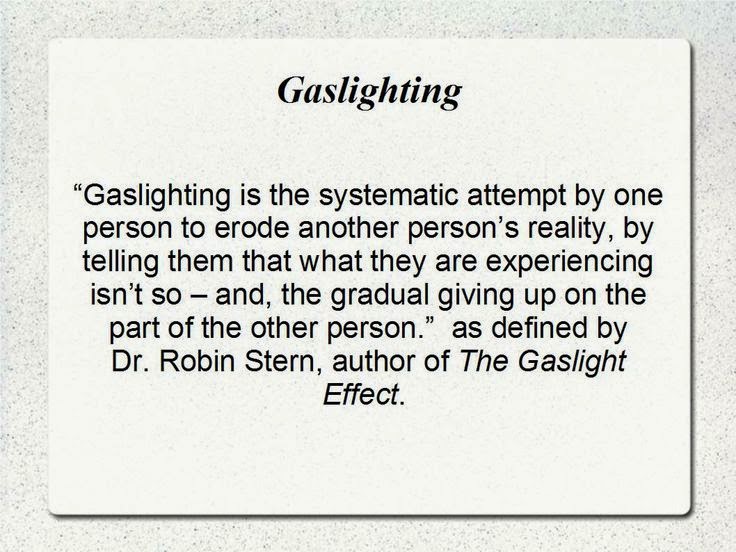
Pay close attention to what the mother says–she uses every trick in the narcissist’s book of tricks: blame, insults, changing the subject, interrupting, raging, mocking, “talking over”, gaslighting, projecting, invading boundaries, not taking responsibility, showing no empathy, and just about every other “tool” the narcissist uses to get their own way or avoid taking responsibility for their behavior and actions. Notice how childish the overall effect is–the mother sounds like a four year old having a temper tantrum.

The daughter who made the videos is trying hard to get her mother to listen, but her words seem to fall on deaf ears. She might as well be talking to a wall, for all the good it does.

Lies my narcissists told me.

lies_honesty

I was told many lies about myself while growing up within my my FOO (family of origin). I have no doubt this had everything to do with my developing Borderline Personality Disorder (BPD), Avoidant Personality Disorder (AvPD), and lifelong severe anxiety.

Why personality disorders are so difficult to cure.
Personality disorders (PD’s) are formed very early in life, normally before the age of six–which is the reason they are so hard to cure. Because the child’s personality is still in a malleable state (meaning it hasn’t fully formed) until around age 5, PD’s become an integral part of the personality and therefore can be extremely difficult to eradicate because they were formed so early the child doesn’t believe it’s a problem, just the way things are. Their misery seems normal to them. They know nothing else.

Of course some PD’s are more amenable to treatment than others, and sufferers of some PD’s, such as Avoidant, Dependent, and sometimes Borderline, are much more likely to seek treatment than those with, say, ASPD (antisocial personality disorder), NPD (narcissism), or Schizoid PD.

Lies I was told growing up.

sensitive_people
As the family Scapegoat (and occasional Golden Child which I’ll explain later in this article), here are some of the lies I was told while I was growing up:

“You’re too sensitive!” — This one’s the Big Kahuna for many of us ACONs, especially if we’re also HSPs (highly sensitive people) by nature. “You’re too sensitive” isn’t so much a lie as it is a verbal twisting of a wonderful gift and ability to see the Truth into something…more resembling an embarrassing defect. Narcissistic lies sometimes appear in the form of turning something good into something shameful and bad, and vice versa.

“You have no sense of humor.” (see above)

“You don’t really want that.” (the parent is telling the child what they really think–this will just cause confusion and identity issues for the child)

“No one wants to know how you feel.” (so we learn to swallow our pain and lock up our emotions)

“You cry too much.” (I had to unlearn this–unfortunately I unlearned it too well and now find it difficult to cry even when I know I need to)

“You don’t know what you’re talking about.” (invalidation and devaluation)

“You know you don’t really think that.” (massive mindfuckery)

“You don’t really want to join the swim team. You know you don’t like competition.” (see above–the real message here being “you are a weak, pathetic, scared loser” to really drive the message home)

“You’re too fat/heavy/even ‘obese’ (I was never more than 120 lbs at 5’4” as a teenager)

“They don’t like you because you’re always so unpleasant to be around.” (Real nice)

“You never smile and it makes your face look unpleasant.” (Fake Narc smiles look even more ‘unpleasant’)

“You read too much.” (okay…would it be better if I snorted Smarties instead or went around throwing rocks through the neighbors’ windows?)

“You know you’re not really good at that.” (whenever I wanted to try something I hadn’t tried before)

“You know you can’t do that, let me do it.” (I wanted to wash the dishes when I was 6)

“You’re too idealistic” (mmmkay…and that’s a bad thing?)

Because I was raised as an only child (I had half-siblings who did not live with us), I also served as the Golden Child. So I also heard lies like,

“They’re just jealous of you because you’re prettier than they are.” (even as a first grader, I knew this was bullshit).

child_on_pedestal

“They’re just jealous of you because you’re smarter than they are.” (my grades weren’t much above average, in spite of having a high IQ)

“You are more talented than they are.”

“We have better genes than those other people.” (Narc genes?)

“You come from a better family than your friends do.” (I call bullshit on that.)

You were the best dancer in the school play.” (I have two left feet and even my dog would have known that was an outrageous lie).

It doesn’t stop when you go No Contact.

flying_monkeys

These are some of the lies told about me by my mother to her sycophants (the ones I’m aware of):

“She’s a loser just like her ex-husband” (Nice.)

“She always makes such terrible choices.” (True, but there were extenuating circumstances at those times she would never understand)

“If only she had done what I told her.” (If only I had had the courage to take a few risks-I am extremely risk-averse)

“If only she had listened to me.” (Again, if only I had taken a few risks and not been so afraid of my own shadow)

“She’s a nothing.” (I guess that’s why people tend to always talk over me, look through me, and never hear what I have to say in group or social settings–where I FEEL like a nothing)

“She was ruined by her ex” (this is a half-truth…but RUINED? Really? Let’s tone down the hyperbole, shall we?)

“She will always be poor.” (and the poor are always with us, right?)

“She will never achieve anything.”

“She can never stick with anything.” (This has actually been true but has gotten a lot better)

“She has mental problems.”

“She is sick in the head.”

Ad nauseam…

Conflicting messages as Scapegoat/Golden Child

ConflictingMessages

Black-and-white thinking (idealizing/devaluing) and outrageous contradictions prevailed in my FOO.
As both Scapegoat and Golden Child, I was receiving two sets of messages (sometimes both at the same time), such as, “You know you don’t really want that, because you’re too sensitive, you hate competition and you are smarter than they are.”
I think you get the idea.

Being raised with conflicting sets of messages and being treated as beloved/rejected child at once was incredibly crazymaking.

Borderline Personality Disorder (or even narcissism!) and Avoidant Personality Disorder (I have both BPD and AvPD) both seem like logical, almost sane reactions to having been raised with two conflicting sets of messages–I was either all bad or all good, with no in between.

And finally, it doesn’t end there. Raised by narcissists, I married one even worse. A narcissist so malignant he made my parents look like empathic light beings in comparison. I was trained to be Supply and was WAY too good a student. If awards were given for Learning How to Be Narcissistic Supply, I would have been valedictorian.

Lies my psychopathic narcissist ex-husband told me.

gaslighting

Following are the lies my malignant narcissist sperm donor told me about myself and also told all the flying monkeys he had succeeded in turning against me (some of who included my friends) over 28 years. This led to my PTSD and clinical depression (where I had to be hospitalized for suicidal ideation). Most of these were projections of his own character flaws onto me.

“You are selfish/self-centered.”

“You always overreact to everything.”

“You never listen to me”

“You don’t care about me or my problems.”

“You have no empathy for me.”

“You are narcissistic.”

“You are becoming just like one of them” (he was referring to Republicans, who he hates)

“Oh, so now you’re living the high life?” (when I took in a roommate while he was homeless)

“You are a b**ch, c*nt, Tw*t, whore.”

“You are stupid.”

“You have no common sense.”

“You’re insane.”

“There’s something wrong with you.”

“You’re just like your family–all crazy.”

…as well as a constant barrage of hateful sarcasm at my expense, whether there were people present or not. If I objected to this mean spirited “humor,” I was told–WHAT ELSE???–I was “too sensitive” or “have no sense of humor.”

Because of having grown up in the midst of a labyrinthine web of lies, and then marrying into another one, I have always valued Truth. That’s why I put a premium on complete honesty, at least in my writing.
Not that I don’t ever lie–we all do, it’s part of the human condition. But I am very aware of dishonesty when I see it and won’t hesitate to call it out in others.

Narcissist parents demonize their own children.

narc_mother_littlegirl

Most parents like to tell cute and funny stories about when their children were young, or brag about their school accomplishments or tell sweet stories that show their child in a flattering or loving light. They are also proud of their children when they’re kind and nice to others. That’s the way things should be.

Not for narcissistic parents though.

Narcissists who “erase” memories of their children.
Some narcissistic parents don’t like to talk about their children at all. It’s as if they erase any memories of their offspring’s childhoods and don’t want to be reminded of it. It’s weird. My malignant cerebral narcissist sperm donor used to get bored and annoyed if I talked about the children when they were young. Inexplicably, he couldn’t stand it and became annoyed when I wanted to put some of their baby and early school pictures around the house. (He didn’t like that I displayed our wedding photos either).

He isn’t interested in his son’s accomplishments, even though Ethan (not his real name) has recently been asked to join a semi-professional urban dance crew and has been told he is a shoo-in for the finals at the next dance competition he will be performing in next month. Ethan is seriously considering auditioning for the TV show “So You Think You Can Dance” in about a year or two, when he gets just a little better. He’s completely self taught and has never had a dance lesson and yet people are always impressed by his dancing skills.

I am so proud of my son but his father could care less. I thought maybe it was because he thought dancing was “too gay” (because my son is gay or possibly bisexual–he recently told me he may have some interest in women) but he acts the same way about all of Ethan’s other accomplishments too. It’s almost as if he wants to erase him from his mind, even though he insists he loves him.

And when they “brag” about you, watch out.

too_sensitive

My mother, also a malignant narcissist (of the somatic rather than cerebral type), loves to talk about me as a child. But her “bragging” is never about the things a normal parents would brag to their friends and relatives about. It’s never about how smart I was or what a good student I was, or what a good painter or writer I was, or how kind and generous or big-hearted or animal loving I was. Instead, she tells stories that illustrate the many ways I was “too sensitive” or how much I cried as a little girl. When she talks about me, she always brings up the most embarrassing stories, like how afraid I was of thunderstorms and how I used to run into the closet in terror (I like thunderstorms now) or how “hysterical” (she loves to use that word about me as a child) I used to get when I was frustrated or scared of something (I was afraid of many things but loved a lot of things too).

Whenever she talks about me to people, she makes me sound like there was something wrong with me (there was–I was an Aspie child with attachment issues–but surely there were good things too she could choose to talk about instead of what a pitiful, awkward, oversensitive crybaby I was). She loves to tell everyone the still-embarrassing story of my first period and how happy I was when I shouted the big news from the bathroom, because I had always been “so hysterical” and panic stricken because I was slower to hit puberty than most other girls my age (I was 13 and really not far behind at all–and I never got “hysterical” or “panic stricken” the way she insists).

I no longer hear these stories because I no longer have much contact with her, but I’m sure she still tells her friends and extended family (who she has isolated from me and turned some of them into flying monkeys against me) and they still all have a good laugh about “poor, over-sensitive, ‘hysterical’ little Lauren.” I know they also laugh about what a “loser” I am today, because I’m not wealthy like most of the family is and don’t have a great number of impressive professional accomplishments. Of course, that’s all due to my “poor choices” and not to the fact my self esteem was all but obliterated during childhood and adolescence, not only by my family but also by the bullies I often had to deal with at school.

Fivehundredpoundpeep posted an article today about the way her psychopathic MN mother (who was much worse than mine if that can be believed) and the rest of the family gave her a poem for her college graduation. Instead of it being a sincere congratulations or about how loved she was and how proud of her they were, it was a “humorous” ode to how afraid of crickets she was as a little girl. Notwithstanding the fact this poem had absolutely nothing to do with Peep’s college graduation, its real intention was to embarrass her and make her feel self conscious. It was a poem that could have easily ruined an otherwise joyous occasion.

The navy blue dress.

fat_lady
What my mother saw whenever she looked at me. (Just for the record, I think this big lady is stunning.)

My mother always loved to point out my faults–even imaginary ones she had projected onto me–in public. I’ll never forget the birthday party I had one year as a teenager. My mother had invited several of her friends to the apartment and some of my friends were there too. When it came time to open the gifts, she made sure hers was the first one I opened.

In the fancily wrapped box was a rather conservative, navy blue sleeveless dress. It was a nice dress I suppose, had I been about 40. She made me go try it on and then have me come out into the living room where everyone was sitting to model it. I obeyed because what else could I do, and she scared the living shit out of me.

Now, I was not overweight. At 5’4″, 120-125 lbs was about the right weight for my frame. But my backside was a little on the big side (not Kim Kardashian big, but still pretty round) and my mother was constantly calling attention to it. It made me very self conscious and due to this (as well as my desire to rebel against the way she’d dressed me like a doll when I was younger), I had taken to wearing baggy, masculine clothes that hid my curves. She was convinced I was “fat” and was always threatening to send me away to weight loss camp. As a somatic narcissist, she was obsessed with her own weight, physical appearance, and health. She seemed to judge other people by the way they looked instead of their personal qualities. Almost every day she called attention to how much weight I was putting on, or reminding me not to have seconds because of my “weight issues.” I become incredibly self conscious about my body as a result. It’s a miracle I didn’t develop an eating disorder.

weight-loss

Getting back to the birthday party and my “modeling session” in front of all the guests, after I modeled it, she announced that the dress’s dark color and style was flattering for someone with “Lauren’s little weight problem.”

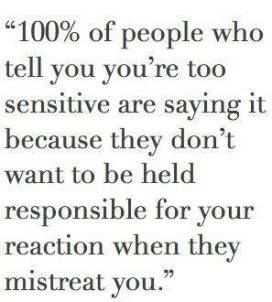
You could have heard a pin drop in that room. I think everyone was shocked at her callous and embarrassing remarks. As for myself, I was so mortified I ran out of the room crying, which of course was a huge mistake because that gave my mother ammunition to remind everyone once again about how sensitive I was (and she didn’t mean this in a complimentary way). She was always making jokes at my expense and then when I didn’t laugh or if I looked hurt, it was always “Lauren is just being over-sensitive again” or “Lauren has no sense of humor.” I’ve heard this is quite a common accusation narc parents use against the child they have chosen to be their scapegoat. They hate sensitivity and love to turn it into a bad thing because it takes the responsibility for their cruel behavior off of them and puts the blame onto the child.

This is the sort of “flattery” a scapegoated child can get from a parent who is a malignant narcissist. There are times I feel guilty that I don’t feel more love for my mother than I do, but when I think of all the years she demeaned me and put me down, always going out of her way to make me feel small and worthless, I don’t feel so guilty about my ambivalent feelings toward her.

I don’t hate my mother. Instead, I pity her for being so shallow and never having known who her true self might have been. She’s an intelligent woman but you would never know it because she never was interested in ideas or the life of the mind. Her eyes glaze over if you try to engage her in any “deep” topics. She reads pulp novels and fashion magazines, never anything scholarly or educational.

She has now lost her beauty due to age (and too many facelifts) and she is all too aware it. Knowing she has lost her physical beauty–the one thing that gave her an identity of sorts–has turned her bitter and angry in her old age.

Narcissists as co-parents

Image

narc_coparent

My stupid hypervigilance again.

paranoia

On Thanksgiving, I wrote about the lovely dinner my roommate and I had at my daughter Molly’s boyfriend’s home (which is where she’s living now when she’s out of jail). It’s a pretty big place–an older home, probably built in the ’60s, 2 stories, with a spiral staircase, large open rooms, a living room lined with floor to ceiling windows that face a view of the mountains, and two large decks. It’s really beautiful. My daughter really lucked out.

I also was surprised how intelligent and nice Paul is. We talked a lot, about many things, and he admitted he loved Molly. It’s obvious to me he’s the first boyfriend she’s ever had who really cares about HER, and isn’t just using her. I think this relationship can be great for her, and she’s happy with him too. So what that he’s 38 years old? He’s mature and has a good job and income, wants her to resume her education, and if things work out, they can have a good life together. Hell, I’d much rather her date a 38 year old who has all his shit together than some 22 year old do-nothing meth-head with no goals or prospects living in his parents’ basement or crashing on a friend’s couch because he can’t even keep a job as a gas station attendant. Which is the type of loser she dated before. She actually didn’t think she deserved any better, but she’s finally realizing she deserves so much more.

Meanwhile her MN father, Michael, has been living at the Salvation Army and hasn’t learned jack shit or changed one iota. He’s the same whiney, entitled, obnoxious, demanding, parasitic, gaslighting, narcissistic jerk that he was when he leeched off me for seven years after our divorce. He nearly sucked me dry, financially, mentally, emotionally, and every other way you can think of. Until February this year I didn’t have the guts yet to tell him to get a life and get the hell out of my house.

I understand why Molly feels bad for him (after all, he’s her dad and she loves him), but she shouldn’t feel guilty about his unfortunate circumstances. He’s done it to himself. And yet, he has made her feel like she’s responsible for his well-being. From the time she was 12, he was treating her like his personal therapist and drug buddy, and attempting to use her to triangulate against me. His actions, among all the other obnoxious and evil things he did, damaged her psyche badly. I still can’t quite determine if she has low-spectrum NPD or severe BPD, but she definitely suffers from both bipolar disorder and PTSD.

But she’s getting better. Things have come to a head these past few months, between her squandering her trust fund, her car accident, and now having to serve time in jail for 30 days (she will be out the day before Christmas). She’s learning some hard lessons about consequences.

So what do her N father and her new apparently mentally healthy boyfriend have to do with each other? Well, Michael is moving in with Paul. Paul’s house is large enough that he will have his own floor, and Paul and Molly will be on the downstairs level. This worries me. Michael always seems to luck out. Narcissists usually do. I’m not envious of him (and am sort of glad he’s no longer homeless because I’m not a total heartless bitch), but this development worries me for two reasons:

1. He has an uncanny ability to turn people against me, even people who have been my friends. I know he trashes my character behind my back, projecting his own character flaws onto me, making ME out to be the narcisistic abuser. If he’s living in the house with them, in my dark fantasies I can imagine him turning Molly against me again, and Paul too. I hate the idea of the only family I have in this state turning against me due to my malignant narcissist ex husband who is living with them.

2. When Molly is around him, he has proven to be a bad influence on her. It’s true he has no car and no way to get around or drive her anywhere this time, but in the past he has been involved in buying drugs with her. Paul doesn’t do drugs so there’s probably nothing to worry about. But Michael’s influence is still a negative one, and his constant presence will push Molly’s buttons in ways that will make it more difficult for her to become independent of his malignant influence.

paranoia2

Probably nothing will happen though. Paul’s doing him a favor and he is paying rent (out of his disability). The intention is not for him to stay (but getting rid of him is easier said than done, I should know!) Molly is okay with this arrangement. Michael has his own floor, and will probably stay busy ranting on political forums like Huffington Post and trolling on conservative websites. The rest of the time he’ll be watching the news or blasting his awful music. It’s more likely someone like Paul may tire of his presence and after a while want him out. It’s also possible Michael may just stay to himself and not bother them much.

As a person with Aspergers and an ACON (and one who was bullied both at home and by my peers during most of my childhood), I’m terribly jumpy and hypervigilant, always expecting the worst, never seeing the cup as half full, always expecting everyone will hate me, and worrying myself into a hair-pulling, twitching frenzy over the the most innocuous things. Every day I worry I will hear bad news, that one of my kids will die, that I’ll find out people are saying bad things about me, or even plotting against me.

I could be on the most beautiful, serene beach in the world, and instead of enjoying the sand and sun, I’ll fret about getting skin cancer even though I’m wearing SPF 4587 sunblock on every inch of my body. I could be in a room filled with people I love, and only be able to think about the one person who didn’t say hello and let that ruin my day. That’s where my head is at. The world seems so dangerous and hostile. I’m extremely paranoid. I find it very hard to relax and just enjoy things.

I know I must not worry and try to let this thing go. I think Paul is too smart to allow Michael to convince him I’m a narcissistic bitch even if he trash talks me 24/7, which he will probably do (or maybe not). Paul already knows me and Molly has told him good things about me. Besides, I already warned Paul that Michael will probably tell him all sorts of horrible stories about what a terrible wife and mother I was. Paul laughed and assured me if that happens he will tell him to stop talking that way, because he doesn’t want to get involved in our family drama and wasn’t a witness to it. So I guess I just need to stop worrying and being so hypervigilant and paranoid.

Let go and let God is good advice. I need to get in the habit of trusting my friend God more. Everything will work out. It always does, somehow.