Sensitive Children and the Adult Child in the Abusive Narcissistic Home

Excellent article about the devastating effect narcissistic parents have on the most sensitive children in the family and why they tend to become scapegoats. They grow up into codependent adults prone to repeat the same toxic patterns with others. But this doesn’t have to be a life sentence. Read on.

1solutionfocusedcoaching's avatarSITE FOR CREATIVE SOLUTIONS

flute-player-h7x

In a home affected with an abusive narcissistic parent emotions are repressed and become twisted.  Rules are built on shame, guilt, or fear.  Feelings are often not shared and when they are expressed, it is done in a judgmental manner placing blame on one another.  The narcissistic parent is self-involved and feels no empathy for their children.  They are incapable of mirroring real love and try to get their children to fulfill their unmet dependency needs.  The narcissistic parent’s unresolved drives for attention and caretaking takes center stage as the child’s early developmental needs are ignored and denied.  The self-involved parent shames the child for having desires and makes them feel guilty.  All of the family attention and energy is focused on the demands of the narcissist.

Sensitive children growing up in abusive narcissistic homes build their personalities based on what they have to do to survive.  Many of these children…

View original post 685 more words

Cognitive dissonance and NPD.

narcissism_childhood

I’ve been thinking a lot about the concept of cognitive dissonance and its role in creating a narcissist or turning a narcissist into a malignant one.

Cognitive dissonance is the mental stress or discomfort experienced by an individual who holds two or more contradictory beliefs, ideas, or values at the same time, or is confronted by new information that conflicts with existing beliefs, ideas, or values.

–Wikipedia

A computer will crash or stop working when given conflicting sets of instructions. Although people are not computers (because we have emotions and a soul), if we receive conflicting sets of “instructions” or information about ourselves, it causes so much mental distress that a personality disorder can develop if the conflict appears very early in life.

A child who is constantly invalidated by narcissistic parents tries to correct the cognitive dissonance by “becoming” what the parents tell them they are. If the parents tell them they are evil, bad, always misbehaving, etc. they may become aggressive, overt narcissist themselves to “match” the parents’ assessment of them. If they are told they are incompetent, a loser, stupid, etc. they may develop covert narcissism or BPD instead.

Golden/spoiled children.

Veruca-Salt

Spoiling a child is actually a form of abuse, because being a golden child negates the child’s own reality that they are human and less than perfect. The spoiled, golden child will either try to be as “perfect” as they are told to match their parent’s unrealistic assessment (and a grandiose false self develops from that) or they know they can’t ever be the image of perfection their parents insist they be, and to correct the cognitive dissonance they may become rebellious or adopt covert narcissism (in which the child believes they are worthless and the parents are wrong) as a coping strategy.

Other personality disorders.

Borderline personality disorder (BPD) is also a way to correct cognitive dissonance. I think BPD develops in many children who were both golden children and scapegoats (which is often the case with onlies) who were given inconsistent parenting, sometimes abused, sometimes treated like little gods. That’s why they’re so conflicted and seem to act in contradictory ways that confuse themselves and those around them.

Not all abused children develop narcissism or BPD, but it’s my belief almost all children of narcissists develop personality disorders, all of which are the adult incarnations of childhood attachment disorders.

Malignant Narcissism.

monsters-nietzsche

Malignant narcissism is NPD that is high on the spectrum and mixed with antisocial (ASPD) traits. A low-mid spectrum narcissist (or even a non-narcissist!) can turn malignant during adolescence or even as an adult. I think this is almost always due to some choice they made or action they were forced to engage in that went against their conscience. Let me explain how this works.

M. Scott Peck in his book, “People of the Lie,” (the book that popularized the concept of malignant narcissists as “evil”) told the story of a man who narrowly escaped becoming evil/malignant. The man, a non-narcissist who loved his family dearly, suffered from debilitating panic attacks when crossing a certain bridge on his drive to work. Even though he didn’t believe in the devil, one day while suffering a severe panic attack he made a “deal with the devil”–he told the devil he could take his favorite son’s life in exchange for allowing him to cross the bridge without having any more panic attacks. Of course nothing happened, and the son was fine. The man, filled with remorse over having these thoughts, told Dr. Peck about it, and was told he did the right thing to repent, because otherwise he would have become evil himself, especially had something actually happened to his son. If he had turned to darkness and narcissism, it would have been to correct the cognitive dissonance between what he had done and his internal moral compass. He would have had to discard his previous moral standards and embrace darkness.

A person forced to engage in something they find morally reprehensible, such as a soldier forced to kill innocent civilians, can turn toward darkness. Many veterans return suffering severe PTSD and in some cases seem to have lost the souls they went to war with. Many, who have committed atrocities in war, correct the cognitive dissonance created by doing something that went against their conscience, by discarding their conscience altogether. This isn’t a conscious choice usually, but is the end result of severe PTSD. (I think all personality disorders are, in fact, manifestions of severe PTSD caused by chronic abuse starting when the personality was still forming.)

It’s my opinion that adolescence is when malignant narcissism is most likely to develop, because adolescents are by nature risk-takers and trying to establish a separate identity from their their parents. This usually takes the form of some type of rebellion, and rebellion is normal as long as it doesn’t go too far. Some adolescents may be “dared” by their friends to engage in antisocial activities. Adolescents are so eager to be accepted in a group of their peers that sometimes their desire for acceptance overrides their conscience, which isn’t fully developed yet. If these antisocial activities hurt others (such as robbing someone’s house on a dare), the teenager’s fledgling conscience is halted in its growth, and may be discarded altogether. It’s at this point an adolescent can turn to malignant narcissism. This is why the choices kids make are so important. Here’s an excerpt from my article, “Healing Narcissism: Stephen’s Story,” in which a fictional boy I called Stephen turns to narcissism as a coping strategy, and it all began with a dare.

The Choice.

bullied_child

Stephen recalled a dare when he was 8 years old. A group of boys who had bullied him dared him to set a paper bag of dried dog poop on another boy’s rickety wooden front porch and set it on fire. The boys promised him that if he did this, they would no longer bully him and they would be his friend and protect him against any further bullying. Stephen knew that doing this could set the other boy’s house on fire and at first he protested, explaining what could happen. At this point he still had a conscience. But the boys threatened him and told him if he didn’t do it, their bullying would become worse and they would kill his pet rabbit. Stephen believed them, so against his will, he complied.

They set out after dark for the targeted house. The boys watched from the darkened yard as Stephen lit the paper bag on fire and hesitantly walked up the front stairs of the boy’s porch and set it next to a dead potted plant. The deed done, all the boys ran away before anyone saw them. Stephen looked back in time to see the flames ignite the plant, and quickly start to spread over the railings of the rickety old wooden porch. He felt awful and considered going to the police, but he didn’t dare. He went to bed that night and had terrible nightmares.

The targeted boy’s house burned down and he, his baby sister, and his mother had to be taken to the hospital to be treated for smoke inhalation. Soon after, the family moved away, never to be seen again. No charges were pressed because no one knew who the culprit was.

To protect himself from his unbearable feelings of guilt and shame, Stephen shut off his painful emotions of guilt and conscience. From then on, the group of bullies accepted him as one of them, and they continued to engage in tormenting other children and even petty crimes.

This is an example of cognitive dissonance. Stephen would not have been able to live with himself had he not turned to narcissism as a coping strategy. The irony here is that, the more intense the child’s guilt or shame over committing an act that goes against their morals (or the more heinous the act), the more likely it is they will turn malignant, because to do otherwise would mean the overwhelming shame they feel could likely cause them to become severely depressed or even suicidal. This isn’t an excuse for anyone to turn to narcissism (or malignant narcissism) as a coping strategy, but is an unfortunate reality.

Acquired narcissism.

narcrealityshows

Sometimes people who become extremely successful, such as celebrities, sports stars, business leaders or politicians, can become narcissists, even if they were not narcissistic before their success. It doesn’t happen to all of them, but if it does, this is another example of how cognitive dissonance tries to “correct” things. In order to close the mental gap between their actual assessment of themselves as imperfect humans and the adulation they receive from the outer world that treats them as if they’re somehow more than human, a successful person can turn to narcissism to align their self-assessment with the way they are regarded by others. This is why some celebrities become so full of themselves or manipulative. It’s a form of acquired narcissism, but because it’s acquired fairly late in life and isn’t due to a choice, this type of narcissism may be temporary and only last as long as the person remains famous or very successful. If they fade into obscurity, the person faces a narcissistic crisis, but after that I think they can return to a non-narcissistic way of being in the world.

Fear breeds narcissism; the antidote is vulnerability.

I think this article applies to anyone trying to heal from any personality disorder, PTSD, or the fallout of narcissistic abuse, so I’m posting it here too.

Bring it on!

itsmytime

This week has been very difficult for me emotionally. It started with an unnamed, free-floating but intense anxiety and panic, to the point I could barely function. A few days ago I plummeted into a black depression that seemed different somehow in quality from my prior zombie-like apathetic depressions. it felt more alive and more proactive in some way. I’m pretty sure I had an idea all along of what was about to happen but it hadn’t quite bubbled into conscious awareness yet. Its rising through the murky swamp of my unconscious caused me to panic and then a kind of grief took over but I still couldn’t name what it was.

Most of you who read this blog regularly know I began this blog almost a year ago as a form of self therapy (because I couldn’t afford a therapist). From the beginning, I committed myself to 100% honesty. Well, I’ve probably fallen short of that goal, as I’ve omitted some important discoveries and other things about myself that I simply didn’t feel comfortable sharing, even under my alias.

Last night–nearly 11 months from the day I started this online journal–I had a huge breakthrough. Prior to this, I tried to sleep but could not. When I did my dreams were upsetting and I had this overwhelming sense of aloneness and separateness. I woke up shaking and close to tears. I gave up trying to sleep and talked to 2 close Facebook friends for awhile. They’ve been a bit worried about me this week because my mood has been so erratic and I’ve done so much crying, which until recently has been unusual for me. I cried all the time as as a child but then dried up sometime during my teens.

Several things have led to my breakthrough: writing a LOT about my feelings and recovery from narcissistic abuse, reading as much about narcissism, BPD and PTSD as I could get my hands on, trying my best to always be honest no matter how painful or embarrassing (but not always succeeding), and finding God and the power of prayer. It’s been an incredible roller coaster ride.

For several weeks prior to last night, I’d been praying for the ability to regain the easy access to my emotions I had as a child, only tempered with the wisdom and restraint of an adult, of course. I kept reading, writing, and trying to elicit emotion through music, movie-watching, and self-reparenting. I knew this required making myself as vulnerable as possible. I took myself to see “Inside Out,” which loosened something inside me but not quite enough. It was like one of those almost-sneezes that never quite comes out and leaves you wanting to punch a wall in frustration. Nothing much happened after that. I was growing impatient.

dear_past

A week ago, I fell into my panicky, anxious state followed by a “wet” depression (that included tears instead of my usual catatonic apathy). I didn’t even know what I was crying about. I lost my motivation to write (in retrospect, I think this as a form of self protection when I needed it). I was snappish and irritable on the job but would come home and set aside alone time so I could just let everything out without fear of embarrassment or shame. I knew instinctively something important was about to make itself known and that scared me, but I felt a kind of excitement too.

It happened last night at about 3 AM after my Facebook friends and I ended our conversation. I read something that triggered a deep knowledge that hit me like jolt of electricity. For a few terrifying minutes I felt like I couldn’t catch my breath and I might even throw up. I felt hot and cold flashes and started to shake. What I learned was overwhelming and devastating–but I also knew I’d known this for a long time but had repressed it.

Everything suddenly made sense and I felt like I was seeing my situation and all my relationships—hell, over 50 years of my life–with eyes that had been closed since I was very young. I remembered, vaguely, that someone told me something when I was four years old. I couldn’t remember what was said or who said it but I did know whatever it was had been the catalyst when all my problems started that would not abate for over 50 years. One day when I’m ready I’ll remember what actually was said and who said it. I cried harder than I’ve cried since I was about 12. I can’t go into detail right yet about what this discovery was–I’m not ready. I may never be ready. But it’s something that although its discovery is incredibly upsetting to me, it’s also something I needed to have in my conscious awareness before I could really start to do the hard work necessary for real healing.

God answers prayers in his own time. He’s working on me. I have faith he works on all of us if we reach out with a sincere heart and ask for help. Now that I have this information that was revealed to me, the next step is to figure out what to do with it. Right now I just feel shell shocked. I have to be gentle with myself while I work through and try to understand everything that happened. I’m working on finding a therapist to help me sort it out because I think it’s too big for me to handle all by myself anymore. All I can do right now is keep on praying and writing every day and working on myself and being as mindful as I can until I find someone appropriate. I know the work ahead of me is going to be harder now than it has been and that’s okay. It may take a long time and that’s okay too. I feel like I graduated from something last night. I’m ready for the next step. Bring it on!

Somehow I feel lighter today although I’m exhausted and desperately need a good night’s sleep.
I know I can do this thing. But for the love of all that is holy, WHY DID IT TAKE SO LONG?

The honeymoon is over.

lost

I’ve been feeling quite strange the past week. It’s the worst I’ve felt in about a year. It started with feelings of anxiety and panic, racing and morbid thoughts and a feeling of unnamed dread. I’d try to nap and my heart would start racing so I’d give up. DBT skills didn’t work and some of my BPD (or PTSD) behaviors returned–negativistic behavior, feeling offended easily, sulking, fits of anger (not directed at anyone but expressed in imaginary conversations with myself in the car or at home), low frustration tolerance, paranoia. I’ve been less motivated to write. I’ve been neglecting housekeeping and eating right. Getting up in the morning is excruciating.

It was all I could do to make it through work. I was feeling sorry for myself all day and at the same time felt guilty for feeling that way. The anxiety has lessened but it’s been replaced by despair and some kind of deep sadness.

I don’t cry easily, but I started crying a few hours ago and couldn’t stop. It feels good to cry, but the feelings are so painful. I feel unworthy. I feel impotent. I feel angry at my parents for training me to be such a good little victim. I hate my ex. I hate myself. I suck at everything. I can’t relate to people. I hate people. I want to connect but I just can’t. I think people will hate me if I let them get too close. My world is so small and constrained and unsatisfying because of my fear of relating to others and reaching out, and because I never have enough money to do anything or go anywhere anyway. The summer’s slipping away and it reminds me of all the lost opportunities and all the doors that have slammed shut, never to reopen. That’s where my head is at. It’s a bad place to be. I feel like I’m losing control. It’s like a war inside my head. I hate all this wallowing in self pity but maybe it’s an opportunity to nurture myself.

I need to find a therapist. This blog is a wonderful tool for healing and it’s something I won’t let go of. It’s brought me a lot of joy. A lot of frustration too, but mostly joy. So I’ll keep blogging. I’d still rather do this than anything else.

But something, I don’t know what, has been triggered–by what I don’t know–and I’ve reached a point where just writing isn’t enough. I need someone to talk to who can help me sort out whatever’s going on in my head right now. I think journaling every day may have brought me to this point.

I’m not giving up. The good thing is that my emotions, while not really under my control at the moment, are there for me to feel. I’m not depressed in the apathetic, almost zombie-like way I used to get depressed when I was living with my narcissist ex. This is an active depression where my emotions are accessible to me and I can sort of name them and I just have to let myself feel them. I’m grateful for that at least. This is what I wanted. But what do I do with them? Can they make me a better, kinder, happier, more empathetic person? That’s what I really want. I need to find someone who can show me what to do with all these emotions.

I guess this means the honeymoon is over, and now the real work begins.

This TV movie about child abuse was way ahead of its time.

Today I was thinking about a TV movie I saw back in the 1980s that has haunted me ever since. I decided to watch it again tonight (you can watch the entire movie on Youtube–it’s in seven parts; I have posted the first part). It’s called Mary Jane Harper Cried Last Night and was first aired in 1977. Susan Dey (of Partridge Family fame) played an abusive, alcoholic mother to a 4 year old girl and she becomes completely unhinged. The movie is extremely triggering and may be upsetting to some.

There are several things about this movie that I found quite interesting.

— Rowena (Susan Dey) seems to have every symptom of Borderline Personality Disorder–but a case could also be made that her symptoms could well be untreated severe PTSD caused by the abuse she suffered at the hands of her own parents. This movie illustrates why I think BPD is really severe PTSD caused by chronic childhood abuse and could make a good case for that.

— Rowena’s parents are both textbook examples of malignant narcissists. Her mother is cold, rejecting, gaslighting, and blames her daughter for her unhappiness, as well as pathologically envious of the attention she receives from her father, who sexually abused her (and apparently still does).

— Rowena’s psychiatrist is a narcissistic jerk who coldly dismisses her from a breakthrough therapy session at the moment she recalls and re-experiences a long forgotten memory of being locked in a closet as a small child. This turned out to be an extremely cruel (and unwise) thing for him to do.

— In the almost 40 years since this film was made, not much has changed. The child protective system is still hit and miss at best and often tragically incompetent.

— It’s a fascinating and convincing study of the way the pathology of abuse infects succeeding generations.

The movie, being made for TV, isn’t perfect. There are a few holes in the plot and certain scenes just seem contrived. I also can’t help thinking of “Dean Wormer” from the movie Animal House whenever John Vernon (the head doctor) is onscreen. But the acting, especially by Susan Dey and the little girl who plays her daughter Mary Jane (Natasha Ryan), as well as the caring doctor who stands up to the Powers That Be and tries to protect Mary Jane, is top notch.

“Ordinary People”: a case study in malignant narcissism.

ordinary_people

I remember when I first saw this 1980 Academy Award winning movie being quite triggered by it, because the main character, Beth Jarrett (played convincingly by Mary Tyler Moore) reminded me so much of my mother, all the way down to her impatient, flippant mannerisms, fake cheerfulness, and clipped speech. And at the time I felt very much like the teenage son, Conrad (Timothy Hutton), who was clearly suffering from a severe case of PTSD and depression, which no doubt had its roots in his mother’s emotional abuse and coldness.

“Ordinary People” (directed by Robert Redford) is about an upper middle class family from the Chicago suburbs, but the individuals involved are certainly not ordinary–or at least you hope they aren’t. Moore’s Beth Jarrett is a high-spectrum malignant narcissist who cares only about her social position and status and the appearance of having “the perfect family” and “the perfect life.” She is always perfectly dressed and coiffed, and can pour on the fake charm whenever she is trying to impress their friends and colleagues. Beth’s husband Calvin (Donald Sutherland) provides his family with their affluent lifestyle and is a good man who cares deeply for his family but is codependent to his narcissistic wife, who makes endless demands on him to keep up the image of perfection, and you can see from his demeanor it’s destroying him.

Their son, Conrad, is his mother’s scapegoat, and while she never actually says so, it’s clear that she blames him for the accidental boating death of her Golden Child, Buck (shown only in flashbacks). Conrad was with Buck at the time of the accident, and suffers from survivor’s guilt in addition to PTSD which was probably caused by his mother’s horrific treatment of him as well as his guilt over the accident, because he was unable to save his older brother’s life. The movie begins just after Conrad has been released from the hospital after a suicide attempt. I think there is more to Beth’s hatred of her child than her belief he is to blame for Buck’s accident. I think she hates him because he sees the truth about her, and calls her out on it. He is sensitive and able to see through her mask of perfection to the monstrous narcissist she actually is, and she can’t handle that.

From the very beginning, we can tell Beth despises her depressed remaining child. Her attitude toward Conrad is dismissive and impatient, and she makes no attempt to understand and appears to have no empathy for the emotional turmoil he’s in. She always puts her own needs ahead of her son and husband, and berates Calvin for attempting to understand his son’s pain. There’s not one moment where she shows the slightest shred of sympathy or love for him, and yet on the surface, no one would call her abusive, because of the mask of normality she always wears. Here’s a scene where Conrad attempts to talk to his mother about why they never had a pet–you can see how disconnected Beth is from Conrad’s (or her own) emotions, and Conrad’s hurt comes out as rage.

There’s a heartbreaking scene where the grandparents are present and Calvin is taking pictures. When he asks Beth to pose with her son, she glibly changes the subject to avoid having to SAY she doesn’t want her picture taken with him, but her disgust is obvious. Calvin insists, and Beth smiles with gritted teeth as she coldly stands next to her son. Conrad, who is sensitive, picks up on his mother’s hatred but tries to smile anyway. Beth, still smiling her fake smile, demands that Calvin give her the camera so she doesn’t have to have her picture taken with Conrad, but Calvin keeps insisting. Conrad, fed up and hurt, loses his temper and screams “Give her the goddamn camera!” It’s scenes like this that so brilliantly depict the subtle emotional abuse a malignant narcissist mother inflicts on her most sensitive child.


The camera scene.

Conrad begins seeing a psychiatrist, Dr. Berger (Judd Hirsch) who begins to get Conrad to open up about his feelings and show his anger. He also begins to date a girl he met in band practice (Elizabeth McGovern), who is upbeat yet understanding and helps bring Conrad out of his shell.

Calvin and his mother seem to be constantly arguing. Calvin tries to referree, but can’t seem to appeal to his wife’s loving nature, because she apparently has none. After one of these arguments, Conrad calls out his mother for never having visited him in the hospital, adding that “You would have visited Buck if he was in the hospital,” to which Beth retorts, “Buck never would have been in the hospital!” This is a clear implication of the higher esteem she held her older son in, who she believed would never have “gone crazy” and had to be hospitalized. Unlike Conrad, Buck would have enhanced, rather than diminished, the image she had of having the perfect life and perfect family.

Beth’s evil really comes out when they go on vacation to Texas to visit with some of Calvin’s colleagues. While golfing, Beth sweetly suggests to Calvin they go on another vacation–which would be during Christmas. Calvin agrees, but suggests they should bring Calvin along with them because he might enjoy the trip. To this, Beth flies into a narcissistic rage and loudly berates her husband for always trying to include Conrad in everything. During this rage, she projects her own anger and selfishness onto her husband, who unsuccessfully tries to stand up to her. Later in this clip, there’s a chilling scene after Conrad’s parents return home and Conrad tries to give Beth a hug. Beth’s face stays cold and hard and you can feel the hatred and disgust she has for her child while she barely returns his embrace at all.


The golf scene and “the cold hug.”

Conrad finds out his friend Karen from the hospital (Dinah Manoff) has committed suicide. Frantic, he makes an emergency appointment with Dr. Berger, and shows up in his office in a broken state. He rages and then sobs uncontrollably and everything comes pouring out: the whole story about the night Buck died and how he blamed himself, his mother’s hatred for him, and how he was never good enough. Dr. Berger listens and holds him like a parent would a child, and finally Conrad begins to calm down.

Gradually, Calvin becomes more aware of his wife’s malignant narcissism and is beginning to doubt her ability to love anyone but herself. One night Beth finds him crying alone and asks him why he is crying. Calvin asks Beth if she really loves him and she gives him a non-answer, saying “I feel the way I’ve always felt about you.” Calvin admits he is not sure he loves her anymore. He’s beginning to see the soulless monster she really is. Early in the morning, Beth leaves for good, not saying goodbye to her husband or son, leaving them to fend for themselves and try to pick up the shattered pieces of their lives together. No doubt both are much better off this way.


Calvin’s realization and confrontation with Beth.

This is one of the most convincing and well acted movies about the havoc a malignant narcissist mother can wreak on her family I have ever seen, and 35 years later, it still hits home because of the uncanny similarities I see to my own mother (who was not as outwardly rejecting or quite as malignant as Beth Jarrett). Every one of the 9 DSM indicators of Narcissistic Personality Disorder is evident in Beth. If anyone is interested in studying the myriad ways a malignant narcissist inflicts their abuse and scapegoats their children, this movie is the best case study I can think of, outside of having to deal with one yourself. Of course, not all malignant narcissists are upper middle class like Beth is, but even though the specific words and actions may differ from one social class to the next, the manipulations and abuse are always the same.


This trailer shows other scenes of the way Beth emotionally abuses, gaslights,projects, and triangulates against her surviving son.

Going insane: how I got diagnosed with BPD

going_insane

I thought I should explain how I got diagnosed with BPD. Although my out of control behaviors in 1995-1996 were due to prolonged emotional and mental (and some physical) abuse at the hands of my ex (on top of having been a victim of narcissistic abuse growing up), the focus of this article isn’t on narcissistic abuse or the way my ex behaved, but rather on my reactions and how out of touch with reality I actually became.

My memory of this time is sketchy and fragmented, almost dreamlike, so what I’m about to write may not flow together well. I believe my fuzzy memories of these two years were due to 3 things: (1) intermittent substance abuse, including alcohol; (2) being so out of touch with reality; and (3) I may have blocked out some of these incidents or partially blocked them out so they seem sort of grey when I think about them now, like a dream.

In 1995 my ex’s mother could no longer live alone so she came to live with us. At first things went smoothly, but she had Alzheimers and was deteriorating fast, and soon her care was left entirely to me. At the same time I was the stay at home mom to a 2 and 4 year old. My ex had started drinking a lot during this time, and said it was because he hated his mother (a malignant narcissist herself) and his behavior toward her was very abusive. He justified his abuse by saying she deserved it because of the way she had treated him. My children saw this behavior but in my emotionally weakened state due to his constant gaslighting, projecting and triangulating (he had turned most of our friends against me) as well as isolating me from those who could help me, I began to collude in his abusive behavior toward his mother. I didn’t physically attack her (he did) but in my frustration with things like her wetting the bed I would yell at her whenever he did and sometimes even when he wasn’t there. I also didn’t try to stop him when he used to spank her like a naughty child.

My ex was drinking heavily and smoking a lot of pot, and I joined him. At night, after the kids were asleep, we would often both be drunk and high. Sometimes his friends came over, who were all younger than we were (my ex’s friends were always younger than him). Sometimes things got wild. I was no longer attracted to my ex by this time due to his constant emotional abuse, so when I was drunk I openly flirted with his friends. I was unfaithful too, but so was he (I am definitely not proud of any of this, especially because I had young children at the time).

We fought constantly. One night, drunk, he threatened me with a gun. I ran down the street screaming and went and hid in a grove of trees for hours in the freezing cold. On several occasions I called the police and they would show up to fund us both drunk and didn’t know who to believe so they would leave and tell us to sober up. At this time I had no control over my reactions or my emotions. I acted more immature than my own kids sometimes.

I used to sleep during the day and wasn’t as good a mother as I could have been. I was testy, impatient and neglectful. I loved my kids dearly, but just didn’t have the emotional stamina or energy to deal with them more effectively or lovingly. (I tried to make up for that later).

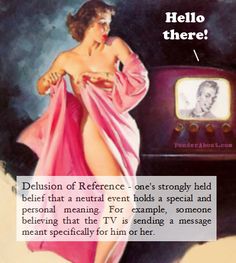
Soon the dissociative episodes began. Sometimes things looked weird. People looked like they weren’t real and they seemed demonic. I began to have delusions of reference. I had the weird sensation of unrelated events or conversations somehow referencing exactly what I was thinking. I felt like I was outside my body a lot, as if I was watching the events of my life unfold instead of being in them. This began to happen when I started distancing myself from my emotions into a “comfortable numbness.” (This is common in PTSD and BPD). But it wasn’t comfortable–it was horrifying. I think I was unconsciously protecting myself from feeling too much emotional pain. The abnormal had become normal, the insane had become sane, the evil had become good. I walked through my days in a sort of fog, but not all the time. Occasionally, when triggered, I would come back into myself and “go off” on my ex and experience a tidal wave of unbelievably painful and intense emotions. Instead of spending my evenings doing quiet things with my family, I spent that time on the computer in chat rooms, talking to men. I imagined I fell in love with one or two of them. My emotional reactions to these online entities I had never met were as intense as if they were actual relationships, but all of it was fantasy. To me it felt real.

I couldn’t sleep at night, but would sleep most of the day away. I didn’t take care of the house and only did the rudimentary necessities for the kids, in between taking care of my ex’s mother’s almost constant needs. I lost patience with both her and the kids easily. We ate cereal and yogurt most nights for dinner because I didn’t have the energy or wherewithal to cook anything.

I started a job after awhile at a hotel. I had a short affair with the disc jockey/maintenance man there. I wasn’t in love with him but I enjoyed the kindness he showed me, that my husband wasn’t giving me. One night he confronted me about it and I confessed everything. He didn’t seem upset but admitted he was having an affair too. Strangely, we did not fight about this. I really didn’t care whether he loved me anymore; I was convinced he hated my guts.

I quit my job on a whim even though we needed the extra income, because my ex had squandered over $100K we got from the sale of his mother’s house. One day I just decided not to go in anymore. I didn’t even bother to call, which normally is out of character for me. I started doing really crazy things. One night after a really bad fight I went into the closet in the master bedroom and sat on the floor crying for what seemed like hours. My ex didn’t seem concerned and went out instead. I don’t know why I was doing this; I felt like I had lost my mind and there was no reason for doing this. I had no idea what I was doing; I was just reacting to my pain like a wounded animal. The episodes of dissociation and delusions of reference became worse. I imagined everything–even voices on TV or songs on the radio–were coded messages that referenced something in my life. This is impossible to explain if you haven’t experienced it but it was very strange and disorienting.
delusions_reference

One day shortly after the closet incident, I left the kids in the house with him and decided to go driving. I had no idea where I was going or what I was doing, but I suddenly thought it would be a good idea to drive at 90 mph (the speed limit was 65 mph). Normally I’m a very cautious driver but during this time I had thrown all caution to the wind. I wasn’t suicidal in the sense of making a conscious effort to kill myself and I didn’t even contemplate suicide, but I was taking huge risks with my life. Miraculously, nothing happened, not even a pullover by police. I returned home feeling exhilarated from my crazy drive, but immediately that feeling disappeared and I was hit with the horror of my reality and started screaming irrationally and throwing things against the wall just to hear them break. I don’t even know what set this tantrum off–probably nothing at all, but I had this overwhelming desire to act out my excruciating emotional pain. I had no control over myself at all. When I thought about my behavior later on, I was horrified. I wasn’t even drinking anymore by now, so I wasn’t drunk. I was just insane.

My ex told me I was crazy. He always did anyway. But I really was crazy. He told me I should commit myself to a mental institution–or he would. To his surprise (and mine) I agreed. In that moment of clarity, I realized how crazy I had become (due to his emotional abuse of me, but that didn’t make me any less crazy). I allowed him to drive me to the mental hospital, which turned out to have an excellent program and engaging activities. I felt relief in entering that hospital and spent the next three months there. My Axis 1 diagnosis was Major Depression and anxiety, and my Axis 2 diagnosis was BPD, as well as substance abuse. I was also diagnosed with PTSD. I received daily therapy–both individual and group, as well as DBT classes–and I was put on Depakote (a mood stabilizer), Prozac (for the depression) and Klonopin (for anxiety). I stabilized during my stay but I wasn’t as committed to using the DBT tools I learned there as I became later on. I remember calling my mother from the hospital and telling her what was wrong with me, and her attitude was like, “so what? You need to be a mother to your children.” She didn’t even know I was in the hospital. So much for maternal support.

I had mixed feelings about returning home. I was overjoyed to see my children, but wasn’t too happy to see my husband at all. I really just wanted to stay in that hospital for the rest of my life. I didn’t want to face reality.

Fortunately, my mental state never got that bad again, but his abuse was to get much worse. He used my descent into the madness of severe BPD and major depression as an excuse to punish me for “having gone batshit insane” when I should have been a better mother and wife to him.

I still have a lot of guilt and shame over the way I neglected my children when they were so young and helpless. I wonder sometimes how much my not being there for them may have damaged them.

When I look back even earlier at my life, I can remember similar incidents of being totally unable to control my emotional reactions to stressors and triggers, with periods of almost robotic numbness and dissociative episodes in between outbursts. It was a pattern I was familiar with, but it reached its pinnacle in 1995-1996. I had a relapse in 1997 and spent a week in the psych ward at the regular hospital, and got the same exact diagnosis as the year before. Over the next several years, while I was still married to my ex, I spent most of my time in a state of emotional numbness, living on “automatic pilot.” It wasn’t until I finally got the POS out of my life that I felt safe enough to begin to let myself feel emotions again–but this time with mindfulness and acceptance instead of allowing my emotions to control me. I still have a long way to go.

Are BPD and complex PTSD the same disorder?

age_3_1961_2
Me at age 3 in the zone. Was the template for my BPD already laid down?

Ruji, a new commenter on this blog, made an interesting observation–that BPD should be divided into at least two subtypes: Empathy Challenged/Character Disordered (closer to NPD/ASPD) and Highly Sensitive Person with Emotional Dysregulation (closer to the type I have, although at different times in my life or when extremely stressed I have displayed the more character-disordered subtype). I agree with her. Ruji’s idea is remarkably similar to The World Health Organization’s two subtypes of BPD:

1. F60.30 Impulsive type
At least three of the following must be present, one of which must be (2):

–marked tendency to act unexpectedly and without consideration of the consequences;
–marked tendency to engage in quarrelsome behavior and to have conflicts with others, especially when impulsive acts are thwarted or criticized;
–liability to outbursts of anger or violence, with inability to control the resulting behavioral explosions;
–difficulty in maintaining any course of action that offers no immediate reward;
–unstable and capricious (impulsive, whimsical) mood.

2. F60.31 Borderline type
At least three of the symptoms mentioned in F60.30 Impulsive type must be present [see above], with at least two of the following in addition:

–disturbances in and uncertainty about self-image, aims, and internal preferences;
–liability to become involved in intense and unstable relationships, often leading to emotional crisis;
–excessive efforts to avoid abandonment;
–recurrent threats or acts of self-harm;
–chronic feelings of emptiness.
–demonstrates impulsive behavior, e.g., speeding, substance abuse

Psychologist Theodore Millon has gone even further, proposing that BPD should be divided into four subtypes:

1. Discouraged (including avoidant features): Pliant, submissive, loyal, humble; feels vulnerable and in constant jeopardy; feels hopeless, depressed, helpless, and powerless.

2. Petulant (including negativistic features) Negativistic, impatient, restless, as well as stubborn, defiant, sullen, pessimistic, and resentful; easily slighted and quickly disillusioned.

3. Impulsive (including histrionic or antisocial features) Capricious, superficial, flighty, distractible, frenetic, and seductive; fearing loss, becomes agitated, and gloomy and irritable; potentially suicidal.

4. Self-destructive (including depressive or masochistic features) Inward-turning, intropunitively angry; conforming, deferential, and ingratiating behaviors have deteriorated; increasingly high-strung and moody; possible suicide.

Millon’s Types 1 and 4 would correspond to the Highly Sensitive Person/Emotional Dysregulation type mentioned above (and therefore closer to the Avoidant/Dependent PDs); Type 2 sounds very much like NPD; and Type 3 seems closer to ASPD or Histrionic PD.

complex_ptsd
BPD symptoms are almost identical to those of Complex PTSD.

There are so many diverse–almost opposite–symptoms that can appear with this disorder that one person with BPD can be very different from the next. In fact, you can take 10 borderlines and they will all seem very different from each other, with barely any similarities in their behavior at all. One will be shy, fearful and retiring, never making waves, acting almost like an Aspie or an Avoidant; while another may break the law, lie constantly, and act obnoxious and rage whenever things don’t go their way. A borderline could be your raging boss who drinks too much and ends every annual Christmas party with one of his infamous rages, or it could be the sweet and pretty schoolteacher who goes home every night and cuts herself. She could be the come-hither seductress or the nerdy computer programmer. He may have few or no friends or a great many.

This diversity is not the case with the other personality disorders, which have more cohesiveness in the symptoms their sufferers display. So I wonder–is BPD really a personality disorder at all? Does it even exist, or is it really just a group of trauma-caused symptoms the experts in their ivory towers stuck in a single box called “BPD” because they didn’t know how else to classify them?

In fact, all these diverse subtypes have one thing in common–they are all very similar or identical to the symptoms of someone with complex PTSD (C-PTSD). People with C-PTSD are often misdiagnosed as Borderlines because their behaviors can be just as baffling and manipulative, and both disorders also include dissociative, almost psychotic episodes. Extrapolating from that, I wonder if ALL borderlines actually have C-PTSD.

Earlier today I posted an article outlining 20 signs of unresolved trauma, and I was struck by how similar these were to the symptoms of BPD. And there is also this article that Ruji just brought to my attention that also describes how remarkably similar the two disorders are, but that the idea of fear of abandonment (which is recognized as the root cause of BPD) is not recognized as a factor in causing PTSD and that may be part of why they have been kept separate.

The BPD label, like any Cluster B label, is very damaging to its victims because of the “evil and character-disordered” stigma it carries. One psychologist has even included us, along with narcissists, among the “People of the Lie”!

Yes, it’s true some borderlines do act a lot like people with NPD or even Malignant Narcissism or ASPD, but most probably do not, and are really much more similar to people with Avoidant or even Dependent personality disorders, which hurt the sufferer more than anyone else. But if you have a BPD label, people start backing away from you slowly due to the stigma. Therapists are reluctant to treat you because they assume you will be either difficult and hateful in therapy sessions, or will never get better. Insurance companies won’t pay claims where there is a BPD diagnosis, because it’s assumed there is no hope for you. I’ve had this problem when I’ve tried to get therapy. I remember one therapist who I had seen for the intake session, who told me he needed to obtain my psychiatric records before we could proceed. The session had gone smoothly and I felt comfortable with him. A few days later I received a phone call and was told he did not treat “borderline patients” and wished me luck. So that’s the kind of thing we’re up against if we’ve had the BPD label slapped on us.

Also, as an ACON blogger who works with a lot of victims of narcissistic abuse, my BPD label sometimes makes people wary of me and they begin to doubt that my motives here are honest. At first I was reluctant to talk about my “Cluster B disorder” here, because I knew it might be a problem for some ACONs, who think borderlines are no better than narcissists. But I eventually decided that to hide it away like an embarrassing family secret would be misleading so I “came out” about having BPD (I never actually lied about it, but played it down in the beginning and rarely mentioned it). I’m glad I fessed up, but there have been a few people who left this blog after I came out about it or began to doubt my motives. So there’s that stigma and it’s very damaging.

Both C-PTSD and Borderline PD are caused by trauma. Both are complex defensive reactions against future abuse and both involve things like splitting, dissociation, psychotic episodes, self-destructiveness, wild mood swings, and behavior that appears to be narcissistic and manipulative.

The way I see it, the only real difference between C-PTSD and BPD is that the traumatic event or abuse happened at an earlier age for someone with BPD, perhaps during toddlerhood or infancy, while all forms of PTSD can happen at a later age, even adulthood. But the symptoms and defense mechanisms used to avoid further trauma are the same for both.

20 Signs of Unresolved Trauma

Here is a fascinating article about how trauma due to abuse can lead to a post-traumatic condition that resembles Borderline Personality Disorder in almost every aspect. I wonder if this could mean I don’t actually have BPD. I have a lot of these symptoms, although they’ve improved over the years. I was diagnosed with BPD twice but maybe my therapists were wrong. These are symptoms of C-PTSD (which I have seen compared with BPD which it closely mimics). I thought I had recovered from my PTSD but maybe I have not. I’m still going to assume I’m borderline for now, but this makes me wonder. Borderlines have most of these traits, including dissociation.

I am also adding this website to my blogroll because I think it could be of great help to survivors of trauma and abuse. A social worker friend of mine just told me about it. She does not think I’m borderline. Now I’m REALLY confused.

Kathy Broady, Trauma Consultant's avatarDiscussing Dissociation

Unresolved Trauma

Many people enter the therapy process with minimal awareness of their trauma history.  When the trauma survivors are dissociative, they have the ability to block out an awareness of their trauma.  They may know that their family had problems, or that their family was dysfunctional, etc, but they may believe they were never abused.

child abuse child abuse (Photo credit: Southworth Sailor)

However, blocking out conscious awareness of trauma does not mean that the survivors have no effects of that trauma.  Using denial and dissociative skills does not mean that the abuse did not happen.  Denial means that the person simply is refusing to acknowledge or accept the fact that they were traumatized.  They are pretending they were not hurt, when they were actually hurt very badly.

Even if the memories of abuse are hidden from the survivor’s awareness, blocked trauma / unresolved trauma creates very noticeable and obvious symptoms that…

View original post 646 more words