When the “fleas” of narcissism go too far.

flea

Narcissists infect people, just like a disease. They have the uncanny ability of turning people into one of them, if you’re around them long enough. That’s why, whenever it’s possible, No Contact is always the best course of action. You cannot change a narcissist or reform them. What will happen instead is you will start to take on narcissistic behaviors yourself.

Narcissists are body-snatchers and will snatch yours and before you know it, you can become one of them. It may be the only personality disorder that’s contagious. Hanging around one too long is very dangerous to your self esteem, your identity, and even your soul. It’s more dangerous than making your escape, even if you don’t have a dollar to your name.

If you were raised by them, you may have a serious problem. Many (though not all) children of narcissists become narcissists or borderlines themselves. Because narcissistic parents can’t form proper bonds with their children and either use them as supply or scapegoats, children of narcissists more likely than not develop severe attachment disorders in childhood, and attachment disorders can easily become NPD, either covert or overt, somatic or cerebral. If the child is a little luckier, she or he can develop BPD, PTSD and many other disorders that make adult life difficult.

flea_cartoon

Overt/classic/grandiose narcissism (the type that best fits the criteria in the current DSM) develops most often in golden children who were held on a pedestal and could do no wrong, or were terribly spoiled, or it can develop in child who served as the parent’s flying monkey. It can also develop in a scapegoat who wants to prove their narcissistic parents wrong. Overt narcissists are usually extroverts who are good at playing the role of a confident, aggressive leader and many of them become financially and professionally successful. They are good at maintaining their mask for as long as they need to.

Covert/vulnerable narcissism usually develops in a scapegoated child who cloaks their grandiosity in an outer cloak of deference and humility, usually as a way to avoid punishment for acting too arrogant or aggressive while growing up. It can also develop in a child who is sometimes a scapegoat and sometimes a golden child. In a way, they are worse off than an overt narcissist, because they have a double layer of masks (false selves): the grandiose mask that hides the undeveloped, atrophied true self within, and a meek, shy and deferent outer mask that cloaks their grandiosity and sense of entitlement. That’s why a covert narcissist can be easily pushed around or bullied by others, but underneath their seemingly nice, quiet image there is seething envy and anger that isn’t expressed unless they are pushed to the limit and explode in rage. Their rage and envy is also likely to come out in passive-aggressive ways. Yet a covert narcissist is easier to cure because (a) they are far more likely to want help; and (b) their lives are miserable and their brand of narcissism isn’t adaptive in today’s world.

BPD is more common in women and some female covert narcissists may actually be diagnosed with BPD, because the disorders can seem so much alike and women aren’t diagnosed with NPD as often as men are. BPD probably develops most often when there is ambiguous attachment to the mother during early childhood and the child is inconsistently rewarded and punished. They learn early that people and life are unpredictable and no one can be trusted. They fear abandonment because they were never able to tell if their parent would love them or push them away. BPD also is correlated with early sexual abuse.

Fleas of narcissism are deadly because with prolonged exposure, they can cause permanent infestation. If it’s at all possible, cut off any narcissist in your life or avoid them as much as possible. Watch for red flags so you can escape before it’s too late because escaping once they “have” you is far more difficult and can be dangerous.

If you were raised by narcissists, no matter how damaged you are, if you didn’t become a narcissist yourself, consider yourself extremely lucky. There is hope for you to eventually be able to live a normal, happy life. If you’re a non-malignant narcissist, there may still be hope but the road to becoming a normal and happy person is going to be longer and harder.
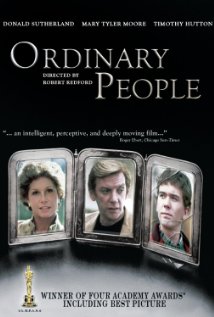
“Ordinary People”: a case study in malignant narcissism.

ordinary_people

I remember when I first saw this 1980 Academy Award winning movie being quite triggered by it, because the main character, Beth Jarrett (played convincingly by Mary Tyler Moore) reminded me so much of my mother, all the way down to her impatient, flippant mannerisms, fake cheerfulness, and clipped speech. And at the time I felt very much like the teenage son, Conrad (Timothy Hutton), who was clearly suffering from a severe case of PTSD and depression, which no doubt had its roots in his mother’s emotional abuse and coldness.

“Ordinary People” (directed by Robert Redford) is about an upper middle class family from the Chicago suburbs, but the individuals involved are certainly not ordinary–or at least you hope they aren’t. Moore’s Beth Jarrett is a high-spectrum malignant narcissist who cares only about her social position and status and the appearance of having “the perfect family” and “the perfect life.” She is always perfectly dressed and coiffed, and can pour on the fake charm whenever she is trying to impress their friends and colleagues. Beth’s husband Calvin (Donald Sutherland) provides his family with their affluent lifestyle and is a good man who cares deeply for his family but is codependent to his narcissistic wife, who makes endless demands on him to keep up the image of perfection, and you can see from his demeanor it’s destroying him.

Their son, Conrad, is his mother’s scapegoat, and while she never actually says so, it’s clear that she blames him for the accidental boating death of her Golden Child, Buck (shown only in flashbacks). Conrad was with Buck at the time of the accident, and suffers from survivor’s guilt in addition to PTSD which was probably caused by his mother’s horrific treatment of him as well as his guilt over the accident, because he was unable to save his older brother’s life. The movie begins just after Conrad has been released from the hospital after a suicide attempt. I think there is more to Beth’s hatred of her child than her belief he is to blame for Buck’s accident. I think she hates him because he sees the truth about her, and calls her out on it. He is sensitive and able to see through her mask of perfection to the monstrous narcissist she actually is, and she can’t handle that.

From the very beginning, we can tell Beth despises her depressed remaining child. Her attitude toward Conrad is dismissive and impatient, and she makes no attempt to understand and appears to have no empathy for the emotional turmoil he’s in. She always puts her own needs ahead of her son and husband, and berates Calvin for attempting to understand his son’s pain. There’s not one moment where she shows the slightest shred of sympathy or love for him, and yet on the surface, no one would call her abusive, because of the mask of normality she always wears. Here’s a scene where Conrad attempts to talk to his mother about why they never had a pet–you can see how disconnected Beth is from Conrad’s (or her own) emotions, and Conrad’s hurt comes out as rage.

There’s a heartbreaking scene where the grandparents are present and Calvin is taking pictures. When he asks Beth to pose with her son, she glibly changes the subject to avoid having to SAY she doesn’t want her picture taken with him, but her disgust is obvious. Calvin insists, and Beth smiles with gritted teeth as she coldly stands next to her son. Conrad, who is sensitive, picks up on his mother’s hatred but tries to smile anyway. Beth, still smiling her fake smile, demands that Calvin give her the camera so she doesn’t have to have her picture taken with Conrad, but Calvin keeps insisting. Conrad, fed up and hurt, loses his temper and screams “Give her the goddamn camera!” It’s scenes like this that so brilliantly depict the subtle emotional abuse a malignant narcissist mother inflicts on her most sensitive child.


The camera scene.

Conrad begins seeing a psychiatrist, Dr. Berger (Judd Hirsch) who begins to get Conrad to open up about his feelings and show his anger. He also begins to date a girl he met in band practice (Elizabeth McGovern), who is upbeat yet understanding and helps bring Conrad out of his shell.

Calvin and his mother seem to be constantly arguing. Calvin tries to referree, but can’t seem to appeal to his wife’s loving nature, because she apparently has none. After one of these arguments, Conrad calls out his mother for never having visited him in the hospital, adding that “You would have visited Buck if he was in the hospital,” to which Beth retorts, “Buck never would have been in the hospital!” This is a clear implication of the higher esteem she held her older son in, who she believed would never have “gone crazy” and had to be hospitalized. Unlike Conrad, Buck would have enhanced, rather than diminished, the image she had of having the perfect life and perfect family.

Beth’s evil really comes out when they go on vacation to Texas to visit with some of Calvin’s colleagues. While golfing, Beth sweetly suggests to Calvin they go on another vacation–which would be during Christmas. Calvin agrees, but suggests they should bring Calvin along with them because he might enjoy the trip. To this, Beth flies into a narcissistic rage and loudly berates her husband for always trying to include Conrad in everything. During this rage, she projects her own anger and selfishness onto her husband, who unsuccessfully tries to stand up to her. Later in this clip, there’s a chilling scene after Conrad’s parents return home and Conrad tries to give Beth a hug. Beth’s face stays cold and hard and you can feel the hatred and disgust she has for her child while she barely returns his embrace at all.


The golf scene and “the cold hug.”

Conrad finds out his friend Karen from the hospital (Dinah Manoff) has committed suicide. Frantic, he makes an emergency appointment with Dr. Berger, and shows up in his office in a broken state. He rages and then sobs uncontrollably and everything comes pouring out: the whole story about the night Buck died and how he blamed himself, his mother’s hatred for him, and how he was never good enough. Dr. Berger listens and holds him like a parent would a child, and finally Conrad begins to calm down.

Gradually, Calvin becomes more aware of his wife’s malignant narcissism and is beginning to doubt her ability to love anyone but herself. One night Beth finds him crying alone and asks him why he is crying. Calvin asks Beth if she really loves him and she gives him a non-answer, saying “I feel the way I’ve always felt about you.” Calvin admits he is not sure he loves her anymore. He’s beginning to see the soulless monster she really is. Early in the morning, Beth leaves for good, not saying goodbye to her husband or son, leaving them to fend for themselves and try to pick up the shattered pieces of their lives together. No doubt both are much better off this way.


Calvin’s realization and confrontation with Beth.

This is one of the most convincing and well acted movies about the havoc a malignant narcissist mother can wreak on her family I have ever seen, and 35 years later, it still hits home because of the uncanny similarities I see to my own mother (who was not as outwardly rejecting or quite as malignant as Beth Jarrett). Every one of the 9 DSM indicators of Narcissistic Personality Disorder is evident in Beth. If anyone is interested in studying the myriad ways a malignant narcissist inflicts their abuse and scapegoats their children, this movie is the best case study I can think of, outside of having to deal with one yourself. Of course, not all malignant narcissists are upper middle class like Beth is, but even though the specific words and actions may differ from one social class to the next, the manipulations and abuse are always the same.


This trailer shows other scenes of the way Beth emotionally abuses, gaslights,projects, and triangulates against her surviving son.

Why family scapegoats become lifelong victims.

If you were scapegoated by your family, two things can happen. You can become a narcissist yourself (narcissism being an elaborate defense mechanism to avoid further hurt and abuse) or you will internalize the early message that you’re worthless, defective and have no rights. I’m going to talk about the second scenario because that’s what this video is about and it’s what happened to me.

As a scapegoat, you are trained to live in fear. You become afraid to defend yourself, express your opinions, or demand fair treatment. This attitude of worthlessness, fear and shame is carried into adult life. Other people can immediately sense you are a pushover and a magnet for abuse, rejection, and bullying, and you become a target for abuse by others well into adult life.

You can become a lifelong victim unless you find a way to break the pattern. It’s difficult to unlearn, because it was established so early in life by the narcissistic parent.

Golden children, who more closely resemble the narcissistic parent or provide them with narcissistic supply (adulation), are more likely than scapegoats to become narcissists themselves. They will often become the aging narcissistic parent’s flying monkeys against the scapegoated adult child, continuing the family pattern of abuse.

Scapegoated children are the family shock absorbers. They are the children who have been assigned to absorb and internalize the narcissistic parents’ rage and to mirror back what has been projected onto them.

scapegoat_child

This is exactly what happened to me. Although because I was an only child I sometimes served the Golden Child role, for the most part I was the scapegoat. My Aspergers and high sensitivity made me even more perfect for that role.

Today I’m the black sheep and the “loser” of my family. I’m never included in family functions because of my poverty and the fact I’m “different” than the rest of them. Although they disapprove of me, I really became exactly what they needed me to be. My becoming a “loser” ensured they would always be winners.

I’ve been disinherited because they believe I’m undeserving, a shameful blemish on the family’s “good name,” further guaranteeing I will always remain poor and therefore powerless–unless I hit the lottery (which I don’t play) or write a book, which I plan to do. The irony of all that is the book may very well be one that exposes the people who raised me for what they really are.

I’ve always been a risk-averse, avoidant underachiever. My dealings with others have suffered because of my fear of the judgment of other people. I was often bullied as a child and teenager.

I married a narcissistic man and continued to live with him and allow his abuse even years after we were divorced.

Although as an adult I’m no longer bullied (and am Very Low Contact with my ex), people still try to push me around, treat me like a mental defective, leave me out of conversations, overlook me for promotions or raises at work, or just talk over or look through me as if I’m not there at all. When I say something, people act like they don’t hear me. It’s very hard for me to make friends or fight back when I need to because I was trained from an early age to be so very afraid of everyone. I’m the proverbial shrinking Violet and wallflower–the kind of woman my mother used to mock for being so “insipid.” I seem to have the opposite of charisma.

For many years I walked around as if ashamed to be alive. I carried shame with me like a heavy burden that affected the way I spoke, the way I related, the way I thought (all the negative self-talk and self-hate), even the way I moved and carried myself. I embarrassed myself.

Since I started writing, I’ve learned that I wasn’t put on earth as an example to others of how not to be (I actually used to believe this), but that God gave me these challenges and this life to teach me valuable things about myself–but that waking up to who God meant for me to be was going to be hard, painful work. I don’t live in self-pity: my narcissists have been my teachers.

One day I dream that people offline will know who I really am. That I have a personality. That I’m funny and intelligent. That I have opinions of my own, and that I am actually good at things. But more than anything else, that I have a finely tuned bullshit detector–a gift unintentionally bequeathed to me by my narcissists, and it’s a gift more priceless than any amount of money I may have inherited.

The following video will explain why what narcissistic parents do to their own offspring is nothing less than soul murder. Unfortunately, the original video I had posted here (which I preferred) was the best one to illustrate the way being scapegoated as a child tends to continue well into adult life, with the grown adult child now unconsciously projecting a “kick me” sort of vibe in relationships, friendships, on the job, and everywhere else, and then they wonder why they continue to feel victimized everywhere they go.     It’s hard to break the pattern, but it can be done.    Here’s a different video with the same general message as the first, although the first one (which was removed) was much better, in my opinion.

Why being a Golden Child isn’t so golden.

golden_cage

I was raised as an only child–the second marriage for both my parents–in a narcissistic family. Only children are in an especially vulnerable position in narcissistic families, because they must serve as all things to one or both parents.

In families with several children, one child (usually the most sensitive) is normally chosen to be the scapegoat–to serve as the family trash can for all the narcissistic rage of the parents. Another child, usually the one most closely resembling the narcissistic parent or the one who best serves the parent’s need for narcissistic supply, may become the Golden Child–in other words, the parent’s favorite. The Scapegoat is always wrong, bad, stupid, crazy, a “problem,” etc. The Golden Child can do no wrong. Misdeeds are overlooked or projected onto the scapegoat. Golden Children may become the narcissistic parent’s flying monkeys and are even sometimes given the “honor” of helping with the abuse against the scapegoat.

I’m reminded of a book I read some years ago called “A Child Called It,” written by Dave Pelzer, who not only recovered from the horrific abuse inflicted on him from ages 4-12 by his psychopathic mother (who had been loving up until that point) and brothers (who served as her “helpers”) once he was removed from the family and placed in a foster home, he actually seemed to become stronger because of it. Today he is an author, motivational speaker, and activist against child abuse. Dave was the scapegoat of his family, and I think his mother turned against him when she realized he was the most sensitive child and probably the most intelligent one too.

But what happens when there is only one child in the family? Well, I think that child becomes both a scapegoat and a Golden Child. If I had grown up with siblings (I have older half-siblings but I wasn’t raised with them), I’m almost certain I would have been the family scapegoat. But my parents (I am including both here, even though I don’t believe my father is a true narcissist, because they worked as a “team”–he was codependent and under my mother’s thrall) needed a Golden Child too who would serve their need to show a child off as a prized possession, a status symbol of sorts: the physical proof of how superior they believed their genes to be compared to everyone else.

Being both scapegoat and Golden Child is even more crazymaking than being just a scapegoat, because you never know where you stand. You constantly feel off balance and anxious, never knowing if something you said or did will be rewarded, ignored, or punished. Life feels chaotic and unformed. You feel like you’re playing a game you never wanted to play, a game where you were never taught the rules, and most of the time you don’t even know WHAT game you’re playing, but you’re expected to play like an expert anyway.

confused_kid

There was no consistency in the way I was disciplined or the things I was disciplined for. I was punished often (for infractions that were usually fairly minor or even nonexistent–I was a “good kid” who was terrified of angering my parents until my teens), but that wasn’t the worst thing. The worst thing was that the next time, I might actually be rewarded for the same infraction!

I was often punished for things I couldn’t help. Acting “spooky” was one of them. As a fearful, sensitive Aspie child, there were times I would retreat inside myself when I was feeling very anxious or when there was too much ‘input’ from the world, and this enraged my MN mother, who would berate or punish me for this behavior. I had no idea what I had done or how to stop being “spooky.” It just happened. I think it enraged her because it was during those times I went “inside” that she could no longer reach me with her abuse.

Even though most of the time I was treated as if my feelings didn’t matter, I was often told how pretty, smart and talented I was. It’s my belief I was no more of any of these things than any other kid my age, but I was told I was “special.” To my young mind, “special” meant “different”–and most children, myself included, dread being different from their peers.

When I was bullied at school, the reason my parents gave me was that the other kids were just jealous because of my “superior” looks, intelligence, or talent. I was also told our genes were better than other people’s, and our family was of a higher socioeconomic status than my friends’ families. I know now this was complete bullshit, but it’s the lie I was being fed while I was growing up. I think these “compliments” were intended to isolate me from my peers even further, so I’d just be “theirs.” I never felt empowered by the “praise” I got, because of the way it made me feel somehow defective and different from other kids. In addition, I felt like I could never live up to the pedestal my parents put me on at those times. I was right–and as an adult, I am looked down on by my family as actually defective.

left_out_kid

The most crazymaking thing of all was the times I’d be complimented and diminished at the same time. One of the most common ways I’d be demeaned was being told how “sensitive” I was. This was never meant to be a compliment; it was meant as a way to let me know how weak I was. Sometimes I was told I couldn’t or shouldn’t do things because of a combination of my “good” and “bad” qualities. For example, when I was about 10, I wanted to join the swim team. I remember exactly what my mother’s reaction was to this. She always liked to tell me what I was thinking, which is another way narcissists make us doubt our own reality and question our instincts. She said:
“You wouldn’t like being on the swim team because you’re too sensitive and you don’t like competition, and you’re too smart to be on a team with those people anyway.”
Huh?
Left-handed compliment much? She always sandwiched her praise this way–between insults like a shit sandwich. This was just another way I was constantly thrown off balance and this led to my becoming an extremely anxious child and later, an extremely anxious adult.

In general, my family treated me like I was a huge burden and didn’t really want me around, so the praise I got as a sometimes Golden Child made no sense and to my sensitive child’s mind, never felt sincere. Even at a very young age, I knew I was being lied to. I knew I wasn’t loved the same way other children were loved, even though my parents constantly mouthed the words like some sort of tic.

Lies my narcissists told me.

lies_honesty

I was told many lies about myself while growing up within my my FOO (family of origin). I have no doubt this had everything to do with my developing Borderline Personality Disorder (BPD), Avoidant Personality Disorder (AvPD), and lifelong severe anxiety.

Why personality disorders are so difficult to cure.
Personality disorders (PD’s) are formed very early in life, normally before the age of six–which is the reason they are so hard to cure. Because the child’s personality is still in a malleable state (meaning it hasn’t fully formed) until around age 5, PD’s become an integral part of the personality and therefore can be extremely difficult to eradicate because they were formed so early the child doesn’t believe it’s a problem, just the way things are. Their misery seems normal to them. They know nothing else.

Of course some PD’s are more amenable to treatment than others, and sufferers of some PD’s, such as Avoidant, Dependent, and sometimes Borderline, are much more likely to seek treatment than those with, say, ASPD (antisocial personality disorder), NPD (narcissism), or Schizoid PD.

Lies I was told growing up.

sensitive_people
As the family Scapegoat (and occasional Golden Child which I’ll explain later in this article), here are some of the lies I was told while I was growing up:

“You’re too sensitive!” — This one’s the Big Kahuna for many of us ACONs, especially if we’re also HSPs (highly sensitive people) by nature. “You’re too sensitive” isn’t so much a lie as it is a verbal twisting of a wonderful gift and ability to see the Truth into something…more resembling an embarrassing defect. Narcissistic lies sometimes appear in the form of turning something good into something shameful and bad, and vice versa.

“You have no sense of humor.” (see above)

“You don’t really want that.” (the parent is telling the child what they really think–this will just cause confusion and identity issues for the child)

“No one wants to know how you feel.” (so we learn to swallow our pain and lock up our emotions)

“You cry too much.” (I had to unlearn this–unfortunately I unlearned it too well and now find it difficult to cry even when I know I need to)

“You don’t know what you’re talking about.” (invalidation and devaluation)

“You know you don’t really think that.” (massive mindfuckery)

“You don’t really want to join the swim team. You know you don’t like competition.” (see above–the real message here being “you are a weak, pathetic, scared loser” to really drive the message home)

“You’re too fat/heavy/even ‘obese’ (I was never more than 120 lbs at 5’4” as a teenager)

“They don’t like you because you’re always so unpleasant to be around.” (Real nice)

“You never smile and it makes your face look unpleasant.” (Fake Narc smiles look even more ‘unpleasant’)

“You read too much.” (okay…would it be better if I snorted Smarties instead or went around throwing rocks through the neighbors’ windows?)

“You know you’re not really good at that.” (whenever I wanted to try something I hadn’t tried before)

“You know you can’t do that, let me do it.” (I wanted to wash the dishes when I was 6)

“You’re too idealistic” (mmmkay…and that’s a bad thing?)

Because I was raised as an only child (I had half-siblings who did not live with us), I also served as the Golden Child. So I also heard lies like,

“They’re just jealous of you because you’re prettier than they are.” (even as a first grader, I knew this was bullshit).

child_on_pedestal

“They’re just jealous of you because you’re smarter than they are.” (my grades weren’t much above average, in spite of having a high IQ)

“You are more talented than they are.”

“We have better genes than those other people.” (Narc genes?)

“You come from a better family than your friends do.” (I call bullshit on that.)

You were the best dancer in the school play.” (I have two left feet and even my dog would have known that was an outrageous lie).

It doesn’t stop when you go No Contact.

flying_monkeys

These are some of the lies told about me by my mother to her sycophants (the ones I’m aware of):

“She’s a loser just like her ex-husband” (Nice.)

“She always makes such terrible choices.” (True, but there were extenuating circumstances at those times she would never understand)

“If only she had done what I told her.” (If only I had had the courage to take a few risks-I am extremely risk-averse)

“If only she had listened to me.” (Again, if only I had taken a few risks and not been so afraid of my own shadow)

“She’s a nothing.” (I guess that’s why people tend to always talk over me, look through me, and never hear what I have to say in group or social settings–where I FEEL like a nothing)

“She was ruined by her ex” (this is a half-truth…but RUINED? Really? Let’s tone down the hyperbole, shall we?)

“She will always be poor.” (and the poor are always with us, right?)

“She will never achieve anything.”

“She can never stick with anything.” (This has actually been true but has gotten a lot better)

“She has mental problems.”

“She is sick in the head.”

Ad nauseam…

Conflicting messages as Scapegoat/Golden Child

ConflictingMessages

Black-and-white thinking (idealizing/devaluing) and outrageous contradictions prevailed in my FOO.
As both Scapegoat and Golden Child, I was receiving two sets of messages (sometimes both at the same time), such as, “You know you don’t really want that, because you’re too sensitive, you hate competition and you are smarter than they are.”
I think you get the idea.

Being raised with conflicting sets of messages and being treated as beloved/rejected child at once was incredibly crazymaking.

Borderline Personality Disorder (or even narcissism!) and Avoidant Personality Disorder (I have both BPD and AvPD) both seem like logical, almost sane reactions to having been raised with two conflicting sets of messages–I was either all bad or all good, with no in between.

And finally, it doesn’t end there. Raised by narcissists, I married one even worse. A narcissist so malignant he made my parents look like empathic light beings in comparison. I was trained to be Supply and was WAY too good a student. If awards were given for Learning How to Be Narcissistic Supply, I would have been valedictorian.

Lies my psychopathic narcissist ex-husband told me.

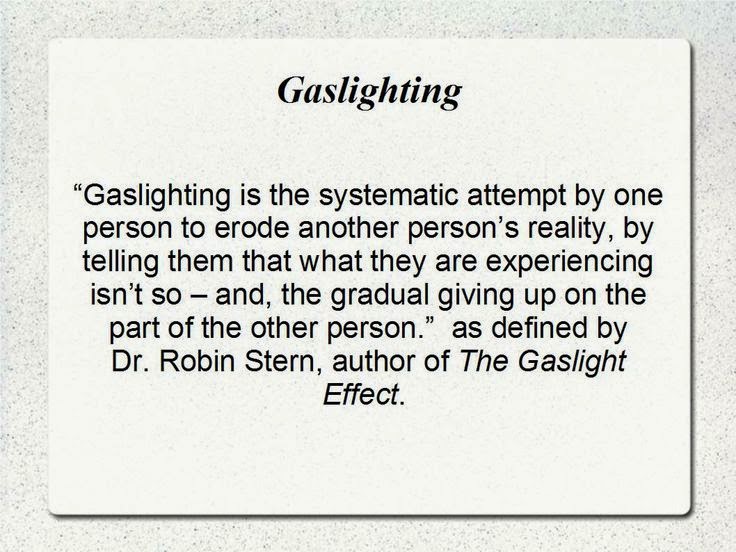
gaslighting

Following are the lies my malignant narcissist sperm donor told me about myself and also told all the flying monkeys he had succeeded in turning against me (some of who included my friends) over 28 years. This led to my PTSD and clinical depression (where I had to be hospitalized for suicidal ideation). Most of these were projections of his own character flaws onto me.

“You are selfish/self-centered.”

“You always overreact to everything.”

“You never listen to me”

“You don’t care about me or my problems.”

“You have no empathy for me.”

“You are narcissistic.”

“You are becoming just like one of them” (he was referring to Republicans, who he hates)

“Oh, so now you’re living the high life?” (when I took in a roommate while he was homeless)

“You are a b**ch, c*nt, Tw*t, whore.”

“You are stupid.”

“You have no common sense.”

“You’re insane.”

“There’s something wrong with you.”

“You’re just like your family–all crazy.”

…as well as a constant barrage of hateful sarcasm at my expense, whether there were people present or not. If I objected to this mean spirited “humor,” I was told–WHAT ELSE???–I was “too sensitive” or “have no sense of humor.”

Because of having grown up in the midst of a labyrinthine web of lies, and then marrying into another one, I have always valued Truth. That’s why I put a premium on complete honesty, at least in my writing.
Not that I don’t ever lie–we all do, it’s part of the human condition. But I am very aware of dishonesty when I see it and won’t hesitate to call it out in others.

How my mother became a narcissist.

housework

I’ve said a lot of negative things about my mother, but I don’t hate her. Today I was thinking about how she got to be the way she is. While most narcissistic psychopaths are probably genetically predisposed to this condition and are missing the part of the brain that causes them to have empathy and compassion for others (actually it’s just not functioning properly), in most cases there are also psychological factors. Many psychopaths and narcissists were abused or neglected children, whose own parents failed to mirror them adequately as young children. So as unpleasant as they may be, their condition is not their fault. It was done to them.

I’ve already described my mother as a vain, self-centered, image conscious woman who almost always put her own needs ahead of those of her children and husbands, and chose me (as the youngest) to be her scapegoat. At times I was also her golden child, especially prior to my teen years when I started to rebel, and she loved to make me in her own image, dressing me up like I was a little doll. She expected me to act like one too, and flew into a rage if I ever had an opinion of my own or dared to challenge her.

The story I’m going to tell is gleaned from the scant bits and pieces I heard over the years, most of it described by people other than my mother. Like most narcissists, my mother is stunningly lacking in introspection. She almost never talked about her past or her childhood, and the few times she did, it was negative. Most of her anger seemed to be directed toward her mother, who she spoke of with contempt the few times she did mention her.

Ginny was a beautiful child with big blue eyes and light red hair. Somewhere in my mother’s home there’s a photo of her at about age two, and she is dressed in a pink and white dress with a Peter Pan collar, her bright hair is done in a 1930s bob, and she’s sitting in an oversized chair holding a large teddy bear on her lap. On her feet are brown high top shoes, and her little feet are sticking straight out toward the camera. Ginny’s expression is solemn, almost sad. In fact, she looks close to tears. I will probably never see that photo again, as I am not in contact with my mother and she’s in her 80s and probably won’t be here too much longer, even though she’s in good health for her age and still looks younger than her years. I wonder if at the time that photo was taken, Ginny’s narcissism was already ingrained, or if she could have still become a normal, loving woman had her circumstances been different. The sadness in her face tells me she was hurting. It’s the most vulnerable I’ve ever seen my mother.

Ginny was the fourth and youngest child born to a naval academy officer and second generation Irishwoman. The family was middle class, lived in a nice house in a safe neighborhood outside Annapolis, Maryland, and raised all their children as Roman Catholics. Because Ginny’s father was in the military, when the Depression hit, the family didn’t suffer too much financial hardship and his job remained secure. But Theodore (her father) was a heavy drinker, probably an alcoholic, and started drinking almost the moment he got home from work. Anna Marie (Ginny’s mother) suffered from melancholia (what we now know as major depression) and after Ginny was born, took to her bed and stayed there for most of her childhood and teen years. She may have been suffering from postpartum depression, but in those days, no one knew about such a thing. Anna Marie started to neglect her duties as a housewife and mother, saying she was “too sick” and had to lie down.

Ginny was the most attractive of the four children, and the only one with blue eyes. She was obviously Theodore’s favorite child, and he constantly told her how beautiful and special she was. Anna Marie began to resent all the attention he showered on his favorite child, and became even more depressed (she may have been a narcissist herself). Theodore was a faithful husband (from all accounts) but his wife’s demands were wearing him down and he began to drink even more. Sometimes he came home from work already drunk and often he would pass out after eating dinner, so that no one was running the household but the children.

By this time Ginny was about six, and her older sisters (who were in their teens) and brother (who was about 11) weren’t interested in keeping the house clean or taking care of their exhausted, drunk father and depressed, ill mother. Ginny hated dirt and disorder, and took it upon herself to keep the house clean and cook the family meals (Anna Marie was a bad cook). Her sisters were always out at parties or on dates and of course her brother was a boy so he wasn’t interested in keeping up the home or taking care of the family. Soon Ginny was the sole caretaker and became her father’s young surrogate wife. (I don’t know whether or not she was sexually abused, but it would not surprise me and I assume she probably was). Anna Marie developed a hatred for Ginny, who seemed to be everything she was not and also got all her husband’s attention. Theodore’s adoration of Ginny increased, and he began to depend on her for everything, including confiding his problems in his marriage. Ginny seemed sympathetic, but was already plotting to leave the home.

At age 15, Ginny had become a drop dead gorgeous young woman. She left her family and dropped out of high school to marry a young man from the naval academy who was studying to be a Methodist minister. She took a job modeling for the local newspaper to help makes ends meet. By 18 she was pregnant and gave birth to her first daughter, and a few years later she had her second child, also a girl. But Ginny was tired of the church dinners and the drudgery of family life. She was bored and longed for excitement that her two young daughters and minister husband couldn’t provide. So when her daughters were just 7 and 2, she left them to marry my father. It was the late 1950s, and a woman leaving her husband and children just wasn’t done, but she did it without a second thought.

Although her older daughter had abandonment issues and hated Ginny for years for leaving, today my mother lives in her home and my sister’s become Ginny’s most loyal flying monkey. I barely ever knew my sister, but I was told several years ago that I was not welcome in her home because my sister didn’t want me there. Either my mother didn’t want me there and blamed it on my sister, or my sister is a sheep who believed all Ginny’s lies about me. Ironically, my sisters were much better off than if she hadn’t left them because the woman who married her jilted husband and raised them was a kind, nurturing woman, almost the polar opposite of my mother.

Another irony is that even though my mother, as a malignant narcissist, is completely lacking in compassion, both her father and my father were taken in by Ginny’s fake “sympathy.” Ginny listened to her dad talk about his marital problems when she was a teenager and offered him kind words and a ready ear; and recently my son told me how my father fell in love with Ginny (my father never told me this story but he told him): my father’s 3 year old son from his first marriage had been hit by a train and died, and my mother offered him a shoulder to cry on and a sympathetic ear and soon he was madly in love with her.

I clearly remember when my grandmother suffered a major stroke at age 57 when I was only 7, my mother’s comments after seeing her in the hospital. All she could talk about was how helpless and disgusting she was (the stroke had left her paralyzed from the waist down and incontinent) and how she couldn’t wait to get out of there. Even at that young age, I was horrified by my mother’s callous remarks about her own mother.

Even though I don’t use my real name or their real names, sometimes I think it’s just a matter of time until she discovers this blog. I had to go inactive on Facebook because of her extended family all finding me there.