The crazy history of my other blog.
I know what my real diagnosis is: CPD (Confused Personality Disorder). Enjoy!
Tag Archives: complex PTSD
Finally, a clearer understanding of Narcissism & how it relates to CPTSD
WARNING: THIS VIDEO MAY BE TRIGGERING (I found it extremely so).
The waif inside.

Tonight’s therapy session definitely made up for the one I had on Monday, which I felt wasn’t very productive because I seemed to be deflecting and avoiding talking about my feelings. I asked my therapist to stop me if I did that again, even if I get angry. He agreed to this and tonight I dove right in.
We were talking about myself as a little girl, especially the way I was never allowed to express my emotions, especially anger. He wanted to know what I did with all that anger. I thought about it for a minute, and told him I turned it toward myself, and that’s why I started to become so depressed and why I started to hate myself . He asked me to put my mind inside the mind of “little me” and describe how she felt and what she looked like.
We came up with a picture. I described her as a waiflike child, like those paintings from the ’60s of those sad, big eyed little kids, dressed in rags, with a gray, unhealthy pallor. She is always sad, almost always crying. She’s afraid of everything. She feels completely defenseless and in fact she doesn’t have any defenses. She was never allowed to grow up.
I was asked how I felt about her. I said I didn’t hate her, that in fact I felt protective of her and had to keep her safe from harm. She also makes me feel angry when she comes out without my permission because she’s too vulnerable and defenseless and that makes me feel ashamed. I have to protect her, but I also have to protect myself by keeping her hidden away so she doesn’t embarrass me.
It was harder to talk about her feelings about me, the way she views me. All I could come up with was that she felt like I kept her safe but wishes I’d let her out more. I realized then that it was easier to describe my feelings toward her than to describe her feelings toward me. I’m not completely disconnected from my true self, but dissociation is present.
He asked me what good qualities she has that I want to protect. I said she has a kind, gentle soul and a big heart. He asked what she wants. I thought about it and said, “all she wants is to love and be loved, and to belong.” I got emotional at that point and started tearing up. I wasn’t able to describe the emotions I was feeling at all, but I knew we’d made some progress. He wants to start seeing me more often. Somehow I’m going to find a way to afford it. This type of inner child work is hard, but it’s amazing.
Ditziness and complex PTSD, BPD.

“She has no common sense.”
“She’s just a dumb blonde.”
“She’s kind of ditzy.”
“She never seems to know what’s going on.”
These are phrases I’ve heard said about me my entire life, and not just by my abusers. To most people, I do come across as a little ditzy or scatterbrained. It doesn’t help that I happen to be blonde, because blonde haired people have to work twice as hard as everyone else to be taken seriously, since the (false) stereotype that all blondes are intellectual lightweights doesn’t seem to be going away.
I prefer to think of myself as an Annie Hall type. You may remember the 1977 movie starring Diane Keaton as Woody Allen’s (brunette!) scatterbrained but quirky love interest. I think I talk and act a lot like Annie Hall. At least I like to think I do, because Annie had a lot of charm and was loveable too. She was also a lot smarter than she appeared.

It gets tiresome being thought of by others as less intelligent than I actually am (my IQ is actually very high) and I get self-conscious about appearing “dumb.” My self-consciousness only seems to make the problem worse though, because it causes me to make silly mistakes and do or say socially awkward, dumb things out of nervousness.
For over a decade I thought I had Aspergers, because not only am I socially awkward, I often seem to be “out in space” and not really aware of what’s going on around me. It’s hard to hide this from others, and sometimes people talk down to me in a patronizing or condescending way, believing I can’t understand simple directions or information. I resent it when people do that.

I’m not an Aspie, and I definitely don’t lack intelligence. But dissociation is a symptom of both complex PTSD and BPD, and this is what I think is happening when I seem to be off in some other universe. When you dissociate, you’re not really in your own skin, and are not present in the moment. You’re outside yourself, stuck in the future or the past, and not paying much attention to the material reality of the moment. As a child, my report cards alsways had comments like, “Lauren does not pay attention,” or “Lauren spends too much time daydreaming in class.” I wonder now if I was dissociated whenever I was daydreaming.
Dissociative episodes can be very scary, but if you spend most of your time only slightly dissociated, you might not even notice that anything is wrong. You’ll just come across as being a bit “spacey.”
Further reading:
Derealization and Depersonalization in BPD and NPD
The awkwardness of being a Borderline ACON.

I won’t lie. It’s incredibly awkward being a blogger who blogs about two things that seem diametrically opposed to many people in the narcissistic abuse community: being a victim of narcissists, and having a Cluster B disorder (BPD). To those of you who aren’t familiar with the ACON (adult children of narcissists) blogosphere, there are a few ACON bloggers (not too many on WordPress, fortunately) who seem to think if you have BPD then you can’t also be an abuse victim and certainly shouldn’t be blogging about it. Because, you see, if you have BPD then you are one of the soulless abusers. If you are any kind of “cluster B person” blogging about abuse, then of it follows that you must have an “agenda.” What that agenda is is never specified though.
I have been accused of many things, none of which are pretty, and few of which are true. Most are crass generalizations made out of ignorance and a refusal to think outside the box or consider that not everything is all black or all white or that all people can be shoved into a box. . Here are just a few of the things I’ve been accused of.
- I have an “agenda” and dishonest motives.
- I am not really an abuse victim.
- I am being paid off or otherwise compensated other people (like Sam Vaknin) or psychiatric organizations (like the APA) to promote my “evil” views and blur the lines between Cluster B disorders and complex PTSD caused by abuse.
- I’m “evil.”
- I’m crazy.
- I’m confused.
- I only care about being “popular”
- As a Borderline, I have “no right” to be writing posts about narcissistic abuse.
To these accusations, here are my responses:
- Um, no. I’m not clear what “agenda” it is I’d be trying to promote. My only “agenda” is healing for myself, fun (because I love to write), and hopefully, helping a few others along the way.
- I guess some people never really read this blog because it’s filled with personal accounts of narcissistic abuse by both my family of origin and my ex-husband. Oh, that’s right. I’m just making it all up. 🙄 I couldn’t make up these accounts if I tried. I try not to dwell too much on the abuse though, because doing that doesn’t help me and only makes me miserable. That doesn’t mean it didn’t happen, though.
- This really makes me scratch my head. It almost makes me laugh how far a few people are reaching by saying this. The only monetary compensation I get is about $30 – $40 a month from running ads on this blog. I still live in poverty and I don’t have any kind of shady business dealings with any organization or person. I write this blog because I want to.
- That’s quite a value judgment there. You don’t even know me. I don’t point fingers and call anyone evil unless I have real good reason to, and even then I’m hesitant because I don’t want to be a judgmental person (I can’t stand judgmental people). I think it’s always better to use the term “evil” for actions, not people. I guess this idea that I’m evil is because I’m zOMG “Cluster B.” I’m not a narcissist (even if I do have a few of the traits) and I’m not antisocial and I do have empathy and an almost excessively strong conscience. But some people have the idea that even if you’re a self-aware borderline who practices mindfulness, you’re still as bad as one of the narcs. “Sociopath” is another thing I’ve been called but it means pretty much the same thing.
- Maybe there’s a bit of truth to this. After all, I do have four mental disorders–BPD, complex PTSD, Avoidant PD, and Seasonal Affective Disorder (SAD). I can act pretty crazy sometimes too. But at least I’m self-aware crazy and can see myself pretty objectively and control my urges to act crazy when they get out of hand. But just because you don’t agree with me doesn’t mean I’m crazy. I just have a different opinion than you do. Deal with it.
- There’s also some truth to this. It is VERY confusing being both an abuse victim and having a Cluster B disorder, even though the Cluster B disorder was caused by abuse! And like it or not, I DO think BPD and complex PTSD are almost the same disorder. Of course, this is just my opinion and no one’s paying me off or brainwashing me to “blur the lines.”
- No. My primary motive in blogging is healing myself and helping people. A secondary motive is fun. Yes, of course I look at my stats and always get a small thrill when they’re growing, but I don’t write to be popular or famous. Yes, I’d like to write a book someday and be able to make a living from my writing, but who wouldn’t? Even if I never make a penny from my writings and even if no one read my blog, I’d still be doing it because it’s something I really like to do.
- As a Borderline, I *AM* victim of narcissitic abuse. (see reply #6). ANYONE who was an abuse victim and wants to heal from the damage they endured has EVERY right to blog about it, and yes, that even includes people with self aware NPD!
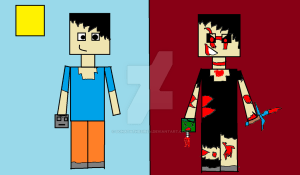
“Me and My Evil Crazy Me” (Minecraft image by Sonatathesiren)
I know my opinions are sometimes controversial and won’t sit well with everyone, but unless I’m presented with a convincing argument to discard my personal beliefs and opinions, they aren’t going to change. I ‘m a critical thinker who likes to explore all angles of an issue and then form my own opinions when I’ve gathered enough information. I’ve always walked to the beat of my own drummer, rather than mindlessly following what other people tell me I “should” do or believe. Being a “lone wolf” who walks to the beat of my own drummer and refuses to conform to the “popular” view is one of the biggest reasons why I was ostracized by so many people all my life–including my own family. But you know what? I don’t care. This is who I am and I’m going to keep running with it. I seriously don’t understand why people who dislike my opinions and views so much keep reading my posts anyway if it’s only going to make them angry. No one is forcing my opinions on those people. Just hit the backspace button! It’s easy.
I’m aware some people have a problem with this because it doesn’t fit into the almost cult-like mentality I’ve seen among certain (fortunately only a few) ACON bloggers. If you piss them off, be prepared to be mobbed. Maybe they’ll leave you alone on your own blog but make no mistake–they will be trashing you and your character on their own blogs. At the same time, there are so many more people (and bloggers) who appreciate my reluctance to put people into boxes and think in only black and white terms. There are many beautiful shades of grey in between the extremes. That’s one of the best takeaways of moving away from BPD black and white thinking and replacing that with critical thinking and mindfulness. If that’s evil and crazy, then evil and crazy I guess I will be. But I really don’t think it is.

Many people have told me my more open-minded approach has been refreshing and has helped them come to terms with the abuse they had to endure and move past the rage and anger they felt coming out of their abusive relationships, or when they went No Contact. At the same time, one of my aims has become reducing the awful stigma against people suffering from BPD. It’s a delicate balance, but I don’t think it’s undoable.
Being a borderline and a trauma victim who writes about narcissistic abuse issues as well as my own (and other) cluster B disorders, it’s sometimes a delicate balance. But they are not mutually exclusive. I feel driven to write about my disorders as they relate to my abuse and attempt to reconcile them because I need to for my own sanity and healing.
Borderlines: incurable demons or trauma victims?

The symptoms of Complex PTSD are almost identical to those of BPD.
Something has come to my attention during the time I’ve been blogging, which I think is important enough to merit another post about it.
Borderline Personality Disorder (BPD, DSM code 301.83) is classified by the Diagnostic and Statistical Manual of Mental Disorders as a Cluster B (emotional/dramatic/erratic) personality disorder having many similarities to character disorders like Narcissistic Personality Disorder (NPD) and Antisocial Personality Disorder (ASPD). Both NPD and ASPD are characterized by a lack of empathy, entitled behavior, and disregard for the rights or feelings of others. It’s also true that some Borderlines act out in ways harmful to themselves and others. Hence, “Cluster B” has become a pejorative category and some ACONs (adult children of narcissists) and others have demonized people with BPD as being amoral, immoral, and almost inhuman, nearly or as bad as as people with NPD or ASPD. Some even go so far as to lump all borderlines in with the “narcs” and barely make a distinction between them. In their minds, if you’re a Borderline, you’re no better than a “narc” and that’s all there is to it. You’re a bad person and to be avoided.
To make matters even worse, many mental health professionals refuse to treat people with BPD, believing them to be troublemakers, incurable, or both. I remember one therapist I saw years ago for an intake session and seemed to connect well with, called me a few days later after he received my psychiatric records, and told me he couldn’t take me on as a patient. “I don’t work with borderlines,” he said.
It’s true that there are some similarities between the Cluster B disorders, and both BPD and NPD/ASPD have roots in childhood abuse or neglect. But the similarities don’t run very deep. What I mean by that is while both a borderline and a narcissist cn be manipulative or abusive to others, the reasons are very different. There’s also the matter of intention. Borderlines, if they act out against others, aren’t usually aware they’re being abusive and/or manipulative. If their bad behavior is brought to their attention, they normally become very upset and feel terrible about it (unless they have a comorbid NPD or ASPD diagnosis). They act out because of overpowering emotions that they haven’t learned how to control. In contrast, a narcissist or person with ASPD acts out because they can. If their behavior is brought to their attention, they’re likely to become angry and rage against the accusation, make excuses, blame-shift it onto someone else, or deny it. Unlike most borderlines, they don’t feel remorse, guilt or shame for hurting others.
In addition, many borderlines are much more harmful to themselves than to other people. If they do act out against others, most are as frightened by their own outbursts as others are and sometimes more so. In a nutshell, people with BPD know they have a problem and wish they could be different. Untreated BPD makes a Borderline’s life miserable, while people with NPD or ASPD are usually not bothered by their disorder. That’s why, even though Borderlines can act “crazier” than narcissists, they can get better and are much more responsive to therapy or behavioral treatments such as DBT or CBT.
But we’re still caught in a gray zone, neither here or there. The stigma against borderlines (in my observation) has grown worse, and most narcissistic abuse sites pretty much regard people with BPD as the “female or over-emotional version of NPD.” (actually, Covert/Fragile NPD or Histrionic Personality Disorder would come closer). If we’re narcissistic abuse victims suffering from complex PTSD, it takes a great deal of courage to admit you also have a BPD diagnosis. It took me a few months to come out about it on this blog. Fortunately, I haven’t received too much (or really, any) flack about it.

Click to enlarge graph.
The good news is, a number of BPD bloggers are helping to reduce the negative stigma that we’re “bad seeds” with an untreatable disorder just because we’re OMG “Cluster B.” Think about this: have you ever noticed that there aren’t too many people with NPD (or ASPD) blogging about their challenges and insecurities, or fighting to reduce the stigma against their disorder? If they blog about their narcissism or psychopathy, it’s usually to brag about how NPD/psychopathy makes them superior or allows them to have control over others and be successful in the world. That’s because they don’t think they have a problem (They just cause others to have problems). Most Borderlines know they have a problem and struggle with it constantly, since it makes them feel so crazy and lowers their quality of life. I can only think of ONE blogger with NPD who was unhappy with his disorder and successfully treated for it (or so he says). That man probably had low-spectrum and probably covert NPD; a person with malignant or high spectrum grandiose-type NPD will never have enough insight or willingness to admit that THEY are the ones with a problem. In contrast, I can think of about 20 bloggers with BPD who are in treatment or therapy or have even been healed! I’m sure there’s many more that I don’t even know about.
BPD also seems to co-occur a lot with complex PTSD or PTSD. Most BPD bloggers I can think of also have complex PTSD or are in treatment for it. The symptoms of BPD and Complex PTSD are almost the same. The DSM does not recognize Complex PTSD as a diagnosis; it only recognizes PTSD, which is not caused by chronic trauma over a long period of time (such as having been abused as a child), but by one traumatic incident (such as fighting in a war or being raped). Therapeutic treatments for complex PTSD and BPD are also almost the same (for that matter, NPD and other personality disorders are treated almost the same way). Both BPD and Complex PTSD have a higher cure rate than NPD. Since Complex PTSD isn’t recognized as a valid diagnosis, I think a lot of people (especially women) who might have been diagnosed with complex PTSD if it was recognized get slapped with the “Borderline” label instead. Although I accept my BPD diagnosis (and have even become a little attached to it), I wonder if I might never have been diagnosed with it at all had Complex PTSD been recognized by the psychiatric profession. I think in some cases, BPD may not really be accurate, or could even be the same thing as C-PTSD due to their many similarities. At least one blogger (BPD Transformation, who used to comment here but stopped for some reason), doesn’t even think BPD is a valid diagnosis and shouldn’t exist at all.
Further reading:
Are BPD and Complex PTSD the Same Disorder?
Is BPD a Real Disorder or Should it Be Eliminated as a Diagnosis?
Guest post #3: Facing Complex Post-Traumatic Stress Disorder
I’m happy to introduce my third guest blogger, Alisha, who has a blog about living with Complex PTSD (C-PTSD) and chronic pain. She was kind enough to write this powerfully written guest post for this blog. I loved reading it because it ends with a message of hope, no matter how bad things might seem. Please visit Alisha’s blog, The Invisible F. She has another blog featuring her fantasy writing, including her novel, The Return of the Key.
From her About page:

Hi, my name is Alisha. I’m a proud alumnus of the University of Westminster where I did my MA in International Journalism. I love parrots, singing, drawing, sharing stories, fantasy movies, games and books, and people who like fantasy movies, games and books.
I live with a number of chronic health conditions including fibromyalgia, clinical depression, anxiety, & Complex Post-Traumatic Stress Disorder, and for much of my life have suffered from debilitating symptoms. I want to raise awareness to help people understand but moreso to share and engage with all those whose lives are touched by fibromyalgia and mental health problems in one way or another, so they know they’re not alone.
Facing Complex-Post-Traumatic-Stress-Disorder
By Alisha, The Invisible F.

I was sitting in a small room at hospital when the psychiatrist’s voice called me away from the brilliant white walls that were pulling me in.
“You’ve had a very difficult life Alisha” she said, looking at my notes. After asking me to recount some of my ordeals, she said “From your symptoms, I would say you have Complex-Post-Traumatic-Stress-Disorder (C-PTSD).”
I had to ask her how C-PTSD differed from PTSD, which many of us associate with soldiers who have served in warzones or conflicts. She explained that C-PTSD tends to occur in people who have suffered repeated traumas for a prolonged period, with no chance of recovering from each incidence.
The more she told me about it, the more I felt like she was telling me about myself.
I had a long history of abuse starting in childhood, when I honestly believed I wouldn’t live to see the age of 18. I survived, thankfully, but I continued to endure traumas past my teenage years and into my twenties. I can’t say which incident was worse, because I felt the enormity of each one added to the already heavy weights that I carried. At 16 I was diagnosed with depression and anxiety, suffering terribly painful anxiety attacks that made my chest hurt so much I thought I would die.
I tried to ignore the feelings my past stirred up, because I lived in a society that stigmatises mental health conditions. I thought I was fine. It was only years after my stepfather and friend were brutally murdered, that I started getting glimpses of the brokenness I had masterfully hidden from the world and myself. I packed my bags and left everything and everyone I loved behind, moving to the other side of the world. Surely pain wouldn’t follow me there. But we can’t unknow things, and there was a lot of pain etched on my heart and mind. These parts of me would not let me forget.
C-PTSD manifesting
The C-PTSD diagnosis made sense but I was still surprised. Mostly because I wasn’t expecting another label. I already lived with fibromyalgia, depression and anxiety and several months before had been slapped with borderline personality disorder, which I was still struggling to come to terms with. I could say very clearly what some of my symptoms were, but I couldn’t always say which diagnosis was responsible for what I suffered on any given day.
As time passed and I connected the dots, I understood more about how deeply C-PTSD had been affecting my everyday life, unknown to me.
Days before I met the psychiatrist at hospital, I was sitting in Accident & Emergency having a meltdown, unable to cope with the avalanche of emotions tumbling through me. I wanted to give up again and almost did. I didn’t understand why the smallest upsets felt like utter catastrophes, or why I seemed to attract bullies or why getting close to people terrified me so. The doctor was most empathetic about it.
“Well you’ve had a lot of bad experiences with people so that is going to shape your outlook. It doesn’t mean your outlook is wrong. It only means your experiences have shaped your perspective” she said.
If only other people were that understanding. Not too long before I had encountered very unsympathetic people in a shared flat where I resided. Just when I thought I was recovering from the dark feelings that led to two close calls on my life, I discovered that approaching the close of my twenties, I was having night terrors. I had never even known there was such a thing until it was googled by a flatmate who constantly complained about my screaming at night. I couldn’t believe that I was screaming while asleep with no recollection of it the next morning. I didn’t believe it until my own screams woke me in the dead of the night. Frightened and panicked, I searched around my room until reason returned, and I questioned what it was that I was looking for, and so terrified of.
Nightmares
I have a long history of nightmares, which started in childhood. The kind that leave you so terrified you’d do anything to keep yourself from drifting off, anxious of what’s waiting for you in the realm of dreams. Consequently, I developed insomnia from a young age. Generally, my anxiety tends to get worse at night. It’s not uncommon to find me wide awake in the wee hours of the morning when most people are getting their best sleep. I’ve always slept better in the day, when the sun is out and it somehow feels safer. When I (reluctantly) have to go to sleep at night, I clear my room to make sure there’s no clutter that might form awkward shadows, that may frighten me when I wake in between my cat naps.
My flatmates couldn’t understand the nature of night terrors, and I was accused in person, by email and text like a perpetrator. I felt bad about it, truly. The accusations though, only distressed me more, and increased the frequency and severity of the night terrors.
Recently, I started sleeping walking, and I often wake up running towards my bedroom door terrified, with no recollection of my dreams.
Living with C-PTSD has been like sitting in a prison inert, long after the doors have been opened. I have wanted so badly to walk through, tending to avoid things and places that remind me of past traumas. I think of all the positive things I’ve managed to achieve through my beleaguered time here. I spend my waking hours keeping extremely busy so I rarely have time for stray thoughts, and it works; but everytime I go to rest, my subconscience reminds me of the many demons I’ve buried and hidden away.
In my dreams I am always running, looking for an ally, and an escape that is rarely found. I often run in different directions, only to end up right back in the place where my captors are waiting by the prison doors. When I am not shut away, I am violently murdered, again and again, like a broken cassette sticking in the same sickening place.
The things I said I’d never do
I suppose I never realised how my past traumas were affecting me until my late twenties. People would say, ‘it’s the past, just leave it behind and move on.’ Or worse ‘everyone has problems.’ If only it were that simple. I’d give these people a chance to walk in my shoes if I could, and silence any doubts. I want to forget, and I do everything possible to move forward, but the mind is such a powerful thing. All my efforts have been no match for my mind which digs up torments when I am asleep.
Owing to C-PTSD, I’ve done a lot of those things I said I would never do. You know when we watch others suffer and silently judge, telling ourselves, ‘that will never be me’? At 17 I remember watching my 30-something year old friend elaborately explain how she avoided the doctor’s questions when he asked how she accidentally cut her arm again, needing stitches. When I asked her directly, she brushed it off, and I sat there thinking I will never understand this.
I didn’t think of my friend when I first hurt myself. All I remember thinking was how good the external pain felt, taking the focus away from my internal turmoil. Months later I diverted from my healthy diet and found myself facing bulimia. The first time I felt confused, wondering why I kept eating though I was satisfied. But I craved the food badly, I ate and I ate, until I felt so physically upset I had to empty my stomach. I cried & cried every time because I wanted to badly to stop but I had no control, and that was the part that got me. I didn’t even have control over me.
It’s sad that after everything I’ve suffered I’ve also had to deal with bullies who have targeted me because they know they could. I try to build myself up, to be stronger and braver in the face of this. I do psychotherapy and I’m not sure it helps. Maybe? Doctors say I will likely need therapy for the rest of my life. I’m not sure how I feel about that.
Every day is a challenge. But I wake up and set out to do my very best. I try to practise mindfulness and celebrate my successes. Whether they are publishing a new book, managing to stay out of hospital or simply getting out of bed when I feel like shit, I celebrate them all equally, because I know what it is like to be crippled by depression and C-PTSD. I know very well what it’s like to lie in bed unable to will myself up; to want to shower or make a cup of tea and not be able to do so. I know what it’s like to feel that it’s safer to stay alone than get close to people…to stay indoors for days, unable to set a foot outside the front door. So every day I achieve something, no matter how small, I pat myself and say ‘well done, you’ve done it today so when you think you can’t do it tomorrow, just remember you did it today.’
The one dream
I’ve told you what many of my nightmares consist of. But it would be remiss of me not to mention the one dream that overshadows every nightmare that comes.
In this dream, I carry a heavy babe in my arms as I climb a tall, rickety winding staircase leading to a wall. With every step I take, the child becomes heavier. When I’m almost to the top, the staircase crumbles like dust in the wind. This part of the dream ends abruptly, like a director’s cut in a poorly edited movie, and when I open my eyes I am on the sea front, surrounded by people who cannot see me. The rippling turquoise waters beckon me and I do not resist. I walk into them and as I float farther in, the waters envelope me, washing away every heavy burden my soul bears. I embrace the waters filling me up as I begin knowing a kind of peace. It almost feels…like home, where my soul will find rest, so I let it consume me. But as my consciousness ebbs, a hand reaches through the veil of the waters, and pulls me out. And again, the scene ends abruptly. I awake as a child, amongst the laughter and play of my fair cousins.
My aunt, an interpreter of dreams says the heavy child I carry represents the burdens I bear; the seaside scene is the deception of suicide and my subconscience believing that it is there I will find rest from the pain that plagues me. She says the hand pulling me out of the waters, is the truth that I am not lost, that redemption can, and will be found…that even when I am drowning, no matter how close I come to death’s doors a power higher than any torment and death will lift me up.
I press on, finding strength in my faith and true friends who embrace me, imperfections and all. I am encouraged by sharing with others in the same boat, by bringing a good word to those who need it. Maybe doctors are right…maybe I will need therapy for the rest of my life. Maybe. All I know is I’ve managed to make it this far, when I didn’t think I could. You could have told me a thousand times that I’d make it, but I wouldn’t have known if I didn’t walk this road myself.
A million hugs & prayers for your courage & peace of mind.
Love Alisha
Feeling Overwhelmed: it’s a PTSD thing
I think this is something a lot of us can relate to, especially those of us with PTSD and complex PTSD. I know I sure can, and there have been times where writing a new post seems like moving a mountain and I just can’t do it. Welcome back, Linda Lee!

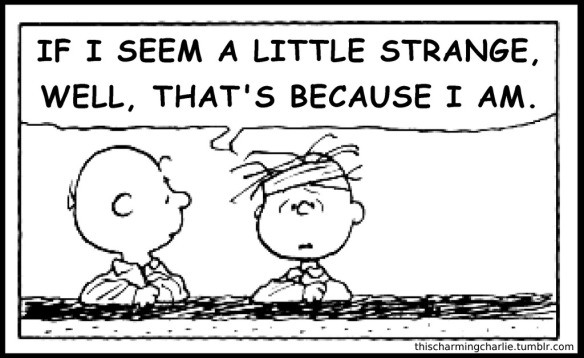 Image from This Charming Charlie on Tumblr.
TWO WEEKS AGO, when I started this brand new blog, I had big ideas for my first post. I was thrilled that the name I wanted — A Blog About Healing From PTSD — was available. I picked out the theme, loaded a header picture, wrote my description page, and got all the settings the way I like them.
But when I started to write my first post, I froze.
No, my problem isn’t writer’s block. I’m not depressed, not anxious, not sick, and I’m certainly not too busy to find the time to write. My reason for waiting two weeks before writing my first post is something that happens to me a lot, in all kinds of situations. It’s maddening, it’s debilitating, and most people don’t seem to understand it at all.
My problem: I AM OVERWHELMED.
When I’m overwhelmed, the simplest…
View original post 534 more words
My fractured memory.

“Fractured Memory,” by Hanna Trussler, 2012
I’ve been doing a lot of thinking about my early years–childhood and adolescence. As many of you know, my parents were active alcoholics, narcissists (my dad more likely covert NPD or maybe Borderline), and that I spent almost all of that time miserable and lonely due to emotional (and sometimes physical) abuse both at home and at school (because I was already trained to be a good little victim and had no self esteem or the ability to defend myself, I was bullied a lot).
The problem is, most of these early memories are fractured, hazy, or both. I remember snippets of traumatic events, but in most cases I can’t remember the entire event, or it’s spotty. Some of my memories seem more like dreams than reality and therefore I can’t remember the specifics of what happened. The same is true of my abusive marriage. I can only remember fractured pieces of that time. The two and a half decades I spent with him don’t seem like a cohesive whole, but more like a photo album with many of the photos missing. But this post isn’t about my early adult years.
I think something happened when I was 12 that was significant and a kind of turning point for me–it was when I stopped trusting anyone, I think. It was the moment when I realized how truly alone I really was and that no one cared and anyone who said they cared was probably lying. I’m not 100% sure, but I think this is when I stopped reaching out to others and began my avoidant pattern of behavior. Of course, this coincided with puberty, so maybe that had something to do with it too.
Here’s what I do remember. My parents and I had taken a two week trip to the beach. Another couple and their two children came along with us and rented the cottage next door. That couple was friends with my parents. I didn’t know my father was sleeping with the wife at the time, and my mother probably didn’t either, but I remember how jealous she was of that other woman because she was younger and blonder than she was and my father paid a lot of attention to her. Their daughter was a year older than me and was adopted. She was from India and was a close friend of mine at the time. I envied her beautiful long, glossy black hair, permanent tan, and huge soft brown eyes. Her little brother (her parent’s natural child) was an adorable little blond-headed boy of about 5 or 6. To me, they seemed like the perfect family. It may have been an illusion (for all I know, they were putting on appearances too), but to my 12 year mind, they seemed like they were in love with each other and their kids were both well loved and well-adjusted. My friend always seemed happier, more focused on a future (she eventually became a doctor) and much more emotionally stable than I was. I loved her and envied her.
My parents at the time were drinking heavily and fighting almost daily. Some of their arguments became physical, and I remember lying silently in my bed at night listening to these arguments as they escalated. I was both fascinated and terrified. What if they divorced? What if they abandoned me? What if they killed each other? What if I became an orphan? I seemed to be the cause of an awful lot of their problems (and they did fight over me a lot).
This beach vacation didn’t put a stop to their constant fighting, and one night, my father left. I don’t know where he went, but my mother and I were left alone. My mother didn’t speak to me about this and her demeanor toward me was cold, as if I was an annoyance to her. I was terrified my father was never coming back, and I remember crying myself to sleep the next night. I don’t think my mother ever came in to comfort me. She was probably getting drunk, but I don’t remember.
Desperate for someone to talk to, I pulled the father of my friend aside, and asked him if I could talk to him in private. He always seemed like a warm and sympathetic person to me, someone who loved kids. We sat down outside on a bench near the parking lot, with the sound of the waves crashing behind us on the beach, and I spilled out all my worries, all my pain, and all my fears. I talked for about an hour. He just held my hand and listened. I started to cry and he held me. He told me everything would be alright. He didn’t say he was going to talk to my parents.

He must have talked to them, because that night I was told by my mother that my father was returning to talk to me. She said he was not happy and was in fact enraged.
He came back as promised, and that’s where my memory gets all hazy and fractured. I remember snippets, like quick-flashing frames from a movie: getting beaten severely (but I was always beaten in a way that bruises didn’t show), being told I was a troublemaker and was the reason the family was falling apart. That I was nothing but a problem to them and never knew when to keep my mouth shut. I don’t remember the rest but I know there’s even more. I just can’t access it.
I also don’t know if my friend’s father had told my parents what I’d said to him because he was concerned about me and thought they might listen to him, or if he was just another participant in the abuse against me.
I realized even then my parents were drunk and probably not fully in control of what they said and did, but I think behind their alcoholism was narcissism. I think a lot of narcissists become alcoholics or addicted to drugs, and even after they become sober or clean, refuse to look any deeper into the core issues that caused them to drink or use in the first place. But that’s a subject for a later post. One thing that did occur to me, was that the only time my parents seemed to come together as a team and weren’t attacking each other, was when they joined forces to attack me. Only then were they the unified couple I dreamed of, unified in their abuse of their only child.
I don’t remember much of what happened after that beating and berating. I’m pretty sure our vacation ended at that point. I might have been sent to stay with relatives for a week or two, or left with a babysitter, so they didn’t have to deal with me. I feel like something important got blacked out, but I can’t remember what it was. But it was around this time that I stopped being able to confide in anyone at all. I remember one of the nuns who taught me in 8th grade, a woman who seemed to favor me for some reason, once called me aside and asked me if I was abused at home. I thought to myself, how can she tell? Of course I told her I wasn’t, that everything was fine. But nothing was fine in my life anymore. I think my emotional growth stopped that summer. At age 12. But it might have stopped even earlier than that. How in the name of God was I ever supposed to grow into a happy successful adult, able to form healthy attachments to others, when I never grew beyond the age of 12?
The next summer I was sent to sleep-away camp for the entire summer, and while I did enjoy it for the most part, I couldn’t help but feel that it was a rejection, a way for my parents to get rid of ‘the problem child’ so they didn’t have to deal with my “issues.”
Wow. Suddenly I feel like crying. The pain is getting real.
I’m asking the little girl who still lives somewhere inside me to tell me everything she knows.
Circling around the maelstrom.

I’ve been thinking a lot more about my parents and my nightmarish upbringing as a hybrid scapegoat/golden child (I was raised as an only child, so I had to be both). It’s worse in some ways than just being a scapegoat, because it’s a topsy turvy hall of mirrors where you can predict nothing. There’s no stability. There’s no security. There’s no consistency in a childhood where you have to serve two roles, and never know which one you’re going to be next, and where both roles you play are a lie.
I started blogging because of my sociopathic NPD/ASPD ex. I was trying to deal with my feelings about going VLC (very low contact, since we have children) with him and cope with being on my own for the first time. Blogging introduced me to myself.
I’ve been through a lot since the day I sat down and started to write. As I progress in my journey, I’m spiraling ever closer around the emotional vacuum that lives in my center, the maelstrom that was born from hurt and pain. I liken it to a black hole in space or a maelstrom in the ocean, because everything disappears there never to return. Falling into it prematurely could obliterate me. But if I’m ever to heal from my disorders, I need to dive into that maelstrom and explore its terrors and maybe its wonders. I’m a lot more courageous now than I ever was before. I think I can do this.
I’m realizing the problem wasn’t really my ex after all. What I mean by that is that we came together because I was programmed almost from birth to become codependent to someone like him. Yes, he made me worse, but I was in bad shape long before he came on the scene. In therapy, I’m beginning to talk more about my childhood, and the pain inflicted on me by disordered parents. I’m still at the point where I explore it from an emotional distance, as if I’m watching a movie. I can’t really internalize and surrender to the pain yet. I feel a vague sadness and anger, but I’m dissociated from it, as if it’s someone else it’s happening to and I’m just watching.
But it’s beginning. I’m starting to trust my therapist enough to take the plunge. He is using reparenting techniques on me, which is what I wanted. He’s empathetic, which is what I needed. I’m thinking about my past a lot, and making some connections. I have some tools to protect me when the time comes to go in. I’m scared but excited. I’m gaining courage.
I’m swirling around the edges of the maelstrom, looking down into an opaque blackness that looks empty but is full of unseen mysteries. I won’t fall into it. I’ll willingly dive into it, just like when I was eight and first jumped into the deep water at the community pool.
Once I dive in, I’ll either disappear forever, or rise from it triumphant. I’m banking on the latter.
 Lucky Otters Haven