#23 – The Borderline-Narcissistic Continuum: A Different Way of Understanding “Diagnosis”

This is more the sort of thing I want to blog more about. Here’s a somewhat scholarly but interesting and thought provoking article about BPD (borderline personality disorder) being on a continuum that ranges from psychosis (being totally out of touch from reality) to normal (neurotic) behavior (the idea being that everyone is neurotic to some degree, which is what makes us human).

Borderline Personality Disorder was originally given that name because mental health experts studying this disorder in the early years believed that borderlines straddled the line between psychotic and neurotic in their thinking and behaving patterns. For a borderline undergoing healing, NPD (actually functional narcissism, which includes developing self esteem) is the first step toward mental health.

According to the experts mentioned in this article and many mental health professionals, BPD is a less functional and more ego-dystonic form of NPD.

bpdtransformation's avatarBPD Transformation

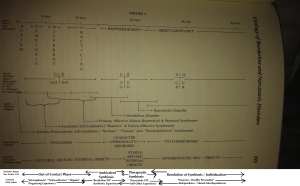
For the purpose of understanding psychiatric problems in a more nuanced and optimistic way, here is a diagram from Donald Rinsley’s book Treatment of the Severely Disturbed Adolescent:

CAM00157Update

Please click on the picture to see it larger. Each row corresponds vertically to the rows above and below in describing degrees of emotional development, and each row describes emotional growth over time from left to right. The majority of the text in brown is Rinsley’s own diagram; the bottom additions in white are mine.

Donald Rinsley was among the most respected authorities on borderline and narcissistic conditions in the second half of the 20th century. He was a psychodynamic therapist who ran a psychiatric hospital for severely troubled adolescents in Topeka, Kansas in the 1960s, 70s, and 80s. He later worked extensively with personality-disordered and psychotic adults in an outpatient psychotherapy practice.

I believe that much can be learned from studying Rinsley’s…

View original post 1,954 more words

The point of no return.

u_turn

Last night Fivehundredpoundpeep disagreed with a post I wrote, saying that people who chose narcissism reach a point of no return when become thoroughly evil. She has religious reasons for this view (“reprobate” is a religious term that means the person even while still alive is destined for hell because God has turned his back on them due to their bad choices). While I don’t share her literal biblical beliefs in certain damnation for some (I believe this is from Calvinist thought), I agree with her that most narcissists do get worse with age and many reach a point of no return, where they become so hardened they have no hope of changing-and I do agree this change is due to a total selling out of whatever conscience they may have had, if they ever had any. I have seen this up close and personal with my ex, who is a frightening example of someone who completely sold his soul, for lack of a better phrase, to the devil. All Cluster B personality disorders have a spiritual as well as a mental component, but narcissism is a slippery slope into inescapable darkness and misery.

When I married my ex in 1986, he was definitely a narcissist but lower on the spectrum than he is today. While still being abusive and extremely manipulative, he did have moments where he showed what I believed was genuine goodness. He was actually a good father to our two children–at first. In fact, he was more patient with them as babies than I was. It was later that he began to scapegoat our son (who like me, is highly sensitive and able to see through his father) and started to use our daughter as a sounding board for his own problems when she was still just a child as well as a junior flying monkey against me and her brother.

I’m not entirely sure when he crossed the “point of no return” but it seemed to be between 1997 and 2001, during the time his mother lived with us before entering a nursing home. This is when I believe he became thoroughly evil and it was because of the way he treated his ailing mother.

His mother was a thoroughly malignant narcissist who was very abusive to my ex while he was growing up. She too became worse with age, but in the late 1990s, she developed Alzheimers and could no longer live alone, so we brought her to our home where an eye could be kept on her. As malignant as she was, she was losing her faculties and her mind and it would have been inhumane not to try to help her.

Most of her care fell on my shoulders, a difficult thing because my kids were still very young and I was trying to raise them too. I was also suffering from severe depressions during this time due to my ex’s increasing abusive behavior as well as his heavy drinking and drug taking, for which I had to be hospitalized twice. So you can imagine I wasn’t the most patient caregiver, especially because his mom could still be so unlikeable. It was hard for me to not become angry with her. I tried to control this, but found it so hard, especially when she began losing control of her bowel and bladder. Every day I was confronted with messy bedding because she kept pulling off her diaper and would fight me or start crying whenever I went to change her. I was never cut out to be a nurse, but this was too much and there were those times I’d yell at her in frustration.

old_woman
Unknown artist.

My ex hated his mother, but did not want to put her in a nursing home due to the expense. Of course anything I had to say about the matter fell on deaf ears. He had actually made her sell her house when she moved in with us and obtained a power of attorney so the money from the sale was in his name (the money was gone within one year). I never felt this was right but admit I enjoyed having more money, so I never said anything to him about it being wrong. While what he did wasn’t illegal, it was extremely unethical and selfish. While his mother’s immediate needs were taken care of, he had complete control of the money and most of it did not go for her care and went for luxuries for us instead. I always felt badly about this and for years felt like my sin of overlooking this would never be forgiven. (Recently I repented and know I have been forgiven but it still bothers me sometimes).

But enough about that. My ex was increasingly abusive to her while she lived with us, and reached a point where he became physically abusive and would spank her like a bad child–IN FRONT OF MY CHILDREN! As awful a mother as she was to him, she did not deserve this. Whenever I brought up how wrong his behavior was, he said he had a right to treat her that way because she was such a horrible mother. He said it was karma. Not once did he ever admit he was wrong. After a while, my bad case of narc “fleas” became so bad I began to join in the abuse–not hitting her, but I stopped trying to defend her and began to think maybe his spanking her wasn’t really wrong. After all, she did act like a naughty three year old. I didn’t know it, but I was suffering a form of Stockholm Syndrome, where a victim begins to identify with their abuser and make excuses for their bad behavior. Still, I begged him to put her in a nursing home but he still refused.

It was during this time he began to grow pot in our outbuilding, and his immoral behavior ramped up a few notches. He recruited our 8 year old daughter to water the plants and watch out for cops! I couldn’t believe he would do this, but I said nothing because nothing I said ever was taken seriously or I’d be belittled for bringing it up. He also started to hit my son, and berate and belittle him constantly. All this was new for him. Before his mother had moved in he had never been physically abusive to our children and stayed away from alcohol and drugs. Now he was drunk or high most nights and began to change into a person I was becoming extremely afraid of. His look became harder and colder, and he was rarely affectionate anymore. His eyes became very cold, almost demonic at times. Both of us had affairs (I’m not proud of this either because I was actually worse than him). I was mentally ill myself due to the abuse but this doesn’t excuse the part I played in this whole mess of a marriage.

In 2000 his mother developed cancer and after her hospitalization, finally entered a nursing home. We hardly visited her at all but whenever we did, he would tell the kids how stupid and horrible his mother was and encourage them to insult and demean her. He told them she deserved the way he treated her because of the way she had treated him.

She died in January of 2002 and to this day, my ex never went to pick up her ashes.

It was during these five years from 1997-2001 that I saw my ex change from a person who could sometimes be nice and was often a lot of fun into a monster who appeared to have no emotions at all or any empathy for anyone else. Looking back, I think it was because he crossed a line from “mere” malignant narcissism into full blown psychopathy brought on by continual abuse of his helpless mother. Yes, his mother was a highly malignant narcissist herself and his hatred of her was understandable, but no one with a conscience would have treated her the way he did when she became ill. It scares me to think how close I came to becoming evil myself, because of my collusion with him in this horrible abuse. For the past few days I have been struggling with the evil I see in myself, and as a borderline, I’m so close to being a narcissist anyway. There were so many times while I was with him that I flirted with turning my back on everything good and right. I’m having a rough time accepting this and forgiving myself. But that’s for another post.

From 2002-2004 our marriage continued to worsen and the psychological abuse grew worse (not the physical, because he stopped drinking and he was only physical when he was drunk). We obtained a divorce but in 2006 I made the mistake of allowing him to move in with me. By this time he was parasitic and refused to work. I’ve written about this elsewhere.

walking_indarkness

Today I see no goodness in him at all. I’ve never seen a person so filled with hate and rage. His conversation is always sarcastic, biting, and negative. He never has anything positive to say and spends most of his time trolling political websites and getting high. He’s not out there committing violent crimes, but he’s a person who seems to have no soul. The rare times I do see him (I avoid this as much as possible), I can’t even look him in the eyes because they’re so dead and empty. I’m afraid just looking into them can infect me with his evil. Our daughter unfortunately is still in thrall to him, and I pray all the time she will be okay. I’m afraid further close contact with him can destroy her soul the way it almost destroyed mine, and she’s halfway there already, showing a number of narcissistic traits. Like me, she has a really bad case of “fleas.” I can’t keep her from seeing her father though. She is an adult and I have to accept that I can’t make her choices for her.

While it’s very sad to see a person so thoroughly gutted spiritually, I have no sympathy for my ex. I do have sympathy for the little boy he used to be, but he died a long time ago.

My son, who was scapegoated by his father, seems to be the most mentally healthy person in the immediate family. He does have some anger and self esteem issues (don’t we all?) but he is strong and determined to escape the fallout of the family illness. I am so proud of the man he’s becoming.

Narcs who use therapy to gaslight their victims.

flying_monkeys2

This discussion came up as a comment on another post, and I decided it would make an interesting topic for a new post.

A frequent commenter (Mary Pranzatelli) pointed out that among psychotherapists, there is little understanding of the Cluster B disorders, including NPD, which may be one of the reasons why these disorders are so difficult to treat. They wind up treating the wrong disorder, or more accurately, they stop short by treating the presenting disorder (depression or anxiety) but not the underlying one that led to it (the personality disorder).

An example of this would be a narcissist (or a borderline) who comes into therapy for depression caused by the end of a relationship. The therapist sees the dysphoria and depressed body language, and the client is only interested in relief of their depression. They have no interest in getting treatment for their narcissism because the way they see it, the personality disorder that led to the end of their relationship (and resulting depression) isn’t a problem. In most cases they don’t even know they have a personality disorder.

The therapist, knowing little about NPD or personality disorders, treats the client for the depression only, and when the client feels a bit better, they leave, only to wind up in a new relationship that is also destined to end because the underlying NPD will still cause them problems in their next relationship.

Mary also pointed out that therapists unknowingly aid narcissists in the abuse of their victims. I agree because I have seen this happen with my ex. My ex (unlike most narcs) has always been open to therapy, but only for his depression/anxiety, not for his narcissism. Being a “willing client” aids him in his “victim” mask. He isn’t in therapy to get any real help, but to “look good,” eg, look pathetic and abused. It helps his case.

flyingmonkey

All his therapists aided him in his gaslighting of me. He had them believing HE was the victim and I was the abuser. Once when we were in marriage counseling (which was my idea!), he had the marriage counselor scolding me for trying to “control” him. Ha! This was shortly before I was hospitalized for major depression (and diagnosed with borderline PD myself).

In this way, some narcissists use therapy as a way to gaslight their victims (who become their “abusers”) and the therapist becomes a flying monkey!

NPD vs. BPD: they are not the same thing!

BPD-Awareness

Articles like this one make me want to rage. The author, Doug Bartholomew, a licensed social worker, believes that people with Borderline Personality Disorder (BPD) are pretty much the same as people with Narcissistic Personality Disorder (NPD). He even goes so far as to say BPD’s, along with NPDs, fit the criteria for M. Scott Peck’s “People of the Lie.”

Wait just one second. Peck’s People of the Lie don’t even include all narcissists–his definition describes those with Antisocial Personality Disorder and malignant narcissism (there’s a huge difference even between MN’s and garden variety narcissists–a malignant narcissist has ill will toward others and decided antisocial traits while a “benign” narcissist isn’t necessarily ill-intentioned but is just self centered and doesn’t care about your feelings). Peck never said all manipulative people (people with one of the four Cluster B personality disorders) were by nature evil, but evil people is what his book is about.

At the same time I understand where Bartholomew is coming from. On the surface, people with BPD can be manipulative and even resort to some of the same unpleasant tactics and mind-games (gaslighting, etc.) that narcissists like to play. They can appear to lack empathy, because they get so caught up in their own drama that they can literally forget that others exist. They can be demanding, high maintenance and prone to irrational rages (just like narcs) but are far more likely than narcs to turn their rage inward and become self-destructive or even suicidal.

Narcissism Clinic.
Not much to do with this article, but I couldn’t resist.

Borderlines also usually regret their acting-out and selfish or manipulative behaviors when the crisis has passed or their bad behavior is called out to them. They may be self-centered and impulsive but are not lacking remorse or the ability to feel shame and guilt. The problem with Borderlines is they tend to act as they feel at the moment without thinking things through. They can get so caught up in their own fear of abandonment that they almost literally forget that you have feelings too. However, after the fact Borderlines usually will feel remorseful and ashamed of their behavior, and on top of that, realize that their offputting behavior may cause others to do what they fear the most–abandon them.

Bartholomew also states that all Cluster B disorders are characterized by a lack of empathy:

The overwhelmingly most commonly mentioned behavior or trait associated with all the Cluster B Personality Disorders is a lack of empathy or compassion. They seem unmoved by the effect their behavior has on their loved ones other than what is necessary to keep their loved ones engaged and around. It is as if they were tone deaf or color blind to the feelings and experiences of others.

While it’s true that people with NPD and ASPD are characterized by a lack of empathy, I disagree that this is true of people with BPD. I think this is a gross overgeneralization.

Borderlines can feel empathy, but due to their impulsiveness and fear of abandonment, they can act in selfish, defensive, and manipulative ways that may hurt others (but they hurt themselves even more so). However, unlike malignant narcissists and people with ASPD, Borderlines do not set out to hurt others and they do care how others feel. Unfortunately their good judgment is clouded by their disorder which makes it difficult or impossible for them to regulate their emotions. That’s why they act so impulsively and often fail to think things through before they act out. It’s also why their relationships tend to be stormy and short-lived.

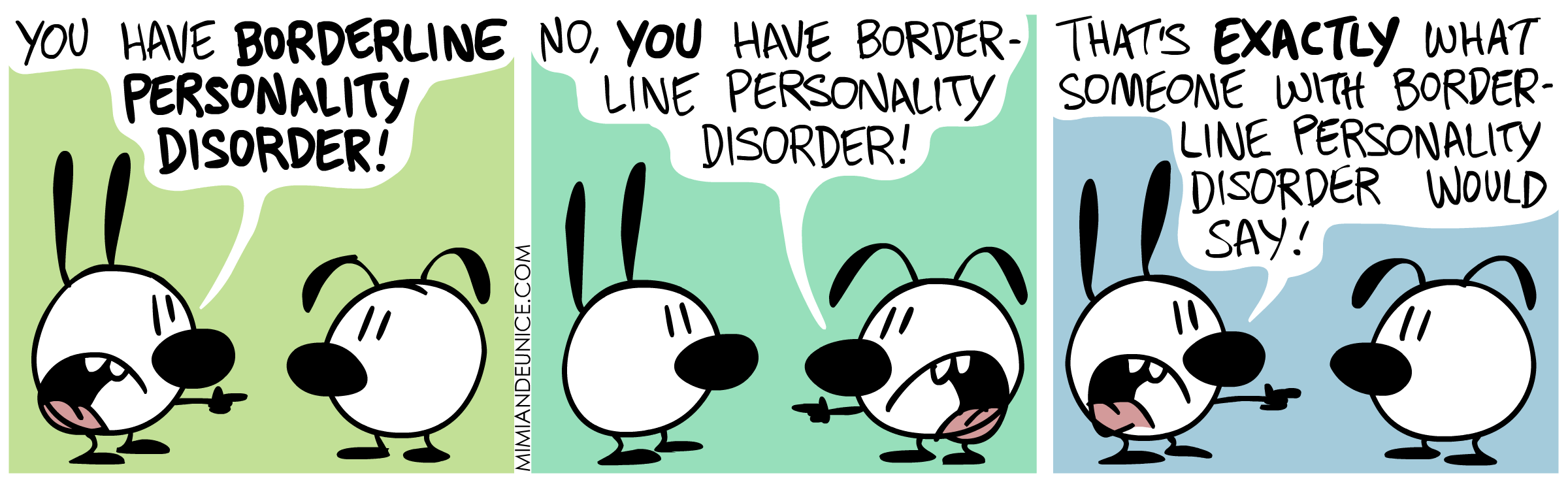
BPD_cartoon

A person with BPD does not wear a mask or have a “false self” like someone with NPD–but their fear of abandonment can cause them to knowingly or unknowingly push others away. Their ambivalence in relationships can be very confusing to others–they can seem to adore you one moment, and then hate you the next. They can seem needy and rejecting by turns. When others grow tired of this crazymaking and confusing “I hate you, don’t leave me” behavior and finally leave them, the Borderline genuinely doesn’t understand what they have done to drive the other person away, and so they become even more fearful of being abandoned. Their behavior is maladaptive because it tends to cause the very thing they are trying so desperately to avoid.

63380797
We are just burning toasters.

A much better description of the similarities and differences between Borderlines and Narcissists can be found in “Borderline vs. Narcissistic Personality Disorder: How Are They Different?” from the Clearview Women’s Center’s website.

While the two disorders, both being part of the Cluster B group of personality disorders, do have overlapping symptoms and are often confused with each other and/or misdiagnosed as the other disorder (with males being far more likely to be diagnosed with NPD and females with BPD), this author, unlike Bartholomew, understands that both the motives and mechanics of the disorders are quite distinct from each other:

[…]both BPD and NPD deal with conflict in a way that is unhealthy to themselves and those around them. It’s the expression of the anger that results from the conflict that is different.

In her article “Blame-Storms and Rage Attacks,” Randi Kreger, co-author of Walking on Eggshells, points out the difference in how those with BPD and NPD express anger. While those with Borderline Personality Disorder may fly into a rage and push people away, they will often calm down, feel shame for their reaction, and promise never to do it again.

“Unless they’re in treatment, the underlying issues don’t go away. Some conventional [borderlines] do not get angry at all, but hold it in or express it inwardly through self-harm,” says Kreger.

“The anger of narcissists, on the other hand, can be more demeaning,” she continues. “Their criticism evolves from their conviction that others don’t meet their lofty standards — or worse, aren’t letting them get their own way.”

Cluster B personality disorders and the emotional thermostat.

If you think of the Cluster B (“dramatic”) disorders (characterized by either too much emotion or the masking of true emotions) as malfunctions or problems of the sufferer’s “emotional thermostat,” their differences make more sense. The emotional thermostat determines how a person handles their own emotions or reacts to those of others.

emotional_thermostat

Borderline Personality Disorder (BPD): inability to regulate emotions (a thermostat that works but is having problems–cutting on the heat or air when it isn’t needed or shutting it off when it is, but half the time works perfectly). This explains their ambivalence in relationships (“I hate you…don’t leave me,” “go away, come closer.”)

Histrionic Personality Disorder (HPD): inability to control emotions (a thermostat that is always on High and blasting heat even when it’s already too hot). That’s why they overreact to everything.

Narcissistic Personality Disorder (NPD): inability to access true emotions (a thermostat that sets to “cold” and turns on the air conditioner when heat is needed, and “hot” and turns on the heat when the air conditioning needs to be on). This explains their lack of empathy and show of fake emotions that may not fit a given situation.

Antisocial Personality Disorder (AsPD–psychopathy, sociopathy): total inability to empathize or respect the rights of others (a broken thermostat that doesn’t work at all.) People with ASPD are unable to feel any emotions except rage.

What my fear of rejection makes me do

borderline_pd

Time for a true confession.

I’ve been focusing a bit less on narcissism because the topic itself is somewhat of a trigger for me right now.

But I’ve recently decided to write openly about my BPD, which (along with Aspergers) is often misdiagnosed as narcissism.

Besides the envy and pride I’ve previously mentioned as my worst narcissistic traits, there is one other thing that has sometimes made me wonder if I might really be a narcissist.

Whenever any male in a position of authority has tried to tell me the truth about myself (like a therapist or teacher), I want to attack them. When I was much younger (teens and 20s) this manifested as rage attacks (as it did with my therapist during my 20’s). Today it’s more likely to be expressed as sarcasm, snarkiness, or just…silence. All of this is very narcissistic of me and makes me want to cringe in the corner when I think about it. Because knowingly hurting someone goes against the bigger, better part of me, a person who is kind and compassionate and hates to see anyone suffering or hurt.

I used to torment my therapist back in the 1980s. He didn’t know the intense feelings I had for him. I wouldn’t give him the satisfaction. If you’ve ever watched the ’90s Nickelodeon cartoon “Hey Arnold,” you will remember how cruel Helga always was to Arnold, but secretly she mooned over him.

helga_arnold

My therapist must have hated me. I LIKED tormenting him. He sat there week after week taking it like a trouper. If he was angry or upset, he never showed it. Most likely my strong feelings and verbal attacks were a form of transference. Maybe I experience a form of transference toward any male in an authority position who mirrors me.

I finally told that therapist I was quitting. Why? Because of my fear he was so tired of my mindfucking him that he’d tell me he couldn’t be my therapist anymore. I knew I wasn’t cured, but I left anyway. Sure, I was having trouble handling my infatuation, but now I know it was really all about hurting him before he could hurt me. How stupid of me, since he was probably more than happy to see the back of me.

hateyou_leaveme

I’ve really been thinking a lot lately about my BPD and the unpleasant ways it sometimes manifests itself. The behaviors are narcissistic, and they don’t happen all the time, or with most people (thank God for that!) But the reason they exist at all is because as a Borderline, I live in mortal terror of being rejected or abandoned, and certain men in authority who tell me truths about myself may represent my father, who I was afraid would reject me (even though he wasn’t really the problem at all).

Sometimes I do wonder if I may be a narcissist.

But I know I’m not because it makes no sense. Real narcissists don’t have a conscience or empathy. They can’t be happy for you or sad for you and I can be. If I do something wrong–even if I derive some kind of sick pleasure during the time I’m engaged in it–afterwards I feel terrible. I just want to run and hide.

I’m working on these behaviors, using an old workbook I got in 1996, because lately I’ve been thinking about possibly dating again. I’m getting over my fear of finding myself with another narc, because I feel like I know enough to read them now, to see the red flags and know when to run if I must–but I also don’t want to drive a nice guy away due to my “I hate you….don’t leave me” Borderline tendencies.

There’s so much apologizing I would like to do to so many people. I know that’s not possible but I wish it were.

I know I’m changing for the better, but a lot of bad and painful emotions are coming to the surface in the process of discovering who I am, because I’m feeling again. I think my PTSD is almost healed, and that’s a great thing, but mixed in with all the nice, loving, tender emotions are some not so nice ones too. Like a maggot crawling on the petals of a rose.

I never said I was perfect.

#25 – Who Was The First Borderline? – From Cavemen and Dinosaurs to Creationism and the FSM

A very funny look at how BPD might have made it into the gene pool. Who was the culprit? Cavemen? Apes? Dinosaurs? Single celled organisms? Can creationism and a “young earth” explain BPD better than evolution and its “old earth”? Or is BPD it simply a construct invented by mental health professionals to label a group of people with a certain subset of psychiatric behaviors that aren’t particularly adaptive.
A great read!

bpdtransformation's avatarBPD Transformation

Where did BPD come from, and how was it passed down to modern humans? This is one of the more vexing questions of our age. For an answer, we must turn to the all-knowing wisdom of American psychiatry, which proclaims:

Grandparent1

“BPD is strongly inherited.” This seems like an answer to where BPD comes from. But is it? According to psychiatry, BPD is mostly in the genes. But how could this dreaded disease have originally developed? It didn’t magically appear out of thin air. This begs the question:  From whom was BPD first inherited? Who – or what – was the real “first borderline”?

In this essay, I will take psychiatry’s thinking to its logical conclusion. If BPD is “inherited”, we should be able to track down the ultimate source of this nefarious malady…

View original post 2,653 more words

I hate my BPD.

bpd_crazy

Sometimes my BPD rears its ugly head. It comes off as narcissism to people who don’t understand. I don’t always understand it either, and because impulsivity is a factor, when I act out in Borderline ways, I’m not even always aware at the time I’m doing it. Sometimes it doesn’t become clear to me until it’s pointed out to me later, and then I’m all, “Oh my God, what have I done?”
Then I beat myself up with guilt and shame, which is what I did today.

Even though I learned tools for handling my BPD when I was hospitalized (for Bipolar II) in 1996 and have found those tools helpful, sometimes it’s not enough and my BPD gets the best of me. I’ve been accused of being narcissistic before. I know I’m not a narcissist, but I can understand why some people might think so.

bpd_things

God, I really hate this disorder. Out of all my disorders, it’s the worst one. It trips me up so often and destroys friendships and makes people think they can’t trust me. Then it’s very hard to convince them I never had ill intentions, but acted impulsively out of whatever emotion at the moment was driving my behavior.

I think blogging was the first step in my recovery from narcissistic abuse, but I’ve reached a place where a lot of emotional garbage that was buried and frozen because of my PTSD is coming up to the surface and it HURTS A LOT. I just wanted to cry all day. I didn’t but I wanted to.

I will still blog of course (I don’t plan to ever stop either), but my BPD is showing more and I think all the weird emotions I’m feeling that I can’t understand are becoming too much for me to handle alone anymore. It was suggested to me that I really need to seek counseling at this point. I know there are free or low cost mental health services in my area I could look into.

I hate my BPD. I wish it would just go away and stay away forever. It’s caused me and people I cared about so much misery. It’s destroyed so many friendships. I don’t want this anymore. I can live with my Aspergers and even enjoy it, but being a Borderline really sucks. 😦
Just one more way my FOO fucked me over…

“Coming out” about my BPD

Hand of a child opening a cupboard door

On November 22, 2014, I wrote an article about my daughter Molly (not her real name), who I suspected of having NPD due to having been used as a flying monkey by her father for many years. I prayed it was “just” BPD.

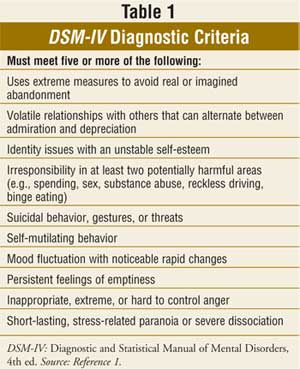
Last month she was evaluated and her Axis II diagnosis was Borderline Personality Disorder (BPD). While BPD is a Cluster B disorder and shares a number of traits with narcissism, it’s more amenable to treatment because a Borderline does have a conscience and the ability to feel empathy–but their tendency to fly off the handle, their insecurity/neediness, and propensity to engage in self destructive activities that sometimes hurt others masks the fact they really aren’t bad people. My daughter actually has a huge heart and cries when she sees someone suffering or in pain, so it fits that NPD wasn’t her diagnosis. Still, I’m relieved she’s been officially cleared of it.

I was diagnosed with BPD myself in 1996. I have been hesitant to call attention to it on this blog or talk about it much, because of its close association with NPD and other “character disorders” like ASPD. At the time I was diagnosed I was in an inpatient psychiatric setting, where I was also diagnosed with Bipolar I (major depression with fewer or no manic episodes), generalized anxiety, PTSD, Avoidant PD (I didn’t know you could have two PD’s at once back then), and substance/alcohol abuse. At the time I was not diagnosed with Aspergers (that was much later, and I was self diagnosed at first).

I definitely had all the traits of a borderline, but in the hospital and in outpatient therapy following my stay, I learned ways to control my BPD traits, such as my tendency to fly off the handle easily, act impulsively without thinking how it would harm others, idealize/devalue people (black or white thinking), abuse drugs and alcohol, and generally coming off as being very self centered and oblivious to the needs of others.

DSM_borderline
Click to enlarge.

For a time back in the early 1980s I even test drove narcissism, but as an essentially empathic person who suffers from a lot of guilt and shame, and has no desire to hurt others, narcissism didn’t work for me, and I am so grateful for that (even though I became a codependent doormat instead).

In therapy, I remember a method we were taught called “turtling”–which basically means to imagine yourself as a turtle when you feel yourself about to act/react in Borderline, impulsive, or self destructive ways. Turtling calls for enough insight to recognize your feelings prior to acting on them. You imagine going inside your shell to think about things before you act. I remember in the hospital we made “turtle” totems to keep as reminders to always think before we acted and ask ourselves why we felt the way we did. I still have the little clay turtle I made. I remember also being given a workbook for people with BPD with many helpful exercises and activities to help us recognize and control our behavior. It did help me a lot.

clay_turtle

Today I don’t think I display many BPD traits, but I don’t think I’m cured either. When I’m very depressed, frightened or angry, those BPD traits pop back up like unwanted pimples. I still remember the lessons from my therapy and still look at my little turtle or a picture of a turtle to remind myself to go inside myself and not react until I think things through and process my feelings.

Because this is a blog for survivors of narcissistic abuse and many (if not most) survivors think of narcissists as demons or monsters, I was hesitant to talk about my BPD much, because it’s a Cluster B disorder and is so close to NPD in many ways. The disorders are easily confused with each other. A person with full blown BPD can seem very much like one with NPD, but for the Borderline, the motive behind their unpredictable and sometimes destructive behavior is fear of abandonment and insecurity. For the narc, it’s for obtaining supply. Some people seem to think of people with BPD as almost as bad as narcissists. Some of them are.

So that’s why I’ve been reluctant to talk about this. But again, from Day One I committed to honesty and I hope I won’t be judged too harshly for “coming out” as a person with BPD.

borderline
Borderline personality disorder.

My daughter, I’m happy to say, knows almost as much about narcissism as I do now, and has been reading my blog. She came across the above article where I speculated she might have NPD and she was so worried about that it made her cry. We had a long discussion about that. Since then, she has been improving a lot and says my blog has helped HER! She says she’s proud of me for having the courage to start this blog. And I have to say, I’m just as proud of her. Here’s my article describing how healing and emotional that talk we had was. I think we will both be just fine.

My next article, which I will write later today, will be about how malignant narcissists can transform a good person into an evil one. They can infect you with their illness. That’s another reason why they’re so dangerous.

Sociopath vs. psychopath: is there a difference?

psychopathy

I’ve been using the terms psychopath and sociopath interchangeably on this blog, even though I’m aware there are differences between the two. I was curious enough to Google what the difference is, and came across an article in Psychology Today that explains how they are alike–and how they differ.

How to Tell a Sociopath from a Psychopath
By Dr. Scott Bonn

Many forensic psychologists, psychiatrists and criminologists use the terms sociopathy and psychopathy interchangeably. Leading experts disagree on whether there are meaningful differences between the two conditions. I contend that there are clear and significant distinctions between them.

The fifth edition of the Diagnostic and Statistical Manual of Mental Disorders (DSM-5), released by the American Psychiatric Association in 2013, lists both sociopathy and psychopathy under the heading of Antisocial Personality Disorders (ASPD). These disorders share many common behavioral traits which lead to the confusion between them. Key traits that sociopaths and psychopaths share include:

A disregard for laws and social mores
A disregard for the rights of others
A failure to feel remorse or guilt
A tendency to display violent behavior
In addition to their commonalities, sociopaths and psychopaths also have their own unique behavioral characteristics, as well.

Sociopaths tend to be nervous and easily agitated. They are volatile and prone to emotional outbursts, including fits of rage. They are likely to be uneducated and live on the fringes of society, unable to hold down a steady job or stay in one place for very long. It is difficult but not impossible for sociopaths to form attachments with others. Many sociopaths are able to form an attachment to a particular individual or group, although they have no regard for society in general or its rules. In the eyes of others, sociopaths will appear to be very disturbed. Any crimes committed by a sociopath, including murder, will tend to be haphazard, disorganized and spontaneous rather than planned.

Psychopaths, on the other hand, are unable to form emotional attachments or feel real empathy with others, although they often have disarming or even charming personalities. Psychopaths are very manipulative and can easily gain people’s trust. They learn to mimic emotions, despite their inability to actually feel them, and will appear normal to unsuspecting people. Psychopaths are often well educated and hold steady jobs. Some are so good at manipulation and mimicry that they have families and other long-term relationships without those around them ever suspecting their true nature.

When committing crimes, psychopaths carefully plan out every detail in advance and often have contingency plans in place. Unlike their sociopathic counterparts, psychopathic criminals are cool, calm, and meticulous. Their crimes, whether violent or non-violent, will be highly organized and generally offer few clues for authorities to pursue. Intelligent psychopaths make excellent white-collar criminals and “con artists” due to their calm and charismatic natures.

The cause of psychopathy is different than the cause of sociopathy (1). It is believed that psychopathy is the result of “nature” (genetics) while sociopathy is the result of “nurture” (environment). Psychopathy is related to a physiological defect that results in the underdevelopment of the part of the brain responsible for impulse control and emotions. Sociopathy, on the other hand, is more likely the product of childhood trauma and physical/emotional abuse. Because sociopathy appears to be learned rather than innate, sociopaths are capable of empathy in certain limited circumstances but not in others, and with a few individuals but not others.

Psychopathy is the most dangerous of all antisocial personality disorders because of the way psychopaths dissociate emotionally from their actions, regardless of how terible they may be. Many prolific and notorious serial killers, including the late Ted Bundy and John Wayne Gacy, and Dennis Rader (“Bind, Torture, Kill” or BTK) are unremorseful psychopaths. Psychopathic killers view their innocent victims as inhuman objects to be tormented and violated for their amusement.

Contrary to popular mythology, most serial killers are not mentally ill or “evil” geniuses. See my related article: http://www.psychologytoday.com/blog/wicked-deeds/201406/serial-killer-myth-1-theyre-mentally-ill-or-evil-geniuses

tedbundy ed_gein
Although both were deadly serial killers, Ted Bundy was a psychopath who gave a good impression and knew how not to get caught; Ed Gein was most likely a sociopath who acted more impulsively, was more disorganized and didn’t give a very good first impression. Though both men’s crimes were equally heinous, Bundy’s eyes seem “colder” than Gein’s.

Although the traits of a psychopath more closely resemble those of a person with Narcissistic Personality Disorder (NPD) than those of the more impulsive, disorganized sociopath, both are actually described here as variations of ASPD, not NPD. Once again, if ASPD is really “NPD on crack” then it follows that NPD and ASPD are both on the same spectrum, with ASPD (and psychopathy/sociopathy) at the top of the spectrum. If this is in fact the case, people with NPD, even malignant narcissists, may border on psychopathy, but would not actually qualify as true psychopaths.

Here’s a little graph I devised to illustrate where all the Cluster B disorders may fall on a spectrum. These are just my guesses and are not based on psychological research, just my instinct and gut feelings.

psychopathy_graph
Click image to enlarge.