Is it possible to get any cuter than this?

This little gecko will turn that frown upside down. 🙂

smiling_gecko

Opinionated Man Update

I have no idea who is doing this to OM or why. It seems to me Jason is well liked by almost everyone and has helped so many bloggers when they’re just getting started. He makes them feel supported and welcome.

I think it boils down to envy. Jason has many followers, many more than any other non-commercial WordPress blogger I know of and that might not sit well for some. But frankly, Jason deserves the adulation because he always pays it forward and never feels threatened when another blog becomes successful. In fact, he’s more than likely to be cheering that blogger on and applauding their successes.

This is absolute bullshit and it breaks my heart.

OM, don’t let your haters get to you. You are better than them and why should you allow haters, trolls and other assorted malcontents who are obviously envious of you dictate what the content of your blog should be, or whether it should exist at all? Why give up something you clearly love doing so much?

When I was first getting started last year, I don’t know what I would have done without your help and your welcoming and supportive attitude. Not once did I ever feel like I was being dismissed or patronized because I was a “newbie.”

I feel sorry for new bloggers who won’t be able to benefit from all the support you have given me and so many others.

I want you to know I’m furious about this. I hope you stay around.

Do narcissists fall in love?

thelovers

Narcissists can’t love but they can and do fall in love. All the time. What they feel is a state Dorothy Tennov has called “limerence,” more commonly known as infatuation or colloquially known as a crush.

According to Wikipedia,

Limerence (also infatuated love) is a state of mind which results from a romantic attraction to another person typically including compulsive thoughts and fantasies and a desire to form or maintain a relationship and have one’s feelings reciprocated. Psychologist Dorothy Tennov coined the term “limerence” for her 1979 book “Love and Limerence: The Experience of Being in Love” to describe the concept that had grown out of her work in the mid-1960s, when she interviewed over 500 people on the topic of love.

Limerence has been defined by one writer as “an involuntary interpersonal state that involves intrusive, obsessive, and compulsive thoughts, feelings, and behaviors that are contingent on perceived emotional reciprocation from the object of interest”. Limerence has also been defined in terms of the potentially inspirational effects and the relationship to attachment theory, which is not exclusively sexual, as being “an involuntary potentially inspiring state of adoration and attachment to a limerent object involving intrusive and obsessive thoughts, feelings and behaviors from euphoria to despair, contingent on perceived emotional reciprocation”.

In other words, the state of limerence is much like being high on a drug. The “LO” (limerent object) is the person fixated on, and this person is a mirror for the infatuated narcissist. When a narcissist falls in love with you, they can be the most romantic people you could ever imagine. They’ll gaze longingly into your eyes, bring you flowers, want to spend every moment with you, tell you they want to be with you forever.

But it’s not you they are seeing. What they are seeing is a reflection of themselves that you are showing them by reciprocating. You make them feel good about themselves because you are giving them supply and attention, and letting them know how wonderful you think they are. You’re basically nothing more than a mirror, and your narcissist, when he gazes into your eyes, is really gazing at his own false self you are feeding.

This doesn’t mean that only narcissists experience limerence or infatuation. Most people do at some point in their lives. It’s much more common for teenagers and young adults to have a “crush,” but it’s a temporary state. I think it’s more common in young people because they are still rather narcissistic and trying to find out who they are. Mature adults can “fall in love” too, but will normally move from the initial state of limerence with all its heady excitement and intensity, into a more stable state of deep love, which is less emotionally intense but much more rewarding for both partners.

psyche
Psyche Revived by Cupid’s Kiss. Antonio Canova (Italian, 1757–1822) – Eric Pouhier (May 2007)

Limerence only lasts an average of 1-2 years (in evolutionary terms, this is just enough time for a relationship to result in the birth of offspring, and is also about the length of time of an average engagement). But limerence isn’t love. It’s what Tennov calls a state of “cognitive obsession.” You can be “in love” with someone you don’t even know or have never met (like a celebrity for example), so how can that be real love? It isn’t. It’s obsession. You may be projecting what you want to see onto the limerent object, rather than seeing what’s actually there. That’s why later, after you’re “over” the object of your infatuation, it’s common to wonder, “what did I ever see in her?”

A narcissist can certainly fall in love (unless they’re the commitment-phobic type), but once you begin to express your own needs, and begin to show cracks in your armor that mean you’re only an imperfect human, you are no longer mirroring the narcissist as they want to be mirrored, and that’s when the abuse and manipulations will begin–or in some cases they will begin to devalue you before the final discard.

A narcissist cannot move from a limerent state into real love, as a normal adult can. Real, lasting love requires mutual give-and-take, empathy, sacrifice, compromise, and a lot of hard work–all things that narcissists simply can’t handle. That’s why their marriages and relationships usually don’t last that long–or if they do, become such hotbeds of misery and discord.

If you’ve been discarded by a narc and they’ve moved onto someone else, don’t feel too bad. Before you know it, that new “perfect” lover will seem not so perfect to them anymore, and they will be abused or discarded too, joining their long list of conquests.

What sign is your personality disorder?

astrology

This post is strictly for fun. It’s not meant to belittle personality disorders or the people who have them, nor do I believe in astrology. The idea came from a funny conversation I was having on Facebook today.

Cluster A Personality Disorders (anxious)

1. Avoidant: Cancer
(fearful of rejection, sensitive, homebody, shy, cautious)

2. Dependent: Pisces
(wants to be taken care of, clingy, passive, codependent)

3. Obsessive-compulsive: Virgo/Taurus
(clean/neat freak, obsessed with order and predictability; cautious and stubborn)

Cluster B Personality Disorders (dramatic, emotional)

1. Borderline: Libra
(wild mood swings, romantic fantasies, changes mind, can’t make decisions, can’t take sides)

2. Narcissistic: Scorpio/Aries
(vindictive when injured, easily offended; arrogant and entitled, infantile)

3. Histrionic: Leo
(full of themselves, dramatic displays of shallow emotion, vain, grandiose)

4. Antisocial: Gemini
(two faced, fast talkers, glib, deceitful, manipulative)

Cluster C Personality Disorders (odd or eccentric)

1. Schizoid: Capricorn
(asocial, reclusive, rigid, serious)

2. Schizotypal: Aquarius/Sagittarius
(odd thinking, delusions, eccentric ideas, not all “there”)

3. Paranoid: Capricorn.
(like Schizoid, but thinks everyone’s against them)

zodiac_signs

Important updates about this blog.

alice3
New blog Down The Rabbit Hole

Things are beginning to gel together finally, after not quite knowing what direction this blog was going to take, after my shattering discovery about myself early this month.

I’ve been writing (and of course reading) a lot more about healing/treating NPD and BPD, but I felt strongly that those types of articles were out of place on a blog meant for survivors of narcissistic abuse. In the past, I posted them here, but they were becoming numerous as my own self awareness began to percolate to the surface of my conscious mind.

When I made my devastating self-discovery (which is actually one of the three best things that ever happened to me!), I didn’t feel at all comfortable posting those articles here anymore, and decided a separate blog was necessary, so I created Down The Rabbit Hole, intended to document my own experiences on this next stretch of my journey as well as try to offer support to people with BPD and self-aware NPD who want to be well again. A secondary goal is to help spread awareness of mental illness stigma, especially the Cluster B disorders.

It’s all a lot to process but I’ve decided, for now, to keep this blog the same as it’s always been. Almost everyone has been really supportive, and as a victim of abuse myself, I’m there with you. So I’m going to keep posting articles about how to survive narcissistic abuse, my own personal experiences, how to get away from abusers, recognize narcissistic behaviors, research, etc., as well as posting unrelated material as I see fit (and have always done). So you won’t be seeing too many changes. 🙂

Certain articles will (and have been) posted on both blogs, if they’re relevant to both. That’s why you might see double entries on my Twitter feed.

Have you ever just sat and thought…

ever_just_sat

But…

i_survived_and_i-5714

Can a malignant narcissist ever become self aware?

the-face-of-evil
Frankly, I don’t think so, and that’s what makes them malignant. I think there’s a point at which a narcissist can’t ever turn back and that’s the point at which they can’t see their own narcissism or what they do to others. And they don’t care. Malignant narcissists are happy being just the way they are, or they think they’re happy being that way. You can call out their behaviors until you’re blue in the face, and they still won’t see the obvious; instead they will attack and rage. They don’t CARE.

I have no idea how close I might have come to becoming malignant but I just thank the Lord I didn’t. I think I’m low spectrum but still on the spectrum.

If you spent your entire life surrounded by and under the thrall of malignant narcissists, you can’t escape unscathed. If all you get is a case of “fleas,” consider yourself very lucky. These toxic people infect others with their disease. I was with mine far too long.

I couldn’t understand before why it was so important for me to understand people with this disorder. Now everything’s so clear as to why. Even before I knew, I was trying to understand myself and now I’ve been brought to a place where it’s possible to change. I feel like God pulled the scales from my eyes, and I’m so grateful He did.

I’m also glad I chose the truth over saying nothing or taking this blog down (I had considered both). In fact, being in this new state of awareness feels like the beginning of a new journey–harder, but ultimately more rewarding than the last.

Thanks so much to all of you who have remained supportive during this ordeal. I had imagined the worst, but I imagined wrong. 🙂 The worst that’s happened is a few troll comments. No biggie.

Portrait of a non-disordered HSP.

authenticity

It’s a sad fact that many HSPs (highly sensitive persons) develop personality disorders and elaborate defense mechanisms like NPD or BPD just to cope with the world because they feel like they have no normal defenses against being hurt or abused. The double whammy is that so many HSPs have disordered parents who scapegoated or abused them, just because they can see the truth about their parents’ malignancy through their mask of sanity. Of course, this makes it even more likely for an HSP to develop a disorder where they successfully or unsucessfully attempt to hide their high sensitivity (true self). High sensitivity/vulnerability is a wonderful quality and is needed in this unfeeling world, but is not well understood or accepted in a narcissistic, materialistic society. HSPs who have developed NPD or BPD or some other personality disorder are not happy people.

Having the gift of high sensitivity is especially hard on children, who tend to be easily bullied at school, even if their parents are accepting and loving, because these qualities are seen as “weak” or uncool by other kids and sometimes teachers too. Also, since children are naturally narcissistic, HSP qualities in a child tend to manifest as being easily offended or hurt. A child hasn’t yet learned to use their gift of sensitivity for good purposes or to help others. So an HSP child can easily develop a personality disorder, even if it’s less severe than a child who has been abused from early childhood.

But there are rare people who are highly sensitive who seem to come through childhood and adolescence unscathed. I’d like to talk about one such person. It was a young woman I knew at one of my old jobs. Her name was Meghann. I don’t think I’ve ever met a person so attuned to life, so in touch with her emotions, so accepting of others, and so joyful.

Meghann was physically beautiful but never seemed that conscious of her appearance. She dressed casually and wore very little make-up, but she didn’t need it. While not classically beautiful or what most would call sexy, Meghann’s beauty came from within. Enhancing her natural beauty with cosmetics or baubles would be like gilding the lily (although I did see her dressed up on occasion and thought she was equally stunning).

I trained Meghann when she was a new employee at a call center I used to work for. I liked her immediately; so did everyone else. She learned quickly and was quick to laugh but never AT anyone. She just laughed because she found humor in just about anything it was possible to find humor in, and that included herself.

Meghann had a way of attracting people to her. Both men and women loved being in her presence, because it was so loving and positive. Not obnoxious-positive, in the sense of fake-perky “positivity nazis” that pervade our society, but she had a subdued optimism and there was a kind of glow that seemed to emanate from her whenever she walked into a room.

Meghann was one of those rare nice people who rises quickly through the corporate ranks. I’ve found in most places I’ve worked, the most narcissistic and cold people seem to get ahead, but Meghann was so smart, likeable and good at her job that she was promoted to a supervisory position within 6 months of my training her.

As a covert narcissist, I was envious at first. What was this? I had trained her! As it always seems to be for me, I was still stuck in my low level job; no one would promote me there, and this–girl–who was young enough to be my daughter had moved way ahead of me and in such a short time. In fact, she was to be my new supervisor!

But it was strange too–I really didn’t mind. Somehow I was able to forget about my envy because she was just such a genuinely sweet person and I loved her too. You just couldn’t stay angry or envious of someone like that for long. And, I had to admit, she had done everything to deserve her promotion. I realized I was actually happy to be working under her and I told her so. I was rewarded with a dose of supply because she told me that if it wasn’t for me, she wouldn’t have been where she was,because I had been such a great and patient trainer.

authenticity2

Meghann laughed a lot but it was always a musical, natural laugh, never forced or fake, and she never laughed at people in pain or at tragedies. She laughed at herself as well as at all the absurdities the world has to offer if you just look for them. When Meghann laughed, people gathered around her to feel her joyful presence and be touched by it.

But Meghann was also very emotional. She was often in tears, not because she was sad or depressed, but because she felt everything so deeply. It wasn’t unusual for her eyes to become damp when she listened to you talk about some sad thing that happened to you, or even tear up when she was happy. I remember when she had her 26th birthday, and the department had all gone out on gifts and a cake (and we really meant it), she was smiling radiantly and wiping away tears at the same time. Even I felt myself responding and wanted to run up and hug her (I didn’t). She just had that effect on people. I don’t know one person who disliked her. She could tame even the nastiest, most envious people because of her joyful and accepting presence.

Meghann had many artistic talents where she freely expressed who she was. She could sing, paint, and take beautiful pictures. She made a lot of her own clothing which was original and beautiful. She was a person who knew exactly who she was and wasn’t ashamed to show it. You could tell she had enormous self confidence, but it never came off as arrogance, entitlement or grandiosity. In fact, most of the time Meghann was very humble. Not self-flagellating or fake-humble–she just never acted like she was somehow better than you or more deserving. She even blushed adorably whenever she was the center of attention (which was a lot) because she couldn’t hide her true feelings and didn’t try to either.

Meghann wasn’t happy every day. As a sensitive person, she felt everything, and sometimes the things she felt made her cry. When she was sad, everyone knew because she was quieter than usual and stayed in her office. But she was still approachable and never took out her depressed moods on other employees. You knew she’d been crying because her eyes and nose were pink, but she was never over the top about it and never sank into self pity or whining. She just felt her emotions and moved on.

I was in awe of Meghann. I couldn’t stay envious of her, although I had every reason to be (especially because she had been raised in a happy, normal family by loving parents–and I tend to be envious of people who had that). When she finally quit to move to another state, I almost cried along with everyone else. I couldn’t hate Meghann because in her, I saw the kind of person I think I could have been had my high sensitivity not been used against me as a young child and forced me to turn against it and try to be someone I never was.
My memory of Meghann still inspires me, because I want to be like that. I think I’m already halfway there.

How I became a Cluster B basketcase.

left-out_child

I had some new insights today on the genesis of my disorders. Not actual new memories, but insights on memories I already had that I know now led to my covert narcissism and BPD. I can pinpoint the exact events that turned me into a borderline, and later on, a covert narcissist.

I’ve been a borderline since about age 4 (in a young child incipient personality disorders are known as attachment disorders). A few weeks ago, following my trip down the rabbit hole, I mentioned having remembered that someone told me something when I was 4 years old that was significant in the development of my BPD.

I still don’t remember what was said, or who said it, but somehow I know I began to be sexually abused at that age. By who or in what context, I can’t tell you because I don’t actually remember. I just know I was.

That’s when things began to get weird for me. I have a vague, dreamlike recollection of sitting on the short flight of carpeted stairs of our split-level house in New Jersey, watching my parents (who were probably drunk) dancing in the living room. They were doing the Cha Cha Cha, a dance popular at that time. I remember feeling unreasoning (and probably Oedipal) jealousy at that moment, because my father was ignoring me, even though I was calling to him to dance with me too. I believe that’s when my hatred toward my mother began. Instead of reassuring me or including me in the moment with them, I was simply ignored and impatiently told to go back to bed.

I don’t remember what happened after that, but I began to have terrible nightmares, and sometimes would wake up screaming. Sometimes after I woke, the dreamlike, dissociated state would continue. I remember hearing, ghostlike, the theme from the TV show “The Mickey Mouse Club” playing somewhere–although it was 3 in the morning and in those days, it wasn’t possible for anyone to have recorded the show and play it somewhere later. I got out of my bed to find out where the music was coming from, but the house was completely dark and everyone was asleep. It was very eerie. I also remember one morning, having gotten out of bed for breakfast, seeing tiny colored sparkly objects that looked like glitter, falling everywhere around me. No one else seemed to see them. I asked my parents if they saw the falling glitter and they looked at me like I was crazy. There was something else that happened around that time that was equally strange, but I can’t recall now what it was. It’s not far from my conscious awareness though. I think I’ll remember soon. I might remember what was said to me and who said it too–because I know it was important.

I started doing things like banging my head against the wall in the family room, because it felt good to me for some reason. My mother would tell me to stop but I’d keep doing it, because I couldn’t stop. It seemed to relieve some kind of congestion inside my head. I don’t know–I tried it recently just to see if it still felt good, and it didn’t at all. It hurt! I also began to develop strange ticks and habits like pulling my hair and sucking on it. My mother started keeping my fine hair short because “I was ruining my hair” by doing that.

I began to get a taste of rejection in kindergarten. I always felt somehow different from the other children, but couldn’t figure out why. Not different in a good way, but in a defective one. I’d already internalized the conflicting golden child/scapegoat messages given to me by my parents, who expected me to serve both roles because I was their only child. No wonder I longed for a younger sibling! This alternating, unpredictable and crazymaking golden child/scapegoat treatment exacerbated my BPD (which I think already existed) and set the stage for covert narcissism–unworthiness and inferiority (beaten into me by being their scapegoat) that overlaid grandiosity and a sense of being better or more “special” than other kids because my parents sometimes told me I was when they weren’t punishing me. I didn’t know who I was. When people told me to “just be yourself,” I had no idea what they meant. Who was I? I couldn’t live up to their lofty idea of the perfect little girl they wanted me to be or thought I was; but it also made no sense when they wouldn’t allow me to try new things or make decisions on my own, always saying things like, “you can’t do that,” or “you know you don’t want that.”

Their punishments were severe and I became a fearful child, and feared rejection wherever I was. How could anyone like a child that was so bad, but at the same time, was supposed to be this perfect princess but could never live up to being one? I was so confused and felt so apart from others. I remember when I wasn’t crying (I wrote a article about what a huge crybaby I was), I was nervously asking the other kids at school if they liked me. Was that my true self or a newly minted false self asking them that? I’m not sure, but I think it was a last ditch attempt of my true self to get reassurance, love and acceptance, because I sure didn’t get it at home.

I was an unpopular, oversensitive child and everyone always told me how sensitive I was too. I remember being mortified and embarrassed by this but had no idea what to do about it. my mother used it against me too, calling me out for my “hypersensitivity” in front of other people, or making excuses for her hurtful comments by blaming me for “always taking things the wrong way.”

I started to try to hide my emotions but wasn’t very good at it, and the other kids could always see right through that transparent mask I tried to wear. I was intelligent, and my grades were okay, but my teachers always told my parents that I was an underachiever and a daydreamer and of course “too sensitive.” They also wrote on my report cards things like, “Lauren is intellectually brilliant and very creative, but she is an underachiever. She could be doing so much better if she applied herself. She also has problems socializing appropriately with the other children.”
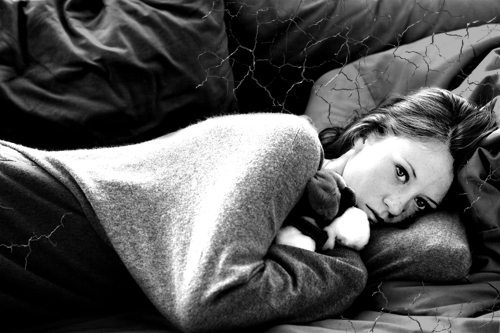
And I did. I never fit in anywhere. I got bullied throughout my elementary and most of my high school years. It didn’t help any that we moved three times within my first 8 years of school, requiring me to start two new schools in the middle of the year (actually, the second school was due to my having been bullied so badly my parents were forced to have me change schools). I used to be chased home by bullies everyday and was never invited to parties or after school activities that weren’t teacher- or parent-planned.

I did manage to always have one or two close girlfriends so I’d sometimes get a respite when a sleepover was scheduled. But for some reason, my mother wouldn’t allow me to go on sleepovers very much. She didn’t like the idea of me doing things on my own without her. It got so bad that around the age of 11 or 12, I got very upset one night because she had failed to come in to the bathroom to wash my hair while I sat in the tub. I felt like I couldn’t handle something like washing my hair on my own, and more than that, I felt…rejected and forgotten! I remember going downstairs crying and asking my mother to tell me she still loved me, just because she had failed to come in to wash my hair. I don’t think I got that reassurance. At the time I still went out of my way to make friends. But I was too friendly and clingy too, so although at the time my debilitating shyness hadn’t set in and I made new friends fairly easily, I didn’t keep them for long. I was already demanding too much from them, I guess.

My parents divorced when I was 14, and I moved to New York with my mother. I already blamed her for their divorce, and already had pegged her as a narcissist, although I didn’t have a word for it then. I remember telling her how “empty” and “shallow” she was. This would make her rage. But under my anger was terror. She scared me on some deep gut level and she seemed to hate me. Even as an adult, I’d always revert back to being a child in her presence. She was drinking heavily, and I began to drink too. She didn’t try to stop me. She had a string of lovers that came and went, and to get to the kitchen or bathroom, I’d have to walk through the living room where she and some boyfriend were sleeping. One of her lovers used to love to make fun of me with her. I remember sitting at the dinner table with the two of them laughing at my worries, speech, the way I looked, and anything else they could pick on. I remember running away from the table in tears more times than I can count. I was left alone in the house often, which I actually liked because it meant I didn’t have to deal with her or her nasty boyfriend, and I’d cook my own dinner, usually a TV dinner or frozen pizza. Inside, I secretly worried that this woman who seemed to always want me by her side when I was younger (and be her mini-me) didn’t seem to want me around at all anymore. I wondered what I had done wrong to make her stop loving me. Now I know she never had.
I was a depressed, sullen, underachieving teenager who lived in a fantasy world inside my head because I was learning to hate people.

At age 15, I was rejected by a group of girls that I described in “Crybaby.” That was devastating to me, and I spent several days literally sick in bed after that. I don’t remember if I cried. I think I might have already stopped being able to cry easily, but I felt like I wanted to die. I remember making a promise to myself I would never again reach out to anyone in friendship and that I’d have to hide my emotions from that day on.
I think this was the beginning of my narcissism–my false self was born. Up until then, I’d displayed borderline attitudes and behaviors (as they would appear in a child), but after this event I became increasingly aloof and tried to pretend I didn’t care what anyone thought of me.

I began to act up more at home too, and outwardly rebel. My mother and I got into huge drunken screaming matches that would end with her either passed out on the floor drunk, or with us both throwing things at each other. One night, unable to control my rage, I grabbed a kitchen knife out of the drawer in the kitchen and went after her with it. She was drunk. I held it in front of her to scare her but did nothing, then dropped it and told her I was sorry when I realized what I’d done.

That was the night she kicked me out. I was 17. I went to live with my father for a time before entering a girls’ residential facility for a year that treated adolescents with emotional or behavioral problems.

But even though I can’t say I blame her for kicking me out since I probably scared her to death with the knife incident, being kicked out by my own mother was traumatic. I took this as proof she never loved me, because threatening her with the knife had been a desperate cry for help, to be validated. Even though I can understand why she didn’t want me around anymore, the hurt from her total rejection of me (she didn’t speak to me for another three months after that night) stayed with me and ate away at me for years. I believe this incident–being literally tossed out of the house by my own mother before I reached 18–was what solidified my narcissism and when my false self became a permanent fixture.

I became colder and more aloof. I stopped being able to access my true feelings, except for rage and fear. I could no longer meet people easily. To get too close to anyone meant I’d be rejected, or made fun of. Occasionally I’d explode into a BPD rage, but mostly I kept my emotions inside–so far inside I couldn’t even feel them much anymore. The only exceptions were the times I fell in love. My crushes were intense, insane, overpowering; they were a force of nature. My emotions would be all over the place, and I’d be completely obsessed with some boy I imagined would make me happy for the rest of my life. I couldn’t seem to live without a boy who could reflect me and act as a mirror. I was attractive and seemed to find dates easily, and I had a way of getting boys to fall in love with me (I had the slightly pitiful yet charming waif act down to a science). I think I’d become very manipulative in these relationships. Eventually these relationships would end, and I’d be miserable until the next one came along. When I wasn’t dating, I had intense unrequited crushes and lived in my fantasies of happily ever after. I think I might have been showing histrionic PD traits too, although my narcissism is actually the cerebral type. I was never that interested in sex for some reason.

Without a relationship to validate me and prove that I existed, I felt empty inside. Without a relationship, I was nothing. I had no real interests and any type of hobby I did pick up, I’d eventually drop. I couldn’t stick with anything, and began abusing alcohol and later, drugs. These were the only other things that seemed to temporarily fill the vast black hole I felt inside. I still had no idea who I was or what I was here for.

This was longer than I intended, but it’s pretty clear now when my BPD and narcissism began. My BPD began at age 4 due to some type of sexual abuse and something that was said to me. As for my cNPD, it didn’t happen overnight. It gradually developed in me between the ages of 14 and 17. What solidified it were two things–being rejected by a group of girls who had seemed to like me; and the final boot by my mother. My BPD always lay beneath the narcissism, ready to erupt at the worst possible times.
Preliminary results of the Parental Narcissism Survey are here!

narcissistic-mothers-sm

Back in February, I was approached by a researcher, Ph.D candidate Valerie Berenice Coles of the University of Georgia, who asked me to post a survey on this site to collect data from ACONs about parental narcissism and the effects it had on participants. In June, I was asked to repost the survey again, because more participants were needed to complete the study. I promised to post the results when I had them. This morning I received an email from Valerie, with the preliminary results, so here they are.

Thanks again to everyone for helping us develop and validate a measure of parental narcissism! The response from the ACON community was tremendous and we are the envy of our colleagues that so many of you took time out of your lives to help us with this research.

We currently have a paper from the questionnaire out at an academic journal for review. If it is accepted for publication, we will update this message with a link for the article. Below is a brief and general review of some of our findings. When the scale and findings are published, you will have the opportunity to look at more specifics. Please note that some of the results may seem “common sense” but we needed to build off a foundation of empirical research since, as you know, there is presently no published scale that measures parental narcissism behaviors from the perspective of the adult child, and very little research in general. Thank you again!

Scale Development/Study 1:

Our goal was to develop a measure of parental narcissism. We started with 36-items. 1,236 people took this original scale, 976 of which were ACONS from 34 countries. We examined whether the 36-items worked together as a scale. We eliminated items that were problematic and ended up with 18 items that assessed four dimensions of parental narcissism: lack of empathy/indifference, negative grandiosity, center of attention, public versus private personas.

Lack of Empathy/Indifference. A lack of empathy is a key characteristic of narcissism. On the ACON sites, the lack of empathy is often described behaviorally as indifference and examples given by ACONS of parental indifference include the parent minimizing the feelings of the child and a lack of interest in the child’s feelings.

Negative Grandiosity. Grandiosity is “an inflated appraisal of one’s worth, knowledge, importance or identity.” Measures that assess grandiosity from the narcissists’ perspective, not surprisingly, focus on the positive side of grandiosity (“I am the best!”). From the ACON perspective, however, it is the negative grandiosity, that occurs especially when the narcissistic parent feels under attack and, thus, vulnerable. From the ACON perspective, when a narcissistic parent fails or is in the spotlight for not being a good parent, her/his insecurity can result in grandiose statements that reflect the parent is “the worst parent in the world” or “no one loves me.”

Center of Attention. Center of attention dimension reflects the positive, inflated, self-absorbed, and individualistic disposition of the narcissist. For the narcissist, the world is about “I” and “me” never “you” or “we.” From the ACON perspective, nothing is about the child unless it benefits the parent in some way. ACONs also write about how conversations focus around the parent’s interests rather than the child’s.

Public versus Private Personas. Narcissists can carefully construct their self-presentation in public such that they appear less negative in public than in private, at least in the short term. While differing public/private personas is not a characteristic typically measured by narcissism scales, it is a behavior often noted by ACONS who write of parents who present a friendly, charming persona only in public.

These 18-items formed into these four dimensions of parental narcissism behavior (lack of empathy, negative grandiosity, center of attention, and different public/private personas). The four dimensions all correlated highly with each other and together the four formed a final “Perceived Parental Narcissistic Behavior” (PPNBI) scale. To create the PPNBI scale, we summed up the scores on the 18 items.

What is the PPNBI Related to for the ACON?

ACONS who took the parental narcissism scale also completed some scales about themselves. Here are some of our findings:

*Higher scores on parental narcissism (PPNBI) were positively associated with ACONs feeling depressed as a teen and also with feeling depressed within the last year.

*Higher scores on parental narcissism (PPNBI) were negatively associated with feelings of well-being as a teen and with feelings of well-being in the last year.

*ACONS with higher scores on the parental narcissism scale were more likely to indicate you don’t trust other people, in general.

What other measures of the narcissistic parent is the PPNBI related to?

Scores of parental narcissism are:

*Negatively associated with feeling that your parent cares for you and negatively associated with feeling like your parent gave you freedom to be yourself/do what you wanted to do.

*Positively associated with idealizing one child in the family (aka: a golden child) and with devaluing a child (aka: a scapegoat).

*Very strongly related to verbal aggression. The higher the scores of parental narcissism, the more verbally aggressive the parent acted.

parental_narcissism

Study 2

In study 2, we tested the 18-item scale again to see if it worked the same way and generated the four factors (lack of empathy, center of attention, negative grandiosity and different public/private personas). In Study 2, 625 participated (505 were ACONS from 34 countries).

We did replicate the findings from Study 1 that found these four factors and that the four factors all worked together to form the Perceived Parental Narcissistic Behavior Index (PPNBI).

What other measures of the parent is the PPNBI related to?

In Study 2 we found further evidence that the PPNBI is a valid and reliable score. For example, that the PPNBI was positively associated with a typical measure of narcissism (Narcissistic Personality Inventory). This was good news as it provides us evidence that our scale IS capturing narcissistic behavior.

Additionally, we found that the PPNBI was negatively related to a parent being perceived as agreeable and positively associated with a parent being perceived as extraverted. For the ACON, we found that those who rated their parent high on the PPNBI were more likely to negatively associate with the secure attachment style and positively associate with the fearful attachment style.

Finally, parents who score high on the PPNBI were also more likely to score highly on parentification, which is a term for making the kids do the work of a parent. The more narcissistic your parent, the more likely the parent had expectations that the kids would take care of things a parent would normally do.

Summary

In conclusion, the goal of this research was to develop and provide initial validation data for the Perceived Parental Narcissistic Behavior Index (PPNBI). The identification of perceived parental narcissism is critical to gain a better understanding of and illuminate the unique challenges ACONs encounter. Before the PPNBI, no measure allowed family members to assess whether a parental figure was narcissistic. The PPNBI is an 18-item measure that taps into four types of parental narcissistic behavior: lack of empathy, center of attention, negative grandiosity, and different public/private personas. The PPNBI correlates with a known measure of narcissism and correlates with being verbally aggressive and caring less about one’s children. The PPNBI is positively associated with ACONs depression and negatively associated with their well-being and ability to trust others.

Across both studies, 1,481 ACONs worldwide from 48 countries participated and many webmasters generously posted the study URL on their web pages (THANK YOU!). This is the first study for either of us where we received over 100 emails from participants thanking us for doing the research and letting us know how meaningful it is that researchers are paying attention to the ACON population and their family dynamics.

As we mentioned above, the full research from this study is under review at a journal. If it is accepted and published, we will be delighted to send you a link to the research (we can’t do this until the work is published). We can’t thank all of you enough for helping out with our research. The $100 gift cards were selected by a random drawing and have already been mailed to the winners.

Again, many thanks!

Valerie B. Coles & Jennifer Monahan