I shouldn’t freak out so much whenever I post something I’m embarrassed by or ashamed of or that is very personal.
I always forget how good running naked in public can feel.
The outcome is never bad, and always leads to even more self awareness.
How can that be a bad thing?
I’m not alone in freaking out over stuff like this. It seems to be universal, hardwired into the human brain.
Why is there so much shame in making yourself vulnerable, telling your secrets? Does it mean you’re weak? Is it something we should be ashamed of?
I don’t think so. I think being vulnerable and candid means we have the courage to honest even when it hurts, and that makes you stronger than 100 boxes of Wheaties.
I posted an article earlier I was certain would run off most of my readers, cause my friends to leave me, and basically kill this blog.
But that hasn’t happened.
Everyone’s been so supportive.
And I want to tell everyone thank you. I’m glad I did this now.
In recent years, several emotions have been called out as unhealthy or maladaptive for human happiness. These emotions are worry, shame and guilt. In a narcissistic society where selfishness is held as a virtue, these three emotions are indeed maladaptive, especially shame and guilt. But shame and guilt keep us civilized. They keep us from doing bad things to others and they are the reason we have laws such as not murdering someone we don’t like. Shame and guilt (when appropriate, of course) have a pro-social function and are the inner brakes that keep us from hurting others or making restitution if we have. A car with no brakes is a dangerous thing. So is a human being. Shame and guilt are only “bad” when they’re excessive or unnecessary. But a person without the ability to ever feel shame and guilt is a sociopath with no conscience and without the ability to feel empathy for others, not a proper human being.
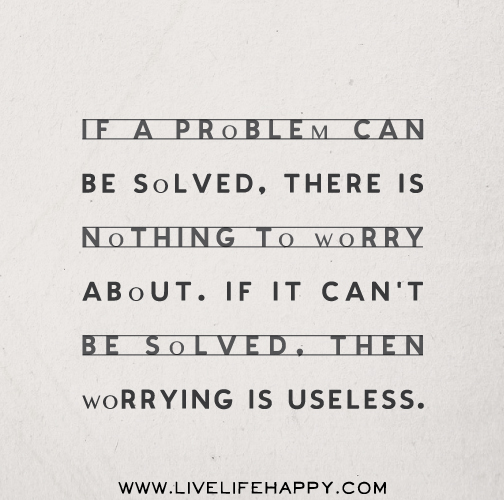
Worry is a different ball of wax. I can’t think of any good reasons for worry to exist. I’m one of those people who worry all the time, about everything. It’s not a fun emotion and is a huge damper to happiness. Worry is related to fear, but is a little different. Fear has its proper place. It keeps us from being harmed or killed. If we are walking in the woods and a bear blocks our path, it would be stupid to try to reason with the bear or fight it. We feel fear instead, which causes us to run or back away. If we meet a person who gives us the willies, fear is a natural response that keeps us from becoming that person’s victim. We learn to avoid that person. Fear is a survival emotion.
Worry is a kind of fear that isn’t set on the here and now. It’s set on what might happen in the future or sometimes what happened in the past. It causes a person to ruminate excessively and not be able to enjoy what’s taking place right then and there, because they’re too focused on nonexistent events or events that have already taken place and can’t be undone. If you worry constantly about losing your job, that will usually cause you to act less confident and make more mistakes and can even bring on the event you fear the most. If you worry your mate might leave you, your worry causes you to act clingy and possessive, and they could feel smothered and actually leave you. Worrying over things you have no control over is just, well, stupid.
Sometimes people worry about things that have already occurred too. If you snapped at your girlfriend for no reason, you might worry about that because you’re afraid they might leave you. Guilt–not worry–would be appropriate in a situation like this. Guilt will make you apologize to your girlfriend, after which you both feel relief. Worry will do nothing except make you obsess and ruminate over your mistake. Rather than act as an impetus to action or a motivation to correct your mistakes, worry over past events causes you to turn inward and beat yourself up without taking any action.
Some people are addicted to worry though, and go through life imagining the worst things imaginable. It’s impossible to be happy constantly believing the world is a dangerous place full of landmines and booby traps. I have no idea why so many people are addicted to worry, because it’s not a drug that has a pleasant high. It can even kill you because it causes excessive stress which is hard on your body and can lead to illness. I think worry was pounded into those of us who were victimized by narcissists because we lack confidence in our own ability to control the events in our lives. We believe we have no more control over things than a leaf blowing in the wind. But that’s another lie they tell us.
There are a couple of sayings I’ve heard about worry that sum it up pretty well and made me realize just how useless this emotion is.
1. Worrying about something is like paying interest on a debt you never owed.
2. Worry is useless because if the event you fear never happens, you lived through it for nothing; and if the event does happen, you lived through it twice.
I’m actually not in a negative mood right now, but I was yesterday for awhile and I desperately wanted to vent. It’s great to try to be positive and look at the bright side of things, but to deny the shit in our lives is like denying that sometimes you just have to get it out, whether it’s emotional shit or the other kind. Holding it in is bad for you.
So I’m getting it all out here right now and then moving on.
1. I hate the fact I’m over 50 and make poverty level wages. Being poor does seem to be a common complaint among those of us who were trained to be victims by narcissistic families. We just never learned how to navigate the world and lack the confidence to do it very well.
2. I hate the fact I have a job that has nothing to do with what I really love and don’t really know how I can parlay writing into a career.
3. I hate that I love the beach, live so far away from it, and can’t afford to go. I haven’t been to the beach in six years.
4. I hate the fact I want to date again but am terrified of that prospect too. I don’t want to die alone but worry no one would want to stay with me.
5. I hate the fact I have no health insurance and can’t afford to buy any. I don’t qualify for Obamacare because my income is too low and this state won’t allow me to get Medicaid. We do have a free medical clinic in town but I hate the condescending way they treat you there.
6. I sometimes wonder why the hell I ever moved to this state, although it’s really not so bad.
7. I hate the way I acted when I was younger and cringe in embarrassment and shame thinking about it sometimes. I want to divorce my younger self sometimes and pretend she never existed, even though I know that to heal, I need to make peace with her and learn to love her.
8. Sometimes I feel like a huge loser in life. Of course this idea has been drummed into me by my narcs and I’ve internalized it. It’s not an easy belief to let go of.
9. I hate the fact I sometimes doubt my faith.
10. I hate the way I sometimes still hurt people without meaning to.
11. I hate feeling like I’m always guilty of something and always have to apologize.
12. I hate that I’m so socially awkward that people sometimes think I’m daft. Having hearing issues on top of Aspergers and Avoidant PD sure doesn’t help with this.
13. I hate how fair I am. I can’t tan anymore (I could as a child and teenager) but at least I don’t have wrinkles.
14. I hate that I had an abortion and never got to meet the son I would have had (it was male and would have been born in March or April of 1999 so he’d be 16 now). At the time I didn’t feel like I had a choice.
15. I hate the fact I spent three months in a mental hospital in 1996 and at the time didn’t take the DBT training very seriously. I kept the books and do now though.
16. I hate the fact I wasted my young adult years chasing men and obsessing over finding the perfect man instead of focusing on my education and training for a real career in journalism.
17. I hate the fact I don’t have any close friends IRL. I won’t let anyone get close to me because I’m afraid if they found out too much about me they would hate me.
18. I hate the fact my family of origin sucked and have never been supportive of me or loved me unconditionally and judge me so harshly.
19. I hate the fact my family thinks my mental disorders are just an excuse and take no interest in them or why I have them.
20. When push comes to shove, I still can’t say I’m really a very happy person. I’ve gotten better but I wonder if I’ll ever really be happy. I’m looking into getting a therapist.
21. I wish I had been a better mom when my kids were young. I still beat myself up over not having been there for them when they needed me most.
22. I hate that I haven’t seen my son in two years because he lives 700 miles away and I can’t afford to travel to see him.
23. I hate it that I still have so much trouble speaking up when I’ve been hurt or standing up for myself when my rights have been violated.
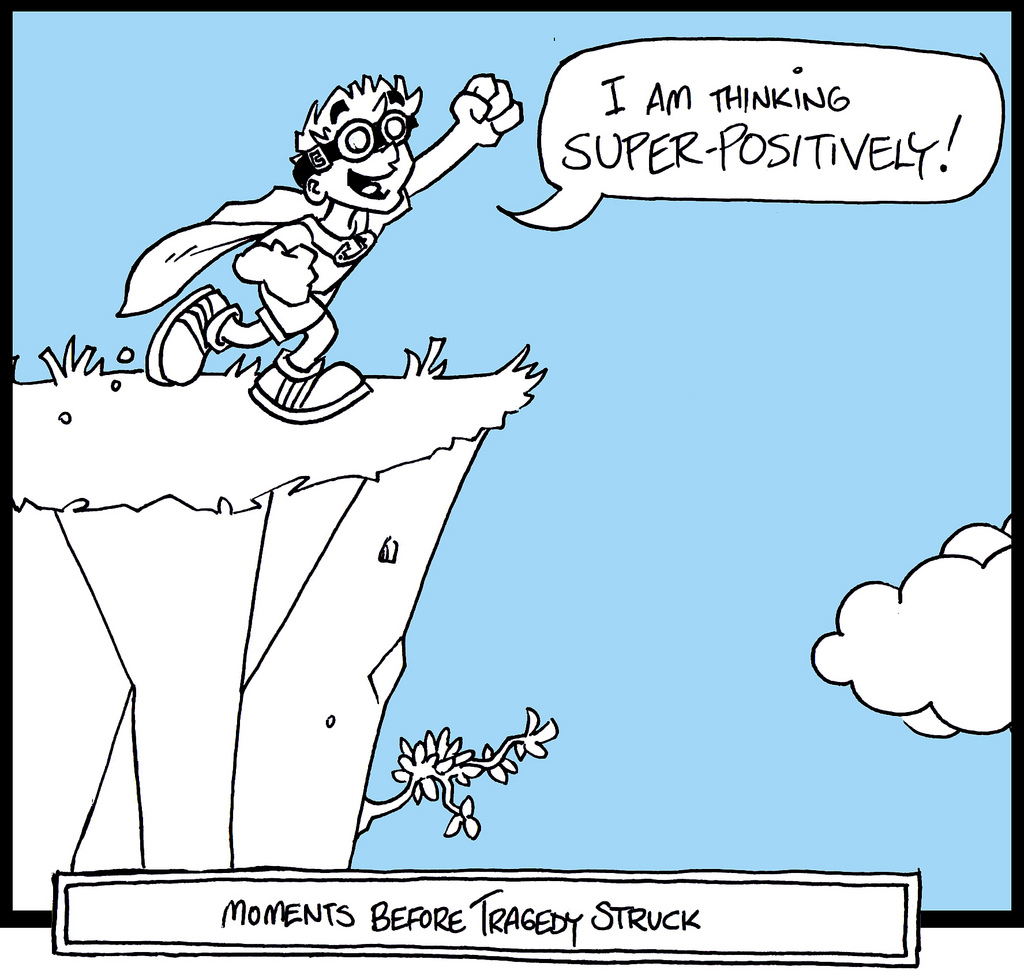
Positive thinking taken to extremes is deluded thinking.
I’ve seen several blog posts about the problem of forced positive thinking lately, and since this is an issue that has concerned me for a long time, I thought I’d add my own take on it.
In recent years, there’s been an increased societal pressure toward “positive thinking.” I think two factors have led to this trend–the New Age philosophy that we can “be as gods ourselves,” and the continued glorification of the Reaganistic optimism of the 1980s. The signs are everywhere, in self-help and pop psychology books, in countless popular slogans and memes that appear on bumper stickers and coffee mugs, on motivational posters, on calendars, on the political campaign trail, and all over social media such as Facebook. The forced positive thinking brigade has even infiltrated churches. Motivational speakers like Tony Robbins and preachers of the “Prosperity Gospel” like Joel Osteen have gotten rich by telling us that if we only think positive thoughts, our entire lives will change for the better. They tell us if we let go of negative thought patterns, we can become happy, successful, healthy, and wealthy.
This is all fine and good, and personally I see nothing wrong with positive thinking for its own sake. Even if the outer trappings of your life rival those of someone living in a Third World nation, it’s certainly better for you if you can scare up a little optimism and hopefulness, and it’s definitely bad for you to dwell in hopelessness, depression and negativity. At the very least, seeing the glass as always half-full will make you more accepting of your sorry lot and therefore happier. That said, it’s incredibly difficult to see the glass as half full when there is barely a drop in your glass. That would be deluded, not positive, thinking.
For all its advantages to our psychological well-being, there’s a dark side to the positive thinking movement too, which goes hand in hand with the current societal glorification of narcissism and the nasty belief that selfishness and lack of compassion are virtues. While telling people that thinking positive thoughts is not a bad thing itself (because there is truth to the idea that negativity tends to draw in negative things–I have seen this dynamic for myself), the positive thinking movement has been taken to disturbing extremes. It’s led to victim-blaming and an overall lack of empathy for the less fortunate. The poor are blamed for their own poverty, regardless of the circumstances that might have led to it or keep them trapped there. They are told they are “not positive enough” or “made bad choices.” Even worse, some churches of the “prosperity gospel” ilk tell them they must have some moral failing or God would be rewarding them with material blessings. They are made to feel shame and guilt for their sorry financial condition. The chronically ill and disabled are likewise blamed for “not taking care of themselves” or “choosing bad habits.” It’s easy enough for someone who has never had to struggle with poverty or serious illness to thumb their noses at those who have and tell them it’s all their own fault.
Is this the way Jesus would have acted? No, of course it isn’t. In fact, most of Jesus’ followers and disciples were the most financially and physically vulnerable members of his society. Jesus himself was humble carpenter and certainly not rich. He didn’t condemn these unfortunates or shame them for failing to be positive enough, or making the “wrong choices.” In fact, he seemed to love these vulnerable people most of all. Whatever happened to the “social gospel” of the late 19th and early 20th century? Oh, that’s right–it became “communism.” Somewhere along the way, compassion for the less fortunate and the culture of charity got twisted into “weakness” and “enabling.” The enormous popularity of Ayn Rand, who believed the greatest human evil was altruism, is disturbing, especially since her philosophy of “objectivism” has infected the minds of powerful politicians of a certain political persuasion, including many “Christians.”
While I don’t subscribe to some Christian fundamentalists’ idea that Satan is behind all this worship of greed and self-love and the denigration and victim-blaming of the less fortunate, I do think it’s a very destructive turn in the way our culture thinks, and it’s psychopathic in nature. Lately I’ve been seeing more blog articles criticizing this trend, and that seems like a good sign that at least a few people (usually victims of narcissistic abuse themselves) are finally realizing our society has become woefully empathy-deprived. Hopefully their message can break out of the blogosphere it’s currently confined to and begin to touch the hearts of The Powers That Be who are not yet completely brainwashed by the Cult of John Galt.
It’s absolutely fine (and desirable) to be a positive thinker, because positive thinking does tend to have its rewards, but blaming the misfortunes of others on their negative thinking or worse, their moral failings is just a form of societal gaslighting and is utterly evil itself. It’s also rife with hypocrisy– the Positive Thinking Powers That Be denigrate the emotions of guilt and shame for themselves, but they make sure those who haven’t been blessed the way they have feel plenty of guilt and shame for not having been “enough.” They never stop to think how impossible it is for someone who is struggling every day just to have enough to eat or with severe pain or illness to think in a positive way. It’s much easier for the already privileged and healthy to be able to say “life is good” and mean it. The well heeled Positive Thinking bots never stop to think of this–or they just don’t care, which is most likely the case, because those who haven’t been “blessed” with wealth or good health MUST have done something wrong to deserve it.
Any society that is empathy-starved is eventually going to self destruct.
I just spent a few minutes ordering (used) books about Borderline and Narcissistic Personality Disorders from Amazon. There’s still so much I don’t know, especially about my own BPD, which trips me up constantly, in spite of my attempts to be mindful and think before I act (or react).
For example, a few months ago I unintentionally alienated someone I valued as a friend. Actually two people were involved. What happened was I went on a rant because a second woman hurt my feelings, and rather than discuss this privately with her, or simply move on and chalk the whole thing up as a learning experience, I decided to write a rant and publish it. No, I did not identify the person in my rant and yes, what this person had said to me (in private) was extremely mean and hurtful (and definitely not true either). But could I just move on or let it go–or just tell the person how hurt I was? No, instead I had to turn this person’s private message to into an angry blog post. After I realized what I had done, I removed that post, but its repercussions still haunt me. This individual is absolutely convinced I am a malignant narcissist with evil intentions and has said so in public. I’m not, but based on my behavior at the time, I can understand why someone would think this is the case.
The woman who I wrote that scathing post about wasn’t someone I knew very well, and her low opinion of me (which it turned out had been low from the beginning–she just didn’t like me, which is okay, it happens to everyone) really didn’t matter too much, since we hadn’t been “friends” for very long. But in the fallout from that bad decision I made to call her out publicly, I alienated someone else whose friendship I really DID value–because it turned out that person was friends with the person I ranted about. I didn’t know.
I also did something else to anger the woman who’s friendship I valued (basically, a blatant invasion of her boundaries), but again, at the time I didn’t realize what I did would be hurtful to them. I was just so…CLUELESS. All of this impulsive borderline shit I was pulling came off to others as MALIGNANT NARCISSISM and since then I’ve had that label slapped on me by someone who mattered to me and a few who never really did. Being thought of that way by someone I value really hurts. It hurts a lot. That’s about the worst insult I could ever get (strangely enough, when I was younger, the easiest way to insult me was to call me TOO SENSITIVE, ha!)
But I deserved it too. Putting myself in my alienated friend’s shoes after the damage was done, and thinking about how I would have felt if someone did the same thing to me, I couldn’t deny that I would have been extremely angry, to say the least. Also, the timing of my actions was just too weird. I didn’t know I was hurting anyone, at least not consciously. I really didn’t. But how would my friend know I didn’t know? Why wouldn’t she think it was malicious and intentional?
The problem with having BPD is the obtuseness that comes with it. In that sense, it can resemble Aspergers because you just don’t KNOW what is appropriate. You simply are not aware of when you’re acting out, manipulating or attacking someone. I think this is one of the little-talked about things that separates BPD from full-blown narcissism. Borderlines can just be so fucking clueless. We are so out of touch with ourselves and who we really are that we don’t even have a false self to pretend to know what it’s doing. We really don’t know what the hell we’re doing and even when we think we have our behaviors under control, they still sneak out, without our even knowing. It makes you really feel crazy and out of control when later on it’s pointed out to you (as to a two year old) WHY what you said or did was wrong and WHY someone was hurt by it, when you thought it as just a normal reaction at the time and you had no earthly idea it would be so hurtful or damaging. But when you do become aware, it’s so OBVIOUS that you say to yourself, how the hell could I not SEE that?
BPD is a sort of blindness. You get so tangled up in your own emotional state you literally cannot see how you may be hurting others. You may not be throwing screaming temper tantrums or throwing things across the room, but the harmful actions come out in other, sneaky, passive-aggressive ways. You don’t WANT to hurt others, but you do anyway because YOU DON’T KNOW WHAT YOU ARE DOING. It sucks because as a person who does have a conscience and struggles constantly with guilt and shame, I feel remorse when I realize what I have done. The problem is, by the time I become aware, it’s often too late to repair the lost friendship. They have already given up and moved on. BPD destroys relationships.
I feel like even with the DBT skills I’ve been using and the reparenting techniques I’ve tried recently, that there is so much about this awful disorder I don’t know. I don’t know myself as well as I should. Dammit, I DON’T TRUST MYSELF! My Aspergers/Avoidant PD mitigates my Borderline symptoms to some extent, but they still come out. I avoid others partly because I’m afraid I might hurt them. I don’t want to be this way anymore.
I feel like I need to educate myself much more about BPD, and just knowing WHY we do the things we do and act out in passive aggressive ways without knowing what we’re doing, will help. So that’s why I just ordered some new books. I need to spend some more time reading and less time unintentionally creating drama, stupidly thinking that it’s “right.”
This journey of self-discovery is amazing most of the time, but sometimes facing the truth about yourself is unbelievably painful.
One last thing–if you are reading this (and you will know who you are if you read this post), I want to say I’m so sorry. I was wrong.
A friend of mine sent me this video, and it’s exactly what I needed to hear today. I found myself tearing up as I listened to Dr. Brown speak, because she speaks the truth.
“At the core of vulnerability is shame, but vulnerability is also the birthplace of joy, peace and creativity.” (paraphrased).
If everyone did what this video says we should do, the whole world would change.
If you were a survivor of a narcissistic family (or were otherwise a victim of narcissistic abuse), as I was, you were probably told your emotions were not okay. Instead you were told to stuff them and hide the way you really felt from the world. Unfortunately that’s the same philosophy modern society holds in general, and of course narcissists stuff all their feelings all the time, except rage. It can get so bad you reach a point where you tell yourself you’re bad for even having feelings or being upset when someone hurts you.
Several months back, I wrote an article about the way some proponents of positive thinking use it as a way to deny their own true feelings or use it to invalidate the emotions of others. Used this way, positive thinking can become a form of abuse or self-abuse. Of course, there’s nothing wrong with being a positive person, but there’s something very off about someone who walks around wearing a fake smile pasted on all the time and insists we must always do the same. Ironically, these “positive thinking nazis” instill a sense of guilt and shame.
Back in the early ’90s, “Saturday Night Live” did a mock self-help show called “Daily Affirmation With Stuart Smalley.” Stuart Smalley was a spoof on individuals who were obsessed with 12-step programs and who had become addicted to the act of going to therapy. Smalley ended each show by looking into a mirror and saying, “I’m good enough, I’m smart enough, and doggone it, people like me!” The skit was hilarious because Smalley was the personification of vanity, self-indulgence and narcissism — traits often used to describe our culture.
To counteract our self-absorbed culture, many Christians have gone the opposite direction. Worm Theology is based on Psalm 22:6: “I am a worm, and not a man…” or the line in the Isaac Watts hymn “Alas! and Did My Saviour Bleed,” which says, “Would He devote that sacred head for such a worm as I?” Worm Theology is a belief within Christianity that a feeling of worthlessness and expression of low self-esteem means God is more likely to show mercy and compassion.
Instead of debating the merits of this belief system, I want to focus on what I see as a natural consequence to a low view of self in our Christian culture today: a lack of self-compassion. Sadly, I even noticed this in my own house last night with my 14-year-old daughter.
My family recently relocated from Northwest Arkansas to Colorado Springs. No cross-country move is ever easy, but it’s been especially hard on my daughter Maddy. Last night I lay on the floor of Maddy’s room as she cried about feeling like no one really understands her feelings. It broke my heart to hear how alone she feels — that no one understands what she is going through. Thus, she felt that she has no one to share how she really feels. In the end, she ultimately got tough with herself and expressed that she should be over these feelings, that her feelings were wrong and that she was stupid for getting so emotional.
I so wanted to jump in and correct her, “Your feelings are not stupid!” but I didn’t. I wanted to tell her that God cares about her emotions (which He does), but I refrained. I was tempted to recue her by telling her that I care (which I do), but I stopped myself. What an insensitive father, some might think. I didn’t jump in to rescue my daughter because I want her to learn something that most Christian adults don’t get: Their feelings matter!
Beautiful song with a destructive message.
But sadly, for so many people, their emotions usually don’t matter. I watch time and again, when counseling with people, that they constantly judge, belittle, criticize, demean, minimize and marginalize their emotions. It’s like there’s this Christian belief that we must never wallow in our emotions. It’s like people are afraid they’ll become self-indulgent or vain (like Stuart Smalley) if they have compassion around their feelings. They believe self-criticism is what keeps them in line. Most people have gotten it wrong because our culture says being hard on your self is the way to be. It’s like the ’70s song by Melissa Manchester that had the lyrics, “Don’t cry out loud. Just keep it inside and learn how to hide your feelings.” Listen to some of the messages that are out there about our emotions:
Real men don’t cry.
You’re just being a drama queen.
Play through the pain.
It’s just that time of the month.
You shouldn’t feel that way!
That’s not how you really feel!
Why do you get so emotional?
Both men and women have learned these messages well, and the tragic consequence is that most people have no idea how to validate their own emotions. Since birth, most of us have had our feelings so massively invalidated that we don’t know how to care for our emotions. Instead of valuing our feelings as a great source of information, we stuff them, ignore them or judge them away. Thus, the hope for our relationships is that we will find that perfect someone who will finally care about and validate how we feel. Although we don’t do it, the fantasy is that our friend, significant other or spouse will value our emotions. Great plan, right?
I believe one of the greatest gifts we can give our self is the gift of compassion. When we are upset, frustrated, fearful or hurting (like Maddy) we should be the first one in line to care about how we feel. Why should I expect someone else to care about my heart and emotions if I don’t do that job first and foremost? The question we should be asking ourselves is do we treat our self as well as we treat our friends and family? We are often gentle, kind, compassionate and empathic with others. However, a new research study on self-compassion found that people who find it easy to support and understand others, it turns out, often score surprisingly low on self-compassion tests, berating themselves for negative emotions and perceived failures like being overweight or not exercising. The research suggests that giving us a break and validating our feelings and imperfections may be the first step toward better health. People who score high on tests of self-compassion have less depression and anxiety, and tend to be happier and more optimistic.
The more you seal yourself from your emotions, the more isolated and disconnected you feel. While you can suppress and repress your feelings, you cannot get rid of them. You always bury emotions alive. At some point they will always come out, but then they usually come exploding out like a volcanic eruption. The only way to make peace with our emotions is to value them, face them, explore them, understand them and then take them to the Lord. “Cast all your anxiety on him because he cares for you” (1 Peter 5:7). Suppression takes an incredible amount of energy — energy which is constantly being tapped to maintain a wall of protection around your heart.
The bottom line is that your emotions are incredibly valuable. Not in a way that suggests we should all indulge in emotional bliss, holding hands while singing “Kumbaya” like Stuart Smalley. Give yourself the gift of compassion around your feelings — after all, your emotions are the voice of the heart.
What do you do when you are fearful, frustrated, upset or hurting? Are you good at self-compassion, or do you stuff, ignore and judge your feelings?
If you were scapegoated by your family, two things can happen. You can become a narcissist yourself (narcissism being an elaborate defense mechanism to avoid further hurt and abuse) or you will internalize the early message that you’re worthless, defective and have no rights. I’m going to talk about the second scenario because that’s what this video is about and it’s what happened to me.
As a scapegoat, you are trained to live in fear. You become afraid to defend yourself, express your opinions, or demand fair treatment. This attitude of worthlessness, fear and shame is carried into adult life. Other people can immediately sense you are a pushover and a magnet for abuse, rejection, and bullying, and you become a target for abuse by others well into adult life.
You can become a lifelong victim unless you find a way to break the pattern. It’s difficult to unlearn, because it was established so early in life by the narcissistic parent.
Golden children, who more closely resemble the narcissistic parent or provide them with narcissistic supply (adulation), are more likely than scapegoats to become narcissists themselves. They will often become the aging narcissistic parent’s flying monkeys against the scapegoated adult child, continuing the family pattern of abuse.
Scapegoated children are the family shock absorbers. They are the children who have been assigned to absorb and internalize the narcissistic parents’ rage and to mirror back what has been projected onto them.
This is exactly what happened to me. Although because I was an only child I sometimes served the Golden Child role, for the most part I was the scapegoat. My Aspergers and high sensitivity made me even more perfect for that role.
Today I’m the black sheep and the “loser” of my family. I’m never included in family functions because of my poverty and the fact I’m “different” than the rest of them. Although they disapprove of me, I really became exactly what they needed me to be. My becoming a “loser” ensured they would always be winners.
I’ve been disinherited because they believe I’m undeserving, a shameful blemish on the family’s “good name,” further guaranteeing I will always remain poor and therefore powerless–unless I hit the lottery (which I don’t play) or write a book, which I plan to do. The irony of all that is the book may very well be one that exposes the people who raised me for what they really are.
I’ve always been a risk-averse, avoidant underachiever. My dealings with others have suffered because of my fear of the judgment of other people. I was often bullied as a child and teenager.
I married a narcissistic man and continued to live with him and allow his abuse even years after we were divorced.
Although as an adult I’m no longer bullied (and am Very Low Contact with my ex), people still try to push me around, treat me like a mental defective, leave me out of conversations, overlook me for promotions or raises at work, or just talk over or look through me as if I’m not there at all. When I say something, people act like they don’t hear me. It’s very hard for me to make friends or fight back when I need to because I was trained from an early age to be so very afraid of everyone. I’m the proverbial shrinking Violet and wallflower–the kind of woman my mother used to mock for being so “insipid.” I seem to have the opposite of charisma.
For many years I walked around as if ashamed to be alive. I carried shame with me like a heavy burden that affected the way I spoke, the way I related, the way I thought (all the negative self-talk and self-hate), even the way I moved and carried myself. I embarrassed myself.
Since I started writing, I’ve learned that I wasn’t put on earth as an example to others of how not to be (I actually used to believe this), but that God gave me these challenges and this life to teach me valuable things about myself–but that waking up to who God meant for me to be was going to be hard, painful work. I don’t live in self-pity: my narcissists have been my teachers.
One day I dream that people offline will know who I really am. That I have a personality. That I’m funny and intelligent. That I have opinions of my own, and that I am actually good at things. But more than anything else, that I have a finely tuned bullshit detector–a gift unintentionally bequeathed to me by my narcissists, and it’s a gift more priceless than any amount of money I may have inherited.
The following video will explain why what narcissistic parents do to their own offspring is nothing less than soul murder. Unfortunately, the original video I had posted here (which I preferred) was the best one to illustrate the way being scapegoated as a child tends to continue well into adult life, with the grown adult child now unconsciously projecting a “kick me” sort of vibe in relationships, friendships, on the job, and everywhere else, and then they wonder why they continue to feel victimized everywhere they go. It’s hard to break the pattern, but it can be done. Here’s a different video with the same general message as the first, although the first one (which was removed) was much better, in my opinion.
Tonight on a whim I looked up an old Facebook friend I hadn’t talked to since 2012 (we had been close from 2009-2011) and was shocked and very upset to learn that she died this past September of Merkel cell carcinoma. She’d had to have part of her jaw and her lips removed and I even saw her post that first announced her terminal cancer diagnosis. She asked for prayers.
I never knew. I never bothered to check in on her until tonight and felt just awful about not having been there at all for her while she was in so much pain and dying. I left a post on her wall (which is still up) telling her to rest in peace and how sorry I was. What else can you say to a dead friend you abandoned? Sure, she was only a Facebook friend but I still feel like an insensitive heel.
About two years ago, another casual friend, someone I had actually known through work who ran a blog about living in poverty in the United States, and who was known to have suffered from major depression, committed suicide. I hadn’t talked to her in several months, and it was her husband who posted about her death on her wall. I learned this horrible news THE DAY AFTER she killed herself. All I could do was offer some kind words to her bereaved husband, who had loved her very much and was understandably devastated. I felt ashamed at not having talked to this woman during the months prior to her suicide and was almost too embarrassed to say anything to her husband.
I always seem to find out bad news about friends and people I used to know on Facebook, which is another reason I don’t like Facebook too much.
But neither of these things are as terrible as the way I treated a close friend of mine from back in the 1980s. Robert was gay and he was one of my best friends for several years. We used to have a blast together, and were even roommates for awhile. I remember planning his 21st birthday party and how much fun it turned out to be (and I hate parties!)
But Robert was also promiscuous and brought strange men home while we were roommates. He also developed schizophrenia around this time, and due to both his bringing men I didn’t know to the apartment and his declining mental condition, I had no other choice but to move out. We continued to remain in touch occasionally even after I married, but over time, as friendships do when lives go in different directions, we lost contact and stopped speaking.
Just after my son was born in 1991, I received a phone call from Robert’s sister. She told me Robert was in the hospital and very close to death. He had AIDS and had lost his vision and his mind, and was no longer able to feed himself and had to be cared for like an infant. It occurred to me he probably already had AIDS during the time I knew him. I was shocked at the news and promised to come visit him in the hospital, but I never did. In all honesty, I was afraid to see him like that and chickened out, even though I had intended to go.
He died two weeks later. His sister called again and invited me to the funeral. Again, I didn’t attend because of the guilt I felt over having abandoned him and never visited him in the hospital.
I realized later how selfish this was of me, only caring about my own needs and feeling like seeing him like that would be too upsetting and just plain weird. My friend needed me when he was dying and I let him down. I never forgave myself for that and still pray for God to forgive me for my selfishness. I’m sure He has, but I never really forgave myself.
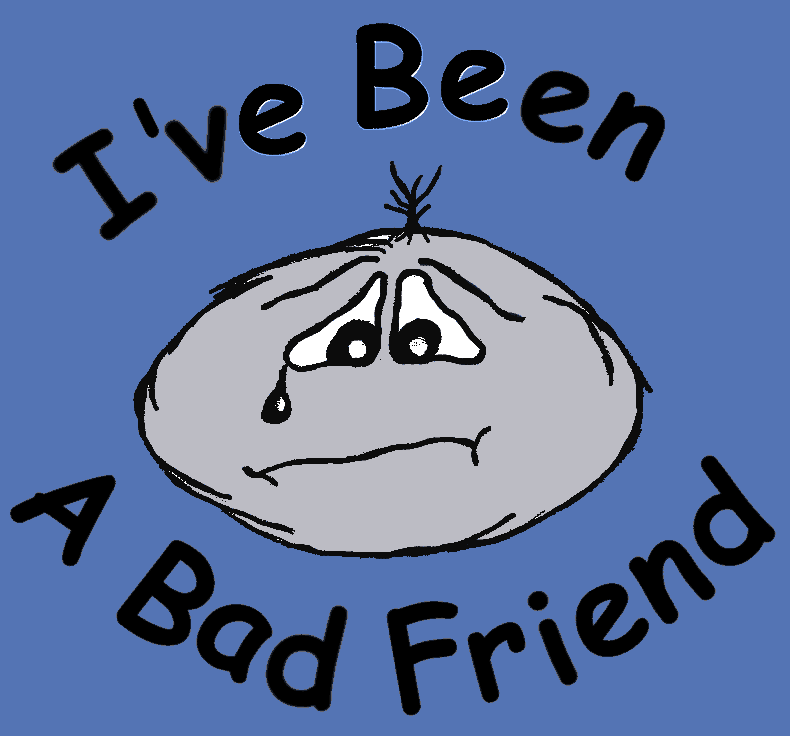
That’s why I feel like I’m a terrible friend and maybe don’t deserve to have any.
I’ve been focusing a bit less on narcissism because the topic itself is somewhat of a trigger for me right now.
But I’ve recently decided to write openly about my BPD, which (along with Aspergers) is often misdiagnosed as narcissism.
Besides the envy and pride I’ve previously mentioned as my worst narcissistic traits, there is one other thing that has sometimes made me wonder if I might really be a narcissist.
Whenever any male in a position of authority has tried to tell me the truth about myself (like a therapist or teacher), I want to attack them. When I was much younger (teens and 20s) this manifested as rage attacks (as it did with my therapist during my 20’s). Today it’s more likely to be expressed as sarcasm, snarkiness, or just…silence. All of this is very narcissistic of me and makes me want to cringe in the corner when I think about it. Because knowingly hurting someone goes against the bigger, better part of me, a person who is kind and compassionate and hates to see anyone suffering or hurt.
I used to torment my therapist back in the 1980s. He didn’t know the intense feelings I had for him. I wouldn’t give him the satisfaction. If you’ve ever watched the ’90s Nickelodeon cartoon “Hey Arnold,” you will remember how cruel Helga always was to Arnold, but secretly she mooned over him.
My therapist must have hated me. I LIKED tormenting him. He sat there week after week taking it like a trouper. If he was angry or upset, he never showed it. Most likely my strong feelings and verbal attacks were a form of transference. Maybe I experience a form of transference toward any male in an authority position who mirrors me.
I finally told that therapist I was quitting. Why? Because of my fear he was so tired of my mindfucking him that he’d tell me he couldn’t be my therapist anymore. I knew I wasn’t cured, but I left anyway. Sure, I was having trouble handling my infatuation, but now I know it was really all about hurting him before he could hurt me. How stupid of me, since he was probably more than happy to see the back of me.
I’ve really been thinking a lot lately about my BPD and the unpleasant ways it sometimes manifests itself. The behaviors are narcissistic, and they don’t happen all the time, or with most people (thank God for that!) But the reason they exist at all is because as a Borderline, I live in mortal terror of being rejected or abandoned, and certain men in authority who tell me truths about myself may represent my father, who I was afraid would reject me (even though he wasn’t really the problem at all).
Sometimes I do wonder if I may be a narcissist.
But I know I’m not because it makes no sense. Real narcissists don’t have a conscience or empathy. They can’t be happy for you or sad for you and I can be. If I do something wrong–even if I derive some kind of sick pleasure during the time I’m engaged in it–afterwards I feel terrible. I just want to run and hide.
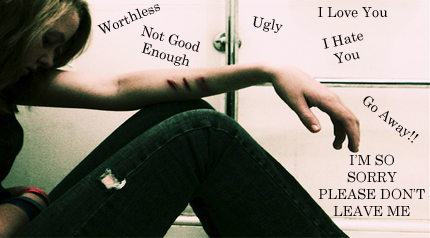
I’m working on these behaviors, using an old workbook I got in 1996, because lately I’ve been thinking about possibly dating again. I’m getting over my fear of finding myself with another narc, because I feel like I know enough to read them now, to see the red flags and know when to run if I must–but I also don’t want to drive a nice guy away due to my “I hate you….don’t leave me” Borderline tendencies.
There’s so much apologizing I would like to do to so many people. I know that’s not possible but I wish it were.
I know I’m changing for the better, but a lot of bad and painful emotions are coming to the surface in the process of discovering who I am, because I’m feeling again. I think my PTSD is almost healed, and that’s a great thing, but mixed in with all the nice, loving, tender emotions are some not so nice ones too. Like a maggot crawling on the petals of a rose.












 Lucky Otters Haven