All my narcissistic lovers.

johann_heinrich

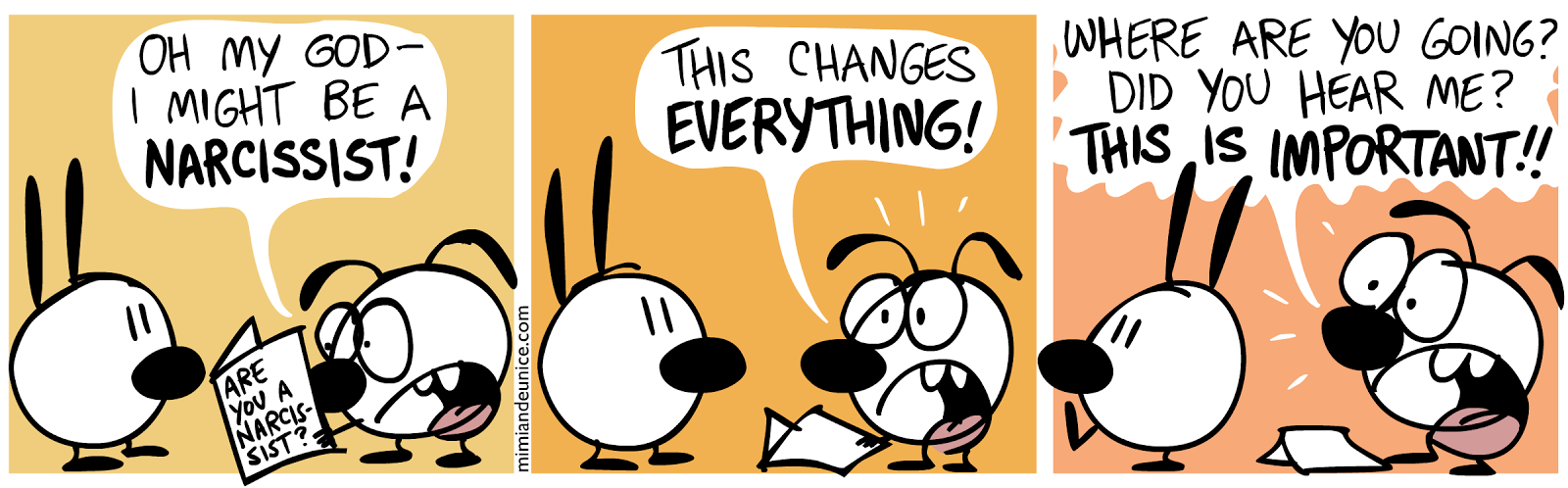
Not long ago, when I started studying narcissism in depth for this blog, I came to a shocking and disturbing realization: Every single one of the men I had relationships with or fell in love with were narcissists. It’s because I was trained by my family to be Narcissistic Supply, and as a Borderline, these relationships tended to be stormy.

Having BPD means I’m not the ideal codependent doormat, and when I felt violated–even though I’d allow the abuse to continue because after all, I was trained that way–I’d still try to fight back, at least for awhile. This led to lots of drama and some truly terrible fights with narcissistic men who I could never fix, no matter how hard I tried. I sure wish I knew then what I know now.

I have always been attracted to narcissistic men and they have always been attracted to me. I’m easily taken in by their elaborate displays of romance and promises in the beginning–there’s no one more romantic than a narcissist trying to procure you as supply. It’s fun while it lasts, but as soon as they know they have conquered you, the abuse begins. One red flag to watch out for: a man who moves in too fast, or starts talking about a permanent commitment or marriage only weeks after you met them.

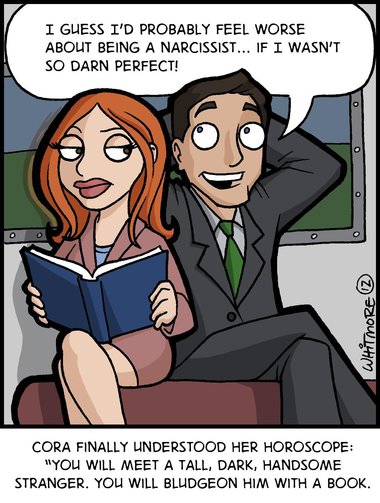
Here’s a list of the narcissists I was seriously involved with (or married to). Only one wasn’t a narcissist, but he was severely bi-polar. The names are made up.
narcjoke

Steve P: my first serious boyfriend in high school. Steve called constantly (like 8-10 times a day at first), wanted to be with me all the time, regularly sent flowers, was very passionate and loving at first. He actually would cry because he “loved me so much.” After a while he became physically and mentally abusive, insulting me, questioning me about other boys, what I was doing when he wasn’t around, calling me names, and finally becoming physically abusive. One day, with absolutely no warning, he called me and told me he was dumping me because he met someone else. I was enraged at the nerve of this but actually relieved to be rid of him finally.

Mark S: my second serious lover during my college years. Mark was very cool–knew everything there was to know about art, music, theater, and he had offbeat, interesting friends. He used to take me to the East Village in New York City where we’d attend all the punk and new wave clubs and shop in funky vintage clothing and record stores. We had a lot of fun. But he was also an intellectual snob and looked down on my “pedestrian” tastes in music, movies, etc. He looked down on my friends, whose intellectual abilities he felt were beneath him. Mark saw himself as a rogue and a cultural rebel, and after awhile his constant put downs became annoying and we’d fight. He also never wanted to have sex (he was a cerebral narcissist), thinking it was a huge waste of time that could be better spent feeding his mind with new cultural experiences. After about a year, he told me I was too boring and my tastes too commercial and pedestrian, and he dumped me for a woman who looked exactly like me but was apparently much more hip and “in the know” about what was cool and cutting edge than I was. He wound up marrying her.

new_wave_guy

David B: David was not a narcissist; he was bipolar and suffered from severe depressions and substance abuse. He drank heavily to self-medicate and was always in and out of the psychiatric ward. He regarded me as a sort of mother figure and I liked the idea of being needed so much. But his neediness and clinginess became cloying and suffocating, he was constantly drunk, so eventually I left him, not without a little guilt in doing so. But he was really driving me crazy.

Michael B: The malignant narcissist I married. He is actually a psychopath. Michael acted very much like Steven in the beginning–showering constant attention and gifts on me, moving in very fast, talking about marriage just three months after we met. Being that I was in my mid-20s, I was open to marriage and he seemed perfect. I should have seen one HUGE red flag: the expensive engagement ring he insisted I have was purchased with my own credit card, because he had already maxed all his out. He always lived way above his means. He’d take me to expensive restaurants and insist I pay (and of course, he would pay me back later, but he never did). The rest of our story can be found in the articles under “My Story” in the header. Let’s just say the man is a psychopathic monster with serious substance abuse issues and a parasitic monster at that.

rottencard

Daniel S: The only lover I’ve had since the divorce. Well, okay, we were actually still married. (I’m not proud of this). But my marriage was already long over and I was desperate and miserable and not thinking straight (not that it’s an excuse to cheat). Daniel was actually a worse malignant narcissist than my ex, if that can be believed. He had that intense predatory stare, which I took to mean sexual and romantic interest, but was really his way of sizing up me as his prey. Of course I found him irresistably attractive. Unfortunately Daniel was another cerebral who had very little interest in sex. After a huge show of ardent romance and all that goes with it, he started the abuse, which included insulting me and comparing me (unfavorably) with his past lovers and what he saw as an “ideal woman.” He said he wanted babies with me but constantly criticized my parenting skills (as if he could know, since he never met my kids). He raged a lot although he never actually became physically abusive. He sulked and gave me the silent treatment when I didn’t do things his way or wanted to spend time with my family. He was stingy and although he had a lot more money than I did, he always made me pay my own way on dates. He obsessed about money. He would buy me things and constantly remind me how much those things cost him. He also would give me gifts and then ask for them back later, telling me he was only letting me “borrow” them. I am serious about this. After I ended our relationship (due to guilt at least as much as his abusive treatment), he still continued to call me constantly “as a friend.” After several of these phone calls, I finally worked up the guts to tell him to bug off and blocked his number.

ucallthislove

I have not had one lover or husband who was a just a nice regular guy. There have been a few of these men who seemed interested in me, but I always found them boring and rejected their attentions because I didn’t feel any “chemistry” with them.

I think it’s time to change all this. I want to start dating again soon. I know what red flags to look out for now so I think I can avoid the narcs, but can I fall in love with a normal man who will treat me well?

Who’s “too sensitive”?

sensitive_jason

“You’re too sensitive!”

This seems to be a phrase many ACONs have heard their entire lives. And yes, many of us are more sensitive than the average person, which is why we were targeted, scapegoated, and bullied in the first place.

Narcissists know being sensitive means we can see the truth about things, that we can see through bullshit and lies. They don’t like that because it exposes them for what they really are, so they turn a quality that gives us intuition and insight into something that makes us seem weak and defenseless.

If our parents were narcissists, we were trained to be ashamed of this quality and turn it against ourselves, rather than learn to refine it and develop it into the powerful gift it really is. Society doesn’t help much with that either. Sensitivity is generally thought of as a weakness rather than a strength. It’s not something you would want to admit on a job interview when the interviewer asks you what your “worst quality” is. I actually did that once, and was shown the door. They want to hear “I’m too impatient” or “I’m too greedy,” or “I obsess too much about power and control,” not “I’m too sensitive.”

sensitive_quote

I think narcissists also like to pull out the “you’re too sensitive” card because they’re projecting what they see as a fault in themselves onto us. They’re good at that. Narcissists are incredibly hyper-sensitive–but only about themselves; no one else ever benefits from their hypersensitivity.

It’s my opinion that narcissists, before they adopted narcissism as a defense mechanism, started out life as extremely sensitive children and in some cases even had the potential to be empaths. Abuse and neglect turned them into narcissists. Narcissism is an elaborate defense mechanism that obscures, buries and eventually can nearly destroy the sensitive true self. It almost would take an act of God for a narcissist to ever shed their swagger and their “I’m a big mean unfeeling badass” mask and let their sensitive true self come to light. Most of them couldn’t do it even if they wanted to.

But narcissists can’t hide from themselves–not completely. Most of them have exquisitely tender feelings and are easily hurt. It’s very easy to insult a narcissist. They have no sense of humor about themselves and are unable to take a joke at their own expense. They are big crybabies who will whine, sulk and complain loudly should you hurt their feelings (and it’s almost impossible not to). Most will show their hurt as rage–because raging makes them seem big and tough, something they really aren’t but wish they were. Or they will retaliate by ignoring you, abandoning you, cutting you off, or giving you the silent treatment–because those things make it look as if they don’t care. You’d be wrong though. They care alright, and when you have caused them narcissistic injury they are off licking their wounds in silence where you can’t see. Or loudly complaining to others about how
mean and narcissistic YOU are.

sensitive_people

They call us too sensitive because they’re unable to own their own hypersensitivity. They turn it into a bad thing because they know they have lost that part of their sensitivity that would have made them able to feel for others and empathize. They’re crippled people. They can’t ever feel sorry for someone else–but as far as self-pity goes, no one can beat them at that.

Can narcissists feel empathy for a pet?

dyed_dog

I wonder.

Earlier today I posted Sam Vaknin’s story about his goldfish Ned. He seemed to be feeling something close to empathy for the tiny creature’s suffering when it became ill and something closely resembling grief when the end finally came. Rather than watch the fish continue to suffer, he decided to take matters into his own hands. Did he do this to end the fish’s suffering–or to end his own suffering?

But even if he only desired to end his own suffering, watching the goldfish suffer was causing him pain. So either way, he cared about the fish, even if he only did what he did because watching Ned continue to get sicker was too painful.

This made me think about other narcissists I know who own pets. Do they really care about their pets, or are their pets, like their children, just extensions of themselves?

I think the answer is both. Yes, many narcissists who own pets regard them as extensions of themselves. I think of a neighbor of mine, an insufferable, conceited malignant narcissist if I ever saw one, who has a purebred Bichon Friese. She said she would never own a “mutt” from the pound. Oh, no. Only a purebred dog who makes HER look good will do. She puts bows in Fifi’s hair and gets her toenails painted at the groomer’s. She takes her everywhere and shows her off, as if she’s showing off a new car. Narcissists treat their children the same way–as accessories to make them look good, but because a dog isn’t supposed to have a mind of its own, it’s more acceptable and far less damaging to a dog to be treated this way than it would be for a child.

Yet it’s clear she loves that dog. She spoils Fifi rotten, and the little dog seems happy enough. Again, it’s a dog, not a child, so being objectified is probably okay. I know if anything were to happen to Fifi, this woman would be devastated with grief, at least until she found a new source of canine narcissistic supply. She’s the type who would probably have a funeral for her dog and a custom made urn with Fifi’s likeness painted on it to display on her mantel.

But she would also not hesitate to have Fifi put down were she to become ill. Some may say this is the humane thing to do–that anyone with a conscience and a heart would not want to see a pet suffer needlessly, and that’s true if the pet is truly ill and has little to no chance of recovery or is in a great deal of pain. But to a narcissist, a sick pet is also an inconvenience and a burden. A sick pet is no longer an acceptable extension of themselves; it becomes a separate being who has needs of its own that do not fit the narcissist’s agenda. A sick pet no longer makes them look good.

How much will a narcissist sacrifice before having an ill pet put down? Most people won’t euthanize a pet unless everything else has been tried first. It’s a last resort, something none of us want to do, but at some point it becomes more selfish to try to keep a sick pet alive than to put an end to its suffering. I remember years ago a narcissistic woman I knew had her cat put down because it had worms. The cat was suffering severe diarrhea and was losing weight. The worms could have been easily treated, but she didn’t want to be bothered. Cleaning up the cat’s messes was too much of a chore, and apparently so was taking the cat to the vet to be treated. So she had her cat put to sleep. It’s pretty obvious this woman didn’t have the cat euthanized out of humane compassion, but because it was more convenient than trying to keep him alive. To her, the cat was not a living creature, but a toy to be tossed away the minute it was no longer so much fun to play with or required maintenance.

golden_retriever

It can work the other way too. I knew a narcissistic man who also had a dog, a beautiful Golden Retriever named Bruno. When Bruno was about 12, he developed cancer. The man was very attached to Bruno, and used to tell everyone he was the only friend he had. Even when Bruno got to the point where he stopped eating and slept most of the time, the man refused to have him euthanized. The animal was clearly suffering, and everyone told him it was the only humane thing to do, but the man still refused. Bruno finally died at home in an emaciated state. Clearly, this man cared nothing about Bruno’s suffering even though he appeared to love the dog. He obviously was attached to his pet, but if he truly loved him, he would have put the animal’s needs first, even if it hurt to do so. Real love–whether for a pet or another human being–requires sacrifice and putting the other’s needs first. This man may have “loved” his dog, but he was putting his own needs first.

Most narcissists claim to be attached to their pets, and most of the ones I know truly are. But is attachment love? Or does attachment to a pet just mean the animal is another source of narcissistic supply–a creature who is never going to judge them, disagree with them, insult them, or abandon them?

Sam’s grief over his goldfish appears to have been real, and I think he did the right thing because that fish was most likely suffering (as much as a goldfish can suffer) and wasn’t going to make it. Would he have been the same way with a cat or a dog–or a child? We can’t answer that. Maybe it’s easier for a narcissist to feel empathy and act in unselfish ways for a simple creature–a reptile, fish or invertebrate–who is very unlike a human (unlike a cat or dog, who resemble human children in many ways) and therefore make fewer emotional demands on them. Maybe narcissists just can’t empathize with other humans or highly evolved animals who resemble them too closely or make too many emotional demands.

Eight fun games narcissists like to play (and one they can’t play).

not_fun

Here are eight games that are lots of fun for one of the players: the narcissist who initiates them. And like the overgrown babies they are, if you refuse to play or appear to be winning their game, they will pout, whine or throw a tantrum until you concede or let them win. This is a humorous yet serious look at the many games narcissists like to play, from the website The Narcissistic Life. Don’t play these games. Let them sulk and whine all by their widdle selves. Take the ball and go home.

Games Narcissists Play
Written by Alexander Burgemeester

Narcissists are masters at playing mind games. They play to win and take no prisoners. They are poor losers and if they don’t win they will often react in a fit of rage and stomp away like a little child. The only way for the other person to win is to not play. You really have to be “on top of your game” to avoid them though. Here are some of the more common games that narcissists play:

#1 Ping-Pong:

ping_pong

When a person begins to understand how a narcissist works, he or she realizes that it’s a bit like playing ping-pong. Anytime a narcissist has to self-reflect about anything, they will immediately throw the ball back to the person they consider their opponent. Narcissists will always throw the ball back to the other person. They do this in the expectation that they won’t have to take responsibility for their behavior. Narcissists hope that by not taking responsibility for their own actions (by using blaming, shaming, projection, denial, etc.) their partner will do what they have always done-forgive the narcissist, make excuses for the narcissist’s behavior, claim the narcissist couldn’t help himself because he was having a bad day, and so on.

The narcissist is a moving target and you are always on the firing line. To get away from them (or expose them), you always have to keep an eye on the ball i.e., their actions and motives for playing their games with you. You have to stop wanting to play.

You can stop catching the ball and put it back in the narcissist’s court by setting boundaries and making him aware of his actions. He then realizes he has no one to play with anymore. He will either drop the person like a hot potato, try to punish the person, or run away.

#2 Gotcha!

gotcha

The narcissist can be a master of phony empathy. He appears to take you in, appears to understand what you are experiencing, and appears to genuinely be able to put himself in your shoes. These acts cause you to let your guard down; just when you think there is a genuine give-and-take in your relationship, he pulls a fast one on you-a “gotcha”- most often when you’re at a low point. He will suddenly tell you about his extraordinary new career move, a luxurious trip that he’s taking, or a huge shift in financial status that will make you feel even more diminished. Narcissists perfectly execute an unexpected psychological pounce; their purpose is to grind you down, to humiliate you, and make you feel small and inferior.

[My addition to this:  Covert narcissists like to play the mirror image to this game: when you’re doing well, have good news, and are in a great mood, they’ll be a Debbie Downer and tell you all about how depressed they are or about how they never get any breaks or all the awful things that have happened to them.  Or they might “caution” you about why you shouldn’t be too happy–the intention is to ruin your mood].

#3 Crazy Eights:

crazy_8s

This is a favorite game of narcissists…YOU are called crazy anytime you try to confront them, bring up past issues or behaviors, or expose them when they’re doing something appalling. The game goes like this: you are told that you have an overly active imagination, you don’t know what you’re talking about, they have no idea what you’re talking about, or that you’re simply making things up to cause problems. They’ll tell you that it’s obvious that you are the one who is crazy (and tell you that everyone around you agrees with them about you being crazy).

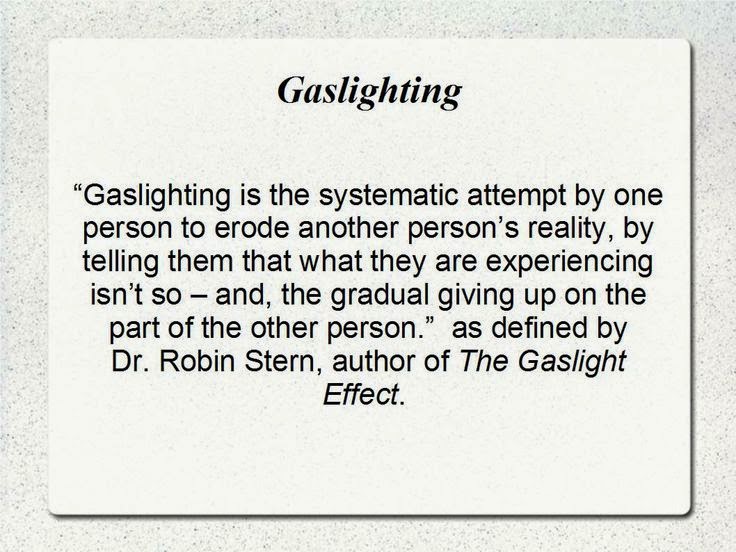
They will claim not to remember even unforgettable events, flatly deny they ever happened, and will never entertain the possibility that they might have forgotten. This is an extremely aggressive and infuriating tactic called “gaslighting”, a common technique used by abusers of all kinds. Your perceptions of reality are continually undermined so that you end up without any confidence in your own intuition, memory, or reasoning.

#4 Death by a Thousand Cuts:

whale_bullies

This is a really fun game that all narcissists like to play! It involves destroying your soul, your ego, your accomplishments and any belief system you have that does not agree with their beliefs. The way the game is won is for them to try to turn everything about you, and everything you do, into a complete failure. Extra points are given when they can take all the credit for anything good that has ever happened and put it all in their own pot. Double points are earned when they manage to put all blame for anything bad onto the other player.

#5 Twenty-One:

adult-children

In this popular game, you’re not allowed to ever reach the emotional age of 21. Even if you are 50 years old, you will still be treated like a child (a stupid child, a bad child, a silly child, etc.). You don’t get to have face cards and if you do get an ace, it’s only worth one point.

#6 The King/Queen Game:

royals
Artwork by Mike Reed

The most important part to remember about this game is that no one can know the rules except the king or queen. Either the king or queen gets to make up rules as they go along; they don’t have to tell the other players the new rules and they can change the rules whenever it suits them. They are the king or queen and, therefore, always win the game. You can be penalized for breaking the rules, even if they chose not to tell you the rules.

#7 Cat and Mouse:

cat_mouse

This is a kind of competitive patience (solitaire) game for two players. It is also known as Spite and Malice. The cards are arranged from low to high with the Kings being wild. Suits (the normal order of things and\or common societal rules) are irrelevant in the game. The game ends when someone wins by playing the last card of their “pay-off” pile. The game can also end if the players run out of cards, in which case the result is a draw.

Cat and Mouse (or Spite and Malice) is a perfect game for a narcissist because it is actually a form of solitaire, it requires “one upmanship”, and involves pulling out “better” cards to beat the opponent.
It involves a “payoff” and for the narcissist, that usually means hurting you somehow. They keep track of real or imaginary things you do, have done, or might do. This is their “pile” and they will pull a card from it and use it against you whenever possible.

#8 Liars Poker:

liars_poker

Individuals with narcissistic personality disorder (NPD) play this game fantastically. They are accomplished liars. Their complete persona and their entire world are totally based in lies. Their positive attributes and alleged actions are all made up in order to get other people to give them their fix of narcissistic supply-praise, adulation and accolades.

#9 Keep Away:

narc_repellant

This is a game that you, yourself, must learn to play. It is important to recognize that the narcissist will never acknowledge that any games are being played; it is up to you to stop playing. To do this, you need to stop bringing up past events/behaviors because you will always be told you’re wrong, they are right, and that you need help. Don’t try to get them to acknowledge or take responsibility for their words or actions because they will always say they didn’t do it or it never happened.

If you are in a relationship, you can walk away from the toxic narcissist in your life. If your boss is an abusive narcissist, you can find another job. You can walk away from your parents, too, if they are abusive.
If you choose to stay, one way to stop playing their game is to not respond to jabs, barbs, pleas, put-downs etc. It is difficult to stop, but perhaps thinking of it this way will help: if you’re playing a game of catch with a ball, the only way to stop the game is to not catch the ball when thrown or not pick up the ball and throw it back. It is possible to stop playing games with a narcissist but just be prepared for an onslaught of negativity, accusations and histrionics. Ignore inciting words, do not respond back to inciting words, hang up the phone (with proper notice such as “I’ve got something I need to do “-not slamming it down) or leave the location where he is at. There are many ways for you to refuse to catch the ball or put the ball down and not throw it back. This is the game of “Keep Away”-you stay away, walk away, and refuse to play.

Reference:
http://postcardstoanarcissist.wordpress.com/games-narcissist-play/

10 habits of highly psychopathic people.

10-habits-of-highly-psychopathic-people

Narcissists with Aspergers?

lonely_guy

There’s been much written about the relationship between Aspergers syndrome and narcissism, mostly about the way they are often confused with each other (or misdiagnosed as the other disorder) due to the belief that people with Aspergers lack empathy (which is not true). I wrote about this false belief in my article, “People with Autism Do Not Lack Empathy!”

People with Aspergers may SEEM unempathic, because they are not always very good at expressing emotions or knowing how to react when other people share their emotions with them. But an Aspie’s lack of appropriate social reaction to the emotions of others doesn’t mean they can’t FEEL the emotions around them. In fact, some may feel other’s emotions MORE keenly than neurotypicals, and they can be easily overwhelmed, which may cause them to withdraw from the situation and partly account for why they may seem less engaged emotionally or uncaring about the feelings of others.

aspie_misdiagnosis

Narcissism as an Autism Spectrum Disorder?

question2

Psychology Today had an interesting article comparing narcissism to high functioning autism (Aspergers) and at least one psychologist thinks they may be the same disorder!:

Khalid A. Mansour (the British Arab psychiatrist), has proposed in an article in the Pan Arab Journal of Psychiatry (link is external) that narcissistic personality may merit classification as an autistic spectrum disorder.

Dr. Mansour writes, “There is now significant level of agreement that emotional processing problems like: lack of empathy, poor self-awareness, self-centredness, poor reciprocation of emotion, poor ability to maintain emotional relationships, anxiety and anger outbursts are more or less central features of autism (10, 50,51).”

Interesting. When I first read the above paragraph, I though Dr. Mansour was writing about severe narcissism. His description fits both narcissism and autistic spectrum disorders. Hmmm.

Dr. Mansour similarly quotes from the ICM-10 listing these features of autism:

–Self-centeredness; inappropriate to developmental level and cultural expectations
–Poor self-awareness, poor ability to develop remorse or learn from mistakes
–Poor empathy or appreciation of others feelings
–Poor ability to reciprocate emotions.
–Hostile dependency on safe relations.
–Failure to develop emotional relationships appropriate to developmental level and social norms
–Treating people as objects or preferring objects over them
Again, this list certainly sounds a lot like narcissism.

Dr. Monsour concludes: “… it is noticeable that people with NPD, do not show a major degree of functioning problems in stress free environment or when they are supported (except that they are perceived as “not pleasant characters” to deal with). However under stress and without support they can become quite dysfunctional in a way not far from what we usually see in Asperger’s syndrome. “

I don’t buy it. This is the opinion of one psychiatrist. While it’s true that on the surface these two disorders may appear similar, the mechanism behind the behaviors are vastly different–in fact, almost the opposite. For the narcissist, their lack of empathy and failure to engage the emotions of others is due to their inability to feel the emotions of those around them, but they can FAKE empathy fairly well, even if they choose not to. If they are trying to obtain supply, they can be pretty good at it. Their social skills are not the problem–their inability to feel other’s emotions are. They are like actors in a play. In contrast, a person with Aspergers or high functioning autism DOES feel the emotions of others around them strongly, but lacks the social skills necessary to be able to convey this to others effectively. Unlike the narcissist, people with Aspergers are very bad actors.

But the question was, can Aspergers and narcissism occur together?

aspie_narcissist

But we’re talking here about comorbidity. The question I’ve raised is whether Aspergers and Narcissism can be comorbid with each other–that is, can someone have BOTH disorders?

The answer appears to be yes. I found this on Yahoo Answers, from a man who claims to be both a high functioning autistic AND a sociopath:

[…] people with Asperger’s can be sociopaths and or narcissists as well. “CO-MORBID” is the medical term used to describe a disability or group of disabilities that exist another disability in a single individual at the same time. It is possible to be autistic and have cerebral palsy or have aspergers and diabetes. Likewise it is also possible to have both Aspergers and mental disorders including sociopath and narcissism. Asperger’s does not exist in a bubble that protects it from co-morbid disabilities and mental defects.

I have High Functioning Autism and I also have antisocial tendencies I must always keep properly managed. I see my psychiatrist regularly. I take my medications as needed and I have trained myself to always be mindful of my darker instincts to insure they do not express themselves in disastrous ways. I have high functioniong autism but; thanks to early intervention by family, doctors and others I was made keenly aware of my antisocial ways and taught how to manage them in ways that kept everyone safe. It is the single most difficult thing I do in life to keep my antisocial ways well managed but; having seen the monster I become when enraged is motivation enough to keep me always vigilant.

There’s no reason why the disorders couldn’t exist together. Personally, I’ve never known anyone with both disorders, but that doesn’t mean they don’t exist. Using a fictional example, I’m going to speculate here what the behavior of a narcissist with Aspergers might be like.

The Case of Mark F.

Depressed Forty Year Old Man Drinking Alone

Mark F. always had trouble making friends. In grammar school he was bullied due to his inability to fit in with others or show empathy. He was socially awkward and never seemed to know the right thing to do or say. Mark not only was unable to show appropriate reactions in social situations, but rather than suffer in silence and wonder why others didn’t understand or like him (as most Aspies do), he didn’t care about the feelings of those around him. He was easily hurt by the bullying, but reacted in rage due to these narcissistic injuries to himself. He’d lash out at those who injured him and didn’t care if he hurt someone else.

As Mark grew older, he had difficulty keeping a job, not only because of his inappropriate, almost schizoid affect that was very offputting to those around him, but also because he deliberately caused pain to others with his frequent insensitive insults. Due to his Aspergers, Mark lacked the social skills to be able to effectively use the more subtle narcissistic “tools” such as gaslighting or triangulation against others, but he was very good at blame-shifting and projecting his character defects onto those around him. Lacking the social skills to know what behaviors were appropriate, he’d “go off” on those in authority, and was frequently fired from his jobs for insubordination, gossiping openly about his coworkers, missing work due to debilitating hangovers (more about this in the next paragraph), and starting fights.

Mark never married. Though good looking, due to his poor social skills and openly hostile attitude (he was unable to mask his anger, resentment and envy of others), his dates never developed into relationships. No woman would stay with him longer than a few weeks. He had no friends and resorted to frequent drinking to cope with his loneliness.

As you might imagine, Mark was miserable. He constantly felt victimized. He was frequently depressed and wondered why he couldn’t get others to cooperate with his need to use them for supply. In his frustration and envy of all those around him for their “better social skills,” Mark tried to self-medicate by drinking heavily and his frequent drunkenness only served to exacerbate his rages and cause his work attendance to be poor.

Having both disorders would be a recipe for extreme misery. Mark’s behavior is just one way narcissism comorbid with Aspergers could manifest itself. An effective narcissist must possess good social skills to be able to charm others into trusting them and to use their “bag of tricks” in an effective way, and therefore an Aspie with narcissism wouldn’t be particularly dangerous, just very unlikeable. Therefore, I don’t think it would be probable that an Aspie could be a “malignant narcissist” but they certainly could be suffering from NPD. A person with both disorders would have zero charm and therefore not have many opportunities to use others the way a narcissist with good social skills could. My feeling is substance abuse would be a huge problem for such a person, in their attempt to make life more bearable. For those not resorting to substance abuse or alcoholism, severe depression or even suicidal ideation could result.

Lies my narcissists told me.

lies_honesty

I was told many lies about myself while growing up within my my FOO (family of origin). I have no doubt this had everything to do with my developing Borderline Personality Disorder (BPD), Avoidant Personality Disorder (AvPD), and lifelong severe anxiety.

Why personality disorders are so difficult to cure.
Personality disorders (PD’s) are formed very early in life, normally before the age of six–which is the reason they are so hard to cure. Because the child’s personality is still in a malleable state (meaning it hasn’t fully formed) until around age 5, PD’s become an integral part of the personality and therefore can be extremely difficult to eradicate because they were formed so early the child doesn’t believe it’s a problem, just the way things are. Their misery seems normal to them. They know nothing else.

Of course some PD’s are more amenable to treatment than others, and sufferers of some PD’s, such as Avoidant, Dependent, and sometimes Borderline, are much more likely to seek treatment than those with, say, ASPD (antisocial personality disorder), NPD (narcissism), or Schizoid PD.

Lies I was told growing up.

sensitive_people
As the family Scapegoat (and occasional Golden Child which I’ll explain later in this article), here are some of the lies I was told while I was growing up:

“You’re too sensitive!” — This one’s the Big Kahuna for many of us ACONs, especially if we’re also HSPs (highly sensitive people) by nature. “You’re too sensitive” isn’t so much a lie as it is a verbal twisting of a wonderful gift and ability to see the Truth into something…more resembling an embarrassing defect. Narcissistic lies sometimes appear in the form of turning something good into something shameful and bad, and vice versa.

“You have no sense of humor.” (see above)

“You don’t really want that.” (the parent is telling the child what they really think–this will just cause confusion and identity issues for the child)

“No one wants to know how you feel.” (so we learn to swallow our pain and lock up our emotions)

“You cry too much.” (I had to unlearn this–unfortunately I unlearned it too well and now find it difficult to cry even when I know I need to)

“You don’t know what you’re talking about.” (invalidation and devaluation)

“You know you don’t really think that.” (massive mindfuckery)

“You don’t really want to join the swim team. You know you don’t like competition.” (see above–the real message here being “you are a weak, pathetic, scared loser” to really drive the message home)

“You’re too fat/heavy/even ‘obese’ (I was never more than 120 lbs at 5’4” as a teenager)

“They don’t like you because you’re always so unpleasant to be around.” (Real nice)

“You never smile and it makes your face look unpleasant.” (Fake Narc smiles look even more ‘unpleasant’)

“You read too much.” (okay…would it be better if I snorted Smarties instead or went around throwing rocks through the neighbors’ windows?)

“You know you’re not really good at that.” (whenever I wanted to try something I hadn’t tried before)

“You know you can’t do that, let me do it.” (I wanted to wash the dishes when I was 6)

“You’re too idealistic” (mmmkay…and that’s a bad thing?)

Because I was raised as an only child (I had half-siblings who did not live with us), I also served as the Golden Child. So I also heard lies like,

“They’re just jealous of you because you’re prettier than they are.” (even as a first grader, I knew this was bullshit).

child_on_pedestal

“They’re just jealous of you because you’re smarter than they are.” (my grades weren’t much above average, in spite of having a high IQ)

“You are more talented than they are.”

“We have better genes than those other people.” (Narc genes?)

“You come from a better family than your friends do.” (I call bullshit on that.)

You were the best dancer in the school play.” (I have two left feet and even my dog would have known that was an outrageous lie).

It doesn’t stop when you go No Contact.

flying_monkeys

These are some of the lies told about me by my mother to her sycophants (the ones I’m aware of):

“She’s a loser just like her ex-husband” (Nice.)

“She always makes such terrible choices.” (True, but there were extenuating circumstances at those times she would never understand)

“If only she had done what I told her.” (If only I had had the courage to take a few risks-I am extremely risk-averse)

“If only she had listened to me.” (Again, if only I had taken a few risks and not been so afraid of my own shadow)

“She’s a nothing.” (I guess that’s why people tend to always talk over me, look through me, and never hear what I have to say in group or social settings–where I FEEL like a nothing)

“She was ruined by her ex” (this is a half-truth…but RUINED? Really? Let’s tone down the hyperbole, shall we?)

“She will always be poor.” (and the poor are always with us, right?)

“She will never achieve anything.”

“She can never stick with anything.” (This has actually been true but has gotten a lot better)

“She has mental problems.”

“She is sick in the head.”

Ad nauseam…

Conflicting messages as Scapegoat/Golden Child

ConflictingMessages

Black-and-white thinking (idealizing/devaluing) and outrageous contradictions prevailed in my FOO.
As both Scapegoat and Golden Child, I was receiving two sets of messages (sometimes both at the same time), such as, “You know you don’t really want that, because you’re too sensitive, you hate competition and you are smarter than they are.”
I think you get the idea.

Being raised with conflicting sets of messages and being treated as beloved/rejected child at once was incredibly crazymaking.

Borderline Personality Disorder (or even narcissism!) and Avoidant Personality Disorder (I have both BPD and AvPD) both seem like logical, almost sane reactions to having been raised with two conflicting sets of messages–I was either all bad or all good, with no in between.

And finally, it doesn’t end there. Raised by narcissists, I married one even worse. A narcissist so malignant he made my parents look like empathic light beings in comparison. I was trained to be Supply and was WAY too good a student. If awards were given for Learning How to Be Narcissistic Supply, I would have been valedictorian.

Lies my psychopathic narcissist ex-husband told me.

gaslighting

Following are the lies my malignant narcissist sperm donor told me about myself and also told all the flying monkeys he had succeeded in turning against me (some of who included my friends) over 28 years. This led to my PTSD and clinical depression (where I had to be hospitalized for suicidal ideation). Most of these were projections of his own character flaws onto me.

“You are selfish/self-centered.”

“You always overreact to everything.”

“You never listen to me”

“You don’t care about me or my problems.”

“You have no empathy for me.”

“You are narcissistic.”

“You are becoming just like one of them” (he was referring to Republicans, who he hates)

“Oh, so now you’re living the high life?” (when I took in a roommate while he was homeless)

“You are a b**ch, c*nt, Tw*t, whore.”

“You are stupid.”

“You have no common sense.”

“You’re insane.”

“There’s something wrong with you.”

“You’re just like your family–all crazy.”

…as well as a constant barrage of hateful sarcasm at my expense, whether there were people present or not. If I objected to this mean spirited “humor,” I was told–WHAT ELSE???–I was “too sensitive” or “have no sense of humor.”

Because of having grown up in the midst of a labyrinthine web of lies, and then marrying into another one, I have always valued Truth. That’s why I put a premium on complete honesty, at least in my writing.
Not that I don’t ever lie–we all do, it’s part of the human condition. But I am very aware of dishonesty when I see it and won’t hesitate to call it out in others.

The “fleas” of narcissism and being Aspie.

fleas (1)

Fivehundredpoundpeep just posted this article yesterday, expanding on yesterday’s post about fleas acquired from narcissists who abused us, but this one from the perspective of an Aspergers sufferer who was horrifically abused and devalued by her sociopathic mother, MN sister, and other decidedly unpleasant relatives.

The Fleas of Narcissism
By Fivehundredpoundpeep

I have read about fleas of narcissism before. Lucky Otter talked about fleas recently too. These are the things you can end up with from being raised in a narcissistic household. These would include learned behaviors and reactions they taught you during your childhood.

One thing I want to add here, is that if you are worried about being a narcissist, while some children of narcissists become a narcissist like them, you often are NOT! Narcissists do not worry about it, the very idea that they may be disordered is way beyond them. They would never in a million years admit anything is wrong with them. My mother in one pissed off email fest actually wrote, “**** thinks I am disordered!” by then I had laid it out and wrote to her that she was a narcissist and had no empathy, though I came to the sociopath conclusions later on.

One fleeting thought someone raised in sick sociopathic households can have, is “Am I anything like them?”. One can have this feeling of, “Has the evil infected me?” Being raised with no love, I wonder how I was able to love people and I do. I knew by a very early age I did not want to be like my parents. For Aspies, justice is very important, it is hard to explain, some see Aspies as being little minion “rule-followers” but it’s different then that, we want to follow what is “right” over wrong. My conscience was very different then their’s. One thing that would happen to me is my parents would slap me for being “too sensitive”. I was told constantly to “harden up”! Today as a 40 something, I know telling a ten year old crying Aspie, “You can’t cope!”, is pretty sick.

I struggle with my own worries about evil then. All Christians do and have to battle against the sins they may commit. God is merciful and there to forgive once one repents but I have worried about falling away under my crushing poverty and losing trust in God. Even crazy bad health problems one’s thoughts can go into despair, instead of prayer. The concept of conscience was not taught in my family or acting according to one’s conscience. I was different. I felt guilt.

However I struggled with a few fleas from being raised in my family. My family all had violent tempers, with screaming, yelling and throwing things and using foul language. They do not censor their tempers. Even Mini-Me has a bad temper and I saw her screaming at her kids a few times.

I can struggle with a bad temper though I have learned to temper it somewhat and try to keep the yelling to myself as much as possible within the confines of my apartment. I would never touch anyone, but when angry I can yell loud.

Long ago I learned to walk away from people while yelling, to keep the damage more minimal. The other day, I started yelling about a door being locked in my face, and hopefully no one heard me. I said one irritated low volume thing with no cussing they did hear, and then thought inside, “I better cool it”. Aspie melt-downs can complicate this, sometimes an Aspie is not mad but just anxious. I know I am not perfect and well, everything is a work in progress.

My family does not feel guilt over their tempers, they think it is okay to rant and rave and cuss the room blue. I was always embarrassed to eat out with my father because he would tell the wait-staff off over every little thing and even would yell. I had visions of goobers hitting our food back in the kitchen. You know something is wrong when the neighbors are calling the police constantly over your family’s screaming and yelling and they show up and because of your father’s position do absolutely nothing while a poorer guy would be getting dragged off to jail.

This is an area where I definitely had to learn NOT to be like my family and to keep it in check.

Other ACONs may struggle with taking criticism–I am okay with criticism that is meant for improvement but not for the mean kind.

One rarer flea I can get is if I am around people I can tell do not like me or don’t understand Aspies or have personality traits like my parents is I can get very sarcastic and will go into “fight or flight” mode inside. I will go into Aspie blunt mode and not “cloak” for the neurotypicals and throw caution to the wind. However this can be dangerous around narcs and other personality disordered types who can manipulate things to turn my emotions against me. Aspies have to remember blunt honesty isn’t always the best social mode. Around narcs of course, silence and disappearing is safer.

I found myself in a “fight or flight” mode in my stomach and having some of my fleas come out too often when I was around certain personalities. Sometimes it is not even something that a particular person is doing or any personality disorder but a clashing of values and world view.

This is one thing ACONs should always pay attention to when it comes to dealing with the world. Pay attention to how you FEEL around certain parties. These are feelings I am learning to pay attention to. Not everyone is a narc but we have to learn to control our fleas around personalities who may trigger us or we may differ with. I know there are neurotypicals out there who have no capability to understand me. Of course we have to be mindful of the personality disordered who may be out to hurt us too. During the early stages of no contact we can be more sensitive too as we wake up to new ways of doing and acting coming out of fog.

Others may have a hardened view towards the world. I know I did for a short time. My parents would scream at me for being “too sensitive” and I had that weird abuse where they denied me the protection and treatment owed a young girl where I was treated more like a boy. I was told to harden up and not to have feelings. My feelings angered them. They failed in this change of me, but there was some fleas left over.

An ACON going through this one can get feelings like “Everyone is out to get me.”, “I’m not going to be a sucker”. I had this in my 20s to an extent expecting that everyone was going to screw me over. One roommate even asked me, “Why do you have to act like such a tough girl?” Get hit enough times and you are always ducking and this is not a good way to deal with the world. When I lived in the ghetto, I did grow somewhat harder and when I escaped to a small rural town, had to adjust my entire stance towards the world. I didn’t need to walk around in defense mode all the time even if I had to learn balancing this one, self protection balanced with openness. I actually had to learn and experience that there were good, kind and loving people in the world which defines many of my friends.

One thing I had to do after becoming a Christian in my thirties, was I did use the Christian people I met as role models. I would pick older women, and some I still have on my social website, and would observe how they treated people. These were women with loving families and who gave to the community and treated people fairly and kindly. While I did Aspies are more apt to do this, in choosing mentors. My best jobs when I was young, I always had a mentor. I don’t think this is a bad thing to do. I was doing it at an older age then most, but choosing positive role models when you have had negative ones for far too long is a good thing and I think a sign of healing.

So fleas can be overcome, you just have to be aware of them.

Notes of first therapy session with Sam V., male, 43, diagnosed with Narcissistic Personality Disorder (NPD)

samvak3

The following is about ten years old, I think. I’m not going to editorialize this further, but let the therapist’s words speak for themselves. (I do not know who the therapist was). Pretty interesting stuff and a vivid picture of how NPD can manifest itself in one person, in this case a well known author who writes about his own disorder. Sam Vaknin suffers from the cerebral form of narcissism; the other type is somatic.

Notes of first therapy session with Sam V., male, 43, diagnosed with Narcissistic Personality Disorder (NPD)
http://www.narcissistic-abuse.com/personalitydisorders65.html

Sam presents with anhedonia (failure to enjoy or find pleasure in anything) and dysphoria bordering on depression. He complains of inability to tolerate people’s stupidity and selfishness in a variety of settings. He admits that as a result of his “intellectual superiority” he is not well placed to interact with others or even to understand them and what they are going through. He is a recluse and fears that he is being mocked and ridiculed behind his back as a misfit and a freak. Throughout the first session, he frequently compares himself to a machine, a computer, or a member of an alien and advanced race, and talks about himself in the third person singular.

Life, bemoans Sam, has dealt him a bad hand. He is consistently and repeatedly victimized by his clients, for instance. They take credit for his ideas and leverage them to promote themselves, but then fail to re-hire him as a consultant. He seems to attract hostility and animosity incommensurate with his good and generous deeds. He even describes being stalked by two or three vicious women whom he had spurned, he claims, not without pride in his own implied irresistibility. Yes, he is abrasive and contemptuous of others at times but only in the interests of “tough love.” He is never obnoxious or gratuitously offensive.

Sam is convinced that people envy him and are “out to get him” (persecutory delusions). He feels that his work (he is also a writer) is not appreciated because of its elitist nature (high-brow vocabulary and such). He refuses to “dumb down”. Instead, he is on a mission to educate his readers and clients and “bring them up to his level.” When he describes his day, it becomes clear that he is desultory, indolent, and lacks self-discipline and regular working habits. He is fiercely independent (to the point of being counter-dependent – click on this link: http://samvak.tripod.com/faq66.html ) and highly values his self-imputed “brutal honesty” and “original, non-herd, outside the box” thinking.

He is married but sexually inactive. Sex bores him and he regards it as a “low-level” activity practiced by “empty-headed” folk. He has better uses for his limited time. He is aware of his own mortality and conscious of his intellectual legacy. Hence his sense of entitlement. He never goes through established channels. Instead, he uses his connections to secure anything from medical care to car repair. He expects to be treated by the best but is reluctant to buy their services, holding himself to be their equal in his own field of activity. He gives little or no thought to the needs, wishes, fears, hopes, priorities, and choices of his nearest and dearest. He is startled and hurt when they become assertive and exercise their personal autonomy (for instance, by setting boundaries).

Sam is disarmingly self-aware and readily lists his weaknesses and faults – but only in order to preempt real scrutiny or to fish for compliments. He constantly brags about his achievements but feels deprived (“I deserve more, much more than that”). When any of his assertions or assumptions is challenged he condescendingly tries to prove his case. If he fails to convert his interlocutor, he sulks and even rages. He tends to idealize everyone or devalue them: people are either clever and good or stupid and malicious. But, everyone is a potential foe.

Sam is very hypervigilant and anxious. He expects the worst and feels vindicated and superior when he is punished (“martyred and victimized”). Sam rarely assumes total responsibility for his actions or accepts their consequences. He has an external locus of control and his defenses are alloplastic. In other words: he blames the world for his failures, defeats, and “bad luck”. This “cosmic conspiracy” against him is why his grandiose projects keep flopping and why he is so frustrated.

Catching FLEAS from narcissists and abusers. (reblogged from Nyssa’s Hobbit Hole)

flea_cartoon

When I was Googling “fleas and narcissists” for the previous article, I learned something new. It’s also something I very much have been needing to know, due to my worries lately about my own narcissistic behaviors.

The article, reposted from Nyssa’s Hobbit Hole, decribes the way a long-term relationship with a narcissist can lead to a condition in their victims called FLEAS. I have never heard this term used before, but apparently it’s part of the narcissistic abuse lexicon, and refers to the bad or narcissistic behaviors ACONs and other abuse survivors have picked up from the narcissists who influenced or raised them. These behaviors, unlike those of a true narcissist, can be unlearned. Here is the article in its entirety.

Catching FLEAS from Narcissists and Abusers
By Nyssa (“Clarissa Harlowe,” pseudonym)

fleas_cartoon

I have caught my own FLEAS while dealing with Tracy.

Sometimes, we who have been targeted by the abuses of a narcissist, wonder if we, too, are now narcissists. It can be catching, especially if we are raised by narcs.

But the recovery community uses the term “fleas” to describe our own harmful behaviors, picked up from the narcs, but which do not mean we ourselves are narcs. The trick is to figure out whether you are a narc yourself, or just have “fleas” which you can kill off with a good flea bath.

As posted in FLEAS – Bad Behavior Patterns and Habits Picked Up from Living or Dealing with a Narcissist by Daughters of Narcissistic Mothers:

Now, you may not have NPD (Narcissistic Personality Disorder). Some children of Narcissists do, and some don’t. Let’s say you don’t, but you were raised by someone who did/does. Therefore you have some issues that can take the shape of NPD – like a shadow or a snow angel, or even an echo.

You’ll have some issues in the same sorts of areas that Narcissism occupies, because you picked up these fleas FROM a Narcissist.

…..But you don’t have NPD.

What you have is the shadow – “maladaptive behaviors”, as psychologists call them, the unhelpful patterns you have been taught, and which you have had to resort all your life.

And they are glued in, most often, by the shame you have been made to carry.

What you have is nicknamed “FLEAS.” They’re the bad behavior patterns and habits we picked up from living with a nutcase who had total and unhealthy control over us. They are the pain and guilt and crazy patterns we had to take on as children in order to just survive. And they’re completely un-learnable. (Meaning, you can un-learn them!)

One of the most common issues that newbies demonstrate is a tremendous fear that they themselves have NPD.

It’s a perfectly understandable fear. All human beings do Narcissistic things, and when DoNM’s who don’t have NPD recognize and acknowledge their own self-centered behaviors, they sometimes worry that they have NPD.

They feel guilty about possibly having hurt someone’s feelings, been self-centered, etc., and they panic. It can really be upsetting, even terrifying. And they beat themselves up mercilessly for it – because that’s what they’ve been taught to do.

You’ll notice that I said, “Daughters of Narcissistic Mothers who don’t have NPD”…

In order for someone to recognize, acknowledge and feel guilty about their own Narcissistic behaviors, they first have to have a level of empathy and sense of emotional responsibility that Narcissists, by definition, do not possess.


On the DoNM forum, the usual response to such a person is, ‘If you’re that worried about the impact of your behavior on others, and you’re willing to publicly share your fear of being NPD, trust us — you don’t have NPD… you just have FLEAS.’ “

fleas_book

Violet writes in Am I a Narcissist, Too? All About Fleas:

We can pick up fleas anywhere. I have seen things on FaceBook, people saying really hurtful, mean things about LGBT people, about people of colour, about the poor and disadvantaged, about women, and they are absolutely shameless about it.

Some of these people are narcissists, but others have picked up fleas from narcissistic politicians, pastors, or other authority figures they either revere or fear. Taken out of that environment and shown how their words and attitudes actually hurt other living, breathing human beings, some of these people will feel shame for what they said and the hurt they caused.

Others will not, and they will rationalize and justify what they said, even blame their victims for their hurt (I have actually seen someone say that feeling hurt by the words of a bully is a choice, that you can choose not to be hurt and therefore what the bullies say and do is OK!) : these people are most likely narcissists.
I’ve seen versions of this as well. For example, statements that we choose to be offended by others; that we can simply stop being offended. Or, “I’m not responsible for your emotions.”

There are different ways people mean this, however. The first was said in the context of, Yes, what they said is offensive, but you can choose your own reactions–thereby not giving the offender power over you.

The second, I’ve seen used as an excuse to do whatever you want, because it’s the other person’s fault if they’re offended. It was said by Richard to me, after I told him he was doing some things that hurt me. I forget what they were, just that it was close to the time we broke off the friendship, and that he basically took the responsibility for my being hurt off his shoulders, putting it on mine. ???!!!


I’ve seen it in other places as well, the excuse that if we hurt somebody, it’s their fault for being hurt. That’s very narcissistic, and goes against everything my husband and I were taught growing up. It’s yet another sign that I’ve pegged Richard correctly as a narcissist.

If you’ve hurt and offended someone, the very least you can do is apologize for hurting them, even if you don’t feel your action was wrong in and of itself. You can listen to how you can avoid hurting that person again.

Sure there are times when that person was offended by an innocent action which should not be offensive (ie, offended by a gay man kissing his partner in public, or offended by an introvert who means well but is quiet, or offended by a woman breastfeeding her baby at the mall).

But oftentimes, the offensive act could simply be avoided next time.

Tracy, too, as I saw time and again, would justify whatever she did, even though it hurt others. She hurt Todd, so she justified it as his fault. She hurt me, so to this day she justifies her actions as “nothing wrong” and talks like my being hurt is somehow “childish.”

Even Richard told me back in February 2008, Good luck getting an apology out of her, because she rarely apologizes to anyone, thinking whatever she does is justified. I don’t have the e-mail in front of me and don’t recall if I kept it, but I still remember it.

(I remember thinking when I got it, “I don’t want to deal with that woman anymore!” This was the first time I seriously thought about breaking off the friendship.)

She used Richard’s past abuses of the children to justify her own abuses of the children (I have an e-mail proving this). Which means she’s like this to everybody: me, Todd, even Richard. And this is one of the signs of a narcissist, according to the above.

There is more good stuff in that blog post, explaining how we can tell if we’re narcissists or have just picked up some “fleas”–and how to eradicate those fleas.

devil

From the website Out of the Fog (Fear, Obligation, Guilt):

Fleas – When a non-personality-disordered individual (Non-PD) begins imitating or emulating some of the disordered behavior of a loved one or family member with a personality disorder this is sometimes referred to as “getting fleas”….

Sometimes, when a person has been exposed to an abusive situation for a sustained period, they will look for ways to escape – and sometimes they will experiment or resort to behaviors which are not characteristic but serve as a mechanism to demonstrate their anger.

These behaviors are often destructive and counter-productive and rarely get the abuse victim what they want. These behaviors usually result in regret, shame and apologies from the abuse victim towards their perpetrator. Some perpetrators may seize on such incidents as justification for their own abusive behavior or as a diversion from it….

However, most Non-PD’s are more accustomed to “keeping the peace” than being aggressors and most of us are not comfortable or accomplished in winning arguments or fights.

We will often back down or feel remorse after lashing out. We may begin to compare our behavior to that of the person with the personality disorder and wonder if we are the ones who have “the” problem.

It is common for Non-PD’s to begin to question if they are the one who suffers from a personality disorder. It is also common for Non-PD’s to greatly fear retribution after an angry outburst and engage in a manipulative campaign, similar to hoovering to try to deflect consequences or payback.

Narcissist

To read the rest of this post, please see the rest of Nyssa’s article here.

For more about how Narcissists can give you FLEAS, read this article, “The Shocking Truth: Staying with a Narcissist can Give You Fleas” from Let Me Reach with Kim Saeed.

That’s enough about fleas and FLEAS for one night. I’m getting itchy.