
The curse of the Aspergers/Avoidant/Borderline triad.

social_isolation

Today I attended a beautiful Pentecost mass that was held outdoors. The day couldn’t have been more perfect for an outdoor celebration of the descent of the Holy Spirit on Jesus’ disciples. Unlike the disciples, I didn’t experience a sudden spiritual epiphany or dramatic change in my heart, or start speaking in tongues. But as always when I attend mass, I felt God’s presence around me (if not actually IN me) and felt surrounded by peace and light.

I looked at the tall trees gently swaying in the distance, their bright spring greens illuminated in the bright sunshine against the azure blue sky, and asked God to change me, to let the Holy Spirit flow inside me and fill me with its divine gifts of empathy, unconditional love, and joy. I asked Him to make me a better person who can connect with other people on a meaningful level–and having those gifts would make it so much easier for me to do that.

The truth is, I feel that I’m lacking in all three of these gifts. I do not have NPD and therefore have no desire to act in evil or toxic ways to others, but due to my other disorders–only one of them probably not due to abuse (Aspergers)–I often feel like there’s an emotional blockage keeping me from really being able to connect with other people, to really being able to empathize and feel WITH them the way people who have not been abused and do not have these disorders can do.

This particular triad of disorders is a tragic one. Even having one of these disorders cripples you and isolates you in various ways from others and can lead to a lonely life lacking in meaningful relationships, but having all three at once is devastating. It’s so hard for me to connect with the rest of humanity except on the most abstract level and as a result I’m often so very sad and lonely.

First, being an Aspie (the only disorder I was probably born with) makes it almost impossible for me to read social cues normally and although I can socialize well enough online (because it doesn’t require me to “think on my feet”–I have time to think through what I want to say or how to respond), in the day to day physical world my Aspieness makes me appear awkward and sometimes slow when I am forced to socialize, especially with neurotypicals who don’t understand people with Aspergers, so I avoid people. Due to my awkwardness I was a frequent target of school bullies, and it didn’t take long to learn that it was best to just keep my mouth shut and say nothing. I became painfully shy, fearing ridicule and humiliation. The old adage, “Tis better to say nothing and have others believe you are daft than open your mouth and remove all doubt” has been my motto most of my life.

aspergers_cartoon

The other two disorders I have–avoidant AND borderline personality disorders–I am certain were due to years of abuse by my narcissistic mother and to a lesser extent, my codependent father who colluded with her most of the time (although I never really doubted his love for me). The AVPD (a Cluster C “anxious” personality disorder) only exacerbates my Aspergers. They feed off each other.

Avoidants shy away from social contact because of their low self esteem and overwhelming fear of rejection. As a result they are usually painfully shy but can even seem aloof or cold. Avoidants are not schizoid though (people with Schizoid personality disorder dislike other people and prefer a hermit-like lifestyle; they don’t care how others regard them): on the contrary, we WANT friends, we WANT meaningful relationships, we WANT romance, we WANT others to like us–but our fear of engaging with others due to possible rejection keeps us isolated and alone. We build a protective shell of aloofness around ourselves so we can’t be hurt. People with AVPD are risk-averse, and are likely to be underachievers due to their unwillingness to take risks that may expose them to social embarrassment.

An Aspie with AVPD is nearly–or is–a social hermit, but not out of choice, like a person with schizoid personality disorder. Making friends–a skill that comes so naturally to most people–is something most of us never mastered well, if at all. Even having a relaxed conversation or opening ourselves to another human is like rocket science to those of us with both disorders. It’s a wonder that I was even ever able to engage in romantic relationships and have a family. Of course, all the men I dated and of course the one I married were narcissistic, mirroring the toxic dynamics I had with my family of origin.

avoidant_pd
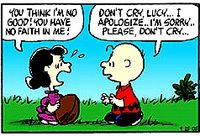
Like the girl in this cartoon, I can relate to all of this, even the refusal to play charades! I was always terrified of that game because it requires a level of being able to read social cues and an ability to think on your feet, two qualities I don’t possess. And of course, the fear of risk-taking and humiliation.

And that brings us to my borderline personality disorder. BPD is not usually marked by overwhelming shyness or social awkwardness; in fact most borderlines are quite socially adept. But their disorder, like an Avoidant, is fueled by a deep-seated fear of rejection and almost always has its roots in childhood emotional abuse or neglect, as do all the personality disorders.

Borderlines long for close relationships and actively seek them out, but then push others away if they sense the other person might pull away or reject them first. They overreact to slights and are highly sensitive to criticism or rejection. Like a narcissist, they can be difficult to deal with because of this type of selfish oversensitivity can lead them to engage in some of the same antisocial behaviors and game playing people with NPD or even ASPD are guilty of, though not usually to the same degree because people with BPD have a conscience (even if it’s stunted in some) and don’t normally actively seek to hurt others. There are exceptions though–I was shocked and dismayed to read that both the murderer Jodi Arias and serial killer Aileen Wournos were both diagnosed with BPD, though in Wournos’ case, she was also comorbid with ASPD. Still, most borderlines, when they are made aware of how they have hurt their loved ones, feel remorse–but their guilt and shame can make them feel worthless and lead to self-destructive behaviors. It is not a fun disorder.

Though Borderlines are more likely to be self-destructive instead of deliberately destructive to others, this self destructiveness causes huge problems in their ability to form meaningful relationships, and due to their “go away–come closer” way of relating to others, their relationships are usually stormy and short-lived.
lucy_charlie
Sometimes I feel like either Lucy or Charlie Brown (who I’m pretty sure would have AVPD), and sometimes both of them at once.

I am cursed with the overwhelming shyness and social anxiety of Aspergers and AVPD, but during the rare times I have been able to form relationships or friendships, sooner or later I push those people away in some form or another–not because I want to, but because I either become so afraid of rejection I reject the other person first–or more frequently, unconsciously do something to make the other person leave me. BPD is very maladaptive to the sufferer–it tends to bring on the very thing the Borderline fears the most–rejection.

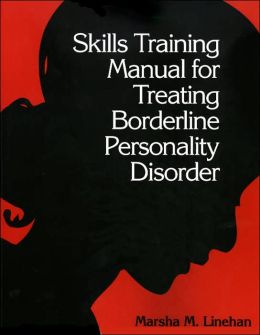
I was diagnosed with BPD in 1996 during a three month long hospitalization for major depression. At the time, I also had PTSD from being a victim of abuse by a malignant narcissist husband, who gaslighted me constantly and even tried (but eventually failed) to turn my own children against me. During that hospital stay, I was given a copy of Marsha Linehan’s excellent manual for BPD, “Skills Training Manual for Treating Borderline Personality Disorder.Dr. Linehan is a borderline herself (she had originally been diagnosed with schizophrenia but felt her “schizophrenia” was really a manifestation of her BPD). The techniques in the book are a form of DBT (dialectical behavioral training) which teaches the Borderline patient to act mindfully–to think before they act and consider consequences, because Borderlines (unlike people with NPD) act on impulse when they feel threatened.
linehan_book
Linehan’s excellent manual can be ordered here.

Linehan’s book helped immensely and since my long-ago hospital stay, I have learned to control many of my borderline symptoms. In fact I have become so good at it I rarely fly off the handle the way I used to or overreact to the degree I used to do. I still have my copy and have recently begun doing some of the excercises again because I still know there’s a LOT of room for improvement.

Like NPD, BPD doesn’t just go away. All personality disorders are incredibly hard to cure because they have become so much a part of the individual’s personality. There are still many times I unwittingly either push other people away OR get too close (or do both at the same time); I still have problems with understanding where other people’s boundaries begin and end. I also feel like there is a wall there keeping me from really being able to empathize with other people in a normal way. I can empathize in an abstract sort of way (it’s hard to explain what I mean by that but the empathy I do feel is sincere). It’s just so hard for me to connect on a meaningful level because I fear rejection so much. I want to be a friend to others; I want to make others happy; I want to be able to fully share in their emotions, good or bad–but I find it all so hard–not just because of my BPD, but my fear of engaging with others in the first place due to Aspergers and AVPD. This triad has been a huge curse all my life. But at least I know what my problem is. I’m what you would call “complicated.” I have my work cut out for me.

hope

Having all three disorders has made my life incredibly difficult and my relationships–when they exist at all–have been stormy or don’t last. But I don’t feel that I’m beyond hope. In fact, I’ve been feeling much better about myself since I started blogging and accepted God into my life. I do feel that He is changing me in a very meaningful and deep way. Maybe it’s not happening as quickly or dramatically as I had hoped, but it’s happening. I am feeling more ability to empathize with others and feel moments that come very close to pure joy. I have always had a great capacity to feel guilt and shame, so that has never been a problem. For a person with a Cluster B disorder, my conscience is probably TOO well-developed. I apologize for things I haven’t even done. Sometimes I feel like I’ve spent my entire life apologizing for my existence. I hate the idea of being a bad or evil person. I like it when I know I’ve made someone else happy. Those times when I can make others happy are becoming more frequent, and I think that’s a step toward healing. I’m also happy to report that my lifelong problem with envy appears to be disappearing. Envy is so toxic–mostly to the person harboring it. It’s a great relief to have that particular monkey off my back most of the time now.

So today’s celebration of Pentecost had special meaning, because even though I wasn’t knocked to my knees by the Holy Spirit, I felt a deep sense of peace, centeredness and just “being in the moment” that has always eluded me. I felt a genuine desire to become a person who can make a positive difference in the lives of others and can feel unconditional love even for those I do not know well. Now I just need to overcome my fear of engagement with others, but I have faith that in time that will happen too, and when that happens, a whole new world will open up to me as the walls I built at an early age begin to crumble and reveal the me I want to be–which is really the me God meant for me to be.

Never give up hope. Ever.
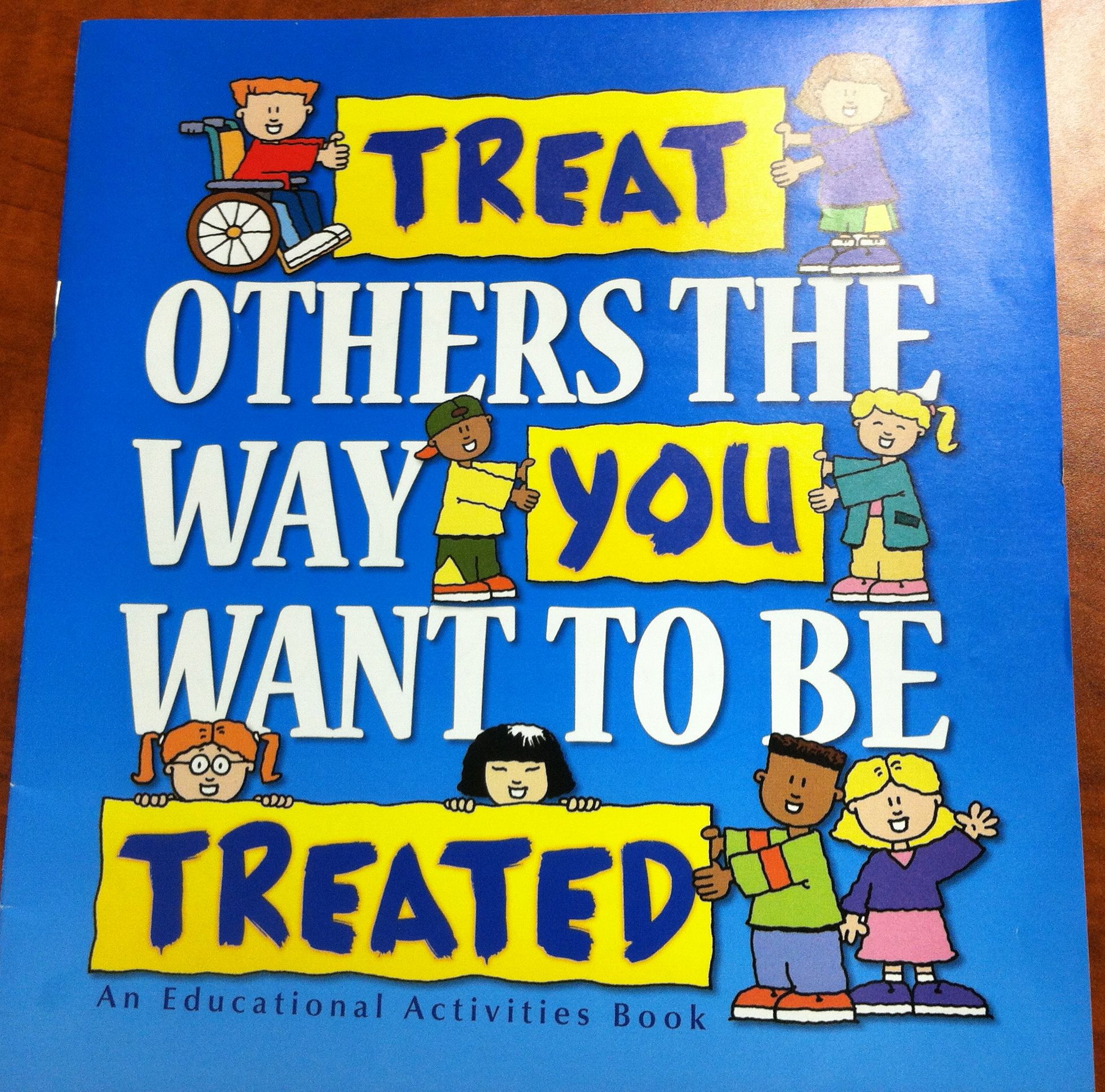
Whatever happened to the Golden Rule?

golden_rule

I remember as a child, always hearing the Golden Rule–“Do unto others as you would have others do unto you.” It’s a staple of kindergarten life, and it’s a good lesson in how we should treat others. It teaches children the concept of empathy. It would be a much nicer world if more adults followed it.

Some religious people are so quick to judge others and they pull out Bible quotes to justify giving those they disagree with a hard time. This leads to discord and disharmony and walls of hate between individuals. In the larger world, the same attitude leads to wars and killing. Many narcissists hide behind a cloak of piety. It’s possible to find quotes in the Bible to justify abusive behavior and narcs do it all the time (I am not referring to any specific individuals here, it’s just something I’ve noticed a lot). Do they forget the Golden Rule is itself from the Bible?*

Matthew 7:12
Therefore all things whatsoever ye would that men should do
to you, do ye even so to them: for this is the law and the prophets.

Luke 6:31:
And as ye would that men should do to you, do ye also to them likewise.

Galatians 5:14
For all the law is fulfilled in one word, even in this; Thou shalt love thy neighbour as thyself.

Leviticus 19:18
Thou shalt not avenge, nor bear any grudge against the children of thy people, but thou shalt love thy neighbour as thyself: I am the Lord.

Leviticus 19:34
But the stranger that dwelleth with you shall be unto you as one born among you, and thou shalt love him as thyself; for ye were strangers in the land of Egypt: I am the Lord your God.

* King James Version.

“The Sensitive Gene: Why Some People Are Born To Feel Emotions Harder”

The Sensitive Gene: Why Some People Are Born to Feel Emotions Harder
By Alexia LaFata for Elite Daily: http://elitedaily.com

teary_eye

Scientists have long debated what exactly makes us who we are. Are our qualities more influenced by our social environment, or are we naturally inclined to be a certain way? Or — to complicate things even further — does our environment affect the way these natural tendencies display themselves?

Well, when it comes to the reasons why we do the things we do, the most complicated answer is usually the correct one.

In recent decades, the government has spent billions of dollars on gene research with the goal of trying to explain how the genes we were born with express themselves in our everyday lives.

Psychologists are optimistic — though cautiously — these advancements in gene research will help us understand ourselves better.

We haven’t even scratched the surface of the full potential of genetic research, but what we have seen so far looks promising.

One human quality that genetics has attempted to help explain is sensitivity. People who are highly sensitive tend to respond more emotionally to their environments.

They are more inclined to cry during sad movies, jump to use social media to share something that moved them and feel heightened levels of sympathy for poor people and their friends who just got dumped.

Most notably, they are also more inclined to have a negative attention bias, which means they focus more on the negative things in their environment than the positive things.

This bias causes sensitive people great anxiety, especially if the environment they’re responding to is new.

Where do these traits come from? Why are some people more likely than others to respond more powerfully to their environment? In other words, why are some people so damn sensitive?

If this sounds like you, fear not: It turns out the answers to those questions do, indeed, have something to do with the way you were born.

Researchers from the University of California, Monmouth University and the Albert Einstein College of Medicine found that being sensitive is an innate trait that’s identifiable by physiological reactions, patterns of brain behavior and genes.

In their study, 18 participants viewed photos of either frowning or smiling faces. The researchers then scanned the participants’ brain activity while they looked at the photos to assess how emotional their responses were.

They found that people, who were considered to have sensory processing sensitivity (SPS) had greater blood flow to areas of the brain involved with emotion, awareness and empathy — indicating physical evidence of the presence of the sensitivity trait. This occurred regardless of whether they were looking at the sad or happy photo.

Another 2012 study examined biological proof of sensitivity even further. In the study, researchers Rachael Grazioplene, Colin DeYoung, Fred Rogosch and Dante Cicchetti studied the cholinergic system, a system in our bodies that determines how we respond to new environments and how sensitive we are to stimuli.

The cholinergic system becomes activated when we experience “expected uncertainty,” which happens when we’re placed in situations where we predict we will learn something new.

For example, when you were a freshman in college, you probably knew you’d be confronted with new experiences.

You experienced those feelings of “expected uncertainty” — of not knowing who your friends would be, what you wanted to major in, what clubs you wanted to join, how you would handle living away from home and so on.

Some of your peers might have perceived those new experiences as anxiety-inducing, meaning they would have proceeded with caution. Others might have seen them as intriguing, causing them to have been more inclined to explore.

sensitive_jason

The way both of these groups of people responded to those new environments was influenced by genetic variants in their cholinergic systems.

In her study, Grazioplene and her colleagues studied variations in the CHRNA4 gene, a key cholinergic receptor and determinant of whether you see the aforementioned kinds of “expected uncertainty” as threatening or exciting.

It wouldn’t be enough to say this genetic variant was the sole determinant, though, so the study also examined how, in conjunction with the variation in the CHRNA4 gene, an individual’s upbringing and social environment affected how he or she perceived uncertainty.

To study the functions of this variation, the researchers set up a week-long camp for 614 children, ages 8 through 13, all of whom came from the same socioeconomic background, but had different upbringings: Half of the children had an upbringing in which they had been maltreated with neglect or emotional, sexual or physical abuse, and the other half had an upbringing in which they had not been maltreated.

The children with the genetic variation who grew up in an abusive environment were more likely to perceive the new camp environment as threatening, and the children with the same genetic variation who had grown up in a normal environment were more likely to perceive the new environment as intriguing. Even more interestingly, these results were true regardless of age, sex or race.

Now, what does this mean? It means that, yes, there is certainly a genetic variant that makes you more inclined to be anxious or curious in new environments, but your upbringing and social environment play a role in determining which one of those two it will be.

And while this specific genetic variant is rare — only one percent of the population actually have it — it gives valuable insight into the way psychologists and scientists study behavioral patterns in relation to both genetics and environment.

So, if you’ve sobbed during “The Notebook,” impulsively shared a video on Facebook of a kitten rolling around in a patch of grass that made you tear up or found yourself crying with your best friend when her boyfriend dumped her, take comfort in the fact that you were probably born this way — feels and all.

Alexia LaFata is a Writer covering culture and lifestyle for Elite Daily. She’s a proud New Jersey native and soon-to-be Boston College graduate, and her work is featured on Thought Catalog and VentureBeat. Stalk her at alexialafata.com.
alexia_lafata

Who’s “too sensitive”?

sensitive_jason

“You’re too sensitive!”

This seems to be a phrase many ACONs have heard their entire lives. And yes, many of us are more sensitive than the average person, which is why we were targeted, scapegoated, and bullied in the first place.

Narcissists know being sensitive means we can see the truth about things, that we can see through bullshit and lies. They don’t like that because it exposes them for what they really are, so they turn a quality that gives us intuition and insight into something that makes us seem weak and defenseless.

If our parents were narcissists, we were trained to be ashamed of this quality and turn it against ourselves, rather than learn to refine it and develop it into the powerful gift it really is. Society doesn’t help much with that either. Sensitivity is generally thought of as a weakness rather than a strength. It’s not something you would want to admit on a job interview when the interviewer asks you what your “worst quality” is. I actually did that once, and was shown the door. They want to hear “I’m too impatient” or “I’m too greedy,” or “I obsess too much about power and control,” not “I’m too sensitive.”

sensitive_quote

I think narcissists also like to pull out the “you’re too sensitive” card because they’re projecting what they see as a fault in themselves onto us. They’re good at that. Narcissists are incredibly hyper-sensitive–but only about themselves; no one else ever benefits from their hypersensitivity.

It’s my opinion that narcissists, before they adopted narcissism as a defense mechanism, started out life as extremely sensitive children and in some cases even had the potential to be empaths. Abuse and neglect turned them into narcissists. Narcissism is an elaborate defense mechanism that obscures, buries and eventually can nearly destroy the sensitive true self. It almost would take an act of God for a narcissist to ever shed their swagger and their “I’m a big mean unfeeling badass” mask and let their sensitive true self come to light. Most of them couldn’t do it even if they wanted to.

But narcissists can’t hide from themselves–not completely. Most of them have exquisitely tender feelings and are easily hurt. It’s very easy to insult a narcissist. They have no sense of humor about themselves and are unable to take a joke at their own expense. They are big crybabies who will whine, sulk and complain loudly should you hurt their feelings (and it’s almost impossible not to). Most will show their hurt as rage–because raging makes them seem big and tough, something they really aren’t but wish they were. Or they will retaliate by ignoring you, abandoning you, cutting you off, or giving you the silent treatment–because those things make it look as if they don’t care. You’d be wrong though. They care alright, and when you have caused them narcissistic injury they are off licking their wounds in silence where you can’t see. Or loudly complaining to others about how
mean and narcissistic YOU are.

sensitive_people

They call us too sensitive because they’re unable to own their own hypersensitivity. They turn it into a bad thing because they know they have lost that part of their sensitivity that would have made them able to feel for others and empathize. They’re crippled people. They can’t ever feel sorry for someone else–but as far as self-pity goes, no one can beat them at that.

Can narcissists feel empathy for a pet?

dyed_dog

I wonder.

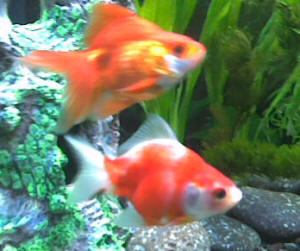
Earlier today I posted Sam Vaknin’s story about his goldfish Ned. He seemed to be feeling something close to empathy for the tiny creature’s suffering when it became ill and something closely resembling grief when the end finally came. Rather than watch the fish continue to suffer, he decided to take matters into his own hands. Did he do this to end the fish’s suffering–or to end his own suffering?

But even if he only desired to end his own suffering, watching the goldfish suffer was causing him pain. So either way, he cared about the fish, even if he only did what he did because watching Ned continue to get sicker was too painful.

This made me think about other narcissists I know who own pets. Do they really care about their pets, or are their pets, like their children, just extensions of themselves?

I think the answer is both. Yes, many narcissists who own pets regard them as extensions of themselves. I think of a neighbor of mine, an insufferable, conceited malignant narcissist if I ever saw one, who has a purebred Bichon Friese. She said she would never own a “mutt” from the pound. Oh, no. Only a purebred dog who makes HER look good will do. She puts bows in Fifi’s hair and gets her toenails painted at the groomer’s. She takes her everywhere and shows her off, as if she’s showing off a new car. Narcissists treat their children the same way–as accessories to make them look good, but because a dog isn’t supposed to have a mind of its own, it’s more acceptable and far less damaging to a dog to be treated this way than it would be for a child.

Yet it’s clear she loves that dog. She spoils Fifi rotten, and the little dog seems happy enough. Again, it’s a dog, not a child, so being objectified is probably okay. I know if anything were to happen to Fifi, this woman would be devastated with grief, at least until she found a new source of canine narcissistic supply. She’s the type who would probably have a funeral for her dog and a custom made urn with Fifi’s likeness painted on it to display on her mantel.

But she would also not hesitate to have Fifi put down were she to become ill. Some may say this is the humane thing to do–that anyone with a conscience and a heart would not want to see a pet suffer needlessly, and that’s true if the pet is truly ill and has little to no chance of recovery or is in a great deal of pain. But to a narcissist, a sick pet is also an inconvenience and a burden. A sick pet is no longer an acceptable extension of themselves; it becomes a separate being who has needs of its own that do not fit the narcissist’s agenda. A sick pet no longer makes them look good.

How much will a narcissist sacrifice before having an ill pet put down? Most people won’t euthanize a pet unless everything else has been tried first. It’s a last resort, something none of us want to do, but at some point it becomes more selfish to try to keep a sick pet alive than to put an end to its suffering. I remember years ago a narcissistic woman I knew had her cat put down because it had worms. The cat was suffering severe diarrhea and was losing weight. The worms could have been easily treated, but she didn’t want to be bothered. Cleaning up the cat’s messes was too much of a chore, and apparently so was taking the cat to the vet to be treated. So she had her cat put to sleep. It’s pretty obvious this woman didn’t have the cat euthanized out of humane compassion, but because it was more convenient than trying to keep him alive. To her, the cat was not a living creature, but a toy to be tossed away the minute it was no longer so much fun to play with or required maintenance.

golden_retriever

It can work the other way too. I knew a narcissistic man who also had a dog, a beautiful Golden Retriever named Bruno. When Bruno was about 12, he developed cancer. The man was very attached to Bruno, and used to tell everyone he was the only friend he had. Even when Bruno got to the point where he stopped eating and slept most of the time, the man refused to have him euthanized. The animal was clearly suffering, and everyone told him it was the only humane thing to do, but the man still refused. Bruno finally died at home in an emaciated state. Clearly, this man cared nothing about Bruno’s suffering even though he appeared to love the dog. He obviously was attached to his pet, but if he truly loved him, he would have put the animal’s needs first, even if it hurt to do so. Real love–whether for a pet or another human being–requires sacrifice and putting the other’s needs first. This man may have “loved” his dog, but he was putting his own needs first.

Most narcissists claim to be attached to their pets, and most of the ones I know truly are. But is attachment love? Or does attachment to a pet just mean the animal is another source of narcissistic supply–a creature who is never going to judge them, disagree with them, insult them, or abandon them?

Sam’s grief over his goldfish appears to have been real, and I think he did the right thing because that fish was most likely suffering (as much as a goldfish can suffer) and wasn’t going to make it. Would he have been the same way with a cat or a dog–or a child? We can’t answer that. Maybe it’s easier for a narcissist to feel empathy and act in unselfish ways for a simple creature–a reptile, fish or invertebrate–who is very unlike a human (unlike a cat or dog, who resemble human children in many ways) and therefore make fewer emotional demands on them. Maybe narcissists just can’t empathize with other humans or highly evolved animals who resemble them too closely or make too many emotional demands.

“Ned’s Short Life” by Sam Vaknin

Can a narcissist feel empathy for a tiny creature like a goldfish? Maybe. I like this story, even though it’s sad.

Ned’s Short Life
by Sam Vaknin

gold_fish

Lidija returned home all dusty and breathless, as was her habit ever since we have bought the apartment and she embarked on its thorough renovation, long months ago. Between two delicate but strong fingers she held aloft a transparent plastic bag, the kind she used to wrap around half-consumed comestibles in the refrigerator. Instinctively, I extended an inquisitive hand, but she recoiled and said: “Don’t! There’s a fish in there!” and this is how I saw Ned for the first time.

“He is a male,”—Lidija told me—”and Fred is a female”. In the crowded and smelly pet shop the salesgirl elaborated on the anatomic differences between the sexes. So, now Fred had a mate.

“Fred” is Fredericka, our first attempt at a goldfish. One of the handymen gave her to Lidija “to keep your husband company while you are away”, he explained mischievously. Fred grew up in a bowl and then graduated into a small and rather plain aquarium. I placed a clay elephant and a plastic, one-legged ballerina in it, but this unlikely couple did little to liven it up. Fred’s abode stood on the kitchen counter, next to a pile of yellow bananas, flame-orange mandarins, and assorted shrink-wrapped snacks. She swam melancholily to and fro, forlorn and lonely, toying with her own reflection.

A fortnight later, Lidija and I purchased a bigger tank. I filled it with tap water and dumped Fred in it. Shocked and distressed, she hid under a shell and refused to emerge, no matter the temptation. Hence Ned.

I knew next to nothing about new fish tanks, the need to “cycle” them owing to the absence of nitrogen-devouring bacteria, and the stress that all these cause the unfortunate inhabitants of my aquarium. I dumped Ned in the crystal-clear waters as unceremoniously as I did his would-be mate. But Ned—having graduated far worse aquaria in dingy pet shops—swam a few triumphant laps around the receptacle and then settled down to the business of chasing food scraps. Fred eyed him shyly and then joined him hesitantly. It was the first time she had moved in days.

As the time passed, Fred, a codependent goldfish if I ever saw one, excitedly clung to Ned’s bright orange tail and followed him wherever he glided. But Ned did not reciprocate. Far more aggressive than Fred, he deprived her of food, pursuing her in circles and leveraging his longer body and broader amidship to tackle the silvery female. All my exhortations and threats went on deaf ears: Ned would coyly slink away only to resume his belligerence when he figured I am out of range.

Still, every few hours, Fred and Ned would align themselves, as arrow-straight as soldiers on parade, and swing to and fro in unison in the currents, perfectly at peace, their delicate fins flapping regally and slowly. It was a bewitching, hypnotizing manifestation of some primordial order. I used to sit on the armrest of a couch, enthralled by their antics, monitoring who does what to whom with the avidity of a natural scientist and the wonderment of a child. Gradually, the susurration of the air pump; the gentle breeze of bubbles; and the elegant motility of my fancies all conspired to calm my rampant anxiety. I made a living off the proceeds of books I have written about my mental health disorder and so was gratified to escape the stifling and morbid environment of my own making.

Then, one morning, I woke up to find the couple gasping at the shell-covered bottom of their tank, tail and fins streaking red and rotting away, bit by tiny and ephemeral piece. The magic gone, it was replaced with the nightmarish horror that permeated the rest of my existence. I felt guilty, somehow threatened, imbued with the profound sadness that other people—normal people—associate with grieving. Reflexively, I surfed the Internet frenetically for answers; I downloaded a dozen books and read them; and I got up at all hours of the night to change the water in my Ned and Fred’s minacious cesspool. I woke up with dread and bedded with foreboding and so did my version of Fred, my Lidija.

Ned’s body was decaying fast. Fred continuously nudged him: “Are you alive? You come to play?” But, when she saw how serious his condition is, her whole demeanour changed. His swim bladder affected, his dwindling scales plastered with burrowing parasites, besieged by toxic levels of ammonia, Ned’s compromised immune system—ravaged by his crammed and foul apprenticeship in the pet shop—didn’t stand a chance. He wobbled pitifully. Fred stood next to him, still as a rock, allowing his sore body to rest against hers, giving him respite and the solace of her company. Then, exhausted by her own condition and overpowered by his much larger weight, she would swim away, glancing back sorrowfully as Ned sank and darted, staggered and careened.

Yet, Ned wouldn’t give up. His magnificent tail consumed, he still took after the flakes of food that drifted down the water column; he still toured his new home, leftover fins flailing, bullet-like body strained, eyes bulging; he still teased Fred when he could and Fred was much alive when he revived. They slept together, occupying an alcove that afforded them protection from the filter-generated waves.

As the days passed and I added salt to the aquarium, Ned seemed to have recovered. Even his tail began to show some signs of black-tipped resurrection. He regained his appetite and his territorial aggression and Fred seemed delighted to be again abused by a reanimated Ned. I was the proudest of fish-owners. And Lidija’s crystalline laughter reverberated whenever Ned’s truncated trunk ballistically caroused the waters.

But this was not to last: the salt had to go. The fresher the water became, the sicker Ned grew, infested with all manner of grey; shrunken; lethargic; and immobile except when fed. This time, he ignored even Fred’s ichtyological pleas. Finally, she gave up on him and drifted away sullenly.

One morning, I lowered a tiny net into the water. Ned stirred and stared at the contraption and then, with an effort that probably required every last ounce of his strength, he bubbled up, rolling over and over, like a demented cork, all the while eyeing me, as though imploring: “You see? I am still alive! Please don’t give up on me! Please give me another chance!” But I couldn’t do that. I kept telling myself that I was protecting Fred’s health and well-being, but really I was eliminating the constant source of anxiety and heartbreak that Ned has become.

I captured him and he lay in the net quiescent, tranquil. When his mutilated body hit the toilet, it made a muffled sound and, to me it sounded like “goodbye” or maybe “why”. I flushed the water and Ned was gone.

If you choose to stay with your narcissist…

velveteen_rabbit

Lidija Rangelovska (Sam Vaknin’s wife) recently wrote about staying with her narcissistic husband and how she handles him.

My view, my principle…
People, unconsciously, but more often intentionally, complicate their lives in order to make some sense of their existence and to justify their actions. Me included. We are all, as my FB friend put it: “personal strength junkies”, who try so hard to be accepted and to belong. It comes from our upbringing, our unstable environment, and the fear of being alone. So, when we find a person that loves us or shows us affection, we are “hooked” and we won’t give up on that person. But we also don’t want to compromise, we want to keep our freedom and to have control over the other. And what now? It’s simple: we have to adapt to the changes and find a new meaning in life!
For me personally freedom is the most important. So, I assume that it is the same with all others and I do give people space… where their selves emerge and grow. If there is a person who has common sense and similar views of life to mine, there is a solid and healthy ground on which to develop the relationship.
But we should learn to communicate, share experiences and emotions, be honest and truthful… not be afraid and manipulative. We should learn to trust in order to understand and accept the other. We should build safe grounds for unconditional love to grow on. And isn’t this all that matters in life?

And later…

…my mother tongue is “narcissist”, literally. I was raised by malignant narcissists and HAD to learn how to communicate with them. And I wouldn’t name it as such, because it’s not the “language” of the narcissist, but of the abused. The “language” consists of understanding the abuse that occurred in the narcissist’s early childhood owing to which s/he adopted the False Self later in the adolescence. It is the ONLY self that the narcissist is aware of and if you can’t accept it, you won’t be able to understand her/him.

My advice would be to not even try to go there, as I call it, the “twilight zone”… it’s the “unknown and forbidden” to some people. For me that zone was my natural habitat. I was there… growing up in an emotionally and physically abusive family. I became codependent and was raised to be a good Source of Supply. I honestly don’t wish that on anyone!

So, then, why am I with Sam?
We are both emotionally damaged and we do understand each other’s pain. It’s in a space and at a time where we fulfill each other’s our unique psychodynamic needs. Where conditions don’t exist and there isn’t a room for any – that is where unconditional love exists… at least, where I found it.

[Anonymous] explained this dynamic […] in a very subtle way. “Personal strength junkies” is her term, not mine…

I’m glad there are people who really want to explore their and other people’s nature/character driven by their curiosity to learn more about themselves in order to relate to their significant others. Indeed, a person has to have the courage to do so… they’re the real heroes, not the ones that deny their existence and adopted the “go with the flow” principle… that’s selfish.

Then she posted the beautiful quote above from the children’s book “The Velveteen Rabbit.” It’s amazing how profound certain books for children can be but there’s a wonderful message about unconditional love for adults too.

Several other people who are married to or in relationships with narcissists discussed how they are able to cope with staying with them without losing themselves or developing mental disorders like PTSD. Without exception, the narcissistic spouses (all male) have insight into their disorder and their wives have learned how to “speak narcissist.” There seem to be two primary requirements (besides the patience of a saint): (1) a strong maternal instinct, and (2) an unflappable sense of humor. Under these unusual circumstances, a relationship with a narcissist may actually work for both partners. Some may think of this as an unequal, codependent and even abusive partnership, but if framed as a kind of eternal mother/child relationship, it doesn’t have to be pathological.

elizabeth_bowen

As for myself, I could never work things out with my malignant narcissist ex-husband and I went No Contact early last year (it’s actually Low Contact because we have children, so being completely No Contact isn’t really a possibility.) He had zero insight and denied he was a narcissist at all (instead, he projected his narcissism onto me and made himself out to be the victim and me the abuser). I think when a narcissist has no capacity for insight (which is probably most of them) and is in denial, No Contact (or Low Contact) is the best way to go to avoid psychological damage to ourselves. Even insightful narcissists who are not in denial about their disorder are highly dangerous people and should be handled with extreme caution. They are ticking time bombs.

What [Anonymous] and Lidija have shared provide hope that for SOME narcissists, there may be a way to stay with them and nurture them while not allowing them to obliterate our psyches–and in some cases even benefit from the relationship. It would take someone with a LOT of empathy and even more patience but I believe it can be done in some cases. Having a strong maternal instinct is of utmost importance because essentially, a narcissist is an emotional infant, unable to see others as separate from them. You must accept the fact they are probably never going to get “better.”

As for reproducing with them? Having children with a narcissist you are voluntarily and mindfully nurturing would be disastrous because to the narcissist, a child would be competition and have demands that would need to be met before theirs. This would enrage them in the same way a new brother or sister enrages a three year old. If you are married to or in a relationship with a narcissist and wish to stay with them and nurture them instead of going No Contact, they must be your ONLY “child.” When you choose to be with a narcissist, you are adopting an eternal infant. You would have to accept the fact they will most likely never grow up. Obviously, this choice wouldn’t be for everyone.

Second to a strong desire to “mother” your narcissist would be the ability to laugh at their antics and not take things too seriously. In one woman’s case, she said her narcissistic husband laughs WITH her, even though she admits the joke is usually on her.

I’m happy to hear there are people who can actually make things work with a narcissist. It requires a great deal of unconditional love and the ability to always put your own needs in a distant second place. I don’t recommend it for most people though.

ETA: I would recommend another requirement to making a relationship with a narcissist work: establish FIRM and VERY CLEAR boundaries, early in the relationship. Lidija clearly does this– I remember her saying in “I, Psychopath” when asked who made the rules she said she did. You would have to! Part of the maternal relationship requires the ability to provide discipline when it’s needed too. A narcissist who respects you because you established boundaries and can laugh with them and speak to them in their language won’t have a problem following your rules but may need to be reminded sometimes. 😉

Making love last with a narcissist: the rules

Old Couple

In summary, here are the cardinal rules for keeping your sanity intact while in a relationship or marriage to a narcissist:

1. Be a high empathy person with a strong maternal instinct.

2. Accept the fact they will probably never be cured.

3. Establish FIRM boundaries as early as possible and don’t be afraid to remind them of the rules when they balk or disobey. Remember you are dealing with an emotional toddler.

4. Be willing to always be in their shadow and not steal the show from them

5. Be able to LAUGH and not take what they do and say too personally.   It’s not about you.

6. Do not have children with your narcissist.  He/she is your child. (I used to joke that my MN ex husband was my “other child.” How true that was, and in some ways I wish I had known some of these rules back then, which might have made my life a little easier while still with him.)

The narcissist has to fulfill a requirement too. He or she must be insightful enough to recognize they are narcissists and mentally ill.

“The Survival of the Fittest”

The Survival Of The Fittest
By Audrey Michelle, Spoken Word Artist.

sad_angel
“Sad Angel” — Photo by Nimiko Nara

Stranded in the ends of time
A mind that needs to unwind
Living too much within a past
That pain consumed and it still lasts

A view that still sees purity
Though only shown pure cruelty

Each and every person met
Is loved and proven a regret
They hurt a sore and beaten heart
While smiling as it’s torn apart

All shreds of hope and fantasy
Are sliced for crimes
Though not guilty

There is an image to pursue
Beauty viewed by any view
Beauty though has disappeared
Wept out and fallen with each tear

Assumptions made while viewing cover
Assumes there’s no more to discover

Forced each time by will inside
To try to force a truth denied
The goodness is seen, but then ignored
Beauty does not come with such reward

Others survive by turning bitter
While true of heart shall only wither

Though always just misunderstood
When saw the world as full of good
The sweetened mind can’t realize
A truth that offers its demise

Life would end with such resolve
So to bitterness, truth can’t evolve

This is the post that scared me so much I almost deleted it.

tears_quotes

I have never been so scared to publish a post until this one. I had this set to Private for several days and drove myself crazy trying to decide if I ought to post it. It’s about some of my most vulnerable moments and posting about those is incredibly scary for a person who usually has their guard up. But I longed to post it. Something inside was telling me I needed to and I wouldn’t regret it. I also felt this post was my best written one ever because while writing it I allowed my emotions to flow unimpeded. What to do?

I even wrote a short post asking people if I should post something that made me feel so naked and vulnerable. Ultimately, the decision to make this post public was mine, but the consensus seemed to be that I should.

I read this post over again earlier today from the imaginary perspective of a random reader who just happened on the article and had never seen this blog before. I realized that as this “someone else” it would be something I’d want to read.

So here it is, guys. The post that made me feel like I was going to pass out cold when I pressed “Make Post Public.”

Milk and Open Hearts: Embracing the “Feminine” Emotions

open_heart

I’ve been doing a lot of thinking about vulnerability lately. I’m reaching a point in my healing journey where I can start to allow myself to become more open to my emotions and to sharing the feelings of others. It wasn’t my intention to write another post about crying so soon after my last, but I think my interest is due to something that’s happening inside…

For years I couldn’t cry, but wanted to. I was so numb from all the abuse that I had dissociated myself from my feelings. I felt like I was dead and in hell. Recently I’m finding a lump in my throat or tears starting to well much more frequently–usually because I’ve been touched by something or someone in some way, and it’s usually a pretty simple thing. I realize this is a sign that the long term dissociation within my mind is coming to an end because I’ve gained more courage to embrace my feelings instead of pushing them away or denying their existence.

I remember even during the darkest days of abuse by my psychopaths and narcs, when I walked around like an emotional zombie due to all the abuse I endured, there were rare moments of clarity when truth and beauty shone through the murk of depression and PTSD.

During my pregnancies with both my children (I was pregnant three other times–one abortion which I am writing about next–the child would have been a boy born in 1999–and two miscarriages), my brain’s marination in a continuous bath of pregnancy hormones made me very emotional. Not depressed-emotional–in fact, I was happier than I’d ever been. Things just touched me or made me feel some kind of ineffable euphoria or inexplicable sadness and suddenly there would be tears.

I think the increased emotionality experienced by pregnant and lactating women is the result of nature’s opening our hearts to connect deeply and lovingly with our children from the moment we know we are pregnant. The torrents of female hormones–mostly estrogen and progesterone–help wire our brains to to allow the limbic (emotional) system to run things for awhile. The heightened ability to feel is a gift that helps our species survive because under the right circumstances, emotional openness transforms into unconditional love and empathy.

The hormonal bath continued for some weeks after the births of both my children and I remember getting particularly emotional one dark and cold night as I held my firstborn against milk-swollen breasts, with Barber’s “Adagio for Strings” playing on the stereo. I watched as my son rooted for the nourishment he sought and found it. Latched on tightly, dark pink lips pursed in determination and a primitive and preternatural hunger, my baby son began to nurse. As I felt the milk come down, I was overwhelmed with tenderness and love for this completely helpless creature who so recently had lived inside my body and taken nourishment from my blood, and whose wastes were eliminated with my own, and suddenly my face was awash in tears.

I watched as if through antique swirled-glass windows as my tears soaked my tiny boy’s thistledown-fine hair and ran across a petal-soft pink cheek busily working my milk glands. There was a melancholy underpinning to my overwhelming elation and I allowed myself to feel that sadness too–and realized that melancholy welled up from an awareness of how fragile my tiny son was, how fragile we all are–at any age; and how easily a trusting, childlike soul can be stamped out by hurt, abandonment and abuse. I wanted to protect this child from any harm that might ever come his way. I didn’t realize then my son’s own father would set out to destroy his spirit. Thank God he did not succeed.

At the moment the first drop of salt water touched my baby, opaque dark blue eyes fluttered open and gazed at me, seeming to understand my feelings. Sighing a delicate baby sigh, this tiny human being I had created through my love for a man and sustained and nurtured by my blooming, hormone-soaked body, nestled in closer and suckled harder until swept away in blissful sleep. I marveled at the knowledge this tiny boy would one day be a man, taller and probably physically stronger than me, and that I would play a huge part in his journey to manhood. It scared me to pieces but I felt willing and ready to take on the challenge–because of love, the greatest power we have as humans.

nursing_child

This wondrous connection–this moment of almost painful sweetness–was so honest and magical I almost dared not breathe. The tears poured down. I didn’t wipe the wetness from my face for that would have disrupted the beautiful connection I felt with my child.

It’s during these moments our hearts are open and we allow ourselves to become vulnerable, that we are fully engaged and connected with life and open to the bliss and pain of pure unconditional love. That kind of love is expressed in tears (often combined with laughter or smiles) because there are no words that could ever express the depth of this sublime emotion–an emotion of such beauty, rarity and truth it nearly hurts.

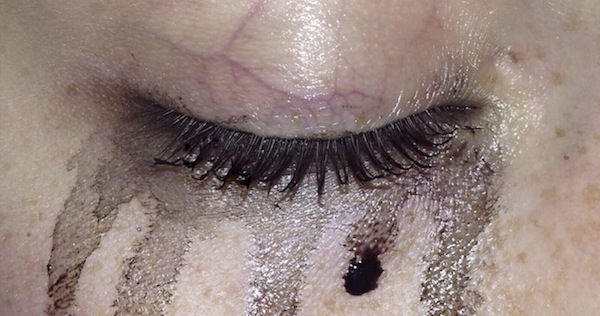
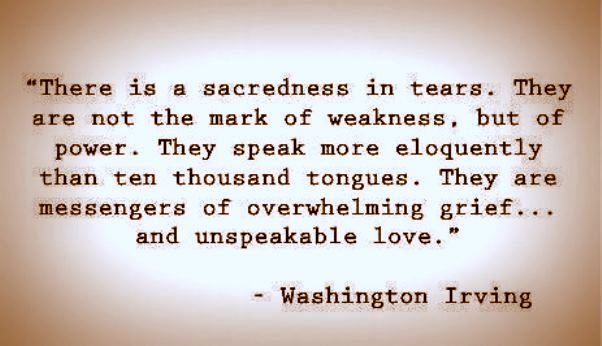
Tears are the mark of our common humanity and connect us with each other. We are pushed into the world crying, and are (hopefully) cried for when we leave it. Crying marks the most important milestones of our lives, whether they are happy or sad. There are always tears at graduations, pregnancy and wedding announcements, falling in and out of love, weddings, births, baptisms, death and funerals. There are tears wherever there is honesty, intimacy and love.

The happiest people in the world are often people who cry a lot. Their hearts are open, so everything and everyone touches them. They’re not afraid to connect and to empathize. Their love sometimes overflows the confines of their physical composure, and so they cry. I used to know a beautiful young woman who said she cried five or more times a day–just because she was so happy all the time. She wasn’t annoying happy. Honest joy never is annoying. She moved through life regally and with dignity and compassion, appreciating everything and loving everything and being touched by everything, and everyone loved her right back because they knew she was an empath. People wanted to be close to her, they wanted to be touched by her, both emotionally and physically. Her large expressive eyes were almost always wet with tears. At first it seemed a little strange, but soon we got so used to seeing her that way it just seemed normal after awhile. And it WAS normal, more normal than anything could ever be.

empathic_badass

I was so envious of that girl for her emotional openness. But she showed me a great truth about myself. I could be that girl because that was me. I just needed to find a way to knock down my thick concrete walls of fear. It’s getting easier. I still have a lot of emotional blockage, but I no longer feel like one of the walking dead.

In the Stephen King movie “The Green Mile,” John Coffey is an autistic man who nevertheless is an empath. He’s been unjustly sentenced to Death Row for the murder of two little girls because he was the last one seen with them (and probably due to his being black as well). You sense Coffey never killed those girls and in fact you realize how empathic this man really is. He has no defenses against the world due to his inability to hide his emotions (some autistic people have trouble regulating their emotions), and at the same time this very defenselessness gives him unbelievable strength and goodness. Coffey cried almost constantly, feeling the emotions of everyone around him and freely giving unconditional love where none existed.

A couple of years ago, there was a very popular video that went viral. It featured a 10-month old baby girl apparently crying from empathy as she listened to her mother sing. I’m not usually a fan of “cute baby” videos but watching this baby was fascinating because she cried like an adult would have–and the purity of her emotion was an achingly beautiful thing to see.

We are born withour hearts unguarded. When life begins to hurt too much (and it always does), children eventually learn to guard their hearts or in the worst cases (NPD, ASPD and some other mental disorders), dissociate themselves from their true feelings so thoroughly there is no turning back to the emotionally open state we were born with.

It’s a sad state of affairs that all the tender (“feminine”) emotions such as sadness, deep connection or friendship, love in all its forms, joy of the non-shallow type, feeling touched or moved, gratitude, and empathy– have been so devalued in modern society and are often seen as proof of weakness in a person when in fact they show a person who has the strength and courage to leave their hearts unguarded when it matters the most.

It’s interesting that all these softer emotions indicate goodness and purity of heart. They possess enormous potential to eliminate or reduce darkness and evil because they are emotions of healing, love, and our human connection with the Divine.

In a perfect world where all human beings had open, unguarded hearts, an alien from another planet upon first meeting a typical human would see smiles and laughter graced by tears. If the alien were to question what these signals meant, the answer would be “Love.”
The angels in Heaven would tell you the same.

“Coming out” about my BPD

Hand of a child opening a cupboard door

On November 22, 2014, I wrote an article about my daughter Molly (not her real name), who I suspected of having NPD due to having been used as a flying monkey by her father for many years. I prayed it was “just” BPD.

Last month she was evaluated and her Axis II diagnosis was Borderline Personality Disorder (BPD). While BPD is a Cluster B disorder and shares a number of traits with narcissism, it’s more amenable to treatment because a Borderline does have a conscience and the ability to feel empathy–but their tendency to fly off the handle, their insecurity/neediness, and propensity to engage in self destructive activities that sometimes hurt others masks the fact they really aren’t bad people. My daughter actually has a huge heart and cries when she sees someone suffering or in pain, so it fits that NPD wasn’t her diagnosis. Still, I’m relieved she’s been officially cleared of it.

I was diagnosed with BPD myself in 1996. I have been hesitant to call attention to it on this blog or talk about it much, because of its close association with NPD and other “character disorders” like ASPD. At the time I was diagnosed I was in an inpatient psychiatric setting, where I was also diagnosed with Bipolar I (major depression with fewer or no manic episodes), generalized anxiety, PTSD, Avoidant PD (I didn’t know you could have two PD’s at once back then), and substance/alcohol abuse. At the time I was not diagnosed with Aspergers (that was much later, and I was self diagnosed at first).

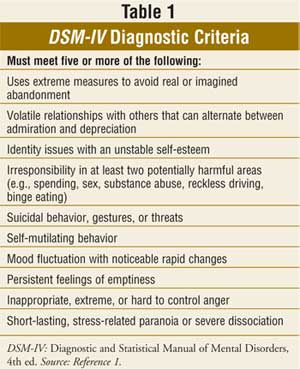
I definitely had all the traits of a borderline, but in the hospital and in outpatient therapy following my stay, I learned ways to control my BPD traits, such as my tendency to fly off the handle easily, act impulsively without thinking how it would harm others, idealize/devalue people (black or white thinking), abuse drugs and alcohol, and generally coming off as being very self centered and oblivious to the needs of others.

DSM_borderline
Click to enlarge.

For a time back in the early 1980s I even test drove narcissism, but as an essentially empathic person who suffers from a lot of guilt and shame, and has no desire to hurt others, narcissism didn’t work for me, and I am so grateful for that (even though I became a codependent doormat instead).

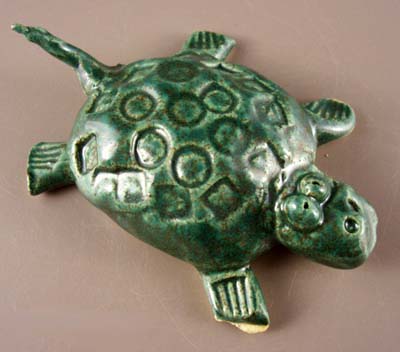
In therapy, I remember a method we were taught called “turtling”–which basically means to imagine yourself as a turtle when you feel yourself about to act/react in Borderline, impulsive, or self destructive ways. Turtling calls for enough insight to recognize your feelings prior to acting on them. You imagine going inside your shell to think about things before you act. I remember in the hospital we made “turtle” totems to keep as reminders to always think before we acted and ask ourselves why we felt the way we did. I still have the little clay turtle I made. I remember also being given a workbook for people with BPD with many helpful exercises and activities to help us recognize and control our behavior. It did help me a lot.

clay_turtle

Today I don’t think I display many BPD traits, but I don’t think I’m cured either. When I’m very depressed, frightened or angry, those BPD traits pop back up like unwanted pimples. I still remember the lessons from my therapy and still look at my little turtle or a picture of a turtle to remind myself to go inside myself and not react until I think things through and process my feelings.

Because this is a blog for survivors of narcissistic abuse and many (if not most) survivors think of narcissists as demons or monsters, I was hesitant to talk about my BPD much, because it’s a Cluster B disorder and is so close to NPD in many ways. The disorders are easily confused with each other. A person with full blown BPD can seem very much like one with NPD, but for the Borderline, the motive behind their unpredictable and sometimes destructive behavior is fear of abandonment and insecurity. For the narc, it’s for obtaining supply. Some people seem to think of people with BPD as almost as bad as narcissists. Some of them are.

So that’s why I’ve been reluctant to talk about this. But again, from Day One I committed to honesty and I hope I won’t be judged too harshly for “coming out” as a person with BPD.

borderline
Borderline personality disorder.

My daughter, I’m happy to say, knows almost as much about narcissism as I do now, and has been reading my blog. She came across the above article where I speculated she might have NPD and she was so worried about that it made her cry. We had a long discussion about that. Since then, she has been improving a lot and says my blog has helped HER! She says she’s proud of me for having the courage to start this blog. And I have to say, I’m just as proud of her. Here’s my article describing how healing and emotional that talk we had was. I think we will both be just fine.

My next article, which I will write later today, will be about how malignant narcissists can transform a good person into an evil one. They can infect you with their illness. That’s another reason why they’re so dangerous.