The latest on the NPD* sufferer in “Another Narcissist Who Wants Help”

trapped2

I thought this may interest those of you who read my article from April 30, “Another Narcissist Who Wants Help.” It’s a followup email he sent me yesterday, describing some of the things he’d doing to attempt to heal himself from NPD or at least be able to control its symptoms better.

* I do have some doubt he actually has NPD though, due to what appears to be a normal level of empathy and a lot of self-awareness; I think he may be being too hard on himself and suffers instead from something like BPD. He also has no official diagnosis.

All that being said, what this young man is trying to do and has dedicated himself to doing –opening himself to being vulnerable and letting himself feel and share his honest emotions–is incredibly courageous, especially for someone as young as he is (he’s in his early-mid 20s). He’s also doing his homework–he seems to be doing a LOT of reading about NPD, if this email is any indication. He may not actually be a narcissist, but even so, it’s still a courageous thing he’s doing. Any of us who suffer from being too guarded–which is most of us–can benefit by giving ourselves permission to just feel life in its glorious spectrum of colors.

I can tell this young musician is sincere because he’s been watching all of Brene Brown’s videos . In fact he is the person who tweeted about Brown’s compassionate and sometimes humorous messages of being authentic and vulnerable in a world that hates and fears those things. If you take on the challenge of setting yourself free of whatever traps you– whether it’s a narcissistic mask or the fear that fuels so many other disorders — it takes a lot of strength and courage to do that. Which means becoming vulnerable isn’t becoming “weak” at all — it’s just becoming an authentic human being.

I have permission to repost the email I got, removing personal details like names.

Original email is in this post: https://luckyottershaven.com/2015/04/30/another-narcissist-who-wants-help/

Email received 6 weeks later (yesterday)

[…]It’s not really a bad thing to share how we are feeling – in fact NOT sharing how I feel is probably one of my biggest downfalls. So it is healthy to express your emotions to someone, wherever they’ve come from. If you’re feeling emotionally down, or wounded it’s worth remembering one of my favourite quotes by Iyanla Vanzant (you’d love her when she talks about relationships check out her appearances on Oprah’s Lifeclass she’s awesome) which is that ‘a wound needs a witness’ – meaning it is in our nature as humans to want to share our feelings. The worst part of narcissism is it leads the narcissist to detach from their true feelings, and results in the narcissist viewing emotions in others as weak. I could imagine that belief that emotions are weak can be contagious but we weren’t put on earth to suppress ourselves, but express ourselves! So remember your feelings are a huge part of who you are so I don’t think you should deny them, and I don’t think it’s a bad thing to express them (even if I have been trying to silence mine for years ha!)

I hope you’re doing well – I’ve been immersed in personal exploration lately. The book ‘The Drama of the Gifted Child’ has been fascinating for me and I’d thoroughly recommend it (or maybe it was you who recommended it to me?) if you want to better understand the origins of narcissism. Much of it resonated with me and it’s a very hopeful and forgiving text. I understand it’s one of the main books on the subject. I’m moving on now to a book called Disarming the Narcissist which is interesting because even though it’s from the point of view of someone living with a narcissist in their life it helps me see how I can better inter-relate with the people in my life.

I’ve kinda realised that the worst parts of narcissism don’t actually manifest themselves in my life at large: I have healthy and thriving friendships. I’m not going to lie and say I am not centre of attention a lot because I am, but I’m here for my friends when they need me and I’m working on being even more available emotionally and otherwise in the future. I don’t think I’m ‘cured’ but I am aware that the extremes of my difficult qualities tend to bubble up tot he surface only in relationships where consistent intimacy is expected. So basically romantic relationships. That’s not to say the work I’m doing on myself isn’t important across my life but it certainly is most relevant when I’m in love, because it is in those times my frequent emotional detachment becomes a problem. Detachment from my own feelings means I am longer able to experience the feelings of those around me, which in time results in me objectifying them and treating them less than well.

Interestingly music has been important for me too. I haven’t really lay down in bed with the lights down low on my own with a great album on in the background in so long. I think listening to music keeps me connected to my emotional experiences and helps draw out my true feelings. Maybe that’s what happened with you before you drafted that post? I think it’s a good thing. Music is, of course, the feelings of other people and we feel connected to the human experience by listening to and enjoying it.

Oh and Brene Brown! What a gem! I’ve downloaded her book Daring Greatly (think that’s its name) and can’t wait to get started. I feel that book is gunna be a proper uplifting read, and with the summer kicking in here now I’m looking forward to reading in the sun in Hyde Park with a gin and tonic and some olives! Yay!
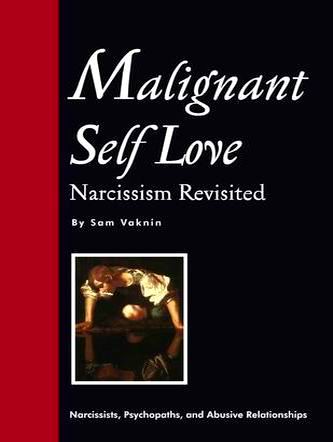
Book Review: “Malignant Self-Love” by Sam Vaknin

malignantselflove
Vaknin’s “Bible of Narcissism”

I first heard about Sam Vaknin’s book “Malignant Self-Love” about 15 years ago–when I made a cursory online search about NPD after I realized my own mother was one. At that time, Vaknin was pretty much the only voice on the Internet about narcissistic abuse. Vaknin, a self-confessed narcissistic psychopath , had written a “bible of narcissism” and it became obvious, from scanning the selected pages he provided in PDF format on his website (which has never been upgraded to a more current look and format–he uses the ancient blogging site, Tripod), that this guy was obsessed with his own disorder to the point of unhealthy navel-gazing and what’s more, he and seemed to hate people like himself. What was this, some kind of pathology performance art?

His book and his own story that inspired the book intrigued me, but at the time, I was still trapped (or thought I was trapped) in my abusive marriage and my kids were still very young, so I filed this information away in the back of my brain, and quickly moved onto other things, such as trying to keep my doomed marriage together. In fact, I didn’t think about his book again until late last year, after I left my narcissist.

When I started my blog in September 2014, Vaknin still had a huge presence online (though he no longer had a monopoly on narcissism). He was often quoted on ACON blogs and even in more serious articles in publications like Psychology Today. The difference was, by now, he was no longer alone. There were other voices joining his–Kim Saeed, Michelle Mallon, and Kathy Krajco (who is with us no more) just to name a few, and of course psychologists and other authors like Dr. George K. Simon, Robert Hare, and Marsha Stout. And too many ACON (Adult Children of Narcissists) bloggers to count. By this time, Narcissism was a Very Hot Topic, at least on the Intenet. Sam Vaknin probably began that trend, in spite of his being so vilified by so many of the narcissism bloggers he paved the way for.

A self-professed malignant narcissist writing self help books for victims of abuse may seem like the ultimate irony–but when you look a little deeper, it makes a lot of sense. Who better than a narcissist to know what makes a narcissist tick? Every other expert who writes books about narcissism has to make educated — or not so educated — guesses.

If you’re not a narcissist, it’s almost impossible to imagine what such a disorder can feel like to its bearer, just as the pain of cancer can never be convincingly described by one who has never suffered from cancer. If a book were to be written about what it’s like to have cancer, the writer should be a cancer survivor–or one about to succumb. My point here being that Sam Vaknin, whether you like him or not, whether you think he’s doing ACONs a service or hurting them, whether he’s got the proper credentials or not (and personally I don’t care about the whole credential brouhaha because not once in the book does he say he’s a mental health professional and in fact it’s full of disclaimers), is definitely qualified to write about narcissism. His primary qualification–the only qualification that really matters–is that he is speaking from personal experience.

So I pulled out my debit card and ordered the huge black-and-red tome with its Caravaggio “Narcissus” illustration on the cover (which, for me, was a draw in itself, because I love the painting). It set me back about $40 on Amazon (you can get a copy signed by the author for about $54.95) I thought the price was a bit high, until I held the book in my hands. It was as big as the Bible! Maybe even bigger. I flipped through its onion-skin thin Bible-like pages and saw how tiny the print was.

Oh, man, I thought. I don’t think I can read this. But I was determined to. I wanted to understand what it felt like to be a narcissist, what it felt like to be inside Sam’s head. And so I began to read.

Malignant Self-Love is not a book you can read in one sitting–or even ten. Maybe not even twenty. Normally, I’m a very fast reader. Until I started blogging (and no longer had time to read much), I could consume about 3 good-sized books a week. People looked at me like I had three eyes and a horn growing out of my head when I’d tell them I finished a 300 page novel in 2 days. But Vaknin’s book is different. It’s not only got a LOT of information–almost more information about narcissism than you’d ever need or want to know–but it’s a dark and depressing read too, and I found that while reading it, I felt my mind being sucked into Vaknin’s bottomless black vortex of pain. He’s pessimistic, negative, and hates his own disorder. He also seems to hate himself for having NPD, and demonizes narcissists in general, referring to them as non-humans and machines. He demonizes himself in the process, and warns his readers to stay far away from people like himself. You would think from all this encouraging advice to the sort of people who would have been his prey, that he cares about the victims. I’m not so sure, since he himself is quoted as saying he never intended to help anyone by writing Malignant Self-Love, that his primary motive was narcissistic supply and attaining a guru-like status for himself.

samvak3
Sam Vaknin, the psychopathic, emotionless predator.

Yet in spite of his heart never having been in its creation, Malignant Self-Love is an outstanding piece of writing, and English isn’t even Vaknin’s native language. He weaves words together into a beautiful piece of literature the way a holy man weaves tiny colored threads together to create a Persian rug–with an intricacy and detail that is rare in modern writing.

Indeed, Vaknin’s writing at times can seem as if it’s from a bygone century. His phrasing is old-fashioned and his writing is highly descriptive, hearkening back to 19th century authors. At times it reads almost like poetry. And it’s very emotional writing. You come away from the pages (which feels somewhat like coming up for air after having been underwater too long), with the strong sense that whenever Vaknin refers to the “Narcissist,” he is really speaking about himself in the third person. There is passion and pain in these pages, but more than anything else, there is rage. White hot rage. Sam Vaknin is…intense. And so is his book.

Although some mental health professionals and other who study NPD have criticized Vaknin for appearing to take several related personality disorders–Antisocial, NPD (the less malignant type described in the DSM-V), Borderline Personality Disorder, and even autism–and churn them together into a mutation of the psychiatric definition of NPD into a devastating form of psychopathic malignant narcissism. Some mental health experts have even said Vaknin’s book has been damaging to the field of diagnostic psychology because it blurs the lines between several distinct personality disorders.

But since when is the field of diagnostic psychology a real science anyway? At best, it’s a social science; at worst, an art form–so in my mind, Vaknin’s theories about NPD make as much–or more–sense than some of the experts.’

Vaknin was also not the first narcissism writer to ever do this. While M. Scott Peck’s 1983 book “People of the Lie” is written from a completely different perspective from Vaknin’s–one with religious overtones written by psychiatrist who is also a born-again Christian–Peck’s book too seems to mix traits of NPD and ASPD. And while Peck didn’t call the hybrid disorder “malignant narcissism” (he calls it “evil”) because that term wasn’t in wide use in 1983, people could relate–because we almost all know someone like that. Vaknin’s book also describes people that victims of narcissistic abuse recognize–a dangerous kind of narcissist who has nothing but ill will toward others, but it was born from having been abused themselves, as Vaknin was abused.

Vaknin’s readers are mostly women, who are in a relationship with a narcissist or thinking about leaving one. Sam Vaknin does not disappoint. Victimized, emotionally damaged women see Vaknin as a kind of online therapist (especially those who frequent his discussion groups and forums), and the “transference” of strong feelings of a patient to their therapist is an important development in the psychotherapeutic relationship. If they’re using the Internet as their therapist, Vaknin can easily become the object of these feelings of transference. He becomes a kind of mirror reflecting back to them all the admirable qualities they have imbued him with–-which may or may not be accurate-–but it’s what they want or need to see in him. The problem is, unlike with a therapist in a controlled psychotherapeutic setting, women experiencing transference toward a online cult hero like Vaknin have no idea what to do with these feelings or how to use them to learn more about themselves. But on the plus side, he does tell them how to disengage and tell them WHY they should disengage and what makes their narcissist tick, and of course he’s right. Many of these women (and men too) claim Vaknin’s book saved their lives and helped them get started along the road to self-discovery and freedom from abuse.

samvak2
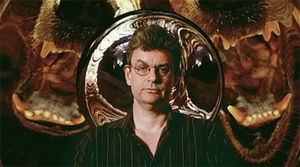
I think this picture shows a sad side Sam Vaknin rarely shows in public. That’s why I think it might have been a candid photo that caught him with his mask temporarily down. Of course he could be acting for the camera too.

If you don’t like ponderous, pessimistic tomes or books that don’t require the reader to think, then Vaknin’s bible of narcissism may not be for you. But if you like a book you can savor and digest over weeks or months, the way you would savor a fine wine by taking small sips and not chugga-lugging it down like a cheap bottle of Gallo, then I recommend his book if you’re in an abusive relationship with a narcissist, trying to go No Contact, or just interested in narcissism. His writing is so good it’s worth reading even as just a work of literature, even if you disagree with his assessment of NPD as a blight on humanity and the precious little hope he conveys that sufferers of NPD can ever get well (which is one of the few problems I have with his book).

It took me nearly three months to finish Malignant Self-Love, but only because I could only swallow a little of his brand of darkness at a time without making myself sick. However, when I finally read the last page, I came away feeling like I had an insight into my narcissists that no one else could have made possible. It was as if Mr. Vaknin provided a sort of mirror to my narcissists and made them talk to me– openly and honestly–about why they did the awful, hurtful things they did. In giving my narcs a voice, albeit a depressing, raging one–I felt as if Vaknin’s book had somehow stripped away some of their power over me. And that’s always a good thing.

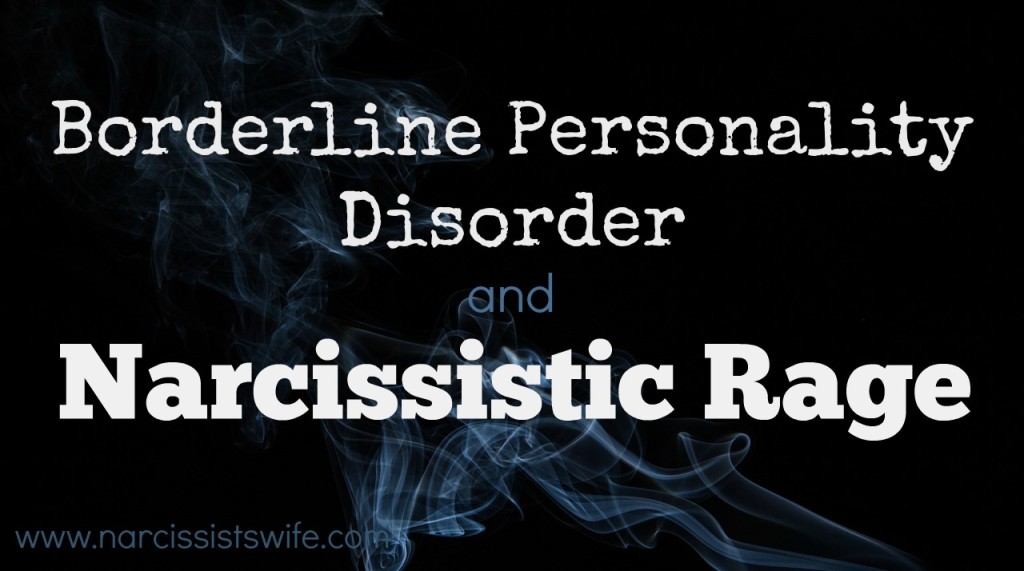
“Borderline Personality Disorder and Narcissistic Rage”

I don’t generally like the sort of comparisons I see so often that stigmatize BPD as a less stable, “crazier” form of NPD, but it’s a fact that people with both disorders have problems with rage, and their rage can manifest in very similar ways, even though the motives behind the rage are different.

Here’s an article from Narcissist’s Wife that talks about the similarities and differences, and how you can protect yourself from the angry B’s. (sorry for the bad pun, I couldn’t resist).

Borderline Personality Disorder and Narcissistic Rage

Narcissistic-rage2-1024x571
Credit: http://www.narcissistswife.com/

Borderline Personality Disorder has many symptoms in common with Narcissism. In fact, the two disorders often overlap to some extent. This can cause a lot of confusion for the spouses and partners of these people as they go from seemingly normal and ok and you start thinking “well, maybe they aren’t a narc, maybe they were just having ________” (Insert whatever excuse you happen to go to when they’re behaving badly). Not everyone is 100% psychopathic Narcissist with the heart of a snake. As with anything in life, sometimes Narcissism comes in shades of grey.

All that said, Borderline Personality Disorder can express itself in ways very similar to Narcissism and one of the most common is in rage. The temper tantrums narcissists throw are very similar to a Borderline, though they are motivated by different things. Knowing these things may help you not only anticipate an explosion, but temper it as well.

Borderline Outburst

Unlike a Stone Cold Narcissist (who uses rages to manipulate, control, and assert his superiority) borderlines are extremely insecure and emotionally unstable. Nearly all their emotions go up and down (leading one to question Bipolar disorder) but anger is the most difficult for those around him/her to put up with. Their intense and fiery anger comes from a deep belief that you don’t care about them, are not listening to them or are otherwise not meeting their needs. They strike out in pain to punish the one who they believe is hurting them. Unfortunately, this may all be in their heads, and their pain could actually be coming from another source that they are not prepared to deal with or that they are otherwise bound to not be able to express anger at, so you become their emotional punching bag.

Those without an overlapping Narcissistic disorder may feel shame and embarrassment, and apologize when their emotions have calmed down a bit, for fear of losing you. Though they may feel remorse, their behavior will not get better unless they are in treatment. A Borderline with Narcissism though, will not make such overtures. Your perceived faults are deserving of their rage in their eyes and the punishment for your shortcomings in their eyes is their scorn and anger. They are more demeaning in their anger, and can be much more passive aggressive.

Read the rest of this article here: http://www.narcissistswife.com/borderline-personality-disorder-narcissistic-rage/#respond

Malignant narcissists: HSPs gone bad?

evil_eyes

The concept of malignant narcissism and HSP traits coexisting in the same person is a matter that has very little research behind it (I could find nothing at all on Google), so this article is based on my own opinions, gleaned through a combination of my readings and personal observations of the narcissists I have known. My opinion may come as a surprise.

In my article A Match Made in Hell: Narcissists and HSPs, I wrote about the tendency for narcissists and HSPs to form trauma-bonds with each other–that’s really just a fancy way of saying these two seemingly opposite types of people are often drawn to each other and become codependent on each other. The narcissist is both attracted to and repelled by the HSP’s vulnerability and high empathy. They both envy and loathe it; part of this loathing is due to the narcissist’s realization that they NEED the high empathy of the HSP because it’s good narcissistic supply and makes them feel validated. It’s also a quality that on some level (perhaps unconscious) they know they jettisoned a long time ago, and that knowledge causes them to envy and hate the HSP at the same time they depend on them. Because they hate their own vulnerability and hide it from the world (and see dependence as vulnerability) that’s another reason why they may abuse the very person who gives them a reason to exist.

The narcissist feeds off the HSP like a vampire feeds on blood. This can be an extremely unhealthy, even deadly, relationship for the HSP, who will eventually either leave the narcissist or be destroyed. But the HSP gets something out of the relationship too–the belief that through their love, they are saving the narcissist from him or herself. They often believe they can “fix” the narcissist through their empathic love and transform them into feeling human beings capable of returning what they have been given. Of course, this belief is almost guaranteed to end in disappointment (if the HSP is lucky), and possibly much worse.

The great irony here is that I think most narcissists are, way deep down, HSPs. No, you didn’t read that wrong.

But how can that be? Narcissists are incapable of empathy, have problems feeling and expressing deep emotions, and are incapable of loving anyone but themselves. Isn’t that the opposite of being an HSP?

Well, yes and no. The explanation is complicated, so I hope you stay with me here.

As I’ve explained before, I think most narcissists began life as highly sensitive people who at an early age suffered psychological trauma due to abuse. This caused them to shut off their too-vulnerable true (authentic) selves from the world and in its place construct an elaborate defense mechanism–the false self–initially meant to protect the vulnerable true self from further harm, which has no defenses at all. Even HSPs who are not narcissists have some protective psychological armor, so they did not need to construct a false self to take the place of the true one. Healthy HSPs are truly authentic people who feel deeply and are emotionally honest with themselves and others. Narcissists were born with no emotional defenses at all; the false self replaces the true one and appears invulnerable. But this is only an illusion, because the mask is only an illusion. When you face a narcissist, you will never know who that person really is because all they will show you is the protective mask they have created. They are so terrified of further hurt that they will attack with vicious ferocity if they think you pose any threat to its flimsy underpinnings. It must be a terrifying way to live.

The high sensitivity of a narcissist is retained in the way they react to personal insults or slights. They are huge babies who overreact when they feel like they are being attacked, ignored, or they perceive their source of narcissistic supply may be in danger. They are paranoid, touchy, and utterly lacking a sense of humor, especially about themselves. They may try to appear as if they don’t care, usually through the “silent treatment” or sneaky attacks such as triangulating against or gaslighting the person they perceive as a threat, but if you know narcissism, it’s usually not too hard to see the emotional fragility behind their acts of false bravado. However, when it comes to other people, they can seem incredibly insensitive. Here’s the rub: for malignant narcissists, this isn’t really the case at all. Stay with me here.

warm_cold_empathy
Warm and cold empathy.

In my research about NPD, there has been a lot of discussion about a concept called “cold” empathy. For those of you who don’t know what this is, I will explain. Most of us associate narcissism with a lack of empathy, but this isn’t exactly the case. Most narcissists–especially malignant ones–do have empathy, but it’s not emotional or affective empathy; it’s cognitive or “cold” empathy. What this means is that a narcissist KNOWS what you are feeling very well, and may use what they know you are feeling against you. Cold empathy is “felt” on the cognitive (thinking) level, but not as an emotion, and that is why the narcissist can feel no compunctions about turning your feelings against you in order to hurt you.

An extreme example of this would be the sadistic, psychopathic rapist. The rapist “smells” your fear and uses that against you to become even more sadistic. It *is* empathy, but it’s “cold”–the rapist understands exactly what you are feeling and your fear makes him feel powerful, so he increases the level of torment. He feeds off your fear like a vulture feeds on carrion. You don’t need to tell him you’re afraid; he KNOWS.

Cold empathy is the twisted narcissistic mirror image of warm empathy, which non-pathological people are capable of feeling on an emotional, not just a cognitive level. HSPs have more warm empathy than anyone. Here’s where things get complicated. If a narcissist is also an HSP, their high sensitivity can morph into a quality that seems almost supernatural and is utterly chilling–a cold, sadistic form of “empathy” where they seem to be able to see into your mind. A non-sensitive person would not be able to detect your emotions without you telling them how you feel, and therefore not have that creepy, unsettling way of “seeing into your soul” that the malignant narcissist does. The higher the sensitivity a narcissist has, the more malignant they will be.

narcautism_spectrum
Malignant narcissism is high on the HSP spectrum.
Credit: http://dondepresso.rujic.net/post/116940034025/manic-chart-narcautism-spectrum

This idea was actually illustrated in the humorous-but-true graph I posted the other day (shown above), where initially I wondered why “malignant narcissism” was showing so high in HSP traits. But actually it makes perfect sense. A HSP who adopts narcissism as a way to cope with the world will become malignant or even psychopathic. A non-HSP may still become a narcissist, but they lack enough “cold empathy” to become malignant.

In summary, HSPs can be the most kind and caring people you can ever hope to meet–or the most dangerous. A narcissistic HSP is a malicious, deadly beast who is best avoided.

They are two sides of the same coin. No wonder they are so often drawn to each other. The tragedy is that a malignant narcissist can infect a previously healthy HSP with their evil but it doesn’t work the other way around: a non-narcissistic HSP cannot change a malignant narcissist into a good person.

The “saintly” narcissist.

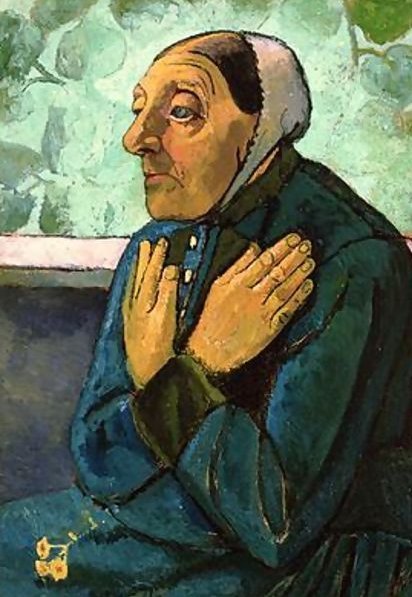
old-peasant-woman-by-paukla-modersohn-becker-1905
Old Peasant Woman by Paula Modersohn-Becker

Not all narcissists are aggressive. Some are covert, and some use their “goodness” as a weapon. This type of narcissist is usually a woman, often a mother. You know the drill: guilt tripping, “look at everything I’ve done for you,” “look what a wonderful person I am” (implying that you are not), ad nauseam.

I found this letter from a narcissistic mother on an NPD forum. It was an email sent by the forum member’s mother just before she went No Contact. If you read between the lines, this “nice” letter is actually very toxic. The names included in the letter (other family members) have been removed. I think ____ is a Golden Child sister. The recipient is the scapegoat.

Dear ___

I have never said that I expect you & _____ to pay my credit card after I’m gone.

Don’t know where you get all the wrong information. I want to make it clear to you that I say nice things about _____ to my friends as I talk about how good she is to me, never rags on me, we have so much fun together, like the same things, she finds time to spend with me, she has a kind heart and I love her very, very much!!!

You are my daughter and I love you too, but I don’t like how you have treated me all these years, you go out of your way to find fault with, always looking for things to be angry with.

Hope my friends tell all the nice things I say about you. How I appreciate how generous you have been. Paying for a 3 day cruise, buying a camera, cell phone and paying for it for 2 years, AND MOST OF ALL PAYING FOR THE ADOPTION of little _____.

These are some of the nice things you have done and I appreciate it very much.

You can’t say that you haven’t talked badly about me to your friends and family. Be honest now – I know for a fact you have said things about me, shame on you.

Why at the end of my life are you causing stress on your 85 year mother. If I had a 85 year Mother still alive, living alone, you can bet I would be caring and loving to my mother, but that’s me, not you.

Guess you will be happy when I am gone. You will get your wish some day.

The answers to my email about being embarrassed is a piece of CAKE!!!

You think you are always right and you are so wrong!! Oh well that’s (recipient’s name) for you.

Mom (the only Mom you will ever have)

old_woman_finger

So what do we have here? A nice letter from a sick, dying mother to her beloved daughter? No. We have several other things going on here though. So I’m going to pick this email apart and show you.

1. I have never said that I expect you & _____ to pay my credit card after I’m gone.

Very possibly gaslighting the recipient–denial that she ever asked her and her sister to pay her credit card.

2. Don’t know where you get all the wrong information.

Invalidation and possible gaslighting.

3. I want to make it clear to you that I say nice things about _____ to my friends as I talk about how good she is to me, never rags on me, we have so much fun together, like the same things, she finds time to spend with me, she has a kind heart and I love her very, very much!!!

Implying that the sibling is a better daughter than the recipient. Guilt-tripping.

4. You are my daughter and I love you too, but I don’t like how you have treated me all these years, you go out of your way to find fault with, always looking for things to be angry with.

Generalizing, gaslighting, probable projection of her own traits onto her daughter.

5. Hope my friends tell all the nice things I say about you. How I appreciate how generous you have been. Paying for a 3 day cruise, buying a camera, cell phone and paying for it for 2 years, AND MOST OF ALL PAYING FOR THE ADOPTION of little _____.
These are some of the nice things you have done and I appreciate it very much.

Now we have a little love-bombing or hoovering going on. This is a common ploy in covert narcissists like this woman to retain their source of supply. She is probably lying about telling her friends “nice things” about her daughter though, and she is also lying about “appreciating it.” Narcissists don’t appreciate anything.

6. You can’t say that you haven’t talked badly about me to your friends and family. Be honest now – I know for a fact you have said things about me, shame on you.

Back to the guilt-tripping and the shaming. The adult recipient is also being infantilized, another type of invalidation.

7. Why at the end of my life are you causing stress on your 85 year mother. If I had a 85 year Mother still alive, living alone, you can bet I would be caring and loving to my mother, but that’s me, not you.

Guess you will be happy when I am gone. You will get your wish some day.

She is basically telling her daughter, if I die it is all your fault. Major guilt tripping, which seems to be this mother’s primary M.O. to get what she wants.

8. The answers to my email about being embarrassed is a piece of CAKE!!!

I’m not sure what this means or what it’s referring to.

9. You think you are always right and you are so wrong!! Oh well that’s (recipient’s name) for you.

Projection and put downs.

10. Mom (the only Mom you will ever have)

Blatant guilt tripping. With a mother like this, thank your lucky stars she’s the only one.

“Have you bonded with your narcissist today?”

This made me laugh so hard I just have to share it.
It sure would be nice if narcissists were all required to wear a button warning you they have NPD.

“Embracing the legacy of familial narcissism. Have you bonded with your narcissist today?”

Bonding with your narcissistic parent

Be patient. It may take a minute for the picture to load.

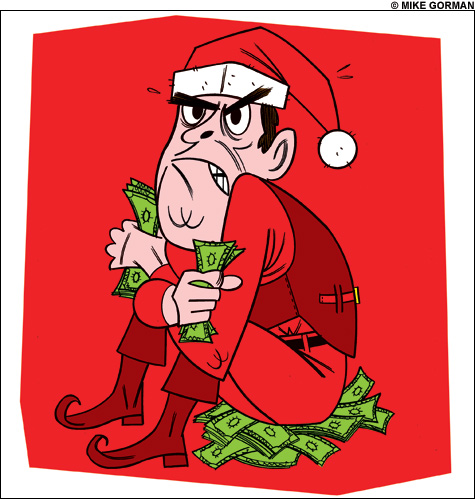
Mr. Stingy.

stingy
I remember one of my narcissistic lovers. He was a textbook example of a malignant narcissist, and a mean one at that. Although he never became physically violent, I think he would have if I hadn’t ended that relationship.

One of the strangest things about him was the way he gave me gifts. The guy had plenty of money–he had a trust fund, for heaven’s sakes and owned his apartment free and clear, and he was always traveling. He never asked me to go with him though. Instead, he’d bring me back “gifts” from his road trips. I remember he’d make a big show out of presenting me with these gifts as if he was giving me the keys to a new car. They were never wrapped nicely, but always stuffed in a paper or plastic bag.

So what sort of gifts did this narcissistic trust fund jerk give me? Jewelry, chocolates, books, candles, clothing?

No. He’d give me gifts of trash. The stuff he didn’t want. You know, like the free samples they give out in hotels–tiny bars of hotel soap, shampoo, a wrapped glass with the hotel’s name on it, even a “Do Not Disturb” door sign. Once he gave me a gift card with about $2.00 left on it. I couldn’t even use that because it was for a store they don’t have in this area. Thanks, Mr. Generous! The most extravagant thing this loser ever brought me back from these trips was a keychain that was probably free too. One of his gifts was half a Stuckey’s nutty bar, that he’d already opened and eaten part of. How cheap can you get? He was the stingiest POS I ever knew.

tiny_gift
A ring or earrings maybe? Think again, chump.

It wasn’t like he didn’t have the money to buy me something nice. He used to show me, with great fanfare, all the nice things he’d bought for himself. A leather jacket, a framed picture, a box of homemade peanut butter and chocolate fudge. I remember asking him if I could have a piece of the fudge and he said no.

For Christmas that year he actually bought me something. It was a “Toonces The Driving Cat” coffee mug. Although still a cheap gift, it was thoughtful because he knew I loved that Saturday Night Live skit.

About a month later, we had a fight. We were arguing more frequently by then. Then he said something that made me wonder if I’d heard him right. He said he wanted the Toonces mug back. He told me to go get it and give it to him. I said no. Shooting me eye-daggers, he said through gritted teeth, “I never gave you that. I only let you borrow it.”

Wow.

Livid, I went and found the mug, pretended to hand it to him, saying “Here!” As he reached for it, I threw it hard against the floor in front of him, shattering it into bits. He stormed off in a rage and slammed the door on his way out. As I swept the pieces of broken ceramic into a dust pan, I heard the squeal of his tires as he backed out of the driveway like a bat out of hell. He always did have a problem with road rage too.

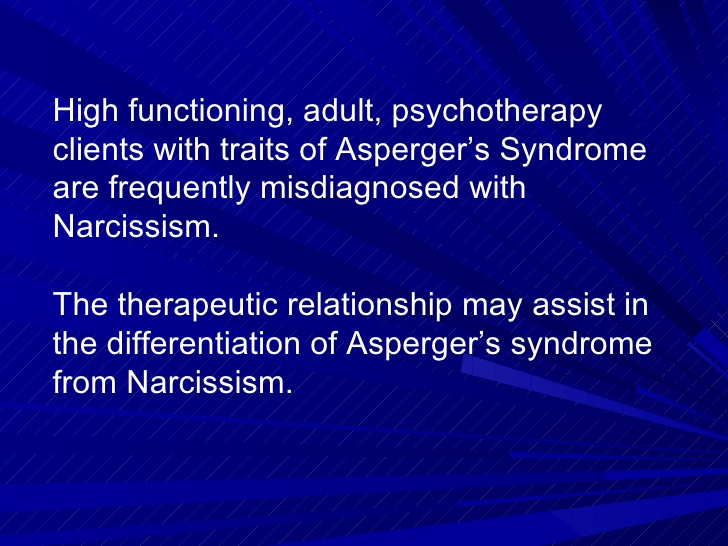
What’s up with this crazy idea that narcissism and Aspergers are the same thing?

aspie_narcissist

As a person with Aspergers who has been a victim of narcissists all my life, the difference seems pretty clear to me, but to some people, including mental health professionals, high-functioning autism (Aspergers) and narcissism are seen as the same disorder!

A thread on Wrong Planet, a forum for people with autism and Aspergers (a high functioning form of autism) discusses the confusion, with people on both sides of the Aspergers=Narcissism fence. Cited there is an article from Psychology Today, which quotes Sam Vaknin who believes narcissism is an autism spectrum disorder! The British psychiatrist Dr. Khalid A. Mansour concurs.

Clearly, some people don’t understand much about high functioning autism/Aspergers. Yes, I believe it’s possible for a person to be both a narcissist AND on the autism spectrum (an example might be Mark Zuckerberg, creator of Facebook, especially as he was portrayed in the movie “The Social Network“), but they are two vastly different disorders.

Appearances are only skin deep.

aspergers_narcissism

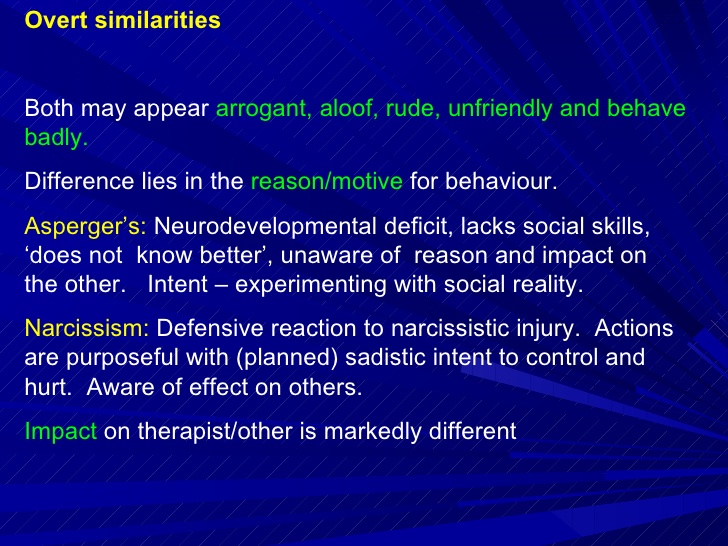
I understand where the confusion comes from. On the surface, the two disorders can appear similar. People on the autism spectrum may seem as if they lack empathy because they do not express their emotions well, which of course includes showing empathy. They also sometimes blurt out inappropriate or hurtful things, not because they mean to, but because they honestly don’t know any better: they have great difficulty reading social cues. They can appear selfish and sometimes get angry or upset when their routines are interrupted or they are forced to pull themselves away from their solitary pursuits to engage with others. They can also violate the boundaries of others. All of these surface behaviors may look a lot like narcissism.

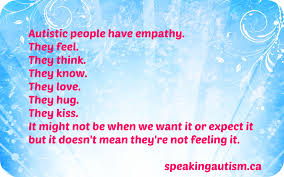
But appearances are only skin deep, and this is where any similarity ends. Lack of empathy seems to be the most commonly mentioned “characteristic” of both Aspies and narcissists. But in actuality, as far as empathy is concerned, a person with autism/Aspergers is the polar opposite of a narcissist. A narcissist cannot feel empathy, but can act as if they do. They are good actors and can fake emotion they do not feel. They can lie well; Aspies cannot lie or lie very badly. People with Aspergers and high functioning autism are great at picking up the emotions of others around them and are even sometimes overwhelmed by other people’s emotions (which sometimes makes them withdraw and that can make them seem like they lack empathy). They can be bad at expressing empathy because of their inability to read social cues or know what to say and do. Therefore, Aspies can feel empathy but often act as if they do not.

autism

Narcissists can say hurtful or damaging things because (a) they don’t care how you feel; or (b) because they want to hurt you. People with autism/Aspergers say hurtful things too sometimes, but it’s never intentional and they do care how you feel. If they are told they said something hurtful, most autists/Aspies are consumed with guilt and will sincerely apologize. They blurt things out because they sometimes do not know it’s not appropriate to do so.

Aspies and autists hate to have their comforting routines interrupted because repetition is something that grounds and relaxes them. A low functioning person with autism will sometimes perform repetitive movements or repeat a phrase over and over. This is how they cope with too much stimuli coming in. If they are interrupted, a low-functioning autist may fly into a rage or have a temper tantrum. Disengaging and switching gears is impossible for them.

At the higher end of the spectrum, an Aspie or high functioning autist may not repeat the same word or action over and over, but they have their hobbies and obsessions which they pursue with a single-minded intensity. They tend to hyper-focus on whatever interests them. If they are interrupted from whatever their mind is focused on, they may snap at you or become very annoyed. They can switch gears if they must but they hate doing it.

A narcissist may also snap or become annoyed, but not because they have difficulty switching gears but because they are just plain selfish and don’t want to do something that might please someone else besides themselves. Think of the narcissistic husband playing a video game. His wife comes into the room and asks for some help opening a stuck window. The husband flies into a rage and tells her he’s busy and to do it herself. It’s not because he’s that engrossed in the game or even cares about it that much, it’s because he doesn’t want to put himself out for his wife. For an Aspie or autist, the game engages all of their senses and their mind is extremely focused. They simply can’t pull away from it.

aspie_misdiagnosis

A person with autism or Aspergers can and do violate the boundaries of others. Again, this is because they can’t read social cues well enough to know when they are violating someone else’s boundaries. A narcissist knows full well when they are violating boundaries, but they simply do not care.

A forum member on Wrong Planet sums up the confusion this way:

To me it’s as absurd as comparing the small narcissistic child recklessly driving a car, to a person trying to cross the street in a wheelchair, and saying they have a lot in common because they both have a set of wheels.

I think mental health professionals and others who believe narcissism and Aspergers are on the same spectrum need to dig a lot deeper before they make such sweeping generalizations. They are not the same disorder at all and are certainly not on the same spectrum. Aspergers/high functioning autism is a neurodevelopmental deficit and really a type of learning disability; narcissism is a moral deficit.

For further reading, please see my article, People with Autism Do Not Lack Empathy!
Also see The Spectrums of Autism and Narcissism.

The Perfect Narcissist.

In order to be diagnosed with Narcissistic Personality Disorder (NPD) a person must meet at least five of the nine criteria specified in the DSM. Most narcissists do not meet all 9.

Brian Blackwell, a young man who murdered both his parents and then callously left their bodies behind to take a trip to New York City with his girlfriend, met all 9 criteria. Here is his story.

Narcissists use political correctness to control.

political_correctness3

Political correctness has never been more in vogue than it is right now, and our society has also never been more narcissistic than it is right now. As Americans, we worship narcissistic celebrities, narcissistic politicans, narcissistic sports stars, and narcissistic CEOs. And the more narcissistic they are, the higher a pedestal we seem to place them on. It’s all about the clothes, the glitz, the glamour, the money, the bling, the presentation, the package, the trappings of success. Even many of the poor don’t vote for the soft-spoken candidate who will increase the minimum wage and food stamps or provide job training; no, instead they vote for the garrulous, rich CEO who bails out the banks instead of the homeless. Why? Because the overbearing, rich CEO is perceived as being on the winning team, and they want to be on the winning team too.

As a nation, we are so deluded. We live in a big dysfunctional family, with the narcissistic “parents” running the government and the corporations, and held up as role models, while the vulnerable–the homeless, the poor, the sick, the old, and the disabled–are held responsible for their own lot, and told they are to blame for it, even if their circumstances are completely beyond their control, which they usually are. The vulnerable in our society are the scapegoat children that everyone has permission to kick when they’re already down, because the narcissistic Powers That Be tell them it’s okay. We live in a seriously empathy-deprived society.

It’s a huge irony that at the same time we worship the material over the spiritual, the rich and callous over the poor and kind, the corporation over the individual, the aggressive and ruthless over the empathetic and cooperative, that we insist on something called “political correctness.” This ties in closely with a concept we call “zero tolerance.” It’s gotten so extreme that if we tap our child on the rear-end in Wal-Mart, we could be charged with child abuse. If a young boy draws a picture of a gun, they could go to jail. Not long ago, there was a case of an autistic ten year old who was accused of making terrorist threats because he wrote “bone thrat” on a wall.

political-correctness

We have euphemisms for everything. We have to watch everything we say for fear of offending some or another group of people. Political correctness, we are told, exists so we don’t hurt someone’s feelings or insult a group of people, whether they be of a certain nationality, race, have a particular disability or mental illness, or sexual preference. But I don’t think that’s the real reason for political correctness. I think the real reason is control. If we have to watch everything we say and walk around on eggshells for fear of offending someone, then we become anxious and fearful. That’s the way the narcissistic Powers That Be want us: scared to death and easily controlled. Zero tolerance is another way they can control us.

The same is true on the personal level too. When I think of most of the narcissists I know, almost every one of them insists on political correctness in some form or another. They make sure you always say the right thing at the right time. They are constantly warning you that you could insult someone if you don’t (as if they care). If I call someone “mentally retarded,” not meaning any harm by it, but just using that phrase because it’s the one I’m used to and the one I was raised with, a narcissist will rudely interrupt and tell me I should have used “cognitively challenged” instead. I can be talking about Cherokee Indians, and the narcissist will interrupt and say I should have said “Cherokee Native Americans,” even though that phrase is awkward as hell. I can’t talk about someone being “fat,” I have to use “larger framed person” or something equally ridiculous-sounding. If it’s a female narcissist with feminist leanings I’m talking to, I can’t use the word “girl” for a young woman without getting chastised, even though “girl” is a lot easier to say than “young woman.” Most everyone knows I don’t say “girl” to diminish the female gender or somehow compare her unfavorably with men, it’s just easier and sounds less awkward. I’m used to it. But the narcissist will interrupt and tell me that I was insulting my own gender my using that word. Hell, you can’t even say “Merry Christmas” anymore. You see, it’s all about the package, the presentation, the image: the narcissist is not listening to the message behind my words or really hearing a word of what I’m saying; they are using my choice of words to diminish and instill in me a sense of shame. They do this to instill fear so they can thereby exert control over you.

politicalcorrectness2

But they don’t practice what they preach. Narcissists aren’t politically correct themselves. Being PC doesn’t apply to them. They talk the talk but don’t walk the walk. They’re allowed to say the most hurtful and insulting and diminishing things to everyone else–you are fat, a cow, a pig, crazy, stupid, insane, a bitch, a whore, and so on. If the target of these slurs objects they are chastised for that: “Take responsibility for your own feelings” or “stop being so sensitive.” They take no responsibility for their own hurtful words and actions.

Narcissists have no empathy so when they tell you to be “PC” to avoid hurting someone, do you think they really care? Of course they don’t. When they tell you to be “PC” what they are really saying is “use the words I tell you to use so I can make you fear my wrath so I can exert control over you like the spineless puppet I have designated you to be.”