Crybaby.

kid_crying

WARNING: THIS ARTICLE MAY BE TRIGGERING.
I spent the first 13 years of my life almost constantly crying. I was a perpetually squalling cranky baby, a screaming tantrum-throwing toddler, a tearful preschooler, and a school child prone to attacks of uncontrolled crying in public places and embarrassing situations. During my teen years, my crying was downgraded to near-constant sulking and negativity. Tears came mostly when I was angry or frustrated by the time puberty hit. Rage frequently accompanied the tears, or maybe it worked the other way around.

I had the curse of the blonde and fair skinned, so my emotions showed on my face in neon reds and pinks against the white background of my skin. I blushed easily and that was embarrassing enough. I could feel the blood rising up my neck like a sudden wave of heat and my ears would start to burn. My bullies picked on my tendency to blush and would deliberately embarrass or humiliate me to see my ghostly pale face turn as red as a fire engine. If it went on long enough, my lips would start to quiver and there would be tears, and that’s what they were really waiting for–to see me cry.

The crying was awful. I wasn’t a pretty crier; in fact I was ugly when I cried. My skin would turn into a mottled red and pink that looked like a bad case of rosacea, my nose ran like a faucet and turned so red it was nearly purple, and my eyelids turned bright red too and swelled up as if they were bee-stung. It would take hours for these facial giveaways of my pathetic vulnerability to finally disappear.

I had a great deal of difficulty controlling all the intense and confusing emotions that seemed to crash over me like tidal waves when I least expected it. These feelings were just too big for me to handle, and I was so easily overwhelmed by them and had trouble soothing myself (this is an early indicator of BPD and other disorders like PTSD). Whenever I cried I thought I would never stop. No one could calm me down. My emotions were a force of nature too powerful to be tamed. When I wasn’t crying, I felt a constant dull ache in my chest (heart area) and congestion in my throat. Even that early, I knew crying would relieve the tightness and pain, but the crying was like vomiting and sometimes as painful because the intense waves of emotion plowed through me like an out of control bulldozer.

Raised by a narcissistic mother and enabling (possibly low spectrum or covert narcissist) dad, I became the the family scapegoat (made even more crazymaking by the fact that as an “only” in their marriage, I also sometimes served as Golden Child). I was either held on a pedestal that far exceeded my actual abilities/beauty/intelligence/whatever, but most of the time I WAS NEVER GOOD ENOUGH FOR THEM. I questioned myself and everything I did; it seemed I could do nothing right. I wasn’t allowed to do things for myself or speak my mind. I felt awkward and defective in my family and everywhere else too.

Not long after I started elementary school the bullying started. I was the class crybaby and kids always target the kid who cries the most or seems the most vulnerable. I had no defenses at all; I had never been taught any and lacked the confidence to stand up for myself. Things got especially bad in 3rd – 5th grades. During 4th grade, I was followed home every day by a group of kids who laughed and jeered at the way I walked and imitated my walk, as my tears welled and threatened to overflow (no wonder I hate mimes). The bullies would call out to me and sometimes even throw things to get my attention, but I wouldn’t turn around. I just kept on walking. I knew I couldn’t let them see the tears streaming down my face because that would make everything so much worse.

My third grade teacher, Mrs. Morse, was a psychopath with arms like Jello who always wore sleeveless dresses, so whenever she wrote on the board, all that quivering, pale freckled flab hanging from her bare arm made me want to throw up, but I still couldn’t take my eyes off it. It was mesmerizing in a horrible way, like a car accident.

Mrs. Morse knew how sensitive and scared of everything I was. She knew I was bullied by most of the other kids. But she had no empathy for my plight. She was a sadistic bitch straight from the pit of hell. She deliberately called on me whenever I was daydreaming, which was often (no kids got diagnosed with Aspergers back in those days and the idea of “attachment disorders” that lead to later personality disorders was an afterthought in those days), then she would make me stand in the front of the room and answer a question or solve a math problem while she glowered at me like wolf about to pounce and kill their prey. She never did this to the other kids, who were allowed to answer questions from their seat. She deliberately tried to humiliate me, because she knew she would get a reaction.

meanteacher

One time I couldn’t solve the math problem on the board (which was my worst subject), and she berated and belittled me in front of the class.
“You never pay attention. You’re always daydreaming. Do you have a mental problem?”
The class laughed.
My tongue was in knots and I felt the blood drain from my face. I felt tears burning the backs of my eyelids like acid.
I swallowed hard and tried with all my might not to let a tear loose but they started to flow anyway. I hung my head in shame and rubbed away the tears with my grubby fists as I turned away toward the wall. My narrow back and bony shoulders heaved with silent sobs.
That was exactly the moment this sadistic malignant narcissist who passed for a teacher was waiting for.
“Look everyone! Lauren is crying! Look at the tears! Cry, cry, cry, baby.”
The class burst into screams and hoots of laughter.
“Cry, baby, cry!”
I stood there in front of the class, staring at the floor, snot mingling with my tears, and longed to melt into those scuffed green-gray linoleum tiles, and never return.
In today’s anti-bullying environment, this “teacher” would have been fired for that shit. She might have even lost her teaching license. That kind of thing isn’t put up with anymore.

white_rabbit

Later that year, there was a similar blackboard incident. This time, I was stood in front of the room and told I looked like an albino rabbit when I cried. (I actually did, due to my fairness and my slight overbite.) I was mortified as this unbelievable cruel bitch encouraged the entire class to laugh at my pain and humiliation. I ran out of the room and fled to the library sobbing. The librarian was a sweet and very young woman (probably just out of college) who actually liked me and knew about my love for books. That library was my refuse and the librarian was my friend who understood me. This time, she saw me rushing in like that and held her arms out to me as I crashed into her and sobbed into her warm fragrant neck. We stayed like that for a long time, until Mrs. Morse (accompanied by one of her 9 year old flunkies) came marching in looking for me. Mrs. Morse grabbed me roughly by the arm and marched me back to the pits of hell she called a classroom. Sadly, I looked back at my librarian angel and saw the wetness on her face and her sad little wave.
She knew, and I knew she knew. I’ve never forgotten her. Sometimes in my fantasies I still see her waving at me with that sad tearful smile, and that image gives me comfort and strength.

I think my years of uncontrollable emotional displays came to an end when I was 15. They had already been abating somewhat, replaced with rage and anger, but I had trouble controlling my anger and constant dark moods, even though I wasn’t crying as much. I started to drink and do self-destructive things. I started “talking tough” but inside I still felt anything but.

The year before, when I was 14, my parents divorced and I was taken to live with my mother in the city. She loved it; I hated it back then. We fought all the time, mostly because of her self involvement. My grades slipped and I never did my homework. I was depressed all the time and cared about nothing. When I cried (which was still often) I usually did it alone. The other kids at school didn’t like me. I was never invited to parties, always last picked for softball. I felt intimidated and shy all the time, but I still tried hard to make friends–a little too hard. I fit into no clique (I have never fit into any clique) but there was a group of girls low in the high school pecking order consisting of the geeks and quiet, studious girls. They seemed welcoming enough at first. I saw their small (or more likely, polite) displays of acceptance and wanted so badly to believe they actually LIKED me that I guess I started following them around like a needy puppy.

charlie_brown_linus

I noticed after awhile they avoided me too, and my “birthday corsage” box was proof of my unpopularity, because it was not signed by all the girls and when it was signed, it was just a name. No long flowery messages, no in-jokes, no high-school risque comments, no “you are such a great friend” or “Love ya, Lauren. XXXXOOOOOO” Just…signatures and an occasional terse “Happy Birthday.”

My fears were confirmed later that day. After weeks of avoiding me, the group of nerdy girls approached me and told me they wanted to take me out to a restaurant for my birthday after school. Wanting so much for them to like me I remember grinning like a fool and nodding like the needy puppy I was. Inside I was a little suspicious, but dammit, I wanted to believe them! Maybe their ignoring me had just been my overactive, “oversensitive” imagination after all, and they really did care. Why else would they want to spend time with me on my birthday?

At the restaurant I was picking up a certain tension. The girls kept looking at each other worriedly and wouldn’t look me in the eye. As I ate, I watched their anxious faces. Something was up, and it wasn’t good. I felt like I was going to throw up. I spoke to no one.

Finally, Harriet, the leader of that clique told me she needed to talk to me–privately. I felt like I was on my way to the principal’s office for some transgression. My heart pounded in my throat and I felt tears burn the backs of my eyelids, but I didn’t cry. I bit my lip until it bled and tried to just breathe through my terror.

Outside, she smiled at me sympathetically. Then went on to tell me the real reason they had planned to take me to lunch was because they didn’t want me to hang around with them anymore and didn’t have the opportunity to tell me at school. She actually got tears in her eyes when she said this, and then told me she hoped my feelings hadn’t been hurt. Um…hello? But all I could do was stand there staring at her as if I was cognitively challenged. For the first time ever, I felt emotionally numb. I didn’t realize at the time that would soon become my new way of coping with my pain.

nobody_loves_you

I was traumatized by that rejection. I spent the next two days in bed. I felt sick and couldn’t go to school. I told no one what happened because the shame was too great. I didn’t cry; I couldn’t anymore. I just wanted to sleep forever and maybe die.

After that I couldn’t cry anymore. At least not in most situations that call for it. I had and still have trouble accessing my emotions. It was too scary to let them out, because when I did, bad things happened. It scares me to realize I might have easily become a narcissist, splitting off from all soft emotions, even empathy and guilt. Many narcissists started life this way too, without natural defenses.

I know now whenever I feel that painful tightness in my chest and throat, that means I need to cry. I’m not afraid of it anymore. I want to retrieve my long-ago ability to feel intensely connected to my emotions, because used properly, being an HSP is a gift and a blessing. The big difference will be that I’ll be able to let emotions pass through me freely and be able to express them without shame and without allowing them to overwhelm me or control me.

“Splitting” and idealization/devaluation.

splitting1

Splitting–more commonly known as black and white or all or nothing thinking–is a primitive defense mechanism used by both narcissists and borderlines when they observe a threat–that someone doesn’t agree with them or is challenging them in some way, or when they fear abandonment (borderlines) or exposure/loss of supply (narcissists). In narcissism, splitting is usually referred to as idealization/devaluation, but other than the unconscious motive (fear of abandonment for borderlines, fear of losing a source of supply for narcissists), the phenomenon is really the same thing.

Splitting is normal in a very young child. When Mommy is present and hugging the child, Mommy is perceived as “good.” When she denies the child another cookie or she goes to work, the child throws a tantrum, and Mommy is now “bad.” Because the child still doesn’t see himself as a completely separate person from Mommy, when Mommy does something that makes the child unhappy or fearful, the child rejects her and thinks of HER as all-bad. The child is not yet capable of the concept that Mommy is an individual who can be both good and bad at different times and to different degrees depending on the situation.

The fairy tales we read to young children engage them at a level they can understand: fairy tale characters are all-good or all-bad, heroes or villains, with no in between. Only an older child can fully understand that people come in varying shades of grey, and pure black or pure white in one person is exceedingly rare. Realizing that most people are both evil and good at the same time is a sign of maturity and indicates the child has come to see himself as a completely separate person with his or her own identity who can afford to see others as individuals too, rather than one-dimensional cardboard cartoon characters.

Narcissists and borderlines never make that transition. Due to early attachment issues arising from neglect, abuse, or sometimes maternal smothering, they continue to see others as extensions of themselves, not separate people with their own identities, interest and opinions. If someone is an extension of yourself, of course the other person must be seen as “all good.” If the other person fails to provide adequate supply (for the narcissist) or disagrees with them or has differing opinions, they are perceived as a threat and must be rejected, devalued, and demonized as “other.” The only way a narcissist or borderline can see another person as a separate entity is when they have become “other” and are demonized and seen as “all bad.”

splitting

Splitting is common in today’s political landscape. Candidate A believes in health care reform, the legalization of marijuana, the cessation of the outsourcing of jobs, raising taxes on the wealthy–and that a woman has the right to choose whether or not to terminate a pregnancy. Candidate B believes in health care reform, the legalization of marijuana, the cessation of outsourcing of jobs, raising taxes on the wealthy–and that abortion should be outlawed. Candidates A and B, rather than focusing on what they have in common and using that to help improve people’s lives, instead go on smear campaigns against each other focusing on the only thing they don’t agree on: abortion. Candidate A accuses Candidate B of being a throwback to the “unenlightened” 1950s, while Candidate B accuses Candidate A of wanting to legalize murder. Neither acknowledges the many things they agree on–all either can see is that the other is a “murderer” or a “throwback troglodyte.” (Notice too how the accusing labels have become exaggerated and more abusive). That many politicians are narcissistic by nature makes splitting come second nature to most of them. Unfortunately, splitting has become standard in political campaigning and is intended to garner more votes (narcissistic supply) for the accuser while taking them away from the opposing party.

Robin and Tim are madly in love with each other. Robin idealizes Tim–she thinks he is the most perfect man she ever met, and she can’t imagine a life without him. He is the most handsome, smart, funny, sexy, and interesting man in the world, and she can’t believe her luck in having met him. Recently they have started talking about getting engaged. Tim thinks Robin’s wild mood swings are rather charming–but he hasn’t been the target of them yet.

On Tim’s birthday, Robin cooks him a lavish dinner and has a bottle of champagne ready to pop open and enjoy. He is supposed to be home by seven. Eight o’clock comes, and he isn’t home yet. At eight-fifteen, Tim calls and says he got held up. He is in the door by nine, apologizing profusely about his lateness–he was called into an emergency meeting by his boss and couldn’t get out of it. Rather than accepting his apology at face value and proceed to have a nice dinner together, Robin goes on a rampage. She accuses Tim of having a lover and never having loved her. The champagne bottle gets smashed against the wall and the dinner thrown in the trash. After fighting for hours, Robin tells Tim to leave and that she never wants to see him again and that he’d make a terrible husband to any woman who would have him anyway.

In the course of two hours, Robin has turned Tim, a normal man who really did love her but couldn’t get out of a meeting, from “the most perfect man in the world” into an unfeeling monster who is cheating on her and would “make any woman miserable.” Because he disappointed her and she couldn’t handle it or see him as a separate person with his own life and his own needs, she must demonize him and make wild accusations against him, accusing him of doing things he never did and saying things he never said. She has turned the good into the evil, and rejected Tim because he is “all bad” now. Both the “angelic” Tim and the “evil” Tim are creations of Robin’s all-or-nothing, black or white, thinking. Both are fiction.

Splitting is really a kind of blindness–the failure to be able to see any shades of grey in an individual, situation, religion, ideology, belief system, or really, anything at all. It destroys relationships, creates hate and discord, kills community spirit, leads to war and killing, and ruins lives.

Going insane: how I got diagnosed with BPD

going_insane

I thought I should explain how I got diagnosed with BPD. Although my out of control behaviors in 1995-1996 were due to prolonged emotional and mental (and some physical) abuse at the hands of my ex (on top of having been a victim of narcissistic abuse growing up), the focus of this article isn’t on narcissistic abuse or the way my ex behaved, but rather on my reactions and how out of touch with reality I actually became.

My memory of this time is sketchy and fragmented, almost dreamlike, so what I’m about to write may not flow together well. I believe my fuzzy memories of these two years were due to 3 things: (1) intermittent substance abuse, including alcohol; (2) being so out of touch with reality; and (3) I may have blocked out some of these incidents or partially blocked them out so they seem sort of grey when I think about them now, like a dream.

In 1995 my ex’s mother could no longer live alone so she came to live with us. At first things went smoothly, but she had Alzheimers and was deteriorating fast, and soon her care was left entirely to me. At the same time I was the stay at home mom to a 2 and 4 year old. My ex had started drinking a lot during this time, and said it was because he hated his mother (a malignant narcissist herself) and his behavior toward her was very abusive. He justified his abuse by saying she deserved it because of the way she had treated him. My children saw this behavior but in my emotionally weakened state due to his constant gaslighting, projecting and triangulating (he had turned most of our friends against me) as well as isolating me from those who could help me, I began to collude in his abusive behavior toward his mother. I didn’t physically attack her (he did) but in my frustration with things like her wetting the bed I would yell at her whenever he did and sometimes even when he wasn’t there. I also didn’t try to stop him when he used to spank her like a naughty child.

My ex was drinking heavily and smoking a lot of pot, and I joined him. At night, after the kids were asleep, we would often both be drunk and high. Sometimes his friends came over, who were all younger than we were (my ex’s friends were always younger than him). Sometimes things got wild. I was no longer attracted to my ex by this time due to his constant emotional abuse, so when I was drunk I openly flirted with his friends. I was unfaithful too, but so was he (I am definitely not proud of any of this, especially because I had young children at the time).

We fought constantly. One night, drunk, he threatened me with a gun. I ran down the street screaming and went and hid in a grove of trees for hours in the freezing cold. On several occasions I called the police and they would show up to fund us both drunk and didn’t know who to believe so they would leave and tell us to sober up. At this time I had no control over my reactions or my emotions. I acted more immature than my own kids sometimes.

I used to sleep during the day and wasn’t as good a mother as I could have been. I was testy, impatient and neglectful. I loved my kids dearly, but just didn’t have the emotional stamina or energy to deal with them more effectively or lovingly. (I tried to make up for that later).

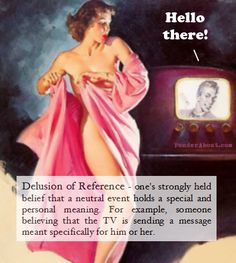
Soon the dissociative episodes began. Sometimes things looked weird. People looked like they weren’t real and they seemed demonic. I began to have delusions of reference. I had the weird sensation of unrelated events or conversations somehow referencing exactly what I was thinking. I felt like I was outside my body a lot, as if I was watching the events of my life unfold instead of being in them. This began to happen when I started distancing myself from my emotions into a “comfortable numbness.” (This is common in PTSD and BPD). But it wasn’t comfortable–it was horrifying. I think I was unconsciously protecting myself from feeling too much emotional pain. The abnormal had become normal, the insane had become sane, the evil had become good. I walked through my days in a sort of fog, but not all the time. Occasionally, when triggered, I would come back into myself and “go off” on my ex and experience a tidal wave of unbelievably painful and intense emotions. Instead of spending my evenings doing quiet things with my family, I spent that time on the computer in chat rooms, talking to men. I imagined I fell in love with one or two of them. My emotional reactions to these online entities I had never met were as intense as if they were actual relationships, but all of it was fantasy. To me it felt real.

I couldn’t sleep at night, but would sleep most of the day away. I didn’t take care of the house and only did the rudimentary necessities for the kids, in between taking care of my ex’s mother’s almost constant needs. I lost patience with both her and the kids easily. We ate cereal and yogurt most nights for dinner because I didn’t have the energy or wherewithal to cook anything.

I started a job after awhile at a hotel. I had a short affair with the disc jockey/maintenance man there. I wasn’t in love with him but I enjoyed the kindness he showed me, that my husband wasn’t giving me. One night he confronted me about it and I confessed everything. He didn’t seem upset but admitted he was having an affair too. Strangely, we did not fight about this. I really didn’t care whether he loved me anymore; I was convinced he hated my guts.

I quit my job on a whim even though we needed the extra income, because my ex had squandered over $100K we got from the sale of his mother’s house. One day I just decided not to go in anymore. I didn’t even bother to call, which normally is out of character for me. I started doing really crazy things. One night after a really bad fight I went into the closet in the master bedroom and sat on the floor crying for what seemed like hours. My ex didn’t seem concerned and went out instead. I don’t know why I was doing this; I felt like I had lost my mind and there was no reason for doing this. I had no idea what I was doing; I was just reacting to my pain like a wounded animal. The episodes of dissociation and delusions of reference became worse. I imagined everything–even voices on TV or songs on the radio–were coded messages that referenced something in my life. This is impossible to explain if you haven’t experienced it but it was very strange and disorienting.

delusions_reference

One day shortly after the closet incident, I left the kids in the house with him and decided to go driving. I had no idea where I was going or what I was doing, but I suddenly thought it would be a good idea to drive at 90 mph (the speed limit was 65 mph). Normally I’m a very cautious driver but during this time I had thrown all caution to the wind. I wasn’t suicidal in the sense of making a conscious effort to kill myself and I didn’t even contemplate suicide, but I was taking huge risks with my life. Miraculously, nothing happened, not even a pullover by police. I returned home feeling exhilarated from my crazy drive, but immediately that feeling disappeared and I was hit with the horror of my reality and started screaming irrationally and throwing things against the wall just to hear them break. I don’t even know what set this tantrum off–probably nothing at all, but I had this overwhelming desire to act out my excruciating emotional pain. I had no control over myself at all. When I thought about my behavior later on, I was horrified. I wasn’t even drinking anymore by now, so I wasn’t drunk. I was just insane.

My ex told me I was crazy. He always did anyway. But I really was crazy. He told me I should commit myself to a mental institution–or he would. To his surprise (and mine) I agreed. In that moment of clarity, I realized how crazy I had become (due to his emotional abuse of me, but that didn’t make me any less crazy). I allowed him to drive me to the mental hospital, which turned out to have an excellent program and engaging activities. I felt relief in entering that hospital and spent the next three months there. My Axis 1 diagnosis was Major Depression and anxiety, and my Axis 2 diagnosis was BPD, as well as substance abuse. I was also diagnosed with PTSD. I received daily therapy–both individual and group, as well as DBT classes–and I was put on Depakote (a mood stabilizer), Prozac (for the depression) and Klonopin (for anxiety). I stabilized during my stay but I wasn’t as committed to using the DBT tools I learned there as I became later on. I remember calling my mother from the hospital and telling her what was wrong with me, and her attitude was like, “so what? You need to be a mother to your children.” She didn’t even know I was in the hospital. So much for maternal support.

I had mixed feelings about returning home. I was overjoyed to see my children, but wasn’t too happy to see my husband at all. I really just wanted to stay in that hospital for the rest of my life. I didn’t want to face reality.

Fortunately, my mental state never got that bad again, but his abuse was to get much worse. He used my descent into the madness of severe BPD and major depression as an excuse to punish me for “having gone batshit insane” when I should have been a better mother and wife to him.

I still have a lot of guilt and shame over the way I neglected my children when they were so young and helpless. I wonder sometimes how much my not being there for them may have damaged them.

When I look back even earlier at my life, I can remember similar incidents of being totally unable to control my emotional reactions to stressors and triggers, with periods of almost robotic numbness and dissociative episodes in between outbursts. It was a pattern I was familiar with, but it reached its pinnacle in 1995-1996. I had a relapse in 1997 and spent a week in the psych ward at the regular hospital, and got the same exact diagnosis as the year before. Over the next several years, while I was still married to my ex, I spent most of my time in a state of emotional numbness, living on “automatic pilot.” It wasn’t until I finally got the POS out of my life that I felt safe enough to begin to let myself feel emotions again–but this time with mindfulness and acceptance instead of allowing my emotions to control me. I still have a long way to go.

Are BPD and complex PTSD the same disorder?

age_3_1961_2
Me at age 3 in the zone. Was the template for my BPD already laid down?

Ruji, a new commenter on this blog, made an interesting observation–that BPD should be divided into at least two subtypes: Empathy Challenged/Character Disordered (closer to NPD/ASPD) and Highly Sensitive Person with Emotional Dysregulation (closer to the type I have, although at different times in my life or when extremely stressed I have displayed the more character-disordered subtype). I agree with her. Ruji’s idea is remarkably similar to The World Health Organization’s two subtypes of BPD:

1. F60.30 Impulsive type
At least three of the following must be present, one of which must be (2):

–marked tendency to act unexpectedly and without consideration of the consequences;
–marked tendency to engage in quarrelsome behavior and to have conflicts with others, especially when impulsive acts are thwarted or criticized;
–liability to outbursts of anger or violence, with inability to control the resulting behavioral explosions;
–difficulty in maintaining any course of action that offers no immediate reward;
–unstable and capricious (impulsive, whimsical) mood.

2. F60.31 Borderline type
At least three of the symptoms mentioned in F60.30 Impulsive type must be present [see above], with at least two of the following in addition:

–disturbances in and uncertainty about self-image, aims, and internal preferences;
–liability to become involved in intense and unstable relationships, often leading to emotional crisis;
–excessive efforts to avoid abandonment;
–recurrent threats or acts of self-harm;
–chronic feelings of emptiness.
–demonstrates impulsive behavior, e.g., speeding, substance abuse

Psychologist Theodore Millon has gone even further, proposing that BPD should be divided into four subtypes:

1. Discouraged (including avoidant features): Pliant, submissive, loyal, humble; feels vulnerable and in constant jeopardy; feels hopeless, depressed, helpless, and powerless.

2. Petulant (including negativistic features) Negativistic, impatient, restless, as well as stubborn, defiant, sullen, pessimistic, and resentful; easily slighted and quickly disillusioned.

3. Impulsive (including histrionic or antisocial features) Capricious, superficial, flighty, distractible, frenetic, and seductive; fearing loss, becomes agitated, and gloomy and irritable; potentially suicidal.

4. Self-destructive (including depressive or masochistic features) Inward-turning, intropunitively angry; conforming, deferential, and ingratiating behaviors have deteriorated; increasingly high-strung and moody; possible suicide.

Millon’s Types 1 and 4 would correspond to the Highly Sensitive Person/Emotional Dysregulation type mentioned above (and therefore closer to the Avoidant/Dependent PDs); Type 2 sounds very much like NPD; and Type 3 seems closer to ASPD or Histrionic PD.

complex_ptsd
BPD symptoms are almost identical to those of Complex PTSD.

There are so many diverse–almost opposite–symptoms that can appear with this disorder that one person with BPD can be very different from the next. In fact, you can take 10 borderlines and they will all seem very different from each other, with barely any similarities in their behavior at all. One will be shy, fearful and retiring, never making waves, acting almost like an Aspie or an Avoidant; while another may break the law, lie constantly, and act obnoxious and rage whenever things don’t go their way. A borderline could be your raging boss who drinks too much and ends every annual Christmas party with one of his infamous rages, or it could be the sweet and pretty schoolteacher who goes home every night and cuts herself. She could be the come-hither seductress or the nerdy computer programmer. He may have few or no friends or a great many.

This diversity is not the case with the other personality disorders, which have more cohesiveness in the symptoms their sufferers display. So I wonder–is BPD really a personality disorder at all? Does it even exist, or is it really just a group of trauma-caused symptoms the experts in their ivory towers stuck in a single box called “BPD” because they didn’t know how else to classify them?

In fact, all these diverse subtypes have one thing in common–they are all very similar or identical to the symptoms of someone with complex PTSD (C-PTSD). People with C-PTSD are often misdiagnosed as Borderlines because their behaviors can be just as baffling and manipulative, and both disorders also include dissociative, almost psychotic episodes. Extrapolating from that, I wonder if ALL borderlines actually have C-PTSD.

Earlier today I posted an article outlining 20 signs of unresolved trauma, and I was struck by how similar these were to the symptoms of BPD. And there is also this article that Ruji just brought to my attention that also describes how remarkably similar the two disorders are, but that the idea of fear of abandonment (which is recognized as the root cause of BPD) is not recognized as a factor in causing PTSD and that may be part of why they have been kept separate.

The BPD label, like any Cluster B label, is very damaging to its victims because of the “evil and character-disordered” stigma it carries. One psychologist has even included us, along with narcissists, among the “People of the Lie”!

Yes, it’s true some borderlines do act a lot like people with NPD or even Malignant Narcissism or ASPD, but most probably do not, and are really much more similar to people with Avoidant or even Dependent personality disorders, which hurt the sufferer more than anyone else. But if you have a BPD label, people start backing away from you slowly due to the stigma. Therapists are reluctant to treat you because they assume you will be either difficult and hateful in therapy sessions, or will never get better. Insurance companies won’t pay claims where there is a BPD diagnosis, because it’s assumed there is no hope for you. I’ve had this problem when I’ve tried to get therapy. I remember one therapist who I had seen for the intake session, who told me he needed to obtain my psychiatric records before we could proceed. The session had gone smoothly and I felt comfortable with him. A few days later I received a phone call and was told he did not treat “borderline patients” and wished me luck. So that’s the kind of thing we’re up against if we’ve had the BPD label slapped on us.

Also, as an ACON blogger who works with a lot of victims of narcissistic abuse, my BPD label sometimes makes people wary of me and they begin to doubt that my motives here are honest. At first I was reluctant to talk about my “Cluster B disorder” here, because I knew it might be a problem for some ACONs, who think borderlines are no better than narcissists. But I eventually decided that to hide it away like an embarrassing family secret would be misleading so I “came out” about having BPD (I never actually lied about it, but played it down in the beginning and rarely mentioned it). I’m glad I fessed up, but there have been a few people who left this blog after I came out about it or began to doubt my motives. So there’s that stigma and it’s very damaging.

Both C-PTSD and Borderline PD are caused by trauma. Both are complex defensive reactions against future abuse and both involve things like splitting, dissociation, psychotic episodes, self-destructiveness, wild mood swings, and behavior that appears to be narcissistic and manipulative.

The way I see it, the only real difference between C-PTSD and BPD is that the traumatic event or abuse happened at an earlier age for someone with BPD, perhaps during toddlerhood or infancy, while all forms of PTSD can happen at a later age, even adulthood. But the symptoms and defense mechanisms used to avoid further trauma are the same for both.

20 Signs of Unresolved Trauma

Here is a fascinating article about how trauma due to abuse can lead to a post-traumatic condition that resembles Borderline Personality Disorder in almost every aspect. I wonder if this could mean I don’t actually have BPD. I have a lot of these symptoms, although they’ve improved over the years. I was diagnosed with BPD twice but maybe my therapists were wrong. These are symptoms of C-PTSD (which I have seen compared with BPD which it closely mimics). I thought I had recovered from my PTSD but maybe I have not. I’m still going to assume I’m borderline for now, but this makes me wonder. Borderlines have most of these traits, including dissociation.

I am also adding this website to my blogroll because I think it could be of great help to survivors of trauma and abuse. A social worker friend of mine just told me about it. She does not think I’m borderline. Now I’m REALLY confused.

Kathy Broady, Trauma Consultant's avatarDiscussing Dissociation

Unresolved Trauma

Many people enter the therapy process with minimal awareness of their trauma history.  When the trauma survivors are dissociative, they have the ability to block out an awareness of their trauma.  They may know that their family had problems, or that their family was dysfunctional, etc, but they may believe they were never abused.

child abuse child abuse (Photo credit: Southworth Sailor)

However, blocking out conscious awareness of trauma does not mean that the survivors have no effects of that trauma.  Using denial and dissociative skills does not mean that the abuse did not happen.  Denial means that the person simply is refusing to acknowledge or accept the fact that they were traumatized.  They are pretending they were not hurt, when they were actually hurt very badly.

Even if the memories of abuse are hidden from the survivor’s awareness, blocked trauma / unresolved trauma creates very noticeable and obvious symptoms that…

View original post 646 more words

10 things you discover about yourself when you have BPD.

borderlines_like

The linked article is so true it hurts. I’m experiencing a lot of this right now, in thinking about this disorder so much and the ways I have harmed and hurt people in my past and the little ways it still tries to sneak out.

I’m also reading James Masterson’s “The Search for the Real Self,” which I’ll review when I finish it. This book is like looking into a mirror at the way others have seen me all these years.

I feel like I’ve been given a new set of eyes and an entirely new perspective on myself.
I wonder how common it is for a BPD person to reach this point of self-awareness. I guess I must have been ready.

If you have BPD or know someone with BPD, please read this very important article.

10 Things You Discover About Yourself When You’re Diagnosed With Borderline Personality Disorder

11 songs about Borderline Personality Disorder

Everyone who reads this blog knows I’m a huge music fan, so I thought I’d start a series of songs about the experience of being Borderline (or being in relationships with Borderlines), as I already have with songs about Narcissism.

Here are 11 songs to get started. I’ll do another one of these later.
I tried to include the lyric videos whenever possible.

1. Green Day: Boulevard of Broken Dreams

A huge 2005 comeback hit by the alternative rock band. I think this song really captures the horror and loneliness of what it’s like to have BPD.

I’m walking down the line that divides me somewhere in my mind
One the borderline of the edge and where I walk alone
Read between the lines what’s fucked up and everything’s alright
Check my vital signs to know that I’m still alive and I walk alone
I walk alone
I walk alone
My shadow’s the only one that walks beside me
My shallow heart’s the only thing that’s beating
Sometimes I wish someone out there would find me
Til then I walk alone

These lines pretty much say it all. It’s a great song.

2. Three Days Grace: I Hate Everything About You

The early 2000’s seemed to have a surplus of songs that described Borderline-like mental conditions. Three Days Grace seemed to specialize in these sort of songs. Here is a song that describes the “splitting” (black and white thinking) Borderlines tend to do in relationships, as well as idealization/devaluation of a lover.

3. Katy Perry: Hot and Cold

A poppier, less serious song about the crazymaking rapid mood swings and tendency toward splitting Borderlines tend to do and the instability of their relationships. Here, Perry is singing to her BPD lover. (Although the word “Bipolar” is mentioned in the song, the lover’s moods swing too rapidly for it to be Bipolar I Disorder, which is characterized by long-term severe mood changes.

4. David Nail: Whatever She’s Got

The bro-country singer seems to be singing about his girlfriend who displays the unpredictable rapid mood swings of someone with BPD.

5. The Offspring: Self Esteem

Classic early ’90s rocker about a guy who may be a Borderline who appears to be involved with a girl with Narcissistic Personality Disorder. Or she could be an abusive Borderline. It’s hard to tell. Anyway, they’re both pretty messed up in the head. I’d say their relationship is doomed. Enjoy the tune.

6. Meat Loaf: Paradise By The Dashboard Light

1978 classic rock song about a guy who appears to be dating a girl who has BPD (or is just extremely demanding and high maintenance, which probably indicates BPD or Histrionic personality disorder anyway).

The girlfriend’s lyric:
Stop right there!
I gotta know right now, do you love me?
Will you love me forever? Do you need me?
Will you never leave me?
Will you make me so happy for the rest of my life?
Will you take me away and will you make me your wife?
I gotta know right now before we go any further
Do you love me? And will you love me forever?
What’s it gonna be, boy? Come on
I can wait all night
What’s it gonna be, boy? Yes or no

7. Hurt: Johnny Cash

Some of the most eloquent (and depressing) descriptive lyrics ever. Warning: this song may be extremely triggering.

8. Meredith Brooks: Bitch

The lyrics tell it all. No further editorializing necessary.

9. Radiohead: Creep

The “creep” in this song has either BPD or possibly covert (“vulnerable”) Narcissism. He seems to be severely conflicted between dismally low self esteem and pathological envy. He idealizes his lover and hates her for being “more” than he is. Whatever disorder he has, the self hatred and excruciating pain of his disordered mind is evident.

10. Hole: Doll Parts

The lyrics to “Doll Parts” mirror “Creep” in many ways, especially the idealization/pathological envy of qualities she idealizes, and her desire to “even the score.” Once again, the subject of the song could be either Borderline or NPD. (Courtney Love actually has a BPD diagnosis).

11. Jason Mraz: Beautiful Mess

A tender ballad sung to his obviously Borderline lover.

“Hand crack” for my birthday.

My birthday isn’t for 3 more days, but I was browsing in a rock shop (I collect geodes and other interesting rocks) and was looking for something that “spoke” to me. I finally found these beautiful unglazed squares of “picture” jasper. Besides the natural patterns of the jasper that look like desert scenes, I liked the way they felt–kind of heavy and smooth at the same time, and I liked the soft clacking sounds they made when they hit each other in my hand.

Immediately I thought what a marvelous DBT tool these could be. I have my turtle, of course, but it’s a little big and the feel of it isn’t all that special. These are little natural works of art that I know could help me calm down with their sound and feel in my hands when I’m stressed, upset or angry. I think the $4.00 spent was well worth it.

jasper1

I turned them around to show the patterns on the other side:
jasper2

I still have so much to learn…

dunce-boy

I just spent a few minutes ordering (used) books about Borderline and Narcissistic Personality Disorders from Amazon. There’s still so much I don’t know, especially about my own BPD, which trips me up constantly, in spite of my attempts to be mindful and think before I act (or react).

For example, a few months ago I unintentionally alienated someone I valued as a friend. Actually two people were involved. What happened was I went on a rant because a second woman hurt my feelings, and rather than discuss this privately with her, or simply move on and chalk the whole thing up as a learning experience, I decided to write a rant and publish it. No, I did not identify the person in my rant and yes, what this person had said to me (in private) was extremely mean and hurtful (and definitely not true either). But could I just move on or let it go–or just tell the person how hurt I was? No, instead I had to turn this person’s private message to into an angry blog post. After I realized what I had done, I removed that post, but its repercussions still haunt me. This individual is absolutely convinced I am a malignant narcissist with evil intentions and has said so in public. I’m not, but based on my behavior at the time, I can understand why someone would think this is the case.

The woman who I wrote that scathing post about wasn’t someone I knew very well, and her low opinion of me (which it turned out had been low from the beginning–she just didn’t like me, which is okay, it happens to everyone) really didn’t matter too much, since we hadn’t been “friends” for very long. But in the fallout from that bad decision I made to call her out publicly, I alienated someone else whose friendship I really DID value–because it turned out that person was friends with the person I ranted about. I didn’t know.

I also did something else to anger the woman who’s friendship I valued (basically, a blatant invasion of her boundaries), but again, at the time I didn’t realize what I did would be hurtful to them. I was just so…CLUELESS. All of this impulsive borderline shit I was pulling came off to others as MALIGNANT NARCISSISM and since then I’ve had that label slapped on me by someone who mattered to me and a few who never really did. Being thought of that way by someone I value really hurts. It hurts a lot. That’s about the worst insult I could ever get (strangely enough, when I was younger, the easiest way to insult me was to call me TOO SENSITIVE, ha!)

But I deserved it too. Putting myself in my alienated friend’s shoes after the damage was done, and thinking about how I would have felt if someone did the same thing to me, I couldn’t deny that I would have been extremely angry, to say the least. Also, the timing of my actions was just too weird. I didn’t know I was hurting anyone, at least not consciously. I really didn’t. But how would my friend know I didn’t know? Why wouldn’t she think it was malicious and intentional?

what_did_i_do

The problem with having BPD is the obtuseness that comes with it. In that sense, it can resemble Aspergers because you just don’t KNOW what is appropriate. You simply are not aware of when you’re acting out, manipulating or attacking someone. I think this is one of the little-talked about things that separates BPD from full-blown narcissism. Borderlines can just be so fucking clueless. We are so out of touch with ourselves and who we really are that we don’t even have a false self to pretend to know what it’s doing. We really don’t know what the hell we’re doing and even when we think we have our behaviors under control, they still sneak out, without our even knowing. It makes you really feel crazy and out of control when later on it’s pointed out to you (as to a two year old) WHY what you said or did was wrong and WHY someone was hurt by it, when you thought it as just a normal reaction at the time and you had no earthly idea it would be so hurtful or damaging. But when you do become aware, it’s so OBVIOUS that you say to yourself, how the hell could I not SEE that?

BPD is a sort of blindness. You get so tangled up in your own emotional state you literally cannot see how you may be hurting others. You may not be throwing screaming temper tantrums or throwing things across the room, but the harmful actions come out in other, sneaky, passive-aggressive ways. You don’t WANT to hurt others, but you do anyway because YOU DON’T KNOW WHAT YOU ARE DOING. It sucks because as a person who does have a conscience and struggles constantly with guilt and shame, I feel remorse when I realize what I have done. The problem is, by the time I become aware, it’s often too late to repair the lost friendship. They have already given up and moved on. BPD destroys relationships.

I feel like even with the DBT skills I’ve been using and the reparenting techniques I’ve tried recently, that there is so much about this awful disorder I don’t know. I don’t know myself as well as I should. Dammit, I DON’T TRUST MYSELF! My Aspergers/Avoidant PD mitigates my Borderline symptoms to some extent, but they still come out. I avoid others partly because I’m afraid I might hurt them. I don’t want to be this way anymore.

I feel like I need to educate myself much more about BPD, and just knowing WHY we do the things we do and act out in passive aggressive ways without knowing what we’re doing, will help. So that’s why I just ordered some new books. I need to spend some more time reading and less time unintentionally creating drama, stupidly thinking that it’s “right.”

This journey of self-discovery is amazing most of the time, but sometimes facing the truth about yourself is unbelievably painful.

One last thing–if you are reading this (and you will know who you are if you read this post), I want to say I’m so sorry. I was wrong.

Password protected article.

I haven’t talked about this before, because it made me feel way too naked and vulnerable, but I am trying to heal myself of BPD using reparenting therapy techniques on myself.

I wrote an article last week about what this experience has been like (I’ve only been at it about a month). I would like those who have an honest interest in reparenting, self-reparenting, or using it for healing various disorders (Cluster B, most other personality disorders, and C-PTSD) using this form of therapy, or close friends who know me well to be able to read it. So I have made the article password protected. My understanding is that you need to actually know the password I created, not just your own WordPress password (if you have an account).  So if you want to read this article, which is of a deeply personal nature, please email me (see “Stalk Me” in the header) and tell me something about yourself and why you want to read it  (if I don’t already know you).

Then I’ll email you the password and link to the article.