Adventures of S.K. “The Loser”: cartoon diary of myself at age 22 (two of two)

the_loser2
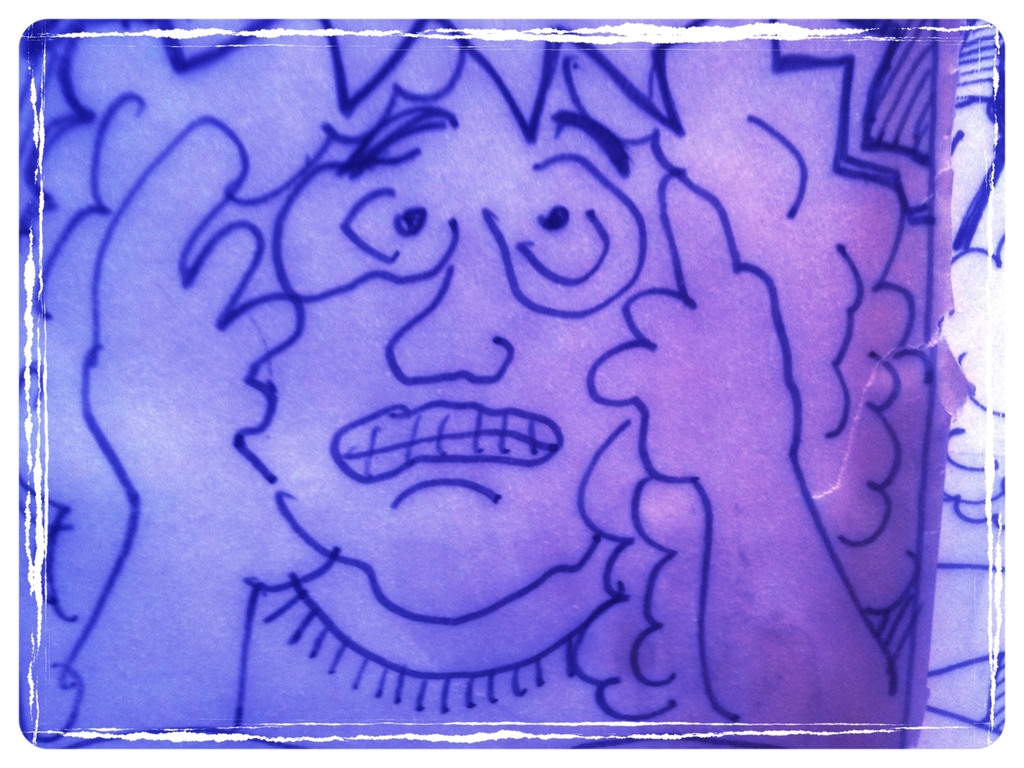
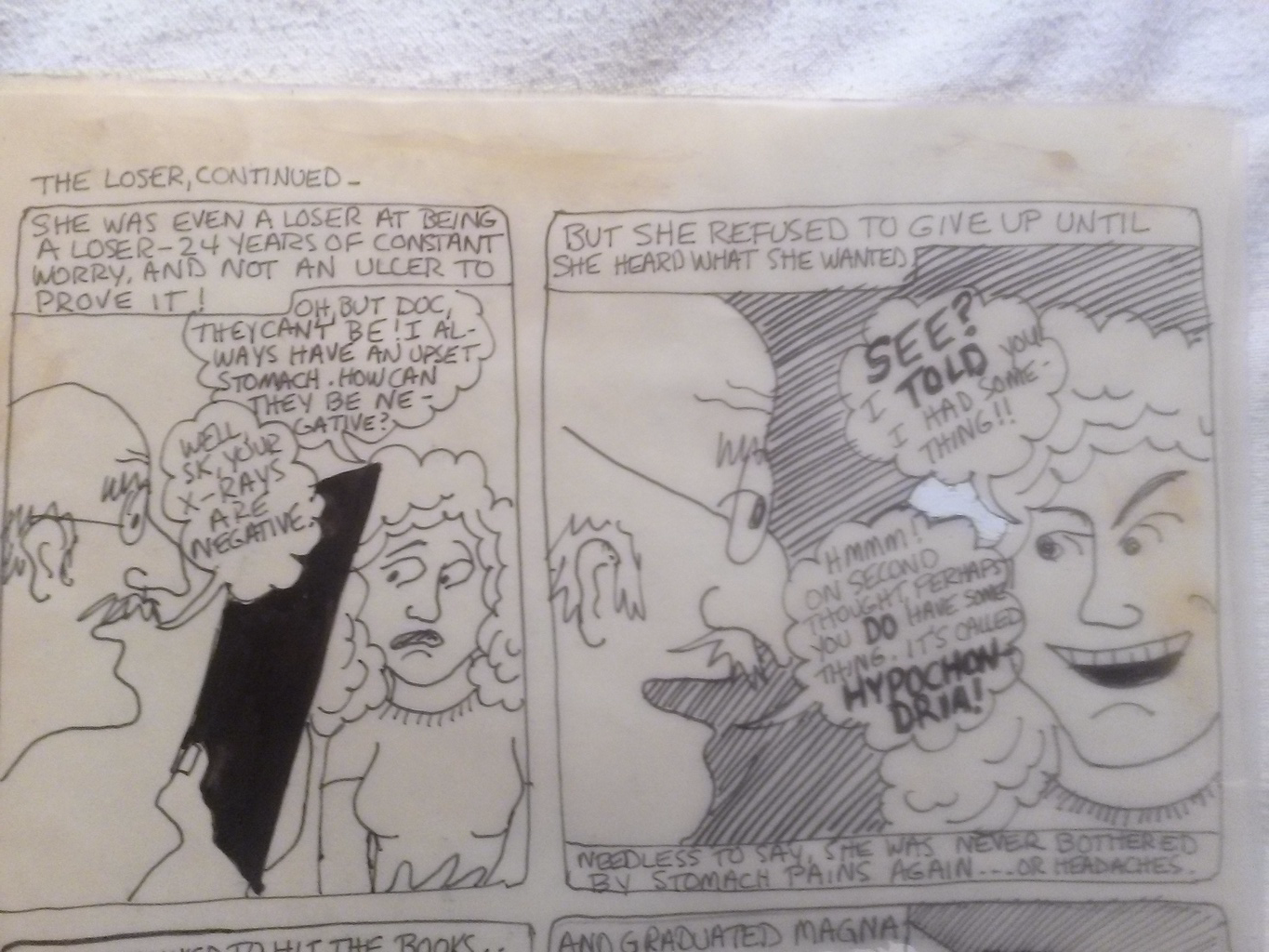
My expression here definitely reflected my attitude at the time about dating.

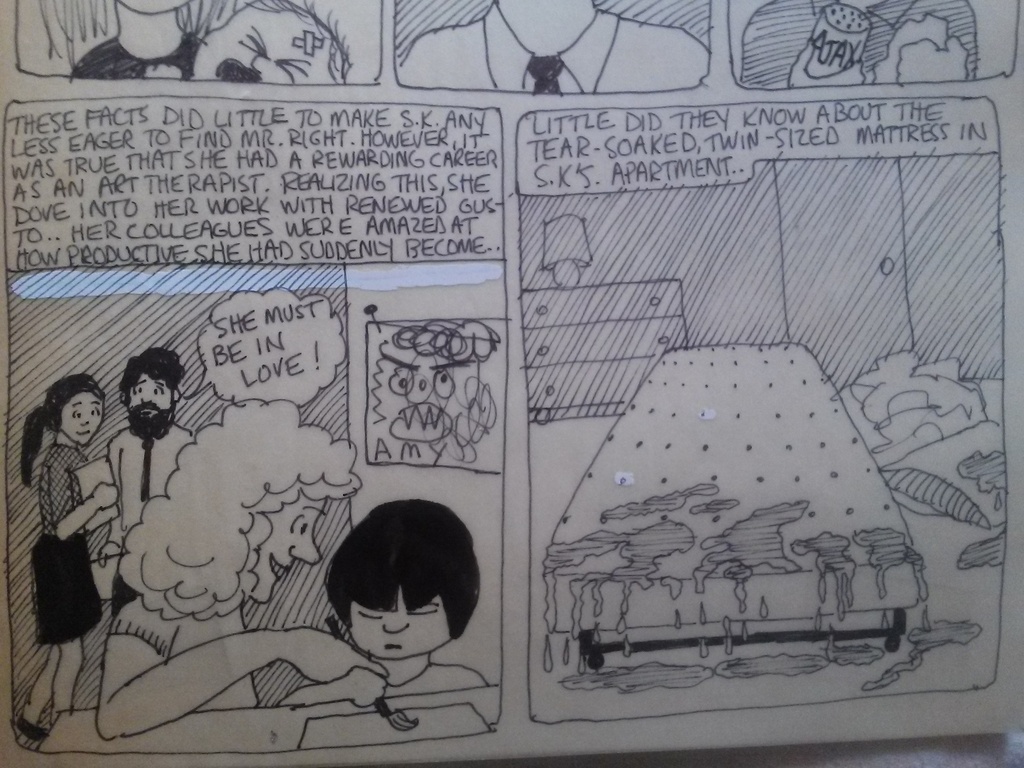
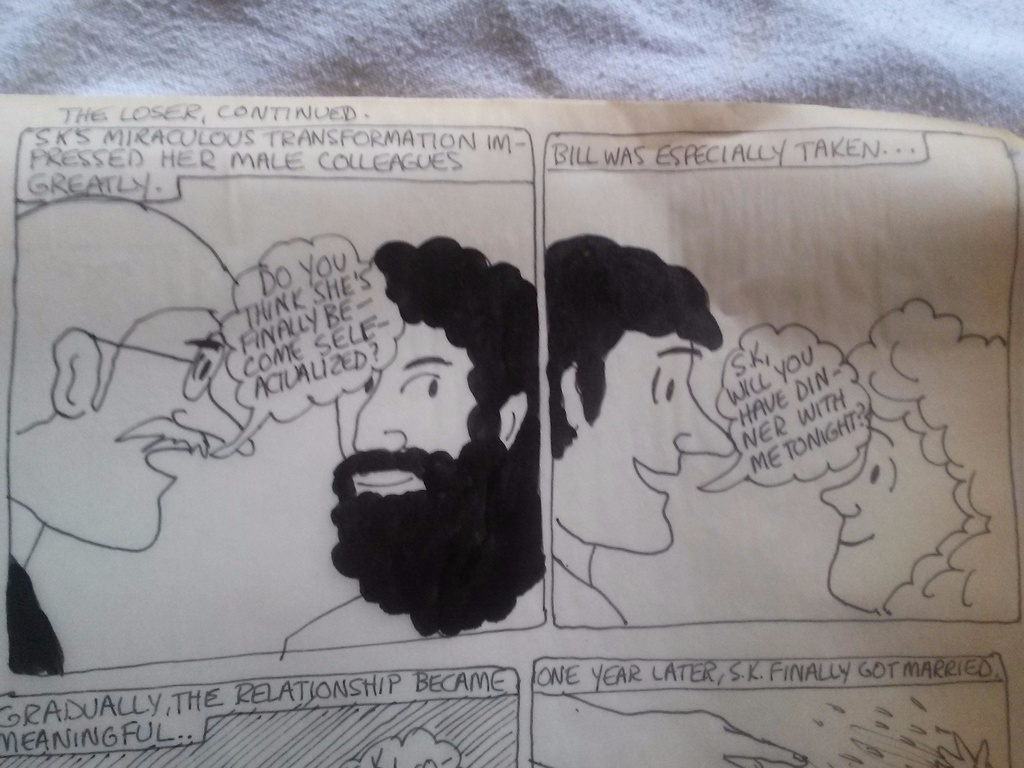
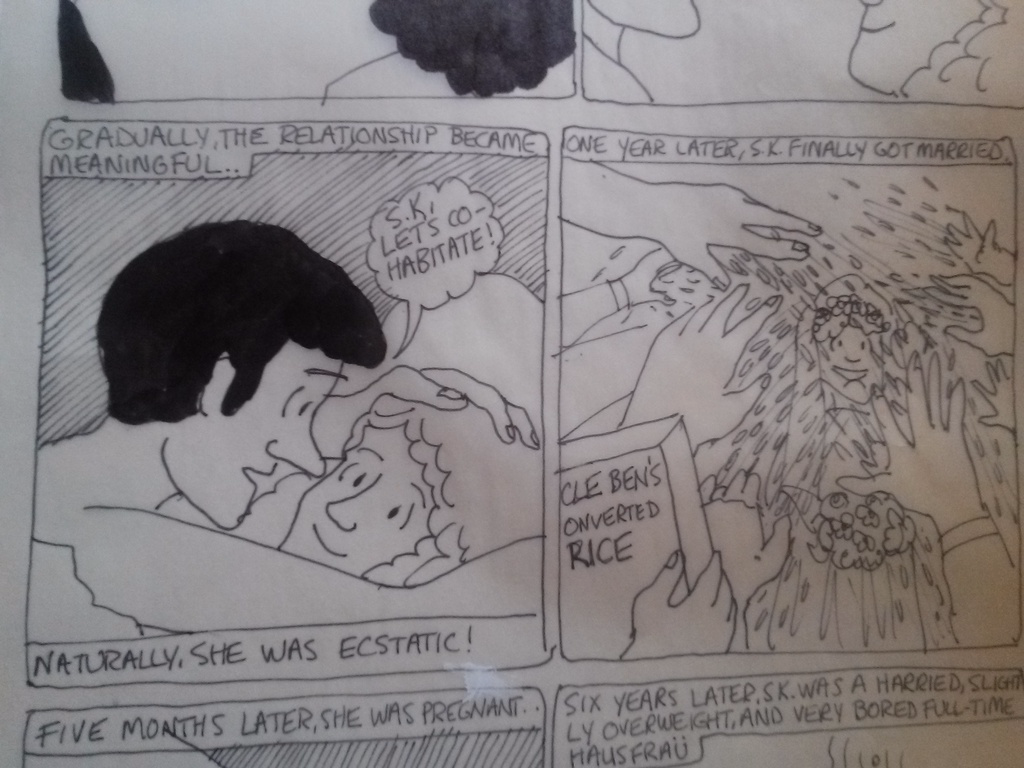
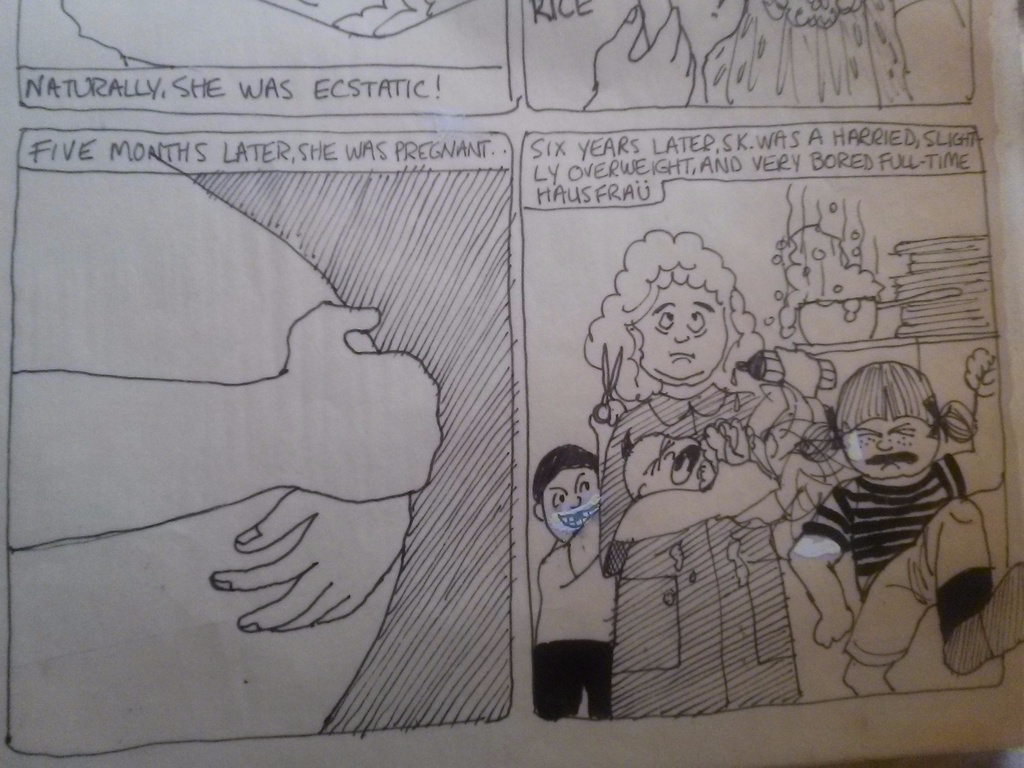
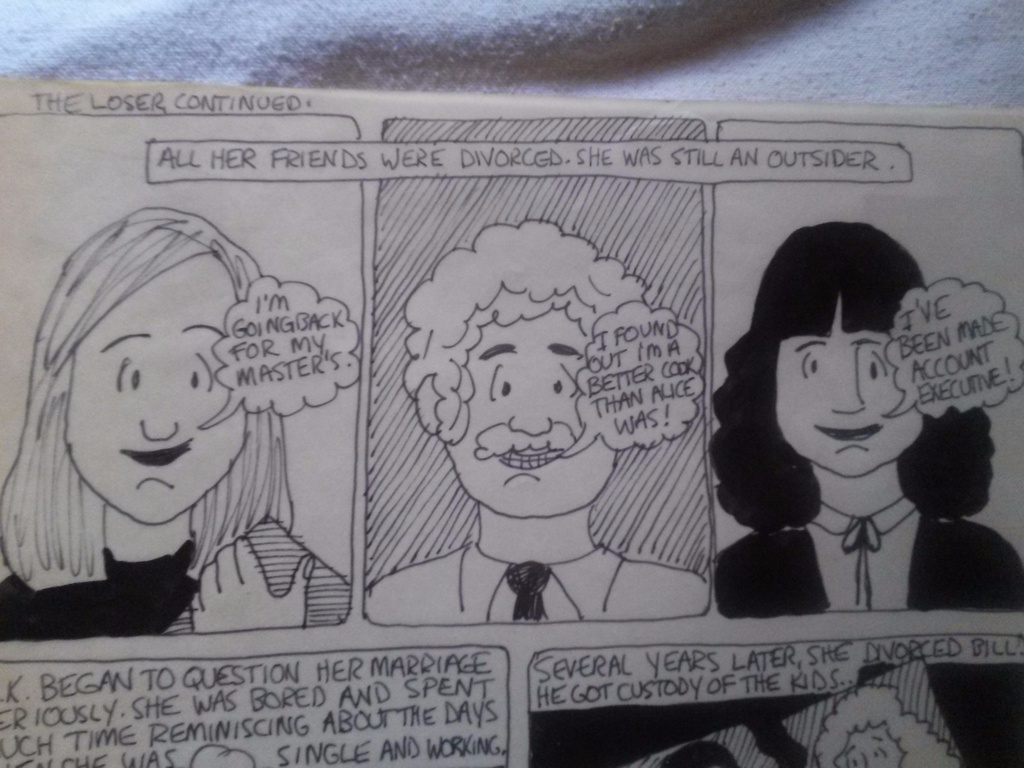
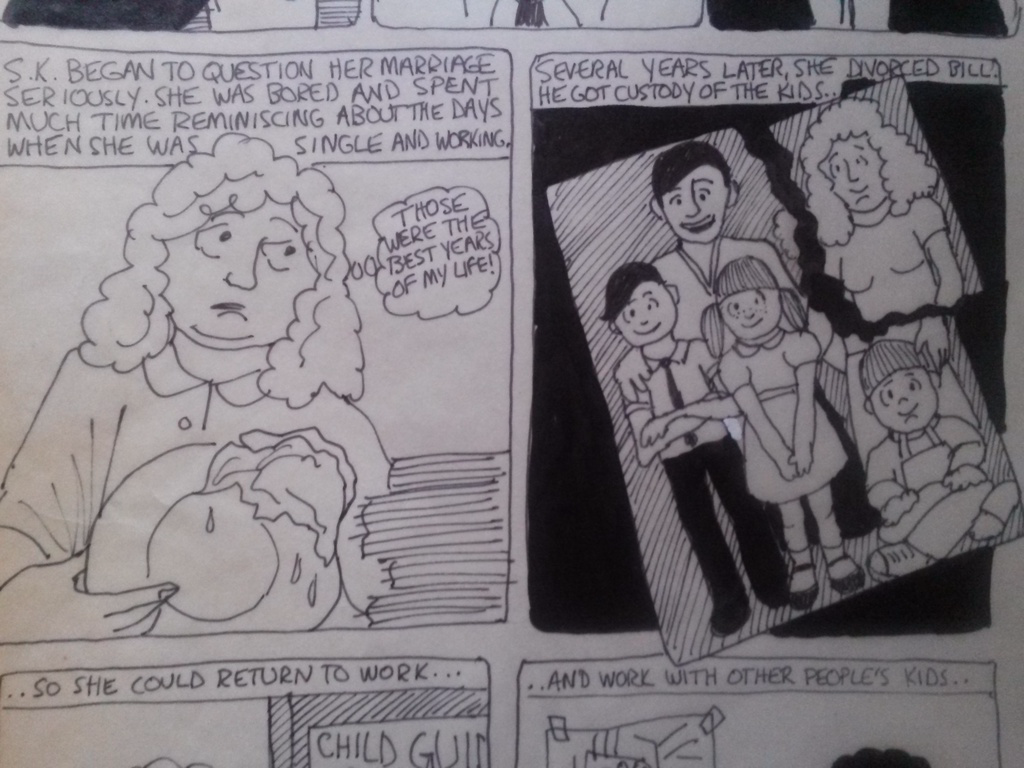
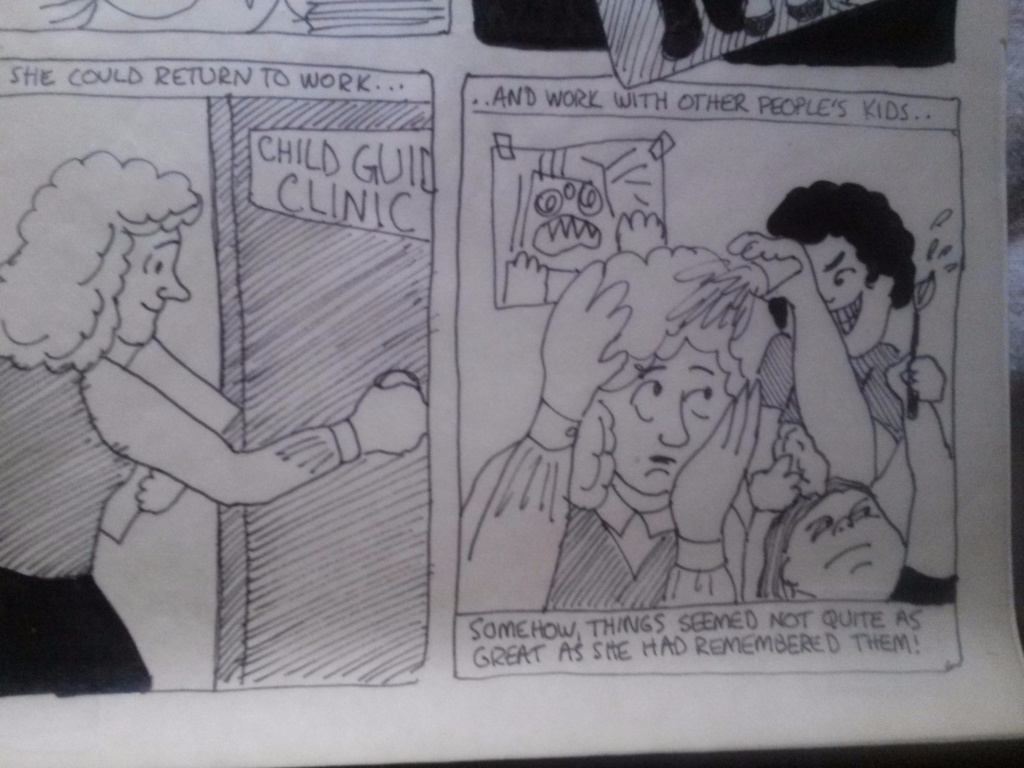
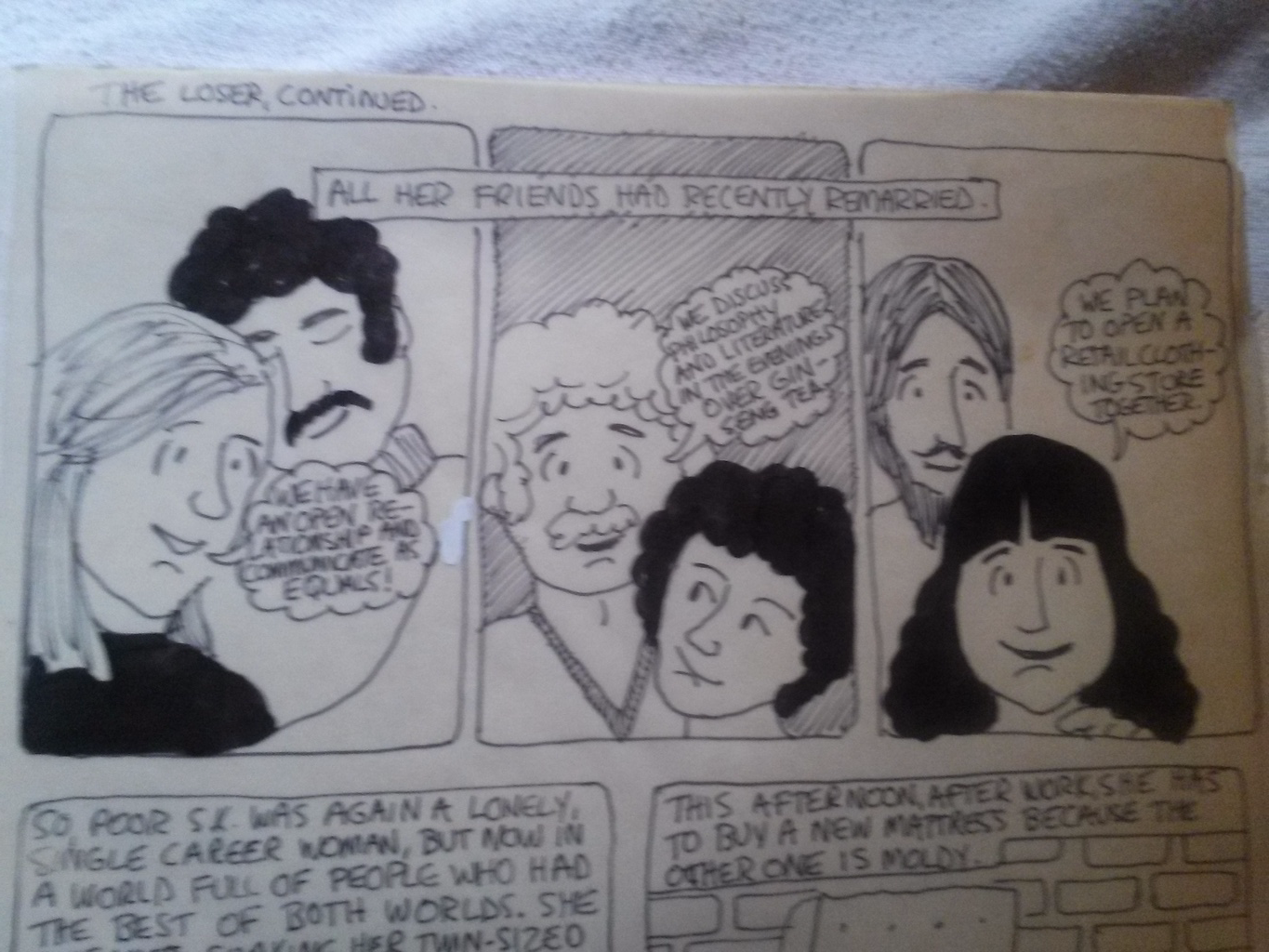
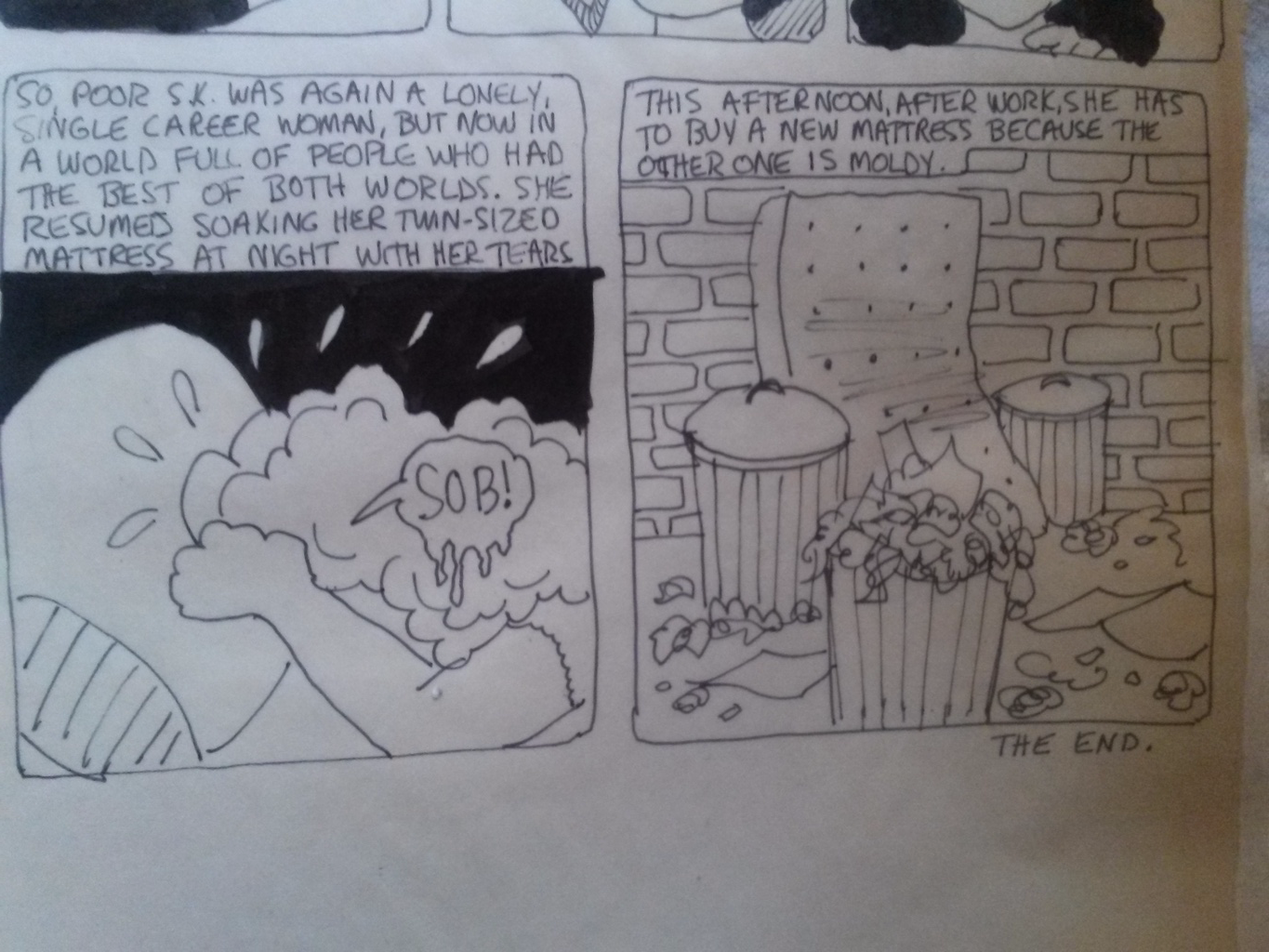
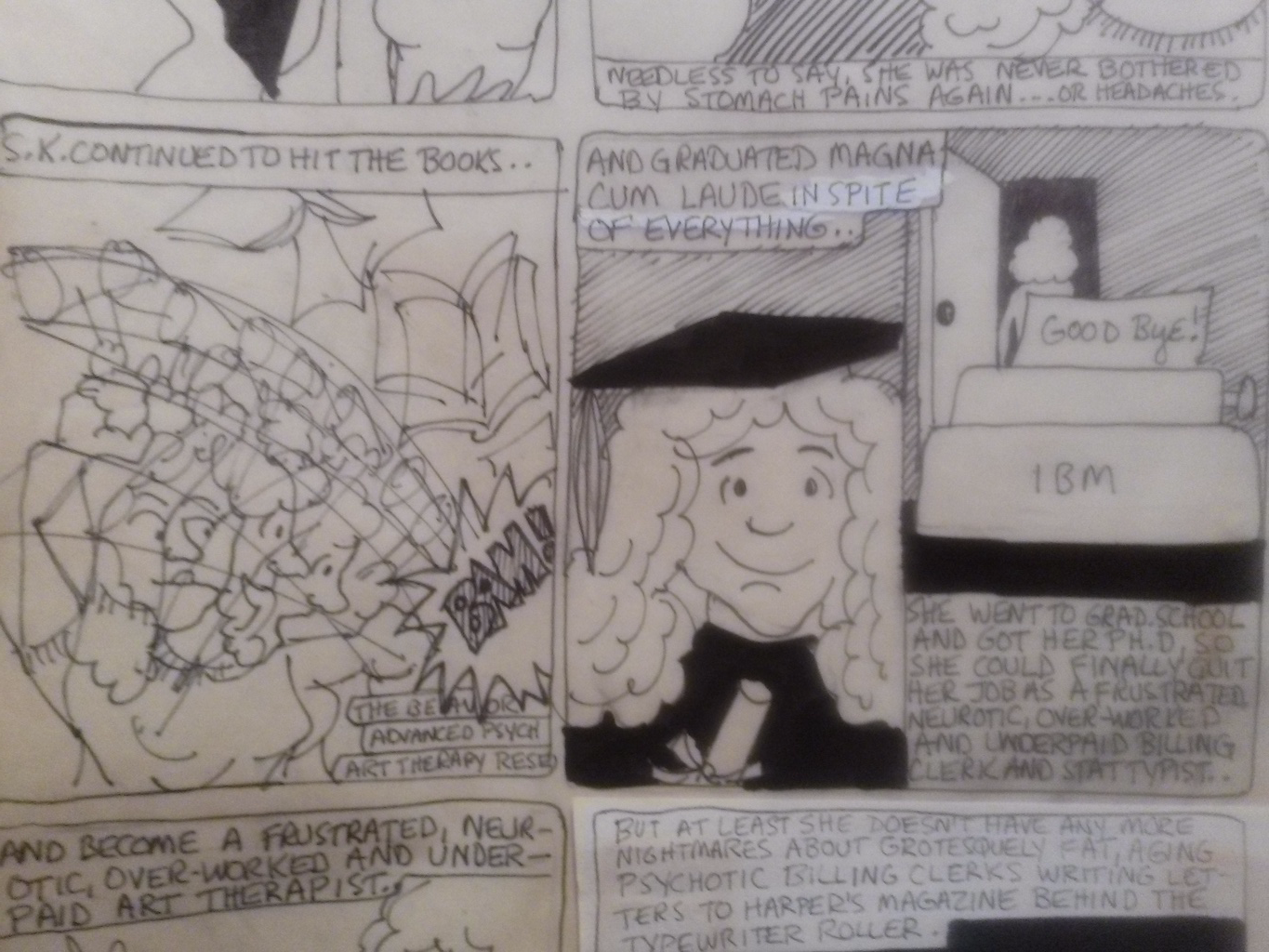
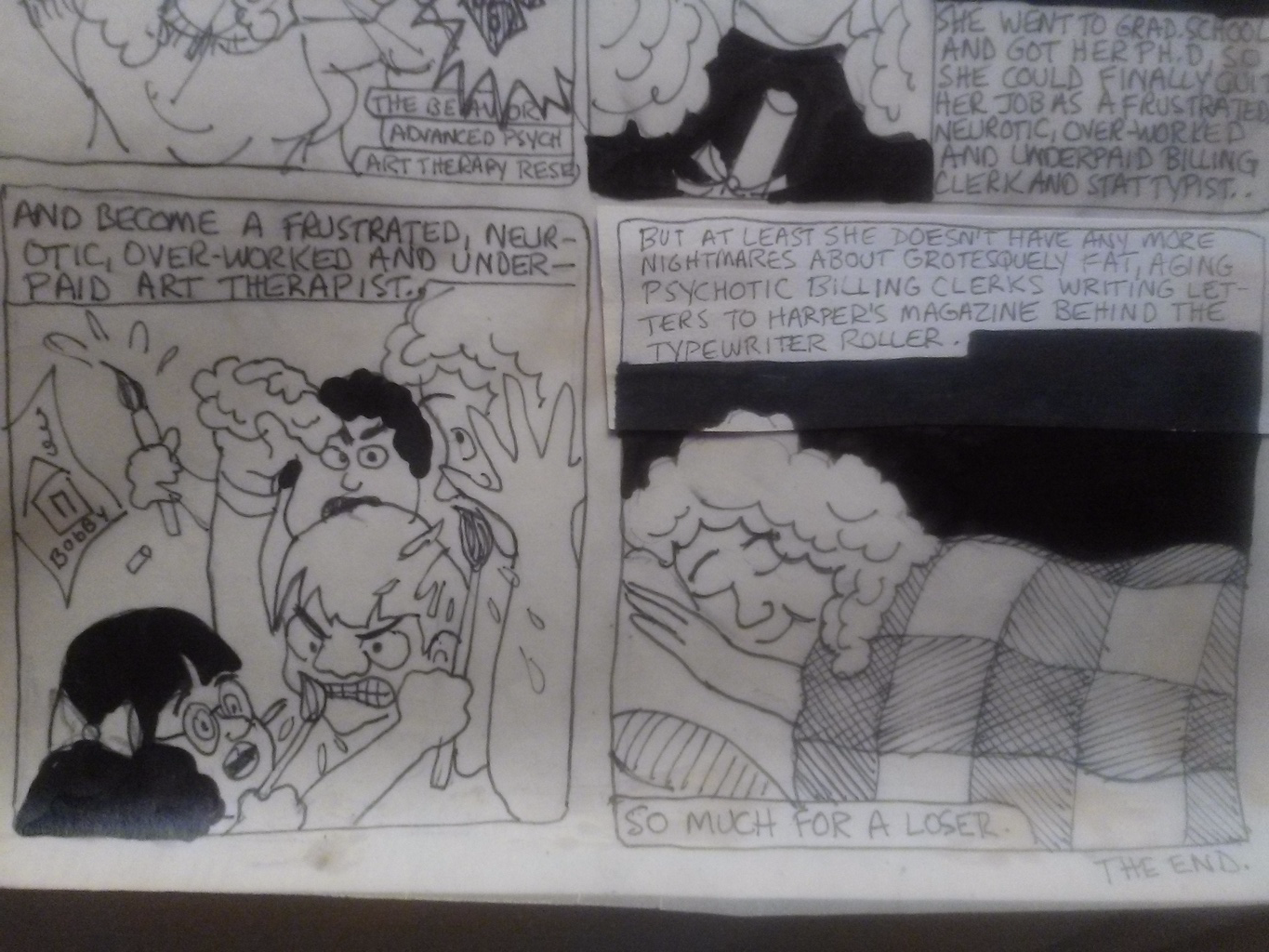
This second cartoon story (also drawn in 1981) describes the way I longed for a fulfilling romantic relationship, but at the same time was quite ambivalent about the prospect, not having had good role models with my own parents’ marriage, and living in a time where marriage and family were still looked upon as a second-rate occupation for women who were “losers”, i.e. couldn’t do anything else. And yet I still longed for that dream husband and family…

As it turned out, I didn’t marry until I was 27–5 years after I drew this cartoon. Of course, THAT relationship was far from ideal. In the mental state I was in (and already attracted to narcissistic men), I was right to be wary!

The first cartoon story can be seen here.

cartoon2_panel1

cartoon2_panel2

cartoon2_panel3

cartoon2_panel4

cartoon2_panel5

cartoon2_panel6

cartoon2_panel7

cartoon2_panel8

cartoon2_panel9

cartoon2_panel10

cartoon2_panel11

I really wish I would have continued this hobby…

Adventures of S.K. the “Loser”: cartoon diary of myself at age 22 (one of two)

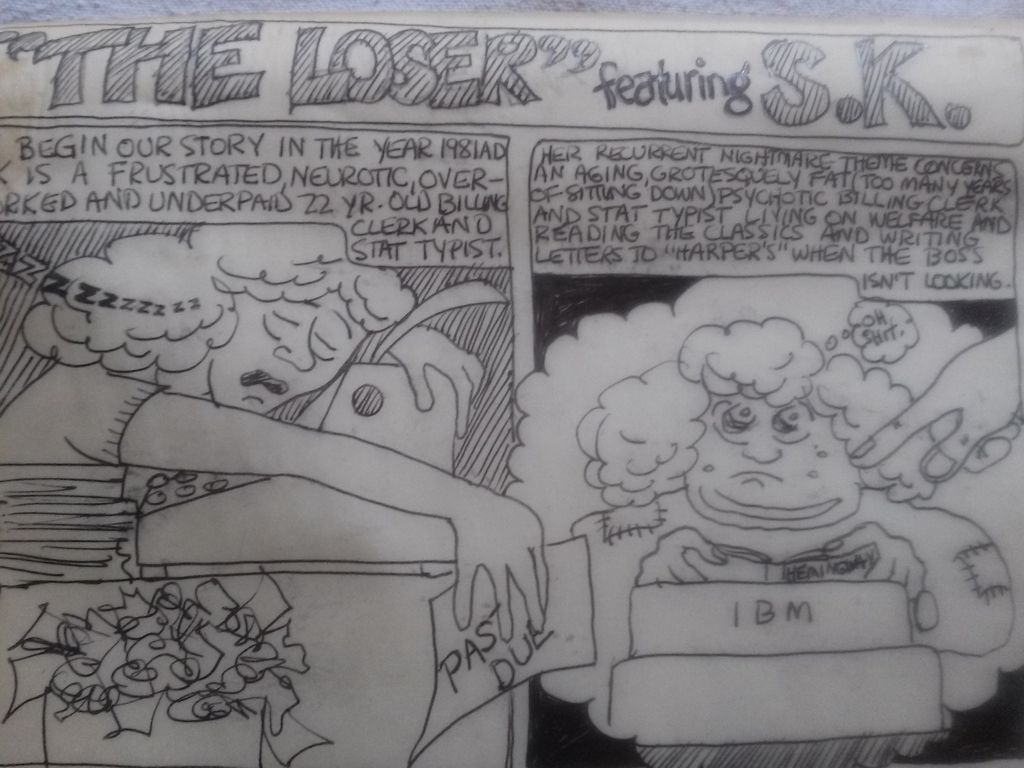
the_loser
Generally, what my state of mind was like back in the day.

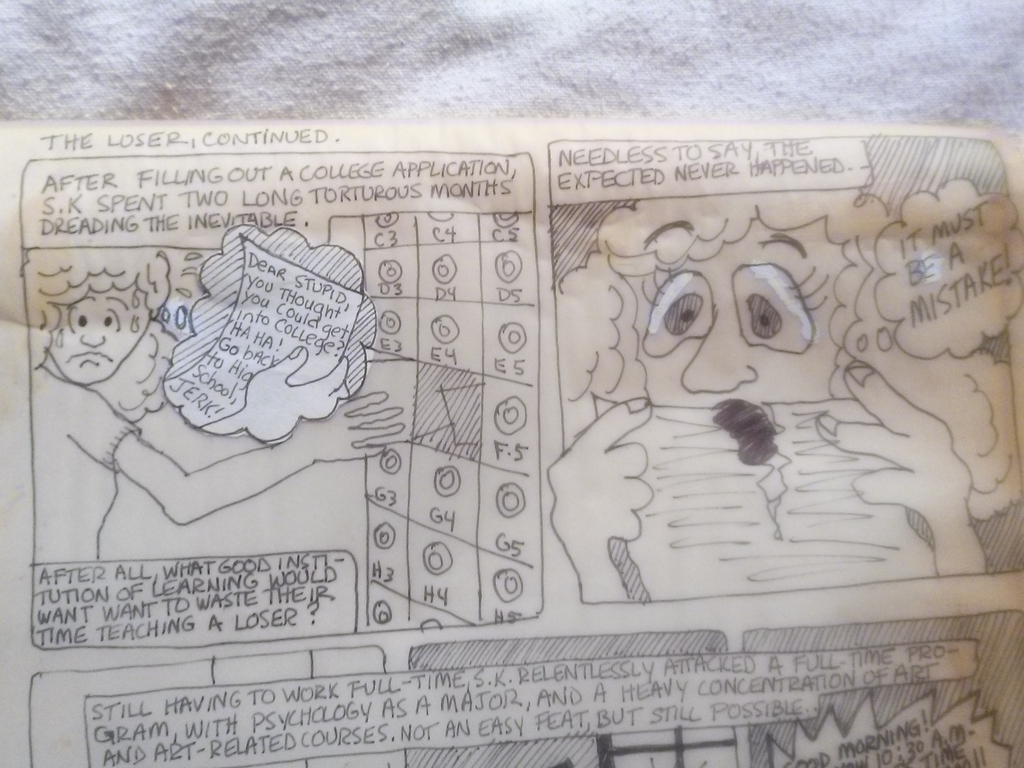
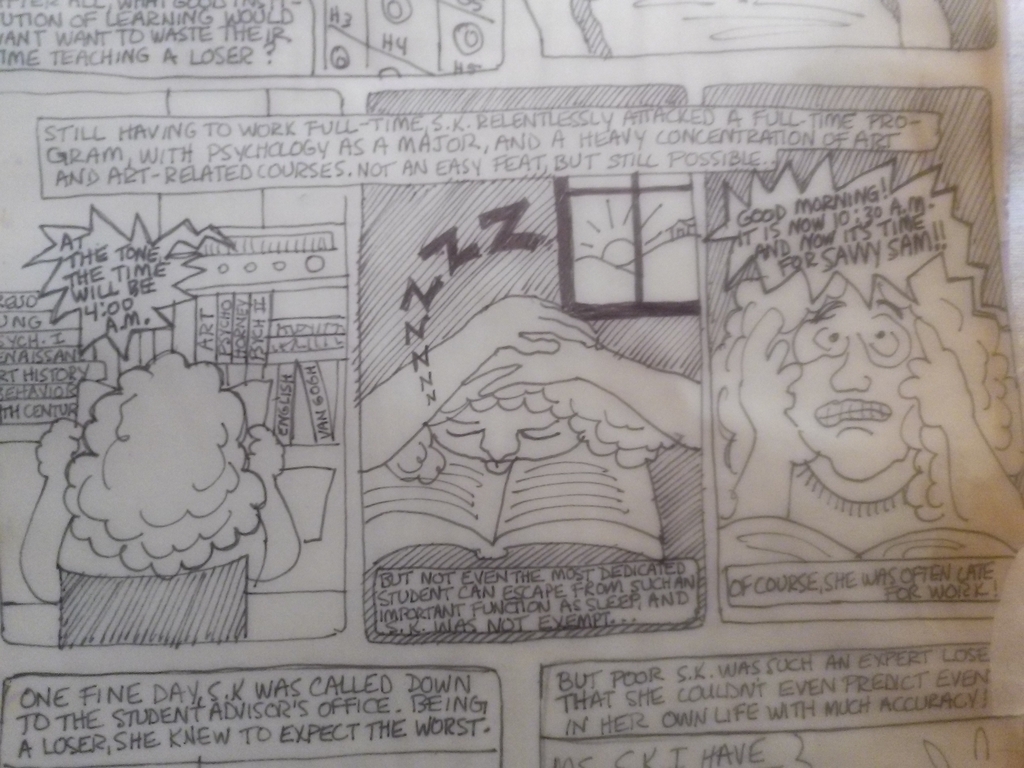
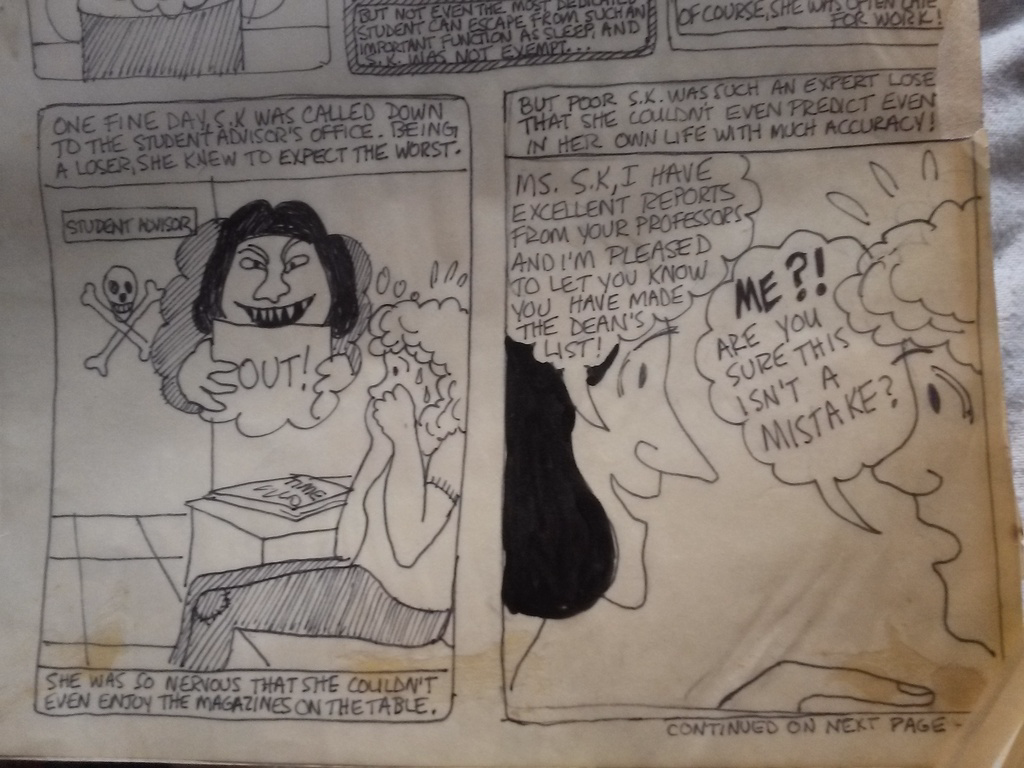
I found two cartoon stories I drew in 1981 that describe exactly where my head was at when I was 22–the same age my daughter is now.

At the time, I was juggling a full time job as a billing clerk (which I hated) with being a full-time college student. Believe me, even for a 22 year old, this wasn’t easy. I was a psychology major with a strong interest (minor) in art. I also liked to write, as I do now. At the time, I thought I might become an art therapist (which would have required people-skills and patience with others I simply did not possess).

But my real interests lay in romance–like most borderlines, I drifted from one intense romantic relationship to the next–and THAT will be described in the next set of cartoons, which I’ll post after these.

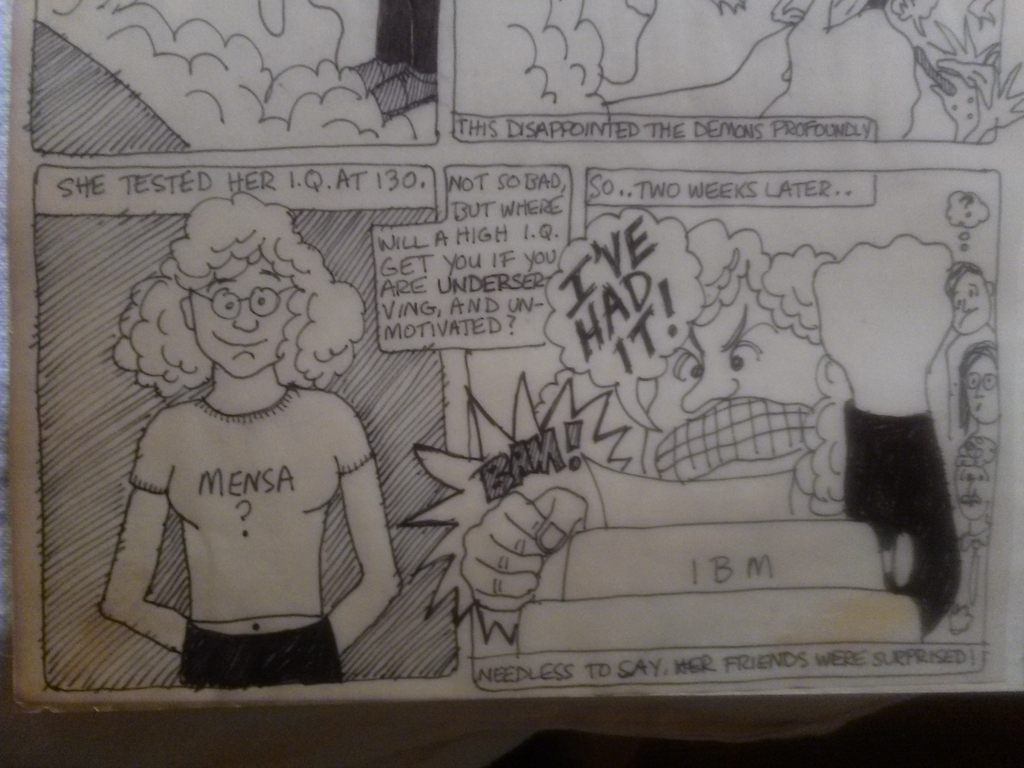
While a sense of humor about myself is evident in both these cartoons, my insecurity and unhappiness with myself and my overwhelming anxiety about my future (which didn’t turn out to be that great) could not have been more apparent. Of course, insecurity and identity issues are normal for anyone at age 22, but I think I was more consumed by my feelings of insecurity and lack of belonging than most. At the time, I had no idea about Aspergers or that I might be Borderline. I just thought of myself as a neurotic basketcase tormented by inner demons. I must have had some optimism however, as the outcome (at least in the first story) is generally hopeful.

It’s interesting that I referred to myself as “The Loser” but not too surprising given my background and low self esteem. “S.K.” were my actual initials. I wish I had drawn more of these. I only made two sets.

I hope these are readable; they are very old and the papers they were drawn on very large, so the print may be hard to read in some places. They are posted in order; PLEASE CLICK ON THE PANELS TO ENLARGE.

cartoon_panel1

cartoon_panel2

cartoon_panel3

cartoon_panel4

cartoon_panel5

cartoon_panel6

cartoon_panel7

cartoon_panel8

cartoon_panel9

ETA: I accidentally posted this publicly with only the first six panels; I’ve added the final three so the story should make more sense now.

Read the second cartoon story here.

Clearing up some misunderstandings about BPD.

borderline

There seems to be a lot of misunderstanding about borderline personality disorder. I’ve noticed many people seem to confuse it with narcissistic personality disorder (NPD). While there ARE some overlapping symptoms (and it’s even been speculated by a number of mental health professionals that BPD is actually a less severe form of NPD), they are quite different from each other. I’d like to clear up a few of these misunderstandings and discuss both the similarities and the differences.

New DSM Criteria for BPD.

According the the DSM-V (2013), these are the diagnostic criteria for BPD (the new list of criteria is quite long and ponderous so I will not attempt to talk about each of these points here):

A. Significant impairments in personality functioning manifest by:

1. Impairments in self functioning (a or b):

a. Identity: Markedly impoverished, poorly developed, or unstable self-image, often associated with excessive self-criticism; chronic feelings of emptiness; dissociative states under stress.

b. Self-direction: Instability in goals, aspirations, values, or career plans.

AND

2. Impairments in interpersonal functioning (a or b):

a. Empathy: Compromised ability to recognize the feelings and needs of others associated with interpersonal hypersensitivity (i.e., prone to feel slighted or insulted); perceptions of others selectively biased toward negative attributes or vulnerabilities.

b. Intimacy: Intense, unstable, and conflicted close relationships, marked by mistrust, neediness, and anxious preoccupation with real or imagined abandonment; close relationships often viewed in extremes of idealization and devaluation and alternating between over involvement and withdrawal.

B. Pathological personality traits in the following domains:

1. Negative Affectivity, characterized by:

a. Emotional lability: Unstable emotional experiences and frequent mood changes; emotions that are easily aroused, intense, and/or out of proportion to events and circumstances.

b. Anxiousness: Intense feelings of nervousness, tenseness, or panic, often in reaction to interpersonal stresses; worry about the negative effects of past unpleasant experiences and future negative possibilities; feeling fearful, apprehensive, or threatened by uncertainty; fears of falling apart or losing control.

c. Separation insecurity: Fears of rejection by – and/or separation from – significant others, associated with fears of excessive dependency and complete loss of autonomy.

d. Depressivity: Frequent feelings of being down, miserable, and/or hopeless; difficulty recovering from such moods; pessimism about the future; pervasive shame; feeling of inferior self-worth; thoughts of suicide and suicidal behavior.

2. Disinhibition, characterized by:

a. Impulsivity: Acting on the spur of the moment in response to immediate stimuli; acting on a momentary basis without a plan or consideration of outcomes; difficulty establishing or following plans; a sense of urgency and self-harming behavior under emotional distress.

b. Risk taking: Engagement in dangerous, risky, and potentially self-damaging activities, unnecessarily and without regard to consequences; lack of concern for one’s limitations and denial of the reality of personal danger.

3. Antagonism, characterized by:

a. Hostility: Persistent or frequent angry feelings; anger or irritability in response to minor slights and insults.

C. The impairments in personality functioning and the individual’s personality trait expression are relatively stable across time and consistent across situations.

D. The impairments in personality functioning and the individual’s personality trait expression are not better understood as normative for the individual’s developmental stage or socio-cultural environment.

E. The impairments in personality functioning and the individual’s personality trait expression are not solely due to the direct physiological effects of a substance (e.g., a drug of abuse, medication) or a general medical condition (e.g., severe head trauma).

Is it really true that Borderlines can’t feel empathy?

welcome_to_me_photo
BPD patient “Alice” (Kristen Wiig) in “Welcome to Me.”

The very first thing that stood out to me (and was not included in the older DSM criteria) is “lack of empathy.” Yes, it is a fact that many borderlines have difficulty feeling empathy under normal circumstances, but the reasons for this are vastly different than the lack of empathy seen in people with NPD.

Most people with BPD have the capacity to feel empathy, and can feel very guilty when they become aware (or it’s pointed out to them) that they have treated others badly, but because Borderlines have great difficulty regulating their emotional reactions and have an unfortunate tendency to lose themselves in their own drama when they perceive they are being attacked, at those times they can “forget” that others exist, and this can lead to them acting selfishly and disregarding the feelings of others. This can appear very narcissistic. It’s not that they CAN’T feel empathy though, because they certainly can. They can also feel remorseful. But it may take a disaster (such as losing a good friend or a broken relationship) for them to realize the damage their impulsive and selfish behavior has caused. If their bad behavior is pointed out to them by someone else–such as when the character Alice in the movie “Welcome to Me” loses her best friend Gina, who tells her how much she was hurt by Alice’s insults against her–they will feel remorse and try to make amends in whatever way they can.

Borderlines just want to be accepted.
wizard-of-oz2

Unlike narcissists, borderlines hate to be hated. Narcissists like any form of attention–negative or positive (and some even prefer to be hated!) while borderlines only want to be loved and thought of in a positive manner. Most of them WANT to be good people and WANT to be liked, but don’t always act in ways that make them seem very nice, due to their impulsivity and tendency to act out whatever emotions they are feeling at the moment.

Impulsivity is a primary issue with a borderline–a trait not shared by narcissists (but IS shared with people with ASPD)–because they fail to think ahead and consider consequences of their bad behavior.

Borderlines can act narcissistic because of their deep seated need to feel accepted. Most hate themselves (as do narcissists) and some can act grandiose and full of themselves in their attempts to be liked and admired. Deep inside, they feel worthless. It’s not hard to take down their braggadocio, however. Cut a borderline down to size and they may react with rage or tears (as will a narcissist) but are also more likely than a narcissist to admit you are right and they are really just worthless losers. They might even apologize profusely for acting so out of line.

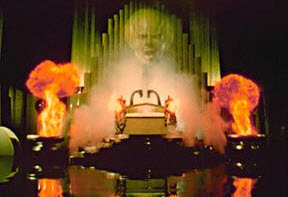
I can’t help but think of the Wizard in The Wizard of Oz. An insecure little man who stood behind a curtain projecting the face of a raging tyrant onto a huge screen. When Toto pulled back the curtain to reveal who the “Wizard” really was, and Dorothy upbraided him for being a “very bad man,” the Wizard immediately became humble and apologized profusely to the group, telling them that yes, he was just a humbug. Some people have said the Wizard was a narcissist, but I think his behavior was more typical of a borderline. A narcissist would have continued to insist on his superiority, even with his true nature having been revealed–and his true nature would not have been so benign. The Wizard’s intentions for Dorothy and her friends were also good.

While a narcissist may rage and perhaps even use tears (to manipulate others into feeling sorry for them), they will almost never admit their wrongdoing or admit they are anything other than God’s gift to the world. Doing so is far too dangerous to them.

Why Borderlines act selfishly.

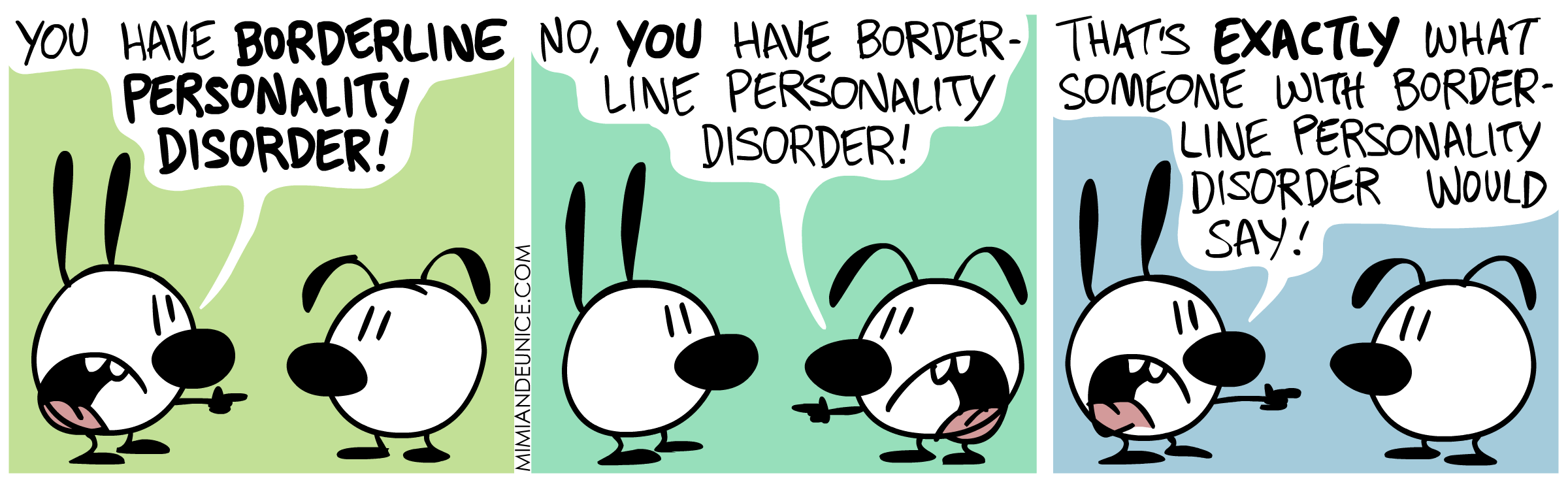
BPD_cartoon

A borderline who is not under stress or in the midst of an emotional drama, or has learned to control their impulses through behavioral training like DBT–dialectical behavior training which was developed by Marsha Linehan (it does work–I can attest to its efficacy), can certainly feel empathy for others, and can be genuinely good and kind people. Genuine kindness and concern for others is rare in a narcissist and almost unheard of in a malignant narcissist. Borderlines generally have this capacity, but unfortunately, if they haven’t learned to control or regulate their emotions, their ability to feel for others or show a conscience is eclipsed by their own drama, which at the moment becomes all-important. They really just don’t know what they are doing, but if you call them out or make them suffer consequences, in most cases they will try to make it up to you.

Borderlines don’t live a lie.

cluster_b

Borderlines do not wear masks, as narcissists do. They cannot pretend to be someone they are not (or if try to, they usually fail miserably, like the wizard in The Wizard of Oz). They are not trying to fool you, even though to avoid rejection, they can be manipulative and use some of the same games (gaslighting, blame-shifting, rages, etc) that narcissists do. Borderlines, if anything, show TOO MUCH of themselves–and that includes the bad along with the good. With a borderline, it’s all WYSIWYG. They can’t wear a mask, because they lack the ability to plan things out ahead of time the way someone with NPD does. Wearing masks requires cunning and the ability to lie. While borderlines can and do lie (usually to exaggerate the pain they are facing or to idealize/devalue someone else), they can’t lie about who they are or what they’re feeling. In that sense, they’re even more honest than the average non-disordered person.

Idealization/devaluation in borderlines and narcissists.
hashtag_borderline

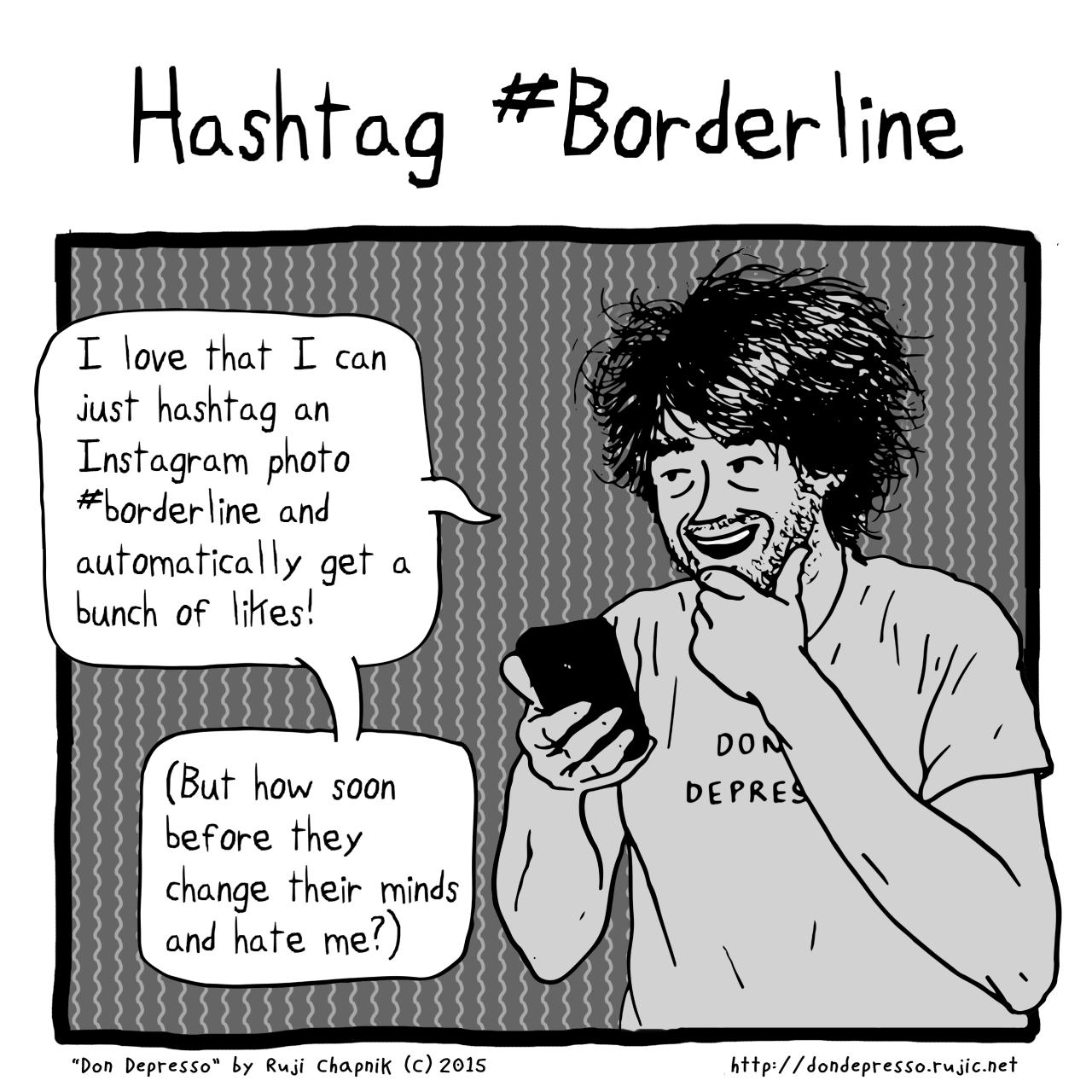
Both narcissists and borderlines do tend to idealize and devalue other people, and both are guilty of black-or-white thinking. But the motives for this behavior are different. A narcissist idealizes someone they see as a good source of narcissistic supply. They do not see the source of supply as a person, but will put them on a pedestal as long as they’re providing enough supply. Should the victim stop providing supply (or the narcissist just becomes bored and needs a new source of supply), the narcissist devalues and discards the victim, without mercy or regret.

Most borderlines idealize and devalue others based on their need for acceptance and love, not the need for supply. If they perceive another person as good and kind, and accepting of them, they will tend to idealize the person and sometimes become clingy and needy (a narcissist can be clingy and needy too, but for different reasons). If the borderline feels the other person losing interest or pulling away from them, they may suddenly, without warning, devalue the other person and reject them. They do this not to be mean, but to avoid being rejected themselves. This explains the “I hate you…don’t leave me” or “come closer…go away” behaviors many borderlines show. It’s confusing and contradictory to others, but it helps them to avoid the inevitable rejection they believe is coming to them. Borderlines live in constant fear of being rejected; narcissists live in constant fear being ignored–losing their “drug” of narcissistic supply. While their behaviors may seem similar on the surface, the motives behind them are quite different.

A borderline is not usually deliberately malicious or sadistic. It’s not their intention to hurt others or cause them misery, even though they unintentionally do it all the time because they have so much trouble controlling their impulses. They usually are not even aware how much their unpredictable and contradictory behavior is confusing or hurting others. If a borderline is made aware of what they are doing, they are far more likely to seek therapy than a narcissist, because someone with BPD wants more than anything to be loved and accepted. A narcissist just doesn’t care what you think of them, as long as you are paying attention to them. Of course, there are some low-mid spectrum narcissists who have enough self awareness and hate the fact they can’t feel the more sublime emotions (love, empathy, joy) of a normal person, and those few may actually seek help too.

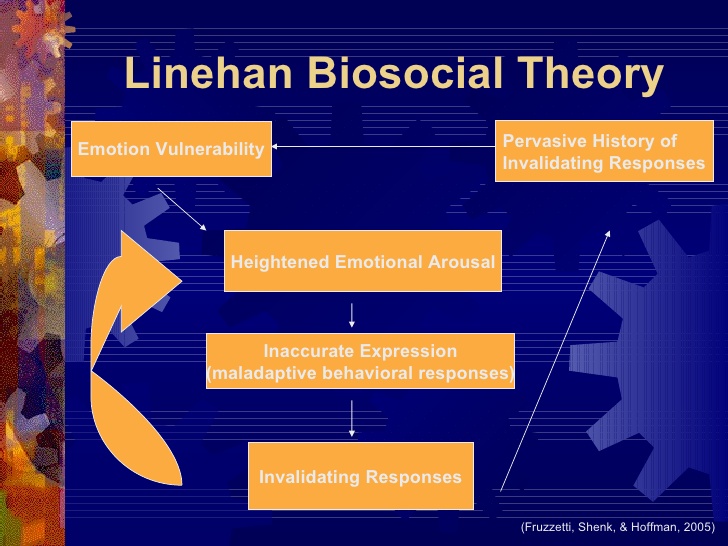
BPD is maladaptive to the victim.
linehan_biosocial
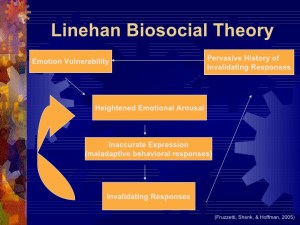
Marsha Linehan’s diagram that shows why BPD doesn’t work well for the sufferer. (click to enlarge)

Borderline personality disorder is ego-dystonic: that is, it isn’t adaptive to the sufferer and their behaviors cause them as much or more misery than it causes others. People with any ego-dystonic disorder or mental illness–depression, anxiety, phobias, certain personality disorders such as Avoidant, Borderline or Dependent–are more likely to seek treatment because they aren’t happy with the way they behave and feel. They don’t necessarily blame others for their own misery, the way a narcissist will do.

Borderlines are also far more likely than narcissists to engage in suicidal ideation or even attempt suicide when they become depressed. They are self-destructive and more dangerous to themslves than others. A narcissist is not as likely to consider or attempt suicide, but if they do, they are more likely to attempt to “take you with them.”

Narcissistic personality disorder is ego-syntonic: that is, it usually is adaptive to the sufferer and in most cases their bad behaviors don’t bother them at all (they don’t care how you feel), they only bother others. This is why narcissists are so unlikely to seek treatment, unless they have lost their sources of supply and are undergoing severe depression (narcissistic crisis). Narcissists are miserable people, but they are far more likely than borderlines to blame others for their own misery.

Both disorders are included under the Cluster B category of personality disorders because both involve a malfunction of emotional regulation. In a narcissist, emotion is strong but is hidden and masked; in a borderline, emotion is strong but cannot be hidden or regulated at all. Both disorders cause others misery, but a narcissist lives a lie; a borderline generally does not.

BPD as a defense mechanism that arises in early childhood.

scared_child

Both NPD and BPD (and all Cluster B disorders) arise out of childhood from early attachment disorders with caregivers. Both are desperate attempts not to be hurt anymore and have their origins in abuse or neglect as young children. Most narcissists and borderlines were abuse victims as children. Both narcissists and borderlines are incredibly sensitive–so much so, they have constructed almost intractible defense mechanisms to avoid further pain and hurt. Unfortunately for the borderline, their defense mechanism of overreaction to everything is maladaptive and hurts them more than they can hurt anyone else. But due to this, they are far more likely to seek treatment.

Upcoming Post:
Later on, I plan to post an article about Marsha Linehan’s DBT and other therapies for people suffering from Borderline Personality Disorder. (They are similar to the methods used for people with NPD).

I am not your dream.

noones_dream

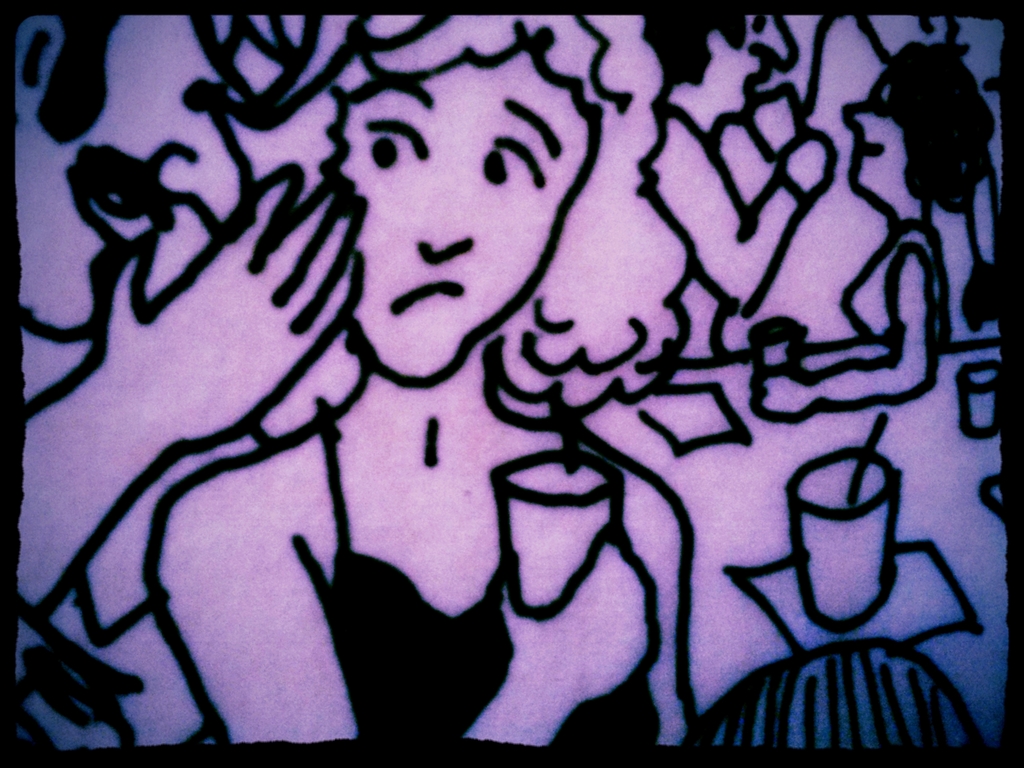
From the Facebook page Narcissistic and Emotional Abuse.

The first flea bite :/

cat-flea
You’re disgusting. I hate you.

I have a telltale red itchy spot on my ankle. It’s the first one of the season.
I know what it is.

It’s a fucking flea bite. The first of about 1000 flea bites that I will continue to get until around October. By that time my lower legs, ankles and even a small area at the front of my stomach will be red, sore, oozing and unbearably itchy.

I am highly allergic to flea bites. I have 4 cats, and 3 of them go outside. I can’t keep them indoors, and no matter how many flea baths I give them, no matter how many flea collars I put on them, no matter how much off-brand flea treatment I massage into their fur (I can’t afford Frontline or Advantage), the fleas will stay. They will lay their disgusting eggs in my cats’ fur and my own skin. They will suck our blood like little vampires. They will burrow into my rugs and crawl in and out through the weave of my bedding. No matter how much I spray, flea-bomb, vacuum, and carpet-powder my house to kill the little fuckers, they will not go away. They never do.

By the end of the summer, I will, as always, look like I have a deadly contagious skin disease. Fleas love my blood for some reason. They never go after anyone else the way they go after me. I can’t wear shorts in the summer because my legs look like raw slabs of hamburger meat. I might scare people away. They might think I’m a leper.

Why do fleas exist? What evolutionary purpose do they have? Even maggots, disgusting as they are, at least break down dead meat into its basic elements. What do fleas do? They suck blood and make everyone miserable. They have. no. purpose. at. all.

You can’t swat them like a fly either. You can’t squish them like a cockroach. They don’t die. I have picked them up and tried to squeeze them to death by rolling them between my fingers, and THEY DON’T DIE. THEY JUMP AWAY.

It’s the only thing about summer I really hate. The damn fleas.

Maybe I should start a flea circus. At least that would put them to work.

My son’s father turned from a loving dad into a monster.

ian_9months
My son at about 9 months. His dad doted on him then.

Turning on a child who was initially loved and doted on is not unusual for malignant narcissist parents. If the child proves to be sensitive, highly intelligent, or can see through the parent’s agenda, they may find themselves suddenly turned into scapegoats. Betrayal of a child means nothing to a narcissistic parent. The child was never a child even before the betrayal, just supply.

My son (who I’ve been calling Ethan on this blog but that is not his real name) was born in October 1991 and initially was very much wanted by his father. During his infancy his father appeared to love him very much and it wasn’t unusual to find my beautiful little boy snuggled up against his dad’s chest. Though Michael (also not his real name) was showing signs of the abuser he would soon become, the abuse was directed at me, and didn’t happen often enough in those days that I was that concerned.

By the time Ethan was 3 or 4 he was showing signs of being a highly sensitive (and very creative) child. He cried frequently and was given to tantrums when he sensed discord, anger or chaos around him. He was always very sensitive to his environment and didn’t react well to everyone and he hated change. He still remembers himself as being an extremely nervous child, but those nerves were due to his high sensitivity. I was much the same way when I was his age. I could always identify with my son.

I remember when he was two, when we were moving from New Jersey to North Carolina. Because we didn’t have a lot of money for a long distance mover, we moved most of our stuff (except large pieces of furniture) in a U-Haul and a car over five separate trips. During the time the house was being slowly emptied, Ethan began to act very strange. He stopped eating, looked pale and his eyes looked too big for his face. He hadn’t really started talking much yet, but did this strange “parroting”–he’d repeat “Hi Mommy! Hi Daddy!” over and over, in a strange high pitched voice. It was creepy. His doctor said not to worry, but he just wasn’t himself. Then it finally dawned on me: a very young child sees things disappearing and doesn’t understand why (he hadn’t come on the moving trips to see where the things were going). His two year old mind deduced that eventually his parents and baby sister would disappear too, leaving him alone, so the nervous parroting of “Hi Mommy, Hi Daddy,” was to make sure we were still there and weren’t going to leave him. To a sensitive child like Ethan who hated change as much as he did, watching the things in his environment disappear must have been traumatic for him. I asked him about this recently and he still remembers it. He told me my suspicions had been correct. He was afraid we would disappear!

ian_age3
Third birthday. He received a cake with a blue toy car on it.

Michael saw this high sensitivity as soon as it became apparent, and suddenly his affection toward his son came to a screeching halt. He began to pick on and belittle him, calling him names such as stupid, idiot, “faggy,” pussy, baby, and loser. As young as Ethan was, I could see how his self esteem was already taking a beating. Soon he became nervous and awkward around his father but of course this just fed the abuse.

Soon Michael began to physically abuse Ethan, spanking him almost every day just for being who he was. Whenever I criticized or questioned Michael about why he was treating Ethan this way, he just said he was trying to “toughen him up.” (this from a man who called himself a feminist–go figure that one out!) I told him his aggressive behaviors toward Ethan to “man him up” were not working because Ethan wasn’t built that way, and besides they were very unloving. I told him I was afraid Ethan would think his father hated him, but of course my concerns were dismissed and I was called wrong, stupid or crazy. We had many fights about this, but the abuse never stopped. In fact it kept growing worse.

Michael constantly made fun of Ethan, imitating his speech, his walk, his awkwardness. Ethan was bullied at school for a time, just as I was, and my heart broke for him. I loved my son so much, and couldn’t bear to see the way his father treated him.

ian_age8
Ethan at about age 8, around the time his father destroyed his car collection.

The incident that I remember with the most anguish occurred when Ethan was about 8. He had a collection of about 15 or 20 collectible cars his grandfather had given him over several years and Ethan was very proud of them. He displayed them on a 5-tiered shelf in his room. One evening Michael came raging into his room for one reason or another (he was often drunk and some of his rages seemed to be caused by nothing) and knocked over the stand, sending all the beautiful and expensive replicas crashing to the floor. All of them were destroyed beyond repair. Ethan burst into tears and begged him to stop, but Michael was relentless and began pounding on him, calling him a stupid faggot crybaby, and demanding to know why he couldn’t “man up.” I was in the room at the time, desperately trying to push him away from Ethan but to no avail, because Michael was much stronger than me, and by then I was myself afraid of his rages.

This incident haunts me to this day. It’s hard for me to think of it without my heart breaking, because of how painful it was to see my brilliant, creative, sensitive little boy’s car collection destroyed for absolutely no reason at all — and my son’s self esteem taking such a beating from the man who had once seemed to love him so much during his first few years.

Fortunately, Ethan was always much stronger than he seemed, and smart too. He chose to live with me after we divorced instead of his father. Kung Fu lessons paid for by my father (which he stuck with for 3 years and got as far as brown belt) and an Outward Bound expedition for his 8th grade trip began to change him and help him rebuild his self esteem.

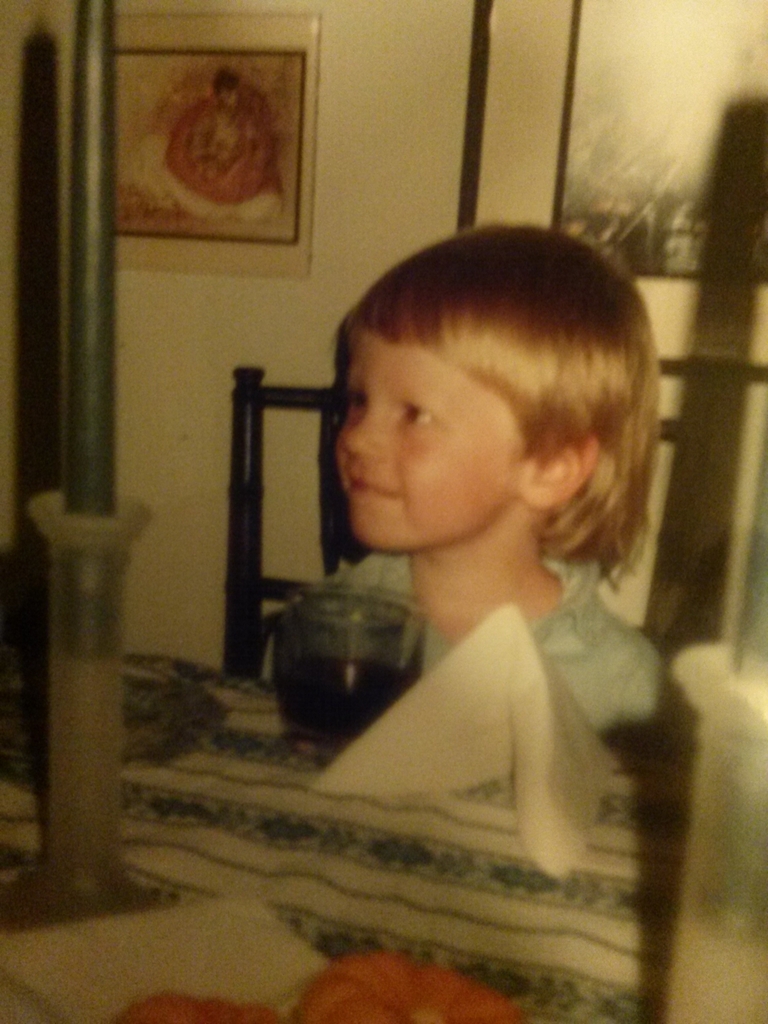
ian_age15
Age 15.

He came out as gay at age 17, and since then has become a happy and well liked young man with many interests and talents who is making good choices in life. (He also chose to live hundreds of miles away from the family but I can’t say I blame him for that). While it’s sad he lives so far away, I’m happy that he’s happy now and that after everything he went through, he may be the most mentally stable member of the immediate family. He is the only one of us who doesn’t appear to have a personality disorder.

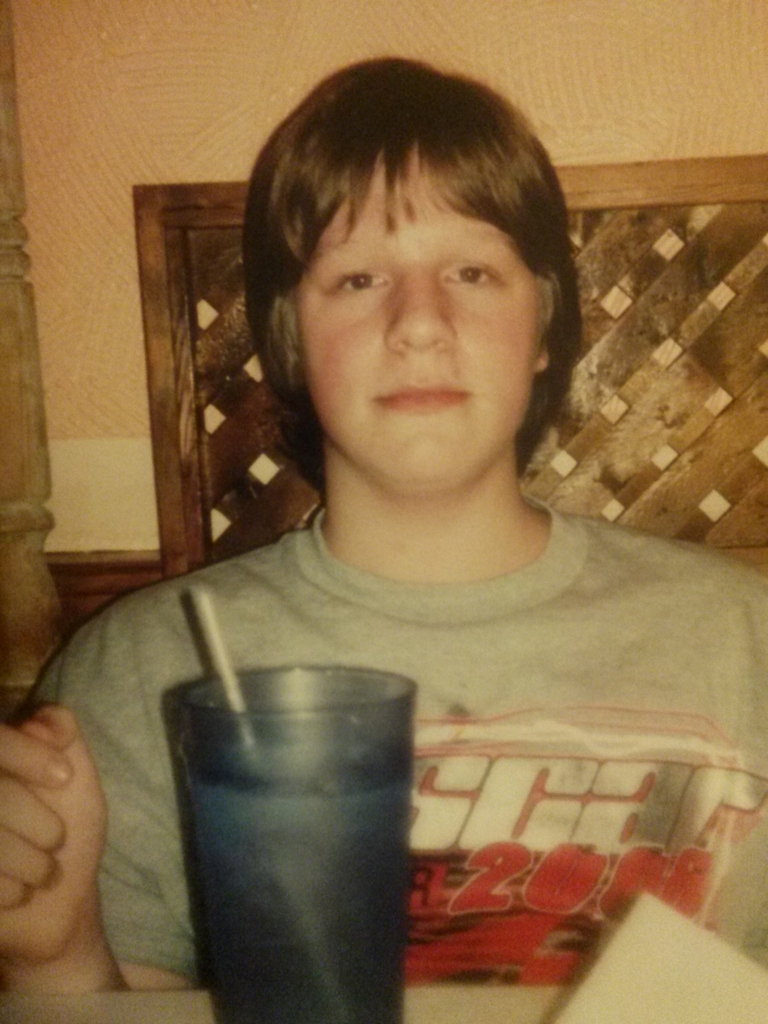
ian_age23
Today at age 23, living on the Gulf Coast of Florida.

Not all children who were turned on and scapegoated by a malignant narcissist parent were so lucky. Many were psychologically destroyed or even killed. Ethan was one of the lucky ones.

See also:
My Son Didn’t Escape Unscathed: https://luckyottershaven.com/2015/05/11/my-son-didnt-escape-unscathed/
My MN Ex’s Weird Attitude to His Son: https://luckyottershaven.com/2015/02/24/my-mn-exs-weird-attitude-to-his-son/

Holy fettucini! Has this article gone VIRAL?

shocked_face

What the f*ck? 😮

Seriously, what the actual f*ck?

I noticed my views were WAY up, and opened my stats page to see what was going on.
Here is what I saw.

what_the-fck

On investigation, it has something to do with this very old article I posted back in early October, which seems to be going VIRAL?!?
A Match Made in Hell: Narcissists and HSPs.

I just looked. 518 Facebook shares. WHAT??????
I refreshed — now it’s 523.

I can’t even wrap my brain around this.
But whoever made this go viral, thank you so very much! It made my day.

ETA: Total views for today (my clock is off 4 hours): 2,123! I’ve never even come CLOSE to that!

“Welcome to Me”–a darkly humorous look at borderline personality disorder

welcome-to-me

I’ve been wanting to post a movie review (which I haven’t done in a while), and also something about borderline personality disorder. How serendipitous that the “chick flick” my daughter and I decided to see this afternoon is a movie about a woman who has borderline personality disorder! I had no idea! It’s a good movie (and it’s directed by Will Farrell, who I love).
Here is my review of it.

Alice Klieg (Kristen Wiig) is a 40ish divorced woman who lives off the disability benefits she gets for her severe case of borderline personality disorder, which keeps her nearly unable to function normally due to severe depressions, self-destructive behavior, and general inability to regulate her emotions. Alice is quirky–obsessed with Oprah, hasn’t turned off her television in 11 years, and she’s addicted to buying lottery tickets. Her psychiatrist, Dr. Moffatt (Tim Robbins), is nearly at his wit’s end with Alice’s erratic mood swings, uncooperative behavior, and refusal to take her medications (prescribed to help regulate her moods). She has stopped taking her Abilify, and right after that the impossible happens–she wins 86 million dollars in the California State Lottery.

That’s when things get really crazy. A series of events leads up to Alice demanding her own show in the same vein as her idol Oprah. She acts crazy enough the television producers don’t take her seriously, until she writes them a check for 15 million dollars. The show, “Welcome to Me,” is on, and of course it’s all about Alice.

On her show, she demands a swan float to transport her onstage at the beginning of each episode, diva treatment, and she throws tantrums when things don’t go her way. She drives everyone around her crazy. But people are watching because they never know what poor crazy Alice will do next, and the show’s bringing the studio money so they can’t cancel it.

Alice decides she wants to re-enact scenes from her own life, using sets that are exact replicas of the places where they occurred. Actors are hired to play the roles, but Alice is never satisfied. She screams, yells, verbally attacks everyone (and then wonders why they pull away), and constantly cries on set. No one knows what to do with this apparently insane woman who can’t seem to control her impulses and emotions.

On the live show, Alice dresses in ridiculous, over the top attire, insists on singing the theme song herself (she can’t carry a note), bakes a meat cake with sweet potato frosting and spends most of the show sitting there eating it, neuters dogs onset (she used to work as a vet nurse), and throws a lot of temper tantrums. She’s also sexually promiscuous.

Things keep getting worse, and she alienates her long-time friend Gina (Linda Cardellini) by depicting her as fat in one of the sketches. Other people from Alice’s past who were insulted by the re-enactments (where even their real names were used) decide to sue the television studio.

Alice’s unpredictable, out of control and untrustworthy behaviors also anger Dr. Moffatt, who fires her as his patient and tells her point blank, “I think you’re dangerous.” In typical Borderline fashion, Alice cries and pleads with him, “don’t leave me!”

It takes a near-disaster for Alice to realize her out of control behaviors are eclipsing any ability she has to care about others and be a true friend to others. She’ll have a lot of amend-making to do if her broken relationships are ever to be repaired. Will it be possible for her to fix what she has destroyed or to ever really care about others? I won’t answer that here: you’ll have to see the movie for yourself.

I noticed some interesting parallels between BPD and NPD in this movie. Alice is quite narcissistic, grandiose, completely self-centered, and totally oblivious to the needs of others. But there’s something charming and quirky about her too. She’s never deliberately malicious–she’s impulsive and selfish and her obliviousness keeps getting her into all kinds of trouble. What keeps Alice from being a narcissist is that she actually has a conscience and the ability to feel badly when she realizes she has hurt so many people.

Kirsten Wiig is convincing as a severely Borderline patient, but while she can be funny, her insane behavior made me squirm in embarrassment. She’s uncomfortable and awkward to watch, but that can be the case in a BPD patient who’s completely out of control of their impulses and emotions.

I recommend this movie to anyone interested in Cluster B disorders, especially BPD, and how it can create disaster not only for the people their lives touch, but for themselves. Unlike NPD, there is nothing adaptive about borderline personality disorder to its sufferers.

End of the day.

Driving home today from a nice day with my daughter at the movies (and doing the mom thing–helping her clean her apartment), I was taken by how beautiful the sunset was, so I took these two photos.

carolina_sunset1

carolina_sunset2
Click to enlarge photos.

I love the Internet.

oh_internet

The Internet is a wonderful and terrible thing. It opens doors and slams them shut. It builds up and destroys. It educates and dumbs down. It lies and tells the truth. It’s a balance of dark and light, good and evil, alpha and omega. Cyberspace is a parallel universe that opens up when you touch your keyboard.

The Internet is a free-for-all. Anything can happen. It’s always evolving, always changing…for better or worse, you never know. And it’s still mostly free.

Oh, and there’s plenty of cats too.

internet_cats

I always thought of the Internet as comparable to being set loose in New York City during its most dangerous and exciting years–the 1970s and 1980s. You never knew what you would see, what sort of wonderful or terrible things could happen. It was a glorious chaos during that time. I know, I lived there then.

I hope the Internet is never “cleaned up” the way New York City was during the 1990s. I don’t want a Disneyland Internet.