Revealed! 6 Lies Narcissists Tell (The Short-List)

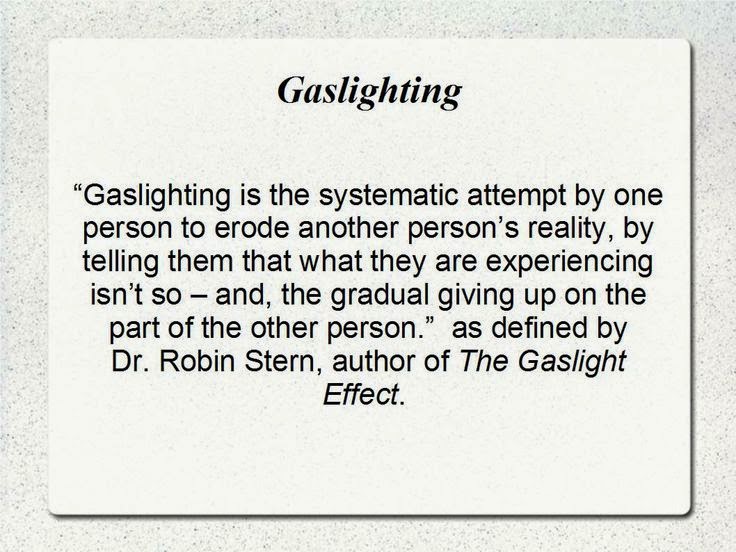
So much truth in all of this. I have seen all of these lies up close and personal. The one “You are responsible for the way you feel” when they have just said something hurtful to you REALLY hit home with me. And of course the way they gaslight, gaslight, gaslight and always try to make you feel like there’s something wrong with YOU.

Kim Saeed's avatarLet Me Reach with Kim Saeed

Image

If you’ve found yourself in the unfortunate company of a Narcissist, you’ve undoubtedly discovered their innate ability to lie without missing a beat.  Narcissists lie for a variety of reasons, but the main reason, while immature, is simple.  If he or she lies and gets away with it, they interpret this as their being clever and superior to others.  In short, it’s a means to demonstrate how brainless others are.  A sincere and honest person is viewed by the Narcissist as a weak chump who deserves to be manipulated.

Wondering if your significant other could be a Narcissist?  Read the following list of their favorite lies to determine if your partner fits the mould.

  1. I can’t imagine my life without you.” (or, “I’ve grown so attached to you”, “You’re in my blood”) –   Sadly, victims of Narcissistic abuse believe their partner really cares about…

View original post 916 more words

Why family scapegoats become lifelong victims.

If you were scapegoated by your family, two things can happen. You can become a narcissist yourself (narcissism being an elaborate defense mechanism to avoid further hurt and abuse) or you will internalize the early message that you’re worthless, defective and have no rights. I’m going to talk about the second scenario because that’s what this video is about and it’s what happened to me.

As a scapegoat, you are trained to live in fear. You become afraid to defend yourself, express your opinions, or demand fair treatment. This attitude of worthlessness, fear and shame is carried into adult life. Other people can immediately sense you are a pushover and a magnet for abuse, rejection, and bullying, and you become a target for abuse by others well into adult life.

You can become a lifelong victim unless you find a way to break the pattern. It’s difficult to unlearn, because it was established so early in life by the narcissistic parent.

Golden children, who more closely resemble the narcissistic parent or provide them with narcissistic supply (adulation), are more likely than scapegoats to become narcissists themselves. They will often become the aging narcissistic parent’s flying monkeys against the scapegoated adult child, continuing the family pattern of abuse.

Scapegoated children are the family shock absorbers. They are the children who have been assigned to absorb and internalize the narcissistic parents’ rage and to mirror back what has been projected onto them.

scapegoat_child

This is exactly what happened to me. Although because I was an only child I sometimes served the Golden Child role, for the most part I was the scapegoat. My Aspergers and high sensitivity made me even more perfect for that role.

Today I’m the black sheep and the “loser” of my family. I’m never included in family functions because of my poverty and the fact I’m “different” than the rest of them. Although they disapprove of me, I really became exactly what they needed me to be. My becoming a “loser” ensured they would always be winners.

I’ve been disinherited because they believe I’m undeserving, a shameful blemish on the family’s “good name,” further guaranteeing I will always remain poor and therefore powerless–unless I hit the lottery (which I don’t play) or write a book, which I plan to do. The irony of all that is the book may very well be one that exposes the people who raised me for what they really are.

I’ve always been a risk-averse, avoidant underachiever. My dealings with others have suffered because of my fear of the judgment of other people. I was often bullied as a child and teenager.

I married a narcissistic man and continued to live with him and allow his abuse even years after we were divorced.

Although as an adult I’m no longer bullied (and am Very Low Contact with my ex), people still try to push me around, treat me like a mental defective, leave me out of conversations, overlook me for promotions or raises at work, or just talk over or look through me as if I’m not there at all. When I say something, people act like they don’t hear me. It’s very hard for me to make friends or fight back when I need to because I was trained from an early age to be so very afraid of everyone. I’m the proverbial shrinking Violet and wallflower–the kind of woman my mother used to mock for being so “insipid.” I seem to have the opposite of charisma.

For many years I walked around as if ashamed to be alive. I carried shame with me like a heavy burden that affected the way I spoke, the way I related, the way I thought (all the negative self-talk and self-hate), even the way I moved and carried myself. I embarrassed myself.

Since I started writing, I’ve learned that I wasn’t put on earth as an example to others of how not to be (I actually used to believe this), but that God gave me these challenges and this life to teach me valuable things about myself–but that waking up to who God meant for me to be was going to be hard, painful work. I don’t live in self-pity: my narcissists have been my teachers.

One day I dream that people offline will know who I really am. That I have a personality. That I’m funny and intelligent. That I have opinions of my own, and that I am actually good at things. But more than anything else, that I have a finely tuned bullshit detector–a gift unintentionally bequeathed to me by my narcissists, and it’s a gift more priceless than any amount of money I may have inherited.

The following video will explain why what narcissistic parents do to their own offspring is nothing less than soul murder. Unfortunately, the original video I had posted here (which I preferred) was the best one to illustrate the way being scapegoated as a child tends to continue well into adult life, with the grown adult child now unconsciously projecting a “kick me” sort of vibe in relationships, friendships, on the job, and everywhere else, and then they wonder why they continue to feel victimized everywhere they go.     It’s hard to break the pattern, but it can be done.    Here’s a different video with the same general message as the first, although the first one (which was removed) was much better, in my opinion.

What a narcissistic parent sounds like.

Here are two Youtube videos that graphically show exactly how a mother with a bad case of NPD (malignant narcissism) operates. These videos are entertaining in a scary and disturbing way, like watching a train wreck.

Pay close attention to what the mother says–she uses every trick in the narcissist’s book of tricks: blame, insults, changing the subject, interrupting, raging, mocking, “talking over”, gaslighting, projecting, invading boundaries, not taking responsibility, showing no empathy, and just about every other “tool” the narcissist uses to get their own way or avoid taking responsibility for their behavior and actions. Notice how childish the overall effect is–the mother sounds like a four year old having a temper tantrum.

The daughter who made the videos is trying hard to get her mother to listen, but her words seem to fall on deaf ears. She might as well be talking to a wall, for all the good it does.

Why being a Golden Child isn’t so golden.

golden_cage

I was raised as an only child–the second marriage for both my parents–in a narcissistic family. Only children are in an especially vulnerable position in narcissistic families, because they must serve as all things to one or both parents.

In families with several children, one child (usually the most sensitive) is normally chosen to be the scapegoat–to serve as the family trash can for all the narcissistic rage of the parents. Another child, usually the one most closely resembling the narcissistic parent or the one who best serves the parent’s need for narcissistic supply, may become the Golden Child–in other words, the parent’s favorite. The Scapegoat is always wrong, bad, stupid, crazy, a “problem,” etc. The Golden Child can do no wrong. Misdeeds are overlooked or projected onto the scapegoat. Golden Children may become the narcissistic parent’s flying monkeys and are even sometimes given the “honor” of helping with the abuse against the scapegoat.

I’m reminded of a book I read some years ago called “A Child Called It,” written by Dave Pelzer, who not only recovered from the horrific abuse inflicted on him from ages 4-12 by his psychopathic mother (who had been loving up until that point) and brothers (who served as her “helpers”) once he was removed from the family and placed in a foster home, he actually seemed to become stronger because of it. Today he is an author, motivational speaker, and activist against child abuse. Dave was the scapegoat of his family, and I think his mother turned against him when she realized he was the most sensitive child and probably the most intelligent one too.

But what happens when there is only one child in the family? Well, I think that child becomes both a scapegoat and a Golden Child. If I had grown up with siblings (I have older half-siblings but I wasn’t raised with them), I’m almost certain I would have been the family scapegoat. But my parents (I am including both here, even though I don’t believe my father is a true narcissist, because they worked as a “team”–he was codependent and under my mother’s thrall) needed a Golden Child too who would serve their need to show a child off as a prized possession, a status symbol of sorts: the physical proof of how superior they believed their genes to be compared to everyone else.

Being both scapegoat and Golden Child is even more crazymaking than being just a scapegoat, because you never know where you stand. You constantly feel off balance and anxious, never knowing if something you said or did will be rewarded, ignored, or punished. Life feels chaotic and unformed. You feel like you’re playing a game you never wanted to play, a game where you were never taught the rules, and most of the time you don’t even know WHAT game you’re playing, but you’re expected to play like an expert anyway.

confused_kid

There was no consistency in the way I was disciplined or the things I was disciplined for. I was punished often (for infractions that were usually fairly minor or even nonexistent–I was a “good kid” who was terrified of angering my parents until my teens), but that wasn’t the worst thing. The worst thing was that the next time, I might actually be rewarded for the same infraction!

I was often punished for things I couldn’t help. Acting “spooky” was one of them. As a fearful, sensitive Aspie child, there were times I would retreat inside myself when I was feeling very anxious or when there was too much ‘input’ from the world, and this enraged my MN mother, who would berate or punish me for this behavior. I had no idea what I had done or how to stop being “spooky.” It just happened. I think it enraged her because it was during those times I went “inside” that she could no longer reach me with her abuse.

Even though most of the time I was treated as if my feelings didn’t matter, I was often told how pretty, smart and talented I was. It’s my belief I was no more of any of these things than any other kid my age, but I was told I was “special.” To my young mind, “special” meant “different”–and most children, myself included, dread being different from their peers.

When I was bullied at school, the reason my parents gave me was that the other kids were just jealous because of my “superior” looks, intelligence, or talent. I was also told our genes were better than other people’s, and our family was of a higher socioeconomic status than my friends’ families. I know now this was complete bullshit, but it’s the lie I was being fed while I was growing up. I think these “compliments” were intended to isolate me from my peers even further, so I’d just be “theirs.” I never felt empowered by the “praise” I got, because of the way it made me feel somehow defective and different from other kids. In addition, I felt like I could never live up to the pedestal my parents put me on at those times. I was right–and as an adult, I am looked down on by my family as actually defective.

left_out_kid

The most crazymaking thing of all was the times I’d be complimented and diminished at the same time. One of the most common ways I’d be demeaned was being told how “sensitive” I was. This was never meant to be a compliment; it was meant as a way to let me know how weak I was. Sometimes I was told I couldn’t or shouldn’t do things because of a combination of my “good” and “bad” qualities. For example, when I was about 10, I wanted to join the swim team. I remember exactly what my mother’s reaction was to this. She always liked to tell me what I was thinking, which is another way narcissists make us doubt our own reality and question our instincts. She said:
“You wouldn’t like being on the swim team because you’re too sensitive and you don’t like competition, and you’re too smart to be on a team with those people anyway.”
Huh?
Left-handed compliment much? She always sandwiched her praise this way–between insults like a shit sandwich. This was just another way I was constantly thrown off balance and this led to my becoming an extremely anxious child and later, an extremely anxious adult.

In general, my family treated me like I was a huge burden and didn’t really want me around, so the praise I got as a sometimes Golden Child made no sense and to my sensitive child’s mind, never felt sincere. Even at a very young age, I knew I was being lied to. I knew I wasn’t loved the same way other children were loved, even though my parents constantly mouthed the words like some sort of tic.

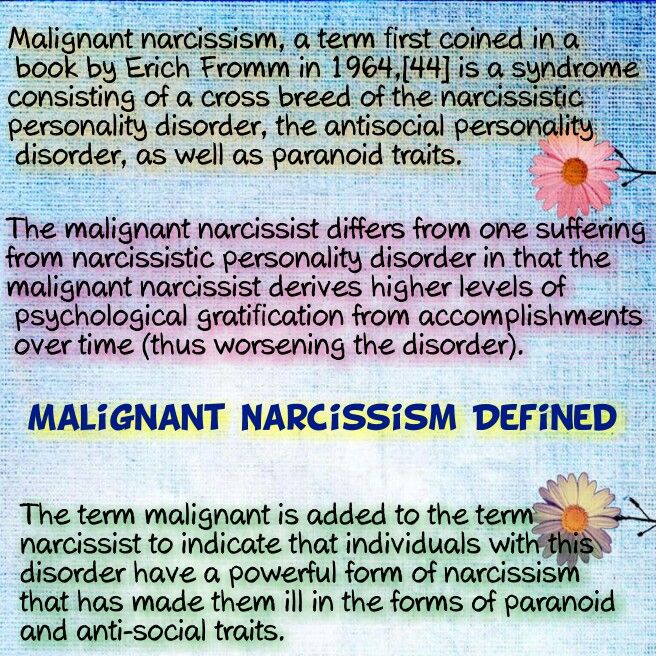
So what the hell IS malignant narcissism anyway?

The term “malignant narcissism” seems to be everywhere these days, especially on the Internet. But what exactly makes it different from “normal” narcissism?

Here’s a very good definition of how it differs from garden-variety NPD. I had no idea the term has existed this long!

malignant_narcissism_defined
Click to enlarge.

Have You Ever Been Hurt by a Psychiatrist? (Guest Post by Alaina Holt-Adams)

WARNING: The following may be triggering for many abuse victims. This article is especially harrowing because a therapist is supposed to help us cope and heal from trauma already endured, not add even more trauma. This is one of the most disturbing stories of an abusive psychiatrist I’ve ever read. And this psychopathic monster’s abuse was inflicted on a child of fifteen.

Unfortunately, malignant narcissists, psychopaths and sociopaths are attracted to the mental health field because it gives them an easy way to take advantage or further abuse the hurting, the vulnerable, the abused, and even children. Be very careful when choosing a therapist. Sometime soon, I’ll be researching this topic in more depth and write an article about red flags to look out for.

The author has been so afraid to come out about this experience she asked me to let her write it as a guest post here rather than put it on her own blog. I am more than happy to do that, because I think her story can help expose the abuses that still go on in the mental health field and it may be of help to others.

Have You Ever Been HURT By A Psychiatrist?
By Alaina Holt-Adams

DrMonster500 (1)
I found this photo through an online memorial site. A single comment is posted under the picture. It says: “This man was my biological father, but I never got to know him. He didn’t want me and I never saw him. RIP.” The comment is signed: “Anonymous.” *

Out of respect for this monster’s adult child, I will refer to him as “Dr. Smith,” which was not his real name.

Handsome fellow, wasn’t he? Tall, dark, and aristocratic. Going by the date printed on this photo (which I cropped off because it was printed next to his name), Dr. Smith was in his late twenties when this picture was taken. He looked basically the same when I knew him twenty years later, with just a touch of gray at his temples to lend an air of wise sophistication, in sync with the leather elbow patches and carved pipes that were all the rage for image-conscious psychiatrists in the late 1960s.

His deep, softly hypnotic voice and sympathetic manner were even more compelling than his Rock Hudson good looks. With soulful gray eyes that seemed to read your innermost thoughts, everything about him said: “I Care Deeply About You And Your Problems.”

But everything about him was a lie.

If anyone ever fit the description of a charming, successful, suave sociopath, this man certainly did. He almost killed me — literally, almost murdered me. I believe he gave me the drug overdose on purpose, because I had told a nurse about the “good doctor” sexually abusing me.

Of course, I wasn’t believed. I was only fifteen and I was a mental patient. Later I was told that many other patients had accused this man of raping them, male patients as well as female. But he kept getting away with it because he was a “great and wonderful doctor” and “above reproach.”

The truth about this evil man finally came to light the last time he raped me, the night when he almost murdered me. A nurse told me later that she had heard me “screaming bloody murder” inside his office. She had tried to open the door but it was locked. She said the doctor told her through the door that I was in a deep hypnotic state, reliving a terrible trauma.

Hypnosis was his specialty. At first, all he used to put me under was a swinging pocket watch. He switched to giving me an injected drug to “enhance” the hypnosis, after I pushed his hands away when he tried to molest me. As the drug took effect, I became too weak to fight him off. That was when he would molest me. Probably because of the drugs he gave me, I have only vague, partial memories of the rapes.

That last time, as he was slowly injecting an amber-colored liquid into the vein inside my left arm, the doctor told me: “If you ever again tell anyone about what I’m doing, I will stick you in a hole so far you will never see the light of day again.”

Suddenly my chest hurt. I mean, it really HURT! I felt like a giant hand was squeezing my heart. I clutched at my chest and told Dr. Smith that my heart was hurting. He let go of the syringe and took my pulse… then he quickly injected all of the remaining drug into my vein.

The pain in my chest seemed to explode at that point. The pain was bigger than I was, bigger than the room we were in, bigger than the whole hospital. When I could not take the pain any longer, I passed out. What the doctor was doing to my body lying spread-eagled on the floor of his office, I could not see or feel.

After it was over, he woke me and told me to go back to the ward. I stood and almost fell over. “Kiss me goodbye,” he commanded. I shook my head no. “You will never be well until you stop repressing what you really want,” he said. That was the last time I saw him.

I felt like I was floating as I walked out of his office and across the street to my ward. I had the eerie sensation of only being in the top half of my body. My legs were moving up and down, taking one step after another, but my feet and legs did not feel like they belonged to me anymore. They were like the legs of a puppet and I was making them move by pulling a string.
As I walked onto the ward, my body crumpled to the floor. I seemed to be floating in the air, looking down at myself. The two nurses on duty rushed out of their office. They knelt beside my body. I was floating above them, looking at the back of their heads. I heard one of them say, “Her lips are blue.” Then the other nurse said, “I can’t find a pulse!”

Suddenly — Z*A*P! — I was back inside my body. I sat up with a jolt. I felt very dizzy.

The nurses helped me to my feet, then walked me back and forth, holding me upright between them. Hours seemed to go by as they walked me from one end of the ward to the other. While we walked, they chatted with each other the way friends do, talking about their lives, their children, and their husbands.

Finally my head cleared enough that I could speak. I asked if I could go to the bathroom. It was hard for me to talk, my mouth felt like it was full of cotton.

One of the nurses helped me into the bathroom, while the other went back to the office. The nurse stood beside me and watched as I pulled down my underwear. It was obvious from the condition of my underpants that I had been raped. She went out into the hall and called the other nurse to come and look at my underwear.

They must have reported everything to the police. Two male detectives in suits came to the hospital the next day and questioned me. I never saw Dr. Smith again. I don’t know if he was arrested or if he lost his license or what happened to him.

I do know that he committed suicide the following year.

To this day, any time I am given an injection by anyone, for any reason — by a dentist, a nurse, male or female, it doesn’t matter who gives me the shot or why I’m getting it or where it is being given — every time, I flash back to this. And I feel like I am being murdered all over again.

Years after this happened, even after I knew he was dead, when I tried to tell this story I would hear Dr. Smith’s hypnotic voice inside my head: “If you ever again tell anyone about what I’m doing, I will stick you in a hole so far you will never see the light of day again.”

Even today, more than four decades after his death, I am struggling with whether or not I should post this. Telling the truth about what this evil man did to me isn’t going to kill me…. right? I am NOT going to end up “in a hole so far that I will never see the light of day again” — am I?

Intellectually, I know that Dr. Smith’s hypnotic threat has no power over me today. But my heart is pounding while I’m writing this.

His anonymous child who never got to know him was lucky. And I am lucky, and deeply grateful, for those two nurses who saved my life.

BUT… unbelievably… several hospital staff people, including another psychiatrist, actually BLAMED ME, a fifteen-year-old in-patient, for “luring the good doctor with my sexuality” and “ruining the life of a wonderful man.”

I will (try to) write about that in a future post.
~ ~ ~

PS: In case anyone reading this wonders why a lonely, love-starved, hormonal 15-year-old would push away the hands of such a handsome man when he was touching me inappropriately, the whole truth is that I was flattered and excited the first time he rubbed my arms and shoulders and lightly ran his hands down the front of my dress when I was under hypnosis. Although Dr. Smith was older than my parents, he looked much younger, and he was also single (divorced) at the time. I was young and needy and naive enough to believe that the Cinderella fairy tale was true — that a handsome charming Prince could fall deeply in love with a poor little nobody, at first sight. When Dr. Smith first touched me, on the outside of my clothes, I actually thought he was doing it because he was falling in love with me. I was so starved for love and attention that I did not try to stop him, then.

But shortly after this, Dr. Smith was gone on vacation and a nurse said he had gotten married and was on his honeymoon. When he returned to work, he brought his beautiful bride to the ward one day. My heart was crushed then, as I realized that he did not love me and he was not planning to “rescue” me from the hell of the mental institution. I was raised in a very strict religion, so sex with a married man was a huge no-no. That was why I pushed his hands away when he tried to touch my genitals, and I told a nurse about what the doctor was doing. But even before he married his second wife, I never in any way “enticed” him. I was very shy and inhibited, and he was my doctor, more than three times my age. The thought of enticing him never occurred to me.

BUT — even if I had allowed him to have sex with me — which I did not — with him being my doctor and me being a mental patient, him in his late forties and me only fifteen years old — under those circumstances, it would have still been RAPE, regardless.

Rape is never about love or even about sex — it is all about evil power and control, as his almost-murder of me ultimately proved.

And psychiatrists and medical doctors and therapists are not gods. Some of them aren’t even human.

alaina_holtadams
The author of this post, Alaina Holt-Adams, has a blog here at WordPress, Surviving Complex PTSD. You must be signed in to view it.

* There was one other photo Alaina sent me to use, but it has a trigger warning and I was unable to open it. I will see what I can do.

Lies my narcissists told me.

lies_honesty

I was told many lies about myself while growing up within my my FOO (family of origin). I have no doubt this had everything to do with my developing Borderline Personality Disorder (BPD), Avoidant Personality Disorder (AvPD), and lifelong severe anxiety.

Why personality disorders are so difficult to cure.
Personality disorders (PD’s) are formed very early in life, normally before the age of six–which is the reason they are so hard to cure. Because the child’s personality is still in a malleable state (meaning it hasn’t fully formed) until around age 5, PD’s become an integral part of the personality and therefore can be extremely difficult to eradicate because they were formed so early the child doesn’t believe it’s a problem, just the way things are. Their misery seems normal to them. They know nothing else.

Of course some PD’s are more amenable to treatment than others, and sufferers of some PD’s, such as Avoidant, Dependent, and sometimes Borderline, are much more likely to seek treatment than those with, say, ASPD (antisocial personality disorder), NPD (narcissism), or Schizoid PD.

Lies I was told growing up.

sensitive_people
As the family Scapegoat (and occasional Golden Child which I’ll explain later in this article), here are some of the lies I was told while I was growing up:

“You’re too sensitive!” — This one’s the Big Kahuna for many of us ACONs, especially if we’re also HSPs (highly sensitive people) by nature. “You’re too sensitive” isn’t so much a lie as it is a verbal twisting of a wonderful gift and ability to see the Truth into something…more resembling an embarrassing defect. Narcissistic lies sometimes appear in the form of turning something good into something shameful and bad, and vice versa.

“You have no sense of humor.” (see above)

“You don’t really want that.” (the parent is telling the child what they really think–this will just cause confusion and identity issues for the child)

“No one wants to know how you feel.” (so we learn to swallow our pain and lock up our emotions)

“You cry too much.” (I had to unlearn this–unfortunately I unlearned it too well and now find it difficult to cry even when I know I need to)

“You don’t know what you’re talking about.” (invalidation and devaluation)

“You know you don’t really think that.” (massive mindfuckery)

“You don’t really want to join the swim team. You know you don’t like competition.” (see above–the real message here being “you are a weak, pathetic, scared loser” to really drive the message home)

“You’re too fat/heavy/even ‘obese’ (I was never more than 120 lbs at 5’4” as a teenager)

“They don’t like you because you’re always so unpleasant to be around.” (Real nice)

“You never smile and it makes your face look unpleasant.” (Fake Narc smiles look even more ‘unpleasant’)

“You read too much.” (okay…would it be better if I snorted Smarties instead or went around throwing rocks through the neighbors’ windows?)

“You know you’re not really good at that.” (whenever I wanted to try something I hadn’t tried before)

“You know you can’t do that, let me do it.” (I wanted to wash the dishes when I was 6)

“You’re too idealistic” (mmmkay…and that’s a bad thing?)

Because I was raised as an only child (I had half-siblings who did not live with us), I also served as the Golden Child. So I also heard lies like,

“They’re just jealous of you because you’re prettier than they are.” (even as a first grader, I knew this was bullshit).

child_on_pedestal

“They’re just jealous of you because you’re smarter than they are.” (my grades weren’t much above average, in spite of having a high IQ)

“You are more talented than they are.”

“We have better genes than those other people.” (Narc genes?)

“You come from a better family than your friends do.” (I call bullshit on that.)

You were the best dancer in the school play.” (I have two left feet and even my dog would have known that was an outrageous lie).

It doesn’t stop when you go No Contact.

flying_monkeys

These are some of the lies told about me by my mother to her sycophants (the ones I’m aware of):

“She’s a loser just like her ex-husband” (Nice.)

“She always makes such terrible choices.” (True, but there were extenuating circumstances at those times she would never understand)

“If only she had done what I told her.” (If only I had had the courage to take a few risks-I am extremely risk-averse)

“If only she had listened to me.” (Again, if only I had taken a few risks and not been so afraid of my own shadow)

“She’s a nothing.” (I guess that’s why people tend to always talk over me, look through me, and never hear what I have to say in group or social settings–where I FEEL like a nothing)

“She was ruined by her ex” (this is a half-truth…but RUINED? Really? Let’s tone down the hyperbole, shall we?)

“She will always be poor.” (and the poor are always with us, right?)

“She will never achieve anything.”

“She can never stick with anything.” (This has actually been true but has gotten a lot better)

“She has mental problems.”

“She is sick in the head.”

Ad nauseam…

Conflicting messages as Scapegoat/Golden Child

ConflictingMessages

Black-and-white thinking (idealizing/devaluing) and outrageous contradictions prevailed in my FOO.
As both Scapegoat and Golden Child, I was receiving two sets of messages (sometimes both at the same time), such as, “You know you don’t really want that, because you’re too sensitive, you hate competition and you are smarter than they are.”
I think you get the idea.

Being raised with conflicting sets of messages and being treated as beloved/rejected child at once was incredibly crazymaking.

Borderline Personality Disorder (or even narcissism!) and Avoidant Personality Disorder (I have both BPD and AvPD) both seem like logical, almost sane reactions to having been raised with two conflicting sets of messages–I was either all bad or all good, with no in between.

And finally, it doesn’t end there. Raised by narcissists, I married one even worse. A narcissist so malignant he made my parents look like empathic light beings in comparison. I was trained to be Supply and was WAY too good a student. If awards were given for Learning How to Be Narcissistic Supply, I would have been valedictorian.

Lies my psychopathic narcissist ex-husband told me.

gaslighting

Following are the lies my malignant narcissist sperm donor told me about myself and also told all the flying monkeys he had succeeded in turning against me (some of who included my friends) over 28 years. This led to my PTSD and clinical depression (where I had to be hospitalized for suicidal ideation). Most of these were projections of his own character flaws onto me.

“You are selfish/self-centered.”

“You always overreact to everything.”

“You never listen to me”

“You don’t care about me or my problems.”

“You have no empathy for me.”

“You are narcissistic.”

“You are becoming just like one of them” (he was referring to Republicans, who he hates)

“Oh, so now you’re living the high life?” (when I took in a roommate while he was homeless)

“You are a b**ch, c*nt, Tw*t, whore.”

“You are stupid.”

“You have no common sense.”

“You’re insane.”

“There’s something wrong with you.”

“You’re just like your family–all crazy.”

…as well as a constant barrage of hateful sarcasm at my expense, whether there were people present or not. If I objected to this mean spirited “humor,” I was told–WHAT ELSE???–I was “too sensitive” or “have no sense of humor.”

Because of having grown up in the midst of a labyrinthine web of lies, and then marrying into another one, I have always valued Truth. That’s why I put a premium on complete honesty, at least in my writing.
Not that I don’t ever lie–we all do, it’s part of the human condition. But I am very aware of dishonesty when I see it and won’t hesitate to call it out in others.

Catching FLEAS from narcissists and abusers. (reblogged from Nyssa’s Hobbit Hole)

flea_cartoon

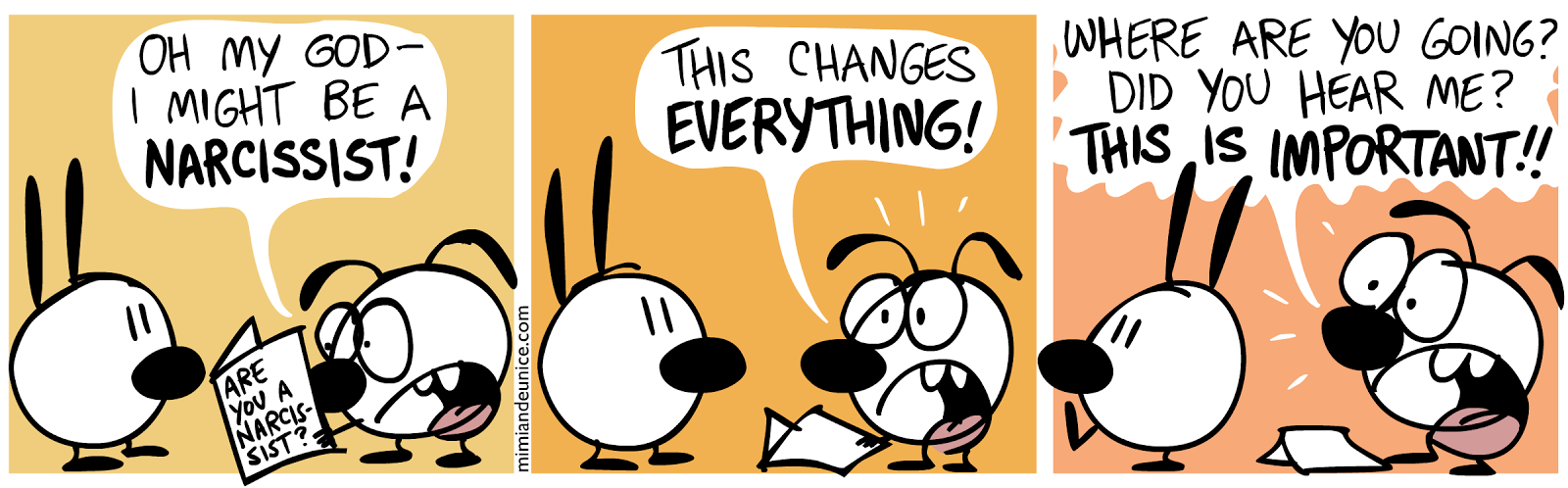
When I was Googling “fleas and narcissists” for the previous article, I learned something new. It’s also something I very much have been needing to know, due to my worries lately about my own narcissistic behaviors.

The article, reposted from Nyssa’s Hobbit Hole, decribes the way a long-term relationship with a narcissist can lead to a condition in their victims called FLEAS. I have never heard this term used before, but apparently it’s part of the narcissistic abuse lexicon, and refers to the bad or narcissistic behaviors ACONs and other abuse survivors have picked up from the narcissists who influenced or raised them. These behaviors, unlike those of a true narcissist, can be unlearned. Here is the article in its entirety.

Catching FLEAS from Narcissists and Abusers
By Nyssa (“Clarissa Harlowe,” pseudonym)

fleas_cartoon

I have caught my own FLEAS while dealing with Tracy.

Sometimes, we who have been targeted by the abuses of a narcissist, wonder if we, too, are now narcissists. It can be catching, especially if we are raised by narcs.

But the recovery community uses the term “fleas” to describe our own harmful behaviors, picked up from the narcs, but which do not mean we ourselves are narcs. The trick is to figure out whether you are a narc yourself, or just have “fleas” which you can kill off with a good flea bath.

As posted in FLEAS – Bad Behavior Patterns and Habits Picked Up from Living or Dealing with a Narcissist by Daughters of Narcissistic Mothers:

Now, you may not have NPD (Narcissistic Personality Disorder). Some children of Narcissists do, and some don’t. Let’s say you don’t, but you were raised by someone who did/does. Therefore you have some issues that can take the shape of NPD – like a shadow or a snow angel, or even an echo.

You’ll have some issues in the same sorts of areas that Narcissism occupies, because you picked up these fleas FROM a Narcissist.

…..But you don’t have NPD.

What you have is the shadow – “maladaptive behaviors”, as psychologists call them, the unhelpful patterns you have been taught, and which you have had to resort all your life.

And they are glued in, most often, by the shame you have been made to carry.

What you have is nicknamed “FLEAS.” They’re the bad behavior patterns and habits we picked up from living with a nutcase who had total and unhealthy control over us. They are the pain and guilt and crazy patterns we had to take on as children in order to just survive. And they’re completely un-learnable. (Meaning, you can un-learn them!)

One of the most common issues that newbies demonstrate is a tremendous fear that they themselves have NPD.

It’s a perfectly understandable fear. All human beings do Narcissistic things, and when DoNM’s who don’t have NPD recognize and acknowledge their own self-centered behaviors, they sometimes worry that they have NPD.

They feel guilty about possibly having hurt someone’s feelings, been self-centered, etc., and they panic. It can really be upsetting, even terrifying. And they beat themselves up mercilessly for it – because that’s what they’ve been taught to do.

You’ll notice that I said, “Daughters of Narcissistic Mothers who don’t have NPD”…

In order for someone to recognize, acknowledge and feel guilty about their own Narcissistic behaviors, they first have to have a level of empathy and sense of emotional responsibility that Narcissists, by definition, do not possess.


On the DoNM forum, the usual response to such a person is, ‘If you’re that worried about the impact of your behavior on others, and you’re willing to publicly share your fear of being NPD, trust us — you don’t have NPD… you just have FLEAS.’ “

fleas_book

Violet writes in Am I a Narcissist, Too? All About Fleas:

We can pick up fleas anywhere. I have seen things on FaceBook, people saying really hurtful, mean things about LGBT people, about people of colour, about the poor and disadvantaged, about women, and they are absolutely shameless about it.

Some of these people are narcissists, but others have picked up fleas from narcissistic politicians, pastors, or other authority figures they either revere or fear. Taken out of that environment and shown how their words and attitudes actually hurt other living, breathing human beings, some of these people will feel shame for what they said and the hurt they caused.

Others will not, and they will rationalize and justify what they said, even blame their victims for their hurt (I have actually seen someone say that feeling hurt by the words of a bully is a choice, that you can choose not to be hurt and therefore what the bullies say and do is OK!) : these people are most likely narcissists.
I’ve seen versions of this as well. For example, statements that we choose to be offended by others; that we can simply stop being offended. Or, “I’m not responsible for your emotions.”

There are different ways people mean this, however. The first was said in the context of, Yes, what they said is offensive, but you can choose your own reactions–thereby not giving the offender power over you.

The second, I’ve seen used as an excuse to do whatever you want, because it’s the other person’s fault if they’re offended. It was said by Richard to me, after I told him he was doing some things that hurt me. I forget what they were, just that it was close to the time we broke off the friendship, and that he basically took the responsibility for my being hurt off his shoulders, putting it on mine. ???!!!


I’ve seen it in other places as well, the excuse that if we hurt somebody, it’s their fault for being hurt. That’s very narcissistic, and goes against everything my husband and I were taught growing up. It’s yet another sign that I’ve pegged Richard correctly as a narcissist.

If you’ve hurt and offended someone, the very least you can do is apologize for hurting them, even if you don’t feel your action was wrong in and of itself. You can listen to how you can avoid hurting that person again.

Sure there are times when that person was offended by an innocent action which should not be offensive (ie, offended by a gay man kissing his partner in public, or offended by an introvert who means well but is quiet, or offended by a woman breastfeeding her baby at the mall).

But oftentimes, the offensive act could simply be avoided next time.

Tracy, too, as I saw time and again, would justify whatever she did, even though it hurt others. She hurt Todd, so she justified it as his fault. She hurt me, so to this day she justifies her actions as “nothing wrong” and talks like my being hurt is somehow “childish.”

Even Richard told me back in February 2008, Good luck getting an apology out of her, because she rarely apologizes to anyone, thinking whatever she does is justified. I don’t have the e-mail in front of me and don’t recall if I kept it, but I still remember it.

(I remember thinking when I got it, “I don’t want to deal with that woman anymore!” This was the first time I seriously thought about breaking off the friendship.)

She used Richard’s past abuses of the children to justify her own abuses of the children (I have an e-mail proving this). Which means she’s like this to everybody: me, Todd, even Richard. And this is one of the signs of a narcissist, according to the above.

There is more good stuff in that blog post, explaining how we can tell if we’re narcissists or have just picked up some “fleas”–and how to eradicate those fleas.

devil

From the website Out of the Fog (Fear, Obligation, Guilt):

Fleas – When a non-personality-disordered individual (Non-PD) begins imitating or emulating some of the disordered behavior of a loved one or family member with a personality disorder this is sometimes referred to as “getting fleas”….

Sometimes, when a person has been exposed to an abusive situation for a sustained period, they will look for ways to escape – and sometimes they will experiment or resort to behaviors which are not characteristic but serve as a mechanism to demonstrate their anger.

These behaviors are often destructive and counter-productive and rarely get the abuse victim what they want. These behaviors usually result in regret, shame and apologies from the abuse victim towards their perpetrator. Some perpetrators may seize on such incidents as justification for their own abusive behavior or as a diversion from it….

However, most Non-PD’s are more accustomed to “keeping the peace” than being aggressors and most of us are not comfortable or accomplished in winning arguments or fights.

We will often back down or feel remorse after lashing out. We may begin to compare our behavior to that of the person with the personality disorder and wonder if we are the ones who have “the” problem.

It is common for Non-PD’s to begin to question if they are the one who suffers from a personality disorder. It is also common for Non-PD’s to greatly fear retribution after an angry outburst and engage in a manipulative campaign, similar to hoovering to try to deflect consequences or payback.

Narcissist

To read the rest of this post, please see the rest of Nyssa’s article here.

For more about how Narcissists can give you FLEAS, read this article, “The Shocking Truth: Staying with a Narcissist can Give You Fleas” from Let Me Reach with Kim Saeed.

That’s enough about fleas and FLEAS for one night. I’m getting itchy.

Dr. Phil: Mothers who hate their own children.

In this full episode, Dr. Phil interviews two malignant narcissist mothers who admit they hate their own children (both daughters). For those of us with normal feelings of love for our children, these mothers’ attitudes and behaviors are beyond comprehension.

The first mother is a narcissist who is embarrassed by her daughter’s autism. She whines that “I don’t deserve this.” She wanted to have a “normal” daughter.

The second mother has murderous feelings toward her daughter. She seems quite psychopathic.

ETA: Unfortunately, Youtube removed the video I had posted. The only one I could find only shows the second mother.

Ferris Bueller, Psychopath.

ferris_bueller

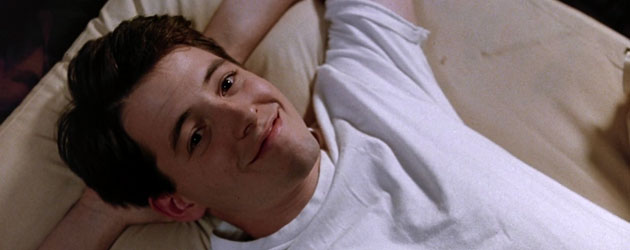
One of my favorite 1980s movies (which I have probably watched at least 50 times, because it’s always on TV) is John Hughes’ humorous 1986 study of teenage narcissist Ferris Bueller (Matthew Broderick) and his plot to gallivant about Chicagoland with his girlfriend and his nervous, codependent friend Cameron in hopes of getting him to loosen up and live a little.

Ferris Bueller is a likeable character, who certainly doesn’t seem like a psychopath, only because his intentions are generally good (or seem to be), but the way he goes about achieving his goals flirts with lawbreaking and causes a lot of other people an awful lot of trouble. Ferris, for his part, seems too good-hearted to qualify for malignant narcissism or psychopathy, but given that this is a movie that was made in the Reagan era–the beginning of America’s love affair with narcissistic and psychopathic behaviors–its narcissistic hero must be likeable, while its real hero (Principal Rooney) is portrayed as a foolish villain with an extremely unlikeable personality. Then again, many psychopaths have considerable charm, and Ferris can shovel on the charm with the skill of a cult leader or a used car salesman.

Ferris is the most popular kid in school, because he’s just so cool. He’s not afraid of anyone or anything. He’s not a jock, so the geeks and nerds like him. He’s not a great student, so the troublemakers don’t mind him. He’s not enough of a dork or a geek to be disliked by the cheerleaders and football stars, so they like him too. Ferris has no enemies among the student body and offends no one–except the school’s staff, who see the psychopathy and narcissism behind Ferris’ outgoing, friendly, slightly eccentric but cool persona. They know he’s really just a spoiled brat who cares only about his own self-gratification.

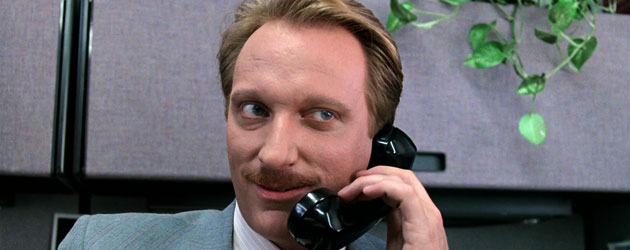
Ferris is almost cloyingly nice, lies constantly, cons his friends, and is generally full of shit most of the time, but you can’t help liking him, even with all his over the top narcissism and psychopathic behaviors. He drives all his teachers insane. His principal Edward R. Rooney (Jeffrey Jones) hates Bueller so much that a large part of the movie’s plot involves his quest to “get back at” Ferris for being truant yet again (apparently truancy is a bad habit of Ferris’s), chasing him all over the Chicago suburbs, and of course, failing miserably and looking like a pathetic fool by the film’s end for even trying. Ferris Bueller always wins.

ferris_bueller2
Ferris Bueller, psychopathic hero.

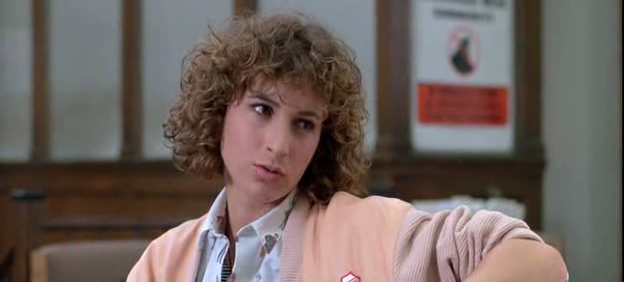
Back at home, Ferris’ family is clearly dysfunctional. His mother (Cindy Pickett) is an ’80s-style malignant narcissist who has chosen Ferris as her Golden Child. In her eyes, Ferris is perfect and can do no wrong, even when the evidence to the contrary is right in her face. Ferris’ sister, Jeannie (Jennifer Grey), always gets the blame for everything that goes wrong and takes the punishment for Ferris’s shenanigans. Their mother obviously hates her guts. These two women are both as evil as they come, and I would bet that’s the reason they can’t stand each other. The mother obviously sees her daughter as competition.

While Jeannie is a nasty piece of work and an envious, spiteful malignant narcissist not much different from her mother, she’s clearly the family scapegoat so you can’t help feeling a little sorry for her in spite of her repellent personality and plot to destroy her brother, who she envies and hates with the white hot heat of ten thousand suns. Mr. Bueller (Lyman Ward) barely has a personality at all. As is typical of these kinds of movies and television sit-coms, Mr. Bueller is a slightly bumbling one-dimensional background character who always submits to his wife’s iron-fisted will. Clearly he’s codependent, but we don’t find out much else about him, except that he holds some sort of high paying white collar job, given the sort of upper-middle class neighborhood the family lives in.

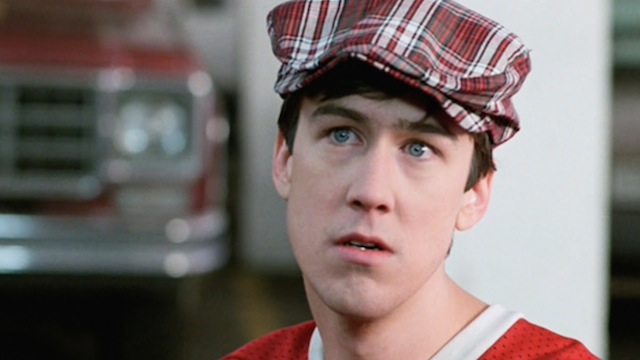
Bueller’s best friend is the highly neurotic, schizoid/avoidant and obsessive-compulsive uber-geek Cameron Frye (Alan Ruck), a kid who’s so tightly wound you’re afraid just watching him might cause him to blow a gasket. Ferris only means well for poor Cameron, and takes on “rehabilitating” his jittery, schizoid friend by convincing him to skip school for a day for a wild joyride through downtown Chicago, in (what else?) Cameron’s psychopathic dad’s brand new red Ferrari. (We know his dad is psychopathic even though he’s never on screen because of Cameron’s visible terror over the prospect of his dad finding out there were additional miles on the Ferrari at the end of the day). One can be pretty certain that Cameron is the scapegoat of his dysfunctional family. In addition to what seems to be severe OCD and schizoid traits, Cameron seems like he may be suffering from severe PTSD as well. The kid just isn’t right in the head.

cameron
Cameron, Ferris’ schizoid/avoidant codependent friend.

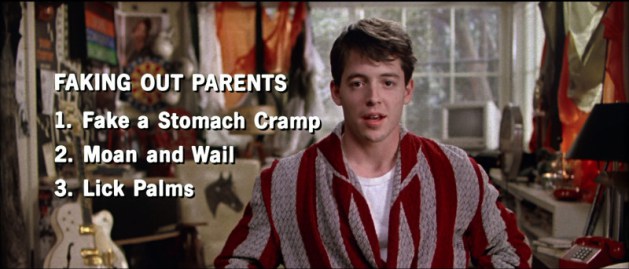
Ferris’ day begins with an elaborately feigned illness set up so that he doesn’t have to go to school, and of course his adoring mother believes his bullshit and even starts talking baby talk to him. Ferris plays the part of the adored infant, making cute faces and noises for his mother’s benefit as he lies “sick” in bed. This is an adolescent who is still his mother’s “baby.” He never has to grow up or take responsibility for anything.

Ferris sets out to “rehabilitate” his nervous, paranoid friend Cameron, by convincing him to take the day off school and cons him into borrowing his father’s brand new expensive red Ferrari. He arranges for his girlfriend Sloane (Mia Sara) to get out of school too by pretending to be her grandfather, telling the school that she has to attend her grandmother’s funeral.

And off they go. It’s hard to imagine how these three teenagers could get so much accomplished between 8 AM and 3 PM–attending a baseball game at Wrigley Field, dining at an expensive French restaurant (and enraging the snobbish maitre’d in the process), attending the Chicago Art Museum, and finally a huge parade through downtown Chicago, in which Ferris, naturally, steals the show by lip-synching the Beatles while dancing on a float. Like many skilled narcissists, he has irresistible charm and endless charisma. He’s an anti-hero for the Reagan era.

at_the_museum
At the museum.

As the day nears its end, the kids lounge by the poolside. Cameron asks Ferris if he checked he miles on the Ferrari, and the bad news is that there’s no way to hide the number of miles they used from Cameron’s psychopathic father. Cameron blows a gasket at the news and enters a catatonic state of terror, while Ferris and Sloane go skinny dipping in the pool.

Feigning concern and empathy for his friend, Ferris talks Cameron out of his catatonic fog (which may have been feigned since he admitted he saw Sloane nude in the pool) and tries to roll back the miles on the Ferrari by running it in reverse. It doesn’t work, and Cameron loses the last shred of composure he may have had and throws a tantrum, ranting about his cold, unloving father and how he only cares about his car and wealth and cares nothing for his son. He begins to kick the Ferrari, which becomes loose from its anchors (it has its own private house), and the kids watch as the car crashes through the plate glass windows, and speeds off the hillside into a ditch below, becoming a smoking, totalled hulk. This is the only part of the movie that’s somewhat serious, and it’s hard watching Cameron realize just how abused and unloved he is. You worry what might happen when his father finds out his car has been totalled, but for Cameron, his rage was cathartic and he assures Ferris and Sloane that “No, it’s good.”

Meanwhile, Principal Rooney is on a quest to find Ferris and make him pay for his truancy and glib lies. Although possibly the only character in the movie with the slightest sense of morality, Rooney is made out to be a bumbling and spiteful fool who himself breaks the law by trespassing on the Buellers’ property and eventually breaking and entering.

Rooney, enraged by Bueller’s continued truancy, leaves the school for the entire day to stalk Ferris, even going to his house, where the Bueller’s dog attacks him. Meanwhile, sister Jeannie is on her own quest for retribution, but upon finding Rooney in their house, screams and runs to the police station to report an intruder. While there, she recruits a stoned juvenile delinquent (Charlie Sheen) to help her in her plot to exact revenge on Ferris. Of course it turns out that Sheen is another one of Ferris’ best buddies.

Mrs. Bueller, finding her daughter at the police station, flies into a rage and drags her home, berating Jeannie the entire time. As hateful as Jeannie is, her mother is more so. When questioned why she wanted to get her brother in trouble, Jeannie’s answer is, “why should HE get away with everything? I would get caught.”

jeannie_bueller
Jeannie Bueller, envious malignant narcissist.

Ferris Bueller’s Day Off is uproariously funny, but the dark truth is that it’s also a movie glorifying narcissism and psychopathy. It’s a movie about two disturbed boys (one probably psychopathic, the other codependent and probably suffering severe PTSD), and their dysfunctional, abusive families, with a subplot about incompetent school staff who break into students’ homes.

In 2009, Ruthless Reviews wrote an article, “Ferris Bueller, Psychopath,” which describes exactly how Ferris fits the criteria for Dr. Robert Hare’s Psychopathy Checklist. Pretty fascinating stuff here.

Only Rooney recognizes Bueller as a pernicious force that will certainly create great suffering and perhaps death later in life. A lone crusader, Rooney goes well beyond the duties of his job in an attempt to hunt down and destroy a budding monster. He is the Van Helsing to Ferris Bueller’s Dracula, the Dr. Loomis to his Michael Meyers. That’s because Bueller is a textbook psychopath. Let’s use the esteemed criteria of Robert D. Hare, the man who largely fathered the modern diagnosis and study of psychopathy.

rooney
Edward R. Rooney, the “villain”: lone crusader against psychopathy.

NOTE: The PCL-R is a clinical rating scale (rated by a psychologist or other professional) of 20 items. Each of the items in the PCL-R is scored on a three-point scale according to specific criteria through file information and a semi-structured interview. A value of 0 is assigned if the item does not apply, 1 if it applies somewhat, and 2 if it fully applies. In addition to lifestyle and criminal behavior the checklist assesses glib and superficial charm, grandiosity, need for stimulation, pathological lying, cunning and manipulating, lack of remorse, callousness, poor behavioral controls, impulsivity, irresponsibility, failure to accept responsibility for one’s own actions and so forth. The scores are used to predict risk for criminal re-offence and probability of rehabilitation.

I have copied Ferris’ psychopathy scores here; read the linked article for detailed descriptions of why Ferris fits all these criteria. The articles’s too long to reprint here. It’s a great read.

Factor 1: Personality “Aggressive narcissism”

Glibness/superficial charm: score 2/2

Grandiose sense of self-worth: score 2/2

Pathological lying: score 2/2

Cunning/manipulative: score 2/2

Lack of remorse or guilt: score 2/2

Shallow affect: score 2/2

Callous/lack of empathy: score 2/2

Failure to accept responsibility for own actions: score 2/2

Promiscuous sexual behavior: score 0/2 (This is the only low score in the “aggressive narcissism” factor)

The fact that Bueller scores so highly on the first factor, aggressive narcissism, tells us that he is probably a case of primary psychopathy, meaning psychopathy is his root condition and probably biological, as opposed to being caused by other disorders or a poor environment.

ferris_bueller3
Ferris Bueller, pathological liar.

Factor 2: “Socially deviant lifestyle”

Need for stimulation/proneness to boredom: score 2/2

Parasitic lifestyle: score 1/2

Poor behavioral control: score 2/2

Lack of realistic, long-term goals: score 0/2

Impulsivity: 2/2

Irresponsibility: 2/2

Juvenile delinquency: score 2/2

Early behavior problems: score 1/2

Revocation of conditional release: score 1/2

Traits not correlated with either factor

Many short-term marital relationships: score 1/2

Criminal versatility: 1/2

Total Score (for psychopathy): 31/40
ferris_bueller_hero

Bueller’s score is impressive. A score of 30 is considered clearly psychopathic and, from what I can gather, is pretty uncommon. Erase the ease and privilege of his environment, and his young age, and he might score even higher in categories like “parasitic lifestyle” and “criminal versatility.” Rooney might be kind of an authoritarian prick himself, but then so was his doppelganger, Dirty Harry. Only Rooney can see the danger Bueller poses, especially as he has established a strong influence over other students. I’ve already mentioned it, but Ferris seems like a natural for politics (especially in Illinois) and the idea of him holding a powerful position is terrifying.

While Bueller cavalierly risks life, limb and jail for his own gratification, Rooney does the same in order to thwart and stifle a young psychopath. He would have succeeded too, if only Bueller’s dingbat sister hadn’t caved in at the end. Now Ferris will continue unimpeded and, by 2014, he will be voting to escalate drone attacks because of campaign contributions from Lockheed Martin. And he won’t lose a wink of sleep over it.