Adventures of S.K. “The Loser”: cartoon diary of myself at age 22 (two of two)

the_loser2
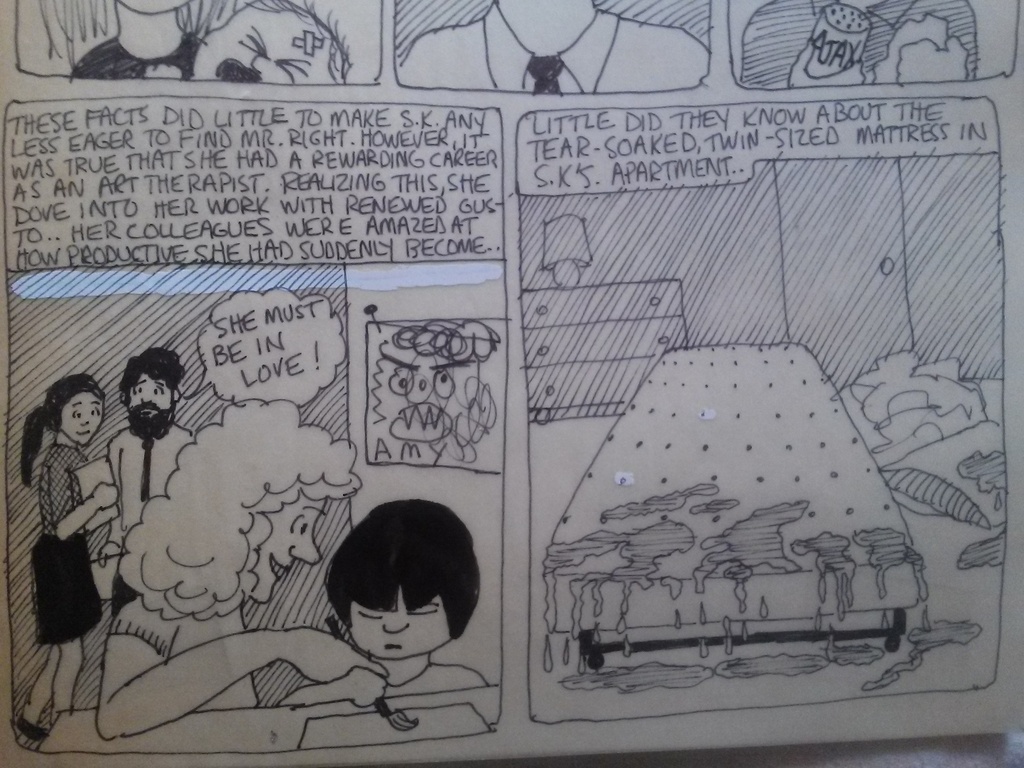
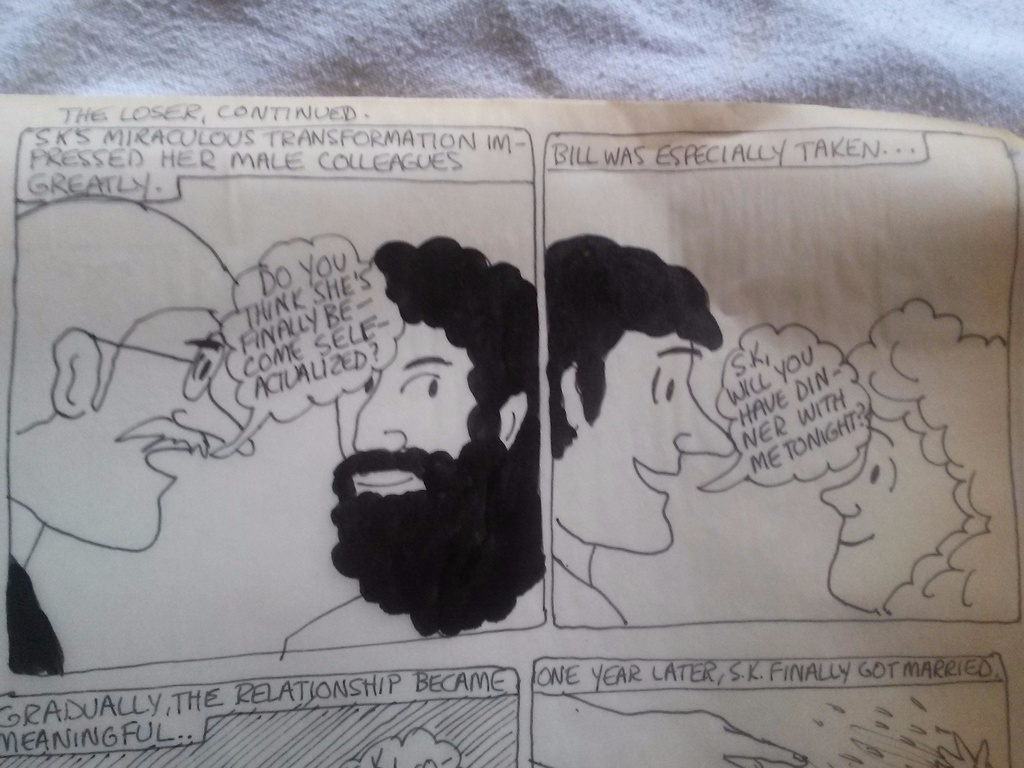
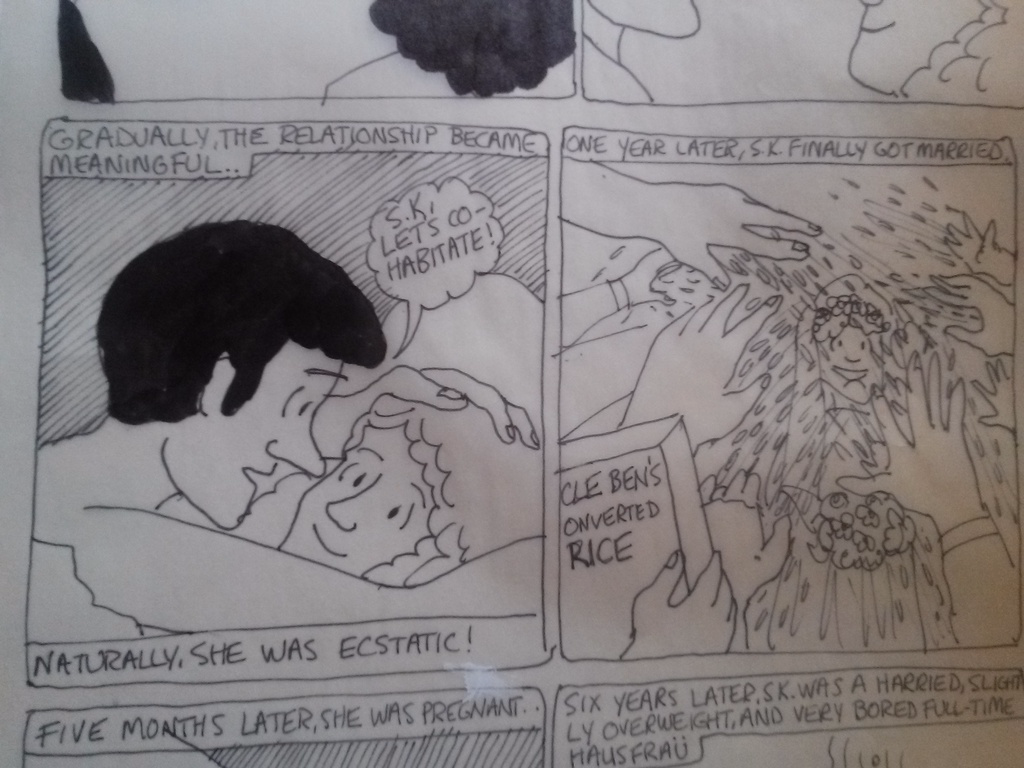
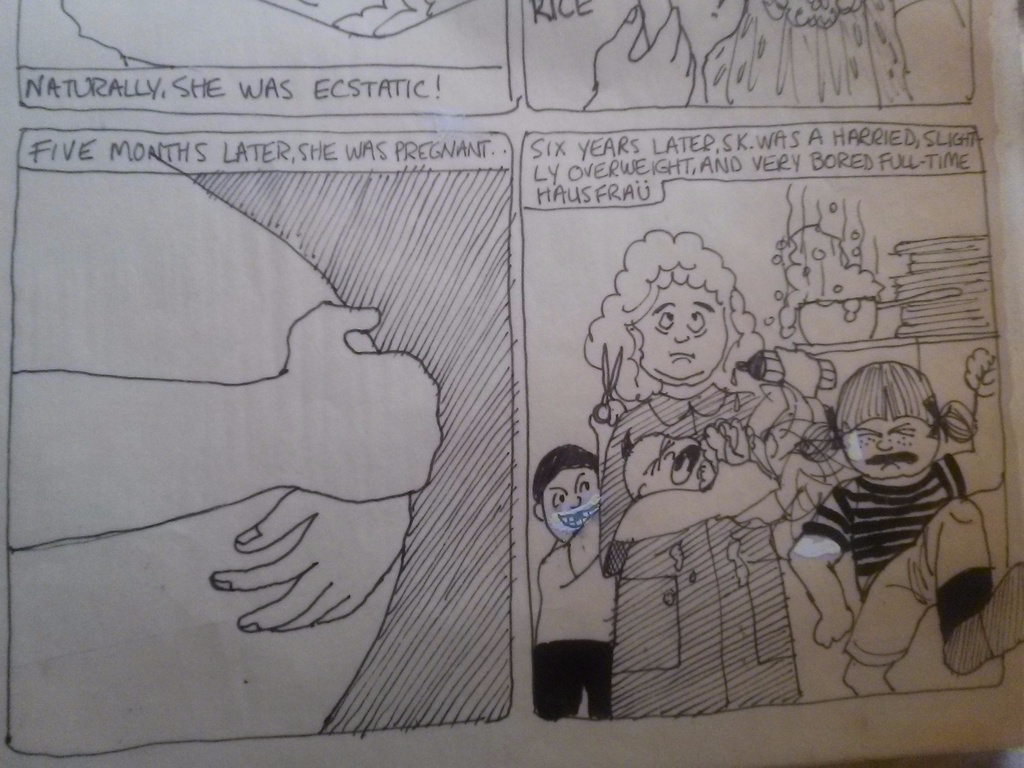
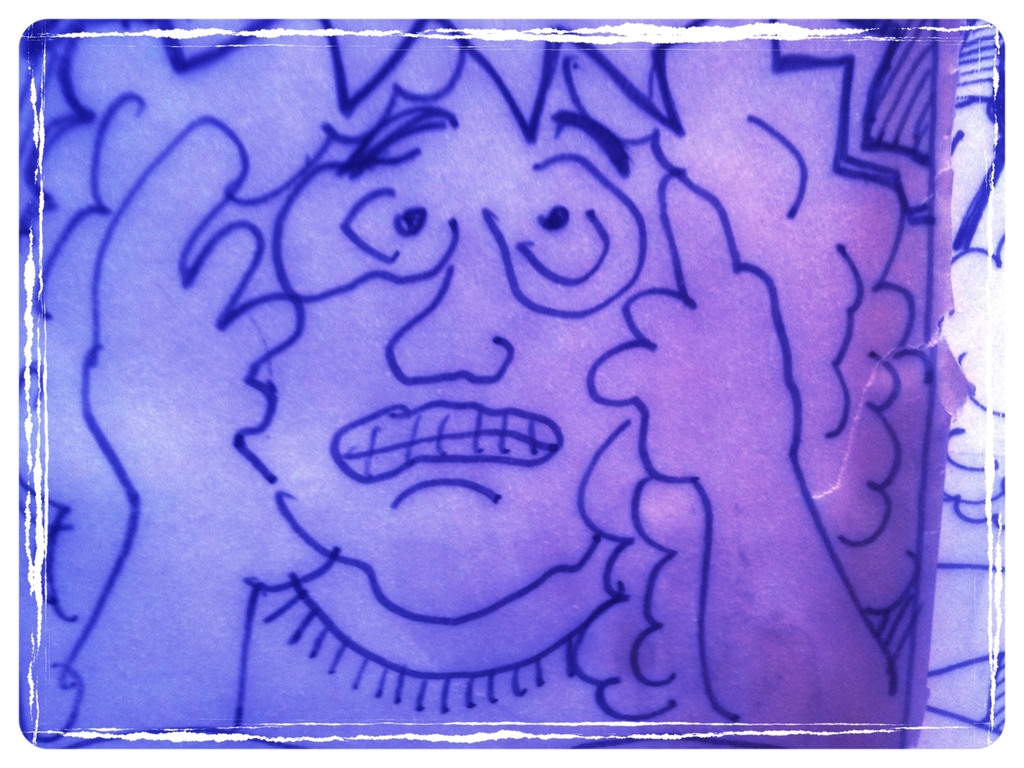
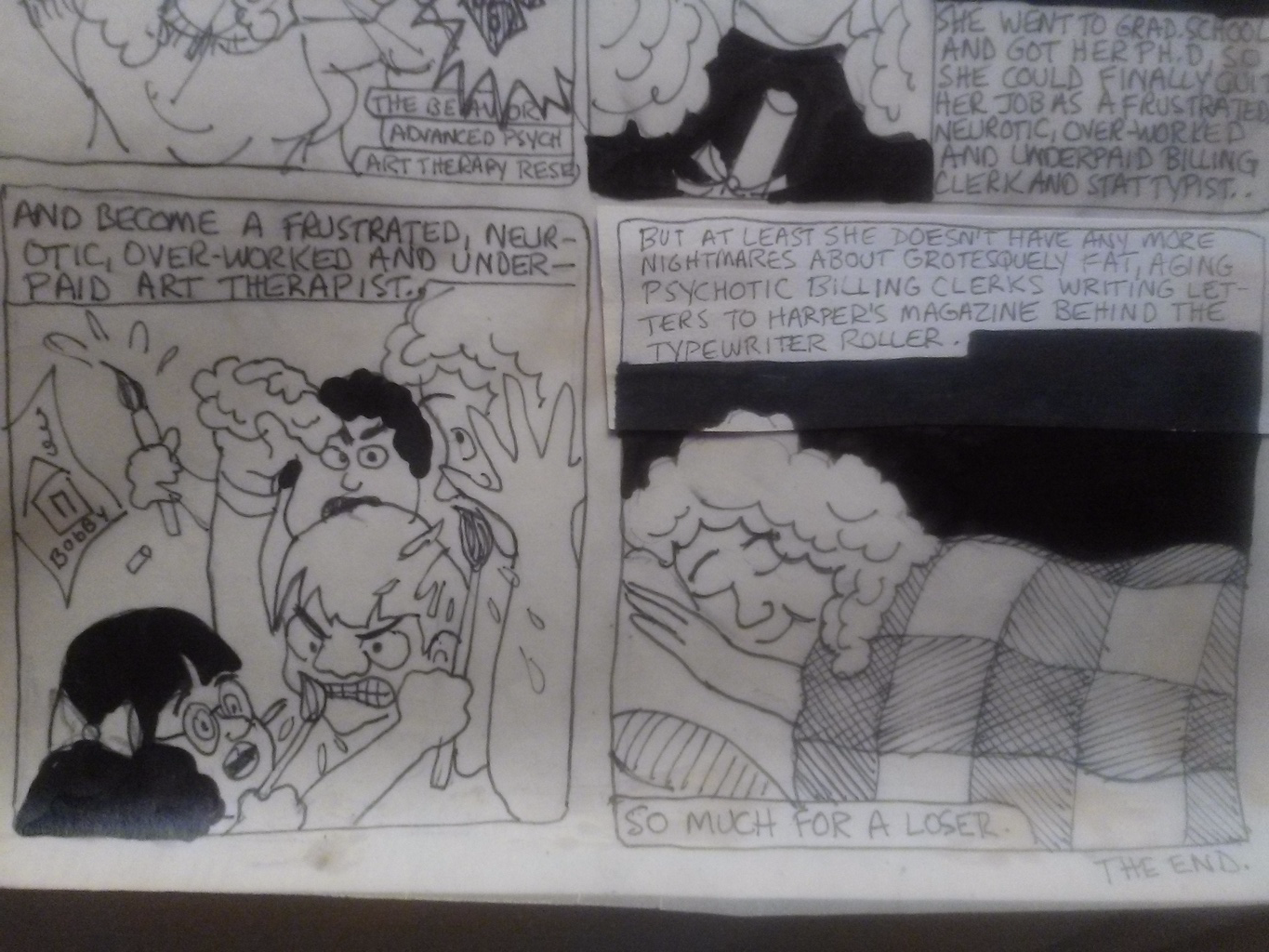
My expression here definitely reflected my attitude at the time about dating.

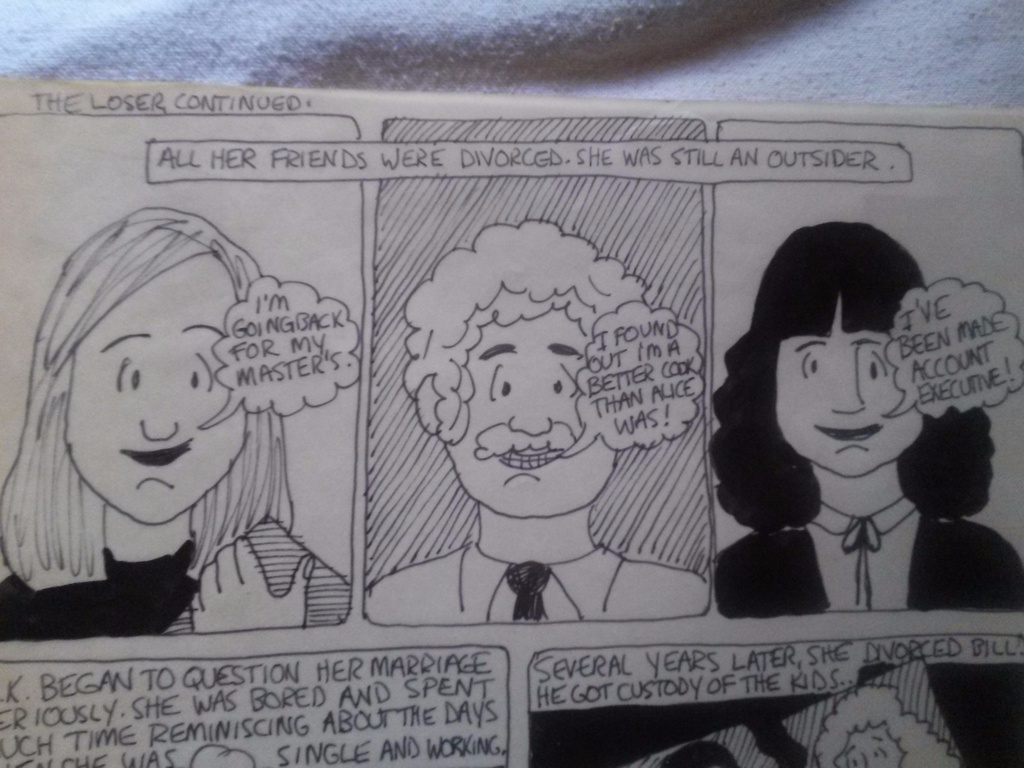
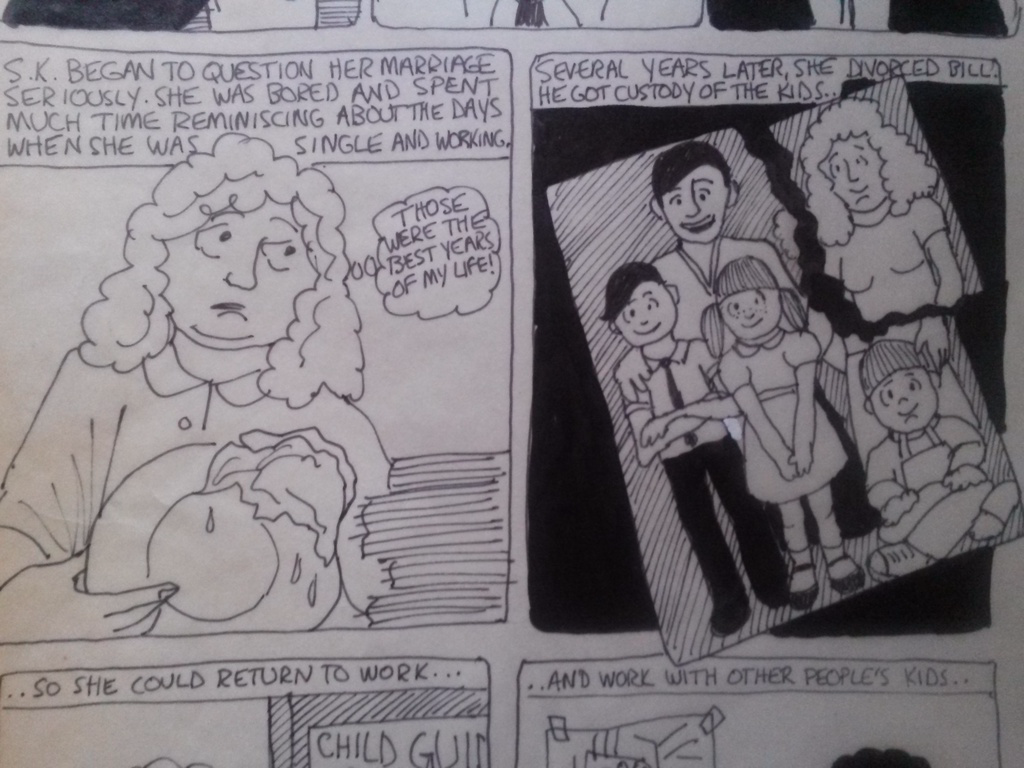
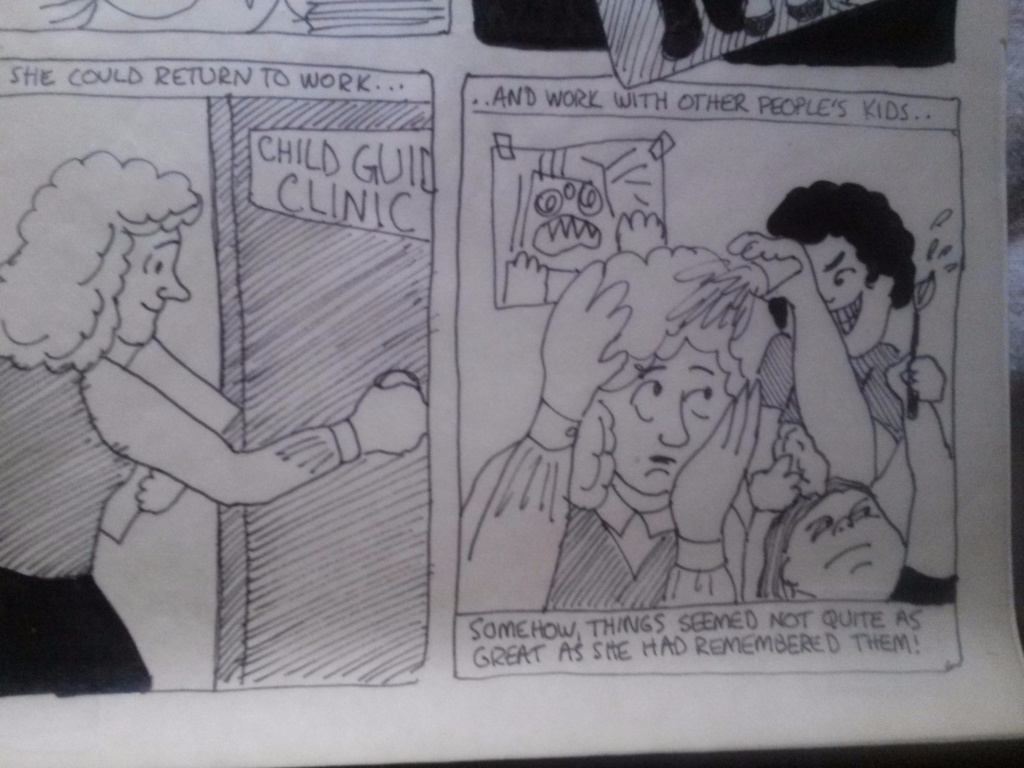
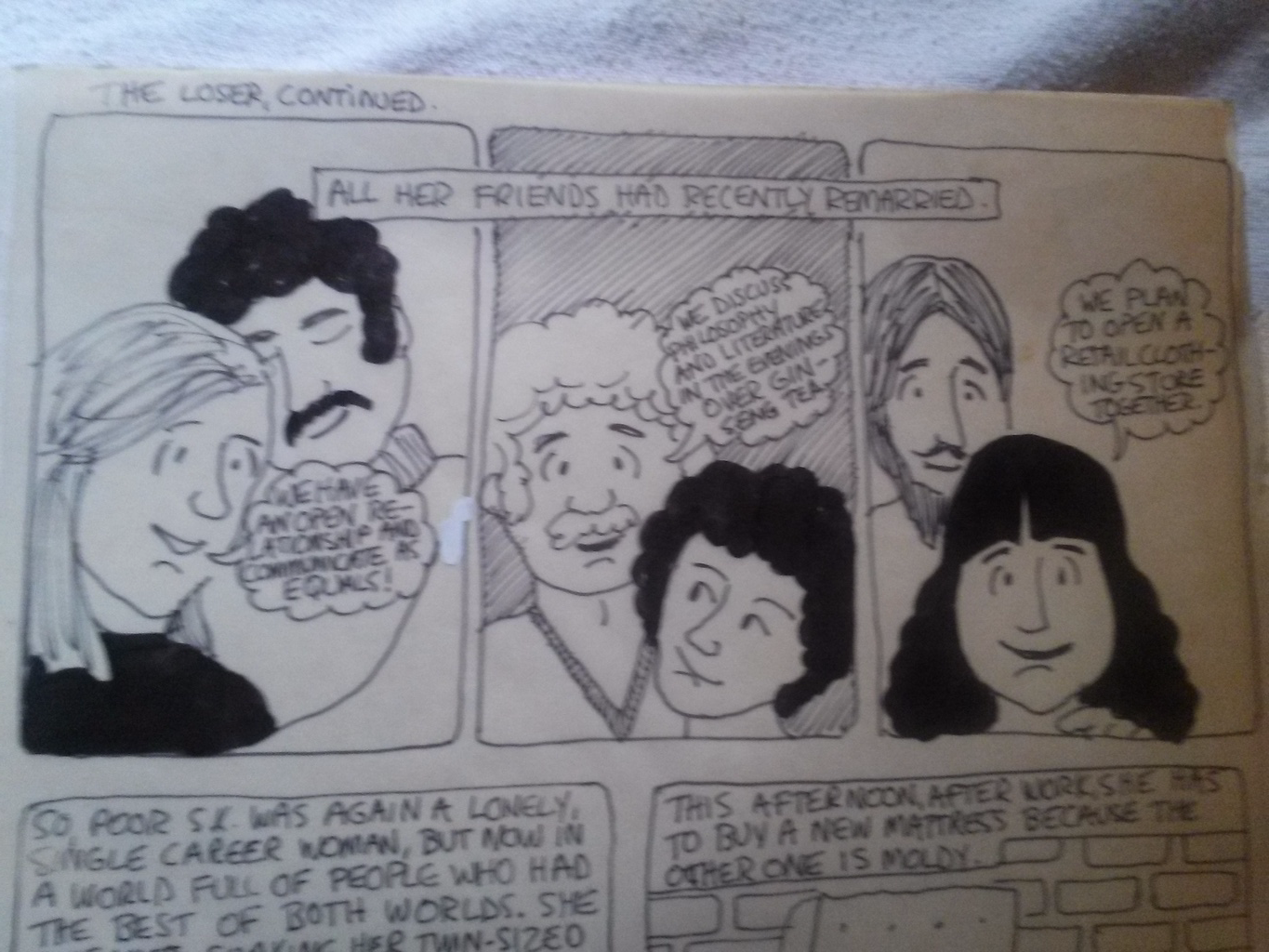
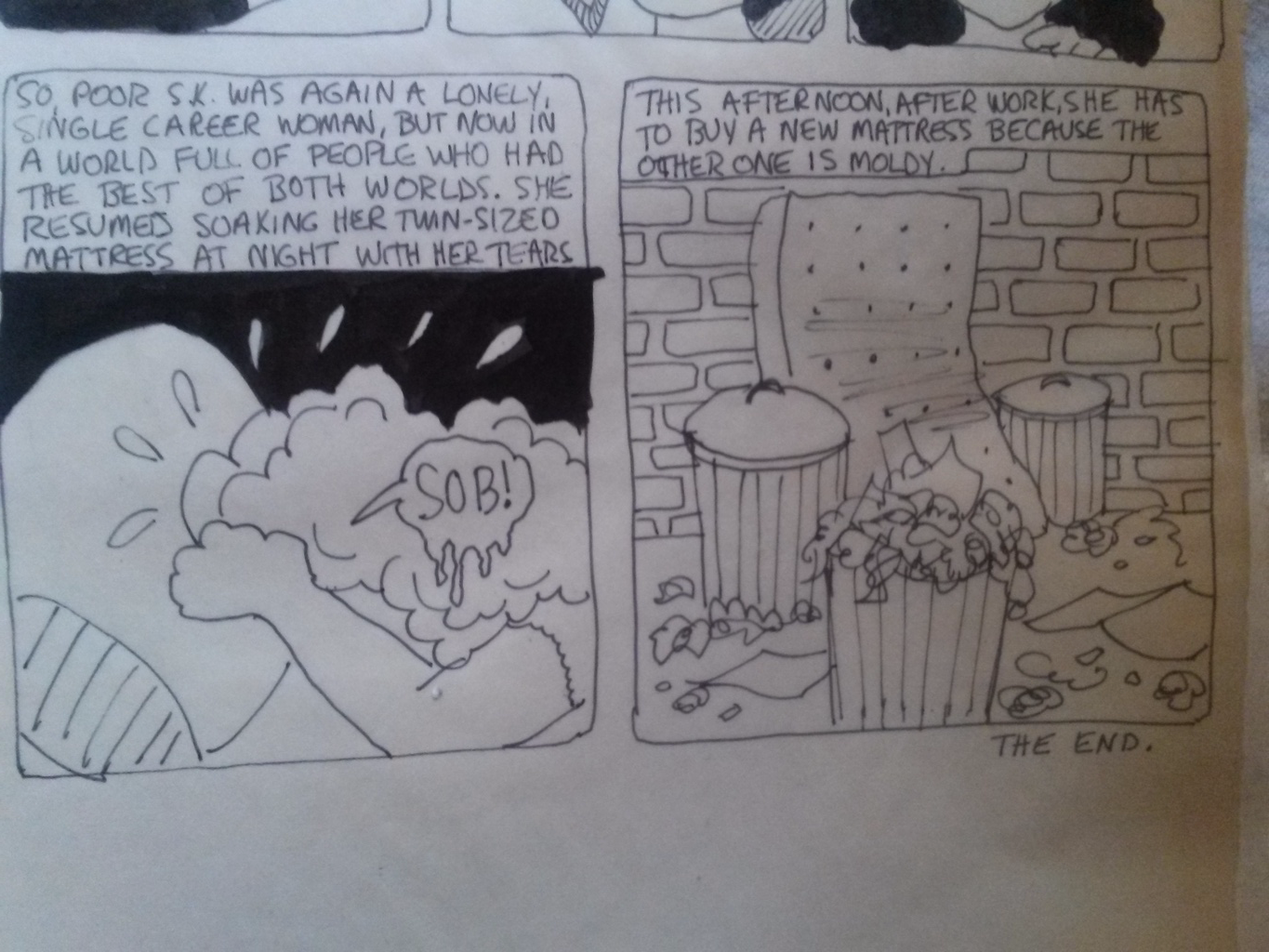
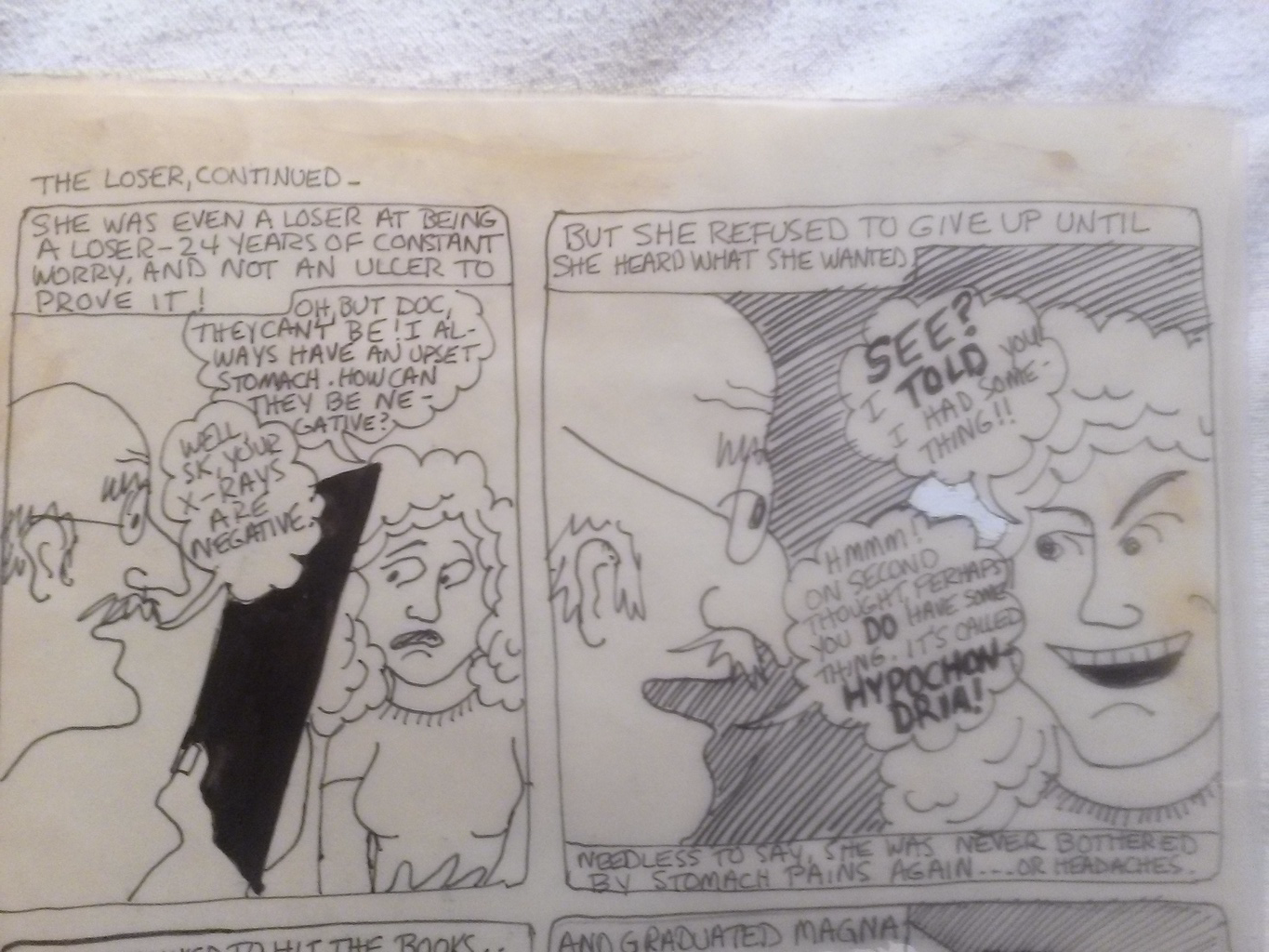
This second cartoon story (also drawn in 1981) describes the way I longed for a fulfilling romantic relationship, but at the same time was quite ambivalent about the prospect, not having had good role models with my own parents’ marriage, and living in a time where marriage and family were still looked upon as a second-rate occupation for women who were “losers”, i.e. couldn’t do anything else. And yet I still longed for that dream husband and family…

As it turned out, I didn’t marry until I was 27–5 years after I drew this cartoon. Of course, THAT relationship was far from ideal. In the mental state I was in (and already attracted to narcissistic men), I was right to be wary!

The first cartoon story can be seen here.

cartoon2_panel1

cartoon2_panel2

cartoon2_panel3

cartoon2_panel4

cartoon2_panel5

cartoon2_panel6

cartoon2_panel7

cartoon2_panel8

cartoon2_panel9

cartoon2_panel10

cartoon2_panel11

I really wish I would have continued this hobby…

Adventures of S.K. the “Loser”: cartoon diary of myself at age 22 (one of two)

the_loser
Generally, what my state of mind was like back in the day.

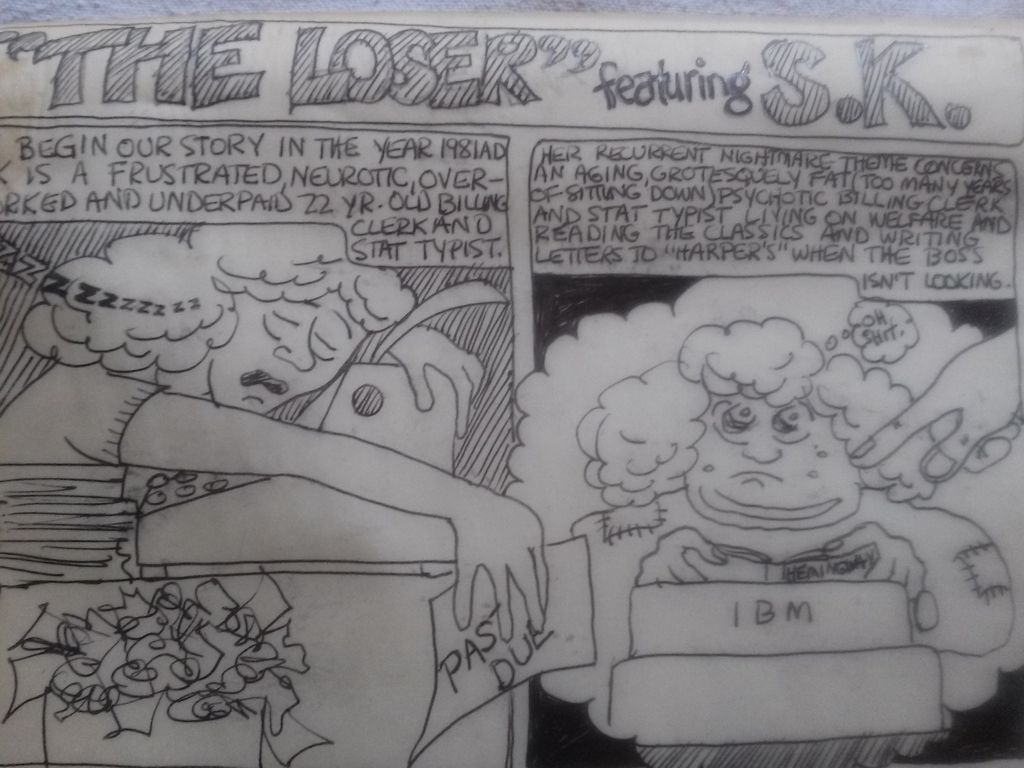
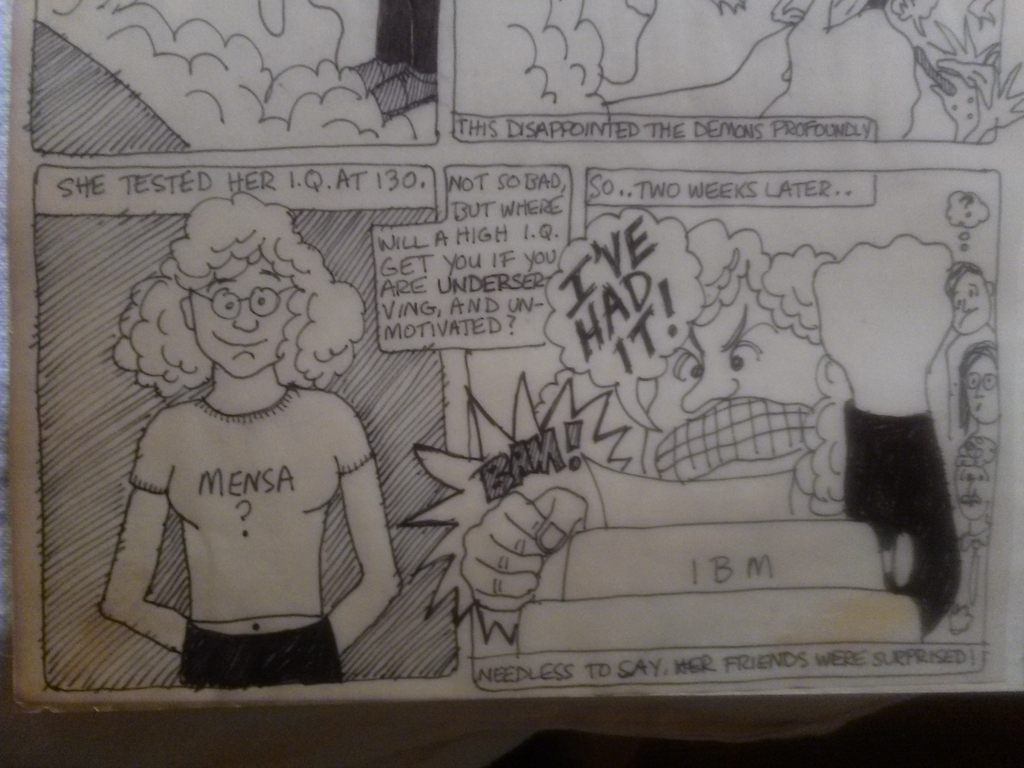
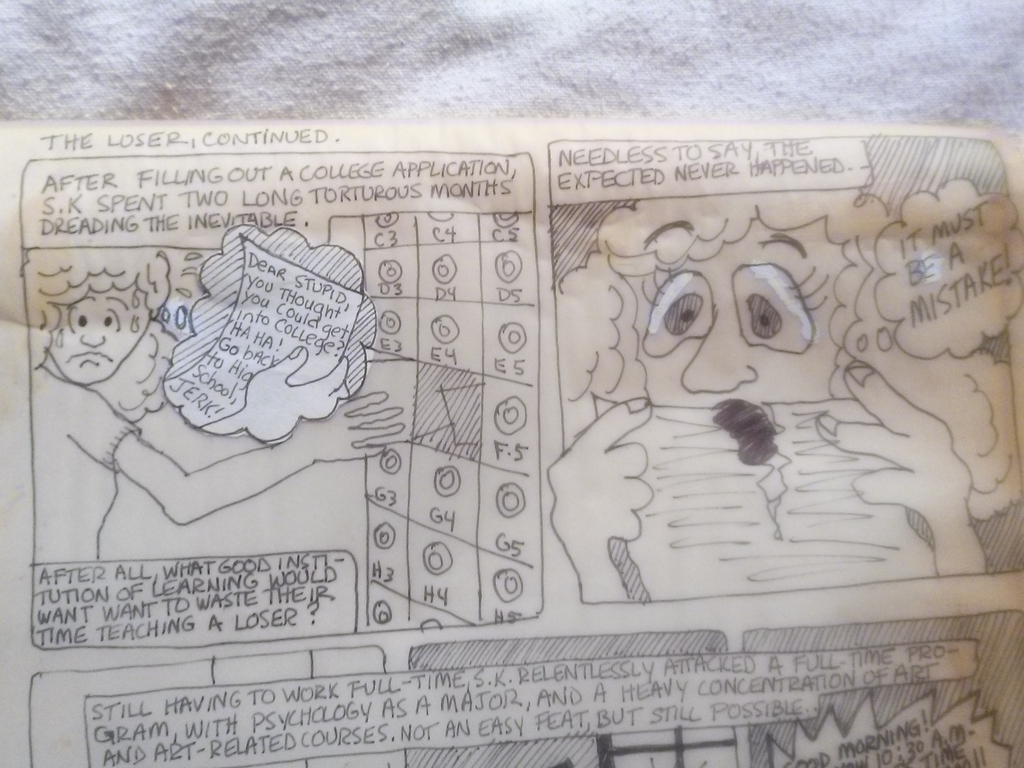
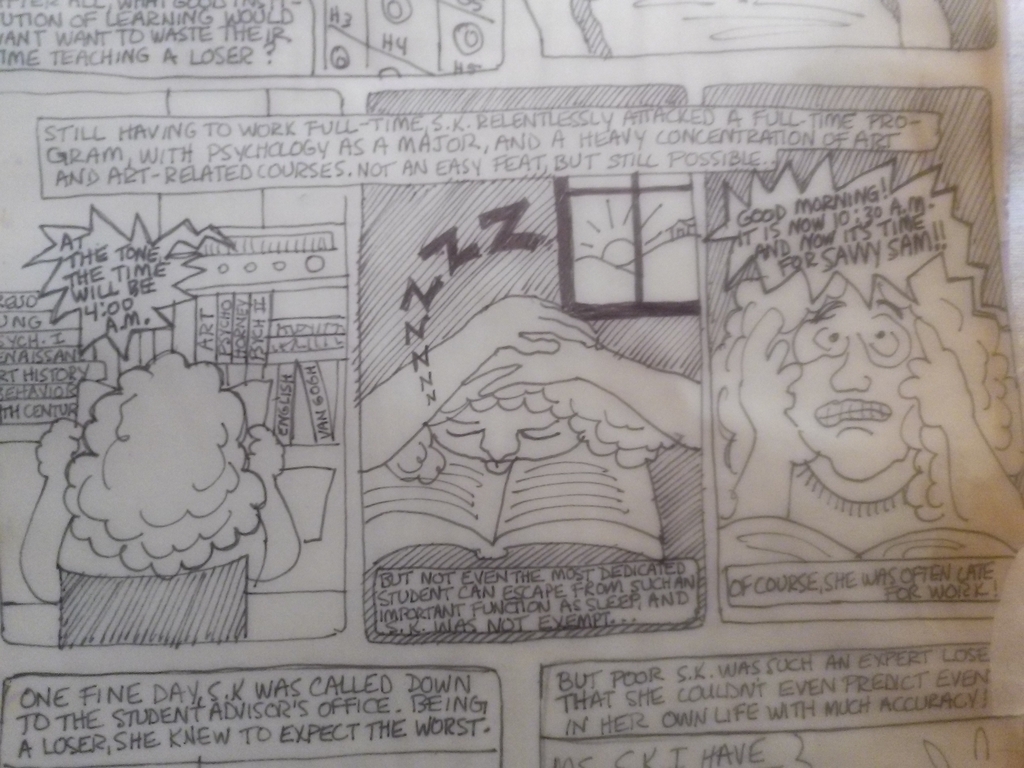
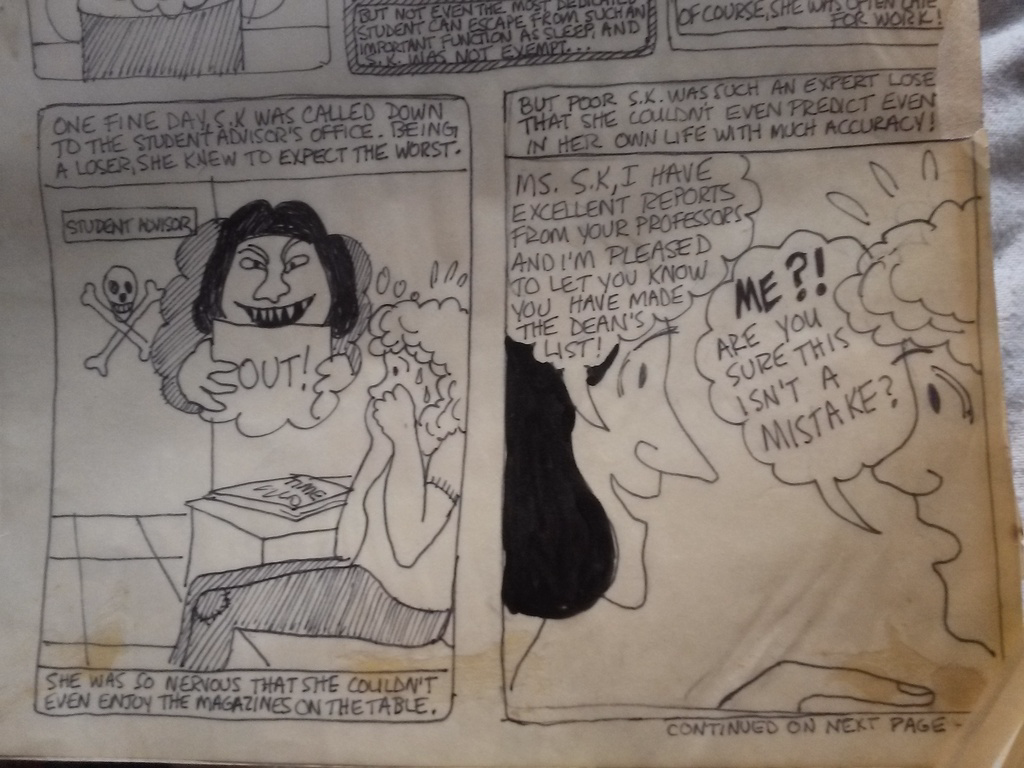
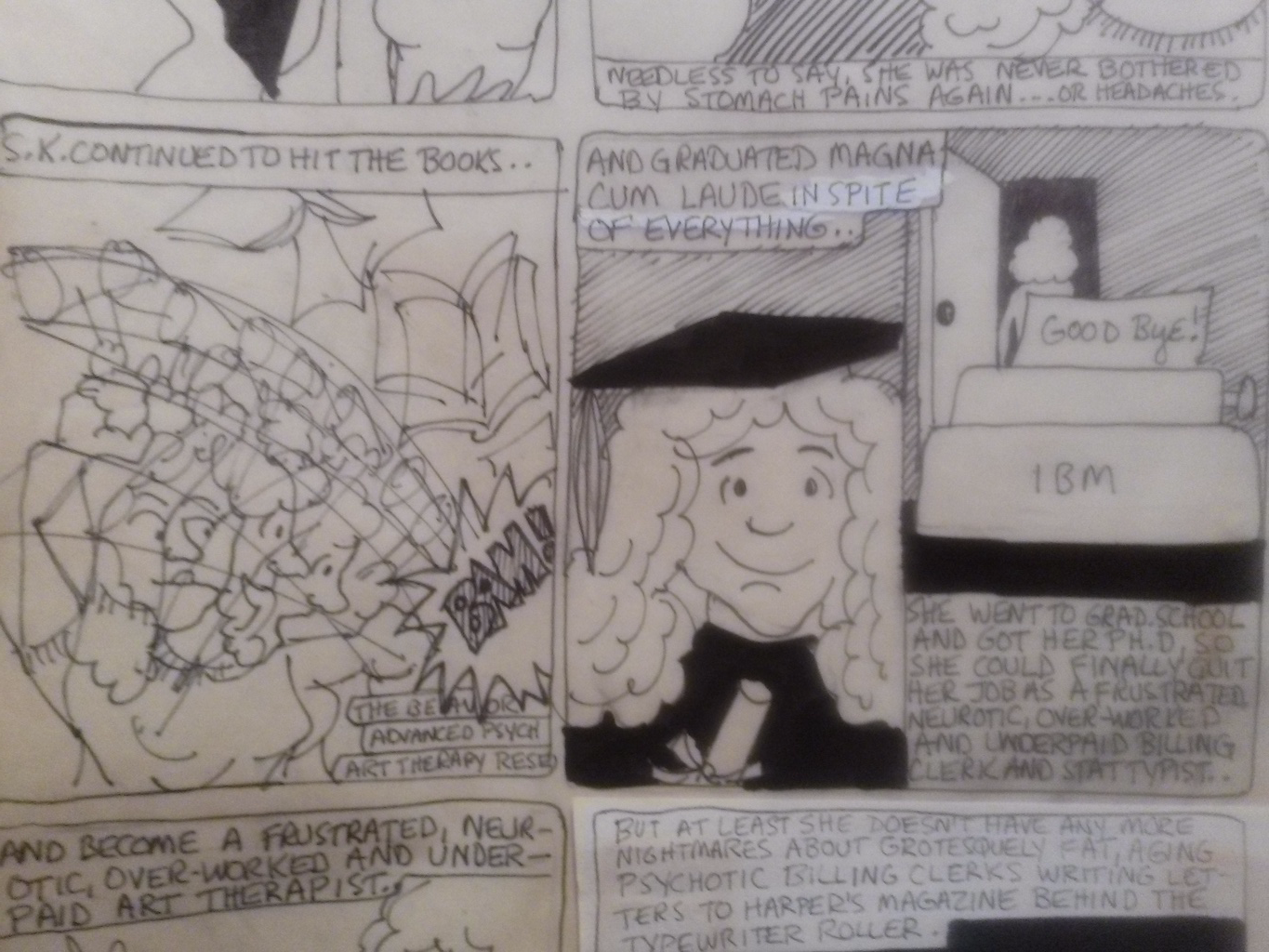
I found two cartoon stories I drew in 1981 that describe exactly where my head was at when I was 22–the same age my daughter is now.

At the time, I was juggling a full time job as a billing clerk (which I hated) with being a full-time college student. Believe me, even for a 22 year old, this wasn’t easy. I was a psychology major with a strong interest (minor) in art. I also liked to write, as I do now. At the time, I thought I might become an art therapist (which would have required people-skills and patience with others I simply did not possess).

But my real interests lay in romance–like most borderlines, I drifted from one intense romantic relationship to the next–and THAT will be described in the next set of cartoons, which I’ll post after these.

While a sense of humor about myself is evident in both these cartoons, my insecurity and unhappiness with myself and my overwhelming anxiety about my future (which didn’t turn out to be that great) could not have been more apparent. Of course, insecurity and identity issues are normal for anyone at age 22, but I think I was more consumed by my feelings of insecurity and lack of belonging than most. At the time, I had no idea about Aspergers or that I might be Borderline. I just thought of myself as a neurotic basketcase tormented by inner demons. I must have had some optimism however, as the outcome (at least in the first story) is generally hopeful.

It’s interesting that I referred to myself as “The Loser” but not too surprising given my background and low self esteem. “S.K.” were my actual initials. I wish I had drawn more of these. I only made two sets.

I hope these are readable; they are very old and the papers they were drawn on very large, so the print may be hard to read in some places. They are posted in order; PLEASE CLICK ON THE PANELS TO ENLARGE.

cartoon_panel1

cartoon_panel2

cartoon_panel3

cartoon_panel4

cartoon_panel5

cartoon_panel6

cartoon_panel7

cartoon_panel8

cartoon_panel9

ETA: I accidentally posted this publicly with only the first six panels; I’ve added the final three so the story should make more sense now.

Read the second cartoon story here.

Introversion

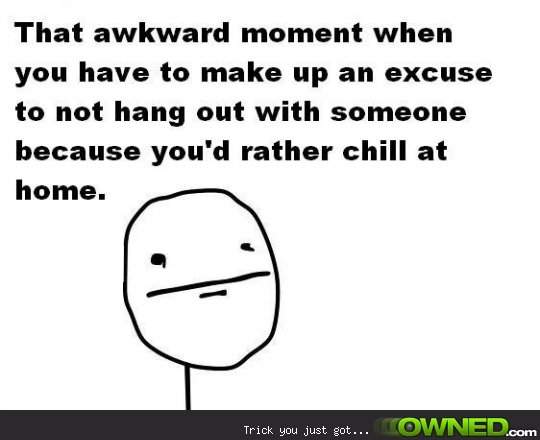
As an INFJ with both Aspergers and Avoidant Personality Disorder I can sure relate to this!

that_awkward_moment

Lies my narcissists told me.

lies_honesty

I was told many lies about myself while growing up within my my FOO (family of origin). I have no doubt this had everything to do with my developing Borderline Personality Disorder (BPD), Avoidant Personality Disorder (AvPD), and lifelong severe anxiety.

Why personality disorders are so difficult to cure.
Personality disorders (PD’s) are formed very early in life, normally before the age of six–which is the reason they are so hard to cure. Because the child’s personality is still in a malleable state (meaning it hasn’t fully formed) until around age 5, PD’s become an integral part of the personality and therefore can be extremely difficult to eradicate because they were formed so early the child doesn’t believe it’s a problem, just the way things are. Their misery seems normal to them. They know nothing else.

Of course some PD’s are more amenable to treatment than others, and sufferers of some PD’s, such as Avoidant, Dependent, and sometimes Borderline, are much more likely to seek treatment than those with, say, ASPD (antisocial personality disorder), NPD (narcissism), or Schizoid PD.

Lies I was told growing up.

sensitive_people
As the family Scapegoat (and occasional Golden Child which I’ll explain later in this article), here are some of the lies I was told while I was growing up:

“You’re too sensitive!” — This one’s the Big Kahuna for many of us ACONs, especially if we’re also HSPs (highly sensitive people) by nature. “You’re too sensitive” isn’t so much a lie as it is a verbal twisting of a wonderful gift and ability to see the Truth into something…more resembling an embarrassing defect. Narcissistic lies sometimes appear in the form of turning something good into something shameful and bad, and vice versa.

“You have no sense of humor.” (see above)

“You don’t really want that.” (the parent is telling the child what they really think–this will just cause confusion and identity issues for the child)

“No one wants to know how you feel.” (so we learn to swallow our pain and lock up our emotions)

“You cry too much.” (I had to unlearn this–unfortunately I unlearned it too well and now find it difficult to cry even when I know I need to)

“You don’t know what you’re talking about.” (invalidation and devaluation)

“You know you don’t really think that.” (massive mindfuckery)

“You don’t really want to join the swim team. You know you don’t like competition.” (see above–the real message here being “you are a weak, pathetic, scared loser” to really drive the message home)

“You’re too fat/heavy/even ‘obese’ (I was never more than 120 lbs at 5’4” as a teenager)

“They don’t like you because you’re always so unpleasant to be around.” (Real nice)

“You never smile and it makes your face look unpleasant.” (Fake Narc smiles look even more ‘unpleasant’)

“You read too much.” (okay…would it be better if I snorted Smarties instead or went around throwing rocks through the neighbors’ windows?)

“You know you’re not really good at that.” (whenever I wanted to try something I hadn’t tried before)

“You know you can’t do that, let me do it.” (I wanted to wash the dishes when I was 6)

“You’re too idealistic” (mmmkay…and that’s a bad thing?)

Because I was raised as an only child (I had half-siblings who did not live with us), I also served as the Golden Child. So I also heard lies like,

“They’re just jealous of you because you’re prettier than they are.” (even as a first grader, I knew this was bullshit).

child_on_pedestal

“They’re just jealous of you because you’re smarter than they are.” (my grades weren’t much above average, in spite of having a high IQ)

“You are more talented than they are.”

“We have better genes than those other people.” (Narc genes?)

“You come from a better family than your friends do.” (I call bullshit on that.)

You were the best dancer in the school play.” (I have two left feet and even my dog would have known that was an outrageous lie).

It doesn’t stop when you go No Contact.

flying_monkeys

These are some of the lies told about me by my mother to her sycophants (the ones I’m aware of):

“She’s a loser just like her ex-husband” (Nice.)

“She always makes such terrible choices.” (True, but there were extenuating circumstances at those times she would never understand)

“If only she had done what I told her.” (If only I had had the courage to take a few risks-I am extremely risk-averse)

“If only she had listened to me.” (Again, if only I had taken a few risks and not been so afraid of my own shadow)

“She’s a nothing.” (I guess that’s why people tend to always talk over me, look through me, and never hear what I have to say in group or social settings–where I FEEL like a nothing)

“She was ruined by her ex” (this is a half-truth…but RUINED? Really? Let’s tone down the hyperbole, shall we?)

“She will always be poor.” (and the poor are always with us, right?)

“She will never achieve anything.”

“She can never stick with anything.” (This has actually been true but has gotten a lot better)

“She has mental problems.”

“She is sick in the head.”

Ad nauseam…

Conflicting messages as Scapegoat/Golden Child

ConflictingMessages

Black-and-white thinking (idealizing/devaluing) and outrageous contradictions prevailed in my FOO.
As both Scapegoat and Golden Child, I was receiving two sets of messages (sometimes both at the same time), such as, “You know you don’t really want that, because you’re too sensitive, you hate competition and you are smarter than they are.”
I think you get the idea.

Being raised with conflicting sets of messages and being treated as beloved/rejected child at once was incredibly crazymaking.

Borderline Personality Disorder (or even narcissism!) and Avoidant Personality Disorder (I have both BPD and AvPD) both seem like logical, almost sane reactions to having been raised with two conflicting sets of messages–I was either all bad or all good, with no in between.

And finally, it doesn’t end there. Raised by narcissists, I married one even worse. A narcissist so malignant he made my parents look like empathic light beings in comparison. I was trained to be Supply and was WAY too good a student. If awards were given for Learning How to Be Narcissistic Supply, I would have been valedictorian.

Lies my psychopathic narcissist ex-husband told me.

gaslighting

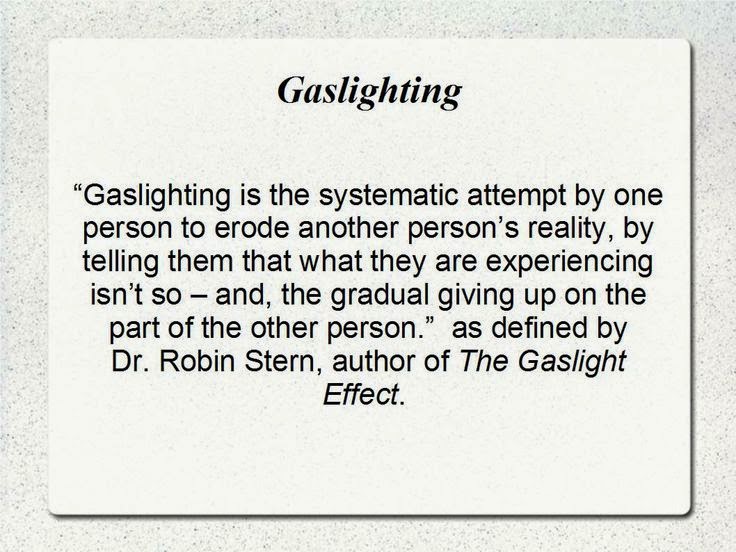
Following are the lies my malignant narcissist sperm donor told me about myself and also told all the flying monkeys he had succeeded in turning against me (some of who included my friends) over 28 years. This led to my PTSD and clinical depression (where I had to be hospitalized for suicidal ideation). Most of these were projections of his own character flaws onto me.

“You are selfish/self-centered.”

“You always overreact to everything.”

“You never listen to me”

“You don’t care about me or my problems.”

“You have no empathy for me.”

“You are narcissistic.”

“You are becoming just like one of them” (he was referring to Republicans, who he hates)

“Oh, so now you’re living the high life?” (when I took in a roommate while he was homeless)

“You are a b**ch, c*nt, Tw*t, whore.”

“You are stupid.”

“You have no common sense.”

“You’re insane.”

“There’s something wrong with you.”

“You’re just like your family–all crazy.”

…as well as a constant barrage of hateful sarcasm at my expense, whether there were people present or not. If I objected to this mean spirited “humor,” I was told–WHAT ELSE???–I was “too sensitive” or “have no sense of humor.”

Because of having grown up in the midst of a labyrinthine web of lies, and then marrying into another one, I have always valued Truth. That’s why I put a premium on complete honesty, at least in my writing.
Not that I don’t ever lie–we all do, it’s part of the human condition. But I am very aware of dishonesty when I see it and won’t hesitate to call it out in others.
I just took a personality disorders test…

SimilarMinds.com: http://similarminds.com/personality_disorder.html

The results–
I’m highest in Avoidant (which makes sense to me), followed by Dependent, Paranoid and Schizoid (makes some sense). Borderline in 5th place tied with Antisocial??? WTF?!!?

Personality Disorder Test Results

Paranoid |||||||||||||| 58% 50%
Schizoid |||||||||||||| 57% 40%
Schizotypal |||||||||||| 44% 56%
Antisocial |||||||||||||| 52% 46%
Borderline |||||||||||||| 52% 45%
Histrionic |||||||||||||| 51% 52%
Narcissistic |||||||||||| 42% 40%
Avoidant |||||||||||||||| 64% 48%
Dependent |||||||||||||| 60% 44%
Obsessive-Compulsive |||||||||||| 49% 45%

*scores [on the right hand side] are the average web score

Test Note: Read the descriptions below to avoid misinterpreting test results (for example, the Antisocial classification does not mean you are a loner, it means you tend to be insensitive towards others).

Disorder Info

Eccentric Personality Disorders: Paranoid, Schizoid, Schizotypal

Individuals with these disorders often appear odd or peculiar.

Paranoid Personality Disorder – individual generally tends to interpret the actions of others as threatening; preoccupied with suspiciousness/paranoia. They are stuck between their need for others and their mistrust of others.
Schizoid Personality Disorder – individual generally detached from social relationships, and shows a narrow range of emotional expression in various social settings; emotional zombies who stopped feeling due to trauma(s) and/or can’t feel due to organic depression
Schizotypal Personality Disorder – individual is uncomfortable in close relationships, has thought or perceptual distortions, and peculiarities of behavior; preoccupied with seeing themselves and/or the world as strange/odd

Dramatic Personality Disorders: Antisocial, Borderline, Histrionic, and Narcissistic

Individuals with these disorders have intense, unstable emotions, distorted self-perception, and/or behavioral impulsiveness.

Antisocial Personality Disorder – individual shows a pervasive disregard for, and violation of, the rights of others; Preoccupied with disdain/contempt for others and often a need for control/power over others.

Borderline Personality Disorder – individual shows a generalized pattern of instability in interpersonal relationships, self-image, and observable emotions, and significant impulsiveness. Core issue is an inability to regulate emotions.

Histrionic Personality Disorder – individual often displays excessive emotionality and attention seeking in various contexts. They tend to overreact to other people, and are often perceived as shallow and self-centered. Core issue is attention addiction.

Narcissistic Personality Disorder – individual has a grandiose view of themselves, a need for admiration, and a lack of empathy that begins by early adulthood and is present in various situations. These individuals are very demanding in their relationships. Core issue is entitlement.

Anxious Personality Disorders: Avoidant, Dependent, Obsessive-Compulsive

Individuals with these disorders often appear anxious or fearful.

Avoidant Personality Disorder – individual is socially inhibited, feels inadequate, and is oversensitive to criticism. Core issue is an inability to resolve their codependent need for connection with their codependent fear of rejection and/or discomfort/anxiety around others.
Dependent Personality Disorder – individual shows an extreme need to be taken care of that leads to fears of separation, and passive and clinging behavior. Core issue is the need to be parented by others (i.e. avoid growing up / becoming self-sufficient).

Obsessive-Compulsive Personality Disorder – individual is preoccupied with orderliness, perfectionism, and control at the expense of flexibility, openness, and efficiency. Core issue is mental and behavioral rigidity/inflexibility.

My character flaws.

not_there_yet

Just because I write a blog that sometimes gives advice to others about Narcissistic Personality Disorder and other mental disorders such as Aspergers, doesn’t mean I don’t still have a long way to go in recovery myself.

Blogging and prayer have helped immensely in raising my self esteem and general outlook on life, but it’s important to stay humble too. I’m not anyone’s “guru” even though I may have good ideas from time to time. So lest anyone think I’m tooting my own horn or purporting to be some kind of expert, here’s a list of my character flaws that sometimes get in the way of recovery.

Aspergers/Avoidant Personality Disorder (AvPD) Flaws:

notobsessive

1. Shyness in social situations that comes off to some as aloofness, coldness or sometimes stupidity (when combined with my Aspie tendency to be “out of it” sometimes).

2. Awkwardness in social situations — doing or saying the wrong thing at the wrong time; occasional social gaffes that make me look obtuse or clueless.

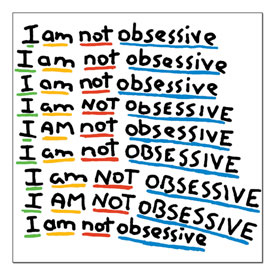
3. Obsessiveness.

4. Narrow focus on one or two interests at a time. I dislike interruptions from the real world that interrupt my focus and force me to engage with the world.

5. Sometimes instead of not talking at all, I talk too much.

6. I avoid people. I prefer being alone (or with my pets) to being with other people.

7. I am a creature of habit and dislike interruptions from my routines.

8. I don’t like “surprises” or things being sprung on me at the last minute, where I don’t have a chance to prepare for them.

9. I get freaked out and overwhelmed by too much input from the world at one time. I can’t stand chaos, loud people, too much going on at once, or too many people around me outside of formal settings like a classroom or meeting. When I feel like too much is coming at me at once, I shut down and tune out–or get annoyed and angry.

10. Tendency to like to put everything in categories, or as some like to say, in “little boxes.” This leads to a tendency to label people and like labels.

11. General weirdness. This is probably a good thing.

Borderline Personality Disorder (BPD)/ PTSD Flaws:

all-or-nothing

These have been getting a lot better and I have learned some valuable tools in dealing with the symptoms in myself that have become second nature now, but it’s hard to be cured of this disorder and I still have some Borderline traits:

1. Tendency to either idealize or devalue people.

2. Hypersensitivity to criticism, jokes at my expense, or rejection.

3. Snap judgments about people before I truly get to know them.

4. Black and white thinking. Things and people are either all good or all bad.

5. Insecurity and worry about being liked (even though I avoid people). Try to figure that one out.

6. When angry, I can sometimes get so enraged I lose common sense and just want to do something to even the score without thinking about the consequences. Healthy fearfulness goes out the window and I act out in anger. Fortunately this happens a LOT less often than it used to; actually it’s pretty rare these days.

7. Rapid mood swings. This goes hand in hand with being bipolar too (that’s in remission). This too has been getting a lot better.

8. Paranoia and hypervigilance. I have a hard time trusting anyone.

9. Envy.

10. Excessive worry. Someone once told me, it’s useless to worry about things because if the bad thing does happen, then you’ve experienced it twice, and if it doesn’t happen, you’ve wasted energy on worrying. Wise words.

11. Fear of taking risks. This too has been getting a lot better, but in the offline world, I still have a long way to go.

15. Defensiveness.

16. Excessive guilt and shame. Easily embarrassed.

Other flaws.

smoking

1. Smoking. (I’ve cut down to less than a pack a day though)

2. A diet that doesn’t include enough fresh fruits and veggies.

3. Laziness.

4. Procrastination.

5. Self-sabotage (this has gotten a lot better).

6. Excessive worry about my adult kids. Overprotectiveness.

7. Beating myself up.

8. Beating myself up for having character flaws.

character_flaws

All in all I’m far from perfect, but I think my flaws probably make me more interesting too.

The chatterbox and the hermit.

shy_and_outgoing__by_cammy_senpai-d6ejdec
“Shy and Outgoing” by Cammy Senpai, Deviantart

I’m two different people.

Most of you already know what I’m like online. I made a vow to be completely honest and hold back nothing (within reason) and so I am doing. This has been a wonderful thing for me because it has given me courage (and takes courage!)

But I’ve always been outgoing online. I talk about the things that concern me, my feelings about them, my relationships, my mostly painful and sordid past. I tell you if I’m happy, sad or mad and I tell you why. I actively seek out friendships and post on other people’s blogs (when I can find the time since I’m always on this blog). I’ve become active on social media too, something I never thought I’d be. If anything, I’m probably a little too confessional!
On the web, I’m comfortable being completely myself and do not suffer from the shyness, shame or self-consciousness that plagues me IRL.

In the real world (which I prefer to call the physical world, because online life is every bit as real as any other form of interaction), I’m the opposite of the above. I suffer from both Aspergers (which I was most likely born with) and Avoidant Personality Disorder, brought on by abuse and always feeling off balance because of my MN mother and my enabling, alcoholic father, not to mention being a frequent target for school bullies.

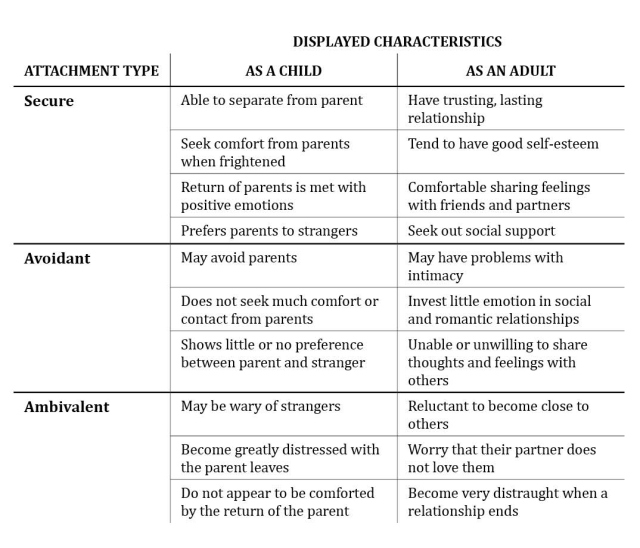
attachment-types
From “What’s In It For Me?” on Zombie Shuffle’s blog.

In the physical world, I’m a very different person than the one you know online. Although I have the same emotions (which I talk about here), I don’t discuss them openly or even at all. I have few friends, am not close with anyone in my family other than my children, and prefer the company of myself, my books, or my pets to that of other people. Lots of noise and large groups of chattering people are very triggering to me, and I find myself tensing up and retreating if possible.

Most people know very little about me. I don’t say much, I rarely initiate conversation, and am very shy. Some people think I am cold and aloof; others think I am just stupid. I’m neither, but my avoidant personality makes me seem unfriendly or insecure. My Aspergers makes me seem awkward which exacerbates my problems relating to people.

I am terrified of intimacy and romantic relationships. After a long, abusive marriage and 7 more years of hell living with him after we divorced, I think I’ve had enough. I don’t trust men enough or trust my own judgment enough to dare take the plunge again into a new relationship. I also feel like my age is a problem, even though I look far younger than I am. I haven’t had sex in 9 years and really, that’s not a problem for me. I like the idea of having a relationship again (who really wants to die alone?), but I don’t know if I could cope with the reality of one. That doesn’t mean it won’t ever happen though. It just scares the living daylights out of me.

I can’t stand talking on the phone and a ringing phone is very triggering for me: I always expect to hear bad news. I know it’s just my hypervigilance, but I can’t help my reaction whenever the phone rings. As far as talking on the phone, it’s just awkward because I can’t pick up nuances in speech (due to my Aspergers) which is made worse by the fact I can’t see their facial expressions or body language. I try to end phone conversations as quickly as possible, which makes people think I’m unfriendly or don’t want to talk to them.

I don’t connect well IRL with most people, although I do get along with most. I’m not hard to get along with, just hard to get to know.

Blogging has enabled me to open up and be the self I want to be. It’s enhanced my self esteem and my creativity. Being courageous enough to post the sort of things I post gives me even more courage. Journaling online to complete strangers has helped me understand a lot of things I never used to understand and it’s even helping me develop more empathy.

But this isn’t the Matrix and I can’t live inside my online world all the time. I do think, however, that my increased self esteem and self awareness will soon translate into my relations with the real world. In fact, I’ve been told I seem more relaxed, happier, and more confident than I used to be, even though my extreme reservedness remains. I smile and laugh more. Most people do seem to like me, even though they can’t get to know me well. They have no idea the shy, mysterious, taciturn woman who tends to clam up in social situations or avoid them altogether actually runs a blog where she talks about the most personal issues it’s possible to talk about.

Forever alone.

?????????????????????????????????????????????????????????????????????????????????????????????????????

I have always been attracted to narcissistic men. And them to me. I spent 28 years (7 of those AFTER we divorced) living with a malignant narcissist substance abuser and raising children with him. Before Michael, I had three serious boyfriends, and only one was not a narcissist (but was severely bipolar).

When I was in my twenties, all I wanted to do was marry and have babies–this wasn’t considered cool or forward thinking at the time (the 1980s). I wasn’t really focused on having a career like most young women my age.

I think my oddly timed longing for normal family life was because more than anything in the world, I longed to be part of a family that would not be like the one I came from, a close, functional family whose members truly loved and cared for one another. I had grand fantasies of Perfect Family Life–3-4 perfect, normal kids; a perfect, normal husband with no serious mental disorders or drug or alcohol issues; and a beautiful home with plenty of old school charm in a safe neighborhood. My Perfect Mate would be an honest, loyal husband and father who loved animals and long walks and would care deeply about all of us. Of course there would be pets too, probably a large friendly dog like a Golden Retriever. I wanted the damned Brady Bunch.

I know, you’re probably ready to vomit all over your keyboard. Chill. I’m stopping right here. I cringe when I think about how naive and clueless I was.

Does anyone remember this commercial from about 2007-09? If you’re a nausea-prone ACON you may want to take some Pepto first.

Well, this was the family I wanted to make, back in the 1980s.

30 odd years later: I hate that damned commercial with its perky, perfect, cute-but-not-beautiful soccer mom–a woman who undoubtedly had loving parents who raised her with consistency and lots of hugs and support, a woman who has extended family members like cousins or aunts or an uncle she is close to, and also has lots of friends. She also has an advanced degree in something like sociology or art history. She was popular at school, not Mean Girl/cheerleader-popular, but the next tier down from that–she was one of the honor roll kids where the girls all played volleyball or were in the Drama Club, and the guys all looked like Ferris Bueller and were Theater Nerds. But these second-tier, almost-popular kids were actually nice to everyone (unlike the top tier of popular kids who really weren’t so much popular as they were feared and respected–because they consisted largely of narcs and their sycophants) and you wanted to hate them but you couldn’t because they were always so darned nice.

Instead of pursuing her career in art history or writing a book about The Sociology of Art History, this perky redhaired 30-something has chosen to stay home with her growing brood of ginger kids, each one more red haired than the last. Her infuriating announcements of big moves (to MEMPHIS!), promotions at work, home enlargements, weeks-long family vacations, learning how to speak French, and especially…ESPECIALLY!..the group shot at the end showing the whole family focusing on Perky Soccer Mom bouncing the the new baby on her hip at the end–not just any baby, but a gorgeous fat healthy good natured baby girl with an adorable grin who probably sports fire engine red hair under that white cap–made me want to throw a brick at my TV screen.

I know this is just a commercial and those people are actors, but…I ACTUALLY KNOW FAMILIES LIKE THIS. Of course I don’t know what goes on behind closed doors (and everyone has their dark secrets), but because the members of these families always seem happy and relaxed and everyone seems to love everyone else, with not a molecule of narcissism anywhere to be seen, the skeletons in their closets don’t come out to haunt them all that much. They are probably covered with dust from disuse.

I’m assuming here that the reason this thoroughly obnoxious commercial was so popular (it ran for almost 3 years), is not because it depicts the idealized family everyone strives to create, but rather, because many people can actually relate to this smugly contented woman and her tall, dark and handsome husband, their perfect dog, their big colonial house, and their large brood of gingers.

I longed for this family because having this family would vindicate my dysfunctional and narcissistic family of origin. It was the family that would bring me Justice.

I never got that family, because I fell in love with a malignant narcissist, who in every imaginable way at the beginning, convinced me he was the Perfect Boyfriend, and later the Perfect Fiance. We made two highly intelligent but troubled kids (well, one is a lot less so but lives almost 700 miles away).
And now I am Forever Alone.

foreveralone

But I’m alright with that. More than alright.

In my past relationships, I never saw any of the red flags. I knew nothing of red flags back then other than the physical kind that signal physical danger. The most useful psychological advice about men and relationships I got in the early-mid 1980s was from articles and fluff quizzes (such as “What Does his Lovemaking Say About his Character?”) in magazines like Cosmopolitan and Glamour.

I was never attracted to “bad boys.” I chose men who had good jobs, prospects and didn’t stink or break the law. But sometimes these “perfect” guys can be anything but perfect, and because they put on such a convincing and impressive mask of normality, you don’t suspect their true motives until it’s too late. I always seemed to gravitate to the devils dressed in white.

I’m not going to recount the downward spiral that led to the dissolution of our marriage, drug addiction, troubled kids, and all the rest because I’ve done that already ad nauseam (if you must know my story of being married to a malignant narc, click on the links under “My Story”).

So I’ve done a 180 from the naive, romantic starry eyed girl I was in the 1980s–the girl who was uncool enough at the time to want a family and babies and a normal life with people who were not psychopathic or addicted to drugs or alcohol (today that would make me Taylor Swift–how times have changed). I no longer want a relationship. I relish my solitude.

I still get crushes, and plenty of them (I have one now), and just as in my teens and twenties, they still tend to be intense. My crushes are pleasurable to me but they are mine alone to enjoy, not something to be shared with the object of my infatuation. I know, I’m weird. I have an excuse to be weird and avoidant though, because I’m Aspie with Avoidant Personality Disorder. I enjoy my dreams and fantasies far more than my reality, and why ruin a good fantasy by trying to make it real?

crush

That’s why I think my mind makes sure my crushes are never on people I know personally or have to see all the time, and instead chooses men who are inaccessible for one reason or another. Famous people are the safest of all, because I do not ever not have to meet them and either (a) face rejection; or (b) worse: not be rejected but gradually find out they are really just another sick malignantly narcissistic tool who will fly me to the moon and feed me fresh blackberries dipped in cognac, and then ever so insidiously proceed to turn my life into one resembling incarceration in a Turkish prison before I know what even hit me.

I’ve been there, done that. I am no longer of childbearing age, and though I look far younger and fitter than my 55 years, I realize I’m not going to look this good too much longer. At my age, there’s a feeling that you just don’t have what it takes to attract a man anymore, even when it’s not true. Because I look better now than I have since my mid-late 30s. Sure, maybe a woman of a certain age can’t attract the 20-somethings anymore, but what middle aged woman in her right mind really wants a 20-something for anything but a quick fling, anyway? In my case my wariness and self consciousness is due to the low self esteem that’s lived with me my entire life like some parasitic twin I’ve grown so used to I sometimes forget it’s there. Hating yourself is a tough habit to break.

But the real problem isn’t my fear of losing my sexual desirability (which is already well on its way over the other side of the mountain), it’s the simple fact that I don’t trust men (or anyone) enough to become intimate with one. As an Aspie, I have trouble reading social cues, which means I often miss the important red flags and warning signs of a narcissist who is love bombing me and wooing me into his black den of misery. And more than that–I want to believe them. I want to give them the benefit of the doubt. I never learned from my past mistakes.

So no longer is “love” my passion in life or my goal. I figure I will die single and alone, but very possibly, happy. Hopefully by the time I die, I will have written a book or two that helped others, gave others joy, and brings me a nice income so I can buy my own small, quaint, quirky home near my son in Florida, somewhere near the beach.

oldwoman

Twenty or thirty years from now: I see myself–an old spinster (I love the strength that word conveys–we need to bring it back!) wearing a long brightly patterned madras-cotton dress or jeans and a slouchy, comfy sweater in cooler weather, walking barefoot along the Gulf Coast at sunset, feeling wet sand squeeze between my pale toes, waves lapping at my feet, the salt air breeze making me smile and my eyes water. I’m tossing small pebbles into the golden waves, a large dog with a cool name like Hector skipping along by my side, occasionally running ahead of me when he sees a seagull land on the darkening sand. I’ll be thinking about my grown son and daughter, and their families and satisfying lives, and my only worry would be the two-month deadline my publisher has given to finish writing a groundbreaking new book about something that matters. I’ll be Forever Alone. And like it.

All this being said, if an attractive, genuinely nice man comes along when I’m not looking, and maybe I’m feeling more strong and confident, I might venture into the ocean again, or at least get my feet wet. So sure, it could happen, but right now I’m just trying to get to know myself.

People treat me like I’m stupid

stupid

I wonder if it’s common for people with Aspergers or high functioning autism to come across to others as lacking basic intelligence.

I get that from people all the time and I hate it. In social situations, such as at work, where I have to interact with neurotypicals (NTs) who I don’t know too well, I’ve noticed people patronize me, they repeat things to me as if I didn’t understand them the first time, or just respond to me in a condescending way, as if they’re talking to a two year old. I am paranoid but I don’t think it’s my paranoia because they don’t act that way to everyone

I think people’s behavior toward me is because as an Aspie, it’s so difficult for me to process the things people tell me in a normal way, especially when I’m forced to deal with people in a group setting. I am also almost silent due to my shyness and unwillingness to get involved in social conversation. That probably makes me seem a little dim too.

I don’t hear that well either (I have only 20% hearing in my left ear due to having severe ear infections as a child), so that makes it even harder for me to understand what people say. I often have to ask them to repeat what they just said, which irritates both me and others. I’ve told people I have bad hearing, because being asked to repeat something annoys people less if they know there is something wrong with my hearing.

I find social chatter and small talk overwhelming and it’s not fun for me at all. It’s a lot of work for me to process all that. Of course there are some people who just intimidate me anyway (probably narcs) and I totally clam up around them and act really stupid and inappropriate when I’m forced to talk to them or ask them a question. Socializing is just so difficult! NT’s love it. I don’t.

It makes me so angry that I’m treated as if I’m a mental lightweight by people who know very little about me. I so want to say this to people who talk down to me or ask me the infuriating, “Did you get that?” :

“Look, you don’t have to act so condescending toward me. I’m not an idiot. I understand what you say. I understand a lot. I may look stupid to you because I have Aspergers, and that makes it almost impossible for me to process verbal communication and body language very well or deal with people in a group, or know how to act when you’re yammering at me. I also have Avoidant Personality Disorder, which exacerbates my discomfort in social situations. I get very anxious. But I want you to know I’m actually very smart, probably smarter than you. My IQ is above 150 but I know you probably think I’m lying. If you could see the way I write, you would be shocked at how intelligent and insightful I am. I see a lot of what goes on, I notice everything, I know a lot about a lot of things. I just don’t know how to communicate that well except in writing, or react appropriately when you tell me something. So please stop thinking I’m borderline retarded, because I am not.”

Of course I’ll never say this. But I wish I could!

Having Aspergers and Avoidant personality disorder combined with only partial hearing really is a handicap to dealing with the NT (neurotypical) world.

People who love me and know me well, and people who read what I write know I am not stupid.

Besides, Einstein had Aspergers too, and all his teachers thought he was retarded! 😀

Targets and Victims

victim

I found another blog today written by a survivor of a sick family of psychopaths and sociopaths (I’ve added the site to my list of resources under the “Info and Support” tab in the green bar in the header. I know I’ve written about this before, but this is one of the best lists of the traits of potential targets and victims of psychopaths I have seen yet. I have just about every single one of these traits, unfortunately. From an early age, I was trained to be a doormat. I learned that lesson too well.

BEFORE: TRAITS of a Potential TARGET

Below are the traits most commonly attributed to a sociopath’s target. Every person is inherently different, and that includes each target and the traits that are most pronounced in the individual. An individual would definitely not need any of these traits to be preyed upon.

This is not an attempt to diagnose anyone.

Shyness
Difficulty communicating
A lack of self confidence
Wanting to please
A belief that if you love enough the person will change
A belief that if you love enough the relationship will succeed
Difficulty establishing and maintaining boundaries
Not being able to say no
Being easily influenced by others
Wanting to be rescued from your life situation
Wanting to rescue others from their distress
Being over nurturing particularly when not asked
Feelings of shame and self doubt
Low self-esteem
A lack of memories about childhood or periods of adulthood
A lack of motivation from within and being motivated by others

AFTER: SYMPTOMS of a Relentlessly Abused VICTIM

This is a very accurate list of symptoms experienced by someone who has had their psyche brutally victimized by a sociopath. With that said, this list is not all-inclusive, nor is it intended to be part of any diagnostic function, whatsoever. These symptoms can also be triggered by many other conditions or events.

The source of this data is from ongoing research, but the majority of the data is derived and confirmed from personal experience … the key word being “majority” There are some symptoms listed here that I have not experienced at all, though they have been mentioned enough for me to accept them as potentially common.

If you, or someone you know, has experienced even a few of these symptoms, seek professional help. Keep in mind, though, that not all “help” is equal. If the professional you choose does not seem to relate to your needs as you would expect or desire, keep looking.

Emotional paralysis
PTSD (Post-Traumatic Stress Disorder)
Suicidal thoughts or actions (indirect homicide)
Loss of interest in life
Loss of energy
Insomnia
Anxiety
Depression or Severe Depression
Numbing of feelings
Disinterest in having a relationship
Panic attacks
Irritability
Increased anxiety from being alone
Increased anxiety from being in crowds
Mood swings
Source: sociopathicstyle.com [confirmed by personal experience (50+ years)]