Lies my narcissists told me.

lies_honesty

I was told many lies about myself while growing up within my my FOO (family of origin). I have no doubt this had everything to do with my developing Borderline Personality Disorder (BPD), Avoidant Personality Disorder (AvPD), and lifelong severe anxiety.

Why personality disorders are so difficult to cure.
Personality disorders (PD’s) are formed very early in life, normally before the age of six–which is the reason they are so hard to cure. Because the child’s personality is still in a malleable state (meaning it hasn’t fully formed) until around age 5, PD’s become an integral part of the personality and therefore can be extremely difficult to eradicate because they were formed so early the child doesn’t believe it’s a problem, just the way things are. Their misery seems normal to them. They know nothing else.

Of course some PD’s are more amenable to treatment than others, and sufferers of some PD’s, such as Avoidant, Dependent, and sometimes Borderline, are much more likely to seek treatment than those with, say, ASPD (antisocial personality disorder), NPD (narcissism), or Schizoid PD.

Lies I was told growing up.

sensitive_people
As the family Scapegoat (and occasional Golden Child which I’ll explain later in this article), here are some of the lies I was told while I was growing up:

“You’re too sensitive!” — This one’s the Big Kahuna for many of us ACONs, especially if we’re also HSPs (highly sensitive people) by nature. “You’re too sensitive” isn’t so much a lie as it is a verbal twisting of a wonderful gift and ability to see the Truth into something…more resembling an embarrassing defect. Narcissistic lies sometimes appear in the form of turning something good into something shameful and bad, and vice versa.

“You have no sense of humor.” (see above)

“You don’t really want that.” (the parent is telling the child what they really think–this will just cause confusion and identity issues for the child)

“No one wants to know how you feel.” (so we learn to swallow our pain and lock up our emotions)

“You cry too much.” (I had to unlearn this–unfortunately I unlearned it too well and now find it difficult to cry even when I know I need to)

“You don’t know what you’re talking about.” (invalidation and devaluation)

“You know you don’t really think that.” (massive mindfuckery)

“You don’t really want to join the swim team. You know you don’t like competition.” (see above–the real message here being “you are a weak, pathetic, scared loser” to really drive the message home)

“You’re too fat/heavy/even ‘obese’ (I was never more than 120 lbs at 5’4” as a teenager)

“They don’t like you because you’re always so unpleasant to be around.” (Real nice)

“You never smile and it makes your face look unpleasant.” (Fake Narc smiles look even more ‘unpleasant’)

“You read too much.” (okay…would it be better if I snorted Smarties instead or went around throwing rocks through the neighbors’ windows?)

“You know you’re not really good at that.” (whenever I wanted to try something I hadn’t tried before)

“You know you can’t do that, let me do it.” (I wanted to wash the dishes when I was 6)

“You’re too idealistic” (mmmkay…and that’s a bad thing?)

Because I was raised as an only child (I had half-siblings who did not live with us), I also served as the Golden Child. So I also heard lies like,

“They’re just jealous of you because you’re prettier than they are.” (even as a first grader, I knew this was bullshit).
child_on_pedestal

“They’re just jealous of you because you’re smarter than they are.” (my grades weren’t much above average, in spite of having a high IQ)

“You are more talented than they are.”

“We have better genes than those other people.” (Narc genes?)

“You come from a better family than your friends do.” (I call bullshit on that.)

You were the best dancer in the school play.” (I have two left feet and even my dog would have known that was an outrageous lie).

It doesn’t stop when you go No Contact.

flying_monkeys

These are some of the lies told about me by my mother to her sycophants (the ones I’m aware of):

“She’s a loser just like her ex-husband” (Nice.)

“She always makes such terrible choices.” (True, but there were extenuating circumstances at those times she would never understand)

“If only she had done what I told her.” (If only I had had the courage to take a few risks-I am extremely risk-averse)

“If only she had listened to me.” (Again, if only I had taken a few risks and not been so afraid of my own shadow)

“She’s a nothing.” (I guess that’s why people tend to always talk over me, look through me, and never hear what I have to say in group or social settings–where I FEEL like a nothing)

“She was ruined by her ex” (this is a half-truth…but RUINED? Really? Let’s tone down the hyperbole, shall we?)

“She will always be poor.” (and the poor are always with us, right?)

“She will never achieve anything.”

“She can never stick with anything.” (This has actually been true but has gotten a lot better)

“She has mental problems.”

“She is sick in the head.”

Ad nauseam…

Conflicting messages as Scapegoat/Golden Child

ConflictingMessages

Black-and-white thinking (idealizing/devaluing) and outrageous contradictions prevailed in my FOO.
As both Scapegoat and Golden Child, I was receiving two sets of messages (sometimes both at the same time), such as, “You know you don’t really want that, because you’re too sensitive, you hate competition and you are smarter than they are.”
I think you get the idea.

Being raised with conflicting sets of messages and being treated as beloved/rejected child at once was incredibly crazymaking.

Borderline Personality Disorder (or even narcissism!) and Avoidant Personality Disorder (I have both BPD and AvPD) both seem like logical, almost sane reactions to having been raised with two conflicting sets of messages–I was either all bad or all good, with no in between.

And finally, it doesn’t end there. Raised by narcissists, I married one even worse. A narcissist so malignant he made my parents look like empathic light beings in comparison. I was trained to be Supply and was WAY too good a student. If awards were given for Learning How to Be Narcissistic Supply, I would have been valedictorian.

Lies my psychopathic narcissist ex-husband told me.
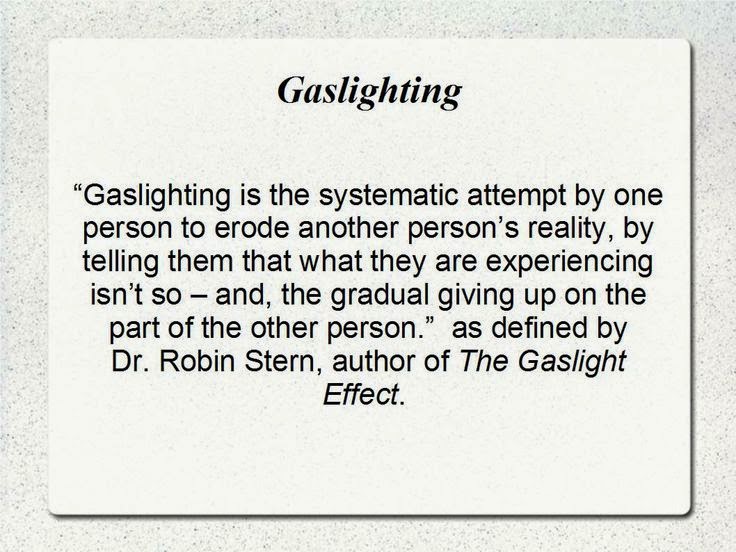
gaslighting

Following are the lies my malignant narcissist sperm donor told me about myself and also told all the flying monkeys he had succeeded in turning against me (some of who included my friends) over 28 years. This led to my PTSD and clinical depression (where I had to be hospitalized for suicidal ideation). Most of these were projections of his own character flaws onto me.

“You are selfish/self-centered.”

“You always overreact to everything.”

“You never listen to me”

“You don’t care about me or my problems.”

“You have no empathy for me.”

“You are narcissistic.”

“You are becoming just like one of them” (he was referring to Republicans, who he hates)

“Oh, so now you’re living the high life?” (when I took in a roommate while he was homeless)

“You are a b**ch, c*nt, Tw*t, whore.”

“You are stupid.”

“You have no common sense.”

“You’re insane.”

“There’s something wrong with you.”

“You’re just like your family–all crazy.”

…as well as a constant barrage of hateful sarcasm at my expense, whether there were people present or not. If I objected to this mean spirited “humor,” I was told–WHAT ELSE???–I was “too sensitive” or “have no sense of humor.”

Because of having grown up in the midst of a labyrinthine web of lies, and then marrying into another one, I have always valued Truth. That’s why I put a premium on complete honesty, at least in my writing.
Not that I don’t ever lie–we all do, it’s part of the human condition. But I am very aware of dishonesty when I see it and won’t hesitate to call it out in others.
I just get so tired of it…

rejected_child

I just read this blog post “I Would Be Begging for Help if it were Me” by Fivehundredpoundpeep. I highly recommend it to all ACONs. However, I won’t lie–her well written article triggered me, and the following may be the most emotional post I ever wrote.
This actually started as a reply on her blog, but I decided to turn it into an article because it’s very much on my mind. Tears are not far away.

The mother she describes in her article sounds EXACTLY like mine–the tone, choice of words, attitude, everything. Criticism under the guise of “help.” Dismissal in the name of love. With mine it’s always “positive thinking:”
“If you were not so negative, things would come more easily to you.”
“If you were more pleasant to be around, you would be able to make the connections to help you advance in a career.”
“You never were the competitive type.”
And always, always, “You’re too sensitive.”

Well, excuse me, Mommie Dearest, you’re too damn insensitive. You may not know it, but my high sensitivity, much as it may annoy you, is going to OUT you one day as the MALIGNANT NARCISSIST you always were, and will save my sanity. Be afraid. Be very afraid.

And then you dare to tell me how much you love me in the next line? Prove it.

She used to send me corny memes and hackneyed sayings about always being sunny and cheerful, and accepting things the way they are. Scooping all these memes together and throwing them in the blender, here’s the pureed form of the message she was giving me:
“You are a failure and will never get anywhere in this world because you’re not a fun person, you never smile, you’re always negative, but you should accept things as they are and be happy with your lousy lot, because you don’t deserve any better.

That’s what she was really saying. She’s one of what I call “the positive thinking nazis.” Actually both my parents are. There’s nothing wrong with positive thinking, of course, and it’s something we should all strive to do. But my FOO took it too far. They used it as a way to sugarcoat and deny real issues. It was like putting a Band-aid on a cancerous lesion so it didn’t have to be seen. If it didn’t have to be seen, it would go away. That was the sort of narcissistic magical thinking and insanity I had to deal with.
They used it as a way to deny responsibility. That’s the most glaring thing wrong with the positive thinking movement, when taken to ridiculous extremes. The denial of reality and rejection of responsibility.

Of course if I ever confronted my mother about this (which I never did, not directly anyway, since I was a teenager), she’d either fly into a narcissistic rage or vehemently deny it.

staring_at_wall
My mother still has the power to make me feel this way. That’s why we’re estranged.

Seriously, that’s the only kind of “help” I have ever gotten from my MN egg donor since I grew up. But I can’t be rejected anymore because I don’t ask her for a thing anymore. I could be lying in a gutter with a broken leg and no home and no way to get to the hospital, and she’d probably tell me I was just being too negative and drawing in my own bad fortune. I would rather lie there and bleed to death than beg her to help.

My whole FOO are huge proponents of the postmodern narcissistic grandiose fantasy of “you create your own reality. If you fail, it’s no one’s fault but your own. Pick yourself up by your bootstraps and suck it up.” It’s The Cliff’s Notes version of Ayn Rand’s objectivism. No compassion. No empathy. No love. Only judgment, gaslighting, subtle put downs, no loyalty, and thinly veiled hatred. And unfair and untrue accusations of my acting “entitled” because at my age, of course I should not be needing any help. But I’ve never asked them for much anyway. They think I asked for too much. All I ever wanted was love. No their conditional fake excuse for love.

It made me furious to the point of wanting to smash my fist into a brick wall when well-meaning people who may have heard about my financial problems or need of emotional support, said to me something like, “Honey, don’t you have a family you can turn to?” Or “Surely your family will help you out of this jam.” Sometimes it still happens, though I tell no one IRL my troubles. But I don’t want to hear what they have to say: all these people assume that just because their own families will help them or give them a hand up when they’re down on their luck or just need a non-judgmental listening ear or a soft shoulder to cry on, then the same must be true of my family too. It’s just what everyone does for own flesh and blood, right?

crying_chld

These fortunate people with loving families may be well meaning but they assume because theirs will help them and give them unconditional love, that the same holds true for people like us. They simply can’t or won’t believe there are some parents who actually HATE THEIR CHILDREN.

I get so tired of it. So very tired of it. That’s why I tell no one my problems anymore except on my blog. I never ask my parents for help, ever, and never will again. Especially not my mother. But I won’t need to. I’m still poor but I’m surviving, even thriving now–but not because of any of their heartless and judgmental “advice.”

I’m getting better because I have the ability to reach out to my real family–this amazing community of people who have such similar stories–through a skill I’ve recently rediscovered and is the tool to my healing: my writing.
I don’t need to be my mother’s scapegoat anymore.

Why do I feel so guilty?

guilt2

For my daughter’s 21st birthday she was informed a trust fund was being set up in her name by her grandfather (my father) but she would not be able to access it until she showed more maturity and interest in attending college. My daughter, feeling it was unfair that her brother got to access his right away (because he has made better choices and had “proven” himself) found a way to access the money anyway. Apparently there was some loophole she found out about (I have no idea how) where she could override the stipulations put on the fund. It wasn’t illegal what she did, but was probably unethical.

While I understood her feeling like she was being treated unfairly, at the same time I understood my father’s concerns and agreed with him she wasn’t mature enough to handle such a large sum of cash and it would have been better to wait until she was older.

We were right. She wasn’t ready to handle it. Within less than two months, almost all the money was gone and she can’t even really say what happened to it. My father’s wife (my “evil stepmother”) is impossible to deal with–cold, condescending and intimidating (although she does take good care of my dad). She is a narcissist who scares both me and my children to the point we are all hesitant to call my father. She acts as a kind of gatekeeper and talking to him means going through her first, so none of us ever call him, although we’d like to. She also intercepts any mail or email that is sent to him. Nothing gets to him unless it goes through her first.

Anyway, after Molly accessed the funds, my stepmother was so livid that she wrote me a letter letting me know she would never speak to my daughter again. I think her rage was not only due to my daughter’s dishonesty (anger which I can understand), but also because, as a narcissist, she hated knowing she’d been “outsmarted” by an upstart kid. My stepmother has always taken great pride in thinking she knows more than everyone else.

It’s incredibly sad that this malignant, heartless woman has managed to separate me and my children from my father (and their grandfather) through her intimidating, condescending words of judgment and disapproval. But that’s what narcissists do–they divide and conquer. Unfortunately this sort of thing is nothing new in my family: my entire family is splintered and fractured like a broken platter, with factions of relatives not speaking to or intensely disliking other relatives due to the rampant narcissism that runs like a cancer throughout the bloodline.

A few of us, such as my son, yearn for unity and healing in the family. My son, very touchingly, recently expressed to me his wish to initiate a huge family reunion one day when he can afford to do that. I didn’t want to tell him this would probably never work, since even if everyone attended (which everyone would not), the drama would be as thick as tar. He is so naive sometimes! But he has also made contact with some distant cousins that even I barely know through social media and is now good Facebook friends with one of them. I commend and admire him for this.

This morning I received an email from my father, which I’ll paraphrase. First of all he thanked me for my Thanksgiving wishes (I didn’t dare call him because I’d have to deal with his wife, so I just sent him an email). Next, he told me I would be receiving a check in the mail soon (I have no idea for how much). That made me wonder if he is about to pass on (no one in the family informs me of such things). After all, he is in his 80s and suffers from worsening Parkinson’s disease and is almost completely physically disabled. He also has had heart issues. His wife is his full time caretaker and narcissist or not, he would be in a nursing home without her. Although his mind appears to be intact, he sometimes has trouble translating his thoughts into coherent words, and he physically he is completely dependent on her.

Frankly, I was gobsmacked I would be getting anything at all. Although I believe he does love me in his own way, I was under the impression I was being totally cut out of any will (due mostly to his wife’s influence and her ability to turn others against me, the same way my real mother does).

But the next part of his email made me feel like I’d been punched in the stomach. In it, he said my daughter (his granddaughter) is a slimey, sneaky liar and will never change. He said his wife wants nothing to do with her (which I already knew but makes me wonder if he feels the same). While I already knew how my stepmother felt about my daughter, seeing the child I love described this way hurt me A LOT. I can understand their anger toward her, (and I myself have often wondered if she is a narcissist herself but I don’t think so) but seeing these words in print was not only horrible but also, inexplicably, made me feel overcome with guilt and shame. Sure, I wasn’t a perfect parent (and sometimes a pretty lousy one), but I tried my best. Her father is an MN and I believe he really did a number on her mentally. But I still feel guilty as if her behavior is MY FAULT. I feel a shame so deep I didn’t even answer his email — I simply didn’t know what to say.

Since my divorce, I’ve been in terrible financial straits. I work extremely hard and hate living like this, but due to my Aspergers, PTSD, and pervasive self esteem issues that keep me from being able to “pull myself up by my bootstraps,” I constantly struggle to just keep the bills paid, never mind having any disposable income to do the sorts of things that normal, middle class people do. So the news I will be receiving money that might relieve some of these problems should make me happy. *

But it doesn’t. It’s not because I don’t think I “deserve” an inheritance or gift, but because of how ashamed these two make me feel as a human being: ashamed for having a daughter who has “wronged” them and keeps getting in trouble and never seems to learn from her mistakes (although I think that is changing), as well as for other mistakes I have made that were unacceptable to them (such as allowing my MN ex-husband to move back in with me for 7 years, until I finally gained the courage to kick the malignant jackass to the curb last year). They are extremely judgmental people and judge me and my daughter harshly for our poor choices, but I have not gotten much credit for anything I’ve ever done right.

It’s very complicated and I can’t even talk about my feelings in a coherent way. I feel like I’m in some kind of emotional labyrinth I can never escape. It’s all so confusing. I feel so guilty right now and I don’t even know why. I long to call or write my father and ask him about his health (because I do love him and care very much) but am terrified of my stepmother’s interception and harsh judgment and how profoundly he’s been influenced by her. He may pass away soon, but I’m afraid I might not even be informed when that happens. Somehow, I feel like I’ve been bought off…maybe I am wrong. I can only hope.

But on the bright side, at least I can reassure myself that feeling this much guilt and shame means I have a conscience and am not a narc. Because sometimes I think I inherited the family disorder too.

guilt

I really need to stop caring so much what my FOO thinks of me. It really doesn’t matter, does it? I just need to approve of myself.

* This really didn’t belong in this article because of its focus, but I want to use the money (or some of it) to take classes in web design, CSS, SEO and how to blog professionally. I would love to be able to quit my day job to be able to write full time.

Followup: The email I wrote back to my father.

My family tree of narcissism

dna

NPD is an inherited disorder (as well as acquired). It runs in families. Here is how it shows up in my family (immediate family shown only, as I do not know my extended family too well, thanks to my MN mother’s manipulations to keep me from them).

People raised in NPD families also have an unfortunate tendency to marry or enter into relationships with other people with NPD, and my family tree definitely shows this tendency.

My NPD Family Tree

Paternal grandparents: Grandmother (no NPD); Grandfather (possible NPD) —-> Father (low spectrum NPD); 1 other son (no NPD)

Maternal grandparents: Grandmother (possible NPD); Grandfather (possible NPD) —-> Mother (MN=malignant narcissist); 3 other children (unknown if any of them have NPD)

My mother: MN; my father: low spectrum NPD and enabler —–> 5 children from 2 marriages each (1 deceased): my mother’s oldest daughter is her most loyal flying monkey and probably NPD; I don’t think my other half-siblings have the disorder (they were raised with at least one non-NPD parent); I was the only scapegoat and have Avoidant PD, which is the polar opposite of NPD.

Me (no NPD); Michael (NPD, possibly MN) ——>; 2 children: son Ethan (scapegoat and non-NPD); daughter Molly (NPD, probably not MN)

Michael’s immediate family:
Mother (MN); father (non-NPD but an enabler and absent much of his childhood) —–> Michael (NPD, possibly MN); 1 sister (non-NPD but abused by her NPD husband)

Targets and Victims

victim

I found another blog today written by a survivor of a sick family of psychopaths and sociopaths (I’ve added the site to my list of resources under the “Info and Support” tab in the green bar in the header. I know I’ve written about this before, but this is one of the best lists of the traits of potential targets and victims of psychopaths I have seen yet. I have just about every single one of these traits, unfortunately. From an early age, I was trained to be a doormat. I learned that lesson too well.

BEFORE: TRAITS of a Potential TARGET

Below are the traits most commonly attributed to a sociopath’s target. Every person is inherently different, and that includes each target and the traits that are most pronounced in the individual. An individual would definitely not need any of these traits to be preyed upon.

This is not an attempt to diagnose anyone.

Shyness
Difficulty communicating
A lack of self confidence
Wanting to please
A belief that if you love enough the person will change
A belief that if you love enough the relationship will succeed
Difficulty establishing and maintaining boundaries
Not being able to say no
Being easily influenced by others
Wanting to be rescued from your life situation
Wanting to rescue others from their distress
Being over nurturing particularly when not asked
Feelings of shame and self doubt
Low self-esteem
A lack of memories about childhood or periods of adulthood
A lack of motivation from within and being motivated by others

AFTER: SYMPTOMS of a Relentlessly Abused VICTIM

This is a very accurate list of symptoms experienced by someone who has had their psyche brutally victimized by a sociopath. With that said, this list is not all-inclusive, nor is it intended to be part of any diagnostic function, whatsoever. These symptoms can also be triggered by many other conditions or events.

The source of this data is from ongoing research, but the majority of the data is derived and confirmed from personal experience … the key word being “majority” There are some symptoms listed here that I have not experienced at all, though they have been mentioned enough for me to accept them as potentially common.

If you, or someone you know, has experienced even a few of these symptoms, seek professional help. Keep in mind, though, that not all “help” is equal. If the professional you choose does not seem to relate to your needs as you would expect or desire, keep looking.

Emotional paralysis
PTSD (Post-Traumatic Stress Disorder)
Suicidal thoughts or actions (indirect homicide)
Loss of interest in life
Loss of energy
Insomnia
Anxiety
Depression or Severe Depression
Numbing of feelings
Disinterest in having a relationship
Panic attacks
Irritability
Increased anxiety from being alone
Increased anxiety from being in crowds
Mood swings
Source: sociopathicstyle.com [confirmed by personal experience (50+ years)]

It’s all about image: the skewed values of narcissistic families

monopolyguy

Last night I read a blog post by another survivor of narcissistic parents , and was astounded by how similar her parents’ values were to mine.

She writes that her father criticized her for being too idealistic. Now that would normally be a compliment, but because her family valued nothing but money, class and image, it was meant to be an insult. My father (who I don’t think is a narcissist, but has always been a huge narcissist apologist and enabler), said exactly the same thing to me.

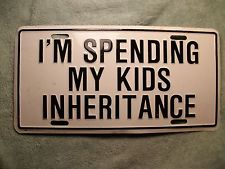
We live in a narcissistic and materialistic society, that increasingly values traits that are narcissistic and exalt the individual over the community. In fact, studies have shown that a high percentage of CEOs, top executives, Wall Street tycoons, and others of the “One Percent” have narcissistic personality disorder. It’s a disorder that is very adaptive in modern society and whose traits are rewarded with money and material goods. Especially since the 1980s, with its “Greed is Good” ethos, we reward those who act in their own self interest over those who act in the interests of the community and want to help the less fortunate. There’s even a meme that’s become especially popular with narcissistic Baby Boomers: “I’m spending my children’s inheritance,” as though this is something to be proud of.

inheritance

My family bought right into this ethos. Image was everything to my parents, especially my mother. My parents looked down on our blue-collar neighbors and relatives, and my mother in particular constantly made jokes at their expense and talked about how much better we were because we had nicer things and my father had a better (meaning white collar) job in the city. Appearance mattered, and our clothes had to come from the best department stores, never Sears. We had to live in the most exclusive neighborhoods. To not have a college degree was considered a mortal sin, and even then, it was far better to be successful in the cold-hearted business world than to be a successful teacher, social worker or a nurse. Such things were regarded as jobs for those who couldn’t do anything else, and of course they required a level of idealism that my parents just couldn’t relate to. When my parents split up when I was 14, my extremely image-conscious mother took up public relations as a career, which is all about image. She had so many face-lifts that today her face looks like a mask.

Whenever my parents, my mother in particular, complimented someone else, it was always on their visible, tangible qualities–things like their appearance, home decor, financial status, and taste in clothes. Table manners were of utmost importance, but being a good person was not. I can’t remember a time when my mother ever complimented anyone for qualities such as sweetness, generosity, friendliness and altruism. I do remember her putting down others for having these qualities, calling them “insipid” or accusing them of having no backbone.

My values never matched those of my immediate family, and when I became poor as an adult (because I was never given the tools and self esteem that would have led me to make better choices) I was shunned and rejected by them. I don’t think it’s any accident that when narcissistic parents choose a scapegoat, they usually choose the most sensitive child–the one most likely to be empathetic and have idealistic values. To a narcissist, idealism and empathy are weaknesses. They truly believe that the poor deserve to be poor, and they make no exception for their own child. The child with traits that cause them to become a scapegoat (and who all too often are also bullied at school) would probably become successful if they were raised in a loving, nurturing home, but in a narcissistic home, having these traits is a curse because that child is led to believe they are worthless and this leads to cowardly, “safe” choices that are more likely to lead to poverty. They are constantly told they will fail, that nothing they do is good enough, and then are usually “tossed out to the wolves” at a young age, with no family financial or emotional support to help them get a foothold in the larger world. I have read so many blogs by the scapegoated children of narcissistic families, who were forced to make their own way in the world with no family support, even if their parents could have afforded to help them, and even when other children in the family (who were not scapegoated) did receive support when they entered adulthood.

superiority

What is so ironic about all this is we scapegoats are rejected and hated for the very traits that were instilled in us as children! Scapegoated children are not encouraged to think independently or have ideas of their own. In fact, having a mind of one’s own is reason for punishment and abuse. We were trained to be deferent and obedient–and very much afraid. Deference, obedience and fear are not traits that lead to success in modern life. I think this training is deliberate, in that an evil narcissistic parent needs and wants someone they can use as the family trashcan–someone who can take and absorb all the family pathology and carry its burden. This child is then blamed for everything that goes wrong both within the family and in their own lives. When a scapegoated child becomes an adult, their low self esteem and fear almost inevitably leads to a life of material and financial lack, and this gives the narcissist parents an excuse for rejecting that child and refusing to help–for “violating” their materialistic, self-centered values. I think another reason narcissistic parents train HSP (highly sensitive) children to be scapegoats is because they know an HSP child must be silenced: this is a child who sees through their lies and can use the light of truth to blow the whistle on them. If they are encouraged to think and act independently, they might “out” the narcissistic parent and that is a prospect that terrifies them.

Of course, the best revenge for a scapegoated child is to become successful in spite of their upbringing–and of course there are those who have. Even then, narcissistic parents will find reasons to put that child’s accomplishments down as somehow not “good enough.” The few times in my adult life where I had some legitimate tangible success, I was never praised for it, but given some sort of left-handed compliment or told why it didn’t really count. I was also always compared with my more financially successful older half-siblings, who of course never had been designated the family scapegoat.

Narcissistic parents also don’t care if you have a mental disability. I’m a self-diagnosed Aspie (this was later confirmed by a psychiatrist) and suffer from intermittent major depression, but when I tried to tell my parents these were the reasons why I had so much trouble making the social connections necessary to become financially successful, these diagnoses were dismissed. I was told I was “making excuses.” Both my parents are convinced my poverty is my own fault because of the stupid choices I made. While I don’t deny having made dumb choices, these choices were based on the way I had been raised–to be afraid of taking any risks or challenging myself.

The only way to break the narcissist/scapegoat family dynamic (and it is probably the most toxic parent-child combination imaginable) is by cutting off contact with the abusive parent, because as long as you keep trying to please them, they will continue to attempt to break you down and make you feel insignificant. Nothing will ever please them, even if you dare to become more successful than they are. And if you somehow manage to do this without sacrificing your idealistic and empathetic values, that’s the biggest threat to them of all.

Make no mistake: your narcissistic parent doesn’t love you and never will, but it isn’t your fault. They hate you because they envy those qualities you have–empathy and humanity–that elude them. Be a good parent to yourself. Love yourself. You deserve it.

haters