“Narcissism–Living without Feelings”

narcissus1_caravaggio

I just read one of the most detailed and comprehensive articles about NPD I’ve ever come across, and also one of the scariest. It’s very long so you’ll need to set aside an hour or so to read all of it, but it’s definitely worth your time.

Some (but not all) of the issues discussed are the difference between healthy and unhealthy narcissism; how the borderline differs from the narcissist; childhood origins; the dynamics of narcissistic families (scapegoats, golden children, and bystanders); the 23 characteristics of narcissism (which take into account the less obvious Covert Narcissist); the development of the false self;  the physical characteristics of narcissists (this is new to me); and narcissism in modern society.

Narcissism by Richard Boyd, Perth WA – Energetics Institute, Copyright 2010
Narcissism – Living Without Feelings
http://energeticsinstitute.com.au/narcissism/

The word narcissism is one that has in recent years has been increasingly used in popular press to describe personalities and lifestyles. One form of Narcissism is however a little understood personality disorder which is increasingly showing up in our leaders across political, business, sporting, psychological and spiritual institutions(Behary:2008).

Indeed narcissism and narcissistic is increasingly being used to describe the mass cultural shift to a “self” obsessed culture where there is rampant consumerism, the pursuit of power, excesses, and the abuse of others in the pursuit of these ends, notes Martinez-Lewi(2008).

The word narcissism comes from the Greek mythological figure, Narcissus, who upon seeing his own reflection in a pond, fell obsessively in love with himself and his own image. As you will see in this article, the true unhealthy narcissist we see today, while maintaining a false self or “mask” of achievement, perfection, and the attainment of all the symbols of success and power, hides underneath a self hating, insecure, fragile real self, which fears being uncovered and exposed at any moment.

The key point here is we all need a healthy dose of Narcissism, as else we would not back ourselves in life, nor have a healthy sense of self. There are healthy forms of narcissism. However unhealthy narcissists do not have a healthy sense of self but instead have learnt to live life from a false self.

narcissus2_andecho

Unhealthy Narcissists are not in touch with their true self, instead becoming a chameleon type of personality who seek to project an idealised image to others, and then seduce and control all others that have some value or utility for them, until that persons utility value is exhausted, and then they are dumped and abandoned without remorse by the narcissist.
In some ways unhealthy Narcissism is seen by some schools of thought as a form of depressive disorder as the narcissist underneath the false mask, moves between depression and aggression. The aggression is most prevalent where there is a threat to being uncovered or exposed as being false, wrong, corrupt, or exploitative(Ransky:1998).

The narcissistic person may be male or female, and is obsessive in their primary pursuit of satisfaction, whether that be power, money and other resources to prop up the false self. Another common term for the narcissist in the business context is the Corporate Psychopath, notes Paul Babiak(2006), a noted specialist on the corporate version of this pathological individual.
According to body-mind researcher and M.D, Alexander Lowen, in his book, Narcissism – Denial of the True Self, narcissists share many common traits with bullies, but due to their ability to project a compelling false, idealised self image, and high intelligence, are more likely to “get away with it”, and escape accountability.

Some narcissistic people are “healthy” in their approach to life and achievement, but they are not of the type to be discussed throughout this article. A healthy and productive narcissistic person goes about their lives in a passionate way, achieve their goals, but retain empathy, consideration for others, and often a mindset of contributing to their community. Healthy Narcissism has more of the following characteristics according to Lewi-Martinez(2008) and Meir(2009):
Life is not all about them;
They are able to have stable and enduring marriages, relationships and business careers;
They are often are involved in charity and community service;
These people make and keep promises to others and to themselves;
They can give and take from a grounded place;
They are usually empathic and engaging;
A determined leader who seeks recognition where due and earnt;
Confrontational and accountable to self and others;
Wisely fearful and knows limits;
Self possessed but not selfish;
Very competitive and likes a challenge;
Vain in their achievements but the achievements are real and earnt;
In contact with own inner needs and wants and the difference of each.

cslewis_quote

This article concerns itself with the unhealthy forms of narcissism. Narcissists are found in all walks of life. After reading this article you may identify your spouse, co-worker, friend, relative, parent, boss, therapist, spiritual mentor, favourite athlete, or local or international political figures as potential unhealthy versions of narcissists. They key aspect of these individuals is their grandiosity, and their overstated sense of self entitlement in life often despite often not working hard to earn any such rewards.

Some unhealthy narcissists will be seen to be hard working and have their own achievements to own. Normally these types of Narcissist will also overstate their own achievements and minimise others and their achievements(Lowen:1986). There is often an arrogance in their personality.
Achieving Narcissistic personalities normally have a strong rigid-perfectionistic streak which gives them the discipline to set goals, focus and achieve, but there is a clinical coldness or unfeeling aspect to their natures(Lowen:1986). Many unhealthy Narcissists appear to achieve but in fact are predators who feed off victims they encounter in life, using their victims’ efforts, skills, and hard work, which get assumed and taken by the narcissist as their own, without remorse, recognition or meaningful reward for those around them(Babiak:2006).

In a narcissist’s world, It’s all about them, as Narcissists possess no real empathy, they feign or act empathic, while they delude themself that they are entitled to special treatment, and to not having to bother with detail or drudgery(Babiak:2006). These narcissists often gather a following of helpers or “sidekicks” to manipulate into doing any effort based work for them. Instead they spent their time managing their “image”, being a “visionary”, being “strategic”, establishing key “contacts”, that they argue only they are able to successfully do(Lewi-Martinez:2008).
gaslighting2

Some narcissistic personalities have an obsessive base in the personality where they micro-manage their own life, from work tasks to how they groom and dress, as they do not trust others or their standards of work. Other less rigid types are more focussed on positioning themself as indispensable, yet at the same time try to be unaccountable, being hard to track down, hard to get them to put things in writing, and they will avoid team roles where they are not the leader(Meier:2009).

Where possible they will delegate the work to a co-worker or “sidekick”. Narcissists hate mundane jobs and tasks that are “beneath them” and avoid them by manipulating others where possible to do such jobs on their behalf(Babiak:2006). Narcissists necessarily include others in their life so as to get the other person to do what they are unable to do, do not want to do, or what they feel is beneath them to do.

Read the rest of this article here.
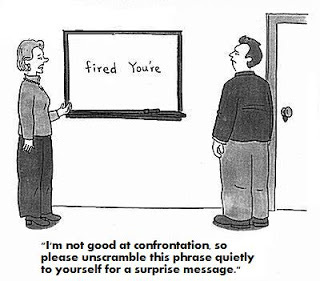
Introverts fear confrontation.

youre_fired

I came across this individual’s forum post on The Personality Cafe in a weird way. My article “Why Family Scapegoats Become Lifelong Victims,” (which has become my most viewed article ever and is still gaining momentum on the web), was linked to by this writer and there was an excerpt from their own post left in my comment folder. The blurb was intriguing enough that I decided to read it, and holy cow! It sounds like my own life story. In fact, I am going through this situation with a friend even as I write this. (If you’re a friend of mine reading this it’s not you–this “friend” doesn’t read my blog or even know I have one). I don’t want to be friends with this person anymore (who I suspect is a malignant narcissist who likes to “play” with me and make “jokes” at my expense) but instead of confronting them and telling them I want to end our friendship, I’m just avoiding this person, hoping they get the “hint.” I do that sort of thing all the time. Confrontation terrifies me, but what happens is my anger becomes seething resentment and has to come out eventually, so after weeks or months of pretending everything is fine, I’m likely to explode and say things I regret. It also comes out in other ways, like acting passive-aggressive. I’ve gotten better but it’s still a problem. Anyway, here is that article. The writer is an INFJ like me and wonders if this is common in INFJs. I’m also an Enneagram Type 4/5.

If we need to slap a psychiatric label on this sort of behavior, it’s a common symptom in people with Avoidant Personality Disorder and Covert Narcissism (which I still suspect I am, even though my therapist has said I’m only “on the spectrum” but not NPD). I think people with BPD are also guilty of this.

passive_aggression

Has anyone else had this problem in the “social environment”?

As of recently I have made a personal discovery about the origins of how and why I have a certain fear. And it also ties in with the Enneagram 4 labeled fear “that they have no identity or personal significance”. Generally, with “friends” (both close and acquaintance) I tend to hide away or become afraid of sharing my true thoughts and being completely honest with them if there’s a problem (unless they manage to hurt me to the extent that i just cut them off). I become fearful of their reaction before it even happens, so i withhold my thoughts and continue acting as if everything is okay. It’s not only the fear that they will be upset at my honesty, but the fear that I would also begin to hate myself afterwards as well. I didn’t realize there was a term for this as well (even though i knew it as a common term i never understood its meaning). And that term is “Shame”. And while shame is the major factor of why i feel guilt for wanting to speak out, as well as feeling it for not wanting to speak out, I had also come to realize this was also connected to my upbringing. I learned in the article mentioned below, that most scapegoats have high empathy and sensitivity at an early age, which causes them to absorb all of the projections of their parents, thus causing the birth of self hatred/possibly depression. It also informed me that as they continue to go into social relationships, that they will also absorb the projections of what other people think of them as well. For me this explains a helluva lot, of why i fear getting close to certain people and their impact on me if i either

A. Do something wrong.
Or
B. Be honest with them.

I’m personally terrified of being completely honest with someone i’m not sure of, as any kind of minor negative backlash towards me can cause me to go in a state of guilt for a long time. So instead I internalize everything that bothers me about them, and I simply play my part in this “friendship” until i have a reason to avoid them or doorslam. And this is different from constructive criticism, i’m talking about the consequences that may occur if they end up being hurt by my honesty. While their take of it may not be my problem afterward I still hold the shame of what I have done to another human being, even if it was the “right” thing to do rather than continue being dishonest with them and put on the fake persona. I fear hurting them..but I also fear hurting myself. It’s a double edged sword and the ending remains the same regardless of which way i act. I’m fearful of absorbing any new projections one might have of me (specifically negative) which has caused a spiral of paranoia in 2/3 of my friendships, even if they may not take it personal. And before I end this, I am not intentionally hurtful when i’m honest, as I still try to be polite and respectful of the person that i’m talking to. I am also aware that they can be positive in their response, but i’m practically crippled by my fear, especially because of social experiences that didn’t go well.

Read article on The Personality Cafe here.

The narcissistic spectrum according to Lucky Otter

Man looking at reflection in mirror

A friend and I were talking about where exactly different levels of narcissism would fall on the N-spectrum. Of course narcissism (or any psychological topic) isn’t an exact science so giving the different levels numerical values seems a little silly, but in my mind this is how I view the different levels on the spectrum, starting with a Baseline of O (on most narcissism spectrums, “healthy” narcissism is at baseline) and the transition to NPD at around 5, which is smack dab in the middle. Narcissism becomes pathological (causing the person or others problems) at around 4.
Please note these are just my own subjective ideas.  I’m a geek who likes to classify things.

The Narcissistic Spectrum according to Lucky Otter

9-10:
Sociopathy:
A person at this level is almost indistinguishable from someone with ASPD (antisocial personality disorder), but an NPD sociopath is more concerned about image or obtaining supply than a pure ASPDer. Most cult leaders fall here. (Psychopathy appears similar to sociopathy in behaviors, but describes a condition that a person is born with instead of one that was acquired; many psychopaths were never abused and were always like that, but sociopaths were made).

8-9:
Malignant Narcissism:
A person at this level has severe NPD with antisocial traits. A person at this level will show more emotion (usually rage) than a narcissistic sociopath. Usually fits all the DSM criteria or most of them.

7-8:
Severe NPD:
Not malignant because there is no sadism present, but person is still highly dangerous and manipulative. Fits most or all of the 9 criteria and symptoms are severe.

narcissist-bird

6-7:
Moderate NPD:
A person at this level may be barely tolerable, if contact with them is casual or seldom. Fits more than 5 of the 9 criteria.

5-6:
Mild NPD:
A person at this level fits 5 of the 9 DSM criteria for NPD but symptoms are not too severe and they may have moments of acting like a decent human being. NPDers at this level may occasionally respond well to therapy or seek it out.

—Pathological—

4-5:
Narcissistic Personality (Destructive Narcissistic Pattern disorder or DNP):
  A person here fits fewer than 5 of the 9 NPD criteria in the DSM but has at least three.  Symptoms may not be that severe and the person at this level is more in touch with their true self and may seek therapy.  They usually have the capacity to feel empathy but it’s limited.

3-4:
Non-Pathological Narcissistic Personality:
Your garden variety self-centered jerk but may genuinely care about those they love.  Not particularly dangerous. Has moments of insight into themselves or empathy for others, especially their loved ones.

0-3:
“Healthy” narcissism.
Most normal people can be found here.

O (Baseline) and lower:
People down in the negative digits might as well be wearing a “KICK ME” sign. They are almost always victims of narcissists and sometimes even normal people give them a hard time or take advantage of them.

npd_spectrum
The simplified spectrum. Psychopathy does not belong here at all.

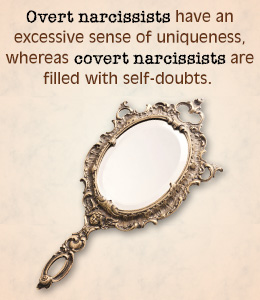
Covert (“fragile”) narcissists may be found anywhere on the spectrum, but because their narcissism is more hidden and arrogance and grandiosity may be absent, a covert narcissist at any level is harder to identify. They may appear to have BPD, Avoidant PD, or Aspergers Syndrome instead (these are the three disorders most often confused with Covert Narcissism).

High-functioning (successful) narcissists are more likely to be found high on the spectrum, and sociopaths are often extremely high-functioning. There are many sociopaths (and psychopaths, who were generally born with a different brain structure and may not have been abused) in politics, religion, and heading huge corporations. Sociopathic traits and most NPD traits are generally sought after in the higher echelons of business, politics and entertainment. A person with just the “right” combination of antisocial behavior and arrogance, entitlement, grandiosity, and fake confidence can be a devastating adversary or competitor, and they will have no scruples about crushing you into the ground to achieve their goals.

Most high-functioning narcissists tend to be the Grandiose (classic, or overt) type that best fits the DSM criteria.

Covert and overt narcissists all have the same disorder, but for most, one form or the other is dominant. That said, they can and do switch back and forth in the same person. I think temperament is partly to do with whether someone is overt or covert (the more timid or fearful types leaning toward covert narcissism), but I also think circumstances (such as a sudden loss or gain of supply) can cause a switch from overt to covert or vice versa.

Low-functioning narcissists are much more likely to be covert.  They tend to receive less supply than overt narcissists, so their false self is weaker (the “deflated” false self, according to Masterson). Because of their discontent with their lives and general lack of success, covert narcissists are more likely than overt ones to seek help. If a covert narcissist suddenly begins to receive a lot of supply, they can become much more overt-acting (grandiose, entitled and arrogant). If an overt/grandiose narcissist suffers a huge loss of supply, they can sink into depression and become covert (at which point they are more likely to seek help).

The Vulnerable Dark Triad.

I wrote this article today, but it belongs on both my blogs, so I’m going to be redundant. 😛

“So, I hear it’s gonna be a bad one this year!”

Today I was helping my roommate pack her things and cleaning the room to show to prospective new housemates.

Maybe I’m a terrible person, but I was feeling irked with her all day for seemingly no reason. I finally realized why. I don’t want her to leave! We’re never going to be BFFs, but she’s been a trustworthy and reliable housemate and I really don’t relish the idea of having to find a replacement who may not be as trustworthy and reliable. I also have to find one soon (so far the only possibility is a gay man around my age who can move in on the 9th). So I was easily irritated and not doing much to hide my annoyance and irritation while helping her clean and pack, and was losing my patience easily. I was less able than usual to be mindful and my BPD and covert narcissism symptoms were showing. :/

I also dislike change.

I know Stacey was just trying to make friendly conversation, because she probably saw I wasn’t saying much, and when I did talk, it was in abrupt, one or two word bursts. She probably thought I was mad at her (she always thinks everyone’s mad at her).

But through no fault of her own, she couldn’t have picked a worse thing to break the ice with. What she said pressed all my I-hate-winter buttons. Although most people would not have been triggered by what she said, I lost control and went off on her and even told her she was stupid and ignorant for believing the cliche. 😳

She said, “I hear it’s going to be a really bad winter this year.”
Because she’s moving to Florida, I almost took this as a kind of insult (“nyah nyah, I’m going where it’s warm and you’re gonna be freezing your buns off”). I know that’s not what she meant but I took it that way.

I apologized later and told her the truth–that I was upset she was leaving and that I would miss her, and was stressed about having to find a replacement quickly.

It reminded me of this post I wrote about a year ago about why that icebreaker (no pun intended) “I hear it’s gonna be a cold one this year” triggers me so much.

Why I Can’t Stand Snow

luckyotter's avatarLucky Otters Haven

ihatesnow

“Sooooo….I hear it’s gonna be a rough winter this year.”
ARGGGHHHH!
I hear this every single year, starting in about August. It drives me insane. First of all, how does anyone know how rough the winter’s gonna be? Weather forecasters can’t even predict the weather right most of the time DAYS ahead, never mind for the long term. Flipping a coin would probably do just as good a job predicting the weather. Whenever people use this phrase, I want to slam my head through a brick wall. Why? Because it almost seems like a taunt to me, as if they WANT it it snow all winter. It’s also usually said by someone who has four wheel drive and fancy snow tires. They’re prepared.
Well guess what? I’m not.

Sure, snow is pretty and all, and it’s nice on CHRISTMAS because it suits the season and on Christmas, most of us…

View original post 496 more words

The Pooooor Narcissist

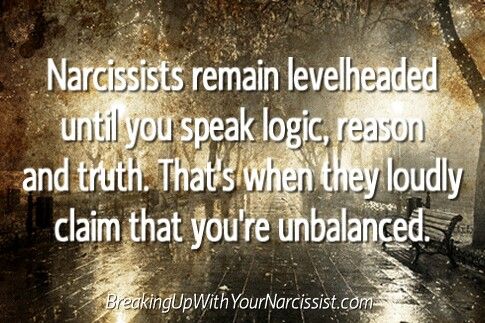
Do you know a “do gooder” who always somehow makes you feel guilty and less saintly than they are? Everyone knows someone who plays the martyr. Do you know a Needy Nancy or Ned who has an endless litany of problems that never seem to go away? Do they get mad at you when you try to help because your help isn’t good enough or is the wrong kind of help? Do you know someone who never apologizes, never admits wrongdoing, and never even says thank you when you offer help? That “victim” may actually be a narcissist. How can you tell the difference? Red flags. Gaslighting. Manipulation. Guilt trips. Projection. Blaming. They are never wrong but you always are, especially if you dare to suggest their problems may be their own fault. You can’t win with one of these characters.

This article describes the covert type of narcissist, who can be much harder to spot because they aren’t arrogant, grandiose and in your face. They’re good at what they do, so it pays to be vigilant.

graceformyheart's avatarGrace for my Heart

It’s Narcissist Friday!     

N – Get off the road, stupid idiot! That guy drives just like your brother!

You – Why do you say such mean things? It isn’t like you are a perfect driver.

N – What complaint do you have with my driving? You are always criticizing me. I have to be perfect before I can say anything anymore.

Then, when you get home:

N – Well, you can breathe now. I didn’t say anything mean and we got home without an accident. If you still think you can handle such a mean person, you should probably drive tonight when we go out. That way you can feel safe. Maybe I can sit back and criticize your driving.

Ever notice how the narcissist can become the instant victim? I used to have a relative who could say anything, accuse of anything, or criticize anything. But if…

View original post 628 more words

On having seasonal affective disorder (SAD), dishonesty, and a few other things.

This is going to be a long post, because I have so much to say.
I haven’t been completely honest about why I haven’t been posting as much (being overworked and tired is only part of it) but I was very confused about all these emotions I’m having and wasn’t sure where to begin, even though I wanted to talk about it. I just felt so overwhelmed and confused I was sure anything I wrote would overwhelm and confuse the hell out of anyone reading it and make no sense. Even now, I’m having trouble knowing where to start and am not sure this is going to make any sense, but I’m going to try, since I have the time.

1. Seasonal Affective Disorder.

tigger_SAD

Let me start with the most obvious and simplest to explain. I don’t know if I’ve ever mentioned it, but I suffer from SAD (Seasonal Affective Disorder). Last fall, I was so new to blogging and so excited by the novelty of it that my excitement over my new “toy” overrode my usual feelings of depression I get when the days become shorter, colder, and gloomier. I even thought I’d been spontaneously “cured” but it’s back this year. It always starts around late August, when the days are becoming noticeably shorter (and this year, the trees begin to change early too). The fact that it’s still as hot as a pizza oven makes no difference. SAD is triggered by lack of daylight. It really starts to kick in after the autumnal equinox (September 23 this year) when the days begin to become gloomier and grayer and the nights are longer than the days. In this part of the country, there’s always a lot of rain in the fall and overcast days. I know we need the rain, but my brain doesn’t care and the darkness always triggers depression, which causes me to feel sad (SAD is a good acronym for this disorder!) and as gloomy as the gray days, and any motivation I have or energy goes out the window.

The string of upcoming holidays, which seem to mitigate the gloom for normal people (and even make them feel happy), don’t help me one bit. In fact, they make things worse. Halloween isn’t too bad (it doesn’t cost much and isn’t a “family” holiday), but Thanksgiving and Christmas are a different story. As a person with no money and who is not in contact or close to most of my family, the holidays, especially Christmas, are very difficult for me. Besides my children, I have no one to spend Thanksgiving or Christmas with. Christmas is so overcommercialized and you are made to feel somehow defective or different (in a bad way) if you can’t afford to buy a ton of gifts (and don’t get many either), don’t love Christmas music, or can’t get into the “holiday spirit.” I know Christmas is really about the birth of Jesus, not crass commercialism, but unfortunately our society has made it that way, and if you’re a poor person with hardly any family and few close friends, it’s really hard to not get depressed.

I always begin to feel better sometime after Christmas, and usually by early February my mood is improving, despite the cold weather. Again, this has to do with the lengthening days. In fact, every year I look forward to the winter solstice, because it’s then that the days begin to grow longer again. It doesn’t take too long for my body to notice it. And once Christmas is over and done with, I feel relief. Then it’s just a matter with putting up with 2 more months of cold and gloomy, overcast days. And because I live in the South, the winters here are not long. It’s usually warming up by early March or even the end of February, and the first signs of spring can be seen then too. I always notice my energy level and motivation increasing, and my mood becomes more upbeat and positive.

So the lack of motivation caused by my SAD (and blogging no longer being the novelty it was last year at this time) is partly responsible for my not writing every day the way I used to. But that’s only part of it.

2. Coming to terms with being a covert narcissist.

covert_narcissism2

The other part is a lot harder for me to talk about, even though I’ve talked about it before, and nothing bad happened when I did and people didn’t unfollow this blog in droves, the way I had feared. About two months ago, I began to self identify as a covert narcissist (in addition to my having BPD and Avoidant PD). It explained the “Aspergers” I was sure I had up to that point. I don’t want to belabor again how I made this discovery or why (if you’re interested in reading more about that, I wrote several articles about it in early-mid August and started another blog, intended to help people with self-aware covert narcissism and BPD who do not want their disorders), but for some reason, I began to feel a lot of shame associated with the “NPD” label, based on the general attitude toward narcissists, especially those who have been abused by them (and the attitude is understandable).

Although I didn’t want to be dishonest because this blog has always been a place where I can be completely honest and would not have discovered this truth about myself had it not been for writing honestly about my feelings every day, I clammed up just the same. I began to fear people’s judgment of me for being “one of them” (even though I’m mindful and think I do pretty well not acting in narcissistic ways) and feeling like maybe I should downplay the “narc” label. After all, it’s just a label, right? And not even a label given to me by a therapist or mental health professional, but a self-diagnosis which might be wrong anyway. I can’t even bring myself to add “covert narcissism” to my list of disorders. BPD’s bad enough.

But in spite of all that, in my gut I know my self assessment is correct. I’ve become very hesitant to call too much attention to it however, because of my fear of negative judgment (which in itself is a part of both BPD and covert NPD). I know it’s silly, because it was abuse itself that made me this way. In the past few months I’ve hesitated to write articles about abuse, because knowing I have covert narcissism made me feel like a fraud. But I’m not a fraud because I am myself an abuse victim–one so badly damaged I was infected with narcissism myself. That’s why once I got over my rage and hatred toward narcissists (which I worked out through my earlier blog posts) brought on by their abuse, I found myself attempting to understand why they did the things they do. It took several more months of completely honest writing (running naked in public) that pulled the scales from my eyes and made me realize that I myself had the disorder and was trying to understand myself!

It took an email I got this morning from an ACON (who I had confessed about my narcissism to) that said she could understand how I could have been infected and that as long as I was aware and trying to change (which I am doing) that there was nothing wrong with my writing for ACONs and in fact, she had been helped by my articles and would continue to read them. Most people, in fact, have been very supportive and understanding. I was actually shocked by this, given how demonized NPD is.

I know as a blogger who writes primarily as a form of self therapy, that I cannot get any better if I stop being honest. I worry far too much about what others are going to think, or that I will be disliked, or people will judge me harshly. I suppose this is natural, having been judged harshly by my narcissists all my life, so I always assume the worst will happen. It rarely does, but just the same, it makes me clam up and leave things out.

These labels can be so damaging, and make those of us who want to change ourselves afraid to admit the truth. It was bad enough admitting I was BPD, because of the negative stigma associated with that. But admitting you’re “N” is even more scary. Some people think you’re the devil himself. But why should it be that way? It’s just a label. If I’m not acting out or hurting anyone, then it makes no difference to anyone but myself. It’s something I need to deal with. I can’t get any better if I don’t come to terms with that reality and on some level, accept it.
I could be wrong anyway (but I don’t think I am).

I felt so much better when I left nothing out, when I was so candid and brutally honest about the most personal and embarrassing and shameful things imaginable. It was scary but I never once regretted it, and found myself growing and changing, becoming happier and more confident (in a real, not a narcissistic way). I was feeling more empathy for others and becoming less shy. I was finding myself connecting with people in a way I was never able to, and was beginning to feel like I mattered. So why would I stop?

I judge myself and don’t want to “own” this label, but realistically, how could someone have been raised the way I was and NOT develop a Cluster B disorder like BPD or NPD? I was both scapegoat AND golden child, and constantly receiving contradictory, mixed messages (I was perceived as either “better” than others, superior, and expected to live up to some ideal image of a child my parents had for me, or I was told I was worthless and bad because I was unable to live up to that unrealistic ideal). This isn’t something I chose; it was something done to me. Narcissism is contagious.

And that brings me to the third issue behind my depression and lack of motivation…

3. Fear of parental disapproval.

angry-parents

There’s another reason why I’ve been less motivated to write. The way I was raised has everything to do with all my emotional problems and my mood swings, inability to connect with anyone emotionally, or feel like I’m leading a fulfilling, successful life. It even explains why I married a malignant narcissist and spent 27 years with him as a codependent, abused wife (covert narcissists–and BPDs–often pair up with higher spectrum or overt, grandiose narcissists and are almost always codependent).

But lately I’ve been afraid to write about my parents and their emotional abuse of me, even though they were my first (and because my personality was still forming, my most toxic), abusers). I can’t blog honestly if I leave my experiences with them out. But I’ve been afraid to write about them just the same, and that’s because about 6 months ago, I found out my parents had found my blog and were reading it. That might make anyone clam up, but no real names were being used, so I wasn’t guilty of slander or libel. It might even do them good to read about the way they made me feel, even if they didn’t care or tried to project everything back onto me (because I wasn’t lovable enough as a child, or am a “loser” who makes “bad choices” today or whatever it is they’re saying about me). It would certainly do ME good to be honest about what happened. After all, this blog is my self-therapy and with any therapist, you would talk about your childhood and the bad parenting you got, so why wouldn’t I write about it? It’s not as if I’m losing anything by doing so, since (as far as I know) I’ve been disowned anyway. I’ve been the black sheep for years and am NC with my mother anyway.

But I still fear their judgment, for God knows what reason. Why do I write openly about my ex’s abuse and not fear his negative judgement? What makes it so different? What makes that “okay” and writing about my parents “not okay”?

I worry way too much about the negative opinions of others, and that in itself is part of my narcissism. I was bullied as a child and that didn’t help either. I put far too much importance on what other people think. I don’t think I lie excessively, but leaving things out is a kind of lie too. I lie by glossing over things, not talking about important things that affected me and caused my problems, not admitting the way I really feel about something, downplaying both my abuse (due to fear of my parents judging me even though they already do) and my own disorders. When I lie by omission, it’s still a lie, and I’m not doing myself any favors either. In fact, the fear of negative judgment feeds on itself, and I imagine the worst outcomes and that tends to feed my fears even more, making me even less motivated to write.

So what I need to do is not worry about what everyone will think, and go ahead and write what I feel and let the chips falls where they may. If I’m harshly judged by some, so be it. Those are probably not people I would want to have anything to do with anyway.

A small part of my depression is because my car needs major repairs and my job only pays enough to pay the bills so I’m living pretty much from one paycheck to the next (and working a lot more). I’m going to go ahead and ask for donations via Paypal but I’ll do a separate post for that and I hope it doesn’t offend anyone.

So that’s where I’m at. I need to start writing about everything I’m feeling again, starting from today and stop worrying about what a few people think and censoring myself because of them. They don’t matter, but my growth as a person does, as well as those who get something from reading this blog. Censoring myself for fear of negative judgment is one of the things I need to work on getting over. It helps no one, least of all me. Haters are always going to exist, no matter what you blog about. I can’t lose my original focus and why I started blogging in the first place, and lately I’ve been slipping. That needs to stop now.

You may find this article inspiring too, if you blog and are afraid to be completely honest.

I need to get out more.

church_choir

I’ve decided to join the choir at my church.

I don’t normally go in much for church-related activities, but I’ve always loved to sing and I love music, and I feel like this is a way I can encourage myself to interact with actual people in a way that might be fun and not require too much actual social interaction since we’d be spending most of the time singing and not talking.

I know that isolating myself as much as I do isn’t healthy. Introversion is fine, but not to the point where you live as a near-recluse, shunning any social involvement at all. Deliberately avoiding all social interaction isn’t going to help me conquer my Avoidant PD or my covert narcissism or whatever. While I have to accept (and do accept) that I’ll never be an extrovert or social butterfly, self improvement requires me to take this step.

Lately my isolation from others has been bothering me. I’m lonelier than I like to admit. I want to connect with people, even though it’s hard for me to do that and there’s definitely an element of anxiety. My shyness has not gone away.

If I’m ever going to meet people I can become potentially close to, just being around them in an environment where we’re sharing a fun activity (like singing) seems like a good way to start.
So tomorrow night I’ll be showing up at choir practice. I’m actually sort of excited about it!
Why limit my singing to my car where I’m my only audience?

On people pleasing.

people_pleasing

I think most of us who were exposed to narcissistic abuse for any length of time learn to become people pleasers, always deferring to our “betters” (the narcissists) and becoming human doormats. People pleasing is known by many terms, but “codependent” in particular comes to mind. It’s an extremely unhealthy way to live.

All my life I’ve been a people pleaser. ‘ve always been terrified of saying “no.” I’ve always gone along with things I didn’t like just to keep the peace. The problem with being a people pleaser is that it tends to attract further abuse (they know we’re pushovers so they’ll up the ante); and potential abusers can “smell us out.” People pleasing also never really pleases anyone. Someone is always going to be displeased, even if it’s only ourselves. Chances are, the person you’re trying so hard to win the approval of is going to find something wrong with what you’re doing for them anyway, especially if they’re narcissists.

People who try too hard to please everyone–like politicians who can’t commit fully to either liberal or conservative stances because they’re too afraid of the disapproval of either side, wind up alienating everyone. It comes off as insincere–and it is. You just know they’re hiding something.

people-pleaser

I remember the first time I realized how fake I was being while engaged in people-pleasing. I was about 9 or 10. We were visiting some relatives in another state and my uncle had a collection of decoy ducks he was very proud of. I could have cared less, but because I’d been raised to always be polite, I faked intense interest in his hobby. In fact, my “act” was so extreme he really thought I was interested and kept talking to me about his ducks even though I wanted to scream at him to shut up already. It’s fine to be polite and civil, but I was so afraid he would “discover” my boredom with his hobby that I went above and beyond-and felt absolutely disgusted with myself later. Of course that didn’t stop the people pleasing. No one living in constant terror and shame the way I did would be able to stop.

Freedom from the “people pleasing” game where you always wind up losing doesn’t mean not helping others or being cold and selfish. People pleasing is very disordered and even narcissistic in itself–because you’re trying to please others to get approval or love, not because you really care about their feelings or well-being. You don’t need empathy to be a people-pleaser, just a weak and beaten down ego that makes you grovel like a dog for a treat. People pleasing is actually a central feature of several personality disorders–BPD, Avoidant PD, Dependent PD, and Covert Narcissism.

Unlike people pleasing, true caring and altruistic feelings for others are not about pleasing people–they’re random acts of kindness that come from an authentic and confident person’s heart, and nothing about it is fake. I’m working toward this too. Right now I’m still caught up in the fear of displeasing anyone and the ramifications that has for me. It’s very self-centered.

In summary, people pleasing is about lies–it’s all about trying to boost a shaky self esteem and it’s about as fake and inauthentic as you can get.

What’s my problem?

confused

After over a month of being convinced I’m a covert narcissist, now I’m starting to wonder if my assessment of myself could be incorrect. Most people are having trouble believing me (even good friends) and there are so many disorders that appear similar to it. I no longer think my symptoms are due to Aspergers the way I used to, but BPD + Avoidant PD in the same person can look exactly like covert NPD. So can complex PTSD in some cases.

I’ve been told again and again that real narcissists are unlikely to ever admit they are narcissists, and if they do, they won’t be beating themselves up that much over it. I don’t know if that’s always true (I’ve met a few low spectrum covert narcissists on Psychforums who actually have a diagnosis and feel terrible about things they’ve done and want to change, but maybe the diagnosis they got is wrong and they just have more than the normal amount of N traits). Victims of narcissistic abuse are often quick to diagnose narcissism in themselves and others. We’re hypervigilant and tend to see narcissism everywhere, and we don’t even exempt ourselves. The real narcissists are probably more likely to keep insisting that they are not. Abuse victims think too damn much. It’s all very confusing.

narcissism_selfies

I guess there was a reason why I never added “Covert NPD” to “My Disorders” in the header. Without an official diagnosis for that, I really can’t say that’s what my problem is. It could be, but if so I think it’s at a low level. I know I have a number of narcissistic traits, but most abuse victims do. That doesn’t necessarily mean I have NPD, covert or otherwise. I could just have a really bad case of “fleas,” or just BPD + AvPD, or even complex PTSD.

I’m still glad I started Down The Rabbit Hole because it’s also intended for people with BPD, which I have an actual diagnosis for. I still think my “trip down the rabbit hole” early in August was real but that doesn’t necessarily mean I have NPD. It was still a trip to the walled off parts of my mind, and most abuse victims are at least partly walled off from themselves. We may be partially narcissistic but not enough to qualify for the label.

I care about people with low spectrum NPD and BPD who want to heal or improve, so that’s another reason I’m going to keep DTRH going. It’s getting a good reception. Another one of my missions is to help reduce the negative stigma against people with BPD. I don’t ever expect DTRH to gain the amount of activity this blog has received, but if only one or two people can be helped by my posts, and I can help myself by continuing to do exactly what I’ve been doing, then it’s worth it to keep it going, isn’t it?

Really, at the end of the day, all these labels are just labels and don’t really mean anything at all.