My dark thoughts.

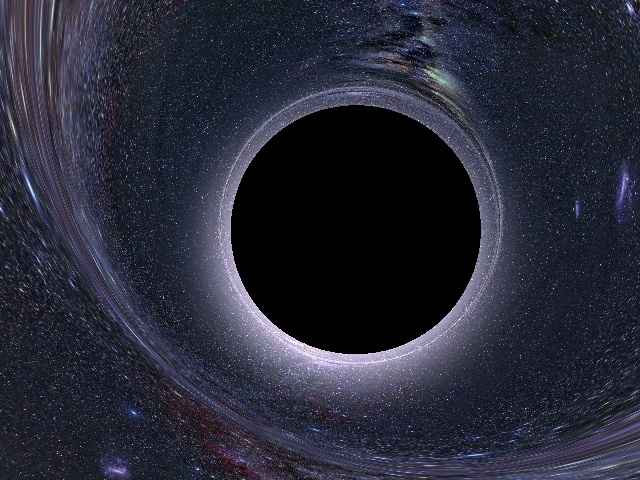
blackhole2

When I feel like this, the only way I can cope is to write.
I had one of my “black mornings.” I don’t get them every day, but when I do get them, they are overwhelming.
I’m getting less of them than I used to, but even one is too much.

I wake up into whiteness. My white blinds reflect the blue white snow that fell three days ago but the shadowless brightness hurts my eyes and mocks the darkness that rises like a miasma and permeates every cell in my body. I lie on my bed and pull the covers up over my head to keep out the daylight. I close my eyes tight. I will myself to fall back to sleep.

I can’t sleep. Thoughts that are blacker than black filter through my consciousness. They seem to arise from a bottomless pit located somewhere in my upper abdomen. They swirl like a cesspool or a black hole or a slow-moving tornado in my soul: thoughts of death, sickness, poverty, loss, and emptiness suck any lesser, lighter thoughts in with them and consume them like food.

Two words reverberate in my atrophied soul: No Future.

I try to will tears to empty myself of this horrible dread and hopelessness, but the backs of my retinas only burn and my eyes remain dry as tinder. I move my consciousness on the pit at the center of my stomach but all I can feel is my heart slamming into my throat. I swallow hard and kick the covers angrily away.

I need to get up. Even if I could sleep I would only wake feeling worse later. Like I wasted a day, and the guilt would consume me.

I look in the mirror on my door. I look like hell. My skin looks grainy. My hair hangs in oily strings. I really need to do something with it. But I know I won’t.

I turn away and go to the kitchen and make some coffee. Strong coffee, milk, no sugar please.
I take it back to my room, drink it. I know I shouldn’t drink coffee given my mental state, but it always calms me for the short term.

The pain is always worse in the morning. Most of the time I can pretend it isn’t there, but it’s always there, waiting in the shadows, ready to sink its tentacles into any mask of sanity I can muster like the flimsy paper covering it really is.

As I write, the darkness retreats. I find some temporary relief. For now, I can fill the void with frivolity and fake cheer.
But the darkness will be back. It always comes back.

Hello Everyone!

It looks like we have a brand new blog about BPD on WordPress. I know how it feels to be a newbie and how over the moon I was when Opinionated Man helped me out the first week by reblogging an early post, and I’d like to pay it forward (even though my blog is nowhere near as popular as his!)  so I think I’ll do it with this blog.

Bella, I hope this helps you get some followers. 🙂 Good luck, blogging is an incredible journey in every way.   Keep writing and you’ll be amazed what you’ll find out about yourself.

Bella, also make sure you follow Opinionated Man’s blog Harsh Reality (linked above).  He is incredibly helpful to new bloggers and always has posts that invite you to share your posts and stuff.  You never know, he might even reblog something of yours and then you can sit back and be amazed at all the activity that will bring you.

Come closer…go away.

I hesitated about posting this here, but I’m going to take the plunge and do it that because I’ve never once regretted “running naked in public.” (I haven’t changed the URL yet because it costs money for me to do that so I have to wait.)

Borderline Personality traits linked to lowered Empathy

A new study found that people with BPD may have lowered or limited empathy, and that it may be biochemical. I sometimes think I’m a bit empathy challenged, though not in a general sense. For example, I feel just awful when I see or read about someone’s suffering (especially if it’s an animal or a child) but it’s hard to me to empathize on an interpersonal, emotional level with another person (which could be due to my introversion and social awkwardness, and also my complex PTSD).  I do have cognitive empathy (KNOWING how another feels), even if its sometimes hard for me to feel WITH someone else. This is something I want to change and am working on in therapy.

I’ve known other Borderlines who seem to almost have too much empathy, and are very profoundly affected by the moods of those around them. The problem for BPDs, whether they have too much or too little empathy, is that we get so caught up in our own problems we can seem to be oblivious to what others are feeling. Usually when we’re called out on our selfishness though, we feel pretty badly about it and try to make up for it.

I think a lot more research needs to be done on this matter before any blanket judgments are made. Unlike people with NPD or Antisocial Personality Disorder, I don’t think lack of empathy is a defining characteristic for Borderlines.

Cluster B disorders are not cool.

uncool

Although Cluster B disorders (the dramatic, emotional, erratic group of personality disorders), are largely demonized on the Internet by narcissistic abuse survivors, there’s another growing attitude online that’s pretty much the opposite–that having a Cluster B disorder somehow makes you an uber-cool badass.

This is a dangerous delusion.  Take it from me, having a Cluster B disorder like BPD (in my case) is NOT fun. Nor is it cool. In fact, it really really sucks. 😦 Both for yourself and everyone else.

This growing attitude of “Cluster B coolness” I’ve been seeing more of goes something like this:

NPD:
bad_sport
This is what your narcissist is really all about.

The Myth:  If you have Narcissistic Personality Disorder (NPD), you’re a self-confident, go-out-and-knock-em-all-dead, ambitious, and highly intelligent badass who Gets. Things. Done. Psychopaths are similarly glorified, but they’re basically the reason why everything’s wrong with the world and empathy is seen as a “weakness.” The narcissistic woman is regarded as a diabolical yet seductive Jezebel who turns strong men into whimpering slaves at the snap of her pretty fingers and who every other woman strives to be. The narcissistic man is regarded as a buff, handsome, masculine, virile, successful go-getter who all women melt for (and that’s how they regard themselves, of course).

The Reality:  In actuality, if you have NPD, you’re a negative, selfish, deluded, demanding, envious, entitled, whining crybaby with no real sense of self who everyone hates (and who hates everyone) but are afraid to say so because it might set off one of your infamous rages or you giving them the even more crazymaking “silent treatment.” People are always walking on eggshells around you because you’re really so unstable, hypersensitive to criticism,  and deluded by and drunk  with your own “greatness.”  You’re a sore loser too and can’t stand to see anyone else do well or get any attention.   No one really likes you and you’re probably right that people are talking about you behind your back, but frankly you deserve it. Also, many narcissists are just plain stupid and have no emotional intelligence.  As for their reputed skillfulness in bed,  many narcs (especially the cerebral types) hate sex and can’t or won’t perform.  Or, as with everything else, they only care about their own needs and to hell with yours.

BPD:

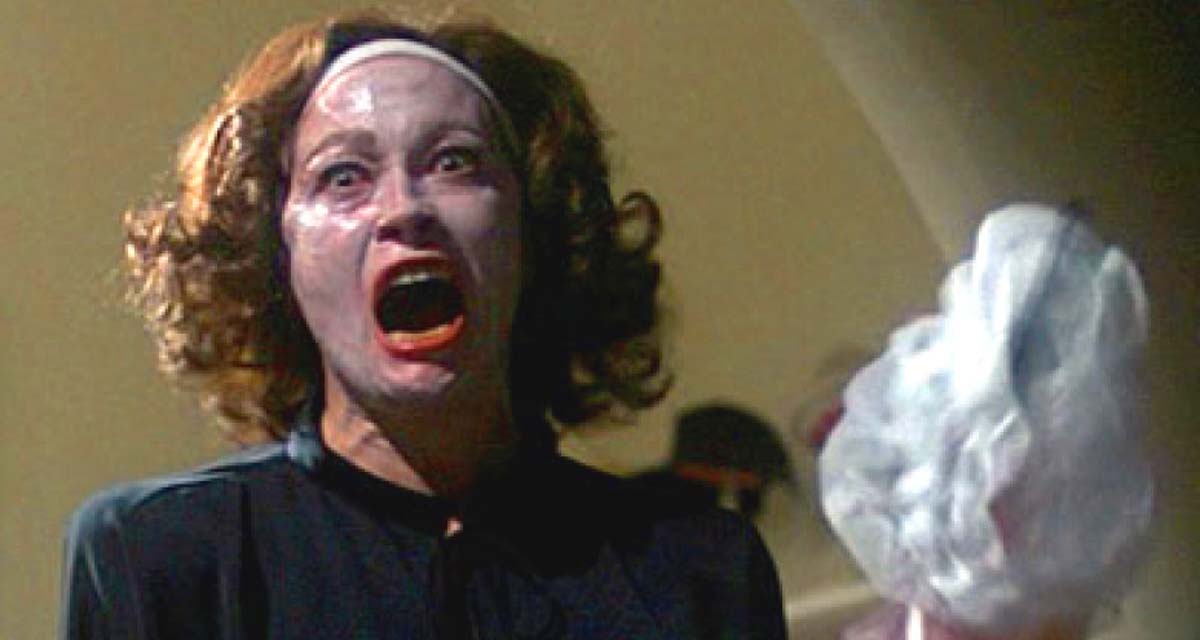
mommie_dearest2
Joan Crawford had a BPD diagnosis. Is this sexy, alluring, and “quirky” to you?

The Myth: If you have Borderline Personality Disorder, some people think this means you’re a sexy beast or babe who’s alluring, unpredictable, passionate, always charming and “quirky”, and never boring. Your chameleon-like abilities to match the attitudes of those around you is seen as evidence of potential Oscar-winning ability. It’s always pointed out how many actors and musicians suffer from BPD.

The Reality:  Let’s be honest.   If you have BPD you’re emotionally unstable, volatile, almost crazy (the original term “borderline” referred to the disorder being on the border between neurosis and psychosis), out of touch with reality, unable to take a firm stance on anything (or conversely, switching back and forth between two extremes, which just makes you look insane) due to your terror of being rejected or abandoned, prone to be an addict, (drugs, booze, gambling, shopping, cutting, eating and/or dieting, other people), clingy,  codependent, insecure, high-maintenance,  and fickle. The borderline doesn’t really have a false self per se like the narcissist, but they can’t access their true self either, so they wind up “taking on” the attitudes and emotions of those who happen to be around them like some kind of emotional bodysnatcher (in contrast with true empathy, their feelings overwhelm them and are out of control), and they just plain overreact to every damn thing so you feel like you’re always walking on eggshells.

HPD:

clown_makeup
You think you look seductive. Everyone else thinks you look like a clown.

The Myth: Although Histrionic Personality Disorder (HPD) isn’t widely talked about, its reputation is similar to that of BPD (but is really the stereotypically feminine form of Overt NPD): usually female, a sexy, seductive siren, dramatic, highly social, loves parties and being the center of attention, and is never, ever boring. You’ll fall madly in love with this bewitching seductress due to their many charms and their great looks.

The Reality: The real truth about people with HPD is that they’re insincere, emotionally labile to the point of being embarrassing (but their over-the-top “emotional displays” are largely an act), shallow, materialistic, and emotionally retarded. They often overdress (or underdress!) or are overly made up for an occasion, are sexually promiscuous, and are inappropriate in social situations, but they don’t care if you’re cringing in embarrassment for them because even negative attention is still attention and that’s what they crave more than the air itself.

ASPD:

aspd
Nuff said.

The Myth:  So here we are at the juggernaut of the Cluster Bs, the baddest badass of them all, Antisocial Personality Disorder (ASPD). Often confused with Psychopathy (and often overlapping with it), the antisocial or psychopathic badass is a sexy and fearless rogue, unconcerned with how others feel about them, possessed of an arresting and penetrating gaze (actually a predatory, creepy stare) that makes you feel like they are really listening to you, determined to get what they want (whether it’s their latest kill or their latest corporate takeover) and never giving up or allowing themselves to be intimidated, by anything. They’re the Rebels Without a Cause, the self-confident Ferris Buellers, the Coolest of the Cool, the celebrated anti-heroes of novels and films socially sanctioned to serve as a receptacle for the Shadow Self that resides within us all. The ASPD badass gives us permission to mentally “act out” our darker impulses, without actually hurting anyone, and that’s why we all love serial killers so much, and why the Ted Bundys and Charlie Mansons of the world get more marriage proposals than any football or film star.

The Reality:  The antisocial badass is really just a heartless and criminally minded horse’s ass, who has no capacity for empathy, isn’t even socially constrained by their need to impress others to garner narcissistic supply (because they don’t require any), and is frequently in prison or has a rap sheet the size of War and Peace. This is a guy (or gal) who will make your life a living hell, beat you to a pulp any chance they get and leave you in a heartbeat and not even remember your name.

If they’re high functioning, they’re the people who are responsible for everything that’s wrong in the world today and the reason why you work 3 jobs and can’t afford a vacation or health insurance.

If they’re low-functioning, if they’re not straight up criminals, they’re flabby, pasty Basement Dwellers who dishonestly leech off the system or their family members so they never have to work and spend all their time trolling Internet forums to get a rise out of random strangers.   Just like my ex.


basement_dweller

Ah, what a studly, irresistably dangerous heartbreaker you are.

If you’re a psychopath or sociopath, you operate more like a machine than a human. Is that something we should be aspiring to?

So there you have it. Cluster B disorders are not cool. They are serious mental (and some believe, spiritual) illnesses, and they are pathetic.   And let’s not forget that people suffering from Cluster B disorders are not happy people.  In fact, most of them are pretty miserable.  They are to be pitied (and avoided) rather than emulated.

A rebuttal in defense of Cluster B. 
“Narcissism–Living without Feelings”

narcissus1_caravaggio

I just read one of the most detailed and comprehensive articles about NPD I’ve ever come across, and also one of the scariest. It’s very long so you’ll need to set aside an hour or so to read all of it, but it’s definitely worth your time.

Some (but not all) of the issues discussed are the difference between healthy and unhealthy narcissism; how the borderline differs from the narcissist; childhood origins; the dynamics of narcissistic families (scapegoats, golden children, and bystanders); the 23 characteristics of narcissism (which take into account the less obvious Covert Narcissist); the development of the false self;  the physical characteristics of narcissists (this is new to me); and narcissism in modern society.

Narcissism by Richard Boyd, Perth WA – Energetics Institute, Copyright 2010
Narcissism – Living Without Feelings
http://energeticsinstitute.com.au/narcissism/

The word narcissism is one that has in recent years has been increasingly used in popular press to describe personalities and lifestyles. One form of Narcissism is however a little understood personality disorder which is increasingly showing up in our leaders across political, business, sporting, psychological and spiritual institutions(Behary:2008).

Indeed narcissism and narcissistic is increasingly being used to describe the mass cultural shift to a “self” obsessed culture where there is rampant consumerism, the pursuit of power, excesses, and the abuse of others in the pursuit of these ends, notes Martinez-Lewi(2008).

The word narcissism comes from the Greek mythological figure, Narcissus, who upon seeing his own reflection in a pond, fell obsessively in love with himself and his own image. As you will see in this article, the true unhealthy narcissist we see today, while maintaining a false self or “mask” of achievement, perfection, and the attainment of all the symbols of success and power, hides underneath a self hating, insecure, fragile real self, which fears being uncovered and exposed at any moment.

The key point here is we all need a healthy dose of Narcissism, as else we would not back ourselves in life, nor have a healthy sense of self. There are healthy forms of narcissism. However unhealthy narcissists do not have a healthy sense of self but instead have learnt to live life from a false self.

narcissus2_andecho

Unhealthy Narcissists are not in touch with their true self, instead becoming a chameleon type of personality who seek to project an idealised image to others, and then seduce and control all others that have some value or utility for them, until that persons utility value is exhausted, and then they are dumped and abandoned without remorse by the narcissist.
In some ways unhealthy Narcissism is seen by some schools of thought as a form of depressive disorder as the narcissist underneath the false mask, moves between depression and aggression. The aggression is most prevalent where there is a threat to being uncovered or exposed as being false, wrong, corrupt, or exploitative(Ransky:1998).

The narcissistic person may be male or female, and is obsessive in their primary pursuit of satisfaction, whether that be power, money and other resources to prop up the false self. Another common term for the narcissist in the business context is the Corporate Psychopath, notes Paul Babiak(2006), a noted specialist on the corporate version of this pathological individual.
According to body-mind researcher and M.D, Alexander Lowen, in his book, Narcissism – Denial of the True Self, narcissists share many common traits with bullies, but due to their ability to project a compelling false, idealised self image, and high intelligence, are more likely to “get away with it”, and escape accountability.

Some narcissistic people are “healthy” in their approach to life and achievement, but they are not of the type to be discussed throughout this article. A healthy and productive narcissistic person goes about their lives in a passionate way, achieve their goals, but retain empathy, consideration for others, and often a mindset of contributing to their community. Healthy Narcissism has more of the following characteristics according to Lewi-Martinez(2008) and Meir(2009):
Life is not all about them;
They are able to have stable and enduring marriages, relationships and business careers;
They are often are involved in charity and community service;
These people make and keep promises to others and to themselves;
They can give and take from a grounded place;
They are usually empathic and engaging;
A determined leader who seeks recognition where due and earnt;
Confrontational and accountable to self and others;
Wisely fearful and knows limits;
Self possessed but not selfish;
Very competitive and likes a challenge;
Vain in their achievements but the achievements are real and earnt;
In contact with own inner needs and wants and the difference of each.

cslewis_quote

This article concerns itself with the unhealthy forms of narcissism. Narcissists are found in all walks of life. After reading this article you may identify your spouse, co-worker, friend, relative, parent, boss, therapist, spiritual mentor, favourite athlete, or local or international political figures as potential unhealthy versions of narcissists. They key aspect of these individuals is their grandiosity, and their overstated sense of self entitlement in life often despite often not working hard to earn any such rewards.

Some unhealthy narcissists will be seen to be hard working and have their own achievements to own. Normally these types of Narcissist will also overstate their own achievements and minimise others and their achievements(Lowen:1986). There is often an arrogance in their personality.
Achieving Narcissistic personalities normally have a strong rigid-perfectionistic streak which gives them the discipline to set goals, focus and achieve, but there is a clinical coldness or unfeeling aspect to their natures(Lowen:1986). Many unhealthy Narcissists appear to achieve but in fact are predators who feed off victims they encounter in life, using their victims’ efforts, skills, and hard work, which get assumed and taken by the narcissist as their own, without remorse, recognition or meaningful reward for those around them(Babiak:2006).

In a narcissist’s world, It’s all about them, as Narcissists possess no real empathy, they feign or act empathic, while they delude themself that they are entitled to special treatment, and to not having to bother with detail or drudgery(Babiak:2006). These narcissists often gather a following of helpers or “sidekicks” to manipulate into doing any effort based work for them. Instead they spent their time managing their “image”, being a “visionary”, being “strategic”, establishing key “contacts”, that they argue only they are able to successfully do(Lewi-Martinez:2008).

gaslighting2

Some narcissistic personalities have an obsessive base in the personality where they micro-manage their own life, from work tasks to how they groom and dress, as they do not trust others or their standards of work. Other less rigid types are more focussed on positioning themself as indispensable, yet at the same time try to be unaccountable, being hard to track down, hard to get them to put things in writing, and they will avoid team roles where they are not the leader(Meier:2009).

Where possible they will delegate the work to a co-worker or “sidekick”. Narcissists hate mundane jobs and tasks that are “beneath them” and avoid them by manipulating others where possible to do such jobs on their behalf(Babiak:2006). Narcissists necessarily include others in their life so as to get the other person to do what they are unable to do, do not want to do, or what they feel is beneath them to do.

Read the rest of this article here.

“If Looks Could Kill: Anatomy of a Borderline”

littlegirlwithacurl

People with BPD, like all the Cluster B disorders, can at times seem demonic, especially when raging. I used to have these episodes of uncontrolled rage, in which I’d dissociate pretty severely. It was as if an actual demon inside me was unleashed and I couldn’t control my actions or my words, even though I knew I’d wind up regretting it and apologizing profusely hours later, hanging my head in shame. I think these rage episodes scared me as much as they scared everyone else, but there didn’t seem to be anything I could do about them. They were far too big for me to handle. Although no one ever told me I looked “evil,” I probably did during these episodes.

DBT and mindfulness tricks helped me get things under control, but I do seem to have mellowed in general with age. That seems to happen with some BPD women (some even become spontaneously “cured” after their childbearing years end), which makes me wonder if BPD is really a personality disorder at all, or something more biochemical. Since abuse or neglect in childhood is almost always present in Borderlines, maybe abuse causes brain chemistry to change for people who develop it, and this affects the female hormones in some way.

The emotional numbness is still there, but that’s nothing new–and it could be my PTSD rather than BPD. “Zombie” used to be my default setting in between rages so severe I seemed possessed. With increasing self awareness I’m becoming more able to access real emotions without losing control. The emotional numbness is lessening but the rages of my younger years have not returned. I’m not sure which emotions are still under wraps but I think it’s closer to sadness over some undefinable loss than rage.

This article accurately describes the Borderline’s ever-shifting emotional extremes and just how black their dark moods really can be.

If Looks Could Kill: Anatomy of a Borderline

By Shari Schreiber, M.A.
GettinBetter.com

There was once a little girl who had a little curl, right in the middle of her forehead. When she was good, she was very, very good–but when she was bad, she was horrid.

My other articles on Borderline Personality Disorder speak to elements in the Borderline that seduce you and keep you enraptured, despite their push-pull emotional gymnastics, disruptive come here/go away cycles, and confusing, crazy-making behaviors. This piece exposes the volatile, frightening dark side of this individual who has gotten you under their spell and won’t let you go, but also uncovers the root cause of these issues. There’s a comprehensive list of features/traits at the bottom, which can help you determine if you’re involved with someone who has BPD–or it may serve as a self-diagnostic tool.

While many BPD people have killer looks, not all Borderlines are beautiful or handsome–but that doesn’t make them any less seductive or diabolical. It’s much easier for a great looking man or woman to find continuous streams of narcissistic supply via adulation and romantic pursuit from others, and until this ego fuel isn’t obtainable, they won’t consider therapy. Why should they? Humans don’t change, until what they’ve been doing doesn’t work for them anymore–or they’re in enough pain, to re-direct their energies and efforts toward seeking the help they need to get truly well.

Read the rest of this article here.

Introverts fear confrontation.

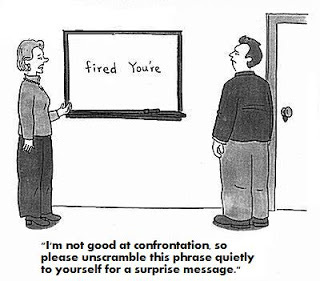
youre_fired

I came across this individual’s forum post on The Personality Cafe in a weird way. My article “Why Family Scapegoats Become Lifelong Victims,” (which has become my most viewed article ever and is still gaining momentum on the web), was linked to by this writer and there was an excerpt from their own post left in my comment folder. The blurb was intriguing enough that I decided to read it, and holy cow! It sounds like my own life story. In fact, I am going through this situation with a friend even as I write this. (If you’re a friend of mine reading this it’s not you–this “friend” doesn’t read my blog or even know I have one). I don’t want to be friends with this person anymore (who I suspect is a malignant narcissist who likes to “play” with me and make “jokes” at my expense) but instead of confronting them and telling them I want to end our friendship, I’m just avoiding this person, hoping they get the “hint.” I do that sort of thing all the time. Confrontation terrifies me, but what happens is my anger becomes seething resentment and has to come out eventually, so after weeks or months of pretending everything is fine, I’m likely to explode and say things I regret. It also comes out in other ways, like acting passive-aggressive. I’ve gotten better but it’s still a problem. Anyway, here is that article. The writer is an INFJ like me and wonders if this is common in INFJs. I’m also an Enneagram Type 4/5.

If we need to slap a psychiatric label on this sort of behavior, it’s a common symptom in people with Avoidant Personality Disorder and Covert Narcissism (which I still suspect I am, even though my therapist has said I’m only “on the spectrum” but not NPD). I think people with BPD are also guilty of this.

passive_aggression

Has anyone else had this problem in the “social environment”?

As of recently I have made a personal discovery about the origins of how and why I have a certain fear. And it also ties in with the Enneagram 4 labeled fear “that they have no identity or personal significance”. Generally, with “friends” (both close and acquaintance) I tend to hide away or become afraid of sharing my true thoughts and being completely honest with them if there’s a problem (unless they manage to hurt me to the extent that i just cut them off). I become fearful of their reaction before it even happens, so i withhold my thoughts and continue acting as if everything is okay. It’s not only the fear that they will be upset at my honesty, but the fear that I would also begin to hate myself afterwards as well. I didn’t realize there was a term for this as well (even though i knew it as a common term i never understood its meaning). And that term is “Shame”. And while shame is the major factor of why i feel guilt for wanting to speak out, as well as feeling it for not wanting to speak out, I had also come to realize this was also connected to my upbringing. I learned in the article mentioned below, that most scapegoats have high empathy and sensitivity at an early age, which causes them to absorb all of the projections of their parents, thus causing the birth of self hatred/possibly depression. It also informed me that as they continue to go into social relationships, that they will also absorb the projections of what other people think of them as well. For me this explains a helluva lot, of why i fear getting close to certain people and their impact on me if i either

A. Do something wrong.
Or
B. Be honest with them.

I’m personally terrified of being completely honest with someone i’m not sure of, as any kind of minor negative backlash towards me can cause me to go in a state of guilt for a long time. So instead I internalize everything that bothers me about them, and I simply play my part in this “friendship” until i have a reason to avoid them or doorslam. And this is different from constructive criticism, i’m talking about the consequences that may occur if they end up being hurt by my honesty. While their take of it may not be my problem afterward I still hold the shame of what I have done to another human being, even if it was the “right” thing to do rather than continue being dishonest with them and put on the fake persona. I fear hurting them..but I also fear hurting myself. It’s a double edged sword and the ending remains the same regardless of which way i act. I’m fearful of absorbing any new projections one might have of me (specifically negative) which has caused a spiral of paranoia in 2/3 of my friendships, even if they may not take it personal. And before I end this, I am not intentionally hurtful when i’m honest, as I still try to be polite and respectful of the person that i’m talking to. I am also aware that they can be positive in their response, but i’m practically crippled by my fear, especially because of social experiences that didn’t go well.

Read article on The Personality Cafe here.

Self-sabotage.

self_sabotage1
I think I had an interesting therapy session last night. I was talking to my therapist about the way my father stole the little illustrated stories I wrote when I was about 7 (which I wrote about in this article). This long ago incident seems to have set the tone for my entire life, because after I’d realized my intensely personal little creations (that were intended for no eyes but my own) were stolen, I felt overcome with shame and I felt as violated as if I’d been raped (and I have been raped so I can vouch for the similar feeling of violation). I remember what I did with those little books after I stole them back: I destroyed them.

This has been a refrain throughout my entire life.  It’s like that song you hate that keeps playing in your head until you’re ready to shoot yourself in the head to make it go away.  During my session last night, I made this connection: whenever I felt there was a threat of something that came from my true self (usually related to my creativity which meant being vulnerable) being violated or taken away, I sought to destroy it. Sometimes this “destruction” simply meant losing interest in whatever it was or giving it up. When I was 19, I had some expensive camera equipment and loved to take pictures as a hobby. When my 35mm camera (which I’d saved for months for) got stolen one day, I gave up photography. Only recently, have I been taking pictures again (on a crappy Smartphone).

self-sabotage2

But there are other examples where something wasn’t literally stolen from me as my camera was or my illustrated books were, but where my boundaries were violated (or I perceived them to be violated, or believed they were about to be violated). I’ve never stuck with anything I loved doing for too long, because sooner or later it wasn’t just “mine” anymore and it was either held up for judgment, or criticized (to me, these feel like boundary violations and make me feel too vulnerable). For several months I’ve been struggling with trying to figure out why I’ve been losing interest in blogging, which has been so life-changing for me and has brought me so much happiness. I realized it was because “running naked in public,” while incredibly liberating and having many rewards, also means you’re vulnerable to judgment and criticism. I don’t know how to handle judgment and criticism. I take everything too personally; any sort of criticism is a personal assault–again, like being raped. Even worse is having to deal with trolls and bullies, which feels like gang rape (and reminds me of my childhood at the hands of bullies both at school and at home).

A person with a healthy sense of self and normal self esteem might feel somewhat offended by a hurtful comment, but would be able to move on from that and wouldn’t give up or find themselves losing interest in something they’re passionate about. They might even fight back or take a stand. But when I’m attacked, or even criticized, I get triggered and become the defenseless and helpless child I used to be (and that I rejected a long time ago). I can’t handle reality, which means confronting both the good and the bad. And so to avoid being “raped” again, I’ve turned off my ability to be interested by much of anything at all (and then resent the hell out of whoever I feel violated me). That way, I don’t put myself at risk of being judged, which in my mind always leads to being rejected. Tied in with this is the fear of failure: I was raised to believe I was incompetent, so if I don’t attempt anything, I can’t really fail at it. Right? But the bottom line is, hiding behind my fear of failure is a absolute terror of being found defective, and hence rejected.

I don’t know whether this unfortunate tendency of mine is indicative of BPD, C-PTSD, or Covert NPD or something else (I do not know what my therapist has diagnosed me with and I’m afraid to ask), but I think writing about this is a step in the right direction. I want to explore this further when I see my therapist again and am going to show him this post (he knows I have a blog and write about psychology and NPD, but I haven’t shared the link with him yet).

Therapy update!

I just received an email back from my chosen therapist (I wrote him a very long description of my problems and what my goals are in treatment) and he sounds very understanding and empathic. He thanked me for giving him a lot of information to work with ahead of time and said 2x a week for deep insight therapy isn’t out of the question, but finances might limit me to just one session a week for now. He offered me some open slots to choose from, so I have my first appointment (which will run into 75 minutes or so) in 2 days! Why do I feel like I’m going on a date or something? (No I do not find him attractive lol!)

I’m kind of surprised my telling him I have a BPD diagnosis didn’t scare him off due to the stigma. I remember one therapist who I felt I connected with on our intake session calling me a few days later after looking over my psychiatric records and saying, “sorry, I don’t work with borderlines.” I don’t act out anymore though, so I don’t think there should be any problems.