My son said no to the DMV

DMV
There’s assholes at Carrabba’s too. But at least you get tips.

Last week my son Ethan, who works as a Carrabba’s waiter (and makes great money in tips) had a job interview with the DMV in Tampa, Florida. He thought he was awkward during the interview and didn’t think he’d get the job, especially because almost a week passed and he heard nothing back from them.

A few days ago, he started having second thoughts about working for the DMV. My son is an artist–an urban dancer and aspiring filmmaker–and could not see himself fitting into the sterile, corporate environment of working for a government agency like the DMV. I agreed but said nothing. This was his call, not mine.

Yesterday he got a call from the DMV saying he got the job. But Ethan refused their offer, knowing he’s turning down a good salary and full health coverage and other benefits government employees get. He had a few regrets after the fact, but says he knows it was the right decision.

I say good for him. He kept his integrity and had the foresight to realize how soul-sucking a job like that could have been for someone like my son, who is an HSP (like me), somewhat eccentric in his interests, and also gay. He’s what you would probably consider a “hipster.” Ethan’s a kind person and he probably would have been too “nice” to last long at the DMV. He enjoys his waiter’s job well enough, and has no problem with sticking with that until he finds something more in line with his true interests in filmmaking or something related.

But I think the fact the DMV wanted to hire Ethan was a much needed boost to his self esteem. It proved to him that he can get other types of jobs besides those in the service industry. He was starting to have doubts (I’ve told him again and again it’s not him, but the entire Millennial generation that’s having problems finding decent jobs).

For more about the soullessness of the corporate/government environment today and how it’s being taken over by narcissism, please read this insightful article by Fivehundredpoundpeep.

Test driving narcissism (how I almost became a narcissist)

In answering a comment on yesterday’s post, I suddenly remembered something I had forgotten.
I remembered how I almost became a narcissist. I think I was finally ready to remember. It’s part of my journey to wellness.

I immediately began digging through boxes of old photos, because I was burning inside to write this post, to confess everything, and photos say a lot.

Narcissism runs in families, and although exacerbated by abuse or neglect, it can develop later in a susceptible person, and it happens because of a conscious choice the person makes. They may not actually be saying, “Okay, I’m going to be a narcissist now,” but they have been teetering on the brink of darkness and the would-be narcissist decides it’s easier to plunge right into narcissism than to keep being hurt as their true self.

family_dinner
3 generations of women: my maternal grandmother Anna Marie, my mother in the center, and me at age 5. (ca 1964) Our family dinners were always this stiff and formal.

Narcissists start life as Highly Sensitive People.
For a number of reasons, I’ve come to believe most narcissists started out as HSPs (highly sensitive people). I will not go into my reasoning here, but I strongly believe these are people who once felt things too much, and if they were abused, it would have been too much to bear. To survive, they constructed a false self in an effort to protect the too-sensitive self (true self) from further hurt. The problem is, for narcissists, the false front works way too well, so well that once it solidifies, it’s there forever.

Tormenting my therapist.
I remembered the therapist I had during my early 20’s. I was terribly infatuated with him, obsessed beyond all logic. This is called transference in psychotherapy and my therapist kept trying to get me to “work through it” but my crush kept intensifying. It was killing me. One day I told him I couldn’t take it anymore and walked out the door in mid session. I never saw him again.

I realize now how narcissistic I acted during my sessions with him. I was attractive and knew it so I flirted openly, tried to get him to hug me (he actually did this until he realized it was a manipulative game on my part and there was a definite sexual aspect).

One day I stormed into his office having a hissy fit because I’d found a magazine in the waiting room with his and a woman’s name on the label. I stomped in, started waving the magazine in the air demanding he tell me why he never told me he had a girlfriend. His answer was quite reasonable (and it was of course none of my business), but I sulked the whole rest of the session and refused to say anything. I’d show him!

After I quit therapy, I hoped I had hurt him. I think I was angry at him for “making” me like him too much and leaving him was my method of punishing him. Of course, my leaving therapy didn’t hurt him. I was just his annoying, demanding, manipulative little bitch of a patient and he probably couldn’t stand me. I wanted to think I was hurting him, but I was really only hurting myself.

It shames me to remember all this, but I really manipulated that therapist, and annoyed him all the time ON PURPOSE. I was sadistic…I was crushing so hard, maybe my strong feelings for him were causing me to want to hurt and anger him. I remember getting a thrill if I could see a look of hurt on his face. It made me feel more powerful–that I could do the hurting instead of always being the one to get hurt.

lauren_bennett2
1977: Still a nice, sensitive, codependent girl at age 18…things were about to get ugly.

I was becoming partly dissociated from the me that is now and the me that was before. But it was all a defense against being hurt, and I knew it. I just couldn’t admit it.

I never saw my therapist’s diagnosis of me (I was there for anxiety and panic attacks) but it makes me wonder if “NPD” might have been one of the diagnoses. I’m pretty sure it was still called NPD in the early 1980s.

lauren_bennett1
I think I can see the beginning of the “narcissist stare” in this photo of me from 1984. I look colder and harder than in the 1977 photo. I see this same look sometimes on my daughter, who is close to the same age I was here. I think this look can also be seen in some Borderlines.

The Danger Zone.
Sometime in my late teens and early 20s I began to act “like I didn’t care.” It was feigned but at the time my high sensitivity was shameful to me. I didn’t want it. It was my albatross, my curse. I was tired of being teased about it. So I made a choice to just act like a different person. Act like a person who didn’t give a shit about anything. I began to drink heavily and smoked a lot of weed to numb the pain of being me. I began to be over-critical of others and gossipy, something I had never been, and spread lies about people I didn’t like to anyone who would listen.

My envy of others (something I still struggle with) was off the charts. I couldn’t stand people who had more than me, were prettier or thinner than me, were smarter than me, or had a better relationship or job than me. I would spread lies and rumors about these more fortunate people. Mostly, it backfired, for my Aspieness made it almost impossible for me to maintain my masks or hold up a lie. A good narcissist has to be good at reading social cues. I wasn’t, but I sure did try.

I found it hard to feel happy for anyone. If a friend got a promotion or fell in love, I felt bitter and jealous instead of glad for them. I’d rant that they didn’t deserve it. And I actually believed this, to a point.

I imagined myself not “needing” anyone. I dated a few guys and unceremoniously dumped them, and yet I was so lonely. I longed to be in a happy relationship, but couldn’t allow myself to be vulnerable enough. I treated men like objects.

I didn’t listen to people. I interrupted them, only thinking of what I would say next. I only wanted to talk about me. Other people were becoming objects too.

I lied to people about my accomplishments (which in actuality were few), my background, my social status. But no one really believed me. I wasn’t good at this game. In fact, I sucked at it.

I think I came very close to becoming an N. Over time, this hard outer shell I’d constructed out of the ashes of my own pain ossified and grew more stable. I was forgetting what it felt like to be vulnerable and human.

There was something else too. During the time I was test driving narcissism, I suffered from severe panic attacks (which is what led me into the therapy described above). I felt like I was out of my body a lot, and that made me panic. Some of these attacks were so bad people thought I was having epileptic seizures, because when I was “out of my body,” I had trouble controlling my movements and would stumble around as if drunk, or my eyes would sort of glaze over as if I wasn’t quite “there.” To rule out epilepsy, I had an EEG done. It came out normal. The only thing I can think of is that somehow the dissociated state I was in was causing me to feel detached from my own body, because I wasn’t “myself.”

Coming back from N hell
One day when I was about 26 (and the same year I got married to my MN ex), a friend of mine from high school told me she didn’t think she could be friends with me anymore, because I was too mean and she didn’t trust me. Other people were calling me out for spreading rumors and lying and my whole flimsy construct came tumbling down. I couldn’t escape from the web of lies I’d created, and now that web threatened to engulf me. It was terrifying but was the wake up call I needed.

I finally realized I was hurting people. Even then, I hated knowing I’d hurt someone else more than I hated being hurt by others. I was overcome with guilt and shame, and realized I couldn’t keep up the mean-girl front anymore. I didn’t become a narcissist, but I came close, so close.

This wake up call catapulted me back into my normal self and the horrific panic attacks soon subsided. (I still have panic attacks from time to time, but they are specific to certain situations and nowhere near as numerous as they were from 1979 – 1984 or so.)

Choosing codependency.
I’d been balancing at the precipice, and ultimately chose codependency (sometimes now referred to as “inverted narcissism”). Looking back, that was actually a very wise choice for if I hadn’t, if my guilt had not been strong enough to stop me in my tracks, I would have been a much different person today, and would not be doing what I’m doing right now. Sharing my journey with other survivors of narcissistic abuse. It’s a contagious thing, and any of us from narcissistic families could have gone in that direction. But we didn’t. That’s why we, not the narcs, are the lucky ones.

I think my Aspergers actually saved me. Aspies cannot read social cues and therefore can’t lie well and are bad at maintaining a workable mask. To be a narcissist would require me to use skills I did not possess. So I chose codependency because I had not been trained by my MN family to think for myself or trust my own judgment. I was trained to be Narcissistic Supply. That was a role I was much more successful at and comfortable with than my Narcissist Test Drive period.

But I think there was an advantage to my visit to the dark side too, and maybe a reason. I feel like like I understand narcissists’ motives and thinking patterns and self-hatred more than the usual non-narc ACON. Because I almost became one myself and felt a little bit of what they feel. All the money in the world wouldn’t be enough to get me to turn into darkness again. It was like a trip to hell. But I do know, they are in excruciating pain. All the time.
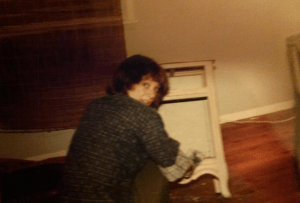
lauren_bennett3
Refinishing a table as young wife (around 1989-1990). I didn’t know how malignant my husband was yet but he was showing signs.

Never feel guilty for feeling guilty.
If I had been able to ignore or deny my guilt or the pain of others that I’d caused myself, I think I would have crossed the line into becoming a fullblown narcissist (though maybe not a malignant one).

Most narcissists make a choice at some point, usually early in life because of abuse but sometimes later, like I almost did. But I think there is also an escape hatch: a window of time where a budding narcissist can still “get out” and redeem themselves before the door between the Ns and everyone else slams shut.

Unfortunately I still have a few narcissistic traits and think I still sometimes act a bit like one. *red face* But my ability to feel shame and guilt is very well developed, in fact too well developed (and always has been), so that overrides my N traits. Perhaps that makes me a Borderline (I was actually diagnosed with BPD comorbid with other disorders in 1996). But if I am a Borderline, I try to control those behaviors. I try to be aware of them. I think I’m doing pretty well.

Growing into me.
Now I’m changing, moving farther away from the N and B traits of my early-mid adulthood than I have ever been. I don’t envy people much anymore and am beginning to understand what it feels like to feel joy or sadness for someone else. To feel humbled by the simple but beautiful things that surround us. I’ve embraced my sensitivity and am finding rather than being a curse that brings torment and hurt, it’s a beautiful thing that allows the growth of empathy and true understanding. Instead of shame over it, now I’m proud.

The ironic thing about this is that, it’s because I like myself MORE now, that my N traits are disappearing. I used to think I was worse than a piece of dog poop stuck on the bottom of a shoe and had to go around proving I was more, much more than that. It’s not like that anymore, and I’m ever so grateful I saved myself at the 11th hour.
The rest is just gravy.

justgravy

If you are a sufferer of a mental illness or a survivor of malignant narcissists or other mentally ill people and decide to blog about your experience, you have to be very brave.
You have to be 110% honest at all times.
You can’t hold anything back. Ever. No matter what.

The only thing it might be okay to lie about is your real name. Using a pseudonym can make it much easier to be honest about your life, your true feelings, your own opinions.

Self consciousness and reservedness would never work on a blog like mine. It’s my diary and my therapy. Everything I would tell a therapist is here for the public. This is how I’ve chosen to conduct my healing.

To do so requires courage. You must not be afraid to admit when you’re afraid or lonely or vulnerable. Don’t think about the thousands of strangers who will read your words. Don’t let anything intimidate you or make you hesitate to be completely honest at all times.

Speak only your truth.
Speak only from your heart.
The rest is just gravy.

I am Broken now ….(long post I’m sorry)

My friend and fellow blogger, who is trying to get ready to say goobye to his beloved wife, who is dying of cancer.

Please offer your prayers and support for Butch, his wife and their beloved son.

My heart is breaking right now.

Here was the post Butch posted the previous day, “I’m Losing My Wife.”

Around the world in 4 1/2 months

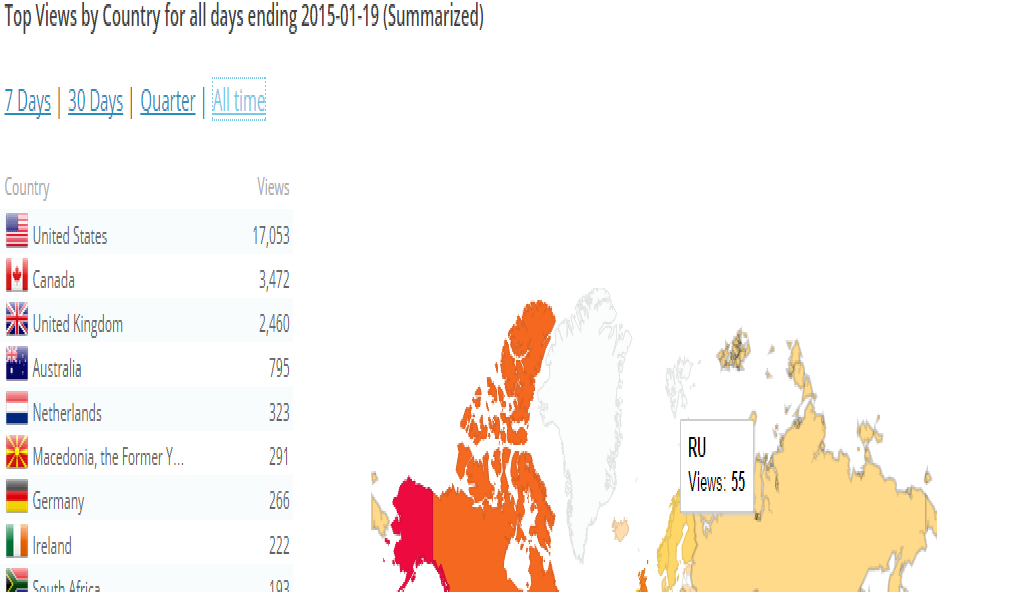
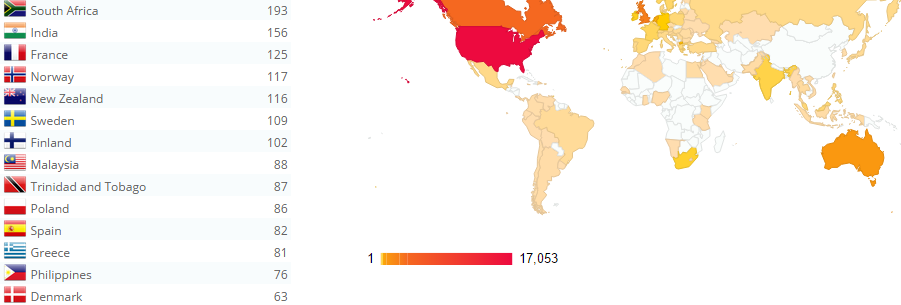
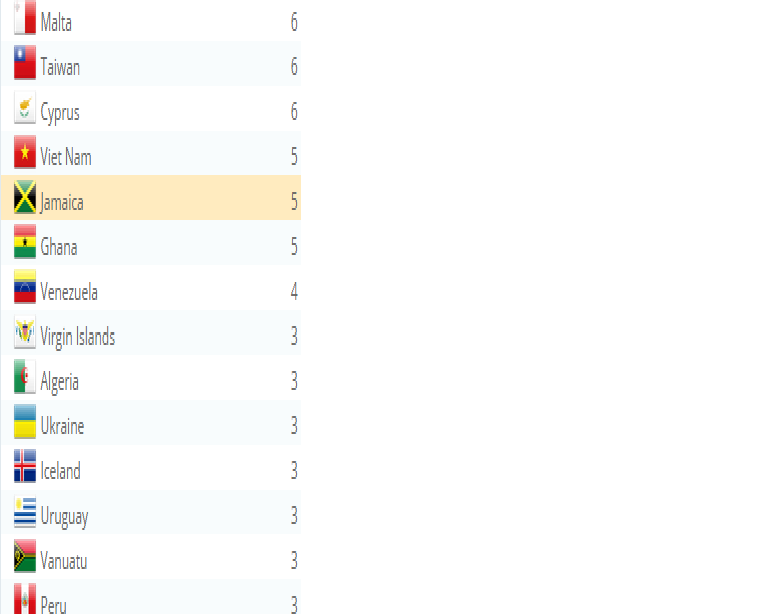
I think this is always the most interesting part of my stats. There’s a thrill in knowing once you press that “Publish” button, your feelings and thoughts that were yours alone just a few minutes ago as you were putting the finishing touches on your article, are being read by people al over the world, in a matter of minutes or even seconds.

Here is my is the list of numbers of views per country since I started this blog on 10 September 2014. Sorry about the stretched out look on a few of the panels but you can blame “Paint” for that, when I was trying to crop. I didn’t know how to fix it. I also wasn’t able to fit all of them in one table, so I had to do them in sections. Sorry!

Click on the tables to make larger.

worldstats1

worldstats2

worldstats3

worldstats4

worldstats5

worldstats6

worldstats8

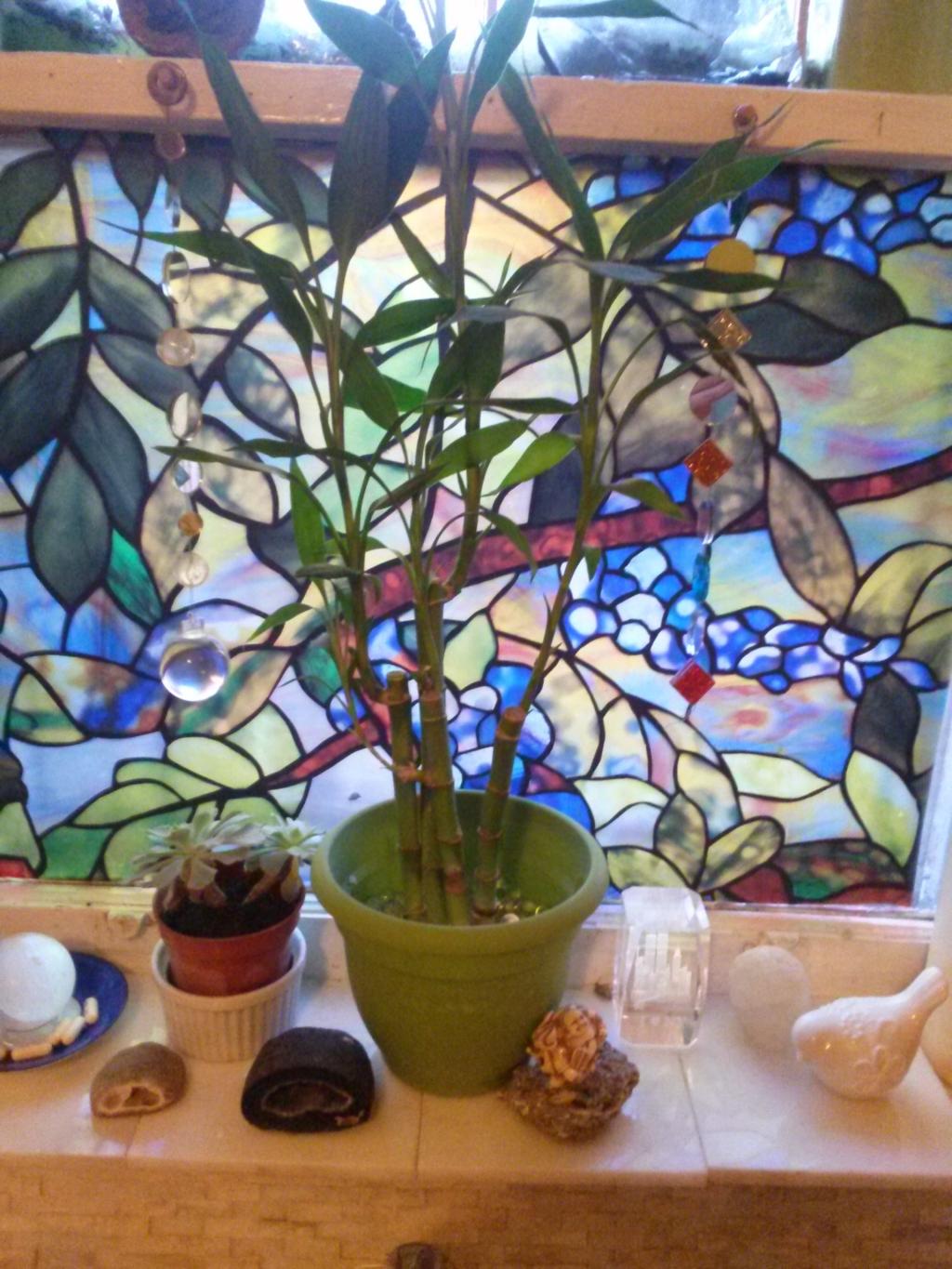
My lucky bamboo plant’s new home.

I first wrote about my lucky bamboo plant nearly 2 months ago in this post.

I’m the worst procrastinator you ever met, but yesterday I finally got around to going to Home Depot to look for a larger home for my plant, because it was starting to become rootbound (though as healthy looking as ever).

Because it’s not spring yet, it was hard to find anything I liked in the gardening section. But I finally came across this grass green resin pot which matches my kitchen walls (I gravitate to anything green, it seems).

Mr. Bamboo appears to be enjoying his upgraded home!

bamboo1 bamboo2

I have always loved this.

desiderata

Since I was in my teens, I have always loved “The Desiderata,” written by the poet Max Ehrmann. It was incredibly popular in the 1960s and 1970s, during the consciousness revolution (I remember seeing it on posters everywhere and I think someone even made a song out of it in the early 1970s), but since then seems to have lost its popularity and isn’t as widely quoted.

But The Desiderata is still so poetic, so relevant today and contains such sage advice for holding onto your integrity and dignity and living the life God meant for you to live. You also do not have to be religious to get something out of it.

Desiderata

Go placidly amid the noise and haste, and remember what peace there may be in silence.
As far as possible without surrender be on good terms with all persons.
Speak your truth quietly and clearly; and listen to others, even the dull and ignorant; they too have their story.
Avoid loud and aggressive persons, they are vexations to the spirit.
If you compare yourself with others, you may become vain and bitter;
for always there will be greater and lesser persons than yourself.

Enjoy your achievements as well as your plans.
Keep interested in your career, however humble; it is a real possession in the changing fortunes of time.
Exercise caution in your business affairs; for the world is full of trickery.
But let this not blind you to what virtue there is; many persons strive for high ideals;
and everywhere life is full of heroism.

Be yourself.
Especially, do not feign affection.
Neither be critical about love; for in the face of all aridity and disenchantment it is as perennial as the grass.

Take kindly the counsel of the years, gracefully surrendering the things of youth.
Nurture strength of spirit to shield you in sudden misfortune. But do not distress yourself with imaginings.
Many fears are born of fatigue and loneliness. Beyond a wholesome discipline, be gentle with yourself.

You are a child of the universe, no less than the trees and the stars;
you have a right to be here.
And whether or not it is clear to you, no doubt the universe is unfolding as it should.

Therefore be at peace with God, whatever you conceive Him to be,
and whatever your labors and aspirations, in the noisy confusion of life keep peace with your soul.
With all its sham, drudgery and broken dreams, it is still a beautiful world. Be careful. Strive to be happy.

© Max Ehrmann 1927

10 reasons why Facebook drives me insane.

dislike_facebook

I don’t like Facebook. Here’s the reasons why.

1. EVERYONE is on there. I mean EVERYONE. And they WILL find you.

2. It’s the new Big Brother. Potential employers and actual employers use FB to check up on you. You can be fired or rejected for a job for “liking” the wrong thing or posting the wrong photo or meme. Make no mistake. You are being watched.

3. The layout is confusing, cluttered and not attractive.

4. Way too many notifications about dumb things you don’t care about and invitations to “like” commercial products and suggestions of who to “friend.” Okay, well all social media has that. Still, it’s more annoying on Facebook.

5. Too many people posting selfies and photos of themselves with all their friends partying and having fun all the time. Or photos of their renovated house or their Caribbean vacation or their ugly new baby. It’s a narcissist’s wet dream.

6. This breeds envy in people who see those photos. You always wind up comparing yourself to others and you always seem to come up short.

7. Too many games and “gifts” from games you don’t play appearing on your wall. Although I’ll confess in around 2007-8 when Facebook was new and seemed cool, I got addicted to Cafe World and Farmville. Those games were fun, I won’t lie.

8. Overrated.

9. Too many people from my RL trying to get me to “friend” them.

10. You can’t choose your own theme or change the look of your profile much. Even Twitter allows more creativity than Facebook. Not that I think we should go back to the days of MySpace with its jarring profiles of neon green on shocking pink backgrounds with their glittering Blingies, flashing signs, badly sized photos that took a year to load, and other digital doodads that slowed your system down to a crawl and sometimes made it crash.

Mainly, I like to keep my online life separate from my personal life, and Facebook doesn’t make that easy because EVERY PERSON IN THE FREAKING WORLD IS ON THERE and THEY WILL FIND YOU. Yep, all 7 billion human beings on this planet. They’re all there. Waiting. Watching.

I’ll check my Facebook sometimes but I hesitate to post anything there. I never, EVER share this blog on my own profile. I wouldn’t dare. And once I’ve checked whatever I’m looking for, I sign out ASAP. Facebook is scary.

Maybe that’s what Hell is. After you die, you go into the Matrix and find yourself trapped in Facebook for all eternity.

F*ck. Why do I have to post yet another Sam V. article?

**Sigh.**

Because I’m an obsessive Aspie nutcase.

No, actually…because it’s about Narcissism and Aspergers and why these two disorders sometimes get confused, even by professionals, even though they’re not really anything alike. It’s because Aspies cannot SHOW emotion or empathy appropriately, not because they don’t FEEL it.

I’m compelled to post anything I see that talks about both these disorders since these are the two I have the most interest in, for obvious reasons.

http://www.narcissistic-abuse.com/journal72.html

Misdiagnosing Narcissism: Asperger’s Disorder

marc_thorpe

Asperger’s Disorder is often misdiagnosed as Narcissistic Personality Disorder (NPD), though evident as early as age 3 (while pathological narcissism cannot be safely diagnosed prior to early adolescence).

In both cases, the patient is self-centered and engrossed in a narrow range of interests and activities. Social and occupational interactions are severely hampered and conversational skills (the give and take of verbal intercourse) are primitive. The Asperger’s patient body language – eye to eye gaze, body posture, facial expressions – is constricted and artificial, akin to the narcissist’s. Nonverbal cues are virtually absent and their interpretation in others lacking.

Yet, the gulf between Asperger’s and pathological narcissism is vast.

The narcissist switches between social agility and social impairment voluntarily. His social dysfunctioning is the outcome of conscious haughtiness and the reluctance to invest scarce mental energy in cultivating relationships with inferior and unworthy others. When confronted with potential Sources of Narcissistic Supply, however, the narcissist easily regains his social skills, his charm, and his gregariousness.

Many narcissists reach the highest rungs of their community, church, firm, or voluntary organization. Most of the time, they function flawlessly – though the inevitable blowups and the grating extortion of Narcissistic Supply usually put an end to the narcissist’s career and social liaisons.

The Asperger’s patient often wants to be accepted socially, to have friends, to marry, to be sexually active, and to sire offspring. He just doesn’t have a clue how to go about it. His affect is limited. His initiative – for instance, to share his experiences with nearest and dearest or to engage in foreplay – is thwarted. His ability to divulge his emotions stilted. He is incapable or reciprocating and is largely unaware of the wishes, needs, and feelings of his interlocutors or counterparties.

Inevitably, Asperger’s patients are perceived by others to be cold, eccentric, insensitive, indifferent, repulsive, exploitative or emotionally-absent. To avoid the pain of rejection, they confine themselves to solitary activities – but, unlike the schizoid, not by choice. They limit their world to a single topic, hobby, or person and dive in with the greatest, all-consuming intensity, excluding all other matters and everyone else.. It is a form of hurt-control and pain regulation. [This describes me so much it’s creepy]

Thus, while the narcissist avoids pain by excluding, devaluing, and discarding others – the Asperger’s patient achieves the same result by withdrawing and by passionately incorporating in his universe only one or two people and one or two subjects of interest. Both narcissists and Asperger’s patients are prone to react with depression to perceived slights and injuries – but Asperger’s patients are far more at risk of self-harm and suicide.

The use of language is another differentiating factor.

The narcissist is a skilled communicator. He uses language as an instrument to obtain Narcissistic Supply or as a weapon to obliterate his “enemies” and discarded sources with. Cerebral narcissists derive Narcissistic Supply from the consummate use they make of their innate verbosity.

Not so the Asperger’s patient. He is equally verbose at times (and taciturn on other occasions) but his topics are few and, thus, tediously repetitive. He is unlikely to obey conversational rules and etiquette (for instance, to let others speak in turn). Nor is the Asperger’s patient able to decipher nonverbal cues and gestures or to monitor his own misbehavior on such occasions. Narcissists are similarly inconsiderate – but only towards those who cannot possibly serve as Sources of Narcissistic Supply.

As usual, he’s right on the money about this. His description of the Aspergers patient is me in a nutshell. I highlighted the relevant parts. Most of these Aspie behaviors are also seen in Narcissists, but for very different, almost opposite reasons.

Dammit, Sam.
*sigh*

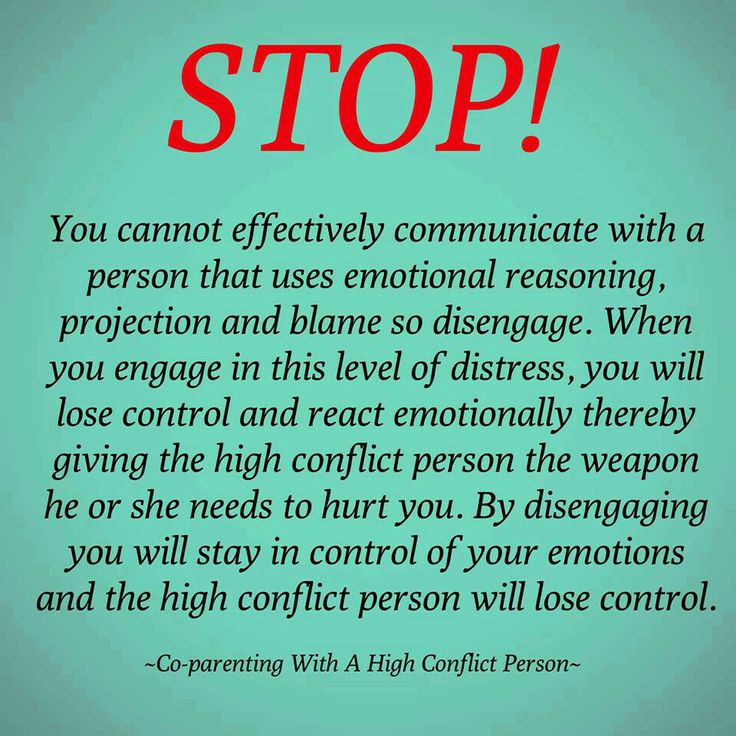
11 ways to deal with a narcissist.

stop!
1. Get as far away from them as you can, preferably No Contact. This isn’t always possible especially if there are children involved.

2. Do not let them manipulate you. If you can’t cut them out of your life, if they start manipulating you, cut them off by changing the subject, interrupting, or straight up telling them to stop in a firm voice as if talking to a three year old. Keep doing this if you can’t get away.

3. Deny them narcissistic supply!
This will actually help them because it will send them into a narcissistic rage (that is going to be difficult for you but you must be strong and not back down). But the rage will pass and then the narcissist will sink into a narcissistic crisis–which means then you are probably going to be dealing with an extremely depressed person but narcissists rarely attempt suicide. They may be open to getting help if this happens. They may also leave you in their attempt to find a new source of supply if it’s become clear you are not going to feed it anymore.
If the narcissist leaves you, it’s you who wins. Even if you think your life depends on them. It doesn’t.

4. It’s okay to have empathy for the narcissist because deep down they are in pain. If you don’t that’s okay too (and probably better to lack empathy for them if you’re trying to get out of the relationship). Once disengaged then it’s okay to be empathetic if that’s in your nature, but remember they have chosen to be narcissists and are still very dangerous. Hate the sin, love the sinner.

5. The only kind of “love” they should get from you is TOUGH LOVE. Especially with a child who is a narcissist.

narcissist_shame

6. Be very, VERY clear about your boundaries. Do not tolerate any violation of them. Be firm, do not back down even if they become enraged. Stand your ground. If you feel intimidated remember you are dealing with an eternal 2 or 3 year old. Would you let a toddler get the better of you? Of course not. It’s the same thing with a narcissist. They are really just small children throwing a tantrum to get their way.

7. If you can’t escape, have some kind of outlet or get away to do things for yourself.

8. If your narcissist has isolated you from everyone else, use art, music or writing as an outlet. Creating things frees us, even if only in our minds and hearts. It’s something that’s all about you, and no one else. A narcissist can criticize it, but cannot penetrate your creative vision. I believe everyone has at least one creative/artistic ability they can develop.

9. Read everything you can. Go to as many websites about narcissistic abuse as you can. Read blogs, books by experts and survivors, find out how others have coped or are coping.

10. Realize you are not alone and many suffer with you. Malignant narcissists are at fault for your condition, not you.

11. If you believe in God, ask Him for guidance and strength. You will need it. If you are an atheist or agnostic, ask the Universe or your Higher Power or even the Tooth Fairy for the same.