Instant mood booster

I’m not usually a big fan of CCM (Christian Contemporary) music, but my work partner listens to it, and I remember hearing this song in her car all the time a few months ago. It was a pretty big hit from what I remember. Sure, the song’s a little cheesy, but Danny Gokey has an amazing voice and his message is uplifting instead of bashing you over the head with religion. You don’t even have to be Christian to get something from it. If I’m down in the dumps, listening to this is an instant mood booster and reminds me there is always hope.

I used the lyric video so you can read the words.

When my worlds collide.

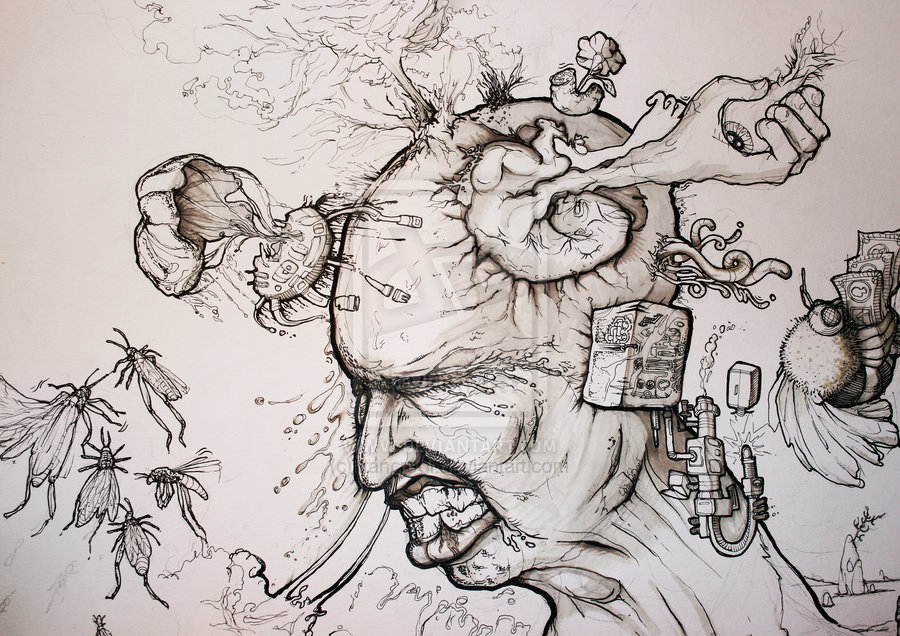
Worlds_Collide___Phaeton___by_Meckie
Worlds Collide-Phaeton: by Meckie at Deviantart.com

I have lived in several different online worlds at different times of my life, each as remote from each other as the Milky Way is from The Great Magellanic Cloud. They may even inhabit different cyber-universes. But on Facebook, these universes have a disturbing and slightly eerie way of all melding together into a single, writhing, freaky ass clusterf*ck.

I recently became somewhat active on Facebook again, even though I really can’t stand it. This happened because I decided to start linking my blog posts there (it does help visibility), and, well, you start poking around looking at stuff and before you know it, you’re updating your status and talking to people who want to comment about your updates.

One thing that always happens that drives me insane, but is really sort of cool when you think about it, is when people from different areas of my life start conversing because they’re both my Facebook friends and they both wind up commenting about something I posted.

My friend Kevin, from a political/history forum I used to be active on (the site has become pretty much overrun by trolls but has a FB page now) got into a heated debate with another friend of mine I just met because she’s active on Sam Vaknin’s page. They got into a discussion over the religious implications of malignant narcissism and whether or not Vaknin would be saved by the Holy Spirit. It was an interesting if somewhat strange conversation. I got a kind of odd thrill from seeing two people from completely different compartments/timeframes of my online life get to know each other on my wall.

Okay, I admit it. It’s cool as hell.

I always wondered about the freakiness of my worlds colliding. When different areas of my life–or different times–somehow “meet” it’s very freaky. They don’t belong together.

This reminds me of when I was about 4. I was in the grocery store with my mother, and suddenly a woman appeared with a cart of groceries and started speaking to my mom…she was MY TEACHER and I started crying because it scared me because THE GROCERY STORE was where you bought GROCERIES and the TEACHER BELONGED IN SCHOOL so what in the name of all that is holy was my teacher doing in the GROCERY STORE?
It’s a little like that, but not scary or upsetting, because I’m not 4…..but its still weird.

That’s one of the reasons why Facebook scares me. It makes me wary and inhibited about posting ir some things or sharing certain blog posts there. There’s some topics I like to keep separate from people who inhabit one of my other universes. Why that is, I can’t explain. I don’t know myself well enough to explain why I have this strange neurosis about my worlds touching. Is this some bizarro world cyberspace version of a kid who freaks out because the gravy on their plate is touching their peas?

mixing_them

Most disturbing (but really just more annoying) of all is constantly seeing updates from old coworkers I lost contact with years ago and having friends I don’t recognize because I can’t remember why I added them or where I knew them from. Also many members of my FOO post on FB too but I have quietly defriended most of them. I HATE mixing my IRL life with my online one.

Sociopath vs. psychopath: is there a difference?

psychopathy

I’ve been using the terms psychopath and sociopath interchangeably on this blog, even though I’m aware there are differences between the two. I was curious enough to Google what the difference is, and came across an article in Psychology Today that explains how they are alike–and how they differ.

How to Tell a Sociopath from a Psychopath
By Dr. Scott Bonn

Many forensic psychologists, psychiatrists and criminologists use the terms sociopathy and psychopathy interchangeably. Leading experts disagree on whether there are meaningful differences between the two conditions. I contend that there are clear and significant distinctions between them.

The fifth edition of the Diagnostic and Statistical Manual of Mental Disorders (DSM-5), released by the American Psychiatric Association in 2013, lists both sociopathy and psychopathy under the heading of Antisocial Personality Disorders (ASPD). These disorders share many common behavioral traits which lead to the confusion between them. Key traits that sociopaths and psychopaths share include:

A disregard for laws and social mores
A disregard for the rights of others
A failure to feel remorse or guilt
A tendency to display violent behavior
In addition to their commonalities, sociopaths and psychopaths also have their own unique behavioral characteristics, as well.

Sociopaths tend to be nervous and easily agitated. They are volatile and prone to emotional outbursts, including fits of rage. They are likely to be uneducated and live on the fringes of society, unable to hold down a steady job or stay in one place for very long. It is difficult but not impossible for sociopaths to form attachments with others. Many sociopaths are able to form an attachment to a particular individual or group, although they have no regard for society in general or its rules. In the eyes of others, sociopaths will appear to be very disturbed. Any crimes committed by a sociopath, including murder, will tend to be haphazard, disorganized and spontaneous rather than planned.

Psychopaths, on the other hand, are unable to form emotional attachments or feel real empathy with others, although they often have disarming or even charming personalities. Psychopaths are very manipulative and can easily gain people’s trust. They learn to mimic emotions, despite their inability to actually feel them, and will appear normal to unsuspecting people. Psychopaths are often well educated and hold steady jobs. Some are so good at manipulation and mimicry that they have families and other long-term relationships without those around them ever suspecting their true nature.

When committing crimes, psychopaths carefully plan out every detail in advance and often have contingency plans in place. Unlike their sociopathic counterparts, psychopathic criminals are cool, calm, and meticulous. Their crimes, whether violent or non-violent, will be highly organized and generally offer few clues for authorities to pursue. Intelligent psychopaths make excellent white-collar criminals and “con artists” due to their calm and charismatic natures.

The cause of psychopathy is different than the cause of sociopathy (1). It is believed that psychopathy is the result of “nature” (genetics) while sociopathy is the result of “nurture” (environment). Psychopathy is related to a physiological defect that results in the underdevelopment of the part of the brain responsible for impulse control and emotions. Sociopathy, on the other hand, is more likely the product of childhood trauma and physical/emotional abuse. Because sociopathy appears to be learned rather than innate, sociopaths are capable of empathy in certain limited circumstances but not in others, and with a few individuals but not others.

Psychopathy is the most dangerous of all antisocial personality disorders because of the way psychopaths dissociate emotionally from their actions, regardless of how terible they may be. Many prolific and notorious serial killers, including the late Ted Bundy and John Wayne Gacy, and Dennis Rader (“Bind, Torture, Kill” or BTK) are unremorseful psychopaths. Psychopathic killers view their innocent victims as inhuman objects to be tormented and violated for their amusement.

Contrary to popular mythology, most serial killers are not mentally ill or “evil” geniuses. See my related article: http://www.psychologytoday.com/blog/wicked-deeds/201406/serial-killer-myth-1-theyre-mentally-ill-or-evil-geniuses

tedbundy ed_gein
Although both were deadly serial killers, Ted Bundy was a psychopath who gave a good impression and knew how not to get caught; Ed Gein was most likely a sociopath who acted more impulsively, was more disorganized and didn’t give a very good first impression. Though both men’s crimes were equally heinous, Bundy’s eyes seem “colder” than Gein’s.

Although the traits of a psychopath more closely resemble those of a person with Narcissistic Personality Disorder (NPD) than those of the more impulsive, disorganized sociopath, both are actually described here as variations of ASPD, not NPD. Once again, if ASPD is really “NPD on crack” then it follows that NPD and ASPD are both on the same spectrum, with ASPD (and psychopathy/sociopathy) at the top of the spectrum. If this is in fact the case, people with NPD, even malignant narcissists, may border on psychopathy, but would not actually qualify as true psychopaths.

Here’s a little graph I devised to illustrate where all the Cluster B disorders may fall on a spectrum. These are just my guesses and are not based on psychological research, just my instinct and gut feelings.

psychopathy_graph
Click image to enlarge.

Righteous anger.

Aggressive Boxing Girl

Anger is a tool for survival.
Anger has a bad reputation. But it isn’t always a bad thing. Anger can help us survive, and although it doesn’t feel good to be angry, it feels a heck of a lot better than feeling helpless, defeated or scared.

Anger is necessary for survival. It’s natural to feel angry when we believe we are being abused or attacked unfairly or our boundaries are being violated. It’s also natural to feel angry when we see a loved one being unfairly treated or abused.

This type of anger is healthy, righteous anger. People who are afraid to show anger at appropriate times, such as when they are being attacked or abused, are people who will always feel helpless and victimized. I felt that way for years, because anger frightened me.

Coming from a family (and a marriage) where anger was the normal dynamic (and was usually directed against me), I learned to fear anger in others–as well as my own anger. Even when I felt rightfully angry and was clearly being unfairly treated, I learned to keep my anger in check and swallow my true emotions. I felt like I had no right to feel my emotions, especially anger.

Anger turned inward becomes depression.
The danger in this is that when we swallow our anger, it doesn’t go away: it turns inward and this manifests as depression and despair. Anger is poison when turned against the self.

Sure, there are lots of people who are too quick to anger, and anger management can help people with a too-short fuse. But for the timid and victimized, allowing yourself a satisfying display of anger when wronged is a healthy thing.

Anger is proactive.
When we are trying to disconnect from an abusive narcissist, anger is absolutely necessary to successfully escape. Anger overrides fear. Ever notice when you’re angry, you’re not afraid anymore? Well, it’s true. If you are trying to disconnect from your narcissist, allow yourself to feel angry. Show that anger. That doesn’t mean you must be abusive yourself or resort to name-calling, but it does give us the impetus to take action. Anger, unlike despair, depression and some types of fear, is a proactive emotion–an emotion that forces us to take a stand, fight back, and get away.

If you are attempting to go No Contact with your narc, feel your anger. Wallow in it. It could save your sanity and maybe your life,as well as those of your children if you have any. It will motivate you to do what you need to do.

Put your empathy on the back burner.
Over time, I’ve developed a level of empathy for narcissists because I realize they have an illness and they do suffer. But when you’re trying to disconnect, it’s better if you can hate them and think of them as monsters or demons. Save any empathy for later on, when you’re stronger and safely away from your abusers. You cannot afford to have empathy for a narcissist when you’re trying to get out of a relationship.

Embrace your righteous anger. It’s healthy and good for you.
But also know when to let it go when it’s no longer needed. It’s a tool, but shouldn’t become a way of life.

Invitation to lurkers

lurkers
Every good blogger must have a Lolcats type of meme somewhere in their blog.

I think I must have plenty of lurkers. I know you’re there, reading.
So I’m extending an official invitation for you to introduce yourself and make yourself heard.

Some people prefer to just read, and I understand that. It’s okay.
But for those of you who have a question or comment or something you’re burning to say, leave your shyness in the cup by the side of your keyboard (everyone drinks something while online) and speak up. Come on in and say hello at least.

I don’t bite.

Can you remember?

remember

This really makes you think.

Why is narcissism so “hot” these days?

narcissist_nation

I haven’t seen any official studies or statistics, but it seems like narcissism is possibly the most popular psychological topic on the Internet in recent years. Blogs about narcissism are spreading like wildfire (though it’s possible they may be on the decline now). The subject of narcissism seems to be brought up regularly even in articles and sites about other topics, especially entertainment, big business, and politics, where narcissism is rampant. Narcissism is a buzz word, and it’s because we children of the Baby Boomers and Silent Generation–parents who bought into narcissistic values way back in the 1960s and 1970s–are finally having our say.

In a society-wide twist of values, Narcissism has become a virtue. Old fashioned virtues like altruism and empathy are seen as liabilities that hold people back from achieving success, rather than prosocial traits that keep us civilized and human. Ayn Rand, who idealized narcissism in her philsophy of “objectivism” (and was most likely a narcissist herself) has become a cult hero; her mediocre torch romances “Atlas Shrugged” and “The Fountainhead,” both featuring selfish, narcissistic “heroes” as their protagonists, have been enjoying enormous popularity.

ayn_rand
Ayn Rand.

I believe all this started in the 1960s and 1970s, during the Consciousness Revolution. Certainly the 1950s were mind numbingly conformist and rife with racism and sexism, but things went way too far in the other direction, as Baby Boomers and younger members of the Silent generation began to rebel against all the conformity. They popularized the idea of “doing your own thing,” whatever that thing was. Having and raising children became something to be avoided and any woman with a brain avoided pregnancy as if it were a disease. Abortion and The Pill became legal–and cool. Of course there’s nothing wrong with women having control over when and whether to have children, but I think the general attitude toward children in the 1960s and 1970s was negative. Young Gen X children were not wanted or valued. They were demonized in movies like “The Omen,” “Rosemary’s Baby” and “The Exorcist.” I remember an Esquire article from March 1974, “Do Americans Suddenly Hate Kids?” Well, it did seem that way.

Their parents, the Boomers and Silents, were encouraged to put their own self-growth and advancement of their careers ahead of child-rearing. At the time, this was even thought of as “good” for children, providing them with a positive example of a parent with a high self image and lists of achievements a mile long. Unfortunately, for many children growing up during this time, the attitude that adults were more valuable than children backfired and we felt like we just weren’t that important in our parents’ universe. We grew up with collective low self esteem.

hippie_parents
Hippie parents.

The 1970s were dubbed “The Me Decade” and adults were encouraged to do and be whatever they wanted, even if this meant neglecting their own children and turning them into latchkey kids with far too much freedom for their own good. Promiscuous sexual behavior and drug abuse among adults was rampant. Women everywhere (including my own) joined consciousness-raising groups that encouraged them to put themselves over their families. The fallout rained down on the lives of their Generation X and Gen-Jones (late Boomers born at the end of the 1950s and early 1960s) children, and we suddenly found we had to fend for ourselves, without much parental support, even when our parents were not narcissists.

While attitudes toward children improved during the 1980s as Millennial children began to be born, the Boomers and younger Silents who had spearheaded the Consciousness Revolution and Me Generation, were suddenly in positions of authority in politics, business and entertainment. We had Ronald Reagan, with his “trickle down economics” and support of the “supply side” and big business over the people. Tax cuts for social programs commenced with his election and increased over the next 30 years (and show no sign of letting up). Reagan was popular and charismatic, and so were his draconian economic policies that hurt the poor and later, the middle class. New college graduates during the 1980s and 1990s realized they could make unlimited amounts of money in the stock market and suddenly the “helping professions” were unpopular and considered far less lucrative than making a killing on the stock market or in investment banking. These became the infamous “having it ALL” Yuppies.

Yuppies were better parents than their hippie predecessors, but they micromanaged everything their children did, to the point the kids became stressed because they weren’t free to just be kids. These overcontrolled children were sent to the best private schools, given lessons in everything from piano to karate, and had no free time to just play and learn on their own. Millennials grew up stressed out and expecting to achieve in life, only to find when they first entered the job market during the 2000’s, they could not find decent jobs.

yuppie_mom
Yuppie mom.

Narcissism continues to be a “virtue” and our policies increasingly glorify the self and unlimited financial achievement over humble, old fashioned values of community and compassion. Children who were born or who were children or teens during the 1960s and 1970s are now adults, the oldest of us now in our 50s. I’ve noticed most blogs by ACONs seem to be written by women in their 40s and 50s: these are the Generation X and late Boom/Generation Jones children who suffered the most at the hands of parents who bought into the selfish ’70s and greedy ’80s. Even back in those days, the shift of narcissism from a vice to a virtue was not unnoticed. In 1979, cultural historian Christopher Lasch wrote his treatise “The Culture of Narcissism: American Life in an Age of Diminishing Expectations,” about the danger of narcissistic values for American society. His book remains popular today.

We may be a bunch of middle aged fuddy duddies, but we’re no longer scared and we are not shutting up. We call out everything we see wrong with the culture we were raised in, a culture that has become just as unhealthy for our own Millennial children. We were the scapegoats of a society that didn’t value us, and now we are the truth-tellers who are boldly talking about everything that was done to us, everything that went wrong and why. It was us who spearheaded the ACON movement (and yes, it is a movement) and are bringing narcissism out into the light where it can be seen for the disgusting and ugly scourge on humanity it really is. We are doing our best to nurture our own children according to more humble, old fashioned values, although that’s hard in a society that still only values personal gain and material wealth, and still tries to keep us down.

Girl Scout Cookies and God…

Frustration___Co_Production_by_ttancredi
Original art from Deviantart.com

It’s times like this my self esteem and progress in healing seems to take a dive into the toilet.
I don’t handle frustration well at all, and it can set me off on my old unhealthy patterns of negative thinking, feeling victimized, and wallowing in self pity.

I am having the tranny rebuilt on my car, and have just enough money from my tax return to have it done. Of course, God always comes through if you ask, and that’s what he did–but I still can’t help feeling sorry for myself because now I have to use my tax return to replace my tranny (and have a car that runs by the end of this week) instead of doing things I would prefer to do, like going to a few concerts or even planning a weekend trip. I know I should be grateful this happened now–when I have the money–instead of later on, when most likely I would not be able to afford it at all.

For the past two days, my roommate hasn’t been feeling well, so she has allowed me to borrow her car to get back and forth to work. Today I needed to get to the bank before they closed to deposit my state return and buy a few groceries. I live about a mile and a half away from the store, and the weather is nice so walking (which I would up doing) isn’t really an issue.

My roommate’s car wouldn’t start and we couldn’t jump start it with my jump start machine either. My daughter has a friend who was picking her up to go to the mall, and it would have been easy enough for her to drop me off at the shopping center so I could do my errands, but she said there wasn’t enough room in the car (there wasn’t).

So I walked, and instead of feeling happy that I could enjoy this beautiful and mild late winter day with the breeze in my face, I felt petulant and victimized instead. When they drove past me and didn’t slow down to ask me if I needed a ride after all, I felt angry and just wanted to give them all the finger. I know it was irrational of me because there were already 5 people in the car along with a baby, but I couldn’t help feeling like the victim again.

Now I’m cranky and depressed and just feel like sleeping away the rest of the day. Is this terribly narcissistic of me? I think it really is. I hate myself for feeling this way, and sometimes it feels like these sort of situations just make dogmeat out of all the progress I’ve made.

I know those of us healing from narcissistic abuse and PTSD have setbacks, but I still can’t help feeling like the way I feel is just wrong and selfish. So there’s guilt on top of everything else.

I knew I needed to blog about this today, as embarrassing as it is to admit how immature and childish I am behaving. I’m sure many of you have felt similarly in these sort of frustrating situations, even when they’re relatively minor, as this one is.

I need to focus on my blessings: my car WILL be fixed (even though it will set me back) and I had an opportunity to take a nice long walk on a pretty day. I also stopped and bought a box of my favorite mint chocolate Girl Scout cookies from some girls outside the supermarket. Think I’ll go indulge now. When all else fails, chocolate is great therapy.

girl_scoutcookies
This may be the best therapy at times like this.

A culture of abuse.

It looks like these are the “official” attitudes toward women by fundamentalist Muslim men in places like Afghanistan.

islam_women

I realize not all Muslims believe this, just the most fundamentalist sector. It’s like they live in the 14th century. It’s been speculated they ARE living in the 14th century–Islam is a young religion, compared to Christianity, which held similar attitudes toward women during the Middle Ages. I can’t even imagine survival in such a culture.

Even people who are not psychopathic can embrace such attitudes if they are led to believe a certain group of people aren’t really human. In fundamentalist Islam, women are thought of as objects, not human, which justifies the men’s abusive treatment of them.

Serial killers and abusers in general do not think of their victims as human. In war, soldiers can be brainwashed into thinking of the enemy–even women and children of the enemy–as something other than human, and that justifies killing them. It was attitudes like this that led so many Germans to embrace Hitler’s beliefs about the Jews and other targeted groups, such as homoesexuals and the mentally deficient.

Are you being “gaslighted”?

I found an interesting article on A Healthy Place about the emotional abuse practice of gaslighting. I never knew the various types of gaslighting actually had names!

Here’s everything you need to know about this sinister manipulation tactic used by narcissistic abusers, and how to tell if you’re a victim.

Gaslight-2

Gaslighting Definition, Techniques and Being Gaslighted
Written by Natasha Tracy

Gaslighting is a form of emotional abuse where the abuser manipulates situations repeatedly to trick the victim into distrusting his or her own memory and perceptions. Gaslighting is an insidious form of abuse. It makes victims question the very instincts that they have counted on their whole lives, making them unsure of anything. Gaslighting makes it very likely that victims will believe whatever their abusers tell them regardless as to their own experience of the situation. Gaslighting often precedes other types of emotional and physical abuse because the victim of gaslighting is more likely to remain in other abusive situations as well.

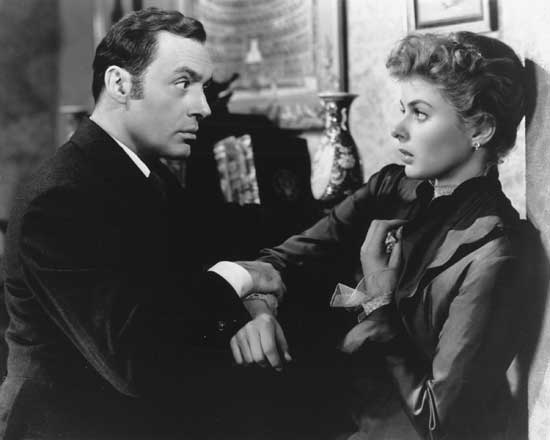
The term “gaslighting” comes from the 1938 British play “Gas Light” wherein a husband attempts to drive his wife crazy using a variety of tricks causing her to question her own perceptions and sanity. Gas Light was made into a movie both in 1940 and 1944.

gaslighting2

Gaslighting Techniques and Examples
Gaslighting is emotional abuse that aims to make victims doubt their own perceptions and memories. Find out if you are being gaslighted in your relationship.There are numerous gaslighting techniques which can make gaslighting more difficult to identify. Gaslighting techniques are used to hide truths that the abuser doesn’t want the victim to realize. Gaslighting abuse can be perpetrated by either women or men.

“Withholding” is one gaslighting technique where the abuser feigns a lack of understanding, refuses to listen and declines sharing his emotions. Gaslighting examples of this would be:

“I’m not listening to that crap again tonight.”
“You’re just trying to confuse me.”

Another gaslighting technique is “countering,” where an abuser will vehemently call into question a victim’s memory in spite of the victim having remembered things correctly.

“Think about when you didn’t remember things correctly last time.”
“You thought that last time and you were wrong.”
These techniques throw the victim off the intended subject matter and make them question their own motivations and perceptions rather than the issue at hand.

It is then that the abuser will start to question the experiences, thoughts and opinions more globally through statements said in anger like:

“You see everything in the most negative way.”
“Well you obviously never believed in me then.”
“You have an overactive imagination.”

“Blocking” and “diverting” are gaslighting techniques whereby the abuser again changes the conversation from the subject matter to questioning the victim’s thoughts and controlling the conversation. Gaslighting examples of this include:

“I’m not going through that again.”
“Where did you get a crazy idea like that?”
“Quit bitching.”
“You’re hurting me on purpose.”

“Trivializing” is another way of gaslighting. It involves making the victim believe his or her thoughts or needs aren’t important, such as:

“You’re going to let something like that come between us?”

Abusive “forgetting” and “denial” can also be forms of gaslighting. In this technique, the abuser pretends to forget things that have really occurred; the abuser may also deny things like promises that have been made that are important to the victim. An abuser might say,

“What are you talking about?”
“I don’t have to take this.”
“You’re making that up.”

Some gaslighters will then mock the victim for their “wrongdoings” and “misperceptions.”

Gaslighting Psychology
The gaslighting techniques are used in conjunction to try to make the victim doubt their own thoughts, memories and actions. Soon the victim is scared to bring up any topic at all for fear they are “wrong” about it or don’t remember the situation correctly.

The worst gaslighters will even create situations that allow for the usage of gaslighting techniques. An example of this is taking the victim’s keys from the place where they are always left, making the victim think she has misplaced them. Then “helping” the victim with her “bad memory” find the keys.
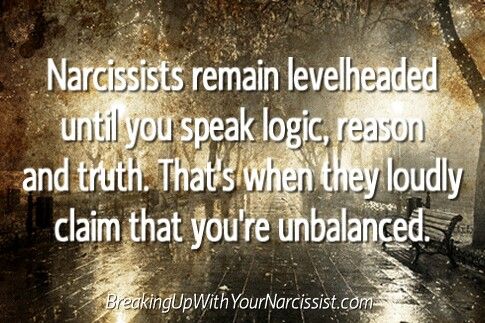
gaslighting

Are You a Victim of Gaslighting Emotional Abuse?
According to author and psychoanalyst Robin Stern, Ph.D., the signs of being a victim of gaslighting emotional abuse include:

You are constantly second-guessing yourself.
You ask yourself, “Am I too sensitive?” a dozen times a day.
You often feel confused and even crazy at work.
You’re always apologizing to your mother, father, boyfriend,, boss.
You can’t understand why, with so many apparently good things in your life, you aren’t happier.
You frequently make excuses for your partner’s behavior to friends and family.
You find yourself withholding information from friends and family so you don’t have to explain or make excuses.
You know something is terribly wrong, but you can never quite express what it is, even to yourself.
You start lying to avoid the put downs and reality twists.
You have trouble making simple decisions.
You have the sense that you used to be a very different person – more confident, more fun-loving, more relaxed.
You feel hopeless and joyless.
You feel as though you can’t do anything right.
You wonder if you are a “good enough” girlfriend/ wife/employee/ friend; daughter.