
Click to enlarge.
There’s a lot of personality disorder tee-shirts and accessories out there on the web, but this one takes the cake. Poor baby! On the other hand, maybe it’s a good thing if other people know…
Click to enlarge.
There’s a lot of personality disorder tee-shirts and accessories out there on the web, but this one takes the cake. Poor baby! On the other hand, maybe it’s a good thing if other people know…

Photo credit: Andrew Cline / Shutterstock.com
I rarely post political articles, because I don’t want to alienate anyone based on their political affiliation, but with the election right around the corner…and I thought this article I found on Sam Vaknin’s Facebook page for his book “Malignant Self-Love” is an especially interesting one that’s appropriate to the subject matter of this blog, so I’m going to share it.
My own 2 cents:
I’m not sure that Obama is a narcissist in spite of all the memes and arguments to that effect (though he might be–I think most politicians probably are), but the info here about Trump is right on. I didn’t know he was a liberal.
I don’t think Trump is a malignant narcissist (though I’m not sure), but I wouldn’t want him for president, no matter if he’s left or right, because he’d be a joke and embarrassment. Trump embarrasses himself but he’s too narcissistic to know how ridiculous he is. He would be a disaster to this country because the last thing our country needs right now is a narcissistic president who constantly brags about his achievements.
“Is Donald Trump Just Another Narcissistic Liberal?”
By Richard Larsen, westernjournalism.com
In reading and writing so much about narcissism, sometimes it seems like more questions are raised than are answered. Here are some of the random questions and thoughts I’ve had that I can’t really explain. Some of these random thoughts may seem crazy, but they are still questions and I’m still looking for answers.
Why is it that so many of us narcissistic abuse survivors don’t realize what happened to us or even have a name for it until so late in life? Most of the people I’ve met who have realized they were raised by narcissistic parents, married to narcissistic spouses or have gone No Contact are in their 40s, 50s and older. It seems so unfair to discover this at such a late age and realize how many years have been wasted or lost.
Related to this, I wonder why there seem to be so few male victims? Is it because men are more likely to have NPD and thus be the perpetrators, or is it because in our culture, men are more reluctant to express their feelings and write about them on public blogs or message boards?
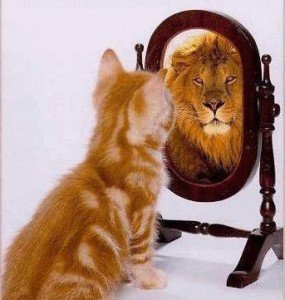
Why is it the more I read about narcissism the more narcissistic traits I see in myself and the more I want to be rid of them? Sometimes it’s like looking into a mirror. Overall though, I’ve learned even more about myself than I have about the narcissists in my life, and I think that’s a good thing, even if I’m too hard on myself and am seeing narcissism that isn’t really there.
Why is it that one of the warmest, emotionally open, and seemingly most compassionate people I’ve met in the narcissistic abuse community is a woman who believes herself to be a psychopathic (malignant) narcissist? Is her warmth and openness faked and I’m a fool for falling for it, or is her “narcissism” a delusion? I’ve looked for red flags and I simply haven’t seen any, but it’s easy to misrepresent yourself online. I have pretty good sixth sense and I don’t get any “evil” vibes or feelings of discomfort from socializing with this person, and I normally do when dealing with even the “nicest” narcs IRL.
What exactly is borderline personality disorder? Is it a form of complex PTSD not recognized by the psychiatric and medical community, is it a dissociative disorder, or is it a form of narcissism where the person never constructed a viable False Self? Should it even be in the Cluster B category of disorders or is it something else altogether?

For that matter, is NPD a form of complex PTSD so deeply ingrained in the personality so early in life it’s almost impossible to eradicate? After all, almost all narcissists were abused and that’s why they became narcissists. Should “personality disorder” labels just be scrapped completely the way BPD Transformation suggests?
Is malignant narcissism what happens when an HSP (highly sensitive person) “goes bad”? I wrote about that in this article, but I still wonder.
Can a psychopath (or a narcissist) ever do good things intentionally (and not just for supply)? I wrote about this too, and understandably, the ire of a few ACONs was raised from that particular article. I agree it seems like a stupid question because a psychopath or narcissist has no empathy. But they still have “cold empathy” which means they can know exactly how you feel but only in a cold, intellectual way. Are there any narcs or psychopaths who simply choose not to do wrong? I haven’t ever met any, but I still think it’s something worth asking. On the other hand, wouldn’t “not doing wrong” negate their “psychopathy,” even if they lack that quality called empathy? Maybe some of them just want to be seen as good, and it’s really just a way to get supply.
Here’s a fascinating interview with Dr. James Fallon, a diagnosed psychopath who chooses prosocial behaviors over antisocial ones (although his attitude in the interview does seems quite narcissistic). I think he comes off much like a cult leader so I’m very skeptical.
I’ve seen the “black eyes” many people talk about in malignant narcissists, especially when they rage. It’s very scary to see and it’s very real. Does this indicate a spiritual deficit in which part or all of their soul is corrupted (or even missing) or is there some medical reason for this? I do remember reading something describing this phenomenon in medical terms; unfortunately I’ve lost the link to that article. Personally I think there is a spiritual element involved and a malignant narcissist has chosen evil over good, even if there is a medical or scientific reason for the strangeness of their eyes. Most abuse survivors have seen this and find it as terrifying as I do.
Why would anyone in their right mind choose to be a narcissist, even if done unconsciously as a young child? Why would anyone want to shut themselves off from the ability to feel love, empathy and joy, even if the payoff means they can protect themselves from being hurt anymore? It makes no sense because most narcissists are still incredibly sensitive (about themselves) and are constantly fending off or reacting to insults. It seems like a horrible way to live.
Are all narcissists “evil”? Or is that a blanket judgment? I’m kind of torn on this. I think the higher you go on the spectrum (and I do believe narcissism is a spectrum disorder), the more evil the narcissist will be. I’ve met some low spectrum narcs who are merely full of themselves and difficult to deal with, but I wouldn’t call them evil. Maybe those people don’t really qualify as narcissists though. I think the point at which a person becomes “evil” coincides with their willingness to change. The higher you go on the spectrum, the less likely it is the narcissist will ever become self aware or willing enough to get better. There are some high spectrum narcissists who are aware of their disorder, but don’t think of it as a disorder and are unwilling to change, so self-awareness by itself is meaningless. Willingness must also be present.
Do narcissists ever have moments of being non-narcissistic or even feeling empathy? I’ve known many narcissists who care nothing about the feelings of those around them, but cry like babies when they watch a sad or touching movie, listen to music, or when their pet dies or becomes ill. Have they simply shoved all their original empathy into one or two “safe” outlets, such as the ability to feel the emotions of a fictional character who doesn’t actually exist?
Why are some of the most religious people I know also the most narcissistic? Is their faith real?
How can you really tell if a victim of abuse may actually be the real narcissist and the “narcissist” the real victim? I know this can and does happen.
These are just a few of the things I wonder about. I’m sure I’ll think of others.

I’t’s uncanny how often people with NPD and BPD seem to find each other. Every one of my boyfriends (except for one, who was severely bipolar) and my ex-husband were narcissists. I know a lot of other borderlines who say they have the same problem–they simply are not attracted to a man or woman who is not a narcissist. There are reasons why this happens.
Both BPD and NPD are included in the category of Cluster B personality disorders in the DSM-V (along with Histrionic and Antisocial personality disorders). Cluster B disorders are all characterized at their root by problems establishing an identity early in childhood and integrity of the Self which causes people with these disorders to act out toward themselves or others in destructive ways and to have problems either accessing or developing prosocial emotions like empathy. All are prone to lie excessively and manipulate others.
All Cluster B’s are easily offended and quick to anger, which can be expressed either covertly or overtly. Here’s a quick description of these personality disorders.
Antisocial personality disorder (ASPD or psychopathy) is the most likely to break the law and violate the rights of others (many are in prison), act impulsively, and have no empathy at all. People with ASPD who aren’t lawbreakers will be ruthless in business or their chosen profession, and feel no compunctions about hurting others to succeed and may even take pleasure from it.
Narcissistic Personality Disorder (NPD) is less likely to break the law (but this is not a given–some narcissists will break the law if they think they can get away with it) due to wanting to present a good image to others, but have little, if any, empathy, and act out toward others and manipulate them to protect the False Self they use in place of their true one which cannot be accessed. They act arrogant, entitled, paranoid and touchy. Think of the most spoiled or brattiest child you know. If you saw that same behavior in an adult, that’s what NPD looks like to others.
Histrionic personality disorder (usually found in women) is a somatic form of narcissism where there is obsession with physical appearance and emotions are expressed dramatically but the emotions themselves are shallow. Histrionics of both sexes are often sexually promiscuous.
Borderline Personality disorder is the most baffling of the four, because it’s a disorder of contradictions. BPD is characterized by black and white thinking, overpowering emotions, impulsivity, self-destructive behavior, and idealization/devaluation of others. People with this disorder oscillate rapidly between opposites–feeling love and hate for others, pushing others away and smothering them, and accepting or rejecting them. They do this because of their fear of abandonment. Unfortunately, borderlines in their desperate attempts to not be abandoned, cause others to abandon them, or are self sabotaging–they may reject others in order to avoid being rejected first. Borderlines, unlike the other Cluster B disorders, are able to feel empathy, but because they can get so overwhelmed by their fear of rejection and their overpowering emotions and drama, they can “forget” others exist. They can feel remorse and guilt when they realize they’ve behaved badly but it sometimes must be pointed out to them.
Borderlines are chameleons who don’t have a False Self per se, but instead adopt whatever “identity” will suit the moment and whatever person they are interacting with–to make the other person accept them. In some borderlines, this rapid switching from one persona to another can appear to others similar to DID (Dissociative Identity Disorder). Not only their behavior, but also their emotions (which they have trouble regulating or controlling), opinions, or even their appearance can change from one moment to the next. This differs from bipolar disorder, where dramatic mood changes oscillate much more slowly.

Of all the Cluster B disorders, people with BPD have a Self that is the most fragmented and least likely to have integrated into something called an identity (even a narc has a False Self so that’s a kind of identity). As a result BPD’s are the most prone to experience dissociative or even psychotic episodes, where the person loses touch with reality. Ironically, although Borderlines are “sicker” than narcissists, they are more likely to seek therapy (because their disorder is ego-dystonic and most are not happy with the way they behave and feel) and they are also more likely to be cured.
Because borderlines are chameleons,* they make perfect supply for a narcissist. They lack an identity of their own, so they “become” whatever others expect them to be. It’s not really a mask in the same sense as a narcissist, but they can wear a sort of temporary mask that can change from one moment to the next or disappear completely, leaving the borderline in a depressed or near-psychotic emotional state. A borderline can be whatever the narcissist wants them to be, and as a result are easily manipulated and can become very codependent.
Borderlines can be very manipulative themselves, but because their personality is less integrated and and the narcissist appears to have an integrated self (even though it’s a false one), they are no match for a narcissist. Unless the narcissist is very low on the spectrum (or is a covert and vulnerable one), they cannot be overpowered by a borderline and will always get their way over the borderline’s needs.
Borderlines (like narcissists) never felt loved or valued, but the borderline hasn’t shut out their need to be loved and craves it more than anything else. A narcissist (in the beginning of a relationship) can appear to be highly passionate and attentive, promising the borderline all the love he or she needs–and be convincing enough they capture the heart of a borderline, who thinks they’ve met the perfect mate.
Relationships between narcissists and borderlines may be stormy and “unhealthy,” but when they work, they work well, with the narcissist giving the borderline a kind of identity as a codependent to the narcissist, and the borderline giving the narcissist the supply they need.
I think there’s often a familial aspect too. Cluster B disorders tend to occur in families, in varying configurations. If one or more parents is a narcissist (or a borderline), they are far more likely to raise narcissistic or borderline children, because both disorders are due to abuse and Cluster B parents tend to put their own needs ahead of their children’s, even if (in the borderline) their selfishness isn’t intentional. Therefore, borderlines and narcissists who were raised in abusive families tend to be attracted to people who unconsciously remind them of other members of their families, especially the parents. This type of connection is called a trauma bond because the connection is due to shared trauma and a conscious or unconscious willingness to to be abused or to abuse a partner. A relationship between a borderline and a narcissist is not what anyone would call functional, and yet in a way it can work for both of them, if they don’t wind up killing each other first. Some of these trauma bonds are examples of Stockholm Syndrome, where the abused identifies with their abuser.
Going No Contact with a narcissist is the best gift an abused borderline can give herself (or himself), but separating may be especially hard for them and they are likely to be drawn to another narcissist, so they need to stay on guard and be especially vigilant of red flags.
* I think their ability to be emotional chameleons is the reason why the entertainment, film and television industries seem to have a plethora of actors who have BPD.

One of my narcissistic lovers was a man I’ll call Daniel. I met him during my divorce proceedings. It was a short lived but intense relationship. As short lived as it was (it lasted all of 3 months), I decided to go into more detail about this particular relationship because of all my narcissistic lovers, Daniel was the most classic (and possibly the most malignant) textbook example of the course of a typical relationship with one.
Daniel was actually as bad a malignant narcissist as my ex, but of course I didn’t know it at the time. I met him while I was still married but the marriage was, for all intents and purposes, already over and we were separated. Daniel had that intense predatory stare, which I took to mean sexual and romantic interest, but it was really his way of sizing up me as prey.
I met Daniel at work. He was several years younger than me. I had been training him, and our eyes kept drifting to each other. He wasn’t the fastest learner but he seemed very friendly and always pulled his chair as close to mine during training as he could. Because I found him so attractive with his large liquid brown eyes, long eyelashes, and curly dark hair with its hints of gray, I didn’t mind the close physical proximity. I still remember the way he smelled–clean, like soap and shampoo, with a hint of muskiness.
Daniel became irresistably attractive to me. Narcs have a way of doing that to people like me. Although not all that intelligent, Daniel was actually a cerebral narcissist who had very little interest in sex after the initial physical passion of the first month or so. He thought of himself as very smart and after a while his know-it-allness became all too apparent.
Not long after meeting, Daniel approached me on break and told me he found me beautiful and kind and he’d like to take me out to dinner. Of course I said yes. That evening I went home walking on air and found my sexiest dress to wear. He picked me up on time, armed with a bouquet of red roses. We had a nice dinner and Daniel was attentive and romantic, gazing into my eyes, holding my hand across the candlelit table, and constantly telling me how beautiful I was and that he couldn’t believe my husband didn’t appreciate me more.
After dinner we went back to his apartment and he just held me and kept gazing into my eyes and telling me over and over how beautiful I was. He closed his eyes when kissing me. He didn’t push for sex and even said he wanted to wait until I was ready. He was perfect! I felt sexy and needed. At times when declaring his undying love for me, his eyes even got a little damp which I took to mean he was overcome with emotion and his feelings for me. This “vulnerability” I perceived made me fall harder for him. I couldn’t believe anyone could love me this much. He made me feel so special. I didn’t know it yet but I was falling into a yet another narcissistic predator’s trap. I should have suspected something fishy when he didn’t bat an eyelash when I told him I was still legally married, even though separated from my husband at the time.
We made love on our 3rd or 4th date and he told me he loved me and then held me all night as we drifted into sleep. For about two weeks I thought I’d died and gone to heaven. We couldn’t get enough of each other and would spend every free moment making love. It was all so magical I hadn’t even noticed he’d stopped taking me out or spending money on me. His abuse had already started but was so well-camouflaged by his physical ardor that I couldn’t see it.

Two weeks after we started dating he told me he wanted to marry me. He didn’t have a ring to give me, but promised he would get one later, when he had the money. (He had the money–the guy was living on a trust fund left him by his wealthy parents and had bought his expensive apartment and he was always buying himself expensive toys). The funny thing was that I never actually said yes to his proposal. I told him I’d have to think about it, although a part of me wanted to scream “YES” from the rooftops. Something–I wasn’t sure what–was holding me back from accepting his proposal. He kept talking about how he wanted to make me pregnant (I was 42 years old) and how beautiful our children would be. He even told me he wanted to see me give birth. But I noticed whenever we were in public together, he seemed annoyed by any children who happened to be around and complained about parents who “couldn’t discipline their children properly.” He also criticized my parenting skills, telling me I let my kids “control me,” even though he’d never met them or seen me interact with them.
Daniel complained about his ex lovers, and although in his late thirties, he had never been married. He told me terrible stories about the women he had dated and how they had all been cheating whores, heartless Jezebels, or how unattractive, stupid, or crazy they were. He told me the most intimate details about them–one woman had a “smelly vagina” and another had acne all over her backside. Another had been in a mental hospital and embarrassed him in public with her crazy outbursts. I didn’t want to hear these details but he assured me I was perfect and different from all those other women.
After a few more weeks I noticed Daniel seemed to be easily bored and prone to fits of unreasonable rage. His rage toward others around us began to turn toward me, and he started to become very critical and controlling. He had stopped buying me things, but one day told me he was taking me to Victoria’s Secret to buy some new lingerie because he thought mine looked frayed and ill-fitting. Of course I was thrilled to be taken shopping, and when in the store, began to pick items I liked. I found a black satin teddy with lace trim and he grabbed it from my hands and put it back, saying “I don’t like that color on you. It makes you look too pale.” He seemed to be getting impatient with me in the store and disapproved of anything I pulled from the rack. Finally he made his own choice, and insisted on buying that for me, even though I wasn’t impressed with his choice. We drove back to his apartment in silence. He seemed so angry but I couldn’t figure out why. I noticed his road rage too–he seemed to get impatient with other drivers easily but was constantly cutting off and tailgating people himself. If I told him to take it easy with his driving, he would get even madder and tell me I was trying to control him.
The night after the shopping spree, he said he didn’t want to have sex because he was too tired. I took this at face value and figured he was just in a bad mood and would be over it the next day. But he had changed. Or actually, he hadn’t changed–but was now beginning to show his true colors. Whenever I tried to initiate lovemaking or even touching, he began to pull away, making excuses that he didn’t feel well or was too tired. When we did have sex, it felt rushed, as if he wanted to get it over with. He stopped telling me he loved me.
One night he received a phone call from an old girlfriend and spent two hours on the phone with her while I pretended to read. I wasn’t really jealous, but was annoyed and found it strange that this was the same woman he had told me was crazy. I asked him about that and he got enraged, telling me to mind my own f–ing business.
Daniel liked to travel around the country and never once asked me if I wanted to go. He’d always announce these trips a day or two before he was set to leave. He’d always return with shopping bags full of goodies–for himself. His idea of “gifts” to me were the freebies they give out in hotels–tiny bars of soap, shampoo, or dollar keychains or even hotel “Do Not Disturb” signs. Once he brought back some homemade fudge and I asked him for a piece of it. He said no.
The silent treatments and verbal abuse became nearly constant. I felt like I was walking on eggshells and it seemed I could do nothing right. Once I asked him why he never wanted to kiss me anymore and he said it was because of my breath. (No one had ever accused me of having bad breath and I even tested it by blowing on my daughter’s face and she said it was fine). I remembered the woman he’d dated who had a “smelly vagina” and realized that he would be telling some future lover (because at this point I wanted to break up with him) about my horrible, stinky breath and “controlling” ways.
He seemed to hate me, but also became upset and angry when I told him I wanted to spend time with my kids (who were living with their father for a short time during the divorce proceedings). He told me they were spoiled brats who would grow up to be criminals because I always gave into their wishes. I know now he was jealous of them. He always wanted me around, but was always so mean. I was always short on cash because I didn’t earn that much but he didn’t seem to care. Once I needed some gas money and he said no, even though he had stacks of $100 bills all over his apartment and in drawers.
We broke up on my birthday. He had come to my house late, and his gift to me was a “Toonces the Driving Cat” coffee mug. Although he obviously didn’t pay much for it, I thought it was a thoughtful gift (for him) because he knew I loved that old skit from Saturday Night Live. He took me out to dinner, which had become a rarity. He was very rude to the wait staff, but he always had been (that’s another red flag to look for–narcissists are notoriously rude to service personnel).
Shortly after we got back to my house, we got into an argument and he shoved me so I fell onto the couch. That was the first time his abuse had become physical. I knew it was a matter of time before he would start hitting me. I told him I would not tolerate physical violence and he started making fun of me for being such a baby about a “little push.” We kept arguing. He told me to give him back the mug he gave me. I told him no, because it was a gift and I liked it. He insisted.
I went and fetched the mug from the kitchen, and brought it to him, sweetly saying “here,” before smashing it on the floor as he reached for it. He stood there staring at the shattered remnants on the floor and then looked up at me with his mouth hanging open, said “You’re too crazy and too violent for me,” and stormed out the door, slamming it behind him. Me? Violent? I didn’t realize he was projecting his own violent tendencies onto me.

A week later I found out I was pregnant. I called him to tell him I needed money for an abortion. He said he would not help because there was no way it was his! This from the man who a month earlier had told me he wanted to watch me give birth.
Fortunately, I never had to have an abortion because a week after that I miscarried. Daniel kept calling me, acting as if nothing had happened, and would tell me all about his life, never asking how mine was going. He acted like we were best friends. He even told me about a woman he was dating who was “perfect for him,” with no thought given to my feelings about this. Of course I really didn’t care and just felt sorry for the poor woman who didn’t know what she was in for yet. I wondered what he was telling her about me. Probably that I was insane, violent and a bad mother who had terrible breath.
I’d listen patiently to Daniel ramble on and then tell him I had to go. After about six months of his weekly phone calls, I finally worked up the courage to tell him to leave me alone and never call me again. I also blocked his number. That was the best choice I made in that relationship.
We already know narcissists lie. It’s the one thing they’re all good at. I read a conversation today about the way narcissists lie even about things there is no reason to lie about, and that they also begin to believe their own lies.
Narcissists have been telling lies for so long and have gotten so good at it that they really do believe their lies are the truth. Sometimes they even become skilled at using lies to cover up other lies. To a normal person, living a lie and trying so desperately to cover the truth would be an unbearably stressful way to live. Narcissists are stressed out by this as much as anyone else, but they don’t know where their stress comes from. They are deluded and think their lies are the truth. They honestly don’t know any better so they can’t stop lying and they can’t stop the stress that comes from that.
Think of a young child playing pretend. The child may know the fantasy is just a fantasy, but while they’re in it they believe it’s the truth. Tell the child their fantasy is a lie and they will rage and get very upset. But for young children, living outside reality to some extent is normal. When an adult lives outside reality and creates a fantasy world they think is real, we call it crazy.
If you tell a narcissist to stop lying, they will attack or sometimes, withdraw or even disappear. This happens because: 1. They hate the truth because if they know you can see through their lies, you have blown their flimsy cover and that is terrifying to them; and 2. like a young child, they don’t want to leave their fantasy world–a dream where they are perfect and superior to everyone else. Because in reality they know they aren’t. In fact, narcissists have dismally low self esteem. They hate themselves–but are in love with the false self they created. That’s where their grandiosity and sense of entitlement comes from. They need a constant influx of narcissistic supply from you to keep their false image of themselves alive.
In “People of the Lie,” M. Scott Peck discusses a malignantly narcissistic patient of his named Charlene. After years of therapy (during which Charlene spent most of her time sadistically playing with Dr. Peck like a toy), in one session she told him about a dream she had of a “marvelous machine.” The machine did everything and was perfect in every way. Charlene proudly told Dr. Peck she had designed and built this marvelous machine herself. When Dr. Peck suggested this machine that did everything was actually an elaborate weapon Charlene had created in her mind to avoid facing the truth about herself, Charlene’s cover was blown and she reacted with unreasonable rage, attacking Dr. Peck for not agreeing with her about the perfection and beauty of the “machine” she was so proud of and what its true purpose was. She could not bear to face the truth and preferred to keep living in her fantasy world of delusions.

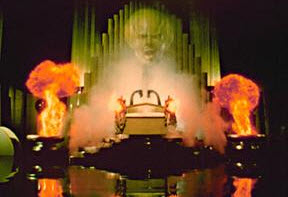
Wizard: “Pay no attention to that man behind the curtain!”
The Wizard in The Wizard of Oz wanted to appear to be a powerful and ruthless tyrant, so even though he was actually a weak and unassuming little man, he hid behind a curtain, amplified his voice, and projected a scary image onto the far wall when Dorothy and her friends entered the Wizard’s castle. What gives the Wizard away as not being a true narcissist (I’d venture to guess he was probably a borderline) was the fact that when exposed, he took responsibility and showed true remorse for behaving the way he did. It’s still a good illustration of the way narcissists deny reality though.
Narcissists hate themselves and only want you to see what they want you to see. While perhaps done unconsciously, they construct a False Self which is a self of lies. This mask isn’t who they are but they sure get good at convincing everyone it is. Their abuse of others stems from the need to protect “the marvelous machine” they created. If they feel this cover may be blown by the truth, they attack, abuse and rage (or leave), because they’re so terrified you may see the emptiness inside or even worse for them, the vulnerable and defenseless True Self hiding in the dark corners of their unconscious.
I’ve seen narcissists talking to themselves, sometimes in public. It’s weird. It’s as if they don’t know they are talking to themselves. I used to point this out to my ex when he was holding conversations with himself, and he’d deny it or get angry. Could narcissism be a psychotic or dissociative disorder? Do they hear voices in their heads? Sometimes I wonder.
By telling themselves so many lies, they are abusing themselves as much as they abuse others. Only they never realize this. And they won’t ever let you tell them. They’d rather wander forever in the confusing labyrinth of their disordered minds where up is down, north is south, dark is light, yes is no, wrong is right, and they are gods. They can’t face reality because it might destroy them. Or so they believe.

Narcissists are predators, but they can be turned into prey fairly easily. Here’s a quick field guide to the most common types of narcissists you may find out in the wilderness of real life. Binoculars are good to have on hand to spot them, but make sure you keep yourself camouflaged well and carry the weapon of Truth. Truth to a narc is like garlic to a vampire–they will run faster than Montezuma’s Revenge.
It’s easy to learn how to identify the subspecies of common narcissists by using this Field Guide to help you identify the most common types, their preferred habitat, and chosen source of supply (food). They can all be either male or female, but where a particular gender is more commonly seen, it will be indicated in the subspecies description.
1. Narcissus grandiosis.

N. grandiosis is the “classic”, grandiose, aggressively ambitious (and often successful) narcissist. Usually male but there are many females too. N. grandiosis is full of himself, boasts about his achievements, uses and consumes others to get ahead, and the only emotion they show is rage and occasional glee over their own greatness. A close subtype of N. grandiosis is N. grandiosis cerebrus. He is smarter than you and wants to make sure you and everyone else knows just how superior his mind is to the all the plebes like yourself.
Habitat: the corner office in big corporations, the political trail, Hollywood, Wall Street.
Preferred food: unassertive, codependent people they can boss around, impress, use, and have complete control over.
2. Narcissus coverticus vulnerabilis.

Looks can be deceiving. N. vulnerabilis may appear to be some other species of psychological or personality disorder. N. vulnerabilis is likely to be female (but not always). They seem almost cloyingly nice, but watch out–they are predators of the emotional vampire subspecies. They seem to have endless problems and misfortunes and emotional crises and expect you to ALWAYS be there for them. If you are not, they will sulk, whine, cry, give you the silent treatment, or tell everyone what a heartless, cold narcissist YOU are. Or make endless excuses why the advice you give them will NEVER work. Eventually, they will suck away your soul until you’re as down and out as they are. They’re going down and taking you with them.
Habitat: Unemployment and social service offices, food banks, therapist’s offices, your couch, your bed.
Preferred food: Highly empathetic people, people working in the helping professions.
3. Narcissus religiosis.

N. religiosis is likely to be female, but don’t be fooled. Males often rise to positions of leadership in churches, at which point they can be easily confused with N. grandiosis (a subspecies who may share their habitat). N. religiosis is always holy, always pious, always reads their Bible and attends church (or other place of worship) whenever they can, and is always right. They love to lord their self-righteousness over those they deem unworthy of salvation, and secretly desire to be Gods themselves. If anyone tells you you’re going to hell for believing what you believe, you are looking at a N. religiosis. Many of this subspecies are hypocritical and don’t practice what they preach.
Habitat: Churches, synagogues, religious events. They are also common on the political trail and can be spotted on school boards trying to get certain books or the teaching of sex education or evolution banned.
Preferred food: The unworthy, the ungodly, the sinful, all atheists and agnostics, or anyone who doesn’t believe exactly as they do.
4. Narcissus generosa.
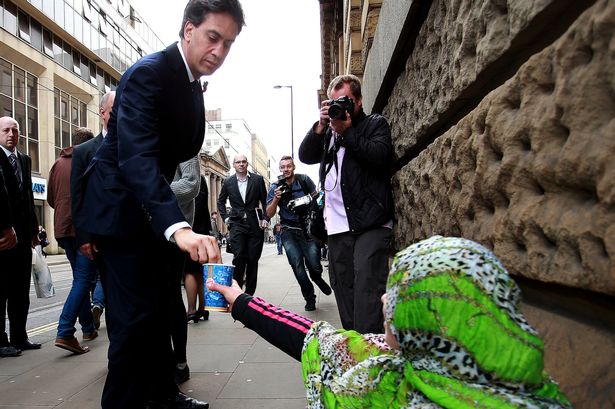
This subspecies can fool you because they appear to be so giving. N. generosa is usually female. They are big givers to charitable organizations and causes and loudly talk about how much they gave. They don’t really care about helping others–they are doing it to impress you with how altruistic and selfless they are. N. generosa gets a huge dose of narcissistic supply when others are impressed by their giving nature and makes sure you know about all those other times they gave selflessly too. N. generosa is often the long-suffering female relative, often a mother, who endlessly reminds you how much they have done for you and what a martyr they have been for doing so.
Habitat: Charitable events and meetings, volunteer organizations, church groups, the kitchen (slaving away to cook dinner for you). They have also been spotted in hospitals, spending time with the sick and disabled.
Preferred food: The poor, the sick, the disabled, the down on their luck, the very young and old, and vulnerable prey of all kinds.
5. Narcissus minimus.

N. minimus may be a hybrid species because they show fewer traits of the Narcissus species. The only subspecies who may have the ability to become a member of Homo sapiens with the appropriate care and feeding. They may have narcissistic traits and act arrogant and full of themselves, but have small levels of empathy and a slight ability to feel bad about their predatory behaviors.
Habitat: Anywhere.
Preferred food: N. minimus can survive on a low calorie diet and can go for long periods without food at all, although they would prefer to have a more frequent diet, and are willing to hunt for their prey, although with less aggression than the other subspecies.
6. Narcissus hypochondrosis.

N. hypochondrosis can be male or female. They are always sick or complaining about their endless ailments. Their chronic fake maladies make it possible for them to get supply from others in the form of medical or nursing care, or just the sympathy they crave. Being “sick” so often also frees them from the need to have to work for a living, because, you see, they are too sick. N. hypochondrisis is often a hybrid type combined with N. parasitis. Also known by their alternative name, N. Malingerosa. Being “sick” could also mean they “suffer” from a nonexistent mental disorder such as schizophrenia or Bipolar. Because they are “crazy,” this gives them carte blanche to treat you in whatever shabby manner they desire and exempts them from societal expectations to treat others with respect and manners.
Habitat: Doctor’s offices, hospital emergency rooms, at home in bed, at home in your bed or on your couch.
Preferred food: The sympathetic and people pleasing, the nurturing, nurses and doctors.
7. Narcissus parasitis.

Closely related to N. hypochondronsis and N. coverticus vulnerabilis, N. parasitis seems meek and unassuming. But she will eat you alive in her neverending quest for nurturing, sympathy, a bed to sleep in, free access to your home, fridge and bank account, and an aversion to having to hunt for their own food.
Habitat: Your home and your entire life.
Preferred food: codependent and people-pleasing people, the generous, the softhearted, the maternal, or anyone who can be easily manipulated and used.
8. Narcissus psychopathis dangerosa.

N. psychopathis dangerosa is also known as the malignant narcissist, or sometimes, psychopath. Many are hybrid with Antisocialis dangerosa. These are the most aggressive and dangerous predators in the narcissist kingdom, and will stop at nothing to get what they want, even if it means they have to kill you to get it. Some enjoy the means to that end, and others just do what they have to do to get their fix of supply. To them, you are no better than common housefly and they will think nothing of swatting the life out of you.
Habitat: Everywhere. While not the most common subspecies, they have no preferred habitat. However, prisons and jails seem to have a surplus of this subspecies.
Preferred food: Everyone who appears to be “weaker” or nicer than they are, which means almost everybody. They will avoid other individuals of their own subtype, however.
9. Narcissus somaticus histrionicus.
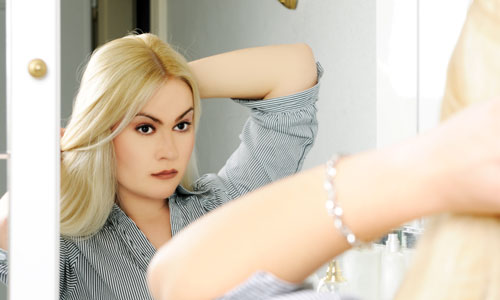
Here we find the Somatic subtype of narcissist. These predators care only about their physical appearance, and like a cat, will preen and primp all day if they weren’t required to also hunt to survive. They are much better looking and enjoy much better health than you, you ugly piece of garbage. If you fail to give them the attention they deserve, expect a vicious attack.
Habitat: gyms, health clubs, the beach (to show off their perfect bodies), in front of a camera, especially their own. They have perfected the skill of taking the Selfie to a fine art form.
Preferred food: Anyone who fawns over how beautiful or handsome they are and worships them for the gods and goddesses they are.
10. Narcissus borderlinensis.
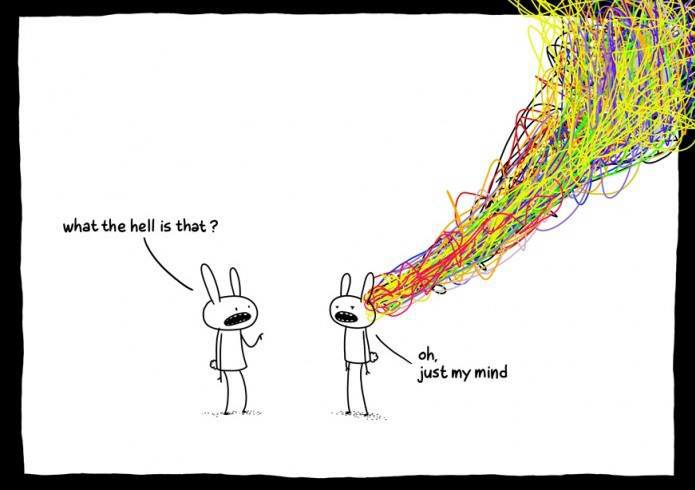
N. borderlinensis is another hybrid type, with Borderline traits. N. borderlinensis is emotionally unstable, moody, and prone to frequent rages and temper tantrums. It’s surprising this subspecies hasn’t gone extinct yet, since so many of them display self destructive tendencies and are prone to self-starvation, self-induced vomiting, using mind-expanding (or more likely mind numbing) substances, habitual risk taking, and other forms of self abuse. While these are dangerous predators, spotters have noticed when things are not going well for them, they are as likely to attack themselves as they are to attack you. Unlike most other subspecies, N. borderlinensis have been spotted apologizing for their actions.
Habitat: Everywhere.
Preferred food: Anyone they can take out their anger and bad temper on.
Protect Yourself!
Make sure you come well armed with either of these two products to repel them.
Spray this on the narcs:

Spray this on yourself:

Finally, it’s always prudent to remember this slogan–
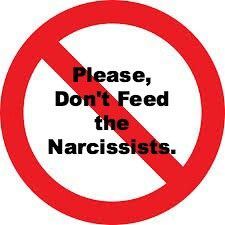
Most important of all: the Truth will set you free and make the narcs flee!

I remember when I first saw this 1980 Academy Award winning movie being quite triggered by it, because the main character, Beth Jarrett (played convincingly by Mary Tyler Moore) reminded me so much of my mother, all the way down to her impatient, flippant mannerisms, fake cheerfulness, and clipped speech. And at the time I felt very much like the teenage son, Conrad (Timothy Hutton), who was clearly suffering from a severe case of PTSD and depression, which no doubt had its roots in his mother’s emotional abuse and coldness.
“Ordinary People” (directed by Robert Redford) is about an upper middle class family from the Chicago suburbs, but the individuals involved are certainly not ordinary–or at least you hope they aren’t. Moore’s Beth Jarrett is a high-spectrum malignant narcissist who cares only about her social position and status and the appearance of having “the perfect family” and “the perfect life.” She is always perfectly dressed and coiffed, and can pour on the fake charm whenever she is trying to impress their friends and colleagues. Beth’s husband Calvin (Donald Sutherland) provides his family with their affluent lifestyle and is a good man who cares deeply for his family but is codependent to his narcissistic wife, who makes endless demands on him to keep up the image of perfection, and you can see from his demeanor it’s destroying him.
Their son, Conrad, is his mother’s scapegoat, and while she never actually says so, it’s clear that she blames him for the accidental boating death of her Golden Child, Buck (shown only in flashbacks). Conrad was with Buck at the time of the accident, and suffers from survivor’s guilt in addition to PTSD which was probably caused by his mother’s horrific treatment of him as well as his guilt over the accident, because he was unable to save his older brother’s life. The movie begins just after Conrad has been released from the hospital after a suicide attempt. I think there is more to Beth’s hatred of her child than her belief he is to blame for Buck’s accident. I think she hates him because he sees the truth about her, and calls her out on it. He is sensitive and able to see through her mask of perfection to the monstrous narcissist she actually is, and she can’t handle that.
From the very beginning, we can tell Beth despises her depressed remaining child. Her attitude toward Conrad is dismissive and impatient, and she makes no attempt to understand and appears to have no empathy for the emotional turmoil he’s in. She always puts her own needs ahead of her son and husband, and berates Calvin for attempting to understand his son’s pain. There’s not one moment where she shows the slightest shred of sympathy or love for him, and yet on the surface, no one would call her abusive, because of the mask of normality she always wears. Here’s a scene where Conrad attempts to talk to his mother about why they never had a pet–you can see how disconnected Beth is from Conrad’s (or her own) emotions, and Conrad’s hurt comes out as rage.
There’s a heartbreaking scene where the grandparents are present and Calvin is taking pictures. When he asks Beth to pose with her son, she glibly changes the subject to avoid having to SAY she doesn’t want her picture taken with him, but her disgust is obvious. Calvin insists, and Beth smiles with gritted teeth as she coldly stands next to her son. Conrad, who is sensitive, picks up on his mother’s hatred but tries to smile anyway. Beth, still smiling her fake smile, demands that Calvin give her the camera so she doesn’t have to have her picture taken with Conrad, but Calvin keeps insisting. Conrad, fed up and hurt, loses his temper and screams “Give her the goddamn camera!” It’s scenes like this that so brilliantly depict the subtle emotional abuse a malignant narcissist mother inflicts on her most sensitive child.
The camera scene.
Conrad begins seeing a psychiatrist, Dr. Berger (Judd Hirsch) who begins to get Conrad to open up about his feelings and show his anger. He also begins to date a girl he met in band practice (Elizabeth McGovern), who is upbeat yet understanding and helps bring Conrad out of his shell.
Calvin and his mother seem to be constantly arguing. Calvin tries to referree, but can’t seem to appeal to his wife’s loving nature, because she apparently has none. After one of these arguments, Conrad calls out his mother for never having visited him in the hospital, adding that “You would have visited Buck if he was in the hospital,” to which Beth retorts, “Buck never would have been in the hospital!” This is a clear implication of the higher esteem she held her older son in, who she believed would never have “gone crazy” and had to be hospitalized. Unlike Conrad, Buck would have enhanced, rather than diminished, the image she had of having the perfect life and perfect family.
Beth’s evil really comes out when they go on vacation to Texas to visit with some of Calvin’s colleagues. While golfing, Beth sweetly suggests to Calvin they go on another vacation–which would be during Christmas. Calvin agrees, but suggests they should bring Calvin along with them because he might enjoy the trip. To this, Beth flies into a narcissistic rage and loudly berates her husband for always trying to include Conrad in everything. During this rage, she projects her own anger and selfishness onto her husband, who unsuccessfully tries to stand up to her. Later in this clip, there’s a chilling scene after Conrad’s parents return home and Conrad tries to give Beth a hug. Beth’s face stays cold and hard and you can feel the hatred and disgust she has for her child while she barely returns his embrace at all.
The golf scene and “the cold hug.”
Conrad finds out his friend Karen from the hospital (Dinah Manoff) has committed suicide. Frantic, he makes an emergency appointment with Dr. Berger, and shows up in his office in a broken state. He rages and then sobs uncontrollably and everything comes pouring out: the whole story about the night Buck died and how he blamed himself, his mother’s hatred for him, and how he was never good enough. Dr. Berger listens and holds him like a parent would a child, and finally Conrad begins to calm down.
Gradually, Calvin becomes more aware of his wife’s malignant narcissism and is beginning to doubt her ability to love anyone but herself. One night Beth finds him crying alone and asks him why he is crying. Calvin asks Beth if she really loves him and she gives him a non-answer, saying “I feel the way I’ve always felt about you.” Calvin admits he is not sure he loves her anymore. He’s beginning to see the soulless monster she really is. Early in the morning, Beth leaves for good, not saying goodbye to her husband or son, leaving them to fend for themselves and try to pick up the shattered pieces of their lives together. No doubt both are much better off this way.
Calvin’s realization and confrontation with Beth.
This is one of the most convincing and well acted movies about the havoc a malignant narcissist mother can wreak on her family I have ever seen, and 35 years later, it still hits home because of the uncanny similarities I see to my own mother (who was not as outwardly rejecting or quite as malignant as Beth Jarrett). Every one of the 9 DSM indicators of Narcissistic Personality Disorder is evident in Beth. If anyone is interested in studying the myriad ways a malignant narcissist inflicts their abuse and scapegoats their children, this movie is the best case study I can think of, outside of having to deal with one yourself. Of course, not all malignant narcissists are upper middle class like Beth is, but even though the specific words and actions may differ from one social class to the next, the manipulations and abuse are always the same.
This trailer shows other scenes of the way Beth emotionally abuses, gaslights,projects, and triangulates against her surviving son.
Here is another guest post by the same writer who contributed “The Narc from Costa Rica.” Again she has asked to remain anonymous, but I think this story does a better job of describing the narcissism of a man who seemed to be extremely romantic. Talk about a whirlwind romance!
It’s common for narcissists (especially somatic ones) to act very romantic in the beginning of relationships. But the problem is, it’s an ACT. They can sweep you off your feet with their charm, declarations of undying love (which are lies), seemingly endless desire to make love to you, and gifts of wine, candy and roses. They also can move in very fast, and it’s not uncommon for one to propose marriage very soon into the relationship. (There are other narcs who are relationship-phobic, usually the cerebral type.). My ex proposed only three months after we met. He was cerebral though, so not all “romantic,” fast-moving narcissists are somatics.
The man in this story, Michael, seems to be a covert or “vulnerable” narcissist. They can seem to have very deep emotions and be quick to express their insecurities and vulnerabilities, but they’re still dishonest and manipulative, and they still have no empathy and will leave you in a heartbeat if a better source of supply comes along. Covert narcissists can be more dangerous than aggressive (classic) narcissists because you never see what’s coming. They can completely fool you because they seem to need you so much.
A Beachside Affair
By Anonymous

My whirlwind relationship with Michael lasted for only 3 months. It was a summer love, like something out of the movies. Our affair ended abruptly, leaving me completely gutted emotionally and even physically. It was as if he’d ripped my heart out and taken it with him, leaving me with a huge hole inside my soul.
I met Michael on the beach. We quickly became obsessed with each other. He was like an addiction to me. I went to work during the day and all I could think about was Michael. I’d go home and polish myself from head to toe, making sure I looked and felt as beautiful as possible. Before I met Michael I just didn’t feel good. I was in a failing marriage to another narcissist. My husband ignored me. He never talked to me and I was dying inside. I remember that I’d go home and get drunk on wine, just to blur out the feelings of emptiness I felt from my husband’s coldness, on top of having suffered an empty childhood and adolescence due to having been raised by a narcissistic father and a borderline mother who wasn’t much better.
I knew having an affair was wrong, but at that point I no longer cared. I needed to feel loved and needed. Michael fit the bill perfectly, at first. I remember the day I met Michael. He was beautiful, his tanned muscles shimmering and rippling in the sun. We talked for a little while and before long he started to kiss me and held me for 4 hours straight, as the sun went down over the ocean.
After that heady experience I made a decision to leave my husband because I no longer could stand being with him. There was just no comparison.
I’m not sure why Michael had me under such a powerful spell. I’m not sure if it was inverted or covert narcissism or codependency on my part that made me so attracted to him. I know he mirrored my own narcissism and I think that was part of the attraction. Or (in my thinking at the time) maybe it was just that we were both artists that craved something more and we needed attention and had a burning desire to express our vision of life through our art. All I know is that when the two of us got together we melted together like butter. All the love that I never got, all the love I craved and all my neediness was being filled by Michael and I couldn’t get enough of him. He was everything to me.

Michael had an apartment in a very famous town in coastal New Jersey that was known for its rock n roll legacy, especially Bruce Springsteen. Famous bands played in a place called The Stone Pony in Asbury Park. Back then, over 30 years ago, the town was run down and almost abandoned. The Stone Pony was the only thing that held the weak fabric of this town together. But I loved it there. This run down seaside town was always beautiful to me because I always felt like this was my home. I still do. I knew that one day I’d play up on the same stage where other famous artists had played. There was fire in my belly. A void that needed to be filled with a whole lot more than a man’s love. If there was an Angel on Ocean Avenue, she was certainly watching over me.
Micheal was an art student who had nude sketches of himself all over his wall. He played the guitar too and we often played music together and I would sing. I use to stay at Michael’s house every night. We went to parties at the homes of mutual friends we had met out on the beach. The bonfires were wonderful and we would all sit around and sing songs. We sang Beatles songs and Bowie songs and I felt like a reincarnated hippie. My favorite song we sang was David Bowie’s “Space Oddity.”
“Tell my wife I love her very much…she knows.
I’m here and I’m floating in my tin can.
Far above the world. Planet earth is blue and there’s nothing I can do.”

There was magic and presence and energy and the love in all the people we met at these parties and on the beach. People liked to watch Michael and I, because they were intrigued by our obsession and need for each other. We vicariously fulfilled their need for romance. I felt so validated, loved, sexy and happy. It seemed too good to be true and it was. This couldn’t be real life. It was too perfect.
We were a study in contrasts physically, and I think that’s another reason for the fascination our friends had for us. Michael had beautiful blue eyes and long blonde silky hair, and a great body. I had long black hair and lots of curves. People liked to photograph us together. We use to sit down in front of a long mirror in his room and stare at the contrast. We made each other feel beautiful. And together, we were. At that time it seemed we were good for each other’s self-esteem. At the county college Michael was studying for an Associates degree in graphic arts we were both asked to pose nude for $10 dollars an hour for the students who sketched still lifes in the human anatomy drawing class.
Michael’s background was sad. He told me that he was beaten by his father with a belt consistently during his infancy and his dad was also an alcoholic. Michael was depressed and he had to take psychiatric medication to fight his depression from the abuse he endured as a child. I remember watching him go into this weird state where sometimes seemed almost frozen and off in some other universe (dissociation is a common symptom in people with NPD and BPD). When in these near-catatonic states, he’d punch the floor or the wall over and over again, sometimes lasting for up to 20 minutes. It was sad and very scary. He was not mean or malignant though. He seemed like a gentle, artistic soul who just couldn’t take care of himself. He was never controlling, but seemed very needy for my constant attention and love. I think he was a covert narcissist.
Our affair came to an abrupt end at the end of that summer, because Michael left me for another women who said she was in love with him. She was willing to pay the rent on his apartment. So in the end, he chose money and security over me. I was devastated because the drug of my addiction to him filled me all summer and was suddenly ripped out of my heart in an instant and the devastation and grief was almost too much to bear.
But if I’d known about narcissism, I would have known Idealize and Devalue is all part of their game. They can’t help it. Even covert narcissists are at heart predators out to use you and throw you away when you’re no longer of use to them.
My next phantom lover was a drummer named Karl. I was so needy that I of course fell into the hands of another narcissistic man. And so it goes on…
I never saw this film (Narcissism: The Psychology of Demons) before. While I dislike the all-too-common merging together of the characteristics of psychopathy/sociopathy/ASPD with those of NPD (non-malignant narcissists are not without feelings, even if they are very self-centered), this is still a very interesting, scary and disturbing video describing the emotional vampires in our lives and that dominate our society.
Several people are interviewed about narcissism in the video. Zain Arcane (the smarmy Slash-looking dude in the hat and sunglasses), a vocal coach who makes videos about narcissism, gives me VERY stong narc vibes. I have read elsewhere he does in fact have NPD and is probably a psychopath. During the few minutes he takes off his sunglasses, his eyes look unfocused and lifeless and he doesn’t seem mentally all there. Maybe he’s on drugs, but there’s every reason to believe he’s a wolf in sheep’s clothing and thinks of himself as a god, based on what I read.
The creepiest part of this film is the interview with the little 5 year old girl from “Toddlers and Tiaras” and her mother (this starts at 33:32). The mother is obviously a narcissist, and has turned her daughter into her little mini-me by forcing her into beauty pageants. The little girl is already showing the odd emotional disconnection, complete self-absorption and the dead, flat eyes of the malignant narcissist/sociopath–and her self absorption is so great she doesn’t even seem to hear the interviewer and her mother talk. If this girl doesn’t get intervention very soon (and she probably will not), she is going to become an extremely dangerous, Jezebel-like woman when she gets older and utterly destroyed when her looks begin to decline. It may already be too late for her, because something about her already seems thoroughly corrupted, even evil. It’s hard for me to look at her face without wanting to recoil and get away fast.
 Lucky Otters Haven