I think age of NPD onset correlates with malignancy and curability.

kids_different_ages

Because of a recent conversation I was having on Psychforums about age of onset and prognosis for a cure for different levels of narcissism, I’ve been doing a lot of thinking about this.

I do think how old a narcissist was when Ground Zero occurred–that would be the primary traumatic event that forced the child to create a False Self–determines the difficulty/ease of healing, and also how low or high the narcissist falls on the spectrum.

Here’s what I came up with.

Age of onset of Trauma/stage of child development (Piaget, Freud):

0-2 (Piaget’s Sensorimotor stage; establishing boundaries, physical and comfort needs met; Freudian Oral/Anal stage):

toddler_bear

High spectrum, malignant narcissism and/or psychopathy/sociopathy (if as an infant)– not curable except under extreme circumstances in very rare cases. May be self aware but has no incentive to change.

3-6 (Piaget’s Concrete Operations; Freudian Anal–Oedipal/Electra stage )

childabuse

Mid-high spectrum narcissist who may or may not be malignant. May become self aware but will be resistant to a cure. In unusual circumstances (total loss of supply or primary supply), a narcissist this high on the spectrum might seek therapy. They are unlikely to be willing to do all the work required for healing due to its difficulty for someone this high, but there might be a few exceptions.

7-11 (Piaget’s Formal Operational stage; abstract learning, competence; Freudian “latency” period)

sad_girl2

Mid-spectrum narcissist. Could become self aware and if so, there’s a good chance of them seeking therapy or treatment. They’re more likely to be cured, but it’s not a guarantee.
Therapy would be difficult at the higher end (onset before 8-9), moderately easy at lower end (onset between 9-11).

12-21 (adolescence)

sadness

sadness

Low-mid spectrum narcissist. Likely to become self aware and good chance of being cured.
Low spectrum at the higher ages (onset after 15/16), mid spectrum at the lower ages (younger than 15).
Good prognosis for a cure and self awareness. If very low, may be able to heal him or herself without outside help

21 +

How's my hair?

How’s my hair?

A person cannot become a true narcissist after age 21 or so. They may instead have a lot of narcissistic traits, have DNP (Destructive Narcissistic Pattern disorder–just below NPD on the spectrum), or in rare cases they could develop “acquired narcissism” (this is something a lot of celebrities and famous people get) which is temporary and lasts only as long as the adulation or fame lasts.

ETA: I got a rebuttal to this on Psychforums. I think this poster’s argument may be valid too, so I’m going to post it:

I believe the PD occurs in the first 5-6 years due to abuse/trauma, the critical level of which differs for each person depending on genetics (temperament, sensitivity).

I think NPD-like traits resulting from abuse/trauma after age 6 would be cPTSD to a normally developed personality.

I suspect traits from coddling/overvaluation after age 6 would be easier to “return to earth” from than something like sexual abuse and humiliation (say, having to testify in court) after age 6. I think the former might be unwind’able to a level of stable narcissism. I think the latter could be a more permanent scar/condition.

left-out_child

But, I don’t know much about. That’s just the way I think of it. It doesn’t seem feasible that PD could occur after the P(personality) is developed. I thought the whole point of a PD was that the P stopped developing, became a defective structure. Not merely unresolved trauma (like PTSD is?) but structural and permanent.

Basically his argument is that after age 6, true narcissism won’t develop but complex PTSD (C-PTSD) could. This could mean a child acquires a lot of narcissistic traits (what ACONs call “fleas”) that could resemble NPD in many ways but is more treatable/curable. I think this would be the same thing as the spectrum condition called the Destructive Narcissistic Pattern (DNP)
This would also take into account type of abuse inflicted and level of severity.

Narcissists *can* love…but run!

This article by psychotherapist Ross Rosenberg makes a surprising claim about non-pathological narcissists (those who are not malignant or psychopathic, which means high spectrum Ns having ASPD traits)–they CAN love. But the “love” is shortlived because it’s really intense infatuation (limerence) and depends on the other person fulfilling the idealized image of the person the narcissist has formed in their mind, and such a relationship is doomed to fail.

Narcissists Can Love–But Run! Understanding Narcissistic Codependent Love
By Ross Rosenberg, M.Ed., LCPC, CADC, CSAT

narcissus1_caravaggio

Considering Narcissists have hurt and damaged the lives of so many people, it makes a great deal of sense why there is a proliferation of information, advice, articles and books on the subject of narcissism. There seems to be a surplus of people on Facebook, YouTube and other social networking sites who are making it their life’s mission to vilify narcissists, while making themselves out to be specialists (or even experts) on the subject. Those who contribute are often victims of narcissistic abuse and want to help others avoid their mistakes. I am thankful for their efforts, especially since it is connected to codependency recovery, which is where I spend a great deal of my personal and professional effort. It seems to be one of the biggest psychological movements I have seen in recent years.

And there are well-researched and experienced experts in the area who have and are making valuable contributions to the understanding of narcissism. Sam Vaknin is one such expert on narcissism who, just by his own efforts, has almost made the term “Malignant Narcissist” a household term. But even with his contributions, and perhaps because of them, there has been a backlash of misunderstanding on the subject. By focusing on Malignant Narcissism (which happens to be the condition he purports to have), he has accidentally and unintentionally given the impression that “Malignant Narcissism” is the same clinical condition or psychopathology as Narcissistic Personality Disorder (NPD). The truth of the matter is Malignant Narcissism is a subcategory of NPD. Moreover, those with NPD, or what I call “garden variety narcissists,” do not display many of the same characteristics as those with Malignant Narcissism.

One common mistake about Narcissism, which I see frequently on the Internet, about which there is now a deluge of articles, posts and blogs is that those with NPD cannot love and do not have empathy. This subject was discussed in detail in a recent YouTube collaboration video with me and Sam Vaknin entitled, “Can Narcissists Love and Do They Have Empathy?” Although Vaknin and I agreed it was a complicated question that has an equally complicated answer, we agreed for the most part that narcissists can, in fact, feel and express love and can be empathetic.

We also mostly agreed that Malignant Narcissists and those with Antisocial Personality Disorder (ASPD or Sociopaths) cannot feel or experience love. Because Malignant Narcissism is often confused with ASPD, it is necessary to simply define it as a subcategory of NPD, which is not only a pathologically narcissistic disorder, but also combines traits of Paranoid Personality Disorder and Antisocial Personality Disorder. For more information on Malignant Narcissism, consider reading Vaknin’s book, “Malignant Self-Love: Narcissism Revisited” (2015). It is, therefore, correct to assume that Malignant Narc’s and ASPD’s cannot love as it is understood in our general culture. But it is incorrect to make that same leap for those with Narcissistic Personality Disorder, which will henceforth be referred to as “narcissists.”

Please read the rest of Dr. Rosenberg’s article here:
http://humanmagnetsyndrome.com/narcissists-can-love-but-run-understanding-narcissistic-codependent-love/

How my ex became a malignant narcissist.

I thought I’d repost this article again, because it shows exactly how narcissism can be passed from one generation to the next, due to emotional abuse of a child that stunts or halts their healthy development of a sense of self.

Since this article was written back in February, my ex was diagnosed with Antisocial Personality Disorder (ASPD) and due to his “unemployability due to possible homicidal tendencies,” he got $31K in disability back pay AND an increase in disability payments. Commenting on this outrage is beyond the scope of this article and I’ve already ranted enough about it anyway. He has already gone through all the money, as I suspected he would. It still doesn’t sit well with me that his monthly income due to being a narcissistic, antisocial jackass who games the system and freeloads off others so he never has to work again exceeds mine.

luckyotter's avatarLucky Otters Haven

Martin-Luther-King-Good-vs-Evil

I’ve talked about several of my own family members and how narcissism has infected other family members with NPD and/or made them victims, but I haven’t focused too much on how my ex husband Michael, as malignant as they come, got that way.

So I am doing that now.

Michael, like most narcissists, wasn’t born that way. He was the only child of a machinist who was rarely home and when he was, stayed in the background, believing raising a child was “woman’s work.” The household was blue collar but back in the early ’60s, blue collar didn’t mean poor. A working class man could adequately support his family, buy a home, have two cars, and his wife didn’t have to work to help make ends meet.

From all accounts, Michael’s father loved him in his rough-around-the-edges macho way, but he spent hours every day in bars or at the…

View original post 1,593 more words

What exactly is Narcissistic Personality Disorder?

For those of you who follow this blog, this question probably seems like a no-brainer, but this is one of the most informative and readable articles I’ve ever read on the subject, and I even learned a few new things I didn’t know, so I wanted to share it.

What Exactly Is Narcissistic Personality Disorder?
By Christine Louis deCanonville, author of The Three Faces of Evil: Unmasking the Full Spectrum of Narcissistic Abuse

deviantartecho
Narcissus and Echo by Esstera, Deviantart

Explaining the Many Facets of Narcissism!

Narcissistic Personality Disorder, what exactly is it? Trying to explain exactly what narcissistic personality is takes some doing, the reason being that there are so many facets of behaviour involved. However, Narcissism, roughly translated means “love of oneself”. The term itself refers to a set of character traits that involve self-admiration, self-centeredness, and self-regard; to the point where the narcissistic person becomes very grandiose, arrogant, aggressive, lacking in empathy for others, superior to everybody else, and sporting a sense of entitlement that leaves them in constant need for attention and admiration in all their relationships. The term was coined by Sigmund Freud who picked the myth of Narcissus as a symbol of a self-absorbed person whose libido is invested in the ego itself, rather than in other people. There are several versions of the myth, but roughly translated Narcissus, in Greek mythology, was a beautiful Greek boy who found himself to be so attractive, that he falls in love with his own reflection. The term narcissistic personality disorder, also taken from the myth, describes a self-loving character with grandiose feelings of uniqueness.

The Spectrum of Narcissism is on a Continuum.

Narcissism is a spectrum of behaviour that is prevalent in the human condition universally. What this means is that we are all narcissistic to a degree, and the narcissistic traits can range on a continuum from 1 – 10, from what we call Healthy Narcissism (being a 1), all the way to a pathological form, called Narcissistic Personality Disorder or NPD (being a 10), with varying degrees in between. When narcissism reaches a stage called “Malignant Narcissism” the person consistently manifests at least 5 of the 9 criteria necessary to put it into the category of being a mental disorder.

To the casual observer, telling the difference between a normal range narcissistic personality and a narcissistically disordered personality may not be very evident to begin with, because the difference is the difference between the individuals “intentions”. The healthy narcissistic personality operates from a place of good will towards another person, while the unhealthy malignant disordered personality operates from a place of ill will towards another person, which naturally enough puts a chasm between them.

Healthy Narcissism Style vs. Unhealthy Narcissism:

Every human being craves approval. This need for approval is driven by the ego in order to make us feel loved, important, powerful and in control, and perhaps even more importantly, to steer us away from any criticism, which can lead to feelings of inferiority. Adler (psychologist) believed that it was the pain of inferiority that motivated all human action to strive for a sense of superiority and perfection. This is natural, and is healthy narcissism in action, a normal defense that is essential for psychological health. It is this action that protects us from painful disappointments, failures, and keeps us away from feelings of helplessness. This boosting of our morale (Healthy Narcissism) is what motivates us to do better with our lives.

Read the rest of Christine’s article here.

Can a malignant narcissist ever become self aware?

the-face-of-evil
Frankly, I don’t think so, and that’s what makes them malignant. I think there’s a point at which a narcissist can’t ever turn back and that’s the point at which they can’t see their own narcissism or what they do to others. And they don’t care. Malignant narcissists are happy being just the way they are, or they think they’re happy being that way. You can call out their behaviors until you’re blue in the face, and they still won’t see the obvious; instead they will attack and rage. They don’t CARE.

I have no idea how close I might have come to becoming malignant but I just thank the Lord I didn’t. I think I’m low spectrum but still on the spectrum.

If you spent your entire life surrounded by and under the thrall of malignant narcissists, you can’t escape unscathed. If all you get is a case of “fleas,” consider yourself very lucky. These toxic people infect others with their disease. I was with mine far too long.

I couldn’t understand before why it was so important for me to understand people with this disorder. Now everything’s so clear as to why. Even before I knew, I was trying to understand myself and now I’ve been brought to a place where it’s possible to change. I feel like God pulled the scales from my eyes, and I’m so grateful He did.

I’m also glad I chose the truth over saying nothing or taking this blog down (I had considered both). In fact, being in this new state of awareness feels like the beginning of a new journey–harder, but ultimately more rewarding than the last.

Thanks so much to all of you who have remained supportive during this ordeal. I had imagined the worst, but I imagined wrong. 🙂 The worst that’s happened is a few troll comments. No biggie.

The Cluster B stigma and the nature of evil.

evil_face

I don’t care if what I’m about to say is controversial or unpopular.

There are some folks in the ACON community who think ALL narcissists are evil, and some think all BPDs are evil too. (In fact there are some BPDs who are worse than some narcs).
It’s understandable why people feel that way (and I did for a time myself), but the people who abused them were usually high spectrum malignant narcissists or sociopaths so they think all narcissists (and even all Cluster Bs) are as bad as the abusive or rejecting parents who raised them.

cluster_b

The stigma against Cluster B disorders is very pervasive and it’s getting worse. NPD used to just be a psychiatric diagnosis. Now it’s a condemnation to hell. Even if a low-mid spectrum narc or a borderline is self aware and wants to get better, they’re still put in the “evil” box along with the malignants, psychopaths and sociopaths. It’s always assumed they “have an agenda” or are “full of shit” and everything they say is a lie. I wondered why hearing people say this used to bother me; now I know why. It hurt my feelings because inside, I already knew I was one. I’m self-identified now and really, really want to change and every word I say on my blogs is my reality and truth. It’s my true self speaking, always. I think.

Cluster B’s are cut no slack by some ACONs. We are told we deserve no sympathy even though we were abused too and were victims too. This is extremely damaging to those of us who want to be rid of our Cluster B disorders.

The Cluster B stigma also makes it hard for those of us who want treatment to find it. Many therapists won’t get near someone with NPD or BPD with a 100 foot pole. I remember one therapist I had an intake session with, who I felt comfortable with, but said he’d need to order my psychiatric records before we could go any further.
A few days later he called me and said, “I’m sorry but I don’t treat Borderlines.”
Even if a therapists is willing to see someone with a Cluster B disorder, most insurance companies or government-funded health insurance like Medicaid or Medicare won’t pay a claim for a “Cluster B diagnosis” because it’s assumed they’re incurable. So we are given some other diagnosis instead and treated for THAT disorder (such as depression or anxiety) which doesn’t get to the root of our real problem but only treats symptoms.

victim_badge

People who judge and demonize all narcissists are doing exactly what NPDs and BPDs are so well known for-–engaging in black and white thinking. They don’t believe or realize that narcissism is a spectrum disorder and those in the bottom half of the spectrum probably aren’t evil, even if they’re usually PITAs.

I know there will be some of you who will disagree. That’s fine and we can agree to disagree. I’ll hold to my belief that narcissism is a spectrum disorder with many shades of gray ranging all the way to black (evil).

So what is evil? Evil to me means a person who wants to bring harm to others and has no remorse over what they do and doesn’t care about the suffering they cause–and even enjoys it. It’s a person who goes out of their way to hurt others. It’s a person who tries to destroy the reality or the soul of another human being. It’s a person who never feels guilt or shame over their actions and has no empathy for the pain they cause. All evil people (as far as I know) are of the Cluster B persuasion and most are narcissists (or ASPDs), but not every narcissist or borderline is evil.

To really get a handle on what evil is, Dr. M. Scott Peck’s book “People of the Lie” is the best analysis out there. Most of the stories in his book describe people who would today be called malignant narcissists (high spectrum narcissists with antisocial traits).

Cognitive dissonance and NPD.

narcissism_childhood

I’ve been thinking a lot about the concept of cognitive dissonance and its role in creating a narcissist or turning a narcissist into a malignant one.

Cognitive dissonance is the mental stress or discomfort experienced by an individual who holds two or more contradictory beliefs, ideas, or values at the same time, or is confronted by new information that conflicts with existing beliefs, ideas, or values.

–Wikipedia

A computer will crash or stop working when given conflicting sets of instructions. Although people are not computers (because we have emotions and a soul), if we receive conflicting sets of “instructions” or information about ourselves, it causes so much mental distress that a personality disorder can develop if the conflict appears very early in life.

A child who is constantly invalidated by narcissistic parents tries to correct the cognitive dissonance by “becoming” what the parents tell them they are. If the parents tell them they are evil, bad, always misbehaving, etc. they may become aggressive, overt narcissist themselves to “match” the parents’ assessment of them. If they are told they are incompetent, a loser, stupid, etc. they may develop covert narcissism or BPD instead.

Golden/spoiled children.

Veruca-Salt

Spoiling a child is actually a form of abuse, because being a golden child negates the child’s own reality that they are human and less than perfect. The spoiled, golden child will either try to be as “perfect” as they are told to match their parent’s unrealistic assessment (and a grandiose false self develops from that) or they know they can’t ever be the image of perfection their parents insist they be, and to correct the cognitive dissonance they may become rebellious or adopt covert narcissism (in which the child believes they are worthless and the parents are wrong) as a coping strategy.

Other personality disorders.

Borderline personality disorder (BPD) is also a way to correct cognitive dissonance. I think BPD develops in many children who were both golden children and scapegoats (which is often the case with onlies) who were given inconsistent parenting, sometimes abused, sometimes treated like little gods. That’s why they’re so conflicted and seem to act in contradictory ways that confuse themselves and those around them.

Not all abused children develop narcissism or BPD, but it’s my belief almost all children of narcissists develop personality disorders, all of which are the adult incarnations of childhood attachment disorders.

Malignant Narcissism.

monsters-nietzsche

Malignant narcissism is NPD that is high on the spectrum and mixed with antisocial (ASPD) traits. A low-mid spectrum narcissist (or even a non-narcissist!) can turn malignant during adolescence or even as an adult. I think this is almost always due to some choice they made or action they were forced to engage in that went against their conscience. Let me explain how this works.

M. Scott Peck in his book, “People of the Lie,” (the book that popularized the concept of malignant narcissists as “evil”) told the story of a man who narrowly escaped becoming evil/malignant. The man, a non-narcissist who loved his family dearly, suffered from debilitating panic attacks when crossing a certain bridge on his drive to work. Even though he didn’t believe in the devil, one day while suffering a severe panic attack he made a “deal with the devil”–he told the devil he could take his favorite son’s life in exchange for allowing him to cross the bridge without having any more panic attacks. Of course nothing happened, and the son was fine. The man, filled with remorse over having these thoughts, told Dr. Peck about it, and was told he did the right thing to repent, because otherwise he would have become evil himself, especially had something actually happened to his son. If he had turned to darkness and narcissism, it would have been to correct the cognitive dissonance between what he had done and his internal moral compass. He would have had to discard his previous moral standards and embrace darkness.

A person forced to engage in something they find morally reprehensible, such as a soldier forced to kill innocent civilians, can turn toward darkness. Many veterans return suffering severe PTSD and in some cases seem to have lost the souls they went to war with. Many, who have committed atrocities in war, correct the cognitive dissonance created by doing something that went against their conscience, by discarding their conscience altogether. This isn’t a conscious choice usually, but is the end result of severe PTSD. (I think all personality disorders are, in fact, manifestions of severe PTSD caused by chronic abuse starting when the personality was still forming.)

It’s my opinion that adolescence is when malignant narcissism is most likely to develop, because adolescents are by nature risk-takers and trying to establish a separate identity from their their parents. This usually takes the form of some type of rebellion, and rebellion is normal as long as it doesn’t go too far. Some adolescents may be “dared” by their friends to engage in antisocial activities. Adolescents are so eager to be accepted in a group of their peers that sometimes their desire for acceptance overrides their conscience, which isn’t fully developed yet. If these antisocial activities hurt others (such as robbing someone’s house on a dare), the teenager’s fledgling conscience is halted in its growth, and may be discarded altogether. It’s at this point an adolescent can turn to malignant narcissism. This is why the choices kids make are so important. Here’s an excerpt from my article, “Healing Narcissism: Stephen’s Story,” in which a fictional boy I called Stephen turns to narcissism as a coping strategy, and it all began with a dare.

The Choice.

bullied_child

Stephen recalled a dare when he was 8 years old. A group of boys who had bullied him dared him to set a paper bag of dried dog poop on another boy’s rickety wooden front porch and set it on fire. The boys promised him that if he did this, they would no longer bully him and they would be his friend and protect him against any further bullying. Stephen knew that doing this could set the other boy’s house on fire and at first he protested, explaining what could happen. At this point he still had a conscience. But the boys threatened him and told him if he didn’t do it, their bullying would become worse and they would kill his pet rabbit. Stephen believed them, so against his will, he complied.

They set out after dark for the targeted house. The boys watched from the darkened yard as Stephen lit the paper bag on fire and hesitantly walked up the front stairs of the boy’s porch and set it next to a dead potted plant. The deed done, all the boys ran away before anyone saw them. Stephen looked back in time to see the flames ignite the plant, and quickly start to spread over the railings of the rickety old wooden porch. He felt awful and considered going to the police, but he didn’t dare. He went to bed that night and had terrible nightmares.

The targeted boy’s house burned down and he, his baby sister, and his mother had to be taken to the hospital to be treated for smoke inhalation. Soon after, the family moved away, never to be seen again. No charges were pressed because no one knew who the culprit was.

To protect himself from his unbearable feelings of guilt and shame, Stephen shut off his painful emotions of guilt and conscience. From then on, the group of bullies accepted him as one of them, and they continued to engage in tormenting other children and even petty crimes.

This is an example of cognitive dissonance. Stephen would not have been able to live with himself had he not turned to narcissism as a coping strategy. The irony here is that, the more intense the child’s guilt or shame over committing an act that goes against their morals (or the more heinous the act), the more likely it is they will turn malignant, because to do otherwise would mean the overwhelming shame they feel could likely cause them to become severely depressed or even suicidal. This isn’t an excuse for anyone to turn to narcissism (or malignant narcissism) as a coping strategy, but is an unfortunate reality.

Acquired narcissism.

narcrealityshows

Sometimes people who become extremely successful, such as celebrities, sports stars, business leaders or politicians, can become narcissists, even if they were not narcissistic before their success. It doesn’t happen to all of them, but if it does, this is another example of how cognitive dissonance tries to “correct” things. In order to close the mental gap between their actual assessment of themselves as imperfect humans and the adulation they receive from the outer world that treats them as if they’re somehow more than human, a successful person can turn to narcissism to align their self-assessment with the way they are regarded by others. This is why some celebrities become so full of themselves or manipulative. It’s a form of acquired narcissism, but because it’s acquired fairly late in life and isn’t due to a choice, this type of narcissism may be temporary and only last as long as the person remains famous or very successful. If they fade into obscurity, the person faces a narcissistic crisis, but after that I think they can return to a non-narcissistic way of being in the world.

More family drama.

camera_stuff
My son with a huge telephoto lens The Parasite sent him.

The Parasite (my ASPD/malignant narc ex) is now giving my son the silent treatment. A few days ago, flush with all his new money, he sent my son a very expensive, professional quality Nikon camera and various photographic accessories. It was nice of him. But there were strings attached: my son was told not to tell me The Parasite got his $31K from the government or tell me about the expensive photographic equipment he received. The Parasite must have known he would tell me though, because my son has always been honest to a fault. He’s honest even when he shouldn’t be.

So my son called the other night and told me, and that’s how I knew. He could tell I was upset even though I was happy that at least he’d bought my son a camera. He then told Parasite that he’d told me, and his father went ballistic, and has now blocked his calls and blocked him on Facebook and told my daughter he doesn’t want to ever speak to him again.

I know it’s temporary; he’s played these narc games before. My son being The Parasite’s second favorite scapegoat (after me), is used to being emotionally abused by his father. Growing up, there wasn’t much I could do to stop it.

But now the wonderful gift my son got is tainted. I know it would bother me a lot to look at a gift given to me by someone who days later blocked me and refused to speak to me just because I was honest. Especially if I was honest to someone I loved as much as my son loves me. The Parasite knows my son prefers me to him (even though my finances limit me to cheap gifts) and that enrages him. It just makes me so sad. I hope he’s still able to enjoy the gift.

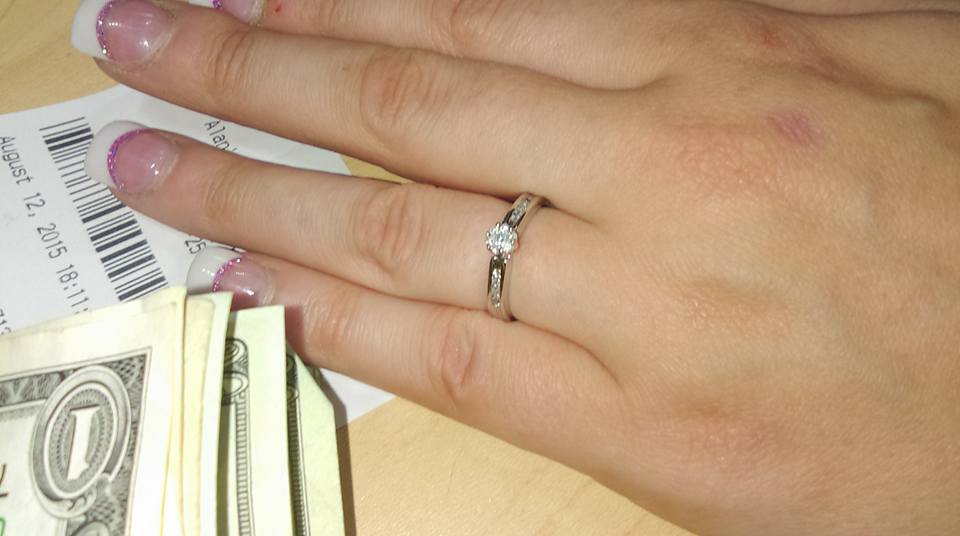
On a happier note, my daughter got her engagement ring! I think they have the date set for April 20th (4/20, lol). She will have just turned 23. That’s young, but not too young, and her fiance is 4 years older. This is what she wanted so I’m happy.

ring

How my NPD/ASPD control freak ex used a dog to gaslight me.

jack_russel_puppy

In 2011, when my parasitic MN/ASPD ex was still living on my couch, he decided he wanted a dog.

We already had a dog, Dexter, who was an awesome black lab mix (he lives with my daughter and her fiance now). The house I live in (and lived in then) is tiny. At the time, we had Dexter and 5 cats. Far too many animals for a two bedroom house, but these were pets I cared about, so I wasn’t too bothered by the overpopulation problem in the house.

But oh no, a dog and five cats wasn’t enough for the Parasite (which is his new name as far as I’m concerned so that’s who he’ll be from now on). No, he had to have his OWN dog, one that HE picked. I told him we had no room for another pet, and it was already too expensive feeding and taking care of the ones we had (remember, he contributed nothing financially since he refused to work so all their expenses fell on me) but he couldn’t see reason.
Instead, he whined petulantly, “But Dexter needs a playmate!”
Dexter did not need a playmate. Parasite needed some easy narcissistic supply.

A few weeks passed and Parasite gaslighted me by telling me and everyone else who would listen that “Lauren hates animals” because I put my foot down about getting a new puppy.

One day I came home from work and found Parasite slumped on the couch that had a huge valley in the center from his constant inert and hateful presence, and in his arms was a puppy. A Jack Russell puppy.

For anyone who isn’t familiar with Jack Russells, they’re a cute beagle-like breed of hunting dog but they have serious ADHD and need to be able to run as much as they want. They bark a lot and are just extremely hyper. They are difficult to train because they’re so stubborn. They may be fine for a family with kids who lives on a farm or has acres of land for the dog to run, but they are definitely NOT the kind of dog that would do well in a small apartment or house with only a smallish unfenced yard. They are not the kind of dog to have if you live in a suburban development where the neighbors are no more than 40 feet away.

I hate Jack Russells. (But I love dogs).

But it looked like we had one, at least for the moment.
I told him to take it back wherever he got it.
“Oh, but he’s so cuuuuuuuuuute! Look at him!” (said in low-register baby talk)
I roll my eyes. “Yes, he’s very cute, but we have too many pets already, and I can’t afford to feed him too.”
“Oh, he won’t be expensive to feed. Dexter needs a friend!” He shoves the the puppy up in my face. “LOOOOOOOK at him, he LOOOOOVES you. Isn’t he CUUUUUTE?”
I see red. He isn’t listening. Again. He never listens. He never cares about anyone but himself. I tell him this.

He projects and gaslights. “No, YOU’RE the one who only thinks about yourself. You don’t care about animals. You only think about YOU! You don’t care about MEEEE. I have diabetes and mental problems and a bad knee and I have to live here on your couch and don’t have my own home and it’s always too hot or cold in here and you buy crappy food and now you’re telling me I can’t have a dog who won’t be any bother to you at all.”
I stare daggers at him. I can feel the lava of BPD rage boiling in my gut. I try to stay calm. I count to ten.
“I want you to take him back.”
“No.”
Maybe pleasantry might help. “Please take the puppy back.”
“No, and if you dare try to take him to the shelter, I’ll kill myself and make it look like a murder.”

The BPD volcano erupts. “YOU’RE A F&%KING ASSHOLE! TAKE THAT GODDAM DOG BACK TOMORROW, YOU STUPID FREAK!”
“What will you do if I don’t?” He’s baiting me. He has me on the spot. There’s nothing I could do or would do, and he knows it. He’s in complete control.
“Uh…I don’t know….But I’LL FIND SOMETHING!”
“You’d probably have Barnaby (he already picked a name) put to sleep,” he says, fake pouting. “You hate animals, you have no compassion or you’d let me keep him.”
I give up and leave the room, but out of the corner of my eye see Parasite holding Barnaby up to his face and telling him in that infuriating fake-masculine baby talk what a “meanie” I am.

control_freak

So Barnaby stayed. For two years. I never hated a dog before, but I hated this one. He chewed everything, the furniture, the rugs, important papers, my favorite book. Once he ate an entire pack of cigarettes and vomited them up all over the chewed up and shredded rugs. He pissed and shat everywhere, up until he was a year old. Parasite kept making excuses for him such as “but he’s only a PUPPEEE!” or shifting the blame to me–“you’re so impatient!” Not only did I hate him because he was so out of control, I hated him because Parasite refused to train him and that dog represented to me everything bad about the Parasite himself. Every time I saw that dog, it reminded me of how controlled, intimidated and powerless I had become.

Barnaby barked and howled nonstop. Morning, noon and night. Once he got a taste of the great outdoors, he decided this was something he couldn’t live without, so running away for hours at a time was a weekly occurrence, and eventuall a daily occurrence.
But running away wasn’t all he did. Oh, no. If he’d run away and never returned there’d be no love lost.

But he’d run into neighbors’ backyards. He’d devour their gardens, then sit there and howl for hours. You’d go try to catch him, and the little demon would run. It was a game to him. He’d run, then sit down and look at you, waiting for you to make a move. You’d lunge after him, and he’d bound off again, then sit down and look at you, teasing you and daring you. He was too fast, I could never catch him. And Parasite wouldn’t try. It was up to me to get him to come back. And I never could.
I’d go to bed and hear him howling somewhere nearby and wonder what the hell I was going to do.

Soon the neighbors were mad at us for allowing our out of control dog to keep them up all night and ruin their yards. Animal Control was called twice. The second time, I answered the door when they came, and when they told me there’d be a fine if it happened again, I told them they were free to take him, I couldn’t handle him. But Parasite was home, and intercepted, promising he’d be good and it wouldn’t happen again. Animal Control left. Barnaby stayed.

The next night, Barnaby ran off and howled in another neighbor’s yard. Animal control came and took him away. Parasite was inconsolable at first, then his grief morphed into rage. He threatened me: “You go get that dog back tomorrow.”
“I don’t have the money.”
“You’re lying. Do it or I’ll kill myself. And make it look like you did it.”
I used my week’s entire paycheck to go retrieve Demon Dog from the shelter, leaving us without food that week (which Parasite of course complained about).

This time, Parasite actually had the presence of mind to build a makeshift fence from steel beams where Barnaby could be confined. So although he continued to chew everything in sight and bark too much (and still seemed to have problems containing his bowels) he seemed calmer in his grassy kingdom and the howling ceased.

But this didn’t last. Barnaby was smart. One night Barnaby dug his way out from under the pen and I heard the distant howling.
I couldn’t do this anymore. I remembered Parasite’s threat. But sometimes frustration or anger can override fear, and I reasoned that it was probably an empty threat anyway, since he rarely had followed through on any of his past threats.
I was going to place an ad on Craigslist.
But Parasite had an announcement of his own.
“I don’t want Barnaby anymore,” he said.
I just stared at him stupidly.

A week later Barnaby went to live with a family that answered our ad on Craigslist. The man who came to get him said he had five acres of land and 4 kids, and they’d always wanted a Jack Russell.

The useless parasite who lived on my couch got rewarded for having ASPD.

cash-cow
Credit: That Woman’s Weblog

I need to vent a little.

My MN/ASPD ex just received $31K in backpay disability for the seven years he spent living like a leech in my living room (after we divorced), making a mess everywhere, taking advantage of me, mentally and emotionally abusing me, refusing to work (so he could get disability–during the review process you cannot have a job), and not paying me so much as a dime the entire time he lived here. He played his horrible music loud when I was trying to sleep and got mad when I told him to turn it down. He complained constantly about everything. He brought in a Jack Russell puppy even though he knew I couldn’t have another dog and he knew I can’t stand Jack Russells (which is going to be my next post). Of course I was stupid to ever trust him and allow him to live with me at all, once we were divorced. But I was so codependent and scared of his empty threats.

I’m envious. And outraged. And I can’t seem to shake this toxic rage. I’m envious because he doesn’t have to slave away at a low-level service job and live paycheck to paycheck, but now rakes in about $500 more per month than I do for doing absolutely nothing. Plus that he has more money right now than I’ve ever had in my life even though I work like a dog for very little. The parasite is actually capable of working to some extent, but never wanted to work, so he successfully used a few medical and psychiatric problems to prove he can’t work. He’s great at playing the system, which is a good indication of someone with ASPD, which he has actually been diagnosed with.

useless_bum

And that brings me to my next issue with all this. The useless POS was officially diagnosed with ASPD. Apparently ASPD is recognized by the North Carolina disability board as a “disability,” for the obvious reason that someone who’s antisocial is unemployable. I understand that part, but why is he being REWARDED for being a lying POS who gets his sadistic thrills making people more vulnerable than himself miserable and crazy?

It’s outrageous is what it is. I recognized the anger I feel is righteous anger that most normal people would probably feel too in the same situation, but it’s mixed with this toxic envy of what he has and I don’t and this childish envy won’t go away and is eating away at my soul like an ulcer from hell.

So what am I going to do about it?
I’m going to do nothing. There’s nothing I can do. I might write a letter to the paper but not use our real names, just to call attention to the fact that this ridiculous state of affairs exists. Maybe some politician will read it and take it seriously. Most likely not. It might make me feel better to write a letter though.

But other than that, I have to accept this injustice. The jerk isn’t going to help me get my car fixed. I haven’t even asked because I know what he’d say and asking would be breaking my No Contact rule anyway. He’d say no. Even though it was on my back he was able to apply for disability at all. I supported him while he went through the whole process. He’d say no because he’s an asshole who likes to make people suffer. He has no empathy. He does.not.care. In fact, I bet he’s gloating right now over the fact that I’m still wallowing in poverty and working at a crappy job and driving a half-dead junker while he gets to enjoy all his new toys and sit around the house all day trolling political websites, getting high, and sleeping.