My bucket list (we all need one).

mybucketlist

These are the things I want to do before I die. Of course, these are subject to change and new ones will come along!

1. Write and publish a book about everything I’ve learned from growing up in a narcissistic family and being married to a narcissistic husband.

2. Write a bestselling novel or self help book based on my own experiences.

2. Be able to quit my day job and make an income from this (or another) blog.

3. Go to an exotic or remote country, preferably tropical.

4. Sing in a karaoke contest. (People say I have a decent voice but it’s one of those things I never developed)

5. Learn a musical instrument.

6. Get married again someday to a supportive, fun-loving, non-narcissistic man, who likes to travel and is good at home projects too.

7. Buy a Bengal cat.

8. Buy a small but quaint home near the ocean on the Gulf Coast of Florida.

9. Be completely self confident and at ease with myself.

10.  Get over my fear of dying.

11. Redecorate my home exactly the way I want it.

12. Live for several months among people from a different culture.

13. Finally be able to give up smoking completely.

14. Drive cross country with a good friend or lover in a camper-trailer.

16. Finally be free of all my irrational fears.

17. Make a Beef Wellington.

18. Enter an art show and win a prize!

19. Do something really unconventional or eccentric in public and not worry about people thinking I’m crazy.

20. Hike the entire Appalachian Trail (Georgia to Maine; this takes about 6 months).

21. Be happy.

Now, I am going to ask something of you. I’m inviting my readers to add their own bucket lists in the comments. What would you most like to do before you die?

Narcissists are nothing but balloons

popping_balloon
Stick a fork pin in it. It’s done.

This great analogy came up in a Facebook conversation. The analogy isn’t mine, but from another survivor of narcissistic abuse, a woman named Mary Pranzatelli, who asked me to use her name. Mary says:

You just know at the core of that [narcissistic] man/woman is an inner child. And you feel like there is hope that you can pop the balloon that has suffocated this child. A narc reminds me of a balloon. You keep blowing air in his/her balloon. Eventually you become exhausted from blowing into this balloon. The air slowly seeps out… And the Narc needs a new source to blow him up again.

Blowing air in the balloon…is supply. When a Narcissist gets bored or has a Narcissistic injury the balloon deflates…and the person that fails to blow air into the balloon consistently, becomes devalued and discarded. You can only blow up a balloon for so long…

Narcissists are just balloons filled with hot air, and as survivors, we can visualize popping them or letting the air out. It’s a funny exercise, but could help because thinking of them as balloons can make them seem less threatening.

Remember too, narcissists, like balloons, are extremely fragile. They need a constant supply of air from an outside source to float. Otherwise, they are just a limp piece of thin rubber.

We have another OM!

thejournal

Yes! 😀 There’s another site that offers bloggers the opportunity to pimp their blog, the way Opinionated Man (OM) does.

The Editors Journal has over 100,000 followers. I just pimped my blog there.
https://theeditorsjournal.wordpress.com/2015/02/02/introduce-yourself-to-other-bloggers

When your boundaries are being violated.

boundaries

One of the most pernicious things our narcissists do is violate our boundaries. This can take a number of forms, ranging from physical violations (such as rummaging through your things or physically attacking you) to more subtle mental or emotional violations.

So I’ve devised a checklist of some of the ways narcissists violate our boundaries. They do this to give us less power or make us feel diminished. Don’t allow it. If you see any of these behaviors from your narcissist, if you can’t cut contact with them, be very firm and tell them you will not tolerate it. Do not back down or make excuses. You have every right to protect your boundaries. Your reasons why are really none of their business.

Physical boundary violations:

1. Physical abuse — hitting, pushing, punching, getting “in your face,” cornering you.

2. Forcing you to have sex when you do not want to.

3. Rummaging or going through your personal possessions.

4. Stealing from you. A lock box (these can be cheaply purchased form stores like Walmart) is a good idea. Get one with a combination, not a key.

5. Touching you or sitting/standing too close during conversation, when this is not desired by you.

6. Some somatic narcissists can violate your boundaries by dressing immodestly in front of you. If you object to your narcissist sitting around in his threadbare boxers (or nothing at all), tell him it makes you uncomfortable and that you won’t tolerate it.

7. Making a lot of noise, talking loud, playing loud music, slamming things around to get your attention (my ex was infamous for all these things, especially the loud music).

8. Excessive use of language you disapprove of.

9. Staring at you in a predatory way.

10. Making unreasonable demands (spending money on them, doing favors, running errands for them that go beyond what’s reasonable).

internal_boundaries
Click to make larger.

Emotional/Mental boundary violations:

1. Telling you how you feel or accusing you of feeling or thinking something you do not. Taking your inventory.

2. Gaslighting and triangulating against you.

3. Telling you you have no right to feel the way you do, that it’s wrong, stupid, etc.

4. Insults and namecalling.

5. Grilling you about your activities when you are not with them.

6. Spying on you; stalking you online.

7. Not allowing or making it difficult for you to see your friends, family members, etc.

8. Telling you how you should dress, look, etc.

9. Dismissing or putting down your accomplishments or interests

10. Telling you what you feel is crazy, that you are being over-sensitive, etc. (really a form of gaslighting).

11. Interrupting you or not allowing you to speak.

12. Doing other things while you are trying to talk to them, or continually changing the subject.

13. Lying to you.

14. Trying to make you do something illegal or that goes against your morals.

If your narc does any of these things, be firm and tell them you will NOT tolerate these behaviors. Do not be nice about it. Narcissists can only be handled with tough love, if you can’t disconnect. Do not back down no matter how much they object.

They will react with rage, of course–at first. Without narcissistic supply from you, they will eventually stop being mad and either sulk or leave.

Obviously, leaving or going No Contact is the best thing you can do for yourself, but in some situations this isn’t always possible, especially if there are children involved.

On the drive home today

A mile away, the snow was blowing so hard there was practically no visibility and I thought my car would blow off the road. But here, I caught a couple of photos of the French Broad River on the way home from work just before the snow and wind began to hit. There was still a little patchy sun.

french_broad1

french_broad2

How my ex became a malignant narcissist.

Martin-Luther-King-Good-vs-Evil

I’ve talked about several of my own family members and how narcissism has infected other family members with NPD and/or made them victims, but I haven’t focused too much on how my ex husband Michael, as malignant as they come, got that way.

So I am doing that now.

Michael, like most narcissists, wasn’t born that way. He was the only child of a machinist who was rarely home and when he was, stayed in the background, believing raising a child was “woman’s work.” The household was blue collar but back in the early ’60s, blue collar didn’t mean poor. A working class man could adequately support his family, buy a home, have two cars, and his wife didn’t have to work to help make ends meet.

From all accounts, Michael’s father loved him in his rough-around-the-edges macho way, but he spent hours every day in bars or at the pool hall after work to avoid his nagging, manipulating, self-centered, never-satisfied wife, Helen, who was a dangerous malignant narcissist and probably psychopathic.

Michael was a sweet, obedient child and a good student. He always tried to please his mother, making her things at school, picking flowers to bring home to her, and always, always trying to hug her. He was very physically affectionate, desperately trying to elicit love from a woman who didn’t have any to give. He told me his childish hugs were met with an unyielding stiffness and sometimes she would even push him away.

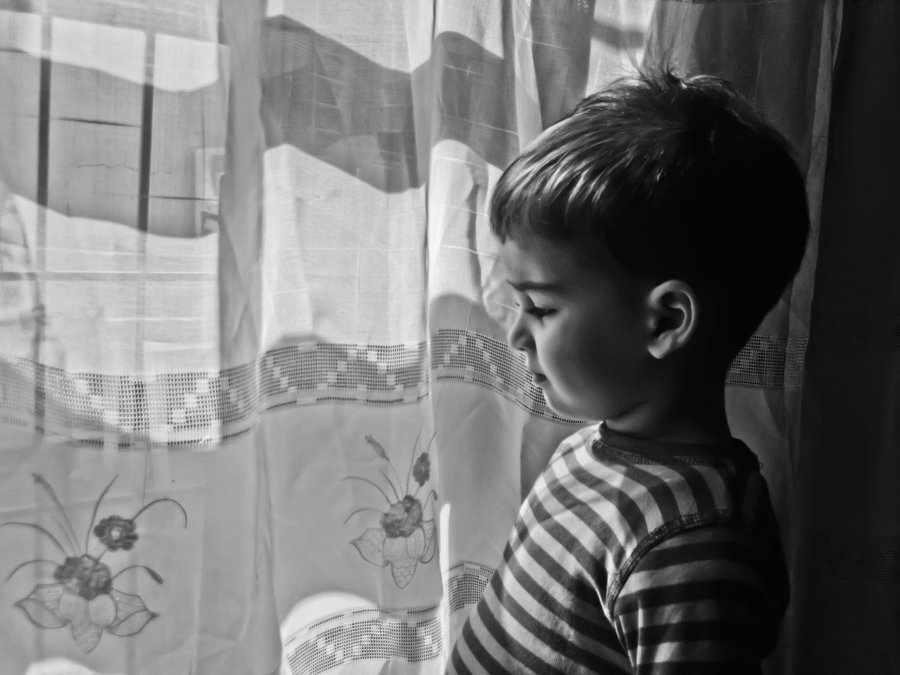
sad_little_boy

I remember during our engagement, during a dinner following a wedding rehearsal, Helen was almost bragging at the dinner table about how she never would have gotten pregnant at all if “Neil hadn’t got me drunk.” The woman swears she never had sex during their marriage and the only time she did was because her husband got her drunk. (She did have sex once in 1965, got pregnant and miscarried, or so she says). She liked to show off Michael’s baby pictures as if he was some kind of doll, but I don’t think she ever had any real love for him. He was her toy and her possession. She dressed him up like Little Lord Fontleroy and made him wear a Safari Suit to his 8th grade graduation.

Michael’s early photos show a child with a sad expression, although he was always smiling. But there was sadness and fear there. I was reminded of a picture of my mother taken when she was two–and she was wearing a similar sad and dejected expression, looking close to tears. She had been sitting on an oversized chair, her little feet in brown high top shoes, and clutching a teddy bear. Narcissists are sad little children before they turn to narcissism as a defense mechanism. They are never born this way. It is something that is done to them (although they have some part in having made the choice to become narcissists).

When Michael was five years old, his father brought him home a small white puppy, who was named Buster. Michael loved that dog, and spent all his time playing with him when he wasn’t at school. Buster would sit on the floor next to Michael while he played with his toys or drew in his coloring books with crayons.

One summer day, Michael and Buster were sitting in the middle of the hardwood floor in the living room, in a patch of sun that came in through the picture window. Michael got up to go do something else, maybe go to the bathroom, and left his crayons on the floor in the patch of sunlight. Some purple and red crayons melted in the sun and the dog Buster somehow got some red wax on his white fur. There was also a pair of child’s plastic scissors nearby.

boy_and_dog

While Michael was gone, Helen came into the room and saw the waxy mess and the red crayon on the dog. She marched off to find Michael and dragged him into the room.
“See what you did, you stupid child. That dog is bleeding.” She pointed to the plastic scissors.
“See, you cut him. Well, that does it. Buster must be put to sleep.”
Michael started to cry. “But he’s not tired.”
Helen flew into a rage. “I don’t mean it that way. We are taking him to the pound where he will be destroyed. You are not capable of caring for a dog. Look what you did to him.”
Michael tried to appeal to his father, but his father, tired from work, and an enabler to Helen, just said, “I’m sorry, son, but we have to do what your mother says.”
Michael never forgot this and was never able to forgive his mother for this. He thinks this was the point at which he started to hate her and stopped trying to appeal to her love. He stopped making her things and bringing her gifts.

Helen never allowed Michael to stay home from school, not matter how sick he was. Once he had scarlet fever and was sent to school anyway. The school nurses, concerned, called Helen and asked her why she would send a child sick enough to be in the hospital to class.
Instead of apologizing and getting Michael the medical care he needed, she attacked him, blaming him for “getting her into trouble with the school.”
Any time anything went wrong, it was always Michael’s fault.

When Michael was about 11 or 12, there was a huge custody dispute over an older daughter from his father’s first marriage. The father went to court to try to win custody and lost. During this time, Michael was sent to live with neighbors, to “keep him out of the way.” He felt rejected by his own parents in favor of his father’s daughter from an earlier marriage.

Helen was a pious churchgoer, involved in every activity, but was not well liked by the other women. She was known as a troublemaker and had no real friends. But she loved to tell everyone how “everyone loves me” and “they all listen to me.” In actuality she was doing nothing but spreading gossip and lies about the other women in her church groups. The old Saturday Night Live character “The Church Lady” could have been Michael’s mother. She even looked like that character.

church_lady
Dana Carvey as “The Church Lady.”

She also got involved in Michael’s school, and got the same reputation there as a troublemaker. This reflected badly on Michael, who was embarrassed by his mother’s antics and his friends’ dislike of her. She was always interfering in things that were none of her business and stirring up drama, playing divide and conquer games between other women and breaking up their friendships through her malicious lies and triangulation.

Michael hated his mother by now and tried to avoid her, but did not become a narcissist until he was almost 13.

It happened in January 1973. His father had not been in good health for some time, and suffered from atheriosclerosis, hardening of the arteries. He was only 57 when he suffered a massive stroke and died suddenly at home.

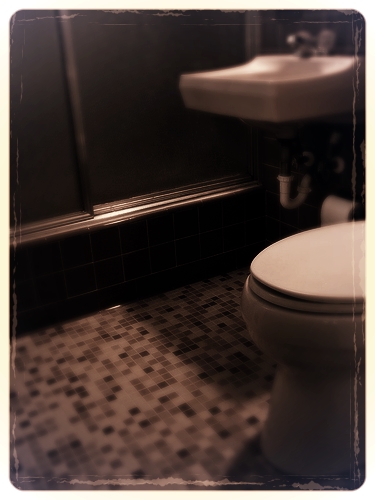
Michael went into the bathroom to get ready for school and found his father’s dead body lying on the cold ceramic tiles of the bathroom floor. He screamed and tried to revive him, but the man was already cold and wouldn’t wake up. He had been dead for several hours already.

Crying hysterically, he found his mother in her bedroom, fast asleep. He started shaking her and yelling at her to wake up.
She finally did, and was annoyed to find Michael crying at her bedside and pointing to the hallway toward the bathroom.
“Mom, I think Dad’s dead.” he sobbed.
“Don’t be ridiculous.” She marched off to follow him into the bathroom.
She stood at the doorway and looked at her dead husband on the floor, grimaced, and then turned on her heel and said to her son, “Well, I have no idea what to do about this. You take care of it.” Not one shred of empathy, grief or compassion was shown. This was her own husband, and she acted as if he was a bag of trash that needed to be taken outside.

bathroom

Michael changed after that. He went through the motions of doing what is done when a family member dies, calling all the relatives himself, arranging the funeral, and all that goes with that, but inside he wasn’t the same.

After his father was buried (and his mother put on a huge show at the funeral of crying louder and more hysterically than anyone else present), Michael began to drink and get into trouble. His grades remained acceptable, but he began to show a lot of narcissistic behaviors and started to use people for his own advantage. He went into the city on the weekends and sold his body to older men for money. He thinks he killed a guy once by pushing him into a glass table, but if he did kill him he was never caught.

The malignant behavior soon became ingrained and for Michael, there was no turning back. He’d given up on life and turned to narcissism to protect himself against further injury from those who were supposed to love him. As the years progressed he became a skilled manipulator and con artist, expert at gaslighting, lying, projection of his own defects onto others, and triangulating. This was exacerbated by intermittent drug abuse and alcoholism. The rest of his progression into full-blown malignant narcissism is described in my posts about our marriage under “My Story,” which appear in the header.

Michael had turned into his enemy: his mother. At the same time, he projected his hatred of his mother onto all women he became close to. In the process, this once-brilliant man eventually burned all his bridges, both romantically and professionally. Today he is a burned out shell of a human being, now living at the Salvation Army subsisting on handouts and disability payments. He’s a “needy” narcissist, mooching and freeloading off others, and taking, taking, taking in a pathetic effort to procure the maternal love he never received as a child. He still blames “society” and other people for “making him homeless and unemployable.”

Even his children want little to do with him. He has lost everything. But he made his own choices so I can’t feel too badly for him.

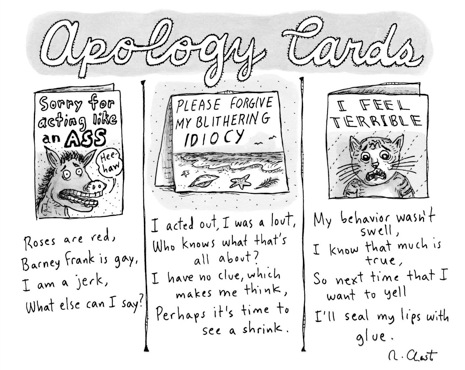
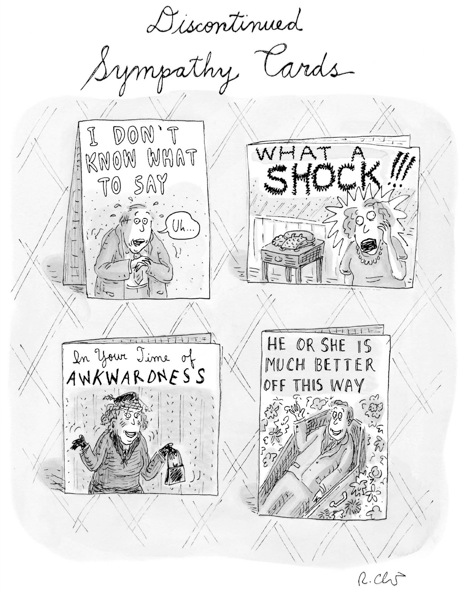
I love Roz Chast “card” cartoons

I just can’t get enough of her cartoons and I just love these fake “card” ads. The first one, “Narcissist Cards” is my favorite, and included on the Joke Page. The others are pretty great too.

narc_cards
She totally gets it.

apology_cards
These must be for the codependents.

cards_for_oneself
If you lost your source of narcissistic supply, you can send yourself these and be your own supply!

sympathy_cards
You never can find the right thing to say…

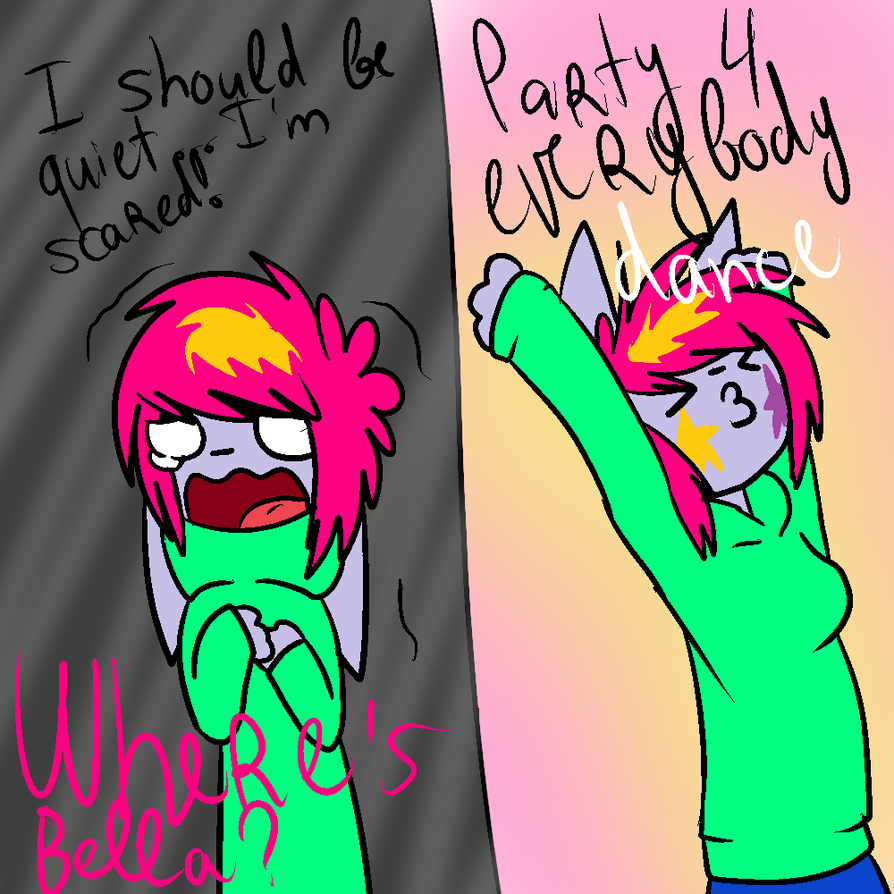
The chatterbox and the hermit.

shy_and_outgoing__by_cammy_senpai-d6ejdec
“Shy and Outgoing” by Cammy Senpai, Deviantart

I’m two different people.

Most of you already know what I’m like online. I made a vow to be completely honest and hold back nothing (within reason) and so I am doing. This has been a wonderful thing for me because it has given me courage (and takes courage!)

But I’ve always been outgoing online. I talk about the things that concern me, my feelings about them, my relationships, my mostly painful and sordid past. I tell you if I’m happy, sad or mad and I tell you why. I actively seek out friendships and post on other people’s blogs (when I can find the time since I’m always on this blog). I’ve become active on social media too, something I never thought I’d be. If anything, I’m probably a little too confessional!
On the web, I’m comfortable being completely myself and do not suffer from the shyness, shame or self-consciousness that plagues me IRL.

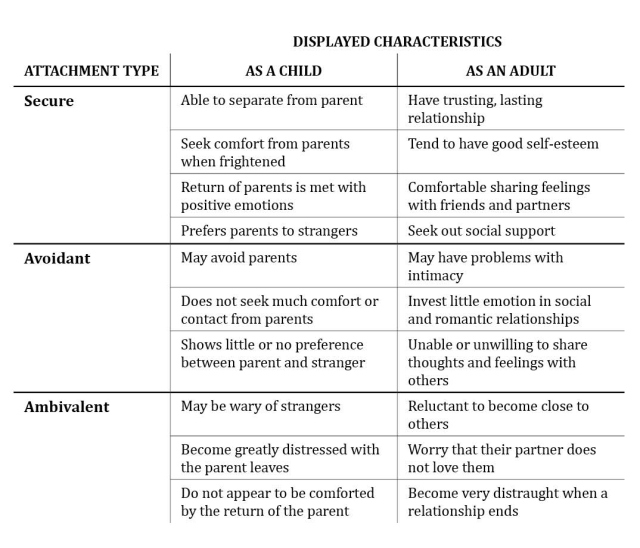
In the real world (which I prefer to call the physical world, because online life is every bit as real as any other form of interaction), I’m the opposite of the above. I suffer from both Aspergers (which I was most likely born with) and Avoidant Personality Disorder, brought on by abuse and always feeling off balance because of my MN mother and my enabling, alcoholic father, not to mention being a frequent target for school bullies.

attachment-types
From “What’s In It For Me?” on Zombie Shuffle’s blog.

In the physical world, I’m a very different person than the one you know online. Although I have the same emotions (which I talk about here), I don’t discuss them openly or even at all. I have few friends, am not close with anyone in my family other than my children, and prefer the company of myself, my books, or my pets to that of other people. Lots of noise and large groups of chattering people are very triggering to me, and I find myself tensing up and retreating if possible.

Most people know very little about me. I don’t say much, I rarely initiate conversation, and am very shy. Some people think I am cold and aloof; others think I am just stupid. I’m neither, but my avoidant personality makes me seem unfriendly or insecure. My Aspergers makes me seem awkward which exacerbates my problems relating to people.

I am terrified of intimacy and romantic relationships. After a long, abusive marriage and 7 more years of hell living with him after we divorced, I think I’ve had enough. I don’t trust men enough or trust my own judgment enough to dare take the plunge again into a new relationship. I also feel like my age is a problem, even though I look far younger than I am. I haven’t had sex in 9 years and really, that’s not a problem for me. I like the idea of having a relationship again (who really wants to die alone?), but I don’t know if I could cope with the reality of one. That doesn’t mean it won’t ever happen though. It just scares the living daylights out of me.

I can’t stand talking on the phone and a ringing phone is very triggering for me: I always expect to hear bad news. I know it’s just my hypervigilance, but I can’t help my reaction whenever the phone rings. As far as talking on the phone, it’s just awkward because I can’t pick up nuances in speech (due to my Aspergers) which is made worse by the fact I can’t see their facial expressions or body language. I try to end phone conversations as quickly as possible, which makes people think I’m unfriendly or don’t want to talk to them.

I don’t connect well IRL with most people, although I do get along with most. I’m not hard to get along with, just hard to get to know.

Blogging has enabled me to open up and be the self I want to be. It’s enhanced my self esteem and my creativity. Being courageous enough to post the sort of things I post gives me even more courage. Journaling online to complete strangers has helped me understand a lot of things I never used to understand and it’s even helping me develop more empathy.

But this isn’t the Matrix and I can’t live inside my online world all the time. I do think, however, that my increased self esteem and self awareness will soon translate into my relations with the real world. In fact, I’ve been told I seem more relaxed, happier, and more confident than I used to be, even though my extreme reservedness remains. I smile and laugh more. Most people do seem to like me, even though they can’t get to know me well. They have no idea the shy, mysterious, taciturn woman who tends to clam up in social situations or avoid them altogether actually runs a blog where she talks about the most personal issues it’s possible to talk about.

Three great R.E.M. songs

“Monster” is my favorite REM album (they’re all great though).

I still play these three songs all the time in my car.

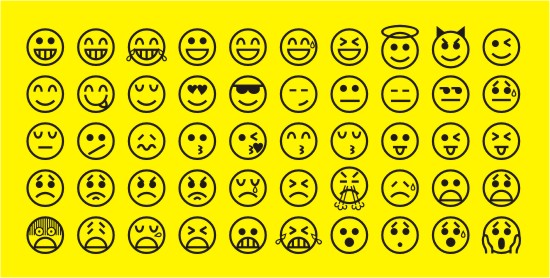
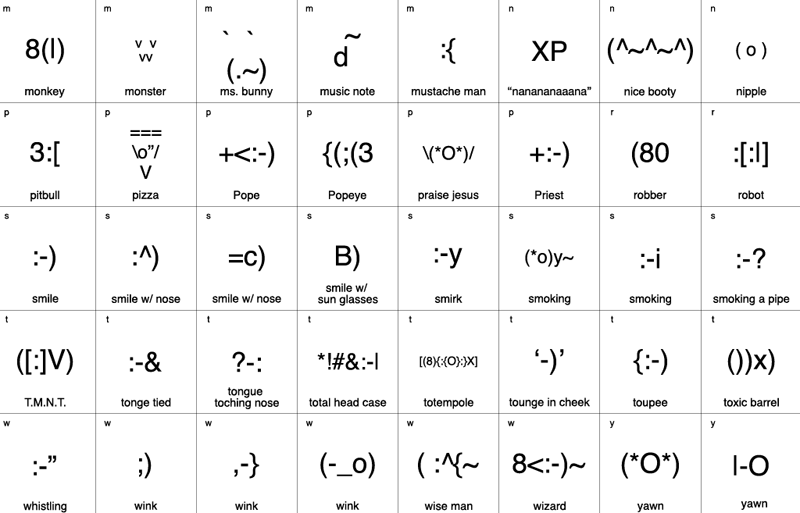
7 science-based reasons to use emoticons

emoticons

I thought this article by Courtney Seiter was pretty interesting.

7 Science Based Reasons to Use Emoticons
By Courtney Seiter

Do you remember seeing your first emoticon?

The first documented use of “:-)” dates back to 1982, when Scott Fahlman proposed that it be used as a “joke marker” on a message board for Carnegie Mellon University computer scientists. Here’s his Internet-changing message:

“I propose that the following character sequence for joke markers:

“:-)”
Read it sideways.”
Today, emoticons need a bit less explanation. As social media has grown (and character counts have shrunk), these pictorial representations of feelings are playing a significant role in communication.

If you’re still not sure whether emoticons are a good fit for your brand’s social media voice and tone, we’ve gathered up seven real-deal scientific studies that say using emoticons can make you appear friendlier, grow your popularity on social media, and even make you happier offline!

I’m feeling 🙂 already…

7 reasons to use emoticons

1. They make you more popular on social media

An analysis of more than 31 million tweets and half a million Facebook posts uncovered the fact that positive emoticons can be a social media status marker.

Simo Tchokni of the University of Cambridge Computer Laboratory and her colleagues used various metrics such as number of followers and Klout score to determine the traits of influential social media sharers—and emoticons were a common factor.

“The emoticon features achieved high performance, suggesting that there is a strong link between emoticon use and social power. Powerful users tend to use emoticons often and high Klout is strongly associated with positive emoticons,” the study concluded.

2. We react to them like we would real human face

If you ever wish you could reach out and talk to your followers and fans face-to-face, here’s some good news: An emoticon might be the next best thing!

Scientists have discovered that when we look at a smiley face online, the same very specific parts of the brain are activated as when we look at a real human face.

A caveat: This only works in the left-to-right format. In other words, humans now read “:-)” the same way as a human face, but not “(-:”.

“Emoticons are a new form of language that we’re producing, and to decode that language we’ve produced a new pattern of brain activity,” researcher Dr. Owen Churches, from the school of psychology at Flinders University in Adelaide, told ABC Science.

Why might this make a difference when it comes to social media and marketing? Because human faces are particularly effective attention-grabbing mechanisms.

“Most of us pay more attention to faces than we do to anything else,” says Churches, who has been studying the neuroscience of face perception for years. “We know experimentally that people respond differently to faces than they do to other object categories.”

3. They’re OK even in business settings!

You might have heard that emoticons aren’t so professional for workplace communication. That might still be true in some industries, but more and more smiley faces are entering work emails—and the science shows that no one really seems to mind.

A University of Missouri-St. Louis study wanted to test how people perceive smiley faces in a work email as compared to a social email. Researchers sent two types of email messages to a group—one a flirtatious message, another extending a job interview request—and added emoticons to some of each.

The researchers discovered that the smiley faces in both types of fictional emails made the recipient like the sender more and feel that the sender liked them more. Even in the work oriented mail, the sender’s credibility wasn’t affected by the emoticons—even when they used 4!

Emoticons in work emails

“In a task-oriented context, where impersonal, cold, and unsociable features of computer-mediated communication are strongly encouraged in order to build credibility or professionalism, using emoticons in e-mail might create a positive expectancy violation by being friendly, emotional, and personal,” the study concluded.

4. They soften the blow of a critique

Got a critique or some feedback to share? Emoticons can lend a hand.

Studies on workplace communication show that when specific, negative feedback from a superior comes with positive emoticons, employees are more likely to feel good about the message and more likely to make the changes asked of them.

“Our results suggest that using liking emoticons increases perceived good intention of the feedback provider and decreases perceived feedback negativity when the feedback is specific.”

It’s worth noting that using disliking, or negative, emoticons had the opposite effect in some cases.

emoticons2

5. They make you appear more friendly and competent

Want to look smarter and more approachable online? Emoticons could be the answer.

In a study that had participants chat online with “health experts” and “film experts” who either used or avoided emoticons, the participants rated the experts in both topics friendlier and more competent when they communicated with emoticons.

This study also noted an awesome side benefit to emoticons: It might help you remember what you’ve read more easily! The study authors write:

It appears that the presence of emoticons affects cognition as well, because participants’ scores on memory for chat content were significantly higher in the “emoticons present” condition than in the “emoticons absent” condition.

6. They create a happier workplace

Researchers have long known about the negativity effect in email, which is the phenomenon that a recipient is likely to perceive an email as more negative than the email sender intended. Since we don’t get the chance to share facial expressions and other nonverbal cues in our emails, they can sometimes be tougher to interpret.

But emoticons might be able to help.

In a 2013 study, 152 professionals read an email message both with and without smiley emoticons that were part of a fictional workplace situation.

Example Message:

I can’t make the meeting you scheduled because it conflicts with my staff meeting. Email me and let me know what I missed.

vs.

I can’t make the meeting you scheduled because it conflicts with my staff meeting. Email me and let me know what I missed. 🙂

When they were questioned about what they read, the results showed that emoticons reduced the negativity effect in the business-related email messages—the same message sounded less negative when paired with a positive (smiley) emoticon.

“The findings suggest that these symbolic emotional cues help “clue in” the recipient towards a particular emotion (in this study, the smiley face emoticon represented a more positive tone), thereby clarifying the intentions of the sender,” the study’s authors write.

They added that emoticons could help employees in remote locations more accurately “read” the emotional content of a message and could help mitigate cyber aggression and conflict over email by clarifying messages and giving the conversation a more “light-hearted” tone.

7. They correlate with real-life happiness

One last reason to consider adding emoticons to your vocabulary? They might just make you happy!

A 2008 study found that emoticon users experience a “positive effect on enjoyment, personal interaction, perceived information richness, and perceived usefulness.”

The study added that emoticons are “not just enjoyable to use, but also a valuable addition to communication methods.”