I always wondered why you never see baby squirrels. I never saw one! But I can finally check this off my 50 Things to Ponder list because a friend of mine remembered my list and sent me this video of (you guessed it!) baby squirrels!
I always wondered why you never see baby squirrels. I never saw one! But I can finally check this off my 50 Things to Ponder list because a friend of mine remembered my list and sent me this video of (you guessed it!) baby squirrels!

Many months ago, I wrote a post saying I was going to join the choir. I really intended to! But me being the worst procrastinator in the universe, every week I’d say to myself, “I’ll go next week.” Each week it seemed I had a different reason for not going. Weeks turned into months, and now Easter is almost here.
I’ve always wanted to sing in a choir. Music is very spiritual and I always feel closer to God when I sing in church, but I’d always make excuses for not showing up to choir practice. Pick any of the following (I used every one of these at least once): I’m too tired, I don’t like to be around other people, I’m not a very good singer, I don’t feel like driving, it’s too cold, I haven’t had dinner, I’d rather blog, I have to answer emails, I have a headache, I might have an anxiety attack.
Even I knew these were lame excuses and I just didn’t want to commit myself to anything requiring any effort on my part, even an hour and a half once a week.
But I finally made the commitment and signed the paperwork, so I have no reason anymore not to attend practice. So if you see me blogging or commenting here tonight between 6:30 PM and 8 PM, please yell at me. Tell me to get my derriere over to the church and get the hell off the Internet.

The Pretenders were one of the most successful new wave groups of the early to mid 1980s, and “Back on the Chain Gang” was and still is my favorite Pretenders song. Chrissie Hynde, the band’s lead singer, wrote it after the drug overdose death of her husband, James Honeyman-Scott. She was three months pregnant with their daughter at the time.
To me, both this song and video shows a maturity and depth that wasn’t present in their earlier work, without sacrificing their catchy power-pop sound. Although “Back on the Chain Gang” could be thought of as depressing, it always lifted my spirits and made me want to get up and dance. It’s also a song that, to me, defines the 1980’s, but also still sounds fresh and relevant even in 2016.

All four Cluster B disorders are vilified, especially on the Internet, but for a long time I wondered why NPD seemed to be even more demonized than ASPD (antisocial personality disorder) and psychopathy and seemed to be regarded as the most “evil” disorder to have. After all, most narcissists are not going around breaking the law, murdering people (not physically, anyway), and most at least pretend to be nice to you, at least if your relationship is only casual. They make a good impression and most have families and respectable jobs. They go to church, teach second grade, and volunteer at the food pantry. If you’re just acquaintances or casual friends with a narcissist, they can even be a lot of fun. They also provide a lot of our entertainment, as narcissism (including NPD) is over-represented among celebrities, and what would we do without our movie, sports, and pop stars? Antisocial people are far more likely to be in prison and most aren’t making a mark in the creative arts. So why is it that narcissists are hated more than anyone else, at least on the Internet? I think I finally figured out the answer to this, and there are a few reasons.
1. Narcissists are more likely to have raised us.
Not too many people with antisocial personality disorder become parents, or are allowed to keep their children for very long of they do. They don’t need to have children for narcissistic supply since they don’t require that, and if they do have kids, their bad behavior is so obvious that their kids are usually taken away from them at a young age. They don’t pretend to be good parents but secretly abuse their child the ways narcissists do. They may even voluntarily give up a child because raising it is too much bother and gets in the way of their antisocial activities.
2. Narcissists are more likely to have been a lover or a spouse.
Psychopaths and people with antisocial personality disorder tend to be loners, or run in packs (gangs). They tend to dislike commitment and because they don’t require supply from other people, they usually have no use for a close relationship. If they marry, it could be for financial reasons since all they care about is what works and what is practical. As a result, while they can’t really love, they may not really be that emotionally abusive.
3. Psychopaths and people with antisocial personality disorder (ASPD) seem like rare, exotic (and often caged) creatures.

There’s a common perception of antisocial and psychopathic types being somehow apart from the rest of humanity, maybe not even quite human. As a society, we are drawn to and fascinated by serial killers (though technically, a few, like Ted Bundy, have had an NPD diagnosis) and a sort of cult has grown around psychopathic mass murderers, bank robbers, and serial killers. They make good entertainment. They’re also cool (something narcs are not). In the movies, TV, and novels, the anti-hero is a “rebel without a cause” who usually fits the criteria for ASPD or psychopathy. Even if they’re not committing crimes, they seem like exotic free agents who do whatever they want, whenever they want, and don’t give a damn what anyone else thinks. Think of Ferris Bueller. Ferris was more antisocial than narcissistic but he became a role model for millions of teenagers in the 1980s because he was just so cool. If he was a narc he would have been cast as the villain. Compare Ferris with Nellie Olson, the spoiled, bratty rich girl in Little House on the Prairie. Any questions?
4. What you see is what you get.
While psychopaths and people with ASPD lie well and often, it’s usually to avoid getting in trouble. They can be manipulative, but only to get what they want from you (and what they want isn’t narcissistic supply but more practical things that help them achieve their goals). They don’t lie just for the sake of lying. Gaslighting, triangulation, and other types of emotional abuse that involve vicious lies about another person’s character aren’t really their thing.
5. Narcissists are sneaky.

Related to the above, narcissists are always trying to undermine or even destroy you behind your back. Essentially, they are huge cowards. Psychopaths and antisocial people don’t care about such “niceties” and tell you what they really think of you right to your face. No, they don’t have any empathy either and they don’t give a damn if they hurt your feelings, but they usually won’t be pretending to be your best friend either (unless you can be of practical use to them in some way) .
6. Narcissists wallow in self pity.
Psychopaths and antisocials don’t feel sorry for themselves or waste other people’s time whimpering about how everyone hates them or how they never get any breaks. That’s because they don’t care what you think of them and they make their own breaks, even if they have to break the law to do it. Narcissists are not only hypersensitive, they are very dependent on other people. People with ASPD pretty much operate alone. They’re too cool for such narcissistic shenanigans as wanting to be liked and admired.
7. Narcissists are high maintenance.

Psychopaths and antisocial people do not require narcissistic supply, therefore they don’t demand too much emotional sustenance from other people. Narcissists constantly require being blown up like a punching clown doll (and make you want to punch them).
8. People assume most psychopaths are in prison.
It’s not true, of course (some are running huge multinational corporations or running for political office), but most people assume anyone with ASPD/psychopathy is in prison and therefore no danger to the rest of us. In contrast, narcissists seem to be lurking behind every tree and lamp post and hiding under every bed.

While I wouldn’t wish narcissistic abuse from either families of origin or ex-lovers or spouses on anyone, I’m grateful there are others besides me who have experienced it and that we have found each other. If it weren’t for the Internet, that never would have been possible, and I’d still be reeling from the abuse all alone and wondering why no one else in the world could relate to my pain. Honestly, I don’t know what I’d do without my little community of ACON bloggers and readers who have suffered this type of trauma. Very few people you meet in daily life get it. It’s also not something you can just tell people about. The anonymity of the Internet helps give us the courage to speak up.
It makes me sad to hear your stories, but at the same time, it’s great to be part of a found online family that is so supportive of one another and give each other virtual hugs and hope.
I’m very grateful to each and every one of you. Thank you for being my friend and a friend to one other.

Women are always stereotyped as shopaholics, and in fact it’s true. Most other women I know would love nothing more than to spend an entire day shopping. Not me, though. I’d rather be broken down on the road waiting for the tow truck. Never mind the fact I rarely have enough money to buy much anyway, I just hate everything about it. I hate the crowds, I hate waiting on line for a dressing room, I hate waiting on line to pay, I hate some officious individual asking, “Can I help you?” when all I’m doing is LOOKING (do I look like a thief to you?). I also hate the lack of clocks or windows in large stores (I guess they want you to forget what time it is so you stay longer and browse more, just like in casinos).
Clothing shopping is the worst. I have no patience for it at all. I have a pear shaped body and it’s always so hard to find anything that fits right or looks good on me. The mirrors in dressing rooms are always brightly lit with unflattering fluorescent lights, which doesn’t make any sense to me–don’t they want you to look good so you’ll buy their items? Maybe they do that so you’ll keep trying more things on and never leave the store. Like you’re in Hotel California or something.
Whenever I need to buy an item of clothing, I always know exactly what I’m looking for, go in, find it, pay for it, and hightail it outta there. I shop like a man. I don’t like to spend hours and hours “browsing” and trying things on just to see how I look in them. That’s why I always shop alone. I can’t stand waiting around while other people with me just HAVE to try on that cute this or adorable that, and then they have to keep asking you how they look. I can think of nothing more boring. I’d rather be waiting on line at the DMV (okay, maybe that’s a slight exaggeration but it’s almost that bad!) If I MUST shop with another person, I’d rather it be a man because the stereotype about women is mostly true. For me shopping isn’t therapy–it’s something I need therapy to recover from!

The advent of the Internet has pretty much solved that problem. Now I just order everything I need online and don’t have to bother with the stores at all.
Bookstores are something entirely different. I could (and I have) spend an entire day browsing in a bookstore, reading everything I can get my hands on. My idea of heaven is a celestial Barnes and Noble bookstore, with an attached Starbucks, of course. The only problem with bookstore browsing is that you’re actually consuming their products with no intention of paying for them. Standing (or sometimes sitting down!) in an aisle reading a book is akin to eating food in the grocery store and not intending to pay for it. Eventually, you start getting looks from management and at that point you know it’s buy or get out. Since I usually don’t have enough cash to buy all the books I want (and it’s always a lot of books), the library serves my needs just fine.
You can’t look at pictures of cats and have a bad day. You just can’t.
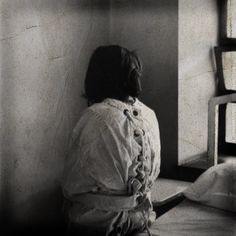
In The Asylum, Unknown artist.
Matthew Malin, owner and creator of the blog Confessions, has written a wonderful guest post describing the history of mental illness stigma, going all the way back to Roman times. Not only is the subject matter fascinating, but the unique historical perspective shows how the stigma is rooted in two things that seem almost diametrically opposed: mental illness as a medical problem centered in the body; and ancient superstitions, such as demonic possession. Even today, there are those who regard mental illness as either a primarily medical problem (leading to doctors over-relying on drug therapy) or a spiritual problem. While there may be both medical and spiritual elements involved in mental illness, both views have led to stigmatization.
If you have a chance, please visit the Confessions blog. Matthew’s articles are all about living with depression and anxiety, all written from an intimate, Christian perspective:
In the Spring of 2015 an incredible passion for those suffering from Mental Illness was born within the heart of Matty Malin. Through his own struggles with Depression and anxiety, a fire was ignited within his heart. That desire was to create a place of honesty, transparency, and love. We, the broken, have grown far too weary of the masquerade playing out before our eyes in society. We’re tired of hiding behind “I’m fine”. Here you will find unabashed clarity into the soul of man. You will also discover the love of God despite the ugly, sometimes violent, heart of man.
We fully believe that man is sinful and in need of a Savior. Jesus, the perfect son of God, stepped into our world, lived a sinless life, and was murdered voluntarily on the cross for our sins. He took on the wrath of God for us so that we might have access to a relationship with God that will one day result in spending eternity with him. We obtain salvation through faith in His work and by the grace of His loving hand.
We firmly believe that no man can go too far for the love and hope of Christ. Mental Illness can provide some of the darkest days of life. It is here that we need hope and it is here that we can find it in Christ.
WHY DOES MENTAL ILLNESS STIGMA EXIST?
By Matthew Malin
As someone who has dealt with the debilitating effects of Depression and anxiety for a period of 4, almost 5 years, I believe that I’ve stumbled across something much more paralyzing: Mental Health Stigma. The more aware I become of my own struggles and the more honest I am with myself and others, the more I find a growing discomfort with the topic of Mental Health. Why is this? What is it about Mental Health that sends general fear and inquietude through someone who is tasked with aiding the mentally ill?
A timeline of mental illness stigma.

Cutting the Stone by Heironymous Bosch, ca. 1494
I believe that history is ultimately to blame in this arena as well as a shallow thought process towards the issue. The Greek Era (500-100 BC) brought forth our first record of Mental Health treatment. Hippocrates was of the mind that a build up of bodily fluids was to blame. In his words, he said, “It is some kind of black bile that is making you depressed.” Their treatments revolved around the physical removal of whatever fluid was ailing the individual.
The Roman people (100BC-600 AD) did nothing to treat the issue at its core either. Instead, they were of the mind that depression/mental health issues were caused by organic malfunctions. Diet and exercise were prescribed to deal with the issue. Yet another example of a culture misunderstanding the true nature of Mental Health.
During the Middle Ages (600-1100 AD), a holy war was being waged on Satan and any form of mental issue was prescribed to be due to demonic activity. The medication for such issues became obvious: Exorcism or any other kind of holy activity. It is believed that the stigma of such illnesses became obviously prevalent and prejudiced during this time.
This recap ultimately brings us to our day and age. If you take a good hard look at the process of treating/dealing with Mental Illness today, you will see a common thread amongst diagnosis and treatment. The 1950’s brought about the thought that medical treatment was the only way to deal with the issue. This solution can be easily traced back to the Greek Era and their thought processes. Others will still claim that diet and exercise will best help those suffering from mental illnesses. There are those as well who righteously claim that mental illness is of the devil and must be rid of by God.
The meaning of mental illness.
All of these prescriptions are lazy, surface level suggestions that completely forsake the underlying notion of what it means to be mentally ill.
It is within the opinion of the author that, when it is appropriate, medicinal, organic, and religious means be used to treat mental illnesses. It is not, however, appropriate to cast off those with mental illnesses by simply telling one to deal with their issues by such means.
What is meant is this: Non-suffering individuals should not settle for surface level treatments when the real issue must be dealt with by more personal means. There is more to those who are mentally ill than meets the eye.
Medicine, religion, and organic based treatments are incredibly valuable but there is one treatment that is oft ignored: the support of a caring soul.
Our culture is neck deep in instant gratification. Social media, advancements in technology, and a general lack of education have only worsened the stigma that already existed towards those with mental illness. It is within the opinion of the author that our society has lost all care and respect for the people around them. Why? We’re far too caught up in ourselves.
What needs to be done.
It is a sad, unfortunate truth that this stigma will truly never go away. Some people will never care but all hope has not been lost. While arrogance can hardly be cured, ignorance can be educated. This kind of teaching cannot take place within a classroom. This is the kind of schooling that happens through our parenting, our social lives, and our social media ones. What I’m advocating for is change, but not from the outside world.
Change has to come from within if we ever want to make a difference. This requires those with any kind of mental illness to step up and speak out. It requires a willingness to open up about the issues, the difficulties, and the failures that come along with mental health. This change begins with us.
I recognize what I’m asking. I’ve not been very shy about my struggles but I recognize that it may come a little harder for others. Whether social stigma has silenced your voice or your own perceived stigma has, it can be an incredibly difficult thing to open up about. Let me reassure you of this: Your mental illness does not define who you are. Yes, it limits you. Yes, it makes life a little more difficult. I guarantee you though that it does not take away your worth as a human being.
You have been fearfully and wonderfully made by the God of the Universe and He loves you. You were made in His image! No person can ever take that away from you. No amount of vicious vocabulary or audacious action can strip you of your worth as a human being. Don’t allow yourself to tell you that you have no worth and therefore cannot speak out. Don’t allow other people to tell you that either. You have inherent worth, you are loved, and you are capable of standing against this.
Decide today that you will no longer stay quiet in this battle. You have a voice, let it be heard.
Be the change you wish to see in this world.
God bless you,
Matthew Malin
Author and Founder of Confessions:
…make a world of difference in how you perceive yourself. I haven’t had my hair styled professionally in years. I finally grew tired of the same old boring look and decided to get my hair done today. I chose a short (but not too short) layered hairstyle and had honey-blonde highlights put in too (although naturally blonde, I’d been dying my hair to cover gray roots, and the build-up of the dark blonde color I was using made it way too dark).
The hairstylist told me (correctly) that my hair was “fried.” But she made it look terrific and I feel so much more attractive, and that gives me a boost of self confidence. It’s amazing what changing your look can do for your self esteem.
If you’re feeling down about yourself, go have your hair done, or do something else nice for yourself, like having a massage or getting your nails done. It might sound trivial and shallow but it really works!
Here’s my new do:


Credit: Catdoodle by eyecreate

