I recently saw this little gem on another website.
If you feel upset, worried, and guilty that you don’t care about others enough, then you don’t lack empathy. That right there shows you you have a conscience. Also guilt is a sign of empathy. If there’s guilt, there’s empathy. There can be no guilt without empathy. No empathy, no guilt because they are part of each other.
I’d like to take issue with this paragraph. The author is stating that feeling guilty or having a conscience means you have empathy. I beg to differ.
Empathy is the ability to feel an emotion with another, to be able to “put yourself in another person’s shoes.” It has nothing to do, really, with having a sense of right and wrong, which is what both guilt and conscience are based on. It’s entirely possible to be a self-righteous, stiff-necked prick and not have an ounce of caring for the way others feel. Think of that teacher you hated. Chances are, that teacher had a very strong conscience and a clear idea of what was right and wrong (and held themselves to the same tough standards they expected you to meet), but thought nothing of making you feel like a wad of old gum on her sensible orthopedic shoes when you violated their lofty standards. It’s also possible to feel guilty over things that aren’t even your fault but be completely oblivious to the feelings of others. Think of the worst covert narcissist you know. Chances are, that person is constantly saying “I’m sorry” and flagellating themselves until they draw blood, but their over the top guilt stems from a need to prove they’re really a good person, not because they really care that they just put your feelings through a cheese-shredder. They aren’t going to feel your pain with you–they just want to redeem themselves and have you forgive them.
Empathy and conscience do often go together though–they’re like the peanut butter and chocolate of the world of emotions–and I don’t think it’s possible to be a high empathy person and at the same time have no conscience or the inability to feel guilt or shame. But to assume that a strong conscience or the ability to feel guilt automatically indicates high empathy just makes an ass of u and me. All having a strong conscience or sense of guilt means is you’re not a sociopath.
Here’s an interesting quiz to find out how in touch you are with your own or other’s emotions. Alexithymia is a Greek term meaning emotional blindness (a–without; lex–word; thymia–feeling). A person with alexithymia has problems understanding their own emotional state or those of other people. They may feel emotionally numb or even have a flat affect. They could be extremely reserved or shy, or just seem aloof or cold to others. They could come across as “mysterious” or inaccessible.
Low levels of alexithymia are correlated with high empathy, ability to engage emotionally in relationships, and having an active imagination. A very low score would indicate neediness and high emotional lability (common in most people with BPD, Histrionic PD, or Dependent PD).
Personality disorders associated with alexithymia are Schizoid, Antisocial, Avoidant, Narcissistic, Obsessive Compulsive, and sometimes Schizotypal. PTSD can also be associated with alexithymia.
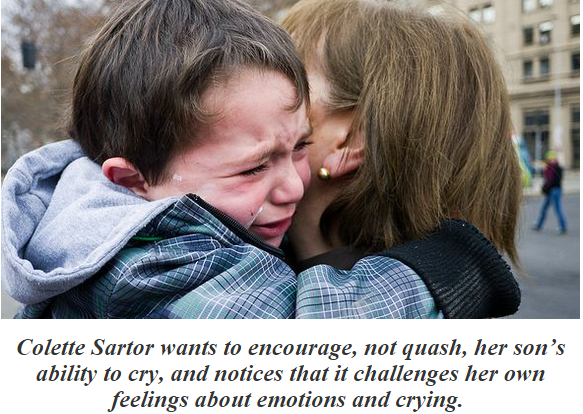
Here’s a wonderful article from The Good Men Project about a mother who is encouraging her young son to express his emotions instead of stuffing them. If only more parents encouraged this sort of thing, we’d live in a world with more empathy and less narcissism.
My son didn’t cry on his first day of preschool; he cried on his thirtieth. The school was a tiny, progressive place that took a surprisingly stern approach to drop offs: Say goodbye and leave. No looking back or lingering. This was fine by me. I hate to cry in public, and I knew I might, which would scare my three year old and make him cry.
So, that first day, I watched him cautiously pile blocks for a few minutes, then I told him I’d pick him up later, kissed him, and left for work. He barely glanced up. He was absorbed in the newness of everything: new kids, new toys, new sights and sounds and smells.
Every day that month, I repeated the routine. I’d briefly watch him play, kiss his cheek, and leave. Every day, I breathed easier. “He loves his new school,” I told people. How well adjusted he is! How happy! Yay him! Yay me! I thought. Then, on the thirtieth day, he raced to me with outstretched arms. “Mommy, stay!” he sobbed. I gathered him up, buried my face in the talc of his hair. “I’ll be back, honey, don’t worry,” I whispered before his teacher gestured to hand him over. He cried and reached for me, struggling to extricate himself from the teacher’s grasp. “Just go,” she mouthed over his head. I nodded and walked out, my own tears streaming as he sobbed behind me.
♦◊♦ When I was growing up, our family motto was, “If you want to play with the big dogs, don’t piss like a puppy.” Which meant no crying.
♦◊♦
My son cries easily. He gets it from me. I cry over life insurance commercials, sappy movies, real and imagined slights. I usually hide my tears, even from him. When I was growing up, our family motto was, “If you want to play with the big dogs, don’t piss like a puppy.” Girls were puppies by default. They showed the world when they hurt. They cried. To play with the big dogs, girls had to be tough. Which meant no crying. So I learned not to cry. At least, not in public. Still, I try not to discourage my son from crying. I love his sensitivity. I love that he cries when a friend is hurting, that he cries when he feels he’s being treated unjustly, that he cries at all.
In recent years, several emotions have been called out as unhealthy or maladaptive for human happiness. These emotions are worry, shame and guilt. In a narcissistic society where selfishness is held as a virtue, these three emotions are indeed maladaptive, especially shame and guilt. But shame and guilt keep us civilized. They keep us from doing bad things to others and they are the reason we have laws such as not murdering someone we don’t like. Shame and guilt (when appropriate, of course) have a pro-social function and are the inner brakes that keep us from hurting others or making restitution if we have. A car with no brakes is a dangerous thing. So is a human being. Shame and guilt are only “bad” when they’re excessive or unnecessary. But a person without the ability to ever feel shame and guilt is a sociopath with no conscience and without the ability to feel empathy for others, not a proper human being.
Worry is a different ball of wax. I can’t think of any good reasons for worry to exist. I’m one of those people who worry all the time, about everything. It’s not a fun emotion and is a huge damper to happiness. Worry is related to fear, but is a little different. Fear has its proper place. It keeps us from being harmed or killed. If we are walking in the woods and a bear blocks our path, it would be stupid to try to reason with the bear or fight it. We feel fear instead, which causes us to run or back away. If we meet a person who gives us the willies, fear is a natural response that keeps us from becoming that person’s victim. We learn to avoid that person. Fear is a survival emotion.
Worry is a kind of fear that isn’t set on the here and now. It’s set on what might happen in the future or sometimes what happened in the past. It causes a person to ruminate excessively and not be able to enjoy what’s taking place right then and there, because they’re too focused on nonexistent events or events that have already taken place and can’t be undone. If you worry constantly about losing your job, that will usually cause you to act less confident and make more mistakes and can even bring on the event you fear the most. If you worry your mate might leave you, your worry causes you to act clingy and possessive, and they could feel smothered and actually leave you. Worrying over things you have no control over is just, well, stupid.
Sometimes people worry about things that have already occurred too. If you snapped at your girlfriend for no reason, you might worry about that because you’re afraid they might leave you. Guilt–not worry–would be appropriate in a situation like this. Guilt will make you apologize to your girlfriend, after which you both feel relief. Worry will do nothing except make you obsess and ruminate over your mistake. Rather than act as an impetus to action or a motivation to correct your mistakes, worry over past events causes you to turn inward and beat yourself up without taking any action.
Some people are addicted to worry though, and go through life imagining the worst things imaginable. It’s impossible to be happy constantly believing the world is a dangerous place full of landmines and booby traps. I have no idea why so many people are addicted to worry, because it’s not a drug that has a pleasant high. It can even kill you because it causes excessive stress which is hard on your body and can lead to illness. I think worry was pounded into those of us who were victimized by narcissists because we lack confidence in our own ability to control the events in our lives. We believe we have no more control over things than a leaf blowing in the wind. But that’s another lie they tell us.
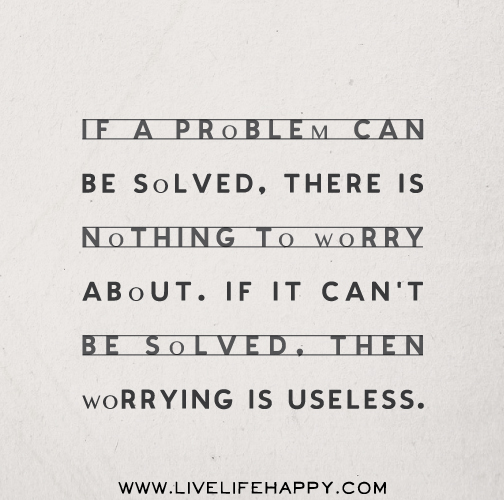
There are a couple of sayings I’ve heard about worry that sum it up pretty well and made me realize just how useless this emotion is.
1. Worrying about something is like paying interest on a debt you never owed.
2. Worry is useless because if the event you fear never happens, you lived through it for nothing; and if the event does happen, you lived through it twice.
I’ve been feeling quite strange the past week. It’s the worst I’ve felt in about a year. It started with feelings of anxiety and panic, racing and morbid thoughts and a feeling of unnamed dread. I’d try to nap and my heart would start racing so I’d give up. DBT skills didn’t work and some of my BPD (or PTSD) behaviors returned–negativistic behavior, feeling offended easily, sulking, fits of anger (not directed at anyone but expressed in imaginary conversations with myself in the car or at home), low frustration tolerance, paranoia. I’ve been less motivated to write. I’ve been neglecting housekeeping and eating right. Getting up in the morning is excruciating.
It was all I could do to make it through work. I was feeling sorry for myself all day and at the same time felt guilty for feeling that way. The anxiety has lessened but it’s been replaced by despair and some kind of deep sadness.
I don’t cry easily, but I started crying a few hours ago and couldn’t stop. It feels good to cry, but the feelings are so painful. I feel unworthy. I feel impotent. I feel angry at my parents for training me to be such a good little victim. I hate my ex. I hate myself. I suck at everything. I can’t relate to people. I hate people. I want to connect but I just can’t. I think people will hate me if I let them get too close. My world is so small and constrained and unsatisfying because of my fear of relating to others and reaching out, and because I never have enough money to do anything or go anywhere anyway. The summer’s slipping away and it reminds me of all the lost opportunities and all the doors that have slammed shut, never to reopen. That’s where my head is at. It’s a bad place to be. I feel like I’m losing control. It’s like a war inside my head. I hate all this wallowing in self pity but maybe it’s an opportunity to nurture myself.
I need to find a therapist. This blog is a wonderful tool for healing and it’s something I won’t let go of. It’s brought me a lot of joy. A lot of frustration too, but mostly joy. So I’ll keep blogging. I’d still rather do this than anything else.
But something, I don’t know what, has been triggered–by what I don’t know–and I’ve reached a point where just writing isn’t enough. I need someone to talk to who can help me sort out whatever’s going on in my head right now. I think journaling every day may have brought me to this point.
I’m not giving up. The good thing is that my emotions, while not really under my control at the moment, are there for me to feel. I’m not depressed in the apathetic, almost zombie-like way I used to get depressed when I was living with my narcissist ex. This is an active depression where my emotions are accessible to me and I can sort of name them and I just have to let myself feel them. I’m grateful for that at least. This is what I wanted. But what do I do with them? Can they make me a better, kinder, happier, more empathetic person? That’s what I really want. I need to find someone who can show me what to do with all these emotions.
I guess this means the honeymoon is over, and now the real work begins.
Last weekend I went to see the Pixar animated movie, “Inside Out,” and reviewed it in this article. In researching the article about positive thinking I just posted before this one, I saw an interesting New York Times article describing the science behind the five emotions in the movie, especially the important role that Sadness played in 11 year old Riley’s mind. The article states that our emotions, when working together in harmony, fuel rational thinking, rather than interfering with it. I think I agree. Rational thinking isn’t the absence of emotion. It’s when one or more of the emotions is sleeping on the job or overpowering the others that we become irrational.
FIVE years ago, the writer and director Pete Docter of Pixar reached out to us to talk over an idea for a film, one that would portray how emotions work inside a person’s head and at the same time shape a person’s outer life with other people. He wanted to do this all in the mind of an 11-year-old girl as she navigated a few difficult days in her life.
As scientists who have studied emotion for decades, we were delighted to be asked. We ended up serving as scientific consultants for the movie, “Inside Out,” which was recently released.
Our conversations with Mr. Docter and his team were generally about the science related to questions at the heart of the film: How do emotions govern the stream of consciousness? How do emotions color our memories of the past? What is the emotional life of an 11-year-old girl like? (Studies find that the experience of positive emotions begins to drop precipitously in frequency and intensity at that age.)
“Inside Out” is about how five emotions — personified as the characters Anger, Disgust, Fear, Sadness and Joy — grapple for control of the mind of an 11-year-old girl named Riley during the tumult of a move from Minnesota to San Francisco. (One of us suggested that the film include the full array of emotions now studied in science, but Mr. Docter rejected this idea for the simple reason that the story could handle only five or six characters.)
Riley’s personality is principally defined by Joy, and this is fitting with what we know scientifically. Studies find that our identities are defined by specific emotions, which shape how we perceive the world, how we express ourselves and the responses we evoke in others.
But the real star of the film is Sadness, for “Inside Out” is a film about loss and what people gain when guided by feelings of sadness. Riley loses friends and her home in her move from Minnesota. Even more poignantly, she has entered the preteen years, which entails a loss of childhood.
We do have some quibbles with the portrayal of sadness in “Inside Out.” Sadness is seen as a drag, a sluggish character that Joy literally has to drag around through Riley’s mind. In fact, studies find that sadness is associated with elevated physiological arousal, activating the body to respond to loss. And in the film, Sadness is frumpy and off-putting. More often in real life, one person’s sadness pulls other people in to comfort and help.
Those quibbles aside, however, the movie’s portrayal of sadness successfully dramatizes two central insights from the science of emotion.
First, emotions organize — rather than disrupt — rational thinking. Traditionally, in the history of Western thought, the prevailing view has been that emotions are enemies of rationality and disruptive of cooperative social relations.
But the truth is that emotions guide our perceptions of the world, our memories of the past and even our moral judgments of right and wrong, most typically in ways that enable effective responses to the current situation. For example, studies find that when we are angry we are acutely attuned to what is unfair, which helps animate actions that remedy injustice.
We see this in “Inside Out.” Sadness gradually takes control of Riley’s thought processes about the changes she is going through. This is most evident when Sadness adds blue hues to the images of Riley’s memories of her life in Minnesota. Scientific studies find that our current emotions shape what we remember of the past. This is a vital function of Sadness in the film: It guides Riley to recognize the changes she is going through and what she has lost, which sets the stage for her to develop new facets of her identity.
Second, emotions organize — rather than disrupt — our social lives. Studies have found, for example, that emotions structure (not just color) such disparate social interactions as attachment between parents and children, sibling conflicts, flirtations between young courters and negotiations between rivals.
Other studies find that it is anger (more so than a sense of political identity) that moves social collectives to protest and remedy injustice. Research that one of us has conducted has found that expressions of embarrassment trigger others to forgive when we’ve acted in ways that momentarily violate social norms.
This insight, too, is dramatized in the movie. You might be inclined to think of sadness as a state defined by inaction and passivity — the absence of any purposeful action. But in “Inside Out,” as in real life, sadness prompts people to unite in response to loss. We see this first in an angry outburst at the dinner table that causes Riley to storm upstairs to lie alone in a dark room, leaving her dad to wonder what to do.
And toward the end of the film, it is Sadness that leads Riley to reunite with her parents, involving forms of touch and emotional sounds called “vocal bursts” — which one of us has studied in the lab — that convey the profound delights of reunion.
“Inside Out” offers a new approach to sadness. Its central insight: Embrace sadness, let it unfold, engage patiently with a preteen’s emotional struggles. Sadness will clarify what has been lost (childhood) and move the family toward what is to be gained: the foundations of new identities, for children and parents alike.
Yesterday I decided to take myself to the movies for a change, and chose to see “Inside Out,” the Disney Pixar animated summer fantasy blockbuster.
Seeing “Inside Out” was a serendipitous choice, because I just happened to have enough money to afford a ticket (which is a rarity for me), and also because, although I didn’t know it right away, this movie has a beautiful message about the way Sadness and Joy, though seemingly polar opposites, when working together make human connection and unconditional love possible. Just as the light can’t exist without darkness, or good without evil, joy cannot exist without sadness. When working in sync with each other, these two emotions create a beautiful life affirming thing called Empathy, and that’s what connects us to each other and keeps the human race from becoming extinct.
Official Trailer
Sneak Preview–Teaser Clips
Riley Andersen is a young girl of 11 who becomes severely depressed after her parents’ decision to move from Minnesota to San Francisco. The movie begins at the moment of Riley’s birth in Minnesota, shown from Riley’s point of view. Her first Emotions (depicted as loveable anthropomorphized characters) are Joy (feeling secure in her parent’s love) and Sadness (when she needs something or feels ignored or in pain). As Riley grows into early toddlerhood, sometimes her needs and desires are thwarted and Anger takes over and she throws a tantrum. Around the same time she is also capable of feeling Fear or Disgust (both necessary for her survival), and it’s at those times those characters become dominant in Riley’s growing mind.
When the five Emotions work together in harmony, not overstepping each other’s boundaries and only doing the jobs assigned to them, this teamwork manifests in Riley as a well-adjusted little girl able to feel all her emotions at the appropriate times.
The five Emotions work in Headquarters, which is the conscious part of Riley’s young mind. Joy is responsible for making sure Riley’s short term memories are sent to Long Term Memory deep in Riley’s subconscious. Her memories are depicted as glowing colored orbs containing a ghostly image of the actual memory. The color of the orbs represent the dominant Emotion Riley felt at the time of the event. Transporting Short Term memories into Long Term Memory happens during Dream Production as Riley sleeps, and sometimes the other Emotions are needed to help Joy do her job getting the memories there (and sometimes discarding certain irrelevant or painful ones.) Occasionally the other Emotions (as well as Riley’s imaginary childhood friend, Bing Bong, who is a jokester) like to play little jokes–and certain irrelevant memories like an annoying gum commercial jingle are sent to Long Term Memory along with the important memories, which causes Riley to occasionally hear the gum jingle in her head at random times years later.
At the center of Headquarters is the vault which contains Riley’s Core Memories–important but happy long term memories that are responsible for Riley’s happy go lucky personality. The orbs that represent these are colored gold (Joy’s color) and for Riley’s continued mental health, these core memories must not be contaminated by the other Emotions, which is why they are kept locked in a vault. Each of the Core Memories has a long glowing tube that leads to one of Riley’s Five Islands of Personality: Family, Goofiness, Hockey (which she loves to play), Friendship, and Honesty. Maintaining these islands is necessary for Riley’s continued normal psychological development.
The crisis in Riley’s mind is set off when her family moves from her beloved Minnesota to San Francisco. Moving away is always a traumatic event for even the most loved child. Feeling isolated from her old friends and lonely in a place she doesn’t know, Riley’s Emotions begin to make mistakes and not work in sync. Joy and the other Emotions have never been sure of Sadness’s purpose because she just seems to be a Debbie Downer who is always in the way and always making mistakes. It’s Joy’s job to keep Riley’s happiness intact, but one day shortly after the traumatic move, Sadness goes around touching Riley’s happy memories, turning them blue (sad). Joy frantically tries to undo the damage but the memories already touched cannot be repaired. Desperate, Joy tries to isolate Sadness to prevent her from doing any more damage.
On Riley’s first day at her new school, Sadness takes over and Riley begins to cry in class, which creates a new but painful core memory. Joy frantically tries to keep this new core memory from reaching the central vault, but in her struggle with Sadness, who seems to keep contaminating more memories, she accidentally knocks out some of Riley’s untouched happy core memories, which fall off into the abyss. These memories are almost impossible to retrieve once lost to Riley’s Unconscious. Worse yet, both Joy and Sadness are sucked through the Long Term Memory Tube themselves, and are both lost deep in Riley’s vast and labyrinthine Unconscious.
During Joy and Sadness’s absence, Anger, Fear and Disgust attempt to run Headquarters in their place and make a holy mess of things. They attempt to provide “joy” but of course it’s faked now, rather than genuine. Sadness too is absent, so Riley can no longer longer cry or even feel grief over her loss. Anger, Fear and Disgust manifest in Riley’s new insolent and angry attitude toward her parents and loss of interest in the things she used to love. With the core memories now missing or contaminated, one by one the Five Islands of Personality crumble and fall into the abyss of the Memory Dump, a place deep in Riley’s mind where old memories are forgotten. The first Island to crumble into oblivion is Goofiness (Riley’s sense of humor), followed by Hockey (which she quits), and then Friendship (she no longer has any desire to make new friends).
Joy and Sadness find themselves adrift after falling through the Long Term Memory tube deep into Riley’s unconscious mind.
Desperate, Anger decides to insert in Riley’s mind the idea to run back to Minnesota. He plugs this into the Control Console, in the belief this can produce new happy memories. This requires Riley to steal money from her mother’s purse in order to fund her trip back to Minnesota, and then she lies about the theft. As a result, the second to last Island left, Honesty, falls away in ruins into the Memory Dump.
Back in the abyss of Riley’s deep Unconscious, Joy and Sadness run into Bing Bong, Riley’s long forgotten childhood imaginary friend. Bing Bong wants to reconnect with Riley, so he tells Joy and Sadness they can all get back to Headquarters by riding the Train of Thought. After a series of failed attempts, they eventually catch the train, but it becomes derailed when the last personality island, Family, falls into the Dump.
At this point, giving any more away would be spoiling the plot, but gradually Joy and Sadness, who have always been at odds with each other, realize that in order for Riley to return to her normal happy state of mind, they must work together as a team and Sadness has the biggest job of all. Riley must be able to experience–and receive–empathy and love (which comprise both joy and sadness) to heal from her near-catatonic depression.
As a blogger about narcissism and personality disorders, I see Riley at this point in grave danger of suicide or developing a personality disorder, even NPD or BPD. Her trauma-induced depression has caused her to become apathetic and unable to feel anything at all. What happens next is so magical and touched me so deeply I sat there in the darkened theater with tears running unchecked down my face and my nose running. I wasn’t alone–I heard sniffles and nose blowing all over the theater, and there’s a safety and sense of connection with total strangers that comes from that, and that’s why going to see a good movie never gets old. There’s something wonderfully liberating about being able to cry in a public place yet unseen by others and unjudged for it because everyone else is crying too. I think that’s why “heartstring tugging” movies are so popular. But the emotions elicited in “Inside Out” feel real–there’s no sappiness or fake sentimentality in this film that make you feel manipulated by the producers.
The five Islands of Personality.
But for all its poignancy, “Inside Out” has plenty of humor too, and all the jokes are clever and well timed. At times during the movie I was both laughing and crying at the same time. The Five Emotions are all funny characters with their own unique charm. Even Anger is loveable and hilarious in his own irascible way, and the Tinker-Bell like Joy, who could have been incredibly annoying for all her upbeat perkiness, has a depth you don’t expect and over time you realize she is the only Emotion who can feel all the other Emotions. I pictured Joy and Sadness as really being the same person–the two sides of Riley’s True Self–and when they were lost in Riley’s memory dump, Riley’s behavior became quite narcissistic. It wasn’t lost on me that both Joy’s hair color and her “aura” are colored blue–Sadness’ color.
Pete Doctor, the film’s director and screenwriter, was inspired to develop “Inside Out” while trying to come to terms with his own daughter’s psychological changes and mood swings as she approached adolescence. To give the complex psychological concepts presented credibility, well-known developmental psychologists were consulted during pre-production. It’s obvious that a deep knowledge of the way the human mind works fueled both the story and the landscape of Riley’s mind. Kids will adore “Inside Out” because of its lovable characters, fantastic animation, humor, its engaging story about a regular girl, and impressive special effects. In the theater I saw it in, there were plenty of children there, and all of them were rapt in the story.
But adults will love it just as much because of the movie’s deep message of Empathy being born from pain and loss, and the necessity of “negative” emotions to exist in a healthy person’s psyche, working in tandem with “positive” ones. Understanding the movie at this level requires an ability to think in an abstract way about the mechanisms behind personality development and psychological disorders. “Inside Out” is a rare movie that celebrates the human ability to feel, and to love, cry, connect, and laugh. It tells kids that all their emotions are okay, and experiencing them is normal and just part of growing up.
Parents, if you have children ages 4 to early teens, please take them to see “Inside Out.” Both you and they will leave the theater feeling great, and the ideas presented in the story can open up honest discussion about emotions between parents and their children. I’d even go so far as to suggest teachers show this movie to their students, and engage them in discussion afterwards.
I find it encouraging and heartening that such an honest and touching movie with a positive message about genuine emotions and empathy has become the hit of the summer, instead of the usual mindless dreck that passes for summer blockbusters.
“Inside Out” is rated PG. I would not recommend it for children age 3 and younger, due to several quite scary moments that could give a young child nightmares.
Riley with her concerned parents at the dinner table.
“Inside Out” is a 2015 American 3D computer-animated comedy-drama film produced by Pixar Animation Studios and released by Walt Disney Pictures. Directed and co-written by Pete Docter, the film is set in the mind of a young girl, Riley Andersen (Kaitlyn Dias), where five personified emotions—Joy (Amy Poehler), Anger (Lewis Black), Disgust (Mindy Kaling), Fear (Bill Hader), and Sadness (Phyllis Smith)—try to lead her through life as she moves with her parents (Diane Lane and Kyle MacLachlan) to a new city. The film was co-directed and co-written by Ronnie del Carmen and produced by Jonas Rivera, with music composed by Michael Giacchino.
Docter first began developing Inside Out in 2009 after noticing changes in his daughter’s personality as she grew older. The film’s producers consulted numerous psychologists, including Dacher Keltner[6] from the University of California, Berkeley, who helped revise the story emphasizing the neuropsychological findings that human emotions are mirrored in interpersonal relationships and can be significantly moderated by them.
After premiering at the 68th Cannes Film Festival in May, Inside Out was released on June 19, 2015. It received universal critical acclaim, with many film critics praising the voice performances (particularly for Poehler, Smith, and Richard Kind), its concept and poignant subject matter. The film grossed $90.4 million in its first weekend—the highest opening for an original title, besting Avatar ’s previous record.
WARNING: THIS ARTICLE MAY BE TRIGGERING.
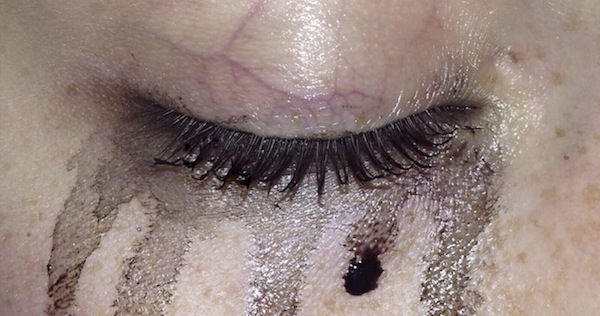
I spent the first 13 years of my life almost constantly crying. I was a perpetually squalling cranky baby, a screaming tantrum-throwing toddler, a tearful preschooler, and a school child prone to attacks of uncontrolled crying in public places and embarrassing situations. During my teen years, my crying was downgraded to near-constant sulking and negativity. Tears came mostly when I was angry or frustrated by the time puberty hit. Rage frequently accompanied the tears, or maybe it worked the other way around.
I had the curse of the blonde and fair skinned, so my emotions showed on my face in neon reds and pinks against the white background of my skin. I blushed easily and that was embarrassing enough. I could feel the blood rising up my neck like a sudden wave of heat and my ears would start to burn. My bullies picked on my tendency to blush and would deliberately embarrass or humiliate me to see my ghostly pale face turn as red as a fire engine. If it went on long enough, my lips would start to quiver and there would be tears, and that’s what they were really waiting for–to see me cry.
The crying was awful. I wasn’t a pretty crier; in fact I was ugly when I cried. My skin would turn into a mottled red and pink that looked like a bad case of rosacea, my nose ran like a faucet and turned so red it was nearly purple, and my eyelids turned bright red too and swelled up as if they were bee-stung. It would take hours for these facial giveaways of my pathetic vulnerability to finally disappear.
I had a great deal of difficulty controlling all the intense and confusing emotions that seemed to crash over me like tidal waves when I least expected it. These feelings were just too big for me to handle, and I was so easily overwhelmed by them and had trouble soothing myself (this is an early indicator of BPD and other disorders like PTSD). Whenever I cried I thought I would never stop. No one could calm me down. My emotions were a force of nature too powerful to be tamed. When I wasn’t crying, I felt a constant dull ache in my chest (heart area) and congestion in my throat. Even that early, I knew crying would relieve the tightness and pain, but the crying was like vomiting and sometimes as painful because the intense waves of emotion plowed through me like an out of control bulldozer.
Raised by a narcissistic mother and enabling (possibly low spectrum or covert narcissist) dad, I became the the family scapegoat (made even more crazymaking by the fact that as an “only” in their marriage, I also sometimes served as Golden Child). I was either held on a pedestal that far exceeded my actual abilities/beauty/intelligence/whatever, but most of the time I WAS NEVER GOOD ENOUGH FOR THEM. I questioned myself and everything I did; it seemed I could do nothing right. I wasn’t allowed to do things for myself or speak my mind. I felt awkward and defective in my family and everywhere else too.
Not long after I started elementary school the bullying started. I was the class crybaby and kids always target the kid who cries the most or seems the most vulnerable. I had no defenses at all; I had never been taught any and lacked the confidence to stand up for myself. Things got especially bad in 3rd – 5th grades. During 4th grade, I was followed home every day by a group of kids who laughed and jeered at the way I walked and imitated my walk, as my tears welled and threatened to overflow (no wonder I hate mimes). The bullies would call out to me and sometimes even throw things to get my attention, but I wouldn’t turn around. I just kept on walking. I knew I couldn’t let them see the tears streaming down my face because that would make everything so much worse.
My third grade teacher, Mrs. Morse, was a psychopath with arms like Jello who always wore sleeveless dresses, so whenever she wrote on the board, all that quivering, pale freckled flab hanging from her bare arm made me want to throw up, but I still couldn’t take my eyes off it. It was mesmerizing in a horrible way, like a car accident.
Mrs. Morse knew how sensitive and scared of everything I was. She knew I was bullied by most of the other kids. But she had no empathy for my plight. She was a sadistic bitch straight from the pit of hell. She deliberately called on me whenever I was daydreaming, which was often (no kids got diagnosed with Aspergers back in those days and the idea of “attachment disorders” that lead to later personality disorders was an afterthought in those days), then she would make me stand in the front of the room and answer a question or solve a math problem while she glowered at me like wolf about to pounce and kill their prey. She never did this to the other kids, who were allowed to answer questions from their seat. She deliberately tried to humiliate me, because she knew she would get a reaction.
One time I couldn’t solve the math problem on the board (which was my worst subject), and she berated and belittled me in front of the class.
“You never pay attention. You’re always daydreaming. Do you have a mental problem?”
The class laughed.
My tongue was in knots and I felt the blood drain from my face. I felt tears burning the backs of my eyelids like acid.
I swallowed hard and tried with all my might not to let a tear loose but they started to flow anyway. I hung my head in shame and rubbed away the tears with my grubby fists as I turned away toward the wall. My narrow back and bony shoulders heaved with silent sobs.
That was exactly the moment this sadistic malignant narcissist who passed for a teacher was waiting for.
“Look everyone! Lauren is crying! Look at the tears! Cry, cry, cry, baby.”
The class burst into screams and hoots of laughter.
“Cry, baby, cry!”
I stood there in front of the class, staring at the floor, snot mingling with my tears, and longed to melt into those scuffed green-gray linoleum tiles, and never return.
In today’s anti-bullying environment, this “teacher” would have been fired for that shit. She might have even lost her teaching license. That kind of thing isn’t put up with anymore.
Later that year, there was a similar blackboard incident. This time, I was stood in front of the room and told I looked like an albino rabbit when I cried. (I actually did, due to my fairness and my slight overbite.) I was mortified as this unbelievable cruel bitch encouraged the entire class to laugh at my pain and humiliation. I ran out of the room and fled to the library sobbing. The librarian was a sweet and very young woman (probably just out of college) who actually liked me and knew about my love for books. That library was my refuse and the librarian was my friend who understood me. This time, she saw me rushing in like that and held her arms out to me as I crashed into her and sobbed into her warm fragrant neck. We stayed like that for a long time, until Mrs. Morse (accompanied by one of her 9 year old flunkies) came marching in looking for me. Mrs. Morse grabbed me roughly by the arm and marched me back to the pits of hell she called a classroom. Sadly, I looked back at my librarian angel and saw the wetness on her face and her sad little wave.
She knew, and I knew she knew. I’ve never forgotten her. Sometimes in my fantasies I still see her waving at me with that sad tearful smile, and that image gives me comfort and strength.
I think my years of uncontrollable emotional displays came to an end when I was 15. They had already been abating somewhat, replaced with rage and anger, but I had trouble controlling my anger and constant dark moods, even though I wasn’t crying as much. I started to drink and do self-destructive things. I started “talking tough” but inside I still felt anything but.
The year before, when I was 14, my parents divorced and I was taken to live with my mother in the city. She loved it; I hated it back then. We fought all the time, mostly because of her self involvement. My grades slipped and I never did my homework. I was depressed all the time and cared about nothing. When I cried (which was still often) I usually did it alone. The other kids at school didn’t like me. I was never invited to parties, always last picked for softball. I felt intimidated and shy all the time, but I still tried hard to make friends–a little too hard. I fit into no clique (I have never fit into any clique) but there was a group of girls low in the high school pecking order consisting of the geeks and quiet, studious girls. They seemed welcoming enough at first. I saw their small (or more likely, polite) displays of acceptance and wanted so badly to believe they actually LIKED me that I guess I started following them around like a needy puppy.
I noticed after awhile they avoided me too, and my “birthday corsage” box was proof of my unpopularity, because it was not signed by all the girls and when it was signed, it was just a name. No long flowery messages, no in-jokes, no high-school risque comments, no “you are such a great friend” or “Love ya, Lauren. XXXXOOOOOO” Just…signatures and an occasional terse “Happy Birthday.”
My fears were confirmed later that day. After weeks of avoiding me, the group of nerdy girls approached me and told me they wanted to take me out to a restaurant for my birthday after school. Wanting so much for them to like me I remember grinning like a fool and nodding like the needy puppy I was. Inside I was a little suspicious, but dammit, I wanted to believe them! Maybe their ignoring me had just been my overactive, “oversensitive” imagination after all, and they really did care. Why else would they want to spend time with me on my birthday?
At the restaurant I was picking up a certain tension. The girls kept looking at each other worriedly and wouldn’t look me in the eye. As I ate, I watched their anxious faces. Something was up, and it wasn’t good. I felt like I was going to throw up. I spoke to no one.
Finally, Harriet, the leader of that clique told me she needed to talk to me–privately. I felt like I was on my way to the principal’s office for some transgression. My heart pounded in my throat and I felt tears burn the backs of my eyelids, but I didn’t cry. I bit my lip until it bled and tried to just breathe through my terror.
Outside, she smiled at me sympathetically. Then went on to tell me the real reason they had planned to take me to lunch was because they didn’t want me to hang around with them anymore and didn’t have the opportunity to tell me at school. She actually got tears in her eyes when she said this, and then told me she hoped my feelings hadn’t been hurt. Um…hello? But all I could do was stand there staring at her as if I was cognitively challenged. For the first time ever, I felt emotionally numb. I didn’t realize at the time that would soon become my new way of coping with my pain.
I was traumatized by that rejection. I spent the next two days in bed. I felt sick and couldn’t go to school. I told no one what happened because the shame was too great. I didn’t cry; I couldn’t anymore. I just wanted to sleep forever and maybe die.
After that I couldn’t cry anymore. At least not in most situations that call for it. I had and still have trouble accessing my emotions. It was too scary to let them out, because when I did, bad things happened. It scares me to realize I might have easily become a narcissist, splitting off from all soft emotions, even empathy and guilt. Many narcissists started life this way too, without natural defenses.
I know now whenever I feel that painful tightness in my chest and throat, that means I need to cry. I’m not afraid of it anymore. I want to retrieve my long-ago ability to feel intensely connected to my emotions, because used properly, being an HSP is a gift and a blessing. The big difference will be that I’ll be able to let emotions pass through me freely and be able to express them without shame and without allowing them to overwhelm me or control me.
If you were a survivor of a narcissistic family (or were otherwise a victim of narcissistic abuse), as I was, you were probably told your emotions were not okay. Instead you were told to stuff them and hide the way you really felt from the world. Unfortunately that’s the same philosophy modern society holds in general, and of course narcissists stuff all their feelings all the time, except rage. It can get so bad you reach a point where you tell yourself you’re bad for even having feelings or being upset when someone hurts you.
Several months back, I wrote an article about the way some proponents of positive thinking use it as a way to deny their own true feelings or use it to invalidate the emotions of others. Used this way, positive thinking can become a form of abuse or self-abuse. Of course, there’s nothing wrong with being a positive person, but there’s something very off about someone who walks around wearing a fake smile pasted on all the time and insists we must always do the same. Ironically, these “positive thinking nazis” instill a sense of guilt and shame.
Back in the early ’90s, “Saturday Night Live” did a mock self-help show called “Daily Affirmation With Stuart Smalley.” Stuart Smalley was a spoof on individuals who were obsessed with 12-step programs and who had become addicted to the act of going to therapy. Smalley ended each show by looking into a mirror and saying, “I’m good enough, I’m smart enough, and doggone it, people like me!” The skit was hilarious because Smalley was the personification of vanity, self-indulgence and narcissism — traits often used to describe our culture.
To counteract our self-absorbed culture, many Christians have gone the opposite direction. Worm Theology is based on Psalm 22:6: “I am a worm, and not a man…” or the line in the Isaac Watts hymn “Alas! and Did My Saviour Bleed,” which says, “Would He devote that sacred head for such a worm as I?” Worm Theology is a belief within Christianity that a feeling of worthlessness and expression of low self-esteem means God is more likely to show mercy and compassion.
Instead of debating the merits of this belief system, I want to focus on what I see as a natural consequence to a low view of self in our Christian culture today: a lack of self-compassion. Sadly, I even noticed this in my own house last night with my 14-year-old daughter.
My family recently relocated from Northwest Arkansas to Colorado Springs. No cross-country move is ever easy, but it’s been especially hard on my daughter Maddy. Last night I lay on the floor of Maddy’s room as she cried about feeling like no one really understands her feelings. It broke my heart to hear how alone she feels — that no one understands what she is going through. Thus, she felt that she has no one to share how she really feels. In the end, she ultimately got tough with herself and expressed that she should be over these feelings, that her feelings were wrong and that she was stupid for getting so emotional.
I so wanted to jump in and correct her, “Your feelings are not stupid!” but I didn’t. I wanted to tell her that God cares about her emotions (which He does), but I refrained. I was tempted to recue her by telling her that I care (which I do), but I stopped myself. What an insensitive father, some might think. I didn’t jump in to rescue my daughter because I want her to learn something that most Christian adults don’t get: Their feelings matter!
Beautiful song with a destructive message.
But sadly, for so many people, their emotions usually don’t matter. I watch time and again, when counseling with people, that they constantly judge, belittle, criticize, demean, minimize and marginalize their emotions. It’s like there’s this Christian belief that we must never wallow in our emotions. It’s like people are afraid they’ll become self-indulgent or vain (like Stuart Smalley) if they have compassion around their feelings. They believe self-criticism is what keeps them in line. Most people have gotten it wrong because our culture says being hard on your self is the way to be. It’s like the ’70s song by Melissa Manchester that had the lyrics, “Don’t cry out loud. Just keep it inside and learn how to hide your feelings.” Listen to some of the messages that are out there about our emotions:
Real men don’t cry.
You’re just being a drama queen.
Play through the pain.
It’s just that time of the month.
You shouldn’t feel that way!
That’s not how you really feel!
Why do you get so emotional?
Both men and women have learned these messages well, and the tragic consequence is that most people have no idea how to validate their own emotions. Since birth, most of us have had our feelings so massively invalidated that we don’t know how to care for our emotions. Instead of valuing our feelings as a great source of information, we stuff them, ignore them or judge them away. Thus, the hope for our relationships is that we will find that perfect someone who will finally care about and validate how we feel. Although we don’t do it, the fantasy is that our friend, significant other or spouse will value our emotions. Great plan, right?
I believe one of the greatest gifts we can give our self is the gift of compassion. When we are upset, frustrated, fearful or hurting (like Maddy) we should be the first one in line to care about how we feel. Why should I expect someone else to care about my heart and emotions if I don’t do that job first and foremost? The question we should be asking ourselves is do we treat our self as well as we treat our friends and family? We are often gentle, kind, compassionate and empathic with others. However, a new research study on self-compassion found that people who find it easy to support and understand others, it turns out, often score surprisingly low on self-compassion tests, berating themselves for negative emotions and perceived failures like being overweight or not exercising. The research suggests that giving us a break and validating our feelings and imperfections may be the first step toward better health. People who score high on tests of self-compassion have less depression and anxiety, and tend to be happier and more optimistic.
The more you seal yourself from your emotions, the more isolated and disconnected you feel. While you can suppress and repress your feelings, you cannot get rid of them. You always bury emotions alive. At some point they will always come out, but then they usually come exploding out like a volcanic eruption. The only way to make peace with our emotions is to value them, face them, explore them, understand them and then take them to the Lord. “Cast all your anxiety on him because he cares for you” (1 Peter 5:7). Suppression takes an incredible amount of energy — energy which is constantly being tapped to maintain a wall of protection around your heart.
The bottom line is that your emotions are incredibly valuable. Not in a way that suggests we should all indulge in emotional bliss, holding hands while singing “Kumbaya” like Stuart Smalley. Give yourself the gift of compassion around your feelings — after all, your emotions are the voice of the heart.
What do you do when you are fearful, frustrated, upset or hurting? Are you good at self-compassion, or do you stuff, ignore and judge your feelings?
Scientists have long debated what exactly makes us who we are. Are our qualities more influenced by our social environment, or are we naturally inclined to be a certain way? Or — to complicate things even further — does our environment affect the way these natural tendencies display themselves?
Well, when it comes to the reasons why we do the things we do, the most complicated answer is usually the correct one.
In recent decades, the government has spent billions of dollars on gene research with the goal of trying to explain how the genes we were born with express themselves in our everyday lives.
Psychologists are optimistic — though cautiously — these advancements in gene research will help us understand ourselves better.
We haven’t even scratched the surface of the full potential of genetic research, but what we have seen so far looks promising.
One human quality that genetics has attempted to help explain is sensitivity. People who are highly sensitive tend to respond more emotionally to their environments.
They are more inclined to cry during sad movies, jump to use social media to share something that moved them and feel heightened levels of sympathy for poor people and their friends who just got dumped.
Most notably, they are also more inclined to have a negative attention bias, which means they focus more on the negative things in their environment than the positive things.
This bias causes sensitive people great anxiety, especially if the environment they’re responding to is new.
Where do these traits come from? Why are some people more likely than others to respond more powerfully to their environment? In other words, why are some people so damn sensitive?
If this sounds like you, fear not: It turns out the answers to those questions do, indeed, have something to do with the way you were born.
Researchers from the University of California, Monmouth University and the Albert Einstein College of Medicine found that being sensitive is an innate trait that’s identifiable by physiological reactions, patterns of brain behavior and genes.
In their study, 18 participants viewed photos of either frowning or smiling faces. The researchers then scanned the participants’ brain activity while they looked at the photos to assess how emotional their responses were.
They found that people, who were considered to have sensory processing sensitivity (SPS) had greater blood flow to areas of the brain involved with emotion, awareness and empathy — indicating physical evidence of the presence of the sensitivity trait. This occurred regardless of whether they were looking at the sad or happy photo.
Another 2012 study examined biological proof of sensitivity even further. In the study, researchers Rachael Grazioplene, Colin DeYoung, Fred Rogosch and Dante Cicchetti studied the cholinergic system, a system in our bodies that determines how we respond to new environments and how sensitive we are to stimuli.
The cholinergic system becomes activated when we experience “expected uncertainty,” which happens when we’re placed in situations where we predict we will learn something new.
For example, when you were a freshman in college, you probably knew you’d be confronted with new experiences.
You experienced those feelings of “expected uncertainty” — of not knowing who your friends would be, what you wanted to major in, what clubs you wanted to join, how you would handle living away from home and so on.
Some of your peers might have perceived those new experiences as anxiety-inducing, meaning they would have proceeded with caution. Others might have seen them as intriguing, causing them to have been more inclined to explore.
The way both of these groups of people responded to those new environments was influenced by genetic variants in their cholinergic systems.
In her study, Grazioplene and her colleagues studied variations in the CHRNA4 gene, a key cholinergic receptor and determinant of whether you see the aforementioned kinds of “expected uncertainty” as threatening or exciting.
It wouldn’t be enough to say this genetic variant was the sole determinant, though, so the study also examined how, in conjunction with the variation in the CHRNA4 gene, an individual’s upbringing and social environment affected how he or she perceived uncertainty.
To study the functions of this variation, the researchers set up a week-long camp for 614 children, ages 8 through 13, all of whom came from the same socioeconomic background, but had different upbringings: Half of the children had an upbringing in which they had been maltreated with neglect or emotional, sexual or physical abuse, and the other half had an upbringing in which they had not been maltreated.
The children with the genetic variation who grew up in an abusive environment were more likely to perceive the new camp environment as threatening, and the children with the same genetic variation who had grown up in a normal environment were more likely to perceive the new environment as intriguing. Even more interestingly, these results were true regardless of age, sex or race.
Now, what does this mean? It means that, yes, there is certainly a genetic variant that makes you more inclined to be anxious or curious in new environments, but your upbringing and social environment play a role in determining which one of those two it will be.
And while this specific genetic variant is rare — only one percent of the population actually have it — it gives valuable insight into the way psychologists and scientists study behavioral patterns in relation to both genetics and environment.
So, if you’ve sobbed during “The Notebook,” impulsively shared a video on Facebook of a kitten rolling around in a patch of grass that made you tear up or found yourself crying with your best friend when her boyfriend dumped her, take comfort in the fact that you were probably born this way — feels and all.
Alexia LaFata is a Writer covering culture and lifestyle for Elite Daily. She’s a proud New Jersey native and soon-to-be Boston College graduate, and her work is featured on Thought Catalog and VentureBeat. Stalk her at alexialafata.com.












 Lucky Otters Haven