I’m only 6 years old.

Therapy was more productive tonight…

Five types of gaslighting narcissists.

Gaslight-2

I haven’t written an original narcissism article in awhile, and I was thinking about gaslighting today, so I thought I’d write a post about it.

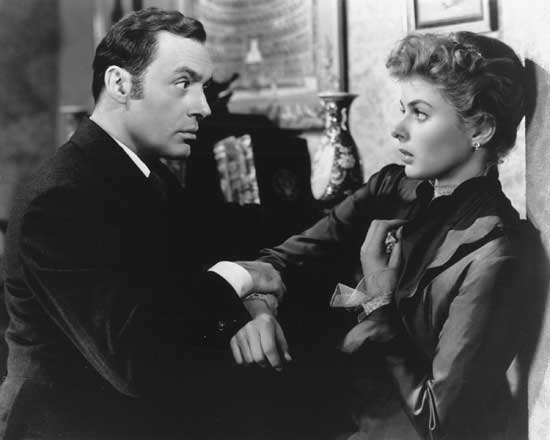
Gaslighting is a defense mechanism commonly used by narcissists in order to diminish their victims and make them doubt and question their own reality.  The term comes from the 1942 movie “Gaslight,” in which a young wife is abused in this manner by her husband, who almost succeeds in driving her insane by telling her she is imagining the gaslights in their house going on and off, even though he has been secretly playing with the gaslights himself to make her think she’s going insane.  Gaslighting is one of the most sinister and crazymaking things a narcissist can do, and over time your self esteem and even your grip on what is real and what isn’t begins to erode.   Dealing with a gaslighting narcissist is like looking into an endless hall of mirrors.  It’s common for victims of such mindf*ckery to develop PTSD or complex PTSD.

Here are five common types of gaslighters, with examples that show what these darlings do to make us feel like we’re going crazy.

1.  The “You’re Insane” gaslighter.

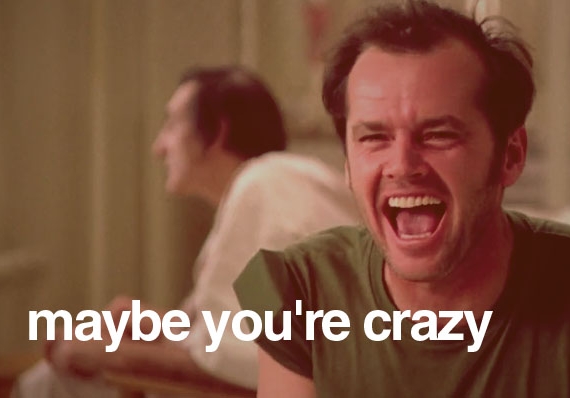
maybe_your_crazy

This type of gaslighter, when confronted with the truth about their disgusting and unacceptable behavior, accuses you of insanity, stupidity, or (in the case of women) your terrible PMS (gaslighting with a little misogyny thrown in for good measure).

You:  I don’t think you should have told all our friends that you think I’m cheating on you, especially because I’m not.

Gaslighter:  You’re imagining things as usual.  Have you taken your meds today?

You:  I hate it when you use that tone of voice.

Gaslighter:  Oh, please, not this again.   You must be on your period.


2. The “I never said that” gaslighter:

never_said_that

This type of narcissist is so far into their lies and denial he/she would sell you down that river in Egypt.

You:  Why did you tell my mother I can’t keep a job?

Gaslighter:   I never said that.  This may be followed by a “you’re insane” elaboration to drive home their case that you’re the deluded one.

You: You promised me I could have some money to buy the kids new school clothes.

Gaslighter:  No, I never agreed to that.  I told you I don’t have the money.  What part of “I don’t have the money” did you not understand?


3.  The “Everyone’s Against You” gaslighter:

nobody_likes_you

This  is an especially mindfucking type of gaslighting, in which the narcissist draws other people into their attack on you, which may in fact not be the case but they can definitely convince you no one is on your side.  If actual flying monkeys are being used, then a different tactic, triangulation, has become part of their arsenal of weapons they use against you.

You:  Why do you always talk to me like you hate me?

Gaslighter:  That’s just your overactive imagination again, but to be honest, I was talking to [names of friends, associates, or family members] the other day, and they all told me they think you’re very difficult to be around [or insane, stupid, etc], so put that in your pipe and smoke it.

This type of abuse can also be very subtle:

You:  You are driving me crazy!

Gaslighter:  Well, I wasn’t going to tell you this, but [name of friend, family member or associate] and I were talking, and we are all very concerned about you (“I’m/we’re concerned” is narc-ese for “I/we think you’re batshit crazy.”)

This next type of gaslighter is probably the most infamous and well known to most narcissistic abuse survivors:

4. The “You’re Too Sensitive” Gaslighter:

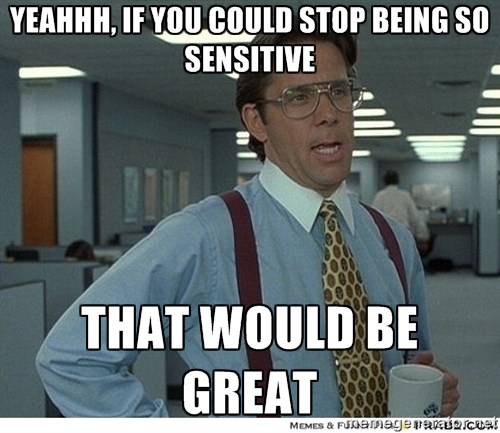
your_too_sensitive

Narcissists love to call out the sensitivity of their victims as if it’s a character defect (and if we were raised by narcissists, we have probably learned to hate and be ashamed of our high sensitivity).   It’s true that many abuse victims are highly sensitive, in fact some of us are HSPs.  Narcissists are drawn to sensitive people because of their high empathy and tendency to become codependent and thereby good sources of narcissistic supply.   At the same time they need us, they also hate and envy those qualities they seem to be so attracted to, and don’t miss an opportunity to take hurtful potshots.  Even if they do or say something that would even hurt the feelings of someone as coolheaded as Star Trek’s Mr. Spock, they somehow make it your fault if you’re bothered by it because you’re just too damned sensitive.”  It’s really just a variation of the “you’re crazy” tactic.

You:  I wish you’d talk to me more respectfully when we’re out in public.

Gaslighter (dramatically rolling eyes):   I do talk to you respectfully (lie).  Your oversensitivity is really getting tiresome.


5.  The “I Was Just Joking” Gaslighter.

cant_take_a_joke

Similar to the “You’re Too Sensitive” gaslighter, this one calls your sense of humor (or lack thereof) into question, even when their “joke” is clearly anything but.

Gaslighter: That dress makes you look fat.

You: (looking hurt):  It does? But I’ve been trying to lose weight for you.

Gaslighter:  Jesus, don’t you have any sense of humor?  You can never take a joke.

To rub salt in the wound, they might even toss a little “Everyone’s Against You” into the mix and say something like, “Maybe it’s because you can’t laugh at anything that no one really likes you.”

There’s one more type of gaslighter that’s incredibly dangerous because they manipulate reality itself and then tell you there’s something wrong with you because you noticed.  The abusive husband in “Gaslight” illustrates this well, by manipulating things around the house and then telling his wife she’s unbalanced and imagining things.   This was a favorite technique of my ex, who often deliberately misplaced things I needed, such as my car keys, then when I wasn’t looking, he’d return them to their rightful place and chided me for being “careless.”   He did this for shitz and giggles.

When you’re dealing with a gaslighting narcissist, nothing you do or say is ever right.  They always have to have the upper hand and they always have to make you feel about 3 inches tall, because that’s the only way they know how to keep you weak and in your place so they can continue to prey on you for supply.  They do this because their own egos are so fragile they need to put you down in order to make themselves feel better.    He or she isn’t going to change.   Arguing isn’t going to help, it will only make things worse.  The best way to handle a gaslighting narcissist is to leave and never look back.

Sensitive Children and the Adult Child in the Abusive Narcissistic Home

Excellent article about the devastating effect narcissistic parents have on the most sensitive children in the family and why they tend to become scapegoats. They grow up into codependent adults prone to repeat the same toxic patterns with others. But this doesn’t have to be a life sentence. Read on.

1solutionfocusedcoaching's avatarSITE FOR CREATIVE SOLUTIONS

flute-player-h7x

In a home affected with an abusive narcissistic parent emotions are repressed and become twisted.  Rules are built on shame, guilt, or fear.  Feelings are often not shared and when they are expressed, it is done in a judgmental manner placing blame on one another.  The narcissistic parent is self-involved and feels no empathy for their children.  They are incapable of mirroring real love and try to get their children to fulfill their unmet dependency needs.  The narcissistic parent’s unresolved drives for attention and caretaking takes center stage as the child’s early developmental needs are ignored and denied.  The self-involved parent shames the child for having desires and makes them feel guilty.  All of the family attention and energy is focused on the demands of the narcissist.

Sensitive children growing up in abusive narcissistic homes build their personalities based on what they have to do to survive.  Many of these children…

View original post 685 more words

Why narcissists and borderlines are drawn to each other.

narc_borderline

I’t’s uncanny how often people with NPD and BPD seem to find each other. Every one of my boyfriends (except for one, who was severely bipolar) and my ex-husband were narcissists. I know a lot of other borderlines who say they have the same problem–they simply are not attracted to a man or woman who is not a narcissist. There are reasons why this happens.

Both BPD and NPD are included in the category of Cluster B personality disorders in the DSM-V (along with Histrionic and Antisocial personality disorders). Cluster B disorders are all characterized at their root by problems establishing an identity early in childhood and integrity of the Self which causes people with these disorders to act out toward themselves or others in destructive ways and to have problems either accessing or developing prosocial emotions like empathy. All are prone to lie excessively and manipulate others.

All Cluster B’s are easily offended and quick to anger, which can be expressed either covertly or overtly. Here’s a quick description of these personality disorders.

Antisocial personality disorder (ASPD or psychopathy) is the most likely to break the law and violate the rights of others (many are in prison), act impulsively, and have no empathy at all. People with ASPD who aren’t lawbreakers will be ruthless in business or their chosen profession, and feel no compunctions about hurting others to succeed and may even take pleasure from it.

Narcissistic Personality Disorder (NPD) is less likely to break the law (but this is not a given–some narcissists will break the law if they think they can get away with it) due to wanting to present a good image to others, but have little, if any, empathy, and act out toward others and manipulate them to protect the False Self they use in place of their true one which cannot be accessed. They act arrogant, entitled, paranoid and touchy. Think of the most spoiled or brattiest child you know. If you saw that same behavior in an adult, that’s what NPD looks like to others.

Histrionic personality disorder (usually found in women) is a somatic form of narcissism where there is obsession with physical appearance and emotions are expressed dramatically but the emotions themselves are shallow. Histrionics of both sexes are often sexually promiscuous.

Borderline Personality disorder is the most baffling of the four, because it’s a disorder of contradictions. BPD is characterized by black and white thinking, overpowering emotions, impulsivity, self-destructive behavior, and idealization/devaluation of others. People with this disorder oscillate rapidly between opposites–feeling love and hate for others, pushing others away and smothering them, and accepting or rejecting them. They do this because of their fear of abandonment. Unfortunately, borderlines in their desperate attempts to not be abandoned, cause others to abandon them, or are self sabotaging–they may reject others in order to avoid being rejected first. Borderlines, unlike the other Cluster B disorders, are able to feel empathy, but because they can get so overwhelmed by their fear of rejection and their overpowering emotions and drama, they can “forget” others exist. They can feel remorse and guilt when they realize they’ve behaved badly but it sometimes must be pointed out to them.

Borderlines are chameleons who don’t have a False Self per se, but instead adopt whatever “identity” will suit the moment and whatever person they are interacting with–to make the other person accept them. In some borderlines, this rapid switching from one persona to another can appear to others similar to DID (Dissociative Identity Disorder). Not only their behavior, but also their emotions (which they have trouble regulating or controlling), opinions, or even their appearance can change from one moment to the next. This differs from bipolar disorder, where dramatic mood changes oscillate much more slowly.

narc_borderline2

Of all the Cluster B disorders, people with BPD have a Self that is the most fragmented and least likely to have integrated into something called an identity (even a narc has a False Self so that’s a kind of identity). As a result BPD’s are the most prone to experience dissociative or even psychotic episodes, where the person loses touch with reality. Ironically, although Borderlines are “sicker” than narcissists, they are more likely to seek therapy (because their disorder is ego-dystonic and most are not happy with the way they behave and feel) and they are also more likely to be cured.

Because borderlines are chameleons,* they make perfect supply for a narcissist. They lack an identity of their own, so they “become” whatever others expect them to be. It’s not really a mask in the same sense as a narcissist, but they can wear a sort of temporary mask that can change from one moment to the next or disappear completely, leaving the borderline in a depressed or near-psychotic emotional state. A borderline can be whatever the narcissist wants them to be, and as a result are easily manipulated and can become very codependent.

Borderlines can be very manipulative themselves, but because their personality is less integrated and and the narcissist appears to have an integrated self (even though it’s a false one), they are no match for a narcissist. Unless the narcissist is very low on the spectrum (or is a covert and vulnerable one), they cannot be overpowered by a borderline and will always get their way over the borderline’s needs.

Borderlines (like narcissists) never felt loved or valued, but the borderline hasn’t shut out their need to be loved and craves it more than anything else. A narcissist (in the beginning of a relationship) can appear to be highly passionate and attentive, promising the borderline all the love he or she needs–and be convincing enough they capture the heart of a borderline, who thinks they’ve met the perfect mate.

Relationships between narcissists and borderlines may be stormy and “unhealthy,” but when they work, they work well, with the narcissist giving the borderline a kind of identity as a codependent to the narcissist, and the borderline giving the narcissist the supply they need.

I think there’s often a familial aspect too. Cluster B disorders tend to occur in families, in varying configurations. If one or more parents is a narcissist (or a borderline), they are far more likely to raise narcissistic or borderline children, because both disorders are due to abuse and Cluster B parents tend to put their own needs ahead of their children’s, even if (in the borderline) their selfishness isn’t intentional. Therefore, borderlines and narcissists who were raised in abusive families tend to be attracted to people who unconsciously remind them of other members of their families, especially the parents. This type of connection is called a trauma bond because the connection is due to shared trauma and a conscious or unconscious willingness to to be abused or to abuse a partner. A relationship between a borderline and a narcissist is not what anyone would call functional, and yet in a way it can work for both of them, if they don’t wind up killing each other first. Some of these trauma bonds are examples of Stockholm Syndrome, where the abused identifies with their abuser.

Going No Contact with a narcissist is the best gift an abused borderline can give herself (or himself), but separating may be especially hard for them and they are likely to be drawn to another narcissist, so they need to stay on guard and be especially vigilant of red flags.

* I think their ability to be emotional chameleons is the reason why the entertainment, film and television industries seem to have a plethora of actors who have BPD.

The narcissistic lover’s playbook.

liar-heart

It looks like today is “Narcissistic Lovers and Spouses Day,” because this is the third article about that subject I’m posting today. But it occurred to me that narcissistic men (and probably women too, even though I have no personal experience with my own gender) follow the same rulebook when pursuing narcissistic supply and use all these ploys in pretty much the order I’m posting here.

I thought it might help those of you still in abusive relationships to be able to identify the telltale pattern of narcissistic abuse–which they ALL seem to follow. It’s a pattern of progressing abuse, and if you pass one “test”, they up the ante for the next “test.” In other words, if you tolerate a low level of abuse (such as verbal insults), the narcissist is empowered to move on to the next level of abuse, which could be triangulating against you or eventually, physical abuse.

They may not even be aware they are following this pattern because it’s such a core part of their personality they truly can’t stop themselves. You can stop them by ending the relationship at the first sign of abuse, but never try to fix a narcissist yourself. You won’t help them and will only hurt yourself.

First, a word about commitment-phobes.
It’s important to remember that this pattern does NOT apply to the commitment phobe type of narcissist, which some narcissists are. (They get their supply from other sources–relationships are too scary to them). A commitment-phobe will never love-bomb you or tell you they love you. Instead, they’ll run like hell if you try to get one to further commit or if you tell them you love them. But this article does not apply to that type of narcissist.

Stages of a relationship with a narcissist.

idealize_devalue

1. Lovebombing/idealization.
During this heady phase that follows meeting your narcissist lover (who chose you because they see you as an easy “mark” to get narcissistic supply), you feel swept off your feet by their ardor and the speed at which they seem to want to get to know you and then take things to “the next level.” This phase includes idealization of you, intense, almost constant sex and the most romantic things you could imagine hearing anyone say. You feel beautiful, sexy and your self esteem soars. Life seems perfect. This is how they get you to fall under their spell so they can continue to “work” on you as a primary source of narcissistic supply. It will not last.

2. Declarations of permanency.
Your narcissistic lover will declare their undying love for you or even propose marriage or talk about having a family with you within weeks or a few months of meeting you. (This is a test to find out how committed you are and helps them guage how much abuse you will tolerate/supply you can provide).

If they actually follow through on their commitment (some will), it’s because they have decided you are perfect source of supply (you make them look good) they can keep tapping into on a permanent basis like a backyard well. Only unlike the well, you won’t keep refilling with water, but will eventually be sucked dry emotionally, mentally or even spiritually. A narcissist’s desire to marry or commit permanently to you has nothing to do with “love.”

3. Boredom and irritation.
Suddenly, for no explainable reason, your narcissist starts acting bored, distracted or vaguely annoyed. If you try to ask them about it, they will deny it, insist nothing is wrong, or act annoyed that you asked.

4. Badmouthing others.
At around the same time you start to notice their boredom and irritation, you will notice your narcissist seems easily annoyed in general, and starts badmouthing other people–his (or her) boss or employees, family members, other drivers on the road, but they save the worst badmouthing for their ex lovers or spouses, who were ALWAYS at fault for whatever went wrong.

5. Decrease or changes in sexual desire.
If your lover is a cerebral narc, they suddenly stop wanting to have sex with you and may resort to pornography or masturbation instead. If a somatic, the sex may become less personal and romantic and more “kinky”–for example they may say they want to try new things in bed to “spice things up” but being more romantic or tender isn’t one of them. They will no longer look at you when you make love.

6. Stinginess.
This formerly generous person who showered you with gifts of candy, roses and clothing suddenly stops buying you gifts or telling you they cost too much, or starts to complain about how much you are costing them in general.

7. Emotional/verbal abuse.
The verbal and emotional abuse starts. We all know the many forms that can take, since this whole blog is about that.

Some narcissists will, at this point, Devalue and Discard. This simply means they no longer need you as a source of narcissistic supply (they may have found a replacement) so they completely devalue and leave you. If they don’t leave, their abuse will keep growing worse. But whether they leave or not, they are still devaluing you.

8. Physical abuse.
Eventually, some malignant narcissists may begin the physical abuse, and again this can start with something as innocuous as a “push” or a single slap. If this happens, expect the abuse to increase in intensity if you stay in the relationship. Even if your narcissist never touches you physically, the emotional abuse will continue to increase until your self esteem is destroyed. In some ways it can be even worse, because there are no telltale bruises or scars, and your narcissist can easily tell others who could be of help to you that you are crazy or making it all up.

What if you decide to call their bluff and leave?

bullet (1)

If you decide to call their bluff and leave, there are four ways a narcissist will react:

1. They will try to “hoover” you back in through lovebombing similar to what they showed when you first met, make fake but sincere-sounding apologies and promises to change. Don’t fall for it.

2. They will act like splitting up was their idea all along because you were “too needy,” “too crazy,” “too high maintenance,” etc.

3. They will act like nothing happened and even have the chutzpah to keep calling you or texting you and act as if they’re your best friend. They may tell you all about their new lovers or dates, as if there was never anything between you at all. You can be sure that behind your back, they are trashing you to their new conquests–the same way they talked trash about their ex lovers to you.

4. Jilted malignant narcissists are likely to try to enact revenge, usually through badmouthing you to others, including possibly your friends, but their vindictiveness could take on more dangerous forms too.

Narcissist man in love.

rumi-lion

One of my narcissistic lovers was a man I’ll call Daniel. I met him during my divorce proceedings. It was a short lived but intense relationship. As short lived as it was (it lasted all of 3 months), I decided to go into more detail about this particular relationship because of all my narcissistic lovers, Daniel was the most classic (and possibly the most malignant) textbook example of the course of a typical relationship with one.

Daniel was actually as bad a malignant narcissist as my ex, but of course I didn’t know it at the time. I met him while I was still married but the marriage was, for all intents and purposes, already over and we were separated. Daniel had that intense predatory stare, which I took to mean sexual and romantic interest, but it was really his way of sizing up me as prey.

I met Daniel at work. He was several years younger than me. I had been training him, and our eyes kept drifting to each other. He wasn’t the fastest learner but he seemed very friendly and always pulled his chair as close to mine during training as he could. Because I found him so attractive with his large liquid brown eyes, long eyelashes, and curly dark hair with its hints of gray, I didn’t mind the close physical proximity. I still remember the way he smelled–clean, like soap and shampoo, with a hint of muskiness.

Daniel became irresistably attractive to me. Narcs have a way of doing that to people like me. Although not all that intelligent, Daniel was actually a cerebral narcissist who had very little interest in sex after the initial physical passion of the first month or so. He thought of himself as very smart and after a while his know-it-allness became all too apparent.

Not long after meeting, Daniel approached me on break and told me he found me beautiful and kind and he’d like to take me out to dinner. Of course I said yes. That evening I went home walking on air and found my sexiest dress to wear. He picked me up on time, armed with a bouquet of red roses. We had a nice dinner and Daniel was attentive and romantic, gazing into my eyes, holding my hand across the candlelit table, and constantly telling me how beautiful I was and that he couldn’t believe my husband didn’t appreciate me more.

After dinner we went back to his apartment and he just held me and kept gazing into my eyes and telling me over and over how beautiful I was. He closed his eyes when kissing me. He didn’t push for sex and even said he wanted to wait until I was ready. He was perfect! I felt sexy and needed. At times when declaring his undying love for me, his eyes even got a little damp which I took to mean he was overcome with emotion and his feelings for me. This “vulnerability” I perceived made me fall harder for him. I couldn’t believe anyone could love me this much. He made me feel so special. I didn’t know it yet but I was falling into a yet another narcissistic predator’s trap. I should have suspected something fishy when he didn’t bat an eyelash when I told him I was still legally married, even though separated from my husband at the time.

We made love on our 3rd or 4th date and he told me he loved me and then held me all night as we drifted into sleep. For about two weeks I thought I’d died and gone to heaven. We couldn’t get enough of each other and would spend every free moment making love. It was all so magical I hadn’t even noticed he’d stopped taking me out or spending money on me. His abuse had already started but was so well-camouflaged by his physical ardor that I couldn’t see it.

love_bombing

Two weeks after we started dating he told me he wanted to marry me. He didn’t have a ring to give me, but promised he would get one later, when he had the money. (He had the money–the guy was living on a trust fund left him by his wealthy parents and had bought his expensive apartment and he was always buying himself expensive toys). The funny thing was that I never actually said yes to his proposal. I told him I’d have to think about it, although a part of me wanted to scream “YES” from the rooftops. Something–I wasn’t sure what–was holding me back from accepting his proposal. He kept talking about how he wanted to make me pregnant (I was 42 years old) and how beautiful our children would be. He even told me he wanted to see me give birth. But I noticed whenever we were in public together, he seemed annoyed by any children who happened to be around and complained about parents who “couldn’t discipline their children properly.” He also criticized my parenting skills, telling me I let my kids “control me,” even though he’d never met them or seen me interact with them.

Daniel complained about his ex lovers, and although in his late thirties, he had never been married. He told me terrible stories about the women he had dated and how they had all been cheating whores, heartless Jezebels, or how unattractive, stupid, or crazy they were. He told me the most intimate details about them–one woman had a “smelly vagina” and another had acne all over her backside. Another had been in a mental hospital and embarrassed him in public with her crazy outbursts. I didn’t want to hear these details but he assured me I was perfect and different from all those other women.

After a few more weeks I noticed Daniel seemed to be easily bored and prone to fits of unreasonable rage. His rage toward others around us began to turn toward me, and he started to become very critical and controlling. He had stopped buying me things, but one day told me he was taking me to Victoria’s Secret to buy some new lingerie because he thought mine looked frayed and ill-fitting. Of course I was thrilled to be taken shopping, and when in the store, began to pick items I liked. I found a black satin teddy with lace trim and he grabbed it from my hands and put it back, saying “I don’t like that color on you. It makes you look too pale.” He seemed to be getting impatient with me in the store and disapproved of anything I pulled from the rack. Finally he made his own choice, and insisted on buying that for me, even though I wasn’t impressed with his choice. We drove back to his apartment in silence. He seemed so angry but I couldn’t figure out why. I noticed his road rage too–he seemed to get impatient with other drivers easily but was constantly cutting off and tailgating people himself. If I told him to take it easy with his driving, he would get even madder and tell me I was trying to control him.

The night after the shopping spree, he said he didn’t want to have sex because he was too tired. I took this at face value and figured he was just in a bad mood and would be over it the next day. But he had changed. Or actually, he hadn’t changed–but was now beginning to show his true colors. Whenever I tried to initiate lovemaking or even touching, he began to pull away, making excuses that he didn’t feel well or was too tired. When we did have sex, it felt rushed, as if he wanted to get it over with. He stopped telling me he loved me.

One night he received a phone call from an old girlfriend and spent two hours on the phone with her while I pretended to read. I wasn’t really jealous, but was annoyed and found it strange that this was the same woman he had told me was crazy. I asked him about that and he got enraged, telling me to mind my own f–ing business.

Daniel liked to travel around the country and never once asked me if I wanted to go. He’d always announce these trips a day or two before he was set to leave. He’d always return with shopping bags full of goodies–for himself. His idea of “gifts” to me were the freebies they give out in hotels–tiny bars of soap, shampoo, or dollar keychains or even hotel “Do Not Disturb” signs. Once he brought back some homemade fudge and I asked him for a piece of it. He said no.

The silent treatments and verbal abuse became nearly constant. I felt like I was walking on eggshells and it seemed I could do nothing right. Once I asked him why he never wanted to kiss me anymore and he said it was because of my breath. (No one had ever accused me of having bad breath and I even tested it by blowing on my daughter’s face and she said it was fine). I remembered the woman he’d dated who had a “smelly vagina” and realized that he would be telling some future lover (because at this point I wanted to break up with him) about my horrible, stinky breath and “controlling” ways.

He seemed to hate me, but also became upset and angry when I told him I wanted to spend time with my kids (who were living with their father for a short time during the divorce proceedings). He told me they were spoiled brats who would grow up to be criminals because I always gave into their wishes. I know now he was jealous of them. He always wanted me around, but was always so mean. I was always short on cash because I didn’t earn that much but he didn’t seem to care. Once I needed some gas money and he said no, even though he had stacks of $100 bills all over his apartment and in drawers.

We broke up on my birthday. He had come to my house late, and his gift to me was a “Toonces the Driving Cat” coffee mug. Although he obviously didn’t pay much for it, I thought it was a thoughtful gift (for him) because he knew I loved that old skit from Saturday Night Live. He took me out to dinner, which had become a rarity. He was very rude to the wait staff, but he always had been (that’s another red flag to look for–narcissists are notoriously rude to service personnel).

Shortly after we got back to my house, we got into an argument and he shoved me so I fell onto the couch. That was the first time his abuse had become physical. I knew it was a matter of time before he would start hitting me. I told him I would not tolerate physical violence and he started making fun of me for being such a baby about a “little push.” We kept arguing. He told me to give him back the mug he gave me. I told him no, because it was a gift and I liked it. He insisted.

I went and fetched the mug from the kitchen, and brought it to him, sweetly saying “here,” before smashing it on the floor as he reached for it. He stood there staring at the shattered remnants on the floor and then looked up at me with his mouth hanging open, said “You’re too crazy and too violent for me,” and stormed out the door, slamming it behind him. Me? Violent? I didn’t realize he was projecting his own violent tendencies onto me.

soulmate

A week later I found out I was pregnant. I called him to tell him I needed money for an abortion. He said he would not help because there was no way it was his! This from the man who a month earlier had told me he wanted to watch me give birth.

Fortunately, I never had to have an abortion because a week after that I miscarried. Daniel kept calling me, acting as if nothing had happened, and would tell me all about his life, never asking how mine was going. He acted like we were best friends. He even told me about a woman he was dating who was “perfect for him,” with no thought given to my feelings about this. Of course I really didn’t care and just felt sorry for the poor woman who didn’t know what she was in for yet. I wondered what he was telling her about me. Probably that I was insane, violent and a bad mother who had terrible breath.

I’d listen patiently to Daniel ramble on and then tell him I had to go. After about six months of his weekly phone calls, I finally worked up the courage to tell him to leave me alone and never call me again. I also blocked his number. That was the best choice I made in that relationship.

“Ordinary People”: a case study in malignant narcissism.

ordinary_people

I remember when I first saw this 1980 Academy Award winning movie being quite triggered by it, because the main character, Beth Jarrett (played convincingly by Mary Tyler Moore) reminded me so much of my mother, all the way down to her impatient, flippant mannerisms, fake cheerfulness, and clipped speech. And at the time I felt very much like the teenage son, Conrad (Timothy Hutton), who was clearly suffering from a severe case of PTSD and depression, which no doubt had its roots in his mother’s emotional abuse and coldness.

“Ordinary People” (directed by Robert Redford) is about an upper middle class family from the Chicago suburbs, but the individuals involved are certainly not ordinary–or at least you hope they aren’t. Moore’s Beth Jarrett is a high-spectrum malignant narcissist who cares only about her social position and status and the appearance of having “the perfect family” and “the perfect life.” She is always perfectly dressed and coiffed, and can pour on the fake charm whenever she is trying to impress their friends and colleagues. Beth’s husband Calvin (Donald Sutherland) provides his family with their affluent lifestyle and is a good man who cares deeply for his family but is codependent to his narcissistic wife, who makes endless demands on him to keep up the image of perfection, and you can see from his demeanor it’s destroying him.

Their son, Conrad, is his mother’s scapegoat, and while she never actually says so, it’s clear that she blames him for the accidental boating death of her Golden Child, Buck (shown only in flashbacks). Conrad was with Buck at the time of the accident, and suffers from survivor’s guilt in addition to PTSD which was probably caused by his mother’s horrific treatment of him as well as his guilt over the accident, because he was unable to save his older brother’s life. The movie begins just after Conrad has been released from the hospital after a suicide attempt. I think there is more to Beth’s hatred of her child than her belief he is to blame for Buck’s accident. I think she hates him because he sees the truth about her, and calls her out on it. He is sensitive and able to see through her mask of perfection to the monstrous narcissist she actually is, and she can’t handle that.

From the very beginning, we can tell Beth despises her depressed remaining child. Her attitude toward Conrad is dismissive and impatient, and she makes no attempt to understand and appears to have no empathy for the emotional turmoil he’s in. She always puts her own needs ahead of her son and husband, and berates Calvin for attempting to understand his son’s pain. There’s not one moment where she shows the slightest shred of sympathy or love for him, and yet on the surface, no one would call her abusive, because of the mask of normality she always wears. Here’s a scene where Conrad attempts to talk to his mother about why they never had a pet–you can see how disconnected Beth is from Conrad’s (or her own) emotions, and Conrad’s hurt comes out as rage.

There’s a heartbreaking scene where the grandparents are present and Calvin is taking pictures. When he asks Beth to pose with her son, she glibly changes the subject to avoid having to SAY she doesn’t want her picture taken with him, but her disgust is obvious. Calvin insists, and Beth smiles with gritted teeth as she coldly stands next to her son. Conrad, who is sensitive, picks up on his mother’s hatred but tries to smile anyway. Beth, still smiling her fake smile, demands that Calvin give her the camera so she doesn’t have to have her picture taken with Conrad, but Calvin keeps insisting. Conrad, fed up and hurt, loses his temper and screams “Give her the goddamn camera!” It’s scenes like this that so brilliantly depict the subtle emotional abuse a malignant narcissist mother inflicts on her most sensitive child.

The camera scene.

Conrad begins seeing a psychiatrist, Dr. Berger (Judd Hirsch) who begins to get Conrad to open up about his feelings and show his anger. He also begins to date a girl he met in band practice (Elizabeth McGovern), who is upbeat yet understanding and helps bring Conrad out of his shell.

Calvin and his mother seem to be constantly arguing. Calvin tries to referree, but can’t seem to appeal to his wife’s loving nature, because she apparently has none. After one of these arguments, Conrad calls out his mother for never having visited him in the hospital, adding that “You would have visited Buck if he was in the hospital,” to which Beth retorts, “Buck never would have been in the hospital!” This is a clear implication of the higher esteem she held her older son in, who she believed would never have “gone crazy” and had to be hospitalized. Unlike Conrad, Buck would have enhanced, rather than diminished, the image she had of having the perfect life and perfect family.

Beth’s evil really comes out when they go on vacation to Texas to visit with some of Calvin’s colleagues. While golfing, Beth sweetly suggests to Calvin they go on another vacation–which would be during Christmas. Calvin agrees, but suggests they should bring Calvin along with them because he might enjoy the trip. To this, Beth flies into a narcissistic rage and loudly berates her husband for always trying to include Conrad in everything. During this rage, she projects her own anger and selfishness onto her husband, who unsuccessfully tries to stand up to her. Later in this clip, there’s a chilling scene after Conrad’s parents return home and Conrad tries to give Beth a hug. Beth’s face stays cold and hard and you can feel the hatred and disgust she has for her child while she barely returns his embrace at all.

The golf scene and “the cold hug.”

Conrad finds out his friend Karen from the hospital (Dinah Manoff) has committed suicide. Frantic, he makes an emergency appointment with Dr. Berger, and shows up in his office in a broken state. He rages and then sobs uncontrollably and everything comes pouring out: the whole story about the night Buck died and how he blamed himself, his mother’s hatred for him, and how he was never good enough. Dr. Berger listens and holds him like a parent would a child, and finally Conrad begins to calm down.

Gradually, Calvin becomes more aware of his wife’s malignant narcissism and is beginning to doubt her ability to love anyone but herself. One night Beth finds him crying alone and asks him why he is crying. Calvin asks Beth if she really loves him and she gives him a non-answer, saying “I feel the way I’ve always felt about you.” Calvin admits he is not sure he loves her anymore. He’s beginning to see the soulless monster she really is. Early in the morning, Beth leaves for good, not saying goodbye to her husband or son, leaving them to fend for themselves and try to pick up the shattered pieces of their lives together. No doubt both are much better off this way.

Calvin’s realization and confrontation with Beth.

This is one of the most convincing and well acted movies about the havoc a malignant narcissist mother can wreak on her family I have ever seen, and 35 years later, it still hits home because of the uncanny similarities I see to my own mother (who was not as outwardly rejecting or quite as malignant as Beth Jarrett). Every one of the 9 DSM indicators of Narcissistic Personality Disorder is evident in Beth. If anyone is interested in studying the myriad ways a malignant narcissist inflicts their abuse and scapegoats their children, this movie is the best case study I can think of, outside of having to deal with one yourself. Of course, not all malignant narcissists are upper middle class like Beth is, but even though the specific words and actions may differ from one social class to the next, the manipulations and abuse are always the same.

This trailer shows other scenes of the way Beth emotionally abuses, gaslights,projects, and triangulates against her surviving son.

I am not your dream.

noones_dream

From the Facebook page Narcissistic and Emotional Abuse.

Why family scapegoats become lifelong victims.

If you were scapegoated by your family, two things can happen. You can become a narcissist yourself (narcissism being an elaborate defense mechanism to avoid further hurt and abuse) or you will internalize the early message that you’re worthless, defective and have no rights. I’m going to talk about the second scenario because that’s what this video is about and it’s what happened to me.

As a scapegoat, you are trained to live in fear. You become afraid to defend yourself, express your opinions, or demand fair treatment. This attitude of worthlessness, fear and shame is carried into adult life. Other people can immediately sense you are a pushover and a magnet for abuse, rejection, and bullying, and you become a target for abuse by others well into adult life.

You can become a lifelong victim unless you find a way to break the pattern. It’s difficult to unlearn, because it was established so early in life by the narcissistic parent.

Golden children, who more closely resemble the narcissistic parent or provide them with narcissistic supply (adulation), are more likely than scapegoats to become narcissists themselves. They will often become the aging narcissistic parent’s flying monkeys against the scapegoated adult child, continuing the family pattern of abuse.

Scapegoated children are the family shock absorbers. They are the children who have been assigned to absorb and internalize the narcissistic parents’ rage and to mirror back what has been projected onto them.

scapegoat_child

This is exactly what happened to me. Although because I was an only child I sometimes served the Golden Child role, for the most part I was the scapegoat. My Aspergers and high sensitivity made me even more perfect for that role.

Today I’m the black sheep and the “loser” of my family. I’m never included in family functions because of my poverty and the fact I’m “different” than the rest of them. Although they disapprove of me, I really became exactly what they needed me to be. My becoming a “loser” ensured they would always be winners.

I’ve been disinherited because they believe I’m undeserving, a shameful blemish on the family’s “good name,” further guaranteeing I will always remain poor and therefore powerless–unless I hit the lottery (which I don’t play) or write a book, which I plan to do. The irony of all that is the book may very well be one that exposes the people who raised me for what they really are.

I’ve always been a risk-averse, avoidant underachiever. My dealings with others have suffered because of my fear of the judgment of other people. I was often bullied as a child and teenager.

I married a narcissistic man and continued to live with him and allow his abuse even years after we were divorced.

Although as an adult I’m no longer bullied (and am Very Low Contact with my ex), people still try to push me around, treat me like a mental defective, leave me out of conversations, overlook me for promotions or raises at work, or just talk over or look through me as if I’m not there at all. When I say something, people act like they don’t hear me. It’s very hard for me to make friends or fight back when I need to because I was trained from an early age to be so very afraid of everyone. I’m the proverbial shrinking Violet and wallflower–the kind of woman my mother used to mock for being so “insipid.” I seem to have the opposite of charisma.

For many years I walked around as if ashamed to be alive. I carried shame with me like a heavy burden that affected the way I spoke, the way I related, the way I thought (all the negative self-talk and self-hate), even the way I moved and carried myself. I embarrassed myself.

Since I started writing, I’ve learned that I wasn’t put on earth as an example to others of how not to be (I actually used to believe this), but that God gave me these challenges and this life to teach me valuable things about myself–but that waking up to who God meant for me to be was going to be hard, painful work. I don’t live in self-pity: my narcissists have been my teachers.

One day I dream that people offline will know who I really am. That I have a personality. That I’m funny and intelligent. That I have opinions of my own, and that I am actually good at things. But more than anything else, that I have a finely tuned bullshit detector–a gift unintentionally bequeathed to me by my narcissists, and it’s a gift more priceless than any amount of money I may have inherited.

The following video will explain why what narcissistic parents do to their own offspring is nothing less than soul murder. Unfortunately, the original video I had posted here (which I preferred) was the best one to illustrate the way being scapegoated as a child tends to continue well into adult life, with the grown adult child now unconsciously projecting a “kick me” sort of vibe in relationships, friendships, on the job, and everywhere else, and then they wonder why they continue to feel victimized everywhere they go.     It’s hard to break the pattern, but it can be done.    Here’s a different video with the same general message as the first, although the first one (which was removed) was much better, in my opinion.

Why being a Golden Child isn’t so golden.

golden_cage

I was raised as an only child–the second marriage for both my parents–in a narcissistic family. Only children are in an especially vulnerable position in narcissistic families, because they must serve as all things to one or both parents.

In families with several children, one child (usually the most sensitive) is normally chosen to be the scapegoat–to serve as the family trash can for all the narcissistic rage of the parents. Another child, usually the one most closely resembling the narcissistic parent or the one who best serves the parent’s need for narcissistic supply, may become the Golden Child–in other words, the parent’s favorite. The Scapegoat is always wrong, bad, stupid, crazy, a “problem,” etc. The Golden Child can do no wrong. Misdeeds are overlooked or projected onto the scapegoat. Golden Children may become the narcissistic parent’s flying monkeys and are even sometimes given the “honor” of helping with the abuse against the scapegoat.

I’m reminded of a book I read some years ago called “A Child Called It,” written by Dave Pelzer, who not only recovered from the horrific abuse inflicted on him from ages 4-12 by his psychopathic mother (who had been loving up until that point) and brothers (who served as her “helpers”) once he was removed from the family and placed in a foster home, he actually seemed to become stronger because of it. Today he is an author, motivational speaker, and activist against child abuse. Dave was the scapegoat of his family, and I think his mother turned against him when she realized he was the most sensitive child and probably the most intelligent one too.

But what happens when there is only one child in the family? Well, I think that child becomes both a scapegoat and a Golden Child. If I had grown up with siblings (I have older half-siblings but I wasn’t raised with them), I’m almost certain I would have been the family scapegoat. But my parents (I am including both here, even though I don’t believe my father is a true narcissist, because they worked as a “team”–he was codependent and under my mother’s thrall) needed a Golden Child too who would serve their need to show a child off as a prized possession, a status symbol of sorts: the physical proof of how superior they believed their genes to be compared to everyone else.

Being both scapegoat and Golden Child is even more crazymaking than being just a scapegoat, because you never know where you stand. You constantly feel off balance and anxious, never knowing if something you said or did will be rewarded, ignored, or punished. Life feels chaotic and unformed. You feel like you’re playing a game you never wanted to play, a game where you were never taught the rules, and most of the time you don’t even know WHAT game you’re playing, but you’re expected to play like an expert anyway.

confused_kid

There was no consistency in the way I was disciplined or the things I was disciplined for. I was punished often (for infractions that were usually fairly minor or even nonexistent–I was a “good kid” who was terrified of angering my parents until my teens), but that wasn’t the worst thing. The worst thing was that the next time, I might actually be rewarded for the same infraction!

I was often punished for things I couldn’t help. Acting “spooky” was one of them. As a fearful, sensitive Aspie child, there were times I would retreat inside myself when I was feeling very anxious or when there was too much ‘input’ from the world, and this enraged my MN mother, who would berate or punish me for this behavior. I had no idea what I had done or how to stop being “spooky.” It just happened. I think it enraged her because it was during those times I went “inside” that she could no longer reach me with her abuse.

Even though most of the time I was treated as if my feelings didn’t matter, I was often told how pretty, smart and talented I was. It’s my belief I was no more of any of these things than any other kid my age, but I was told I was “special.” To my young mind, “special” meant “different”–and most children, myself included, dread being different from their peers.

When I was bullied at school, the reason my parents gave me was that the other kids were just jealous because of my “superior” looks, intelligence, or talent. I was also told our genes were better than other people’s, and our family was of a higher socioeconomic status than my friends’ families. I know now this was complete bullshit, but it’s the lie I was being fed while I was growing up. I think these “compliments” were intended to isolate me from my peers even further, so I’d just be “theirs.” I never felt empowered by the “praise” I got, because of the way it made me feel somehow defective and different from other kids. In addition, I felt like I could never live up to the pedestal my parents put me on at those times. I was right–and as an adult, I am looked down on by my family as actually defective.

left_out_kid

The most crazymaking thing of all was the times I’d be complimented and diminished at the same time. One of the most common ways I’d be demeaned was being told how “sensitive” I was. This was never meant to be a compliment; it was meant as a way to let me know how weak I was. Sometimes I was told I couldn’t or shouldn’t do things because of a combination of my “good” and “bad” qualities. For example, when I was about 10, I wanted to join the swim team. I remember exactly what my mother’s reaction was to this. She always liked to tell me what I was thinking, which is another way narcissists make us doubt our own reality and question our instincts. She said:
“You wouldn’t like being on the swim team because you’re too sensitive and you don’t like competition, and you’re too smart to be on a team with those people anyway.”
Huh?
Left-handed compliment much? She always sandwiched her praise this way–between insults like a shit sandwich. This was just another way I was constantly thrown off balance and this led to my becoming an extremely anxious child and later, an extremely anxious adult.

In general, my family treated me like I was a huge burden and didn’t really want me around, so the praise I got as a sometimes Golden Child made no sense and to my sensitive child’s mind, never felt sincere. Even at a very young age, I knew I was being lied to. I knew I wasn’t loved the same way other children were loved, even though my parents constantly mouthed the words like some sort of tic.