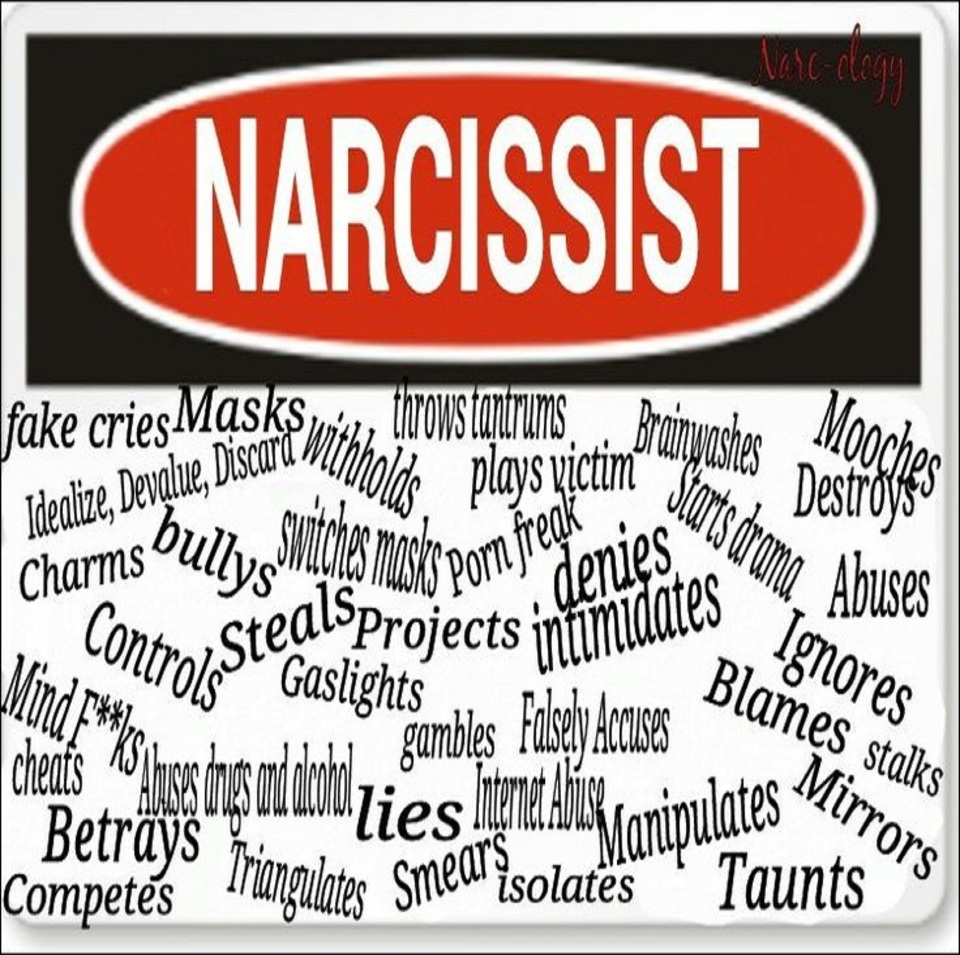
Are You An Empath/HSP Who Was Almost Destroyed By a Narcissist? Watch This Video

I found this fascinating video on Kim Saeed’s blog. Even though Jenna Forrest doesn’t use the term “narcissist” (she uses the term “adversary” instead), we who have been victims of malignant narcissists know exactly what sort of dark forces she’s talking about. Very interesting analysis of the dynamics of codependent relationships and why HSPs/empaths and Narcissists are drawn to each other. The video is kind of long and uses a lot of new age terminology but is still worth watching. Listen and learn.

Kim Saeed's avatarLet Me Reach with Kim Saeed

I recently subscribed to Jenna Forrest’s YouTube channel and as an Empath myself, I would highly recommend watching this video.  Although Jenna doesn’t mention the term “Narcissist”, she talks about how the Adversary (any dark force) tries to destroy us by:

  • exhausting us by manipulating us to use our emotions against ourselves
  • making us afraid, thus having control over us
  • making us sick (which often leads to cancer or suicide)

The video is almost 13 minutes long, so you’ll need to account for that.  I hope it enlightens you as much as it did me.  She answers questions that come up on my Stats page often, such as, “Can the Narcissist change”.  This video will help you understand why they can’t, as well as help you understand why you need to detach from the relationship if you haven’t already…

View original post

Test driving narcissism (how I almost became a narcissist)

In answering a comment on yesterday’s post, I suddenly remembered something I had forgotten.
I remembered how I almost became a narcissist. I think I was finally ready to remember. It’s part of my journey to wellness.

I immediately began digging through boxes of old photos, because I was burning inside to write this post, to confess everything, and photos say a lot.

Narcissism runs in families, and although exacerbated by abuse or neglect, it can develop later in a susceptible person, and it happens because of a conscious choice the person makes. They may not actually be saying, “Okay, I’m going to be a narcissist now,” but they have been teetering on the brink of darkness and the would-be narcissist decides it’s easier to plunge right into narcissism than to keep being hurt as their true self.

family_dinner
3 generations of women: my maternal grandmother Anna Marie, my mother in the center, and me at age 5. (ca 1964) Our family dinners were always this stiff and formal.

Narcissists start life as Highly Sensitive People.
For a number of reasons, I’ve come to believe most narcissists started out as HSPs (highly sensitive people). I will not go into my reasoning here, but I strongly believe these are people who once felt things too much, and if they were abused, it would have been too much to bear. To survive, they constructed a false self in an effort to protect the too-sensitive self (true self) from further hurt. The problem is, for narcissists, the false front works way too well, so well that once it solidifies, it’s there forever.

Tormenting my therapist.
I remembered the therapist I had during my early 20’s. I was terribly infatuated with him, obsessed beyond all logic. This is called transference in psychotherapy and my therapist kept trying to get me to “work through it” but my crush kept intensifying. It was killing me. One day I told him I couldn’t take it anymore and walked out the door in mid session. I never saw him again.

I realize now how narcissistic I acted during my sessions with him. I was attractive and knew it so I flirted openly, tried to get him to hug me (he actually did this until he realized it was a manipulative game on my part and there was a definite sexual aspect).

One day I stormed into his office having a hissy fit because I’d found a magazine in the waiting room with his and a woman’s name on the label. I stomped in, started waving the magazine in the air demanding he tell me why he never told me he had a girlfriend. His answer was quite reasonable (and it was of course none of my business), but I sulked the whole rest of the session and refused to say anything. I’d show him!

After I quit therapy, I hoped I had hurt him. I think I was angry at him for “making” me like him too much and leaving him was my method of punishing him. Of course, my leaving therapy didn’t hurt him. I was just his annoying, demanding, manipulative little bitch of a patient and he probably couldn’t stand me. I wanted to think I was hurting him, but I was really only hurting myself.

It shames me to remember all this, but I really manipulated that therapist, and annoyed him all the time ON PURPOSE. I was sadistic…I was crushing so hard, maybe my strong feelings for him were causing me to want to hurt and anger him. I remember getting a thrill if I could see a look of hurt on his face. It made me feel more powerful–that I could do the hurting instead of always being the one to get hurt.

lauren_bennett2
1977: Still a nice, sensitive, codependent girl at age 18…things were about to get ugly.

I was becoming partly dissociated from the me that is now and the me that was before. But it was all a defense against being hurt, and I knew it. I just couldn’t admit it.

I never saw my therapist’s diagnosis of me (I was there for anxiety and panic attacks) but it makes me wonder if “NPD” might have been one of the diagnoses. I’m pretty sure it was still called NPD in the early 1980s.

lauren_bennett1
I think I can see the beginning of the “narcissist stare” in this photo of me from 1984. I look colder and harder than in the 1977 photo. I see this same look sometimes on my daughter, who is close to the same age I was here. I think this look can also be seen in some Borderlines.

The Danger Zone.
Sometime in my late teens and early 20s I began to act “like I didn’t care.” It was feigned but at the time my high sensitivity was shameful to me. I didn’t want it. It was my albatross, my curse. I was tired of being teased about it. So I made a choice to just act like a different person. Act like a person who didn’t give a shit about anything. I began to drink heavily and smoked a lot of weed to numb the pain of being me. I began to be over-critical of others and gossipy, something I had never been, and spread lies about people I didn’t like to anyone who would listen.

My envy of others (something I still struggle with) was off the charts. I couldn’t stand people who had more than me, were prettier or thinner than me, were smarter than me, or had a better relationship or job than me. I would spread lies and rumors about these more fortunate people. Mostly, it backfired, for my Aspieness made it almost impossible for me to maintain my masks or hold up a lie. A good narcissist has to be good at reading social cues. I wasn’t, but I sure did try.

I found it hard to feel happy for anyone. If a friend got a promotion or fell in love, I felt bitter and jealous instead of glad for them. I’d rant that they didn’t deserve it. And I actually believed this, to a point.

I imagined myself not “needing” anyone. I dated a few guys and unceremoniously dumped them, and yet I was so lonely. I longed to be in a happy relationship, but couldn’t allow myself to be vulnerable enough. I treated men like objects.

I didn’t listen to people. I interrupted them, only thinking of what I would say next. I only wanted to talk about me. Other people were becoming objects too.

I lied to people about my accomplishments (which in actuality were few), my background, my social status. But no one really believed me. I wasn’t good at this game. In fact, I sucked at it.

I think I came very close to becoming an N. Over time, this hard outer shell I’d constructed out of the ashes of my own pain ossified and grew more stable. I was forgetting what it felt like to be vulnerable and human.

There was something else too. During the time I was test driving narcissism, I suffered from severe panic attacks (which is what led me into the therapy described above). I felt like I was out of my body a lot, and that made me panic. Some of these attacks were so bad people thought I was having epileptic seizures, because when I was “out of my body,” I had trouble controlling my movements and would stumble around as if drunk, or my eyes would sort of glaze over as if I wasn’t quite “there.” To rule out epilepsy, I had an EEG done. It came out normal. The only thing I can think of is that somehow the dissociated state I was in was causing me to feel detached from my own body, because I wasn’t “myself.”

Coming back from N hell
One day when I was about 26 (and the same year I got married to my MN ex), a friend of mine from high school told me she didn’t think she could be friends with me anymore, because I was too mean and she didn’t trust me. Other people were calling me out for spreading rumors and lying and my whole flimsy construct came tumbling down. I couldn’t escape from the web of lies I’d created, and now that web threatened to engulf me. It was terrifying but was the wake up call I needed.

I finally realized I was hurting people. Even then, I hated knowing I’d hurt someone else more than I hated being hurt by others. I was overcome with guilt and shame, and realized I couldn’t keep up the mean-girl front anymore. I didn’t become a narcissist, but I came close, so close.

This wake up call catapulted me back into my normal self and the horrific panic attacks soon subsided. (I still have panic attacks from time to time, but they are specific to certain situations and nowhere near as numerous as they were from 1979 – 1984 or so.)

Choosing codependency.
I’d been balancing at the precipice, and ultimately chose codependency (sometimes now referred to as “inverted narcissism”). Looking back, that was actually a very wise choice for if I hadn’t, if my guilt had not been strong enough to stop me in my tracks, I would have been a much different person today, and would not be doing what I’m doing right now. Sharing my journey with other survivors of narcissistic abuse. It’s a contagious thing, and any of us from narcissistic families could have gone in that direction. But we didn’t. That’s why we, not the narcs, are the lucky ones.

I think my Aspergers actually saved me. Aspies cannot read social cues and therefore can’t lie well and are bad at maintaining a workable mask. To be a narcissist would require me to use skills I did not possess. So I chose codependency because I had not been trained by my MN family to think for myself or trust my own judgment. I was trained to be Narcissistic Supply. That was a role I was much more successful at and comfortable with than my Narcissist Test Drive period.

But I think there was an advantage to my visit to the dark side too, and maybe a reason. I feel like like I understand narcissists’ motives and thinking patterns and self-hatred more than the usual non-narc ACON. Because I almost became one myself and felt a little bit of what they feel. All the money in the world wouldn’t be enough to get me to turn into darkness again. It was like a trip to hell. But I do know, they are in excruciating pain. All the time.
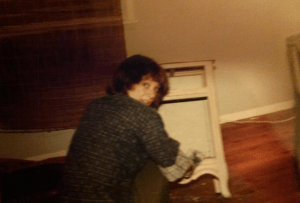
lauren_bennett3
Refinishing a table as young wife (around 1989-1990). I didn’t know how malignant my husband was yet but he was showing signs.

Never feel guilty for feeling guilty.
If I had been able to ignore or deny my guilt or the pain of others that I’d caused myself, I think I would have crossed the line into becoming a fullblown narcissist (though maybe not a malignant one).

Most narcissists make a choice at some point, usually early in life because of abuse but sometimes later, like I almost did. But I think there is also an escape hatch: a window of time where a budding narcissist can still “get out” and redeem themselves before the door between the Ns and everyone else slams shut.

Unfortunately I still have a few narcissistic traits and think I still sometimes act a bit like one. *red face* But my ability to feel shame and guilt is very well developed, in fact too well developed (and always has been), so that overrides my N traits. Perhaps that makes me a Borderline (I was actually diagnosed with BPD comorbid with other disorders in 1996). But if I am a Borderline, I try to control those behaviors. I try to be aware of them. I think I’m doing pretty well.

Growing into me.
Now I’m changing, moving farther away from the N and B traits of my early-mid adulthood than I have ever been. I don’t envy people much anymore and am beginning to understand what it feels like to feel joy or sadness for someone else. To feel humbled by the simple but beautiful things that surround us. I’ve embraced my sensitivity and am finding rather than being a curse that brings torment and hurt, it’s a beautiful thing that allows the growth of empathy and true understanding. Instead of shame over it, now I’m proud.

The ironic thing about this is that, it’s because I like myself MORE now, that my N traits are disappearing. I used to think I was worse than a piece of dog poop stuck on the bottom of a shoe and had to go around proving I was more, much more than that. It’s not like that anymore, and I’m ever so grateful I saved myself at the 11th hour.
Are narcissists ever abuse victims?

blackwedgeoflove
Black Wedge of Love / rawcandor.com

Here I’m not going to talk about the popular theory that most narcissists were probably neglected or abused as children. In this article, I’m focusing on the question of whether someone who is already a narcissist can become a victim of narcissistic abuse.

Yes, they can–and more often than you might think.

Of course, not all narcissists are abuse victims, and the more malignant they are, the more likely they are to cause suffering rather than suffer themselves. Psychopaths and malignant narcissists wield Svengali-like power over their subjects and are often found in the highest echelons of business, politics, religious organizations, and other positions of great power and influence. They do not allow themselves to be in a position of subservience to someone else, and take great pride in the fact most people fear them. In fact, they would much rather be feared than liked. The smartest ones are cunning enough to be invulnerable to a total loss of narcissistic supply, which would send them crashing into a deep depression (and opens a window to healing, as I’ve discussed in previous posts). They know how to get others to trust them, which is part of their charm and one of the ways they climb to the top and stay there.

But other narcissists (not “benign” narcissists, because they do have a conscience and even some empathy)–those who still have NPD but are not as high on the spectrum as a malignant psychopath, can and do become victims to “stronger” narcissists.

An unholy alliance.
These relationships actually work in their twisted, sick kind of way, with the weaker narcissist falling under the thrall of the stronger, malignant narcissist. Because they are both still narcissists and the weaker one basically identifies with their abuser (known as Stockholm Syndrome, which is also a defense mechanism seen in victimized people with PTSD), they form a symbiotic relationship, with the weaker person willingly taking on a masochistic role and the stronger one the sadistic role. Their sexual relationship may indeed include elements of S&M, but the sadomasochistic relationship isn’t limited to just sex.

The stronger narcissist will treat the weaker one badly and abusively, but because the weaker partner identifies with their abuser, they actually “enjoy” the abuse they get. It validates them and gives them the narcissistic supply they need (and way deep inside, maybe they feel like they deserve punishment).

Unlike normal people, a narcissist prefers negative attention over no attention, and their abuser is seen as their savior–the one person in the world who can give them the attention they so crave. M. Scott Peck, in his book “People of the Lie,” described such a relationship. Harley was a weak man in thrall to his evil, mean wife Sarah, who constantly berated and belittled him and ordered him around, while Harley just whined pitifully about how badly Sarah treated him but seemed to do nothing about it or have any real desire to stop her abuse. He had no intention of leaving her. He told Dr. Peck he “needed” Sarah. Of course he did–Sarah was his sole source of narcissistic supply (because she had made sure he was cut off from anyone else). Dr. Peck speculated that Harley, although complaining incessantly about his wife’s abuse, actually seemed to want it, and he wondered if he might have been a little “evil” himself, which was what might have attracted him to someone like Sarah in the first place.

I see this same situation in my father, who has always been codependent on MN women, and allows these women to make all his decisions for him. He has always been weaker and more codependent than the domineering, controlling women he married.

Needy narcissists.
A friend of mine, a survivor of narcissistic abuse who also has a blog, tells the story of an aunt of hers, living in abject poverty, who was scapegoated and belittled by every other family member, most of them highly malignant narcissists. She was tolerated at family events but outside of that, no one would have anything to do with her. You feel sorry for this impoverished, lonely, maltreated aunt–until you keep reading and find out that she is a malignant narcissist herself–of the “needy” variety.

Businessman begging with cardboard sign

Most people think of narcissists as cagey, cunning, selfish sociopaths who get everything they want by ruthlessly stomping all over others to reach the pinnacles of financial and professional success, even if that involves a life of crime. But there are many narcissists who are not successful, and in fact are dirt poor. These are what I call “needy narcissists”–people who mooch off of others, using others’ goodwill and generosity without ever giving anything back in return. They whine to anyone who will listen about how their sorry circumstances are everyone’s fault but their own. They demand pity and constant attention. They act entitled. They cry and try to elicit your guilt. They might steal from you. They’ll start a smear campaign against you if you don’t give in to their demands. Sometimes they find ways to get government assistance–such as disability–by faking or exaggerating a disorder so they don’t have to take responsibility for themselves.

They are financial and emotional vampires, feeding off others’ altruism until their providers are sucked dry emotionally, spiritually, mentally and sometimes financially. My ex-husband falls into this category. These narcissists are only less dangerous because they lack power and money, but make no mistake: they are just as dangerous on a personal level as materially “successful” narcissists, and they play all the same evil mindgames to get their way. They take pride in how pathetic they are rather than in what a perfect specimen of beauty, intelligence, success, or charm they are. They still think they’re entitled to be treated as if they’re gods.

“Covert” and “inverted” narcissism isn’t narcissism at all.
There is also something I’ve read about called “covert narcissism” or “inverted narcissism,” which actually has been used to describe people with low self esteem, avoidant traits, hypervigilance, and high sensitivity. Which means that according to that definition, I am a narcissist.

I don’t buy it though, because people with these traits are usually very empathic and if anything, their conscience is too well developed for their own good. They not only worry they won’t be liked, they worry that they may have hurt someone or have done something wrong. They struggle with guilt and shame. They may self-sabotage, but they never set out to hurt other people, and when they do they feel terrible. Real narcissists may be hypersensitive (about themselves) and paranoid, but they never worry about hurting others; at best they just don’t care.

Of course an “inverted” or “covert” narcissist is likely to be abused, because they fit all the traits of someone likely to be bullied and victimized. They are us!

The weak narcissist in thrall to an MN is not an “inverted” narcissist–they are true blue narcissists who just lack the cunning, intelligence, charm or Svengali-like traits their abuser possesses. Or they’re just not as evil as the MN. Within the relationship, they are just abuse victims, but outside of it, they treat others as badly as any other narcissist. Just because they’re abuse victims doesn’t mean they’re nice people. (It doesn’t mean they don’t deserve help either). Obviously, the best thing for a narcissist in an abusive relationship to do would be to go No Contact, but due to their craving of (negative) narcissistic supply, they are not likely to ever leave the relationship.

narcissist

Can a malignant narcissist become an abuse victim?
Other than in childhood (before they became narcissists), I would say no. Because two high-spectrum, completely malignant narcissists are likely to hate each other. One MN won’t give up their power to the other and sees another MN as a huge threat.

Think of two predatory animals like wildcats, encountering each other in a forest. Both are alpha males of their own group so neither is a weak animal. Would these two cats become allies? No. They will fix their gaze at each other, never taking their eyes away, and slowly start to circle around each other, sizing up the other animal. At some point, one of the cats will launch a surprise attack, or one will flee before that happens.

knifefight

In a similar manner, two predatory humans in the same room will be very cautious around each other, sizing each other up, but will almost always intensely dislike each other. They may fight, or they may never speak to each other, but they will not become friends. They are of no use to each other whatsoever. A malignant narcissist will always choose a weaker victim he can use and manipulate, and sometimes that victim will be another narcissist who identifies with their abuser but is no match for them.

Targets and Victims

victim

I found another blog today written by a survivor of a sick family of psychopaths and sociopaths (I’ve added the site to my list of resources under the “Info and Support” tab in the green bar in the header. I know I’ve written about this before, but this is one of the best lists of the traits of potential targets and victims of psychopaths I have seen yet. I have just about every single one of these traits, unfortunately. From an early age, I was trained to be a doormat. I learned that lesson too well.

BEFORE: TRAITS of a Potential TARGET

Below are the traits most commonly attributed to a sociopath’s target. Every person is inherently different, and that includes each target and the traits that are most pronounced in the individual. An individual would definitely not need any of these traits to be preyed upon.

This is not an attempt to diagnose anyone.

Shyness
Difficulty communicating
A lack of self confidence
Wanting to please
A belief that if you love enough the person will change
A belief that if you love enough the relationship will succeed
Difficulty establishing and maintaining boundaries
Not being able to say no
Being easily influenced by others
Wanting to be rescued from your life situation
Wanting to rescue others from their distress
Being over nurturing particularly when not asked
Feelings of shame and self doubt
Low self-esteem
A lack of memories about childhood or periods of adulthood
A lack of motivation from within and being motivated by others

AFTER: SYMPTOMS of a Relentlessly Abused VICTIM

This is a very accurate list of symptoms experienced by someone who has had their psyche brutally victimized by a sociopath. With that said, this list is not all-inclusive, nor is it intended to be part of any diagnostic function, whatsoever. These symptoms can also be triggered by many other conditions or events.

The source of this data is from ongoing research, but the majority of the data is derived and confirmed from personal experience … the key word being “majority” There are some symptoms listed here that I have not experienced at all, though they have been mentioned enough for me to accept them as potentially common.

If you, or someone you know, has experienced even a few of these symptoms, seek professional help. Keep in mind, though, that not all “help” is equal. If the professional you choose does not seem to relate to your needs as you would expect or desire, keep looking.

Emotional paralysis
PTSD (Post-Traumatic Stress Disorder)
Suicidal thoughts or actions (indirect homicide)
Loss of interest in life
Loss of energy
Insomnia
Anxiety
Depression or Severe Depression
Numbing of feelings
Disinterest in having a relationship
Panic attacks
Irritability
Increased anxiety from being alone
Increased anxiety from being in crowds
Mood swings
Source: sociopathicstyle.com [confirmed by personal experience (50+ years)]

Narcissists don’t change

snowwhite

I read a lot of blogs written by ACONs (Adult Children of Narcissists) and without exception, all these survivors yearned (or still yearn) for the parental love they were entitled to but never received.

Narcissists can’t feel love. Sure, they might pretend they love you when others are present (they’re great at wearing masks and keeping up appearances), but their true nature doesn’t even know the meaning of the word love.

For many years into adulthood, I wanted nothing more than for my narcissistic mother to approve of me. Like most narcissists, she was all about appearance and image. When I was young, she was obsessed with my weight and physical appearance, and always insisted on making me into her own image. She herself was vain, and seemed incapable of discussing deep topics or ideas. Narcissists have an uncanny ability to never show any vulnerable side of themselves, and this includes sharing any dreams with you. I’m not talking about the kind you have when you sleep, but the kind of dreams that give us hope for happiness in this life. I can’t remember one time when my mother ever shared a dream with me. She was already perfect–she didn’t need to have a dream. She also never, not once, ever shared a true emotion with me. She was incapable of being vulnerable or showing anyone (especially me) any vulnerability. And in keeping with that, she was incapable of empathy. She could never understand my feelings or hurts, and was usually more than happy to add to my hurts. I remember once, she made fun of me after she said a particularly hurtful thing, and then mocked the sad expression on my face–you know, pouting in an exaggerated way and drawing fake tears down her cheeks.

She was part of the positive thinking tyranny. (For more on how some people misuse the positive thinking movement, see this article.) Many narcissists use the positive thinking movement as a way to shame others for having feelings or to avoid taking responsibility. They’re big fans of positive thinking slogans, such as “your feelings are your own responsibility, not mine” or “you have chosen to be poor because of your negative attitude.” I remember once when I was being treated unfairly at my job (by a narcissistic boss, of course) instead of showing support and offering words of comfort, my N mother made my boss the victim, essentially telling me I probably caused him and my coworkers to dislike me because of my “negative attitude.” This is the sort of “love” you’ll get from a narcissist.

Narcissists also have an odd way of dismissing sentimentality. My mother never kept family photos around the house (because they were too “tacky”) and all the family photos were stashed into albums and boxes and packed away in the attic. A few years ago, I told my mother I would like to have some of the family photos, but she avoided the issue and changed the subject. About a year later, annoyed at being asked about them for the umpteenth time, she told me she had thrown them away. Who throws away family photos?! I was gobsmacked, but at the same time, I thought how typical that was of her. She could have sent them to me if she didn’t want them, but no, that would have made me happy, so throwing them away was better.

Back in those days, I hadn’t gone No Contact yet, and whenever in my mother’s presence, I felt small and belittled. Even when she didn’t actually say anything mean, there was always that condescending, withering look. I always felt nervous before having to see her or talk to her, without quite knowing why.

Now I know why (even though she always told me I was the crazy one who was being paranoid), and I’ve been No Contact now for almost three years. She sends me a birthday card every year, with phony mass produced Hallmark messages of love. When I get these cards, I just toss them in the trash. Coming from her, they mean nothing. She won’t ever change, because narcissists can’t. Trying to please a narcissist won’t work, so don’t waste your time. It will only wind up causing you frustration and hurt. They only want you on their side so they can use you. If they’re nice to you, it means they probably sense you pulling away from them. They can’t have that.

Of course I regret not having a loving parent or extended family. I regret not being able to see my mother (and her various flying monkeys, most of whom are also relatives) on big holidays like Christmas and Thanksgiving. I regret not ever having had the experience of a real heart to heart talk with my own mother. I can’t help feeling sad when others ask me where I’m going for holidays and have to tell them, “nowhere.” Because you see, my mother turned just about everyone in her extended family against me. Most of them barely know me, but narcissists are usually persuasive people who could sell ice to an Eskimo, and my mother’s “sold” me as a horrible, ungrateful, unsuccessful loser who doesn’t deserve happiness.

In my family, only visible evidence of success and physical attractiveness is acceptable. If you’re fat, unattractive, poor or disabled, you’re a “nothing” or a “nobody,” even if you’re a great person. My mother has actually used those words to discuss a cousin of mine, who is morbidly obese. “Laura’s a nothing.” She overlooks the fact that Laura is an accomplished artist who has won awards in several art shows, and also volunteers at her local food pantry. As for me, I am not rich or successful (because I was never given the tools and the self esteem to become successful as an adult), and so I’m a “nothing” too. She looks down on my poverty, and blames me for it.

I don’t need narcissistic people in my life, and one by one I have been weeding them out. And as I do so, I am growing, finding out what Lucky Otter is really all about. I’m finding out that I’m a pretty great person who is just blooming late in life.

Too bad my N mother won’t ever know the real me. Not that she’d care.

If you have a narcissistic parent, the most loving thing you can do for yourself is to make it impossible for them to hurt you anymore. They aren’t going to change. In fact, they get worse with age. As their looks and health begin to go, they feel extremely threatened by the reality of becoming vulnerable or needy, and rage takes over. They will no longer even pretend to be “nice.” You have to go No Contact, no matter how much it hurts. Rest assured though, you are not hurting them by doing this. They are incapable of feeling hurt. You’ll only hurt yourself if you remain in their thrall.

Finding myself: a hopeless task if you depend on narcissists to do the job for you (late adolescence/early adulthood)

narcissistcard

As I entered my late teens, I started to focus on relationships to the expense of developing skills, interests and securing a viable future career. I had a nearly pathologic tendency to fall in love easily, almost always with the wrong guys–guys who would reject me, guys who would initially be loving and generous and then turn into monsters when they gained my trust. For someone who grew up constantly being lied to, put down, and disappointed by broken promises from my immediate family, I was remarkably naive and tended to trust men too easily. The only explanation for this I can think of is that I was desperate to find the mother-love I never had, in the form of a romantic relationship.

I was addicted to romance. I watched romantic movies and read romantic stories all the time, write romantic poetry, envied my friends who were in loving and stable relationships, and longed for that “perfect relationship” (this during a time when women were not encouraged to become involved seriously until they got an education and/or established themselves in a career). My crushes came like waves–one after the other, some fun and exciting, but all too often overwhelming, with the power to knock me over breathless and suck me under their powerful currents. My romantic involvements with these men were intense–if you’ve ever read Dorothy Tennov’s 1979 book Love and Limerence, I went through the whole gamut of emotions connected to that condition–from the heady, almost surreal highs of obsessing over and idealizing my crush, to the delibitating lows that left me wanting to die when I even sensed they were pulling away (or just not interested).

In my late teens and early 20s, I got involved in two abusive (one physically and emotionally, the other mentally and emotionally) relationships with narcissistic men that I won’t go into detail about, as over the long hall they had little importance in my life and both dumped me in the end (which of course was devastating to me, even though I’d been trying to break up with the second narcissist, Ryan, for MONTHS to no avail because he kept stalking me–how DARE he dump me after the hell he’d put me through?!) I was livid. But also relieved. So, anyway, in time I moved on. Although I’d finally learned to not show my emotions on the surface as much as when I was a child (in fact I had become somewhat closed off by this time), I still felt everything so damn deeply on the inside! It could be a real handicap. But these unhealthy relationships had their moments in those days. When I was happy, I was REALLY happy, fleeting though that happiness was.

ucallthislove

How strange that I wanted to trust a man so much, after having been treated with so much rejection by both my parents. But maybe I was trying to get that love I craved so badly. And I seemed to be a MAGNET for the abusive, MN type of man. They must have sensed my vulnerability as much as I tried to cover it up.

In spite of my high intelligence and creativity. I loved to write, draw and paint, and at the time was very much into photography, which like everything else I ever began to pursue, I gave up due to a setback: my camera I had saved a whole months’s worth of pay had been stolen, along with all my other camera equipment. As a result I never pursued photography seriously again, although to this day I’m still told I have an “eye” and should take it up again. (Perhaps I will).

Looking back over my life I see a pattern. EVERY time I started to pursue an interest seriously, or undertake some sort of training or an opportunity that would have improved my life and circumstances, I ALWAYS found some reason to give it up, lose interest, or sabotage myself in some way when it became clear too much work or study would be involved or there might be too many setbacks. I was TERRIFIED of failure and CONVINCED I would fail at anything I pursued. All my life my parents, especially Ginny, had told me I could never stick to anything or follow through, and would never amount to anything much because of my terrible personality, and it seemed their prophecy had become true. It didn’t occur to me at the time that I was probably PROGRAMMED by them to fail. Although they never said outright they wished I’d fail, I know they never really wanted me to become successful because then I would have power over them (or what they would perceive as such) and then they could no longer scapegoat me as the “family fuckup” (their name for me to this day).

Recall I said in my last blog post I don’t think my father is actually psychopathic, but he’s been deeply influenced by them and always been in collusion with both Ginny (my mother) and his current wife, who is very likely an MN. They call all the shots–Harry is a classic N-enabler who knuckles under to their bidding. And now he’s too frail and sick to ever escape from it. More about this later.

So…following high school I didn’t express much interest in attending college–again, I think this was to rebel against my parents, who continually compared me with my older half siblings, who had all gone to and graduated from college and thought it unthinkable that I would not go.

whatkindofgirl

Or maybe I simply wasn’t ready. At age 18 going on 19, I had no idea what I wanted to do or be, and so after attending for one semester I dropped out. My father was enraged and refused to ever pay for me to further my education ever again. He’d decided I was unmotivated and lazy and nothing could ever change his opinion. He failed to understand I simply wasn’t ready yet, because after a few years of being able to find nothing but dead end jobs (and I was expected to pay my own rent and support myself on these menial jobs) I desperately wanted to go to college and major in psychology. I was 22 at the time and though my father could have afforded to pay for me to go, he refused to help. Because I was still at the age where the college financial aid office counts your parents’ income in whether or not you get a grant, and my parents were doing well financially, I qualified for no student aid or grants except student loans. But I was determined so I took out the loans and attended classes at night, carrying a full time credit load and also working full time during the day because there was no way I could have given up my dead end job, much as I disliked it. Somehow I managed to maintain a 3.5-4.0 GPA and was even on the Deans list for a couple of semesters.

But by the time I entered my third year of college (I was 25 by now), the grueling schedule with its increasing workload and demands was beginning to drain on me, and with no family support (although they could have afforded to help and I think I had proven sufficiently I was motivated) while still having to keep my crummy full time job, my thoughts again turned to longings for romance, and even marriage.

About a year earlier, I had begun to drink heavily although this didn’t affect my grades, it did affect my attendance at work. My father, by now remarried to a woman (who turned out to be either a MN or just someone with severe OCD and a controlling personality that mimicked MN) had moved to Texas and had joined AA. I attended AA for a few months and decided it wasn’t for me, but I did meet a man there who seemed to pursue me in a way I eventually couldn’t resist.

rottencard

Michael could have been a poster child for the “charming” narcissistic lover. He pursued me relentlessly, even though at first I wasn’t that interested. There was just something about him that made me slightly uncomfortable…perhaps his aggressiveness in pursuing me (although he was always very sweet at first) I found slightly offputting, but his undying attention and charm eventually overcame my misgivings (which I should have listened to but I wanted so badly to believe he was sincere), and soon I was head over heels in love with this man who really wasn’t my type at all. For a while he was the perfect lover, wining and dining me, bringing me flowers, telling me constantly how much he needed and loved me, and then after just three months of dating, he proposed to me in a romantic restaurant–actually bowing down on his knees in front of me when he asked me to marry him. He seemed very sincere and I couldn’t believe anyone could love me that much. I was in heaven, but little did I know the worst hell of my life was about to begin–and would last for the next 28 years.

I dropped out of college because the student loan money had run out, but also because I couldn’t maintain the grueling schedule of juggling work and school and at the same time spend time with Michael and prepare for our wedding. My parents were horrified I would leave school. Their horror coupled with their wanting me to always fail and refusing any financial help, was an incredible mindfuck. The fact Michael made less money than I did (in spite of not finishing my degree, I landed a promising new job as a copy/columns editor for a medical journal for a wellknown publishing firm) and yet charged extravagant gifts for me and expensive dinners to credit cards should have been a HUGE red flag, but I ignored it. Six months later, on a beautiful day at the end of May 1986, we tied the knot. I was 26.

Part three will describe the progression of his narcissism and abuse of me (and later, our two children). This will be the most painful part of my story to write, but probably also the most therapeutic (and interesting to readers).