“Welcome to Me”–a darkly humorous look at borderline personality disorder

welcome-to-me

I’ve been wanting to post a movie review (which I haven’t done in a while), and also something about borderline personality disorder. How serendipitous that the “chick flick” my daughter and I decided to see this afternoon is a movie about a woman who has borderline personality disorder! I had no idea! It’s a good movie (and it’s directed by Will Farrell, who I love).
Here is my review of it.

Alice Klieg (Kristen Wiig) is a 40ish divorced woman who lives off the disability benefits she gets for her severe case of borderline personality disorder, which keeps her nearly unable to function normally due to severe depressions, self-destructive behavior, and general inability to regulate her emotions. Alice is quirky–obsessed with Oprah, hasn’t turned off her television in 11 years, and she’s addicted to buying lottery tickets. Her psychiatrist, Dr. Moffatt (Tim Robbins), is nearly at his wit’s end with Alice’s erratic mood swings, uncooperative behavior, and refusal to take her medications (prescribed to help regulate her moods). She has stopped taking her Abilify, and right after that the impossible happens–she wins 86 million dollars in the California State Lottery.

That’s when things get really crazy. A series of events leads up to Alice demanding her own show in the same vein as her idol Oprah. She acts crazy enough the television producers don’t take her seriously, until she writes them a check for 15 million dollars. The show, “Welcome to Me,” is on, and of course it’s all about Alice.

On her show, she demands a swan float to transport her onstage at the beginning of each episode, diva treatment, and she throws tantrums when things don’t go her way. She drives everyone around her crazy. But people are watching because they never know what poor crazy Alice will do next, and the show’s bringing the studio money so they can’t cancel it.

Alice decides she wants to re-enact scenes from her own life, using sets that are exact replicas of the places where they occurred. Actors are hired to play the roles, but Alice is never satisfied. She screams, yells, verbally attacks everyone (and then wonders why they pull away), and constantly cries on set. No one knows what to do with this apparently insane woman who can’t seem to control her impulses and emotions.

On the live show, Alice dresses in ridiculous, over the top attire, insists on singing the theme song herself (she can’t carry a note), bakes a meat cake with sweet potato frosting and spends most of the show sitting there eating it, neuters dogs onset (she used to work as a vet nurse), and throws a lot of temper tantrums. She’s also sexually promiscuous.

Things keep getting worse, and she alienates her long-time friend Gina (Linda Cardellini) by depicting her as fat in one of the sketches. Other people from Alice’s past who were insulted by the re-enactments (where even their real names were used) decide to sue the television studio.

Alice’s unpredictable, out of control and untrustworthy behaviors also anger Dr. Moffatt, who fires her as his patient and tells her point blank, “I think you’re dangerous.” In typical Borderline fashion, Alice cries and pleads with him, “don’t leave me!”

It takes a near-disaster for Alice to realize her out of control behaviors are eclipsing any ability she has to care about others and be a true friend to others. She’ll have a lot of amend-making to do if her broken relationships are ever to be repaired. Will it be possible for her to fix what she has destroyed or to ever really care about others? I won’t answer that here: you’ll have to see the movie for yourself.

I noticed some interesting parallels between BPD and NPD in this movie. Alice is quite narcissistic, grandiose, completely self-centered, and totally oblivious to the needs of others. But there’s something charming and quirky about her too. She’s never deliberately malicious–she’s impulsive and selfish and her obliviousness keeps getting her into all kinds of trouble. What keeps Alice from being a narcissist is that she actually has a conscience and the ability to feel badly when she realizes she has hurt so many people.

Kirsten Wiig is convincing as a severely Borderline patient, but while she can be funny, her insane behavior made me squirm in embarrassment. She’s uncomfortable and awkward to watch, but that can be the case in a BPD patient who’s completely out of control of their impulses and emotions.

I recommend this movie to anyone interested in Cluster B disorders, especially BPD, and how it can create disaster not only for the people their lives touch, but for themselves. Unlike NPD, there is nothing adaptive about borderline personality disorder to its sufferers.

The 4 types of narcissistic abuse victims.

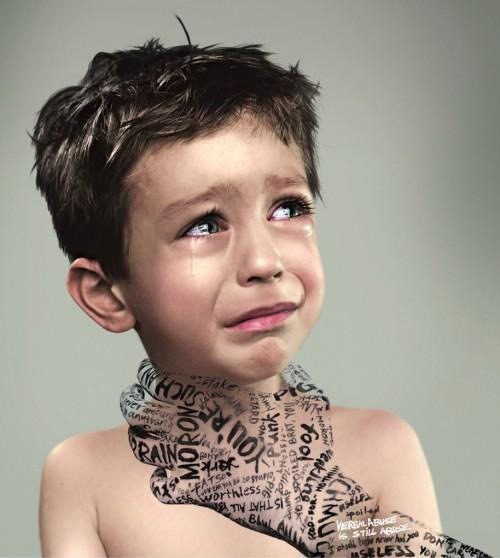
abuse_boy

It’s become clear to me that not all ACONs and abuse survivors are on the same page when it comes to their attitudes toward narcissists.
Because we all are abuse survivors you would think there’d be more solidarity among us, but this is not necessarily the case.

It seems there are four distinct types. In spite of things I may have alluded to in the past, I don’t think any one group is worse or better than any other. They are different, and each has their reasons for having the attitudes they do. I’ll explain why I think the attitudes are different among the four groups. There is definitely a pattern I’ve noticed.

1. The Narc-Hating Group.

female_warrior

These ACONs usually underwent the worst abuse as children, or had two narcissistic parents instead of just one. Having abusive parents seems to instill the greatest anger in victims–more so than having been with an abusive spouse–and this anger isn’t easily let go of. This group has a warrior mentality: to them, ALL narcissists are evil, bad seeds, or demonic, and have no hope whatsoever of recovery or healing. They may acknowledge a continuum or spectrum among narcissists, but it’s not important to them. A narc is a narc is a narc, and they are all considered impervious to change and anything they do is suspect. Some ACONs of this type are ultra-religious and believe all narcissists are seared souls destined for hell.

2. All Cluster Bs are the Same Group.

cluster_b

This group goes a step beyond the first one, in that they believe anyone with a Cluster B disorder–Borderline, Histrionic, Narcissistic, or Antisocial–is character disordered and manipulative, and therefore all pretty much the same and to be avoided like the plague. They do not make exceptions even for Borderlines–the least “malignant” of the four disorders. People who subscribe to this view were as damaged by their malignant narcissistic parents as the first group. One of their parents may have been Borderline or Histrionic, rather than narcissistic– but people with those disorders don’t always make very good parents either. It’s unfortunately all too common for narcissists to collude with Borderlines in the abuse of the child, with the Borderline in the more codependent, subservient role.

3. Not all Narcs are Hopeless Group.

smashingmirror

This group may be in the minority among ACONs (at least among bloggers), but it’s the group I’m evidently in–which has raised the ire of some of the Narc-Hating ACONs. People in this group aren’t going around singing the praises of narcissists and in fact the vast majority strongly encourage No Contact (just as the other two groups do). They do not tolerate or enable narcissistic manipulations and abuse, but they hold that because narcissism may be a spectrum disorder, that those at the lower end of the spectrum (non-malignants) may be redeemable under the proper circumstances and with the proper treatment. They may show more sympathy or empathy for people with narcissism than the first two groups, but they aren’t enablers either. Most do not believe malignant narcissists and psychopaths/sociopaths are redeemable, however.

Many people in this group were part of the Narc-Hating group when they were trying to disengage or go No Contact with their abusers. They used their anger to give them the courage and motivation to disconnect and stay disconnected. But because their hatred and anger toward narcissists isn’t as deeply ingrained as in the first two groups (I’ll explain why in the next paragraph), people in this group eventually can no longer hold onto their anger and prefer to try to understand the motives of those who abused them, while at the same time remaining disconnected from their abusers and not enabling narcissistic behavior. Their desire to let go of anger is very difficult for ACONs of the first two groups to understand, and people of the third group may be seen as betraying the ACON cause, even though this isn’t really the case at all. They’re just handling things differently.

Another reason a person may hold that some narcissists are redeemable is they may have a narcissistic child, and it’s an extremely difficult thing for a parent to accept that their own child may be beyond hope.

It’s been my observation that people in this group may have suffered less severe abuse as children, or had only one narcissistic parent instead of two. One of the parents (usually a codependent spouse) may have actually loved their child, and this love tempered the abuse inflicted on them by the narcissistic parent even if they were forced to collude with the abuse at times. Some people in this group may have even had normal childhoods with non-narcissistic parents, but got involved in relationships or marriages to narcissists (which technically means they are not ACONs at all). It’s been my observation that people who suffered most of their abuse at the hands of a narcissistic spouse or lover rather than a parent never developed the deep hatred toward all narcissists that the first two groups tend to do.

4. Codependents.

Fashion model stylized as marionette doll sitting on violet studio background

Codependents are often (but not always) personality disordered in some way, and many of them are Borderlines or covert narcissists. They are usually victimized by their narcissists, but also identify with and collude with their abusers. Most codependents were abused by narcissistic parents, and are drawn to narcissistic relationships where they are compelled to re-enact their abusive childhoods. This is the group that may never acknowledge they are being abused or reach out for help. They continue to defend and enable their abusers and may believe they are the ones at fault for anything that goes wrong. If a Codependent leaves their narcissist and realizes they were actually being abused, then they are no longer Codependent and join one of the first three categories.

#23 – The Borderline-Narcissistic Continuum: A Different Way of Understanding “Diagnosis”

This is more the sort of thing I want to blog more about. Here’s a somewhat scholarly but interesting and thought provoking article about BPD (borderline personality disorder) being on a continuum that ranges from psychosis (being totally out of touch from reality) to normal (neurotic) behavior (the idea being that everyone is neurotic to some degree, which is what makes us human).

Borderline Personality Disorder was originally given that name because mental health experts studying this disorder in the early years believed that borderlines straddled the line between psychotic and neurotic in their thinking and behaving patterns. For a borderline undergoing healing, NPD (actually functional narcissism, which includes developing self esteem) is the first step toward mental health.

According to the experts mentioned in this article and many mental health professionals, BPD is a less functional and more ego-dystonic form of NPD.

bpdtransformation's avatarBPD Transformation

For the purpose of understanding psychiatric problems in a more nuanced and optimistic way, here is a diagram from Donald Rinsley’s book Treatment of the Severely Disturbed Adolescent:

CAM00157Update

Please click on the picture to see it larger. Each row corresponds vertically to the rows above and below in describing degrees of emotional development, and each row describes emotional growth over time from left to right. The majority of the text in brown is Rinsley’s own diagram; the bottom additions in white are mine.

Donald Rinsley was among the most respected authorities on borderline and narcissistic conditions in the second half of the 20th century. He was a psychodynamic therapist who ran a psychiatric hospital for severely troubled adolescents in Topeka, Kansas in the 1960s, 70s, and 80s. He later worked extensively with personality-disordered and psychotic adults in an outpatient psychotherapy practice.

I believe that much can be learned from studying Rinsley’s…

View original post 1,954 more words

Shifting this blog’s focus.

moving_forward

When I started this blog back in September, its primary intent was to provide an outlet for me to journal about my experiences as a victim of narcissistic abuse and try to understand what happened to me. My early articles were far angrier than most of those I write now, because I was just emerging from a long-term relationship with a malignant narcissist and was still suffering from PTSD to some extent. I was finding my bearings as an independent person and learning how to make my own decisions and find out who I really was.

It was the best thing I ever did. Journaling brought me far, so very far–but lately I’ve wondered why I’ve been having more trouble coming up with new ideas and getting less excited about what I do post.

I feel like this blog has been stagnating. I’ve been less interested in focusing on my past and all the negativity that goes with that. I’m moving on and growing, but something happened that really brought home the fact I was ready to take this blog (and me) to the next level.

At first it seemed like a negative, hurtful thing, but today I realized what happened was exactly what needed to happen to bring me to the next level and take this blog new places it hasn’t gone before. As I’ve said so many times before, everything that happens can be a learning experience. People who appear to be your enemies can actually be your teachers.

It was brought to my attention–due to a very controversial article I wrote the other day (far more controversial than I realized it would be!)–that most or many ACONs object to what they think of as my “narc hugging.” Some people have said I’m too wishy washy about them because of statements I have made where I’ve admitted I have some empathy for them (actually I only have empathy for what they could have been, not for the way they are now). Several people I thought were friends have even speculated that I’m a narcissist myself! That hurt a lot. I briefly considered not blogging anymore!

But I think there’s a lot of misunderstanding surrounding Borderlines, who can easily be mistaken for narcissists to those who don’t know much about the other Cluster B disorders. I think that’s why I need to write more about BPD.

I never did and still don’t accept the things narcissists do, and will never forget the abuse they inflicted on me. I will also never stop empathizing and trying to offer support to those of you who have suffered such abuse. I understand how painful and frightening it is. I have been there. But at the same time, I’m simply tired of focusing on all the negatives and on my sad and abusive past. Instead, my desire is to better understand people with NPD (let me reiterate this does NOT in any way mean I condone or approve of their abusive behaviors). This does not in any way mean I think we should give them the benefit of the doubt or continue to stay with them.

I also have recently become interested in further exploring my own Borderline personality disorder, and as a Cluster B disorder, writing about BPD isn’t taking me too far away from the original focus of this blog. I’ve already been writing about BPD a lot more lately anyway.

So to sum up, while I will still address the serious issue of narcissistic abuse and offer a place for victims to vent and get support, future articles will focus more on understanding both NPD and BPD (and other personality disorders), without “selling out” or turning against victims of abuse or forgetting what we have all been through.

I already started this shift when I started writing articles about treating or healing narcissism (I have now included BPD in the static page about that because treatment methods for both disorders are so similar).

I just felt like this blog had reached a place where it couldn’t go any further with the focus it had. I wasn’t getting as excited about writing new posts anymore and I couldn’t figure out why. Now I know why–I needed a change in focus. I didn’t realize that was the solution until several people vehemently objected to the article I mentioned above.

I don’t approve of narcissism, but I simply don’t need all that anger and negativity in my life anymore. I feel like I’m coming to a place where I want to better understand the people who abused me, and that will help me better understand myself.

I realize I may lose a few followers in implementing this shift (I think I already have when I posted the linked article above), but I don’t think it will be many, because really, not a whole lot will change. In addition, I also expect to gain a new type of follower that might have looked askance at this blog before as just another ACON blog. Another way of saying this is I hope more Borderlines will follow this blog.

I feel like I’m growing and moving forward, and making this slight change will help me with this transition. You may have noticed I changed the blog’s title back to it’s original, “Lucky Otter’s Haven” and took out “Museum of Narcissism” because I will also be writing about BPD just as much as NPD. I also think “haven” has a more positive feel to it than “museum of narcissism,” which suggests a sort of freak show. Running a freak show is not my purpose or desire. I also changed the tagline.

I hope most of you welcome these changes and continue to read and support this blog.

God bless,
Lauren Bennett

The point of no return.

u_turn

Last night Fivehundredpoundpeep disagreed with a post I wrote, saying that people who chose narcissism reach a point of no return when become thoroughly evil. She has religious reasons for this view (“reprobate” is a religious term that means the person even while still alive is destined for hell because God has turned his back on them due to their bad choices). While I don’t share her literal biblical beliefs in certain damnation for some (I believe this is from Calvinist thought), I agree with her that most narcissists do get worse with age and many reach a point of no return, where they become so hardened they have no hope of changing-and I do agree this change is due to a total selling out of whatever conscience they may have had, if they ever had any. I have seen this up close and personal with my ex, who is a frightening example of someone who completely sold his soul, for lack of a better phrase, to the devil. All Cluster B personality disorders have a spiritual as well as a mental component, but narcissism is a slippery slope into inescapable darkness and misery.

When I married my ex in 1986, he was definitely a narcissist but lower on the spectrum than he is today. While still being abusive and extremely manipulative, he did have moments where he showed what I believed was genuine goodness. He was actually a good father to our two children–at first. In fact, he was more patient with them as babies than I was. It was later that he began to scapegoat our son (who like me, is highly sensitive and able to see through his father) and started to use our daughter as a sounding board for his own problems when she was still just a child as well as a junior flying monkey against me and her brother.

I’m not entirely sure when he crossed the “point of no return” but it seemed to be between 1997 and 2001, during the time his mother lived with us before entering a nursing home. This is when I believe he became thoroughly evil and it was because of the way he treated his ailing mother.

His mother was a thoroughly malignant narcissist who was very abusive to my ex while he was growing up. She too became worse with age, but in the late 1990s, she developed Alzheimers and could no longer live alone, so we brought her to our home where an eye could be kept on her. As malignant as she was, she was losing her faculties and her mind and it would have been inhumane not to try to help her.

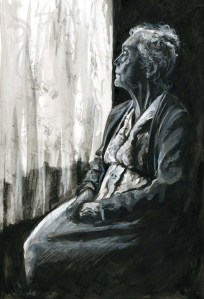
Most of her care fell on my shoulders, a difficult thing because my kids were still very young and I was trying to raise them too. I was also suffering from severe depressions during this time due to my ex’s increasing abusive behavior as well as his heavy drinking and drug taking, for which I had to be hospitalized twice. So you can imagine I wasn’t the most patient caregiver, especially because his mom could still be so unlikeable. It was hard for me to not become angry with her. I tried to control this, but found it so hard, especially when she began losing control of her bowel and bladder. Every day I was confronted with messy bedding because she kept pulling off her diaper and would fight me or start crying whenever I went to change her. I was never cut out to be a nurse, but this was too much and there were those times I’d yell at her in frustration.
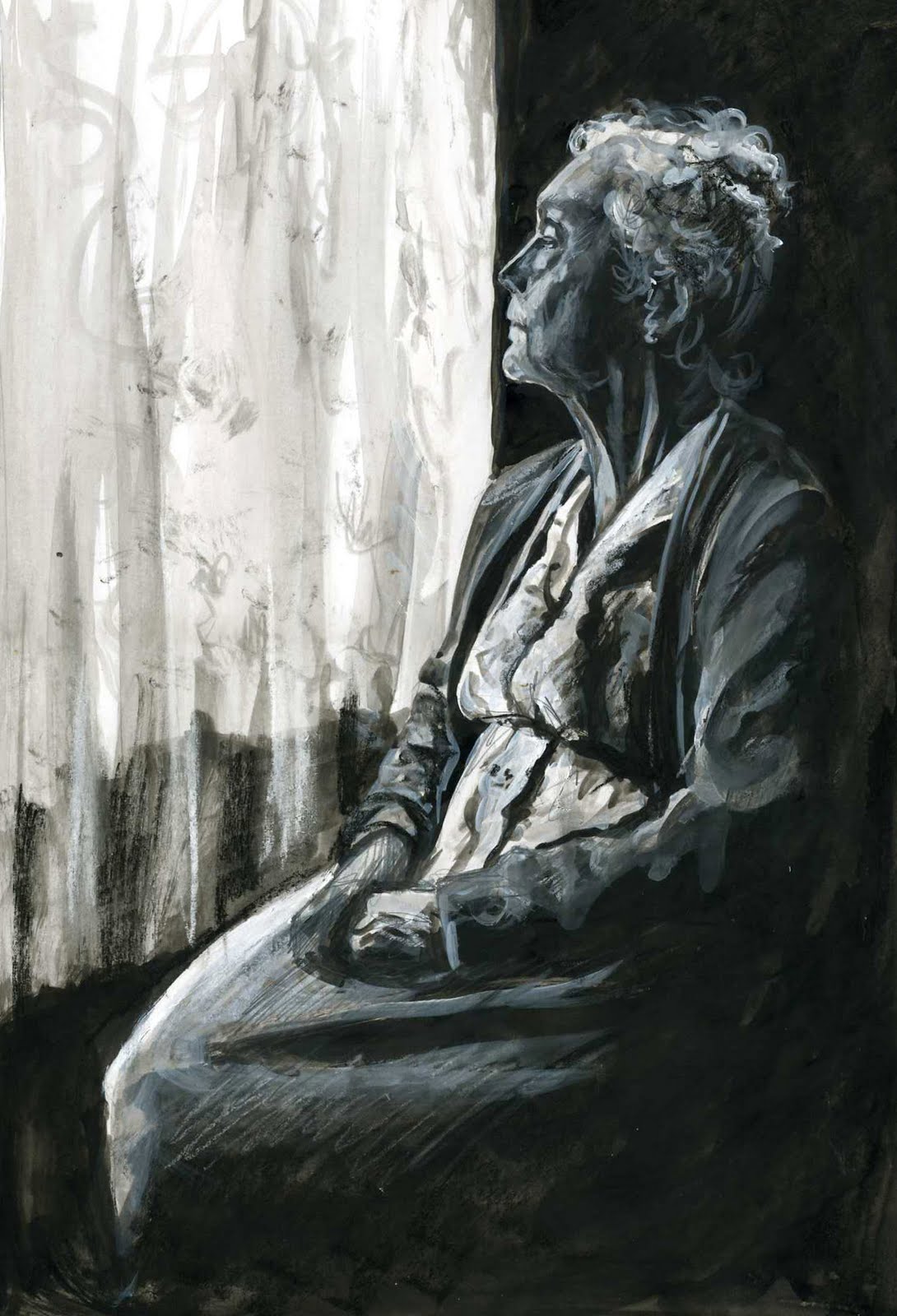
old_woman
Unknown artist.

My ex hated his mother, but did not want to put her in a nursing home due to the expense. Of course anything I had to say about the matter fell on deaf ears. He had actually made her sell her house when she moved in with us and obtained a power of attorney so the money from the sale was in his name (the money was gone within one year). I never felt this was right but admit I enjoyed having more money, so I never said anything to him about it being wrong. While what he did wasn’t illegal, it was extremely unethical and selfish. While his mother’s immediate needs were taken care of, he had complete control of the money and most of it did not go for her care and went for luxuries for us instead. I always felt badly about this and for years felt like my sin of overlooking this would never be forgiven. (Recently I repented and know I have been forgiven but it still bothers me sometimes).

But enough about that. My ex was increasingly abusive to her while she lived with us, and reached a point where he became physically abusive and would spank her like a bad child–IN FRONT OF MY CHILDREN! As awful a mother as she was to him, she did not deserve this. Whenever I brought up how wrong his behavior was, he said he had a right to treat her that way because she was such a horrible mother. He said it was karma. Not once did he ever admit he was wrong. After a while, my bad case of narc “fleas” became so bad I began to join in the abuse–not hitting her, but I stopped trying to defend her and began to think maybe his spanking her wasn’t really wrong. After all, she did act like a naughty three year old. I didn’t know it, but I was suffering a form of Stockholm Syndrome, where a victim begins to identify with their abuser and make excuses for their bad behavior. Still, I begged him to put her in a nursing home but he still refused.

It was during this time he began to grow pot in our outbuilding, and his immoral behavior ramped up a few notches. He recruited our 8 year old daughter to water the plants and watch out for cops! I couldn’t believe he would do this, but I said nothing because nothing I said ever was taken seriously or I’d be belittled for bringing it up. He also started to hit my son, and berate and belittle him constantly. All this was new for him. Before his mother had moved in he had never been physically abusive to our children and stayed away from alcohol and drugs. Now he was drunk or high most nights and began to change into a person I was becoming extremely afraid of. His look became harder and colder, and he was rarely affectionate anymore. His eyes became very cold, almost demonic at times. Both of us had affairs (I’m not proud of this either because I was actually worse than him). I was mentally ill myself due to the abuse but this doesn’t excuse the part I played in this whole mess of a marriage.

In 2000 his mother developed cancer and after her hospitalization, finally entered a nursing home. We hardly visited her at all but whenever we did, he would tell the kids how stupid and horrible his mother was and encourage them to insult and demean her. He told them she deserved the way he treated her because of the way she had treated him.

She died in January of 2002 and to this day, my ex never went to pick up her ashes.

It was during these five years from 1997-2001 that I saw my ex change from a person who could sometimes be nice and was often a lot of fun into a monster who appeared to have no emotions at all or any empathy for anyone else. Looking back, I think it was because he crossed a line from “mere” malignant narcissism into full blown psychopathy brought on by continual abuse of his helpless mother. Yes, his mother was a highly malignant narcissist herself and his hatred of her was understandable, but no one with a conscience would have treated her the way he did when she became ill. It scares me to think how close I came to becoming evil myself, because of my collusion with him in this horrible abuse. For the past few days I have been struggling with the evil I see in myself, and as a borderline, I’m so close to being a narcissist anyway. There were so many times while I was with him that I flirted with turning my back on everything good and right. I’m having a rough time accepting this and forgiving myself. But that’s for another post.

From 2002-2004 our marriage continued to worsen and the psychological abuse grew worse (not the physical, because he stopped drinking and he was only physical when he was drunk). We obtained a divorce but in 2006 I made the mistake of allowing him to move in with me. By this time he was parasitic and refused to work. I’ve written about this elsewhere.

walking_indarkness

Today I see no goodness in him at all. I’ve never seen a person so filled with hate and rage. His conversation is always sarcastic, biting, and negative. He never has anything positive to say and spends most of his time trolling political websites and getting high. He’s not out there committing violent crimes, but he’s a person who seems to have no soul. The rare times I do see him (I avoid this as much as possible), I can’t even look him in the eyes because they’re so dead and empty. I’m afraid just looking into them can infect me with his evil. Our daughter unfortunately is still in thrall to him, and I pray all the time she will be okay. I’m afraid further close contact with him can destroy her soul the way it almost destroyed mine, and she’s halfway there already, showing a number of narcissistic traits. Like me, she has a really bad case of “fleas.” I can’t keep her from seeing her father though. She is an adult and I have to accept that I can’t make her choices for her.

While it’s very sad to see a person so thoroughly gutted spiritually, I have no sympathy for my ex. I do have sympathy for the little boy he used to be, but he died a long time ago.

My son, who was scapegoated by his father, seems to be the most mentally healthy person in the immediate family. He does have some anger and self esteem issues (don’t we all?) but he is strong and determined to escape the fallout of the family illness. I am so proud of the man he’s becoming.

NPD vs. BPD: they are not the same thing!

BPD-Awareness

Articles like this one make me want to rage. The author, Doug Bartholomew, a licensed social worker, believes that people with Borderline Personality Disorder (BPD) are pretty much the same as people with Narcissistic Personality Disorder (NPD). He even goes so far as to say BPD’s, along with NPDs, fit the criteria for M. Scott Peck’s “People of the Lie.”

Wait just one second. Peck’s People of the Lie don’t even include all narcissists–his definition describes those with Antisocial Personality Disorder and malignant narcissism (there’s a huge difference even between MN’s and garden variety narcissists–a malignant narcissist has ill will toward others and decided antisocial traits while a “benign” narcissist isn’t necessarily ill-intentioned but is just self centered and doesn’t care about your feelings). Peck never said all manipulative people (people with one of the four Cluster B personality disorders) were by nature evil, but evil people is what his book is about.

At the same time I understand where Bartholomew is coming from. On the surface, people with BPD can be manipulative and even resort to some of the same unpleasant tactics and mind-games (gaslighting, etc.) that narcissists like to play. They can appear to lack empathy, because they get so caught up in their own drama that they can literally forget that others exist. They can be demanding, high maintenance and prone to irrational rages (just like narcs) but are far more likely than narcs to turn their rage inward and become self-destructive or even suicidal.

Narcissism Clinic.
Not much to do with this article, but I couldn’t resist.

Borderlines also usually regret their acting-out and selfish or manipulative behaviors when the crisis has passed or their bad behavior is called out to them. They may be self-centered and impulsive but are not lacking remorse or the ability to feel shame and guilt. The problem with Borderlines is they tend to act as they feel at the moment without thinking things through. They can get so caught up in their own fear of abandonment that they almost literally forget that you have feelings too. However, after the fact Borderlines usually will feel remorseful and ashamed of their behavior, and on top of that, realize that their offputting behavior may cause others to do what they fear the most–abandon them.

Bartholomew also states that all Cluster B disorders are characterized by a lack of empathy:

The overwhelmingly most commonly mentioned behavior or trait associated with all the Cluster B Personality Disorders is a lack of empathy or compassion. They seem unmoved by the effect their behavior has on their loved ones other than what is necessary to keep their loved ones engaged and around. It is as if they were tone deaf or color blind to the feelings and experiences of others.

While it’s true that people with NPD and ASPD are characterized by a lack of empathy, I disagree that this is true of people with BPD. I think this is a gross overgeneralization.

Borderlines can feel empathy, but due to their impulsiveness and fear of abandonment, they can act in selfish, defensive, and manipulative ways that may hurt others (but they hurt themselves even more so). However, unlike malignant narcissists and people with ASPD, Borderlines do not set out to hurt others and they do care how others feel. Unfortunately their good judgment is clouded by their disorder which makes it difficult or impossible for them to regulate their emotions. That’s why they act so impulsively and often fail to think things through before they act out. It’s also why their relationships tend to be stormy and short-lived.

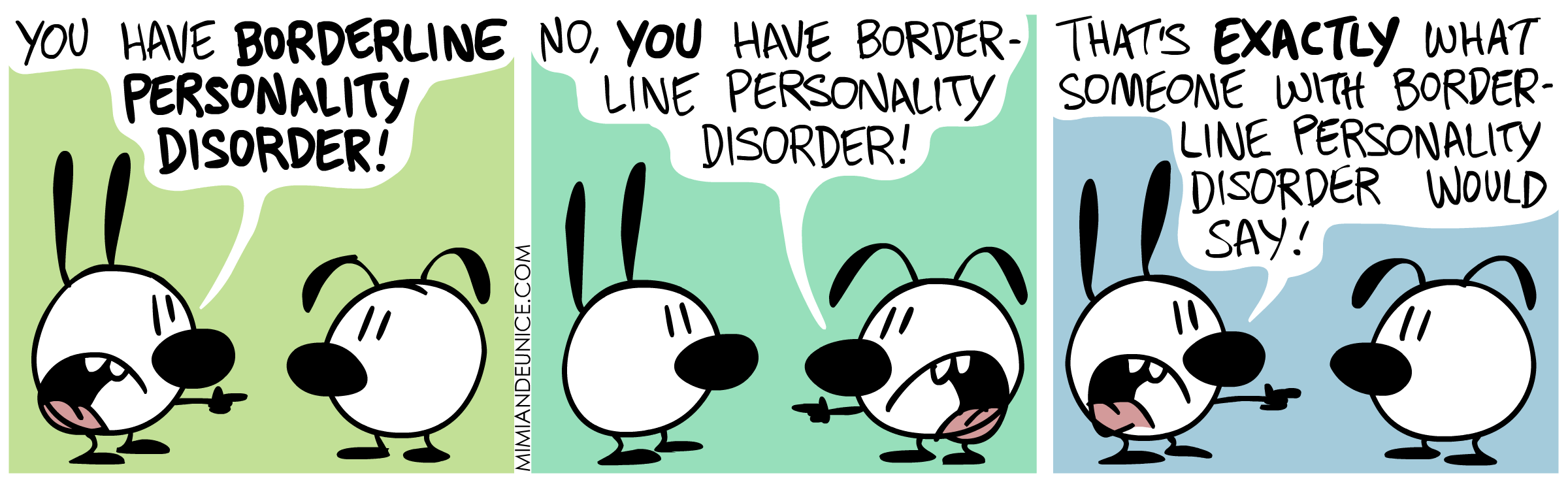
BPD_cartoon

A person with BPD does not wear a mask or have a “false self” like someone with NPD–but their fear of abandonment can cause them to knowingly or unknowingly push others away. Their ambivalence in relationships can be very confusing to others–they can seem to adore you one moment, and then hate you the next. They can seem needy and rejecting by turns. When others grow tired of this crazymaking and confusing “I hate you, don’t leave me” behavior and finally leave them, the Borderline genuinely doesn’t understand what they have done to drive the other person away, and so they become even more fearful of being abandoned. Their behavior is maladaptive because it tends to cause the very thing they are trying so desperately to avoid.

63380797
We are just burning toasters.

A much better description of the similarities and differences between Borderlines and Narcissists can be found in “Borderline vs. Narcissistic Personality Disorder: How Are They Different?” from the Clearview Women’s Center’s website.

While the two disorders, both being part of the Cluster B group of personality disorders, do have overlapping symptoms and are often confused with each other and/or misdiagnosed as the other disorder (with males being far more likely to be diagnosed with NPD and females with BPD), this author, unlike Bartholomew, understands that both the motives and mechanics of the disorders are quite distinct from each other:

[…]both BPD and NPD deal with conflict in a way that is unhealthy to themselves and those around them. It’s the expression of the anger that results from the conflict that is different.

In her article “Blame-Storms and Rage Attacks,” Randi Kreger, co-author of Walking on Eggshells, points out the difference in how those with BPD and NPD express anger. While those with Borderline Personality Disorder may fly into a rage and push people away, they will often calm down, feel shame for their reaction, and promise never to do it again.

“Unless they’re in treatment, the underlying issues don’t go away. Some conventional [borderlines] do not get angry at all, but hold it in or express it inwardly through self-harm,” says Kreger.

“The anger of narcissists, on the other hand, can be more demeaning,” she continues. “Their criticism evolves from their conviction that others don’t meet their lofty standards — or worse, aren’t letting them get their own way.”

I write so my head won’t explode.

exploding_head

Alaina, a frequent commenter on this blog, said she almost named her blog “I Write So My Head Won’t Explode” but decided it was too stupid to be a blog name.

I think it’s great. So great I decided to write an article with that name. It’s great because it’s the truth. If I didn’t have this blog and wasn’t able to write every day about the good, the bad, and the ugly, I think I would have gone insane by now.

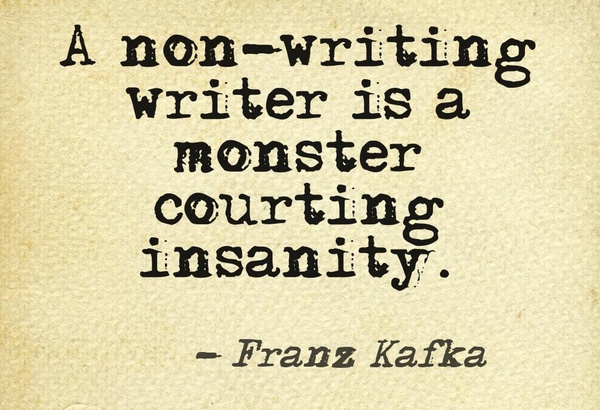
Writers are by nature people with issues. We have mental problems. That’s why we write. If we didn’t write, we’d be drinking, drugging, sleeping all day or stuffing our faces with junk food, or engaging in any number of other unhealthy and self-destructive activities. I know I did until I started writing.

franz_kafka

If you can write, you are blessed. If you enjoy and are good at any creative endeavor (writing, art, acting, singing, dancing, etc.) that can add something useful, entertaining, educational or beautiful to the world and at the same time provide an outlet for your deepest, most painful or confusing emotions, for the love of God, use your God-given gift.

Writing is my safety valve. It’s something I love doing that isn’t going to destroy my mind or my body. But it’s a discipline too. Sometimes I have to force myself to write, even when I don’t want to. I’m always glad I did.

As ACONs and survivors of narcissistic abuse, we also have a calling and a responsibility to educate others about what we have experienced. Nothing happens for no reason. We were given the lives we were given as an education so we could help others. Part of our responsibility as narcissism bloggers is exposing the N’s of the world who have nothing but ill will for other human beings–and we do that through writing.

calvin_headexplode

Since my daughter moved out Tuesday night, I’ve been more depressed than usual. In fact, I haven’t been this depressed in over a year. It’s not so much because she’s not here(though I do miss her), but that she lied to me when she was leaving. I confronted her about the lie yesterday–she told me her grandfather had sent her birthday money in a card, when he actually did not because I called him and asked–and she explained it was a bluff because she thought maybe I had stolen it and was possibly trying to get money out of me (playing on my “guilt” for having “stolen” it).

I felt betrayed and hurt by her lack of trust in me as well as her lying to me in such a mean spirited way. It’s been bothering me since it happened. It made me worry that she may really be a narcissist and not a borderline at all. I started thinking maybe she was diagnosed with BPD so her insurance would pay for her treatment (I don’t think NPD is covered by most insurance companies). I really don’t want my daughter to have NPD. It’s a painful and horrible thing to face–that your own kid who you love more than anything in the universe, may be a narc. I’d rather believe she has BPD. Maybe that’s all it is. I hope.

writing_relax

Yesterday I didn’t even go to work, I was so depressed about all this. I lay in bed sleeping most of the day instead, which is what I do when I’m depressed. Of course that just made me feel even worse. I didn’t want to write, I just wanted to sleep and feel sorry for myself.

But I also felt like pressure was building up in my head and that if I didn’t write, my brain might explode. So I forced myself to write, and I did feel a lot better–I no longer feel stressed to the point that I think I have to wear a head truss to to keep it in one piece.

Depressed.

my_head

My daughter moved out last night with her current boyfriend. This was of course the plan, but I’m really in the dumps today because we fought last night. It ended with me telling her to pack up and get out last night, which she did. For a couple of months she has been sleeping on the couch (my roommate–yes, she’s still here but has been a bit better–has the other bedroom) and just got a job last month. She had paid nothing toward the rent because she was saving to move out. I had told her this was okay.

We are usually best friends but because we also both have diagnosed BPD, things can get heated between us sometimes. There can be drama. I hate drama. There was plenty of it last night though. Two things happened that made us fight.

1. When I was in the shower, she stole $10 from my purse. I wasn’t so much upset because this was all the money I had until Friday (which is bad enough–go ahead and try to make $10 last three days), but because I’d started to believe I could trust her again. (She used to steal from me a lot). I confronted her about it and she admitted she took it but called it “borrowing.” This led to a fight, because what she did was STEAL, not BORROW. I told her she didn’t seem that remorseful and that worried me. Later on she did admit she was wrong and admitted it was stealing, but that didn’t happen until several hours later, after she was gone, and it didn’t help my mood at all.

2. My father called her and asked if she had received a gift card and birthday check (her birthday was last week) because he hadn’t heard anything. She never did receive anything in the mail. Now she believes I took it when I got the mail (apparently the check was made out to me) and cashed it and used the gift card without letting her know. I don’t collect the mail (my roommate does, which makes me wonder if SHE took it). I have never stolen from my daughter and never even entertained the thought, but due to the circumstances I could actually understand why she would think along these lines. I’m also afraid my father will believe her over me, if she tells him she thinks I stole from her. I don’t know why I’m worried about this but I just am.

Even so, I was hurt that she would think I would steal from her. I told her I didn’t want to live with someone who not only stole from me, but would accuse me of stealing from them when I didn’t. I can’t convince her it might have been lost in the mail. She isn’t mad anymore but still believes I stole her money. There is nothing I can do to make her think otherwise.

It’s for the best she’s out. She is 22 and too old to be living with mom. I can’t help feeling a little sad though. I’ll miss her, even though I’ll be seeing her almost every day probably. I’m used to having her around.

I have more space now and can actually use the living room again, but because the fight happened late last night, I was so upset and wound up I didn’t sleep at all. I had to call in sick to work today (which always makes me feel guilty). It’s a pretty day and I may go outside for awhile and work in the garden or just sit on the porch and read. But right now I just want to lie on my bed and sleep the day away. I know that will only make things worse. I just want to cry right now.

ETA: I called my father and he said he never sent her anything (he doesn’t trust her and is sort of No Contact with her, so I thought it was odd he would even be sending her money). So she is lying to me though I can’t fathom why she would do that. I am going to confront her with this information and see what she has to say for herself. She doesn’t have NPD but is good at playing some of the Narc games that she learned from her father. BPD’s can be almost as manipulative sometimes.

All my narcissistic lovers.

johann_heinrich

Not long ago, when I started studying narcissism in depth for this blog, I came to a shocking and disturbing realization: Every single one of the men I had relationships with or fell in love with were narcissists. It’s because I was trained by my family to be Narcissistic Supply, and as a Borderline, these relationships tended to be stormy.

Having BPD means I’m not the ideal codependent doormat, and when I felt violated–even though I’d allow the abuse to continue because after all, I was trained that way–I’d still try to fight back, at least for awhile. This led to lots of drama and some truly terrible fights with narcissistic men who I could never fix, no matter how hard I tried. I sure wish I knew then what I know now.

I have always been attracted to narcissistic men and they have always been attracted to me. I’m easily taken in by their elaborate displays of romance and promises in the beginning–there’s no one more romantic than a narcissist trying to procure you as supply. It’s fun while it lasts, but as soon as they know they have conquered you, the abuse begins. One red flag to watch out for: a man who moves in too fast, or starts talking about a permanent commitment or marriage only weeks after you met them.

Here’s a list of the narcissists I was seriously involved with (or married to). Only one wasn’t a narcissist, but he was severely bi-polar. The names are made up.

narcjoke

Steve P: my first serious boyfriend in high school. Steve called constantly (like 8-10 times a day at first), wanted to be with me all the time, regularly sent flowers, was very passionate and loving at first. He actually would cry because he “loved me so much.” After a while he became physically and mentally abusive, insulting me, questioning me about other boys, what I was doing when he wasn’t around, calling me names, and finally becoming physically abusive. One day, with absolutely no warning, he called me and told me he was dumping me because he met someone else. I was enraged at the nerve of this but actually relieved to be rid of him finally.

Mark S: my second serious lover during my college years. Mark was very cool–knew everything there was to know about art, music, theater, and he had offbeat, interesting friends. He used to take me to the East Village in New York City where we’d attend all the punk and new wave clubs and shop in funky vintage clothing and record stores. We had a lot of fun. But he was also an intellectual snob and looked down on my “pedestrian” tastes in music, movies, etc. He looked down on my friends, whose intellectual abilities he felt were beneath him. Mark saw himself as a rogue and a cultural rebel, and after awhile his constant put downs became annoying and we’d fight. He also never wanted to have sex (he was a cerebral narcissist), thinking it was a huge waste of time that could be better spent feeding his mind with new cultural experiences. After about a year, he told me I was too boring and my tastes too commercial and pedestrian, and he dumped me for a woman who looked exactly like me but was apparently much more hip and “in the know” about what was cool and cutting edge than I was. He wound up marrying her.

new_wave_guy

David B: David was not a narcissist; he was bipolar and suffered from severe depressions and substance abuse. He drank heavily to self-medicate and was always in and out of the psychiatric ward. He regarded me as a sort of mother figure and I liked the idea of being needed so much. But his neediness and clinginess became cloying and suffocating, he was constantly drunk, so eventually I left him, not without a little guilt in doing so. But he was really driving me crazy.

Michael B: The malignant narcissist I married. He is actually a psychopath. Michael acted very much like Steven in the beginning–showering constant attention and gifts on me, moving in very fast, talking about marriage just three months after we met. Being that I was in my mid-20s, I was open to marriage and he seemed perfect. I should have seen one HUGE red flag: the expensive engagement ring he insisted I have was purchased with my own credit card, because he had already maxed all his out. He always lived way above his means. He’d take me to expensive restaurants and insist I pay (and of course, he would pay me back later, but he never did). The rest of our story can be found in the articles under “My Story” in the header. Let’s just say the man is a psychopathic monster with serious substance abuse issues and a parasitic monster at that.

rottencard

Daniel S: The only lover I’ve had since the divorce. Well, okay, we were actually still married. (I’m not proud of this). But my marriage was already long over and I was desperate and miserable and not thinking straight (not that it’s an excuse to cheat). Daniel was actually a worse malignant narcissist than my ex, if that can be believed. He had that intense predatory stare, which I took to mean sexual and romantic interest, but was really his way of sizing up me as his prey. Of course I found him irresistably attractive. Unfortunately Daniel was another cerebral who had very little interest in sex. After a huge show of ardent romance and all that goes with it, he started the abuse, which included insulting me and comparing me (unfavorably) with his past lovers and what he saw as an “ideal woman.” He said he wanted babies with me but constantly criticized my parenting skills (as if he could know, since he never met my kids). He raged a lot although he never actually became physically abusive. He sulked and gave me the silent treatment when I didn’t do things his way or wanted to spend time with my family. He was stingy and although he had a lot more money than I did, he always made me pay my own way on dates. He obsessed about money. He would buy me things and constantly remind me how much those things cost him. He also would give me gifts and then ask for them back later, telling me he was only letting me “borrow” them. I am serious about this. After I ended our relationship (due to guilt at least as much as his abusive treatment), he still continued to call me constantly “as a friend.” After several of these phone calls, I finally worked up the guts to tell him to bug off and blocked his number.

ucallthislove

I have not had one lover or husband who was a just a nice regular guy. There have been a few of these men who seemed interested in me, but I always found them boring and rejected their attentions because I didn’t feel any “chemistry” with them.

I think it’s time to change all this. I want to start dating again soon. I know what red flags to look out for now so I think I can avoid the narcs, but can I fall in love with a normal man who will treat me well?

Cluster B personality disorders and the emotional thermostat.

If you think of the Cluster B (“dramatic”) disorders (characterized by either too much emotion or the masking of true emotions) as malfunctions or problems of the sufferer’s “emotional thermostat,” their differences make more sense. The emotional thermostat determines how a person handles their own emotions or reacts to those of others.

emotional_thermostat

Borderline Personality Disorder (BPD): inability to regulate emotions (a thermostat that works but is having problems–cutting on the heat or air when it isn’t needed or shutting it off when it is, but half the time works perfectly). This explains their ambivalence in relationships (“I hate you…don’t leave me,” “go away, come closer.”)

Histrionic Personality Disorder (HPD): inability to control emotions (a thermostat that is always on High and blasting heat even when it’s already too hot). That’s why they overreact to everything.

Narcissistic Personality Disorder (NPD): inability to access true emotions (a thermostat that sets to “cold” and turns on the air conditioner when heat is needed, and “hot” and turns on the heat when the air conditioning needs to be on). This explains their lack of empathy and show of fake emotions that may not fit a given situation.

Antisocial Personality Disorder (AsPD–psychopathy, sociopathy): total inability to empathize or respect the rights of others (a broken thermostat that doesn’t work at all.) People with ASPD are unable to feel any emotions except rage.