About the ads you see here.

Every so often I feel it’s necessary to remind my readers about the ads on this site.

Occasionally, I see ads here I disagree with or that go against the content of this blog.

Let me remind my readers that I do not choose the ads here.  I’m a member of the WordPress.com WordAds program, and I make a small income from the ads run on this site.  Because this blog isn’t self-hosted (as it would be if were a WordPress.org site) I have no control over which ads are placed here.

Just a reminder to those who think some of the ads are strange on a site like this one. If you find the ads offensive, you can always use an ad blocker.

10 Reasons Why I Use the Word “Fuck”

Sometimes you just gotta say it.

Please leave comments under original post.


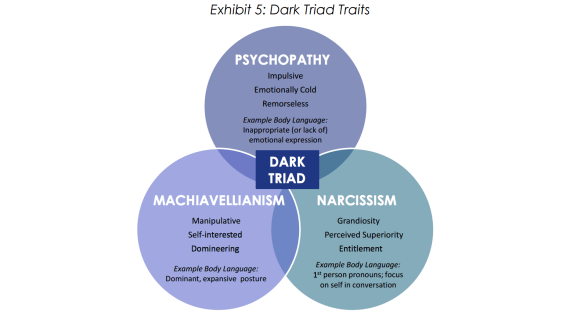
We need a lot more awareness about narcissism and psychopathy.

darktriad

Elizabeth Mika is one of the 27 mental health professionals who contributed to the  bestselling book,  The Dangerous Case of Donald Trump.   She is a psychologist who writes about narcissism, psychopathy and authoritarianism (specifically Donald Trump’s authoritarianism) on her Medium blog.  I follow her on Twitter (she’s under @yourauntemma if you want to follow her too) because I never want to miss one of her articles.    The other day, she tweeted this in reference to the many pleas to “remember the Holocaust”:

Unless we teach about the conscience-impairing character defects, like psychopathy & narcissism, shared by genocidal leaders & their followers, these calls for remembrance will remain hollow.

She’s absolutely right.   Even though the Cluster B personality disorders, specifically those in the Dark Triad — Narcissistic Personality Disorder, psychopathy (Antisocial Personality Disorder), and malignant narcissism (a combination of both disorders with paranoid traits)  — are getting a lot more attention than they used to, they still don’t get nearly enough.   There are a few terms formerly confined to the narcissistic abuse community such as  “gaslighting” and “blame shifting” that have recently become household words since Trump took office, but if you try to talk about narcissistic or antisocial personality disorder or malignant narcissism with most people you will still usually get a blank stare, especially if you try to talk about it in regard to the dangers these disorders pose to us all when a world leader is most likely afflicted with one or more of them.

Until — and if — the general public receives education in how these personality disorders work and how to recognize them, people will still fall prey to the phony charm and false promises of a narcissist in their personal lives, staying with friends and family members who are psychologically destroying them.  But even worse than that, people will still believe the lies and promises of con-men like Donald Trump or Adolf Hitler.  They will keep trying to find the goodness that must exist under all the flash and bluster, even though in all likelihood, there is nothing hiding under the mask but a black void of hate and fear.

Hitler rose to power because he promised to “make Germany great again.”  He promised jobs, a thriving economy, and a better life for all Germans, and people believed him, at least at first.  Later, when the deportations and roundups began, and militarized police began knocking on doors late at night, people may have begun to suspect Hitler was dangerous, but they still wanted to believe he was what Germany needed, so they told themselves what he was doing wasn’t really that bad or even was necessary (but well-meaning).   This is called “normalization” and it happens both in countries and in families headed by a malignant narcissist.    When there are too many outrages, people can’t process them normally, and things that were once seen as outrageous or shocking begin to seem normal.   As the dividing line between what is “normal” and what is “not normal” continues to shift, more and more “not normal” behavior is tolerated.   This is how a psychopathic or narcissistic leader conditions average, non-sociopathic people to accept the unthinkable.   It takes time, but eventually even genocide begins to be seen as acceptable or at least doesn’t raise any eyebrows.

hitler

Leaders with malignant narcissism and/or psychopathy tend to be very charismatic and forceful.   They seem extremely confident and this makes people trust them.   They say things like, “I alone can fix it” (this is always a red flag) or “I am all you need.”  They make lofty and unrealistic promises.  They brag about past accomplishments and  exaggerate what they have accomplished (which often wasn’t much).  They take credit for things others have done.  Whenever they are found to be lacking, or when they are called out for their lies and hypocrisy, they will never accept that blame and will either deny their wrongdoing, or blame it on someone else.   They never apologize.

They may seem to care about you, but they don’t, for they have no empathy.   They see everything in black and white.   They are blind to nuance in others.   You are not a person to a narcissistic or psychopathic leader: if you are not useful to them in some way (if you are useful they will shower you with praise — in relationships this is called “love-bombing”),  then you are the enemy.    And when you become an enemy, you are fair game for vengeance.   These people believe in revenge and “getting back at” their perceived enemies.

They speak in superlatives.  What they have done is always the best, the biggest, the most, the greatest.  They had the biggest crowd at their inauguration, they have created the most jobs, and they are the most beloved or respected leader in the entire world or even in all of history.   If their lies or misdeeds are pointed out to them, they become enraged.  Sometimes this rage manifests as self pity, and their self pity is as grandiose as their self-aggrandizement.  When they think they’ve been wronged, no one else has ever been so wronged or so mistreated as they have been!  They turn self pity into another contest of superlatives:  Trump whining to a group of Boy Scouts about how he was the most misunderstood and poorly treated politician in American history!

If they have deemed you an enemy (which doesn’t take a lot — you need only disagree with them to be devalued), you are the worst person on the face of the planet and have no redeeming qualities.  You will be devalued and called hurtful names, and that’s just for starters.    Leaders with malignant narcissism are very paranoid and always suspect others — often their political rivals or people who merely disagree with them, but have no ill intentions — of plotting against them, talking badly about them, or trying to destroy them or take away their power.    They pre-emptively fight back by attempting to discredit, dehumanize, or destroy their rivals or perceived enemies.

These kinds of leaders (who are almost always male) are fixated on toxic masculinity.  They admire and emulate those who they see as “strong.”  Thus, they glorify war, forceful oppression, abuse of power,  police brutality, and total control.   They value authoritarianism much more highly than democracy, which requires cooperation and some semblance of empathy.   They look down on higher values like compassion, humility, forgiveness, or love as “weak” or “feminine.”   They also like to “punch down” — which means enacting draconian policies or shifting blame onto the most  vulnerable or the weakest.   It’s schoolyard bully behavior writ large.  They hate anything they see as soft or vulnerable or “weak” because they are so afraid of their own vulnerabilities.   Deep inside, they have little to no self esteem and hate themselves, though they will not ever admit it and may not even be aware of it.   They puff themselves up to mask their own feelings of worthlessness.

Because these kinds of leaders can initially convince people they are strong and powerful and can fix every problem themselves, and because they seem so confident in their ability to do so, people continue to be duped by them and believe the lies they tell.    They ignore the red flags (which includes making lofty promises and saying “they alone” can fix things), because they have not been educated in what to look for.

malignantnpd

If awareness and education about NPD, malignant narcissism, and psychopathy were more widespread (perhaps it should even be a required part of school curriculums), people would learn how to recognize the red flags and avoid such people in their personal lives — and avoid voting for leaders who have these traits.   As long as people remain ignorant about the red flags of these personality disorders, we will still be vulnerable to electing sociopathic, dangerous leaders and being taken in by dangerous people in our personal lives.   We will still find ourselves under the thrall of people and leaders who see us as nothing but marks.

All that being said, there has been more awareness about this problem since at least the 1990s.   I wrote about the history of narcissism/narcissistic abuse awareness over the decades in this two part post — please give it a read!

How Did Narcissism Get So “Popular”? (part 1) 

How Did Narcissism Get So “Popular”? (part 2)  

So things are better than they’ve ever been, but we still have a long way to go.   If there was enough awareness, we would not be in danger of repeating what happened during the Holocaust.


Never Forget.

holocaustphoto

ICE and Border Patrol roundups, incarcerations, and deportations are happening at an increasingly alarming rate in recent weeks, and the abuses inflicted on those targeted are also getting worse.   While border security initially focused only on criminals from entering our borders, now that definition has expanded to include non-criminal immigrants who live respectable lives and have families.  Targeted individuals now include children and Dreamers, the elderly and the sick.  Kids, even babies and toddlers, are being cruelly separated from their parents, and husbands are being torn from their wives.  People who have lived and worked in this country for decades and contributed to society in countless ways are now being rounded up for deportation by border patrol agents, who appear to act without mercy or compassion, and often with force and violence.  The other day, I read with horror about a busload of people in Florida all being forced to produce ID proving their citizenship.  Those who couldn’t prove they were born here were arrested and detained.  That is un-American!

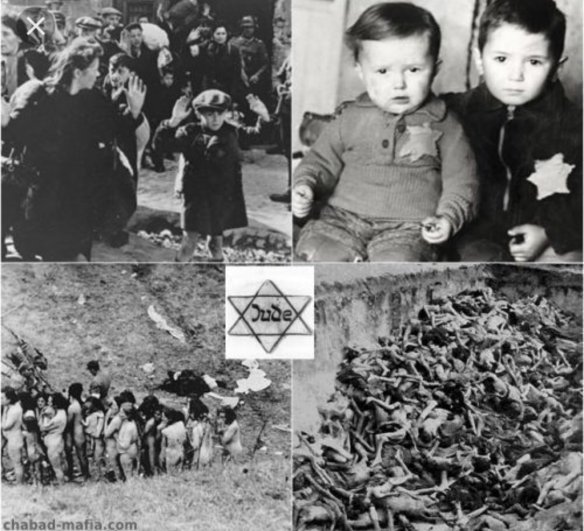
On this day, a day of remembrance for the millions of people who lived (and died) during the Holocaust,  it’s beyond sobering to realize that Hitler’s Third Reich began almost exactly the same way.   Jews and other targeted groups weren’t initially sent to concentration camps and gassed to death.    The first step toward extermination was identifying them as “not one of us,” dehumanizing them, and emboldening the “base” (Hitler’s adherents) to ostracize, shun, and attack them.

holocaust

The Holocaust began with profiling and targeting such as ICE is doing and Trump’s base is encouraged to do.   The German people were mostly able to normalize or dismiss it.  In less than 12 years, things escalated to what is shown in the two bottom pictures.


Trump is doing exactly the same thing Hitler did.  Muslims, Mexicans and other “non-white” immigrants are only the first groups to be targeted and rounded up — they are the new “Jews.”    Eventually, just as Hitler did, LGBTQ people, the disabled, the mentally ill, political dissenters, and anyone else who doesn’t fit the Trumpian ideal of straight, white, Republican, rich, and Christian will be targeted as well.  That means most of us, and it includes many in Trump’s own base.   If not stopped, this targeting will eventually involve a “final solution,” just as Hitler’s Germany did.   Concentration camps are not far off, unless this trend is stopped.

History tends to repeat itself when the oldest generation still alive no longer has a living memory of the atrocities of the past.   Most people who had reached adulthood by the time of WWII and the Holocaust are no longer with us.   I’m sure most surviving WWII veterans, who fought the Nazis, are horrified at what they see happening today.

May we never forget.

4 February 2017, West Point Cadets tour the Permanent Exhibition.

Further reading:

Remembering Sophie Scholl 

Remember the Holocaust — Or It Will Happen Here (Millennial Politics blog)

“George.”

Ogre

Linda Lee, who writes “A Blog About Healing from PTSD”  wrote this article about how she learned to deal with her panic attacks — and the advice is quite simple.

GET ANGRY! 

Yes, get angry.   While anger isn’t an ideal place to be, it’s a much more proactive and stronger emotion than fear.

The other day, I wrote about the panic attacks my son has been suffering from.   As his concerned mom (who used to suffer from panic attacks myself), I’ve been talking to him every day, monitoring his progress.    He’s been getting some good advice from his friends, since he hasn’t been able to see a therapist yet (but is planning to soon).

The best advice I heard of came from someone who told him to name his panic attacks.  By naming them, you effectively separate them from yourself, and they become an outside “person” instead of a part of yourself you can’t separate from.

So he decided to name them “George.”  Whenever he sees George coming, he tells him to get lost and yes, he gets angry at George.   He tells George he’s nothing but a big bully with no real power over him.  My son is much stronger than George and he tells him so.    George hasn’t gone away yet, but he’s having less power over my son than he did, and doesn’t seem quite so dangerous.

It’s a wonderful day…

earthfromspace

It’s another lovely day in Trumpistan.  Enjoy the day anyway! Be kind to each other, appreciate all the beauty that still exists in the universe (and that he can never take away from us), take care of yourself, don’t let the idiots get you down, and

Here’s a song that always inspires me.  Listen to the words.


Panic attacks, dissociation, and my son’s anxiety issues.

escher

Geometries by M.C. Escher


My son, who already suffers from OCD and ADHD (both diagnosed) tweeted this the other night:

I just had one of the strangest things happen… and it was the scariest experience of my life. I just had a Depersonalization/Derealization episode. It was SO FUCKING TERRIFYING. I thought I was gonna wake up in the ER or never sleep again.

Then later:

Other than OCD, ADHD and depression i have no psych disorders i know of. That shit LITERALLY made me feel like i’d lost my grip on reality and self.

The next day:

I’m going to the emergency room.

A few hours later:

Guys, if anything happens i love you all. Absolutely terrified in the waiting room rn feeling like death.

Late last night:

I got released. They gave me an anxiety pill. It was officially diagnosed as an anxiety attack.

Today:

Looking into therapy. my anxiety is getting REALLY bad.

As his mom, of course I was alarmed by these tweets.  But, as someone who used to suffer from panic attacks just as debilitating during my 20s and 30s, I KNOW HOW HE FEELS!  Panic attacks suck, and the type that involve dissociation are absolutely the worst.   For me, the dissociation usually involved derealization (feeling like your environment was unreal) but sometimes depersonalization (feeling like you’re disconnected from the world or like you’re not in your own body) too.

The panic might be hereditary.  His father suffers from anxiety attacks too.   I used to have exactly the kind of panic attacks he describes — always some kind of dissociative hell where I felt like everything was a dream and the people around me suddenly looked very frightening — either robotic or demonic.  Sometimes they looked like wax figures or seemed like they were being run by machines, and the environment itself became very surreal and dreamlike.  Sometimes it looked like a cartoon or two-dimensional.

disorienting

Museum installation by artist Peter Koler

During the worst attacks, I used to feel like I was literally outside of my body, and that really freaked me out.   I actually would have trouble controlling my body.  I remember once this happened to me on the subway in New York (which is scary enough as it is!) and I literally had to run off the train as soon as it stopped and ran into a corner and started whimpering.    Sometimes I used to have to bite my hands to feel “real.”   There were a few times I actually drew blood from doing that.    These dissociative episodes felt just like a bad drug trip, and I’ve had a few of those too.

I suffered from my first dissociative panic attack at about age 10.  I was playing outside in the early evening in the driveway and suddenly I felt like I wasn’t in my body.   But I wasn’t able to find the words to describe the feeling, and when I tried to tell my mother about how “weird” I felt, she had no idea what I was talking about and said I was being overdramatic and imagining things.   Eventually it passed, but from then on, every so often I’d get that weird feeling again.   As I entered my teens and twenties, the attacks became worse and more frequent.   They eventually tapered off when I reached my thirties and I haven’t had a full blown panic attack in years.

In my case, the episodes may have been due to my generalized anxiety disorder (GAD) or possibly from C-PTSD and/or BPD.    I don’t think my son has BPD, but he likely has PTSD or C-PTSD (his father is a narcissist and we had a very toxic marriage when the kids were young, which I have described elsewhere in this blog).   OCD can definitely cause a person to have anxiety or panic attacks, and I’m sure having ADHD just exacerbates the tendency.

I talked to him tonight for a while about this, and suggested some mindfulness tools that have helped me.   I think CBT could help him with this.  Thankfully, he has health insurance with his job, and has set up an appointment to see a therapist.  The emergency room gave him a short term prescription for some anti-anxiety meds (not benzodiazepines though).   But there are many things he can do to help himself too.

He has never sought therapy for his anxiety or OCD because he’s been able to deal with it  on his own until now, but he does need help with the panic and dissociation.   He also admitted his new job is much more stressful than he expected, and he is already looking around for something else.

If you pray, please send your prayers his way.  No one ever died or went crazy from a panic attack, but as someone who’s suffered from them, I know they can certainly feel that way when you’re in the midst of one!

*****

Further reading:

Derealization and Depersonalization in BPD and NPD

Can we ever stop the hemorrhaging?

flag

America is sliding backwards in almost every way imaginable.   Like it or not, as a country we have become far more superstitious, fearful, intolerant, and tribal than we were twenty, forty, or even sixty years ago.   Such a worldview is incredibly dangerous to any real progress and the sustainability of democracy.

The following article will provide a background of why this happened, its historical roots, how our situation compares with the rest of the world, and what, if anything, we can do to reverse our destiny and restore democracy as we used to know it.

The Middle Ages.
feudalism

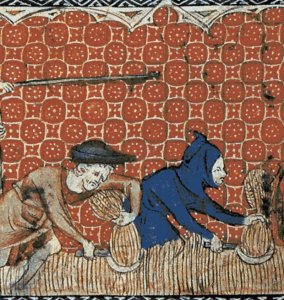
Hundreds of years ago, tribalism and irrational fear of the “Other” was the norm in the West. During the Middle Ages, the only form of government was basically a theocracy with “one party rule” by the medieval Catholic Church.  Feudal lords ruled over the serfs with an iron hand, with meager benefits, such as a small patch of land for a family to subsist on, handed out in return for loyalty and backbreaking labor.   There was very little to no chance of a common peasant or serf escaping their grim reality, or ever rising to the merchant class and certainly not the nobility (the oligarchs of those times).   For almost all who weren’t part of the nobility or merchant class,  life was “brutal and short.”  Harsh punishments were meted out liberally against those who dared question the regime or their overlords.  It was a life not much better than slavery.   Science was considered heresy and education was discouraged.  Higher education was limited to the clergy and the nobility, and even that was primarily religious education.

During these “dark ages,” which lasted approximately a thousand years following the fall of the Roman Empire, there was little to no progress, scientifically or otherwise.  Each generation lived pretty much the same way as the one that came before, and people did not live very long.   Daily life revolved around religion and the church and people were very superstitious.  Women were considered the property of men, their only role (besides backbreaking labor alongside the men) was producing as many children as possible as quickly as possible.  Most of those children died of illness before the age of 5 or so.   In fact, infant mortality was so common that medieval women didn’t bother to name a child until he or she was several years old, and more likely to survive.   Not naming a new child made it possible to not get too attached to the child and enabled the mother to take its death in stride without undue grief.

Modern feudalism and third world countries.

shantytown

Today, there are such societies. But they are not in the West. You can find feudal-like living conditions under harsh dictatorships and theocracies in third world countries in South America, Africa, and other parts of the undeveloped world.   Unlike advanced western democracies, these developing countries have not advanced in any discernible way, and do not contribute knowledge to the rest of the world. The vast majority of their people live much as Europeans did in medieval times.  The rulers and kings of these impoverished nations may themselves be very wealthy, but they keep their wealth for themselves at the expense of the populace, who have no chance to ever live a good life within their own countries.  These regimes are rife with corruption, oppression, sexism, and violence.  They are societies where hatred, fear, tribalism, and often religious superstition take the place of rational and enlightened thought and higher values such as inclusiveness and empathy for others.

Random violence and harsh and unforgiving laws are common in these societies, and people live in fear of their own government, who care nothing for them and treat them as vermin or at best, as inconvenient burdens.  Some people have been fortunate and able to escape from these regimes.  Many of those refugees emigratred to America for what they believed would be a better life, and for the most part, they have not been disappointed.

Tyranny outside the third world. 

sharialaw2

Islamic theocracies in places like Saudi Arabia and Iran are slightly better as far as quality of life than impoverished third world countries (most people have access to modern technology and generally have at least the basic necessities for survival), but are still rigidly authoritarian states that tolerate no dissent from the national religion and Sharia law. These regimes especially fear feminine power — a power which draws from the higher human values of empathy, altruism, and inclusiveness — and so women have been oppressed and denied a voice.    The rulers of such nations are always men, and they rule with an iron fist.   Toxic masculinity, where power, wealth, violence, and complete control are lauded as virtues, ensures that the “feminine” is kept silenced and where qualities associated with the feminine are dismissed or even considered evil (in medieval times, these qualities were usually associated with witchcraft).   Keeping women in line and obedient safeguards against the risk that the power of the feminine could ever threaten the hypermasculine regime’s control.

The Enlightenment.

foundingfather

While these harsh conditions used to exist in the West during medieval times, since the Renaissance and Enlightenment they have gradually been discarded.   Since then, the West has come to embrace rational thought and democratic, humane values over superstition and religious intolerance — and has changed their beliefs and laws in keeping with that.   The recognition that science (over religious dogma) is about truth and secular and higher education is valid and desirable, coupled with the idea that different kinds of people can and should learn from each other — and that difference is not something to be feared but something to be celebrated — paved the way for western countries to establish new policies that greatly enhanced the quality of life for all their citizens.  Policies that recognize that each human being is intrinsically valuable and worthy (instead of valued only for what they own or the power they wield) and should therefore be nurtured and encouraged to develop their full potential instead of punished and controlled for attempting to assert that potential has led to greater happiness, prosperity, and longevity for almost all people who live in those societies.  This recognition by the west that the “feminine” is as important (or more important) to the advancement of humanity as the “masculine” is the foundation for democracy, the most spiritually advanced and humane form of government that currently exists.

“Manifest destiny” and the roots of American tyranny.

americansoldier

America was, unfortunately, founded at least partly through the invasion and oppression of the native people who lived peacefully and sustainably on this continent for thousands of years.  This unpleasant reality has always hindered us as far as advancing in democratic values as easily as other western countries have been able to do. There has always been that undercurrent of violence and intolerance of the “other” that has darkened our path to true progress — even though our Founding Fathers did everything they could when writing up the Constitution to protect against tyranny, whether religious tyranny or some other form of it.

Since the Enlightenment, this reality has been concealed, even to ourselves.  We have convinced ourselves America is the most advanced, prosperous, and humanitarian democracy that ever existed, a concept known as “manifest destiny.”   We have long believed we are the one shining example of morality, liberty, and prosperity to the rest of the world — and that they should follow our example (even if by force at times).  But the reality is, while we lurched toward democracy with the rest of the west,  we were never a true democracy.   We have always been more hubristic and narcissistic than other countries, believing ourselves to be morally and in every other way better than anyone else, but it’s proven to be a slippery slope that has led to the serious problems we are facing right now.    In fact, our narcissism and belief in “manifest destiny” is causing us to slide back into a more medieval, almost feudal, type of society.   We are being sucked into a moral vacuum that was formed by our fear of the “other” and the feminine strengths that, for at least a while, forced us to face those fears and attempt to toss them on the ash heap of history.   The Roman Empire fell for the same reasons we are now.   In fact, America’s system of government was based on ancient Rome, and just as the ancient Romans did, we are eating ourselves alive with our wrongheaded belief that we are the rightful Masters of the Universe and should be treated as such by the rest of the world.

True democracy cannot exist when there is a moral vacuum where feminine qualities and higher human values that recognize all humans are intrinsically valuable are dismissed, ignored, or oppressed.   Toxic masculinity and “strongman” policies are, ironically, born in a crucible of fear.  Fear leads to nationalism and tribalism, which leads to hatred, which inevitably results in violence, oppression, and even tyranny.  The undercurrent of terror and superstition that has always existed in America is poisoning our fragile democracy, which never had a chance to fully flourish and become what it could have been.  Other western countries are far ahead of us in this sense, and now we are falling even farther behind.   We can no longer even pretend to be the “shining light on the hill” to the rest of the world, and to do so would only make us even more laughable to the developed world than we already are.

For over 240 years, in spite of our issues with narcissism, we were still able to make much progress — but we never let go of our need to regard ourselves as superior and make others treat us that way.  And because of our prosperity, our enviable technology, and our comfort with great power and wealth, other countries  did in fact look up to us as the rightful leaders of the free world.   Yet most of this was their perception — that being nothing more than an acknowledgement of the glorified image we wanted to project — not the actual reality of things.    No other western country ever had any concept of themselves comparable to “manifest destiny.”   The erroneous belief that we are “best” and should be admired and emulated by the entire world has kept us from developing sufficient humility to be able to empathize and take care of each other, never mind those “foreigners.”  Humility — the opposite of hubris — is necessary for the development of the feminine and the humane in any society, and that is why other western countries have had a much easier time adapting to true “social” democracy and the concept that good governance means “we’re all in this together” and not “I’ve got mine, screw you.”   Power and wealth has become more important in America than compassion and inclusiveness, and probably always was, if truth be told.  Democracy and unbridled, unregulated power cannot coexist. Since the days of Reagan, the idea that deregulated power and unlimited wealth trumps compassion, inclusion, and humanity (demonized by the right as “socialism”) has increased exponentially.

Our experiment with democracy.

Spirit_of_America

“Spirit of America” by Norman Rockwell (1894-1978).

For a relatively short time — from sometime in the 1940s through the late 1970s — we experimented with social democracy.   Following FDR’s New Deal and LBJ’s Great Society, American life and prosperity improved immensely for most (though racism and sexism were still issues, no one anywhere had really recognized those things as problems yet — reform was to come later).   The middle class grew and poverty diminished greatly, though it was never completely eradicated (and probably can’t be anyway).  Still, the uniquely American concept that some people were “better” or more “deserving” than others by virtue of their wealth, social status, or what they owned were still the true measures of human worth, even though this remained hidden or denied during those decades where we experimented with real democracy.  The truth is, we were never entirely comfortable with democracy.  Reaganism came as a relief to many people who feared the kinds of changes democracy could bring about.   Reaganism also began the slow unraveling of our developing, but still fragile and easily derailed, progress toward a more fair and humane society.  Forty years later, we are confronted with the terrifying spectre a near- fascist regime whose moral bankruptcy, brutality, ruthlessness, and lack of any semblance of conscience and empathy seems to have no limits.

We all know (or should know) how Reaganism eventually morphed into Trumpism, so I won’t detail the whole story of how that happened here.  Trump is not really the problem, nor would his immediate removal stop the hemorrhaging.   Trump is merely a symptom of a very deep and pervasive problem we have always had and that has become cancerous in the past four decades.   Other western democracies don’t have this problem, at least not to the extent America does. Because humility and “feminine” values (seen by tyrants as “weakness”) are not anathema to them, and narcissism and hubris hasn’t taken over their concept of themselves, they have always been more immune than we are to backsliding into tyranny.  That doesn’t mean it can’t happen in other countries, but it is less likely and their far right factions wield less power.  Our own fear and narcissism is destroying us from within.  We are regressing.

America is no longer a first world country.

tatteredflag

We have arrived at a point where we are not far ahead of places like Saudi Arabia, Iran, or Russia. While these are not third world countries in the strict sense, they are second world theocracies or dictatorships where the common people have no freedom (though they may be told they do and believe they do), lies are passed as the truth, history is rewritten, the free press is replaced by state propaganda,  and fair elections are either outlawed or a sham, dissent is punished, journalists are jailed, and the “different” are ostracized or even eliminated.   Such regimes have a number of things in common: oppression of women, criminalizing perceived “immorality” (homosexuality is an almost universal example in all these regimes), general intolerance for outsiders, an emphasis placed on buildup of the military,  police states, suppression of the arts and humanities, disdain or hatred for scientific thought, silencing the free press, revisionist history, the merging of religion and state, and state propaganda (whether religious or not) that passes itself off as “education” (in Communist regimes, atheism is treated as the state “religion”).

Lies are their currency; truth is always the enemy. Compassion is seen as weak and toxic masculinity (violence, controlling others, harsh punishment) is seen as “strong.” Higher human values — gentleness, inclusiveness, empathy — are not just regarded as weak, but sometimes as outright evil.   Such regimes are prone to constant wars and violence. Poverty is a given.  The wealthy few rule.  There is no middle class and it is not possible for a person to move upward from one class to another.  The “values” that are rewarded — wealth, power, total control — are often aided and abetted by authoritarian religion whose beliefs dovetail with the regime’s hypermasculine values.  American evangelical right-wing Christianity has much in common with radical Islam and organizations like ISIS.  In theocracies, whether the state-sanctioned religion is Islam, Christianity (so far, we have managed to avoid a religious theocracy here, but it existed during the Middle Ages and in Puritan times), or something else, there is no separation between religion and state and the leaders rule over the masses with an iron fist.  Any deviation is not tolerated.   As I mentioned earlier, this was par for the course during medieval times, but this form of governance was discarded by Europe hundreds of years ago when rational thought supplanted superstition, tribalism, and fear.  America, though denying it, was never able to completely let go of it.

Looking in the mirror.     

mirror      

Trump did not cause our decline, but through his hyper-masculine “strongman” words, actions, and tweets, has emboldened those who have always secretly wished for a return to authoritarian, medieval-like conditions and have never been comfortable with democratic values because such values demand we accept those who are different or more vulnerable than we are.  It also demands we embrace so-called feminine values, and that we recognize that every human being is intrinsically valuable. To be able to recognize the value in all people requires empathy, a quality that may be lacking in many Trump supporters, or seen as a “weakness” by people — usually men — who cannot accept any feminine softness within themselves.

But the proverbial phoenix rises from the ashes.  Fortunately, those of us who believe in true democracy and embrace higher human values over base ones like wealth and power greatly outnumber those who do not.   Trump, as bad as he may be, has done one very good thing:  he has provided a mirror for us to see ourselves as we really are, and how sick a nation we have become.   Sometimes the cure for cancer is painful, sometimes more painful than the disease.  Trump has  woken us up from our complacency and our apathy — which, had they continued, would have allowed the incipient authoritarian regime to take full control.   Though unwittingly, he gave us a window of opportunity to recognize the truth and finally take action against the horror that faced us.   Had Clinton or someone else been elected, we might have missed the opportunity.   There would have been no Resistance movement, we would have continued to sit home during elections,  and the thoroughly corrupted new Republican party would have continued to consolidate power and increase their stranglehold on our democracy without us ever realizing it until it was too late.    The cancer America is battling would have metastasized to the point that our destruction was inevitable.   Yes, Trump is extremely dangerous and yes, we could still self destruct just like the Roman Empire did, but I think with things having happened as they did, such an outcome is actually less likely, even as close as we are to destruction now.

The future. 

 leavingthefog

We have a long and difficult journey ahead, if we are ever to liberate our country from the jaws of fascism and return to the democratic, humanitarian values that leaders during the WWII and postwar years recognized were necessary for us to thrive and become a real inspiration to the rest of the world, instead of a flashy sham of one.

There may be war. It’s inevitable people will die.  No revolution ever occurred without bloodshed and great sacrifice. We can’t be cowards and just wait for things to change, because they won’t on their own.   Inaction is death.   America’s soul is in the balance: do we want democracy or tyranny? The choice is ours.
Asheville Womens March 2018!

ashevillewomensmarch


I wasn’t able to attend the Womens March that took place in downtown Asheville today, but the day was beautiful (sunny, high 50’s) and the turnout was unbelievable!  My jaw dropped to the floor when I saw this photo (which I was informed later is actually from 2017, but the turnout was the same or even greater than last year’s).

Asheville is a very progressive (deep, deep indigo blue!) bastion in a mostly red state (though a lot of the “redness” is misleading, since the GOP gerrymandering here is the worst in the nation.  There are actually quite a few blue/Democratic areas in North Carolina, particularly in the urban areas.

But I’m fortunate to live in what is probably the most politically progressive city in the state, outside of the Raleigh/Durham/Chapel Hill area, which is full of colleges and universities.   Asheville has a couple of colleges, but higher education isn’t its main draw.  We’re a haven for artists, musicians, people involved in the healing arts, and other creative types, and people from other areas of the country seeking the vibrant culture here as well as the beautiful scenery and the weather — we have all 4 seasons, but the winters are generally milder than what you find farther north and the summers are not that hot because of our location in the mountains.

The turnout in this small city (population about 89,000) was incredible.   It might as well have been in a big city like New York or Chicago!

Beautiful weather, beautiful city, beautiful people.   I’m proud to live in Asheville even though I wasn’t able to attend the march today.    I’m thrilled that the resistance seems to be growing even after a year of Trump, and proud of my fellow Ashevillians.

Self-care in turbulent times.

dog-walking-in-snow

The trendy term “self care” irritates me the same way other trendy terms tend to irritate me, but it’s actually a good phrase and good advice.

I had two days off from work this week due to the snow, and I could have spent that time glued to the news, scanning Twitter for the latest Trumpian outrages (I can’t even keep up with them anymore), and making myself angry, depressed, and scared.

For a year I have struggled with retriggered C-PTSD because of this president and his abuse of vulnerable Americans, which includes myself because I am not rich or conservative.

I could have worked myself up into a righteous tizzy and returned to work feeling exhausted instead of refreshed.

But instead, I took a moratorium from the news and from the Internet.   Reading my Kindle copy of “Fire and Fury” (I’m almost done) was about the extent of my politics-related activities.   I cleaned my house (really well for a change) , organized a couple of closets, and actually cooked.   I spent time catching up with friends on Facebook and reading funny or inspiring websites, and watching funny animal videos.  I watched part of a “Bizarre Foods with Andrew Zimmern” marathon, and even walked in the snow.    I read one of the novels in the list of books I posted the other day, and was actually able to concentrate on the plot.   I’m almost finished with it now.

readingabook

I have to admit I felt a twinge of guilt for burying my head in the sand and choosing not to follow the news for a couple of days.    I’ve always believed if you’re not part of the solution, you’re part of the problem, but taking mental health breaks from all the chaos coming from the White House doesn’t mean you’re ignoring the dangers and becoming complacent and complicit.  It means you are a human being and need time to take care of yourself.  If you’re active in the resistance, whether as an actual activist, or just protesting online, you’re not going to be any good to anyone if you’re depressed, deflated,  apathetic, terrified, or unhealthily enraged.   All you’ll be able to do is spread negativity instead of inspiration and ideas.

So it’s absolutely imperative, especially if you suffer from PTSD, C-PTSD or a depressive disorder, to give yourself breaks from all the chaos and negative politics and take care of yourself.   It’s still possible to enjoy the simple things in life and even have fun, yes, even in the darkest times.   I can’t help but think of Anne Frank, a young girl confined in a German concentration camp, but she never let that reality break her spirit.  She was still a happy, positive person who spread joy and hope to others, even knowing she and her family were going to die.   Even today, her legacy still inspires others.

After my two days off spent staying away from politics and the news, I actually felt refreshed and ready to fight again.    So don’t feel guilty if you need to take breaks to concentrate on yourself, your friends or family.   Spend time doing things you like or that relax you — listening to music, watching a funny movie, meditating, praying, doing Yoga, reading a novel, cooking or baking, or spending time in nature (nothing is more healing than nature, if that’s your thing).   You are not abandoning your ideals or becoming complacent.   You are just refueling.

*****

Further reading:

12 Ways to Resist Without Losing Your Mind