Happy Caturday

You can’t look at pictures of cats and have a bad day. You just can’t.

Guest Post #5: Why Does Mental Illness Stigma Exist?

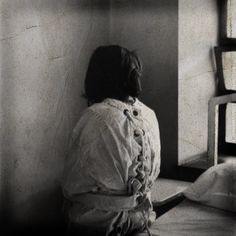
in_the_asylum
In The Asylum, Unknown artist.

Matthew Malin, owner and creator of the blog  Confessions, has written a wonderful guest post describing the history of mental illness stigma, going all the way back to Roman times.    Not only is the subject matter fascinating, but the unique historical perspective shows how the stigma is rooted in two things that seem almost diametrically opposed: mental illness as a medical problem centered in the body; and ancient superstitions, such as demonic possession.   Even today, there are those who regard mental illness as either a primarily medical problem (leading to doctors over-relying on drug therapy) or a spiritual problem. While there may be both medical and spiritual elements involved in mental illness,  both views have led to stigmatization.

If you have a chance, please visit the Confessions blog.   Matthew’s articles are all about living with depression and anxiety, all written from an intimate, Christian perspective:

In the Spring of 2015 an incredible passion for those suffering from Mental Illness was born within the heart of Matty Malin. Through his own struggles with Depression and anxiety, a fire was ignited within his heart. That desire was to create a place of honesty, transparency, and love. We, the broken, have grown far too weary of the masquerade playing out before our eyes in society. We’re tired of hiding behind “I’m fine”. Here you will find unabashed clarity into the soul of man. You will also discover the love of God despite the ugly, sometimes violent, heart of man.

We fully believe that man is sinful and in need of a Savior. Jesus, the perfect son of God, stepped into our world, lived a sinless life, and was murdered voluntarily on the cross for our sins. He took on the wrath of God for us so that we might have access to a relationship with God that will one day result in spending eternity with him. We obtain salvation through faith in His work and by the grace of His loving hand.

We firmly believe that no man can go too far for the love and hope of Christ. Mental Illness can provide some of the darkest days of life. It is here that we need hope and it is here that we can find it in Christ.

WHY DOES MENTAL ILLNESS STIGMA EXIST?
By Matthew Malin

As someone who has dealt with the debilitating effects of Depression and anxiety for a period of 4, almost 5 years, I believe that I’ve stumbled across something much more paralyzing: Mental Health Stigma. The more aware I become of my own struggles and the more honest I am with myself and others, the more I find a growing discomfort with the topic of Mental Health. Why is this? What is it about Mental Health that sends general fear and inquietude through someone who is tasked with aiding the mentally ill?

A timeline of mental illness stigma.

cutting_the_stone
Cutting the Stone by Heironymous Bosch, ca. 1494

I believe that history is ultimately to blame in this arena as well as a shallow thought process towards the issue. The Greek Era (500-100 BC) brought forth our first record of Mental Health treatment. Hippocrates was of the mind that a build up of bodily fluids was to blame. In his words, he said, “It is some kind of black bile that is making you depressed.” Their treatments revolved around the physical removal of whatever fluid was ailing the individual.

The Roman people (100BC-600 AD) did nothing to treat the issue at its core either. Instead, they were of the mind that depression/mental health issues were caused by organic malfunctions. Diet and exercise were prescribed to deal with the issue. Yet another example of a culture misunderstanding the true nature of Mental Health.

During the Middle Ages (600-1100 AD), a holy war was being waged on Satan and any form of mental issue was prescribed to be due to demonic activity. The medication for such issues became obvious: Exorcism or any other kind of holy activity. It is believed that the stigma of such illnesses became obviously prevalent and prejudiced during this time.

This recap ultimately brings us to our day and age. If you take a good hard look at the process of treating/dealing with Mental Illness today, you will see a common thread amongst diagnosis and treatment. The 1950’s brought about the thought that medical treatment was the only way to deal with the issue. This solution can be easily traced back to the Greek Era and their thought processes. Others will still claim that diet and exercise will best help those suffering from mental illnesses. There are those as well who righteously claim that mental illness is of the devil and must be rid of by God.

The meaning of mental illness.

All of these prescriptions are lazy, surface level suggestions that completely forsake the underlying notion of what it means to be mentally ill.

It is within the opinion of the author that, when it is appropriate, medicinal, organic, and religious means be used to treat mental illnesses. It is not, however, appropriate to cast off those with mental illnesses by simply telling one to deal with their issues by such means.

What is meant is this: Non-suffering individuals should not settle for surface level treatments when the real issue must be dealt with by more personal means. There is more to those who are mentally ill than meets the eye.

Medicine, religion, and organic based treatments are incredibly valuable but there is one treatment that is oft ignored: the support of a caring soul.

Our culture is neck deep in instant gratification. Social media, advancements in technology, and a general lack of education have only worsened the stigma that already existed towards those with mental illness. It is within the opinion of the author that our society has lost all care and respect for the people around them. Why? We’re far too caught up in ourselves.

What needs to be done.

It is a sad, unfortunate truth that this stigma will truly never go away. Some people will never care but all hope has not been lost. While arrogance can hardly be cured, ignorance can be educated. This kind of teaching cannot take place within a classroom. This is the kind of schooling that happens through our parenting, our social lives, and our social media ones. What I’m advocating for is change, but not from the outside world.

Change has to come from within if we ever want to make a difference. This requires those with any kind of mental illness to step up and speak out. It requires a willingness to open up about the issues, the difficulties, and the failures that come along with mental health. This change begins with us.

I recognize what I’m asking. I’ve not been very shy about my struggles but I recognize that it may come a little harder for others. Whether social stigma has silenced your voice or your own perceived stigma has, it can be an incredibly difficult thing to open up about. Let me reassure you of this: Your mental illness does not define who you are. Yes, it limits you. Yes, it makes life a little more difficult. I guarantee you though that it does not take away your worth as a human being.

You have been fearfully and wonderfully made by the God of the Universe and He loves you. You were made in His image! No person can ever take that away from you. No amount of vicious vocabulary or audacious action can strip you of your worth as a human being. Don’t allow yourself to tell you that you have no worth and therefore cannot speak out. Don’t allow other people to tell you that either. You have inherent worth, you are loved, and you are capable of standing against this.

Decide today that you will no longer stay quiet in this battle. You have a voice, let it be heard.

Be the change you wish to see in this world.

God bless you,

Matthew Malin
Author and Founder of Confessions:

https://confessions92.wordpress.com/
Sometimes the little things

…make a world of difference in how you perceive yourself. I haven’t had my hair styled professionally in years.  I finally grew tired of the same old boring look and decided to get my hair done today.  I chose a short (but not too short) layered hairstyle and had honey-blonde highlights put in too (although naturally blonde, I’d been dying my hair to cover gray roots, and the build-up of the dark blonde color I was using made it way too dark).

The hairstylist told me (correctly) that my hair was “fried.”   But she made it look terrific and I feel so much more attractive, and that gives me a boost of self confidence.  It’s amazing what changing your look can do for your self esteem.

If you’re feeling down about yourself, go have your hair done, or do something else nice for yourself, like having a massage or getting your nails done.   It might sound trivial and shallow but it really works!

Here’s my new do:

haircut2

That heavenly feeling…

wakingup

Credit: Catdoodle by eyecreate

Slow load time?

slowloadtime

My analytics page just informed me my site is “very slow” and that 99% of other websites are faster than this one. I don’t seem to have any problems with slow load time; is anyone else having this problem? I’m not sure what can be done about it, but maybe I can look into a solution.

What the hell?!

I was looking at websites about Easter candy, of all things, and tears just started pouring down my face. I don’t mean a few tears either, I’m talking about a damn river and this went on for about 45 minutes. I wasn’t sobbing or even really crying; it was like someone just turned the hose on. My nose was running too. I just kept reading the websites as if everything was business as usual. I tried to think about what emotion I was feeling and I don’t even know. It’s just pure, raw, unnameable, generic emotion, neither good nor bad, and not even particularly strong, but the release felt good. I think something loosened up inside me from tonight’s session. I wonder if this is a common thing.

I learned a little trick for getting more in touch with my emotions and allowing myself to experience them, and it’s surprisingly simple. Most people have a tendency to say things like “I am angry” or “I am sad.” But you aren’t your emotions, you just HAVE emotions. So, instead, if you can say “I feel angry” or “I have sadness,” it creates a bit of distance between yourself and your emotions, and paradoxically, that distance makes it safer to allow yourself to fully experience them. Of course, I have no idea WHAT I felt tonight, but it was still an emotion and I let myself experience it without fear or shame.

The waif inside.

bigeyedchild

Tonight’s therapy session definitely made up for the one I had on Monday, which I felt wasn’t very productive because I seemed to be deflecting and avoiding talking about my feelings.   I asked my therapist to stop me if I did that again, even if I get angry.   He agreed to this and tonight I dove right in.

We were talking about myself as a little girl, especially the way I was never allowed to express my emotions, especially anger.  He wanted to know what I did with all that anger.  I thought about it for a minute, and told him I turned it toward myself, and that’s why I started to become so depressed and why I started to hate myself .  He asked me to put my mind inside the mind of “little me” and describe how she felt and what she looked like.

We came up with a picture.  I described her as a waiflike child, like those paintings from the ’60s of those sad, big eyed little kids, dressed in rags, with a gray, unhealthy pallor.  She is always sad, almost always crying.  She’s afraid of everything.  She feels completely defenseless and in fact she doesn’t have any defenses.   She was never allowed to grow up.

I was asked how I felt about her.  I said I didn’t hate her, that in fact I felt protective of her and had to keep her safe from harm.    She also makes me feel angry when she comes out without my permission because she’s too vulnerable and defenseless and that makes me feel ashamed.   I have to protect her, but I also have to protect myself by keeping her hidden away so she doesn’t embarrass me.

It was harder to talk about her feelings about me, the way she views me.   All I could come up with was that she felt like I kept her safe but wishes I’d let her out more.  I realized then that it was easier to describe my feelings toward her than to describe her feelings toward me.   I’m not completely disconnected from my true self, but dissociation is present.

He asked me what good qualities she has that I want to protect.  I said she has a kind, gentle soul and a big heart.  He asked what she wants.  I thought about it and said, “all she wants is to love and be loved, and to belong.”  I got emotional at that point and started tearing up.  I wasn’t able to describe the emotions I was feeling at all, but I knew we’d made some progress.   He wants to start seeing me more often.   Somehow I’m going to find a way to afford it.   This type of inner child work is hard, but it’s amazing.

Urban lots and blighted souls.

urban_lot_southbronx

Although I’m No Contact with all my narcissists, I still find myself oddly drawn to their barren and bleak souls, at least online.    I read blogs written by narcissists because their minds fascinate me, even though I don’t understand them and will never understand them.

In the early 1980s, there was a horror movie called “Wolfen, ”  which was set in the South Bronx of New York City.  I lived in New York at that time and I remember taking the subway through the south Bronx several times on my way to other places.  I’d stare out the dirty windows in horrified fascination at the blocks and blocks of decaying, burned out apartment buildings, abandoned lots full of rubble and garbage and broken glass surrounded by hurricane fences and sometimes topped with barbed wire.  There was a harsh, desolate sort of beauty to the urban blight.  Even on sunny days, the view was as gloomy and foreboding as if there was a perpetual storm festering overhead.    I couldn’t imagine how anyone could live there, but people did.  Although repulsed and afraid, I felt oddly drawn to the gloomy desolation.

I imagined getting out of the train and walking through one of those abandoned lots, staring up at the dark burned out tenements looming over me like demons vying for my soul.  I imagined looking over my shoulder for murderers and rapists, but the only life to be found were half starved rats feeding on trash and carrion crows picking apart the entrails of the dead ones.

That’s what the mind of a malignant narcissist seems like to me: a menacing, creepy urban lot filled with death and decay and laden with potential dangers.  I know there’s nothing good there, nothing I need or want.  And yet I feel this odd attraction to it.  I have to keep getting off that train and poking around like a curious cat.   Maybe there will be a diamond among the rubble, or a starving kitten needing to be rescued.  But of course there never is and never will be.  Online, there’s a sense of safety.  Unlike an actual urban lot, I can easily backspace if I feel myself drawn too far into the blight.


Ditziness and complex PTSD, BPD.

ditzy_comic

“She has no common sense.”
“She’s just a dumb blonde.”
“She’s kind of ditzy.”
“She never seems to know what’s going on.”

These are phrases I’ve heard said about me my entire life, and not just by my abusers. To most people, I do come across as a little ditzy or scatterbrained. It doesn’t help that I happen to be blonde, because blonde haired people have to work twice as hard as everyone else to be taken seriously, since the (false) stereotype that all blondes are intellectual lightweights doesn’t seem to be going away.

I prefer to think of myself as an Annie Hall type. You may remember the 1977 movie starring Diane Keaton as Woody Allen’s (brunette!) scatterbrained but quirky love interest. I think I talk and act a lot like Annie Hall. At least I like to think I do, because Annie had a lot of charm and was loveable too. She was also a lot smarter than she appeared.

annie-hall

It gets tiresome being thought of by others as less intelligent than I actually am (my IQ is actually very high) and I get self-conscious about appearing “dumb.” My self-consciousness only seems to make the problem worse though, because it causes me to make silly mistakes and do or say socially awkward, dumb things out of nervousness.

For over a decade I thought I had Aspergers, because not only am I socially awkward, I often seem to be “out in space” and not really aware of what’s going on around me. It’s hard to hide this from others, and sometimes people talk down to me in a patronizing or condescending way, believing I can’t understand simple directions or information.  I resent it when people do that.

dumb_blonde

I’m not an Aspie, and I definitely don’t lack intelligence.  But dissociation is a symptom of both complex PTSD and BPD, and this is what I think is happening when I seem to be off in some other universe. When you dissociate, you’re not really in your own skin, and are not present in the moment. You’re outside yourself, stuck in the future or the past, and not paying much attention to the material reality of the moment. As a child, my report cards alsways had comments like, “Lauren does not pay attention,” or “Lauren spends too much time daydreaming in class.” I wonder now if I was dissociated whenever I was daydreaming.

Dissociative episodes can be very scary, but if you spend most of your time only slightly dissociated, you might not even notice that anything is wrong. You’ll just come across as being a bit “spacey.”

Further reading:
Derealization and Depersonalization in BPD and NPD

Domain name change for Down The Rabbit Hole

mirror2

As of today, my other blog, Down The Rabbit Hole, has a new domain name:

http://downtherabbitholeblog.org/

If you have been using the old URL, you will be redirected, but please make a note of the new URL because in August the old one will expire.