22 Signs of Online Destructive Narcissists in Forums and Blogging Communities.

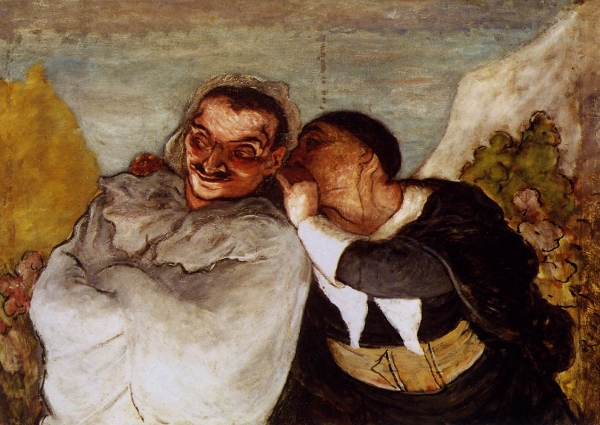
honore_daumier
Honore Daumier

If we’re blogging about pathology, at some point we’ll face a critic, an accuser. This can be a bewildering mess if we assume s/he will listen to reason. If we defend ourselves, the ante will be upped. If we over-explain ourselves, s/he declares victory, becoming increasingly strident with the reward of attention and sympathy. — CZBZ of The Narcissistic Continuum.

I just read a fabulous article about how narcissism works in online forums and blogs. I think it just may be the best article about this particular cyber-dynamic I’ve ever read. I liked it so much, I got permission from its author, CZBZ (owner and author of The Narcissistic Continuum), to reblog it here.

There are 22 “red flags” that the forum or blog you are on is run by a narcissist (or narcissists). I can attest from personal experience that every single one of these red flags is spot on. That goes for forums and blogs about ANY topic, all over the web universe–and blogs and forums about narcissistic abuse are not exceptions to this rule. You can’t get away from it.

Obviously some topics will attract more narcs than others–for example, a psychology or self-help blog or forum is probably going to attract (and be run by) fewer narcs than say, a cosmetic surgery (somatic narcissism) or political (cerebral narcissism) blog. A blog about improving relationships is going to have fewer narcs lurking about than, say, a celebrity-bashing one (like The Justin Bieber Hate Blog, as just one example) or even a blog that hates on the fans of a celebrity–yes, they do exist. But you never know where one will turn up. They could even be lurking on a charitable blog about helping the homeless.
Don’t forget that the serial killer and sexual sadist Ted Bundy spent time working in a rape crisis center!

Every forum manager or blogger necessarily has some narcissistic traits–otherwise they wouldn’t be running a forum or a blog! While not every blogger is a narcissist, there’s a narcissist in every blogger–if that makes sense. There is definitely a “me, me, look at me!” aspect to running a kind of online kingdom, even if it’s not the admin’s or manager’s primary motivation for writing the blog (or running the forum).

I’ll be the first to admit there’s some of that for me too. But I think for most of us, it’s healthy narcissism. Yes, there is a such thing. Without it, we’d all be walking around dragging our foreheads along the ground, leaving a trail of blood in the dirt, while wearing a sign that says, “KICK ME.” A little narcissism helps us survive. Without just a smidgen, we’d probably be dead. Almost anything, when there’s too much of it, turns bad. Narcissism stops being a vitamin and becomes a poison at very low doses. Think of those heavy metals in your blood–like iron or magnesium. In tiny doses they’re necessary for physical survival; but raise the levels of those metals infinitesimally, and you’re dead meat.

But I digress. I think CZBZ makes some very astute observations here about what to look for in blogs and forums to tell if you might be being taken for a ride by a narc in shining armor–or if the admin or forum manager’s intentions are honest.

I’ll also add one of my own here (although I think CZ mentions it too): Snark. The mean-spirited kind of snark. You know, the “I’m so cool/mighty/right and you’re a worthless idiot/lunatic/minion of Satan” condescending wittiness that makes you feel like the most lowly piece of pond scum in the lake–as you find yourself wondering whether the jokesters are really joking (and you’re just being too sensitive) or are just plain mean. Well, they’re actually both.

22 Signs of Online Destructive Narcissists in Forums & Blogging Communities

HonoreDaumier_MeetingOf35HeadsOfExpression_zps0853d8ba
Honore Daumier — “Meeting of 35 Heads of Expression”

I’ve thoroughly enjoyed finding new bloggers through the Slayer Award and reading their stories and personal insights. Ursula, the author of An Upturned Soul, posted an excellent article asking her readers an intriguing question: Online Narcissists–Does the blog you follow belong to a narcissist?

She asks:

“What if you are following the blog of a Narcissist? Does it matter? Does it affect you? Do you even notice? After all, bloggers are supposed to write about themselves, about their lives, and share their thoughts and feelings, and do so in a way which is creative and perhaps even exaggerated for effect and entertainment purposes…I think if you’ve never been in a relationship with someone who has Narcissistic Personality Disorder, then Following the blog of a Narcissist, won’t make any difference to you. It’ll inspire and entertain and that’s that. But what if you’re recovering from a relationship with a Narcissist and you follow a blog which is powered by Narcissistic Personality Disorder?” ~An Upturned Soul

There’s a distinction between trait narcissism as measured in social network studies and the “destructive narcissism” we discuss on blogs about pathology (clinical disorders). How normal narcissists affect readers and society is fascinating, too; but for today, my focus is on the impact destructive-to-pathological narcissists have on others and how we might inform ourselves before we’re harmed. So my answer to Ursula’s question is that yes, it can be dangerous if vulnerable people are “following” someone with a Narcissistic Personality Disorder.

My short answer is this: narcissist’s unstable self-esteem and grandiosity is hyper-sensitive to ego threats. Narcissists are more willing to use aggression than non-narcissists. (Bushman) Narcissists are particularly likely to displace their aggression on innocent bystanders. (Buffardi) Good people serve as scapegoats because they limit the degree of harm they’re willing to inflict on others. Their private emails may be posted publicly, private pictures may be circulated on the net, hate blogs may be written—all in the narcissist’s attempt to regulate self-esteem by destroying others. If you have befriended an online narcissist, you will eventually say something perceived to be an insult and you may be treated more cruelly than you were by the narcissist propelling you to the Internet.

And my long answer is the following. Pack a lunch. This is complicated.

Read the rest of the article here: http://n-continuum.blogspot.com/2014/01/21-signs-of-online-destructive.html

Also Read Part 2 of Online Narcissists: A Case Study Called Puppygate.
http://n-continuum.blogspot.com/2014/02/online-narcissists-case-study-called.html
I might want to change the look of this blog, but…

what_to_do

I’m considering changing my theme to a completely different look, but I have a question for WordPress bloggers who have done this.

I’m really nervous about changing my theme because I’ve heard horror stories of people losing their posts, comments, likes, etc. I’ve also heard you can lose all your widgets and have to start from scratch putting them back up. Is that true? That would be a heck of a lot of work and I don’t have time to do all that.

Also, because this blog is becoming so much more active and popular (and fairly soon I will run out of space if that continues), I’m considering switching from WordPress.com to WordPress.org, which would mean I’d have to find an outside host. How do you find an outside host? Is it expensive? Are there free hosting sites? If I have to use an outside host, then what becomes the role of WordPress?

Switching to a WP.org account makes me nervous. When you import from WP.com to WP.org, what happens to your blog while it’s importing? Is there a chance it could get lost in the ether and disappear? The prospect of that scares me a lot. I’ve heard it’s happened to people.
I have no idea how to save a backup copy of this blog while it’s importing, or is that automatically done as part of the import process?

What happens to the sense of community? One of the things I love about WP.com is that sense of community and the ability to follow other WP bloggers. With WP.org do you still have that capability? I’ve been told you do not.

If I use WP.org, do I need to know how CSS works? I am not a web designer and even though I have the upgrade that includes CSS, I have no idea how to use it. 😦

Is there a way to compress or put old articles in an archive or zip file, without having to switch over to WP.org? I know, so many questions.

Any advice anyone can give me would be greatly appreciated.

Why IQ tests of the past lacked smarts.

retro_classroom

The following is a guest post by Mary Pranzatelli about the matter of how the standard IQ tests those of us of a certain age had to endure as children only tested for one aspect of intelligence, when there are actually 6. This was damaging because kids who scored low on the standard (Iowa) IQ test in those days were often assumed to be “slow” (and sometimes put in special ed classes) when they may have actually been very bright–in aspects those tests didn’t measure. This is what happens when an IQ test for children is developed through the limited and damaging lens of cerebral narcissism.

Fortunately things are improving today. Psychologists are recognizing there are at least 6 different types of intelligence.

Mr. Smarty Pants and the Dumb IQ Test
Guest Post by Mary Pranzatelli

Does anyone remember those placement tests we took way back in the day? Those lengthy evaluations timed to measure our intellectual level in the 60s and 70s. They called them the Iowa tests. They were used to evaluate, place and devalue students in categories to tell them who they were and what they could be.

Did you ever wonder who created these nerve racking, sweat inducing tests that gave you nausea in the pit in your stomach? His name was Everett Franklin Lindquist. He was a Professor from Iowa, who created these standardized tests known as the ACT He started administering them in 1959.

I don’t know about you, but when I was a little girl I wanted to play on the swing outside and when I was a teenager I wanted to hang out with my friends, be creative and write poetry and stuff. I found these standardized tests completely boring, disturbing and even insulting. I’d start reading the first few questions and I my mind would become completely overwhelmed. I thought, “Oh..No…No…No! Its none of your business!” How dare them hand me a paper, pencil and a multiple choice test that will evaluate me and place my entire life into a category. Some placement analogy that was based on a multiple choice test made up by this Smarty Pants; A Professor from Iowa. A cerebral Narcissist that thought he was more superior then everyone else because he had a high IQ.

I’m sure I’m not the only student who became frustrated with all those little machine ready printed dots that intimidated us as they stared us in the face. A hundred or more multiple choice questions that would determine one’s future in attempt to brainwash us to believe we were either stupid or smart based on Professor Lindquist’s analogy of who we are. I use to think the man who made up the Iowa test was really a brilliant man. I thought he was a real genuine Smarty pants. I was brainwashed. I believed smarty pants was smarter then me. And this asshole had us all by the seat of our pants because he was in control of our academic direction, future and career path. This cerebral Narcissist screwed up a whole lot of people.

A portrait of ACT CoFounder E.F. Lindquist.

A portrait of ACT CoFounder E.F. Lindquist.

They ran those answers through the Iowa test machine and let us know what our IQ scores were. The measurements that actually brainwashed most of us and our thinking. He squashed our abilities to explore ourselves and enjoy our dreams our wants and what we loved to do. Mr. Smarty Pants never had the insight to know us better then we knew ourselves. No standardized machine driven test has the ability to determine who we are.

So who are we? Aren’t we all humans. And humans are love, and feelings. We have 7 major components. We think, feel (emotions, love, pain and empathy). We taste, smell, touch, see and we have instincts. So what would a Modern Hierarchy of intelligence look like? A realistic Hierarchy.

*The Modern Hierarchy of thinking

1. Remembering

2. Understanding,

3. Applying

4. Analyzing

5. Evaluating

6. Creating

IQ only measures number 1, which is the lowest order of thinking.

Unfortunately, Smarty Pants and the rest of all the know it all’s have difficulty moving on. Many of these, I am so smart assholes, never move on because they believe that they are superior and they are stuck on number 1. In many ways it is societies fault for telling them that they are so smart.

Creating, which is number 6 is the highest form of thinking. That includes music and art. So don’t let anybody tell you that you are not smart when your heart and mind is advanced in all the categories.

A final note to the late Mr. Smarty Pants who developed the Iowa test….

I’m sorry your thinking was so overwhelming, and that you lacked the ability to feel for all the children you hurt. I’m also sorry for all the children who ended up suffering from hardships and low self esteem due to your silly standardized test.

Professor Everett Franklin Lindquist, May Your Soul Rest in Peace…

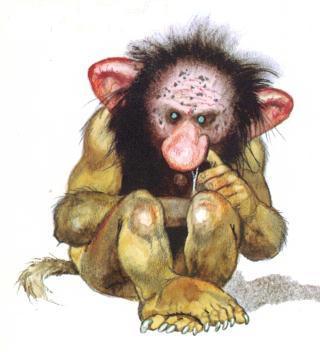
Blogging – Be Flattered by Trolls

troll_picking_nose

Yes, trolls can be good for your ego! I sure needed this today. Thanks, OM!

And, while on that topic, I want to personally thank my own trolls and bullies who have been dogging me the past week or so. My views are going through the roof because of you! Every time you click on a post of mine so you can drone on and bloviate about how much everything I say pisses you off, I make money from you! Thank you kindly. 😉

My weird phobia.

Terrified Woman Screaming --- Image by © Images.com/CORBIS

Terrified Woman Screaming — Image by © Images.com/CORBIS

I remember watching an episode of one of those daytime talk shows (I forget which one) in which people with strange phobias were forced to confront the object of their terror. There was a man who lived in mortal fear of cotton balls and a woman afraid of balloons. I read later these fears aren’t as uncommon as you would think. Fear of Styrofoam is also pretty common. It apparently has something to do with the noise it makes. These phobias seem silly to me, but a lot of people have them. I have a silly phobia of my own, and I’ve never met anyone else who has it. It’s so uncommon it doesn’t even have a name. I’ve Googled it and no one in the world except me seems to have it.

I’m terrified of amputated insect wings. You know, like when you see an insect wing just sitting there not attached to the insect. I have no idea why that freaks me out so much, but whenever I see that, I feel like screaming and fainting at the same time and I feel like I’m going insane.

insect_wing
I had to put a drawing here, because if it was a photograph I wouldn’t be able to look at this post without freaking out.

The worst experience I ever had with my phobia was the time we had a termite infestation. I was home alone at the time, watching TV in the living room and something made me look across the room. Something weird was happening on the hardwood floor. It looked like it was sort of…undulating. I got up to investigate and saw what appeared to be THOUSANDS of ant-like insects walking, flying, and DROPPING THEIR WINGS ALL OVER THE FLOOR. I started shivering and crying as I frantically went to go find the vacuum cleaner. I couldn’t think straight. Whimpering in terror, I had trouble plugging the damn thing into the wall because my hands were shaking so badly. In a panic, I sucked up every last one I could see, but MORE KEPT COMING OUT OF THE WALL. I didn’t know they were termites–I didn’t know about the “swarmers” (the termites who mate in the spring and have temporary wings until they mate) until Terminex told me that’s what those were. THOSE UNHOLY FLYING FAKE ANTS WERE HAVING SEX ALL OVER MY LIVING ROOM FLOOR!

I also can’t stand large winged insects. Cicadas in particular really freak me out and it’s because of those damn wings they have. They’re so creepy looking the way those brown veins run through them and I hate the pattern they make. It looks evil to me. Put me in a room full of spiders first. Most people are terrified of spiders but I don’t really mind them as long as they’re not crawling on me or biting me. Oddly enough, I like dragonflies. I don’t want one landing on me or anything (I don’t want any large flying insects landing on me), but I think they’re pretty and I even have a tattoo of one.

I think amputated bug wings is my weirdest phobia. What’s yours?

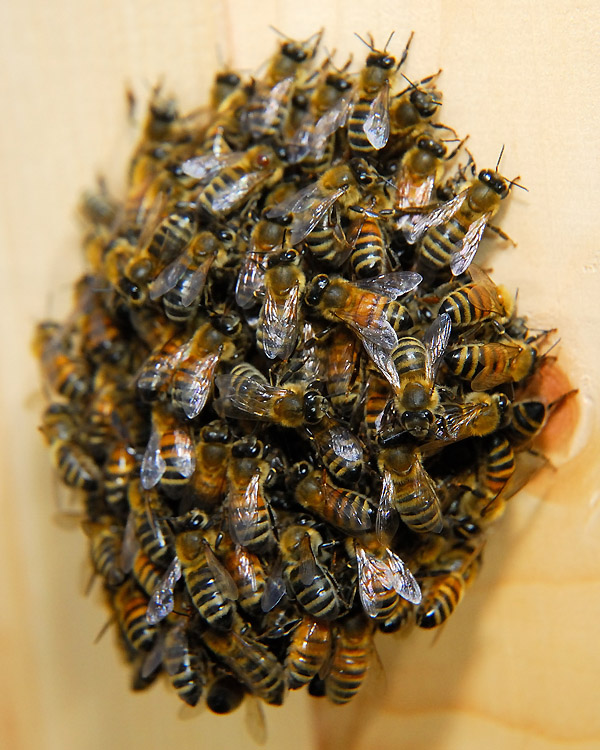
Personality disordered insects?

cluster_bee

Cluster Bees.

Why unrelenting, chronic rage is so toxic.

monsters-nietzsche

There is nothing wrong with anger when it’s needed. Righteous anger is a normal human emotion and helps us survive. When we are faced with danger, unfair treatment, or have been attacked (either overtly or covertly) by dangerous people, it’s normal to feel rage and anger. Anger is a stronger, more proactive emotion than fear, which it normally overrides if it’s powerful enough. Fear keeps us stuck in abusive relationships. Righteous anger is the only emotion that can give a normally fearful abuse victim the motivation and drive to leave their abusers and/or take action against them. All this is perfectly healthy and anything less than that is bound to keep you stuck in an abusive, codependent relationship.

But some people, especially those who suffered horrendous abuse by their own parents or caregivers who were supposed to love them, cannot let go of their rage, even after they go No Contact. That’s understandable, especially if their lives have been ruined due to the abuse they endured. But chronic rage isn’t healthy or helpful. Staying in a state of unrelenting, permanent anger is physically, mentally, and spiritually dangerous because it continues to fester and build on itself long after any immediate danger is past. Chronic rage destroys the body by releasing unhealthy levels of cortisone (the fight-or-flight hormone) into the blood, and this can lead to high blood pressure, headaches, heart problems including heart attacks, and a host of other medical problems. Anger is bad for the body when it’s chronic. High levels of cortisone brought on by rage are meant to be temporary and allow the person to confront or escape; otherwise it’s a poison.

rage2

Chronic rage is mentally and spiritually dangerous too. It festers away inside a person and causes them to become bitter and toxic to themselves as well as to others. It prevents a person from ever being able to feel true happiness or enjoy life. Chronically angry people are hard, unforgiving, bitter, cynical, easily enraged, and in great danger of becoming narcissistic themselves. I’ve become sadly aware of this sort of thing happening to some victims of abuse. That’s why I don’t think people should remain in a state of chronic anger, if it’s at all possible for them to move away from it. A good (non-narcissistic) therapist can help–or a pastor, rabbi or priest, or even a mature, empathetic non-angry friend if a competent therapist is unaffordable.

Letting go of rage doesn’t mean loving, enabling or forgiving your abusers. It doesn’t mean “hugging the narcs” or feeling sympathy for them, if you’re not so inclined. Letting go of anger when the danger is past is simply a step toward health and healing. The sort of unrelenting, chronic anger I’ve seen so often that keeps people stuck in a mentally dark place even without their abusers present can become a form of self-abuse. In essence, their abusers are continuing to destroy them even if they are no longer in contact.

Chronic, unrelenting rage can turn formerly good people into exactly the kind of people they hate the most–narcissists. They may not be aware this is happening to them, but others can see it. This is also one of the reasons why narcissism is so contagious and is sometimes compared to a communicable disease. Abusive, malignant narcissists can easily turn a person into one of them. Even Henry Rollins said so.

Apology for comparing narcissists to schizophrenics.

Over a week ago I wrote a post that was very controversial and angered some ACONs. While I’m not taking the article down or apologizing for its overall message (which I still think was misconstrued and misunderstood by some), I did make a bad call comparing narcissists to schizophrenics. It was in bad taste and not a very good analogy anyway. These disorders really can’t be compared since narcissism is a mental and moral disorder that was chosen by the individual (even if at a very young age) and schizophrenia is not. My sincere apologies for that tasteless and irresponsible analogy.

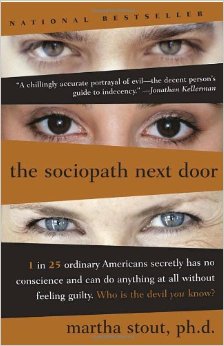
Book Review: “The Sociopath Next Door” by Martha Stout

sociopath_next_door

Dr. Martha Stout’s excellent “The Sociopath Next Door: The Ruthless versus The Rest of Us” is an easy to read, well researched and often entertaining study of the psychology of evil. In some ways similar to M. Scott Peck’s “People of the Lie,” but without the religious overtones, Stout chillingly describes the “ice people”–the sociopaths that walk among us.

As many as 4%–one in 25 Americans–is without a conscience or the capacity to feel empathy for others. Stout doesn’t make a distinction between sociopathy and psychopathy, and in this book she is referring to those people who meet the diagnostic criteria for Antisocial Personality Disorder (ASPD), not Narcissistic Personality Disorder. In fact, narcissism as a disorder is rarely mentioned, although she does acknowledge that all sociopaths are narcissistic.

Stout includes many case studies of how sociopathy can manifest in individuals. Contrary to popular notion, not all people with ASPD (sociopathy) are in prison or even criminals. Antisocial behavior is found as often in boardrooms as in prisons, and sometimes more so. For sociopaths who grew up in well heeled families and were able to get a good education, their antisocial traits are likely to manifest in “socially acceptable” ways. For example, a CEO who needlessly downsizes to increase his own bloated income, ruthlessly firing hundreds of employees without caring about the hardship those fired employees now face, is as conscienceless and unempathic as a cold blooded murderer.

A sociopath can be the gossipy woman next door who tells malicious lies about all the other neighbors, it can be the company president who embezzles and defrauds, or it can be the vicious serial killer who preys after college students.

Stout talks a lot about conscience, that quality that separates the antisocial from everyone else. It’s the lack of this trait that makes people evil. She offers a number of reasons why someone may lack a conscience–they may have suffered horrible abuse or neglect as young children (she discusses the sad plight of Romanian children who were adopted by American parents and many of these kids were found to have an underdeveloped conscience), they may not have been taught prosocial values, or they may be deficient in the parts of the brain where the conscience develops in normal children.

I definitely recommend “The Sociopath Next Door” to anyone who has been a victim of or had to deal with a sociopath, whether at home, work, school, or in a relationship. I’m going to extend the term “sociopath” here to include narcissists and psychopaths because they too lack empathy and a conscience. Really, this book should be read by everyone, because all of us have had to deal with ruthless “ice people” who just don’t care about anyone but themselves.

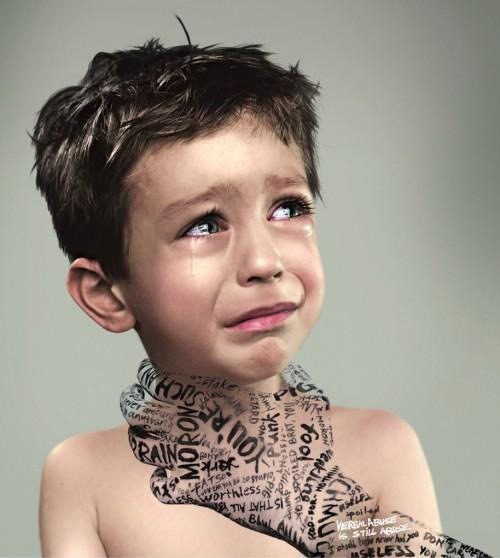
The 4 types of narcissistic abuse victims.

abuse_boy

It’s become clear to me that not all ACONs and abuse survivors are on the same page when it comes to their attitudes toward narcissists.
Because we all are abuse survivors you would think there’d be more solidarity among us, but this is not necessarily the case.

It seems there are four distinct types. In spite of things I may have alluded to in the past, I don’t think any one group is worse or better than any other. They are different, and each has their reasons for having the attitudes they do. I’ll explain why I think the attitudes are different among the four groups. There is definitely a pattern I’ve noticed.

1. The Narc-Hating Group.

female_warrior

These ACONs usually underwent the worst abuse as children, or had two narcissistic parents instead of just one. Having abusive parents seems to instill the greatest anger in victims–more so than having been with an abusive spouse–and this anger isn’t easily let go of. This group has a warrior mentality: to them, ALL narcissists are evil, bad seeds, or demonic, and have no hope whatsoever of recovery or healing. They may acknowledge a continuum or spectrum among narcissists, but it’s not important to them. A narc is a narc is a narc, and they are all considered impervious to change and anything they do is suspect. Some ACONs of this type are ultra-religious and believe all narcissists are seared souls destined for hell.

2. All Cluster Bs are the Same Group.

cluster_b

This group goes a step beyond the first one, in that they believe anyone with a Cluster B disorder–Borderline, Histrionic, Narcissistic, or Antisocial–is character disordered and manipulative, and therefore all pretty much the same and to be avoided like the plague. They do not make exceptions even for Borderlines–the least “malignant” of the four disorders. People who subscribe to this view were as damaged by their malignant narcissistic parents as the first group. One of their parents may have been Borderline or Histrionic, rather than narcissistic– but people with those disorders don’t always make very good parents either. It’s unfortunately all too common for narcissists to collude with Borderlines in the abuse of the child, with the Borderline in the more codependent, subservient role.

3. Not all Narcs are Hopeless Group.

smashingmirror

This group may be in the minority among ACONs (at least among bloggers), but it’s the group I’m evidently in–which has raised the ire of some of the Narc-Hating ACONs. People in this group aren’t going around singing the praises of narcissists and in fact the vast majority strongly encourage No Contact (just as the other two groups do). They do not tolerate or enable narcissistic manipulations and abuse, but they hold that because narcissism may be a spectrum disorder, that those at the lower end of the spectrum (non-malignants) may be redeemable under the proper circumstances and with the proper treatment. They may show more sympathy or empathy for people with narcissism than the first two groups, but they aren’t enablers either. Most do not believe malignant narcissists and psychopaths/sociopaths are redeemable, however.

Many people in this group were part of the Narc-Hating group when they were trying to disengage or go No Contact with their abusers. They used their anger to give them the courage and motivation to disconnect and stay disconnected. But because their hatred and anger toward narcissists isn’t as deeply ingrained as in the first two groups (I’ll explain why in the next paragraph), people in this group eventually can no longer hold onto their anger and prefer to try to understand the motives of those who abused them, while at the same time remaining disconnected from their abusers and not enabling narcissistic behavior. Their desire to let go of anger is very difficult for ACONs of the first two groups to understand, and people of the third group may be seen as betraying the ACON cause, even though this isn’t really the case at all. They’re just handling things differently.

Another reason a person may hold that some narcissists are redeemable is they may have a narcissistic child, and it’s an extremely difficult thing for a parent to accept that their own child may be beyond hope.

It’s been my observation that people in this group may have suffered less severe abuse as children, or had only one narcissistic parent instead of two. One of the parents (usually a codependent spouse) may have actually loved their child, and this love tempered the abuse inflicted on them by the narcissistic parent even if they were forced to collude with the abuse at times. Some people in this group may have even had normal childhoods with non-narcissistic parents, but got involved in relationships or marriages to narcissists (which technically means they are not ACONs at all). It’s been my observation that people who suffered most of their abuse at the hands of a narcissistic spouse or lover rather than a parent never developed the deep hatred toward all narcissists that the first two groups tend to do.

4. Codependents.

Fashion model stylized as marionette doll sitting on violet studio background

Codependents are often (but not always) personality disordered in some way, and many of them are Borderlines or covert narcissists. They are usually victimized by their narcissists, but also identify with and collude with their abusers. Most codependents were abused by narcissistic parents, and are drawn to narcissistic relationships where they are compelled to re-enact their abusive childhoods. This is the group that may never acknowledge they are being abused or reach out for help. They continue to defend and enable their abusers and may believe they are the ones at fault for anything that goes wrong. If a Codependent leaves their narcissist and realizes they were actually being abused, then they are no longer Codependent and join one of the first three categories.