
The other day, I posted an article about the insidious way narcissistic parents can turn scapegoated children into lifelong victims. I was thinking more about this matter today (because I was feeling victimized at work) and I think I understand what happened to us to make us such easy targets for victimization and why we are usually shown so little respect by others.
First, there is nothing wrong with you. You are not mentally deficient, defective, worthless, or unlikeable. You deserve respect as much as anyone else does. You are no less valuable than anyone else. Later in this article I’ll explain what it is about us that makes us get treated like this so often and why.
There are ways to tell if you’re an adult victim. The abuse we get is more insidious than the treatment we got from our parents or childhood peers. As adults, we are not likely to be straight-up bullied the way children and teenagers are because most adults have learned it’s not okay to bully others. Instead, the abuse manifests as a lack of respect and being treated as if we don’t exist or don’t matter.
How to tell if you’re a victimized adult.

1. You find it difficult to make friends.
2. You are always overlooked for promotions or raises in the workplace, no matter how well you do your job. You may also be overlooked for special privileges when they are given out. If you ask why, no one ever seems to know how to answer you.
3. People leave you out of social events like parties or casual get-togethers.
4. If you were a scapegoated child (and most likely you were if you are victimized as an adult), even your FOO (family of origin) probably leaves you out of family events such as weddings, births, and reunions. You were probably disowned or written out of the will. You are the “black sheep” of your narcissistic family.
5. People talk over you or act like you are not there.
6. If you speak, people act like they didn’t hear you or ignore what you just said.
7. You are treated like a piece of furniture. People tend to physically push you aside, invade your personal space, or act like you are in the way. In a small group of people, they may shift their positions so you become shunted to the side or back so you don’t have a place in the circle. It isn’t really hostile; it’s as if they literally don’t see you.
8. People tend to treat you in a condescending manner, as if you are mentally defective.
9. People like to “mess” with you or make jokes at your expense.
10. In a work environment, even your co-workers may be more critical of you than they would be with others–even if your work is fine. You may notice people try to boss you around who have no real right to.
11. People may treat you as if you annoy them.
It is not your imagination that you are treated this way. You are not just being paranoid or over-sensitive (though people will tell you this). You really are being treated like this, and it’s because as children, we were trained that we were nothing and that we did not matter. We internalize these messages and carry an attitude of being undeserving of fair treatment into adulthood. People treat us the way we regard ourselves. If we think we are nothing, we will be treated like we are nothing, even by non-narcissists.
How being an adult victim can further damage us.

Being scapegoated by narcissistic parents is child abuse, and is thoroughly evil. It can destroy a person for a lifetime. The victimization we continue to get as adults is also very damaging, and exacerbates our already dismal self esteem. Here are the ways being a victimized adult can make you feel.
1. You feel like you have no place in the world.
2. You feel unloved by everyone.
3. You believe you have no value.
4. You feel isolated and apart from the normal world.
5. You fear you may actually be stupid, incompetent or annoying.
6. You are prone to deep depressions and extreme anxiety, especially when having to deal with other people.
7. You feel envious of others for being treated with more respect than you are.
8. You feel envious of others for having loving families who care about them.
9. You feel envious of others for having friends and an active social life.
10. You feel like you are constantly having to apologize.
11. You feel like life is unfair and the world is a hostile and unfriendly place.
12. In many situations you feel like you’re on the outside looking in.
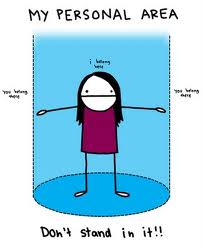
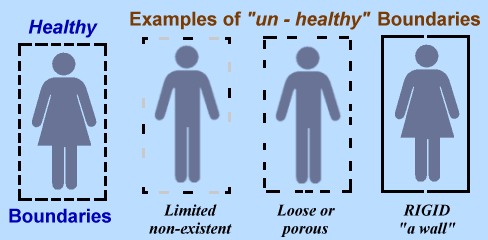
It comes down to boundaries. As adult victims, we don’t have any, or have very weak boundaries. We never established boundaries when we were young because we were (1) never trained to do so; and (2) because our early boundaries were constantly being violated.
People can sense when a person has very weak or non-existent boundaries. That’s why we continue to attract narcissists as friends, lovers and spouses. Narcissists know easy prey when they see it.
Why personal boundaries are so important.

Even among non-narcissistic people people, we are seen as prey because we appear to lack boundaries. Even near-strangers are constantly stepping over the line and treating us with disrespect, even if their behavior isn’t outright abusive. It’s as if most people have an invisible line drawn around them that must not be crossed. People “see” this line–or sense it–and will respect it. But if you never established boundaries or they were destroyed by your narcissistic family, there is no invisible line drawn around you, and people will constantly step over it, because they believe it’s okay for them to do so.
The solution seems easy enough–just establish some boundaries and tell people when they are violating them. But this is much easier said than done. Most of us have such low self esteem we are terrified of letting others know it is not okay to treat you this way. We are terrified of being criticized or told we are just being “too sensitive” or paranoid. We see other people standing up to those who violate their boundaries without repercussions, but we fear that if WE do it, we will be attacked or criticized, because we were trained to believe this.

The sad news is that it isn’t incorrect to believe you will be attacked or criticized or told you are overreacting if you try to stand up for yourself. That’s because people don’t like change. If people have become used to you as a mousy, fearful person with no personal boundaries, they are not going to like it much should you suddenly point out that you have some. But it doesn’t mean you are worthless and it also doesn’t mean you must forever continue to submit to this kind of treatment.
In any group, there is usually one scapegoated (or disrespected) person, and that person is the one who is seen as having the weakest boundaries (and is probably also the most sensitive, which is why we were chosen by our families to be scapegoats in the first place). Unfortunately the human condition dictates that even for normal (non-narcissistic) people, there is going to be a pecking order. This system can be observed in most animals and even some birds, like chickens. People–and animals–feel more comfortable when there is one person around they can pile on. If you suddenly announce they may not pile on you anymore, they are not going to be happy about it and will probably take out their frustration on you. It isn’t fair, but it seems to be in our human nature.
Can anything be done?

Yes, but it may be necessary for you to start over in a new place or a new job if this is happening to you. You will need to make it clear from the very beginning that you are to be treated with respect. This means the very first time you observe one of the above behaviors directed toward you, you must nip that in the bud and let the person know it is not okay to treat you like this. Doing this will be one of the hardest things you will ever have to do, because we are so afraid to speak up for ourselves. But if we have not been established yet as a victim or at the bottom of the pecking order, letting others know (nicely, of course) that we will not tolerate this sort of behavior should help. Once your boundaries are made clear to others, you will be treated more like a human being and less like a worthless piece of furniture.
If you cannot start over (and many of us can’t, because our lifetime problems with boundaries and self esteem have made it impossible for us to be able to earn the kind of living that would enable us to move elsewhere or leave a job), then you will need to go ahead and try to speak up for yourself anyway, and risk the fallout. If you find this impossible to do, then you will need to find a support system or a group that does not know you the way you are. You can join a church group, attend group therapy, or take a class. Or you can find supportive people online. For those of us who are introverted, like myself, this may be the most effective way to have a voice and be treated the way you want to be treated: like a human being worthy of respect.
Keep telling yourself every day that you are not worthless or defective, because you are not. There is nothing wrong with you! Your only problem is that the family that raised you did not respect or love you the way they should have–not because you aren’t deserving of love or respect because every child is–but because as narcissists, they could not. You served a role for them as the family scapegoat.
A good therapist–or keeping a journal or a blog–can be a good way to help you deal with your past, the family that destroyed your sense of self esteem and boundaries, and help you overcome your fears and begin to act more like a person who is to be treated like everyone else.
You are worth it.








 Lucky Otters Haven