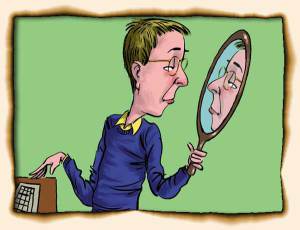
Narcissism is good. No, you didn’t read that wrong.

preening

Narcissism has become a dirty word. But the kind of narcissism that’s such a hot topic all over the media and the Internet right now is the the type we call malignant narcissism–or at the very least, NPD. Narcissism isn’t a bad thing itself, but like most good things, it becomes bad when it becomes extreme or there is too much of it.

Why do we always hear about “malignant” narcissists, but never “benign” ones? Do they exist? This was a topic that was brought up in the comments section of one of my posts a few days ago.

Of course they do. Not everyone with narcissism is malignant. Narcissism, like autism, runs on a spectrum from practically non-existent to mild to moderate to severe. Most of us have some degree of narcissism, especially those of us with blogs! Studies have shown that people who post lots of photos on Facebook or Twitter or are very active on social media, who take a lot of selfies, or keep online journals or blogs where they talk about themselves are narcissistic, or at the very least, vain. Well, vanity is one aspect of narcissism.

Benign narcissists are lower on the spectrum than malignant narcissists. Some in the middle of the spectrum or close to the middle may be self-centered, can act like jerks, talk about themselves a lot, and may be overly concerned with their appearance, likeability, athletic prowess, or some other quality. Think of the popular kids you knew in high school, the cheerleaders and the overconfident jocks on the football team. (Of course, some of the “mean girls” and boys are probably malignant narcissists). Even farther below the annoying jerks on the spectrum, a benign narcissist is just a normal person with high self esteem.

meangirls

Benign narcissists don’t normally use or manipulate others to get what they want, they have a conscience, and they can feel remorse, guilt or empathy. They can feel genuine love or care for someone else. They can be moved by beauty or truth. They can be happy for you. They can weep tears that aren’t of the crocodile variety. They may be annoying at times and seem full of themselves, but they are not generally dangerous to others. A malignant thing, whether it’s a tumor or a narcissist, is a threat. Something benign will generally not hurt or kill you.

Benign narcissists do not have NPD. Not all people with NPD are malignant narcissists, but they are still above the midpoint on the spectrum and can be manipulative and make other people suffer. They are more malignant than benign narcissists, who populate the entire lower half of the spectrum. In fact, most bloggers probably “suffer” from benign narcissism, at the very least.

Benign narcissism has evolutionary advantages. A woman wanting to look beautiful and who preens in the mirror or takes time choosing an attractive outfit is more likely to attract a mate than one who is slovenly and doesn’t take care of her appearance. A man who works out at the gym and takes pride in his appearance is likewise more likely to attract a beautiful woman than a flabby man who sits in a La-Z-Boy all day munching on hot wings and drinking beer. On the evolutionary level, attractiveness and beauty signify fertility and good health. Even if we don’t want children, we are unconsciously more attracted to people who appear fertile and healthy–which means a good looking person. Wanting to feel good about ourselves is healthy–and narcissistic. So reasonable levels of narcissism are healthy and have advantages in propagating the human species. A person without narcissism at all is a person who thinks they’re worthless and deserve nothing. That can be just as “malignant” as a dangerous narcissist, the difference being that person is more likely to hurt themselves instead of others–and are likely to suffer instead of making those around them suffer. Benign narcissism is good. It’s only when it overtakes other qualities necessary for survival that it becomes malignant and dangerous.

There’s even an increasingly popular theory stating that malignant narcissism (psychopathy) is an evolutionary strategy that was adaptive before we became sentient and civilized. Malignant narcissists and psychopaths normally fear commitment but have high sexual desire and like to have many sexual partners. They may be “serial monogamists” (keeping one lover at a time, but will callously leave one lover for the next) or they may be promiscuous, having several lovers at the same time.

manwithlovers

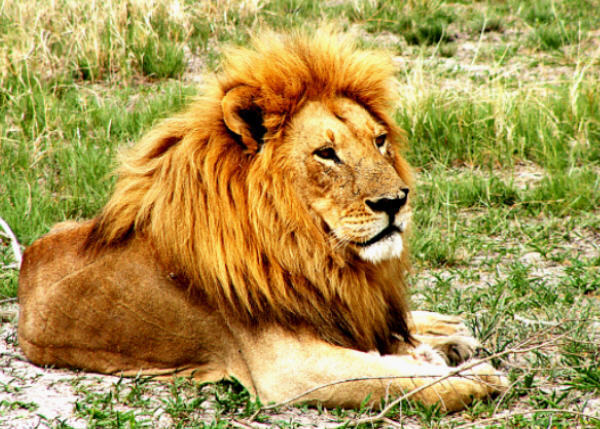
For a man, being promiscuous or bedding many women can result in having many children (even if having children is not consciously desired). There are many male mammals that use this strategy–they don’t stay with the female or care for the young. They will mate with the female, impregnate her, and move on to the next. This strategy results in more offspring, which helps propagate the species. Of course, many of the young will die, but overall, the strategy works. Think of male lions: they are terrible fathers and “husbands.” Male lions are lazy and spend most of their days sleeping and lounging around while the female does all the hunting, caring for the cubs, and defending the pride. Male lions insist on being the first to eat a kill, even though the female was the one who did all the work and brought the kill back to the pride. A hungry male lion will aggressively cuff an upstart cub or a female who dares to eat before him (the male lions in the movie “The Lion King” are anthropomorphized and are atypical of real lions). Male lions are also known for killing unrelated cubs of a female he wants to mate with. This is to ensure she can only devote herself to his cubs, once she gives birth to a new litter. This isn’t far off from the psychopathic stepfathers we hear about in the news who abuse or even kill babies and young children that don’t belong to them.

malelion

It’s harder to see how this strategy would work for females, but think of reptiles or fish–or spiders. Non-mammalian females (except for birds, which are very nearly mammals) do not have the capacity to feel love for their young, and evolution has ensured they give birth to many young at a time to ensure that some survive. It’s to their advantage to drop their load of young and abandon them, moving on to finding another mate. In the case of the spider, the female will even eat the male after she mates with him. That’s pretty psychopathic, but the strategy works if you’re a spider.

spider

A person with psychopathy seems to lack the higher, mammalian part of the limbic system of the brain that enables them to feel love or provide care for their young after they are born. They are acting on the reptilian (or in the case of males, the lower mammalian) brain instead, which all of us still possess. The problem is that as humans have become civilized, these reptilian, callous strategies that many animals use to propagate themselves have become maladaptive to civilization. That’s why we’ve developed laws that keep psychopathic behaviors that were once advantageous under control.

But a little narcissism is adaptive, because it helps us attract and keep a mate.

My family tree of narcissism

dna

NPD is an inherited disorder (as well as acquired). It runs in families. Here is how it shows up in my family (immediate family shown only, as I do not know my extended family too well, thanks to my MN mother’s manipulations to keep me from them).

People raised in NPD families also have an unfortunate tendency to marry or enter into relationships with other people with NPD, and my family tree definitely shows this tendency.

My NPD Family Tree

Paternal grandparents: Grandmother (no NPD); Grandfather (possible NPD) —-> Father (low spectrum NPD); 1 other son (no NPD)

Maternal grandparents: Grandmother (possible NPD); Grandfather (possible NPD) —-> Mother (MN=malignant narcissist); 3 other children (unknown if any of them have NPD)

My mother: MN; my father: low spectrum NPD and enabler —–> 5 children from 2 marriages each (1 deceased): my mother’s oldest daughter is her most loyal flying monkey and probably NPD; I don’t think my other half-siblings have the disorder (they were raised with at least one non-NPD parent); I was the only scapegoat and have Avoidant PD, which is the polar opposite of NPD.

Me (no NPD); Michael (NPD, possibly MN) ——>; 2 children: son Ethan (scapegoat and non-NPD); daughter Molly (NPD, probably not MN)

Michael’s immediate family:
Mother (MN); father (non-NPD but an enabler and absent much of his childhood) —–> Michael (NPD, possibly MN); 1 sister (non-NPD but abused by her NPD husband)

Narcissism on the Internet: what Vaknin has to say

Narcissistic? Me?

Oh, hell. I’m going to milk this thing for all it’s worth at the moment. I admit it, I want this upward momentum to keep going for a little bit longer.

Let me start by confessing I’m just a wee bit star-struck because a somewhat famous person who writes about narcissism gave me validation and in doing so helped my blog become more visible, even though he’s a narcissist and we victims are all too aware what no-good gaslighting, manipulating, triangulating mind-fuckers narcissists are. I must remember that he IS a narc and is NOT my friend. I must not allow a few crumbs of flattery to somehow suck me into becoming some kind of online narcissistic supply to this man. I gotta keep it real.

But no worries: in a day or so (if not my next post), I’ll return to my regular scheduled programming and write a fluff post about something like kittens or a rant about fracking or toenail fungus.

In my second blog article about Sam Vaknin, he commented (when asked) that he did, in fact, Google himself (hey, don’t we all?) and that’s how he finds out which bloggers are writing about him. He provided an explanation as to why he looks himself up on Google and linked to his website. I decided to repost his journal entry because there’s a whole Pandora’s box of truth here, and whether we like it or not, there’s a little or even a lot of Narcissist in all of us who blog and find ourselves giddy with excitement when our blogs get views, likes, comments, or suddenly take off like 4th of July firecrackers.

WARNING: In typical Vaknin fashion, this post is extremely long winded. That said, it’s definitely worth your time to read the whole thing. There’s some great insights here that still apply today even though it appears to have been written some years ago.

Cyber (Internet) Narcissists and Psychopaths

To the narcissist, the Internet is an alluring and irresistible combination of playground and hunting grounds, the gathering place of numerous potential Sources of Narcissistic Supply, a world where false identities are the norm and mind games the bon ton. And it is beyond the reach of the law, the pale of social norms, the strictures of civilized conduct.

Indeed, many of the innovators who gave us the Internet and social networks can easily be described as narcissistic. Technology did not invent or even foster narcissism – rather, it was driven by it: an increasingly narcissistic populace demanded empowerment, self-expression, self-gratification, and self-aggrandisement via gadgets and software applications that catered to its pathology.

The somatic finds cyber-sex and cyber-relationships aplenty. The cerebral claims false accomplishments, fake skills, erudition and talents. Both, if minimally communicative, end up at the instantly gratifying epicenter of a cult of fans, followers, stalkers, erotomaniacs, denigrators, and plain nuts. The constant attention and attendant quasi-celebrity feed and sustain their grandiose fantasies and inflated self-image.

The Internet is an extension of the real-life Narcissistic Pathological Space but without its risks, injuries, and disappointments. It allows the narcissist to enact and act out his grandiose fantasies of omnipotence and omnipotence, brilliance and perfection, self-righteousness and superiority with impunity.
Many moderators and owners of discussion groups and support forums, for instance, are tyrannical narcissistic bullies with little or no impulse control and the tendency to form cult-like settings where the wayward are sadistically penalized and publicly humiliated by peers for speaking out of turn and in contravention of the “party line.”

In the virtual universe of the Web, the narcissist vanishes and reappears with ease, often adopting a myriad aliases and nicknames. He (or she) can thus fend off criticism, abuse, disagreement, and disapproval effectively and in real time – and, simultaneously, preserve the precarious balance of his infantile personality. Narcissists are, therefore, prone to Internet addiction.

The positive characteristics of the Net are largely lost on the narcissist. He is not keen on expanding his horizons, fostering true relationships, or getting in real contact with other people. The narcissist is forever the provincial because he filters everything through the narrow lens of his addiction. He measures others – and idealizes or devalues them – according to one criterion only: how useful they might be as Sources of Narcissistic Supply.

The Internet is an egalitarian medium where people are judged by the consistency and quality of their contributions rather than by the content or bombast of their claims. But the narcissist is driven to distracting discomfiture by a lack of clear and commonly accepted hierarchy (with himself at the pinnacle). He fervently and aggressively tries to impose the “natural order” – either by monopolizing the interaction or, if that fails, by becoming a major disruptive influence.

But the Internet may also be the closest many narcissists get to psychodynamic therapy. Because it is still largely text-based, the Web is populated by disembodied entities. By interacting with these intermittent, unpredictable, ultimately unknowable, ephemeral, and ethereal voices – the narcissist is compelled to project unto them his own experiences, fears, hopes, and prejudices.

Transference (and counter-transference) are quite common on the Net and the narcissist’s defence mechanisms – notably projection and Projective Identification – are frequently aroused. The therapeutic process is set in motion by the – unbridled, uncensored, and brutally honest – reactions to the narcissist’s repertory of antics, pretensions, delusions, and fantasies.

The narcissist – ever the intimidating bully – is not accustomed to such resistance. Initially, it may heighten and sharpen his paranoia and lead him to compensate by extending and deepening his grandiosity. Some narcissists withdraw altogether, reverting to the schizoid posture. Others become openly antisocial and seek to subvert, sabotage, and destroy the online sources of their frustration. A few retreat and confine themselves to the company of adoring sycophants and unquestioning groupies.

But a long exposure to the culture of the Net – irreverent, skeptical, and populist – usually exerts a beneficial effect even on the staunchest and most rigid narcissist. Far less convinced of his own superiority and infallibility, the online narcissist mellows and begins – hesitantly – to listen to others and to collaborate with them.

Ultimately, most narcissists – those who are not schizoid and shun social contact – tire of the virtual reality that is cyberspace. The typical narcissist needs “tangible” narcissistic supply. He craves attention from real, live, people, flesh and blood. He strives to see in their eyes their admiration and adulation, the awe and fear that he inspires, the approval and affirmation that he elicits.

There is no substitute to human contact, even for the narcissist. Many narcissists try to carry online relationships they nurtured into their logical extension and conclusion offline. Other burst upon the cyber scene intermittently, vanishing for long months, only to dive back in and reappear, reinvigorated. Reality beckons and few narcissists resist its siren call.

Narcissists, Social Media, and Porn

Social media, such as Tumblr.com, have become the playground of narcissists, psychopaths, and sadists who post extreme and, at times, illegal porn and revel in the reactions to it, thus garnering vicarious narcissistic supply. Via such postings, they express their rabid misogyny by objectifying women and subjecting them to humiliating subjugation and to aggression bordering on outright violence.

Yahoo and Tumblr’s protestations to the contrary notwithstanding, some of the content is illegal and can land even an accidental viewer in hot waters. Relatively innocuous search terms such as “family”, “wife”, “sister”, or “daddy” often yield sleazy and actionable photo and video results, displayed automatically on the user’s screen and saved to his or her browser cache without any warning or consent. Tumblr is not alone in this. Twitter and Facebook, although to a lesser degree, also host porn on a massive scale.

Porn addiction ties well with the narcissist’s fantasy sex life. Social media enable and legitimize a host of sexual fetishes and paraphilias, including pedophilia. Via these platforms, the narcissist finds an eager audience and a sense of empowerment and immunity, aided and abetted by his anonymity.

Interview granted to Misty Harris of CanWest on February 23, 2005

Q. How might technology be enabling narcissism, particularly for the Internet generation?

A. To believe that the Internet is an unprecedented phenomenon with unique social implications is, in itself, narcissistic. The Internet is only the latest in a long series of networking-related technological developments. By definition, technology is narcissistic. It seeks to render us omnipotent, omniscient, and omnipresent – in other words, Godlike.

The Internet allows us to replicate ourselves and our words (through vanity desktop publishing, blogs, and posting online content on Web sites), to playact our favorite roles, to communicate instantly with thousands (narrowcasting), to influence others, and, in general, to realize some of our narcissistic dreams and tendencies.

Q. Why is it a bad thing to have a high opinion of yourself?

A. It is not a bad thing if it is supported by commensurate achievements. If the gap between fantasy and reality is too big, a dysfunction that we call “pathological narcissism” sets in.

Q. What does it say about our culture that we encourage narcissistic characteristics in people? (example: Paris Hilton – we made her a star for loving herself)

A. Celebrity culture is not a new thing. It is not a culture-dependent phenomenon. Celebrities fulfil two emotional functions for their fans: they provide a mythical narrative (a story that the fan can follow and identify with) and they function as blank screens onto which the fans project their dreams, hopes, fears, plans, values, and desires (wish fulfilment).

Western culture emphasizes ambition, competitiveness, materialism, and individualism. These admittedly are narcissistic traits and give the narcissist in our society an opening advantage.

But narcissism exists in a different form in collectivist societies as well. As Theodore Millon and Roger Davis state in their seminal tome, “Personality Disorders in Modern Life”:

“In an individualistic culture, the narcissist is ‘God’s gift to the world’. In a collectivist society, the narcissist is ‘God’s gift to the collective'”.

Twitter: Narcissism or Age-old Communication?

It has become fashionable to castigate Twitter – the microblogging service – as an expression of rampant narcissism. Yet, narcissists are verbose and they do not take kindly to limitations imposed on them by third parties. They feel entitled to special treatment and are rebellious. They are enamored with their own voice. Thus, rather than gratify the average narcissist and provide him or her with narcissistic supply (attention, adulation, affirmation), Twitter is actually liable to cause narcissistic injury.

From the dawn of civilization, when writing was the province of the few and esoteric, people have been memorizing information and communicating it using truncated, mnemonic bursts. Sizable swathes of the Bible resemble Twitter-like prose. Poetry, especially blank verse one, is Twitterish. To this very day, newspaper headlines seek to convey information in digestible, resounding bits and bites. By comparison, the novel – an avalanche of text – is a newfangled phenomenon.

Twitter is telegraphic, but this need not impinge on the language skills of its users. On the contrary, coerced into its Procrustean dialog box, many interlocutors become inventive and creativity reigns as bloggers go atwitter.

Indeed, Twitter is the digital reincarnation of the telegraph, the telegram, the telex, the text message (SMS, as we Europeans call it), and other forms of business-like, data-rich, direct communication. Like them, it forces its recipients to use their own imagination and creativity to decipher the code and flesh it out with rich and vivid details. It is unlikely to vanish, though it may well be supplanted by even more pecuniary modes of online discourse.

Interview granted to Agencia Efe, Spain, April 2008

1. Does the Internet make a special amplification of narcissism or is just the reflection of reality? How, despite of the fact that many people is disturbed by the anonymous characters that you can adopt in the Internet, the exhibitionism is, maybe, more usual. I mean, in terms of narcissism? Can a person be addicted to the web because is own narcissism?

A. The narcissist likes to appear to be mysterious. It enhances his self-perceived sense of omnipotence, it renders him “unique” and “interesting”. The right moniker (Internet alias or handle) imbues the narcissist with a sense of immunity and superiority and permits him to commit the most daring or heinous acts.

2. What kind of lacks or necessities there are behind this behaviour? What are we expecting when we search our name on Google? Can we construct our image with the pieces of us in the internet?

A. The Internet is the hi-tech equivalent of a giant mirror. Like the mythical Narcissus, it allows us to fall in love with our reflection every day anew. We gaze into the depths of the Internet to reassure ourselves of our continuity and very existence. It is our modern photo album; a repository of snippets of our lives; and our external memory.

In psychoanalytic terms, the Internet replaces some of our ego functions: it regulates our sense of self-worth; puts us in touch with reality and with others; and structures our interactions (via its much vaunted peer-pressure of the Netiquette and the existence of editors and moderators).

We crave attention and feedback: proof positive that we matter, that someone cares about us, that we are not mere atoms in a disjointed and anomic Universe. In this sense, the Internet substitutes for God and many social functions by reassuring us that we fit into a World that, though amorphous and protean, is sustaining, predictable, constant, and nurturing. The Internet replaces our parents as a source of nourishment, support, caring, discipline, and omniscience.

3. In the case of the blogs, what’s the point in common in the idea of doing a private diary and be available for everybody?

A. I am not sure what you mean. Blogs are anything but private. They are explicitly meant for public consumption, thrive on public attention, and encourage interaction with the public (through the comments area). One can set one’s blog or online journal to “private”, though, as the hi-tech equivalent of a personal diary.

4. Internet, with their blogs, Facebook, Myspace or YouTube, has create the possibility of make yourself famous without promotion, just with the progressive diffusion of your material. Examples like the singers Mika and Lilly Allen or many bloggers, can it make a new way of realizing the “American dream” for the users of the Internet?

A. Being famous encompasses a few important functions: it endows us with power, provides us with a constant Source of Narcissistic Supply (admiration, adoration, approval, awe), and fulfils important Ego functions.

The Internet caters to our narcissistic traits and propensities and allows us to become “celebrities-by-replication”. The image that the blogger or artist projects is hurled back at him, reflected by those exposed to his instant celebrity or fame. By generating multiple copies of himself and his work, he feels alive, his very existence is affirmed and he acquires a sensation of clear boundaries (where he ends and the world begins).

There is a set of narcissistic behaviours typical to the pursuit of celebrity. There is almost nothing that the Net celebrity refrains from doing, almost no borders that he hesitates to cross to achieve renown. To him (or, increasingly, her), there is no such thing as “bad publicity”: what matters is to be in the public eye at any price.

Because narcissistic individuals equally enjoy all types of attention and like as much to be feared as to be loved, for instance – they don’t mind if what is published about them is wrong (“as long as they spell my name correctly”). The celebrity blogger or artist experiences bad emotional stretches only when he lacks attention, or publicity.

It is then that some bloggers, artists, and Webmasters plot, contrive, plan, conspire, think, analyse, synthesise and do whatever it takes to regain the lost exposure in the public eye. The more they fail to secure the attention of the target group (preferably, the entire Internet community), the more daring, eccentric and outlandish they become. A firm decision to become known is transformed into resolute action and then to a panicky pattern of attention seeking behaviours.

It is important to understand that the blogger/artist/Webmaster are not really interested in publicity per se. They appear to be interested in becoming a celebrity, but, in reality, they are concerned with the REACTIONS to their newly-acquired fame: people watch them, notice them, talk about them, debate their actions – therefore they exist.

5. There are many new applications to feed human narcissism on the net: Googlefight, Egosurf.org, the blogs themselves… Could be used narcissism as a business?

A. Every good business is founded on the mass psychology of its clientele. In a narcissistic civilization, business is bound to adapt and become increasingly more narcissistic. The Internet started off as an information exchange. The surge of (mainly American) users transformed it in profound ways. User-generated “content” is a thin veneer beneath which lurks the seething and pathological narcissism of the masses. Narcissism is our main business organizing principle outside the Internet as well: cosmetics, fashion, health, publishing, show business, the media, and the financial industries all rest on firm narcissistic foundations. The management class itself is highly narcissistic!

6. Can be satisfied the true and pathologic narcissism just with the feed-back on the Internet or it needs, finally, to put in “real” his power of attraction.

A. What’s not real about the Internet? This dichotomy between virtual and real is false. The Internet is as real as it gets and, for many of its users, it is the only reality and the only frame of reference. It is “reality” as we used to know it that is gradually vanishing and being replaced by “virtual” substitutes: print media are dying and giving way to blogs and online news aggregators; iTunes and Napster and BitTorrent and eMule are ruining the very physical music CD; there is more published on the Internet than is available in many brick and mortar libraries, and so on.

7. Could presence or non-presence in Internet create a new kind of social class?

A. Like every other social phenomenon, the Internet gave rise to a stratified society with hackers, crackers, nerds, geeks, Wikipedians, bloggers, etc. occupying various niches. Not using the Internet – a kind of Internet Luddism – may yet become a badge of honor. Internet addicts may become either outcasts or the new elite. Who knows? Everything digital is still in its formative years and still in flux.

8. How dangerous is narcissism, inside or outside the web?

A. Very dangerous. Just read the list of diagnostic criteria for the Narcissistic Personality Disorder (NPD): the narcissist lacks empathy, is arrogant, exploits people, is envious, has a strong and unjustified sense of entitlement, and is obsessive and delusional. Many narcissists are also psychopaths. Pathological narcissism is often diagnosed with other mental health disorders (a phenomenon called “co-morbidity”). Narcissists are over-represented among criminals, gamblers, and people with reckless and inconsiderate behaviors.

Interview granted to About.com about Online Dating

1. In your opinion, why does the Internet seem to be an easy forum to fall in love?

A. Frequently, in online dating, the partners are treated as “blank screens” onto which the online dater projects her dreams, wishes, and unfulfilled needs and yearnings. The Internet allows the two sides to maintain an emotionally riskless intercourse by fully controlling the interaction with their interlocutors or correspondents. While thoroughly gratified, they are less likely to get hurt and feel less vulnerable because they invest – emotionally and otherwise – far less than in a full-fledged, “real” life liaison. Of course, they are usually disappointed when they try to flesh out their online fantasy by moving the relationship offline, “down to earth” and into “brick-and-mortar” venues.

2. Despite an online relationship being made up of text messages and pictures, why does it seem people more easily get into Internet relationships than they do in real life?

A. “Internet relationship” is an oxymoron. A relationship entails the existence of a physical dimension, time spent together, friction and conflict, the satisfaction of all the senses, and experiences shared. IM, chat, webcams, and the like can seemingly bring people closer and create the illusion of intimacy, but actually it is a narcissistic sham, an echo chamber, a simulacrum. People “fall in love” with their own reflections and with idealized partners, not with the real items. Their counterparty is merely a peg on which they hang their desire for closeness, a sounding board. It is like watching a film: one can be moved to tears by what is happening on the screen, but very few confuse the flickering lights with reality itself.

3. What dangers are there in falling in love online?

A. Online “love” is not love at all and, therefore, it is less prone to heartbreak and disappointment. The parties fully control their side of the interaction and limit it at will. The information exchanged is doctored and there is no way of verifying it (for instance, by paying attention to body language and social cues). Online “love” is more akin to infatuation, comprised of equal measures fantasy and narcissism. The parties fall in love with the idea of falling in love: the actual online partner is rather incidental. The extant technology dictates the solipsistic and self-centered nature of these exchanges.
Online dating is inherently unsafe as it affords no way to ascertain the identity of your interlocutor or correspondent. When you date online, you are missing out on critical information such as your potential partner’s body language; the pattern of his social interactions; his behavior in unexpected settings and circumstances; his non-scripted reactions; even his smell and how he truly looks, dresses, and conducts himself in public and in private. The dangers, like in real life, is when one comes across a predator: a psychopath, a stalker, or a bully. Click on this link to learn how to avoid these people: How to Recognize a Narcissist or Psychopath Before It is Too Late?

4. What tips can you share with readers who have fallen in love online and have been burnt by the rejection of a breakup online who might do it again?

A. The Internet is merely a sophisticated, multimedia communication channel, a glorified videophone. “Distance relationships” don’t work. Real, lasting, emotionally-rewarding relationships that lead to happiness and personal growth require propinquity, familiarity, intimacy, and sacrifices. Don’t make the Internet your exclusive dating venue and don’t use it to shield you from life itself . Deploy it merely to find information and reach out and, on the first opportunity, log off and go out there to confront multidimensional reality with all its complexity and ambiguities. Do not use the Internet to fend off potential hurt: there is no growth without pain and no progress without experience.

5. Despite some problems, do you think the Internet should be sworn off as a means of finding love?
A. Online dating is a great tool for people who, for various reasons, have limited access to other dating options or venues where you can date “real” people face-to-face, instead of mere avatars.
Morning chuckles

You have reblogged so many of my articles, I felt I owe you a favor, and besides, I know exactly which “blogger” and “narc” googling himself you are talking about here. *chuckle*

Famous people who have NPD

parishilton

This is not my own list, but I agree with most of the people listed in this blog post.

Here is the entire article:

There are many people all around us that suffer from Narcissistic Personality Disorder (NPD), more commonly referred to as narcissism. There are many well known individuals who display characteristics of narcissism, if not full blown NPD. They range from politicians to celebrities, from ministers to business leaders. Some writers and researchers believe that successful and famous people have acquired or situational narcissism; they do show narcissistic traits but only after they have worked hard, sometimes for years, to get there. But that success often produces a personality pattern replete with narcissistic traits. Others believe that these people were narcissistic to begin with and sought out opportunities and fields that would satisfy their narcissistic needs. Either way, once they become famous it leads to narcissistic thinking and behaviors; they have lots of money and/or fame, don’t wait in line at restaurants or events, have limo service, and are asked for photographs and so on. This often leads to demanding behavior, feeling they are above the law, becoming more exhibitionistic and many have public social or emotional meltdowns (frequent run-ins with the law, drug and alcohol abuse, attempting suicide, etc.).
Let’s take a look at some of the famous people who show personality traits that suggest narcissism. Most of them show grandiose thinking and exaggerated self-importance, many believe or fantasize about the power they have, most believe they are special, need to be admired and feel entitled. Many dictators and criminals had or have narcissistic personalities as well as the Hollywood celebrities; some are negative role models and some are positive. Hitler and Stalin both had grandiose self-images as did Casanova, Marquis de Sade, Peter Sellers, and the heart surgeon Christiaan Barnard. Other likely suspects are Madonna, Margaret Thatcher, Paris Hilton and O.J. Simpson. Here are just a few of the many that come to mind:

hitler

Jim Jones
Saddam Hussein
Warren Beatty
Ryan O’Neal
Alec Baldwin
Sharon Stone
Elvis Presley
William Shatner
Joan Crawford
Pablo Picasso
Ike Turner
Lee Harvey Oswald
Donald Trump
Kayne West
Charlie Chaplin
Marlon Brando
Eva Peron
Simon Cowell
Liberace
Adolph Hitler
Joseph Mengele
Joseph Stalin
Ted Bundy
O.J. Simpson
Paris Hilton
Madonna

donaldtrump

The author also has Marilyn Manson on the list, but while I do think he has psychological issues, I don’t think that he is a narcissist. From what I have read of him, he has exceedingly low self esteem and was bullied in school. Narcissists are rarely victims of school bullying.

Many of these people are successful and talented entertainers, and as such have contributed in a positive way to the world, so while they may be narcissists, some of them are probably not malignant narcissists or psychopathic (this just means they are less high on the narcissist spectrum than people who have contributed nothing to the world except evil and misery or have led a parasitic, exploitative lifestyle. Some may even possess small amounts of empathy and give generously to charity.)

simoncowell

Here’s a few others I would add (not a complete list by any means):

Kanye West

The Koch Brothers
Rush Limbaugh
Ayn Rand (she glorified narcissists in her books and a serial killer was her role model)
Scott Peterson
Osama bin Laden
Susan Smith
Jodi Arias
Dick Cheney
Sarah Palin
John Edwards (D-SC who cheated on his wife while she was dying from cancer)
Joel Osteen
Bette Davis
Joan Crawford (may have been Borderline rather than NPD)
Bing Crosby
Mick Jagger
Ted Nugent
Justin Beiber
Nikki Minaj
Most televangelists
Most Reality TV stars
Many rap and rock stars (narcissism is part of their whole badass “package” but it may not be genuine)

justinbeiber

Many people have accused Barack Obama of being a narcissist, but I disagree.

I found this interesting chart showing different high-profile professions and the corresponding level of narcissistic traits. Not surprisingly, Reality TV scores highest. (Click to enlarge the chart)

narcissistchart

Sam Vaknin read my post (and has a few corrections)!

vakninquotevaknin

I feel silly and a little childish being so impressed by this, but Mr. Vaknin himself commented on yesterday’s article and also said there were a few corrections to be made. I made the changes to that post, but I also thought this warranted a brand new post. There is some information I neglected to include in the article, which includes a video (one of many on his Youtube channel), a rebuttal on his website, and a IMDB review of “I, Psychopath” that paints Vaknin as a psychopathic monster but at least an HONEST monster–while painting Ian Walker, the director, as a dishonest, unethical monster who misrepresented Vaknin’s credentials and character by using clever editing.

Comment from Sam Vaknin:
Thank you for this honest take on “I, Psychopath”. Just several minor corrections: (1) I have twice diagnosed with Narcissistic Personality Disorder (in 1986 and in 1995); (2) My book was first published in 1997; (3) The PDF version available on my Website comprises only EXCERPTS; (4) I have commented on “I, Psychopath” here: http://www.narcissistic-abuse.com/rebuttal.html I find Shmezl’s review of the film to most accurately reflect my opinion of it: http://www.imdb.com/title/tt1407219/reviews?ref_=tt_urv Thank you again. Sam http://www.youtube.com/samvaknin

Thanks for the update! 🙂 — Lucky Otter

***

ETA: I found Shmezl’s IMDB review of “I, Psychopath” and will repost what he says here. He doesn’t seem to have many positive things to say about Vaknin, but I guess Vaknin approves of being classified this way, because it makes him the big bad psychopathic narcissist he believes he is (and maybe he really is!) Schmezl doesn’t seem to hold the film’s director, Ian Walker, in very high regard either. Perhaps both of them are raging narcissists, and that probably isn’t too far from the truth, because Vaknin and Walker seemed to dislike each other intensely in the film. When two narcissists are put together, they almost always can’t stand each other. Neither will allow themselves to be used as “narcissistic supply,” unless one of the narcissists is stronger and overtakes the weaker one. But they will still hate each other.

Can’t trust the director
7/10
Author: Shemzl from Israel

24 March 2010
Sam Vaknin, the subject of this documentary, we are told, has a high IQ (185!!!), a sense of humor, an irresistible charm, a fake doctorate, and a submissive-codependent doll of a wife. I saw no sign of the first three. Sam is nothing short of loathsome, with a reptilian quality that would send shivers down any normal spine. He is a sadistic and robotically methodical verbal thug who exalts in his handiwork as he reduces everyone around him to stammering nervous wrecks. His wife, Lydia, is a tragic, heart-wrenching, truly lovable figure. What she sees in this physically and spiritually repulsive putrid shell of a human being is beyond me. The moments with her were the strongest in the movie and Walker made a bad call of not pivoting the film around her demure presence. >I hope she doesn’t get her wish and have kids with Vaknin. She and her children deserve far better.

But I harbor grave suspicions regarding the director of this “gem”, Ian Walker. Clearly, there is no love lost between him and his protagonist, Vaknin. Equally clearly, we cannot trust him to be truthful and to avoid the kind of editing that borders on misleading the viewer.

Consider Sam’s allegedly forged academic degree. Whatever his shortcomings and repugnant traits, Sam is brutally and unflinchingly and invariably and unfailingly honest about himself, his disorder, and what a monster he is. Why would he lie about an irrelevant and minor topic like his academic degree? Throughout the film and in its closing 2 minutes Sam protests that he had attended a full-fledged university with campus, faculty and students; that he had submitted a doctoral dissertation (indeed, it can be found in the Library of Congress!); and that he has had to defend it. Walker than plucks a sentence out of context and adds it artificially to Vaknin’s previous protestations to create the (patently false!) impression that Vaknin admits to having a fake doctorate!!!

Or, consider this: Walker meticulously documents Vaknin’s abusive raging outbursts. On many occasions, it is crystal-clear that Vaknin is reacting to off-camera taunting and ill-treatment by Walker. Walker even admits in his PR material to having “poked this snake with a stick”. The film’s logo is an image of Walker decapitating Vaknin! But Walker never shows us what he did to Vaknin – only what Vaknin did to him, ostensibly unprovoked. Walker uses clever, one-sided editing to achieve a highly unethical result: a misrepresentation of what happened, for sure!

This is what I mean when I say that I cannot trust the seethingly hateful, resentful, and envious Walker to be an impartial guide to Vaknin’s circumstances, conduct, and psyche.

Shouldn’t documentary filmmakers harbor at least a modicum of sympathy and compassion in order to avoid the voyeuristic pornography that most exposes become? Walker failed to skirt this particular trap. Hence 7 stars instead of 10.

Sam Vaknin: Narcissist or narcissist wannabe?

samvaknin

Who in their right mind would want to be a narcissist?

Sam Vaknin evidently does. Vaknin, a self-identified narcissist, is a bit different from the average narcissist. He seems to fit the profile in many ways, but he is surprisingly introspective and in 1997, wrote a self-help book called “Malignant Self-Love: Narcissism Revisited. It can be purchased through Amazon or through his own site, but you can also read free excerpts from the PDF version which is also available through his website.

I have read the PDF full version and while it’s extremely long, verbose, and often repetitive (the published version may have better editing but I am not sure), Vaknin tells you everything you want to know about narcissism (and a few things you may not have known) and offers advice to “normals” on how to deal with narcissistic people like himself. He does not glorify narcissists and in fact is quite critical of them. While it appears he wants to help people handle or even cut themselves off from narcissists, one can’t help but wonder if he wrote the book as a way to promote himself and if he might not actually take pride in having the disorder. After all, narcissism has become Vaknin’s claim to fame and he purports himself as an expert on the disorder (which I can’t argue with, despite his lack of professional credentials). It was Vaknin who coined the term “narcissistic supply,” which is now used by bonafide professionals in the field who specialize in NPD.

Most books about narcissistic personality disorder or malignant narcissism are written by doctors, psychologists, or other professionals who deal with them in their practice, so reading such a book by a self-proclaimed narcissist is an odd experience but gives the reader an entirely different perspective about what really makes narcissists tick–and in a way, perhaps a more accurate one.

vakninandbook
Vaknin with a copy of his book.

Vaknin also differs from the garden variety narcissist because of his brutal honesty. Pathological lying is one of the narcissist’s calling cards, but in 2009 Australian filmmaker Ian Walker made a fascinating and somewhat disturbing but at times extremely funny documentary about Vaknin called I, Psychopath. (I highly recommend watching this film, the extended version of which can be viewed on Youtube (I have linked the first section). In the film Vaknin lies about nothing, and in fact he’s as brutally and cruelly honest as Simon Cowell used to be when judging American Idol contestants (I definitely suspect Mr. Cowell is himself a narcissist, but I digress). That being said, there has been some controversy about Mr. Vaknin’s educational credentials. During one of his interviews with a psychologist, she questions him about his degree–he had written on the questionnaire that he has a Ph.D, but it turned out that doctorate is actually from a diploma mill and its validity is questionable at best. So dishonesty is not unknown to Sam Vaknin (as it isn’t unknown to the rest of us).

In the film, we are treated to interesting and slightly creepy, oddly lit stills of Vaknin superimposed over things like clanking machinery (hinting at how the narcissist is more machine than human), strange landscapes, and time-lapsed highways at night.

Vaknin was born in 1961 to a Turkish mother and an Israeli father. We find out that Vaknin has an extremely high IQ and he is in fact a genius. In his native Israel, he became extremely wealthy at a shockingly early age through clever (and probably dishonest) financial wheelings and dealings, and was a successful dot-com entrepreneur until he was busted for securities fraud in 1999, and lost all his money. He also postulated a scientific theory on chronons and time asymmetry.

At the tender age of 21, Vaknin was living the high life, flying around the world in a private jet, eating in the most expensive restaurants, visiting exotic locales all over the world, and raking in enormous amounts of money. The film describes how the most successful entrepreneurs and corporate bigwigs tend to possess three important traits that make them so successful: good looks, high intelligence, and most importantly, a high level of psychopathy (determined by giving the tycoons Dr. Robert Hare’s Psychopathy Checklist, which is most commonly used to make sentencing decisions for criminals.). Sam Vaknin possesses all three of these traits.

One of the psychologists who tests Vaknin during the film finds that while he does score high in traits that signify NPD, he scores even higher in traits that indicate Schizotypal Personality Disorder, Paranoid Personality Disorder, and bizarrely, scores highest of all in AvPD (Avoidant Personality disorder–a common disorder in narcissists’ victims). This psychologist does not think Mr. Vaknin is actually a psychopath, but that he may be narcissistic. Vaknin, for his part, seems petulant, insulted and almost angry that he is not more of the big, bad psychopath that he believed he was.

Later, his wife, Lidija, is also tested to find out if she is a typical “victim” (highly empathic, sensitive, putting other’s needs ahead of her own) and it is found that she is. And yet, although Sam and Lidija argue frequently, their relationship (at least on film) seems to work for them and Vaknin doesn’t seem excessively abusive, although he insists he has no capacity to feel love the way his wife does. It’s possible he may be more abusive toward Lidija off screen, but this is another thing we are left wondering. One issue that is raised is she wants a baby, but is unsure if her husband would make a good father, due to his narcissism.

vakninandwife
Vaknin with his wife, Lidija.

Vaknin gives his filmmaker, Ian Walker, a difficult time, and while we don’t see an excess of bullying on screen, in Walker’s commentary, he frequently discusses the way Vaknin abuses and calls him terrible names when the camera is off. So to try to capture Vaknin’s alleged abusive behavior on screen, he has Vaknin take over the filming and film Walker. Indeed now we hear Vaknin hurling insults and abuse at him. Walker, for his part, seems hurt, but could this just be the two of them acting out a part for the sake of giving the film more credibility of making it more interesting? There’s no way to tell, but the experiment is entertaining enough.

During the film, well known professionals who specialize in psychopathy and narcissism are interviewed and give their opinions about these character disorders, and their opinions about Vaknin himself. Vaknin, for his part, seems irascible and easily angered (and sometimes acts like a petulant child), but he also is oddly likeable (which could just be his narcissistic charm doing its work) and occasionally is extremely funny. Vaknin’s high intelligence is obvious and he speaks English extremely well too, although it’s not his native tongue.

Vaknin gifts each of the doctors and psychologists who interview him a complimentary copy of his “Malignant Self-Love,” which could be a gesture of courtesy or it could be narcissistic.

vakninsam

Vaknin is an enigma. During the documentary I sometimes wondered whether he is actually a narcissist at all. He certainly doesn’t seem psychopathic (although I’m not going to say it’s impossible), but if he’s a narcissist, I don’t think he’s a particularly malignant one. My own opinion of Sam Vaknin is that he has Borderline Personality Disorder (BPD), which shares a number of traits with NPD because they are both Cluster B character disorders but differ in important ways. I think Vaknin has strong narcissistic, paranoid, and schizoid traits, but he is no psychopath. Clearly, Vaknin isn’t the easiest person to spend a lot of time with, but that doesn’t make him evil or a psychopath. However, he does say he was diagnosed with NPD twice–in 1986 and 1995.

I do wonder if he wants to be a narcissist more than he actually is one, and if so, why? Whatever the case, Mr. Vaknin has written an excellent and highly readable (if a bit verbose) book about malignant narcissism. I don’t personally care if he doesn’t have the right “credentials,” either as a professional or as a person with the actual disorder, because his book has helped so many people deal with the narcissists in their own lives better.

Update 11/20/14
I added a new post honoring Mr. Vaknin’s requests in the comments section, and also made the requested changes in this article. After viewing the links he posted, I’m much more convinced he’s really the narcissist he says he is.
https://otterlover58.wordpress.com/2014/11/20/sam-vaknin-read-my-post-and-has-a-few-corrections/

Psychopaths and pets

pitbull

There’s been a lot written about the devastating effect psychopaths have on other people, but what about their pets? Do psychopaths even have enough empathy to keep pets?

Unfortunately, yes they do. But for them, pets are a means to an end, a creature that can be exploited in various ways that serve the psychopath, rather than a friend and companion. A pet can be a way to “keep up with the Joneses” (if most of their neighbors and relatives have pets). They have no genuine love for the animals under their care, and often treat them badly or even abuse them. Here is an article I just read last night where the blogger calls out his MN sister about the callous way she puts her cat to sleep because she’s moving, even though there’s nothing wrong with the cat. Later the blogger describes the cruel manner in which the woman’s two beautiful dogs are left outside on a chain even in the searing heat or freezing cold, and are never played with or paid attention to. Eventually, this cold woman tells her brother she will be having her depressed but otherwise healthy golden retriever put down “because he’s old.”

I remember when we lived in a trailer park for about a year, some of our neighbors treated their animals very badly. I don’t know if it was just ignorance (most of the people living in the trailer park were not too well educated) or if we had a surplus of psychopaths living around us, but I remember one poor dog in particular. In fact, this dog was a black lab/Doxie mix who was the sister of my dog, Dexter (who we acquired from a family who lived in another trailer in that park).

Rain or shine, snow or sleet, or on the hottest days of summer, that poor dog was left outside attached to a clanking metal chain in the driveway. The few times I saw anyone interacting with that dog was when the owner, a raging drunk whose wife had called the police on a number of occasions for abusing her, would kick the dog or yell at him. I would have called the police, but was afraid of the repercussions, and also the dog had become so aggressive I knew no one would adopt her and she would have been put down. Maybe that would have been the best thing for her though, but I wasn’t thinking clearly at the time, being embroiled in my own mess with my own psychopath. I did try to interact with the poor dog occasionally, but she would just bare her teeth and growl. I would look at my Dexter, with his sweet, affectionate personality, and think of what his poor sister could have been had she been cared for by loving owners. I have no doubt that owner was a psychopath. Anyone acting that cruel toward his pet is someone without much or any empathy. A person who just dislikes animals would not have a pet at all, not keep one around just to abuse it. The owner probably kept the dog for “protection.” Why else have one?

dogoutside
Is this dog’s owner a psychopath?

In fact, you see that a lot. There are many people who keep a dog, usually an “aggressive” breed such as a Rottweiler or Pitt Bull, as a method of security. No one will try to break into a house or trespass if there is a barking, aggressive dog present. People who keep dogs as a form of security aren’t necessarily psychopathic though. A normal person who keeps a dog for such a reason will still play with the animal and be affectionate toward it when it’s not “on duty.” But if the animal is ignored, or left outside all the time, that’s a different story. Whenever you read or hear a heartbreaking story about a vulnerable animal being neglected or abused, you can bet it’s owner was a psychopath. In fact, pets, being helpless and trusting, often serve the same purpose as a child or vulnerable person: as a scapegoat.

There are other psychopaths who like to brag about how aggressive their dog is. The dog is an extension of themselves, and they take pride in training it to attack or act aggressively toward others, not as a form of security, but as a way to intimidate other people through their dog. Training a dog to be aggressive just to be aggressive is also a form of animal abuse.

Then there are those who, like my MN mother, keep a dog or other animal as a status symbol. They always choose a purebred animal, often a type that is trendy or expensive and makes them appear to be wealthy to others. My mother has a purebred Bichon Freze, a very cute dog, but it’s an extension of herself rather than a companion. She takes it in to a groomer monthly to have its nails done and puts bows on its head. I’m sure if this dog develops health problems, no matter how minor, she will have the dog put to sleep. Several years earlier, she had a purebred toy poodle, and when she got old, callously had her put to sleep, even though she had no health problems other than a little trouble walking due to arthritis. When I questioned her about why she took such drastic action, she just shrugged and told me she didn’t have the time to deal with an ailing animal. I don’t recall her even shedding a tear.

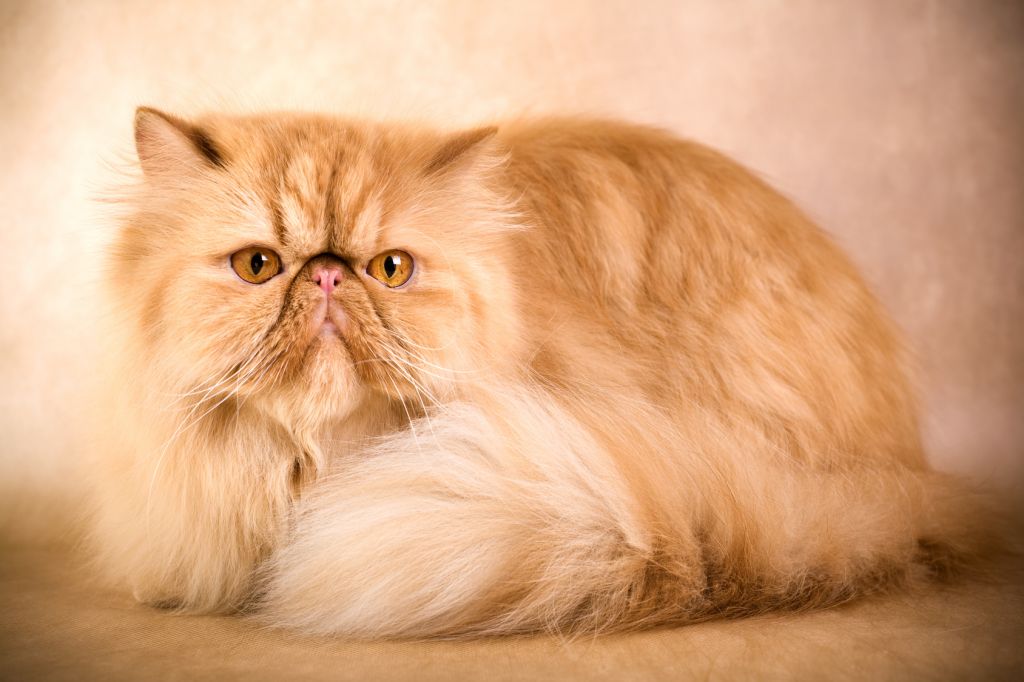
There are purebred animals that have been inbred so much they have health problems. I think anyone who breeds a dog or cat for a certain “look” at the expense of its health is lacking a conscience or empathy, at least toward animals. These people are breeding animals to have a deformity! Imagine breeding humans to have a condition such as Spina Bifida. How is it any different? Persian cats are a perfect example of a cat breed that has been bred to have a pushed in, flat (and in my opinion, ugly) face and as a result they have breathing and other health problems. Some dog and cat breeds, such as the “munchkin” cat or Bassett hound have serious spinal issues or have trouble walking due to their excessively short legs.

persiancat munchkin
Persian and munchkin cats.

Some psychopaths use pets as a way to torment or control their children. They will purchase or acquire an animal for a child, and then if the child misbehaves, hold the threat “I’ll have Fido or Fluffy put to sleep if you do that again” over the kids’ heads. This is mental torture. My N-ex’s mother was a narcissist herself and used this tactic to manipulate him. When Michael was five, his father brought home a white puppy. He loved that dog and spent all his free time with him (he may not have been a narcissist yet, it’s hard to say). One day when he was five, he was coloring with crayons on the hardwood floor, sitting in a patch of sun that came in through the living room window. Buster, the puppy, was sitting next to him watching. There was also a pair of child’s plastic scissors on the floor. As children will do, he left to do something else without putting the crayons and scissors away. But before he came back, Michael’s mother discovered the crayons had melted all over the wooden floor. Surely she couldn’t have really thought the melted red and purple crayons were blood, but when Michael returned to coloring, she pointed to the waxy, melted mess and the scissors and accused him of “cutting the dog.” Buster did have a little red crayon on his fur but was not cut and wasn’t hurt in any way. To punish Michael, his mother announced she was having the puppy put to sleep, in order to “teach him a lesson.” And so she did. So psychopaths will use animals to manipulate, control and torment their children.

Some psychopaths and narcissists will acquire a pet to control other people. My ex, Michael (the grown up version of the little boy in the last paragraph) did this. Now he actually was an animal lover (and always said he preferred animals to people), but he also used them as a way to say “fuck off” to me. I’m an animal lover and have always had pets, but I remember when in 2011, he adopted a dog without asking me how I felt about it. At the time, I already had three cats and Dexter, my dog. The house I live in is small, and there wasn’t room for another dog. For several weeks he had been combing Craigslist looking at puppies. He wasn’t working and was basically freeloading while I paid all the bills. Not only was there not room for another dog, I couldn’t afford one. I begged him to not get any ideas. Michael assured me he was “just looking” and to stop worrying.

Well, lo and behold, one day I came home from work to find a puppy in his arms on the couch. I was angry and told him there was no way I could take care of another pet, and he would have to take it back. He said he wouldn’t. “Too bad, he’s here to stay,” he said.

The puppy was a Jack Russell/Beagle mix and the loudest, most undisciplined, and hyper dog I ever met. Michael refused to train him and a year later this dog was still pooping and peeing in the house. He also tore up everything, and I’d regularly come home from work to find the house in a shambles. Michael never bothered to pick up the mess. He’d just make excuses for his pet, whining “but he’s just a puppy!” even though the dog was a year old. If me or my daughter tried to discipline him, Michael accused us of being cruel. Talk about gaslighting!

destroyinghouse

The dog (who he named Barnaby) also barked constantly and ran away at least 3 times a week. We’d hear Barnaby barking and howling somewhere in the neighborhood but he wouldn’t return for hours, no matter how much we called him. He was a neighborhood nuisance, and three times neighbors called animal control. Still, Michael refused to discipline or train him. That job fell to me and my daughter, but of course we were “cruel” or “hated animals.”

The third time animal control showed up, I told them to please take the dog. I never wanted him in the first place, and I couldn’t control him. I didn’t want to pay a $75 fine to keep him, so away he went. I felt bad about the fact he would probably be put down, but there was nothing else I could do. Michael, of course, was livid, and said “I never realized how much you hated animals.” Of course only HIS needs mattered. He didn’t care that all the training and financial expense of the dog fell on me. He also didn’t care about Barnaby’s needs: he was wel aware that Jack Russells (and Beagles) are extremely active dogs that need to run. It’s in their genes. We were living in a small house with a tiny unfenced yard, and that’s not an appropriate setting for a dog like Barnaby. But like all narcissists, Michael was like a three year old: “I want a dog and I better have one and I don’t care what you think!” Now I love dogs, but in Barnaby’s case, I was never so happy to see the last of that animal. I hope someone with a large fenced yard and time to train him appropriately adopted him.

So yes, psychopaths do keep pets, but they are kept for all the wrong reasons–to control others, to serve as scapegoats or status symbols, to guard property, and generally to serve as extensions of the psychopath. And that’s about it. Psychopaths and narcissists have no genuine love for animals, just as they have none for other people.

Targets and Victims

victim

I found another blog today written by a survivor of a sick family of psychopaths and sociopaths (I’ve added the site to my list of resources under the “Info and Support” tab in the green bar in the header. I know I’ve written about this before, but this is one of the best lists of the traits of potential targets and victims of psychopaths I have seen yet. I have just about every single one of these traits, unfortunately. From an early age, I was trained to be a doormat. I learned that lesson too well.

BEFORE: TRAITS of a Potential TARGET

Below are the traits most commonly attributed to a sociopath’s target. Every person is inherently different, and that includes each target and the traits that are most pronounced in the individual. An individual would definitely not need any of these traits to be preyed upon.

This is not an attempt to diagnose anyone.

Shyness
Difficulty communicating
A lack of self confidence
Wanting to please
A belief that if you love enough the person will change
A belief that if you love enough the relationship will succeed
Difficulty establishing and maintaining boundaries
Not being able to say no
Being easily influenced by others
Wanting to be rescued from your life situation
Wanting to rescue others from their distress
Being over nurturing particularly when not asked
Feelings of shame and self doubt
Low self-esteem
A lack of memories about childhood or periods of adulthood
A lack of motivation from within and being motivated by others

AFTER: SYMPTOMS of a Relentlessly Abused VICTIM

This is a very accurate list of symptoms experienced by someone who has had their psyche brutally victimized by a sociopath. With that said, this list is not all-inclusive, nor is it intended to be part of any diagnostic function, whatsoever. These symptoms can also be triggered by many other conditions or events.

The source of this data is from ongoing research, but the majority of the data is derived and confirmed from personal experience … the key word being “majority” There are some symptoms listed here that I have not experienced at all, though they have been mentioned enough for me to accept them as potentially common.

If you, or someone you know, has experienced even a few of these symptoms, seek professional help. Keep in mind, though, that not all “help” is equal. If the professional you choose does not seem to relate to your needs as you would expect or desire, keep looking.

Emotional paralysis
PTSD (Post-Traumatic Stress Disorder)
Suicidal thoughts or actions (indirect homicide)
Loss of interest in life
Loss of energy
Insomnia
Anxiety
Depression or Severe Depression
Numbing of feelings
Disinterest in having a relationship
Panic attacks
Irritability
Increased anxiety from being alone
Increased anxiety from being in crowds
Mood swings
Source: sociopathicstyle.com [confirmed by personal experience (50+ years)]

My day in Aspie hell

workweek

Aspies sometimes have problems getting ahead in life. We may be intelligent and creative, but because we don’t really play well with others and are easily stressed and overwhelmed by social situations on the job and most of us aren’t good at schmoozing with higher-ups and playing the political games that are required to move up in an organization, many of us overlooked for promotions or just treated badly, as if we are mentally deficient. Many Aspies are underemployed, especially those of us who have an exceedingly low self image due to having been badly damaged by our psychopaths. If we were cursed with psychopathic parents, we were never given the tools other children were blessed with to succeed in life. Someone with Aspergers entering the workforce without life skills and survival tools is severely handicapped. It seems like some sort of cosmic joke that Aspies and malignant narcissists seem to be thrown together so often. It happens often enough that there has to be something more there than sheer coincidence, but I’ll save that thought for another time.

I read a study recently (I will find the link later) that found that people who are quiet and don’t talk very much are seen as less intelligent than gregarious, outgoing people. Many people with Aspergers are painfully shy and don’t make small talk easily. When forced to socialize, our attempts can be awkward and sound stilted or just weird. Unfortunately that probably makes us seem kind of slow. Socializing and engaging in small talk are extremely draining for someone with Aspergers, because it’s hard work. It just doesn’t come naturally.

In a way Aspies are like narcissists in that we have to “rehearse” how to act. The difference is a matter of conscience and emotion. The narcissist has no problem assessing a social situation and the appropriate way to behave, but for them it’s all cognitive. They are chameleons. When it comes to empathy and emotion, however, they are at a total loss. Since they can’t feel anything, they have to first decide which emotion is appropriate and then “act” like they feel that emotion. Aspies have the opposite problem. We can feel empathy and compassion, but have trouble expressing it. We are not good at putting on masks. We might seem cold and aloof but we are not. That’s why so many of us prefer solitude, where we don’t have to be “on” all the time.

Currently I work part time in a company where we are sent out in teams (or sometimes alone) to clean houses. It is a low level, grueling job, but I chose this over other service jobs because it seemed to require less social interaction than most of the others. I could just go to a house, clean it, and leave. I wouldn’t have to deal with customers in my face all day, or with office politics. It’s a good set up if I’m working alone (which I prefer) but most of the time I’m sent as part of a two person “team.” My regular partner is great, and respects my odd personality and knows I do a good job. I still get to work independently and she never has to check up on me.

Today I had the worst day an Aspie can have. My regular partner was off, and I was assigned a “special” (first time cleaning) that requires a lot more than a regular spiffing up. These specials can take all day. I don’t mind the extra work (and they do pay quite a bit more), but I was partnered with someone I knew I was going to have a problem with. She’s a very loud, extremely outgoing, rather aggressive personality and she is only 19 so she isn’t very mature either. Just being in her presence was triggering and causing mental overload. She just kept talking, and talking, and talking. I really didn’t know what to say, so I made polite noises and felt very triggered and overwhelmed. My stress levels were reaching dangerous levels–when I become sufficiently stressed, not only do I get pounding headaches, but sometimes my natural passivity and agreeableness breaks down and I snap and say something I regret. I wanted to jump out of the car and run away. By the time we got to our assignment, I was almost ready to quit my job. It didn’t help that I hadn’t been able to smoke in her car, and was having a major nicotine fit.

stress

When we got inside the house, I started with the master bathroom, attempting to stay out of her way while she did the dusting. I let my mind wander to other things as I cleaned, such as what I might blog about tonight, and what I could cook for dinner. But my partner kept coming in and asking questions, or worse, telling me I was doing my job wrong. She is not my boss, but I’ve noticed some of these young girls act like they know everything even when they don’t, and try to tell people what to do when they have no business doing so.

Like most Aspies, I dislike confrontations, so I let this pass the first few times. But by the 3rd or 4th time, I had enough and snarkily told her I knew how to do my job and she wasn’t my boss. She didn’t seem to like that, and whined that she was “just trying to help.” That made me wonder if she is a narc.

She kept talking and talking and talking. I wasn’t even listening to what she was saying. I had a pounding migraine and I felt like a raw nerve. The car ride back to the office was painful. She seemed like someone with ADHD, with all the fast talking and jarring topic changes in mid-sentence. But even worse was that she was constantly checking her phone WHILE SHE WAS DRIVING. She kept asking if her driving scared me. When I told her no (which was a lie), she started talking about how she likes to deliberately scare this other girl when she drives because she acts so afraid. Yep, I think this girl is definitely a narc.

I was so stressed and keyed up on the ride home that all the muscles in my face and back of my neck hurt and I thought I was going to throw up. For an Aspie, having to deal with a person like that all day feels like a day on the battlefield. It’s very debilitating.