Does your narcissist do this?

no_empathy

There is something I noticed narcissists do, that is one of the most infuriating things about them. They seek to invalidate your experience or side with others who have hurt you, even if there’s no real reason for them to do this.

Here are some examples from real life:

You: “I don’t really like that person.”
Narcissist: “Well, *I* never had a problem with them.”

You: “I really like that person.”
Narcissist: “Well, *I* don’t!”

You: “I wish we got paid every week instead of every two weeks.”
Narcissist: “Well, it doesn’t bother *me*!”

You: “I’m so heartbroken since he left.”
Narcissist: “Well, if you had been more attentive he might have stayed!”

You: “I wish I had more friends.”
Narcissist: “Well, you’re not that easy to be around, you know.”

A great example of this is the way my mother used to act when I told her about a problem I was having at work. No matter what the situation, it was always my fault. One time I made the mistake of telling her I thought there was a lot of favoritism at my job and I was being passed over for promotions (a problem that’s familiar to me due to my avoidant/Aspie personality). Instead of getting sympathy or support, she shot back with, “Well, you must be doing something wrong. You’re not the most pleasant person to deal with, you know.” This sort of thing happened all the time. Everything bad that happened was ALWAYS somehow my fault. That’s how narcissists invalidate your experience and diminish you at the same time.

Another version of the same thing is if you object to one of their insults, they will accuse you of being too sensitive or having no sense of humor.

“I really take offense to what you just said.”
Narcissist: “Well, it was only a JOKE! Lighten up.” (usually what they said was not meant to be a joke, so this is a lie).

Narcissists will never offer support, encouragement, or comfort. They seek to demean you by never taking your side, even when there’s no reason not to. They like to be contrary just to be contrary and “keep you in your place.”

Psychopathy and malignant narcissism: what is the difference?

hannibal_lecter

I have been reading a blog written by a self-confessed Psychopath (who scored 36.8 on Hare’s Psychopathy Checklist) who writes engaging and well-informed articles about his disorder. I’ve always wondered myself about what it is exactly that distinguishes Malignant Narcissism from Psychopathy, because a MN can be every bit as cruel and callous as a psychopath. The primary difference is the Psychopath is not an attention-seeker, but the malignant narcissist is still trapped by his or her need for approval, attention and adulation from others. That is also one of the things (along with impulsivity–which ASPD has in common with BPD–as well as the likelihood of law-breaking) that distinguishes Antisocial Personality Disorder (ASPD) from NPD/malignant narcissism.

There are those who believe that ASPD is on the same spectrum as NPD (but is at the top of the scale, while NPD is in the middle), but I’m not sure if it should be because there are qualitative, not just quantitative, differences. My opinion is that malignant narcissism is high spectrum NPD with ASPD traits. But they still need narcissistic supply. Psychopaths do not.

This writer has an interesting observation–that perhaps the only type of person able to control and/or take down a narcissist is a psychopath. He has little respect for narcissists due to their need for others (even as supply) and emotional sensitivity to rejection and criticism.

psychopathy_diagram
The anatomy of a psychopath. Malignant narcissists share with psychopaths the Factor 1 traits, but not Factor 2.

I think this article will explain these differences better than I can.

Narcissism or Psychopathy–Differences?
http://www.psychopathicwritings.com/search/label/Narcissism%20and%20Psychopathy

A Reader asks:

I would be interested in reading anything you wrote on psychopaths need for attention/acceptance. Have you? Like, how would they react to rejection?

Basically the need for attention and acceptance, if it’s a prominent and dominating aspect of what drives a person, is a distinctive trait in Narcissism. As such it is not exclusively something psychopaths are known for.

It is often said that psychopaths have strong narcissistic tendencies, and the statement isn’t completely wrong. But I also often see statements saying Malignant Narcissism and Psychopathy are the same, and this is not the case. There are some very important fundamental differences between psychopaths and malignant narcissists.

Narcissists may be callous and abusive – malignant narcissists definitely are callous and abusive! – and they lack empathy. These are things they have in common with psychopaths. But narcissists have a very strong emotional need for attention or Attention Seeking, Acceptance and Admiration. Their self esteem depends on whether or not they receive these things, and this makes them very vulnerable to rejection and other forms of negative attention such as humiliation, being out shined by someone else, or of being deliberately or naturally ignored.

Psychopaths do not need attention and we certainly do not need acceptance, at least not just for the sake getting it. Their emotional well being does not depend on whether or not they get these things, but they do play a part for most psychopaths’ sense of satisfaction. In this we’re probably not that different from normal people: We like to get attention, to be admired and respected just like everybody else, but we do not feel bad if we don’t get these things.

For psychopaths getting attention and respect from others is most of all a technique to get what they want without having to resort to coercion – threats, blackmail, and physical violence, i.e. – with the same frequency as we otherwise would. Having attention and respect – and acceptance – from others is really only paramount for as far as it is necessary to avoid the risks associated with the more negative techniques. In short: Attention and acceptance to psychopaths are not goals or ends, they’re means to ends.

When we (psychopaths) do care about whether or not we get attention it is not because we have an emotional dependency on being recognized or confirmed by our surroundings. It doesn’t matter to us that people speak badly about us, or that they try to avoid us. Being feared makes an opening for controlling those who fear you, and control leads to possible power.

Making sure you get a lot of attention is also a kind of control, it is a potential opener for gaining power, and it is the central, and often the only, reason why we seek to get it.

This is a well known fact, and the entertainment industry – just to mention one – knows and uses it: Make yourself known, make sure people notice you and that they can’t overlook you, and you have the basis for influencing how people respond to you.

If people like you, there’s a greater chance that they’ll support you or help you in other ways, especially if it’s mutual. <– This is what I've chosen to do, but I certainly did not always use a friendly approach. I've been very abusive in the past, and it has worked very well for me too. – But I've changed in many ways, and I find the mutual idea much more interesting now – and that is good, because it keeps me out of prison, and it has created a good possibility for me to actually do something valuable that others can benefit from… But that was a side note.

Narcissists seek attention and acceptance for it's own sake, and are miserable if they don't get it.
Psychopaths seek attention and acceptance because it is part of a technique to get something else. Attention and/or acceptance for it's own sake doesn't matter to how a psychopath feels.

A Narcissist, opposite a psychopath, is very vulnerable to Social Rejection and rejection in general. If you deny them admiration and respect, and – more important still – if you humiliate them publicly, you can crush a narcissist completely (provided you do it right and with timing).

Narcissists get very hurt when they get rejected.
Psychopaths do not feel any emotional pain or discomfort when they get rejected.

No narcissistic person can go through public humiliation and not feel emotionally very disturbed by it. With this knowledge one can destroy a narcissist quite easily… This is the typical area of most psychopaths' expertise, and it is why we so easily can control most narcissistic people. For the same reason most psychopaths have a lot of contempt for narcissistic people. We see individuals who love to abuse and humiliate, but who are even more vulnerable to these things themselves, and it's hard to find it in your heart to respect such people…
– I suspect we may have this in common with most neurotypicals.
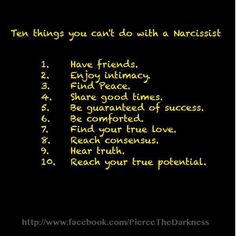
10 things you can’t do with a narcissist.

Image

10_things

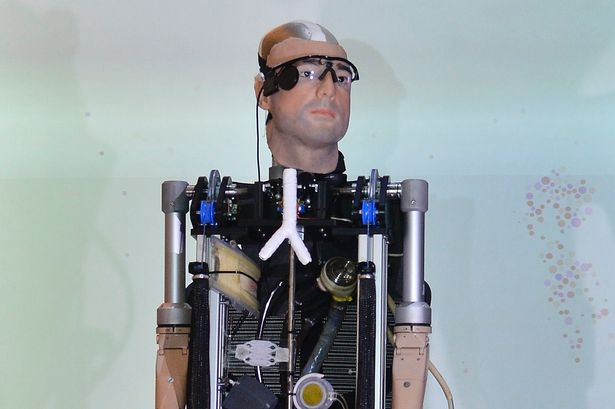
The chilling mental landscape of a high spectrum narcissist or psychopath

bionic_man

I read this chilling post from a man who says he is a narcissist. Based on his description of what it’s like to be him, I would say “narcissist” is probably an understatement. My guess is he’s a very malignant (high spectrum) narcissist and a probable psychopath. Most people with NPD do have emotions, but can’t access them easily or only feel emotions when they pertain to themselves. When someone claims to have no emotions at all, that indicates psychopathy to me. This man could also be “suffering” from Schizoid Personality Disorder, another disorder where the “sufferer” feels nothing–or he may have a combination of psychopathy and SPD. It’s scary and sad to read something like this. It’s as if some people have lost every shred of humanity and seem to have no soul. They are reptilian. At least this writer is self aware though, so I guess that’s something. (Post has been edited for brevity).

Certain passages in this post would make me suspect Aspergers (social awkardness, etc.) but Aspies do have emotions and empathy, even if they don’t always express them well or at all, so I’m suspecting this man has Schizoid PD mixed with psychopathy/malignant narcissism.

Also striking are the dissociative episodes and feelings of unreality this man claims to experience. I have seen these sort of near-psychotic behaviors (talking to himself in public, strange expressions on his face, etc.) in most of the malignant narcissists and psychopaths I have known. These people are so deluded they really aren’t in touch with reality at all. They live in a barren, hellish dreamworld of their own making.

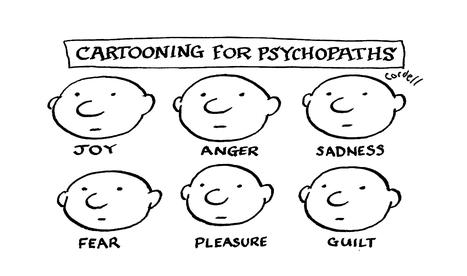
psychopath_emotions

[…]I just discovered that I’ve had pathological NPD for most my life. Reading this […]has been both very frightening and a major relief. […] It’s a relief to know that many of the strange decisions I’ve made were not entirely my fault. [This material] has completely changed how I view my past. It’s like I was in a dark room and then someone finally turned the light on.

For several years, I would occasionally wake up in the early morning with a feeling that something was very wrong. I couldn’t explain the feeling but it was similar to guilt. But I couldn’t pinpoint what I had done to feel so guilty about. This has been clarified […] along with everything else about my strange life. Everyone posting on this site describes the Narcissisist as a monster, which I agree with, but it’s also a horrible disorder to have.

[…]There’s so much I want to say, but it would turn into a novel about as long as the book itself. I’m a male in my 30’s and fit every characteristic of someone with pathological NPD.

I have no emotions. When my Father left our family to fend for ourselves, I felt nothing. When my Grandmother died, I felt nothing. When I witnessed my roommate seriously injure his neck, I felt nothing at all. These events were only slightly negative, as if someone had dropped and broken a dish.

I have technical degrees from elite universities which makes it easy for me to secure employment, but when I’m at work, I hardly do anything at all because I can’t concentrate for more than a couple minutes at a time. I’m constantly day dreaming and people notice that I have strange expressions on my face when I’m supposed to be working or paying attention to a lecture. I constantly talk to myself, but I’m not sure if that’s a characteristic of NPD.

I have no social skills and am socially inept. As far as personality goes, I wouldn’t even say its a poor one, more accurate would be to say it’s nonexistent. I don’t greet anyone unless they greet me first. If someone asks “How are you?”, my reply is “Fine” and that’s about as far as the conversation goes. I can feel myself creating hatred where I work by ignoring social norms, but I don’t care how much people hate me. I feel like I’m a plague that creates pain and destruction where ever I go, and I like it. I have no friends except the ones from childhood, but I don’t feel I need them anyway. I’m more comfortable just sitting at home and playing on the Internet.

As far as looks go, I’m a 10, which makes me a somatic narcissist. I often get compared to male celebrities and women often audibly gasp when I enter a room for the first time. I’m in my 30’s but everyone assumes I’m in my 20’s. Despite this, I haven’t had a relationship with a woman my entire life (being a devout catholic when I was younger also had an influence on this). Through techniques I’ve learned from the pickup manuals available on the Internet, and by dressing fashionably, I’m able to create a huge amount of initial attraction from women. This has kept me in school much longer than necessary since there’s a huge amount of narcissistic supply in a school environment, especially in classes with many women. Despite this huge initial attraction, I always reject the (very attractive) women when they come after me, which only increases their attraction to me. I justify rejecting them by telling myself “when they see what my personality is like, they would just reject me anyway”, which is probably true considering my social ineptness. However, sometimes I will talk to a girl a few times and she still hasn’t rejected me despite my personality. At this point, I would reject her, and have no idea why I rejected her. I now know it’s due to EPIM (emotional involvement prevention disorder). It’s ironic, I’m the guy every woman in the school wants to be with, but I don’t even have a girlfriend.

I feel completely omnipotent. I will make long eye contact with girls right in front of their boyfriends, even if their boyfriends look like bodybuilders. I can hold my own in a fight with most anyone, but even if a guy is twice my size, I have no fear. I will try to seduce women who I know are engaged just to make them feel pain. I have no empathy so I don’t care about their pain and actually enjoy it. When women look at me in class and try to get me to look back, I will ignore them just to humiliate them in front of the class. Or if an attractive woman is trying to make eye contact with me, I’ll pretend I’m interested in a less attractive girl. Needless to say, I hate women. However, I also badly want to have a girlfriend. I feel this is one of the many conflicting states of the narcissist […].

Not having emotions is a powerful tool in attracting women because women are attracted to guys who don’t want them. Women want what they can’t have. It’s easy for me to play hard to get and I can easily outlast a woman who’s playing hard to get, which most men can’t do. I know I’ll never actually be able to have a relationship with these women, so it doesn’t bother me if a semester ends without having pursued a relationship. So I have many “victims” from my school years, but the biggest victim is myself since I’ve spent years upon years alone.

[…] I see women as predators who are only interested in draining a man of his money while offering as little as she can get away with in return. After the man has been consumed, he is decapitated (divorced) while she runs off with another man. I’m not sure if this view is due to NPD or what I’ve seen my friends (colleagues) go through. There is a book called “The Predatory Female” that probably helped cement this view. I’ve also noticed that in times when I’ve had no money, I didn’t exist to women.

I now realize I quit my previous well-paying job due to a lack of narcissistic supply. A somatic narcissist needs attention from women, and they were pretty much non-existent where I worked. The most abundant place for narcissistic supply is a university, and after receiving a degree, the cerebral narcissist can receive more NS because of it.

When I saw the movie Batman “The Dark Knight”, I was intrigued by the character of the Joker. He had no fear, didn’t care about anything (even money), and caused havoc ever where he went. His actions made no sense and he was unpredictable, but he wasn’t stupid. He was omnipotent because he didn’t care if he was caught, or if he was killed, and was capable of doing anything. He had no empathy caused havoc for the fun of it.

My mentality is very simple and childlike and I don’t like speaking with other adults. If someone spoke with me for 10 minutes, they would think I’m a normal person, but it’s just a matter of time before I say something factual but very insensitive, which causes the person to hate me. The only emotions I feel are jealousy and rage. When I see a guy with an attractive women, I want to attack him and have daydreams of attacking him while the woman watches in horror.

[…] the chance for healing from NPD is bleak. Even if I were to get into a relationship with a woman, I would probably just cause her a lot of pain before dumping her when she’s no longer a source of NS.

What living with a psychopathic malignant narcissist does to your looks.

This is a picture of me taken two years ago, about a year before I finally got my MN ex out of the house for good.  He was turning my daughter against me (although he failed with my son, who moved to another state to escape from all the drama) and had already succeeded in turning all my friends against me with his gaslighting and triangulation.    He had everyone convinced I was insane, deluded,  and stupid.    I had no one to turn to and no money (well, I still have no money) but I had to support him even though he refused to work.   I felt so trapped.   We hadn’t even been married since 2005 but he continued to play his narc games, using the kids as pawns,  and I made a huge mistake allowing him to move back in with me in 2006, because I was so easily manipulated and afraid of what he might do if I didn’t agree.

sbrombacher_cat

I was fat, out of shape, exhausted all the time, and look several years older than I do now. I didn’t care about my appearance or much of anything. I think you can tell by the expression I’m wearing here that I was severely depressed and had pretty much given up having any kind of future. I was just marking time until death and aging fast.

Me in December 2006: I don’t look very happy. I wasn’t. I never smiled.
laurenb_2008

At a wedding in 1996–around the time his abuse turned physical and my son became scapegoated. Yes, that’s him on the left. He looks like a bum today.
1996_wedding

Here is me today:
laurenb1
This was taken in April this year.

laurenb2

I think the change is dramatic.

Malignant narcissists: HSPs gone bad?

evil_eyes

The concept of malignant narcissism and HSP traits coexisting in the same person is a matter that has very little research behind it (I could find nothing at all on Google), so this article is based on my own opinions, gleaned through a combination of my readings and personal observations of the narcissists I have known. My opinion may come as a surprise.

In my article A Match Made in Hell: Narcissists and HSPs, I wrote about the tendency for narcissists and HSPs to form trauma-bonds with each other–that’s really just a fancy way of saying these two seemingly opposite types of people are often drawn to each other and become codependent on each other. The narcissist is both attracted to and repelled by the HSP’s vulnerability and high empathy. They both envy and loathe it; part of this loathing is due to the narcissist’s realization that they NEED the high empathy of the HSP because it’s good narcissistic supply and makes them feel validated. It’s also a quality that on some level (perhaps unconscious) they know they jettisoned a long time ago, and that knowledge causes them to envy and hate the HSP at the same time they depend on them. Because they hate their own vulnerability and hide it from the world (and see dependence as vulnerability) that’s another reason why they may abuse the very person who gives them a reason to exist.

The narcissist feeds off the HSP like a vampire feeds on blood. This can be an extremely unhealthy, even deadly, relationship for the HSP, who will eventually either leave the narcissist or be destroyed. But the HSP gets something out of the relationship too–the belief that through their love, they are saving the narcissist from him or herself. They often believe they can “fix” the narcissist through their empathic love and transform them into feeling human beings capable of returning what they have been given. Of course, this belief is almost guaranteed to end in disappointment (if the HSP is lucky), and possibly much worse.

The great irony here is that I think most narcissists are, way deep down, HSPs. No, you didn’t read that wrong.

But how can that be? Narcissists are incapable of empathy, have problems feeling and expressing deep emotions, and are incapable of loving anyone but themselves. Isn’t that the opposite of being an HSP?

Well, yes and no. The explanation is complicated, so I hope you stay with me here.

As I’ve explained before, I think most narcissists began life as highly sensitive people who at an early age suffered psychological trauma due to abuse. This caused them to shut off their too-vulnerable true (authentic) selves from the world and in its place construct an elaborate defense mechanism–the false self–initially meant to protect the vulnerable true self from further harm, which has no defenses at all. Even HSPs who are not narcissists have some protective psychological armor, so they did not need to construct a false self to take the place of the true one. Healthy HSPs are truly authentic people who feel deeply and are emotionally honest with themselves and others. Narcissists were born with no emotional defenses at all; the false self replaces the true one and appears invulnerable. But this is only an illusion, because the mask is only an illusion. When you face a narcissist, you will never know who that person really is because all they will show you is the protective mask they have created. They are so terrified of further hurt that they will attack with vicious ferocity if they think you pose any threat to its flimsy underpinnings. It must be a terrifying way to live.

The high sensitivity of a narcissist is retained in the way they react to personal insults or slights. They are huge babies who overreact when they feel like they are being attacked, ignored, or they perceive their source of narcissistic supply may be in danger. They are paranoid, touchy, and utterly lacking a sense of humor, especially about themselves. They may try to appear as if they don’t care, usually through the “silent treatment” or sneaky attacks such as triangulating against or gaslighting the person they perceive as a threat, but if you know narcissism, it’s usually not too hard to see the emotional fragility behind their acts of false bravado. However, when it comes to other people, they can seem incredibly insensitive. Here’s the rub: for malignant narcissists, this isn’t really the case at all. Stay with me here.

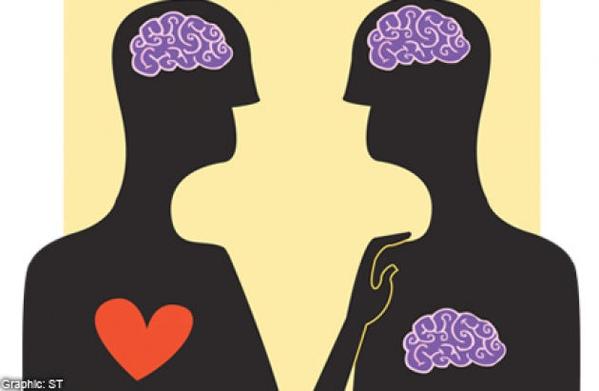
warm_cold_empathy
Warm and cold empathy.

In my research about NPD, there has been a lot of discussion about a concept called “cold” empathy. For those of you who don’t know what this is, I will explain. Most of us associate narcissism with a lack of empathy, but this isn’t exactly the case. Most narcissists–especially malignant ones–do have empathy, but it’s not emotional or affective empathy; it’s cognitive or “cold” empathy. What this means is that a narcissist KNOWS what you are feeling very well, and may use what they know you are feeling against you. Cold empathy is “felt” on the cognitive (thinking) level, but not as an emotion, and that is why the narcissist can feel no compunctions about turning your feelings against you in order to hurt you.

An extreme example of this would be the sadistic, psychopathic rapist. The rapist “smells” your fear and uses that against you to become even more sadistic. It *is* empathy, but it’s “cold”–the rapist understands exactly what you are feeling and your fear makes him feel powerful, so he increases the level of torment. He feeds off your fear like a vulture feeds on carrion. You don’t need to tell him you’re afraid; he KNOWS.

Cold empathy is the twisted narcissistic mirror image of warm empathy, which non-pathological people are capable of feeling on an emotional, not just a cognitive level. HSPs have more warm empathy than anyone. Here’s where things get complicated. If a narcissist is also an HSP, their high sensitivity can morph into a quality that seems almost supernatural and is utterly chilling–a cold, sadistic form of “empathy” where they seem to be able to see into your mind. A non-sensitive person would not be able to detect your emotions without you telling them how you feel, and therefore not have that creepy, unsettling way of “seeing into your soul” that the malignant narcissist does. The higher the sensitivity a narcissist has, the more malignant they will be.

narcautism_spectrum
Malignant narcissism is high on the HSP spectrum.
Credit: http://dondepresso.rujic.net/post/116940034025/manic-chart-narcautism-spectrum

This idea was actually illustrated in the humorous-but-true graph I posted the other day (shown above), where initially I wondered why “malignant narcissism” was showing so high in HSP traits. But actually it makes perfect sense. A HSP who adopts narcissism as a way to cope with the world will become malignant or even psychopathic. A non-HSP may still become a narcissist, but they lack enough “cold empathy” to become malignant.

In summary, HSPs can be the most kind and caring people you can ever hope to meet–or the most dangerous. A narcissistic HSP is a malicious, deadly beast who is best avoided.

They are two sides of the same coin. No wonder they are so often drawn to each other. The tragedy is that a malignant narcissist can infect a previously healthy HSP with their evil but it doesn’t work the other way around: a non-narcissistic HSP cannot change a malignant narcissist into a good person.

Being discovered online by your narcissists.

Woman using tablet outdoor.

Back during the winter, I made the mistake by sharing an article on a social media platform that several members of my family use, including my narcissistic mother.

It came to my attention (through my son) that they did in fact find my blog and it was being read. I was horrified, but I was fortunate because not a word about it was ever said to me. Oh, I’m sure they talk amongst themselves about what a horrible person I am to have a blog where I talk about my family the way I do, but it’s not as if they weren’t already saying mean things about me behind my back anyway. I know they probably still read this blog, but I no longer care. In fact, sometimes I think it may be a good thing for them to see in print was I was always too afraid to say.

Another blogger I know has a far worse family than mine. The psychological abuse this woman suffered, especially at the hands of her MN mother and sister, was so extreme that the stories she tells about them would be hard to believe if I didn’t know they were true. Her family REALLY hates her, and her sociopathic mother has turned every member of the extended family against this woman.

She just wrote a blog post about getting several ugly and hateful anonymous messages, after she too made an error where she might have “leaked” the fact she has a blog about her narcissistic family. Based on what she has said about them, I think these people are extremely dangerous, far more dangerous than my family ever was. So even though this woman and I are no longer friends (that’s another story I won’t get into here), I am worried for her. So I’m asking for your prayers and positive thoughts that nothing untoward happens if it’s true that her family found her blog. These people are incredibly toxic.

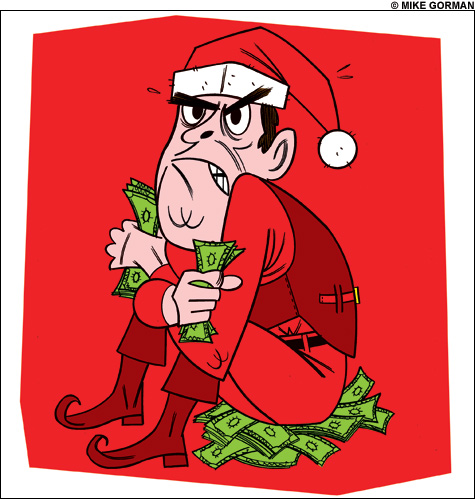
Mr. Stingy.

stingy
I remember one of my narcissistic lovers. He was a textbook example of a malignant narcissist, and a mean one at that. Although he never became physically violent, I think he would have if I hadn’t ended that relationship.

One of the strangest things about him was the way he gave me gifts. The guy had plenty of money–he had a trust fund, for heaven’s sakes and owned his apartment free and clear, and he was always traveling. He never asked me to go with him though. Instead, he’d bring me back “gifts” from his road trips. I remember he’d make a big show out of presenting me with these gifts as if he was giving me the keys to a new car. They were never wrapped nicely, but always stuffed in a paper or plastic bag.

So what sort of gifts did this narcissistic trust fund jerk give me? Jewelry, chocolates, books, candles, clothing?

No. He’d give me gifts of trash. The stuff he didn’t want. You know, like the free samples they give out in hotels–tiny bars of hotel soap, shampoo, a wrapped glass with the hotel’s name on it, even a “Do Not Disturb” door sign. Once he gave me a gift card with about $2.00 left on it. I couldn’t even use that because it was for a store they don’t have in this area. Thanks, Mr. Generous! The most extravagant thing this loser ever brought me back from these trips was a keychain that was probably free too. One of his gifts was half a Stuckey’s nutty bar, that he’d already opened and eaten part of. How cheap can you get? He was the stingiest POS I ever knew.

tiny_gift
A ring or earrings maybe? Think again, chump.

It wasn’t like he didn’t have the money to buy me something nice. He used to show me, with great fanfare, all the nice things he’d bought for himself. A leather jacket, a framed picture, a box of homemade peanut butter and chocolate fudge. I remember asking him if I could have a piece of the fudge and he said no.

For Christmas that year he actually bought me something. It was a “Toonces The Driving Cat” coffee mug. Although still a cheap gift, it was thoughtful because he knew I loved that Saturday Night Live skit.

About a month later, we had a fight. We were arguing more frequently by then. Then he said something that made me wonder if I’d heard him right. He said he wanted the Toonces mug back. He told me to go get it and give it to him. I said no. Shooting me eye-daggers, he said through gritted teeth, “I never gave you that. I only let you borrow it.”

Wow.

Livid, I went and found the mug, pretended to hand it to him, saying “Here!” As he reached for it, I threw it hard against the floor in front of him, shattering it into bits. He stormed off in a rage and slammed the door on his way out. As I swept the pieces of broken ceramic into a dust pan, I heard the squeal of his tires as he backed out of the driveway like a bat out of hell. He always did have a problem with road rage too.

Chronic rage is a trap, not a trophy.

rage2

If we are survivors of narcissistic abuse, we are all at different stages of our recovery. If we are just coming out of a relationship with a narcissist or in the process of going No Contact (which is the best gift we can give ourselves), it’s natural to feel anger and even hatred toward our abusers. Our anger overrides the fear they instilled in us and makes it possible for us to take the actions necessary to disconnect from them.

When I started this blog, I too was extremely angry at my narcissists, particularly my psychopathic ex. As an ACON, I railed on about my parents too, particularly my MN mother. Early posts of mine on this blog have a much more bitter and angry tone than my more recent posts, some of which attempt to understand why my narcissists did what they did to me and about what makes narcissists tick in general. I don’t regret making those early, angry posts, because that’s where I was at emotionally on this recovery journey. I NEEDED to feel that anger and hate. It served a survival purpose. But anger is a survival emotion and is meant to be temporary, not become a psychological and spiritual forever-home.

I am no longer in a situation where I am in close contact with malignant narcissists, and I was finding that holding onto all that rage was turning me bitter. When a person is filled with rage, the body’s cortisone levels rise and blood pressure rises. These are physiological changes that make “fight or flight” possible. But over prolonged periods of time, being in such a physiological state is bad for you and can lead to physical illness.

Besides being unhealthy for the body, holding onto rage way past its expiration date makes it impossible to move forward to a place of real healing. If you feel rage all the time, you simply cannot move forward. It blocks you from opening your heart to all the good things that life can offer. Frankly, I was just becoming bored with it. There had to be something better beyond it–and there is!

I see this unwillingness or inability to let go of chronic rage and hatred in many survivors of narcissistic abuse, especially ACONs who were raised by narcissistic parents. Of course it’s perfectly understandable to feel an almost overwhelming sense of injustice and betrayal when you realize your own parents didn’t love you and in fact probably hated you and set you up to fail in life. It’s understandable to hate the people who were supposed to nurture you and give you the tools you needed to have a happy life but instead attempted to murder your soul. I get it, I really do. I felt that way about my mother for many years.

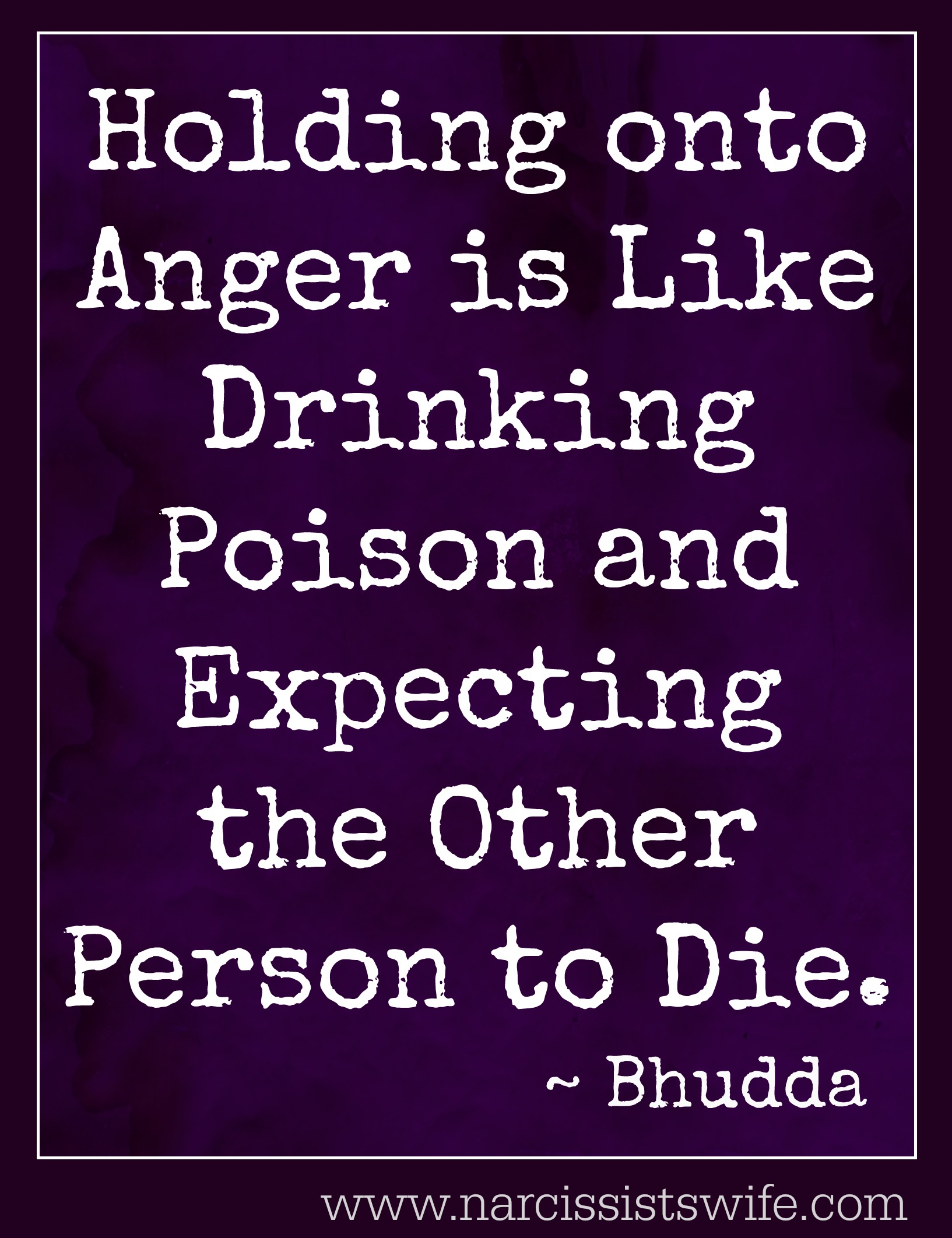
Anger-Bhudda

Some of these chronically angry abuse survivors have embraced a mentality of perpetual victimhood, using their rage as a sort of trophy “proving” how abused they were. They can’t or won’t let go of their rage because it makes them feel vindicated. I remember reading a comment from one angry ACON who said if he/she were to let go of their bitterness and hatred, they would have let their abusers “win.” But this person is wrong. Because paradoxically, remaining stuck in misery, rage and hatred is making it impossible for this person to heal and live a happy life, and isn’t being miserable exactly what their narcs want? Holding onto rage and wallowing in all the ways they victimized us vindicates the narcissist, not the victim. If our rage destroys or kills us (because eventually it can), the narcissists will be throwing a party to celebrate.

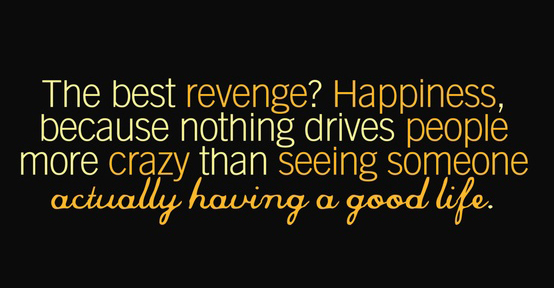
I think the best revenge is to live well. If a victim of abuse moves into a place of peace where healing is possible and can learn to become happy and even successful in life and stop using their victimhood as a kind of trophy, their narcissists will HATE that! Nothing enrages an abuser more than seeing their victims become happy and successful (and not bitter or angry). So how does healing ourselves and letting go of our “trophies” of rage and hate let the narcs win? It doesn’t. In fact, WE win and THEY lose.

But if I were to say this to them (and I have), I would be accused of “victim blaming” and even “narc hugging.” They would say my blog is “dangerous” to abuse survivors (and they have!) They would accuse me of having no empathy for their plight and am in fact taking the side of those who abused them! None of that is true. They just don’t get it. They think that because I’m suggesting they move away from their hatred, this means I’m blaming them for their misery and making excuses for the narcissists who abused them. This is a dangerous and tragic misunderstanding because they can’t even see the way they have been turned against themselves by their own narcissists! They can’t allow themselves to ever feel happy or let go of the bitterness that continues to hold them hostage to their narcissists even after they’ve gone No Contact.

Narcissism is the “gift” that keeps on giving if you let it. You can’t be happy if your default setting is rage. All that rage will eventually destroy your body AND your soul. In fact, living in a state of perpetual rage can turn a person narcissistic themselves. It’s a fact–I have seen it happen and it’s a horrible and scary thing to witness.

monsters-nietzsche

I read a post on Constant Supply: The Narcissist’s Wife about the very same thing I’m talking about here, and their post is what inspired me to write this article. I’d been wanting to write about this, but due to the nasty pile-on I experienced from several ACON bloggers a few weeks back due to an article I posted suggesting we stop hating on all narcissists (the message of which was taken WAY out of context–in no way did I EVER suggest we condone what narcs do or engage with them in any way), I’ve been reluctant to post any more articles even touching on this touchy matter.

Reading this blogger’s article gave me the courage to express my feelings about this apparently controversial issue. I’m prepared to be attacked again, but at least I know what to expect now and can arm myself accordingly. While the blogger I mentioned in the previous paragraph does talk about “forgiving” her narcissist, I wouldn’t go that far myself. I don’t ‘forgive’ my narcissists for the way they held me back all my life and nearly destroyed me, but I no longer choose to hate them either. My attitude about them is that they simply do. not. exist. They are no longer an important part of my life and I refuse to give them any more space in my brain than they deserve. Don’t forget that narcissists crave attention–ANY attention–and that includes negative as well as positive attention. To act as if the narcs don’t even exist is what they hate and fear more than anything in the universe.

Living well and healing yourself without reacting to our narcissists either negatively or positively is the sweetest revenge possible. The narcs will hate you for it.

living_well

We are all at different points of our recovery journey, and those who seem stuck in the “rage” setting (which is normal and necessary early in recovery) and have thereby not been able to move forward to real healing should not pass judgment on those who may be farther along the road and have reached a place where holding onto all that hatred was becoming burdensome and harmful.

I chose to jettison all that negative baggage to make my progress along the rocky road of recovery easier, and I have seen many others do it too, and actually become happy people. I hope and pray eventually ALL abuse survivors can reach a point when they realize holding onto their baggage is self-destructive and is holding them back from true healing–and is keeping them trapped in their own identity as “victims.”

I’m prepared to be disagreed with for posting this, but frankly I don’t care. If you are one of those who choose to hang onto your chronic rage, that’s your choice, and I respect that choice. I have no right to judge you or condemn you for doing so. But I don’t think it’s helpful or healthy. Hopefully, some people who have this problem might be able to take away something positive from this article and be able to extricate themselves from the quicksand of rage and continue to move along the road to recovery.

Please also see my article, Why Unrelenting, Chronic Rage is So Toxic.

Godzilla and the gazelle.

wedding

The other day I was cleaning the home of one of my regular customers. I speak to this woman casually, but she loves to talk and always does the bulk of the talking while I mostly remain quiet and make polite noises where I think they need to be.

I can tell this woman, Heidi, is terribly lonely and desperate for someone–anyone–to talk to. I’m not the best person to engage in small talk with, but I try to for her sake, because she seems to need adult companionship even more than she needs her house cleaned (which, truth be told, doesn’t seem to be her #1 priority).

When I first met Heidi, she screamed Victim. Not in a bad, manipulative way, but there was a strange sadness about her that I recognized right away. She seemed so desperate for love and acceptance. She’d ramble on about her religion (she’s a biblical Christian) and her love for birds. She purchases bags and bags of bird food to give to the outdoor birds that populate the thick grove of trees that surround her home.

She is also a hoarder. She had no furniture to speak of, but never throws anything away and keeps ordering stuff from QVC or wherever she orders from–useless things no one needs that she is always trying to give away. She loves to make herbal remedies herself at home using various herbs, and there are bottles and jars of strange concoctions all over her house.

There is a sadness in Heidi’s eyes that her smile and cheerful manner can’t hide. So I wasn’t surprised when she told me that she was divorced and in hiding from her abusive ex husband, who she told me was abusive in every way it’s possible to be abusive. He had left her with nothing, but he continues to stalk her. He drinks heavily. They never had children.

Heidi’s demeanor is sweet, almost naive, although she’s seen more than anyone should ever see, and experienced abuse so horrendous she could have been a war veteran. She even has scars to prove it. Once she showed me the weltlike scars on her back and chest from when he had beat her repeatedly.

sad_angel

I noticed on her small bookshelf are books about PTSD and major depression; the rest are religious books, books of daily affirmations, and several Bibles. She said she was never religious until after her divorce, when she realized how evil the man she had been married to was. Jesus was her only comfort.

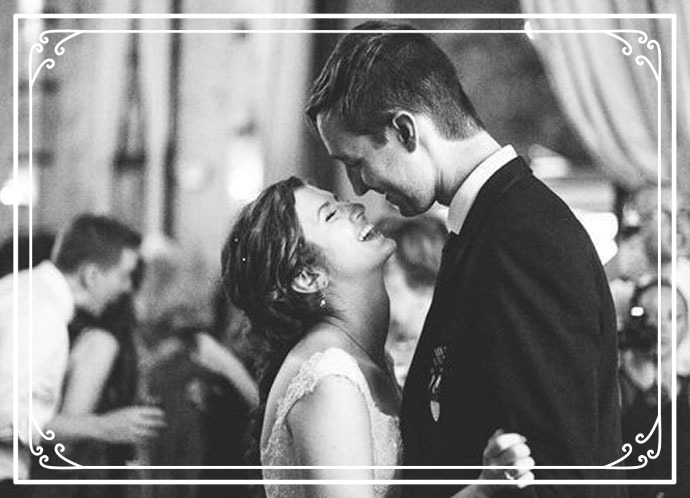
Heidi only has a few pictures gracing her plain white walls. The one that takes center stage, placed lovingly in the middle of her living room mantel in a gold-toned embossed frame, both mesmerized and disturbed me. It showed her as a younger woman (but not looking much different) at her wedding. Her smile is radiant and her blue eyes are glistening with happy tears. She was the bride every man dreams of marrying, the bride every mother dreams that her daughter will become. She trusted the man who faced her. She loved him. She looked into a future that promised happiness, security, comfort and a family.

She got none of those things.

I could tell immediately the man in the picture, the man who became her husband, was at the very least a malignant narcissist and very possibly a psychopath. It was his face and body language that gave him away. He too gazed into his wife’s face, and he held her arm, but the odd thing was the way he held his body at a distance from hers. As Heidi leaned forward, he almost seemed to be recoiling from the love she was feeling. He looked stiff, as if he was playing a role. But even more telling was the man’s face. There was no love in his eyes, no warmth, not even liking for Heidi. His eyes appeared cold and dead–small pinpoints of glittering gray-blue that were as absent of emotion as a doll’s eyes. And his smile–if it could be called that–was a smirk. The overall feeling I absorbed from looking at the two of them was a predator who had just captured his prey and was preparing to rip his kill to shreds to be consumed the way a lion rips apart a gazelle he intends to eat.

trapped

Although the picture was taken years ago and she is safely away from that man, I felt afraid for her looking at that photo. My heart felt as if someone had packed it in ice cubes.

Even sadder is that Heidi still appears to be in love with that evil POS, keeping their wedding photo on the living room mantel with two vases of flowers on each side of it, as if it’s a shrine to what they never had.

Looking at that photo made me realize just what the vulnerable of this world–people like Heidi–are up against when they fall in love with narcissistic predators. I hope one day she can move on emotionally and stop loving a man who nearly destroyed her mind and soul, and caused her so much suffering.