Do cats feel empathy?

grey_kitty

I don’t care what some religious people say–I believe animals have souls. How can you look into the face of your dog or cat and not just KNOW it’s there?

But this is not a religious or philosophical discussion of whether animals have souls or not. It’s also not about dogs (who definitely have a form of empathy, the way I see it).

This is a little story that shows that cats may have empathy, at least some cats.

A woman whose house I clean (I’ll call her Judy) had a beautiful shorthaired gray cat named Dusty. Dusty was 14 and by the way he moved, you could tell he was getting up there in years.

A month ago, Judy described the way Dusty always sits on her lap when she’s reading or looking out the window. Dusty has given her a lot of comfort since her husband of over 30 years died right around the holidays. Since the day she lost her husband, Dusty has always been right there, sitting on her lap, and sleeping curled up next to her at night.

She told me an incredible story. One day Judy was crying hard because she was missing her husband so much. Dusty came over to her, gently placed his paw on her face, and she looked up to see him gazing at her sadly. She told me Dusty’s eyes looked full of tears. According to scientific evidence, humans are the only known species (except elephants and possibly some apes) able to shed emotional tears. But I’m not so sure. I swear I used to see my dog Daisy get tears in her eyes when she was punished and knew she’d been naughty, and I’ve seen this in other dogs too. But cats? It could be–or maybe Dusty is just a very special cat.

Judy cried into Dusty’s fur for a little while, and Dusty just sat there in her lap while she stroked him. When she was done crying, he looked up at her and then, amazingly, licked the tears from her face.
Dusty felt Judy’s sadness and knew exactly what she needed.

Last week I went back to Judy’s house I noticed Dusty wasn’t there and I asked her about him. She started to tear up and gave me the sad news. Dusty had to be put to sleep because he had developed kidney disease.

I felt awful. I didn’t know what to say, so I just quietly said, “I’m sorry.”
Dusty gave a lot of comfort to Judy in her time of loneliness and grief. Now she must move on.

Dusty certainly seemed to have empathy. I do wonder if intelligent animals like dogs and cats can feel empathy for their loved ones. I think they can and I think this story proves it.

For further reading, here is an interesting article about empathy in animals, that concludes they can feel it. Dogs in particular can be empathic, but it’s been seen in other animals as well, even chickens.

My final words about this…

purpose

I’m not angry or upset and I don’t hate you. I don’t pity you anymore either. Pity is a wasted emotion and does nothing but condescend to the person you are pitying. In spite of our differences, I have the utmost respect for you.

You probably will laugh at me for saying this, but I think God used you to show me who I am
and how I fit into this world. When you allowed me to peer for brief moments inside your labyrinth-like beehive (and sometimes hornet’s nest) of a mind, in retrospect I understood on a gut level that you helped me understand how to read and cope with others with your illness, and help others like myself. I learned to be more empathic and more aware (not wary) at the same time. I developed an insight into myself that had always eluded me.

I used to have empathy for you, and in a way I still do, but I no longer of the belief you can get well so I had to let go of most of that empathy, for it would have been wasted.
Being the kind of person I am, it was so hard for me to do that, but I had no other choice.

Try as I might, I never was able to solve the puzzle of you. I had to give that up too. But I solved at least a little bit of the puzzle of me, and that’s so much better.

You more than anyone, know how damaged and broken you are, and I know you’re fully cognizant that you probably can’t ever escape your self created prison that one day will annihilate you.

But in spite of that–and no matter what your true motives, for the means here don’t matter, only the end–I need you to know you did and do and will continue to touch some lives in spite of being what you are. You might hate knowing you did good, but…you did good. Deal with it.

I’m a better person than I was because of the perspective I was given. So I wanted to thank you for that. And for your support of this blog. Everything happened just when it was needed.

Nothing happens without a reason. There is a time and purpose for everything. No one exists without some reason to be here. Everything under God is connected.

Healing Narcissism: “Stephen’s” story.

who_am_I

Disclaimer:
I am not a licensed mental health professional and as such, have done no studies or surveys to find out if the healing regime I am going to propose here would actually work on people with NPD. I have no guarantee such a therapy regime would work, but I feel like I’ve done enough reading about the disorder (NPD in particular), both from Internet material written by a number of people, and books by professionals who specialize in this disorder, to outline a possible therapy regime I feel might give sufferers of NPD (as well as BPD and other disorders of the self, and even PTSD) who want to get better some hope of doing so. This is not a therapy I “made up,” since I am not qualified to do so, much less diagnose anyone with any disorder. Instead, it’s an almagamation of several different therapies–drawn from both from traditional insight psychotherapy and alternative therapies proposed by both people who suffer from this disorder or are involved in alternative medicine and spiritual therapy.

For several months I have been reading everything I can about healing Narcissistic Personality Disorder, because as a victim of narcissistic abuse who has cared for and loved people who are narcissists, I have a vested interest in the possibility there may be hope for some of them. I also think our world would be a much nicer and safer place for the rest of us to live in if narcissists could be cured of their disorder!

In my readings, both on the Internet and from books about healing NPD (I just received a copy of James Masterson’s book “The Emerging Self,” recommended to me by fellow blogger BPDTransformation. Although I have not had time to read the book, I have skimmed through it and can already see that its premise of the narcissist getting in touch with their true self and confronting and releasing long buried true emotions of sadness and fear is not much different than therapies others have proposed for NPD).

Overview of Some NPD Healing and Treatment Techniques.
Following are some brief descriptions of some therapies that have already been proposed to heal or treat the symptoms of people with NPD. A few come from traditional psychotherapy disciplines; others are more alternative/experimental.

Cognitive-Behavioral Training/Therapy (CBT)

CBT

Currently, the only psychiatrically sanctioned and accepted “therapy” for NPD is Cognitive-Behavioral Training (CBT). CBT is useful and may help some narcissists who are not psychopathic or sociopathic learn to control and monitor some of their more antisocial and hurtful behaviors. It has been used with some success on prison inmates who want to change their behaviors, children with ODD and CD (Oppositional Defiant Disorder and Conduct Disorder) such as 6 year old Beth Thomas, who might have become a psychopath had she not had early intervention that intercepted her early antisocial behaviors and murderous impulses toward her brother and parents; as well as other people with NPD or BPD who are insightful and willing enough to want to change the way they act and stop hurting others.

The problem with CBT is it does not really cure the narcissist (unless done at a very early age, like Beth Thomas). CBT doesn’t address traumatic childhood issues or make the narcissist shed their protective masks or get in touch with the painful emotions that caused them to choose narcissism in the first place. It’s really just a band-aid and probably helps those who must deal with the narcissist more than it helps the patient. The narcissist remains a narcissist, and must constantly monitor their behaviors or be reminded by others to do so. The more positive behaviors never become internalized because the narcissist has not really changed from the inside.

That being said, I believe CBT is a valuable component in the type of therapy I am going to describe, but must be undertaken once the NPD patient has gone through a complete emotional catharsis resulting in the release of painful emotions stemming from childhood (or whenever they “chose” to become a narcissist to protect themselves). I’ll describe how this can be used later in this article.

Narcissists adopted their False Self to survive.
I hold to the probably rather unpopular belief that people with NPD started life as Highly Sensitive People (HSPs) or possibly even empaths. Sam Vaknin’s journal entries, especially his descriptions of himself as a sensitive and generous child who cried when his malignant narcissist mother was upset (I cannot find the link for that right now but will look for it), as well as writings and journals by other NPD sufferers on message boards and forums have made this evident.

It came as a surprise to realize this, because Narcissists (as opposed to those suffering from Antisocial Personality Disorder (ASPD), who really are hopeless and can never get better) seem like the most insensitive and cruel people on the planet. But their obnoxious and cruel behaviors stem from the False Self, not their true one, which hasn’t died, but is atrophied and in hiding. The False Self was constructed as an elaborate defense mechanism to protect the child from further hurt and abuse. Most people with NPD were abused or neglected as children, and being more sensitive than other children, the only way they could survive further hurt and abuse was to construct a False Self which makes them appear big and bad when deep inside, they still feel utterly worthless, despised and vulnerable.

crying_is_okay

One thing I noticed in all these therapies (not including CBT, of course), is the key to healing is emotional catharsis. Crying–not the usual narcissistic manipulative crying–but deep and honest crying resulting from releasing past pain, grief and fear–is an absolute necessity if any healing is to occur. Of course crying is key in any psychodynamic therapy for any disorder that can be healed by such means, not just NPD. As the False Self breaks down and the True Self begins to emerge, painful emotions from the past will start to be released. This is necessary and healthy. In fact, healing from NPD (or many other mental disorders) isn’t possible without it.

The following are some techniques used for actually healing NPD rather than treating its symptoms. It’s probably prudent to keep in mind their efficacy is iffy at best. If a narcissist is neither insightful nor willing, none of these therapies will work. Insight and willingness to change are necessary and must come from the narcissist him or herself. As I’ve described before, the willingness to heal is a cost-benefit analysis. If the narcissist has benefited from their narcissism, they may not think going through all the emotional work required to heal from NPD is worth it.

1. Attitudinal Healing.

attitudinal_healing

Tony Brown was a self-professed narcissist who decided he no longer wanted to be one. He believed narcissism stemmed from fear. (He’s probably right). He healed himself using a 12-point (not the same as a 12-step program) technique of replacing thoughts of fear with thoughts of love. He called this therapy Attitudinal Healing. Eventually, he says, these thoughts of love and empathy become internalized and the patient begins to remember past hurtful incidents that turned them into narcissists. During this process, the patient finds themselves crying a lot as they remember things long forgotten and the many ways they have hurt their loved ones. AH is kind of a New Age technique, but his followers swear it has worked for them. Tony Brown died in 2008 of natural causes, just after he was cured. His forum, HealNPD, is no longer active, but you can read his material about AH there and posts by others who were undergoing AH to heal themselves of narcissism.

Criticisms of AH: There’s some skepticism because there have been no studies or empirical evidence for AH’s efficacy, and some believe thought-replacing isn’t deep psychology and therefore can’t access the true self.

2. Reparenting.

remothering

“Reparenting” is a term used by Sam Vaknin for his theories of healing NPD, but the techniques involved are not his alone and partly derive from New Age therapy practices and traditional psychodynamic therapy and Freudian psychoanalysis. Reparenting requires an initial accidental or intentional removal of all the narcissist’s sources of narcissistic supply, which sets into motion a “narcissistic crisis” (a time during which the narcissist’s defenses and masks break down). This is the only time a narcissist may present themselves for treatment. At that point, the therapist offers only “cold empathy,” which means giving the narcissist acknowledgment and the “mirroring” they missed out n as children, without offering approval, criticism, sympathy for the narcissist’s plight, or any other means of narcissistic supply. The narcissist’s frustration and anger with the therapist (transference) for only mirroring them but not giving them the supply they want (validation or approval) results first in rage, then dissolves into emotional catharsis and release of negative and painful emotions associated with childhood abuse and neglect.

Criticisms of Reparenting: Intensive therapy like this could not practically work unless the narcissist was in a closely supervised setting, such a a rehab center or hospital, because of the strong possibility that even a willing narcissist, when undergoing such painful cathartic emotions, would suddenly leave therapy and go back to their old ways. I personally don’t believe such a therapy would work permanently unless combined or followed up with behavioral training such as CBT to retrain the conscience and internalize it into the psyche.

3. M. Scott Peck: “Remothering” and physical touch.

woman-holding-newborn

Dr. M. Scott Peck proposed a technique similar to reparenting called “remothering” in his book “People of the Lie: The Hope for Healing Human Evil.” Peck doesn’t go into great detail about re-mothering a patient in his book (and in fact doesn’t discuss treatment much at all outside of exorcism), but in his description of his malignantly narcissistic patient Charlene, he expresses his regret that he had not offered her unconditional love and support (not the same as narcissistic supply) and actually physically holding her as a mother would a baby, instead of allowing her to manipulate and torment him and making him continue to pander to her need for narcissistic supply.

Criticisms of “remothering”/physical holding: Peck’s briefly expressed ideas of holding (in a nonsexual way) and nurturing such a patient as a loving mother would are similar to reparenting, but would require the narcissist to be willing to allow themselves to become vulnerable enough to undergo such a treatment, which is unlikely unless they were undergoing a severe narcissistic crisis and utterly desperate. There’s also the problem that physically touching/holding a patient could lead to accusations of sexual abuse, or sexual feelings between the patient and therapist (which is a common but questionable outcome of transference/countertransference).

The problems of possible legal allegations of sexual abuse/harassment are addressed here, and there is a consent form in some states a patient can fill out to give permission for limited touching in therapy sessions to occur.

4. M. Scott Peck: Exorcism.

exorcism

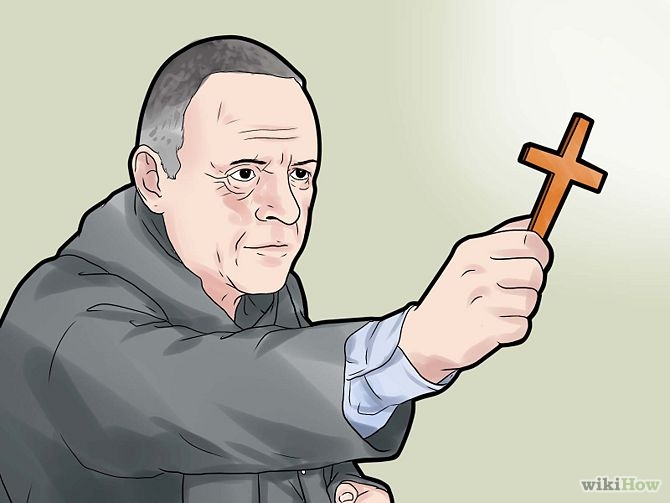
Peck, a born-again Christian, believes that many cases of narcissism are a result of a malignant entity entering the body of the patient, at the time they made the choice to become a narcissist, whether in childhood or later in life.

In some cases, where the possession by an evil entity is not complete (that is, a patient with narcissistic tendencies who is not psychopathic or malignant), a patient can be healed through the centuries old religious rite of exorcism, formerly only sanctioned by the Catholic Church, and even then, was only approved in extreme cases that were approved by the Pope. Peck believes any highly trained psychotherapist with a strong faith in God (not necessarily Christian) and with strong unconditional love for their patient can successfully perform an exorcism on a patient who is willing and properly prepared ahead of time. Peck writes about exorcism in both “People of the Lie” and goes into more detail about the two exorcisms he successfully performed in his later 2005 book, “Glimpses of the Devil.”

Criticisms of Exorcism: Besides its obvious medieval and superstitious connotations, exorcism can be physically, mentally and spiritually dangerous for both the therapist and patient. Death is a possible result. There should be others in the room during the exorcism if additional hands are needed to control the patient undergoing the rite. But because I believe NPD is as much a spiritual disorder as it is a mental one, I don’t think exorcism should be dismissed as a possible healing technique in extreme cases where other therapies have not worked.

5. Dr. James F. Masterson: Psychodynamic Treatment of Narcissistic Disorders of the Self.

closet_narcissism

I have not yet read his book “The Emerging Self” (I just received it in the mail) but from what I have seen, the therapy is psychodynamic (as opposed to merely behavioral) and requires the patient to confront and purge past hurts and undergo catharsis. Narcissism and “closet narcissism” are not the only disorders addressed in his book; he also addresses similar disorders such as BPD which can be healed using the same or similar techniques.

From Wikipedia:

Masterson’s subtypes (exhibitionist and closet)
In 1993, James F. Masterson proposed two categories for pathological narcissism, exhibitionist and closet.[40] Both fail to adequately develop an age- and phase- appropriate self because of defects in the quality of psychological nurturing provided, usually by the mother. The exhibitionist narcissist is the one described in DSM-IV and differs from the closet narcissist in several important ways.

The closet narcissist is more likely to be described as having a deflated, inadequate self-perception and greater awareness of emptiness within. The exhibitionist narcissist would be described as having an inflated, grandiose self-perception with little or no conscious awareness of the emptiness within. Such a person would assume that this condition was normal and that others were just like them. [Masterson’s definition of the closet narcissist sounds more similar to the “covert” narcissist or “inverted” narcissist Sam Vaknin discusses on his website].

The closet narcissist seeks constant approval from others and appears similar to the borderline in the need to please others. The exhibitionist narcissist seeks perfect admiration all the time from others.

Criticism of Masterson’s techniques of treating NPD: I cannot offer any criticisms as I have not read his book yet.

6. Rebirthing.

rebirthing_session
Rebirthing session.

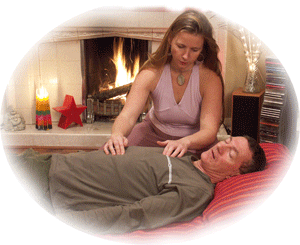
Rebirthing is a controversial New Age healing technique that involves deep and circular breathing. It has been proposed as an alternative healing therapy for people suffering from NPD and many other mental disorders, as well as for healthy individuals who just want to get more in touch with their spiritual nature. It’s supposed to improved the mental, emotional and spiritual well-being of anyone who decides to undergo this process. During the rebirthing process, the patient will begin to remember painful emotional incidents long forgotten and crying is common, but is usually followed up by laughter and a feeling of spiritual lightness.

Criticisms of Rebirthing: The type of deep breathing rebirthing requires can lead to hyperventilation and a feeling of being high (from intaking too much oxygen) or having left the physical body. In some cases it can freak out the patient or even cause a psychotic break, much like hallucinogenic drugs can. Because it’s an experimental, alternative therapy given by practitioners not schooled in traditional psychotherapy, there is no proof of its efficacy or empirical studies showing it actually works.

Skepticism among mental health professionals.
pIt must be said, that most professionals are highly skeptical about the possibility of healing (rather than just treating) NPD and feel that because they suffer less than their victims (or at least seem to), that it’s best to treat the victims for the PTSD, anxiety, depression and other disorders their narcissist has caused in them.

I won’t argue with this, but as I’ve said before, I don’t think narcissists, at least those with both the insight and willingness to change (which probably means the non-malignant, non-psychopathic types) are as hopeless as most mental health experts claim.

So I’m going to propose a healing regime here using a hypothetical man named Stephen that comprises elements of ALL of the above techniques (except rebirthing and exorcism due to their highly controversial nature), as well as CBT for helping to retrain the conscience.

There are a few prerequisites necessary for successful healing of NPD:

1. The narcissist must have insight into their disorder and know they have NPD and see how it damages their minds and souls. But insight alone isn’t enough.

2. The narcissist must have willingness to change from the inside–and that means a willingness to undergo intense emotional pain as their True Self begins to emerge and their masks break down. You can have insight without willingness, but not willingness without insight. Both must be present for change to occur.

3. The narcissist undergoing such treatment would be best treated in a highly supervised, even residential setting such as a hospital or rehab center, where their natural tendency to revert back to their old ways of behaving could be intercepted by trained professionals. This is especially necessary during the crisis period where their painful emotions may cause them to want to quit therapy or leave. They could sign a waiver prior to treatment that such attempts to escape would be intercepted or not allowed, and the patient brought back to treatment.

4. The narcissist is probably already undergoing a narcissistic crisis where they have lost all sources of narcissistic supply or a major one, such as a divorce, loss of a fortune or career, death of someone who was a source of supply, serious illness or incarceration. Having lost their sources of supply, the narcissist is already in a vulnerable state and if they are going to present themselves for help, this will be the time.

I am going to describe a hypothetical successful therapy used on a fictional man named Stephen who is afflicted with mid-spectrum (non-malignant) NPD, using a combination of the above techniques I think could be successful for some narcissists in a highly supervised and intensive setting.

STEPHEN’S STORY

'It's all about YOU, isn't it? YOUR hopes! YOUR wants! YOUR needs!'

1. The Master of the Universe has a Narcissistic Crisis
Stephen was a 45 year old successful owner of a video game company. He was married to a meek and quiet but intelligent woman named Lisa who elected to stay at home with their only child Cayden, who was two years old. They lived in a large home they built themselves, and owned two late model SUVs. Stephen could afford to take his wife and son on several vacations a year. To outsiders, they seemed like the picture perfect family.

But all was not well behind closed doors. Lisa was threatening to leave Stephen and take Cayden with her because of Stephen’s constant gaslighting, projecting, blaming her for their child’s excessive crying and misbehavior, and most recently, isolating Lisa from her former college friends and even her family. Lisa was so depressed that often she had no energy to take care of her son and Cayden was left to his own devices, at first crying and demanding attention from Lisa, but finally withdrawing into a quiet, withdrawn, almost autistic world of his own.

Lisa wanted to take Cayden to a psychiatrist, but when she proposed this to Stephen, he flew into a rage and accused her of calling him a bad father. He told her that if she was a better wife and mother, Cayden wouldn’t be having these problems. He also told her that taking Cayden to a therapist was something only a weak person would do. Cayden would just need to learn to “man up,” in Stephen’s words.

Lisa became increasingly depressed and one day she attempted suicide. Her suicide attempt landed her in the psychiatric ward, and Cayden’s care fell on Stephen’s shoulders. He resented his fatherly duties to Cayden, and grew increasingly impatient with him, and Cayden’s behavior grew worse. He resented having to leave work early or not come in to attend to one of Cayden’s many needs when his nanny would call saying there was a problem with his son.

sad-mother-child

One day Stephen was called into his boss’s office and confronted with his poor attendance and sloppy work. Cayden’s needs were not a concern to management. Stephen was told he needed to find some other arrangements or he would be let go. Stephen panicked. His high flying job and the money he made were the only things in his life he cared about. He hated to admit it, but Cayden was nothing but a burden. He had never really wanted a child at all due to all the responsibility.

Stephen’s problems continued. He had no choice but to keep leaving work when his son was sick or when the daycare center called saying he was throwing another one of his uncontrollable tantrums. Stephens’s boss summoned him once more and let him know he was being let go.

Stephen was devastated and began to feel hate toward his son for making him lose his job. He sat at home dejectedly staring at the TV or computer screen but felt so deflated he didn’t bother looking for another job. Cayden screamed and threw tantrums and Stephen, overwhelmed and filled with resentment for Cayden, began to physically abuse him.

A week later, Lisa was released from the hospital and announced she no longer loved Stephen and was taking Cayden with her to live with her parents. Stephen flew into a narcissistic rage and tied to stop Lisa from leaving, but there was no stopping her. She grabbed Cayden, tossed some of their things hastily in some bags, and took off for her mother’s. It was then she noticed the bruises on Cayden’s body and decided to press child abuse charges against Stephen.

Stephen was eventually arrested for child abuse. Now he had a police record and was probably unemployable, except perhaps in some sort of consulting role. He had lost his wife, his job, his child, and now his freedom.

2. Self-awareness and willingness.

Vector illustration of a man lock up in prison

In prison, Stephen broke down and cried almost nonstop. He made no friends because of his emotional instability. So he spent time by himself, reading books in the prison’s library about mental disorders and realized he suffered from Narcissistic Personality Disorder. At first he tried to deny this to himself, but in his heart he knew it was true. He also realized this disorder was the cause of all his problems. He didn’t feel remorse, exactly, but knew he needed to do something about it. Some of the prison staff took pity on Stephen and referred him to a psychologist who specialized in character disorders, NPD in particular. Stephen was desperate to change his ways and willingly entered an experimental but intensive therapy for people suffering from NPD and other character disorders like BPD. Although the therapist was a licensed Ph.D, he was open to incorporating alternative techniques in his regime.

3. Cold empathy.

narc_rage
Narcissistic rage.

Stephen started therapy (which he was taken to from the prison) with a litany of complaints about his failures and how no one understood him. He talked about his dickhead of a boss, his emotionally disturbed and annoying son, and his bitch of a wife who betrayed him. Stephen took no responsibility for his own contributions to his downfall. He demanded sympathy and often resorted to rages and tears during his sessions. Rather than sympathize or offer emotional support, Stephen’s therapist listened quietly to his litany of woes, only nodding here and there or asking questions when he needed to know something pertinent.

Stephen became enraged by his therapist’s supposed lack of caring and sympathy, and began to attack his therapist, calling him a charlatan, incompetent, and an idiot. He threatened to leave, but knew the prison wouldn’t allow him to quit, so his abuse escalated. Projecting his own feelings of rage and other emotions onto the therapist is a process called transference in the psychiatric community (the opposite, the therapist’s projections of their own emotions onto the patient is called countertransference and is nearly as common).

One day he became so enraged he physically attacked his therapist. An officer was called in to intervene, and together, they got Stephen to calm down. Stephen, defeated, slumped in his chair and dissolved into convulsive sobs. The guard stood nearby, and the therapist quietly waited for Stephen to finish crying.

4. Stephen’s True Self begins to Emerge.

OLYMPUS DIGITAL CAMERA

After several more intense sessions like these, Stephen reluctantly began to talk about his mother, who had abused him as a child. He tearfully discussed the time she held his hands on the hot stove to teach him a lesson, and the time she locked him in a closet for two days for refusal to eat the vegetables on his plate. After releasing him, she made him eat the half-rotted vegetables from a plate on the floor along with the family dogs. Stephen recalled being a good kid until he was about 5 or 6, and always very sensitive to his mother’s moods. He wanted to please her, but never could seem to accomplish that. No matter what he tried–bringing her flowers he picked from the garden (which he’d be punished for), or hugging her (where he’d be pushed away), she always rejected him or punished him. At first he talked about these incidents in a matter of fact, almost flippant way, but after about three more sessions, he began to choke up and tears began to run down his face.

But these tears were different than the ones he used to shed to get his way or manipulate his sources of supply. These tears felt different and came from a deeper, more honest place. He was embarrassed about the uncontrollable crying he could not seem to stop. He tried to hide these tears but his therapist told him they were healing him, melting away his False Self, and to let them come. So reluctantly at first, Stephen did. He told his therapist his “heart hurt” and then he broke into wracking sobs and buried his face in his hands. This was the breakthrough needed to move to the the Reparenting/remothering level.

In some difficult cases where he patient is having trouble bringing emotions to the surface or recalling past events, hypnotherapy could be useful in helping the patient recall painful childhood experiences.

5. Reparenting Stephen’s Lost Self.
inner_child

When Stephen broke down into convulsive sobbing of honest grief for the mother love he never received, and his intense fear of her as a child, his therapist knew he was no longer being manipulated and these were honest emotions from Stephen’s lost self. So the therapist came over and sat down next to him, and encouraged Stephen to cry on his shoulder. If the therapist is an empath, I think that’s an enormous advantage, for I feel that for this type of therapy to have the most success, the therapist must be able to share and feel the patient’s emotions–even if that means crying or grieving along with them. This may also make the patient feel less alone and more comfortable if they are not feeling their emotions alone.

Stephen, in his infantile, vulnerable state, didn’t hesitate to let his tears flow and allow himself to be held, and they stayed like this for a long time. The therapist was careful to stay quiet during this event, and limited himself to stroking Stephen’s head and back and holding him gently as a mother would hold a child. He did not offer judgment, congratulations or explanations. He simply let Stephen release all that pent-up emotion that had been hiding inside him for decades. And felt along with the child that still lived inside Stephen and longed to be able to live a normal, happy life in the world instead of forever hidden away behind Stephen’s disintegrating False Self.

Stephen felt comforted and nurtured. He told his therapist he wished his own parents had held him like that. His father never had either, because he had died in an accident when Stephen was only a baby.

Several more sessions passed like this. In each session Stephen remembered other things that had happened to him as a child. He remembered how sensitive he had been and how he felt hurt by everything. He remembered how much his mother hated it whenever he cried. He remembered being bullied by other kids in school and always running away in terror.

And then he remembered when he had to make a choice. That choice changed the trajectory of his entire life and transformed him from a highly sensitive little boy into a heartless and cold narcissist.

6. The Choice.

monsters-nietzsche

Stephen recalled a dare when he was 8 years old. A group of boys who had bullied him dared him to set a paper bag of dried dog poop on another boy’s rickety wooden front porch and set it on fire. The boys promised him that if he did this, they would no longer bully him and they would be his friend and protect him against any further bullying. Stephen knew that doing this could set the other boy’s house on fire and at first he protested, explaining what could happen. At this point he still had a conscience. But the boys threatened him and told him if he didn’t do it, their bullying would become worse and they would kill his pet rabbit. Stephen believed them, so against his will, he complied.

They set out after dark for the targeted house. The boys watched from the darkened yard as Stephen lit the paper bag on fire and hesitantly walked up the front stairs of the boy’s porch and set it next to a dead potted plant. The deed done, all the boys ran away before anyone saw them. Stephen looked back in time to see the flames ignite the plant, and quickly start to spread over the railings of the rickety old wooden porch. He felt awful and considered going to the police, but he didn’t dare. He went to bed that night and had terrible nightmares.

bullied_child

The targeted boy’s house burned down and he, his baby sister, and his mother had to be taken to the hospital to be treated for smoke inhalation. Soon after, the family moved away, never to be seen again. No charges were pressed because no one knew who the culprit was.

7. Becoming a Narcissist.

narcissism_childhood

To protect himself from his unbearable feelings of guilt and shame, Stephen shut off his painful emotions of guilt and conscience. From then on, the group of bullies accepted him as one of them, and they continued to engage in tormenting other children and even petty crimes.

Almost immediately after the incident, Stephen’s personality changed. Due to his choice to disobey his own conscience, he was becoming evil. He became a narcissist to protect himself from any further painful feelings. It was all just too unbearable.

Stephen confessed not only this, but also the way he used and manipulated others for his own gain, how he obtained his high level job dishonestly by faking qualifications on his resume, the way he emotionally abused his codependent wife who was so easily manipulated, and the abusive way he treated his own son Cayden. He cried and cried some more, and in return, his therapist held him without speaking, only projecting unconditional love and acceptance.

8. Return to Humanity.

freedom_man

Within a few more weeks, Stephen felt like a different person. He had become a model prisoner, and also found God during his incarceration. He was asked by the chaplain to speak to prisoners after the Sunday services, and Stephen used his own story to help and motivate other prisoners. He proved to be a good public speaker, and took courses in psychology and motivational speaking. He started to write a book about his experiences.

Stephen’s therapy was followed up with an intensive outpatient CBT program, to help him internalize the lessons he had learned about right versus wrong, and further help him develop his fledgling conscience.

When finally released from prison after two years, Stephen found employment as a counselor for prisoners and became a professional motivational speaker. He published his book, which became a best seller. He was asked to appear on TV shows and interviews to promote his new book and offered hope to thousands. Soon he met and married a psychology professor and today they have three children, who he loves very much. He would never dream of abusing them. He’s a very involved father and admits he’s happier than he’s ever been.

Recently he met up with his prison therapist, and the therapist noticed Stephen’s eyes and whole face looked different. He looked younger and happier, but more tellingly, in place of the cold, dead eyes of the narcissist he used to be, Stephen’s eyes sparkled with love and joy. His smile, instead of a sneer, was genuine and happy.

I just get so tired of it…

rejected_child

I just read this blog post “I Would Be Begging for Help if it were Me” by Fivehundredpoundpeep. I highly recommend it to all ACONs. However, I won’t lie–her well written article triggered me, and the following may be the most emotional post I ever wrote.
This actually started as a reply on her blog, but I decided to turn it into an article because it’s very much on my mind. Tears are not far away.

The mother she describes in her article sounds EXACTLY like mine–the tone, choice of words, attitude, everything. Criticism under the guise of “help.” Dismissal in the name of love. With mine it’s always “positive thinking:”
“If you were not so negative, things would come more easily to you.”
“If you were more pleasant to be around, you would be able to make the connections to help you advance in a career.”
“You never were the competitive type.”
And always, always, “You’re too sensitive.”

Well, excuse me, Mommie Dearest, you’re too damn insensitive. You may not know it, but my high sensitivity, much as it may annoy you, is going to OUT you one day as the MALIGNANT NARCISSIST you always were, and will save my sanity. Be afraid. Be very afraid.

And then you dare to tell me how much you love me in the next line? Prove it.

She used to send me corny memes and hackneyed sayings about always being sunny and cheerful, and accepting things the way they are. Scooping all these memes together and throwing them in the blender, here’s the pureed form of the message she was giving me:
“You are a failure and will never get anywhere in this world because you’re not a fun person, you never smile, you’re always negative, but you should accept things as they are and be happy with your lousy lot, because you don’t deserve any better.

That’s what she was really saying. She’s one of what I call “the positive thinking nazis.” Actually both my parents are. There’s nothing wrong with positive thinking, of course, and it’s something we should all strive to do. But my FOO took it too far. They used it as a way to sugarcoat and deny real issues. It was like putting a Band-aid on a cancerous lesion so it didn’t have to be seen. If it didn’t have to be seen, it would go away. That was the sort of narcissistic magical thinking and insanity I had to deal with.
They used it as a way to deny responsibility. That’s the most glaring thing wrong with the positive thinking movement, when taken to ridiculous extremes. The denial of reality and rejection of responsibility.

Of course if I ever confronted my mother about this (which I never did, not directly anyway, since I was a teenager), she’d either fly into a narcissistic rage or vehemently deny it.

staring_at_wall
My mother still has the power to make me feel this way. That’s why we’re estranged.

Seriously, that’s the only kind of “help” I have ever gotten from my MN egg donor since I grew up. But I can’t be rejected anymore because I don’t ask her for a thing anymore. I could be lying in a gutter with a broken leg and no home and no way to get to the hospital, and she’d probably tell me I was just being too negative and drawing in my own bad fortune. I would rather lie there and bleed to death than beg her to help.

My whole FOO are huge proponents of the postmodern narcissistic grandiose fantasy of “you create your own reality. If you fail, it’s no one’s fault but your own. Pick yourself up by your bootstraps and suck it up.” It’s The Cliff’s Notes version of Ayn Rand’s objectivism. No compassion. No empathy. No love. Only judgment, gaslighting, subtle put downs, no loyalty, and thinly veiled hatred. And unfair and untrue accusations of my acting “entitled” because at my age, of course I should not be needing any help. But I’ve never asked them for much anyway. They think I asked for too much. All I ever wanted was love. No their conditional fake excuse for love.

It made me furious to the point of wanting to smash my fist into a brick wall when well-meaning people who may have heard about my financial problems or need of emotional support, said to me something like, “Honey, don’t you have a family you can turn to?” Or “Surely your family will help you out of this jam.” Sometimes it still happens, though I tell no one IRL my troubles. But I don’t want to hear what they have to say: all these people assume that just because their own families will help them or give them a hand up when they’re down on their luck or just need a non-judgmental listening ear or a soft shoulder to cry on, then the same must be true of my family too. It’s just what everyone does for own flesh and blood, right?

crying_chld

These fortunate people with loving families may be well meaning but they assume because theirs will help them and give them unconditional love, that the same holds true for people like us. They simply can’t or won’t believe there are some parents who actually HATE THEIR CHILDREN.

I get so tired of it. So very tired of it. That’s why I tell no one my problems anymore except on my blog. I never ask my parents for help, ever, and never will again. Especially not my mother. But I won’t need to. I’m still poor but I’m surviving, even thriving now–but not because of any of their heartless and judgmental “advice.”

I’m getting better because I have the ability to reach out to my real family–this amazing community of people who have such similar stories–through a skill I’ve recently rediscovered and is the tool to my healing: my writing.
I don’t need to be my mother’s scapegoat anymore.

Empathic joy

Image

sympathetic_joy

11 ways to deal with a narcissist.

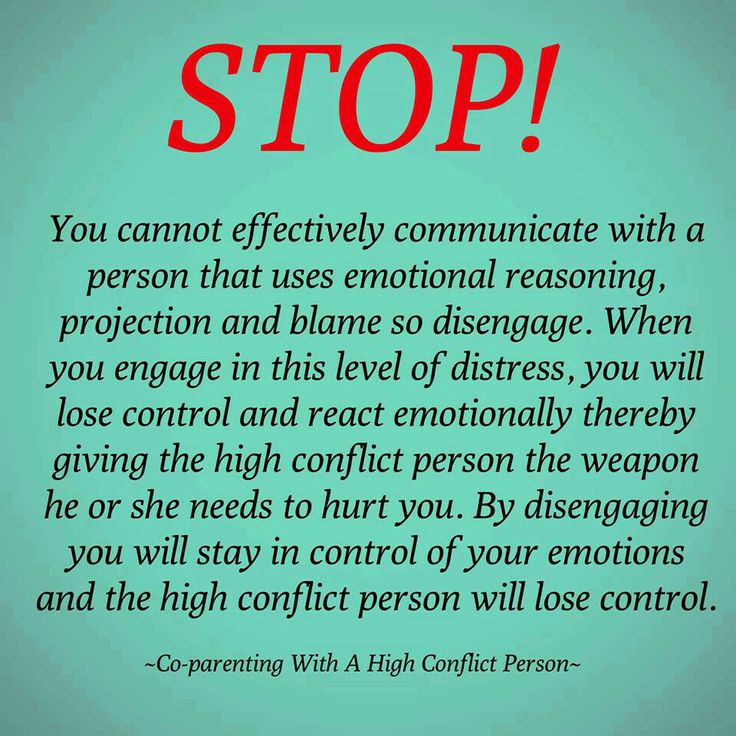
stop!
1. Get as far away from them as you can, preferably No Contact. This isn’t always possible especially if there are children involved.

2. Do not let them manipulate you. If you can’t cut them out of your life, if they start manipulating you, cut them off by changing the subject, interrupting, or straight up telling them to stop in a firm voice as if talking to a three year old. Keep doing this if you can’t get away.

3. Deny them narcissistic supply!
This will actually help them because it will send them into a narcissistic rage (that is going to be difficult for you but you must be strong and not back down). But the rage will pass and then the narcissist will sink into a narcissistic crisis–which means then you are probably going to be dealing with an extremely depressed person but narcissists rarely attempt suicide. They may be open to getting help if this happens. They may also leave you in their attempt to find a new source of supply if it’s become clear you are not going to feed it anymore.
If the narcissist leaves you, it’s you who wins. Even if you think your life depends on them. It doesn’t.

4. It’s okay to have empathy for the narcissist because deep down they are in pain. If you don’t that’s okay too (and probably better to lack empathy for them if you’re trying to get out of the relationship). Once disengaged then it’s okay to be empathetic if that’s in your nature, but remember they have chosen to be narcissists and are still very dangerous. Hate the sin, love the sinner.

5. The only kind of “love” they should get from you is TOUGH LOVE. Especially with a child who is a narcissist.

narcissist_shame

6. Be very, VERY clear about your boundaries. Do not tolerate any violation of them. Be firm, do not back down even if they become enraged. Stand your ground. If you feel intimidated remember you are dealing with an eternal 2 or 3 year old. Would you let a toddler get the better of you? Of course not. It’s the same thing with a narcissist. They are really just small children throwing a tantrum to get their way.

7. If you can’t escape, have some kind of outlet or get away to do things for yourself.

8. If your narcissist has isolated you from everyone else, use art, music or writing as an outlet. Creating things frees us, even if only in our minds and hearts. It’s something that’s all about you, and no one else. A narcissist can criticize it, but cannot penetrate your creative vision. I believe everyone has at least one creative/artistic ability they can develop.

9. Read everything you can. Go to as many websites about narcissistic abuse as you can. Read blogs, books by experts and survivors, find out how others have coped or are coping.

10. Realize you are not alone and many suffer with you. Malignant narcissists are at fault for your condition, not you.

11. If you believe in God, ask Him for guidance and strength. You will need it. If you are an atheist or agnostic, ask the Universe or your Higher Power or even the Tooth Fairy for the same.

The man you love to hate…or hate to love.

samvak2

For victims of narcissistic abuse, Sam Vaknin is the man you love to hate–or the man you hate to love. He’s a controversial figure in the field of narcissism. He has ardent fans within the community as well as seething haters. Just taking a quick scan of the comments under his many Youtube videos will give you an idea of just how polarizing Sam Vaknin really is.

Vaknin, self-professed malignant narcissist and possible borderline psychopath, is in the unlikely and highly ironic position of being a guru and hero for countless victims of narcissistic abuse, and remains one of the most famous voices on the subject.

Until narcissism became a thing a few years ago and blogs by survivors of narcissistic abuse began to proliferate like wildfire, Vaknin was one of the only voices on the Internet who delved deeply into the subject of narcissism and its effects on victims, outside of mental health professionals and psychologists–and not even many of them paid much attention to the problem of narcissistic abuse. Sam was a voice in the wilderness and offered hope to many who felt they had no hope at all. And yet Sam was exactly the kind of person they were trying to get away from.

Sam is a conundrum. If he’s a malignant narcissist who is also a self-professed misanthrope and psychopath, why on God’s green earth does he feel the need to write self help books for victims of abuse and run forums and discussion groups for them? Why does he warn us against people like himself?

When I first found out about Sam Vaknin, there was no way I thought he could be a real narcissist. I was already aware of his books and already knew he was a self professed narcissist, but other than that, knew very little about him. Later on, after watching “I, Psychopath,” I decided he was a narcissist wannabe who more likely had Borderline personality disorder (BPD) with some narcissistic and schizoid traits, and I wrote this article stating my case.

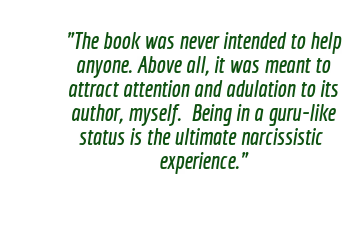
Sam found this article and apparently really liked it, because he disseminated it all over social media. It wasn’t particularly complimentary. I nearly accused him of being a huge fraud, and yet Sam began to visit this blog and share some of the other posts I wrote about him. I read in one of his interviews, that Sam loves to be hated and feared. He doesn’t like to be liked or thought well of. He hates to be loved. But he does like to be thought of as a guru and an expert. Maybe he liked the fact I was critical of him in that post, although I did say some nice things too. Whatever the reasons for his approval and attention, I was inadvertently feeding his narcissistic supply and in return, he was helping give my new blog much needed visibility. This quickly became a mutually beneficial arrangement (though due to his being much more famous than me, I’m sure I benefited more than he did).

Going back to the film “I, Psychopath,” Vaknin’s behavior toward the filmmaker and others, including his submissive, endlessly patient, high-empathy wife Lidija, was as whiney, argumentative and petulant as a three year old who needs a nap or maybe a spanking. He seemed impossible to please. Ian Walker (the filmmaker) who was also in the film, seemed to be losing his mind and it was clear there was no love lost between them. I wasn’t sure how much of Sam’s childish and explosive behavior was an act for the camera to appear more narcissistic than he actually was, but when Walker secretly filmed Vaknin at one point to prove it wasn’t just an act, Sam’s behavior remained just as abusive.

samvak3

Walker, for his part, seemed to have bit off far more than he could chew in making this film, and seemed nearly destroyed by Vaknin’s abuse. (I read it took him two years to recover from the experience). But to be fair, Walker had chosen to make this film about a self professed malignant narcissist and possible psychopath, so what did he expect? Candy and roses?

Vaknin became petulant when one of the psychological tests he took (the one that scored in all known personality disorders) had him scoring higher in schizoid and avoidant traits than narcissistic ones. In fact, his N score wasn’t really all that high. Other tests he was given gave him much higher scores, and Robert Hare’s Psychopathy Checklist (the test that’s given to criminals to make sentencing and judging decisions in courts of law) gave Vaknin a whopping score of 18 in psychopathy, which is extremely high, even for conscienceless criminals.

An intelligent man like Sam, of course, could be faking the answers. Having a lot of knowledge of personality disorders and general psychology, he could have answered the questions in the manner a psychopath would have answered them to get the results he wanted.

The brain scans were more telling. He was definitely missing some essential connections that people with a conscience possess. But I still didn’t buy it. I didn’t believe he was a psychopath and if he was a narcissist at all, he was a very weak one.

Sam seemed to be all over the place, but his behavior in the film, while mostly unpleasant, still didn’t scream “narcissist.” I was initially confused by him–and then I was fascinated, and finally mesmerized. Even though I had never met the man or spoken to him, I was falling under his spell, which I hear is legendary. This could prove he is dangerous.

Many narcissists can be quite charming, and Sam, for all his toolish and childish behavior, certainly could turn on the charm. He was intelligent, incredibly so, and sometimes funny. He was self aware and quick to admit how much of a bastard he was. Sometimes he was nice. He was always brutally honest, something most narcissists are not. He was definitely unpredictable and moody. He wasn’t someone I’d want to spend much time alone with, and part of me wanted to protect his sweet little wife Lidija from her unstable husband, whatever his psychological problem was. He was a ticking time bomb, and although he has never been physically abusive, he was clearly verbally abusive and the poor woman seemed to have “settled” for a disordered man who could never really return the love she constantly showered on him, as much as he sometimes appeared to try.

In the film, she said she wanted to have a baby with him but knew it probably wouldn’t happen (partly due to her age but also because they have barely any sex life. Sam is not interested in sex. He lives inside his head). What a sterile, joyless life any normally wired woman would have to endure to be married to him. But Lidija, in her codependent way, seems happy and satisfied. It’s very dysfunctional but apparently works for both of them. She’s his constant supply and she’s more than happy to fulfill that role, or says she is.

So, moving on…I think it’s a very good thing that they never had children. I read somewhere (I can’t find the link now) they mutually decided not to reproduce, in order to protect any potential child from either becoming NPD or a victim of its effects, which to my way of thinking shows a side of Sam that does not want to inflict his disorder on a child–so does that mean he has some semblance of a conscience? In another video, I saw how impatient Sam seemed toward some children playing nearby. “Why can’t they just be born adults?” he said. Clearly Sam would not be an ideal father to a child.

It didn’t take long for Sam’s brilliant but disordered mind became my latest Aspie obsession (we do get obsessed over things). I wanted to find out what really made Sam Vaknin tick. I wanted to get inside Sam’s mind and feel what it felt like to be him, and maybe that would give me some answers in solving the puzzle of him. By now, having read more of his writings and seen his interviews, I was becoming convinced that Sam was really a narcissist, but probably not a malignant one.

I read everything I could about him. Interviews, articles, his own stuff. I read blog posts and articles by both his fans and his haters. I watched his videos. I read the comments under them. I read his personal journals and poetry, which are publicly available on his website

Sam’s poetry and personal journals show a side of him that cannot be detected in his almost robot-like Youtube videos where his face is nearly devoid of expression or emotion. It’s my belief this intellectual automaton he wants everyone to believe is the real him is a mask he wears to fool everyone into thinking he is just a walking, talking brain with no emotions, a person who cannot feel anything, a person with no vulnerabilities. I believe these creative writings are the only windows we have into Sam’s true character–his lost self.

Sam’s emotionality can’t be directly detected in “Malignant Self-Love,” although he does write with passion and there’s an odd underlying mood of darkness and pain I’m picking up that I don’t get from watching his videos. I can’t explain why I feel this underlying anger and pain emanating from the pages because it’s not really present in the words themselves. He’s a powerful writer and it just comes through, whether he intended it to or not. Other people have said the same thing about this book.

It’s taking me longer to read than I anticipated, partly due to its length, but also because I’m finding I need to put it down from time to time, because the rage and hurt I can detect that underlies his intellectual, scholarly prose can make me feel depressed. I feel like I’m being drawn against my will into a dark night of the soul. It’s nothing I can put my finger on, just a mood of bottomless sadness and hopelessness that filters through his words. I haven’t reviewed his book yet but I will say this. In spite of his having written “Malignant Self Love” primarily to obtain narcissistic supply for himself, it’s actually one of the most insightful books on narcissism I’ve ever read. Who better than a narcissist to be able to write about what the disorder feels like and what really causes it? But if you’re sensitive at all, it’s not a fun book to read.

samvakquote

Sam has said even in his videos that he often feels sad and depressed. There are flashes of humanity occasionally too. In one of them he is being questioned about something he did to another boy when they were about 12. He had tried to brainwash this other boy, and the boy was so damaged by the psychological abuse that he had to be hospitalized. When the interviewer asked if Sam felt any remorse, he replied he knew it was wrong on an intellectual level but couldn’t feel any remorse or shame. But his face told another story. For just a moment, Sam’s face changed. It seemed to clench and then softened and he looked away quickly from the interviewer, as if he didn’t want his humanity to be seen. I saw him grimace a little, as if remembering this was causing him a jolt of pain.

His journals and poetry are where I believe is Sam’s true self really comes out. Creative writing is the only form of expression it has. Even with all the honesty and insight he has into his disorder (and what I believe a strong desire to be rid of it too) his true self is eternally dissociated from the hostile, volatile, intellectual mask of protection he shows to the world. I no longer have any doubt Sam is a narcissist on the higher end of the spectrum, if not malignant, but even for such an insightful intelligent narcissist as Sam, a cure is probably not going to happen.

Sam’s journals, short fiction, and poetry are so filled with sadness, rage, hopelessnes and pain it takes my breath away. It’s almost too painful to read them. His writing, as emotional as his videos are intellectual, makes you feel like you’ve been punched several times in the gut. People have accused him of being a fake, but there’s nothing fake in the raw emotion he is able to express in his creative writing and journals. No one could fake that.

His words tell what it really feels like to have NPD–from the inside of a sufferer who really does suffer and at the same time is all too aware of it. And it’s pure hell, worse than anything you can imagine. Knowing you can never escape, wanting to be human but not knowing how. Knowing you can never give or receive love like a normal person. That you long to be good but don’t know how. That you feel superior and worthless at the same time. That you want to be hated and feared because deep inside you feel like you don’t deserve any love because of what was done to you by your mother as a child. That you hate and envy others for what you want but can’t have. It’s like being possessed. Maybe it is being possessed. Maybe when one chooses to become a narcissist (Vaknin said he chose to become one at a very young age to protect himself from further hurt) you are drawn into darkness, and once you’ve entered you can’t ever escape.

abused

I read an interview where he admitted he has memories of himself as a very young child, and these are indicative of a person who may have been an empath had he not been subjected to horrific abuse. I think Sam is actually a deeply emotional man with very sensitive feelings but these are unfortunately limited to just himself. Any ability he once had to feel empathy and love for others was cut off like a leg that was amputated for no good reason other than his mother’s malignant envy of him. Sam’s overreaction to a slight on this blog proved to me just how sensitive he actually is. It’s tragic that sensitivity was not allowed to develop into empathy for others. Here is an excerpt from that interview (because I found it posted on another blog with no link, I don’t know where it came from or who was interviewing him):

Q: So can you remember not being a narcissist?

A: That is a really good question. I do remember a period before I became a narcissist, that must have been around age 3 or 4, I do remember forming my narcissism as a conscious effort. I remember I’ve been diagnosed with 180+ IQ, very high, which allowed me to achieve results which were not age-appropriate, advanced. Also my memories are unusual for a child of three, I remember as a child of ¾ inventing the narratives, the stories that became my narcissism later. Inventing the stories of my omniscience, how I knew everything, and inventing fictitious figments of me that are very powerful. Telling myself I would not feel pain if I told myself not to. I remember assembling it like Lego. Before that, I remember being a spoiled child, admired and loved because I was achieving things that were not typical for a child, the entire neighborhood was there first, then the whole nation. So I became a spoiled brat. Later I was subjected to horrific physical abuse up until the age of 16. The answer to the question is yes – I remember the exact moment where I decided to be a narcissist.


Q: So you remember the empathic abilities you have lost in this process?

A: No, I was too young to develop real empathy.


Q: A little compassion, do you remember that at least?

A: I remember being compassionate, that I cried when my mother was sad, that I was a good-hearted kid, I used to give away my things, tried to understand other peoples emotions. But these are just flickers of memory, they have receded so fare. It’s like the shades on the wall of Plato’s cave. I do not relive them, do not have access to them. I just know of them.

Sam is a paradox, an enigma, a person too complicated for anyone to ever be able to really understand, and he is just as flummoxed by his complexities as those who try to understand him. I believe he’s a good person trapped forever in a disordered mind that betrays him and makes him lash out at a world that never gave him a chance to become fully human. Having so much insight just makes it all so much harder.

Do I think he’s dangerous? Yes, without a doubt. Even if he doesn’t want to, he can draw you into his illness. He can infect you with his misery and darkness. I don’t think it was necessarily Sam’s abuse of Ian Walker that made him feel the need to symbolically wash himself clean at the end of the film and that changed him for the worse for two years hence. After all, Walker chose to make that film and knew what he was getting into. I think it was the darkness that surrounds Sam that infected Walker and threatened to engulf him. Sam has to live with that every day of his life and can’t free himself from it like Walker can.

When I think about Sam Vaknin, I’m reminded of “Demons” by Imagine Dragons. The protagonist is warning us of his malignancy.

Sam is warning us too. That’s why I don’t think he should be demonized and dismissed as a fraud or someone with malignant intentions, even if they’re primarily self-serving and intended to procure narcissistic supply for himself. There’s a good core in Sam that wants to separate himself from the rest of humanity. That’s why he went into exile by moving to Macedonia and lives a life as a near recluse. He knows what he has become and I think he hates it. But he’s helping people. People look up to him for advice about how to deal with their abusers, and the advice he gives is good. So does it really matter if his primary motives are selfish? I don’t think it does. Just don’t get too close.

Well, this is out of the box thinking…

Brain-out-of-the-box

I just saw this comment under the Youtube comments for “I, Psychopath” (the documentary about Sam Vaknin). I don’t agree with most of it, but I think it does give us something to think about in terms of autism’s relationship to psychopathy. The writer of the comment may be onto something about autism being nature’s solution to psychopathy. There does seem to be some kind of correlation between psychopathic/narcissistic parents and children with Aspergers or autism. I don’t know if any study has ever been done on this.

I do not think Vaknin has Aspergers syndrome (which I was informed today is no longer called that–the updated DSM now identifies Aspergers as “autism spectrum disorder.” I prefer “Aspergers” so I will continue to use it) I think his schizoid traits make him seem like someone with Aspergers at times.

Vaknin is a very important figure in terms of how his introspection allows us to see what is really happening in our evolution. After a few years reading about narcissism and psychopathy, as well as Autism, and coming to the conclusion that Autism is nature’s solution for psychopathy (I am an autists born in a family that is experiencing this transition), to my eyes, Vaknin seems to embody the bridging that is occurring. One thing that seems to be a reality is that autists may be born into families where we also find psychopathy, most likely a generation or two back. The shift to the emotional awareness presenting in the burgeoning of the enteric brain, which incorporates genetic changes changing the heart itself into a motor for cognition is what informs Autism, but because many autists are so sick or dysfunctional, it is hard to get people to see that it could have any evolutionary logic behind it. Perhaps the dysfunction is nature’s way of keeping the tremendous emotional authenticity and power it brings under wraps.
. Vaknin has all the traits of Asperger’s. This is not to say that there are no vestiges of the narcissism or psychopathy that may run in his family, but his journey itself speaks of what is going on.

Can a narcissist also be on the autism spectrum?
The topic this commenter raised brings me to something I’ve been wanting to write about for awhile now: can a narcissist also be autistic or Aspie?

This is a tricky question, because the way I see it, autism (Aspergers) is like a mirror image of narcissism. Although people with Aspergers have been accused by many of lacking empathy (which I disputed in this blog post), they generally do not. The reason they may seem unempathic is because they don’t express their emotions very well, but most Aspies are very sensitive to the feelings of those around them and can be easily overwhelmed. Conversely, a narcissist can’t feel the emotions of others well, but is usually good at pretending they can. An Aspie is not capable of pretending to be something they are not. So a narcissist may seem more empathic than an Aspie, even though the opposite is the case.

So can someone be both?

I would say yes. However, an Aspie narcissist will not wear masks very well or know which ones would benefit them most since they will not be able to read social cues, which a “successful” narcissist must be able to do. So while an Aspie may be a narcissist, they will be very bad at hiding their true motives and therefore not very dangerous. A narcissistic Aspie is probably more likely to be a “needy” narcissist–the kind of narcissist who acts as pitiful as they can and feel entitled and demand to be taken care of and catered to due to their “helplessness.”

Can narcissists feel empathy for fictional characters?

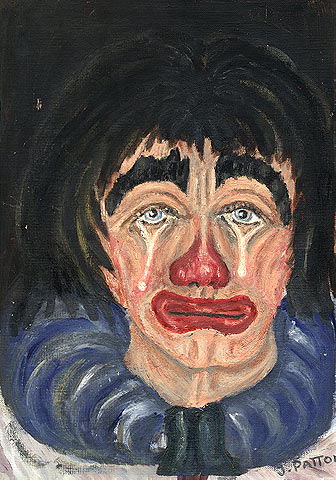
clown1

There is a question I have wondered about for a long time that was brought up on another post.

Narcissists are exquisitely sensitive. They are very easily hurt. But their hypersensitivity is limited to themselves (this is called narcissistic injury). Any insult, no matter how minor, will send them flying into a narcissistic rage or cause the “needy” type to break down like the babies they are.

But as we all know, when it comes to others, they have no empathy. They cannot feel your pain, share your sadness, or rejoice with you. On this level, they are incredibly insensitive.

But there’s something I wonder about. Because narcissists are “fictional people” themselves (what you see is not their true self but a mask), can they feel empathy for fictional people, such as characters in a sad or touching movie? Can they cry when reading a sad book or when they hear a sad song?

I’m leaning toward yes, because my MN mother never could feel pain for anyone but herself (and never expressed even her own narcissistic injury in any manner other than rage), yet I remember she could cry a river of tears when we went to a sad movie or watched a touching love story on TV. Hell, she could even turn on the eye-faucets when a maudlin commercial came on. My N ex used to get all weepy when he watched sad movies too.

For a narcissist, it’s “safe” for them to feel empathy for fictional characters on a movie screen or in a book, because those are not real people. There’s an interesting article written on the blog Let Me Reach by Kim Saeed about this subject, in which the author concludes that narcissists definitely do cry at movies, and it has to do with cognitive dissonance. Read Kim’s article for a more in-depth look at how this works for narcissists, because she explains it much better than I do.

More on empathy: this baby knows best

This incredible video went viral a little over a year ago. In it, a mother sings to her baby girl (yes, it is a little girl) and the child responds emotionally to her mother’s voice and cries in a very adult way and also smiles through her tears, showing pleasure in her mother’s lovely voice in spite of the sad emotions she is also picking up from mom. It’s fascinating to watch her because who would think a child this young could be moved to tears the way an adult can? This little baby is most likely an empath–and probably an HSP too.

http://www.youtube.com/watch?v=nIsCs9_-LP8

We don’t have to worry this little girl will grow up to be a psychopath, do we?

I think the video went viral not only because cute things about babies and animals always seem to go viral, but because people are starved for empathy and this little baby is a breath of fresh air and a ray of hope (sorry about the double cliche!) in a narcissistic and hostile society where it seems too many people have become hard, cold and shut off from the feelings of others, and where empathy is all too often seen as a liability rather than a potential strength and tool for healing.