Sometimes a dog.

german_shepherd_mix
I wish I’d snapped a picture of Khyna while under my care, but this photo of another dog looks very much like her.

Sometimes an animal, in this case a beautiful German Shepherd/Golden Retriever mix, can turn your day around and make you realize what is really important.

All morning a strange golden dog with pointed ears had been nosing around my yard. She sat on my porch whimpering and started to scratch at the door. I looked outside to see what was going on, and I saw her sitting there at the door, looking at me with sad brown eyes. She started to whine a little, and then got up and walked around my porch, looking confused.

I squatted down in front of her. She seemed friendly. Definitely someone’s pet. I noticed she was wearing a collar with some metal tags. Her name and address was embossed on one of the tags: Khyna (pronounced Keena) allowed me to look, and then licked my face! She needed me help her get home. For some reason, she (or God) had chosen me!

I noticed the address was in a new development up the road, not far away at all. I happened to have a retractable leash that we had used for Dexter (who never could learn to walk on a leash properly) and Khyna sat down obediently while I attached it to her collar.

I liked this dog. I decided that if the owners didn’t want her anymore, I would clean her up (she was all muddy from having been out in the nonstop rain) and take her in until other arrangements could be made, or I might just decide to keep her myself.

We walked together in the pouring rain. I didn’t even mind the gloom or getting wet. Khyna stayed right by my side, not pulling on the leash or hanging back. She stayed slightly ahead, as if leading me, even though I knew now where she lived.

We turned into the development and she moved a little faster. I think she recognized we were close to her home. As we approached the cul-de-sac where her owner’s home was, a man pulled up in a Jeep and rolled down the window. He was grinning like he won the Lotto.

“OH MY GOD! You found Khyna! My wife has been worried sick about her. I just bought her flowers to cheer her up but now I can give her the flowers and Khyna back too!”
“She’s a beautiful dog. Very sweet too,” I said.
“That she is,” the man said proudly. I could tell these people loved this dog and she had just gotten lost and come to me for help getting home.
“How long has she been gone?”
“Since last night around 8 PM. She likes to run off sometimes.”
The man pulled into his driveway and I unhooked Khyna from her leash. She bounded off into the open garage as the man opened the side door for her to go in the house.
He turned back to me. “Thank you so much. You have no idea how much this means to us.”

galatians_5_13

There was no cash reward, but the happiness and look of relief on the man’s face was all the reward I needed. And his wife would be happy too.
I walked home through the rain, feeling like I’d just won a million dollars. The sun might as well have been shining.
Sometimes doing something kind for a stranger can turn depression around.
Especially if it involves an animal.

The neverending rain and depression.

rain_gif

I can’t seem to shake this seasonal funk I’m in. It’s been raining steadily for a week now–gloomy, overcast, steady rain that goes on all day and night, not the intense but shortlived thunderstorms of summer that are somehow energizing.

I don’t like fall in this part of the country. It always rains a lot, and as much as everyone crows about the “fall colors,” I don’t think they’re that special. This isn’t Vermont with its sugar maples that turn brilliant orange and red, or Colorado with its neon yellow Aspens–here the trees just look unhealthy. There’s a few spots of bright color here and there, but the numerous oaks and sycamores just turn from green to brown or a deep purplish red before they go bare for another winter. It’s depressing. Maybe up on the Blue Ridge Parkway the sight is prettier, but I don’t have a running car right now so I can’t go there.

I’ve been stuck inside my house for days, waging war on the camel crickets and the fleas I can’t seem to get rid of. I’m working a lot more. My roommate is moving on Tuesday and I haven’t found a replacement yet. It’s dark when I get up in the morning. It’s getting dark shortly after I come home from work. Yesterday was actually cold and I had to crank up the heat for the first time since April. I’m tired and draggy all the time. I barely have the energy or motivation to cook dinner. I’ve even been avoiding my friends because I just feel like I’m going to drag them down with me.

As far as my writing, the ideas have been coming like an old man’s teeth–few and far between. I’ve been resorting to either reblogging other people’s stuff, posting fluff or pictures, or recycling old articles I wrote, due to the dearth of original ideas. Actually I do have one good idea for a new long article, but I can’t seem to motivate myself to write it. I’d promise I’d write it today, but I don’t trust myself to stick to that promise. I know if I don’t though, I’ll be feeling terrible about it.

exhausted_rain

Last fall wasn’t any different from this one weather-wise, but I was new to blogging and the excitement and novelty of that kept me motivated and able to beat my SAD symptoms. I did have a lot of worries, as I recall. My daughter was still having drug issues and was facing 30 days in jail (she is doing a lot better a year later–she has matured a lot and become much more responsible). I wasn’t sure I was going to get along with my new roommate. My ex was still abusing me through text messages. But blogging was like a whole new world, it felt like doors were opening everywhere.

Sam Vaknin, the “god of narcissism,” found this blog in November (my least favorite month other than December) by Googling himself (haha!) and actually made some nice comments and shared some of my articles on his sites and social media. That gave my blog the early jumpstart it needed and I was ecstatic. As far as I know, he still comes here to read but he no longer comments or shares anything. That’s okay because this blog is doing well on its own now, without anyone’s help. But the novelty and newness of it is gone. I don’t see any new doors opening. I know I have to open those doors myself (the next step would probably be writing a book) but I just don’t seem to have the energy or motivation.

Last year at this time the ideas were almost coming too fast–it was actually frustrating because I didn’t have enough time to write about everything I wanted to write about. Now it’s all I can do to think of any original ideas at all. As far as writing about narcissism, what more is there to write about it that I haven’t already? I don’t know whether to keep the focus on narcissism, or shift the focus to general mental health, or just turn it into general purpose blog. I’m stuck. Blogging has brought me so much joy; what happened?

I feel like I’ve reached a blockade in my path to recovery. I know that isn’t really true, and it’s just depression making me feel so negative, and it’s just a matter of working through it or waiting it out. I know it will pass; it always does. But I feel like I’m running in place but going nowhere. The weather isn’t helping.

storm_clouds2
This too shall pass.

I know the only way through this is self discipline. I have to make myself write even when I don’t want to. Once I get started, I get into it and that tends to lift my mood and my imagination begins to work again. I also have to make myself get out, in spite of the gloomy weather and no car. I have the company car to drive; I can at least go up to the store in that. Walks in the light drizzly rain aren’t so bad; it isn’t freezing cold out. I haven’t been to church in several weeks either. It always make me feel good to go, but for some reason I’ve been sleeping in instead. Then I wind up feeling guilty and miserable (not because I’m offending God–I don’t think attending church is necessary to “please God”–but because I know I’m doing myself a disservice by skipping).

So today, instead of sleeping in, as I’ve been doing on weekends lately, I’m going to make myself write, make myself go out for a walk in spite of the dreary weather, maybe even take a short drive. Read a book. Clean the house (it needs it). Do something that will make me feel like one of the living. Sitting around feeling sorry for myself and sleeping half the day away is going to get me nowhere fast. I got away from my abusers, but the way I’ve been treating myself is self abuse! It’s possible to be as toxic to myself as my narcissists were to me. I know I’m not the only person in the world who struggles with this time of year. And spring is only 5 1/2 months away! :mrgreen:

Hey, I actually wrote a new article that’s more than two sentences long! I think I feel a little better already.

On having seasonal affective disorder (SAD), dishonesty, and a few other things.

This is going to be a long post, because I have so much to say.
I haven’t been completely honest about why I haven’t been posting as much (being overworked and tired is only part of it) but I was very confused about all these emotions I’m having and wasn’t sure where to begin, even though I wanted to talk about it. I just felt so overwhelmed and confused I was sure anything I wrote would overwhelm and confuse the hell out of anyone reading it and make no sense. Even now, I’m having trouble knowing where to start and am not sure this is going to make any sense, but I’m going to try, since I have the time.

1. Seasonal Affective Disorder.
tigger_SAD

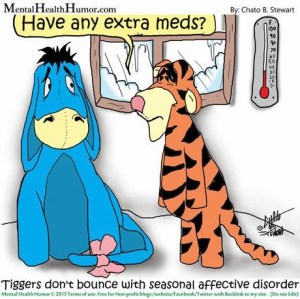
Let me start with the most obvious and simplest to explain. I don’t know if I’ve ever mentioned it, but I suffer from SAD (Seasonal Affective Disorder). Last fall, I was so new to blogging and so excited by the novelty of it that my excitement over my new “toy” overrode my usual feelings of depression I get when the days become shorter, colder, and gloomier. I even thought I’d been spontaneously “cured” but it’s back this year. It always starts around late August, when the days are becoming noticeably shorter (and this year, the trees begin to change early too). The fact that it’s still as hot as a pizza oven makes no difference. SAD is triggered by lack of daylight. It really starts to kick in after the autumnal equinox (September 23 this year) when the days begin to become gloomier and grayer and the nights are longer than the days. In this part of the country, there’s always a lot of rain in the fall and overcast days. I know we need the rain, but my brain doesn’t care and the darkness always triggers depression, which causes me to feel sad (SAD is a good acronym for this disorder!) and as gloomy as the gray days, and any motivation I have or energy goes out the window.

The string of upcoming holidays, which seem to mitigate the gloom for normal people (and even make them feel happy), don’t help me one bit. In fact, they make things worse. Halloween isn’t too bad (it doesn’t cost much and isn’t a “family” holiday), but Thanksgiving and Christmas are a different story. As a person with no money and who is not in contact or close to most of my family, the holidays, especially Christmas, are very difficult for me. Besides my children, I have no one to spend Thanksgiving or Christmas with. Christmas is so overcommercialized and you are made to feel somehow defective or different (in a bad way) if you can’t afford to buy a ton of gifts (and don’t get many either), don’t love Christmas music, or can’t get into the “holiday spirit.” I know Christmas is really about the birth of Jesus, not crass commercialism, but unfortunately our society has made it that way, and if you’re a poor person with hardly any family and few close friends, it’s really hard to not get depressed.

I always begin to feel better sometime after Christmas, and usually by early February my mood is improving, despite the cold weather. Again, this has to do with the lengthening days. In fact, every year I look forward to the winter solstice, because it’s then that the days begin to grow longer again. It doesn’t take too long for my body to notice it. And once Christmas is over and done with, I feel relief. Then it’s just a matter with putting up with 2 more months of cold and gloomy, overcast days. And because I live in the South, the winters here are not long. It’s usually warming up by early March or even the end of February, and the first signs of spring can be seen then too. I always notice my energy level and motivation increasing, and my mood becomes more upbeat and positive.

So the lack of motivation caused by my SAD (and blogging no longer being the novelty it was last year at this time) is partly responsible for my not writing every day the way I used to. But that’s only part of it.

2. Coming to terms with being a covert narcissist.

covert_narcissism2

The other part is a lot harder for me to talk about, even though I’ve talked about it before, and nothing bad happened when I did and people didn’t unfollow this blog in droves, the way I had feared. About two months ago, I began to self identify as a covert narcissist (in addition to my having BPD and Avoidant PD). It explained the “Aspergers” I was sure I had up to that point. I don’t want to belabor again how I made this discovery or why (if you’re interested in reading more about that, I wrote several articles about it in early-mid August and started another blog, intended to help people with self-aware covert narcissism and BPD who do not want their disorders), but for some reason, I began to feel a lot of shame associated with the “NPD” label, based on the general attitude toward narcissists, especially those who have been abused by them (and the attitude is understandable).

Although I didn’t want to be dishonest because this blog has always been a place where I can be completely honest and would not have discovered this truth about myself had it not been for writing honestly about my feelings every day, I clammed up just the same. I began to fear people’s judgment of me for being “one of them” (even though I’m mindful and think I do pretty well not acting in narcissistic ways) and feeling like maybe I should downplay the “narc” label. After all, it’s just a label, right? And not even a label given to me by a therapist or mental health professional, but a self-diagnosis which might be wrong anyway. I can’t even bring myself to add “covert narcissism” to my list of disorders. BPD’s bad enough.

But in spite of all that, in my gut I know my self assessment is correct. I’ve become very hesitant to call too much attention to it however, because of my fear of negative judgment (which in itself is a part of both BPD and covert NPD). I know it’s silly, because it was abuse itself that made me this way. In the past few months I’ve hesitated to write articles about abuse, because knowing I have covert narcissism made me feel like a fraud. But I’m not a fraud because I am myself an abuse victim–one so badly damaged I was infected with narcissism myself. That’s why once I got over my rage and hatred toward narcissists (which I worked out through my earlier blog posts) brought on by their abuse, I found myself attempting to understand why they did the things they do. It took several more months of completely honest writing (running naked in public) that pulled the scales from my eyes and made me realize that I myself had the disorder and was trying to understand myself!

It took an email I got this morning from an ACON (who I had confessed about my narcissism to) that said she could understand how I could have been infected and that as long as I was aware and trying to change (which I am doing) that there was nothing wrong with my writing for ACONs and in fact, she had been helped by my articles and would continue to read them. Most people, in fact, have been very supportive and understanding. I was actually shocked by this, given how demonized NPD is.

I know as a blogger who writes primarily as a form of self therapy, that I cannot get any better if I stop being honest. I worry far too much about what others are going to think, or that I will be disliked, or people will judge me harshly. I suppose this is natural, having been judged harshly by my narcissists all my life, so I always assume the worst will happen. It rarely does, but just the same, it makes me clam up and leave things out.

These labels can be so damaging, and make those of us who want to change ourselves afraid to admit the truth. It was bad enough admitting I was BPD, because of the negative stigma associated with that. But admitting you’re “N” is even more scary. Some people think you’re the devil himself. But why should it be that way? It’s just a label. If I’m not acting out or hurting anyone, then it makes no difference to anyone but myself. It’s something I need to deal with. I can’t get any better if I don’t come to terms with that reality and on some level, accept it.
I could be wrong anyway (but I don’t think I am).

I felt so much better when I left nothing out, when I was so candid and brutally honest about the most personal and embarrassing and shameful things imaginable. It was scary but I never once regretted it, and found myself growing and changing, becoming happier and more confident (in a real, not a narcissistic way). I was feeling more empathy for others and becoming less shy. I was finding myself connecting with people in a way I was never able to, and was beginning to feel like I mattered. So why would I stop?

I judge myself and don’t want to “own” this label, but realistically, how could someone have been raised the way I was and NOT develop a Cluster B disorder like BPD or NPD? I was both scapegoat AND golden child, and constantly receiving contradictory, mixed messages (I was perceived as either “better” than others, superior, and expected to live up to some ideal image of a child my parents had for me, or I was told I was worthless and bad because I was unable to live up to that unrealistic ideal). This isn’t something I chose; it was something done to me. Narcissism is contagious.

And that brings me to the third issue behind my depression and lack of motivation…

3. Fear of parental disapproval.
angry-parents

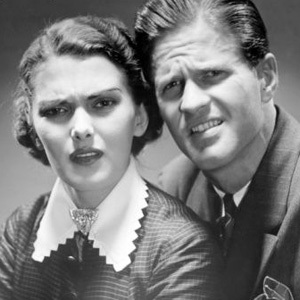
There’s another reason why I’ve been less motivated to write. The way I was raised has everything to do with all my emotional problems and my mood swings, inability to connect with anyone emotionally, or feel like I’m leading a fulfilling, successful life. It even explains why I married a malignant narcissist and spent 27 years with him as a codependent, abused wife (covert narcissists–and BPDs–often pair up with higher spectrum or overt, grandiose narcissists and are almost always codependent).

But lately I’ve been afraid to write about my parents and their emotional abuse of me, even though they were my first (and because my personality was still forming, my most toxic), abusers). I can’t blog honestly if I leave my experiences with them out. But I’ve been afraid to write about them just the same, and that’s because about 6 months ago, I found out my parents had found my blog and were reading it. That might make anyone clam up, but no real names were being used, so I wasn’t guilty of slander or libel. It might even do them good to read about the way they made me feel, even if they didn’t care or tried to project everything back onto me (because I wasn’t lovable enough as a child, or am a “loser” who makes “bad choices” today or whatever it is they’re saying about me). It would certainly do ME good to be honest about what happened. After all, this blog is my self-therapy and with any therapist, you would talk about your childhood and the bad parenting you got, so why wouldn’t I write about it? It’s not as if I’m losing anything by doing so, since (as far as I know) I’ve been disowned anyway. I’ve been the black sheep for years and am NC with my mother anyway.

But I still fear their judgment, for God knows what reason. Why do I write openly about my ex’s abuse and not fear his negative judgement? What makes it so different? What makes that “okay” and writing about my parents “not okay”?

I worry way too much about the negative opinions of others, and that in itself is part of my narcissism. I was bullied as a child and that didn’t help either. I put far too much importance on what other people think. I don’t think I lie excessively, but leaving things out is a kind of lie too. I lie by glossing over things, not talking about important things that affected me and caused my problems, not admitting the way I really feel about something, downplaying both my abuse (due to fear of my parents judging me even though they already do) and my own disorders. When I lie by omission, it’s still a lie, and I’m not doing myself any favors either. In fact, the fear of negative judgment feeds on itself, and I imagine the worst outcomes and that tends to feed my fears even more, making me even less motivated to write.

So what I need to do is not worry about what everyone will think, and go ahead and write what I feel and let the chips falls where they may. If I’m harshly judged by some, so be it. Those are probably not people I would want to have anything to do with anyway.

A small part of my depression is because my car needs major repairs and my job only pays enough to pay the bills so I’m living pretty much from one paycheck to the next (and working a lot more). I’m going to go ahead and ask for donations via Paypal but I’ll do a separate post for that and I hope it doesn’t offend anyone.

So that’s where I’m at. I need to start writing about everything I’m feeling again, starting from today and stop worrying about what a few people think and censoring myself because of them. They don’t matter, but my growth as a person does, as well as those who get something from reading this blog. Censoring myself for fear of negative judgment is one of the things I need to work on getting over. It helps no one, least of all me. Haters are always going to exist, no matter what you blog about. I can’t lose my original focus and why I started blogging in the first place, and lately I’ve been slipping. That needs to stop now.

You may find this article inspiring too, if you blog and are afraid to be completely honest.
Too depressed.

Bad day. Hour long fight with my mobile provider. Car barely running. Work sucks. Fall is in the air and the trees are already changing and that doesn’t help.
Too much stress. Too much anger at my parents for making me what I am. Too much pain and regret. Too much grief to handle. I’m not that strong; right now I feel very weak.
I’m much too depressed tonight to write anything longer. I’m sorry. Don’t worry. I’ll be fine.

What depression actually feels like.

depression_piechart
So true. Click to enlarge.

The honeymoon is over.

lost

I’ve been feeling quite strange the past week. It’s the worst I’ve felt in about a year. It started with feelings of anxiety and panic, racing and morbid thoughts and a feeling of unnamed dread. I’d try to nap and my heart would start racing so I’d give up. DBT skills didn’t work and some of my BPD (or PTSD) behaviors returned–negativistic behavior, feeling offended easily, sulking, fits of anger (not directed at anyone but expressed in imaginary conversations with myself in the car or at home), low frustration tolerance, paranoia. I’ve been less motivated to write. I’ve been neglecting housekeeping and eating right. Getting up in the morning is excruciating.

It was all I could do to make it through work. I was feeling sorry for myself all day and at the same time felt guilty for feeling that way. The anxiety has lessened but it’s been replaced by despair and some kind of deep sadness.

I don’t cry easily, but I started crying a few hours ago and couldn’t stop. It feels good to cry, but the feelings are so painful. I feel unworthy. I feel impotent. I feel angry at my parents for training me to be such a good little victim. I hate my ex. I hate myself. I suck at everything. I can’t relate to people. I hate people. I want to connect but I just can’t. I think people will hate me if I let them get too close. My world is so small and constrained and unsatisfying because of my fear of relating to others and reaching out, and because I never have enough money to do anything or go anywhere anyway. The summer’s slipping away and it reminds me of all the lost opportunities and all the doors that have slammed shut, never to reopen. That’s where my head is at. It’s a bad place to be. I feel like I’m losing control. It’s like a war inside my head. I hate all this wallowing in self pity but maybe it’s an opportunity to nurture myself.

I need to find a therapist. This blog is a wonderful tool for healing and it’s something I won’t let go of. It’s brought me a lot of joy. A lot of frustration too, but mostly joy. So I’ll keep blogging. I’d still rather do this than anything else.

But something, I don’t know what, has been triggered–by what I don’t know–and I’ve reached a point where just writing isn’t enough. I need someone to talk to who can help me sort out whatever’s going on in my head right now. I think journaling every day may have brought me to this point.

I’m not giving up. The good thing is that my emotions, while not really under my control at the moment, are there for me to feel. I’m not depressed in the apathetic, almost zombie-like way I used to get depressed when I was living with my narcissist ex. This is an active depression where my emotions are accessible to me and I can sort of name them and I just have to let myself feel them. I’m grateful for that at least. This is what I wanted. But what do I do with them? Can they make me a better, kinder, happier, more empathetic person? That’s what I really want. I need to find someone who can show me what to do with all these emotions.

I guess this means the honeymoon is over, and now the real work begins.

“Ordinary People”: a case study in malignant narcissism.

ordinary_people

I remember when I first saw this 1980 Academy Award winning movie being quite triggered by it, because the main character, Beth Jarrett (played convincingly by Mary Tyler Moore) reminded me so much of my mother, all the way down to her impatient, flippant mannerisms, fake cheerfulness, and clipped speech. And at the time I felt very much like the teenage son, Conrad (Timothy Hutton), who was clearly suffering from a severe case of PTSD and depression, which no doubt had its roots in his mother’s emotional abuse and coldness.

“Ordinary People” (directed by Robert Redford) is about an upper middle class family from the Chicago suburbs, but the individuals involved are certainly not ordinary–or at least you hope they aren’t. Moore’s Beth Jarrett is a high-spectrum malignant narcissist who cares only about her social position and status and the appearance of having “the perfect family” and “the perfect life.” She is always perfectly dressed and coiffed, and can pour on the fake charm whenever she is trying to impress their friends and colleagues. Beth’s husband Calvin (Donald Sutherland) provides his family with their affluent lifestyle and is a good man who cares deeply for his family but is codependent to his narcissistic wife, who makes endless demands on him to keep up the image of perfection, and you can see from his demeanor it’s destroying him.

Their son, Conrad, is his mother’s scapegoat, and while she never actually says so, it’s clear that she blames him for the accidental boating death of her Golden Child, Buck (shown only in flashbacks). Conrad was with Buck at the time of the accident, and suffers from survivor’s guilt in addition to PTSD which was probably caused by his mother’s horrific treatment of him as well as his guilt over the accident, because he was unable to save his older brother’s life. The movie begins just after Conrad has been released from the hospital after a suicide attempt. I think there is more to Beth’s hatred of her child than her belief he is to blame for Buck’s accident. I think she hates him because he sees the truth about her, and calls her out on it. He is sensitive and able to see through her mask of perfection to the monstrous narcissist she actually is, and she can’t handle that.

From the very beginning, we can tell Beth despises her depressed remaining child. Her attitude toward Conrad is dismissive and impatient, and she makes no attempt to understand and appears to have no empathy for the emotional turmoil he’s in. She always puts her own needs ahead of her son and husband, and berates Calvin for attempting to understand his son’s pain. There’s not one moment where she shows the slightest shred of sympathy or love for him, and yet on the surface, no one would call her abusive, because of the mask of normality she always wears. Here’s a scene where Conrad attempts to talk to his mother about why they never had a pet–you can see how disconnected Beth is from Conrad’s (or her own) emotions, and Conrad’s hurt comes out as rage.

There’s a heartbreaking scene where the grandparents are present and Calvin is taking pictures. When he asks Beth to pose with her son, she glibly changes the subject to avoid having to SAY she doesn’t want her picture taken with him, but her disgust is obvious. Calvin insists, and Beth smiles with gritted teeth as she coldly stands next to her son. Conrad, who is sensitive, picks up on his mother’s hatred but tries to smile anyway. Beth, still smiling her fake smile, demands that Calvin give her the camera so she doesn’t have to have her picture taken with Conrad, but Calvin keeps insisting. Conrad, fed up and hurt, loses his temper and screams “Give her the goddamn camera!” It’s scenes like this that so brilliantly depict the subtle emotional abuse a malignant narcissist mother inflicts on her most sensitive child.

The camera scene.

Conrad begins seeing a psychiatrist, Dr. Berger (Judd Hirsch) who begins to get Conrad to open up about his feelings and show his anger. He also begins to date a girl he met in band practice (Elizabeth McGovern), who is upbeat yet understanding and helps bring Conrad out of his shell.

Calvin and his mother seem to be constantly arguing. Calvin tries to referree, but can’t seem to appeal to his wife’s loving nature, because she apparently has none. After one of these arguments, Conrad calls out his mother for never having visited him in the hospital, adding that “You would have visited Buck if he was in the hospital,” to which Beth retorts, “Buck never would have been in the hospital!” This is a clear implication of the higher esteem she held her older son in, who she believed would never have “gone crazy” and had to be hospitalized. Unlike Conrad, Buck would have enhanced, rather than diminished, the image she had of having the perfect life and perfect family.

Beth’s evil really comes out when they go on vacation to Texas to visit with some of Calvin’s colleagues. While golfing, Beth sweetly suggests to Calvin they go on another vacation–which would be during Christmas. Calvin agrees, but suggests they should bring Calvin along with them because he might enjoy the trip. To this, Beth flies into a narcissistic rage and loudly berates her husband for always trying to include Conrad in everything. During this rage, she projects her own anger and selfishness onto her husband, who unsuccessfully tries to stand up to her. Later in this clip, there’s a chilling scene after Conrad’s parents return home and Conrad tries to give Beth a hug. Beth’s face stays cold and hard and you can feel the hatred and disgust she has for her child while she barely returns his embrace at all.

The golf scene and “the cold hug.”

Conrad finds out his friend Karen from the hospital (Dinah Manoff) has committed suicide. Frantic, he makes an emergency appointment with Dr. Berger, and shows up in his office in a broken state. He rages and then sobs uncontrollably and everything comes pouring out: the whole story about the night Buck died and how he blamed himself, his mother’s hatred for him, and how he was never good enough. Dr. Berger listens and holds him like a parent would a child, and finally Conrad begins to calm down.

Gradually, Calvin becomes more aware of his wife’s malignant narcissism and is beginning to doubt her ability to love anyone but herself. One night Beth finds him crying alone and asks him why he is crying. Calvin asks Beth if she really loves him and she gives him a non-answer, saying “I feel the way I’ve always felt about you.” Calvin admits he is not sure he loves her anymore. He’s beginning to see the soulless monster she really is. Early in the morning, Beth leaves for good, not saying goodbye to her husband or son, leaving them to fend for themselves and try to pick up the shattered pieces of their lives together. No doubt both are much better off this way.

Calvin’s realization and confrontation with Beth.

This is one of the most convincing and well acted movies about the havoc a malignant narcissist mother can wreak on her family I have ever seen, and 35 years later, it still hits home because of the uncanny similarities I see to my own mother (who was not as outwardly rejecting or quite as malignant as Beth Jarrett). Every one of the 9 DSM indicators of Narcissistic Personality Disorder is evident in Beth. If anyone is interested in studying the myriad ways a malignant narcissist inflicts their abuse and scapegoats their children, this movie is the best case study I can think of, outside of having to deal with one yourself. Of course, not all malignant narcissists are upper middle class like Beth is, but even though the specific words and actions may differ from one social class to the next, the manipulations and abuse are always the same.

This trailer shows other scenes of the way Beth emotionally abuses, gaslights,projects, and triangulates against her surviving son.

“Inside Out”: a touching and funny story about the way emotions work.

inside_out_poster

Yesterday I decided to take myself to the movies for a change, and chose to see “Inside Out,” the Disney Pixar animated summer fantasy blockbuster.

Seeing “Inside Out” was a serendipitous choice, because I just happened to have enough money to afford a ticket (which is a rarity for me), and also because, although I didn’t know it right away, this movie has a beautiful message about the way Sadness and Joy, though seemingly polar opposites, when working together make human connection and unconditional love possible. Just as the light can’t exist without darkness, or good without evil, joy cannot exist without sadness. When working in sync with each other, these two emotions create a beautiful life affirming thing called Empathy, and that’s what connects us to each other and keeps the human race from becoming extinct.

Official Trailer

Sneak Preview–Teaser Clips

Riley Andersen is a young girl of 11 who becomes severely depressed after her parents’ decision to move from Minnesota to San Francisco. The movie begins at the moment of Riley’s birth in Minnesota, shown from Riley’s point of view. Her first Emotions (depicted as loveable anthropomorphized characters) are Joy (feeling secure in her parent’s love) and Sadness (when she needs something or feels ignored or in pain). As Riley grows into early toddlerhood, sometimes her needs and desires are thwarted and Anger takes over and she throws a tantrum. Around the same time she is also capable of feeling Fear or Disgust (both necessary for her survival), and it’s at those times those characters become dominant in Riley’s growing mind.

When the five Emotions work together in harmony, not overstepping each other’s boundaries and only doing the jobs assigned to them, this teamwork manifests in Riley as a well-adjusted little girl able to feel all her emotions at the appropriate times.

The five Emotions work in Headquarters, which is the conscious part of Riley’s young mind. Joy is responsible for making sure Riley’s short term memories are sent to Long Term Memory deep in Riley’s subconscious. Her memories are depicted as glowing colored orbs containing a ghostly image of the actual memory. The color of the orbs represent the dominant Emotion Riley felt at the time of the event. Transporting Short Term memories into Long Term Memory happens during Dream Production as Riley sleeps, and sometimes the other Emotions are needed to help Joy do her job getting the memories there (and sometimes discarding certain irrelevant or painful ones.) Occasionally the other Emotions (as well as Riley’s imaginary childhood friend, Bing Bong, who is a jokester) like to play little jokes–and certain irrelevant memories like an annoying gum commercial jingle are sent to Long Term Memory along with the important memories, which causes Riley to occasionally hear the gum jingle in her head at random times years later.

rileys_emotions

At the center of Headquarters is the vault which contains Riley’s Core Memories–important but happy long term memories that are responsible for Riley’s happy go lucky personality. The orbs that represent these are colored gold (Joy’s color) and for Riley’s continued mental health, these core memories must not be contaminated by the other Emotions, which is why they are kept locked in a vault. Each of the Core Memories has a long glowing tube that leads to one of Riley’s Five Islands of Personality: Family, Goofiness, Hockey (which she loves to play), Friendship, and Honesty. Maintaining these islands is necessary for Riley’s continued normal psychological development.

The crisis in Riley’s mind is set off when her family moves from her beloved Minnesota to San Francisco. Moving away is always a traumatic event for even the most loved child. Feeling isolated from her old friends and lonely in a place she doesn’t know, Riley’s Emotions begin to make mistakes and not work in sync. Joy and the other Emotions have never been sure of Sadness’s purpose because she just seems to be a Debbie Downer who is always in the way and always making mistakes. It’s Joy’s job to keep Riley’s happiness intact, but one day shortly after the traumatic move, Sadness goes around touching Riley’s happy memories, turning them blue (sad). Joy frantically tries to undo the damage but the memories already touched cannot be repaired. Desperate, Joy tries to isolate Sadness to prevent her from doing any more damage.

On Riley’s first day at her new school, Sadness takes over and Riley begins to cry in class, which creates a new but painful core memory. Joy frantically tries to keep this new core memory from reaching the central vault, but in her struggle with Sadness, who seems to keep contaminating more memories, she accidentally knocks out some of Riley’s untouched happy core memories, which fall off into the abyss. These memories are almost impossible to retrieve once lost to Riley’s Unconscious. Worse yet, both Joy and Sadness are sucked through the Long Term Memory Tube themselves, and are both lost deep in Riley’s vast and labyrinthine Unconscious.

During Joy and Sadness’s absence, Anger, Fear and Disgust attempt to run Headquarters in their place and make a holy mess of things. They attempt to provide “joy” but of course it’s faked now, rather than genuine. Sadness too is absent, so Riley can no longer longer cry or even feel grief over her loss. Anger, Fear and Disgust manifest in Riley’s new insolent and angry attitude toward her parents and loss of interest in the things she used to love. With the core memories now missing or contaminated, one by one the Five Islands of Personality crumble and fall into the abyss of the Memory Dump, a place deep in Riley’s mind where old memories are forgotten. The first Island to crumble into oblivion is Goofiness (Riley’s sense of humor), followed by Hockey (which she quits), and then Friendship (she no longer has any desire to make new friends).

long_term_memory
Joy and Sadness find themselves adrift after falling through the Long Term Memory tube deep into Riley’s unconscious mind.

Desperate, Anger decides to insert in Riley’s mind the idea to run back to Minnesota. He plugs this into the Control Console, in the belief this can produce new happy memories. This requires Riley to steal money from her mother’s purse in order to fund her trip back to Minnesota, and then she lies about the theft. As a result, the second to last Island left, Honesty, falls away in ruins into the Memory Dump.

Back in the abyss of Riley’s deep Unconscious, Joy and Sadness run into Bing Bong, Riley’s long forgotten childhood imaginary friend. Bing Bong wants to reconnect with Riley, so he tells Joy and Sadness they can all get back to Headquarters by riding the Train of Thought. After a series of failed attempts, they eventually catch the train, but it becomes derailed when the last personality island, Family, falls into the Dump.

At this point, giving any more away would be spoiling the plot, but gradually Joy and Sadness, who have always been at odds with each other, realize that in order for Riley to return to her normal happy state of mind, they must work together as a team and Sadness has the biggest job of all. Riley must be able to experience–and receive–empathy and love (which comprise both joy and sadness) to heal from her near-catatonic depression.

As a blogger about narcissism and personality disorders, I see Riley at this point in grave danger of suicide or developing a personality disorder, even NPD or BPD. Her trauma-induced depression has caused her to become apathetic and unable to feel anything at all. What happens next is so magical and touched me so deeply I sat there in the darkened theater with tears running unchecked down my face and my nose running. I wasn’t alone–I heard sniffles and nose blowing all over the theater, and there’s a safety and sense of connection with total strangers that comes from that, and that’s why going to see a good movie never gets old. There’s something wonderfully liberating about being able to cry in a public place yet unseen by others and unjudged for it because everyone else is crying too. I think that’s why “heartstring tugging” movies are so popular. But the emotions elicited in “Inside Out” feel real–there’s no sappiness or fake sentimentality in this film that make you feel manipulated by the producers.

five_islands
The five Islands of Personality.

But for all its poignancy, “Inside Out” has plenty of humor too, and all the jokes are clever and well timed. At times during the movie I was both laughing and crying at the same time. The Five Emotions are all funny characters with their own unique charm. Even Anger is loveable and hilarious in his own irascible way, and the Tinker-Bell like Joy, who could have been incredibly annoying for all her upbeat perkiness, has a depth you don’t expect and over time you realize she is the only Emotion who can feel all the other Emotions. I pictured Joy and Sadness as really being the same person–the two sides of Riley’s True Self–and when they were lost in Riley’s memory dump, Riley’s behavior became quite narcissistic. It wasn’t lost on me that both Joy’s hair color and her “aura” are colored blue–Sadness’ color.

Pete Doctor, the film’s director and screenwriter, was inspired to develop “Inside Out” while trying to come to terms with his own daughter’s psychological changes and mood swings as she approached adolescence. To give the complex psychological concepts presented credibility, well-known developmental psychologists were consulted during pre-production. It’s obvious that a deep knowledge of the way the human mind works fueled both the story and the landscape of Riley’s mind. Kids will adore “Inside Out” because of its lovable characters, fantastic animation, humor, its engaging story about a regular girl, and impressive special effects. In the theater I saw it in, there were plenty of children there, and all of them were rapt in the story.

But adults will love it just as much because of the movie’s deep message of Empathy being born from pain and loss, and the necessity of “negative” emotions to exist in a healthy person’s psyche, working in tandem with “positive” ones. Understanding the movie at this level requires an ability to think in an abstract way about the mechanisms behind personality development and psychological disorders. “Inside Out” is a rare movie that celebrates the human ability to feel, and to love, cry, connect, and laugh. It tells kids that all their emotions are okay, and experiencing them is normal and just part of growing up.

Parents, if you have children ages 4 to early teens, please take them to see “Inside Out.” Both you and they will leave the theater feeling great, and the ideas presented in the story can open up honest discussion about emotions between parents and their children. I’d even go so far as to suggest teachers show this movie to their students, and engage them in discussion afterwards.

I find it encouraging and heartening that such an honest and touching movie with a positive message about genuine emotions and empathy has become the hit of the summer, instead of the usual mindless dreck that passes for summer blockbusters.

“Inside Out” is rated PG. I would not recommend it for children age 3 and younger, due to several quite scary moments that could give a young child nightmares.

riley_parents
Riley with her concerned parents at the dinner table.

My rating: Five Stars! *****

Facts about “Inside Out”:
via Wikipedia

“Inside Out” is a 2015 American 3D computer-animated comedy-drama film produced by Pixar Animation Studios and released by Walt Disney Pictures. Directed and co-written by Pete Docter, the film is set in the mind of a young girl, Riley Andersen (Kaitlyn Dias), where five personified emotions—Joy (Amy Poehler), Anger (Lewis Black), Disgust (Mindy Kaling), Fear (Bill Hader), and Sadness (Phyllis Smith)—try to lead her through life as she moves with her parents (Diane Lane and Kyle MacLachlan) to a new city. The film was co-directed and co-written by Ronnie del Carmen and produced by Jonas Rivera, with music composed by Michael Giacchino.

Docter first began developing Inside Out in 2009 after noticing changes in his daughter’s personality as she grew older. The film’s producers consulted numerous psychologists, including Dacher Keltner[6] from the University of California, Berkeley, who helped revise the story emphasizing the neuropsychological findings that human emotions are mirrored in interpersonal relationships and can be significantly moderated by them.

After premiering at the 68th Cannes Film Festival in May, Inside Out was released on June 19, 2015. It received universal critical acclaim, with many film critics praising the voice performances (particularly for Poehler, Smith, and Richard Kind), its concept and poignant subject matter. The film grossed $90.4 million in its first weekend—the highest opening for an original title, besting Avatar‍ ’​s previous record.

I have written nothing original for two days.

For me, that’s appalling. I will probably make up for it tomorrow and Sunday though.

My head has not exploded yet.

To be perfectly honest, I’m very depressed right now and don’t feel like writing anything. There’s a reason for this but I’m not ready to talk about it yet. I will when I have more energy and motivation. No, no one is dying and no, nothing horrible happened. I’m just in a kind of emotional crisis because a book I’m reading revealed a huge and painful truth to me. This isn’t a bad thing, but I have a lot of mixed emotions and the overall effect is one of mourning. I can’t write because every time I try to, I start crying. Maybe this is the huge breakthrough I’ve been looking for. Maybe these 10 months of blogging therapy and DIY therapy are finally having the desired effect. I’d say more but I’m so tired (and hot!) and just want to go to bed. I’m holed up in my room, which is the only room I can stand to be in because it’s the only one with an air conditioner. I promise I’ll explain more tomorrow.

On a lighter note, congratulations to the American gay couples wishing to marry on their Supreme Court victory today!

gay_marriage

What living with a psychopathic malignant narcissist does to your looks.

This is a picture of me taken two years ago, about a year before I finally got my MN ex out of the house for good.  He was turning my daughter against me (although he failed with my son, who moved to another state to escape from all the drama) and had already succeeded in turning all my friends against me with his gaslighting and triangulation.    He had everyone convinced I was insane, deluded,  and stupid.    I had no one to turn to and no money (well, I still have no money) but I had to support him even though he refused to work.   I felt so trapped.   We hadn’t even been married since 2005 but he continued to play his narc games, using the kids as pawns,  and I made a huge mistake allowing him to move back in with me in 2006, because I was so easily manipulated and afraid of what he might do if I didn’t agree.

sbrombacher_cat

I was fat, out of shape, exhausted all the time, and look several years older than I do now. I didn’t care about my appearance or much of anything. I think you can tell by the expression I’m wearing here that I was severely depressed and had pretty much given up having any kind of future. I was just marking time until death and aging fast.

Me in December 2006: I don’t look very happy. I wasn’t. I never smiled.
laurenb_2008

At a wedding in 1996–around the time his abuse turned physical and my son became scapegoated. Yes, that’s him on the left. He looks like a bum today.
1996_wedding

Here is me today:
laurenb1
This was taken in April this year.

laurenb2

I think the change is dramatic.