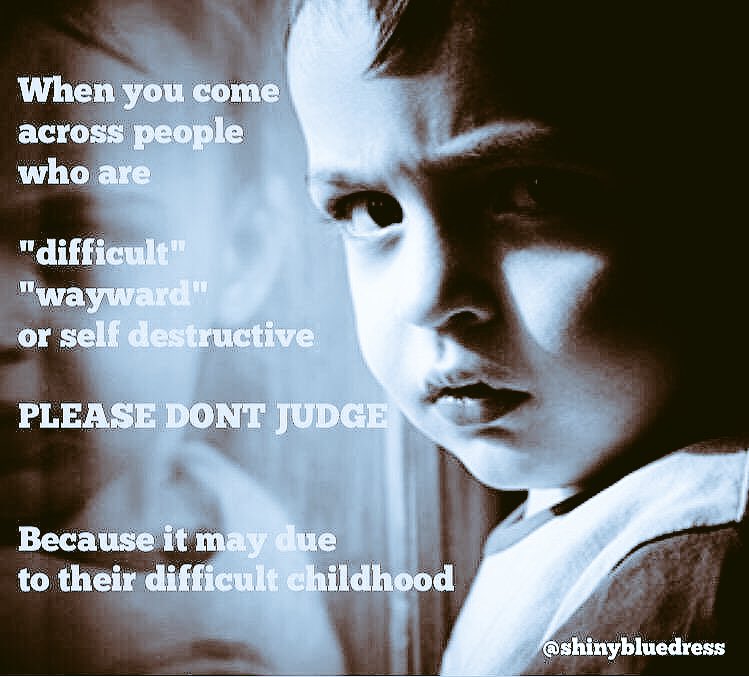
Don’t judge.

Image

difficult_people

Envy is my worst character trait.

envy
Envy, by Marta Dahlig, Deviantart

I’m about to write a painful, bitter post. It’s about something brings me a great deal of shame, so much shame I hesitated writing about it at all. It’s about what’s probably my very worst quality. But my need to be honest on this blog (because it may help both me and others), no matter how ugly or socially unacceptable my feelings may be, overrode any misgivings I had about what I’m about to write.

For as long as I can remember, I’ve been an envious person. Having been programmed by my FOO to be a perpetual victim, honed and chiseled by master artisans to become a dysfunctional, self-loathing adult unable to achieve even the normal comforts, supports, and pleasures non-abused people enjoy and take for granted; seemingly set up to always fail (and then get callously blamed for my failures by the very people who programmed me to fail), another unpleasant side effect of being programmed to be a “loser” is a nasty tendency to envy others for having those things that should have rightfully been mine too.

I’m not talking about winning the lottery or acquiring a new Ferrari (though those things might count too). I’m talking about envying those who achieve or acquire normal good things that most people who were raised in loving families take for granted–landing a great job, acceptance by a publisher, a place to go and be supported unconditionally when their luck is down, a wide circle of friends, an inheritance earned through simply being who they are and being a member of a family that cares about them unconditionally.

If such a good thing happens to a person I always knew had those things, someone who never seemed surrounded by darkness and always seemed to have things pretty easy, I envy them a lot less than if those things happen to someone I had met when they were still on “my level”–in other words, a fellow victim who suffered abuse and is still reeling from its fallout, struggling (and failing) to find their footing in a world that seems so cruel and cold, the way I continue to do and feel like I will be doing until the day I die. If such a person’s fortunes suddenly change, I fall into a slimy, nasty cesspool of envy. Instead of feeling inspired and encouraged that yes, the good thing that happened to them could happen to me too and I should just be patient, yada yada yada, I just feel consumed by that bitter, horrible emotion that does no one any good, least of all its bearer.

easter_outfit
Coveter-in-training: being a hybrid mini-me/scapegoat/golden child to someone I knew even then I could never aspire to set the stage for my tendency to envy others.

I think I know why it’s easier to envy people who suddenly came into a great opportunity to change their lives than those who already had things easy. It’s a “misery loves company” kind of feeling: when you feel victimized by life and all the people you ever had to answer to, it helps to know that others feel exactly the same way because it means you’re not alone. It’s not that you want the person who’s fortunes changed to feel as badly as you; it’s not even that you’re not happy for them. It’s more that there’s a sense of solidarity in being able to wallow in a communal pit of misery together, and suddenly that feeling of solidarity is broken. It’s that feeling of realizing, “it’s not just me after all! I’m not alone!” being thrown into doubt because that person is suddenly able to lift themselves out of a hellish existence and you are still not. In all honesty, it feels like a kind of…well, betrayal.

I know it’s not really that at all. All of us who were victimized by narcissists all strive to break out of the trap of a life of failure set up for us by our abusers early in our lives. During our wallow in communal unhappiness, we feel strong solidarity. We support each other, cry on each other’s shoulders, feel angry on behalf of each other, and wish each other the best with utmost sincerity, as we wish it for ourselves. But then one one is suddenly lifted up out of the mire, you can’t help but feel left behind. You’re completely unprepared to feel that way, because this person was an angel to you and came to you at a time when she was most needed. You looked to her for inspiration, advice and support. So you beat yourself up over your envious feelings because you know feeling this way is wrong and sinful. You feel like a hypocrite, since in theory, you wanted what was best for this person and still do. You know they deserve good things and there is a part of you that is happy for them, but it’s corrupted by the unwelcome thought, “why not me too?” like mold on a delicious chocolate cake.

You know their reward was not undeserved. We are all at different parts in our healing journeys, and some are farther along than others. The person you so envy is farther along their spiritual and emotional journey than you are. You’re well aware of that fact and it never bothered you. You saw that person as a teacher and guide. You know that perhaps you’re just not ready yet to handle something that good happening to you yet and that’s why it hasn’t happened. First you must learn to better appreciate the things you already have, to see the glass as half full.

Of course you wish this person no harm; your envy is not the sort that wishes to take away anything or try to sabotage the person’s good fortune. But the bitterness and sense of unfairness is still there, eating away at your insides like an unwelcome and potentially lethal parasite. You know better but you can’t help it. Exhausted from your bitterness, you feel tired an depressed. You shout at God in frustration and exhausted rage: “When is MY ship ever going to come in?” You don’t want to take away anyone’s good fortune; you just want to have some for yourself too.

I think it’s hard for ACONs to learn to trust. The people in our lives have proved to be anything but trustworthy. We’ve been hurt, betrayed and disappointed by everyone we thought mattered. We learned to expect the worst from people. Many ACONs turn to God or religion as a respite. Desperate to trust someone, anyone, they fully embrace God and throw their worries blindly at the feet of the Almighty. Their faith seems perfect. Others, like me, have more trouble. How can we fully trust an entity we can’t actually see? How do we even know there’s anything there at all? We overthink everything and overthinking makes faith difficult to attain. I pray for faith constantly, because I know that’s the only thing that will take away my fear, self-loathing, suspicion of everyone, and my envy. The person I envy right now has faith that seems nearly perfect. How can I get to that point?

I pray that one day my envy can be transformed, that I can be genuinely happy for the good fortune of someone else, and even be inspired by it. I also pray that the person this post refers to doesn’t judge or condemn me for feeling envious, but something already tells me they will not. I will always be grateful they came into my life.

****
Further Reading:
My Envy

Regression.

This is what’s going on with me now.    Comments are disabled here; please leave comments under the original post.

Diving into the Inferno.

The “Four F’s” of C-PTSD

child-abuse1

I just began reading “Complex PTSD: From Surviving to Thriving” by Pete Walker. I can already tell I won’t be able to put it down (I will write a book review when I’m finished, which shouldn’t take long). I’m also going to bring this book to my next therapy session because I want my therapist to see it.

Walker, who is a therapist and also a survivor of narcissistic abuse and sufferer of C-PTSD, is an engaging writer and definitely knows his subject matter. In one of the first chapters, he discusses the “Four F’s”–which are four different “styles” of coping that people with C-PTSD develop to cope with their abusive caregivers and avoid the abandonment depression. Whatever style one adopts may be based on several factors–natural temperament, the role in the family the child was given (scapegoat, golden child, “lost” or ignored child), birth order, and other factors.

complex_ptsd2
Available on Amazon

The Four F’s are:

1. Fight (the narcissistic defense): often “golden children,” such children learn to project shame onto others; may go on to develop NPD
2. Flight (the obsessive-compulsive/anxiety defense): these children will grow up to become highly anxious, obsessive-compulsive, and avoidant.
3. Freeze (the dissociative defense): these children “protect” themselves by dissociating from others, themselves, and their environment.
4. Fawn (the codependent defense): the child learns to avoid harm by people-pleasing or siding with their abusers.

Walker speculates that if C-PTSD were recognized in the psychiatric literature, the DSM could probably be reduced to the size of a pamphlet, for many people diagnosed with other disorders actually have C-PTSD, which encompasses symptoms of many other disorders and have common roots.

What you may have been misdiagnosed with (or diagnosed yourself with) if you have C-PTSD (these are the most common):

Personality Disorders:
Borderline Personality Disorder
Narcissistic Personality Disorder

Dissociative disorders

Anxiety Disorders:
Generalized Anxiety Disorder
Panic Disorder
Social Anxiety
Obsessive-Compulsive Disorder

Mood Disorders:
Depression
Bipolar Disorder

Developmental Disorders:
Autism Spectrum Disorders
ADHD
ADD

Codependency

Addictive Disorders

While any or all of these diagnoses can be co-morbid with C-PTSD, they miss the mark or don’t tell the whole story. Personality disorders such as BPD can develop from severe, unrelieved C-PTSD and they do share many similarities, but personality disorder labels are stigmatizing and not very helpful for someone who has suffered prolonged childhood trauma and abuse. Labels like “panic disorder” or “depression” aren’t helpful because they only address one or two symptoms of C-PTSD and therefore can’t even begin to address the roots of the depression or anxiety. You can treat anxiety or depression with drugs or short term therapy, but you can’t cure the person of the C-PTSD that’s causing their chronic anxiety or depression. The same goes for labels such as alcoholism or codependency. These are merely symptoms. People with C-PTSD are also sometimes erroneously diagnosed with developmental disorders such as ADHD or autism, which not only don’t address the trauma that led to the ADHD- or Aspergers-like behaviors, but also have completely different causes.

Guest Post #8 : Abusers break you–and then HATE you for being broken.

My dear friend and active participant on this site, Linda Lee, has written a wonderful and OMG SO TRUE post, which describes a lifetime of abuse, including incarceration in a state mental hospital, and being faced with unethical doctors and caregivers, including one who raped her. She was sent back home to a rejecting family–who had put her there in the first place! Linda Lee has Complex PTSD, a form of PTSD that’s often the result of chronic abuse during childhood, rather than an isolated traumatic incident later on in life. After describing the insane house of mirrors she had been thrusted into that seemed to have no way out, Linda lifts the reader out of the darkness with an uplifting message about Easter and the resurrection.

Linda Lee also has a blog about her Complex PTSD caused by prolonged, severe trauma called Surviving Trauma (formerly Heal My Complex PTSD).   (I got a little confused here because Linda recently changed her blog but the old one is still there too.  Her new blog is called A Blog About Healing From PTSD. )

I know the following story sounds so crazy, it’s hard to believe. But it is all true, so help me God… unless I really AM nuts, and the mental health professionals who have told me otherwise over the years were all wrong!

ABUSERS BREAK YOU — AND THEN HATE YOU FOR BEING BROKEN
By Linda Lee, Surviving Trauma and A Blog about Healing From PTSD

going_crazy_bookcover
The cover for Linda Lee’s future book, which she designed herself!

If you take a young puppy away from his canine family before he is weaned, yell at him, kick him, shake him, beat him, half-starve him, and leave him on a chain outdoors, exposed to every kind of weather without shelter, that poor little puppy is going to grow up to be a deeply disturbed dog – if he lives to grow up.

If you treat human children like that pitiful dog, they are going to have behavioral and emotional problems, too.

I grew up with parents who were normal and nice some of the time, and behaved like insane, demonically possessed monsters part of the time. I never knew from one day to the next whether my mother was going to be like June Cleaver in the TV show “Leave it to Beaver,” or Joan Crawford in the movie “Mommy Dearest.”

As for my dad, a fundamentalist minister whose episodes of violence led to his diagnosis of multiple personality disorder (now known as Dissociative Identity Disorder), some people believed that he actually was possessed by demons.

When I was fourteen years old, I began to have some emotional problems. Big surprise, right? I told my mother about the difficulty I was having, hoping she could help me. But, although my problems were mild compared to both of my parents’ history of extreme mental problems, my mother said “You are crazy just like your father!” Then she contacted my dad (my parents were divorced by then), and he agreed with her that I needed to be put in a state mental institution – against the advice of my doctor!

Of course, my dad said that I was “crazy like your mother.” He also told me he was GLAD I had psychiatric problems, because now I would understand what he had gone through.

But I did not understand. Almost fifty years later, I still don’t. Unlike both of my parents, my behavior was not out of control. On the contrary, although I wasn’t perfect, I was obedient, subservient, and eager to please. I had never been the least bit violent. I had never threatened or tried to harm anyone.

My dad, on the other hand, came so close to murdering my mom when I was twelve years old that for several terrifying moments I had thought she was dead. That’s when my father was arrested, then put in the psychiatric ward of a general hospital after the police took him to the emergency room because his insulin-dependent diabetes was out of control.

As for my mother, a few weeks after my dad tried to kill her, she did something even worse – she tried to gas us all to death while my four younger brothers and sisters and I were sleeping in our beds. Yet she never put herself under any kind of psychiatric care. With no other responsible adult living in the house at the time, there was no one to force her to get help. So now, because she has never been to a mental health professional and labeled with a psychiatric diagnosis, my mother thinks she is “just fine.”

When my dad’s medical insurance ran out and he was discharged from the psych ward, my mother dropped her charge of attempted murder so he could go back to work and provide financial support. Then my dad married the head nurse of the psychiatric ward whom he had met while he was a patient there (how unethical is that?), and my mother started dating a newly divorced man who had previously worked with my dad. She soon became pregnant (accidentally on purpose?), and quickly married the unborn baby’s father.

So now my parents were living happily ever after with their brand new loves while I, their eldest daughter, became the family scapegoat and “the crazy one.” And together my parents decided that I needed to be locked up in a state insane asylum, because: “she might become violent some day.”

Projection much?

About a year after my parents put me in the institution a new psychiatrist, Dr. Fenster, was hired to replace the rapist shrink who had been caught and fired the third time he drugged me unconscious and raped me. Lucky Otter posted this story for me almost a year ago. Here is the link: https://luckyottershaven.com/2015/04/12/have-you-ever-been-hurt-by-a-psychiatrist-guest-post-by-alaina-holt-adams/. (I wrote that post under the pen name Alaina Adams. I have since changed my pen name to Linda Lee, because it’s more like the real me.)

I had originally met the newly hired doctor when I was first put in the asylum and he was there, finishing his psychiatric residency. He had told me then that there was nothing mentally wrong with me, in his opinion, and he was confident that the psychiatrist in charge of my ward would soon have me released.

When Dr. Fenster took over my case more than a year later, he was shocked and dismayed to see that I was still there. Within the first five minutes of his first day on the job, the good doctor made me a promise: “I am going to get you out of here as soon as possible. You never should have been put here in the first place!”

But his promise turned out to be much easier said than done. Eight months later, Dr. Fenster called me into his office one last time before sending me out into the world. “I am very sorry that it has taken me so long to get you out of here,” he said. “The amount of legal red tape involved to release a patient from a state hospital is unbelievable, especially when it comes to a minor child. Because you are only sixteen, you are legally a ward of the state and you cannot be released on your own recognizance until you are twenty-one, five years from now! Until then, you can only be released into the care of a responsible adult. I have spoken with every adult in your family several times, at length – with your grandparents on both sides, and your mother and father. I hate to tell you this, but every last one of them is far sicker than you ever were! Frankly, it’s no surprise to me that you had emotional problems. Coming from a hateful, self-centered crew like that, I don’t understand how you can be as sane as you are! Even your maternal grandparents are unbelievably hard-hearted and selfish! At first, I thought they would be the best hope for you to have a decent chance at life. With your grandfather’s current position as the associate warden of Leavenworth Federal Prison, they could so easily provide you with a stable home and every advantage.”

He shook his head sadly. “I hate to tell you this, Linda, but no one in your family wants you. Every single one of them came right out and told me they don’t want a ‘mental patient’ living in their home. It didn’t make any difference when I told them that you are not mentally ill and you never should have been put here in the first place. In fact, when I mentioned that, your mother said that just by virtue of the fact that you have been kept here in this place for so long, you have probably been changed by the experience and now you may be dangerous! So… when I kept hitting a brick wall with everyone in your family, I gave up and tried to find a foster home willing to take you in. But they have to be informed about your time in this institution, and I could not find any foster parents willing to take the chance. I even tried to talk my wife into the two of us fostering you, but… it was a no-go.”

Dr. Fenster stared down at his hands, which were lying palms-up on his desk in an attitude of defeat. “Your mother is coming to take you out of here today,” he said. “although she is the last person I want to send you home with. Why she chose to have so many kids when she doesn’t have a maternal bone in her body is beyond my understanding. But she is coming to get you because – frankly – I found out something about her and I have used it to blackmail her. But even then, she would not agree to take you unless I wrote your discharge paper in such a way that it says you are being sent home on an ‘indefinite leave.’ I’m sorry this isn’t a full discharge. What it means is that your mother can bring you back here at any time, for any reason, or for no reason at all. So my advice to you is to get as far away from everyone in your family as soon as you can – and don’t ever go back!”

A nurse handed me a paper bag full of my threadbare clothes, then escorted me from the doctor’s office down to the lobby. My mother and her mother were waiting there, both with very grim faces. After a tense, silent two-hour car ride to my mother’s house, I discovered that I no longer had a bedroom or a bed – I was told to sleep on the living room sofa. In fact, everything that I had ever owned, my beloved books, the papers I had written, my clothes, my costume jewelry, and the childhood toys I had cherished and saved, were all gone. Taken to the dump, I was told, right after I was put in the mental institution.

My “WELCOME HOME” was nonexistent. Not one person said “I’m glad you’re back, I’ve missed you.” My much younger sisters and brothers had always looked up to me, loved me, and depended on me, especially during our mother’s deep depression after the violent end of our parents’ marriage. Along with my new stepfather, my four little siblings had begged our mother not to send me to the institution two years earlier. Even my grandparents may have questioned why she would send her adolescent daughter to the most notorious insane asylum in the region, when my behavior, to all outward appearances, was completely normal. So then my mother had told horrible projecting lies about me, to justify what she had done. Lies which the majority of my family apparently believe to this day.

Three days after my return “home,” while I was being ultra careful not to be a bother to anyone in any way, my mother waited until my stepfather was at work and my school age siblings were all in school, and then she told me that I needed to leave – to run away – because she could not afford to feed a big grown girl like me.

“I can barely afford to feed the five little ones,” she said. “Your father doesn’t pay nearly enough child support, and it wouldn’t be fair to expect your stepfather to feed you. And after where you have been, I am afraid you might be a bad influence on the younger children. I had you when I was only eighteen, too young to know what I was doing. So I made all my mistakes on you. Unfortunately, it’s too late for you. But I think that throwing one child away, in order to save the other five, is the right thing to do, don’t you? And don’t worry, I promise I won’t call the police and report you as a runaway!” She said this, about not calling the police, with a big smile on her face, as though she had just handed me the keys to a brand new car.

“You know, I married your father when I was sixteen. Sixteen is old enough to be on your own. And, like I’ve been telling you ever since you reached puberty – no house is big enough for two women!”

This happened in the middle of a cold December and there were several inches of snow on the ground. The tiny town where my mother and stepfather had moved to while I was in the institution was miles away from a city, where there might be some kind of shelter or help. Without a penny to my name, with my few clothes bunched up in a pillowcase, because the paper bag I had brought my clothes home from the hospital in, had torn – and I remember feeling guilty for taking one of my mother’s pillow cases, that’s what a “terrible” daughter I was! – I walked out the door into the frozen December morning. I had not eaten any breakfast that day, because no one had offered me anything and I was trying so hard not to be a bother….

Whew. Right now, as I am writing about that terrible time in my life, I feel so ANGRY!

My husband today, a combat veteran from the war in Vietnam, has talked about the pain of coming back from the hell of war and getting rejection, instead of a Welcome Home. I’ve told him I understand how that feels. A few years ago, there was a big push to finally welcome our Vietnam War Veterans home. I’m so glad they got that. They deserve it. But… deep down inside, I feel like I am still waiting for my Welcome Home.

I did not follow Dr. Fenster’s advice to have nothing to do with anyone in my family of origin, until I was in my fifties. Why? Because I loved my family. I wanted to have a family! Although I stopped living in the same state forty years ago, I kept reaching out to them, time and time again, over the years – by driving very long distances to visit them, by phone calls, by letters, and finally, when social media became available, I reached out to them through Facebook.

With the exception of my aunt (my mother’s younger sister) and my oldest niece, every time that I have ever reached out in any way to anyone in my family of origin, I have been hurt and abused all over again. The bullying I took on Facebook was so bad, I ended my account. Even today, every time I see that ubiquitous blue logo, I shudder inside.

WHY does my family of origin despise me so much? Because they apparently believe my mother’s lies about why she “had no choice” but to commit me to an insane asylum almost half a century ago. And anything that I have to say on the subject is suspect because, you know, I must have been really crazy in order to be locked up.

They BREAK you, and then they HATE you for being broken.

Every trauma story is unique. Some people have told me that my trauma story is so extreme, it makes them feel ashamed of having any kind of emotional problems when their trauma is “less” by comparison. But I absolutely do not want anyone who reads this to feel that way! Please!! Pain is pain, trauma is trauma, and – in my experience – THE WORST PAIN OF ALL IS THE PAIN OF BEING REJECTED BY THE PEOPLE WHO ARE SUPPOSED TO LOVE YOU. Not the terrifying episodes of violence, not the rapes, not even being labeled “crazy” and locked up for almost two years in a lunatic asylum, hurts as bad as this!!

If you, like me, have ever been scapegoated, lied about, shunned, and rejected for being so “bad” as to have any kind of emotional or mental problems, then I believe your wounds go just as deep as mine.

Thank you for reading this. Please feel free to share your own story in the comments. And thank you, Lucky Otter, for giving people like me the opportunity to share our mental health struggles with your readers. God bless.

In truth and love, Linda Lee

PS: Today is Easter, the day we Christians celebrate our risen Lord. I believe HE is the reason why I finally got free of the insane asylum, during an era when 97% of the people committed there were never released. (This is what one of the psychiatrists told me right after I got there, when I asked him how soon I could go home.) I was one of the lucky few who got a second chance at life. I think the reason may be because I had given my heart to Christ when I was a little girl. “Weeping may endure for a night, but joy comes in the morning.” Amen!
The waif inside.

bigeyedchild

Tonight’s therapy session definitely made up for the one I had on Monday, which I felt wasn’t very productive because I seemed to be deflecting and avoiding talking about my feelings.   I asked my therapist to stop me if I did that again, even if I get angry.   He agreed to this and tonight I dove right in.

We were talking about myself as a little girl, especially the way I was never allowed to express my emotions, especially anger.  He wanted to know what I did with all that anger.  I thought about it for a minute, and told him I turned it toward myself, and that’s why I started to become so depressed and why I started to hate myself .  He asked me to put my mind inside the mind of “little me” and describe how she felt and what she looked like.

We came up with a picture.  I described her as a waiflike child, like those paintings from the ’60s of those sad, big eyed little kids, dressed in rags, with a gray, unhealthy pallor.  She is always sad, almost always crying.  She’s afraid of everything.  She feels completely defenseless and in fact she doesn’t have any defenses.   She was never allowed to grow up.

I was asked how I felt about her.  I said I didn’t hate her, that in fact I felt protective of her and had to keep her safe from harm.    She also makes me feel angry when she comes out without my permission because she’s too vulnerable and defenseless and that makes me feel ashamed.   I have to protect her, but I also have to protect myself by keeping her hidden away so she doesn’t embarrass me.

It was harder to talk about her feelings about me, the way she views me.   All I could come up with was that she felt like I kept her safe but wishes I’d let her out more.  I realized then that it was easier to describe my feelings toward her than to describe her feelings toward me.   I’m not completely disconnected from my true self, but dissociation is present.

He asked me what good qualities she has that I want to protect.  I said she has a kind, gentle soul and a big heart.  He asked what she wants.  I thought about it and said, “all she wants is to love and be loved, and to belong.”  I got emotional at that point and started tearing up.  I wasn’t able to describe the emotions I was feeling at all, but I knew we’d made some progress.   He wants to start seeing me more often.   Somehow I’m going to find a way to afford it.   This type of inner child work is hard, but it’s amazing.

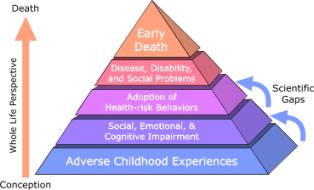
The Adverse Childhood Experience study (CDC)

Under my post Adult Poverty and Scapegoat-hood: A Connection?,  one of my commenters (katiesdream2004) mentioned a study conducted by the Centers for Disease Control (CDC) in the mid-late 90’s that researched the connection between adverse childhood experiences (which includes emotional abuse by parents and early caregivers) and ill health and general low quality of life in adulthood.  I decided to Google it and here’s what I found.

From their webpage:

ace_study

The Adverse Childhood Experiences (ACE) Study is one of the largest investigations ever conducted to assess associations between childhood maltreatment and later-life health and well-being. The study is a collaboration between the Centers for Disease Control and Prevention and Kaiser Permanente’s Health Appraisal Clinic in San Diego.

More than 17,000 Health Maintenance Organization (HMO) members undergoing a comprehensive physical examination chose to provide detailed information about their childhood experience of abuse, neglect, and family dysfunction. To date, more than 50 scientific articles have been published and more than100 conference and workshop presentations have been made.

The ACE Study findings suggest that certain experiences are major risk factors for the leading causes of illness and death as well as poor quality of life in the United States. It is critical to understand how some of the worst health and social problems in our nation can arise as a consequence of adverse childhood experiences. Realizing these connections is likely to improve efforts towards prevention and recovery.

A correlation was found:

Childhood abuse, neglect, and exposure to other traumatic stressors which we term adverse childhood experiences (ACE) are common. Almost two-thirds of our study participants reported at least one ACE, and more than one of five reported three or more ACE. The short- and long-term outcomes of these childhood exposures include a multitude of health and social problems.

The ACE Study uses the ACE Score, which is a total count of the number of ACEs reported by respondents. The ACE Score is used to assess the total amount of stress during childhood and has demonstrated that as the number of ACE increase, the risk for the following health problems increases in a strong and graded fashion:

Alcoholism and alcohol abuse
Chronic obstructive pulmonary disease (COPD)
Depression
Fetal death
Health-related quality of life
Illicit drug use
Ischemic heart disease (IHD)
Liver disease
Risk for intimate partner violence
Multiple sexual partners
Sexually transmitted diseases (STDs)
Smoking
Suicide attempts
Unintended pregnancies
Early initiation of smoking
Early initiation of sexual activity
Adolescent pregnancy

None of this should be surprising. Abuse early in life, whether emotional or physical, takes a huge toll on a person’s sense of self-worth and these people tend to enter adulthood lacking the emotional, financial and practical tools others have to create a healthy and successful life. They also lack the support systems others do, and I would guess the enormous stress of facing challenges that others get help with also has ill effects on health and wellbeing.

I did notice the list mainly includes unhealthy life “choices” such as smoking, illicit drug taking, and early pregnancy. However, I also see depression and general health problems on the list too. I’d include other mental illnesses such as PTSD, Complex PTSD, Borderline Personality Disorder, Avoidant Personality Disorder, and Social Anxiety, all which interfere with a person’s ability to function well in the working world and in interpersonal relationships. These mental disorders could also cause a person to make “bad choices” such as smoking or sexual promiscuity.  Some, like Social Anxiety or Avoidant Personality Disorder, could cause a person who doesn’t engage in unhealthy behaviors, to be afraid to take any risks in life, limiting their opportunities and setting them up for failure.

More research needs to be done, particularly on the connection between emotional/narcissistic abuse during childhood and poverty later in life.

You can read more on their website:
http://www.cdc.gov/violenceprevention/acestudy/

My fractured memory.

FracturedMemory2
“Fractured Memory,” by Hanna Trussler, 2012

I’ve been doing a lot of thinking about my early years–childhood and adolescence. As many of you know, my parents were active alcoholics, narcissists (my dad more likely covert NPD or maybe Borderline), and that I spent almost all of that time miserable and lonely due to emotional (and sometimes physical) abuse both at home and at school (because I was already trained to be a good little victim and had no self esteem or the ability to defend myself, I was bullied a lot).

The problem is, most of these early memories are fractured, hazy, or both. I remember snippets of traumatic events, but in most cases I can’t remember the entire event, or it’s spotty. Some of my memories seem more like dreams than reality and therefore I can’t remember the specifics of what happened. The same is true of my abusive marriage. I can only remember fractured pieces of that time. The two and a half decades I spent with him don’t seem like a cohesive whole, but more like a photo album with many of the photos missing. But this post isn’t about my early adult years.

I think something happened when I was 12 that was significant and a kind of turning point for me–it was when I stopped trusting anyone, I think. It was the moment when I realized how truly alone I really was and that no one cared and anyone who said they cared was probably lying. I’m not 100% sure, but I think this is when I stopped reaching out to others and began my avoidant pattern of behavior. Of course, this coincided with puberty, so maybe that had something to do with it too.

Here’s what I do remember. My parents and I had taken a two week trip to the beach. Another couple and their two children came along with us and rented the cottage next door. That couple was friends with my parents. I didn’t know my father was sleeping with the wife at the time, and my mother probably didn’t either, but I remember how jealous she was of that other woman because she was younger and blonder than she was and my father paid a lot of attention to her. Their daughter was a year older than me and was adopted. She was from India and was a close friend of mine at the time.  I envied her beautiful long, glossy black hair, permanent tan, and huge soft brown eyes.  Her little brother (her parent’s natural child) was an adorable little blond-headed boy of about 5 or 6. To me, they seemed like the perfect family. It may have been an illusion (for all I know, they were putting on appearances too), but to my 12 year mind, they seemed like they were in love with each other and their kids were both well loved and well-adjusted. My friend always seemed happier, more focused on a future (she eventually became a doctor) and much more emotionally stable than I was. I loved her and envied her.

My parents at the time were drinking heavily and fighting almost daily. Some of their arguments became physical, and I remember lying silently in my bed at night listening to these arguments as they escalated. I was both fascinated and terrified. What if they divorced? What if they abandoned me?  What if they killed each other?  What if I became an orphan?  I seemed to be the cause of an awful lot of their problems (and they did fight over me a lot).

This beach vacation didn’t put a stop to their constant fighting, and one night, my father left. I don’t know where he went, but my mother and I were left alone. My mother didn’t speak to me about this and her demeanor toward me was cold, as if I was an annoyance to her. I was terrified my father was never coming back, and I remember crying myself to sleep the next night. I don’t think my mother ever came in to comfort me. She was probably getting drunk, but I don’t remember.

Desperate for someone to talk to, I pulled the father of my friend aside, and asked him if I could talk to him in private. He always seemed like a warm and sympathetic person to me, someone who loved kids. We sat down outside on a bench near the parking lot, with the sound of the waves crashing behind us on the beach,  and I spilled out all my worries, all my pain, and all my fears.  I talked for about an hour.  He just held my hand and listened. I started to cry and he held me.  He told me everything would be alright. He didn’t say he was going to talk to my parents.

sad_child_beach

He must have talked to them, because that night I was told by my mother that my father was returning to talk to me. She said he was not happy and was in fact enraged.
He came back as promised, and that’s where my memory gets all hazy and fractured. I remember snippets, like quick-flashing frames from a movie: getting beaten severely (but I was always beaten in a way that bruises didn’t show), being told I was a troublemaker and was the reason the family was falling apart. That I was nothing but a problem to them and never knew when to keep my mouth shut. I don’t remember the rest but I know there’s even more. I just can’t access it.

I also don’t know if my friend’s father had told my parents what I’d said to him because he was concerned about me and thought they might listen to him, or if he was just another participant in the abuse against me.

I realized even then my parents were drunk and probably not fully in control of what they said and did, but I think behind their alcoholism was narcissism. I think a lot of narcissists become alcoholics or addicted to drugs, and even after they become sober or clean, refuse to look any deeper into the core issues that caused them to drink or use in the first place. But that’s a subject for a later post. One thing that did occur to me, was that the only time my parents seemed to come together as a team and weren’t attacking each other, was when they joined forces to attack me. Only then were they the unified couple I dreamed of, unified in their abuse of their only child.

I don’t remember much of what happened after that beating and berating. I’m pretty sure our vacation ended at that point. I might have been sent to stay with relatives for a week or two, or left with a babysitter, so they didn’t have to deal with me. I feel like something important got blacked out, but I can’t remember what it was. But it was around this time that I stopped being able to confide in anyone at all. I remember one of the nuns who taught me in 8th grade, a woman who seemed to favor me for some reason, once called me aside and asked me if I was abused at home. I thought to myself, how can she tell? Of course I told her I wasn’t, that everything was fine. But nothing was fine in my life anymore.  I think my emotional growth stopped that summer.  At age 12.  But it might have stopped even earlier than that.  How in the name of God was I ever supposed to grow into a happy successful adult, able to form healthy attachments to others, when I never grew beyond the age of 12?

The next summer I was sent to sleep-away camp for the entire summer, and while I did enjoy it for the most part, I couldn’t help but feel that it was a rejection, a way for my parents to get rid of ‘the problem child’ so they didn’t have to deal with my “issues.”

Wow. Suddenly I feel like crying. The pain is getting real.

I’m asking the little girl who still lives somewhere inside me to tell me everything she knows.

Circling around the maelstrom.

maestrom
Credit: Jim Carson Design

I’ve been thinking a lot more about my parents and my nightmarish upbringing as a hybrid scapegoat/golden child (I was raised as an only child, so I had to be both). It’s worse in some ways than just being a scapegoat, because it’s a topsy turvy hall of mirrors where you can predict nothing. There’s no stability. There’s no security. There’s no consistency in a childhood where you have to serve two roles, and never know which one you’re going to be next, and where both roles you play are a lie.

I started blogging because of my sociopathic NPD/ASPD ex. I was trying to deal with my feelings about going VLC (very low contact, since we have children) with him and cope with being on my own for the first time. Blogging introduced me to myself.

I’ve been through a lot since the day I sat down and started to write. As I progress in my journey, I’m spiraling ever closer around the emotional vacuum that lives in my center, the maelstrom that was born from hurt and pain. I liken it to a black hole in space or a maelstrom in the ocean, because everything disappears there never to return. Falling into it prematurely could obliterate me. But if I’m ever to heal from my disorders, I need to dive into that maelstrom and explore its terrors and maybe its wonders. I’m a lot more courageous now than I ever was before. I think I can do this.

I’m realizing the problem wasn’t really my ex after all. What I mean by that is that we came together because I was programmed almost from birth to become codependent to someone like him. Yes, he made me worse, but I was in bad shape long before he came on the scene. In therapy, I’m beginning to talk more about my childhood, and the pain inflicted on me by disordered parents. I’m still at the point where I explore it from an emotional distance, as if I’m watching a movie. I can’t really internalize and surrender to the pain yet. I feel a vague sadness and anger, but I’m dissociated from it, as if it’s someone else it’s happening to and I’m just watching.

But it’s beginning. I’m starting to trust my therapist enough to take the plunge. He is using reparenting techniques on me, which is what I wanted. He’s empathetic, which is what I needed. I’m thinking about my past a lot, and making some connections. I have some tools to protect me when the time comes to go in. I’m scared but excited. I’m gaining courage.

I’m swirling around the edges of the maelstrom, looking down into an opaque blackness that looks empty but is full of unseen mysteries. I won’t fall into it. I’ll willingly dive into it, just like when I was eight and first jumped into the deep water at the community pool.

Once I dive in, I’ll either disappear forever, or rise from it triumphant. I’m banking on the latter.