Mindfulness keeps me from quitting therapy.

MINDFULNESS (2)

In my last post, Jocelyn made a comment about quitting therapy, and this reminded me of something important that’s kept me going: mindfulness.

People in therapy, especially people who have cluster B disorders and have problems either regulating or accessing emotion, often quit when the going gets rough.  Narcissists are notorious for quitting therapy (if they ever enter it at all) because of all the Cluster B disorders, NPDs have the most problems allowing themselves to become vulnerable (well, maybe ASPD is even worse that way), but for therapy to work, this cannot be avoided.   This is why people with NPD so rarely get better.  For most, as soon as they start to feel too much, they’re outta there.

For borderlines, it’s a little easier.  We’re not running away from emotions all the time the way narcissists do (although I do to some degree and probably have narcissistic tendencies–I also have comorbid Avoidant PD which also explains my reticence).  For BPDs, our main problem is the regulation of emotions that are too intense.  But the core issues–abandonment trauma–is the same.   When you finally reach the stage of diving into the maelstrom of pain and emptiness, it’s incredibly painful.   You feel like you’re dying or going insane.  You think about quitting because who wants to live with all that pain?

That’s where mindfulness comes in.   Without mindfulness, I probably would have quit therapy after today.   But with mindfulness, I can actually let myself fall into the pit of pain and trauma and allow myself to feel those unpleasant emotions.  At the same time the mindful part of me is observing myself feeling them as they arise, and thinking logically and trying to make connections and give them meaning.   This kind of distance–while at the same time being fully submerged in the feelings–makes the experience more bearable and also makes it more likely you’ll learn something valuable from it.   Mindfulness also means you acknowledge that the emotions are not YOU; you have emotions but you aren’t your emotions.  You are you, and the emotions are just trapped energy moving out of you.

Without mindfulness, you just feel like you’ve somehow fallen into the 9th circle of hell and will never escape.   You can’t separate yourself from the overwhelming feelings and feel consumed by them.  No wonder so many people quit when they get to this point.   I’m so glad I took DBT classes (even though I blew them off back in he ’90s when I took them) and had the presence of mind to keep the DBT book I was given.  It’s been so helpful to me throughout this whole process.

I think mindfulness training should actually be a prerequisite for intensive psychodynamic therapy, especially for trauma survivors (whether they are personality disordered or not), because there is nothing to prepare you for the intensity of the ride you’ll be taking (which seems so gentle and tame at first).

Breaking through and the emotional power of music.

This is what’s going on with me now.

There should be no “shame” in having a Cluster B diagnosis.

noshame

Yes, another potentially controversial post.  Please hear me out before judging.

There are some (actually, many) people in the blogosphere who believe that people with disorders like Borderline or Narcissistic Personality Disorder made some kind of conscious choice to have their disorder.   With unusual exceptions (which I’ve discussed in others posts), I think this is wrong.

Bad seeds?

People with Cluster B disorders, in spite of what you probably read or heard, aren’t inherently evil or “bad seeds.”   Certainly, some become evil, because they’ve been programmed for a psychological need to obtain narcissistic supply in order to feel like they exist.  In order to get that supply, they became abusive and manipulative.   People addicted to drugs or alcohol are also abusive and manipulative, in order to get their chemical fix.

People with psychopathy may have been born without the brain capacity to feel empathy or have a conscience, but I don’t think Psychopathy should even be categorized as a Cluster B disorder at all, since it seems to have its roots more in brain chemistry than in early trauma.   Plenty of psychopaths came from normal, loving families.  The jury’s out as to whether Antisocial Personality Disorder is the same thing as psychopathy.  I think they may coincide often and their symptoms are similar, but I’m not at all sure they’re the same thing.    I don’t know a whole lot about ASPD, but I think it, too, usually has its roots in trauma as a child.   I know almost nothing about its treatability, but it’s my understanding it’s very difficult to treat, even more so than NPD.    But I digress:  talking about ASPD or psychopathy is not the point of this post.

Another blogger who commented on a post of mine today mentioned that she may have undiagnosed, recovered BPD.   I sensed from the tone of her admission that this might be something she’s  ashamed to admit.   I wondered why.   BPD, like NPD, has a terrible stigma, although in its favor, there’s a movement in the BPD community to reduce its stigma as “evil” and “incurable.”    Their efforts seem to be working, because BPD is seen today as being less of a “mark of the beast” than NPD is, although the stigma certainly still exists.

Why no anti-stigma movement for NPD?

I’m not sure why there is no grass-roots movement among narcissists to change the stigma against NPD, but from everything I’ve read from self-aware narcissists (and you’d be surprised how many of them there are online), they’re either: (a) proud that they are narcissists and wear the “evil” stigma like a badge of honor (these tend to be malignant, overt narcissists with antisocial or sociopathic traits), or (b) *this is a shocker* so ashamed of their narcissism that although they hate the stigma, they seem resigned to it and and seem to hang their heads in shame, quietly accepting how “bad” they are.  “I deserve it,” they say.   It may seem hard to believe, but some of them even defend the narc-haters.  Remember we are talking about self-aware narcissists.  Most narcs never get to that point.   Their grandiosity keeps them from having enough insight to do that.

Ego-dystonic vs. ego-syntonic.

Because people with BPD are almost always ego-dystonic about their disorder (they aren’t happy with themselves), and because generally BPD doesn’t lend itself to self-delusions  (in other words, having a false self) the way NPD does, BPD has a higher cure rate than NPD,  which also helps reduce its stigma.    NPD is usually more ego-syntonic, but not always.  Narcissists who are ego-dystonic (usually covert narcissists) tend to be frustrated, lonely, and depressed, and although they can be highly manipulative, entitled acting, and lack empathy, they lack the grandiosity and false pride that keeps them stuck in the delusion that their narcissism has worked for them.

I don’t see a whole lot of difference between BPD and C-PTSD.  Actually, BPD is like C-PTSD on steroids.  I’ve written about this subject before–the symptoms of both are nearly identical, and both Borderlines and people with C-PTSD are very prone to become codependent to malignant or overt narcissists.   They are also prone to self-harm, wild mood swings, and are sometimes suicide risks.  People with C-PTSD–especially women–often get slapped with the stigmatizing BPD label simply because the DSM doesn’t recognize C-PTSD as a legitimate disorder (and PTSD, while similar, applies more to those who suffered a single, intense trauma rather than the victims of chronic, long term abuse starting in childhood, so the treatments for someone with PTSD would be different).

Moving back to narcissism…

Many people believe NPD cannot be successfully treated, much less cured.   I admit I’m skeptical about its curability, though I do know there have been a few cases where it’s happened.   I also know there are narcissists who are ego-dystonic and unhappy with what they’ve become, once they realize they are narcissists.   I don’t think the adage that “if you think you have NPD, then you don’t” is necessarily true.    I have met a few here and on forums who desperately want to change their behaviors, usually because they’ve realized that they’ve missed out on things like knowing how to love and receive love, or having a healthy relationship with their spouse or children.   They want to know what love and vulnerability in a relationship feels like.  They want to know what real joy and empathy feels like.   They forgot how.   They’ve come to realize their lives are empty and shallow, and they are constantly under the stress of always having to act a part in a play.   They forgot who they were a long time ago.   Most narcissists did not have happy childhoods and most had parents who either abused or spoiled them (spoiling is a form of abuse because it fails to mirror who the child actually is, so the “love” they get is conditional).

As a mental illness.

I’m in no way defending narcissists or the way they act.   But as a cluster B disorder,  it started as a defense mechanism to cope with unbearable pain and feelings of emptiness. Many people believe narcissists love themselves, but nothing could be further from the truth.  They only love their false self.  Scratch any narcissist and you find a person who doesn’t even know who they are.  BPD is much the same that way, except Borderlines don’t have a functional or strong false self.    I’m not suggesting sympathizing with active, unrepentant narcissists or condoning their toxic behaviors. I’m not suggesting staying with one either!   But I think the stigma against NPD has hurt those people with the disorder who sincerely want to change.  These people do exist!  I don’t think they’re lying when they say they want to become non-narcissists–why would they? What would be their motive in doing so?   Much as with people with BPD, therapists refuse to treat them, insurance won’t cover them, and they are frequently demonized as non-human creatures or worse.

Maybe the treatment rate for NPD is so abysmal because they are given up on so easily by therapists who lose patience with someone who doesn’t show immediate improvement or acts aggressively or in a confrontational way.    NPD is a very difficult disorder to treat, but that doesn’t mean it isn’t possible.  Even if a narcissist can’t be cured, CBT and other mindfulness therapies have had good results on some narcissists who really want to change the way they treat others and have more mutually fulfilling relationships.  DBT (dialectical behavioral training), a mindfulness therapy similar to CBT traditionally used on people with BPD, has also been shown to be effective on some people with NPD.

As a Borderline myself (my therapist thinks I’m recovered, but I’m not at all sure about that), and having personally experienced the stigma against Cluster B, I have a great deal of empathy for anyone with a Cluster B disorder who is self aware and genuinely sorry about the way they’ve treated others or the choices they’ve made, and who sincerely wants to do the hard work needed to make changes in themselves.   People with Cluster B disorders didn’t choose to become that way; like people with C-PTSD, they have a mental illness caused by trauma and C-PTSD is almost always at the core of any cluster B disorder.

While it’s true that some will never get to the point of self awareness or even if they do, may not be interested in finding new and better ways of relating to others and the world, there are many who do, and we shouldn’t judge them or hate them just because of their stigmatic diagnosis (and the diagnosis could be wrong anyway!).  That’s why I don’t run a “narc free” blog.  I allow people with Cluster B diagnoses–including NPD–to post comments on this blog and share their experiences along with others who do not have those disorders and were abused by people who do.  As long as they don’t attempt to upset or trigger non-Cluster B abuse victims and remain civil and add to the conversation, they are always welcome here.

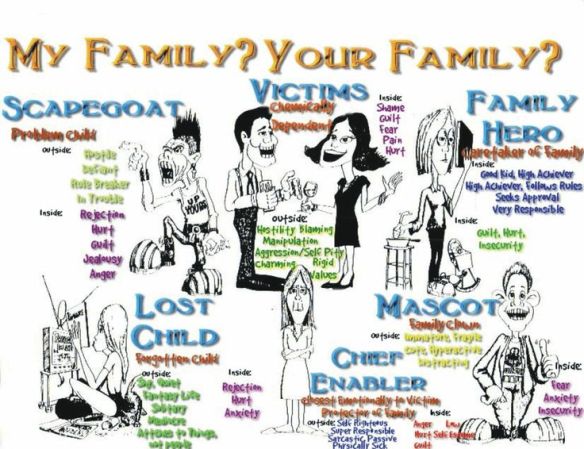
Child roles in dysfunctional families.

dysfunctional-family
Credit: Artist unknown.


Wikipedia has an excellent, detailed article about dysfunctional family dynamics. Here I am just going to talk about the roles various family members play, and the kinds of families that become dysfunctional. If you’d like to read the whole article, click on this link:

https://en.wikipedia.org/wiki/Dysfunctional_family

Dysfunctional families are usually of two types:

1. One or more of the parents are active alcoholics or addicted to drugs.
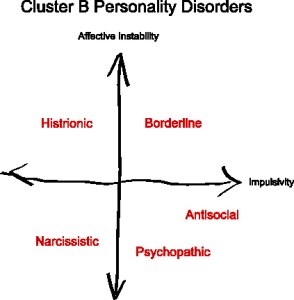
2. One or more of the parents have a Cluster B disorder, usually Narcissistic Personality Disorder but sometimes Borderline Personality Disorder, Antisocial Personality Disorder, or Histrionic Personality Disorder (or a combination of any of these).

The Cluster B Connection.

Outside of alcoholics and drug addicts, dysfunctional family dynamics are most prevalent when one or both of the partners suffer from a Cluster B disorder, especially Narcissistic Personality Disorder or Malignant Narcissism.    After NPD, BPD is the most common disorder seen in the head of a dysfunctional family, though because it’s more common in women and Borderlines have more empathy than narcissists, BPD is most often seen in the codependent, passive partner.

ASPD (psychopathy or sociopathy) rarely appears by itself in dysfunctional families, as antisocial people and psychopaths tend to not be raising children at all (either because they’re incarcerated, their children have already been removed from the home, or they simply have no interest in raising children,) but a parent could have Malignant Narcissism, which is a combination of NPD and ASPD.   Also, people with pure ASPD, though more likely to be criminals or involved in illegal activities, tend to be less emotionally abusive than people with NPD or even BPD. They are merely selfish and lack empathy, and they are manipulative to get what they want, but they don’t care about getting emotional supply from others so they don’t engage in mind games like gaslighting, triangulating, projecting, and scapegoating (unless there is a material reward involved or they are trying to avoid culpability). However, some people with ASPD are sadistic and enjoy tormenting family members for fun.

Of all the Cluster B disorders, HPD is probably the least toxic (Histrionics are shallow, attention seeking, and dramatic, but not usually that abusive), but HPD is usually comorbid with another Cluster B disorder, such as NPD.
cluster_b_chart

In some cases, a non-Cluster B mental illness (such as Bipolar disorder) that causes abusive acting-out behavior may be the culprit, but it’s less common because most other mental disorders are less easily hidden from others and the person appears “crazier.” Non-Cluster B disorders are also more easily treated with drugs or therapy, and except for psychotic disorders such as Schizophrenia, the afflicted person knows they have a problem and are more likely to seek help.

Cluster B and addictive disorders. 

Parents of dysfunctional families can also be both mentally ill and addicted to drugs or alcohol. The two often go together. In fact, alcoholism and drug addiction are extremely common in people with Cluster B disorders. Alcohol and drugs are their attempt to fill the emptiness they feel inside themselves.

Even if an alcoholic or drug addict doesn’t have an underlying Cluster B disorder, the behavior of an active addict/alcoholic is very similar to someone who has NPD. The only difference in the behavior of a narcissist and someone with active alcoholism is that for the narcissist, the “fix” is emotional; for the alcoholic, it’s chemical. A non-Cluster B active addict or alcoholic can be every bit as emotionally abusive, self-centered, and manipulative as someone with NPD. Only getting their next fix is important. (As an aside, it’s interesting to me that the 12 steps of AA and other 12-step programs almost all address the problem of narcissism by encouraging humility, responsibility, and amend-making. A person on a so-called “dry drunk” is basically a sober person acting out in narcissistic ways, which may be their nature).

The Codependent Partner.

Sometimes only one partner has a mental disorder or addiction, but the non-afflicted parent is always going to be codependent to them. The codependent parent, whether they have a disorder or not, almost always suffers from PTSD or Complex PTSD. If both parents have a Cluster B disorder (which I think is usually the case), the one who has NPD or Malignant Narcissism is almost always going to call all the shots and dominate the other family members. If a Borderline is paired up with a Narcissist, the Borderline is almost always going to be codependent to the Narcissist, colluding in the abuse but also being abused themselves. Similarly, if a Covert Narcissist is paired up with an Overt Narcissist, the Covert one is going to be codependent to them and possibly abused. Such a scenario can lead to the Borderline or Covert Narcissist developing Stockholm Syndrome (identifying with and colluding with their abuser). Non-Cluster B codependents can also develop Stockholm Syndrome, because it’s a complication of C-PTSD. The codependent parent often (but not always) has a high degree of empathy, which is what drew them to the narcissist in the first place, in a misguided belief that they could “fix” them or they were led to believe that the narcissist could “rescue” them.

The Roles of the Children.

In the ACON community, there’s a lot of talk about Scapegoats and Golden Children, but there are other roles children can play in a family that are rarely addressed. In a two child family, most likely there will be a scapegoat and a golden child, but in larger families, there can also be a Lost Child, a Clown, and a Rescuer (codependent). It’s unhealthy for a child to be in any of these roles, but the Scapegoat and Golden Child role are probably the most dangerous to a child’s mental and emotional health, for different reasons. Even in a two-child family, the roles can shift back and forth (according to the Wikipedia article, families in which the children’s roles change and shift are called Balkanized families–this alludes to the constantly shifting loyalties and borders of the Balkan countries in Eastern Europe).

1. The Scapegoat.

scapegoat

Both this and the Golden Child role are the soul-killing roles, but for different reasons. The Scapegoat is the child who is targeted by the narcissistic (or alcoholic) parent. The parent often is able to get the rest of the family to serve as flying monkeys and gang up on that child, projecting anything they don’t want to “own” onto them. Like the sacrificial goats described in the Bible who were banished to the wilderness and tormented by villagers, the Scapegoated child carries all the shame the rest of the family doesn’t want to confront or deal with. All the unwanted emotions and bad qualities are unloaded and projected onto them, so the abusers don’t have to confront or deal with these problems in themselves.

Usually it’s the most sensitive child of the family who becomes the Scapegoat, because that child tends to be the Truth Teller, the only family member who can see the dysfunction and may even react against it. The most sensitive child, being the child who shows the most emotion, is also a threat to the narcissists in the family because emotional expression is such a frightening thing to them. In many, if not most dysfunctional families, the expression of emotion is not allowed. So the most emotional or sensitive child becomes the scapegoat, especially if they rebel against the dysfunction or criticize it.

The Scapegoat may be assigned the role of Bad Child, the Loser, the Stupid One, the Ugly One, the Crazy One, the Weak One, or any combination of these. No matter what they do, they cannot please the parents (or the siblings who have been turned against them). Scapegoat Children usually develop severe C-PTSD or possibly another mental disorder, and having been trained to be victims and never given the emotional, financial or other tools to succeed in life, tend to fulfill their families’ predictions of being “losers,” so then their families can say to others, “See? This child really is worthless.”

Scapegoated children also tend to attract other abusers throughout their lives and are at risk for being targeted for bullying even as adults and for entering into abusive relationships. If the adult child doesn’t go No Contact, the abuse continues, usually through some form of isolation, silent treatment, or exclusion. Scapegoated adults are talked badly about by the family and not invited to family functions. They are given no emotional or financial support, even though other members of the family are given these things. It’s not unusual for a scapegoated adult child to be living in poverty, even if their families are wealthy–not only because they were denied financial support when they needed it, but also because their self esteem took such a terrible beating that they have no confidence at all and never take any risks that could improve their lives. Severe C-PTSD can also cause a person to have an inability to focus or concentrate or set realistic goals.

A Scapegoat isn’t always a child. It can also be a parent, in which the children are turned against that parent by the abusive one.

2. The Golden Child.

girl with a gold medal and cups.

The Golden Child, often (but not always) the eldest child, is the parent’s trophy, pride and joy. The parents may seem to love that child, but being incapable of real love, their “love” is conditional and is based on their fantasy of what they want that child to be, not on who the child really is. The child is assigned to be a Mini Me of the narcissistic parent.

The Golden Child, basking in constant approval, showered with toys and gifts, never held accountable for any wrongdoing (which may be projected onto the Scapegoat), and often recruited as a co-abuser in the abuse of the Scapegoat, grows up entitled, grandiose, and spoiled. Because their Real Self has never been appropriately mirrored and their less than perfect traits are ignored or projected onto someone else, and because they were rewarded for playing a the role of the Perfect One, a Golden Child in a family is the most likely to develop NPD and become a clone of the abusive parent. In this way their souls are destroyed even more than the Scapegoat’s. To continue to be the parent’s favorite, they had to play a role which became internalized. This becomes their False Self. After awhile, they are no longer able to access their Real Self at all. Golden Children who have become narcissistic continue their entitled, bullying, manipulative, grandiose behavior into adulthood and are likely to head dysfunctional families themselves, continuing the cycle.

A non-Golden Child, even a Scapegoat, can become a narcissist too (usually the covert form of NPD), for self-protection, but Golden Children tend to develop the grandiose, malignant form of narcissism and as such, are the least likely to ever seek help for their disorder or admit they have become abusers themselves.

3. The Lost Child.

lostchild

In larger families (three or more children), one child is likely to be ignored and treated as if they don’t exist. This isn’t a form of silent treatment; it’s as if the parents don’t notice the child is there at all. The Lost Child isn’t victimized like the Scapegoat, but they aren’t spoiled either. They may or may not be recruited to assist in the abuse of the Scapegoat, but they won’t necessarily be punished if they don’t cooperate; they will simply be ignored. The Lost Child tends to be quiet and shy, and not make any waves. They are probably aware of the family dysfunction and may sympathize with the scapegoat (but don’t let anyone know this). As they grow older, they may crave attention or develop addictions, or they may remain shy and retiring throughout their lives. They tend to avoid confrontation and drama, and may become extremely introverted.

4. The Clown/Mascot.

classclown

The Clown/Mascot attempts to divert attention away from the family dysfunction (and also get attention for themselves) by making light of everything. Everything becomes a joke to them, and they even use their own families as sources for humor. Clowns can be disruptive in class as children, to get attention, but because of their ability to see the humor in things, they tend to be outgoing and develop a large circle of friends during adolescence and adulthood (even if they are never taken very seriously). Family Mascots are almost never scapegoated, because they entertain everyone and take the focus off the family problems.

David Sedaris, a writer and humorist, is a good example of this dynamic at play.  Several writers in the ACON community (and even outside that community) were outraged by Sedaris’ callous essay (“Now We Are Five,” which appeared in the New Yorker after his younger sister, Tiffany, committed suicide).   Tiffany was clearly the family scapegoat and had evidently gone No Contact with the rest of the family. At the time of her death, she was living in poverty and only had, as her father put it, “two lousy boxes” of belongings. I don’t know all the details, but it seems as if she was offered no support, either emotionally or financially, in spite of the family’s wealth and Sedaris’ success as a writer. She was probably mentally ill, but her mental illness may have been due to being the family reject.

In a candid interview Sedaris gave for Vice, he describes Tiffany and her relationship with the rest of the family. His words are very telling.

Even as a child I looked at my sister and wondered what that would be like, not to feel the warmth of my mother’s love. Tiffany didn’t. There was always a nervous quality about her, a tentativeness, a desperate urge to be in your good graces. While the rest of us had eyes in the front of our heads, she had eyes on the sides, like a rabbit or a deer, like prey, always on the lookout for danger. Even when there wasn’t any danger. You’d see her trembling and think, You want danger? I’ll give you some danger

It’s been suggested that David Sedaris is himself a narcissist (possibly the golden child) and that could certainly be true, but I also suspect he served a secondary role as the family Clown/Mascot. His callousness toward Tiffany in his famous essay (and grandiosity about how great the rest of the Sedaris family was–it’s very common for narcissists who were golden children to hold their dysfunctional families up as paragons of perfection) seemed to be drawn both from narcissism and from a need to hide his anger and pain behind a wall of humor. Here’s a link to his essay (it’s heartbreaking and may be triggering):

Now We Are Five

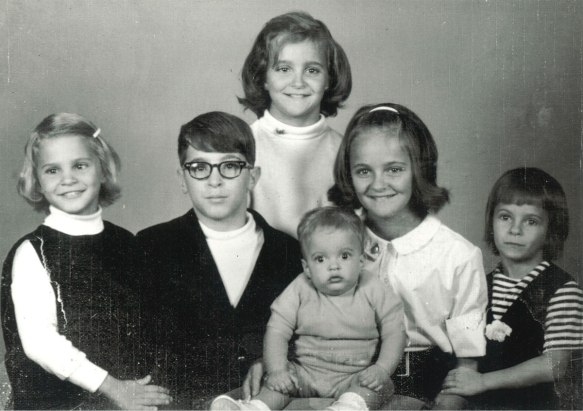
The accompanying photo is interesting. Tiffany, the second to youngest child in a family of six children, sits in the bottom right hand corner. Her hair is cut short and unkempt, and she looks very unhappy. David, wearing the glasses, stands above her. Actually, none of the kids look very happy. Not a smile in the bunch.  Something’s definitely not right about this family.  It’s common to see family portraits where no one is smiling in the 18th or 19th centuries,  but not in the late 1960s, when this photo was taken.   Here’s another photo, from the Vice interview, where only Tiffany (again in the bottom right hand spot) looks desperately unhappy and disconnected from her siblings.
tiffany_sedaris
Credit: Vice.com / Left to right: Amy, David, Gretchen, Paul, Lisa, and Tiffany

I used to enjoy Sedaris’ writings and looked forward to his books and essays, but after this essay, I just can’t read him anymore. (Augusten Burroughs is a better alternative and doesn’t seem to be a narcissist).

In spite of their raucous and jovial manner, Clowns are likely to be depressed because they have never learned to confront or deal with their true feelings.  They hide behind a wall of laughter.  Their sense of humor is really just a cover for their pain. Many Clowns become addicted to drugs or alcohol, and a few become suicidal. Many of our great comedians served the Clown role in their families. I don’t think it’s a coincidence that so many of them had drug issues or killed themselves.

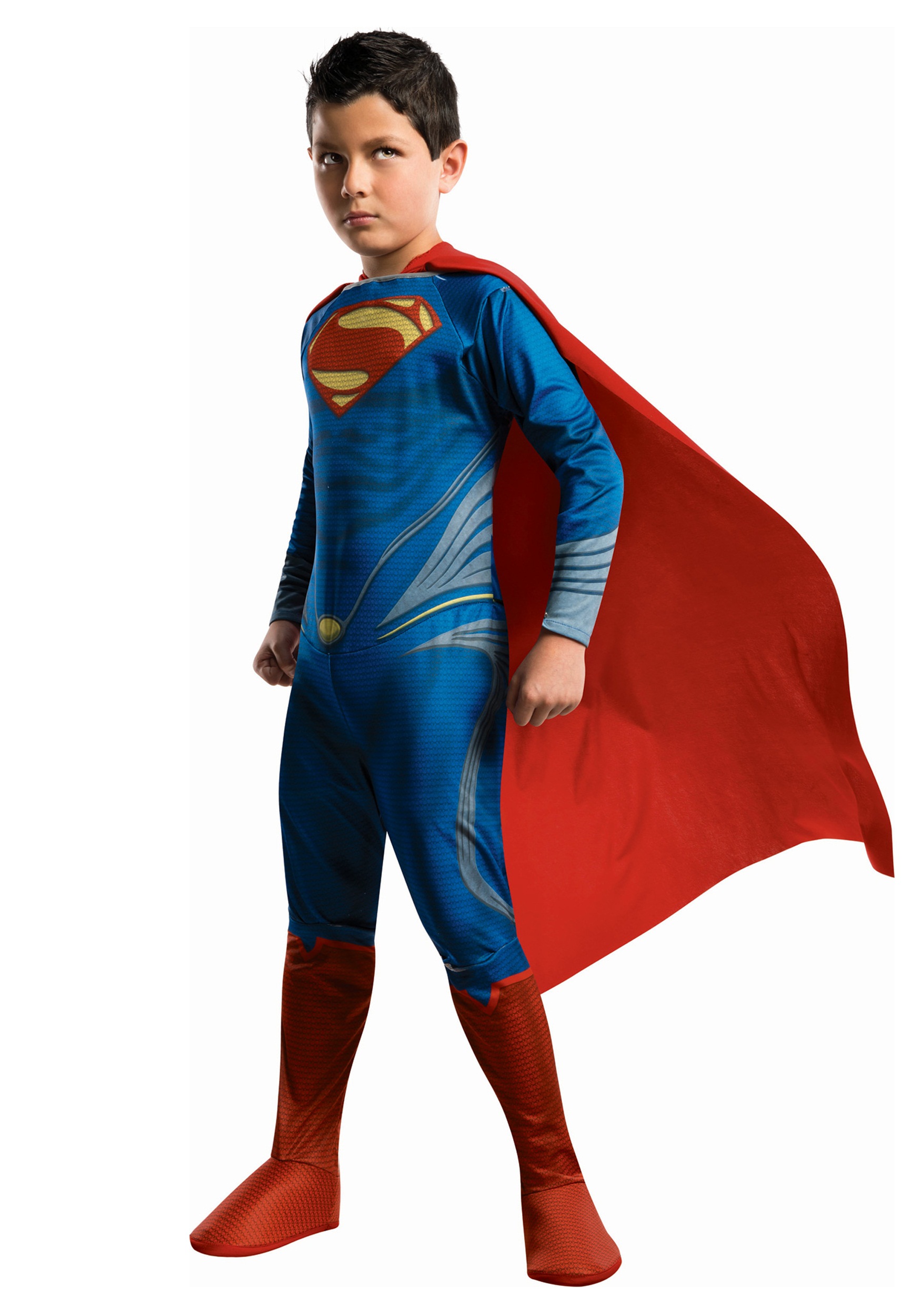
5. The Rescuer.
superman_child

This is the codependent child who attempts to “fix” the family dysfunction by being obedient, always good, non-confrontational, overly generous, and self-sacrificing. The Rescuer may be highly empathic. The Rescuer tries to serve all the needs of the narcissistic/addicted parent, which of course is not possible. They will never argue with or criticize the narcissistic parent, and are always trying to get everyone to get along, which also is not possible. They may be the only family member who doesn’t abuse the Scapegoat, but they might if they feel like it’s required. However, even if they do collude in the Scapegoat’s abuse, they will be less abusive than the other family members, tending to take a back seat or even sympathize with the Scapegoat in private. In trying to please everyone, they please no one, and grow up feeling impotent and helpless. It’s a no-win situation.

When Rescuers become adults, they tend to unconsciously look for other abusers to “rescue,” having failed to do so in their families of origin. Like Scapegoats, Rescuers are likely to become abused themselves as adults, but it’s hard for them to leave an abuser because of their high level of empathy which keeps them tied to the abuser in their attempt to want to “help” them. They also tend to fall for an abuser’s promises to change and are easily “hoovered” back into a codependent relationship.

Shifting Roles.

In Balkanized families, the child roles can shift. The most common situation is a Golden Child becoming a Scapegoat, often upon reaching adulthood, if they fail to fulfill the unrealistic expectations put on them. (“You were such a disappointment to me!”) If a Scapegoat goes No Contact or leaves the family for some other reason, another child, possibly the Lost Child, becomes the new Scapegoat. Someone has to carry all the family shame.  If the family only has two children, the Golden Child may find themselves suddenly scapegoated or serving both roles.

Children who serve as both Scapegoats and Golden Children (very common in only children)  often develop Borderline Personality Disorder as well as severe C-PTSD and possibly other mental disorders like Dissociative Identity Disorder (almost always the result of severe emotional abuse).

Serving as both a Scapegoat and Golden Child is the ultimate mindf*ck because there isn’t even any consistency. The child never knows if they will be punished or rewarded from one minute to the next. Their only advantage (if they are an only child) is that they don’t have siblings who have been turned into flying monkeys who collude in the abuse.

If the family ever develops a need for a new Scapegoat (if the Scapegoat goes No Contact, dies, or disappears), the Lost Child is usually picked as a replacement, due to their non-confrontational, malleable temperament and lack of any real pre-existing role in the family.
Empty words.

love_quote

“I love you.”

Adult children of narcissists hear those words a lot.  But they ring hollow and false to my ears, because words are just words–it’s the actions behind them that give them meaning.  And I haven’t been shown much (if any) love or support by my family or the other narcissists in my life who have have uttered those three words to me so many times.

Anyone can send a Hallmark card or say “I love you” but that’s as close to love as narcissists can get, because they never learned what love really is.

There’s a blogger I read who is a narcissist.   I like his posts because he writes about narcissistic abuse from a narcissist’s point of view (nope, not Sam Vaknin).  Oftentimes you learn more about something when it comes out of the proverbial horse’s mouth.    You get a whole new perspective on things that way.    Usually he writes about the tactics a narcissist uses to prey on others, but sometimes he’s more transparent and and shows some vulnerability–even writing about the abuse that was done to him and turned him into a narcissist.  From one especially gutwrenching post where the blogger, HG Tudor, describes what sort of “love” he was taught as a child:

Love is being told to never trust anybody.

Love is being made to re-write the entire essay because of one spelling mistake.

Love is being sent to stand outside on a cold winter’s day until all three verses of Ode to Autumn are recited correctly.

Love is knowing nothing is ever good enough.

Love is understanding that someone else knows better than you what is best for you.

Love is turning away from the reality.

Love is standing straight against a wall for several hours for speaking out of turn.

Love is for the weak.

Love is being told that when I am gone nobody else will look out for you.

Love is succeeding.

Love is building a wall as high as possible.

Love is trying until it hurts and gaining that final curt nod of approval.

Love is being seen and not heard.

Love is fulfilling your potential and securing that legacy.

Love is hurting you even though it hurts me, but someone in this household has to do it and it won’t be him will it?

Love is reading to yourself than being read to.

Love is living in the shadows and hoping not to be noticed.

Love is being the best.

Love is the preserve of the powerful.

Love is being denied a birthday party because the other children are too stupid.

Love is being undermined in order to prevent conceit.

Love is a begrudged recognition and the injunction to try harder, go further, climb higher, run faster, study longer.

Love is burning your hand but not crying.

Love is a righteous beating.

Love is being distant and pretending things never happened.

Love is being sent away.

Love is not being told.

Love is splendid isolation. 


He has it right.   He knows this is not what love is, even if he has no idea what real love is.    There’s a lot of anger in his post.  What he may not realize is this list could apply to ALL children of narcissistic families, not just people like him who have NPD.

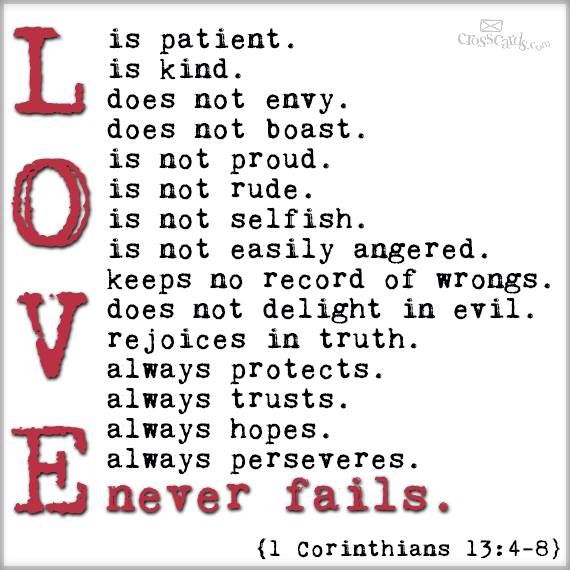
There’s one difference though.   For those of us who didn’t become narcissists, we somehow learned what love is.   Real love is unconditional love: love that is unearned, love that is given just because you’re who you are, regardless of your flaws and shortcomings. You are not shamed for being who you are, at any point, ever.  You are cherished for your soul, not your appearance, income, intelligence, or achievements.   You are not judged for being in a bad mood or for not being happy all the time.  Someone who truly loves you will still love you even when you’re sad, mad or afraid.  They will offer support in some way, not turn their back on you or blame you or kick you while you’re on the ground.

Those of us with C-PTSD and other trauma based disorders didn’t get unconditional love from our immediate families.   But if we didn’t become narcissists we might have had a taste of enough of it to make a model of it for ourselves.  Maybe a loving relative outside of our immediate family–a  grandfather or aunt perhaps–showed us this kind of unconditional unearned love.  Maybe we were “adopted” by the loving parents of a friend (not literally adopted, just treated like a member of that family).   Perhaps we were fortunate enough not to marry an abuser (unfortunately, that’s not the case for most of us, since we were programmed to attract and be attracted to abusers) who showed us what real love is all about.   Maybe we had a compassionate teacher when we were young.  It’s even possible that one or both of our narcissist parents (if they weren’t malignant or sociopathic) had occasional moments of lucidity when their false self was temporarily down for whatever reason, and during those rare moments were able to see and love us for who we really were, not for what they wanted us to be or what we could give them.

My point here is that love was somehow modeled for us by somebody before the critical period for being able to accept–and give–love came to a close.   Probably not enough to heal our wounds; the damage done to us was severe and complete healing may not be possible.   The scars will always remain, no matter how much work we do on ourselves.   We may be compromised in our ability to give and receive love, but we can still learn.    Even if we’ve been shown very little love throughout our lives, by the grace of God, our souls, though damaged, somehow remained intact.    For a narcissist, there’s no inkling of what actual love might feel like, even if, as with the blogger quoted above, they want to know.

love_corinthians

I’m so starved for unconditional love that when it is given to me, I want to cry in gratitude and some emotion that feels very close to relief.   Occasionally I have.    I can tell you what that kind of love feels like:  a sincere hug when you’re depressed; concerned ears that listen without judgment even if they disagree with you;  someone who isn’t a fair weather friend and is still your friend even when you’re going through a rough time or aren’t at your best; a real family that always welcomes and supports you no matter how old you are or how many problems you’ve faced and doesn’t disown you, judge you, shun you, talk badly about you behind your back, or tell you everything’s your own fault.   Love is like a respite from pain after an excruciating illness; it’s reassurance that the thing you dreaded the most did not come to pass, that in fact, the outcome was wonderful instead.    That’s what love feels like, and it’s everyone’s birthright.  That some of us received so little of it–or none at all–is appalling to me.     The injustice of it makes feel rage.

I received just enough of this kind of love, and at an early enough age, that it was modeled for me.  I received just enough that my soul escaped relatively intact, even if my mind did not.    I can feel unconditional love for others, but I’m still afraid to reach out to them, because I learned that people can’t be trusted.  So many people in my life have shown me their “love” has no real meaning and is just three pretty words with nothing inside but betrayal and hurt.    The terrible irony of having received enough of a “taste” to know what real love is  like is that you constantly crave more of it, like a drowning person gasping for air.  You haven’t received enough to feel confident that it will last or that anyone in the world really cares about you, so you either clutch onto it for dear life or avoid relationships altogether.

A new day.

sunrise2

It’s the first day of Summer (or is it the second?), and things look much brighter today than they did last night. In the midst of a severe BPD/C-PTSD “episode,” (I’ll explain more in a minute), I published a post, “Why I’m a Wreck,” which I just set to private and will probably delete eventually. I thank all of you for your prayers and good wishes. I feel like I have a family here. ❤

I’m very symptomatic right now and overreacting to everything. I’m paranoid and hypervigilant. I see evil everywhere and demons in every corner (but the demons are only in my own mind).  I’m having trouble being mindful and trying to stay in the present.  I’m thinking in a more black and white way (splitting) than I have in a long time. I’m catastrophizing and imagining the worst possible outcomes about everything.  I’m “going off” on people and getting angry at them for no reason.    Example: I don’t agree with my roommate’s religious views, and I became very judgmental and actually yelled at her, telling her what she believed was “stupid.”  I immediately felt terrible about it and apologized; being so judgmental is not like me (but it is like me when my BPD is in full bore).   When a lot of things happen at the same time, it can really overwhelm anyone’s system (even if you’re free of BPD or C-PTSD) and it’s hard to keep your grip and stay mindful.

An example of my “catastrophizing” was believing my son has NPD. I talked to him again today, and he certainly does not. He may have a few of the traits of narcissism, but he does have empathy and he isn’t manipulative and he doesn’t play evil mindgames. He was in a bad mood last night and it was late. We talked today and he was much more sympathetic.

Two things have brought on this sh*tstorm of triggers and symptoms.

1. I’m getting deeper into therapy, into the really “difficult stuff.” It isn’t fun anymore. It’s hard, painful work now. I found this hard to believe when I started, that I’d get to a point where I’d be in so much pain as buried traumatic memories begin to emerge to consciousness. I have to keep reminding myself that this is all good; the pain and “regression” back into earlier ways of dealing with stress means I’m healing.

2. My father’s death. I’m grieving in my own way, but more than sadness is a lot of anger, and a lot of old, painful memories are being triggered by this too. I’m actually remembering events I thought I’d long forgotten.

God works in mysterious ways. It was my father’s time to die, but it also happened at a time where I felt “stuck” in therapy–not moving any faster and not able to access buried emotions brought on by trauma. My father’s death has made it possible for me to do this work, and it is work.

As for my daughter, her moving back in with me, as one of my commenters (Susan?) said in the post I just deleted, may be the best thing for both of us. I just need to set some firm boundaries but I think she will respect them. I never thought her living with her dad was a very good idea.

And, I’m not sure yet, but there may be a out of state move in our not very distant future–one that would bring the three of us (me, and both my kids) together as a family again and have a fresh start.  I don’t want to get my hopes too high about this though.  But it could happen.

Diving into the Inferno.

On losing my dad.

dadandme1983
Me and my father, Summer 1983, Dallas, Texas.

I’ve experienced a strange array of emotions since my father’s death on Monday, June 6th. To be more accurate, I haven’t felt too much emotion at all. I used this event to take two days off from work, but not really to grieve, just to reminisce and remember the good times my father and I had together. And yes, there were many good times.

I know the things I’ve written about my parents in this blog haven’t been too flattering, but that’s because of the subject matter of this blog. Essentially, I write it for myself and nobody else. I feel no shame in saying the things I have said, none of which were untrue. And I never identified them or used any real names. I can’t deny they simply were were not very good parents, but for this post, I’ll just leave it at that.

In recent years, my father and I haven’t been very close. Although my father was most likely a Covert Narcissist or a Borderline, he was not a malignant anything so there was no need to ever go No Contact with him. On many levels we were able to communicate and understand each other. I always felt deep down that he really did love me, or at least tried his hardest to love me. As a young girl and teenager I worshipped him (although there were times I grew very angry too, and would tell him I hated him).

During my teens and even into my early 20’s, we always got together on the weekends and it was always a fun, exciting event, no matter what we decided to do. He’d take me out to my favorite restaurants and let me order as much as I wanted to eat, without criticizing my weight or making me feel self conscious. He took me on road trips and all kinds of day-long excursions. I always looked forward to our time together and always felt he took a genuine interest in the things going on in my life. I felt comfortable talking to him about my problems and concerns, when I never felt that way talking to my mom. I knew my dad was far from an ideal parent in many ways, but I did feel his love for me.

In recent years, geographic distance, lack of funds to travel, my dad’s progressive Parkinson’s which made movement and speech increasingly difficult, and personal differences have caused us to drift apart. He remarried in the early ’80s, and his current wife hasn’t always approved of my lifestyle or values. The last time we spent any time together was in 2005. That is a very long time–a long enough time that any intensity of feeling you may once have had begins to fade, even if it’s your own parent.

I knew he hadn’t been well for a long time, due to his Parkinson’s and other problems. But my father tried to take good care of himself, and his extremely devoted wife did everything she could to help him. My dad always, always carried a positive, upbeat, can-do attitude about life and aging. I spoke to him on the phone every month or so (sometimes a bit less) and no matter what else was going on, my dad always sounded happy and contented, and always happy to hear from me.

When I got the phone call from my mother on Friday, I knew his time on earth was coming to a close. His kidneys began to shut down on Saturday and he was admitted to hospice, where he died on Monday. When the call came, I wasn’t surprised. I thanked my mother for letting me know, hung up and remember just feeling sort of…nothing. I went about my usual activities, albeit with a bit of wistfulness. I did spend some time thinking about him, and looking at old photographs of the two of us. But I didn’t feel anything resembling grief or bereavement, and I didn’t cry.

I went online to find out if this lack of feeling was normal. I felt a lot of guilt for not feeling more emotion, for not being able to cry. I read about Elisabeth Kubler-Ross’ Five Stages of Grief. The first stage is Denial, which is often accompanied by emotional numbness, similar to PTSD. But I wasn’t in denial! I knew my father was dead. I just wasn’t particularly upset about it. Of course I wasn’t happy about it; I just didn’t feel too much of anything. I thought there must be something terribly wrong with me. When I went back to work this morning everyone wanted to hug me and comfort me which was strange because I just felt…normal. I just wanted to get busy working.

Tonight I think I feel a little more emotion. Not exactly sad, but wistful and nostalgic which is close enough. I rummaged in my closets for more photos, and I found the lovely one of us taken at his home in the summer of 1983 when he was still active and in great health and I was young and sporting big 1980’s hair.

I feel grateful for the good times my dad and I shared. The times we laughed together, watched a movie, ate a delicious meal, took a long drive, and had a heart to heart talk (yes, we did even have those sometimes). We had the same offbeat sense of humor and love of the random, shared a fascination with geography and science, and loved all sorts of word games. No, he wasn’t a great parent, but he wasn’t the worst either, and he was aware he wasn’t a good parent when I was a kid. We had love for each other though, and that’s all that really matters at the end of the day.

Maybe I’m unable to cry because my C-PTSD makes it so difficult for me to access and feel my emotions anyway. I’m going to talk about this in therapy tomorrow.
Or maybe it’s just normal to feel an emotional distance when you and your parent haven’t seen each other in 11 years, and is really nothing to worry about.  I feel some regret that I didn’t have the opportunity to see him one last time before he died.

Dad, I am thinking of you, and I know one day I’ll see you again.

Forever an orphan.

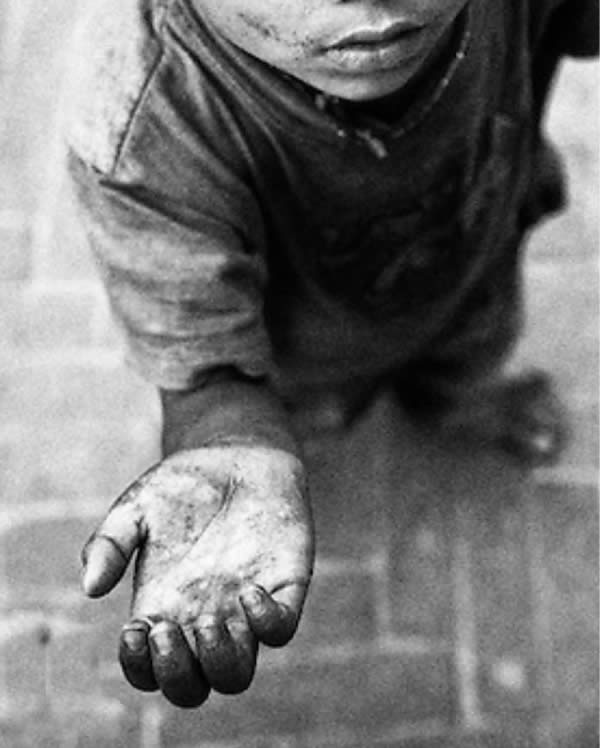
orphan_begging

Those of us who were scapegoated and rejected by our own families often feel like orphans in life, forever being buffeted to and fro by the winds of a seemingly heartless world and hanging on to what seems like a brittle tree branch for our lives. We were trained and groomed by our families of origin to continue to be victimized throughout our lives, always treated as though we were less than everyone else, deficient in some way. We were not given the tools other children in our families, or the children of normal, loving families were given to do well in life. We were tossed out “with the wolves” so to speak, and told to “sink or swim.” Unfortunately, too many of us sink–into abject poverty, drug or alcohol addiction, eating disorders, abusive marriages, and mental and physical illness of all types. Everything that others seem to obtain with ease–a wide circle of friends, financial success, material goods like houses, cars or vacations; respect and closeness within their families, a relatively easy climb up the corporate ladder–seems to elude those of us who grew up programmed to believe we were defective.

We may not have literally been orphaned by our parents, but functionally we are no different than orphaned children. Children who lost their parents young to death or abandonment also grow up without any sense of belongingness and no loving, close attachments to anyone. How can you when you are treated like a number at some orphanage (more so in the past or in foreign countries like Romania) or are constantly being sent from one foster home to another, where the foster parents may mean well (but sometimes not) but have too many other charges to take care of to fulfill your need to belong and be loved. Orphans learn not to get too attached to anyone because any attachments they may form are impermanent. Getting close to others hurts too much, so they learn not to get close to anyone, not to trust anyone.

When orphans become adults, they are sent out into the world ill-prepared for adulthood with no emotional or financial help to guide them in their journey. With no one to truly care for them, and no families to turn to in times of need or crisis, they must either sink or swim. Those that swim do so at a cost. They may become successful in life, obtaining the trappings like money or status, but they never really know what love or real self esteem is. They don’t even know who they are. They just know they must survive–at any cost. It’s my belief that orphaned kids who take the swim route become narcissistic–how could they not? Adopting a false self and a fighting mentality is the only way they know to survive in a harsh, uncaring world where they seem to have no place.

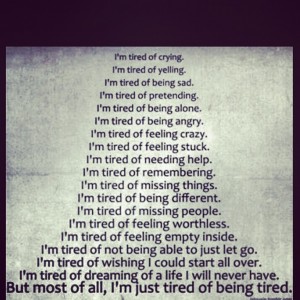
tiredandalone

Although narcissistic abuse survivors may have been raised in actual families, we were emotionally and spiritually orphaned due to rejection and emotional abuse. We were compared unfavorably with siblings, other family members, or just about anyone else. We were raised to believe we had no rights. We were punished for having opinions. Our boundaries were constantly being violated; we weren’t even allowed to have boundaries. We were called names, belittled, gaslighted, threatened, and stunted and stifled in every imaginable way. Our efforts to be approved of and small victories were belittled or sabotaged. We were refused financial or emotional help where other children or young adults from normal families (or even our own families) would have received it (my family refused to pay for my college education although they could have afforded it). We were trained to believe we were undeserving of success or love. We developed a strong Inner Critic who continued to live on inside us long after we left our families of origin, continuing the abusive message that we are less.

We become adults who are afraid to take any risks, afraid to speak our minds, afraid to stand up for ourselves, afraid to just be. We feel guilty if we do succeed in something and sabotage ourselves just like our own families sabotaged us. If we were bullied by our families of origin, we develop dismally low self-esteem and internalize the message that we deserve nothing and are nothing. We develop a victim mentality that makes sure the bullying and rejection continues throughout our lives. We develop C-PTSD and are handicapped on almost every level for finding our rightful place in the world. We were programmed by our narcissistic families to be targets for other abusers and narcissists, who smell our vulnerability and our lack of emotional defenses. I can’t tell you how many childhood victims of narcissistic abuse were also bullied in school or even as adults in the workplace, were always passed over for promotions or raises, or married narcissistic spouses who continued the abuse, sometimes taking it to new levels of cruelty. I know because I was one of them.

Even if we somehow managed to find some small place in the world, we still feel like we don’t belong. We still feel isolated from the rest of the world, different in a bad way. We feel like we don’t deserve to have anything good. In their desperation, some narc-abuse victims sell their souls and turn to narcissism as a way to cope. They escape the enemy by becoming the enemy. Their attitude is fake it ’til you make it (or just pretend you made it). Their self esteem isn’t real; inside their prison of narcissism they are screaming in agony, but God forbid anyone ever know. They’d destroy you first to avoid being exposed as vulnerable and defenseless as they really feel. They sacrifice their very souls to survive.

Pain_ends

For those of us fortunate enough to have escaped narcissism, there is more hope. Although we may appear to have much less than someone who turned to a narcissistic defense, spiritually we have so much more. We haven’t jettisoned our souls to survive. We may have lost everything else–we may have poor physical or mental health, live in poverty, feel isolated from everyone, have difficulty getting close to others, always seem to have less than others–but spiritually we remained intact. Our quest to reclaim our humanity is a hard journey, filled with pain, but the moments of self-discovery and emotional and spiritual growth are so worth it. In the process of healing from narcissistic abuse, I finally found the family I know will always accept me unconditionally: God’s family. There is always a place at His table, where you will never be judged and always accepted for the person you are, instead of the one you can never be. In God’s family you are never an orphan.

Sometimes something as simple as music helps you get there. Here is a song that helped me (and at least one other narcissistic abuse survivor I can think of) in the early days of starting this blog:

Further reading:
Why Family Scapegoats Become Lifelong Victims
We Were The Lucky Ones
(I wrote this over a year ago, and I’ve changed a lot since then, but I think it still fits)
Adult Poverty and Scapegoathood: A Connection? 
The Reason We Became Adult Victims: What Can Be Done?
It’s All About Image: The Skewed Values of Narcissistic Families

Guest post #13: Panic and Narcissism

roller-coaster-2

Don Shelby, who writes the blog Living With Narcissism, and suffers from depression and panic disorder, had a surprise for me today.  I opened up my email and there was his guest post!    He’s been busy and had some personal issues so was unable to send it earlier, and I’d completely forgotten about it, but after I read it I was very glad he remembered to send it because I could relate to it and I think a lot of you will be able to also. Most of us who had narcissistic parents learn to be afraid of everything. It’s why we take so few risks.

From Don’s About page:

I’ve lived with narcissists for most of my life and only recently understood the phenomenon of Narcissistic Personality Disorder and Co Dependency in relationships.  From my humble beginnings being raised by a single Narc mother to several long term relationships with Narc women I have been fully and completely indoctrinated to be a good little obedient co dependent with very low self esteem.  I personally suffer from depression and anxiety/panic disorder.  I currently still live with my narcissistic partner of nearly 20 years and for now intend to continue in this relationship.  This blog is my safe space to openly discuss what goes on in my world around this dynamic and to explore coping mechanisms and ways to heal the co dependency in me.  I am not a mental health professional.  I’m just a victim of narcissistic childhood abuse who’s on a mission to heal my soul and gain back my life once and for all.

Panic and Narcissism 
By Don Shelby, Living With Narcissism

scared-child-2

I had my first full blown panic attack in my mid 20s. Since then, my life has become a quest to understand why I felt so anxious and panicky over situations that I used to not have any fear about whatsoever in my younger years. For a long time, I thought that the panic attacks started then, but now I believe they started at a much younger age and only manifested fully in my 20s when life got too overwhelming.

My mother was a narcissist and she terrorized me and my brother throughout our lives until her death in 1997 in order to manipulate us and get us to do what she wanted. My brother and I flip flopped between being the golden child and the scapegoat depending on which of us was on her good side at the moment. I grew up with uncertainty, no boundaries, and rules that changed with my mother’s moods. I was taught to distrust my own feelings, thoughts and desires and especially of anyone outside of our family unit. I was taught to only trust my mother and to believe everything she told me as if it was written in stone. Whenever I would want to do something that she didn’t want me to do she would try to scare me into not doing it by telling me that I’d end up dead or worse if I did the thing I wanted to do. She’d paint a pretty scary picture for me and then I had to choose whether to take the “risk” and go for it or to take her word for it and not do the thing. I’m not talking about risky behaviors like skydiving or rock climbing here. I’m talking about going to college out of state or going on an amusement ride she didn’t want me to ride or swimming in the ocean. Normal stuff a lot of kids do. Every day stuff. Her justification was always that we’re not like other people and it’s okay for them but not us. Why were we so different? Because my mother said so.

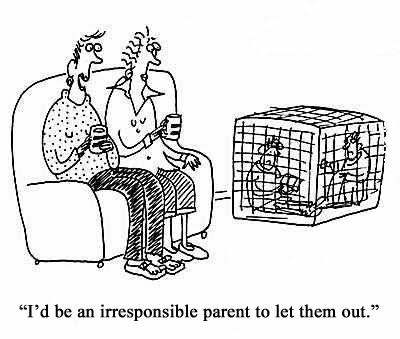
overprotective.parent

So I was raised to be fearful and to only trust my mother. Still, today, when I’m about to embark on something that I perceive as scary or challenging I can hear her voice telling me how crazy I am to try something that foolish and that I’m going to end up dead because of it. I was a fearful kid and I grew into a fearful adult. The real crazy part is that, despite my fear, I still went ahead and did most of the things that my mother warned would kill me. I rode that roller coaster. I swam in that ocean. I went to college out of state. There was a big part of me that didn’t believe her lies. I pushed my luck often and did what I wanted to despite her warnings. But it cost me too. This pushed me into the Scapegoat role constantly with her while she admonished me for disobeying and looked for any sign of failure as a chance to show me how right she was after all. It forced me into a corner where I could never fail because failure would usher in an unwelcome torrent of “I told you so’s”. I could not let her win. And I didn’t. For years I put a ton of pressure on myself to show my mother that she couldn’t keep me from living my life. Zero failure was my mantra. Never show weakness. Always tell her only the positive things going on and hide my vulnerabilities from her.

So all those years of being strong actually broke me down until my nervous system couldn’t handle it anymore and I started experiencing panic attacks over the slightest little thing. I guess there were triggers but I wasn’t aware of them. My own mind became my new battle ground and I didn’t feel safe anywhere. I changed career paths because of it. I stayed in lousy relationships because of it. I lived in places I hated because of it. I didn’t have the confidence in myself to take care of my own needs like I once had. Still, I struggle to lead a happy, normal life. There are a lot of things I simply don’t feel strong enough to do anymore. My nervous system is so sensitive to fear triggers that I can’t handle much stress at all in my life. I’m a shell of the person I used to be and I feel like an old warrior, battered but not broken from my experiences in life. My mother waged mental warfare in my youth and other women have continued her battles as I’ve been attracted to a lot of narcissistic type people over the years.

The silver lining is that with understanding narcissism and the effects of C-PTSD I now know what caused my panic attacks to start and why my life has been challenging in ways that most of my friends were not. I can’t go back and change the past but I can take what I’ve learned into my future and make it better. Sure, I still struggle with anxiety and panic, but with understanding has come some tools to help me persevere through my triggers and symptoms. I know the value of setting boundaries and having self respect and listening to my inner voice above others. I remind myself daily what I knew when I was five. My mother was wrong. I’m not crazy and I’m not going to die on that roller coaster.