Healing Narcissism: “Stephen’s” story.

who_am_I

Disclaimer:
I am not a licensed mental health professional and as such, have done no studies or surveys to find out if the healing regime I am going to propose here would actually work on people with NPD. I have no guarantee such a therapy regime would work, but I feel like I’ve done enough reading about the disorder (NPD in particular), both from Internet material written by a number of people, and books by professionals who specialize in this disorder, to outline a possible therapy regime I feel might give sufferers of NPD (as well as BPD and other disorders of the self, and even PTSD) who want to get better some hope of doing so. This is not a therapy I “made up,” since I am not qualified to do so, much less diagnose anyone with any disorder. Instead, it’s an almagamation of several different therapies–drawn from both from traditional insight psychotherapy and alternative therapies proposed by both people who suffer from this disorder or are involved in alternative medicine and spiritual therapy.

For several months I have been reading everything I can about healing Narcissistic Personality Disorder, because as a victim of narcissistic abuse who has cared for and loved people who are narcissists, I have a vested interest in the possibility there may be hope for some of them. I also think our world would be a much nicer and safer place for the rest of us to live in if narcissists could be cured of their disorder!

In my readings, both on the Internet and from books about healing NPD (I just received a copy of James Masterson’s book “The Emerging Self,” recommended to me by fellow blogger BPDTransformation. Although I have not had time to read the book, I have skimmed through it and can already see that its premise of the narcissist getting in touch with their true self and confronting and releasing long buried true emotions of sadness and fear is not much different than therapies others have proposed for NPD).

Overview of Some NPD Healing and Treatment Techniques.
Following are some brief descriptions of some therapies that have already been proposed to heal or treat the symptoms of people with NPD. A few come from traditional psychotherapy disciplines; others are more alternative/experimental.

Cognitive-Behavioral Training/Therapy (CBT)

CBT

Currently, the only psychiatrically sanctioned and accepted “therapy” for NPD is Cognitive-Behavioral Training (CBT). CBT is useful and may help some narcissists who are not psychopathic or sociopathic learn to control and monitor some of their more antisocial and hurtful behaviors. It has been used with some success on prison inmates who want to change their behaviors, children with ODD and CD (Oppositional Defiant Disorder and Conduct Disorder) such as 6 year old Beth Thomas, who might have become a psychopath had she not had early intervention that intercepted her early antisocial behaviors and murderous impulses toward her brother and parents; as well as other people with NPD or BPD who are insightful and willing enough to want to change the way they act and stop hurting others.

The problem with CBT is it does not really cure the narcissist (unless done at a very early age, like Beth Thomas). CBT doesn’t address traumatic childhood issues or make the narcissist shed their protective masks or get in touch with the painful emotions that caused them to choose narcissism in the first place. It’s really just a band-aid and probably helps those who must deal with the narcissist more than it helps the patient. The narcissist remains a narcissist, and must constantly monitor their behaviors or be reminded by others to do so. The more positive behaviors never become internalized because the narcissist has not really changed from the inside.

That being said, I believe CBT is a valuable component in the type of therapy I am going to describe, but must be undertaken once the NPD patient has gone through a complete emotional catharsis resulting in the release of painful emotions stemming from childhood (or whenever they “chose” to become a narcissist to protect themselves). I’ll describe how this can be used later in this article.

Narcissists adopted their False Self to survive.
I hold to the probably rather unpopular belief that people with NPD started life as Highly Sensitive People (HSPs) or possibly even empaths. Sam Vaknin’s journal entries, especially his descriptions of himself as a sensitive and generous child who cried when his malignant narcissist mother was upset (I cannot find the link for that right now but will look for it), as well as writings and journals by other NPD sufferers on message boards and forums have made this evident.

It came as a surprise to realize this, because Narcissists (as opposed to those suffering from Antisocial Personality Disorder (ASPD), who really are hopeless and can never get better) seem like the most insensitive and cruel people on the planet. But their obnoxious and cruel behaviors stem from the False Self, not their true one, which hasn’t died, but is atrophied and in hiding. The False Self was constructed as an elaborate defense mechanism to protect the child from further hurt and abuse. Most people with NPD were abused or neglected as children, and being more sensitive than other children, the only way they could survive further hurt and abuse was to construct a False Self which makes them appear big and bad when deep inside, they still feel utterly worthless, despised and vulnerable.

crying_is_okay

One thing I noticed in all these therapies (not including CBT, of course), is the key to healing is emotional catharsis. Crying–not the usual narcissistic manipulative crying–but deep and honest crying resulting from releasing past pain, grief and fear–is an absolute necessity if any healing is to occur. Of course crying is key in any psychodynamic therapy for any disorder that can be healed by such means, not just NPD. As the False Self breaks down and the True Self begins to emerge, painful emotions from the past will start to be released. This is necessary and healthy. In fact, healing from NPD (or many other mental disorders) isn’t possible without it.

The following are some techniques used for actually healing NPD rather than treating its symptoms. It’s probably prudent to keep in mind their efficacy is iffy at best. If a narcissist is neither insightful nor willing, none of these therapies will work. Insight and willingness to change are necessary and must come from the narcissist him or herself. As I’ve described before, the willingness to heal is a cost-benefit analysis. If the narcissist has benefited from their narcissism, they may not think going through all the emotional work required to heal from NPD is worth it.

1. Attitudinal Healing.

attitudinal_healing

Tony Brown was a self-professed narcissist who decided he no longer wanted to be one. He believed narcissism stemmed from fear. (He’s probably right). He healed himself using a 12-point (not the same as a 12-step program) technique of replacing thoughts of fear with thoughts of love. He called this therapy Attitudinal Healing. Eventually, he says, these thoughts of love and empathy become internalized and the patient begins to remember past hurtful incidents that turned them into narcissists. During this process, the patient finds themselves crying a lot as they remember things long forgotten and the many ways they have hurt their loved ones. AH is kind of a New Age technique, but his followers swear it has worked for them. Tony Brown died in 2008 of natural causes, just after he was cured. His forum, HealNPD, is no longer active, but you can read his material about AH there and posts by others who were undergoing AH to heal themselves of narcissism.

Criticisms of AH: There’s some skepticism because there have been no studies or empirical evidence for AH’s efficacy, and some believe thought-replacing isn’t deep psychology and therefore can’t access the true self.

2. Reparenting.

remothering

“Reparenting” is a term used by Sam Vaknin for his theories of healing NPD, but the techniques involved are not his alone and partly derive from New Age therapy practices and traditional psychodynamic therapy and Freudian psychoanalysis. Reparenting requires an initial accidental or intentional removal of all the narcissist’s sources of narcissistic supply, which sets into motion a “narcissistic crisis” (a time during which the narcissist’s defenses and masks break down). This is the only time a narcissist may present themselves for treatment. At that point, the therapist offers only “cold empathy,” which means giving the narcissist acknowledgment and the “mirroring” they missed out n as children, without offering approval, criticism, sympathy for the narcissist’s plight, or any other means of narcissistic supply. The narcissist’s frustration and anger with the therapist (transference) for only mirroring them but not giving them the supply they want (validation or approval) results first in rage, then dissolves into emotional catharsis and release of negative and painful emotions associated with childhood abuse and neglect.

Criticisms of Reparenting: Intensive therapy like this could not practically work unless the narcissist was in a closely supervised setting, such a a rehab center or hospital, because of the strong possibility that even a willing narcissist, when undergoing such painful cathartic emotions, would suddenly leave therapy and go back to their old ways. I personally don’t believe such a therapy would work permanently unless combined or followed up with behavioral training such as CBT to retrain the conscience and internalize it into the psyche.

3. M. Scott Peck: “Remothering” and physical touch.

woman-holding-newborn

Dr. M. Scott Peck proposed a technique similar to reparenting called “remothering” in his book “People of the Lie: The Hope for Healing Human Evil.” Peck doesn’t go into great detail about re-mothering a patient in his book (and in fact doesn’t discuss treatment much at all outside of exorcism), but in his description of his malignantly narcissistic patient Charlene, he expresses his regret that he had not offered her unconditional love and support (not the same as narcissistic supply) and actually physically holding her as a mother would a baby, instead of allowing her to manipulate and torment him and making him continue to pander to her need for narcissistic supply.

Criticisms of “remothering”/physical holding: Peck’s briefly expressed ideas of holding (in a nonsexual way) and nurturing such a patient as a loving mother would are similar to reparenting, but would require the narcissist to be willing to allow themselves to become vulnerable enough to undergo such a treatment, which is unlikely unless they were undergoing a severe narcissistic crisis and utterly desperate. There’s also the problem that physically touching/holding a patient could lead to accusations of sexual abuse, or sexual feelings between the patient and therapist (which is a common but questionable outcome of transference/countertransference).

The problems of possible legal allegations of sexual abuse/harassment are addressed here, and there is a consent form in some states a patient can fill out to give permission for limited touching in therapy sessions to occur.

4. M. Scott Peck: Exorcism.
exorcism

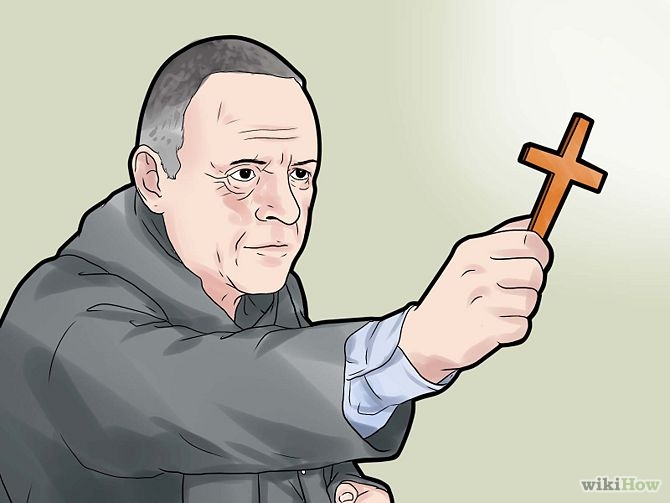
Peck, a born-again Christian, believes that many cases of narcissism are a result of a malignant entity entering the body of the patient, at the time they made the choice to become a narcissist, whether in childhood or later in life.

In some cases, where the possession by an evil entity is not complete (that is, a patient with narcissistic tendencies who is not psychopathic or malignant), a patient can be healed through the centuries old religious rite of exorcism, formerly only sanctioned by the Catholic Church, and even then, was only approved in extreme cases that were approved by the Pope. Peck believes any highly trained psychotherapist with a strong faith in God (not necessarily Christian) and with strong unconditional love for their patient can successfully perform an exorcism on a patient who is willing and properly prepared ahead of time. Peck writes about exorcism in both “People of the Lie” and goes into more detail about the two exorcisms he successfully performed in his later 2005 book, “Glimpses of the Devil.”

Criticisms of Exorcism: Besides its obvious medieval and superstitious connotations, exorcism can be physically, mentally and spiritually dangerous for both the therapist and patient. Death is a possible result. There should be others in the room during the exorcism if additional hands are needed to control the patient undergoing the rite. But because I believe NPD is as much a spiritual disorder as it is a mental one, I don’t think exorcism should be dismissed as a possible healing technique in extreme cases where other therapies have not worked.

5. Dr. James F. Masterson: Psychodynamic Treatment of Narcissistic Disorders of the Self.

closet_narcissism

I have not yet read his book “The Emerging Self” (I just received it in the mail) but from what I have seen, the therapy is psychodynamic (as opposed to merely behavioral) and requires the patient to confront and purge past hurts and undergo catharsis. Narcissism and “closet narcissism” are not the only disorders addressed in his book; he also addresses similar disorders such as BPD which can be healed using the same or similar techniques.

From Wikipedia:

Masterson’s subtypes (exhibitionist and closet)
In 1993, James F. Masterson proposed two categories for pathological narcissism, exhibitionist and closet.[40] Both fail to adequately develop an age- and phase- appropriate self because of defects in the quality of psychological nurturing provided, usually by the mother. The exhibitionist narcissist is the one described in DSM-IV and differs from the closet narcissist in several important ways.

The closet narcissist is more likely to be described as having a deflated, inadequate self-perception and greater awareness of emptiness within. The exhibitionist narcissist would be described as having an inflated, grandiose self-perception with little or no conscious awareness of the emptiness within. Such a person would assume that this condition was normal and that others were just like them. [Masterson’s definition of the closet narcissist sounds more similar to the “covert” narcissist or “inverted” narcissist Sam Vaknin discusses on his website].

The closet narcissist seeks constant approval from others and appears similar to the borderline in the need to please others. The exhibitionist narcissist seeks perfect admiration all the time from others.

Criticism of Masterson’s techniques of treating NPD: I cannot offer any criticisms as I have not read his book yet.

6. Rebirthing.
rebirthing_session
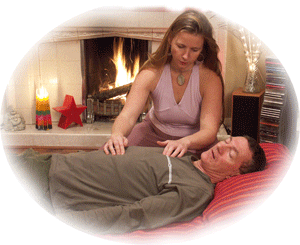
Rebirthing session.

Rebirthing is a controversial New Age healing technique that involves deep and circular breathing. It has been proposed as an alternative healing therapy for people suffering from NPD and many other mental disorders, as well as for healthy individuals who just want to get more in touch with their spiritual nature. It’s supposed to improved the mental, emotional and spiritual well-being of anyone who decides to undergo this process. During the rebirthing process, the patient will begin to remember painful emotional incidents long forgotten and crying is common, but is usually followed up by laughter and a feeling of spiritual lightness.

Criticisms of Rebirthing: The type of deep breathing rebirthing requires can lead to hyperventilation and a feeling of being high (from intaking too much oxygen) or having left the physical body. In some cases it can freak out the patient or even cause a psychotic break, much like hallucinogenic drugs can. Because it’s an experimental, alternative therapy given by practitioners not schooled in traditional psychotherapy, there is no proof of its efficacy or empirical studies showing it actually works.

Skepticism among mental health professionals.
pIt must be said, that most professionals are highly skeptical about the possibility of healing (rather than just treating) NPD and feel that because they suffer less than their victims (or at least seem to), that it’s best to treat the victims for the PTSD, anxiety, depression and other disorders their narcissist has caused in them.

I won’t argue with this, but as I’ve said before, I don’t think narcissists, at least those with both the insight and willingness to change (which probably means the non-malignant, non-psychopathic types) are as hopeless as most mental health experts claim.

So I’m going to propose a healing regime here using a hypothetical man named Stephen that comprises elements of ALL of the above techniques (except rebirthing and exorcism due to their highly controversial nature), as well as CBT for helping to retrain the conscience.

There are a few prerequisites necessary for successful healing of NPD:

1. The narcissist must have insight into their disorder and know they have NPD and see how it damages their minds and souls. But insight alone isn’t enough.

2. The narcissist must have willingness to change from the inside–and that means a willingness to undergo intense emotional pain as their True Self begins to emerge and their masks break down. You can have insight without willingness, but not willingness without insight. Both must be present for change to occur.

3. The narcissist undergoing such treatment would be best treated in a highly supervised, even residential setting such as a hospital or rehab center, where their natural tendency to revert back to their old ways of behaving could be intercepted by trained professionals. This is especially necessary during the crisis period where their painful emotions may cause them to want to quit therapy or leave. They could sign a waiver prior to treatment that such attempts to escape would be intercepted or not allowed, and the patient brought back to treatment.

4. The narcissist is probably already undergoing a narcissistic crisis where they have lost all sources of narcissistic supply or a major one, such as a divorce, loss of a fortune or career, death of someone who was a source of supply, serious illness or incarceration. Having lost their sources of supply, the narcissist is already in a vulnerable state and if they are going to present themselves for help, this will be the time.

I am going to describe a hypothetical successful therapy used on a fictional man named Stephen who is afflicted with mid-spectrum (non-malignant) NPD, using a combination of the above techniques I think could be successful for some narcissists in a highly supervised and intensive setting.

STEPHEN’S STORY

'It's all about YOU, isn't it? YOUR hopes! YOUR wants! YOUR needs!'

1. The Master of the Universe has a Narcissistic Crisis
Stephen was a 45 year old successful owner of a video game company. He was married to a meek and quiet but intelligent woman named Lisa who elected to stay at home with their only child Cayden, who was two years old. They lived in a large home they built themselves, and owned two late model SUVs. Stephen could afford to take his wife and son on several vacations a year. To outsiders, they seemed like the picture perfect family.

But all was not well behind closed doors. Lisa was threatening to leave Stephen and take Cayden with her because of Stephen’s constant gaslighting, projecting, blaming her for their child’s excessive crying and misbehavior, and most recently, isolating Lisa from her former college friends and even her family. Lisa was so depressed that often she had no energy to take care of her son and Cayden was left to his own devices, at first crying and demanding attention from Lisa, but finally withdrawing into a quiet, withdrawn, almost autistic world of his own.

Lisa wanted to take Cayden to a psychiatrist, but when she proposed this to Stephen, he flew into a rage and accused her of calling him a bad father. He told her that if she was a better wife and mother, Cayden wouldn’t be having these problems. He also told her that taking Cayden to a therapist was something only a weak person would do. Cayden would just need to learn to “man up,” in Stephen’s words.

Lisa became increasingly depressed and one day she attempted suicide. Her suicide attempt landed her in the psychiatric ward, and Cayden’s care fell on Stephen’s shoulders. He resented his fatherly duties to Cayden, and grew increasingly impatient with him, and Cayden’s behavior grew worse. He resented having to leave work early or not come in to attend to one of Cayden’s many needs when his nanny would call saying there was a problem with his son.

sad-mother-child

One day Stephen was called into his boss’s office and confronted with his poor attendance and sloppy work. Cayden’s needs were not a concern to management. Stephen was told he needed to find some other arrangements or he would be let go. Stephen panicked. His high flying job and the money he made were the only things in his life he cared about. He hated to admit it, but Cayden was nothing but a burden. He had never really wanted a child at all due to all the responsibility.

Stephen’s problems continued. He had no choice but to keep leaving work when his son was sick or when the daycare center called saying he was throwing another one of his uncontrollable tantrums. Stephens’s boss summoned him once more and let him know he was being let go.

Stephen was devastated and began to feel hate toward his son for making him lose his job. He sat at home dejectedly staring at the TV or computer screen but felt so deflated he didn’t bother looking for another job. Cayden screamed and threw tantrums and Stephen, overwhelmed and filled with resentment for Cayden, began to physically abuse him.

A week later, Lisa was released from the hospital and announced she no longer loved Stephen and was taking Cayden with her to live with her parents. Stephen flew into a narcissistic rage and tied to stop Lisa from leaving, but there was no stopping her. She grabbed Cayden, tossed some of their things hastily in some bags, and took off for her mother’s. It was then she noticed the bruises on Cayden’s body and decided to press child abuse charges against Stephen.

Stephen was eventually arrested for child abuse. Now he had a police record and was probably unemployable, except perhaps in some sort of consulting role. He had lost his wife, his job, his child, and now his freedom.

2. Self-awareness and willingness.

Vector illustration of a man lock up in prison

In prison, Stephen broke down and cried almost nonstop. He made no friends because of his emotional instability. So he spent time by himself, reading books in the prison’s library about mental disorders and realized he suffered from Narcissistic Personality Disorder. At first he tried to deny this to himself, but in his heart he knew it was true. He also realized this disorder was the cause of all his problems. He didn’t feel remorse, exactly, but knew he needed to do something about it. Some of the prison staff took pity on Stephen and referred him to a psychologist who specialized in character disorders, NPD in particular. Stephen was desperate to change his ways and willingly entered an experimental but intensive therapy for people suffering from NPD and other character disorders like BPD. Although the therapist was a licensed Ph.D, he was open to incorporating alternative techniques in his regime.

3. Cold empathy.

narc_rage
Narcissistic rage.

Stephen started therapy (which he was taken to from the prison) with a litany of complaints about his failures and how no one understood him. He talked about his dickhead of a boss, his emotionally disturbed and annoying son, and his bitch of a wife who betrayed him. Stephen took no responsibility for his own contributions to his downfall. He demanded sympathy and often resorted to rages and tears during his sessions. Rather than sympathize or offer emotional support, Stephen’s therapist listened quietly to his litany of woes, only nodding here and there or asking questions when he needed to know something pertinent.

Stephen became enraged by his therapist’s supposed lack of caring and sympathy, and began to attack his therapist, calling him a charlatan, incompetent, and an idiot. He threatened to leave, but knew the prison wouldn’t allow him to quit, so his abuse escalated. Projecting his own feelings of rage and other emotions onto the therapist is a process called transference in the psychiatric community (the opposite, the therapist’s projections of their own emotions onto the patient is called countertransference and is nearly as common).

One day he became so enraged he physically attacked his therapist. An officer was called in to intervene, and together, they got Stephen to calm down. Stephen, defeated, slumped in his chair and dissolved into convulsive sobs. The guard stood nearby, and the therapist quietly waited for Stephen to finish crying.

4. Stephen’s True Self begins to Emerge.

OLYMPUS DIGITAL CAMERA

After several more intense sessions like these, Stephen reluctantly began to talk about his mother, who had abused him as a child. He tearfully discussed the time she held his hands on the hot stove to teach him a lesson, and the time she locked him in a closet for two days for refusal to eat the vegetables on his plate. After releasing him, she made him eat the half-rotted vegetables from a plate on the floor along with the family dogs. Stephen recalled being a good kid until he was about 5 or 6, and always very sensitive to his mother’s moods. He wanted to please her, but never could seem to accomplish that. No matter what he tried–bringing her flowers he picked from the garden (which he’d be punished for), or hugging her (where he’d be pushed away), she always rejected him or punished him. At first he talked about these incidents in a matter of fact, almost flippant way, but after about three more sessions, he began to choke up and tears began to run down his face.

But these tears were different than the ones he used to shed to get his way or manipulate his sources of supply. These tears felt different and came from a deeper, more honest place. He was embarrassed about the uncontrollable crying he could not seem to stop. He tried to hide these tears but his therapist told him they were healing him, melting away his False Self, and to let them come. So reluctantly at first, Stephen did. He told his therapist his “heart hurt” and then he broke into wracking sobs and buried his face in his hands. This was the breakthrough needed to move to the the Reparenting/remothering level.

In some difficult cases where he patient is having trouble bringing emotions to the surface or recalling past events, hypnotherapy could be useful in helping the patient recall painful childhood experiences.

5. Reparenting Stephen’s Lost Self.

inner_child

When Stephen broke down into convulsive sobbing of honest grief for the mother love he never received, and his intense fear of her as a child, his therapist knew he was no longer being manipulated and these were honest emotions from Stephen’s lost self. So the therapist came over and sat down next to him, and encouraged Stephen to cry on his shoulder. If the therapist is an empath, I think that’s an enormous advantage, for I feel that for this type of therapy to have the most success, the therapist must be able to share and feel the patient’s emotions–even if that means crying or grieving along with them. This may also make the patient feel less alone and more comfortable if they are not feeling their emotions alone.

Stephen, in his infantile, vulnerable state, didn’t hesitate to let his tears flow and allow himself to be held, and they stayed like this for a long time. The therapist was careful to stay quiet during this event, and limited himself to stroking Stephen’s head and back and holding him gently as a mother would hold a child. He did not offer judgment, congratulations or explanations. He simply let Stephen release all that pent-up emotion that had been hiding inside him for decades. And felt along with the child that still lived inside Stephen and longed to be able to live a normal, happy life in the world instead of forever hidden away behind Stephen’s disintegrating False Self.

Stephen felt comforted and nurtured. He told his therapist he wished his own parents had held him like that. His father never had either, because he had died in an accident when Stephen was only a baby.

Several more sessions passed like this. In each session Stephen remembered other things that had happened to him as a child. He remembered how sensitive he had been and how he felt hurt by everything. He remembered how much his mother hated it whenever he cried. He remembered being bullied by other kids in school and always running away in terror.

And then he remembered when he had to make a choice. That choice changed the trajectory of his entire life and transformed him from a highly sensitive little boy into a heartless and cold narcissist.

6. The Choice.

monsters-nietzsche

Stephen recalled a dare when he was 8 years old. A group of boys who had bullied him dared him to set a paper bag of dried dog poop on another boy’s rickety wooden front porch and set it on fire. The boys promised him that if he did this, they would no longer bully him and they would be his friend and protect him against any further bullying. Stephen knew that doing this could set the other boy’s house on fire and at first he protested, explaining what could happen. At this point he still had a conscience. But the boys threatened him and told him if he didn’t do it, their bullying would become worse and they would kill his pet rabbit. Stephen believed them, so against his will, he complied.

They set out after dark for the targeted house. The boys watched from the darkened yard as Stephen lit the paper bag on fire and hesitantly walked up the front stairs of the boy’s porch and set it next to a dead potted plant. The deed done, all the boys ran away before anyone saw them. Stephen looked back in time to see the flames ignite the plant, and quickly start to spread over the railings of the rickety old wooden porch. He felt awful and considered going to the police, but he didn’t dare. He went to bed that night and had terrible nightmares.

bullied_child

The targeted boy’s house burned down and he, his baby sister, and his mother had to be taken to the hospital to be treated for smoke inhalation. Soon after, the family moved away, never to be seen again. No charges were pressed because no one knew who the culprit was.

7. Becoming a Narcissist.

narcissism_childhood

To protect himself from his unbearable feelings of guilt and shame, Stephen shut off his painful emotions of guilt and conscience. From then on, the group of bullies accepted him as one of them, and they continued to engage in tormenting other children and even petty crimes.

Almost immediately after the incident, Stephen’s personality changed. Due to his choice to disobey his own conscience, he was becoming evil. He became a narcissist to protect himself from any further painful feelings. It was all just too unbearable.

Stephen confessed not only this, but also the way he used and manipulated others for his own gain, how he obtained his high level job dishonestly by faking qualifications on his resume, the way he emotionally abused his codependent wife who was so easily manipulated, and the abusive way he treated his own son Cayden. He cried and cried some more, and in return, his therapist held him without speaking, only projecting unconditional love and acceptance.

8. Return to Humanity.

freedom_man

Within a few more weeks, Stephen felt like a different person. He had become a model prisoner, and also found God during his incarceration. He was asked by the chaplain to speak to prisoners after the Sunday services, and Stephen used his own story to help and motivate other prisoners. He proved to be a good public speaker, and took courses in psychology and motivational speaking. He started to write a book about his experiences.

Stephen’s therapy was followed up with an intensive outpatient CBT program, to help him internalize the lessons he had learned about right versus wrong, and further help him develop his fledgling conscience.

When finally released from prison after two years, Stephen found employment as a counselor for prisoners and became a professional motivational speaker. He published his book, which became a best seller. He was asked to appear on TV shows and interviews to promote his new book and offered hope to thousands. Soon he met and married a psychology professor and today they have three children, who he loves very much. He would never dream of abusing them. He’s a very involved father and admits he’s happier than he’s ever been.

Recently he met up with his prison therapist, and the therapist noticed Stephen’s eyes and whole face looked different. He looked younger and happier, but more tellingly, in place of the cold, dead eyes of the narcissist he used to be, Stephen’s eyes sparkled with love and joy. His smile, instead of a sneer, was genuine and happy.
On narcissists who want to be cured.

narcissists_cant_change
We shouldn’t just dismiss them as hopeless until we know more.

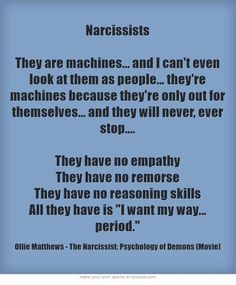
The above quote is a common sentiment among survivors of narcissistic abuse, and healthy when we are trying to go No Contact with a narcissist who has tried to ruin us, or cope with a narcissist we can’t practically disconnect from. To give a narc any benefit of the doubt during these times is what has kept us trapped in a sick and destructive relationship. Many of us are also empaths and that’s the very quality that has kept us trapped in the hellish merry-go-round of the cycle of abuse. When we’re leaving our narc (or trying to cope with one), it’s healthiest for us to give them no benefit of the doubt at all. It serves us best to think of them as inhuman machines, devils, or monsters with no ability at all to love or to feel real emotions.

But is it fair or realistic to think of them this way? I don’t think it is, because narcissists aren’t machines, demons or monsters. They are human beings with a terrible mental disorder that causes them to attack and manipulate others for their own gain. I’ve come to a point in my healing where my narcs are safely out of my life, and I can finally afford to think of them as fellow humans and even have a degree of empathy for them. It’s nice to not hate, but am I deluded?

Do narcissists really suffer?

Obviously, I read a lot of blogs and forums about NPD and narcissistic abuse. There seem to be very few websites for people suffering from NPD, which you would expect, since narcissists are more likely to cause suffering in others than suffer themselves.

NPD

It has been argued that narcissists do suffer, but they suffer alone. They don’t want you to know. They aren’t likely to seek help for their disorder unless they’ve lost a major source of narcissistic supply, and the defensive structure they have built for themselves is seen by the narcissist as the flimsy house of cards it really is. I believe this is all true, but some narcissists are so out of touch with reality and their true self that they project their misery and emptiness onto others and keep lying even to themselves.

But occasionally, even on victims’ boards and blogs (the following is from a Christian-oriented blog with a strong focus on victims of narcissistic abuse whose pastor owner is unusually compassionate toward people with NPD), I see a post like this:

Wow! Reading this is very sobering. I an not a victim of this, but the oppressor! I admit that I have been this way. I am saved but I am discovering that my while life I have really been a selfish narcissist. My question is this- is hope for an unempathetic narcissist like me? I am honestly sick and tired of my selfish ways and the way I’ve hurt others and have lacked any empathy or emotional feelings for others. I trust that Christ can help me out of this, but does anyone have some advice or testimony for a narcissist who WANTS to change? I always see alot of literature for the victims of narcissistic abuse and I give my utmost respect to the victims, but what about us perpetrators who want to give this up? Any feedback put advice will help.

The narcissist, who calls himself “Michael,” followed up his post with this:

It bothers me a lot that i lack love and empathy for others. I can’t feel life the way I want to. I think my narcissism problems are largely fear-based, over rejections that happened to me at a young age. Also, I admit I’m just addicted to pleasing my self and I don’t know how to truly love someone else. It is no fun being a narcissist, it is miserable. It really bites when it seems everyone else around you knows how to love and feel deep empathy and passion, while you’re feeling “stuck in an emotional bubble”.

Posts like these ones by Michael give me hope that somewhere inside their blighted souls, narcissists still possess a seed of goodness and with enough water and sunlight, that seed can grow into something beautiful, healthy and good.

I remember several months ago a self-proclaimed narcissist came to this blog and wrote a seemingly heartfelt post that he or she wanted to change. It floored (and moved) me enough to write an entire article about it.

Malignant optimism.
I still can’t get over my childlike excitement whenever it appears a narcissist wants to get well. I’m just like a 4 year old with an ice cream cone. Sam Vaknin calls this malignant optimism. Is he being overly pessimistic about the possibility of a cure, or is he right?

I don’t know the answer to that.

malignant_optimism
Malignant optimism.

As a Christian (and a codependent), I tend to want to give people the benefit of the doubt. After all, we’re all God’s children. He made us in His own image. I always try to look for the good even when all I can see is the bad. I do believe in evil, however, and that there are truly evil people in this world. I like to think they’re not that common though. So when a narcissist says they want to change, how can I sit there and pass judgment and assume they’re just lying? To do that would make a narcissist of me. Maybe there are moments of clarity or windows that occasionally open in their dirty souls to let in the light. How can I say they’re not telling the truth? Maybe they are. They are still human beings with souls, after all.

Maybe they aren’t really narcissists.

Then there’s the possibility that a narcissist who goes on a blog or forum and writes a post about wanting to be cured, isn’t actually a narcissist at all. Very few narcissists have the insight or desire to change. Maybe “narcissists” who write posts like this really suffer from some other disorder that causes them to hurt others and lack empathy, like Borderline Personality Disorder or even certain anxiety disorders like OCD (whose sufferers may also seem to lack empathy) or psychotic disorders like schizophrenia (although the pleas for help I have seen by narcissists certainly don’t sound like they’re written by schizophrenics).

“Michael” (the above quoted poster who claims to be a narcissist), wrote about how the Holy Spirit was trying to change him but he kept fighting against it. He doesn’t sound much like a narcissist at all in this followup, but there’s no way to tell for certain without an official diagnosis. Maybe he has another disorder besides narcissism. It’s an interesting post though, because he speaks about the bullying and abuse he endured that may have caused him to develop NPD. If he does have NPD, he seems to have both insight and the desire, and that’s a good omen.

Wow thank you for that insight. I will also add i have a great deal of apathy in my life. It’s like i don’t care about others, God, life, or even my own well-being at times. But having Christ in my heart, it’s like the Holy Spirit wants it but my flesh does not.

I never handled shame or rejection well as a kid. At a young age, I was bullied in school until the end of my middle school years. I wanted acceptance from my peers- from women I wanted attention, from men I wanted respect. I didn’t receive either, so I put on a facade of myself to fit in so I would be “accepted”. My whole life I’ve been emotionally numb, and I hate it how it’s like I don’t even cry when i should, like when a loved one passes away, or when someone shows a deep display of love, just as Jesus did. Even in my Christian life, I feel like the Gospel hasn’t really penetrated me on that deep heart level yet because I cannot really love or feel love. I guess only God is the answer to this, because i sure can’t do this in my own strength.

abused

The cost-benefit analysis of healing.

If it’s possible for a narcissist to be cured of their disorder (not merely treated), it’s not going to be an easy or a short process for them or their therapists. (I’ll explore this more in a later post, but I’ve already written about it in other posts about NPD healing regimes such as Attitudinal Healing and Reparenting). It’s a topic that’s fascinating to me, and I also have a vested interest in it because it gives me hope for the narcissists in my own life that I have cared about and even loved. This could include my beloved daughter, who may have a mild form of NPD (but is more likely Borderline–the jury’s still out on that).

smashingmirror

Obviously, some narcissists would be more curable (or at least more treatable) than others. They must have both the insight into their disorder and the desire to change. They must be willing to undergo enormous psychic pain and terror as they confront their true self and shed their false self. Desire without insight isn’t possible, but insight without desire is. If narcissism has been beneficial to its sufferer, they may not want to be rid of their disorder, even though they still may be in immense psychic pain. Whether they are willing to be cured requires a cost-benefit analysis of whether undergoing intense and painful emotional catharsis is worth giving up whatever benefits narcissism has afforded them. For the vast majority, it probably isn’t. Even if they willingly enter therapy, once the painful process of healing is underway, they are likely to run away in terror and put their masks back on.

I have to be realistic too, and not dismiss the tragic possibility that a narcissist can want to change, but have no hope at all of it actually happening. All I can do is pray that God will step in and help them find their way to the light. I pray for them every day, as well as the more numerous people they have victimized.

Sociopath vs. psychopath: is there a difference?

psychopathy

I’ve been using the terms psychopath and sociopath interchangeably on this blog, even though I’m aware there are differences between the two. I was curious enough to Google what the difference is, and came across an article in Psychology Today that explains how they are alike–and how they differ.

How to Tell a Sociopath from a Psychopath
By Dr. Scott Bonn

Many forensic psychologists, psychiatrists and criminologists use the terms sociopathy and psychopathy interchangeably. Leading experts disagree on whether there are meaningful differences between the two conditions. I contend that there are clear and significant distinctions between them.

The fifth edition of the Diagnostic and Statistical Manual of Mental Disorders (DSM-5), released by the American Psychiatric Association in 2013, lists both sociopathy and psychopathy under the heading of Antisocial Personality Disorders (ASPD). These disorders share many common behavioral traits which lead to the confusion between them. Key traits that sociopaths and psychopaths share include:

A disregard for laws and social mores
A disregard for the rights of others
A failure to feel remorse or guilt
A tendency to display violent behavior
In addition to their commonalities, sociopaths and psychopaths also have their own unique behavioral characteristics, as well.

Sociopaths tend to be nervous and easily agitated. They are volatile and prone to emotional outbursts, including fits of rage. They are likely to be uneducated and live on the fringes of society, unable to hold down a steady job or stay in one place for very long. It is difficult but not impossible for sociopaths to form attachments with others. Many sociopaths are able to form an attachment to a particular individual or group, although they have no regard for society in general or its rules. In the eyes of others, sociopaths will appear to be very disturbed. Any crimes committed by a sociopath, including murder, will tend to be haphazard, disorganized and spontaneous rather than planned.

Psychopaths, on the other hand, are unable to form emotional attachments or feel real empathy with others, although they often have disarming or even charming personalities. Psychopaths are very manipulative and can easily gain people’s trust. They learn to mimic emotions, despite their inability to actually feel them, and will appear normal to unsuspecting people. Psychopaths are often well educated and hold steady jobs. Some are so good at manipulation and mimicry that they have families and other long-term relationships without those around them ever suspecting their true nature.

When committing crimes, psychopaths carefully plan out every detail in advance and often have contingency plans in place. Unlike their sociopathic counterparts, psychopathic criminals are cool, calm, and meticulous. Their crimes, whether violent or non-violent, will be highly organized and generally offer few clues for authorities to pursue. Intelligent psychopaths make excellent white-collar criminals and “con artists” due to their calm and charismatic natures.

The cause of psychopathy is different than the cause of sociopathy (1). It is believed that psychopathy is the result of “nature” (genetics) while sociopathy is the result of “nurture” (environment). Psychopathy is related to a physiological defect that results in the underdevelopment of the part of the brain responsible for impulse control and emotions. Sociopathy, on the other hand, is more likely the product of childhood trauma and physical/emotional abuse. Because sociopathy appears to be learned rather than innate, sociopaths are capable of empathy in certain limited circumstances but not in others, and with a few individuals but not others.

Psychopathy is the most dangerous of all antisocial personality disorders because of the way psychopaths dissociate emotionally from their actions, regardless of how terible they may be. Many prolific and notorious serial killers, including the late Ted Bundy and John Wayne Gacy, and Dennis Rader (“Bind, Torture, Kill” or BTK) are unremorseful psychopaths. Psychopathic killers view their innocent victims as inhuman objects to be tormented and violated for their amusement.

Contrary to popular mythology, most serial killers are not mentally ill or “evil” geniuses. See my related article: http://www.psychologytoday.com/blog/wicked-deeds/201406/serial-killer-myth-1-theyre-mentally-ill-or-evil-geniuses

tedbundy ed_gein
Although both were deadly serial killers, Ted Bundy was a psychopath who gave a good impression and knew how not to get caught; Ed Gein was most likely a sociopath who acted more impulsively, was more disorganized and didn’t give a very good first impression. Though both men’s crimes were equally heinous, Bundy’s eyes seem “colder” than Gein’s.

Although the traits of a psychopath more closely resemble those of a person with Narcissistic Personality Disorder (NPD) than those of the more impulsive, disorganized sociopath, both are actually described here as variations of ASPD, not NPD. Once again, if ASPD is really “NPD on crack” then it follows that NPD and ASPD are both on the same spectrum, with ASPD (and psychopathy/sociopathy) at the top of the spectrum. If this is in fact the case, people with NPD, even malignant narcissists, may border on psychopathy, but would not actually qualify as true psychopaths.

Here’s a little graph I devised to illustrate where all the Cluster B disorders may fall on a spectrum. These are just my guesses and are not based on psychological research, just my instinct and gut feelings.

psychopathy_graph
Click image to enlarge.

Is antisocial personality disorder really NPD on crack?

I have to admit I’ve been confused by the distinctions between the Cluster B personality disorders, especially those of NPD and ASPD. There seems to be little distinction in most literature between NPD and ASPD (antisocial personality disorder) with most experts saying the difference is just a matter of degree, with ASPD (psychopathy or sociopathy) being higher on the spectrum than NPD.

Let’s turn to the Bible of mental disorders for some clarification. These are from the DSM IV-TR, but have apparently been updated, because these descriptions are all labeled obsolete. But for our purposes, I’ll stick with these criteria.

Diagnostic criteria for 301.81 Narcissistic Personality Disorder

Handsome narcissistic young man looking in a mirror

A pervasive pattern of grandiosity (in fantasy or behavior), need for admiration, and lack of empathy, beginning by early adulthood and present in a variety of contexts, as indicated by five (or more) of the following:

(1) has a grandiose sense of self-importance (e.g., exaggerates achievements and talents, expects to be recognized as superior without commensurate achievements)

(2) is preoccupied with fantasies of unlimited success, power, brilliance, beauty, or ideal love

(3) believes that he or she is “special” and unique and can only be understood by, or should associate with, other special or high-status people (or institutions)

(4) requires excessive admiration

(5) has a sense of entitlement, i.e., unreasonable expectations of especially favorable treatment or automatic compliance with his or her expectations

(6) is interpersonally exploitative, i.e., takes advantage of others to achieve his or her own ends

(7) lacks empathy: is unwilling to recognize or identify with the feelings and needs of others

(8) is often envious of others or believes that others are envious of him or her

(9) shows arrogant, haughty behaviors or attitudes

Diagnostic criteria for 301.7 Antisocial Personality Disorder

antisocial_personality

A. There is a pervasive pattern of disregard for and violation of the rights of others occurring since age 15 years, as indicated by three (or more) of the following:

(1) failure to conform to social norms with respect to lawful behaviors as indicated by repeatedly performing acts that are grounds for arrest
(2) deceitfulness, as indicated by repeated lying, use of aliases, or conning others for personal profit or pleasure
(3) impulsivity or failure to plan ahead
(4) irritability and aggressiveness, as indicated by repeated physical fights or assaults
(5) reckless disregard for safety of self or others
(6) consistent irresponsibility, as indicated by repeated failure to sustain consistent work behavior or honor financial obligations
(7) lack of remorse, as indicated by being indifferent to or rationalizing having hurt, mistreated, or stolen from another

B. The individual is at least age 18 years.

C. There is evidence of Conduct Disorder with onset before age 15 years.

D. The occurrence of antisocial behavior is not exclusively during the course ofSchizophrenia or a Manic Episode.

Just for comparison’s sake, let’s include the (obsolete) criteria for the other two Cluster B disorders: BPD (Borderline Personality Disorder) and HPD (Histrionic Personality Disorder):

Diagnostic criteria for 301.83 Borderline Personality Disorder

borderline

A pervasive pattern of instability of interpersonal relationships, self-image, and affects, and marked impulsivity beginning by early adulthood and present in a variety of contexts, as indicated by five (or more) of the following:

(1) frantic efforts to avoid real or imagined abandonment.
Note: Do not include suicidal or self-mutilating behavior covered in Criterion 5.

(2) a pattern of unstable and intense interpersonal relationships characterized by alternating between extremes of idealization and devaluation

(3) identity disturbance: markedly and persistently unstable self-image or sense of self

(4) impulsivity in at least two areas that are potentially self-damaging (e.g., spending, sex, Substance Abuse, reckless driving, binge eating).
Note: Do not include suicidal or self-mutilating behavior covered in Criterion 5.

(5) recurrent suicidal behavior, gestures, or threats, or self-mutilating behavior

(6) affective instability due to a marked reactivity of mood (e.g., intense episodic dysphoria, irritability, or anxiety usually lasting a few hours and only rarely more than a few days)

(7) chronic feelings of emptiness

(8) inappropriate, intense anger or difficulty controlling anger (e.g., frequent displays of temper, constant anger, recurrent physical fights)

(9) transient, stress-related paranoid ideation or severe dissociative symptoms

Diagnostic criteria for 301.50 Histrionic Personality Disorder

histrionic_personality

A pervasive pattern of excessive emotionality and attention seeking, beginning by early adulthood and present in a variety of contexts, as indicated by five (or more) of the following:

(1) is uncomfortable in situations in which he or she is not the center of attention

(2) interaction with others is often characterized by inappropriate sexually seductive or provocative behavior

(3) displays rapidly shifting and shallow expression of emotions

(4) consistently uses physical appearance to draw attention to self

(5) has a style of speech that is excessively impressionistic and lacking in detail

(6) shows self-dramatization, theatricality, and exaggerated expression of emotion

(7) is suggestible, i.e., easily influenced by others or circumstances

(8) considers relationships to be more intimate than they actually are

It does seem that ASPD is more linked to criminality than NPD, most likely due to poor impulse control, which isn’t a problem in people with NPD. People with ASPD are more willing to break the law and are more likely to be in prison. They are less likely to be concerned with image or consequences of their actions (most people with NPD want to maintain their sqeaky clean image which means staying out of prison). Antisocials also seem more prone to violent behavior.

The DSM criteria for ASPD seem to describe psychopathy/sociopathy. Most narcissists are probably not psychopaths, but are on the same spectrum. Does this mean that ASPD and NPD should really be considered the same disorder, with ASPD higher on the psychopathy spectrum?

BPD is more clearly distinguishable from ASPD and NPD because a person suffering from this disorder does have a conscience and can feel empathy and remorse, but like someone with ASPD they have problems with impulse control. Also, their motives for doing what they do are different: they fear abandonment, while people with ASPD and NPD fear their true self being exposed.

HPD seems very similar to the somatic form of narcissism and includes many narcissistic traits. However, it seems that someone with HPD would be more prone to drama, neediness and tantrum throwing (although these traits aren’t unknown in narcissists). Like BPD, the motives for the sufferer’s behavior seem based on insecurity and fear of abandonment rather than the need to maintain a false front.

NPD and ASPD are more common in males than females, and HPD and BPD are more common in females than males. Does gender determine what disorder a child is more likely to develop later in life? Are BPD and HPD really the “female” forms of the other two disorders?

ASPD almost seems like an exaggeration of typically male traits–aggressiveness, lack of emotion (except rage), and risk taking; whilst HPD seems like an exaggeration of typically female traits — excessive emotionality, preoccupation with beauty/sexiness, and excessive neediness. BPD and NPD are somewhere in between these two and can include elements of both: ASPD –> NPD –> BPD –> HPD

The fact that the American Psychiatric Association keeps changing their criteria just makes things even more confusing.

Grandiose and “vulnerable” narcissists: how do they differ?

beggar_king
Both the beggar and the king could be narcissists with a different M.O.

An interesting article in Psychology Today explains the difference between grandiose (invulnerable) narcissists, and “vulnerable” narcissists. Either can be somatic or cerebral, and either can also be malignant or non-malignant.

The two kinds of narcissists can seem very different on the surface:

Grandiose narcissists can seem emotionally cold, convinced of their achievements or success, and rarely if ever talk about their fears or their problems. They can be very quick to judge others though. On the surface they seem strong and tough. You won’t see them show emotions other than rage or pride, and if they are ever sad or fearful, you will never see that side of them. Like all narcissists, they are never happy,but they can “act” happy if they need to. And like all narcissists, they are incapable of love but may be able to put on a show of “falling in love” to obtain a new source of narcissistic supply.

Grandiose narcissists are the CEOs, politicians, narcissistic celebrities and others who have achieved a high level of success. Those who haven’t achieved success will stop at nothing to rise to the top, even if it means destroying their competition in the process. They are ruthless predators. Our current society glorifies the traits of the grandiose narcissist and doesn’t seem to bemoan what they don’t have: the ability to show emotion and feel love or empathy. Grandiose narcissists don’t care what others think of them.

Vulnerable narcissists, rather than brag about their achievements and never showing their feelings, are given to bouts of self pity, and use emotions (like crying, whining, demanding, or sulking) to manipulate others into giving them what they want. They are less likely to be materially successful, and may be dependent on others for their survival. In fact, they may seem to take a kind of perverse pride in their failures and hard luck. Vulnerable narcissists are the emotional and financial vampires who will suck your funds dry and constantly demand attention and comfort for their many problems. They are high-maintenance “drama queens.” They seem to have no self esteem. They will wear down their sources of supply with their constant demands and mind games. Both types of narcissists will shamelessly manipulate others to have their way.

…narcissists feel emotions like vulnerability, sadness, empathy and compassion in a shallow way, if at all, and cover them up with rage, blame, manipulation and disdain for others. This coping mechanism has a heavy price: they don’t feel secure enough to relax and really feel happiness and joy, although they may have fleeting moments of those emotions.

Vulnerable narcissists tend to swing back and forth between acting superior and feeling hurt; may become self-destructive when their vulnerabilities are pointed out; they may accuse their spouse or significant other of having affairs and being unfaithful, and may resort to spying on their partner or constantly asking for reassurance. They also have a pattern of looking for the “perfect mate” and then demand constant reassurance they are loved and valued.

Grandiose narcissists have much in common with people with Antisocial Personality Disorder; while vulnerable narcissists have more in common with people who have Borderline Personality Disorder. Both of these disorders, along with NPD and Histrionic Personality Disorder, comprise the Cluster B (dramatic) personality disorders in the Diagnostic and Statistical Manual of Mental Disorders (DSM). It can be very difficult to distinguish those who have NPD from those suffering from one of the other two disorders.

Grandiose narcissists were more likely to have been spoiled as children and treated like a little king or queen by their families; vulnerable narcissists are much more likely to have been abused or neglected as children.

But both types are still narcissists, so they still have many things in common under the surface, especially their sense of entitlement, lack of empathy and inability to feel joy.

According to the Psychology Today article, the main difference between vulnerable narcissists and and invulnerable narcissists is in the way they feel:

With their fragile self-esteem, vulnerable narcissists experience helplessness, anxiety, and depression when people don’t treat them as they desire.

They feel shamed and humiliated by negative feedback or when others challenge their superior self-image. They also experience anxiousness, bitterness, dissatisfaction, and disempowerment.

They suffer from many BPD-like emotions, like feelings of emptiness and inadequacy. Others find them sensitive and emotional; preoccupied with fears of rejection and abandonment. They are touchy, quick to be offended, and easily provoked.

A vulnerable narcissist may seem “nice” at first, but their constant demands will wear you out and they will never ask you how your day was or how you feel. They don’t care. Vulnerable narcissists may seem sensitive but they are only sensitive about themselves and how others feel about them; they are oblivious (or just don’t care) if you are suffering or have been hurt or need to talk. They are unable to give love in return for the love they demand. They cannot feel joy or ever appreciate anything. They are vampires who will keep taking until you have nothing left to give–or leave.

Earlier I said both types of narcissists can be somatic or cerebral. My guess is that women, who are more likely to be somatic narcissists, are also more likely to be the “vulnerable” type of narcissist. Acting needy and helpless are traits that are still found more socially acceptable in females than in males. That being said, I’ve known several males of the vulnerable type and some of them are cerebrals. My ex-husband is a great example of a “vulnerable” cerebral narcissist.

I also think it’s possible to be both types at once, swinging back and forth between acting invulnerable/grandiose and vulnerable/helpless. Their dramatic mood swings would probably make this hybrid type of narcissist easily misdiagnosed as suffering from the manic-depressive form of Bipolar Disorder.

A narcissist can also be vulnerable in one area of their life and grandiose in another. The high achieving company president who never seems ruffled and terrifies his underlings may go home to his wife and demand attention and sympathy from her, and sulk or whine if he doesn’t get it. The snobbish, perfectly groomed and physically fit trophy wife may fall apart and act helpless and needy if forced to look for a job.

Test driving narcissism (how I almost became a narcissist)

In answering a comment on yesterday’s post, I suddenly remembered something I had forgotten.
I remembered how I almost became a narcissist. I think I was finally ready to remember. It’s part of my journey to wellness.

I immediately began digging through boxes of old photos, because I was burning inside to write this post, to confess everything, and photos say a lot.

Narcissism runs in families, and although exacerbated by abuse or neglect, it can develop later in a susceptible person, and it happens because of a conscious choice the person makes. They may not actually be saying, “Okay, I’m going to be a narcissist now,” but they have been teetering on the brink of darkness and the would-be narcissist decides it’s easier to plunge right into narcissism than to keep being hurt as their true self.

family_dinner
3 generations of women: my maternal grandmother Anna Marie, my mother in the center, and me at age 5. (ca 1964) Our family dinners were always this stiff and formal.

Narcissists start life as Highly Sensitive People.
For a number of reasons, I’ve come to believe most narcissists started out as HSPs (highly sensitive people). I will not go into my reasoning here, but I strongly believe these are people who once felt things too much, and if they were abused, it would have been too much to bear. To survive, they constructed a false self in an effort to protect the too-sensitive self (true self) from further hurt. The problem is, for narcissists, the false front works way too well, so well that once it solidifies, it’s there forever.

Tormenting my therapist.
I remembered the therapist I had during my early 20’s. I was terribly infatuated with him, obsessed beyond all logic. This is called transference in psychotherapy and my therapist kept trying to get me to “work through it” but my crush kept intensifying. It was killing me. One day I told him I couldn’t take it anymore and walked out the door in mid session. I never saw him again.

I realize now how narcissistic I acted during my sessions with him. I was attractive and knew it so I flirted openly, tried to get him to hug me (he actually did this until he realized it was a manipulative game on my part and there was a definite sexual aspect).

One day I stormed into his office having a hissy fit because I’d found a magazine in the waiting room with his and a woman’s name on the label. I stomped in, started waving the magazine in the air demanding he tell me why he never told me he had a girlfriend. His answer was quite reasonable (and it was of course none of my business), but I sulked the whole rest of the session and refused to say anything. I’d show him!

After I quit therapy, I hoped I had hurt him. I think I was angry at him for “making” me like him too much and leaving him was my method of punishing him. Of course, my leaving therapy didn’t hurt him. I was just his annoying, demanding, manipulative little bitch of a patient and he probably couldn’t stand me. I wanted to think I was hurting him, but I was really only hurting myself.

It shames me to remember all this, but I really manipulated that therapist, and annoyed him all the time ON PURPOSE. I was sadistic…I was crushing so hard, maybe my strong feelings for him were causing me to want to hurt and anger him. I remember getting a thrill if I could see a look of hurt on his face. It made me feel more powerful–that I could do the hurting instead of always being the one to get hurt.

lauren_bennett2
1977: Still a nice, sensitive, codependent girl at age 18…things were about to get ugly.

I was becoming partly dissociated from the me that is now and the me that was before. But it was all a defense against being hurt, and I knew it. I just couldn’t admit it.

I never saw my therapist’s diagnosis of me (I was there for anxiety and panic attacks) but it makes me wonder if “NPD” might have been one of the diagnoses. I’m pretty sure it was still called NPD in the early 1980s.

lauren_bennett1
I think I can see the beginning of the “narcissist stare” in this photo of me from 1984. I look colder and harder than in the 1977 photo. I see this same look sometimes on my daughter, who is close to the same age I was here. I think this look can also be seen in some Borderlines.

The Danger Zone.
Sometime in my late teens and early 20s I began to act “like I didn’t care.” It was feigned but at the time my high sensitivity was shameful to me. I didn’t want it. It was my albatross, my curse. I was tired of being teased about it. So I made a choice to just act like a different person. Act like a person who didn’t give a shit about anything. I began to drink heavily and smoked a lot of weed to numb the pain of being me. I began to be over-critical of others and gossipy, something I had never been, and spread lies about people I didn’t like to anyone who would listen.

My envy of others (something I still struggle with) was off the charts. I couldn’t stand people who had more than me, were prettier or thinner than me, were smarter than me, or had a better relationship or job than me. I would spread lies and rumors about these more fortunate people. Mostly, it backfired, for my Aspieness made it almost impossible for me to maintain my masks or hold up a lie. A good narcissist has to be good at reading social cues. I wasn’t, but I sure did try.

I found it hard to feel happy for anyone. If a friend got a promotion or fell in love, I felt bitter and jealous instead of glad for them. I’d rant that they didn’t deserve it. And I actually believed this, to a point.

I imagined myself not “needing” anyone. I dated a few guys and unceremoniously dumped them, and yet I was so lonely. I longed to be in a happy relationship, but couldn’t allow myself to be vulnerable enough. I treated men like objects.

I didn’t listen to people. I interrupted them, only thinking of what I would say next. I only wanted to talk about me. Other people were becoming objects too.

I lied to people about my accomplishments (which in actuality were few), my background, my social status. But no one really believed me. I wasn’t good at this game. In fact, I sucked at it.

I think I came very close to becoming an N. Over time, this hard outer shell I’d constructed out of the ashes of my own pain ossified and grew more stable. I was forgetting what it felt like to be vulnerable and human.

There was something else too. During the time I was test driving narcissism, I suffered from severe panic attacks (which is what led me into the therapy described above). I felt like I was out of my body a lot, and that made me panic. Some of these attacks were so bad people thought I was having epileptic seizures, because when I was “out of my body,” I had trouble controlling my movements and would stumble around as if drunk, or my eyes would sort of glaze over as if I wasn’t quite “there.” To rule out epilepsy, I had an EEG done. It came out normal. The only thing I can think of is that somehow the dissociated state I was in was causing me to feel detached from my own body, because I wasn’t “myself.”

Coming back from N hell
One day when I was about 26 (and the same year I got married to my MN ex), a friend of mine from high school told me she didn’t think she could be friends with me anymore, because I was too mean and she didn’t trust me. Other people were calling me out for spreading rumors and lying and my whole flimsy construct came tumbling down. I couldn’t escape from the web of lies I’d created, and now that web threatened to engulf me. It was terrifying but was the wake up call I needed.

I finally realized I was hurting people. Even then, I hated knowing I’d hurt someone else more than I hated being hurt by others. I was overcome with guilt and shame, and realized I couldn’t keep up the mean-girl front anymore. I didn’t become a narcissist, but I came close, so close.

This wake up call catapulted me back into my normal self and the horrific panic attacks soon subsided. (I still have panic attacks from time to time, but they are specific to certain situations and nowhere near as numerous as they were from 1979 – 1984 or so.)

Choosing codependency.
I’d been balancing at the precipice, and ultimately chose codependency (sometimes now referred to as “inverted narcissism”). Looking back, that was actually a very wise choice for if I hadn’t, if my guilt had not been strong enough to stop me in my tracks, I would have been a much different person today, and would not be doing what I’m doing right now. Sharing my journey with other survivors of narcissistic abuse. It’s a contagious thing, and any of us from narcissistic families could have gone in that direction. But we didn’t. That’s why we, not the narcs, are the lucky ones.

I think my Aspergers actually saved me. Aspies cannot read social cues and therefore can’t lie well and are bad at maintaining a workable mask. To be a narcissist would require me to use skills I did not possess. So I chose codependency because I had not been trained by my MN family to think for myself or trust my own judgment. I was trained to be Narcissistic Supply. That was a role I was much more successful at and comfortable with than my Narcissist Test Drive period.

But I think there was an advantage to my visit to the dark side too, and maybe a reason. I feel like like I understand narcissists’ motives and thinking patterns and self-hatred more than the usual non-narc ACON. Because I almost became one myself and felt a little bit of what they feel. All the money in the world wouldn’t be enough to get me to turn into darkness again. It was like a trip to hell. But I do know, they are in excruciating pain. All the time.

lauren_bennett3
Refinishing a table as young wife (around 1989-1990). I didn’t know how malignant my husband was yet but he was showing signs.

Never feel guilty for feeling guilty.
If I had been able to ignore or deny my guilt or the pain of others that I’d caused myself, I think I would have crossed the line into becoming a fullblown narcissist (though maybe not a malignant one).

Most narcissists make a choice at some point, usually early in life because of abuse but sometimes later, like I almost did. But I think there is also an escape hatch: a window of time where a budding narcissist can still “get out” and redeem themselves before the door between the Ns and everyone else slams shut.

Unfortunately I still have a few narcissistic traits and think I still sometimes act a bit like one. *red face* But my ability to feel shame and guilt is very well developed, in fact too well developed (and always has been), so that overrides my N traits. Perhaps that makes me a Borderline (I was actually diagnosed with BPD comorbid with other disorders in 1996). But if I am a Borderline, I try to control those behaviors. I try to be aware of them. I think I’m doing pretty well.

Growing into me.
Now I’m changing, moving farther away from the N and B traits of my early-mid adulthood than I have ever been. I don’t envy people much anymore and am beginning to understand what it feels like to feel joy or sadness for someone else. To feel humbled by the simple but beautiful things that surround us. I’ve embraced my sensitivity and am finding rather than being a curse that brings torment and hurt, it’s a beautiful thing that allows the growth of empathy and true understanding. Instead of shame over it, now I’m proud.

The ironic thing about this is that, it’s because I like myself MORE now, that my N traits are disappearing. I used to think I was worse than a piece of dog poop stuck on the bottom of a shoe and had to go around proving I was more, much more than that. It’s not like that anymore, and I’m ever so grateful I saved myself at the 11th hour.

Respect my boundaries!

momanddaughter

My daughter is either a somatic histrionic narcissist (same as my mother) or has borderline personality disorder (BPD) in addition to diagnosed PTSD and bipolar disorder. She would be somatic if she’s got NPD because she’s obsessed with clothes and shopping and she takes more selfies than every Hollywood starlet put together in one room. She’s very attractive and she knows it and has been able to use her looks to get what she wants, at least from males.

But due to her intense mood swings and the fact she does show some empathy and remorse, then she’s also likely to be be a borderline, a related Cluster B disorder which is more common in women than in men (narcissism is more common in men) but has much in common with NPD. Whatever she is, she’s a high maintenance drama queen. I’ve joked with her that she’d be perfect for a reality show like “Bad Girls Club,” but to be honest, I could definitely see someone like her on a show like that!

Of course I love my daughter dearly and enjoy her company too (she can be a lot of fun and easy to talk to, which is why she makes friends easily) but her disorders definitely make her difficult to deal with, especially now that she’s moved back in with me.

She has been home for almost two weeks. Things have been going swimmingly (okay, maybe that’s a slight exaggeration) and there have been no real problems. I read her the riot act on her return and she agreed to some new rules. She does not appear to be doing drugs and is taking steps to get her life in order, including seeing a therapist this week. I told her if I saw pain pills or any other evidence of hard drugs, there was the door.

But tonight she invaded my boundaries. She had gone to the mall with some friends, and came home in an upbeat mood, which was fine, but my daughter also gets a little obsessive and impatient when she’s excited and happy, and has a bad habit of not respecting my boundaries. I also think she’d had a drink or two.

Because there are only two bedrooms (my roommate has the other one) and I took over Molly’s bedroom when she had moved in with Paul (and I won’t give it up!) she has been having to sleep on the couch in the living room. She’s turned it into a large bedroom and it actually looks nice, if a bit cluttered. I almost never have company anyway, so it’s not like I really need a living room.

But tonight when she got home at about 10:30 she wanted to pull some more of her things from my room (things she never uses and didn’t need tonight). I told her it was late, I have to be up early for work (and to drive her to the DMV) and I needed some alone-time before going to bed. I needed time online too. As an Aspie, she knows if I don’t get my “alone time” I get very cranky and snappish. I do not like my Aspie routine to be interrupted. She knows this well.

But she kept rummaging around in all the drawers and pulled boxes out of the closet, tossed shoes and bags and papers and stray clothes all over the floor, messed up my things in the process, and was making a racket doing so. I must have told her three times or more to please do this tomorrow, but she wouldn’t listen and kept saying “one more minute!” But it wasn’t one more minute, it wasn’t three more minutes or five or twenty: this shit went on for almost an hour. I was ready to scream and pull my hair out.

When she finally finished tearing my room apart looking for her things, she took them into the living room. Then she decided she needed to find a place to plug in her humidifier (she suffers from dry sinuses and mild asthma). She proceeded to start unplugging things from the wall, including the damned router. It took me another twenty minutes to get connected to the Internet again. I actually burst into tears of frustration (the kind of tears I shed more than any other kind–it’s almost impossible for me to cry when I’m sad).

It wasn’t that this was something that couldn’t be fixed easily, but I’d had more than enough. I was so stressed and completely frustrated with my daughter and the chaos she was creating and the boundaries she was violating due to her inability to wait for anything. She wants what she wants when she wants it.

In a near rage, tears streaming, I’m afraid I snapped and told her I wished she never moved back in because she had no respect for my boundaries or anything else. She started to cry, and I told her I was sorry and apologized. She asked me if I really meant what I said and I told her no truthfully. I explained again why I need my quiet time at night and why it was a bad time for her to decide to redecorate. She said she understood…but does she?

Time will tell.

Sam Vaknin: Narcissist or narcissist wannabe?

samvaknin

Who in their right mind would want to be a narcissist?

Sam Vaknin evidently does. Vaknin, a self-identified narcissist, is a bit different from the average narcissist. He seems to fit the profile in many ways, but he is surprisingly introspective and in 1997, wrote a self-help book called “Malignant Self-Love: Narcissism Revisited. It can be purchased through Amazon or through his own site, but you can also read free excerpts from the PDF version which is also available through his website.

I have read the PDF full version and while it’s extremely long, verbose, and often repetitive (the published version may have better editing but I am not sure), Vaknin tells you everything you want to know about narcissism (and a few things you may not have known) and offers advice to “normals” on how to deal with narcissistic people like himself. He does not glorify narcissists and in fact is quite critical of them. While it appears he wants to help people handle or even cut themselves off from narcissists, one can’t help but wonder if he wrote the book as a way to promote himself and if he might not actually take pride in having the disorder. After all, narcissism has become Vaknin’s claim to fame and he purports himself as an expert on the disorder (which I can’t argue with, despite his lack of professional credentials). It was Vaknin who coined the term “narcissistic supply,” which is now used by bonafide professionals in the field who specialize in NPD.

Most books about narcissistic personality disorder or malignant narcissism are written by doctors, psychologists, or other professionals who deal with them in their practice, so reading such a book by a self-proclaimed narcissist is an odd experience but gives the reader an entirely different perspective about what really makes narcissists tick–and in a way, perhaps a more accurate one.

vakninandbook
Vaknin with a copy of his book.

Vaknin also differs from the garden variety narcissist because of his brutal honesty. Pathological lying is one of the narcissist’s calling cards, but in 2009 Australian filmmaker Ian Walker made a fascinating and somewhat disturbing but at times extremely funny documentary about Vaknin called I, Psychopath. (I highly recommend watching this film, the extended version of which can be viewed on Youtube (I have linked the first section). In the film Vaknin lies about nothing, and in fact he’s as brutally and cruelly honest as Simon Cowell used to be when judging American Idol contestants (I definitely suspect Mr. Cowell is himself a narcissist, but I digress). That being said, there has been some controversy about Mr. Vaknin’s educational credentials. During one of his interviews with a psychologist, she questions him about his degree–he had written on the questionnaire that he has a Ph.D, but it turned out that doctorate is actually from a diploma mill and its validity is questionable at best. So dishonesty is not unknown to Sam Vaknin (as it isn’t unknown to the rest of us).

In the film, we are treated to interesting and slightly creepy, oddly lit stills of Vaknin superimposed over things like clanking machinery (hinting at how the narcissist is more machine than human), strange landscapes, and time-lapsed highways at night.

Vaknin was born in 1961 to a Turkish mother and an Israeli father. We find out that Vaknin has an extremely high IQ and he is in fact a genius. In his native Israel, he became extremely wealthy at a shockingly early age through clever (and probably dishonest) financial wheelings and dealings, and was a successful dot-com entrepreneur until he was busted for securities fraud in 1999, and lost all his money. He also postulated a scientific theory on chronons and time asymmetry.

At the tender age of 21, Vaknin was living the high life, flying around the world in a private jet, eating in the most expensive restaurants, visiting exotic locales all over the world, and raking in enormous amounts of money. The film describes how the most successful entrepreneurs and corporate bigwigs tend to possess three important traits that make them so successful: good looks, high intelligence, and most importantly, a high level of psychopathy (determined by giving the tycoons Dr. Robert Hare’s Psychopathy Checklist, which is most commonly used to make sentencing decisions for criminals.). Sam Vaknin possesses all three of these traits.

One of the psychologists who tests Vaknin during the film finds that while he does score high in traits that signify NPD, he scores even higher in traits that indicate Schizotypal Personality Disorder, Paranoid Personality Disorder, and bizarrely, scores highest of all in AvPD (Avoidant Personality disorder–a common disorder in narcissists’ victims). This psychologist does not think Mr. Vaknin is actually a psychopath, but that he may be narcissistic. Vaknin, for his part, seems petulant, insulted and almost angry that he is not more of the big, bad psychopath that he believed he was.

Later, his wife, Lidija, is also tested to find out if she is a typical “victim” (highly empathic, sensitive, putting other’s needs ahead of her own) and it is found that she is. And yet, although Sam and Lidija argue frequently, their relationship (at least on film) seems to work for them and Vaknin doesn’t seem excessively abusive, although he insists he has no capacity to feel love the way his wife does. It’s possible he may be more abusive toward Lidija off screen, but this is another thing we are left wondering. One issue that is raised is she wants a baby, but is unsure if her husband would make a good father, due to his narcissism.

vakninandwife
Vaknin with his wife, Lidija.

Vaknin gives his filmmaker, Ian Walker, a difficult time, and while we don’t see an excess of bullying on screen, in Walker’s commentary, he frequently discusses the way Vaknin abuses and calls him terrible names when the camera is off. So to try to capture Vaknin’s alleged abusive behavior on screen, he has Vaknin take over the filming and film Walker. Indeed now we hear Vaknin hurling insults and abuse at him. Walker, for his part, seems hurt, but could this just be the two of them acting out a part for the sake of giving the film more credibility of making it more interesting? There’s no way to tell, but the experiment is entertaining enough.

During the film, well known professionals who specialize in psychopathy and narcissism are interviewed and give their opinions about these character disorders, and their opinions about Vaknin himself. Vaknin, for his part, seems irascible and easily angered (and sometimes acts like a petulant child), but he also is oddly likeable (which could just be his narcissistic charm doing its work) and occasionally is extremely funny. Vaknin’s high intelligence is obvious and he speaks English extremely well too, although it’s not his native tongue.

Vaknin gifts each of the doctors and psychologists who interview him a complimentary copy of his “Malignant Self-Love,” which could be a gesture of courtesy or it could be narcissistic.

vakninsam

Vaknin is an enigma. During the documentary I sometimes wondered whether he is actually a narcissist at all. He certainly doesn’t seem psychopathic (although I’m not going to say it’s impossible), but if he’s a narcissist, I don’t think he’s a particularly malignant one. My own opinion of Sam Vaknin is that he has Borderline Personality Disorder (BPD), which shares a number of traits with NPD because they are both Cluster B character disorders but differ in important ways. I think Vaknin has strong narcissistic, paranoid, and schizoid traits, but he is no psychopath. Clearly, Vaknin isn’t the easiest person to spend a lot of time with, but that doesn’t make him evil or a psychopath. However, he does say he was diagnosed with NPD twice–in 1986 and 1995.

I do wonder if he wants to be a narcissist more than he actually is one, and if so, why? Whatever the case, Mr. Vaknin has written an excellent and highly readable (if a bit verbose) book about malignant narcissism. I don’t personally care if he doesn’t have the right “credentials,” either as a professional or as a person with the actual disorder, because his book has helped so many people deal with the narcissists in their own lives better.

Update 11/20/14
I added a new post honoring Mr. Vaknin’s requests in the comments section, and also made the requested changes in this article. After viewing the links he posted, I’m much more convinced he’s really the narcissist he says he is.
https://otterlover58.wordpress.com/2014/11/20/sam-vaknin-read-my-post-and-has-a-few-corrections/

The spectrums of autism and narcissism

einsteintedbundy
Einstein is known to have been autistic, and Ted Bundy was a malignant narcissist of the worst kind.

Most people today are aware that autism runs on a spectrum, but many people do not know that narcissism (psychopathy) also can be found on a spectrum, running from mild to the most severe just like autism.

In autism, the spectrum looks like this:

Severe autism: The patient seems profoundly retarded–may not even be able to dress themselves, eat, or go to the bathroom without assistance–but may have a special ability, such as having a photographic memory of dates, or baseball scores, or a talent for art or music. Here you will find the “idiot savant” phenomenon, which I think is really just that the autistic person has focused ALL their intelligence into one or two narrow interests. As is true of all people with autism, they do not “connect” with caregivers the way neurotypicals do, and avoid physical touch or interpersonal contact, even from infancy.

Moderate autism: The patient can function and may be attracted to repetitive tasks and routines, and becomes easily upset if their routine is disrupted. They may engage in repetitive actions such as headbanging or echolalia, but is able to learn if given special instruction to suit their unique learning needs and can possibly be mainstreamed into regular education later. They may focus all their energy and intelligence on the things that interest them to the expense of anything else, but they can be very knowledgeable about the things they like. Keep in mind, people with moderate or severe autism are NOT retarded, but for whatever reason have shut themselves off from the world and from social interaction.

Mild (high functioning) autism; sometimes known as Aspergers Syndrome: Aspies function more or less normally in most things, and don’t usually need to be placed in special education programs, but they are likely to be very awkward socially. This can range from completely avoiding contact with others, to odd behaviors like one-sided conversation where there is no awareness the other person may have lost interest, interrupting the other person, or just having an odd, formal or pedantic way of speaking. The reason for this is Aspies cannot read social cues the way neurotypicals can, and as a result are likely to be shunned by their peers and bullied. Most Aspies however, are very intelligent, and many of not most “nerds” are actually high functioning autistics. They can be successful if they are encouraged to develop skills and knowledge in whatever interests them and can find a career that doesn’t require a lot of social contact. Cognitive behavioral therapy can help them improve their social skills even though being able to read social cues will always elude them. Albert Einstein was an extremely high functioning person with autism, but he didn’t learn to speak until he was three years old and his teachers and parents thought he was retarded.

In Narcissism, the spectrum looks like this:

Mild narcissism: People who are mildly narcissistic should probably not be considered psychopaths. They may not even fit the criteria for NPD. Many people with Cluster B personality disorders such as Borderline personality disorder, can be quite narcissistic but because they have the capacity to feel some remorse and empathy, they’re not true Narcissists, but they have enough N traits to belong on the low end of the spectrum. In some cases, however, they can become psychopathic.

Moderate narcissism (NPD): People with moderate NPD can be psychopathic. They are dangerous lovers, friends, and family members who care very little about others, although there may be occasional times they can feel remorse (usually this “remorse” is more because they got in trouble, not true concern about the person they have hurt). Unlike those with Antisocial Personality Disorder (sociopathy), Narcissists are unlikely to engage in criminal behavior, or at least not the sort of heinous crimes that will land them in prison. However, they are immoral and their actions may border on the illegal or they may commit a crime if they think they can get away with it. But because they want to maintain a squeaky clean image and gain others’ trust, they may avoid committing crimes altogether.

Malignant Narcissism (psychopathy): These are the true psychopaths, who think nothing of using, abusing, and hurting those close to them. They are expert liars and manipulators, and not only do not feel shame and remorse, they may also have sadistic impulses and actually enjoy watching their victims suffer (moderate narcissists just don’t care). These are extremely dangerous people but because they are also attractive and charming (at first) they are good at getting others to do their bidding before completely destroying them. Victims of the MN can suffer all sorts of severe mental disorders such as major depression, C-PTSD and may even attempt or commit suicide. My ex-husband falls into this category.

Psychopath or Sociopath?
There is some confusion (and it confused me for awhile too) as to what the difference between a sociopath and a psychopath is. They are very similar, but a sociopath is basically someone with Antisocial Personality Disorder rather than narcissism. APDs can be very narcissistic, and they are similar to Narcs in other ways too, especially in their lack of a conscience. Like narcissists, they show little to no remorse.

The person with APD is much more impulsive and not as skilled or savvy in planning out their actions. They do not think before they act. Hence they are far more likely to break the law and be in prison than a person with NPD.
You will find NPDs in the top echelons of business, government, and religious organizations and they all too often weild great power, which further boosts their already inflated self-image. APDs will rarely if ever reach the top of these “respectable” professions because they are too impulsive and lack the self-discipline to attain those levels. Many if not most people with APD are in prison or have at least had some trouble with the law. There has been some speculation that while the person with NPD knows the difference between right and wrong but just doesn’t care, the person with APD may have trouble distinguishing right from wrong. Does that mean if they could learn the difference, they would become narcissists instead?

Serial Killers.
Serial killers may be either sociopathic (APD) or psychopathic (Malignant Narcissists). Narcissistic killers are far less likely to be caught than sociopathic killers.

Ted Bundy presented a very good impression to his victims (even working in a rape crisis center) and was good looking and well educated. He had a law degree and a charming, trustworthy demeanor. He also planned his crimes in a manner where it was difficult for him to be caught for a long time, and even after he was caught and sentenced, passed himself off as an expert in serial murder, and before his death, his theories were actually used by police and forensic specialists to help identify and profile other killers of this type. Ted Bundy was a narcissist and a psychopath.

Ed Gein was a sicko who didn’t take care of his appearance, didn’t make a good impression, lived in a filthy hovel filled with body parts, and did not plan his crimes in a very organized manner. He basically acted on impulse. When he was overwhelmed by the urge to kill and cannibalize again, he would just go out and do it. Of course, like Bundy, he didn’t feel remorse and even took pleasure from the torment and horror he caused in his victims, but his actions were impulsive and strictly done to fulfill an immediate need. Ed Gein was a sociopath who probably had APD.

Survivor hypervigilance and the danger of false labeling

labelkit

Earlier today I wrote that I thought my daughter may have NPD because she had taken my phone when she lost hers, and seemed uncaring that I had no way of contacting her or anyone else. About an hour ago, she returned with my phone, and seemed very apologetic and remorseful.

Granted, my daughter does have some narcissistic traits, but she is also Borderline, and most Borderlines do have some narcissistic behaviors–after all, they’re still in the Cluster B group of personality disorders (Cluster B disorders are those characterized by excessive dramatic behavior and/or lack empathy). But she’s not a Narcissist. She does have a conscience and can show empathy, and she’s also self-critical, something true Narcs are not.

My point here is this. I think we survivors have a problem with lack of trust. Having been hurt too often by those with malevolent character, sometimes even by our own parents, we tend to be hypervigilant and quick to label people as NPD if they show even the slightest self-centered behaviors. Since we all can be self-centered and narcissistic at times, then we can falsely pin the NPD label on almost anyone.

Hypervigilance and paranoia is a huge problem for survivors. We have learned not to trust anyone, or even trust our own instincts (since all too often we seem to be attracted to those who are narcissists). Many if not most of us suffer from C-PTSD (PTSD resulting from having been the victim in an abusive relationship). We are quick to jump to conclusions and overreact to behaviors that trigger us, even if no malevolent intent is involved, and even imagining narcissistic behavior where none actually exists. This can cause misunderstandings and result in an inability to become close to anyone and sometimes even make it impossible for us to allow anyone to be our friend. We don’t believe anyone has our best interests at heart.

Here I am going to attempt to describe some behaviors that really are narcissistic, and also differentiate other disorders that may be mistaken for NPD. This list is not exhaustive; there are many other symptoms of NPD I may have neglected to list, but here are the ones I am most familiar with from my own relationships with narcissists. For convenience, I am using the masculine pronoun, but of course all of these could apply to females as well.

How to Spot a Narcissist.

1. Does he come on strong in the beginning, love-bombing you with gifts and words, giving you his undivided attention, but does he also try to rush the relationship toward commitment? If he does, he wants the “courtship” phase over with quickly, because once he knows you’re his, he can revert to his true narcissistic self and you become his narcissistic supply. A huge red flag is if he talks about past relationships in a way where he paints himself as blameless and the ex as a blackhearted villain.

2. Is his “teasing” sadistic and cruel? Does he keep doing it after you’ve told him to stop, and even after you’re no longer laughing?

3. Does he like to put you down in front of others, and then call you “too sensitive” or “lacking a sense of humor” if you rightfully object?

4. Does he play mind games? These can include any of the following: gaslighting (trying to make you believe you are crazy or are losing your memory by denying actual incidents you have called to his attention); triangulating (creating drama between two other people by telling each person lies about the other one–example: he tells a friend of yours you were saying bad things about them even though you were not, and then tells you your friend said they really don’t like you). This is crazymaking stuff.

5. Does he lie even when there’s no reason to lie? Does he deny any wrongdoing even when the evidence is in his face?

6. If he cannot deny the wrongdoing, does he make excuses as to why it wasn’t wrong? True narcissists can never apologize.

7. Does he have one or more “flying monkeys” (people he has won over to his side in his campaign against you)? If he can get other people to side with him (sometimes other family members) and ALL of them are saying YOU’RE the crazy one, that’s the cruelest form of bullying and gaslighting imaginable. RUN! Narcs are very glib and have a lot of charm, and it’s easy for them to make others believe YOU are the one with the problem, and they are just blameless victims. If they’ve read up on narcissism, they may even say YOU are the narcissist.

8. He has a black and white view of the world. If you’re the least bit critical, he concludes you’re against him. If you’re not 100% in agreement, that’s reason to attack.

9. Is he condescending, sarcastic, talks down to you, or otherwise make you feel belittled and diminished, especially when others are present?

10. Does he bring up your most personal matters in front of others, in an effort to embarrass you?

11. Does he trash you behind your back, and then deny he ever said anything (perhaps “gaslighting”–telling you you are imagining things?)

12. Does he steal from you, and then deny it?

13. Does he make you engage in behaviors that are illegal or go against your morals?

14. Does he seem to never have anything nice to say about anything or anyone? Narcissists are excessively negative, unless they are in the “love bombing” phase (when they’re trying to woo you, or when they feel there’s a threat you may leave and they may be deprived of their “narcissistic supply”)

15. Not all, but many narcissists have co-existing addictions to alcohol, drugs, or gambling. This can be a red flag, but not all Narcs have substance abuse problems (and certainly not all those with addictions are Narcs).

16. Does he act entitled, expecting to be given things and treated in a special way, without doing anything to deserve the special treatment, and never giving anything back in return?

17. Does he lack empathy or become upset or enraged of he believes someone else is getting more (attention, material goods, love, etc.) than he is?

18. Does he seem to be nice to everyone but you? Narcs are chamelions who can change masks at the drop of a hat.

19. Do you ever get the odd feeling there is “nothing there” or even get a sense of evil from the person? I saw this black void in both my mother and my ex husband, and it scared the daylights out of me both times. If you get this sense, or see the solid black eyes, RUN as fast as you can. People who are HSPs or empaths are more likely to “see through” a psychopath this way, and HSPs are also most at danger of becoming their victims, not just because of their vulnerability, but also because the narcissist envies and hates the quality of high sensitivity because of the potential it has to “out” them for what they really are, and that terrifies them.*

20. Does he blame-shift, that is, projecting things that go wrong onto you? For example, if he loses his wallet, he finds a way to blame you for it. If your kid becomes sick, it’s because you were “careless” in allowing them to be exposed to others who were sick.

21. Does he project his own character flaws onto you? For example, telling you (and anyone else he wants on his side) that YOU are selfish and lack empathy? My ex actually did this to me, making ME the narcissist. It’s enough to make you batshit crazy.

22. They overreact and are hypersensitive to insults. The poor things are so easily hurt *bring out the tiny violins* Actually, for them it’s just hurt pride. Insult their pride and they’re likely to fly into a narcissistic rage.

23. They have no respect for boundaries. They’ll rummage through your personal belongings, invade your space, blast their music (and get mad at YOU if you ask them to turn it down), talk loudly when you are trying to sleep, and generally just be in your face all the time.

24. Finally, is your psychopath attracted to “dark” or “evil” things? I noticed my NPD ex-husband liked a lot of things that gave me the heebie jeebies: images of demons, zombies, vampires, slasher movies, and he was also attracted to the occult. His taste in music was also very dark: he listened to a lot of death metal. I’m not judgmental about music and can appreciate all genres (even if it’s not something I would listen to), but much of the music he listened to just gave me bad vibes. Granted, some narcissists are “paragons of virtue” and they can often be found in churches, schools, and unfortunately, government. Our current government and the top echelons of large corporations are filled with narcissists, and this is why the United States is in such sorry shape today. Be that as it may, many people with NPD are attracted to the dark underbelly of things.

There are other behaviors typical of NPDs and psychopaths, but the ones I listed are the ones my psychopaths used most frequently in my victimization. After being subjected to these crazymaking behaviors for so long, it’s not surprising survivors can become hypervigilant and automatically label any triggering behavior from anyone as being psychopathic. We have to be careful not to jump to conclusions.

Look for Patterns.

It helps to look for a pattern–if the behavior happens over and over again, and is combined with other narcissistic behaviors I have listed, that’s a red flag. If it’s an isolated incident, and it isn’t part of a regular pattern, chances are that person is not narcissistic. It’s hard for a survivor of abuse to give anyone the benefit of the doubt, but observation before judging is important to avoid the problem of false labeling and possibly rejecting a person who may actually be good for us.

Other disorders that can mimic Narcissism and Psychopathy.

Antisocial Personality Disorder (sociopathy): This is similar to NPD/psychopathy, except the person with APD is far more likely to engage in criminal behavior (narcissists like to maintain their blameless image, although they may break the law too in more subtle ways), and although they too show no remorse or empathy, their behavior tends to be more impulsive and there is some evidence that people with APD have difficulty telling the difference between right and wrong.

Borderline Personality Disorder: These are people whose personalities have never “come together.” Like the narcissist they can be very charming and attractive at first, but they tend to be emotionally intense and overreact to everything, especially slights. Borderlines are the true “drama queens.” Their relationships are unstable and stormy, and they are high-maintenance and very demanding. Many people with BPD have issues with addiction. They are likely to have narcissistic traits, but unlike someone with NPD, they are capable of empathy and remorse. They act impulsively, think later.

Obsessive Compulsive Disorder (OCD): Some people with OCD are very controlling and get very upset if their routines or rituals are disrupted. People with severe OCD can seem unempathic and self centered, but they act the way they do because of the overwhelming anxiety that underlies their control freak appearance.

Schizoid Personality Disorder: People with this disorder are not narcissistic or psychopathic, but are asocial and live very much inside their own heads. Their behavior may be odd or eccentric. They seem to lack empathy, but are really just not very aware of what other people may be feeling or how their odd or aloof behavior may upset those close to them.

Aspergers/autism: People on the autism spectrum, like the schizoid personity type, are likely to be asocial and keep to themselves–or when forced to socialize, their behavior can seem awkward. Because they cannot read social cues, they may say or do hurtful or inappropriate things, which can make them seem narcissistic. But if their hurtful behavior is called out to them, most of these people do feel shame and remorse.

* My next article will be about HSPs and why they’re so often targeted and bullied by psychopaths,