The most evil man I have ever seen

Here’s another addition to my Museum of Narcissists:

This devastating documentary (from 2000) about Melvin Just, a psychopathic sexual abuser who systematically destroyed all his daughters and his 3 stepdaughters (and killed a nurse but was never charged) paints a graphic picture of highly malignant narcissist who seems as thoroughly evil as the devil himself. His wife, dying of lung cancer during the time of filming, appears to be a malignant narcissist herself, not much better than her husband. She may have been under his thrall so long (and was such an enabler) she became evil herself. Psychopathy is contagious.

The pitiful daughters and stepdaughters are shells of what they could have been; they all are addicted to drugs or alcohol and appear to be living in grinding poverty. They all seem like they’ve died inside–their cynical laughter and hard attitudes cover scars so deep they can probably never heal. These are all wasted lives. One of the older daughters, Ann, was highly intelligent and read a lot, including books about famous psychopaths. She made the connection and identified her father as a monster just like the killers she read about. But even though she seems less damaged than her sisters, she suffers from depression and suicidal ideation and has tried to attempt suicide several times.

Melvin Just is one of the most evil people I’ve ever seen. During his interviews he shows absolutely no remorse for his heinous actions and keeps denying any wrongdoing. He also has the opaque, dead, black eyes that very malignant people are known for. It’s hard to look at him even in video without feeling like his evil could somehow infect you.

The way the daughters react to his funeral at the end is both hilarious and heartbreaking at the same time. These are incredibly tortured women.

Narcissism is a family disease

abused


Children of narcissistic parents are always deeply damaged people. Because it’s a genetically inherited disorder (at least to some degree) but also because narcissism is a defense mechanism to protect and isolate oneself from abuse, many victims of narcissistic abuse become narcissists themselves. Those who do not become narcissists suffer from all manner of mental disorders, especially PTSD, avoidant personality disorder, schizoid and schizotypal personality disorder, depression and bipolar disorder, the whole gamut of anxiety and dissociative neuroses, and even psychoses like schizophrenia. And it’s entirely possible to be a narcissist and ALSO suffer from those other disorders. Being a child of a narcissist is the ultimate mind-fuck. There is no way to escape its effects, unless you are removed from the disordered FOO at an early age and adopted and raised by loving parents. Even then, the child will be scarred (“Child of Rage” Beth Thomas is a good example of a child who was severely abused and adopted by a loving family at age one and a half, but still needed years of therapy to overcome the damage that was done to her.)

I see signs of this happening in my daughter due to her MN father’s psychological mind games and mental abuse, but I don’t think it’s deeply entrenched in her because she also suffers from guilt and remorse and does have empathy or at least seems to, so I may be wrong. I hope I am. I still see signs of the sweet child she was, and her currently relationship seems to be bringing that out in her more and more often; she told me sincerely she wants to change her behavior and stop doing things that sabotage herself and hurt others.

Sam was an abused child, the oldest son of a malignantly narcissistic, thoroughly evil mother. He is an ACON, like we are. This is an interview he gave to a writer for Psychology Today, in which he describes what his childhood is like. It’s an excerpt from this journal entry from his website.

Interview granted to Elizabeth Svoboda of Psychology Today

Q. Could you briefly describe your relationship with your parents growing up? What were some of the high and low points?

A. My mother was by far the dominant presence in my life. She treated me as an extension of herself. Through me she sought to settle “open scores” with an indifferent world who failed to appreciate her gifts and to provide her with the opportunities that she so richly deserved. My role was to realise her unfulfilled dreams, wishes, and fantasies. I thus became a child prodigy.

But this was a vicious circle. The more successful I was, the more insidious envy I inspired in her and the more she attempted to subvert me and my accomplishments. Moreover, she resented my newfound personal autonomy. Smothering and doting turned into undisguised contempt and hatred and these fast deteriorated into life-threatening physical and psychological abuse.

Apart from savage beatings, she hit me where it hurt most: tore my poems, shredded my library books, invaded my privacy, humiliated me in front of peers and neighbours. Instead of being her prized possession, I now came to represent the much despised “establishment”. To avoid this disorienting predicament, I made myself into a juvenile delinquent, a gang member, a truant, a rebel with one cause: to regain my mother’s attention. But to no avail.

I hate the words “physical abuse”. It is such a clinical term. My mother used to burrow her fingernails into the soft, inner part of my arm, the “back” of my elbow and drag them, well inside the flesh and veins and everything. You can’t imagine the blood and the pain. She hit me with belts and buckles and sticks and heels and shoes and sandals and thrust my skull into sharp angles until it cracked. When I was four she threw a massive metal vase at me. It missed me and shattered a wall sized cupboard. To very small pieces. She did this for 14 years. Every day. Since the age of four.

She tore my books and threw them out the window of our fourth floor apartment. She shredded everything I wrote, consistently, relentlessly.

She cursed and humiliated me 10-15 times an hour, every hour, every day, every month, for 14 years. She called me “my little Eichmann” after a well known Nazi mass murderer. She convinced me that I am ugly (I am not. I am considered very good looking and attractive. Other women tell me so and I don’t believe them). She invented my personality disorder, meticulously, systematically. She tortured all my brothers as well. She hated it when I cracked jokes. She made my father do all these things to me as well. This is not clinical, this is my life. Or, rather, was. I inherited her ferocious cruelty, her lack of empathy, some of her obsessions and compulsions and her feet. Why I am mentioning the latter – in some other post.

I never felt anger. I felt fear, most of the time. A dull, pervasive, permanent sensation, like an aching tooth. And I tried to get away. I looked for other parents to adopt me. I toured the country looking for a foster home, only to come back humiliated with my dusty backpack. I volunteered to join the army a year before my time. At 17 I felt free. It is a sad “tribute” to my childhood that the happiest period in my life was in jail. The peaceful, most serene, clearest period. It has all been downhill since my release.

But, above all, I felt shame and pity. I was ashamed of my parents: primitive freaks, lost, frightened, incompetent. I could smell their inadequacy. It wasn’t like this at the beginning. I was proud of my father, a construction worker turned site manager, a self-made man who self-destructed later in his life. But this pride eroded, metamorphosed into a malignant form of awe of a depressive tyrant. Much later I understood how socially inept he was, disliked by authority figures, a morbid hypochondriac with narcissistic disdain for others. Father-hate became self-hate the more I realized how much like my father I am despite all my pretensions and grandiose illusions: schizoid-asocial, hated by authority figures, depressive, self-destructive, a defeatist.

But above all I kept asking myself:

WHY?

Why did they do it? Why for so long? Why so thoroughly?

I said to myself that I must have frightened them. A firstborn, a “genius” (IQ-wise), a freak of nature, frustrating, overly-independent, unchildlike Martian. The natural repulsion they must have felt having given birth to an alien, to a monstrosity.

Or that my birth fouled their plans somehow. My mother was just becoming a stage actress in her fertile, narcissistic, imagination (actually, she worked as a lowly salesperson in a tiny shoe shop). My father was saving money for one of an endless string of houses he built, sold and rebuilt. I was in the way. My birth was probably an accident. Not much later, my mother aborted my could-have-been-brother. The certificate describes how difficult the economic situation is with the one born child (that’s me).

Or that I deserve to be punished that way because I was naturally agitating, disruptive, bad, corrupt, vile, mean, cunning and what else.

Or that they were both mentally ill (and they were) and what was to be expected of them anyhow.

And the other question:

WAS IT REALLY ABUSE?

Isn’t “abuse” our invention, a figment of our febrile imagination when we embark upon an effort to explain that which cannot be explained (our life)?

Isn’t this a “false memory”, a “narrative”, a “fable”, a “construct”, a “tale”?

Everyone in our neighbourhood hit their children. So what? And our parents’ parents hit their children as well and most of them (our parents) came out normal. My father’s father used to wake him up and dispatch him through hostile Arab neighbourhoods in the dangerous city they lived in to buy for him his daily ration of alcohol. My mother’s mother went to bed one night and refused to get out of it until she died, 20 odd years later. I could see these behaviours replicated and handed down the generations.

So, WHERE was the abuse? The culture I grew in condoned frequent beatings.

It was a sign of stern, right, upbringing. What was different with US?

I think it was the hate in my mother’s eyes.

You can read about the daily reality in our home:
Nothing is Happening at Home
http://gorgelink.org/vaknin/wronghome-en.html

Q. Once you became an adult, how did your relationship with your parents change? What are some of the unique difficulties of being an adult child of narcissistic parents? Feel free to give examples or describe specific situations you found yourself in.

A. Adult children of narcissists adopt one of two solutions: entanglement or detachment. I chose the latter. I haven’t seen my parents since 1996 (Actually, since I left the army in 1982). I avoid the encounter because it is bound to stir up a nest of emotional hornets which I am not sure I could cope with effectively. I also refuse to subject myself to repeated abuse, however subtle, surreptitious, and ambient. Absenteeism is my way of neutralizing my parents’ weapons.

But the vast majority of grown up offspring of narcissists find themselves enmeshed in unhealthy permutations of their childhood, caught in an exhausting dance macabre, developing special semiotic vocabularies to decipher the convoluted exchanges that pass for communication in their families. They compulsively revisit unresolved conflicts and re-enact painful scenes in the forlorn hope that, this time around, the resolution would be favorable and benign.

Such entanglement only serves to exacerbate the corrosive give-and-take that constitutes the child-parent relationship in the narcissist’s family. Such recurrent friction, unwelcome but irresistible, deepens and entrenches the grudges and enmity that both parties accumulate in sort of a bookkeeping of hurt and counter-hurt.

Q. What effects do you think your parents’ personality problems had on you–as a child and as an adult?

A. I owe my multiple personality disorders – narcissistic, borderline, masochistic – and my depression to their unhealthy upbringing and to the nightmarish atmosphere that they have instilled in our home. I owe them every single self-destructive and self-defeating act I have since committed (quite a few). I inherited from them and via their flawed version of socialization my paranoid delusions, my antisocial behavior, my misanthropy, my a-sexuality.

I am fully accountable for my conduct. My parents cannot be held responsible for my choices at the age of 46. But that I react the way I do, that I am the sad vessel that I am, is their doing, no doubt.

Q. When we become adults, what are our responsibilities to parents who have personality problems? Do you think we’re obligated to put up with them as a kind of payback for everything they gave us when we were young, or are we justified in cutting them off if the situation gets too intractable?

A. Our first and foremost obligation is to ourselves and to our welfare – as well as to our loved ones. People with personality disorders are disruptive in the extreme. They pose a clear and present danger both to themselves and to others. They are an emotional liability and a time bomb. They are a riddle we, their progeny, can never hope to resolve and they constitute living proof that not only were we not loved as children but are unloveable as adults.

Why would one saddle oneself with such debilitating constraints on one’s ability to feel, to experience, to dare, and to soar to one’s fullest potential? Narcissistic parents are an albatross around their children’s necks because they are incapable of truly, fully, and unconditionally loving.

Q. Now that your parents are no longer part of your life, have you compensated by putting together your own “adopted family,” so to speak, of people you care about and that care about you? If so, could you talk a little bit about what effect doing this has had on your well-being?

A. In my late teens and early twenties I was still making the mistake of looking for a surrogate family. Soon enough, I have discovered that I cannot but import into these new relationships all the pathologies that characterized my family of origin. Ever since then I am careful not to get involved with family structures. I haven’t even created my own family. I am married (for the second time) but am repulsed by the idea of having to parent children. In general, I am trying to avoid relationships with an emotional component.

further reading: The Narcissist is Looking for a Family
http://samvak.tripod.com/narcissistnofamily.html

Q. How can we try to manage difficult parents’ behavior, if at all—or at least, minimize its impact on us? Q. What advice would you give others who find themselves in a similar situation with their parents? What were some of the strategies that worked for you?

A. At the risk of sounding repetitive: disengage to the best of your ability. Make it a point to limit your encounters with these sad reminders of your childhood to the bare minimum. Delegate obligations to third parties, to professionals, to other members of the family. Hire nurses, accountants, and lawyers if you can afford it. Place them in a senior home. Move to another state. The more distance you put between yourself and your personality disordered abuser-parents and their radioactive influence, the better you are bound to feel: liberated, decisive, empowered, calmer, in control, clear about yourself and your goals.

These points are crucial:

Do not allow your parents to manage your life any longer

Do not allow them to interfere with your new family: your wife and children

Do not allow them to turn you into a servant, instantaneously and obsequiously at their beck and call

Do not become their source of funding

Do not become their exclusive or most important source of narcissistic supply (attention, adulation, admiration)

Do not show them that they can hurt you or that you are afraid of them or that they have any kind of power over you

Be ostentatiously autonomous and independent-minded in their presence

Do not succumb to emotional blackmail or emotional incest

Punish them by disengaging every time they transgress. Condition them not to misbehave, not to abuse you.

Identify the most common strategies of fostering unhealthy (trauma) bonding and the most prevalent control mechanisms:

Guilt-driven (“I sacrificed my life for you…”)

Codependent (“I need you, I cannot cope without you…”)

Goal-driven (“We have a common goal which we can and must achieve”)

Shared psychosis or emotional incest (“You and I are united against the whole world, or at least against your monstrous, no-good father …”, “You are my one and only true love and passion”)

Explicit (“If you do not adhere to my principles, beliefs, ideology, religion, values, if you do not obey my instructions – I will punish you”).
Targets and Victims

victim

I found another blog today written by a survivor of a sick family of psychopaths and sociopaths (I’ve added the site to my list of resources under the “Info and Support” tab in the green bar in the header. I know I’ve written about this before, but this is one of the best lists of the traits of potential targets and victims of psychopaths I have seen yet. I have just about every single one of these traits, unfortunately. From an early age, I was trained to be a doormat. I learned that lesson too well.

BEFORE: TRAITS of a Potential TARGET

Below are the traits most commonly attributed to a sociopath’s target. Every person is inherently different, and that includes each target and the traits that are most pronounced in the individual. An individual would definitely not need any of these traits to be preyed upon.

This is not an attempt to diagnose anyone.

Shyness
Difficulty communicating
A lack of self confidence
Wanting to please
A belief that if you love enough the person will change
A belief that if you love enough the relationship will succeed
Difficulty establishing and maintaining boundaries
Not being able to say no
Being easily influenced by others
Wanting to be rescued from your life situation
Wanting to rescue others from their distress
Being over nurturing particularly when not asked
Feelings of shame and self doubt
Low self-esteem
A lack of memories about childhood or periods of adulthood
A lack of motivation from within and being motivated by others

AFTER: SYMPTOMS of a Relentlessly Abused VICTIM

This is a very accurate list of symptoms experienced by someone who has had their psyche brutally victimized by a sociopath. With that said, this list is not all-inclusive, nor is it intended to be part of any diagnostic function, whatsoever. These symptoms can also be triggered by many other conditions or events.

The source of this data is from ongoing research, but the majority of the data is derived and confirmed from personal experience … the key word being “majority” There are some symptoms listed here that I have not experienced at all, though they have been mentioned enough for me to accept them as potentially common.

If you, or someone you know, has experienced even a few of these symptoms, seek professional help. Keep in mind, though, that not all “help” is equal. If the professional you choose does not seem to relate to your needs as you would expect or desire, keep looking.

Emotional paralysis
PTSD (Post-Traumatic Stress Disorder)
Suicidal thoughts or actions (indirect homicide)
Loss of interest in life
Loss of energy
Insomnia
Anxiety
Depression or Severe Depression
Numbing of feelings
Disinterest in having a relationship
Panic attacks
Irritability
Increased anxiety from being alone
Increased anxiety from being in crowds
Mood swings
Source: sociopathicstyle.com [confirmed by personal experience (50+ years)]

How my mother became a narcissist.

housework

I’ve said a lot of negative things about my mother, but I don’t hate her. Today I was thinking about how she got to be the way she is. While most narcissistic psychopaths are probably genetically predisposed to this condition and are missing the part of the brain that causes them to have empathy and compassion for others (actually it’s just not functioning properly), in most cases there are also psychological factors. Many psychopaths and narcissists were abused or neglected children, whose own parents failed to mirror them adequately as young children. So as unpleasant as they may be, their condition is not their fault. It was done to them.

I’ve already described my mother as a vain, self-centered, image conscious woman who almost always put her own needs ahead of those of her children and husbands, and chose me (as the youngest) to be her scapegoat. At times I was also her golden child, especially prior to my teen years when I started to rebel, and she loved to make me in her own image, dressing me up like I was a little doll. She expected me to act like one too, and flew into a rage if I ever had an opinion of my own or dared to challenge her.

The story I’m going to tell is gleaned from the scant bits and pieces I heard over the years, most of it described by people other than my mother. Like most narcissists, my mother is stunningly lacking in introspection. She almost never talked about her past or her childhood, and the few times she did, it was negative. Most of her anger seemed to be directed toward her mother, who she spoke of with contempt the few times she did mention her.

Ginny was a beautiful child with big blue eyes and light red hair. Somewhere in my mother’s home there’s a photo of her at about age two, and she is dressed in a pink and white dress with a Peter Pan collar, her bright hair is done in a 1930s bob, and she’s sitting in an oversized chair holding a large teddy bear on her lap. On her feet are brown high top shoes, and her little feet are sticking straight out toward the camera. Ginny’s expression is solemn, almost sad. In fact, she looks close to tears. I will probably never see that photo again, as I am not in contact with my mother and she’s in her 80s and probably won’t be here too much longer, even though she’s in good health for her age and still looks younger than her years. I wonder if at the time that photo was taken, Ginny’s narcissism was already ingrained, or if she could have still become a normal, loving woman had her circumstances been different. The sadness in her face tells me she was hurting. It’s the most vulnerable I’ve ever seen my mother.

Ginny was the fourth and youngest child born to a naval academy officer and second generation Irishwoman. The family was middle class, lived in a nice house in a safe neighborhood outside Annapolis, Maryland, and raised all their children as Roman Catholics. Because Ginny’s father was in the military, when the Depression hit, the family didn’t suffer too much financial hardship and his job remained secure. But Theodore (her father) was a heavy drinker, probably an alcoholic, and started drinking almost the moment he got home from work. Anna Marie (Ginny’s mother) suffered from melancholia (what we now know as major depression) and after Ginny was born, took to her bed and stayed there for most of her childhood and teen years. She may have been suffering from postpartum depression, but in those days, no one knew about such a thing. Anna Marie started to neglect her duties as a housewife and mother, saying she was “too sick” and had to lie down.

Ginny was the most attractive of the four children, and the only one with blue eyes. She was obviously Theodore’s favorite child, and he constantly told her how beautiful and special she was. Anna Marie began to resent all the attention he showered on his favorite child, and became even more depressed (she may have been a narcissist herself). Theodore was a faithful husband (from all accounts) but his wife’s demands were wearing him down and he began to drink even more. Sometimes he came home from work already drunk and often he would pass out after eating dinner, so that no one was running the household but the children.

By this time Ginny was about six, and her older sisters (who were in their teens) and brother (who was about 11) weren’t interested in keeping the house clean or taking care of their exhausted, drunk father and depressed, ill mother. Ginny hated dirt and disorder, and took it upon herself to keep the house clean and cook the family meals (Anna Marie was a bad cook). Her sisters were always out at parties or on dates and of course her brother was a boy so he wasn’t interested in keeping up the home or taking care of the family. Soon Ginny was the sole caretaker and became her father’s young surrogate wife. (I don’t know whether or not she was sexually abused, but it would not surprise me and I assume she probably was). Anna Marie developed a hatred for Ginny, who seemed to be everything she was not and also got all her husband’s attention. Theodore’s adoration of Ginny increased, and he began to depend on her for everything, including confiding his problems in his marriage. Ginny seemed sympathetic, but was already plotting to leave the home.

At age 15, Ginny had become a drop dead gorgeous young woman. She left her family and dropped out of high school to marry a young man from the naval academy who was studying to be a Methodist minister. She took a job modeling for the local newspaper to help makes ends meet. By 18 she was pregnant and gave birth to her first daughter, and a few years later she had her second child, also a girl. But Ginny was tired of the church dinners and the drudgery of family life. She was bored and longed for excitement that her two young daughters and minister husband couldn’t provide. So when her daughters were just 7 and 2, she left them to marry my father. It was the late 1950s, and a woman leaving her husband and children just wasn’t done, but she did it without a second thought.

Although her older daughter had abandonment issues and hated Ginny for years for leaving, today my mother lives in her home and my sister’s become Ginny’s most loyal flying monkey. I barely ever knew my sister, but I was told several years ago that I was not welcome in her home because my sister didn’t want me there. Either my mother didn’t want me there and blamed it on my sister, or my sister is a sheep who believed all Ginny’s lies about me. Ironically, my sisters were much better off than if she hadn’t left them because the woman who married her jilted husband and raised them was a kind, nurturing woman, almost the polar opposite of my mother.

Another irony is that even though my mother, as a malignant narcissist, is completely lacking in compassion, both her father and my father were taken in by Ginny’s fake “sympathy.” Ginny listened to her dad talk about his marital problems when she was a teenager and offered him kind words and a ready ear; and recently my son told me how my father fell in love with Ginny (my father never told me this story but he told him): my father’s 3 year old son from his first marriage had been hit by a train and died, and my mother offered him a shoulder to cry on and a sympathetic ear and soon he was madly in love with her.

I clearly remember when my grandmother suffered a major stroke at age 57 when I was only 7, my mother’s comments after seeing her in the hospital. All she could talk about was how helpless and disgusting she was (the stroke had left her paralyzed from the waist down and incontinent) and how she couldn’t wait to get out of there. Even at that young age, I was horrified by my mother’s callous remarks about her own mother.

Even though I don’t use my real name or their real names, sometimes I think it’s just a matter of time until she discovers this blog. I had to go inactive on Facebook because of her extended family all finding me there.

Things I’ve learned lately

In writing this blog I’ve learned a lot about myself and my FOO and how it has affected my life and relationships. In reading back over this blog and thinking about narcissism so much, I’m shifting my views on some things. Not all of these discoveries are easy to swallow and I’ve been in denial about a few of them.

— My mother is by far the most malignant narcissist in my family with the most profound effect on me and others who have had the misfortune to be in a close relationship with her. She has managed to recruit almost all of her extended family and even some on my father’s side to do her bidding as her flying monkeys. I am her prime target, although not the only one. She is a powerful psychopath without a soul. If she could get away with murder, I think she would.

— My ex, asshat and parasitic loser though he may be, is a drug addict and alcoholic and though definitely a narcissist, is less malignant than I had thought (or at least not as bad as my mother). I’m not making excuses for him because there is no reason to, but being at a safe distance now, I can see him as a sort of hybrid of a narcissist and a mentally ill victim of one (is this possible?) This realization is based on some of his behaviors that do not indicate narcissism but rather, plain old mental illness and addiction (although narcissists are likely to become drug addicts and alcoholics). One thing that definitely doesn’t fit the narc profile is the fact he has always sought therapy (although his motives for doing so might have to do with narcissism). His diagnosis of PTSD and Bipolar aren’t entirely off base. His mother was a malignant narcissist though, and he learned a lot of those behaviors from her. I’ll write a longer post about him at a later time.

— My father is also on the narcissist spectrum, and he has always been in thrall to malignant narcissist women. At times he has been their victim, but mostly he enables and makes excuses for what they do. I feel sorry for him.

— I was set up to fail.

— I am pretty sure my daughter is on the narcissist spectrum but she is also an intractable drug addict. It really hurts to realize her “conscience” may be fake and she really doesn’t care about anyone but herself, because I love her so much, but I can’t hide from what some of her behaviors point to. Drug addiction can cause a person to act in narcissistic ways, too, especially if they’re desperate for a fix. I’ll write more about this another time. It’s pretty hard to deal with.

— I wasn’t a very good mother. I put my own needs first a lot of the time, and always treated my son like the golden child, and still do. Of course, he is making better choices than my daughter, so I don’t have to worry about him as much. Ten years ago I was much less self aware and more self-involved than I am now. I think that was because I was under my ex’s thrall (even though he’s not as high on the spectrum as I had thought).

— I have a lot of narcissistic tendencies, but I used to be worse. Envy is something I have struggled with my entire life. But even though I may envy people who seem to have more life blessings and sometimes (secretly) feel bitter about feeling so deprived in comparison, it’s never occurred to me to sabotage them or try to take what they have from them. I’m not proud of having this character flaw. Narcissists don’t feel shame about being envious, and think nothing of trying to take away what others have. I also deal with feelings of guilt and shame a lot in general so that reassures me I’m not on the spectrum.

— I find it hard to be 100% candid about my feelings on this blog. I’ve noticed I write in an intellectual way and seem to avoid emoting on this blog too much. Some of my posts sound like I’m writing about someone else. Distancing myself and intellectualizing everything is how I’ve managed to remain fairly sane. This isn’t really a good thing though because it blocks me from digging deeper to the source of my pain and in so doing, keeps me trapped in a state of numbness and ineffectuality. Multiple Personality Disorder and other dissociative disorders are just more extreme ways of distancing from “I.” This probably indicates PTSD. I’ve become too good at hiding my sensitivity behind a mask of detachment. When I was younger, everyone said I was too sensitive, now no one does. Even my mother has gone from calling me “too sensitive” to calling me much worse (and I always hear about this second hand from her flying monkeys and other family members she has “confided” in). In real life, I don’t trust anyone and am painfully shy. Hardly anyone knows anything about me. I hardly ever cry and smiling doesn’t come naturally either. I blend into the scenery because I’m so quiet and people assume I’m just not very friendly. Some people think I am stupid because I never have much to say and because I’m too afraid to take a side in any argument and also because I get so lost in my head I don’t always seem to be aware of what’s going on. I long to reach out, but my Aspergers, PTSD and lack of trust combine to make me almost mute in social situations.

–I took the Myers-Briggs test online on two websites and came out as INFJ on one, INTJ on another. Both of these seem to fit. But I think inside I’m definitely leaning more to (F)eeling but use (T)hinking as a mask.

It’s all about image: the skewed values of narcissistic families

monopolyguy

Last night I read a blog post by another survivor of narcissistic parents , and was astounded by how similar her parents’ values were to mine.

She writes that her father criticized her for being too idealistic. Now that would normally be a compliment, but because her family valued nothing but money, class and image, it was meant to be an insult. My father (who I don’t think is a narcissist, but has always been a huge narcissist apologist and enabler), said exactly the same thing to me.

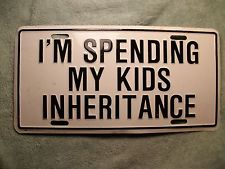
We live in a narcissistic and materialistic society, that increasingly values traits that are narcissistic and exalt the individual over the community. In fact, studies have shown that a high percentage of CEOs, top executives, Wall Street tycoons, and others of the “One Percent” have narcissistic personality disorder. It’s a disorder that is very adaptive in modern society and whose traits are rewarded with money and material goods. Especially since the 1980s, with its “Greed is Good” ethos, we reward those who act in their own self interest over those who act in the interests of the community and want to help the less fortunate. There’s even a meme that’s become especially popular with narcissistic Baby Boomers: “I’m spending my children’s inheritance,” as though this is something to be proud of.

inheritance

My family bought right into this ethos. Image was everything to my parents, especially my mother. My parents looked down on our blue-collar neighbors and relatives, and my mother in particular constantly made jokes at their expense and talked about how much better we were because we had nicer things and my father had a better (meaning white collar) job in the city. Appearance mattered, and our clothes had to come from the best department stores, never Sears. We had to live in the most exclusive neighborhoods. To not have a college degree was considered a mortal sin, and even then, it was far better to be successful in the cold-hearted business world than to be a successful teacher, social worker or a nurse. Such things were regarded as jobs for those who couldn’t do anything else, and of course they required a level of idealism that my parents just couldn’t relate to. When my parents split up when I was 14, my extremely image-conscious mother took up public relations as a career, which is all about image. She had so many face-lifts that today her face looks like a mask.

Whenever my parents, my mother in particular, complimented someone else, it was always on their visible, tangible qualities–things like their appearance, home decor, financial status, and taste in clothes. Table manners were of utmost importance, but being a good person was not. I can’t remember a time when my mother ever complimented anyone for qualities such as sweetness, generosity, friendliness and altruism. I do remember her putting down others for having these qualities, calling them “insipid” or accusing them of having no backbone.

My values never matched those of my immediate family, and when I became poor as an adult (because I was never given the tools and self esteem that would have led me to make better choices) I was shunned and rejected by them. I don’t think it’s any accident that when narcissistic parents choose a scapegoat, they usually choose the most sensitive child–the one most likely to be empathetic and have idealistic values. To a narcissist, idealism and empathy are weaknesses. They truly believe that the poor deserve to be poor, and they make no exception for their own child. The child with traits that cause them to become a scapegoat (and who all too often are also bullied at school) would probably become successful if they were raised in a loving, nurturing home, but in a narcissistic home, having these traits is a curse because that child is led to believe they are worthless and this leads to cowardly, “safe” choices that are more likely to lead to poverty. They are constantly told they will fail, that nothing they do is good enough, and then are usually “tossed out to the wolves” at a young age, with no family financial or emotional support to help them get a foothold in the larger world. I have read so many blogs by the scapegoated children of narcissistic families, who were forced to make their own way in the world with no family support, even if their parents could have afforded to help them, and even when other children in the family (who were not scapegoated) did receive support when they entered adulthood.

superiority

What is so ironic about all this is we scapegoats are rejected and hated for the very traits that were instilled in us as children! Scapegoated children are not encouraged to think independently or have ideas of their own. In fact, having a mind of one’s own is reason for punishment and abuse. We were trained to be deferent and obedient–and very much afraid. Deference, obedience and fear are not traits that lead to success in modern life. I think this training is deliberate, in that an evil narcissistic parent needs and wants someone they can use as the family trashcan–someone who can take and absorb all the family pathology and carry its burden. This child is then blamed for everything that goes wrong both within the family and in their own lives. When a scapegoated child becomes an adult, their low self esteem and fear almost inevitably leads to a life of material and financial lack, and this gives the narcissist parents an excuse for rejecting that child and refusing to help–for “violating” their materialistic, self-centered values. I think another reason narcissistic parents train HSP (highly sensitive) children to be scapegoats is because they know an HSP child must be silenced: this is a child who sees through their lies and can use the light of truth to blow the whistle on them. If they are encouraged to think and act independently, they might “out” the narcissistic parent and that is a prospect that terrifies them.

Of course, the best revenge for a scapegoated child is to become successful in spite of their upbringing–and of course there are those who have. Even then, narcissistic parents will find reasons to put that child’s accomplishments down as somehow not “good enough.” The few times in my adult life where I had some legitimate tangible success, I was never praised for it, but given some sort of left-handed compliment or told why it didn’t really count. I was also always compared with my more financially successful older half-siblings, who of course never had been designated the family scapegoat.

Narcissistic parents also don’t care if you have a mental disability. I’m a self-diagnosed Aspie (this was later confirmed by a psychiatrist) and suffer from intermittent major depression, but when I tried to tell my parents these were the reasons why I had so much trouble making the social connections necessary to become financially successful, these diagnoses were dismissed. I was told I was “making excuses.” Both my parents are convinced my poverty is my own fault because of the stupid choices I made. While I don’t deny having made dumb choices, these choices were based on the way I had been raised–to be afraid of taking any risks or challenging myself.

The only way to break the narcissist/scapegoat family dynamic (and it is probably the most toxic parent-child combination imaginable) is by cutting off contact with the abusive parent, because as long as you keep trying to please them, they will continue to attempt to break you down and make you feel insignificant. Nothing will ever please them, even if you dare to become more successful than they are. And if you somehow manage to do this without sacrificing your idealistic and empathetic values, that’s the biggest threat to them of all.

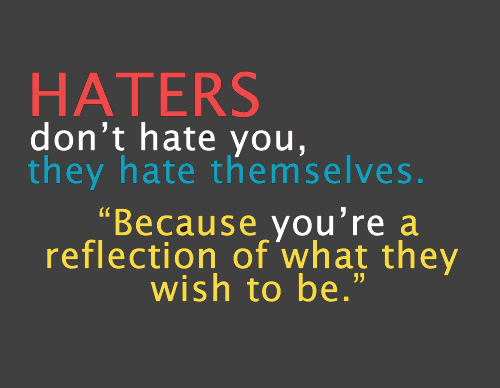
Make no mistake: your narcissistic parent doesn’t love you and never will, but it isn’t your fault. They hate you because they envy those qualities you have–empathy and humanity–that elude them. Be a good parent to yourself. Love yourself. You deserve it.

haters

Narcissists don’t change

snowwhite

I read a lot of blogs written by ACONs (Adult Children of Narcissists) and without exception, all these survivors yearned (or still yearn) for the parental love they were entitled to but never received.

Narcissists can’t feel love. Sure, they might pretend they love you when others are present (they’re great at wearing masks and keeping up appearances), but their true nature doesn’t even know the meaning of the word love.

For many years into adulthood, I wanted nothing more than for my narcissistic mother to approve of me. Like most narcissists, she was all about appearance and image. When I was young, she was obsessed with my weight and physical appearance, and always insisted on making me into her own image. She herself was vain, and seemed incapable of discussing deep topics or ideas. Narcissists have an uncanny ability to never show any vulnerable side of themselves, and this includes sharing any dreams with you. I’m not talking about the kind you have when you sleep, but the kind of dreams that give us hope for happiness in this life. I can’t remember one time when my mother ever shared a dream with me. She was already perfect–she didn’t need to have a dream. She also never, not once, ever shared a true emotion with me. She was incapable of being vulnerable or showing anyone (especially me) any vulnerability. And in keeping with that, she was incapable of empathy. She could never understand my feelings or hurts, and was usually more than happy to add to my hurts. I remember once, she made fun of me after she said a particularly hurtful thing, and then mocked the sad expression on my face–you know, pouting in an exaggerated way and drawing fake tears down her cheeks.

She was part of the positive thinking tyranny. (For more on how some people misuse the positive thinking movement, see this article.) Many narcissists use the positive thinking movement as a way to shame others for having feelings or to avoid taking responsibility. They’re big fans of positive thinking slogans, such as “your feelings are your own responsibility, not mine” or “you have chosen to be poor because of your negative attitude.” I remember once when I was being treated unfairly at my job (by a narcissistic boss, of course) instead of showing support and offering words of comfort, my N mother made my boss the victim, essentially telling me I probably caused him and my coworkers to dislike me because of my “negative attitude.” This is the sort of “love” you’ll get from a narcissist.

Narcissists also have an odd way of dismissing sentimentality. My mother never kept family photos around the house (because they were too “tacky”) and all the family photos were stashed into albums and boxes and packed away in the attic. A few years ago, I told my mother I would like to have some of the family photos, but she avoided the issue and changed the subject. About a year later, annoyed at being asked about them for the umpteenth time, she told me she had thrown them away. Who throws away family photos?! I was gobsmacked, but at the same time, I thought how typical that was of her. She could have sent them to me if she didn’t want them, but no, that would have made me happy, so throwing them away was better.

Back in those days, I hadn’t gone No Contact yet, and whenever in my mother’s presence, I felt small and belittled. Even when she didn’t actually say anything mean, there was always that condescending, withering look. I always felt nervous before having to see her or talk to her, without quite knowing why.

Now I know why (even though she always told me I was the crazy one who was being paranoid), and I’ve been No Contact now for almost three years. She sends me a birthday card every year, with phony mass produced Hallmark messages of love. When I get these cards, I just toss them in the trash. Coming from her, they mean nothing. She won’t ever change, because narcissists can’t. Trying to please a narcissist won’t work, so don’t waste your time. It will only wind up causing you frustration and hurt. They only want you on their side so they can use you. If they’re nice to you, it means they probably sense you pulling away from them. They can’t have that.

Of course I regret not having a loving parent or extended family. I regret not being able to see my mother (and her various flying monkeys, most of whom are also relatives) on big holidays like Christmas and Thanksgiving. I regret not ever having had the experience of a real heart to heart talk with my own mother. I can’t help feeling sad when others ask me where I’m going for holidays and have to tell them, “nowhere.” Because you see, my mother turned just about everyone in her extended family against me. Most of them barely know me, but narcissists are usually persuasive people who could sell ice to an Eskimo, and my mother’s “sold” me as a horrible, ungrateful, unsuccessful loser who doesn’t deserve happiness.

In my family, only visible evidence of success and physical attractiveness is acceptable. If you’re fat, unattractive, poor or disabled, you’re a “nothing” or a “nobody,” even if you’re a great person. My mother has actually used those words to discuss a cousin of mine, who is morbidly obese. “Laura’s a nothing.” She overlooks the fact that Laura is an accomplished artist who has won awards in several art shows, and also volunteers at her local food pantry. As for me, I am not rich or successful (because I was never given the tools and the self esteem to become successful as an adult), and so I’m a “nothing” too. She looks down on my poverty, and blames me for it.

I don’t need narcissistic people in my life, and one by one I have been weeding them out. And as I do so, I am growing, finding out what Lucky Otter is really all about. I’m finding out that I’m a pretty great person who is just blooming late in life.

Too bad my N mother won’t ever know the real me. Not that she’d care.

If you have a narcissistic parent, the most loving thing you can do for yourself is to make it impossible for them to hurt you anymore. They aren’t going to change. In fact, they get worse with age. As their looks and health begin to go, they feel extremely threatened by the reality of becoming vulnerable or needy, and rage takes over. They will no longer even pretend to be “nice.” You have to go No Contact, no matter how much it hurts. Rest assured though, you are not hurting them by doing this. They are incapable of feeling hurt. You’ll only hurt yourself if you remain in their thrall.

“We Need to Talk about Kevin”: are psychopaths born or made?

Eva Khatchadourian (played brilliantly by Tilda Swinton) is a former travel writer who’s ambivalent about her first pregnancy, and doesn’t seem to be able to connect with her newborn son Kevin, an infant who cries constantly and squirms away whenever she tries to hold him. Eva also suffers from postpartum depression and lack of sleep, which doesn’t make it any easier to connect with her ornery child. Eva as a new mother has the look of a concentration camp survivor. She is utterly tormented by her son–and her inability to feel maternal love for him.

As Kevin grows older, it’s apparent there’s something not quite right about him. Even as a very young boy of three or four, he has an unnerving, soul-piercing stare and never smiles or laughs. Though obviously very intelligent, Kevin isn’t out of diapers until he is 6 or 7, and refuses to engage with others, especially with Eva. He becomes disruptive at home and at school, and is always in trouble. Besides seeming to do things deliberately to upset Eva, Kevin bullies other kids at school, and encourages one girl, who has a severe skin disorder, to pick at her scabs. He’s sneaky and devious and shows no remorse for his bad behaviors. He seems to have only two facial expressions: sullen, or self-satisfied sneer when he’s gotten away with something.

There’s one poignant scene when Kevin becomes very sick and this is the only time he shows any vulnerability and allows himself to be mothered like a normal child. Here, while Kevin’s defenses are down and his mask of impending psychopathy is temporarily disabled, we can catch a fleeting glimpse of little-boy innocence and neediness and some emotion that may even resemble love. This scene makes you begin to question whether Kevin was born evil, or if his psychopathy may have been caused by Eva’s failure to bond with him as an infant.

The rest of the time, there’s an disturbing lack of innocence in Kevin. There’s an unsettling scene when Kevin, about age 3, is sitting on the floor while Eva rolls a ball to him. Not only does he fail to roll the ball back, but he fixes her with his unnerving hateful stare, a look you wouldn’t believe such a young child could be capable of.

As Kevin grows into adolescence (adolescent Kevin is played with subtle and chilling power by Ezra Miller), his misdeeds become more serious, and start to endanger not only his fellow students and teachers, but other members of his own family. At one point he does something unspeakable to his younger sister, Celia (a child his mother wanted and who is temperamentally Kevin’s polar opposite–a sweet and empathetic child), and then smoothly lies about it without showing a shred of empathy or remorse. The strain of raising this difficult child eventually destroys Eva’s marriage to Kevin’s father, Franklin (played by John C. Reilly), who disagrees with his wife’s belief that Kevin is disturbed and naively continues to insist he is a normal, loving child but that Eva’s attitude toward him is cold and unmotherly. Eva herself is torn–she seems to try her best to do and say the right things to Kevin, but it’s clear nothing is getting through to him and the strain is destroying her.

Things come to a head when Kevin commits a shocking crime at age 15 followed by another that is even more heinous. The entire film is told in flashbacks, in the form of Eva’s letters to her husband Franklin (who has left Eva and whose whereabouts are a mystery until the end of the film) and conversations between Kevin and Eva while he is in prison.

Eva tries to come to term with what has happened, to deal with the aftermath and ostracization by everyone the family knew, and most of all, what part she may have played in her son’s crimes. One question that runs throughout the film: was Eva a bad mother who caused her child to become bad, or was Kevin just born bad?

In the final scenes between Eva and Kevin while he’s in prison, it’s possible to see how sophisticated and subtle Kevin’s manipulations of Eva have become. Theirs is a complicated relationship: while he obviously hates her, it also becomes evident he has more respect for her than for his father, who always showered him with unconditional love and for whom Kevin has nothing but dismissive, snarling contempt.

“We Need to Talk About Kevin” (based on the 2003 book by Lionel Shriver) is one of the most chilling and thought provoking movies about psychopathy I’ve ever seen, and like other great psychological thrillers, it asks more questions about human nature than it answers.

Conversation with a narcissist: part two

I didn’t blog about it, but this weekend my daughter was admitted to the psychiatric ward due to major depression. I was concerned because she hadn’t gotten out of bed or eaten anything in 4 days. Her father who is a psychopath and a narcissist, seemed concerned as well and met me at the hospital where we waited several hours for her to be admitted. He was actually pleasant for a change, and while I didn’t allow his charm to lure me into giving away too much information or convince me he wasn’t really that bad, I thought maybe…just maybe…he might be changing. After all, he did seem to care about his daughter’s well-being (even if it was to ensure he could continue to manipulate her after she gets out).

Boy, was I wrong.

After that meeting, he won’t stop texting me, and last night it was getting so annoying I finally just stopped answering his constant texts (mostly to ask for things of his he needed that I have in my house–as always, it’s all about him). I guess that pissed him off, because first thing this morning, he texted me again, and these texts quickly turned nasty. Here’s the conversation. I’ll let it speak for itself.

Michael: please when you bring the computer and black backpack, please please bring a tube of BIOFREZE…I have serious strain in my left bicep, it’s killing me. It’s in the cabinet in the bathroom.

Michael: today is one of the only days you can go to work knowing that Molly is safe, and you won’t come home to find her dead. Rejoice!

Me: That’s a shitty thing to say esp first thing in the morning

Michael: Re read it

Me: If a joke that’s pretty fucked up

Michael: you are reading it wrong. Or is English a second language for you?

Me: How the fck am I reading it wrong? I also don’t appreciate the little dig there on my intelligence

Michael: you told me every day you worry u would come home and find her dead [this is true]. well you do not have to worry today cause she is safe. I cannot help it that you are an idiot.

Me: U want me to stop talking to you? Then keep it up. I’m not a fucking idiot.

Michael: Done. no need to talk. I need that puter and biofreze and do not give away my clothes [he is homeless] Let me know what day you get around to it

Me: I cannot do it until the weekend. No money for gas to get downtown to meet you

Michael: do it on the way home

Me: Do not order me around. I said it would be on the weekend. I already told you I won’t forget as long as I find these things. I cannot do it today, sorry

Me: Tell u what. I’ll call if I can bring them sooner. Now drop it please, I need to get ready for work.

Michael: Feeling Bipolar today I see talk to me when you become rational again. have a nice date. [not sure if this was a deliberate misspelling or not]

I was tempted to hurl an insult back but decided to just ignore him after that last dig. He has not changed. He will never change. I’m glad, however, that my daughter is in a safe place for now and cannot hurt herself.

I promise this will be the last of these narcissist conversations. I think everyone probably gets the idea, but this is the way he operates.

Why my parents disowned me.

disowned

I was going to skip over this post, but I think it’s an important thread in my entire story of psychopathic abuse. I’m going to keep it as short as possible though, just because I really don’t feel like writing too much tonight. But I’m afraid if I don’t write about it now, I might forget.

I have already explained that I’m certain my narcissistic mother never loved me, although she pretended to when it was convenient. I spent much of my childhood and adolescence in a state of “learned helplessness” as a result of their incredible mindfuck–I was expected to achieve (on their own terms) and punished if I did not, yet at the same time I was being psychologically programmed to fail. For more detail, you can read my earlier entries (click on “My Story” in the green header above) which will explain how this mindfuck worked.

To make a long story short, I think I would have been disowned regardless. If I had become a financially successful adult, I would have been a HUGE threat to my NPD mother and she would have cut me off. I have noticed the way she denigrates and says terrible things about any powerful woman she envies (she is very transparent)–my mother always dreamed of being a Martha Stewart-like success story. She always took pride in her homemaking, entertaining, and “gourmet” cooking. And she always admired and envied the rich and powerful, something Martha certainly is. My mother’s achievements don’t hold a candle to Martha’s and she knows it. I remember several years ago my mother ranting over how ugly and gauche she thought Martha Stewart was. I saw right through her hatred–for a narcissist, almost all their hatred is fueled by envy. If I had become more successful than my mother, she would have cut me out faster than a surgeon cuts off a wart. She wouldn’t be able to handle someone outshining her, even her own daughter.

But I digress. As things turned out, I never became what most people would consider successful, at least not in the financial and material sense. I had a few opportunities and false starts, but through either self-sabotage or sabotage by others (described in my earlier entries), anything I started I’d give up quickly or never follow through on. I hope that pattern has finally changed.

In her later years, my mother, dependent on her oldest daughter (the one she abandoned as a child but who has now become her flying monkey and biggest apologist) will not allow me to visit them in their home. My mother and I are No Contact now (my own choice), but a few years ago, after my mother reluctantly moved from New York to Chicago to live with my half-sister, she told me I would not be allowed to come there because “Rebecca doesn’t like you.” WTF?!? Rebecca hadn’t seen me in over 20 years! She barely knew me. I mentioned how outrageous that was but my mother just said, “Well, it’s her house. Those are her rules. You are a very difficult person to get along with, you know.” I was offered no other explanation other than my sister’s “rules” and my horrible personality.

I thought about that conversation for a long time and finally got it–my mother was embarrassed by me! Always obsessed about her social standing, I had become too “working class.” My lowered social status would certainly offend her fake upper-middle class ideals and pretentions. I actually had to laugh when I found out my mother was no longer able to find any professional-level work and was working part time as a clerk in a department store. But it took a cousin of mine on Facebook to tell me that. My mother would have died before admitting that, especially to me.

I remember a few years ago, burned out by office and retail work, I mentioned to my mother I wanted to start a housecleaning business. It was something I could do without a lot of capital, it was physical (I like to move around when I work), and I was qualified to do it. I thought it might be fun, and I would be able to work alone and set my own hours instead of having to punch a clock and sit in front of a monitor or phone all day. I even had business cards made up. My daughter was interested in getting into it with me–we were going to call it “Two Blondes and a Bucket.” (no matter that I’m not really blonde anymore–I could dye my hair). Here is what my mother said: “I don’t think anyone would want to hire you. You’re a slob and you have a police record.” (she was referring to the pot charge I got when I was married to my Narc husband.)

dontlikeme

When I showed her my novel I wrote back in 2004, she glanced through it and said, “well, you should focus on getting some articles in magazines first before writing a book–you’re not ready.” I may not have been ready to publish a novel, but my point is, she always berated me for “not improving my circumstances,” and yet any time I presented an idea that might lead to a better life, she shot it down. It was the old mind-fuck all over again. She’s good at it.

That’s why I refuse to use Facebook anymore. My mother and her flying monkeys, as well as my father and his current wife who may well be NPD or at best, someone with OCD and a lot of narcissistic traits, have found me there. My stepmother is a control freak and an ultra conservative Republican who can’t stand me “because I’m a failure” and because I allegedly subscribe to “a mindset of dependency” (even though I haven’t asked them for anything in years). My Narc ex has found me there too, and even hacked into my account. He also trashes my character all over his Facebook page (he’s not dead by the way–he was in a psychiatric facility). I might delete my FB page if I figure out how. So much hatred. My family sucks. There, I said it. I’m like fucking Cinderella.

My father is sick with Parkinson’s and my stepmother, who is also his full-time caregiver and mouthpiece, acts as a “gatekeeper” to keep me from “upsetting your father.” If I call their home, I always have to go through her first, and tell her what I want to talk to him about before I’m allowed to speak to him. Hello? It’s my FATHER, you controlling bitch. When I do get to speak to him he is usually very loving (when I can understand him) but he’s completely dominated by his wife, just as he was completely dominated by my mother–only it’s even worse now because he’s physically dependent on his wife too. He’s always been drawn to Narc women and is a huge enabler. I do believe he has love for me though, I always have, even though he was very strict. I was cut out of his will after I allowed my Narc ex to move back in with me. (My father saw his true colors early on, and detests him). I want so much to explain why I did that, to have him read my blog and maybe he would understand the reasons–but his wife would not understand and she’d have to “approve” it first. Because she’s a cold person with very little compassion, I doubt she would.

It makes me sad I can’t have a healthy or loving relationship with my aging parents, who won’t be around too much longer. But it is what it is, and I can’t focus on that or regret we don’t have that kind of loving relationship. All I can work on is me, and finally stop trying to get their approval, because it ain’t ever gonna happen. If I can feel proud of myself, and even help others along the way, I think that’s more than enough. This blog is the beginning of that, and of course my parents will never know about it, if I can help it.