Lightning Rod

Interesting thoughts here about Taylor Swift, probably the biggest megastar he music world has ever seen. I have to confess a liking for her music. I’ve always liked her music. Taylor isn’t the best singer but I rather like the wobbly vulnerability of her vocals and no one can write catchier songs. For several years (when she was a “country” artist) she came across as this sweet, innocent victim-type of girl, a girl moms didn’t mind taking their 12 year old daughters to see. But I always suspected something a little off about Taylor–that she wasn’t quite what she seemed. Is Taylor a psychopath or is she just a narcissist? I think a little of both.

Whatever she is, who would have grokked that this virginal girl next door who sings songs about love gone wrong was really a card carrying member of The Dark Triad? But that’s what psychopaths and narcissists are best at: putting on masks.

nowve666's avatarCLUSTER B

Taylor Swift

everyone’s favorite fantasy…

blank_spaceWhen I was a teen, I made some gay friends. We would watch TV together and this one was gay and that one was gay. Celebrities are almost always a repository in which to dump our own “stuff.” But nobody seems to fulfill that role better than Taylor Swift. According to various opinions, she is a really nice, unpretentious gal whose talent made famous, a danger to the morale of the country, a psychopath or a member of (victim of?) the Illuminati.

Taylor Swift, the Psychopath

View original post 613 more words

One way to peg a narcissist you probably never heard of.

finger-pointing

It may sound ridiculous but I think this is a good way to judge a person’s character without their suspecting anything.

Chatter about movies, books, and other forms of entertainment is a standard ice breaker (and is part of the dreaded “small talk” we introverts hate so much), usually used to make polite conversation with someone you don’t know that well (of course, these things can be discussed more in depth too with closer friends and loved ones).    Movies, books, TV, and public figures are safe conversation starters.   You can talk to people about these things without seeming to cross anyone’s boundaries or getting too personal.

But such seemingly innocuous conversations can also help you peg whether or not a person is a narcissist or sociopath–without them suspecting a thing.  When you meet a new person, ask them the way you would ask anyone about movies they’ve seen and books they’ve read, and then ask them whose side they were on, or which characters they most identified with.   Of course, you must be familiar with the movie or the book, including its main characters.   Television personalities and other public figures will also do.

Narcissists can feel empathy for other narcissistic characters–characters that are like themselves.   I’ve noticed they will often feel empathy for the villain, rather than the hero/heroine.   A narcissist woman, for example, will feel simpatico with a villain like Beth Jarrett from Ordinary People, and think her behavior toward her son wasn’t that bad–she may even think he deserved it and find Jarrett’s justifications for abusing him valid.    My mother found nothing wrong with her behavior and was puzzled as to why I found it so triggering and upsetting.  (Of course I didn’t tell her why).

My mother also couldn’t understand why the the “Queen of Mean” hotelier Leona Helmsley was given such a hard time in the press over her arrogant statement, “We don’t pay taxes, only the little people pay taxes.”   She also identified with Sherman McCoy, the narcissistic, selfish, and greedy investment banker in the novel Bonfire of the Vanities, who wound up losing everything due to a chain of events stemming from a hit and run accident which McCoy was involved in.  I remember her lamenting almost tearfully about how “his beautiful life was ruined” by the events that played out in the novel.    She also couldn’t stand good, sweet Melanie, from Gone With the Wind.   I suppose Melanie could come across as a tad simpering and holier-than-thou, but my mother hated her.   The heroine of that same movie, Scarlett O’Hara, is more than a little narcissistic (or possibly Histrionic?)–charming, flirtatious, manipulative, entitled, and possessing very little empathy.  She didn’t even seem that upset when her own daughter, Bonnie, died after falling off a horse.    I never understood why Scarlett has been such a huge role model for generations of women.   She really didn’t have too many redeeming qualities when you think about it.

A  man (or woman) with NPD or psychopathy might identify or sympathize with any of Ayn Rand’s psychopathic heroes–Howard Roark from The Fountainhead or John Galt from Atlas Shrugged come to mind.   Of course, these are popular books, especially among conservatives–but holding these two highly narcissistic men up as worthy of worship might be a red flag.   Be wary of such a person.

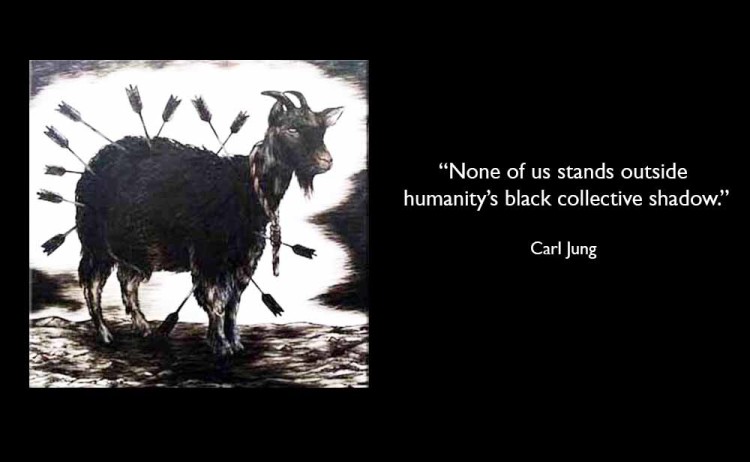
My ex, a sociopath who has been diagnosed with Antisocial Personality Disorder (but is really a malignant narcissist) always liked villainous characters, especially if they broke the law.  He often rooted for the bad guy (or sometimes, girl) and the more ruthless or cruel they were, the more they seemed to enthrall him.   He likes Charles Manson.   He watched South Park because he thought the sociopathic Eric Cartman was so cool.  He also rooted for the alien in Aliens.   In addition to that, he likes satanic and demonic imagery, which always disturbed me, even when I was agnostic.     We all have a touch of schadenfreude and many normal people (including yours truly) have a fascination with serial killers and other outlaws–according to Jung, that’s because we all have a shadow self that’s drawn to dark things.  But there’s a difference between fascination or morbid curiosity and actually liking these things or identifying with or sympathizing with villains, malignant narcissists, and antisocial people.

So if you’re on a date with a new person, have them take you to a movie (or take them to a movie) and see who they seem to identify with or sympathize with the most (or who they seem to dislike the most).   It could tell you a lot about that person’s character.

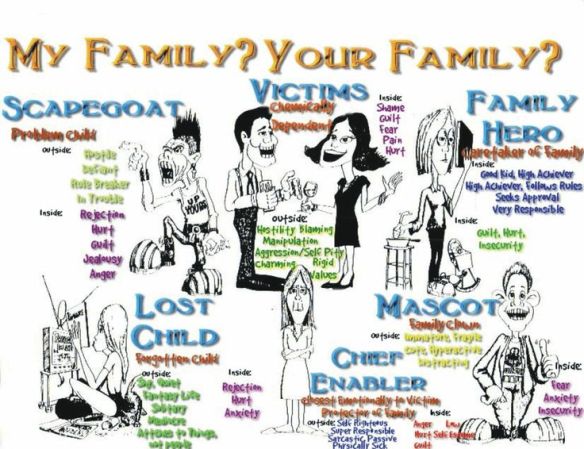
Child roles in dysfunctional families.

dysfunctional-family
Credit: Artist unknown.


Wikipedia has an excellent, detailed article about dysfunctional family dynamics. Here I am just going to talk about the roles various family members play, and the kinds of families that become dysfunctional. If you’d like to read the whole article, click on this link:

https://en.wikipedia.org/wiki/Dysfunctional_family

Dysfunctional families are usually of two types:

1. One or more of the parents are active alcoholics or addicted to drugs.
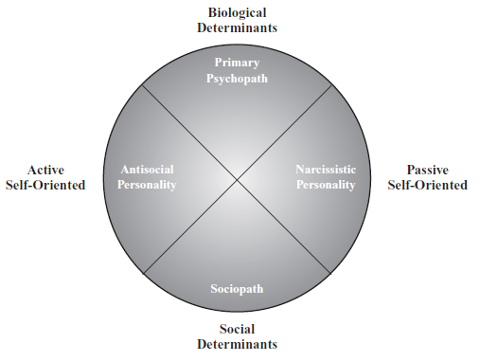
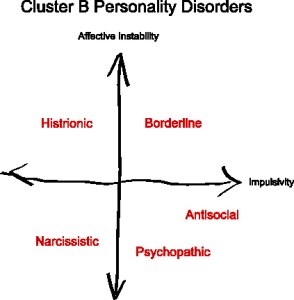
2. One or more of the parents have a Cluster B disorder, usually Narcissistic Personality Disorder but sometimes Borderline Personality Disorder, Antisocial Personality Disorder, or Histrionic Personality Disorder (or a combination of any of these).

The Cluster B Connection.

Outside of alcoholics and drug addicts, dysfunctional family dynamics are most prevalent when one or both of the partners suffer from a Cluster B disorder, especially Narcissistic Personality Disorder or Malignant Narcissism.    After NPD, BPD is the most common disorder seen in the head of a dysfunctional family, though because it’s more common in women and Borderlines have more empathy than narcissists, BPD is most often seen in the codependent, passive partner.

ASPD (psychopathy or sociopathy) rarely appears by itself in dysfunctional families, as antisocial people and psychopaths tend to not be raising children at all (either because they’re incarcerated, their children have already been removed from the home, or they simply have no interest in raising children,) but a parent could have Malignant Narcissism, which is a combination of NPD and ASPD.   Also, people with pure ASPD, though more likely to be criminals or involved in illegal activities, tend to be less emotionally abusive than people with NPD or even BPD. They are merely selfish and lack empathy, and they are manipulative to get what they want, but they don’t care about getting emotional supply from others so they don’t engage in mind games like gaslighting, triangulating, projecting, and scapegoating (unless there is a material reward involved or they are trying to avoid culpability). However, some people with ASPD are sadistic and enjoy tormenting family members for fun.

Of all the Cluster B disorders, HPD is probably the least toxic (Histrionics are shallow, attention seeking, and dramatic, but not usually that abusive), but HPD is usually comorbid with another Cluster B disorder, such as NPD.
cluster_b_chart

In some cases, a non-Cluster B mental illness (such as Bipolar disorder) that causes abusive acting-out behavior may be the culprit, but it’s less common because most other mental disorders are less easily hidden from others and the person appears “crazier.” Non-Cluster B disorders are also more easily treated with drugs or therapy, and except for psychotic disorders such as Schizophrenia, the afflicted person knows they have a problem and are more likely to seek help.

Cluster B and addictive disorders. 

Parents of dysfunctional families can also be both mentally ill and addicted to drugs or alcohol. The two often go together. In fact, alcoholism and drug addiction are extremely common in people with Cluster B disorders. Alcohol and drugs are their attempt to fill the emptiness they feel inside themselves.

Even if an alcoholic or drug addict doesn’t have an underlying Cluster B disorder, the behavior of an active addict/alcoholic is very similar to someone who has NPD. The only difference in the behavior of a narcissist and someone with active alcoholism is that for the narcissist, the “fix” is emotional; for the alcoholic, it’s chemical. A non-Cluster B active addict or alcoholic can be every bit as emotionally abusive, self-centered, and manipulative as someone with NPD. Only getting their next fix is important. (As an aside, it’s interesting to me that the 12 steps of AA and other 12-step programs almost all address the problem of narcissism by encouraging humility, responsibility, and amend-making. A person on a so-called “dry drunk” is basically a sober person acting out in narcissistic ways, which may be their nature).

The Codependent Partner.

Sometimes only one partner has a mental disorder or addiction, but the non-afflicted parent is always going to be codependent to them. The codependent parent, whether they have a disorder or not, almost always suffers from PTSD or Complex PTSD. If both parents have a Cluster B disorder (which I think is usually the case), the one who has NPD or Malignant Narcissism is almost always going to call all the shots and dominate the other family members. If a Borderline is paired up with a Narcissist, the Borderline is almost always going to be codependent to the Narcissist, colluding in the abuse but also being abused themselves. Similarly, if a Covert Narcissist is paired up with an Overt Narcissist, the Covert one is going to be codependent to them and possibly abused. Such a scenario can lead to the Borderline or Covert Narcissist developing Stockholm Syndrome (identifying with and colluding with their abuser). Non-Cluster B codependents can also develop Stockholm Syndrome, because it’s a complication of C-PTSD. The codependent parent often (but not always) has a high degree of empathy, which is what drew them to the narcissist in the first place, in a misguided belief that they could “fix” them or they were led to believe that the narcissist could “rescue” them.

The Roles of the Children.

In the ACON community, there’s a lot of talk about Scapegoats and Golden Children, but there are other roles children can play in a family that are rarely addressed. In a two child family, most likely there will be a scapegoat and a golden child, but in larger families, there can also be a Lost Child, a Clown, and a Rescuer (codependent). It’s unhealthy for a child to be in any of these roles, but the Scapegoat and Golden Child role are probably the most dangerous to a child’s mental and emotional health, for different reasons. Even in a two-child family, the roles can shift back and forth (according to the Wikipedia article, families in which the children’s roles change and shift are called Balkanized families–this alludes to the constantly shifting loyalties and borders of the Balkan countries in Eastern Europe).

1. The Scapegoat.

scapegoat

Both this and the Golden Child role are the soul-killing roles, but for different reasons. The Scapegoat is the child who is targeted by the narcissistic (or alcoholic) parent. The parent often is able to get the rest of the family to serve as flying monkeys and gang up on that child, projecting anything they don’t want to “own” onto them. Like the sacrificial goats described in the Bible who were banished to the wilderness and tormented by villagers, the Scapegoated child carries all the shame the rest of the family doesn’t want to confront or deal with. All the unwanted emotions and bad qualities are unloaded and projected onto them, so the abusers don’t have to confront or deal with these problems in themselves.

Usually it’s the most sensitive child of the family who becomes the Scapegoat, because that child tends to be the Truth Teller, the only family member who can see the dysfunction and may even react against it. The most sensitive child, being the child who shows the most emotion, is also a threat to the narcissists in the family because emotional expression is such a frightening thing to them. In many, if not most dysfunctional families, the expression of emotion is not allowed. So the most emotional or sensitive child becomes the scapegoat, especially if they rebel against the dysfunction or criticize it.

The Scapegoat may be assigned the role of Bad Child, the Loser, the Stupid One, the Ugly One, the Crazy One, the Weak One, or any combination of these. No matter what they do, they cannot please the parents (or the siblings who have been turned against them). Scapegoat Children usually develop severe C-PTSD or possibly another mental disorder, and having been trained to be victims and never given the emotional, financial or other tools to succeed in life, tend to fulfill their families’ predictions of being “losers,” so then their families can say to others, “See? This child really is worthless.”

Scapegoated children also tend to attract other abusers throughout their lives and are at risk for being targeted for bullying even as adults and for entering into abusive relationships. If the adult child doesn’t go No Contact, the abuse continues, usually through some form of isolation, silent treatment, or exclusion. Scapegoated adults are talked badly about by the family and not invited to family functions. They are given no emotional or financial support, even though other members of the family are given these things. It’s not unusual for a scapegoated adult child to be living in poverty, even if their families are wealthy–not only because they were denied financial support when they needed it, but also because their self esteem took such a terrible beating that they have no confidence at all and never take any risks that could improve their lives. Severe C-PTSD can also cause a person to have an inability to focus or concentrate or set realistic goals.

A Scapegoat isn’t always a child. It can also be a parent, in which the children are turned against that parent by the abusive one.

2. The Golden Child.

girl with a gold medal and cups.

The Golden Child, often (but not always) the eldest child, is the parent’s trophy, pride and joy. The parents may seem to love that child, but being incapable of real love, their “love” is conditional and is based on their fantasy of what they want that child to be, not on who the child really is. The child is assigned to be a Mini Me of the narcissistic parent.

The Golden Child, basking in constant approval, showered with toys and gifts, never held accountable for any wrongdoing (which may be projected onto the Scapegoat), and often recruited as a co-abuser in the abuse of the Scapegoat, grows up entitled, grandiose, and spoiled. Because their Real Self has never been appropriately mirrored and their less than perfect traits are ignored or projected onto someone else, and because they were rewarded for playing a the role of the Perfect One, a Golden Child in a family is the most likely to develop NPD and become a clone of the abusive parent. In this way their souls are destroyed even more than the Scapegoat’s. To continue to be the parent’s favorite, they had to play a role which became internalized. This becomes their False Self. After awhile, they are no longer able to access their Real Self at all. Golden Children who have become narcissistic continue their entitled, bullying, manipulative, grandiose behavior into adulthood and are likely to head dysfunctional families themselves, continuing the cycle.

A non-Golden Child, even a Scapegoat, can become a narcissist too (usually the covert form of NPD), for self-protection, but Golden Children tend to develop the grandiose, malignant form of narcissism and as such, are the least likely to ever seek help for their disorder or admit they have become abusers themselves.

3. The Lost Child.

lostchild

In larger families (three or more children), one child is likely to be ignored and treated as if they don’t exist. This isn’t a form of silent treatment; it’s as if the parents don’t notice the child is there at all. The Lost Child isn’t victimized like the Scapegoat, but they aren’t spoiled either. They may or may not be recruited to assist in the abuse of the Scapegoat, but they won’t necessarily be punished if they don’t cooperate; they will simply be ignored. The Lost Child tends to be quiet and shy, and not make any waves. They are probably aware of the family dysfunction and may sympathize with the scapegoat (but don’t let anyone know this). As they grow older, they may crave attention or develop addictions, or they may remain shy and retiring throughout their lives. They tend to avoid confrontation and drama, and may become extremely introverted.

4. The Clown/Mascot.

classclown

The Clown/Mascot attempts to divert attention away from the family dysfunction (and also get attention for themselves) by making light of everything. Everything becomes a joke to them, and they even use their own families as sources for humor. Clowns can be disruptive in class as children, to get attention, but because of their ability to see the humor in things, they tend to be outgoing and develop a large circle of friends during adolescence and adulthood (even if they are never taken very seriously). Family Mascots are almost never scapegoated, because they entertain everyone and take the focus off the family problems.

David Sedaris, a writer and humorist, is a good example of this dynamic at play.  Several writers in the ACON community (and even outside that community) were outraged by Sedaris’ callous essay (“Now We Are Five,” which appeared in the New Yorker after his younger sister, Tiffany, committed suicide).   Tiffany was clearly the family scapegoat and had evidently gone No Contact with the rest of the family. At the time of her death, she was living in poverty and only had, as her father put it, “two lousy boxes” of belongings. I don’t know all the details, but it seems as if she was offered no support, either emotionally or financially, in spite of the family’s wealth and Sedaris’ success as a writer. She was probably mentally ill, but her mental illness may have been due to being the family reject.

In a candid interview Sedaris gave for Vice, he describes Tiffany and her relationship with the rest of the family. His words are very telling.

Even as a child I looked at my sister and wondered what that would be like, not to feel the warmth of my mother’s love. Tiffany didn’t. There was always a nervous quality about her, a tentativeness, a desperate urge to be in your good graces. While the rest of us had eyes in the front of our heads, she had eyes on the sides, like a rabbit or a deer, like prey, always on the lookout for danger. Even when there wasn’t any danger. You’d see her trembling and think, You want danger? I’ll give you some danger

It’s been suggested that David Sedaris is himself a narcissist (possibly the golden child) and that could certainly be true, but I also suspect he served a secondary role as the family Clown/Mascot. His callousness toward Tiffany in his famous essay (and grandiosity about how great the rest of the Sedaris family was–it’s very common for narcissists who were golden children to hold their dysfunctional families up as paragons of perfection) seemed to be drawn both from narcissism and from a need to hide his anger and pain behind a wall of humor. Here’s a link to his essay (it’s heartbreaking and may be triggering):

Now We Are Five

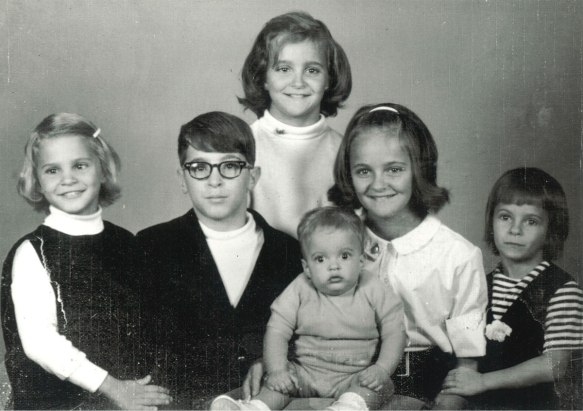
The accompanying photo is interesting. Tiffany, the second to youngest child in a family of six children, sits in the bottom right hand corner. Her hair is cut short and unkempt, and she looks very unhappy. David, wearing the glasses, stands above her. Actually, none of the kids look very happy. Not a smile in the bunch.  Something’s definitely not right about this family.  It’s common to see family portraits where no one is smiling in the 18th or 19th centuries,  but not in the late 1960s, when this photo was taken.   Here’s another photo, from the Vice interview, where only Tiffany (again in the bottom right hand spot) looks desperately unhappy and disconnected from her siblings.
tiffany_sedaris
Credit: Vice.com / Left to right: Amy, David, Gretchen, Paul, Lisa, and Tiffany

I used to enjoy Sedaris’ writings and looked forward to his books and essays, but after this essay, I just can’t read him anymore. (Augusten Burroughs is a better alternative and doesn’t seem to be a narcissist).

In spite of their raucous and jovial manner, Clowns are likely to be depressed because they have never learned to confront or deal with their true feelings.  They hide behind a wall of laughter.  Their sense of humor is really just a cover for their pain. Many Clowns become addicted to drugs or alcohol, and a few become suicidal. Many of our great comedians served the Clown role in their families. I don’t think it’s a coincidence that so many of them had drug issues or killed themselves.

5. The Rescuer.
superman_child

This is the codependent child who attempts to “fix” the family dysfunction by being obedient, always good, non-confrontational, overly generous, and self-sacrificing. The Rescuer may be highly empathic. The Rescuer tries to serve all the needs of the narcissistic/addicted parent, which of course is not possible. They will never argue with or criticize the narcissistic parent, and are always trying to get everyone to get along, which also is not possible. They may be the only family member who doesn’t abuse the Scapegoat, but they might if they feel like it’s required. However, even if they do collude in the Scapegoat’s abuse, they will be less abusive than the other family members, tending to take a back seat or even sympathize with the Scapegoat in private. In trying to please everyone, they please no one, and grow up feeling impotent and helpless. It’s a no-win situation.

When Rescuers become adults, they tend to unconsciously look for other abusers to “rescue,” having failed to do so in their families of origin. Like Scapegoats, Rescuers are likely to become abused themselves as adults, but it’s hard for them to leave an abuser because of their high level of empathy which keeps them tied to the abuser in their attempt to want to “help” them. They also tend to fall for an abuser’s promises to change and are easily “hoovered” back into a codependent relationship.

Shifting Roles.

In Balkanized families, the child roles can shift. The most common situation is a Golden Child becoming a Scapegoat, often upon reaching adulthood, if they fail to fulfill the unrealistic expectations put on them. (“You were such a disappointment to me!”) If a Scapegoat goes No Contact or leaves the family for some other reason, another child, possibly the Lost Child, becomes the new Scapegoat. Someone has to carry all the family shame.  If the family only has two children, the Golden Child may find themselves suddenly scapegoated or serving both roles.

Children who serve as both Scapegoats and Golden Children (very common in only children)  often develop Borderline Personality Disorder as well as severe C-PTSD and possibly other mental disorders like Dissociative Identity Disorder (almost always the result of severe emotional abuse).

Serving as both a Scapegoat and Golden Child is the ultimate mindf*ck because there isn’t even any consistency. The child never knows if they will be punished or rewarded from one minute to the next. Their only advantage (if they are an only child) is that they don’t have siblings who have been turned into flying monkeys who collude in the abuse.

If the family ever develops a need for a new Scapegoat (if the Scapegoat goes No Contact, dies, or disappears), the Lost Child is usually picked as a replacement, due to their non-confrontational, malleable temperament and lack of any real pre-existing role in the family.
Where does this silly idea that covert narcissism is the most malignant come from?

evil_queen

I used to believe malignant narcissism was at the top of the narcissistic spectrum, but after learning and reading more,  I’ve changed my opinion somewhat.  I think malignant narcissism is actually a hybrid of NPD + ASPD (antisocial personality disorder) or NPD with sociopathic traits. So it’s not really “higher” on the spectrum than “normal” NPD, it’s NPD that crosses over into the psychopathy or sociopathy spectrum.    They are narcissists that possess all three of the “Dark Triad” traits–narcissism, psychopathy, and Machiavellianism.   I wrote about the Dark Triad in this post.

For some stupid reason, the web is filled with declarations of covert narcissism being the “most malignant” form of NPD. I call BS on that! Covert narcs are the most likely to be self aware and their NPD is less ego syntonic than the overt type.  They are far more likely than overt narcs to feel guilt and shame and want to change their behaviors and even present for therapy.    I used to frequent a forum where a number of diagnosed and self-avowed narcissists posted about their disorder, and the vast majority were the covert, fragile type and were definitely not happy being narcissists (if that’s what they were at all).  Covert narcissists, being non-aggressive, are (much like borderlines, who they resemble in many ways) likely to become codependent to an overt or malignant narcissist.    They are often victimized themselves (a malignant narcissist would never become a victim!).   I’m not defending covert narcissists.  They are still narcs and are still dangerous.   They should be avoided whenever possible. But it’s time to set the record straight.   The only reason covert narcissism might be more “malignant” is because their disorder is harder to see. Covert narcissists don’t wear a neon sign announcing they are narcissists.

Due to their sociopathic/psychopathic traits, malignant narcissism is ego-syntonic and the afflicted person will almost never think they are the ones with a problem. Even if they become self aware, they will still be “happy” with their disorder and tend to blame everyone else when things go wrong–and enjoy doing so.

Because of this, malignant narcissists will never present for therapy (unless they are forced to) and if they do, they can never get better, because the willingness to isn’t there. Non-malignant NPD, while difficult to treat, may be curable IF the patient is self-aware and willing and their disorder is ego-dystonic (which it often is in the covert subtype) .

There is a cruelty and sadism to malignant narcissists that’s missing in garden variety narcissists. Most narcissists don’t set out to deliberately hurt others, but malignant narcissists do. While they’re getting their supply, they also get a thrill from making others suffer.  Like vultures, they feed off your pain.   In contrast, some “benign” narcissists might even feel guilt when it’s called to their attention they hurt someone, even though they still keep doing it because they can’t help themselves and like a drug addict, getting their fix of supply is more important than the feelings of their victims. But malignant narcissists actually want to see their victims suffer, or at the very least, don’t care.   Malignant narcissists are almost always the overt, grandiose type.   It’s virtually impossible for a covert narcissist to become malignant, because they are generally not happy with themselves, even if they aren’t aware of their own narcissism.

There’s another difference too.    The malignant narcs I have known have a cold deadness to their eyes that’s not as evident in people with garden variety NPD.   Their eyes can also be very predatory, seeming to bore right through to your soul. That’s their one saving grace: their eyes warn you of how dangerous they are.

Why narcissists are more hated than psychopaths.

narcissism_vs_psyhopathy

All four Cluster B disorders are vilified, especially on the Internet, but for a long time I wondered why NPD seemed to be even more demonized than ASPD (antisocial personality disorder) and psychopathy and seemed to be regarded as the most “evil” disorder to have.   After all, most narcissists are not going around breaking the law, murdering people (not physically, anyway), and most at least pretend to be nice to you, at least if your relationship is only casual.  They make a good impression and most have families and respectable jobs.  They go to church, teach second grade, and volunteer at the food pantry. If you’re just acquaintances or casual friends with a narcissist, they can even be a lot of fun.    They also provide a lot of our entertainment, as narcissism (including NPD) is over-represented  among celebrities, and what would we do without our movie, sports, and pop stars?   Antisocial people are far more likely to be in prison and most aren’t making a mark in the creative arts.   So why is it that narcissists are hated more than anyone else, at least on the Internet?  I think I finally figured out the answer to this, and there are a few reasons.

1. Narcissists are more likely to have raised us.

Not too many people with antisocial personality disorder become parents, or are allowed to keep their children for very long of they do.   They don’t need to have children for narcissistic supply since they don’t require that, and if they do have kids, their bad behavior is so obvious that their kids are usually taken away from them at a young age.   They don’t pretend to be good parents but secretly abuse their child the ways narcissists do.  They may even voluntarily give up a child because raising it is too much bother and gets in the way of their antisocial activities.

2.  Narcissists are more likely to have been a lover or a spouse.

Psychopaths and people with antisocial personality disorder tend to be loners, or run in packs (gangs).   They tend to dislike commitment and because they don’t require supply from other people, they usually have no use for a close relationship.   If they marry, it could be for financial reasons since all they care about is what works and what is practical. As a result, while they can’t really love, they may not really be that emotionally abusive.

3.  Psychopaths and people with antisocial personality disorder (ASPD) seem like rare, exotic (and often caged) creatures.

hannibal_lecter

There’s a common perception of antisocial and psychopathic types being somehow apart from the rest of humanity, maybe not even quite human.   As a society, we are drawn to and fascinated by serial killers (though technically, a few, like Ted Bundy, have had an NPD diagnosis)  and a sort of cult has grown around psychopathic mass murderers, bank robbers, and serial killers.  They make good entertainment.   They’re also cool (something narcs are not).  In the movies, TV, and novels, the anti-hero is a “rebel without a cause” who usually fits the criteria for ASPD or psychopathy.   Even if they’re not committing crimes, they seem like exotic free agents who do whatever they want, whenever they want, and don’t give a damn what anyone else thinks.  Think of Ferris Bueller.  Ferris was more antisocial than narcissistic but he became a role model for millions of teenagers in the 1980s because he was just so cool.   If he was a narc he would have been cast as the villain.   Compare Ferris with Nellie Olson,  the spoiled, bratty rich girl in Little House on the Prairie.  Any questions? 

4.  What you see is what you get.

While psychopaths and people with ASPD lie well and often, it’s usually to avoid getting in trouble.  They can be manipulative, but only to get what they want from you (and what they want isn’t narcissistic supply but more practical things that help them achieve their goals).   They don’t lie just for the sake of lying.  Gaslighting, triangulation, and other types of emotional abuse that involve vicious lies about another person’s character aren’t really their thing.

5.  Narcissists are sneaky.

stabintheback

Related to the above, narcissists are always trying to undermine or even destroy you behind your back.  Essentially, they are huge cowards.  Psychopaths and antisocial people don’t care about such “niceties” and tell you what they really think of you right to your face. No, they don’t have any empathy either and they don’t give a damn if they hurt your feelings, but they usually won’t be pretending to be your best friend either (unless you can be of practical use to them in some way) .

6.  Narcissists wallow in self pity.

Psychopaths and antisocials don’t feel sorry for themselves or waste other people’s time whimpering about how everyone hates them or how they never get any breaks.   That’s because they don’t care what you think of them and they make their own breaks, even if they have to break the law to do it.   Narcissists are not only hypersensitive, they are very dependent on other people.  People with ASPD pretty much operate alone.  They’re too cool for such narcissistic shenanigans as wanting to be liked and admired.

7.  Narcissists are  high maintenance.

high_maintenance

Psychopaths and antisocial people do not require narcissistic supply, therefore they don’t demand too much emotional sustenance from other people.  Narcissists constantly require being blown up like a punching clown doll (and make you want to punch them).

8.  People assume most psychopaths are in prison.

It’s not true, of course (some are running huge multinational corporations or running for political office), but most people assume anyone with ASPD/psychopathy is in prison and therefore no danger to the rest of us.    In contrast, narcissists seem to be lurking behind every tree and lamp post and hiding under every bed.

The Town From Hell

In an increasingly narcissistic, selfish society, this sort of callous behavior is becoming the rule rather than the exception. This is horrible.

Cluster B disorders are not cool.

uncool

Although Cluster B disorders (the dramatic, emotional, erratic group of personality disorders), are largely demonized on the Internet by narcissistic abuse survivors, there’s another growing attitude online that’s pretty much the opposite–that having a Cluster B disorder somehow makes you an uber-cool badass.

This is a dangerous delusion.  Take it from me, having a Cluster B disorder like BPD (in my case) is NOT fun. Nor is it cool. In fact, it really really sucks. 😦 Both for yourself and everyone else.

This growing attitude of “Cluster B coolness” I’ve been seeing more of goes something like this:

NPD:

bad_sport
This is what your narcissist is really all about.

The Myth:  If you have Narcissistic Personality Disorder (NPD), you’re a self-confident, go-out-and-knock-em-all-dead, ambitious, and highly intelligent badass who Gets. Things. Done. Psychopaths are similarly glorified, but they’re basically the reason why everything’s wrong with the world and empathy is seen as a “weakness.” The narcissistic woman is regarded as a diabolical yet seductive Jezebel who turns strong men into whimpering slaves at the snap of her pretty fingers and who every other woman strives to be. The narcissistic man is regarded as a buff, handsome, masculine, virile, successful go-getter who all women melt for (and that’s how they regard themselves, of course).

The Reality:  In actuality, if you have NPD, you’re a negative, selfish, deluded, demanding, envious, entitled, whining crybaby with no real sense of self who everyone hates (and who hates everyone) but are afraid to say so because it might set off one of your infamous rages or you giving them the even more crazymaking “silent treatment.” People are always walking on eggshells around you because you’re really so unstable, hypersensitive to criticism,  and deluded by and drunk  with your own “greatness.”  You’re a sore loser too and can’t stand to see anyone else do well or get any attention.   No one really likes you and you’re probably right that people are talking about you behind your back, but frankly you deserve it. Also, many narcissists are just plain stupid and have no emotional intelligence.  As for their reputed skillfulness in bed,  many narcs (especially the cerebral types) hate sex and can’t or won’t perform.  Or, as with everything else, they only care about their own needs and to hell with yours.

BPD:

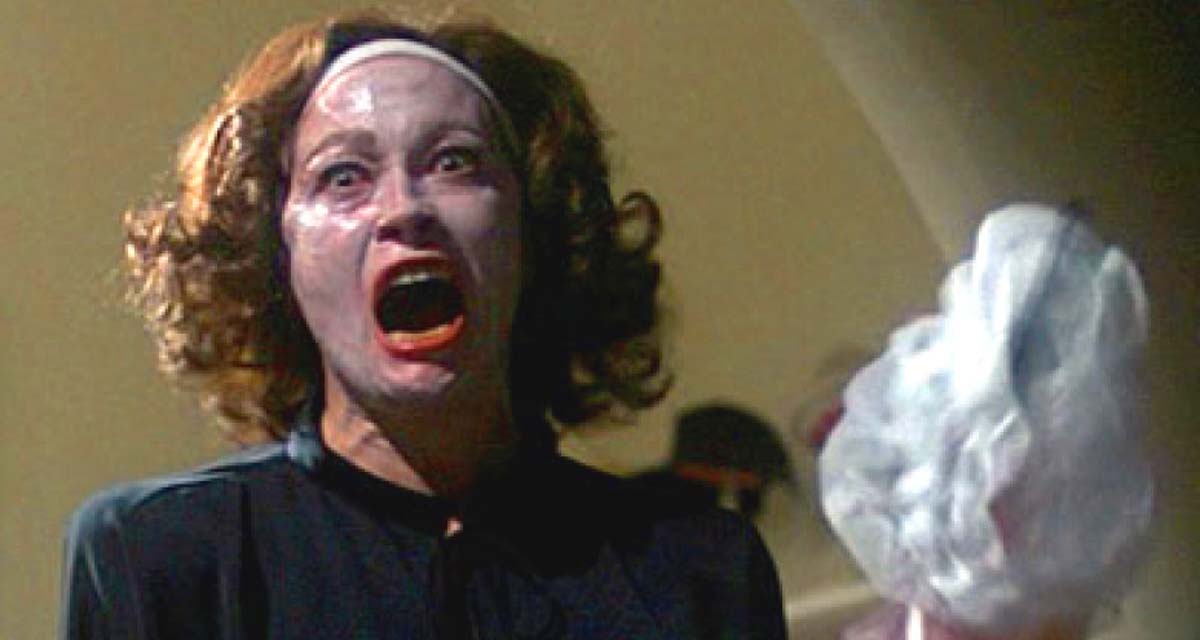
mommie_dearest2
Joan Crawford had a BPD diagnosis. Is this sexy, alluring, and “quirky” to you?

The Myth: If you have Borderline Personality Disorder, some people think this means you’re a sexy beast or babe who’s alluring, unpredictable, passionate, always charming and “quirky”, and never boring. Your chameleon-like abilities to match the attitudes of those around you is seen as evidence of potential Oscar-winning ability. It’s always pointed out how many actors and musicians suffer from BPD.

The Reality:  Let’s be honest.   If you have BPD you’re emotionally unstable, volatile, almost crazy (the original term “borderline” referred to the disorder being on the border between neurosis and psychosis), out of touch with reality, unable to take a firm stance on anything (or conversely, switching back and forth between two extremes, which just makes you look insane) due to your terror of being rejected or abandoned, prone to be an addict, (drugs, booze, gambling, shopping, cutting, eating and/or dieting, other people), clingy,  codependent, insecure, high-maintenance,  and fickle. The borderline doesn’t really have a false self per se like the narcissist, but they can’t access their true self either, so they wind up “taking on” the attitudes and emotions of those who happen to be around them like some kind of emotional bodysnatcher (in contrast with true empathy, their feelings overwhelm them and are out of control), and they just plain overreact to every damn thing so you feel like you’re always walking on eggshells.

HPD:

clown_makeup
You think you look seductive. Everyone else thinks you look like a clown.

The Myth: Although Histrionic Personality Disorder (HPD) isn’t widely talked about, its reputation is similar to that of BPD (but is really the stereotypically feminine form of Overt NPD): usually female, a sexy, seductive siren, dramatic, highly social, loves parties and being the center of attention, and is never, ever boring. You’ll fall madly in love with this bewitching seductress due to their many charms and their great looks.

The Reality: The real truth about people with HPD is that they’re insincere, emotionally labile to the point of being embarrassing (but their over-the-top “emotional displays” are largely an act), shallow, materialistic, and emotionally retarded. They often overdress (or underdress!) or are overly made up for an occasion, are sexually promiscuous, and are inappropriate in social situations, but they don’t care if you’re cringing in embarrassment for them because even negative attention is still attention and that’s what they crave more than the air itself.

ASPD:

aspd
Nuff said.

The Myth:  So here we are at the juggernaut of the Cluster Bs, the baddest badass of them all, Antisocial Personality Disorder (ASPD). Often confused with Psychopathy (and often overlapping with it), the antisocial or psychopathic badass is a sexy and fearless rogue, unconcerned with how others feel about them, possessed of an arresting and penetrating gaze (actually a predatory, creepy stare) that makes you feel like they are really listening to you, determined to get what they want (whether it’s their latest kill or their latest corporate takeover) and never giving up or allowing themselves to be intimidated, by anything. They’re the Rebels Without a Cause, the self-confident Ferris Buellers, the Coolest of the Cool, the celebrated anti-heroes of novels and films socially sanctioned to serve as a receptacle for the Shadow Self that resides within us all. The ASPD badass gives us permission to mentally “act out” our darker impulses, without actually hurting anyone, and that’s why we all love serial killers so much, and why the Ted Bundys and Charlie Mansons of the world get more marriage proposals than any football or film star.

The Reality:  The antisocial badass is really just a heartless and criminally minded horse’s ass, who has no capacity for empathy, isn’t even socially constrained by their need to impress others to garner narcissistic supply (because they don’t require any), and is frequently in prison or has a rap sheet the size of War and Peace. This is a guy (or gal) who will make your life a living hell, beat you to a pulp any chance they get and leave you in a heartbeat and not even remember your name.

If they’re high functioning, they’re the people who are responsible for everything that’s wrong in the world today and the reason why you work 3 jobs and can’t afford a vacation or health insurance.

If they’re low-functioning, if they’re not straight up criminals, they’re flabby, pasty Basement Dwellers who dishonestly leech off the system or their family members so they never have to work and spend all their time trolling Internet forums to get a rise out of random strangers.   Just like my ex.


basement_dweller

Ah, what a studly, irresistably dangerous heartbreaker you are.

If you’re a psychopath or sociopath, you operate more like a machine than a human. Is that something we should be aspiring to?

So there you have it. Cluster B disorders are not cool. They are serious mental (and some believe, spiritual) illnesses, and they are pathetic.   And let’s not forget that people suffering from Cluster B disorders are not happy people.  In fact, most of them are pretty miserable.  They are to be pitied (and avoided) rather than emulated.

A rebuttal in defense of Cluster B. 

The narcissistic spectrum according to Lucky Otter

Man looking at reflection in mirror

A friend and I were talking about where exactly different levels of narcissism would fall on the N-spectrum. Of course narcissism (or any psychological topic) isn’t an exact science so giving the different levels numerical values seems a little silly, but in my mind this is how I view the different levels on the spectrum, starting with a Baseline of O (on most narcissism spectrums, “healthy” narcissism is at baseline) and the transition to NPD at around 5, which is smack dab in the middle. Narcissism becomes pathological (causing the person or others problems) at around 4.
Please note these are just my own subjective ideas.  I’m a geek who likes to classify things.

The Narcissistic Spectrum according to Lucky Otter

9-10:
Sociopathy:
A person at this level is almost indistinguishable from someone with ASPD (antisocial personality disorder), but an NPD sociopath is more concerned about image or obtaining supply than a pure ASPDer. Most cult leaders fall here. (Psychopathy appears similar to sociopathy in behaviors, but describes a condition that a person is born with instead of one that was acquired; many psychopaths were never abused and were always like that, but sociopaths were made).

8-9:
Malignant Narcissism:
A person at this level has severe NPD with antisocial traits. A person at this level will show more emotion (usually rage) than a narcissistic sociopath. Usually fits all the DSM criteria or most of them.

7-8:
Severe NPD:
Not malignant because there is no sadism present, but person is still highly dangerous and manipulative. Fits most or all of the 9 criteria and symptoms are severe.

narcissist-bird

6-7:
Moderate NPD:
A person at this level may be barely tolerable, if contact with them is casual or seldom. Fits more than 5 of the 9 criteria.

5-6:
Mild NPD:
A person at this level fits 5 of the 9 DSM criteria for NPD but symptoms are not too severe and they may have moments of acting like a decent human being. NPDers at this level may occasionally respond well to therapy or seek it out.

—Pathological—

4-5:
Narcissistic Personality (Destructive Narcissistic Pattern disorder or DNP):
  A person here fits fewer than 5 of the 9 NPD criteria in the DSM but has at least three.  Symptoms may not be that severe and the person at this level is more in touch with their true self and may seek therapy.  They usually have the capacity to feel empathy but it’s limited.

3-4:
Non-Pathological Narcissistic Personality:
Your garden variety self-centered jerk but may genuinely care about those they love.  Not particularly dangerous. Has moments of insight into themselves or empathy for others, especially their loved ones.

0-3:
“Healthy” narcissism.
Most normal people can be found here.

O (Baseline) and lower:
People down in the negative digits might as well be wearing a “KICK ME” sign. They are almost always victims of narcissists and sometimes even normal people give them a hard time or take advantage of them.

npd_spectrum
The simplified spectrum. Psychopathy does not belong here at all.

Covert (“fragile”) narcissists may be found anywhere on the spectrum, but because their narcissism is more hidden and arrogance and grandiosity may be absent, a covert narcissist at any level is harder to identify. They may appear to have BPD, Avoidant PD, or Aspergers Syndrome instead (these are the three disorders most often confused with Covert Narcissism).

High-functioning (successful) narcissists are more likely to be found high on the spectrum, and sociopaths are often extremely high-functioning. There are many sociopaths (and psychopaths, who were generally born with a different brain structure and may not have been abused) in politics, religion, and heading huge corporations. Sociopathic traits and most NPD traits are generally sought after in the higher echelons of business, politics and entertainment. A person with just the “right” combination of antisocial behavior and arrogance, entitlement, grandiosity, and fake confidence can be a devastating adversary or competitor, and they will have no scruples about crushing you into the ground to achieve their goals.

Most high-functioning narcissists tend to be the Grandiose (classic, or overt) type that best fits the DSM criteria.

Covert and overt narcissists all have the same disorder, but for most, one form or the other is dominant. That said, they can and do switch back and forth in the same person. I think temperament is partly to do with whether someone is overt or covert (the more timid or fearful types leaning toward covert narcissism), but I also think circumstances (such as a sudden loss or gain of supply) can cause a switch from overt to covert or vice versa.

Low-functioning narcissists are much more likely to be covert.  They tend to receive less supply than overt narcissists, so their false self is weaker (the “deflated” false self, according to Masterson). Because of their discontent with their lives and general lack of success, covert narcissists are more likely than overt ones to seek help. If a covert narcissist suddenly begins to receive a lot of supply, they can become much more overt-acting (grandiose, entitled and arrogant). If an overt/grandiose narcissist suffers a huge loss of supply, they can sink into depression and become covert (at which point they are more likely to seek help).

Psychopathy may not be what you think.

gearhead

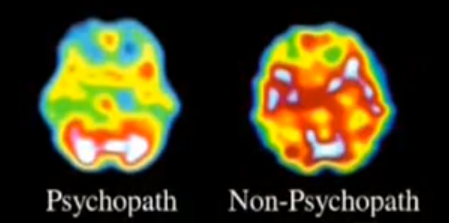
I’ve been doing some reading about psychopathy and have found out some surprising things. I always was a little confused as to how psychopathy differed from sociopathy and have used those terms interchangeably on this blog due to my confusion. I’ve also used the term interchangeably with Antisocial Personality Disorder (ASPD) and sometimes even malignant narcisissm. It turns out it’s probably something completely different from the other three disorders and may not even be a disorder at all!

Before you start laughing, hear me out.

It all started with this colorful, humorous description someone wrote on a forum I’ve been active on, describing how a Psychopath differs from a Narcissist:

When I picture a Psychopath, I think of someone who at bedtime bounces around from one thing to the next, essentially a high-energy, happy person. When I picture a Narc at bedtime, I imagine someone wearing long pajamas and a nightcap (yes, a nightcap), walking around a 19th Century house, holding a candle, checking for ghosts.

At first I thought this was a weird (but funny) analogy. But it really isn’t. According to psychologist Theodore Millon, Primary Psychopathy is something you are born with and is not due to abuse, unlike NPD or ASPD. Studies have shown that the limbic system (emotional center) of primary psychopaths is simply less active than in normal people. So they don’t experience empathy or have a conscience regardless of how they were raised, but they also don’t have very deep emotions in general.

Millon

Because they lack deep emotions, primary psychopaths tend to be fearless risk takers. They also aren’t moody because they don’t experience anxiety or depression the way others do–if they experience those states at all. But psychopathy has become associated with sociopathy and/or ASPD or malignant narcissism because a born psychopath may be more prone to developing personality disorders than the normal population, if they are abused. Because they don’t have the capacity to develop a conscience or empathy, if they do develop a personality disorder, it’s likely to be Antisocial Personality Disorder, where the right of others are callously violated. That’s why so many psychopaths are also antisocial and dangerous.

But there is nothing wrong with the cognitive functioning of a psychopath. They are able to learn the difference between right and wrong, and if they do not develop a personality disorder, theoretically they can choose to do what’s right. Only the limbic system is impaired, so any decisions a true psychopath makes are cognitively based. Emotion simply doesn’t play into it at all. They do “whatever works.” They lack a conscience because conscience is emotion- or shame-based, and a psychopath isn’t capable of much emotion in general.

So a primary psychopath can theoretically be a good person who is just extremely unemotional and only uses logic and reason to make decisions. Unlike narcissists, who actually have deep emotions but have turned all their emotions inward toward themselves and require “supply” to bolster their fragile egos, a non-disordered psychopath has no need for supply. They simply don’t care what anyone thinks. What you think is simply not something that even occurs to them. In contrast, a narcissist cares very much what you think and falls apart like wet toilet paper if supply in the form of approval or adoration is not forthcoming.

Primary psychopathy seems analogous to the Myers-Briggs ESTJ (Extroverted/Sensing/Thinking/Judging) personality type. In other words, a psychopath is an outgoing, sensation seeking, hedonistic thinker who happily jumps around from activity to activity like someone jacked up on Red Bull, yet they don’t have ADHD either because the J(udging) aspect means their high level of activity always has a goal or purpose. Such a person would be easily bored (which could also lead to antisocial behavior), never worry about things or experience (or even understand) guilt, and unafraid to try and experience new things. Their lack of emotionality would suit them well for the business world. In fact, people who have become very successful in business tend to score high in psychopathic traits.

two-brains

While many high level executives do abuse the rights of others and callously close entire departments and treat their employees like so many pieces in a chess game (whatever works, right?), because psychopaths can tell the difference between right and wrong, some will try to do the right thing just the same. The difference is, they are using cognition rather than emotion to back any prosocial decisions.

Looked at this way, primary psychopathy may not be a disorder at all but a personality variation. Of course, the term “psychopathy” has negative connotations because most of us associate it with antisocial criminals, shady con artists, and serial killers. And in fact many of them are, but not all.

Sociopathy differs from primary psychopathy because (according to Millon, above), it’s antisocial behavior that may develop in a person with ASPD or NPD and is always due to abuse somewhere in the person’s past. A primary psychopath can become a sociopath if they become disordered, and that’s where you would find the serial killers and criminals (and these people usually have ASPD). But a sociopath isn’t always (or even usually) a psychopath. Sociopaths who aren’t psychopathic are usually very malignant narcissists (high spectrum NPD + ASPD) or sometimes even Borderlines, and they differ from psychopaths because there is no logic or rational thinking behind their antisocial or destructive behaviors, only unhealthy, toxic emotion. They seem to have no empathy because all their empathy–and most of their other emotions except anger–are turned inward toward themselves. The false self is what they present to others instead of their real emotions. Narcissists have plenty of empathy but it’s all for themselves–that’s why they are prone to wallowing in self pity. A psychopath would never wallow in self pity. They simply don’t care what you think.

I think age of NPD onset correlates with malignancy and curability.

kids_different_ages

Because of a recent conversation I was having on Psychforums about age of onset and prognosis for a cure for different levels of narcissism, I’ve been doing a lot of thinking about this.

I do think how old a narcissist was when Ground Zero occurred–that would be the primary traumatic event that forced the child to create a False Self–determines the difficulty/ease of healing, and also how low or high the narcissist falls on the spectrum.

Here’s what I came up with.

Age of onset of Trauma/stage of child development (Piaget, Freud):

0-2 (Piaget’s Sensorimotor stage; establishing boundaries, physical and comfort needs met; Freudian Oral/Anal stage):

toddler_bear

High spectrum, malignant narcissism and/or psychopathy/sociopathy (if as an infant)– not curable except under extreme circumstances in very rare cases. May be self aware but has no incentive to change.

3-6 (Piaget’s Concrete Operations; Freudian Anal–Oedipal/Electra stage )

childabuse

Mid-high spectrum narcissist who may or may not be malignant. May become self aware but will be resistant to a cure. In unusual circumstances (total loss of supply or primary supply), a narcissist this high on the spectrum might seek therapy. They are unlikely to be willing to do all the work required for healing due to its difficulty for someone this high, but there might be a few exceptions.

7-11 (Piaget’s Formal Operational stage; abstract learning, competence; Freudian “latency” period)

sad_girl2

Mid-spectrum narcissist. Could become self aware and if so, there’s a good chance of them seeking therapy or treatment. They’re more likely to be cured, but it’s not a guarantee.
Therapy would be difficult at the higher end (onset before 8-9), moderately easy at lower end (onset between 9-11).

12-21 (adolescence)

sadness

sadness

Low-mid spectrum narcissist. Likely to become self aware and good chance of being cured.
Low spectrum at the higher ages (onset after 15/16), mid spectrum at the lower ages (younger than 15).
Good prognosis for a cure and self awareness. If very low, may be able to heal him or herself without outside help

21 +

How's my hair?

How’s my hair?

A person cannot become a true narcissist after age 21 or so. They may instead have a lot of narcissistic traits, have DNP (Destructive Narcissistic Pattern disorder–just below NPD on the spectrum), or in rare cases they could develop “acquired narcissism” (this is something a lot of celebrities and famous people get) which is temporary and lasts only as long as the adulation or fame lasts.

ETA: I got a rebuttal to this on Psychforums. I think this poster’s argument may be valid too, so I’m going to post it:

I believe the PD occurs in the first 5-6 years due to abuse/trauma, the critical level of which differs for each person depending on genetics (temperament, sensitivity).

I think NPD-like traits resulting from abuse/trauma after age 6 would be cPTSD to a normally developed personality.

I suspect traits from coddling/overvaluation after age 6 would be easier to “return to earth” from than something like sexual abuse and humiliation (say, having to testify in court) after age 6. I think the former might be unwind’able to a level of stable narcissism. I think the latter could be a more permanent scar/condition.

left-out_child

But, I don’t know much about. That’s just the way I think of it. It doesn’t seem feasible that PD could occur after the P(personality) is developed. I thought the whole point of a PD was that the P stopped developing, became a defective structure. Not merely unresolved trauma (like PTSD is?) but structural and permanent.

Basically his argument is that after age 6, true narcissism won’t develop but complex PTSD (C-PTSD) could. This could mean a child acquires a lot of narcissistic traits (what ACONs call “fleas”) that could resemble NPD in many ways but is more treatable/curable. I think this would be the same thing as the spectrum condition called the Destructive Narcissistic Pattern (DNP)
This would also take into account type of abuse inflicted and level of severity.